
MailerLite is the best email marketing software for churches that want a simple editor, a free plan for a small list and a published nonprofit discount, because it stays usable for a volunteer team with no marketing staff. Mailchimp is the pick for churches that value the widest template library and the most familiar name. The twelve tools below compare price by list size, free plan limits and church specific features, so a congregation can pick the platform its volunteers will actually keep using.
Church email is different from business email. The list is a congregation rather than a customer base, the sender is often a volunteer rather than a marketer, and the weekly bulletin has to go out whether or not anyone on the team has touched an email platform before. A tool built for a marketing department will punish that volunteer with complexity, while a tool built for simplicity will let the bulletin go out on time every week.
The buying problem is that every platform charges by contact count, and churches grow their lists in ways that punish that model. A congregation that adds visitors every Sunday will watch the monthly price climb even though the budget does not, and a platform that counts unsubscribed contacts against the limit will charge the church for people who left years ago. This guide prices every tool at 500 and at 1,000 contacts, so the comparison uses the list size a real church actually has.
The 12 Tools at a Glance
| Tool | Main job | Best for | Starting price |
|---|---|---|---|
| MailerLite | Simple email and landing pages | Small churches, volunteers | Free, then $10 a month |
| Mailchimp | Familiar email platform | Churches wanting templates | Free, then $13 a month |
| Constant Contact | Email plus events and RSVP | Churches hosting many events | $12 a month |
| Brevo | Email and SMS on credits | Churches sending SMS too | Free, then $9 a month |
| Kit | Creator email and automation | Churches with a teaching ministry | $29 a month |
| Flodesk | Beautiful email design | Churches that value design | $38 a month |
| AWeber | Simple email and automation | Churches wanting phone support | $12.50 a month |
| GetResponse | Email plus webinars | Churches running online events | $19 a month |
| Moosend | Affordable email automation | Churches on a tight budget | $9 a month |
| Sender | Cheap email and SMS | Churches with a small list | Free, then $15 a month |
| Omnisend | Email and SMS for outreach | Churches doing outreach | $16 a month |
| Flocknote | Church specific email and text | Catholic parishes | Free, then $10 a month |
Best Pick by Job
| Job type | First pick | Second tool | Why this pair works |
|---|---|---|---|
| Small church, volunteer sender | MailerLite | Sender | MailerLite is simplest, Sender is cheapest at scale |
| Church hosting many events | Constant Contact | GetResponse | Constant Contact adds RSVP, GetResponse adds webinars |
| Church wanting beautiful design | Flodesk | Mailchimp | Flodesk is the prettiest editor, Mailchimp has the templates |
| Catholic parish | Flocknote | MailerLite | Flocknote is built for parishes, MailerLite is the general fallback |
| Church sending SMS too | Brevo | Omnisend | Brevo prices SMS on credits, Omnisend bundles both channels |
A small church with a volunteer sender should start with MailerLite. The free plan covers up to 250 subscribers and 2,500 emails a month, the paid plan starts from $10 a month, and the nonprofit discount is published and straightforward to claim. The editor is the cleanest in this guide, which matters when the sender changes every year and the new volunteer has to learn the tool in an afternoon.
A church hosting events every week should start with Constant Contact instead. The Lite plan starts at $12 a month, the Standard plan at $35, and the built in event registration and RSVP tracking is the feature no other general tool here matches. The phone support is also real, which matters when a volunteer needs help on a Saturday morning before the service.
Which Email Tool Fits a 200 Member Church Best?
MailerLite fits a 200 member church best, because the free plan covers up to 250 subscribers and 2,500 emails a month, which is exactly the size of a weekly bulletin to a small congregation. The church pays nothing until the list passes 250, and the paid plan from $10 a month is the cheapest honest step up in this guide. The landing pages are included, so the church can collect visitor emails without a second tool.
Flocknote is the better pick if the 200 member church is a Catholic parish, because it is built for parishes with email and texting in one place. The Starter plan is free for life for up to 40 members, then $10 a month for 41 to 50 members and $17 for 51 to 70, rising with size. The parish specific design means the groups, the ministries and the texting all work the way a parish actually organises them.
Mailchimp is the third option for a 200 member church that values familiarity above all. The free plan covers 250 contacts and 500 emails a month with no automation, which is tighter than MailerLite, and the paid Essentials plan starts from $13 a month. The template library is the widest in this guide, though the free plan limits mean a church that sends a weekly bulletin will hit the 500 email cap quickly.
How to Choose the Best Email Marketing Software for Churches
Start by counting the list honestly, including the unsubscribed contacts. Mailchimp counts all contacts, including unsubscribed and non subscribed people, toward the plan limit, which means a church with 500 real subscribers and 300 old addresses pays for 800. A tool that charges only for active subscribers will cost less for the same congregation, and the list audit is worth doing before any trial starts.
Next, check the free plan limits in writing. MailerLite gives 250 subscribers and 2,500 emails a month, Mailchimp gives 250 contacts and 500 emails a month with no automation, and Brevo gives a daily send limit rather than a contact limit. A church sending one weekly bulletin to 200 people needs about 800 emails a month, which fits MailerLite free and breaks Mailchimp free, so the send cap decides the shortlist before the editor does.
Then check the nonprofit discount and the paperwork it needs. Mailchimp offers 15 percent through TechSoup, Constant Contact offers up to 30 percent on 12 month prepay, and MailerLite publishes its nonprofit discount directly. Finally, check who will actually send the email, because the simplest editor wins when the sender is a volunteer who changes every year.
The 12 Tools in Detail
The twelve tools below cover general email platforms and church specific tools. Each one is judged on price by list size, free plan limits and volunteer friendliness, so this roundup of the best email marketing software for churches stays honest about the contact counting trap.
1. MailerLite
MailerLite is the simplest email platform in this guide, with a clean editor, landing pages and automation that a volunteer can learn in an afternoon. The free plan covers up to 250 subscribers and 2,500 emails a month, the paid plan starts from $10 a month, and the nonprofit discount is published and straightforward. The platform is the easiest to hand over when the volunteer changes, which happens in most churches every year or two.
The limit is the smaller template library and the thinner integrations list compared with Mailchimp. A church that wants hundreds of templates or a deep integration with its church management system will find MailerLite lighter, though the editor and the automation cover the weekly bulletin and the welcome series well enough for most congregations.
It suits small churches with a volunteer sender and a list under 1,000. The free plan, the simple editor and the nonprofit discount are the combination that makes it the best starting point in this guide.
Claim the nonprofit discount before the trial ends, and confirm the price at the list size the church expects in a year.
2. Mailchimp
Mailchimp is the most familiar email platform in this guide, with the widest template library and the largest integration ecosystem. The free plan covers 250 contacts and 500 emails a month with no automation, Essentials starts from $13 a month, Standard from $20 and Premium from $350, all priced by contact count. The 15 percent nonprofit discount comes through TechSoup for registered 501(c)(3) churches.
The limit is the free plan, which was cut in early 2026 to 250 contacts and 500 emails a month with no automation, and the contact counting, which charges for unsubscribed and non subscribed contacts too. A church sending a weekly bulletin to 200 people needs about 800 emails a month, which breaks the free plan in the second week, so most churches will pay from the start.
It suits churches that value familiarity and the template library above the free plan limits. The integrations and the templates are the best in this guide, and the brand is the one most volunteers already recognise.
Audit the list before signing, because the unsubscribed contacts will raise the price.
3. Constant Contact
Constant Contact is the email platform with built in event registration and RSVP tracking, which suits churches that host events every week. The Lite plan starts at $12 a month, Standard at $35 and Premium at $80, all priced by contact count, with no free plan and a 60 day trial instead. The nonprofit discount reaches up to 30 percent on 12 month prepay through TechSoup, with paperwork required.
The limit is the price at scale and the lack of a free tier. A church with 1,000 contacts pays more on Constant Contact Standard than on MailerLite or Brevo, and the phone support, while real, is the feature that justifies the premium rather than the email itself. The cancellation process also requires a phone call, which is a drawback worth knowing before signing.
It suits churches that host events and whose volunteers will actually phone support. The RSVP tracking and the event tools are the strongest in this guide, and the phone support is the safety net for a volunteer team.
Ask for the price at the real contact count before the trial, because the starting price is only the price at 500 contacts.
4. Brevo
Brevo is the email and SMS platform that prices on sends rather than contacts, which suits churches with a large list and a modest send volume. The free plan covers 300 emails a day, the Starter plan starts at $9 a month, and SMS is priced on credits alongside the email. The platform includes automation, landing pages and a CRM, which covers the welcome series and the visitor follow up in one place.
The limit is the daily send cap on the free plan and the learning curve on the automation builder. A church sending a weekly bulletin to 1,000 people needs 1,000 sends in one day, which breaks the free plan daily limit, so most churches will pay from the start. The editor is good though less simple than MailerLite, and the volunteer will need a little more training.
It suits churches that want email and SMS in one platform and have a large list with modest sends. The send based pricing and the SMS credits are the combination that makes it the cheapest honest option for a big list.
Check the daily send limit against the bulletin size before choosing the free plan.
5. Kit
Kit, formerly ConvertKit, is the creator email platform, built for teaching ministries, authors and speakers rather than for a general congregation. The Creator plan starts at $29 a month, with automation, landing pages and a visual automation builder that handles a welcome series and a course sequence well. The platform is built for people who teach, which suits a church with a strong teaching or discipleship ministry.
The limit is the price and the narrower fit for a general bulletin. At $29 a month Kit costs more than double MailerLite for the same list, and the church specific features are absent, so a church that mainly sends a weekly bulletin pays for creator tools it will never use. The automation is excellent, though the value depends on the church actually running sequences.
It suits churches with a teaching ministry that runs courses, series and email sequences. The automation builder is the best in this guide for a sequence, and the landing pages are built for signups.
Trial the automation builder with a real welcome series before paying, because that is the feature the price buys.
6. Flodesk
Flodesk is the design first email platform, with a flat $38 a month price and templates that look better out of the box than any other tool here. The platform charges one flat price regardless of list size, which suits a growing church that hates watching the price climb with every new subscriber. The editor is visual and simple, and the templates are the prettiest in this guide.
The limit is the flat price for a small list and the thinner automation. A church with 200 subscribers pays $38 a month for design it could get free on MailerLite, and the automation is lighter than Kit or GetResponse. The value appears as the list grows, because the price never rises, though a small church will not feel that value for years.
It suits churches that value beautiful design and have a growing list. The flat price and the templates are the combination that makes it the best design pick, and the editor is simple enough for a volunteer.
7. AWeber
AWeber is the long running email platform with phone support and a simple editor, starting at $12.50 a month. The platform includes automation, landing pages and a free plan for a small list, and the support team is reachable by phone, which suits a volunteer who needs help on a Saturday. The interface is older than MailerLite, though it is steady and predictable.
The limit is the price at scale and the smaller template library. AWeber costs more than Brevo or Moosend for the same list, and the templates are fewer than Mailchimp, so the value is the support rather than the features. A church that never phones support will pay for a feature it never uses.
It suits churches that want phone support and a simple, steady platform. The support and the simplicity are the reasons to choose it, and the free plan covers a small list while the church tests the fit.
Phone the support line during the trial, because the quality of the answer is the product here.
8. GetResponse
GetResponse is the email platform with webinars built in, starting at $19 a month, which suits churches running online events, classes and prayer meetings. The platform includes email, automation, landing pages and webinar hosting in one subscription, so a church that runs a weekly online class can drop a separate webinar tool. The free trial covers the email features, and the automation is solid.
The limit is the price for a church that does not run webinars. At $19 a month GetResponse costs nearly double MailerLite for the same list, and the webinar feature is the whole reason to pay the premium. A church that meets in person only will find the extra cost hard to justify, though a church with an online campus will feel the value immediately.
It suits churches running online events and classes alongside the weekly bulletin. The webinar hosting and the email in one price are the combination that makes it the best pick for an online ministry.
Check the webinar attendee limit on the tier before buying, because it varies by plan.
9. Moosend
Moosend is the affordable automation platform, starting at $9 a month, with email, automation and landing pages at a price that undercuts most rivals. The platform includes a visual automation builder, segmentation and reporting, which covers the welcome series and the ministry groups well. The price is the main attraction, and the features are stronger than the price suggests.
The limit is the smaller brand and the thinner integrations list. Moosend is less known than Mailchimp, so a new volunteer may not recognise it, and the integrations with church management systems are fewer. The editor is good though less polished than Flodesk, and the support is email based rather than phone.
It suits churches on a tight budget that want automation without paying for it. The $9 price and the automation builder are the combination that makes it the best value pick in this guide.
Trial the automation builder with a real ministry group before committing, because that is where Moosend earns its keep.
10. Sender
Sender is the cheap email and SMS platform, with a free plan and paid plans from $15 a month, which suits churches with a small list and a smaller budget. The platform includes email, SMS and automation, and the pricing is simple enough for a treasurer to understand. The free plan covers a small congregation, and the paid step is modest.
The limit is the smaller template library and the thinner feature set compared with MailerLite. Sender is a budget tool, and the editor, the reporting and the integrations are all lighter than the leaders. A church that grows past 1,000 subscribers will likely outgrow it, though the price will stay low while it lasts.
It suits churches with a small list that want the cheapest paid plan that still includes SMS. The price and the SMS inclusion are the reasons to choose it, and the simplicity suits a volunteer sender.
11. Omnisend
Omnisend is the email and SMS platform built for outreach, starting at $16 a month, with automation, segmentation and reporting that suit a church doing community outreach and visitor follow up. The platform handles email and SMS in one workflow, so a visitor can get an email on Sunday and a text on Wednesday without two tools. The free plan covers a small list, and the paid plan adds the automation a growing church needs.
The limit is the ecommerce heritage. Omnisend is built for online stores, so the templates and the workflows lean toward sales rather than ministry, and a church will need to adapt them. The price is fair for what it does, though a church that only sends a bulletin will find MailerLite simpler and cheaper.
It suits churches doing outreach with email and SMS together. The combined workflow and the visitor follow up automation are the features that make it the best outreach pick in this guide.
Trial the SMS workflow with a real visitor list before paying, because the combined channel is the whole value.
12. Flocknote
Flocknote is the church specific email and texting platform, common in Catholic parishes, with pricing by church size. The Starter plan is free for life for up to 40 members, then $10 a month for 41 to 50 members and $17 for 51 to 70, rising with size. The platform organises groups, ministries and texting the way a parish actually works, which no general tool here matches.
The limit is the parish focus and the price at scale. A large parish will pay more than a general tool for the same list, and a non Catholic church will find the parish specific design less fitting. The value is the fit, and a parish that uses the groups and the texting daily will feel it, while a church that only sends a bulletin will not.
It suits Catholic parishes that want email and texting built for parish life. The group structure and the texting are the features that justify the price, and the free tier covers the smallest parishes entirely.
Check the price at the real parish size before the trial, because the size bands decide the cost.
Mailchimp vs Constant Contact. The Church Email Classic
The free plan difference is the first split. Mailchimp offers a free plan, though it now covers only 250 contacts and 500 emails a month with no automation, while Constant Contact offers no free plan at all and a 60 day trial instead. A church with no budget should take Mailchimp free and watch the send cap, while a church with a small budget should compare the paid prices directly.
The events difference is the second split. Constant Contact includes event registration and RSVP tracking, while Mailchimp does not, so a church hosting events every week gets more from Constant Contact. Mailchimp wins on templates and integrations, with the widest library in this guide, while Constant Contact wins on phone support, which a volunteer will use on a Saturday morning.
The deciding factor is the list size and the event calendar. A church under 250 contacts with no events should take Mailchimp free, while a church over 500 contacts with weekly events should take Constant Contact Standard at $35 a month. That split is the cleanest way to read the best email marketing software for churches when the choice narrows to two, because the two tools serve different churches that happen to share a category name.
What Does Church Email Cost at 1,000 Contacts?
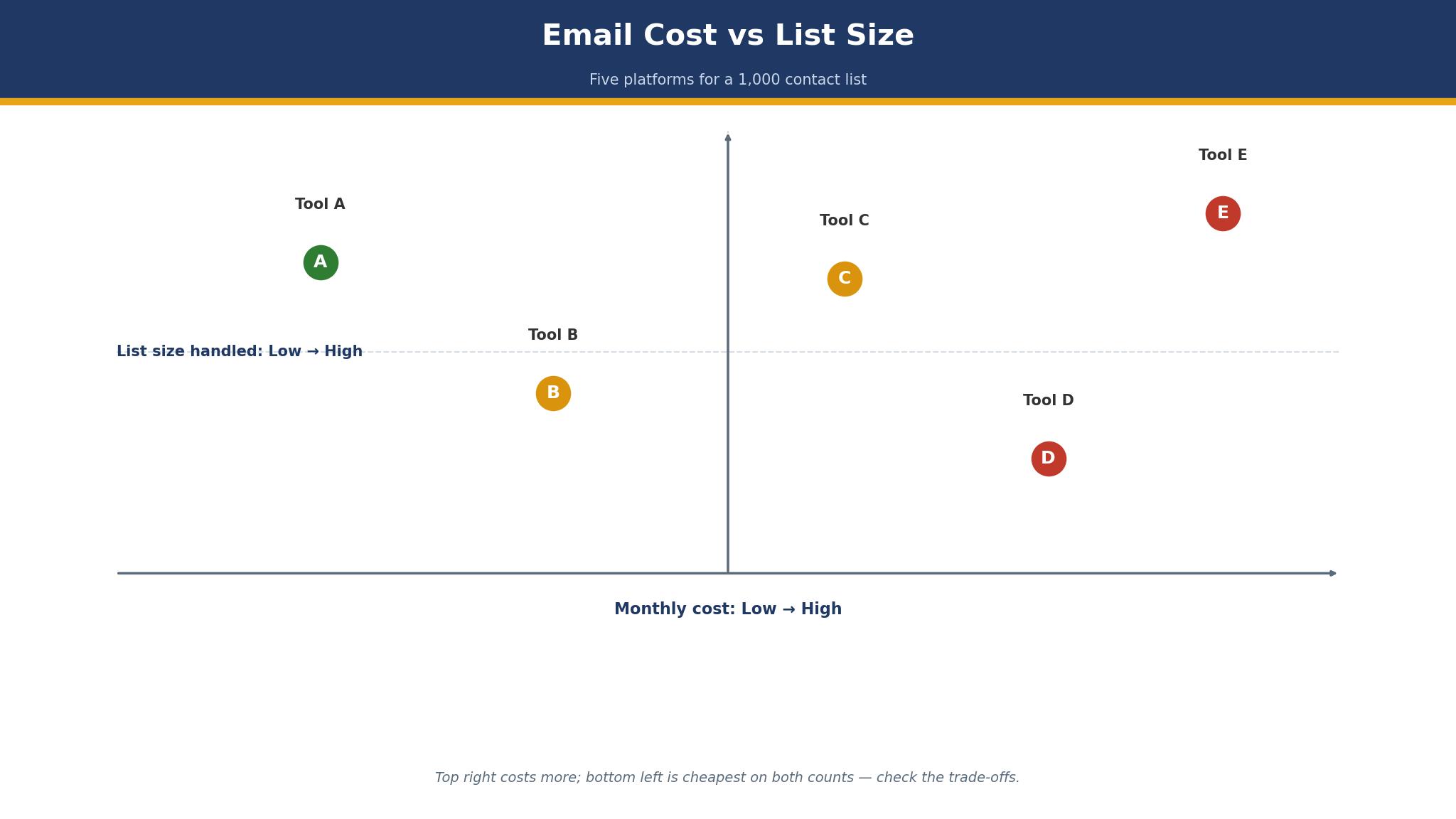
The honest answer is $10 to $80 a month, depending on the tool and the plan. MailerLite costs from $10 a month at a small list and rises with contacts, Brevo costs from $9 a month on sends, Moosend costs from $9 a month, Sender costs from $15 a month, and Flodesk costs a flat $38 a month regardless of list size. Mailchimp Standard costs from $20 a month at a small list and rises past $45 at 1,000 contacts, while Constant Contact Standard costs $35 a month at 500 contacts and rises with the list.
The contact counting trap is the cost driver most churches miss. Mailchimp counts unsubscribed contacts toward the limit, so a church with 1,000 real subscribers and 300 old addresses pays for 1,300. A tool that charges only for active subscribers, or that charges on sends like Brevo, will cost less for the same congregation, and the list audit is worth doing before any trial starts.
The cheapest honest path at 1,000 contacts is MailerLite or Brevo, because the price stays low and the editor stays simple. Flodesk at a flat $38 a month becomes the better value once the list passes 2,000, because the price never rises, and that is the point where the best email marketing software for churches stops being a per contact bill and becomes a flat subscription.
How Do You Move a Church List Without Losing Subscribers?
Days one to seven are the audit. Export the list, remove the unsubscribed contacts and the bounced addresses, and confirm the count the new tool will actually charge for, because a dirty list is the most expensive mistake in this category. Tell the congregation the email is moving, so nobody marks the first bulletin from the new platform as spam.
Days eight to fourteen are the move. Import the clean list, set up the welcome email and the ministry groups, and send a test bulletin to the leadership team before the whole congregation. Check the sender name, the reply address and the unsubscribe link, because a broken unsubscribe link is the fastest way to lose subscribers.
Days fifteen to thirty are the watch. Send the first two bulletins from the new platform, watch the open rate and the spam complaints, and fix the sender reputation before the third send. A move that skips the audit will pay for unsubscribed contacts for a year, and the audit is what keeps the best email marketing software for churches from becoming a budget surprise.

Frequently Asked Questions
Is Mailchimp free plan enough for a small church?
No, not for a weekly bulletin. The free plan covers 250 contacts and 500 emails a month with no automation, and a church sending one bulletin a week to 200 people needs about 800 emails a month. MailerLite free covers 250 subscribers and 2,500 emails a month, which fits a small church, and that send cap is the difference that matters.
Which email tool is best for a Catholic parish?
Flocknote is the best pick for a Catholic parish, because it is built for parishes with email and texting organised by groups and ministries. The Starter plan is free for life for up to 40 members, then $10 a month for 41 to 50 members and $17 for 51 to 70. MailerLite is the general fallback for a parish that wants a simpler editor.
Does Constant Contact offer a free plan?
No. Constant Contact offers no free plan and a 60 day trial instead, with Lite from $12 a month and Standard from $35 a month, all priced by contact count. The nonprofit discount reaches up to 30 percent on 12 month prepay through TechSoup, though it needs paperwork and a 501(c)(3) letter.
What is the cheapest email software for churches?
MailerLite and Brevo are the cheapest honest options, with MailerLite from $10 a month and Brevo from $9 a month, plus free plans for a small list. Flodesk at a flat $38 a month becomes cheaper once the list passes 2,000 subscribers, because the price never rises with the list. The cheapest overall path is the free plan that actually fits the bulletin, which is why the best email marketing software for churches has to be judged on the send cap rather than the headline price.
Can a church send SMS with its email tool?
Yes, with Brevo, Omnisend or Sender. Brevo prices SMS on credits alongside email from $9 a month, Omnisend bundles email and SMS from $16 a month, and Sender includes SMS from $15 a month. Flocknote also includes texting for parishes, which suits a church that texts prayer requests and event reminders.
How do I get a nonprofit discount on email software?
Ask the vendor directly and have the paperwork ready. Mailchimp offers 15 percent through TechSoup, Constant Contact offers up to 30 percent on 12 month prepay, and MailerLite publishes its nonprofit discount directly. Most programs need proof of nonprofit status, and churches that are automatically tax exempt without a determination letter may not qualify.
The Church Email Pick for Your Congregation
A small church with a volunteer sender should take MailerLite, because the free plan fits a 200 member list and the editor is the simplest in this guide. A church hosting events every week should take Constant Contact, a Catholic parish should take Flocknote, and a church that values design should take Flodesk at a flat $38 a month. A church on a tight budget should take Brevo or Moosend from $9 a month, and every church should audit the list before signing.
The send cap is the number that decides the budget. Count the real subscribers, check the send cap against the weekly bulletin, and claim the nonprofit discount before the trial ends, because that is how a church picks the best email marketing software for churches without overpaying for contacts it no longer has.