
Bags pile up at the counter, drivers wait for routes that were planned on paper, and the till total at closing time never quite matches the day. That daily friction is exactly what this guide to the best laundry management software for laundromats is built to remove, by comparing the systems that run the counter, the wash floor and the delivery route from one login.
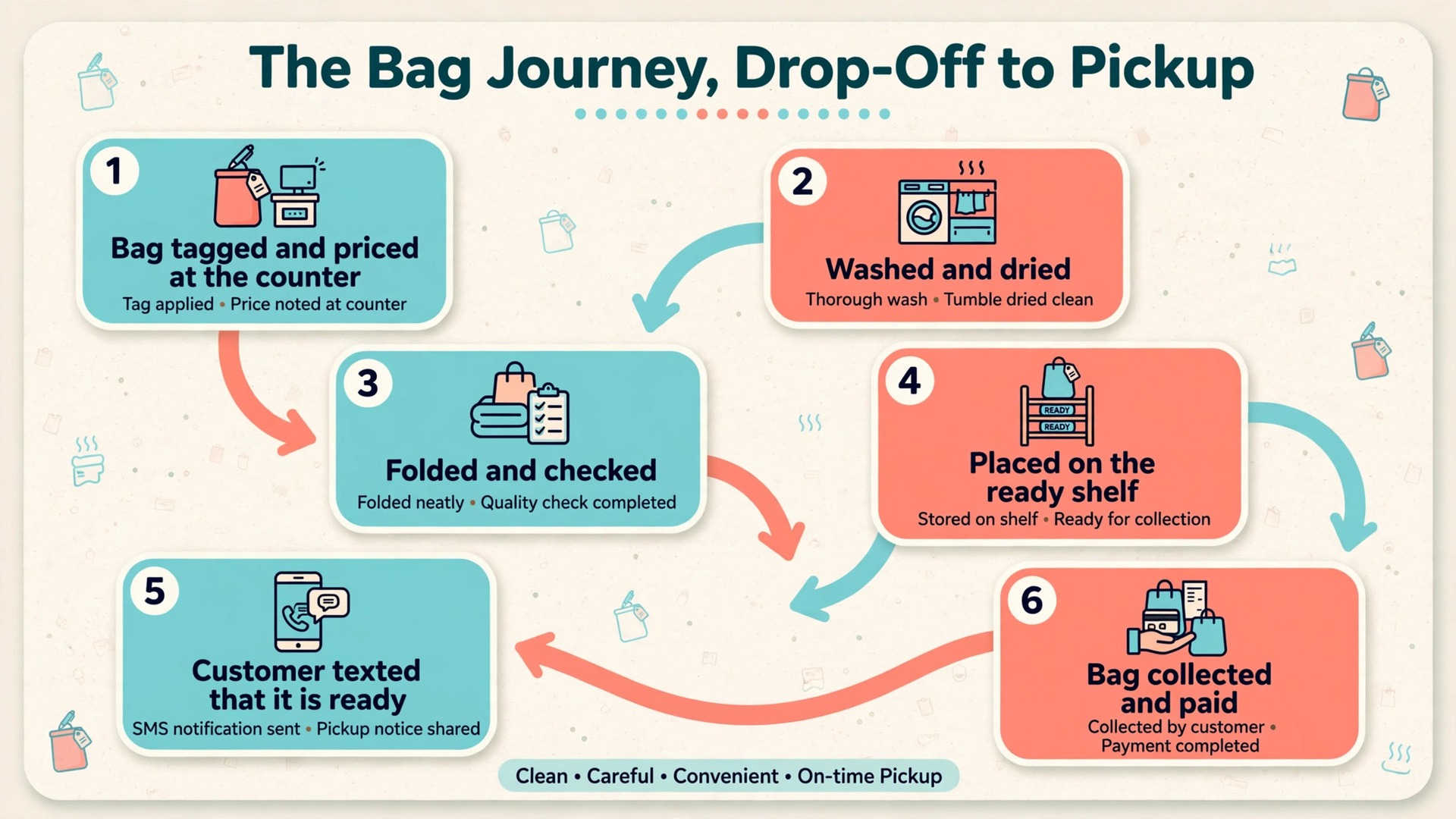
A laundromat is not a normal shop. Orders arrive by the bag, not by the item, and one customer can mean twenty pieces with different treatments, prices and return times. Software that cannot track a bag from drop-off to ready shelf will create more work than it saves, however good its sales reports look in a demo.
The five systems below were judged on the same questions. Can the counter team take an order in under a minute. Does the driver route make sense at rush hour. Does the price stay fair when order volume doubles. And does the owner see, without a spreadsheet, which service actually makes money.
Why the Best Laundry Management Software for Laundromats Is Not a Generic Till System
A generic till records a sale and moves on. A laundry system must remember the order long after the sale, through washing, drying, folding, assembly and pickup. If that chain lives in notebooks or in staff memory, bags get swapped, ready orders sit uncollected, and regulars drift to a rival that texts them the moment their order is ready.
Delivery changes the maths completely. A self-serve store with a wash and fold counter needs speed at the till and a clear ready shelf. A pickup and delivery business needs time windows, driver apps, route order and proof of delivery. Buying a counter system for a route business, or a route system for a counter shop, wastes money twice, once on the subscription and once on the workarounds.
Price models differ just as much. Some vendors charge by order volume, some by store, and some take a share of card sales instead of a flat fee. The cheapest headline price can become the most expensive bill at your real volume, which is why this guide prices every system at realistic order counts rather than at the smallest possible shop.
Customer expectations have also moved. People now expect a text when their order is ready, a link to pay online and a record of what they ordered last time, because every other service they use works that way. A laundromat that still relies on paper tickets and phone calls feels outdated by comparison, even when the wash quality is excellent, and younger customers in particular will choose the store that makes ordering effortless.
Owner visibility is the final reason a laundry system beats a till. Without one, the owner learns about problems from complaints, not from data, and learns about them late. With one, the owner sees uncollected bags, slow services and driver delays in the daily report, and can fix small problems before they become lost customers.
How to Judge a Laundry System Before You Pay
Start with the bag journey, not the feature list. Walk one order through the system in the trial, from drop-off and weighing through tagging, washing, assembly, payment and pickup. If any step needs a notebook, a second app or a phone call to the back room, that gap will cost staff time on every single order.
Then price the system at next year’s volume, not this month’s. Order-based pricing punishes growth, flat pricing rewards it, and card-share pricing sits somewhere in between. Ask for the bill at double your current orders, and at a second store, before you sign anything longer than a month.
- Counter speed for a full bag order, timed with a stopwatch in the trial.
- Driver routing and customer texts for pickup and delivery work.
- Ready-shelf and assembly checks that stop bags going to the wrong customer.
- Exports or accounting links so the books do not need retyping.
Side-by-Side Specs and Prices
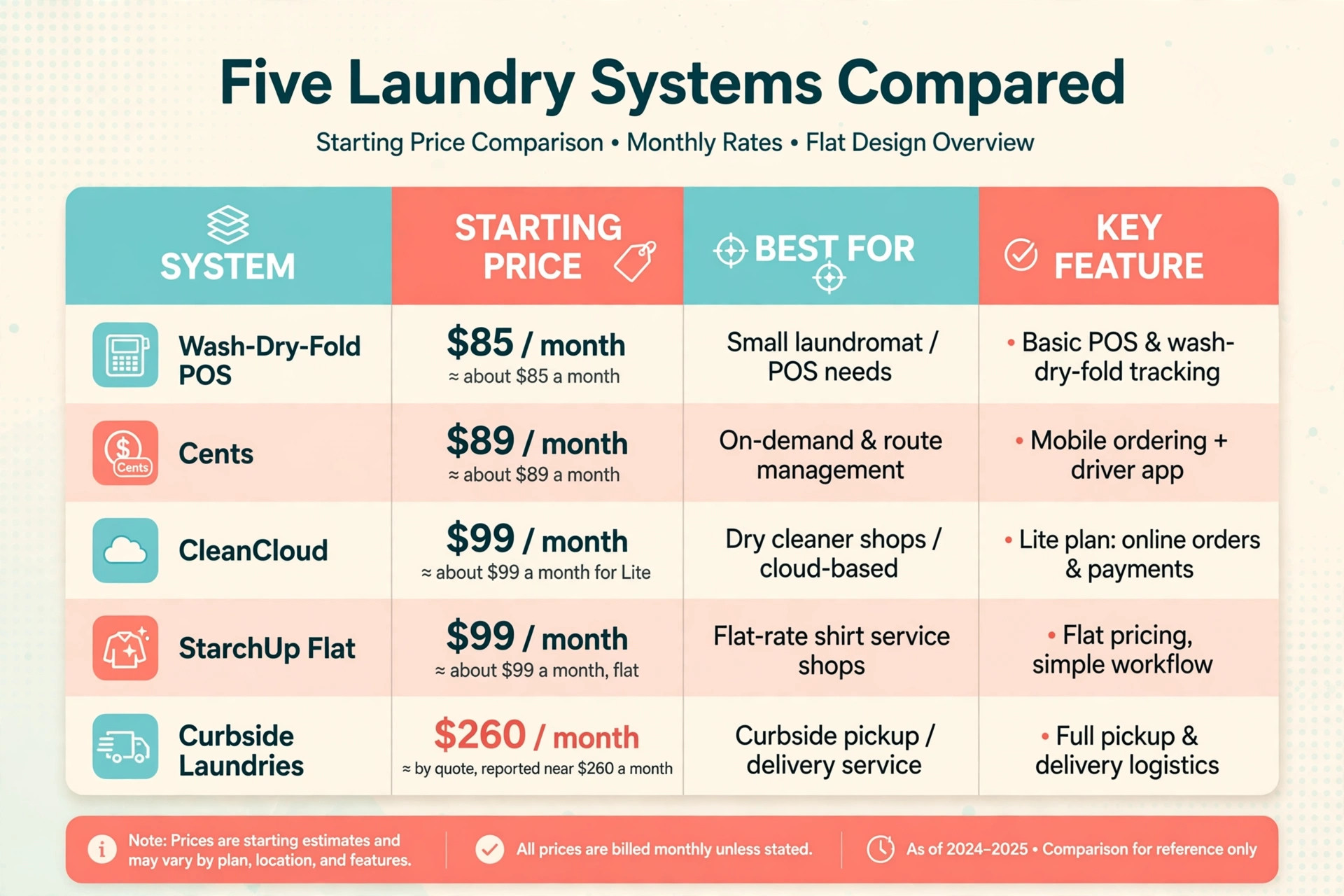
Use this table as a shortlist, not as a ranking. The right system depends on whether the store is counter-led, route-led or both, and on how fast order volume is growing.
| Tool | Starting price | Best for |
|---|---|---|
| CleanCloud | about $99 a month for Lite | laundromats and dry cleaners wanting one cloud system for counter and delivery |
| Cents | from about $89 a month | multi-store operators wanting machine and delivery data in one place |
| Curbside Laundries | by quote, reported near $260 a month | pickup and delivery businesses built around routes |
| Wash-Dry-Fold POS | from about $85 a month | independent stores wanting to keep existing machines and hardware |
| StarchUp | flat from about $99 a month | stores wanting a flat monthly bill with no usage tiers |
Five Systems, Examined in Turn
CleanCloud
CleanCloud is the pick for laundromats and dry cleaners wanting one cloud system for counter and delivery. CleanCloud runs the counter, customer records and order tracking from any browser or phone, with pickup and delivery tools and customer apps on the higher plans. Published listings put Lite at about $99 a month and Grow+ at $335 a month, with order limits rising across the tiers.
The strength is its breadth across counter sales, customer history and delivery in one login The limit to test in a trial is its price climbs with order volume, so a busy wash and fold route can outgrow the entry tier fast When that limit touches daily work, shortlist a rival whose limits sit elsewhere.
Cents
For multi-store operators wanting machine and delivery data in one place, start with Cents. Cents pairs a point of sale with delivery dispatch, marketing tools and machine data, and it is built for operators running several stores from one dashboard. Published comparisons put entry pricing from about $89 a month, with higher tiers running far above that.
What stands out is its delivery and multi-store depth What to check before paying is its own payment hardware and tier-gated features, which raise the real first-year cost A trial week with real orders shows whether that limit matters for your shop.
Curbside Laundries
Curbside Laundries suits pickup and delivery businesses built around routes best. Curbside Laundries is built delivery-first, with customer ordering, route tools and a driver app at the centre of the product rather than added on later. Pricing is by quote, with published reports putting it near $260 a month.
The case for it rests on its delivery-first design The case against it is its premium price and narrower in-store focus Weigh those two against the work your team actually does each day.
Wash-Dry-Fold POS
If independent stores wanting to keep existing machines and hardware is the job that matters most, Wash-Dry-Fold POS deserves the first trial. Wash-Dry-Fold POS keeps the focus in store, with a counter point of sale, order tracking and flat card processing that runs on hardware the store already owns. Published comparisons put it from about $85 a month.
It earns its place through its simple in-store setup on hardware you already own It loses ground where its delivery tools cost extra and its focus stays in store If that weakness never touches your daily jobs, it is a strong buy.
StarchUp
StarchUp is the pick for stores wanting a flat monthly bill with no usage tiers. StarchUp covers the counter, delivery and a customer app on a flat plan, so the bill does not move when a good month pushes order counts higher. Published comparisons put its flat starting rate at $99 a month with unlimited usage.
The strength is its flat pricing, which makes budgeting easy The limit to test in a trial is its smaller ecosystem next to the biggest names, so check integrations before buying When that limit touches daily work, shortlist a rival whose limits sit elsewhere.
The Best Pick for Each Kind of Laundromat
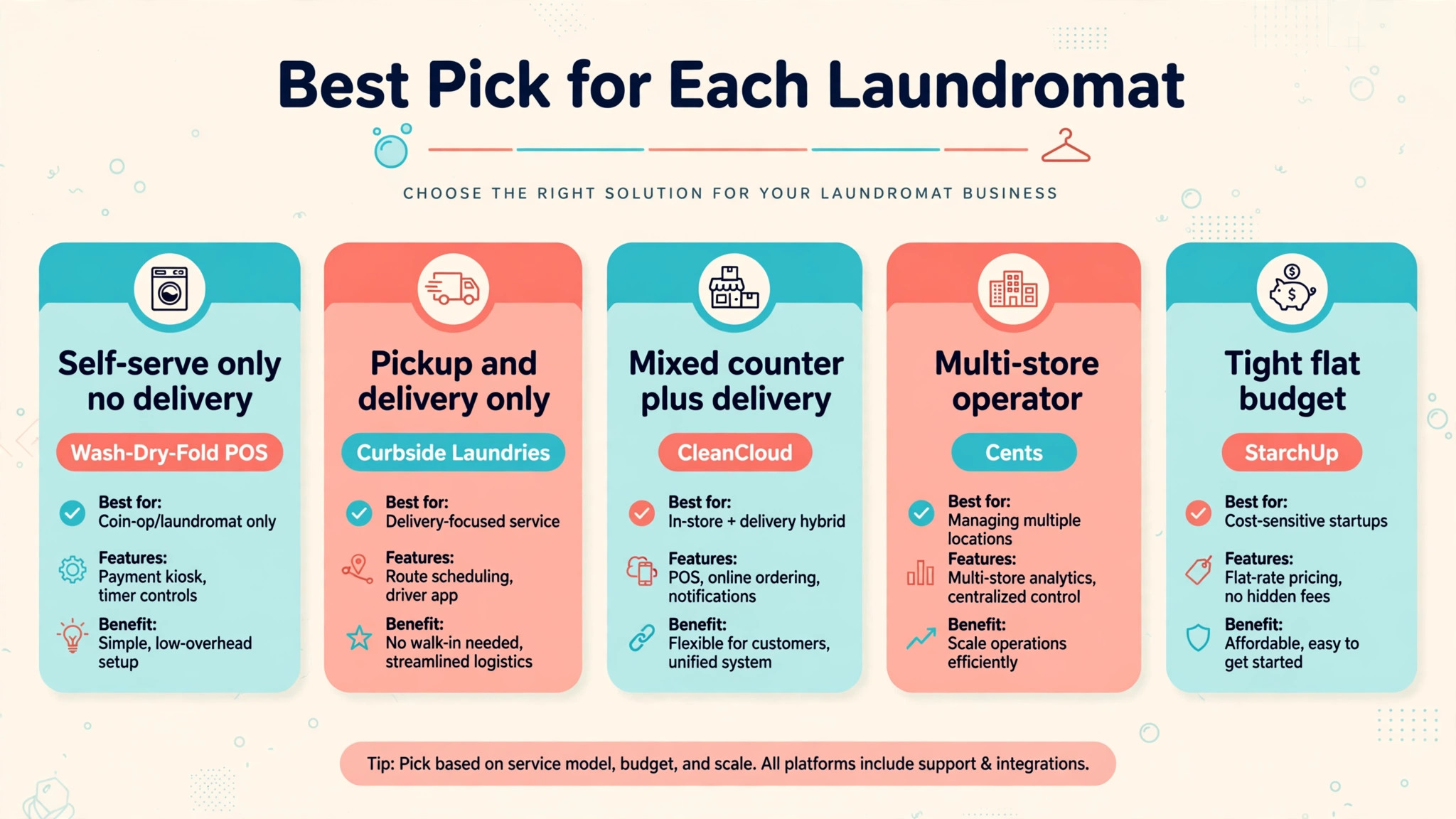
Match the system to the shape of the business, because the best laundry management software for laundromats in a self-serve store is not the best one for a route business. The table below gives a starting pick for each shape, then the sections after it explain what that pick costs at real volume.
| Job | Best pick | Why it wins for that job |
|---|---|---|
| Self-serve only, no delivery | Wash-Dry-Fold POS | Fast counter flow on existing hardware, with no route tools to pay for |
| Pickup and delivery only | Curbside Laundries | Delivery-first routing and driver tools built for route work |
| Mixed counter plus delivery | CleanCloud | One system for the till and the route, with customer apps included |
| Multi-store operator | Cents | One dashboard across stores, with machine and delivery data together |
| Tight flat budget | StarchUp | One flat monthly bill that does not rise with order volume |
Treat the table as a shortlist of one, not as a final order. Run the winning pick through a real week of orders, including a rush Saturday and a delivery day, before committing to a year.
Counting the True Cost at Your Order Volume
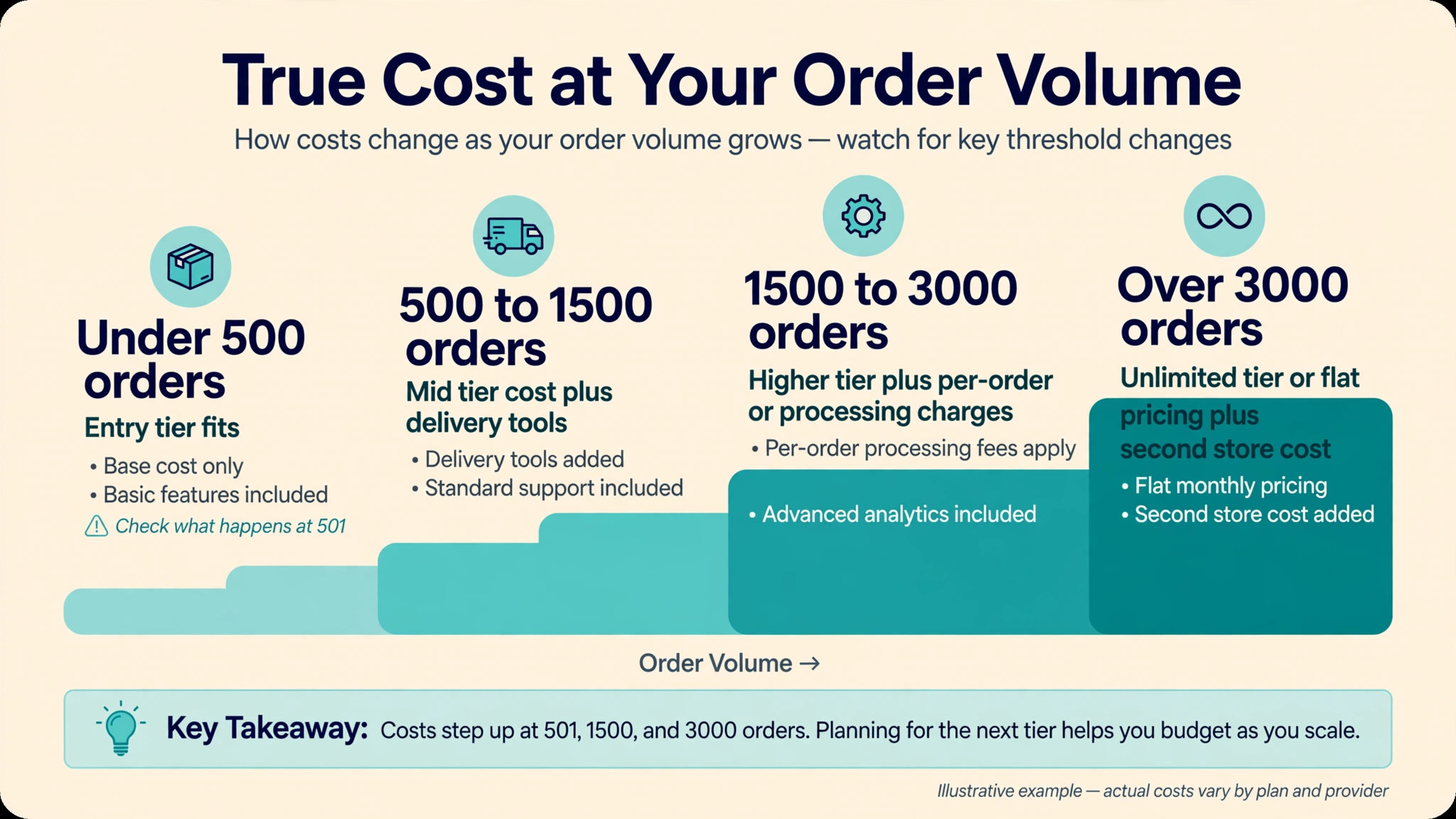
Order-based pricing looks gentle until volume grows. A store doing a few hundred orders a month sits happily on an entry tier, while the same store at a few thousand orders can face a bill several times higher for the same screens. Published CleanCloud listings show the shape of this climb clearly, with tiers at 500, 1500 and 3000 orders a month before an unlimited tier.
| Orders a month | What to check |
|---|---|
| Under 500 | Entry tier fits, but check what happens at 501 orders |
| 500 to 1500 | Mid tier cost, and whether delivery tools are included |
| 1500 to 3000 | Higher tier cost, plus any per-order or processing charges |
| Over 3000 | Unlimited tier or flat pricing, and the cost of a second store |
Run your last three months of order counts through that table before choosing. A flat-priced system that looks dear at low volume can become the cheapest option within a year, while an order-priced system that looks cheap today can quietly become the largest software bill in the business.
The Real Monthly Bill, Not the Headline Price
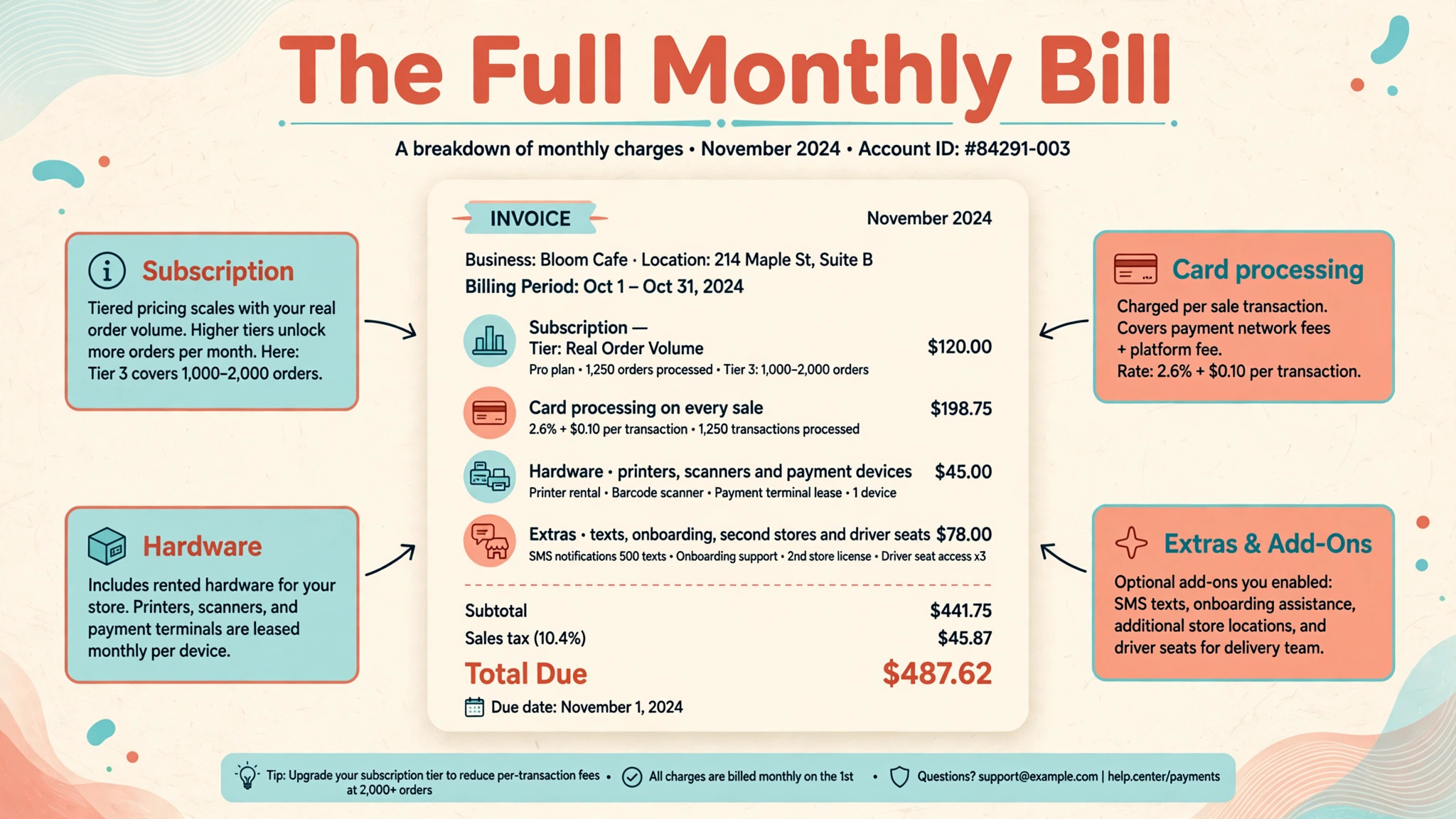
The subscription is only the first line of the bill for the best laundry management software for laundromats. Hardware, onboarding, text message credits, payment processing and extra stores all sit on top, and two systems with the same headline price can differ by hundreds a month once those lines are added.
Ask every vendor for four numbers in writing. The subscription at your order volume, the processing rate on card sales, the cost of texts and onboarding, and the price of a second store. A vendor that cannot give those numbers plainly is telling you something useful about the support you will get later.
| Cost line | What to count |
|---|---|
| Subscription | The tier that fits your real order volume, not the cheapest tier |
| Processing | The card rate on every sale, including delivery orders |
| Hardware | Printers, scanners, label printers and any required payment devices |
| Extras | Texts, onboarding, second stores and driver app seats |
Model the bill at double your current volume. Growth is the goal, so a system that punishes growth with a steep tier climb is a poor long-term buy even when it wins on month one.
A Working Day on the New System
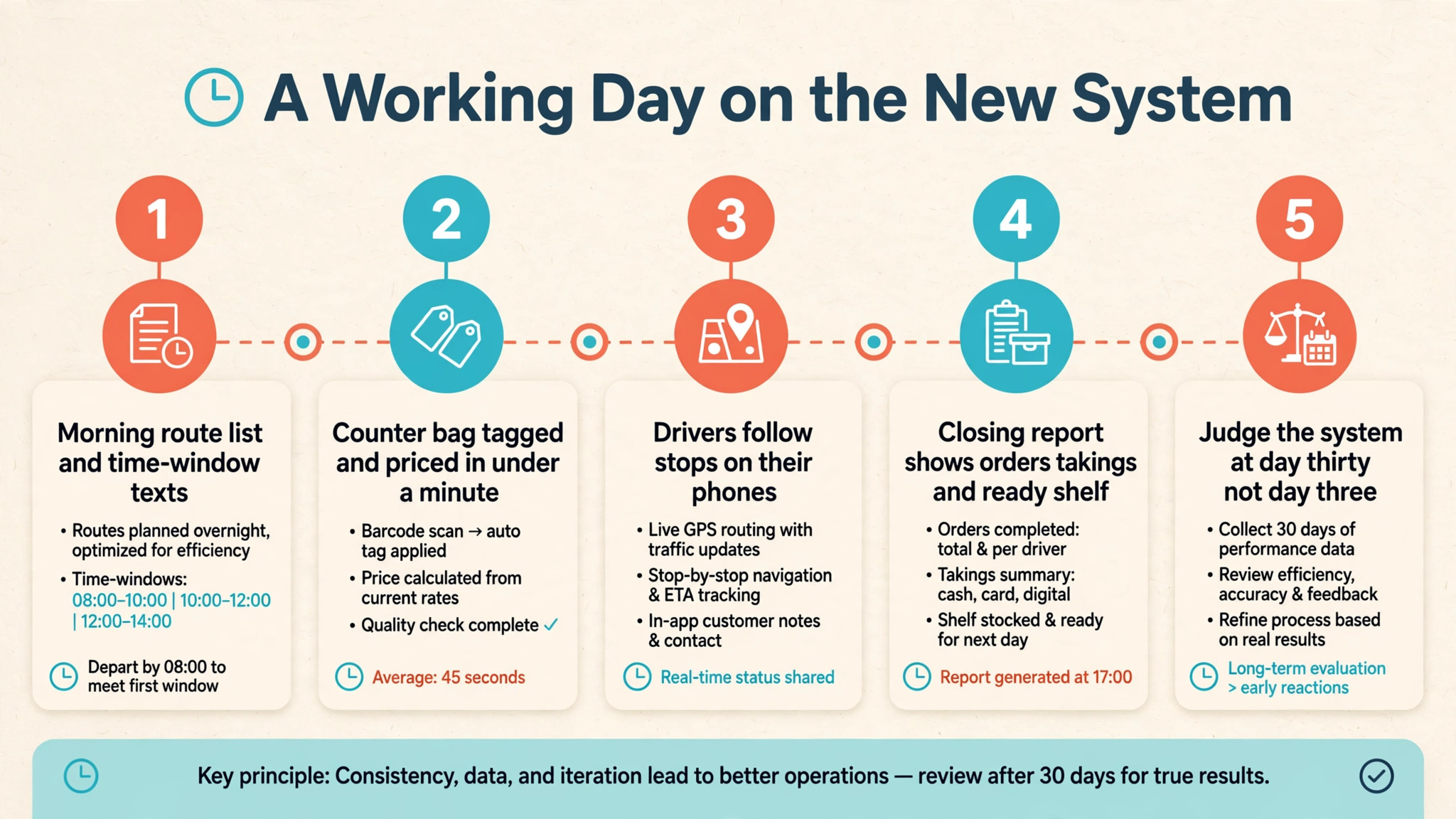
Morning starts with the route list, not with phone calls. Orders booked overnight sit in delivery order, drivers see their stops on a phone, and customers get a text with a time window. The counter team sees the same list, so a driver question gets answered from the screen instead of from memory.
At the counter, a regular’s bag is tagged and priced in under a minute because the system remembers their preferences, their last order and their balance. New customers take a little longer, but their details are captured once and reused forever, which is where the time saving compounds week after week.
Closing time is where the difference shows. The day’s orders, takings, ready shelf and uncollected bags are all visible in one report, and the owner can see which service earned its keep and which one only looked busy. That report, run daily for a month, is worth more than any demo.
The first month will still feel slower on some tasks, because staff are learning new screens while serving real customers. Protect one experienced staff member as the system owner, keep the old notebook as backup for two weeks only, and judge the system at day thirty, not at day three.
Watch the ready shelf during the trial week. If uncollected bags fall, texts are working. If they rise, the problem is usually the pickup message or the shelf layout, not the software, and fixing that process matters more than switching vendors.
A second store changes the decision again. Shared customer records, shared pricing and one report across stores save hours a week, but only when the system was built for multi-store work. Single-store systems stretched across two sites tend to produce two separate piles of data.
Loyalty is where a laundry system earns its keep beyond the till. A regular who drops off every Friday should be recognised at the counter, offered their usual service without re-explaining it, and rewarded after a set number of visits. Systems with built-in loyalty and stored balances make that recognition automatic, while systems without it leave the reward to staff memory, which fails on busy days.
Subscriptions suit wash and fold customers who value predictability. A monthly bag plan or a set number of loads per month gives the store steady income and gives the customer a reason to return. Before offering one, check that the system can track remaining credits, handle renewals and pause a plan when a customer goes on holiday without manual adjustments.
Commercial accounts need different handling from walk-in customers. Hotels, salons and gyms order in bulk, pay on invoice terms and expect monthly statements rather than payment at the counter. A system that supports account pricing, credit limits and monthly billing will serve those accounts cleanly, while a counter-only system will force the owner into spreadsheets for the best-paying customers.
Promotions must be easy to start and easy to stop. A quiet Tuesday discount, a first-order offer for new delivery customers or a seasonal bundle should take minutes to create and should expire automatically. Promotions that need a support ticket to end will run longer than planned and quietly eat margin for weeks.
Staff permissions protect both money and trust. Counter staff need to take orders and payments, drivers need routes and customer phone numbers, and only managers need refunds, discounts and price changes. A system with clear role permissions prevents honest mistakes and makes it obvious who changed what when a total does not reconcile.
Customer feedback is cheapest at pickup time. A short text asking how the order went, sent when the bag is collected, catches problems while they can still be fixed. Stores that ask early hear about a missing sock or a wrong fold before the customer tells friends, and they build a review base that brings in new delivery customers.
Reporting should answer one question each morning, which service earned money yesterday and which one only looked busy. Wash and fold, dry cleaning, self-serve and delivery all carry different costs, and a system that splits revenue and order counts by service lets the owner invest in the profitable line and fix or drop the weak one.
Self-serve machines deserve attention even in a full-service system. Machine usage, out-of-order reports and card payments on machines all feed the same customer record when the system supports them. A store that treats self-serve as a separate business will miss the customer who starts on machines and later buys wash and fold.
Seasonal swings hit laundries harder than most shops expect. Student areas empty in summer, tourist areas peak in holiday months, and rainy weeks push more customers toward wash and fold. A system with year-on-year comparisons shows the pattern plainly, so staffing and promotions can be planned around it instead of reacting to it.
A second counter or a drop-off point changes the data picture. Shared pricing, shared customer records and one closing report across sites save hours, but only when the system was built for more than one location. Ask how a second site is billed and how its orders appear in reports before opening it, not after.
Payment choice matters at the counter and on the doorstep. Some customers pay by card, some by phone wallet and some still pay cash, while delivery customers expect a saved card charged on delivery. A system that handles all of those without a second device keeps queues short and drivers moving.
Training new staff should take hours, not days. A counter system with a clear order flow, big buttons for common services and a simple ready-shelf search lets a new hire serve customers on day one. Trial the system with a new hire, not just with the owner, because the owner already knows how the business works.
Data backup and ownership deserve a direct question before signing. Ask how to export customers, orders, prices and balances in full, how often exports can run and what format they arrive in. A vendor that answers plainly is a vendor that expects to earn renewal, not to trap the store.
The best test of any laundry system is a bad day, not a good demo. Run the trial on a rainy Saturday with a full ready shelf, a driver running late and a customer disputing a charge. The system that keeps the queue moving and the records straight on that day is the system worth paying for.
Finally, revisit the choice once a year. Order volumes, delivery share and store count all change, and the system that fitted last year may not fit this one. An annual review of the bill, the tier and the unused features keeps the software honest and the business in control.
Moving Over Without Losing a Bag
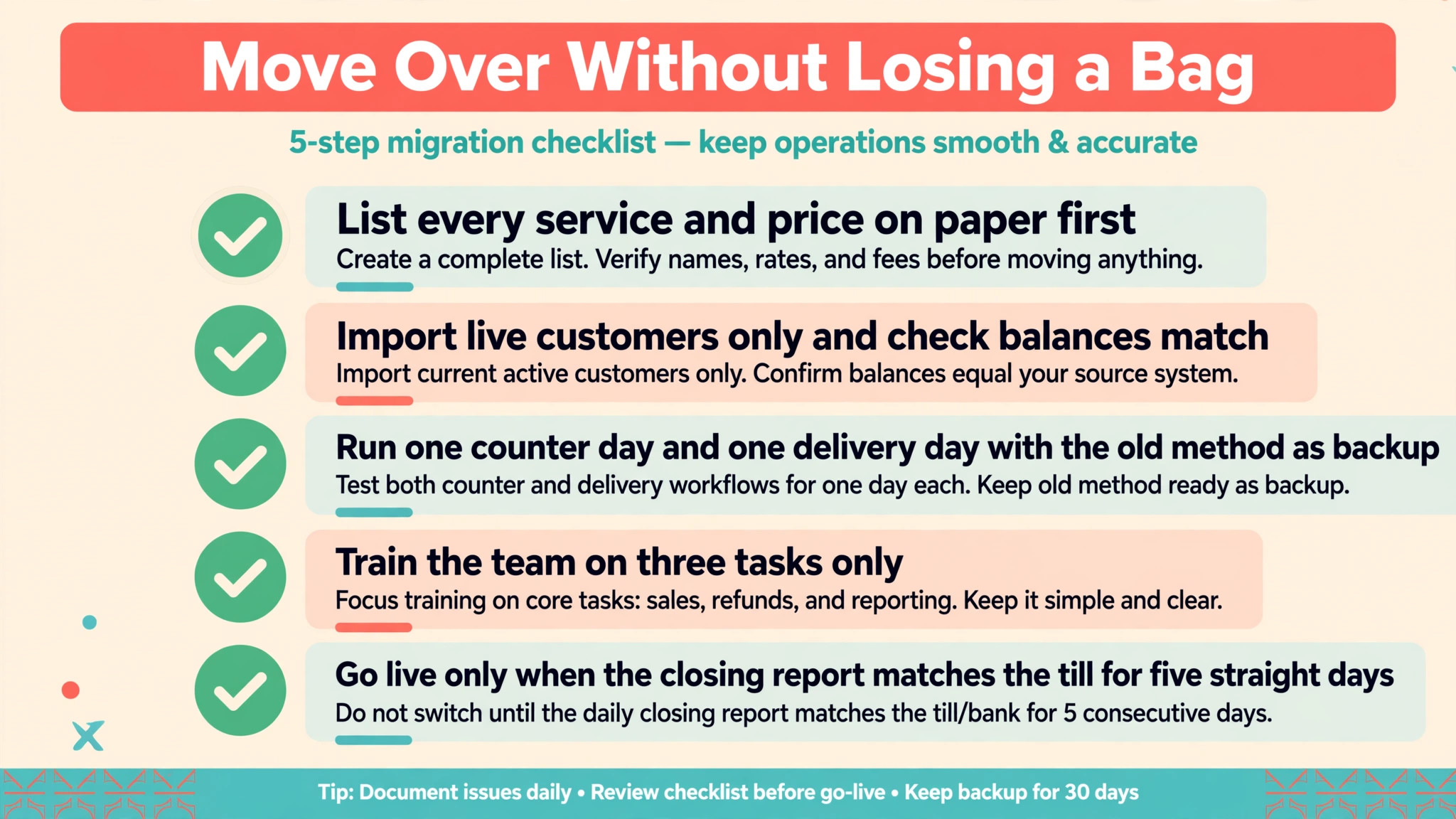
List every service and price on paper first, including wash and fold by weight, per-piece dry cleaning and delivery fees, so nothing is invented during setup.
Import live customers only for the pilot, and check that balances, preferences and outstanding orders match the old records exactly.
Run one counter and one delivery day on the new system while the old method stays as backup, then compare the closing totals.
Train the team on three tasks only at first, taking an order, finding a ready bag and handling a driver return, then expand from there.
Go live fully only when the closing report matches the till for five straight days, and keep the old records readable for a full month.
Where Laundromat Budgets Quietly Leak
The most common mistake is buying delivery depth for a store that has no routes yet. Delivery tools look exciting in a demo, but they add cost, training and driver management to a business that may only need a faster counter. Add delivery when orders demand it, not when a sales call suggests it.
The second mistake is ignoring the exit. Customer records, order history and pricing live inside the system, and a vendor that makes exports hard or charges heavily for them will cost far more at exit than it saved at entry. Export a full backup monthly and keep a copy outside the system.
The third mistake is letting hardware surprise the budget. Label printers, barcode scanners and payment devices are rarely in the headline price, and a store that needs three counters equipped can add a serious one-off cost. Price the hardware for every counter before signing.
A fourth trap is training nobody to own the system. When everyone can change prices, refunds and customer records, nobody is responsible for keeping them accurate, and small errors accumulate until the reports cannot be trusted. Name one system owner, give them time each week to check the data, and the whole business benefits.
A fifth trap is ignoring the customer app after launch. Customers download an app once and judge it on the first order, so a broken booking flow or an outdated price list in the app will cost more goodwill than having no app at all. Test the customer app monthly, as a customer, not as the owner.
The Verdict for Laundromat Owners
Start with the shape of the business, then the volume, then the trial. For most mixed counter and delivery stores, CleanCloud is the safest first trial for the best laundry management software for laundromats, because it covers the till and the route in one system at a published price that is easy to compare.
A self-serve store with no routes should trial Wash-Dry-Fold POS first and keep the money it saves for machines and marketing. A route-led business should trial Curbside Laundries, and a multi-store operator should trial Cents, because each of those systems is built for the job it will actually do every day.
Whatever the shortlist, judge the winner on one full week of real orders. The best laundry management software for laundromats is the one that makes the counter faster, the routes cleaner and the closing report believable, not the one with the longest feature list or the lowest first-month price.
Price is only one part of the decision, and it should never be the first part. A system that saves one staff hour a day, prevents one lost bag a week and brings back one lapsed customer a month has already paid for itself at most published prices, while a cheaper system that staff avoid using costs money every single day.
The trial is the decision, not the demo. Run real orders, real routes and real closing reports through the finalist, and involve the counter team and the drivers in the verdict, because they will live with the choice long after the sales calls end.
More Reading on Stratilyze
Owners comparing systems usually read the neighbouring guides next. The guide to booking software for service businesses covers the scheduling side of the same decision, the guide to CRM software for small businesses explains the customer records behind repeat orders, and the guide to accounting software for small businesses helps with the books those orders feed into.
Frequently Asked Questions
Do I need delivery tools if my store is self-serve only
No. A self-serve store with a wash and fold counter needs counter speed, order tracking and a clear ready shelf far more than it needs routing. Paying for delivery tools before routes exist adds cost and training without adding revenue, so choose a counter-led system and add delivery later if demand appears.
How does order-based pricing affect a growing store
Order-based pricing rises with volume, so a store that grows from a few hundred to a few thousand orders a month can see its bill climb several tiers. Flat pricing stays fixed as volume grows, which is why fast-growing stores should compare the bill at double their current volume rather than at today’s count.
Can laundry software replace my accountant
No, it feeds the books instead. The system records sales, orders and customer balances, and exports or syncs that data to accounting software. Tax, payroll and year-end work still sit with an accountant, but clean daily records make that work faster and cheaper.
What hardware will I actually need
Most systems run on a normal computer or tablet, plus a receipt printer, a barcode or label printer and a scanner for bag tags. Delivery-led systems may require specific payment devices, so price the hardware for every counter and every driver device before signing.
Is the best laundry management software for laundromats worth it for a single store
Yes, when the store handles enough wash and fold or delivery orders that notebooks and memory start causing mistakes. A single store with a busy counter usually recovers the subscription through fewer lost bags, faster closing and more repeat orders from timely pickup texts.
How long does switching systems take
A careful switch takes two to four weeks, including price setup, customer import, a pilot day and staff training on the core tasks. Rushing it risks lost orders and wrong balances, so run the old method as backup until the closing report matches for five straight days.