
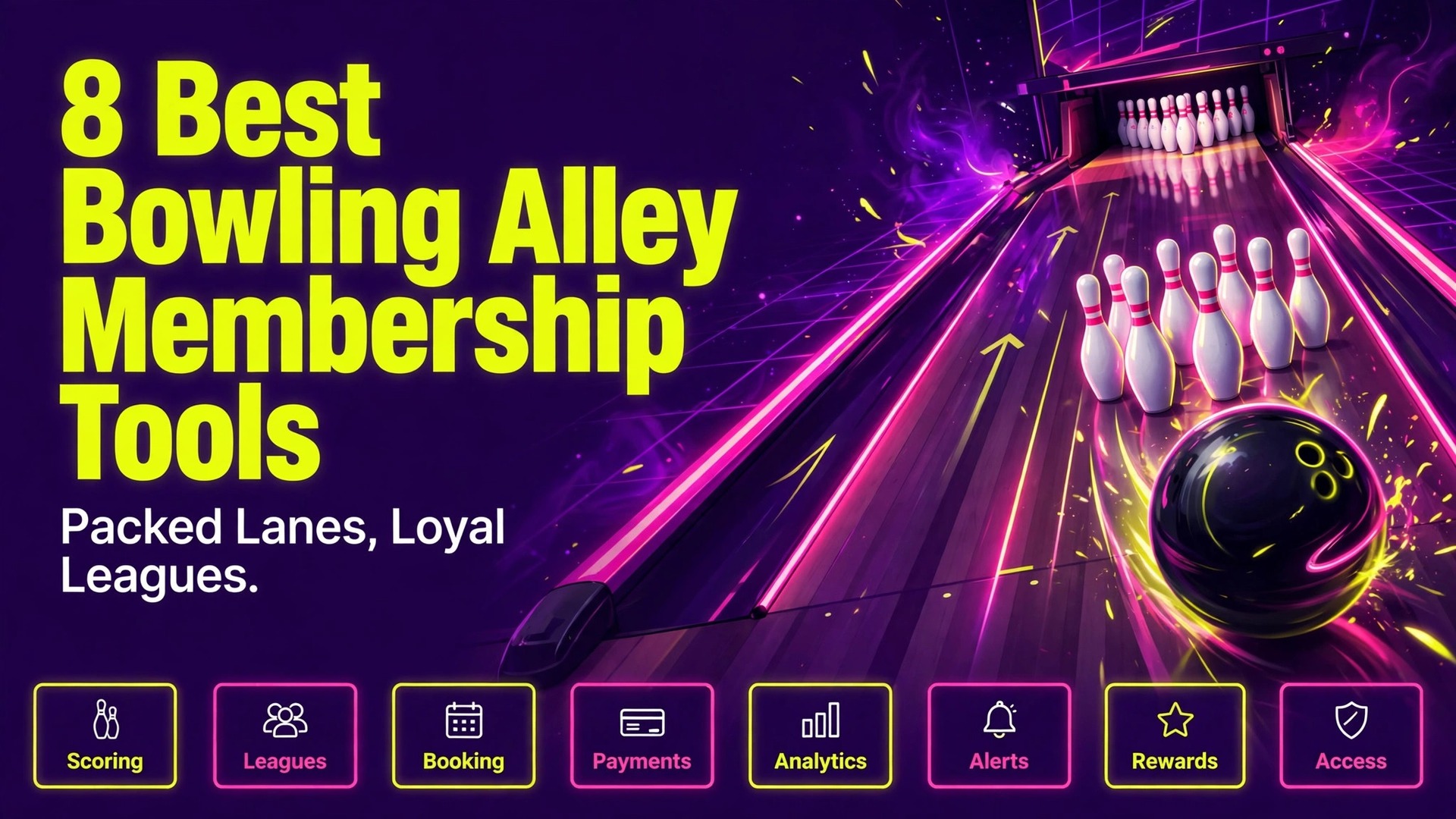
LaneTalk says its league platform is trusted by over 500,000 bowlers, and that number tells a story every bowling center already knows. League bowlers expect scores, standings and dues on their phones, while open play customers expect instant lane booking, and the best membership software for bowling alleys has to serve both groups without making staff run two different systems. A center that only serves one group well will slowly lose the other.
Bowling is three businesses in one building. Open bowling needs lane booking and shoe hire, leagues need handicaps, standings and weekly dues, and corporate parties need group bookings, food and private lanes. Most membership tools handle one of those well and the other two badly, which is why a generic gym system so often disappoints a bowling center.
This guide compares eight platforms, from bowling specific league tools to general facility and league systems. Prices come from published vendor and directory pages, and they change, so check the vendor current pricing page before you commit. Judge each tool on your revenue mix, not on a feature list that treats every center the same.
What the Comparison Shows
The table below is a first pass at the best membership software for bowling alleys, sorted by natural home. A cheap league tool can be perfect for a league organizer and useless for a commercial center, so read the best for column before the price column. Shortlist two or three tools, then trial them on a real league night and a real busy Saturday.
| Tool | Best for | Starting price |
|---|---|---|
| LeaguePals | centers that want league scores, standings and payments in a bowler app | Published directory listings put LeaguePals at about $70 a month on a standard plan, with other listings describing it as quote based. Check the vendor current pricing page for the latest figure. |
| LaneTalk | centers on QubicaAMF scoring that want a modern league experience | LaneTalk lists an annual fee of $500 per center for unlimited leagues and league secretaries after its test period. Check the vendor current pricing page for the latest figure. |
| Bowling League Pro | single centers that want clean league dues and standings | Bowling League Pro lists a Starter plan at $29 a month and a Professional plan at $59 a month. Check the vendor current pricing page for the latest figure. |
| Playpass | leagues and clubs that want to start free and scale by season | Playpass offers a free plan and paid plans from $9 a month, with lower payment fees on higher tiers. Check the vendor current pricing page for the latest figure. |
| EZFacility | multi use facilities that run bowling alongside other activities | EZFacility does not publish pricing, so expect a quote. Check the vendor current pricing page or ask the vendor directly for current terms. |
| TeamSnap | teams and leagues that need communication more than facility billing | TeamSnap offers a free tier, with paid plans by quote on its published pages. Check the vendor current pricing page for the latest figure. |
| LeagueApps | leagues and sports clubs that want a full registration platform | LeagueApps does not publish pricing, so expect a quote. Check the vendor current pricing page or ask the vendor directly for current terms. |
| Sports Carnival | youth leagues and clubs that want flat per location pricing | Sports Carnival lists a Growth plan at $199 a month per location and a Pro plan at $299 a month per location, with card processing extra. Check the vendor current pricing page for the latest figure. |

Best Membership Software For Bowling Alleys by Job Type
Your revenue mix should pick the tool, and the best membership software for bowling alleys for your center depends on which of these three jobs pays the bills. A league heavy center, an open play center and a party heavy center need different strengths, even though they all have lanes.
| Job type | Best pick | Why it fits |
|---|---|---|
| Open bowling | EZFacility | Lane scheduling, membership billing and point of sale for the whole building |
| Leagues | LeaguePals | Automatic standings, stats and dues built for league night |
| Corporate parties | Sports Carnival | Group registration, payments and messaging that suit booked events |
Lane Booking and Shoe Hire Checklist
Lane booking and shoe hire are where bowling software either saves the front desk or creates a queue. A customer who booked a lane online should arrive to shoes in their size and a lane that is actually free, not to a counter argument. Check these points in any trial.
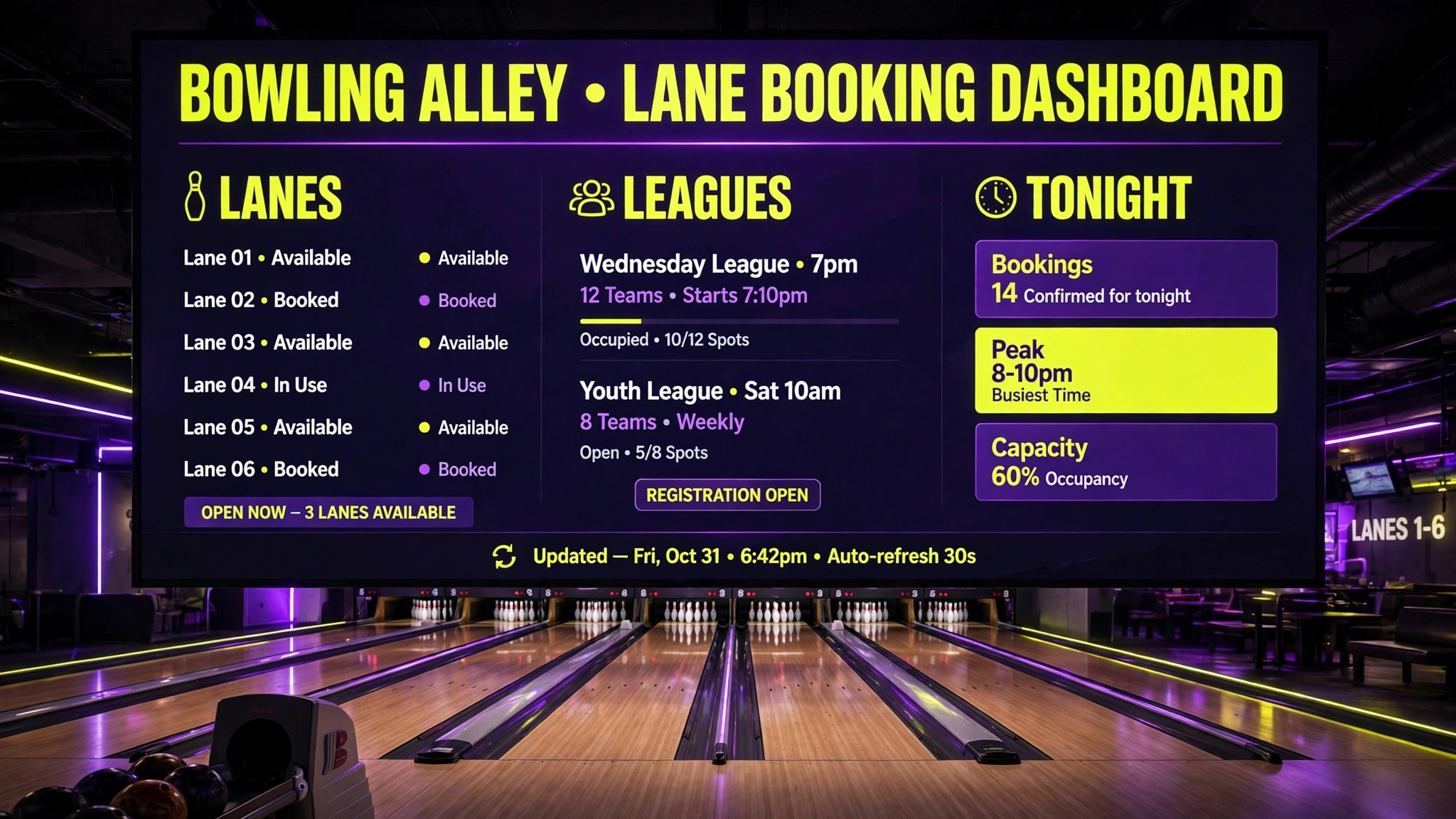
– Book lanes by time and lane count, with automatic cut offs so a lane is never double booked across online and walk in sales. – Show shoe sizes and availability at booking, and flag shortages before the customer arrives, not at the counter. – Handle group bookings with one payer and individual bowlers, so parties do not need five separate transactions. – Block lanes for leagues and maintenance, and make those blocks visible to staff but not bookable online. – Send reminders with arrival time, lane number and shoe hire details, so groups arrive ready to play. – Allow walk in lane sales beside online bookings, with a single live lane view for the whole front desk team. – Track shoe hire stock by size, and report the sizes that run out first on busy nights. – Offer membership and league renewal at checkout, without forcing a separate purchase flow.

The Tools in Detail
Each tool below is judged on bowling fit first. General facility depth, communication and price matter, but a tool that cannot handle league night or lane booking will fail where your revenue lives.

1. LeaguePals
LeaguePals is built for league bowling, with registration, standings, stats and payments that update shortly after the last ball is thrown. Its cloud league scoring connects to the center scoring system, so bowlers can check standings on a phone instead of crowding around a printed sheet. Best for centers that want league scores, standings and payments in a bowler app. Published directory listings put LeaguePals at about $70 a month on a standard plan, with other listings describing it as quote based. Check the vendor current pricing page for the latest figure.

The trade off is narrowness. It is a league tool first, so open bowling memberships, party bookings and lane hire need a separate system or a workaround. Centers that earn most revenue from leagues will love it, while open play heavy centers may find it incomplete. Test it with a real week of bookings before you commit, and bring the staff who will use it every day into the trial.
2. LaneTalk
LaneTalk syncs league scores automatically and delivers them to bowlers phones, and its own pages claim it is trusted by over 500,000 bowlers. Automated league setup, team and bowler handling and live standings cut the weekly admin that league secretaries used to do by hand. Best for centers on QubicaAMF scoring that want a modern league experience. LaneTalk lists an annual fee of $500 per center for unlimited leagues and league secretaries after its test period. Check the vendor current pricing page for the latest figure.
The trade off is scoring compatibility. Its league platform is built around QubicaAMF Conqueror X scoring, so centers on other scoring systems must confirm compatibility before committing. For a matching center, though, the per center price is easy to justify. Test it with a real week of bookings before you commit, and bring the staff who will use it every day into the trial.
3. Bowling League Pro
Bowling League Pro focuses on the weekly grind of league night, with unlimited leagues in one center, handicap scoring, standings, staff roles and dues tracking. The Professional tier adds payment schedules and verification for peer payment apps, which solves the endless question of who has actually paid. Best for single centers that want clean league dues and standings. Bowling League Pro lists a Starter plan at $29 a month and a Professional plan at $59 a month. Check the vendor current pricing page for the latest figure.
The trade off is scope. It is a center tool for leagues, not a full membership and lane booking platform, so open bowling and party sales still need handling elsewhere. For a league heavy center, that focus is a strength, not a gap. Test it with a real week of bookings before you commit, and bring the staff who will use it every day into the trial.
4. Playpass
Playpass covers registration, memberships, schedules, standings and messaging for bowling leagues and clubs, and its monthly billing suits seasonal programs that upgrade for busy months and pause later. Online sign ups with installment payments and discounts help leagues fill rosters without paper forms. Best for leagues and clubs that want to start free and scale by season. Playpass offers a free plan and paid plans from $9 a month, with lower payment fees on higher tiers. Check the vendor current pricing page for the latest figure.
The trade off is depth for a full commercial center. It is a league and club platform, not a lane booking and point of sale system, so a center with heavy open play and party trade will need companion tools. For a league organizer, the free start is genuinely useful. Test it with a real week of bookings before you commit, and bring the staff who will use it every day into the trial.
5. EZFacility
EZFacility has managed sports and recreation facilities for years, covering scheduling, membership billing, point of sale, payroll and reporting in one system. A center that also runs an arcade, restaurant or fitness area gets one system for the whole building instead of a patchwork. Best for multi use facilities that run bowling alongside other activities. EZFacility does not publish pricing, so expect a quote. Check the vendor current pricing page or ask the vendor directly for current terms.
The trade off is bowling specificity. League standings and scoring integration are not its core, so a league heavy center may still need a league tool beside it. It fits best where the building, not the league, is the business. Test it with a real week of bookings before you commit, and bring the staff who will use it every day into the trial.
6. TeamSnap
TeamSnap excels at team management and communication, with schedules, rosters, messaging and availability in an app bowlers actually open. League organizers who struggle to reach teams will find its messaging and schedule sharing far stronger than email chains. Best for teams and leagues that need communication more than facility billing. TeamSnap offers a free tier, with paid plans by quote on its published pages. Check the vendor current pricing page for the latest figure.
The trade off is facility scope. It manages teams, not lanes, memberships or point of sale, so a bowling center cannot run its whole business on it. Use it as the communication layer beside a booking and league system, not as a replacement for one. Test it with a real week of bookings before you commit, and bring the staff who will use it every day into the trial.
7. LeagueApps
LeagueApps suits leagues and sports clubs built around teams and seasons, with registration, scheduling, payments and communication in one platform. A bowling organization running many leagues across a season gets structured registration and reporting that spreadsheets cannot match. Best for leagues and sports clubs that want a full registration platform. LeagueApps does not publish pricing, so expect a quote. Check the vendor current pricing page or ask the vendor directly for current terms.
The trade off is price transparency and bowling depth. Quote only pricing makes quick comparison harder, and lane scoring integration needs checking in a demo. It fits organizations, rather than single centers, that run leagues as a program. Test it with a real week of bookings before you commit, and bring the staff who will use it every day into the trial.
8. Sports Carnival
Sports Carnival handles youth sports registration, rosters, schedules, standings and parent messaging, with memberships on the Pro plan and flat per location pricing. A center running youth bowling leagues, camps and clinics can register families, take payments and message parents from one system. Best for youth leagues and clubs that want flat per location pricing. Sports Carnival lists a Growth plan at $199 a month per location and a Pro plan at $299 a month per location, with card processing extra. Check the vendor current pricing page for the latest figure.
The trade off is fit for adult commercial centers. It is youth focused, so adult league and corporate party workflows need checking, and the per location price suits a busy center better than a quiet one. For youth bowling, the flat price and family checkout are strong points. Test it with a real week of bookings before you commit, and bring the staff who will use it every day into the trial.
How to Choose
Start with your revenue mix when you judge the best membership software for bowling alleys. Write down what share of revenue comes from open play, leagues and parties, and pick the tool that serves your largest share best. A tool that serves your smallest share brilliantly while fumbling your largest share is the wrong tool, however attractive its demo looks.
Next, check scoring integration. League standings only stay honest if scores flow from your scoring system into the platform without manual retyping, so ask each vendor to name the scoring systems it connects with and to show a live standings update. Manual score entry will be skipped on busy nights, and skipped entry kills trust in the standings.
Then test membership and payment handling together. Renewals, league dues, party deposits and open play payments should live in one customer record, so staff can see what a customer owes and has paid without opening three tools. Check failed payments, refunds and installment plans with real scenarios, not just happy path demos.
Finally, count the cost per center and per season. Per center annual fees, per location monthly fees and transaction percentages behave very differently across a quiet winter and a busy league season. Model a full year, including party season and league breaks, before you sign.

Mistakes to Avoid
The most common mistake is buying a gym membership tool for a bowling center. Gym tools handle recurring memberships well, but they know nothing about lanes, handicaps or shoe hire, so staff keep paper lane sheets beside the system and the software becomes an expensive billing add on.
Another mistake is ignoring league secretaries. Secretaries run league night, and if the new system makes their job harder, they will keep their own spreadsheets and the platform will never become the source of truth. Involve secretaries in the trial, and judge the tool on their weekly workload, not on the manager dashboard.
A third mistake is opening online lane booking without lane blocks. Leagues, maintenance and private parties need protected lanes, and an online calendar that sells those lanes creates conflicts at the door. Set blocks first, test them with a league night, and only then open public booking.
The last mistake is forgetting shoe hire and party stock. Shoes, party rooms and food packages are part of the booking, and a system that books a lane but not the shoes or the room will still leave the front desk scrambling. Trial a full party booking end to end before you commit.
Frequently Asked Questions
What does bowling alley membership software actually do?
It handles member and league accounts, lane booking, league standings and dues, party bookings and payments for a bowling center. The best membership software for bowling alleys joins those jobs in one customer record, so staff can see bookings, dues and party history without switching tools.
How much does bowling membership software cost?
Published pages on this list range from free plans and $9 a month league tools to about $199 to $299 a month per location for youth facility platforms, with some vendors quoting custom prices. LaneTalk lists $500 a year per center for its league platform. Model a full year at your lane and league volume before comparing headlines.
Can one tool handle leagues, open bowling and parties?
Partly, and the honest answer depends on your center. General facility tools handle open play and parties better, while bowling specific tools handle leagues better. Many centers run a facility tool plus a league tool, and the right mix beats forcing one tool to do a job it was not built for.
Do I need scoring system integration?
Yes, if leagues matter to your revenue. Automatic score sync keeps standings honest and timely, while manual entry gets skipped on busy nights and erodes trust. Confirm your scoring system is supported before you buy, and test a live standings update during the trial.
How should lane booking and shoe hire work together?
A booking should reserve the lane, record the group size and capture shoe sizes, so the front desk can prepare before arrival. The system should flag shoe shortages and lane conflicts at booking time, not when the group is standing at the counter, and walk in sales should share the same live lane view.
What is the best setup for a league heavy center?
Start with a bowling specific league tool like LeaguePals, LaneTalk or Bowling League Pro, and add facility booking beside it if open play grows. Judge the league tool on standings accuracy, dues tracking and secretary workload, because those three decide whether leagues stay at your center.
How do corporate party bookings differ from league bookings?
Parties need group pricing, deposits, food packages, private lanes and a single payer, while leagues need weekly dues, handicaps and season standings. A tool built for one will handle the other awkwardly, so trial a full party booking and a full league season side by side.
When should a bowling center switch systems?
Switch between league seasons if you can, and never in the middle of a season unless the current system has failed. Export member, league and payment records first, train front desk staff and league secretaries together, and run the old and new lane views side by side for two weeks.
A Straight Answer for Center Owners
League heavy centers should start with LeaguePals or LaneTalk, depending on scoring system, and add facility booking only if open play demands it. Centers where open play and parties drive revenue should start with EZFacility or Sports Carnival, and keep a league tool for standings. There is no single winner for every center, because the revenue mix decides the winner.
Trial your pick on a league night and a Saturday night, not in a quiet demo. If standings update themselves, lanes stay un double booked and shoes are ready when groups arrive, you have found your system. The best membership software for bowling alleys is the one that makes both of those nights calmer.
Think about junior and youth bowling separately from adult leagues. Youth programs need parent accounts, safeguarding notes and family payments, and a system that treats a child bowler like an adult member will create consent and payment problems. Check parent access, photo consent and family billing in the trial if youth bowling matters to your center.
Also plan for food and drink sales beside lanes. A party booking that cannot attach a food package or a bar tab will split revenue across systems and confuse reporting. Even if you start with lanes only, confirm that point of sale and package handling can be added later without migrating to a new platform.
Food and drink sales deserve a place in the booking conversation. A lane booking that cannot attach a party food package, a drinks tab or a celebration add on will split revenue across systems and confuse the final bill. Trial a full party booking with food attached, and check that the final invoice matches what the customer was quoted at booking.
Junior bowling programs need parent friendly handling. Parents book for children, pay for terms, sign consent forms and message coaches, and a system built only for adult league members will frustrate them. Check family accounts, consent capture and parent messaging in the trial if junior bowling is part of your program.
Membership renewal timing can make or break retention. Members who are reminded a month before expiry, offered an easy renewal and thanked promptly renew at higher rates than members who discover expiry at the counter. Check renewal reminders, grace periods and lapsed member win back flows before you commit.
Corporate clients buy differently from league bowlers. They need quotes, invoices, purchase orders and a single contact for a group, and a system that forces every bowler to pay individually will lose corporate bookings. Trial a corporate booking end to end, from quote to invoice, and confirm the paperwork matches what finance teams expect.
Staff rotas and lane maintenance should share a view with bookings. A lane taken out for maintenance, a staff shortage on a league night and a party booking all collide in the same building, and a system that only shows customer bookings will hide those collisions. Ask vendors to show maintenance blocks and staff availability beside the lane diary.
Loyalty and repeat play are easier to grow with good records. A customer record that shows visit frequency, average spend, league history and party bookings lets staff offer the right next step, whether that is a league invitation or a party package. Check that reporting can surface lapsed regulars for a personal follow up.
Payment flexibility matters for groups. Some parties pay by one card, some split across a group, and leagues often mix card, bank and cash payments across a season. Test split payments, deposits, refunds and installment plans in the trial, and confirm that the customer record stays clean when payment methods mix.
Accessibility and inclusion should be checked in booking, not assumed. Lane access, seating, shoe sizes and assistance needs should be capturable at booking, so staff can prepare before arrival rather than improvising at the counter. A system that cannot record those needs will let customers down on the night that matters most.
Reporting should answer business questions, not just produce charts. Lane utilization by hour, league retention by season, party conversion rate and membership churn are the numbers that drive decisions, and a report that cannot be filtered by lane, league or time period will gather dust. Export a real month of reports in the trial and use them in a management meeting.
League prize funds and payouts need clean records. Leagues collect dues, hold prize money and pay out at season end, and a system that mixes prize funds with general revenue will create disputes. Check that league finances can be tracked separately, reported transparently and reconciled at season end without spreadsheet side work.
Birthday parties and group events need a different sales flow from league play. Party hosts want packages, food choices, lane counts and a single deposit, and a booking form built for individual bowlers will frustrate them. Trial a party booking from the customer side, and confirm that the host receives one clear confirmation with everything included.
Lane maintenance and downtime should be visible to everyone who books. A lane closed for repair that still appears bookable online will create a counter conflict, while a lane blocked invisibly will waste capacity. Check that maintenance blocks are easy to set, visible to staff and hidden from public booking in the same action.
Member communication should be segmented by group. League bowlers, open play members, party hosts and youth parents need different messages, and a system that can only message everyone at once will either spam people or stay silent. Test segmented messaging in the trial, and confirm that unsubscribes and preferences are honored per group.
More Reading on Stratilyze
These guides cover memberships, bookings and facility software for related businesses.
– Best Membership Software for Dance Studios – Best Booking Software for Escape Rooms – Best Booking Software for Music Schools – Best Field Service Software for Appliance Repair Companies – How to Fix Calendly Double Booking