
Compare two stores and the pricing question answers itself. One store has 500 contacts and mails a weekly newsletter. The other has 5,000 contacts and runs abandoned cart, welcome, and post purchase flows every day. The first store can live happily on Standard at 16 dollars a month. The second store will hit the Standard send cap, or will want the unlimited sends on Pro, and will pay 90 dollars a month, which is where the cost of Omnisend for small business monthly starts to bite.
Same tool, same month, nearly six times the price, and both prices are correct, because Omnisend charges by contact count and by send allowance, not by a flat fee. That comparison is the key to the cost of Omnisend for small business monthly planning, and it explains why a single starting price tells a buyer almost nothing.
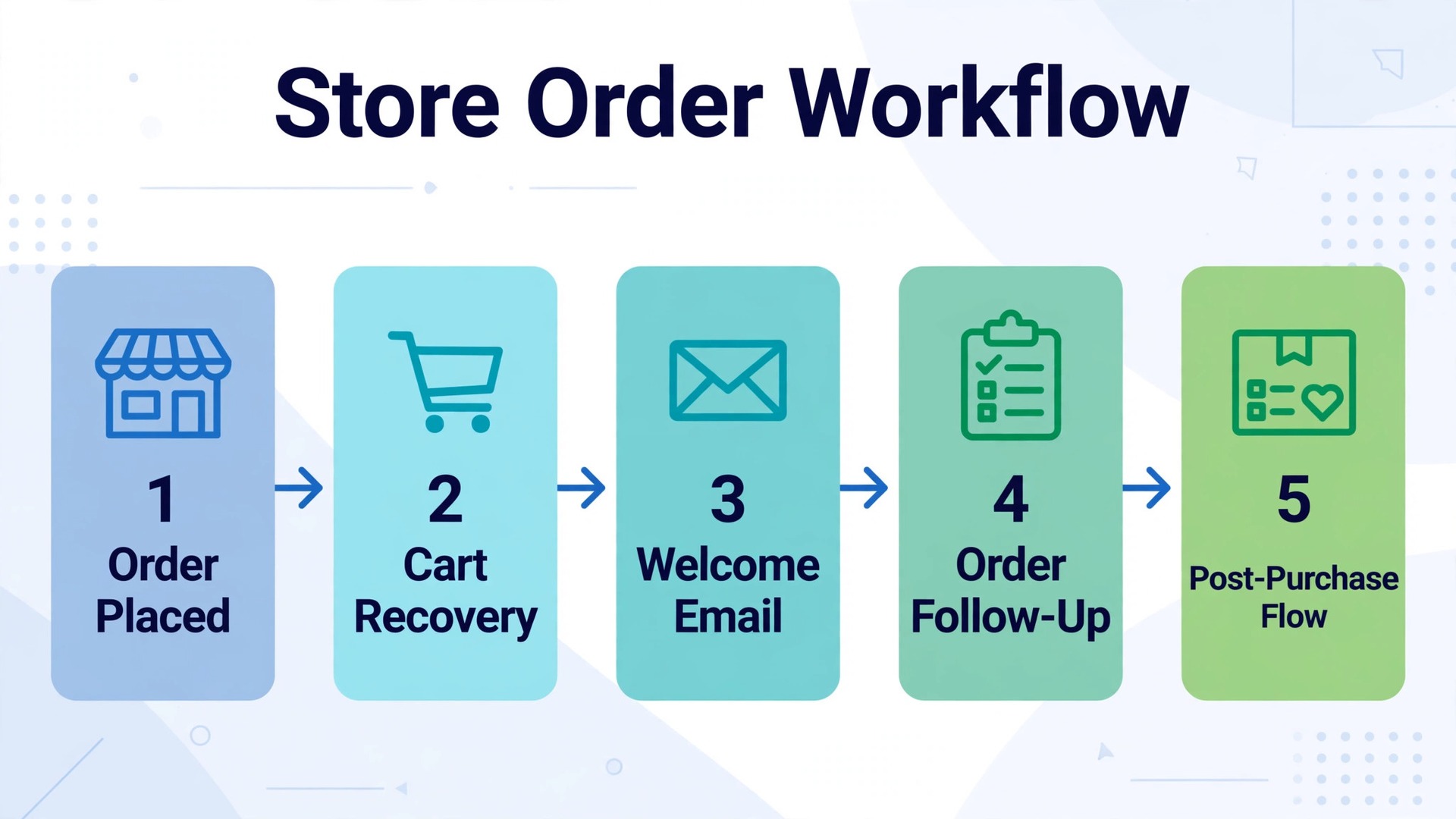
Omnisend is built for online stores, with email, SMS, and web push in one platform, and with automations aimed at store jobs such as cart recovery and order follow up. Its free plan covers 250 contacts with 500 emails a month, which suits a brand new store testing the platform. Its paid plans start at 16 dollars a month for Standard and 59 dollars a month for Pro, and both prices rise with contact count. The choice between them is not about brand loyalty. It is about how many contacts you can reach, how many emails you send, and whether SMS sits inside the plan or outside it.
Prices below come from pricing guides that cite the vendor pricing page in September and October 2026. Confirm the live pricing page before you pay, because Omnisend changed its SMS terms in 2026 and because promotional upfront rates differ from renewal rates.
How the Cost of Omnisend for Small Business Monthly Is Calculated
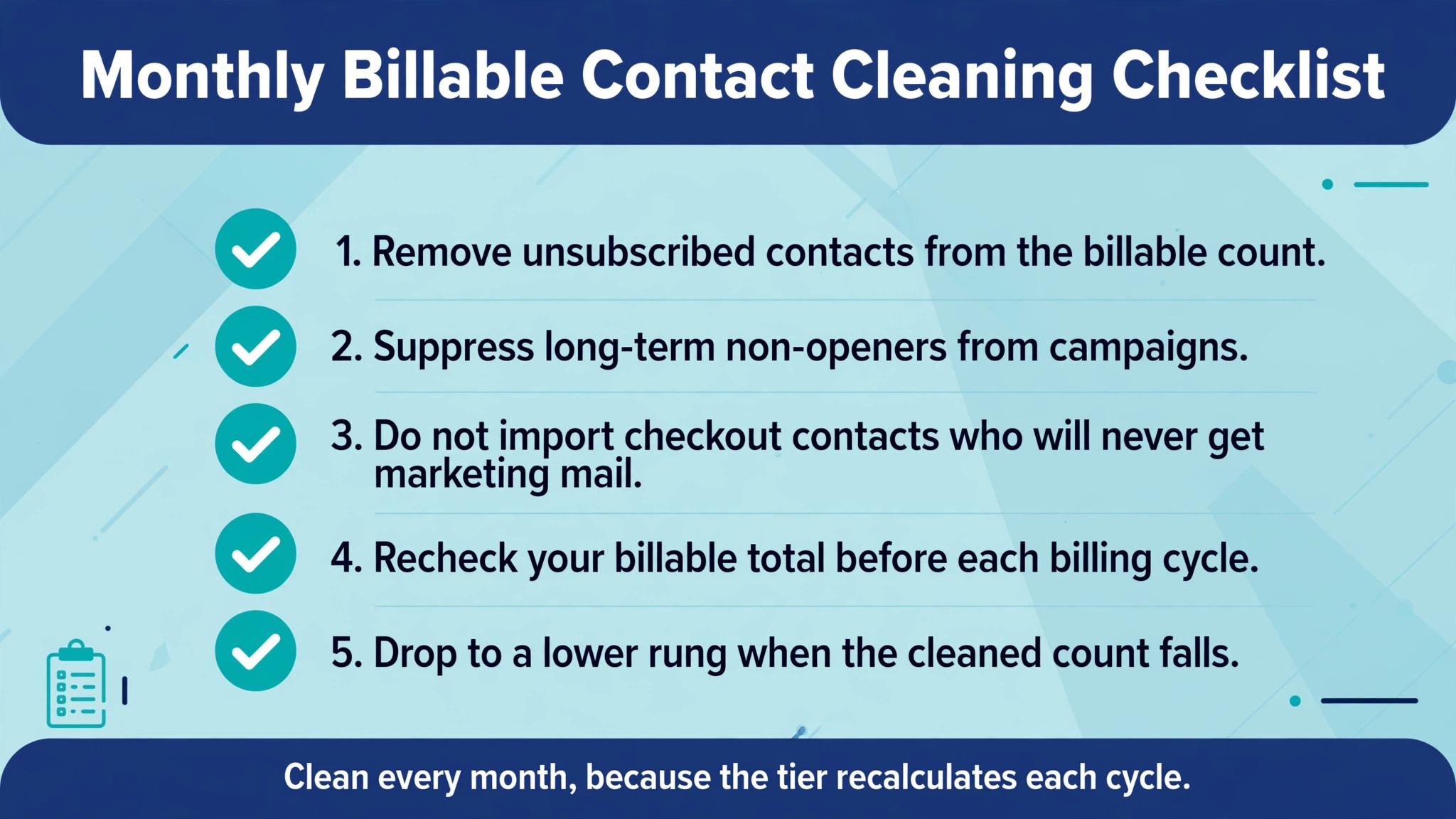
Omnisend prices by billable contacts. Billable contacts include subscribers and non-subscribers, such as customers who never opted in at checkout but who can still receive automated order messages. Unsubscribed contacts are not counted and can be stored without cost. That counting rule matters for a store, because a store collects many checkout contacts who never join the marketing list, and those contacts still count toward the tier if they receive automated messages. A store that imports a large customer file without cleaning it will land on a higher rung than a store that imports only engaged subscribers.
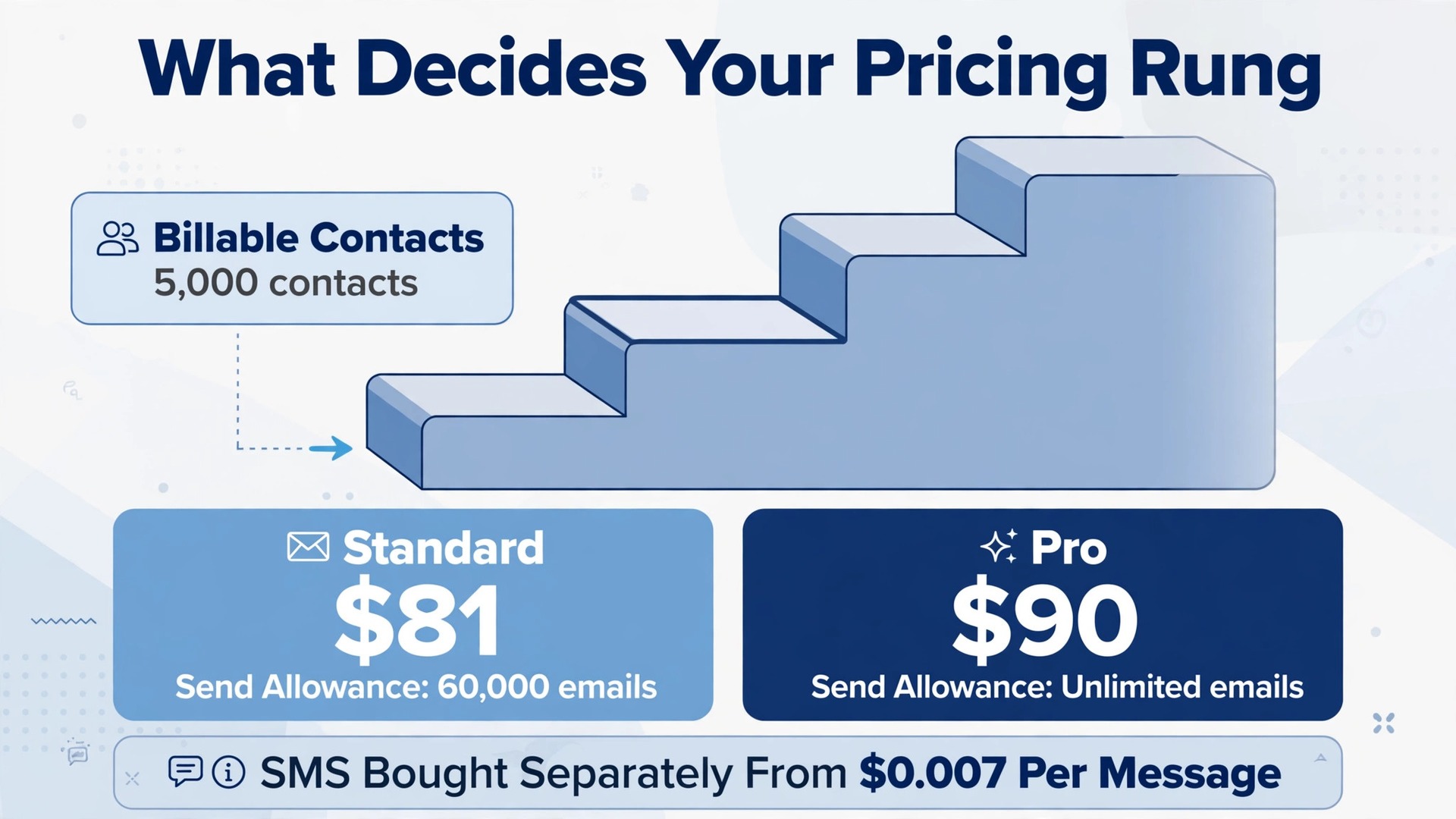
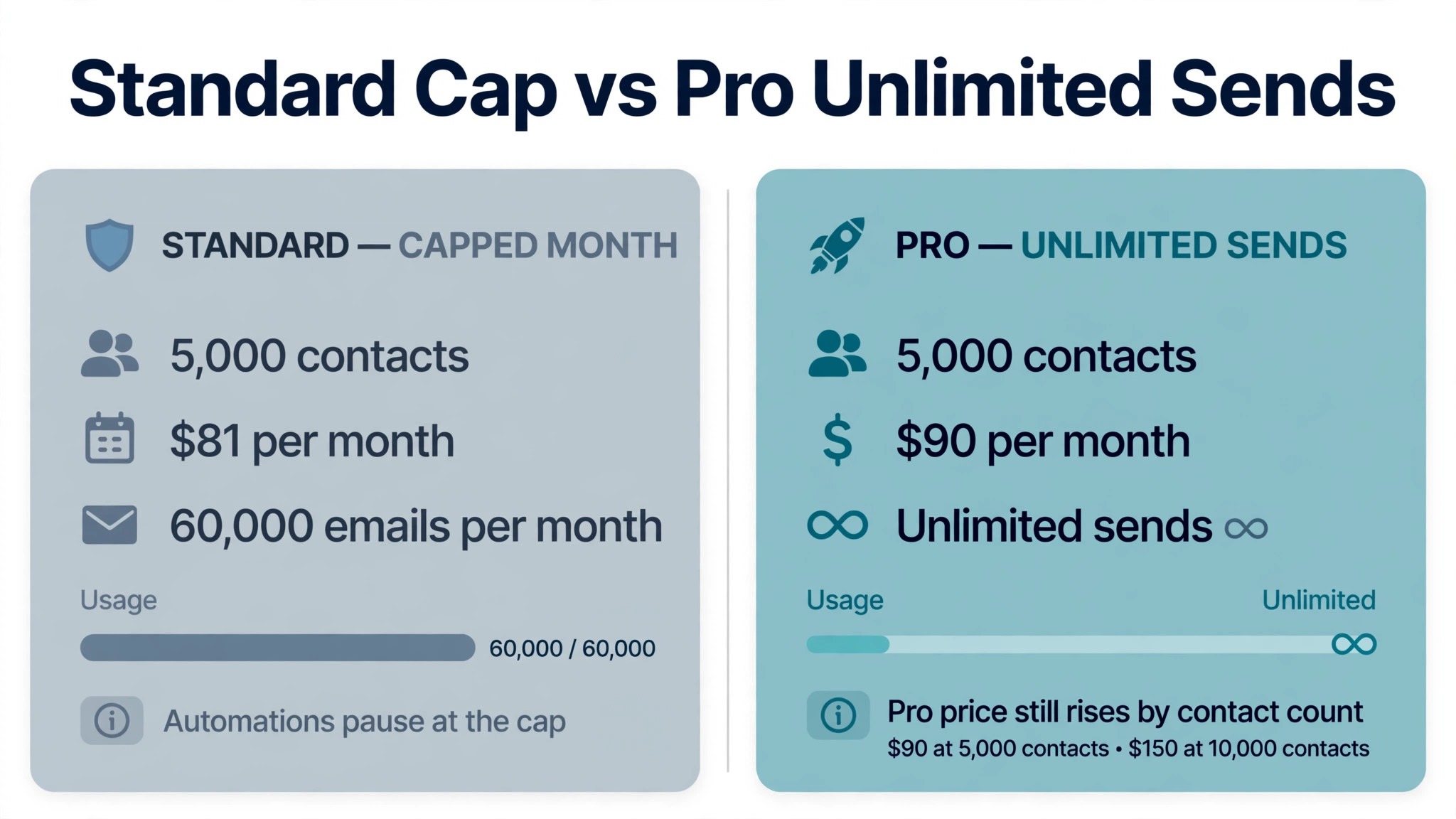
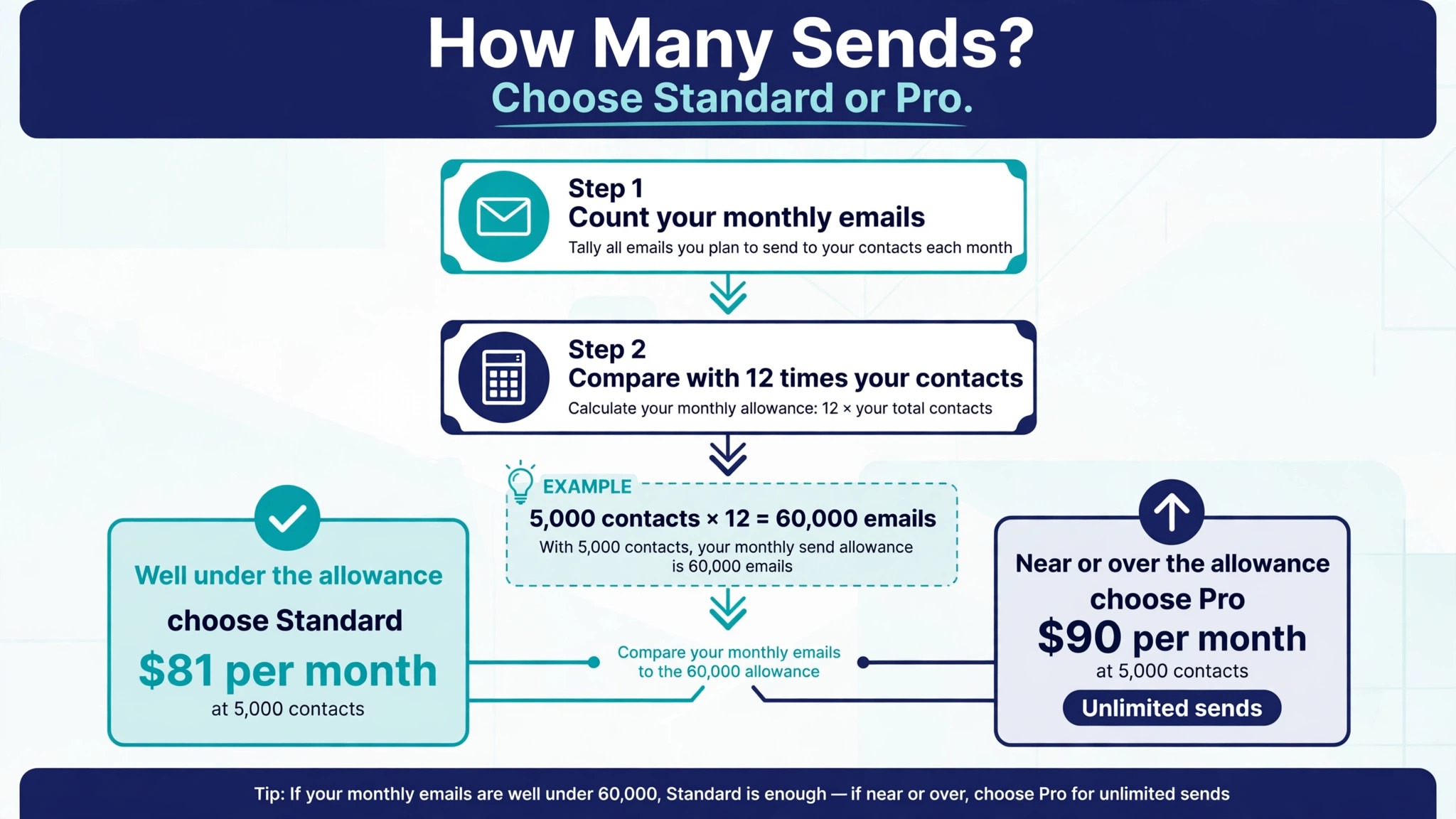
Standard gives a monthly email allowance equal to 12 times the contact count. At 500 contacts, Standard covers 6,000 emails a month. At 5,000 contacts, it covers 60,000 emails a month. Pro gives unlimited monthly emails, which removes the send cap entirely. That difference is the main reason to move from Standard to Pro, ahead of reporting or support differences. A store that mails daily, runs several automations, and sends order follow ups can burn through a 12 times allowance faster than expected, because every automation message counts against the same allowance.
SMS changed in 2026, and the change is the most important update in this guide. For brands subscribing on or after 4 May 2026, Standard has no included SMS and Pro does not include SMS credits. SMS is bought separately at volume rates from 0.007 dollars per message, depending on volume and country, according to pricing guides checked in October 2026. An older Pro plan that included SMS credits equal to the plan price was set to retire on 26 October 2026. A store that budgets from an old review that promises free SMS credits on Pro will understate the current bill, so confirm the SMS terms that apply to a new subscription on the live pricing page.
Upfront payment is the other billing detail to understand. Omnisend offers a 30 percent saving when a buyer pays three months upfront, according to pricing guides, with the Standard price at 500 contacts shown as 11.20 dollars a month on that basis against 16 dollars billed monthly.
Pricing guides warn that the upfront rate is a promotional first period rate and that the renewal rate differs, so a buyer should confirm the renewal price before treating the upfront figure as a permanent monthly cost. There is no annual billing discount published in the same way as rivals that offer 20 percent off for a full year, so the three month upfront offer is the closest equivalent, and it should be treated with caution.
Published Plans and Prices by Contact Count
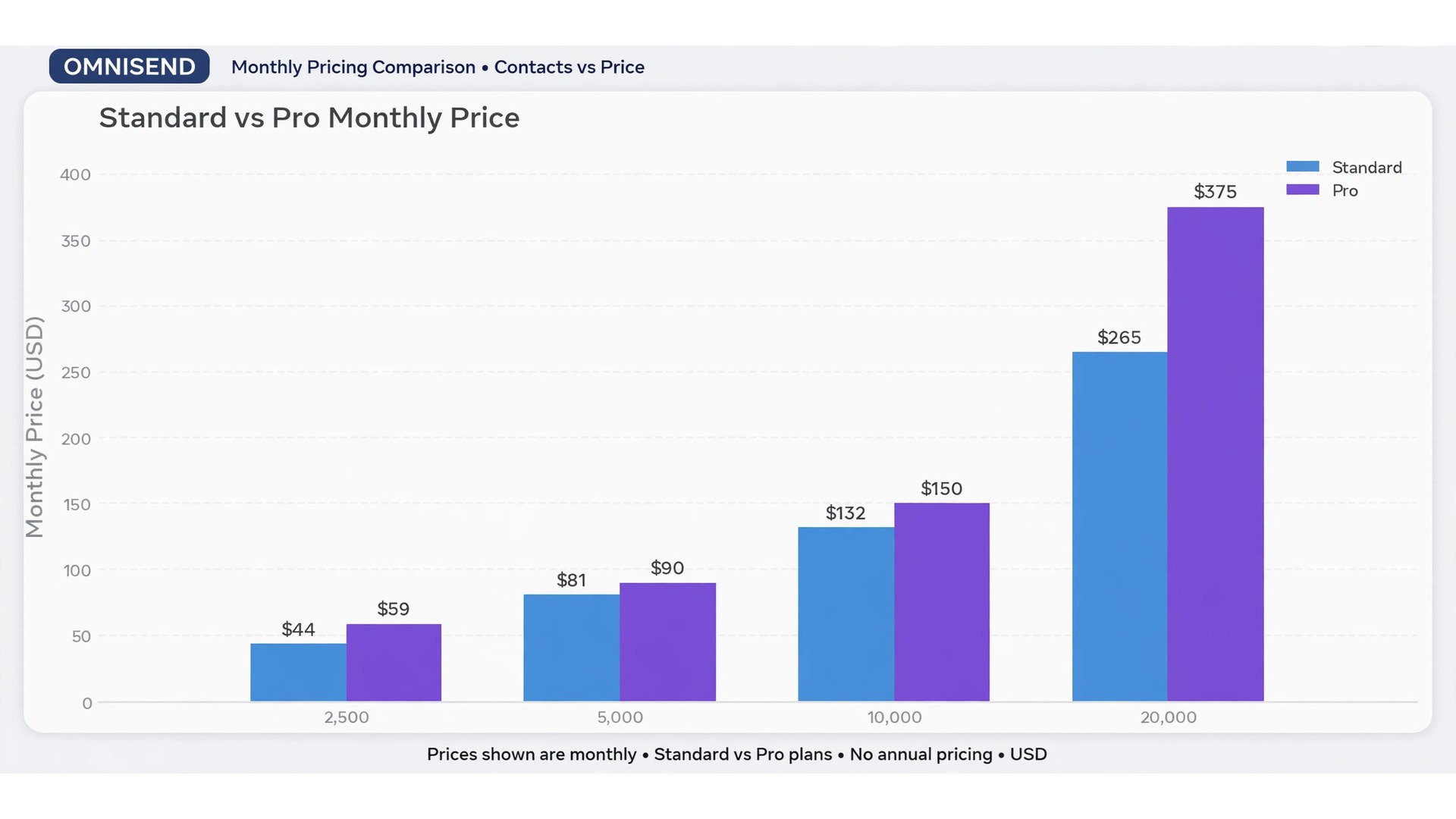
Omnisend sells three main levels, Free, Standard, and Pro, plus Custom pricing for very large businesses with 150,000 contacts or more, with tailored pricing, migration help, and a dedicated account expert. The table below states Standard and Pro prices at the contact counts a small business is most likely to hit, because the starting price only describes the smallest rung.
| Contacts | Standard monthly price | Standard monthly emails | Pro monthly price | Pro monthly emails |
|---|---|---|---|---|
| 500 | 16 dollars | 6,000 | Not available at this rung | Not available at this rung |
| 1,000 | 20 dollars | 12,000 | Not available at this rung | Not available at this rung |
| 2,500 | 44 dollars | 30,000 | 59 dollars | Unlimited |
| 5,000 | 81 dollars | 60,000 | 90 dollars | Unlimited |
| 10,000 | 132 dollars | 120,000 | 150 dollars | Unlimited |
| 20,000 | 265 dollars | 240,000 | 375 dollars | Unlimited |
Pro starts at 2,500 contacts, so a store with fewer than 2,500 contacts cannot buy Pro at a published price, even if it wants unlimited sends. That store must either stay on Standard within its send allowance, or grow the list to the Pro starting rung. In practice, a store under 2,500 contacts rarely needs unlimited sends, because the Standard allowance of 12 times contacts is generous for a weekly newsletter plus a few automations. The store that does need unlimited sends at a small list size is usually a store with heavy automation, and that store should test whether the Standard allowance truly runs out before assuming Pro is required.
All plans, including free, include 24/7 live chat and email support, according to pricing guides, which is a genuine strength for a small store without an in-house email specialist. Support quality does not therefore decide the tier, which keeps the decision focused on contacts, sends, and SMS. When you compare the cost of Omnisend for small business monthly plans against a rival, compare support on the same basis, because a cheaper plan with slow support can cost a sale week while a slightly dearer plan with fast support keeps campaigns running.
The free plan covers 250 contacts, 500 emails a month, and 500 web push notifications a month, with Omnisend branding. It is a real testing plan, not a demo, but it will not carry a trading store for long, because 250 reachable contacts is a very small audience.
The gap between Standard and Pro narrows as the list grows, then widens again at the top. At 2,500 contacts, Pro costs 15 dollars more than Standard. At 5,000 contacts, Pro costs only 9 dollars more. At 20,000 contacts, Pro costs 110 dollars more. That pattern means the upgrade decision changes with list size. At 5,000 contacts, Pro is a small step for unlimited sends. At 20,000 contacts, Pro is a large step, and a store should only take it when Standard sends genuinely run out month after month.
Real Monthly Cost by Team Size
Contact count, not headcount, drives the Omnisend bill, so the team size table below pairs each team size with a contact count and a tier that fits that team in practice. A two person store usually has a smaller list than a 25 person business with a marketing team running several campaigns. The table also shows the three month upfront equivalent, because that is the saving Omnisend publishes, with a warning that the upfront rate is promotional and the renewal rate should be confirmed.
| Team size | Assumed contacts | Fitting tier | Monthly billing | Three month upfront equivalent per month | Add-ons and hidden fees to add |
|---|---|---|---|---|---|
| 2 seats | 500 | Standard | 16 dollars | About 11.20 dollars, promo rate | SMS bought separately from 0.007 dollars per message |
| 5 seats | 2,500 | Pro | 59 dollars | About 41.30 dollars, promo rate | SMS bought separately, extra contacts push to next rung |
| 10 seats | 5,000 | Pro | 90 dollars | About 63 dollars, promo rate | SMS bought separately, extra contacts push to next rung |
| 25 seats | 10,000 | Pro | 150 dollars | About 105 dollars, promo rate | SMS bought separately, Custom quote above 150,000 contacts |
Read the table with the SMS warning attached. A store that sends 2,000 SMS messages a month at 0.007 dollars per message adds about 14 dollars to the monthly total, and a store that sends 10,000 SMS messages adds about 70 dollars, before country and volume differences. SMS can therefore rival the email subscription itself for an SMS heavy store, and it is the largest add-on risk in any honest estimate of the cost of Omnisend for small business monthly totals. A store that plans to use SMS heavily should price SMS first, then email, because the SMS line can decide which vendor is actually cheapest.
The upfront column deserves a second warning. Paying three months upfront saves 30 percent for that period, but pricing guides state that the promotional rate is not the renewal rate. A store that budgets the upfront figure for a full year will understate the year, because later periods may renew at the full monthly price. The safe way to use the upfront offer is to treat it as a discounted trial period, confirm the renewal price in writing, and then budget the renewal price for the rest of the year. That caution applies to every row in the table, and it is the difference between a budget that holds and a budget that jumps after three months.
Annual totals on monthly billing, excluding SMS, are 192 dollars for the two seat model, 708 dollars for the five seat model, 1,080 dollars for the ten seat model, and 1,800 dollars for the 25 seat model. Those totals exclude taxes, SMS, and any Custom quote, and they assume the contact count stays inside the stated rung all year. A store that grows across a rung mid year will pay the higher rung from that billing cycle onward, because Omnisend recalculates the tier from billable contacts each cycle.
The SMS Change That Rewrites Old Comparisons
Old reviews of Omnisend describe Pro as including SMS credits equal to the plan price, so a 59 dollar Pro plan included 59 dollars of SMS credits. That description is out of date for new subscribers. For brands subscribing on or after 4 May 2026, Standard has no SMS and Pro has no included SMS credits, and SMS is bought separately at volume rates from 0.007 dollars per message. The older Pro plan with included SMS credits was set to retire on 26 October 2026, so a store that reads an old comparison and budgets free SMS will face a separate SMS bill from the first month.
That change also rewrites comparisons with rivals. A rival that still bundles SMS credits can look dearer on email price but cheaper once SMS is added, while Omnisend can look cheaper on email price but dearer once SMS is added at per message rates. The only fair comparison is a total that includes email plus SMS at the store real monthly volumes, in the same country, because SMS rates vary by country and volume. A store that sends little or no SMS is unaffected by the change and can ignore it. A store that sends SMS weekly should treat the change as the deciding factor, not as a footnote.
Web push notifications are a smaller part of the same picture. The free plan includes 500 web push notifications a month, and paid plans include push as part of the platform, but push volume and SMS volume should not be confused. Push is a browser channel with its own opt in rules, while SMS is a phone channel with per message costs. A store that leans on push can keep SMS costs low, but push reach depends on visitors accepting browser notifications, which is a smaller audience than an SMS list. Test both channels on a small segment before committing the whole list to either one.
The practical step for a new buyer is to ask for the SMS terms in writing for a new subscription, including the per message rate for the store country and volume, and the minimum SMS purchase if any applies. Pricing guides note that additional SMS credits can be purchased starting at 20 dollars a month on older terms, but that figure should be confirmed for a new subscription, because the 2026 change replaced the old credit model. Do not budget from an old credit figure without confirming it still applies to your account type, because an outdated SMS assumption is the fastest way to misstate the cost of Omnisend for small business monthly spending.
A Store Worked Out in Contacts and Sends
A two person jewellery store with 500 contacts shows the low end clearly. On Standard at 16 dollars a month, the store can send 6,000 emails a month, which covers a weekly newsletter to the full list, about 2,000 sends, plus a welcome series and an abandoned cart series for new visitors. That store has headroom, and it does not need Pro, because the send allowance is far above its real use. Paying for Pro at this list size is not even possible at a published price, since Pro starts at 2,500 contacts, so the decision makes itself.
Now let that store grow to 2,500 contacts over eighteen months. Standard at 44 dollars a month covers 30,000 emails, while Pro at 59 dollars a month covers unlimited emails. The 15 dollar gap buys freedom from send counting, plus advanced reporting and a higher SMS allowance on older terms, though new subscribers should confirm the current SMS terms.
A store that runs daily automations and a weekly newsletter to 2,500 contacts can use 15,000 to 20,000 sends a month, which still fits Standard, so the upgrade is optional at this size. A store that runs several automations plus frequent campaigns and that regularly approaches 30,000 sends should take Pro, because the cost of a paused automation in a busy week exceeds 15 dollars.
A ten person clothing store with 5,000 contacts shows the middle case where Pro becomes the natural tier. Standard at 81 dollars a month covers 60,000 emails, while Pro at 90 dollars a month covers unlimited emails for only 9 dollars more. At that gap, the store should take Pro, because the risk of hitting a send cap during a sale week is real, and the cost of the upgrade is small.
A sale week that mails the full list three times, plus cart and browse abandonment flows, can push a 5,000 contact store toward 50,000 sends in a single week, which is close to the Standard monthly allowance. Pro removes that worry for the price of a few extra dollars, and that peace of mind is worth buying.
A 25 person store with 10,000 contacts shows the top of this guide. Pro at 150 dollars a month covers unlimited emails, while Standard at 132 dollars a month covers 120,000 emails. The 18 dollar gap again favours Pro for a busy store, because a 10,000 contact store with daily flows and weekly campaigns can pass 120,000 sends in a strong month. At this size, the email subscription is no longer the main cost question, and the cost of Omnisend for small business monthly planning should be judged on email plus SMS plus list growth together, not on the email line alone.
When Omnisend Is Worth It and When It Is Not
Omnisend is worth the price when the business is an online store that needs email, SMS, and push in one platform, with store automations that run without custom code. Abandoned cart, welcome, order follow up, and post purchase flows are built for store jobs, and the Shopify, WooCommerce, BigCommerce, and Wix integrations keep product and order data close to campaigns. A store that would otherwise pay for a separate SMS tool and a separate email tool can save money and setup time by running both on Omnisend, provided SMS volume is priced honestly.
Omnisend is also worth the price when support matters. All plans include 24/7 live chat and email support, which is a real advantage for a small store that cannot afford a failed campaign to wait until Monday. A store owner who has struggled with a tool that only offers email support on a paid tier will value that inclusion, even though it does not appear as a line on the bill. Support that answers in minutes can save a sale week, and that saving dwarfs a small difference in the cost of Omnisend for small business monthly pricing.
Omnisend is not worth the price when the business is not a store. A service business, a consultancy, or a content business that does not need cart recovery or order flows will pay for store features it never uses, and will find better value in a general email tool with a lower starting price. The store focus is a strength for stores and a weakness for everyone else, and a buyer should not pay for it out of habit.
Omnisend is also a weak fit when SMS is the main channel and the budget assumes bundled SMS credits. New subscribers buy SMS separately, so an SMS heavy store should compare total email plus SMS costs across vendors, not email prices alone. A store that sends 20,000 SMS messages a month will pay about 140 dollars at the lowest published per message rate, before country differences, which can exceed the email subscription itself. That store should either negotiate SMS volume rates in writing or choose a vendor whose SMS bundle fits its volume.
A third weak fit is a store with a large non-subscriber contact file that never receives marketing mail. Those contacts still count as billable if they receive automated messages, so a store that imports every past customer without cleaning will pay for contacts that never buy again. Clean the file before importing, keep unsubscribed contacts stored free where they belong, and only count contacts that can actually receive a message. That discipline is the cheapest way to hold a lower rung.

How to Cut the Bill Without Losing Sales
Clean billable contacts every month, because the tier recalculates from billable contacts each cycle. Remove unsubscribed contacts from the billable count where the platform allows, suppress long term non openers from campaigns, and avoid importing checkout contacts who will never receive marketing mail into the billable pool. A store that cuts billable contacts by 15 percent can drop a rung, and a rung drop saves every month, not once. That saving is larger than any promotional discount, because it repeats.
Size the tier by sends, not just by contacts, because Standard and Pro differ on sends. Track monthly sends for three months before choosing between Standard and Pro at a rung where both are available. If sends stay well under 12 times contacts, Standard is enough, and Pro adds cost without adding return. If sends regularly approach the allowance, Pro is cheaper than the lost sales from paused automations, and the upgrade should be made before a sale week, not during one. That timing matters, because a tier change made during a campaign can disrupt sends.
Price SMS separately and cap it deliberately. Set a monthly SMS budget, send SMS only to the highest intent segments, such as cart abandoners and recent buyers, and use email and push for broader messages. That segmentation keeps SMS costs close to the revenue it produces, because SMS to a cold list costs the same per message as SMS to a hot list but produces far fewer sales. Review SMS cost per order monthly, and cut SMS to segments where the cost per order exceeds the margin on the sale. That review is the most honest control on the cost of Omnisend for small business monthly spending, because SMS is the line most likely to grow without anyone noticing.
Finally, confirm the renewal price after any upfront period, and budget the renewal price, not the promotional price, for the rest of the year. The three month upfront saving is real for that period, but a budget built on a promotional rate will jump at renewal. Write the renewal date and the renewal price into the budget note on the day of purchase, so the jump never arrives as a surprise. That single note can prevent the most common complaint about Omnisend pricing, which is not that the price is high, but that it changed without warning.
Frequently Asked Questions
How much does Omnisend cost per month for a small business?
Standard starts at 16 dollars a month for 500 contacts with 6,000 emails, and rises to 20 dollars at 1,000 contacts, 44 dollars at 2,500 contacts, 81 dollars at 5,000 contacts, and 132 dollars at 10,000 contacts. Pro starts at 59 dollars a month for 2,500 contacts with unlimited emails, and rises to 90 dollars at 5,000 contacts and 150 dollars at 10,000 contacts. The free plan covers 250 contacts with 500 emails a month. Custom pricing applies above 150,000 contacts.
Does Omnisend include SMS in the plan price?
For brands subscribing on or after 4 May 2026, Standard has no included SMS and Pro does not include SMS credits. SMS is bought separately at volume rates from 0.007 dollars per message, depending on volume and country. Older Pro plans that included SMS credits equal to the plan price were set to retire on 26 October 2026, so confirm the SMS terms for a new subscription on the live pricing page.
What is a billable contact on Omnisend?
A billable contact is a subscriber or a non-subscriber who can receive automated messages, such as a checkout customer who never opted into marketing but who can receive order messages. Unsubscribed contacts are not counted and can be stored without cost. Clean the billable file regularly, because the tier recalculates from billable contacts each billing cycle.
When should a store move from Standard to Pro?
Move to Pro when monthly sends regularly approach the Standard allowance of 12 times contacts, or when unlimited sends remove a real risk during sale weeks. At 5,000 contacts, Pro costs only 9 dollars more than Standard, so the upgrade is easy to justify. At 20,000 contacts, Pro costs 110 dollars more, so the upgrade needs a clear send pattern to justify it, not just a preference for unlimited sends.
Does Omnisend offer annual billing?
No annual billing discount is published in the same way as rivals that offer a full year saving. Omnisend offers a 30 percent saving when paying three months upfront, with Standard at 500 contacts shown as 11.20 dollars a month on that basis. Pricing guides warn that the upfront rate is promotional and differs from the renewal rate, so confirm the renewal price before budgeting the upfront figure for a full year.
Is Omnisend cheaper than Klaviyo for a small store?
At the contact counts in this guide, Omnisend Standard is cheaper than Klaviyo on email price alone, with 1,000 contacts at 20 dollars a month against Klaviyo at 30 dollars, and 10,000 contacts at 132 dollars against Klaviyo at 150 dollars, according to pricing guides checked in October 2026. The fair comparison includes SMS at real volumes, because SMS terms differ, and it includes the features each store actually uses, not just the headline price.
Can a small store stay on the Omnisend free plan?
The free plan suits a brand new store testing the platform, with 250 contacts, 500 emails a month, and 500 web push notifications. It does not suit a trading store with a growing list, because 250 reachable contacts is a very small audience and the plan carries Omnisend branding. Treat it as a trial with no time limit, not as a permanent tier for a store that sells every week.
Verdict
Choose Standard when sends stay well under 12 times contacts and SMS volume is low, because Standard gives a store everything it needs at the lowest published price for its list size. Choose Pro when sends approach the cap, when sale weeks make a cap risky, or when the gap at your contact count is small, as it is at 5,000 contacts where Pro costs only 9 dollars more.
Price SMS as a separate line from day one, confirm the renewal price after any upfront period, and clean billable contacts monthly, and the cost of Omnisend for small business monthly budgets will stay predictable. The store that does those three things will rarely be surprised by the bill, and the store that skips them will blame the tool for a total that was really decided by contacts, sends, and SMS volume.
More Reading on Stratilyze
– Email List Growth Strategy for Small Business – Switch Mailchimp to Brevo for Small Business – Fix Mailchimp Audience Not Syncing for Small Business – Cost of Zapier for Small Business Monthly – Best CRM for Independent Car Dealers