
The verdict is simple. Do not start work without a deposit, a written payment schedule, and cancellation terms the client has already seen. That single rule protects cash flow, confirms the client is serious, and prevents the most painful small business experience, which is finishing a job and then chasing payment for weeks. This guide explains how to collect deposits before work small business owners can ask for confidently, without sounding pushy, losing good clients, or creating a dispute over a term nobody explained.
A deposit is not a penalty, and it should never be presented as one. It is a reservation of time, a contribution toward materials or preparation, and a shared commitment that the work will go ahead. Clients understand reservations in other parts of life, from hotel bookings to event tickets, and most will accept a deposit readily when the amount, the purpose, and the refund terms are clear before they pay. Resistance usually signals unclear terms, an amount that feels arbitrary, or a payment process that is awkward, and all three of those problems are fixable before the next quote goes out.
The mistake owners make is treating deposits as an afterthought, mentioned at the end of a call or buried in an invoice. Deposits work best when they appear in the quote itself, beside the scope and the cancellation terms, so the client approves the whole package at once. That placement also makes the deposit easy to enforce, because the client cannot later claim they never saw it. The sections below build that package step by step, from choosing an amount, to setting up a payment link, to writing terms, to handling the awkward conversations that still arise.
How to Collect Deposits Before Work Small Business Owners Set by Job Size
Choose the deposit from the job, not from a single percentage applied to everything, because different jobs carry different risks. A small booking that takes an hour and uses no materials needs a different deposit from a large project that requires custom materials, subcontractors, or a blocked calendar for weeks. Practitioner guides commonly describe deposits in the range of ten to thirty percent for many residential service jobs where local rules allow it, with larger shares for custom or high cost work, but those figures are illustrative planning ranges, not a universal rule, and local rules for your trade and place can cap or regulate upfront payments, so check them before you set a percentage.
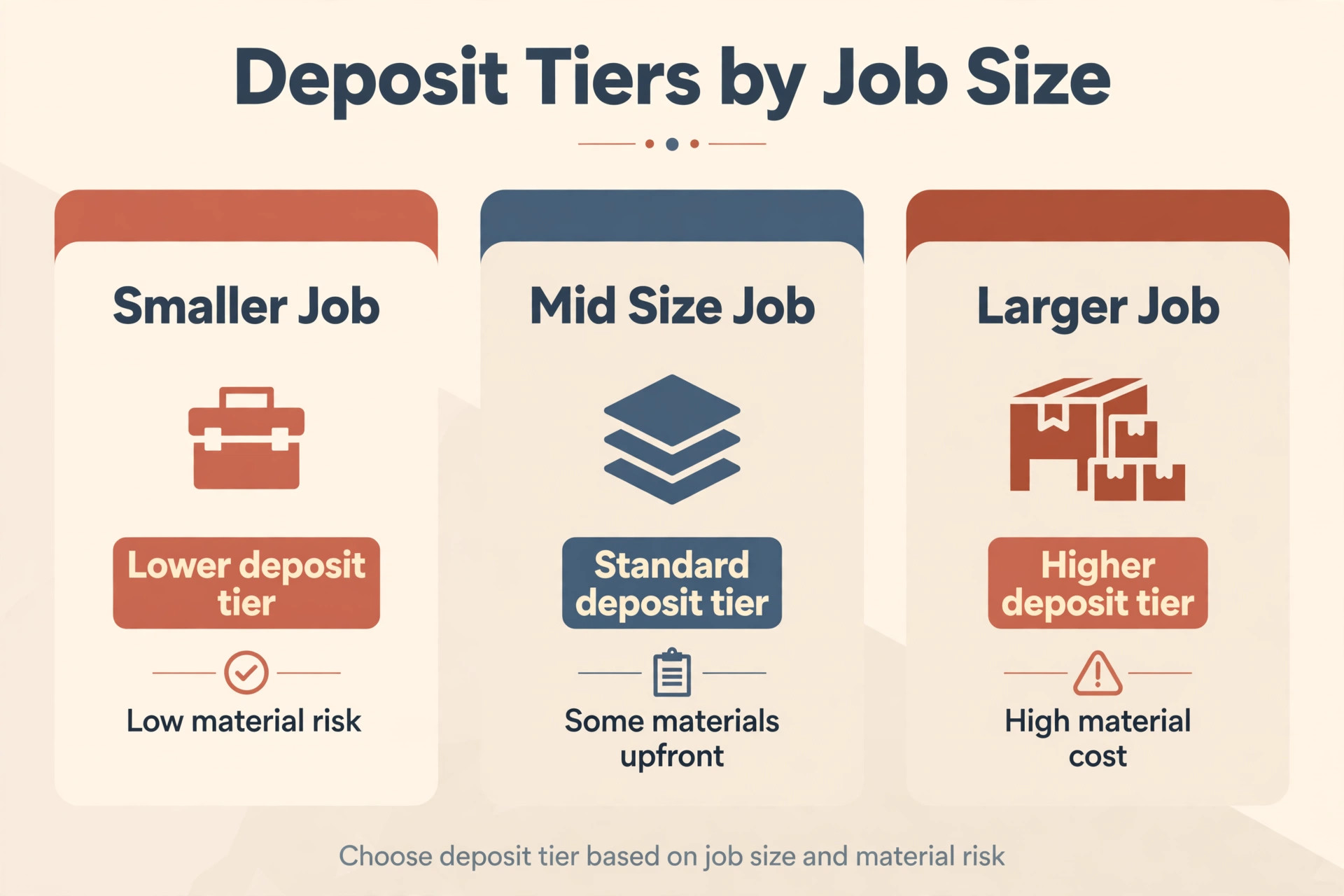
Use tiers tied to job size and cost structure, and write the tier into your quote template so every quote is consistent. A tier system also makes the deposit easy to explain, because the client can see that the amount follows the job, not your mood or their negotiating skill. The tiers below are an illustrative starting point. Adapt the percentages and thresholds to your costs, your trade rules, and your cancellation risk, and keep the same tiers for similar jobs, so clients who compare notes hear a consistent policy.
| Job type | Illustrative deposit tier | Why this tier fits |
|---|---|---|
| Small booking, no materials | A modest fixed booking amount, or a small share of the total | Covers the reserved slot without scaring off a simple booking |
| Standard service job | A moderate share of the total, often in the ten to thirty percent range where rules allow | Covers preparation and scheduling while leaving most payment for delivery |
| Job with materials or custom orders | Deposit covering the material cost plus a share of labour | Prevents the owner funding custom goods that cannot easily be resold |
| Large or multi stage project | Deposit plus milestone payments at agreed stages | Spreads risk across the project instead of loading it all at the start |
Work out the deposit from what you will spend before the next payment arrives. Add up materials to be ordered, subcontractor bookings, travel or setup time, and the calendar time you cannot sell to another client if this one cancels. If that total is higher than your tier suggests, the tier is wrong for that job, and the deposit should be adjusted with a clear explanation, rather than kept low for politeness.
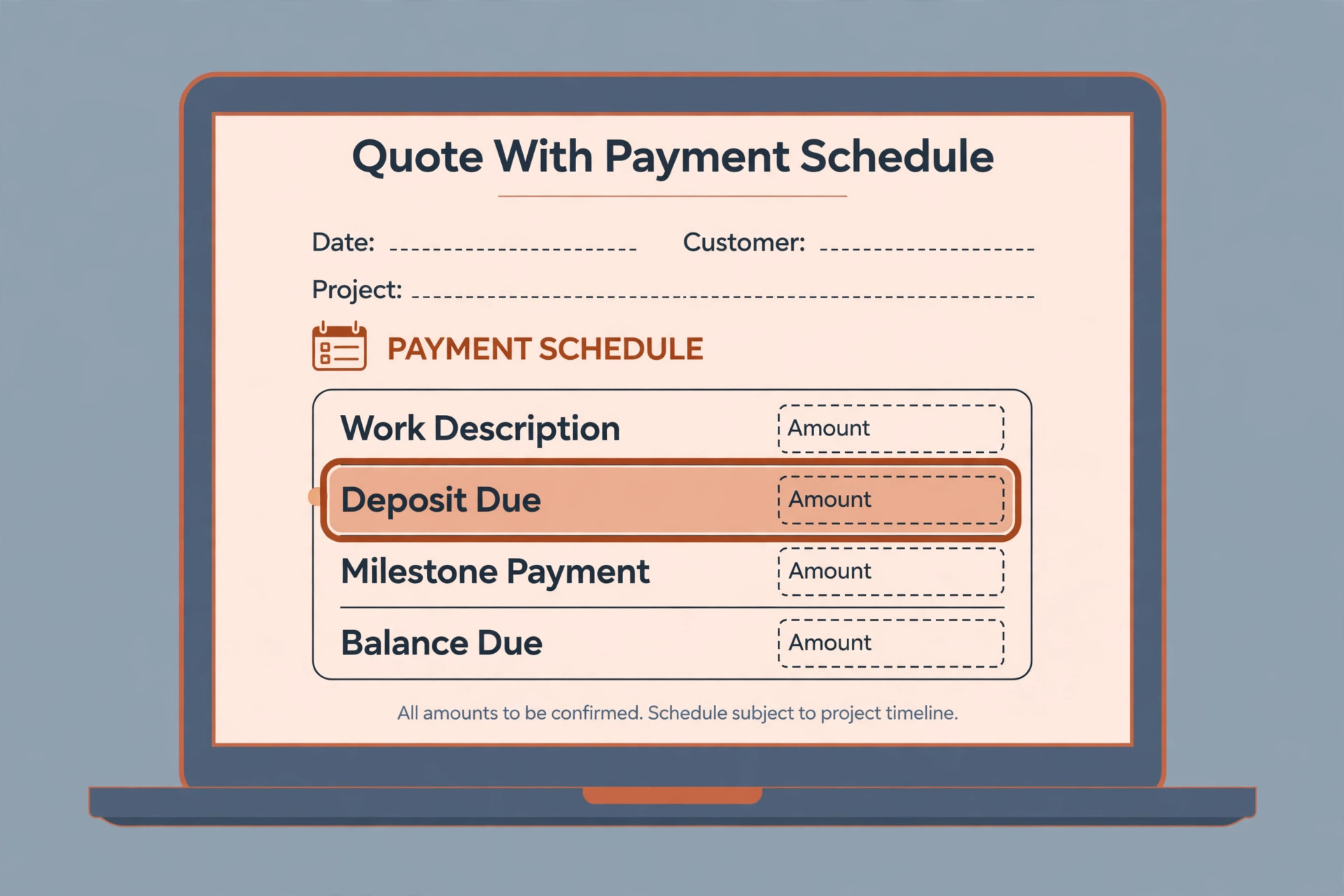
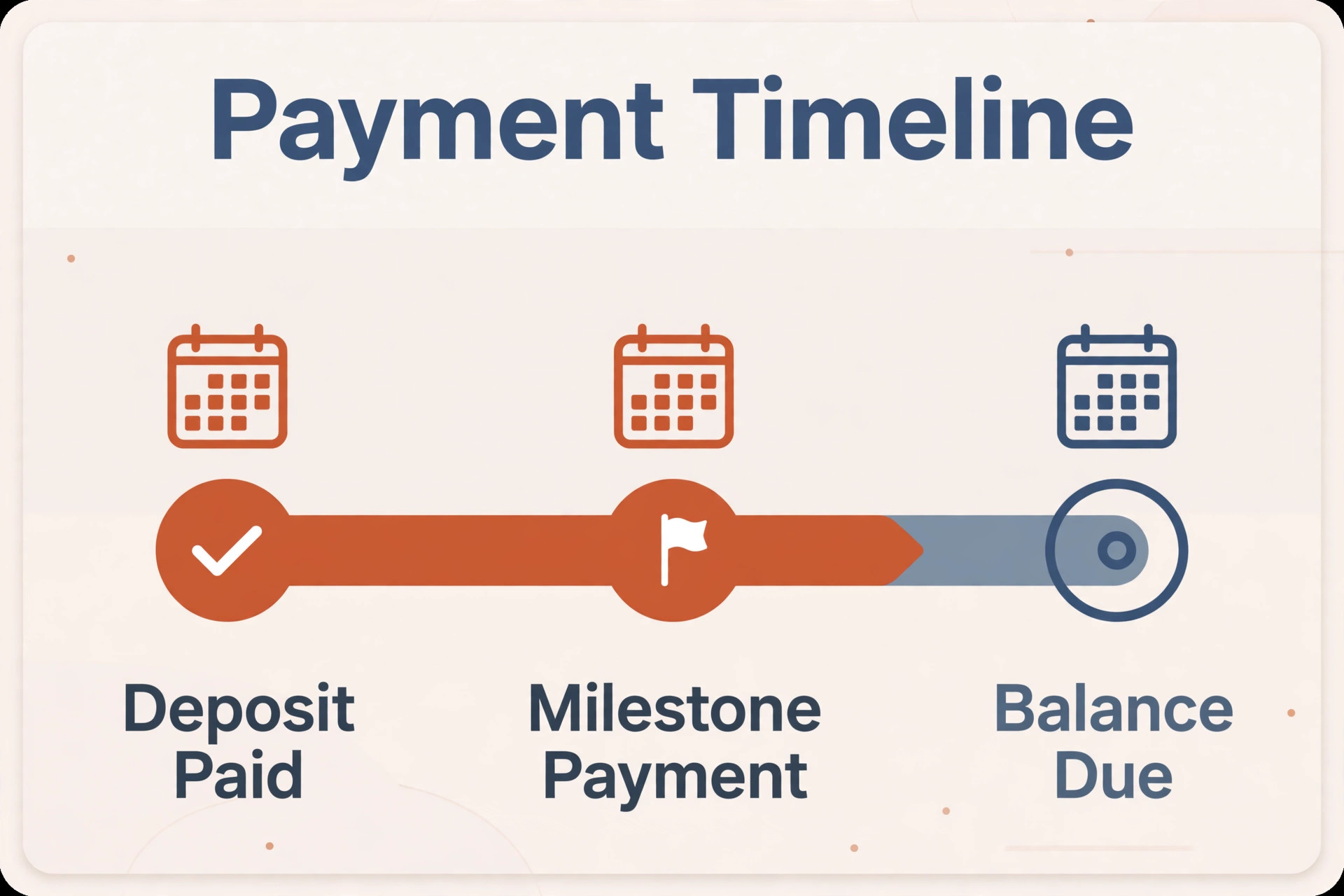
State what the deposit counts toward, in one plain sentence on the quote. A deposit that counts toward the agreed total is easier to accept than a deposit that sounds like an extra fee on top of the price. State the balance, the milestone or date it is due, and the payment method, so the client sees the full payment journey at the start. That transparency also helps your cash flow planning, because you can forecast deposits, milestone payments, and balances separately, instead of treating every quote as a single lump sum that may or may not arrive.
Putting the Deposit on the Quote and Asking Without Awkwardness
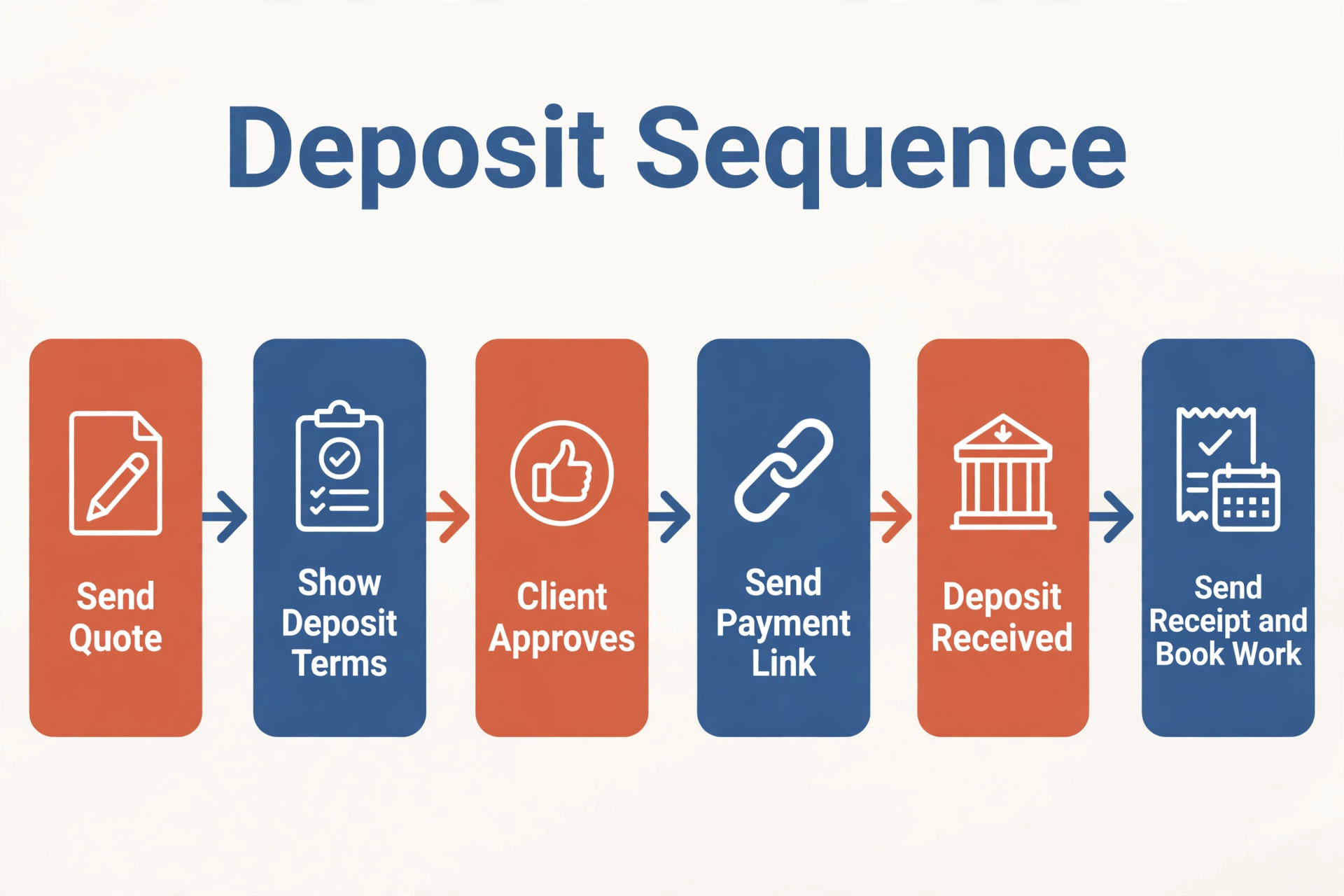
The deposit request should sit on the estimate itself, not in a separate message the client may miss. Add a payment schedule section to your quote, with the deposit amount and due date, followed by the balance or milestone payments and their dates. If you offer packages or optional extras, the deposit should follow the option the client chooses, so the amount is always tied to the agreed scope. When the client approves the quote, they approve the deposit at the same time, which removes the need for a second awkward ask later.
Ask for the deposit at the moment of agreement, while enthusiasm and clarity are highest. A short, confident request works better than a long apology for asking. The script below is an original template you can adapt. It states the purpose, the amount, the total it counts toward, the balance, and the terms, in a few sentences, without hedging. Use it in writing, beside the quote, so the client can reread it and pay without a phone call if they prefer.
Receipt script, ready to adapt. Thank the client for choosing the agreed scope. State the deposit amount needed before work begins, and that it counts toward the agreed total. State the remaining balance and when it is due. Point to the attached estimate for the scope and cancellation terms. State the payment deadline and the payment link or method. Close by confirming the start date that the deposit reserves. That structure covers every question a client is likely to ask, without sounding defensive or apologetic about a normal business practice.
Timing matters as much as wording. A deposit requested weeks after agreement feels like a new condition, while a deposit requested at agreement feels like part of the deal. If a client asks to delay the deposit, agree a specific date in writing, and do not start work that involves cost or calendar blocking before that date arrives. A deposit deadline without a work start condition is easy to ignore, because the client gets the work either way. Linking the start date to the deposit, clearly and politely, is what makes the deadline real, and most clients respect that link once they understand it.
Handle objections calmly and with options, rather than by dropping the deposit altogether. If a client says the amount is too high, explain what it covers, and offer a split, such as part now and part by a stated date before materials are ordered, provided that split still covers your early costs. If a client says they have never paid a deposit before, explain the reservation and material reasons briefly, and point to the cancellation terms, which protect them as well. If a client refuses any deposit and the job involves cost or a blocked calendar, that refusal is useful information, because it tells you the risk before you take it, not after.
Payment Link Setup That Makes Paying Easy
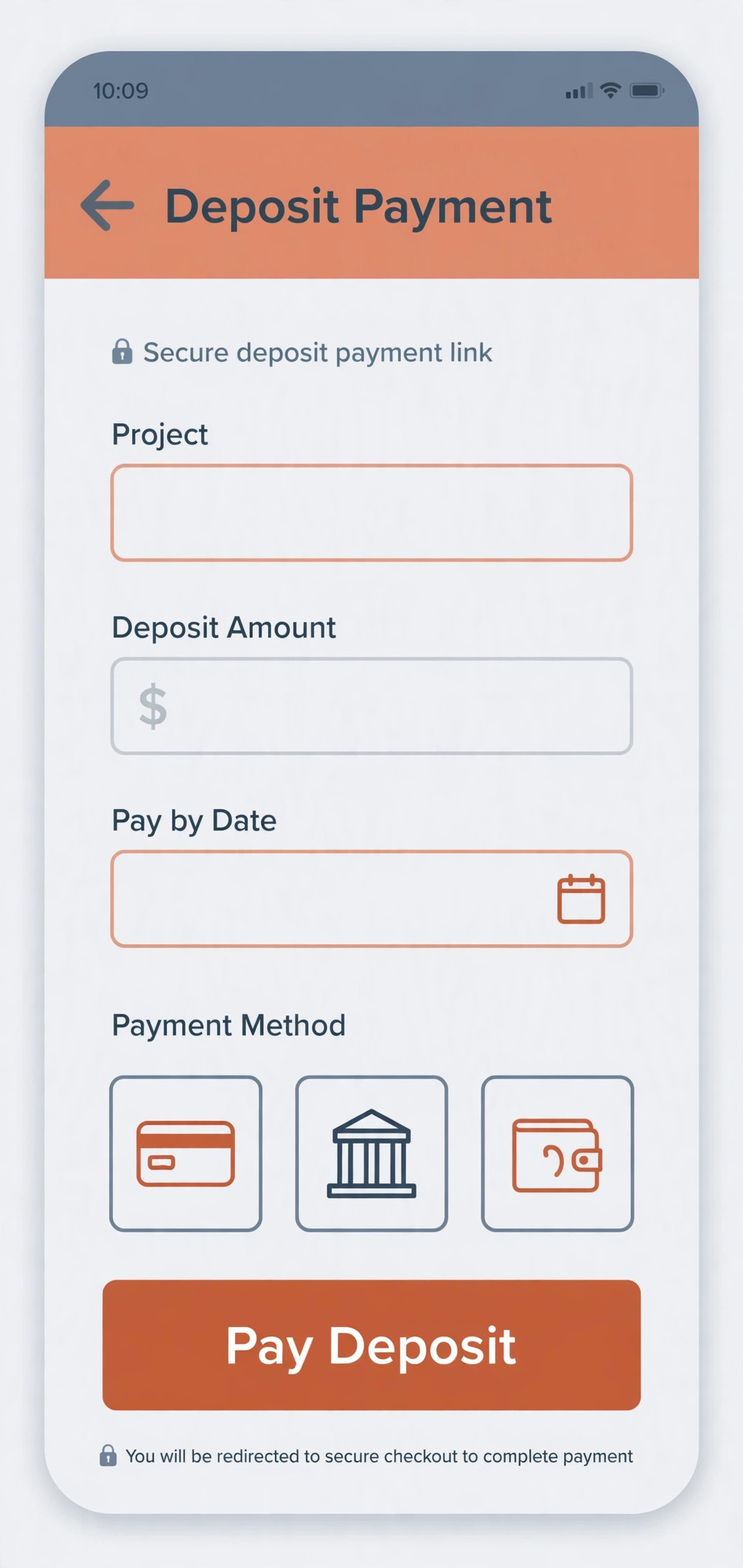
A deposit policy fails if paying is hard, so set up a payment route that a client can complete in minutes, on a phone, without calling you for instructions. Most invoicing and payment tools allow you to create a deposit invoice or a payment link for a fixed amount, with the scope and terms attached or linked. Test the link yourself, from a client point of view, before sending it to a real client, and check that the amount, the description, the due date, and the confirmation message are all correct.
A link that shows the wrong amount or a confusing description creates a support conversation before the job has even started. That easy payment route is a key part of how to collect deposits before work small business owners should set up.
Label the deposit clearly in your payment system, so your records, your tax records, and your client records all agree. Record the deposit as a payment toward the agreed total, with the project or invoice it relates to, the date paid, and the method used. Keep the deposit receipt separate from the final invoice, and show the deposit as a credit on the final invoice, so the client can see the full journey from deposit to balance without doing arithmetic. Clear records also matter if a client later disputes a payment, because a labelled deposit with a matching quote and terms is far easier to explain than an unexplained bank transfer.
Choose payment methods that suit your clients and your costs, and state any fees or limits honestly. Card payments are convenient but carry processing costs, bank transfers are cheap but slower and easier to mistype, and cash should be receipted immediately with a written record. Do not ask clients to share card details by email or chat, and do not store card details yourself, because that creates a security risk that no small deposit is worth. Use a recognised payment provider or invoicing tool for card payments, so the client payment data stays with the provider, not in your inbox.
Automate the reminders, but keep them human. A payment link sent with no follow up is easy to forget, while a link chased by repeated calls feels like pressure. A good routine is a confirmation when the deposit is paid, a polite reminder a few days before the deposit deadline if it is unpaid, and a clear statement of the next step if the deadline passes. That routine is a practical part of how to collect deposits before work small business owners run without awkward chasing, because the system, not the owner, does the reminding, and the owner only steps in when the system has already done its job.
Cancellation Terms That Are Fair and Enforceable in Practice
Cancellation terms should be written before the client pays, shared with the quote, and acknowledged by the client, because terms first shown after payment are terms that will be disputed. State three things plainly, which are when a deposit is refundable, when it is partly refundable, and when it is kept, and tie each outcome to a clear event, such as a cancellation date, a material order, or a scheduled start.
Vague terms, such as a deposit being non refundable in all circumstances, sound strong but often fail in practice, because local consumer and contract rules may limit what can be kept, especially where the business has suffered no loss or where a cancellation right applies. That early sharing is a core part of how to collect deposits before work small business owners do fairly.
A fair structure, adapted to your trade, often looks like a full refund for early cancellation, a partial refund or a credit toward a rescheduled date for later cancellation, and retention of costs already incurred where materials have been ordered or work has started. Rescheduling should be treated differently from cancellation, because a client who still wants the service, on a different date, is not the same as a client who has walked away. Allow a stated number of free reschedules with reasonable notice, apply the deposit to the new date, and limit how far out rescheduling can push the job, so a deposit does not become an open ended credit that blocks your calendar indefinitely.
Check the rules that apply to your place, your trade, and your client type before relying on any cancellation term. Some places regulate upfront payments for home improvement work, some set cancellation rights for certain consumer contracts, and some require specific contract contents once a deposit crosses a threshold. Those rules change by location and by work type, so a term copied from another business in another place may not hold for you. This guide is general business information, not legal advice, and for large deposits, regulated work, or a formal dispute, take professional advice on the terms before you rely on them.
Apply the terms consistently, and keep a record of each decision. Consistency protects you from claims of unfair treatment, and it makes the terms easier to explain to staff, who should not have to improvise a refund decision on the phone. When you make an exception, note why, because a pattern of unexplained exceptions becomes the real policy, no matter what the written terms say. A term applied consistently, with occasional documented exceptions for genuine hardship, is both fairer and more defensible than a term that is strict on paper and flexible in every conversation.
Receipts, Records, and What to Send When Money Arrives
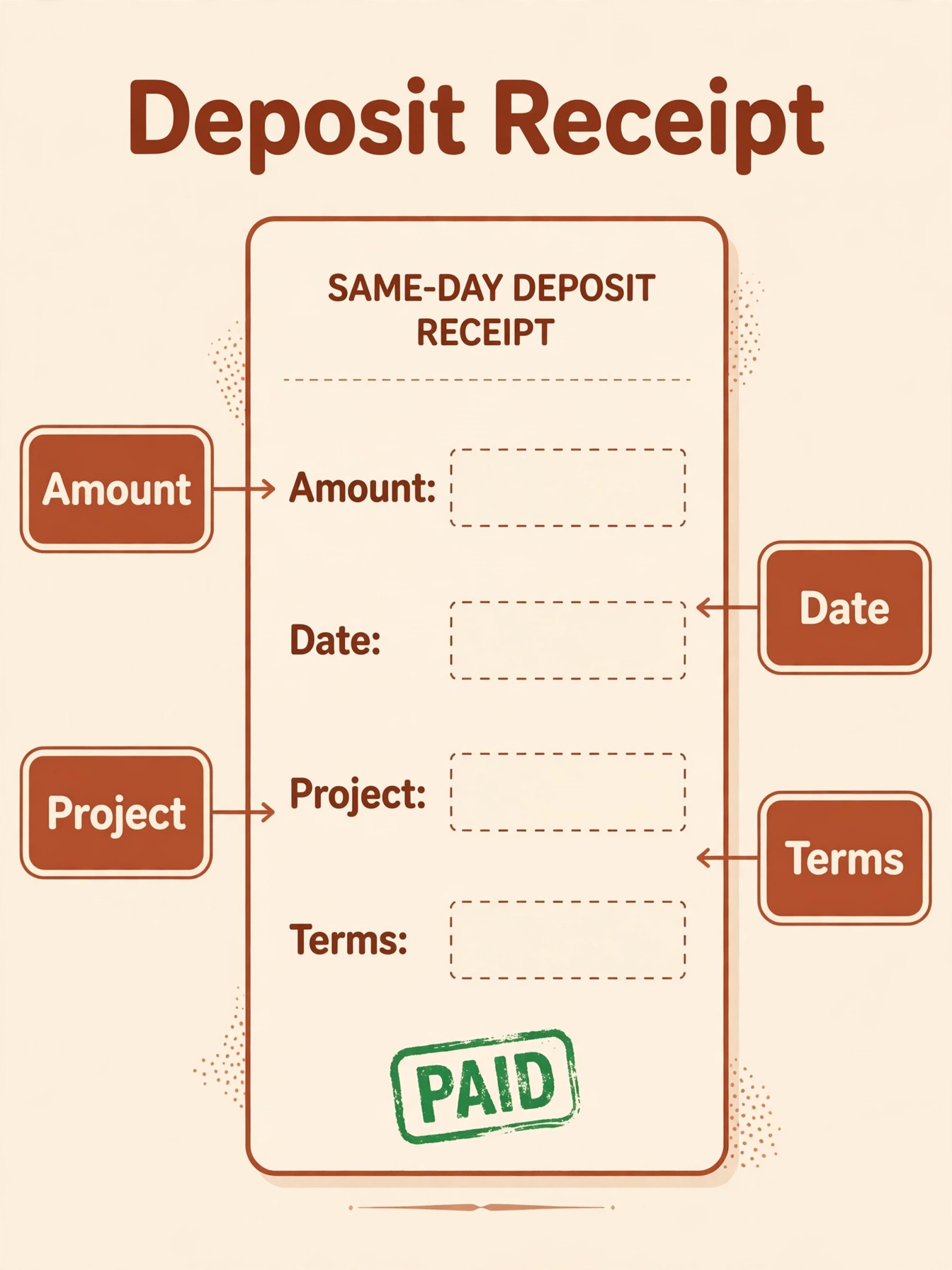
Send a receipt the same day a deposit is paid, and make it do three jobs at once. It should confirm the amount and date, confirm the project and start date it reserves, and restate the cancellation terms in brief, with a pointer to the full terms on the quote. A receipt that does all three prevents the most common post payment confusion, which is a client who remembers paying but forgets what the payment reserved or what the terms were.
Keep the receipt short, factual, and friendly, and store a copy with the quote, the payment record, and the cancellation terms, so the whole agreement sits in one file. That same day receipt is a practical part of how to collect deposits before work small business owners should send.
The receipt script below is an original template for that same day message. It thanks the client, confirms the deposit amount and the total it counts toward, confirms the reserved start date, states the remaining balance and its due date, and restates the cancellation terms in one sentence, with a note that the full terms are on the attached estimate. That structure is enough for most jobs, and it avoids the two common receipt mistakes, which are sending no receipt at all, and sending a receipt that only states an amount, with no project, date, or terms attached to it.
Record deposits separately from general income in your bookkeeping, with the project, the client, the amount, the date, and the balance remaining. That separation helps at project close, because the final invoice can show the deposit as a credit without guesswork. If you use an accounting tool, use its deposit or partial payment feature rather than recording the deposit as a separate sale, so the project total, the deposit, and the balance stay linked in one record.
Keep the money file tidy for the whole project, not just for the deposit. The quote, the deposit receipt, the milestone invoices, the final invoice, and any cancellation or reschedule messages should sit together, in the order they happened. That file is your protection if a payment is disputed, and it is also your learning record, because a review of deposit files usually shows which jobs needed a higher deposit, which cancellation terms were tested, and which payment methods clients actually used. A tidy file turns each project into a lesson for the next quote, without extra work at the time.
Handling No Shows, Late Deposits, and Cancellations Calmly
A no show or a late deposit should trigger a process, not a panic, and the process should be written before it is needed. For a missed deposit deadline, send a polite reminder with the payment link attached, stating the new deadline and the effect on the start date. If the deadline passes again, send a second message that releases the reserved date, states that the deposit can still be paid to reserve a new date subject to availability, and closes the current booking cleanly.
That sequence is firm without being hostile, and it frees your calendar for a paying client instead of leaving it blocked by a booking that may never pay. That written routine is a steady part of how to collect deposits before work small business owners can rely on.
For a no show on the day, follow the cancellation terms as written, and record the outcome in the project file. If the terms allow retention of the deposit or a stated part of it, apply that outcome and explain it in one plain sentence, pointing to the term and the costs incurred, rather than debating it at length. If the client asks to reschedule, apply the rescheduling rule, with its notice requirement and its limit on how far the job can move. Consistency here matters more than generosity in a single case, because every exception you grant without a reason becomes the expectation for the next no show.
For a cancellation, respond promptly, confirm the outcome in writing, and process any refund due within the timeframe your terms state. A prompt, clear refund for the refundable part builds more trust than a delayed, grudging refund, and it often prevents a chargeback or a bad review, because the client has no remaining grievance to escalate. If the client disputes the retained part, keep the reply factual, pointing to the terms, the dates, and the costs incurred, and offer a written summary of the calculation. Do not debate by phone for long periods, and do not make a new offer in anger, because a calm written record is easier to defend and easier for the client to accept.
Watch for the pattern behind repeated no shows, because a pattern usually points to a fixable cause. If no shows cluster around a particular service, a particular booking channel, or a particular time of day, the cause may be a confusing booking flow, a missing reminder, or a deposit amount that is too low to create commitment. Fix the cause, and the no show rate usually falls, without needing harsher terms. If no shows cluster around one client, the cause may be fit, and the right response may be a higher deposit, payment in full before booking, or a decision not to rebook, made from the pattern rather than from frustration.
Mistakes That Undermine an Otherwise Good Deposit Policy
The first mistake is asking for a deposit only after work has started, when the clarity and the bargaining position are gone. A deposit requested after materials are ordered or time is blocked is a request the client can refuse without consequence, because the work is already under way. The second mistake is a deposit amount with no explanation, which feels arbitrary and invites negotiation, even from clients who would have accepted the same amount with a clear reason. Always tie the amount to materials, preparation, or a reserved calendar, in one sentence on the quote.
The third mistake is terms that are strict on paper and flexible in every conversation, which teaches clients that the terms do not hold. If you grant an exception, grant it for a stated reason, note it in the file, and return to the standard terms for the next case. The fourth mistake is a payment process that is hard to complete, with a link that fails, an amount that is unclear, or a method that does not suit the client. Test the link, label the amount, and offer a method the client can actually use, because a deposit policy that cannot be paid is not a policy at all.
The fifth mistake is keeping a deposit without a record of what it covered, which turns a legitimate retention into a dispute. Every retained deposit should be traceable to a term, a date, and a cost, in the project file, so the outcome can be explained in one paragraph. The sixth mistake is treating deposits as free money, by spending a large deposit on unrelated costs before the project is delivered.
A deposit is a commitment to deliver, and spending it in advance without a plan for delivery creates a cash flow trap if the project is delayed or cancelled. Keep deposit money identifiable until the work it relates to is under way, and plan cash flow from completed work, not from deposits alone. That discipline is a steady part of how to collect deposits before work small business owners keep sustainable.
Deposit Checklist
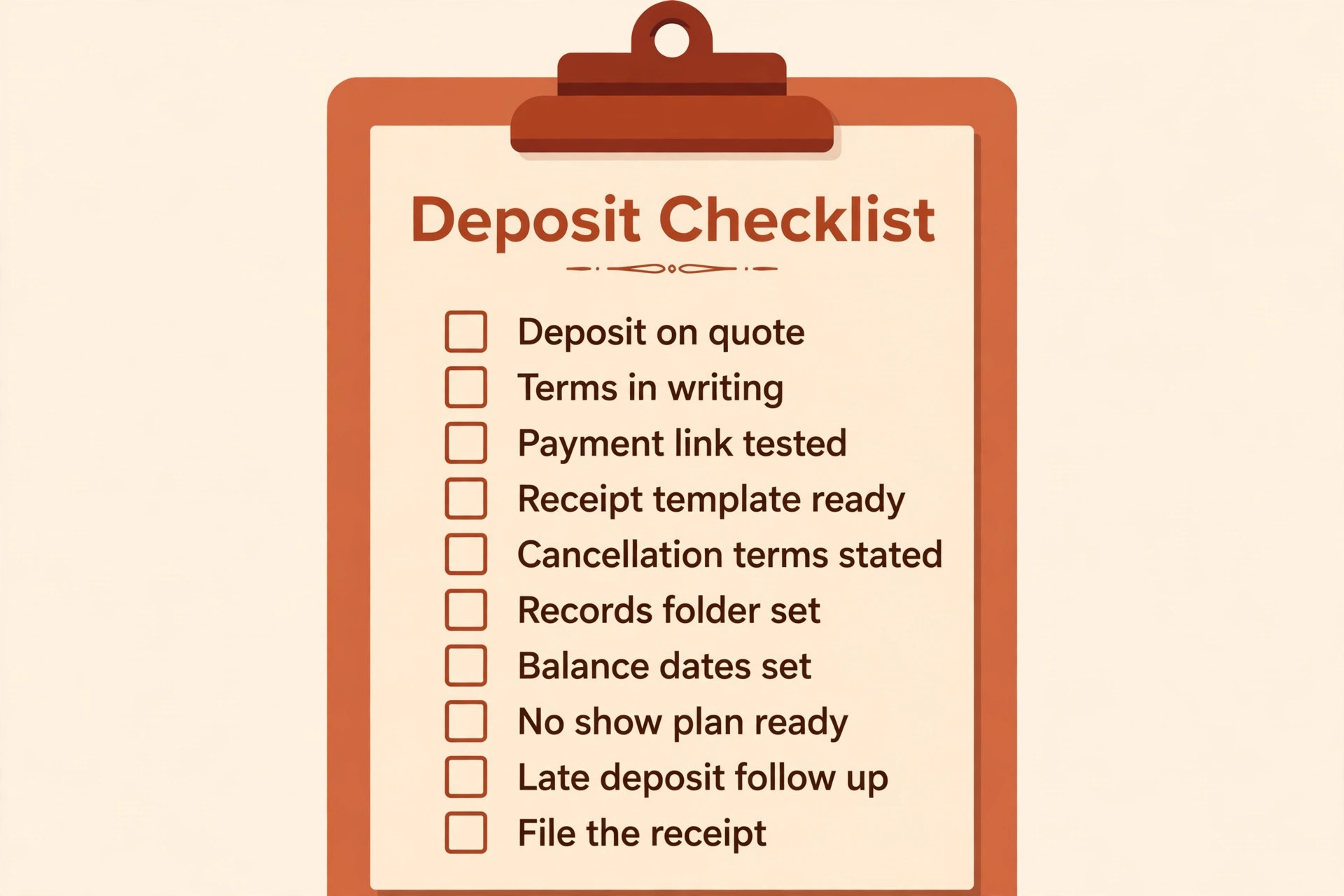
Use this checklist as the overview proof for the whole process, and work through it for each quote before it is sent.
1. Choose a deposit tier from job size, materials, and calendar risk, and check local rules for your trade. 2. Put the deposit on the quote, with the total it counts toward, the balance, and the due dates. 3. Set up a payment link, test it as a client would, and label the amount and project clearly. 4. Write cancellation terms, covering refundable, partly refundable, and retained outcomes, with clear events. 5. Write rescheduling terms, with notice, free reschedule count, and a limit on how far a job can move. 6. Ask for the deposit at agreement, with a short confident request beside the quote. 7. Send a same day receipt, confirming amount, project, start date, balance, and terms in brief. 8. Record the deposit as a credit toward the total, and show it as a credit on the final invoice. 9. Follow a written routine for late deposits, no shows, and cancellations, applied consistently. 10. Review deposit files monthly, and adjust tiers, terms, or payment methods from the patterns you find.
Keep this checklist with your quote template, so every quote passes the same checks. A deposit policy that is consistent across quotes is easier for clients to accept, easier for staff to apply, and easier to defend, because it is a business policy, not a personal negotiation that changes with each client.
Frequently Asked Questions
How much deposit should I ask for before starting work?
Base the amount on what you will spend before the next payment, plus the calendar risk if the client cancels. Illustrative tiers in this guide range from a modest booking amount for small jobs, to a moderate share of the total for standard jobs, to material cost plus a share of labour for custom work. Check local rules for your trade and place, because some rules cap upfront payments or set specific requirements. A deposit that covers your early costs, explained in one sentence, is easier to accept than a percentage with no reason behind it.
Should deposits be refundable?
State the answer in writing before the client pays, tied to clear events, rather than using a blanket label. A fair structure often gives a full refund for early cancellation, a partial refund or a reschedule credit for later cancellation, and retention of costs already incurred where materials are ordered or work has started. Local consumer and contract rules may limit what can be kept, especially where no loss was suffered or where a cancellation right applies, so check the rules that apply to you and take advice for large or regulated work.
When should I ask for a deposit?
Ask at the moment of agreement, with the deposit on the quote itself, beside the scope and cancellation terms. That timing makes the deposit part of the deal, not a later condition, and it lets the client approve the whole package at once. Do not start work involving cost or calendar blocking before the deposit deadline, and link the start date to the deposit clearly, so the deadline is real. If a client asks to delay, agree a specific date in writing, and hold the start until that date is met.
What if a client refuses to pay a deposit?
Treat the refusal as information about risk, and respond with options before dropping the policy. Explain what the deposit covers, offer a split that still covers early costs, or offer payment in full before booking for a small job. If the client still refuses and the job involves material cost or a blocked calendar, consider whether the risk is worth taking, or whether a different payment structure, a smaller first stage, or declining the job is the safer choice. A refusal before work is far cheaper than a refusal to pay after work.
How do I handle a deposit if the client cancels?
Follow the written cancellation terms, confirm the outcome in writing promptly, and process any refund due within the timeframe your terms state. Explain a retained amount in one plain sentence, pointing to the term, the dates, and the costs incurred, and keep the calculation in the project file. A prompt, clear outcome for the refundable part builds trust and often prevents a chargeback or bad review, because the client has no remaining grievance to escalate.
Do I need a separate contract for deposits?
A deposit does not always need a separate contract, but it does need written terms that the client has seen and approved before paying, usually on the quote or estimate itself, with the scope, payment schedule, and cancellation terms together. For large projects, regulated work, or complex payment schedules, a fuller agreement is wise, and professional advice can confirm what your trade and place require. Keep the signed quote, the receipt, and the terms together in the project file, whatever form they take.
The Verdict on Deposits Before Work
Deposits before work are not about distrust. They are about shared commitment, clear terms, and a business that can plan its cash flow and its calendar with confidence. Set the amount from the job, put it on the quote, make paying easy with a tested link, write cancellation terms that are fair and consistent, and send a receipt that confirms the whole agreement. That package is how to collect deposits before work small business owners ask for without awkwardness, because the client is never surprised, the amount is never arbitrary, and the terms are never hidden.
Start with your quote template, add the payment schedule and cancellation terms, and use the checklist for the next ten quotes. Review the results monthly, adjust the tiers from real patterns, and keep applying the terms consistently. Within a few months, deposits will stop feeling like a difficult conversation, and start feeling like a normal part of how your business works, which is exactly what they should be.
More Reading on Stratilyze
– Best Payment Software for Service Businesses – Cost of Stripe Payment Processing Small Business – Cost of PayPal for Small Business Monthly – Best Quote Software for Trades Businesses