
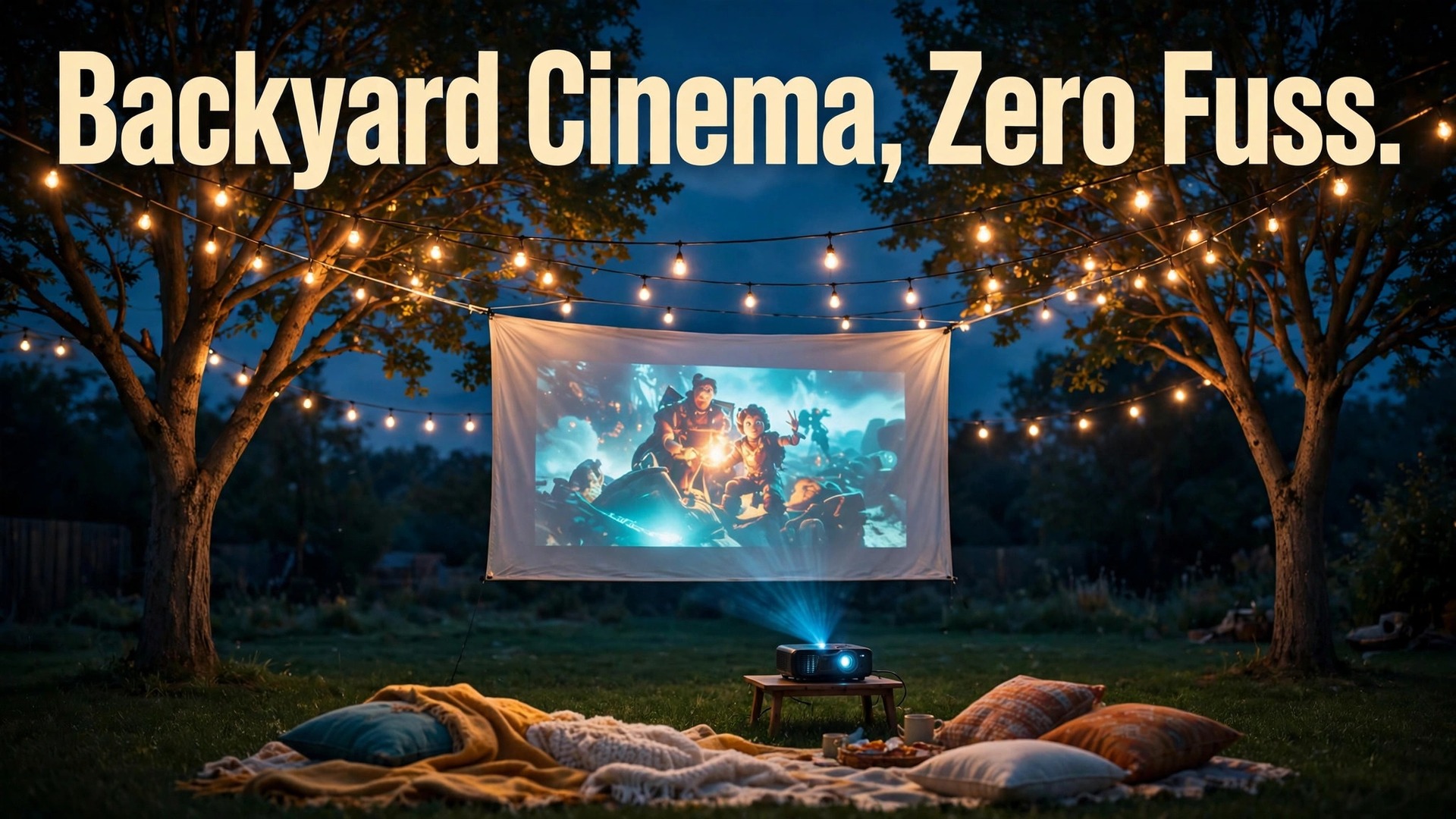
A backyard movie night fails when the picture is washed out, the sound disappears into the garden, or the setup takes so long that guests lose interest before the film starts. When you set up portable projector for backyard movies, screen, placement, sound, and power are planned together, so the film starts on time, looks bright, and sounds clear, even outdoors. That planning is what turns a projector in a box into a movie night that guests ask to repeat.
This guide builds a portable projector setup for gardens, patios, and small outdoor spaces. You will choose a screen and placement, set up the projector, arrange sound, manage power and cables safely, and run a movie night checklist. Projector models, brightness, battery life, and prices vary widely, so confirm current specifications on official brand pages before buying, and test the setup in your own garden before inviting guests.
Why This Approach Works
Outdoor movies work because they combine a familiar film with an unfamiliar setting, under open sky, with friends and family, which makes even a well known film feel like an event. A portable projector suits this because it is small, battery powered in many models, and can be set up and packed away in minutes, unlike a fixed outdoor television that must survive weather year round. The trade offs are brightness, sound, and weather, because outdoor light washes out pictures, open air disperses sound, and wind or rain can end a night early, but each trade off can be managed with placement, timing, and sound choices, as this guide shows.
Planning also protects the evening from the most common outdoor problems, which are usually simple and preventable. A screen that flaps in wind, a projector placed where guests walk in front of the beam, a power cable across a path, or sound that cannot be heard at the back seats will all spoil a film that would have been enjoyable indoors. A short setup routine, practised once before guests arrive, prevents all of those problems, because the host learns the best screen position, the best projector distance, and the best sound arrangement for their own garden, rather than discovering them during the film.
How to set up portable projector for backyard movies Step by Step
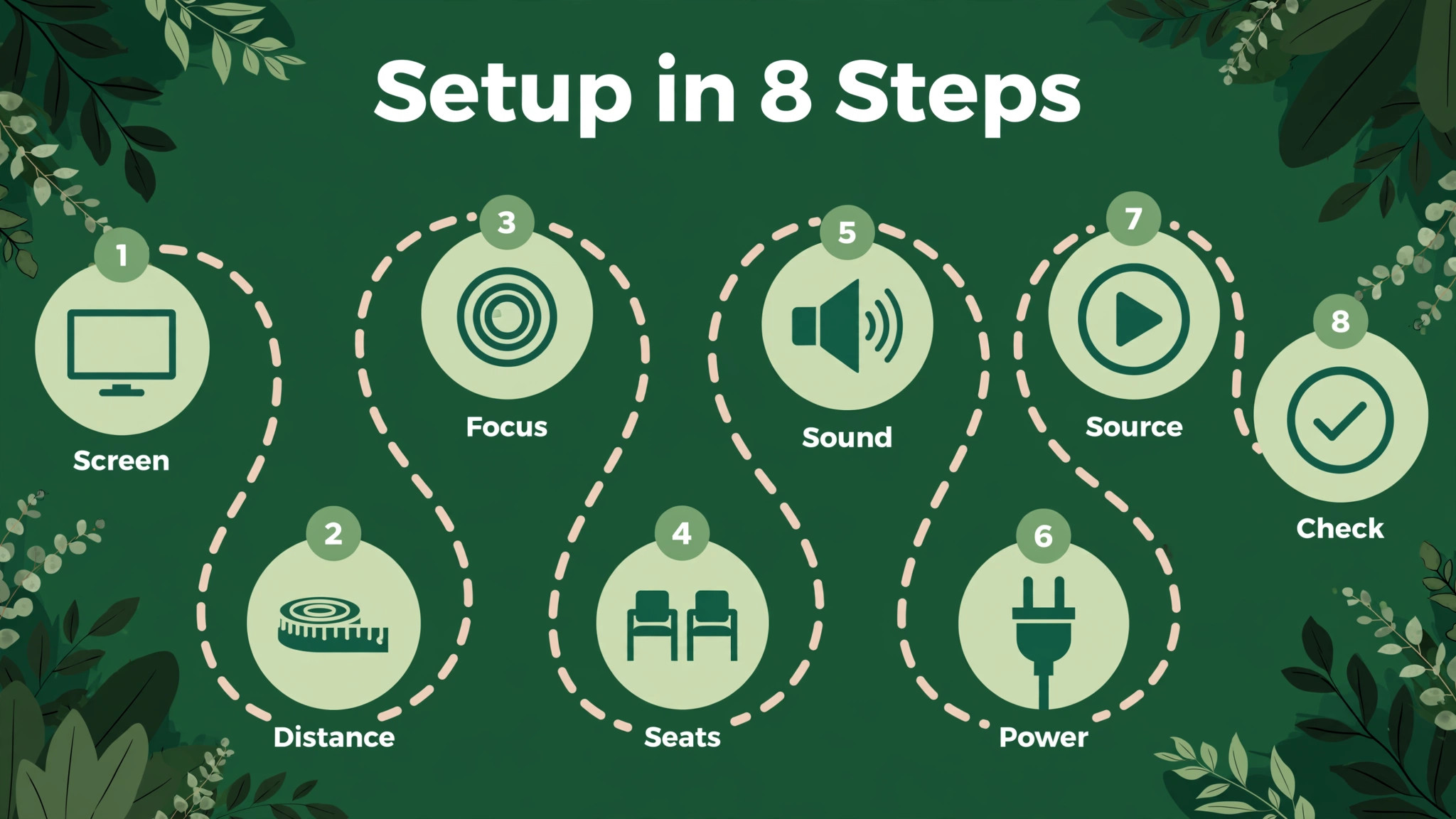
Set up in the order below, starting with screen and placement, not with the projector itself. When you set up portable projector for backyard movies, screen position and viewing distance determine picture quality more than projector specifications alone, because a well placed modest projector will outperform a bright projector placed badly.
- **Choose a screen and a sheltered position.** Choose a screen type that suits your garden, such as a portable pull up screen, a fixed frame screen, or a smooth light coloured wall where suitable, and position it sheltered from wind and away from bright lights. A screen that is stable, flat, and shielded from direct light will show a far better picture than a larger screen that flaps or faces street lights. Test the position at dusk, when films will actually be shown, rather than in daylight when brightness judgments mislead.
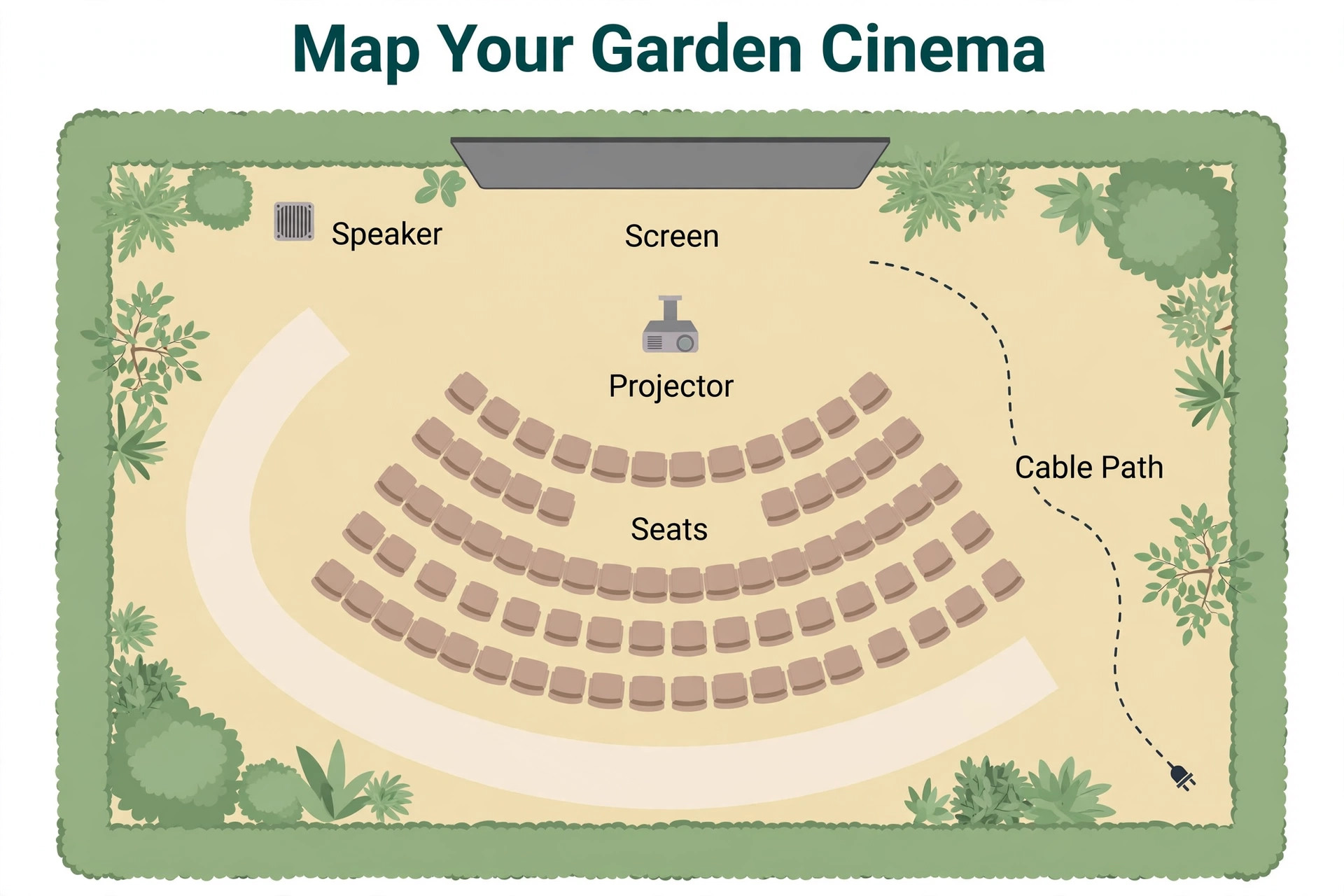
- **Measure throw distance and set projector placement.** Check your projector’s throw ratio and recommended distance for your screen size from its manual, then measure and mark the projector position in the garden, with a stable table or stand at the correct height. Avoid placing the projector where guests will walk through the beam, and keep the projector lens clean and unobstructed. A marked, stable position saves setup time on every movie night and prevents the picture being keystoned or cut off by passers by.
- **Set focus, keystone, and picture settings for outdoors.** Focus the projector carefully on the screen, adjust keystone only as much as needed, because heavy keystone correction softens the picture, and set brightness and picture mode for outdoor dusk viewing. Start the film after sunset or in deep shade, because even a bright portable projector struggles against daylight. A dusk start time, agreed with guests in advance, is the simplest brightness improvement available, costing nothing and helping every projector.
- **Arrange seating with a clear view and sound path.** Arrange seating in rows or a gentle arc, with a clear view of the screen and a clear path for sound from speakers to seats, avoiding seats behind obstacles or too close to the screen. Keep front seats at a distance where the whole screen is visible without head turning, and provide blankets or cushions for comfort on cooler evenings. Comfortable seating with a clear view keeps guests watching, while cramped, blocked seating ends movie nights early.
- **Set up sound for outdoor listening.** Choose a sound option that suits garden size and neighbours, such as a portable Bluetooth speaker, a soundbar, or a small outdoor speaker system, placed near the screen and aimed at seating. Test sound volume from the back seats before guests arrive, and check that dialogue is clear, not only that music is loud. Outdoor sound disperses quickly, so speaker placement and dialogue clarity matter more than maximum volume, and neighbours should be considered when setting levels.
- **Manage power and cables safely outdoors.** Plan power from a safe outdoor socket, a battery projector, or a portable power station, with cables routed away from walkways and protected from trips and moisture. Use outdoor rated extension leads and covers where needed, and keep connections off wet ground. Safe cable management is not only about trips, it is about protecting equipment and guests, and it should be checked before every movie night, especially after rain.
- **Connect the film source and test playback.** Connect the film source, such as a laptop, streaming device, or USB drive, depending on projector inputs and internet availability in the garden, and test playback, subtitles, and audio before guests arrive. Download films where internet is unreliable outdoors, rather than relying on streaming that may buffer during the film. A ten minute test, including the first minutes of the actual film, prevents the embarrassment of a failed connection in front of guests.
- **Run a pre show check and start on time.** Run a pre show check of screen stability, focus, sound from back seats, cable safety, and seating comfort, then start the film on time as promised to guests. A short pre show routine, done calmly before guests settle, creates a professional feel and lets the host enjoy the film instead of troubleshooting during it. Starting on time also respects guests, especially families with children, and sets the tone for future movie nights.
After the film, pack equipment in reverse order, cleaning the lens, coiling cables, and storing the screen dry, so the next setup starts from a clean, working system. Note any problems, such as wind, sound, or brightness issues, and fix them before the next movie night, rather than hoping conditions will be better next time. A short post show note, kept with the projector, turns each movie night into a better setup for the next one.
Options Compared
Sound options suit different garden sizes, neighbour situations, and budgets, and the right choice depends on how far sound must travel. When you set up portable projector for backyard movies, the table below compares the main sound options, so a small garden does not buy a large system, and a large garden does not rely on tiny projector speakers that cannot be heard at the back.
| Sound option | Best for | Watch out for |
|---|---|---|
| Projector built in speaker | Very small, quiet gardens | Too quiet outdoors for most films |
| Portable Bluetooth speaker | Small to medium gardens | Latency and pairing issues |
| Soundbar near screen | Medium gardens, clear dialogue | Needs power and weather care |
| Outdoor speaker system | Large gardens, regular nights | Higher cost and installation |
| Headphones for small groups | Late nights, close neighbours | Less social, needs sharing |
For most backyard movie nights, a portable Bluetooth speaker or a soundbar near the screen gives the best balance of clarity, cost, and simplicity, provided dialogue is tested from back seats before guests arrive. Check for audio delay with Bluetooth speakers, by watching lips and dialogue together during the test, and switch to a wired connection if delay is noticeable. Sound that is clear and synchronised matters more than sound that is merely loud, because dialogue drives most films.

Costs and Tools to Budget For
Budget for backyard movies in projector, screen, sound, and power, with the projector as the main cost. Portable projector prices vary widely by brightness, resolution, battery life, and brand, so compare brightness in lumens, native resolution, and battery or power needs for your garden size and dusk viewing plans, rather than choosing by price alone. A portable screen, a speaker, and safe outdoor power add further costs, but they improve the experience more than a slightly brighter projector used with a poor screen and weak sound. Confirm current model prices on official brand pages before budgeting.
Time budgeting should include a practice setup before the first guest night, plus setup and pack away time for each movie night, usually thirty to sixty minutes total. A practice setup in your own garden, at dusk, with the actual film source and sound, reveals placement, brightness, and sound issues while they are still easy to fix. That practice hour is the difference between a relaxed host and a host troubleshooting in front of guests, and it should be treated as part of the setup, not as optional preparation.
Template and Checklist
Run this checklist before guests arrive and again after any equipment change. When you set up portable projector for backyard movies, the checklist is the gate that confirms the picture is bright, the sound is clear, cables are safe, and seating is comfortable, before the film starts.
- A screen is chosen and positioned sheltered from wind and bright lights.
- Throw distance is measured and projector position is marked and stable.
- Focus and keystone are set, with picture mode adjusted for dusk viewing.
- Seating gives a clear view of the whole screen without head turning.
- Sound is tested from back seats, with dialogue clear and synchronised.
- Power cables are routed safely away from walkways and wet ground.
- Film source, subtitles, and audio are tested with the actual film.
- Start time is after sunset or in deep shade for adequate brightness.
- Neighbours are considered in sound levels and finish time.
- Blankets, cushions, and insect protection are available where needed.
- A pre show check is completed before guests settle.
- Pack away and cleaning routine is planned, with a note of any problems.
Keep the completed checklist with the projector, including throw distance, screen position, and sound settings for your garden. When a different host sets up, or when equipment changes, the checklist lets the setup be repeated correctly without rediscovering the best positions. A documented setup turns a one off movie night into a repeatable garden tradition that gets easier each time.

Mistakes to Avoid
Backyard movie nights fail in predictable ways, usually because outdoor conditions were not tested in advance. When you set up portable projector for backyard movies, watch for these five mistakes, because each one can spoil an evening that would have been enjoyable with a short practice setup.
- **Starting before it is dark enough.** Starting a film in daylight or bright dusk washes out even a bright projector picture, leaving guests squinting at a pale screen. Start after sunset or in deep shade, and agree the start time with guests in advance. A dusk start costs nothing and improves picture quality more than any projector upgrade.
- **Relying on built in projector speakers.** Built in projector speakers are designed for small, quiet rooms, not for open gardens, where sound disperses and dialogue disappears. Use an external speaker near the screen, test dialogue from back seats, and check for Bluetooth delay before guests arrive. Clear external sound is essential for outdoor films, not an optional extra.
- **Placing the projector in a walkway.** A projector placed where guests walk will have its beam blocked repeatedly, its focus knocked, and its cables tripped over, spoiling the film and risking equipment. Mark a stable projector position away from walkways, with cables routed safely, and protect the position during the film. A protected projector position is a basic requirement, not a detail.
- **Ignoring wind and weather.** Wind that flaps a screen, rain that threatens equipment, or cold that drives guests indoors can end a movie night early if not planned for. Choose a sheltered screen position, check the forecast, have a rain plan, and provide blankets for cool evenings. Weather planning is part of outdoor hosting, and guests will appreciate a host who has considered it.
- **Skipping the practice setup.** A first setup attempted in front of guests, with unknown throw distance, sound levels, and film source issues, creates stress and delays that spoil the evening. Practise the full setup once before inviting guests, at dusk, with the actual film and sound, and note the best positions and settings. A practice setup turns a nervous first night into a relaxed, repeatable routine.
If a movie night still has problems after a practice setup, note the specific issue, such as wind direction, sound delay, or brightness at a particular time, and fix that issue before the next night, rather than changing the whole setup. Outdoor conditions vary, and a setup that adapts to its garden, through small, noted adjustments, will improve with each night. Patience and notes beat repeated wholesale changes that never address the real cause.

A Worked Example
A household planning its first guest night can learn more from one practice setup at dusk than from reading specifications for a week. The practice begins with the screen, chosen as a portable pull up screen, a fixed frame screen or a smooth light coloured wall, and positioned sheltered from wind and away from bright lights, with the position tested at dusk, when films will actually be shown, rather than in daylight. Throw distance is then measured from the projector manual for the chosen screen size, and the projector position is marked on a stable table or stand at the correct height, away from any walkway where guests might cross the beam.
Focus is set carefully, keystone is adjusted only as much as needed, because heavy correction softens the picture, and the picture mode is set for outdoor dusk viewing, with the start time agreed as after sunset, which costs nothing and improves brightness more than any setting change.
Seating is arranged in rows or a gentle arc, with a clear view of the whole screen without head turning, and blankets or cushions ready for a cooler evening, while sound is set up as a portable Bluetooth speaker or a soundbar near the screen, aimed at the seats. Dialogue is tested from the back seats before anyone arrives, and lip movement is watched against speech, so any Bluetooth delay can be caught and a wired connection used instead. Power is planned from a safe outdoor socket, a battery projector or a portable power station, with cables routed away from walkways, protected from moisture and kept off wet ground.
The film source, whether a laptop, a streaming device or a USB drive, is connected and tested with the first minutes of the actual film, including subtitles and audio, and the film is downloaded in advance where garden internet is unreliable. A pre show check then covers screen stability, focus, sound from the back seats, cable safety and seating comfort, and the film starts on time. After the film, equipment is packed in reverse order, the lens is cleaned, cables are coiled, the screen is stored dry, and a short note records any wind, sound or brightness problem.
A first night run this way, with its marked positions and its post show note kept with the projector, turns the second night into a repeatable routine rather than another experiment.
Advanced Tips Worth Trying
Once the first practice night has produced a marked projector position and a post show note, the setup can be made resilient to the variations that spoil later nights. Start times deserve a seasonal note, because sunset moves across the year, and a start time that worked in midsummer will be too early or too late a few months later, so the note kept with the projector should record the start time that suited each season alongside the screen position and sound settings.
Wind and weather repay a similar record, with the sheltered screen position, the forecast check and the rain plan written down, so a breezy evening does not become a decision made in a panic while guests are arriving. Neighbours also belong in the advance planning, with sound levels aimed at seating rather than at fences, a reasonable finish time agreed in the household, and a word in advance for larger gatherings, because a considerate night is far more likely to be repeated.
Sound can be hardened with a fallback that is decided before guests arrive, such as a wired connection ready if a Bluetooth speaker shows delay, or a second speaker position noted for a larger group, so a sound problem becomes a quick switch rather than a troubleshooting session in front of an audience. Power can be hardened in the same way, with the outdoor socket, battery level or portable power station checked before the pre show routine, and cables coiled and routed in a consistent pattern each time, so setup time falls and trip hazards do not reappear.
Seating comfort can be improved from the post show notes, with blankets, cushions and insect protection added where earlier nights showed a need, and with front seats kept at a distance where the whole screen is visible without head turning. A garden cinema that records its seasonal start times, its weather plan, its neighbour considerations, its sound fallback and its comfort lessons will improve with every night, and it will do so without changing the whole setup whenever one evening brings wind, a late sunset or a larger group than usual.

How to Measure Success
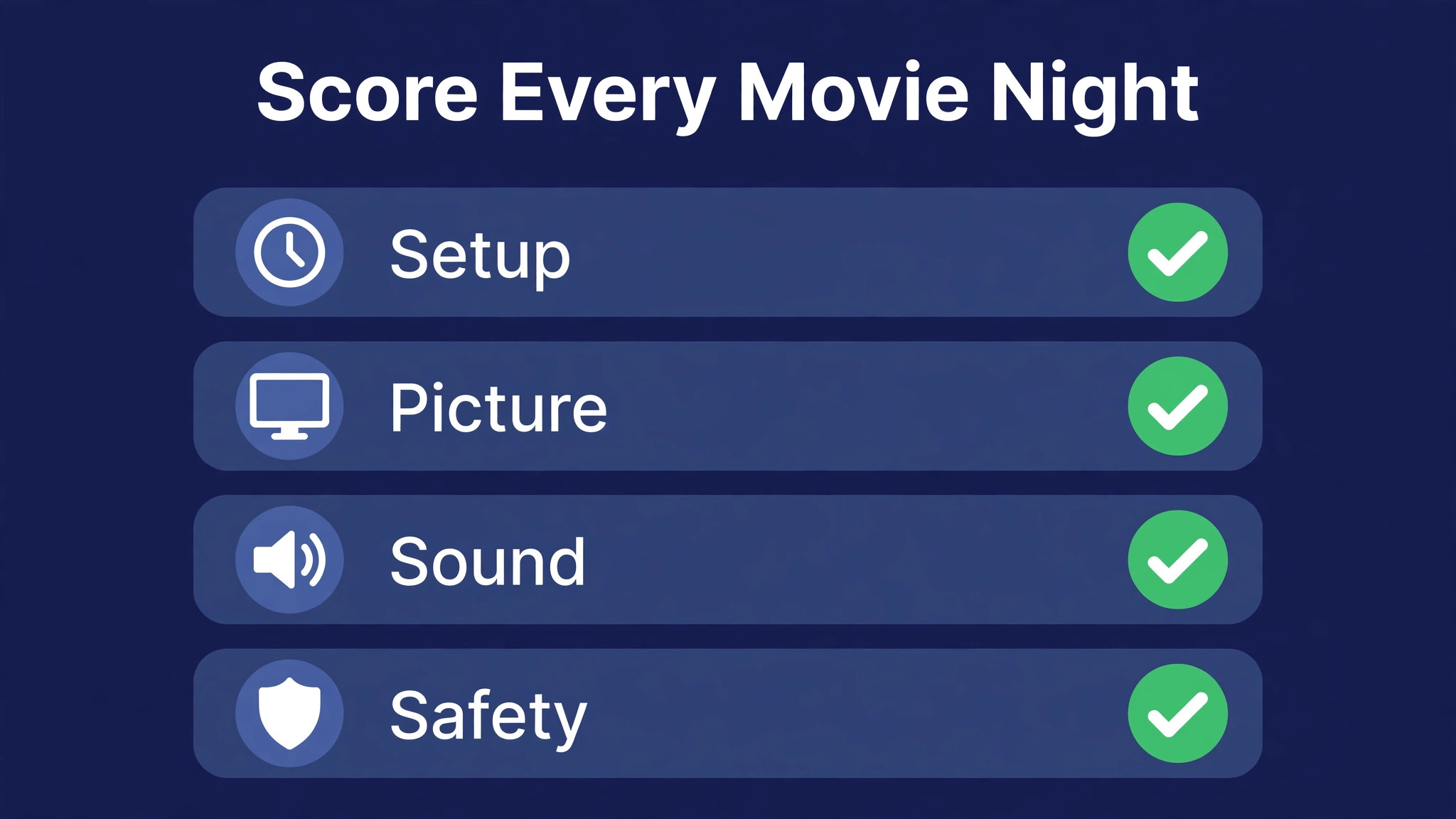
A backyard movie night can be judged on setup, picture, sound, safety and timing, and each of those can be checked during the pre show routine rather than guessed afterwards. Setup can be measured as the total minutes from the first item carried outside to the completion of the pre show check, recorded each night, so a falling total shows that marked positions and a consistent cable routine are working, while a rising total points to a step that needs simplifying.
Picture can be checked as a set of pass or fail items, covering screen stability in wind, focus sharpness across the screen, the whole picture visible without keystone softening, and brightness adequate after sunset or in deep shade, with the number of items passed divided by the number checked giving a picture pass rate for the night. Sound can be checked in the same way, with dialogue clear from the back seats, speech and lip movement synchronised, and volume comfortable without overwhelming neighbouring gardens, each recorded as a pass or a fail.
Safety can be measured by counting the pre show checklist items passed, from screen stability and cable routing away from walkways through to connections kept off wet ground, divided by the twelve checklist items in the guide, so a night that starts with a safety gap is visible in the numbers rather than hidden by a good film. Review setup minutes, picture pass rate, sound checks, safety pass rate and start delay together after each night, and fix only one problem before the next night, such as a wind exposed screen position or a Bluetooth delay, so the next night’s measures show whether that single fix worked.
A garden cinema whose setup time, picture, sound, safety and timing are all recorded after each night will improve steadily, because each night’s note points to exactly one thing to fix next time.
Review and Next Steps
The review after each movie night should start with the post show note, written while the evening is fresh, covering picture brightness, sound clarity, seating comfort and setup time, together with weather, start time and any guest comments. Record the four checks, the equipment used and the problem found in a movie night note filed with the projector checklist, so the next host, or the same host months later, starts from the garden’s proven screen position, sound settings and start times for that season. When you set up portable projector for backyard movies as a repeatable tradition, that note is what turns one good evening into a cinema that gets easier each time.
Before the next night, fix the single problem the note identified, re-run the pre show check, and update the note with the result, so the playbook grows by evidence rather than by wholesale changes that never address the real cause. Seasonal changes call for a fresh look at start time and screen shelter, equipment changes call for a full practice setup at dusk with the actual film and sound, and a larger group calls for a seating and sound check from the back row before guests arrive.
Sharing the note with anyone else who hosts keeps the tradition alive when the usual host is away, and a considerate approach to neighbours, with moderate sound and a reasonable finish time, keeps the tradition welcome. A garden cinema reviewed after every night, fixed one problem at a time, and documented for the next host will keep starting on time, looking bright and sounding clear, which is why guests ask for the next film.
For related reading on Stratilyze, the guide to projectors for small classrooms covers projector choice for indoor use, and the guide to fixing smart TV app crashes helps when a TV source misbehaves. Read the classroom guide first if projector brightness and resolution are still unclear, because indoor and outdoor needs differ, and the method here for set up portable projector for backyard movies adapts those basics to garden conditions.
Frequently Asked Questions
How bright should a portable projector be for backyard movies?
Brightness needs depend on screen size, ambient light, and start time, with dusk viewing requiring far less brightness than daylight viewing. Choose a projector with brightness suited to your screen size, start after sunset, and shield the screen from direct lights. Test in your own garden at dusk before inviting guests, because manufacturer brightness figures do not always predict real garden performance.
Can I use a wall as a backyard movie screen?
Yes, a smooth, light coloured wall can work well, provided it is flat, clean, and sheltered from direct light and wind. A dedicated portable screen usually gives a brighter, more even picture, especially for larger sizes, but a wall is a good starting point for testing whether backyard movies suit your garden before buying a screen.
What sound setup works best outdoors?
A portable Bluetooth speaker or soundbar near the screen usually works best for small to medium gardens, provided dialogue is tested from back seats and Bluetooth delay is checked. Larger gardens may need a more powerful outdoor speaker system, while late nights with close neighbours may suit headphones for a small group. Choose sound by garden size, neighbour considerations, and dialogue clarity, not by maximum volume alone.
Do portable projectors need Wi-Fi for backyard movies?
Not necessarily, because many projectors accept HDMI, USB drives, or downloaded films from a laptop or media player, which avoids reliance on garden Wi-Fi. If streaming is planned, test Wi-Fi strength at the projector position before guests arrive, and download films in advance where connectivity is unreliable. A downloaded film removes the risk of buffering during the movie.
How do I keep power cables safe outdoors?
Route cables away from walkways, use outdoor rated extension leads and covers, keep connections off wet ground, and check cables before each movie night, especially after rain. Battery projectors and portable power stations reduce cable needs, but still require safe placement and charging routines. Safe cable management protects guests, equipment, and the evening itself.
How do I set up portable projector for backyard movies for a garden with close neighbours?
Keep sound levels moderate, aim speakers at seating rather than at fences, agree a reasonable finish time, and consider headphones for late films. Inform neighbours in advance for larger gatherings, and choose films and volumes that respect shared outdoor space. A considerate movie night is more likely to be repeated, because good neighbour relations matter more than maximum volume.
Movie Night Without the Fuss
A backyard movie night that guests love has a stable, sheltered screen, a marked projector position at the correct distance, a dusk start time, clear sound tested from back seats, safe cables, and a pre show check completed before guests settle. Practise the setup once, note the best positions and settings, and pack away carefully for next time. When you set up portable projector for backyard movies in that planned way, the film starts on time, looks bright, sounds clear, and the evening feels like an event rather than an experiment, which is why guests will ask for the next one.