

Birdeye is the top 10 reputation management software for healthcare pick for most multi-location practices, because it combines review generation, messaging, listings and surveys in one platform at a reported 299 dollars per location a month. Podium is the pick for single-location practices that live on text messaging, and Reputation.com is the pick for large health systems that need deep analytics. The ten tools below compare price, review volume and healthcare fit, so a practice can buy the system that fills its appointment book.
A healthcare reputation is built one review at a time. A patient who finds a clinic on Google reads the reviews before reading the services page, and a practice with twenty recent five-star reviews wins the call over a practice with three reviews from two years ago. The software in this guide does one job above all, it asks happy patients for reviews at the right moment and answers the unhappy ones fast.
The buying problem is price opacity. Birdeye and Podium publish no price on their sites, Reputation.com publishes per-location rates, and the smaller tools vary widely. Reported prices run from about 75 dollars a month for a single-location tool to 449 dollars per location a month for the largest suites. This guide says plainly where a price is reported rather than published, so a practice can budget honestly.
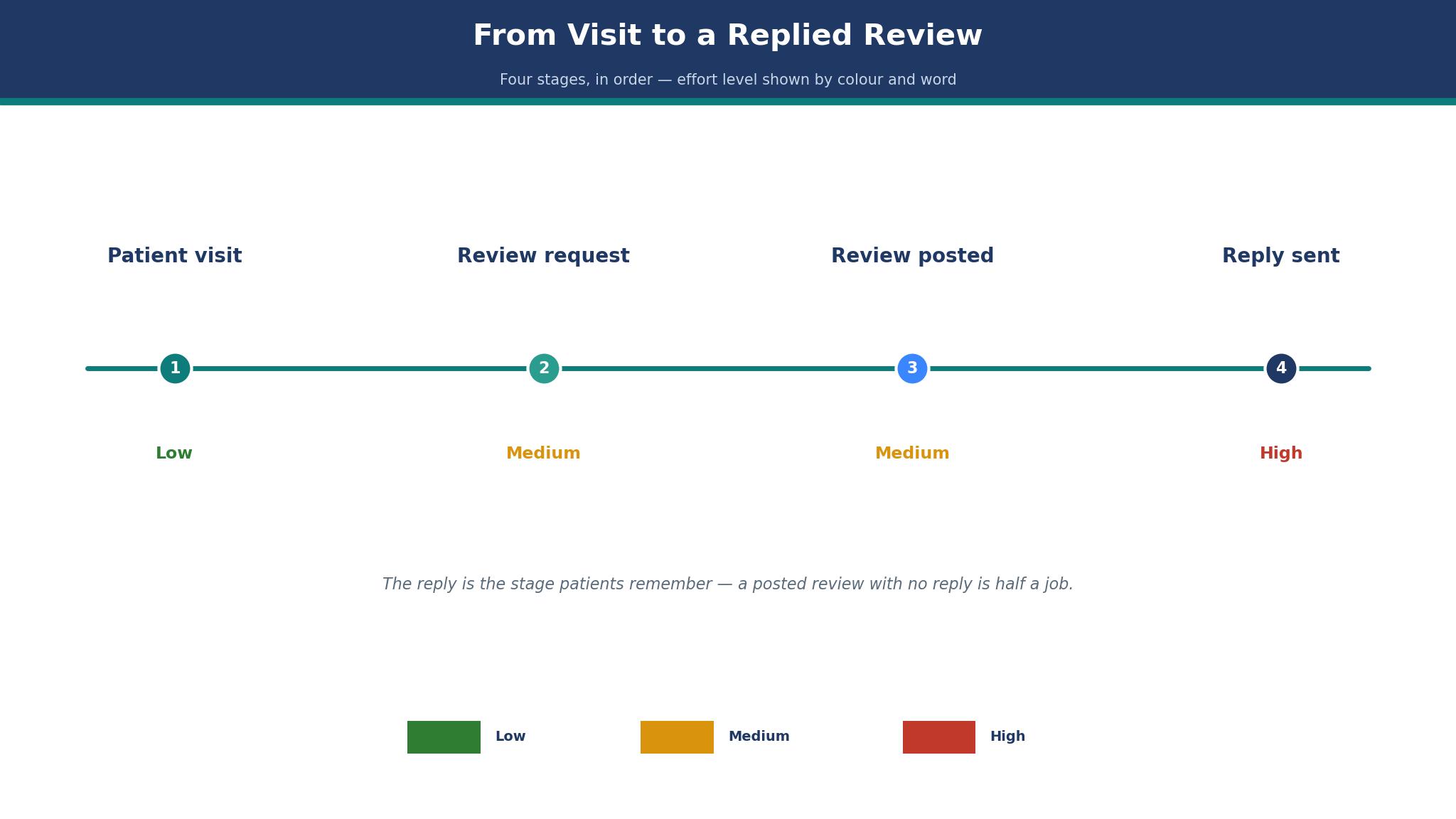
The second problem is the reply habit. A tool that collects reviews but leaves them unanswered does half the job, because future patients read the replies as closely as the stars. The top 10 reputation management software for healthcare in this guide is judged on the reply workflow as much as the collection, since a fast, human reply is what turns a review into trust.
The 10 Tools at a Glance
| Tool | Main job | Best for | Starting price |
|---|---|---|---|
| Birdeye | All-in-one reputation and experience | Multi-location practices | 299 dollars per location a month |
| Podium | Text-first reviews and messaging | Single-location practices | 399 dollars a month |
| Reputation.com | Enterprise reputation analytics | Large health systems | 80 dollars per location a month |
| Grade.us | Review generation and white label | Agencies and small practices | Quote-based |
| ReviewTrackers | Review monitoring and analysis | Practices watching many sites | Quote-based |
| Tebra | Practice growth with reviews | Independent practices | Quote-based |
| Doctible | Patient reviews and recall | Dental and medical practices | Quote-based |
| Widewail | Review response and monitoring | Practices outsourcing replies | Quote-based |
| SOCi | Multi-location local marketing | Large groups, local search | Quote-based |
| GatherUp | Review generation and feedback | Small practices on a budget | 99 dollars a month |
Best Pick by Job
| Job type | First pick | Second tool | Why this pair works |
|---|---|---|---|
| Multi-location practice group | Birdeye | Reputation.com | Birdeye covers the daily work, Reputation.com adds deep analytics |
| Single-location clinic | Podium | GatherUp | Podium texts patients, GatherUp costs less |
| Large health system | Reputation.com | Birdeye | Reputation.com analyses at scale, Birdeye runs the locations |
| Dental practice | Doctible | Birdeye | Doctible adds recall, Birdeye adds the full suite |
| Practice outsourcing replies | Widewail | Birdeye | Widewail writes the replies, Birdeye automates them |
A five-location dental group should start with Birdeye. The Starter plan is reported at 299 dollars per location a month, Growth at 349 dollars and Dominate at 449 dollars, all billed annually, with review generation, messaging, webchat, surveys, listings and AI agents in one platform. The review generation agent asks patients through the channel that gets the best response, then aggregates results from more than 200 review sites into one dashboard.
A single-location clinic should start with Podium instead. The Core plan is reported near 399 dollars a month and Pro near 599 dollars a month, with review requests, a shared SMS inbox, webchat, payments and an AI employee that answers leads. The text-first design suits a clinic where patients prefer a text to a phone call, and the healthcare vertical is one of Podium’s strongest.
Which Reputation Tool Is Best for a Single Clinic?
Podium is the best pick for a single clinic, because the SMS-first platform meets patients where they already are, on their phones, and the review request arrives as a text minutes after the visit. The shared inbox keeps every patient message in one place, so the front desk answers faster and misses fewer enquiries. The AI employee can answer common questions and book appointments when the desk is busy.
GatherUp is the better pick when the budget is tight. The entry plan is reported from 99 dollars a month, and it covers review generation, feedback surveys and review monitoring without the messaging and payments stack. A clinic that only needs more reviews, not a full communication platform, saves about 300 dollars a month against Podium.
Grade.us is the third option for a clinic that works with an agency or wants a white-label system. It covers review generation, monitoring and reporting, with a simple interface and a lower price than the enterprise tools. The trade-off is less depth in messaging and surveys than Birdeye or Podium, which matters when the clinic grows.
How to Choose the Top 10 Reputation Management Software for Healthcare
Start with the number of locations. A single clinic needs Podium, GatherUp or Doctible, because the price is per practice, not per location. A group with five or more locations needs Birdeye or Reputation.com, because the per-location pricing and the multi-location dashboard only pay at scale. The top 10 reputation management software for healthcare is not one tool, it is the tool sized to the location count.
Next, check the review sites covered. Birdeye aggregates from more than 200 sites, including Healthgrades, and Reputation.com aggregates from more than 600 platforms, including Vitals for healthcare. A practice whose patients review on Healthgrades needs a tool that watches Healthgrades, not just Google.
Then look at the response workflow. A tool that drafts replies with AI and lets staff approve them in one click, like Birdeye’s Review Response Agent, saves hours a week against a tool that only lists reviews. Widewail goes further and writes the replies for the practice. Finally, check the contract, because Birdeye and Podium typically sell annual contracts, and a practice should know the exit terms before signing.
The 10 Tools in Detail
The ten tools below cover enterprise suites, text-first platforms and budget review tools. Each one is judged on review generation, response workflow, healthcare fit and price transparency, so this roundup of the top 10 reputation management software for healthcare stays honest about the quote-only market.
1. Birdeye
Birdeye is the all-in-one reputation and customer experience platform in this guide, combining review management with messaging, webchat, surveys, listings, referrals and social tools, plus AI agents on top. Pricing is not shown on its website, and the reported rates are around 299 dollars, 349 dollars and 449 dollars per location per month for Starter, Growth and Dominate, billed annually, with custom quotes for four or more locations and onboarding fees reported at 500 to 1,500 dollars.
The review generation agent is the strength. It requests reviews through whichever channel gets the best response, aggregates results from over 200 review sites, including industry-specific ones like Healthgrades, and the Review Response Agent drafts brand-voice replies for approval or auto-posting. The multi-location dashboard shows every location at once, which is what a group practice needs.
The drawback is price and scope. A single-location practice pays for a suite built for groups, and the annual contract locks the practice in for a year. It suits multi-location healthcare groups that want one platform for reviews, messaging and listings. Ask for a written quote for the exact location count, and confirm the onboarding fee before signing.
2. Podium
Podium started as a review invitation tool and grew into a text messaging platform for local businesses, and it is strongest in the United States in sectors such as automotive, home services and healthcare. The platform covers review requests, a shared SMS inbox, webchat, payments and an AI employee for lead response, with AI-drafted replies on higher tiers.
The SMS-first design is the strength. Patients answer texts faster than emails, and the review request that arrives minutes after a visit gets more responses than one that arrives the next day. The unified inbox keeps Google, Facebook, Instagram and webchat messages in one place, so the front desk works from one screen.
The drawback is price. The Core plan is reported near 399 dollars a month and Pro near 599 dollars a month, with additional per-location fees, and there is no free tier. A practice that only needs reviews will pay for messaging and payments it may not use. It suits single-location and small-group practices that live on text. Ask for the full monthly total, including per-location fees, before comparing it with Birdeye.
3. Reputation.com
Reputation.com is the enterprise reputation and experience management platform in this guide, combining reviews, surveys, social listening and listings with deep sentiment analytics. It is common in healthcare, automotive dealerships, real estate and large retail networks, and it carries a named healthcare solution. Pricing is published per location, which is unusual in this category.
The published rates are Rep Core at 80 dollars per location a month for reviews, listings and local SEO, Rep Core plus Pulse at 115 dollars a month adding an AI reputation manager and analytics, and Rep Core plus Surveys at 150 dollars a month adding advanced surveys and targeted outreach. Enterprise for 125 or more locations is custom priced.
The analytics depth is the strength. The platform aggregates reviews from more than 600 platforms, including Vitals for healthcare, and connects reputation data to the broader customer journey, which suits a health system that reports on experience, not just stars. The drawback is that the full value needs many locations, and a small practice will find the enterprise feel heavy. It suits large health systems and multi-location groups. Start on Rep Core, and add Pulse when the analytics become a weekly habit.
4. Grade.us
Grade.us is a review generation and monitoring platform built for small practices and the agencies that serve them, with white-label options that let an agency run the system under its own brand. It covers review requests, monitoring across the major sites, reporting and a review widget for the practice website.
The simplicity is the strength. A small practice can set up review requests in a day, watch the major sites from one dashboard and show its best reviews on its own site. The price is set by quote, which is lower than the enterprise suites, and the white-label option suits agencies managing many small clients.
The limit is depth. There is no messaging platform, no payments stack and no AI agent, so a practice that grows will need a second tool for patient communication. It suits small practices and agencies that want reviews without the suite. Ask for a written quote for one location, and compare it against GatherUp before buying.
5. ReviewTrackers
ReviewTrackers is a review monitoring and analysis platform, built for practices that need to watch many review sites and understand what patients are saying. It aggregates reviews from the major platforms, analyses sentiment, benchmarks against competitors and reports on trends across locations.
The monitoring depth is the strength. A practice that wants to know its rating trend, its most common complaints and how it compares with the clinic down the road will find the answer here. The sentiment analysis turns hundreds of reviews into a short list of fixes, which is the point of monitoring.
The drawback is that it monitors more than it generates. A practice that needs more reviews, not just better monitoring, will need a generation tool alongside it. Pricing is quote-based. It suits practices with a steady review flow that want to understand it better. Pair it with a generation tool, and use the sentiment report in the monthly staff meeting.
6. Tebra
Tebra is a practice growth platform for independent medical practices, built from the combination of PatientPop and Kareo, and it covers reviews alongside scheduling, patient intake, billing and practice management. The review tools sit inside a wider growth system, so a practice can manage its online presence and its operations in one place.
The integration is the strength. A review request can follow an appointment automatically, the patient intake flows into the record, and the billing follows the visit, which cuts the number of systems a small practice runs. The platform is built for independent practices rather than large systems.
The limit is reputation depth. Tebra is a practice platform first and a reputation tool second, so a group that needs the deepest review analytics will find more in Birdeye or Reputation.com. Pricing is quote-based. It suits independent practices that want one system for growth and operations. Ask for a demo built around the appointment-to-review flow before signing.
7. Doctible
Doctible is a patient engagement platform for dental and medical practices, covering review generation, patient recall, appointment reminders and online scheduling. The review tools ask patients for feedback after a visit, and the recall tools bring patients back for the next appointment, which connects reputation to revenue directly.
The recall link is the strength. A dental practice that asks for a review and books the next cleaning in the same flow gets more from the software than a review-only tool. The platform is built for the way a dental or medical front desk actually works, with reminders and recall as daily jobs.
The drawback is scope. A multi-specialty group will find less depth here than in Birdeye, and the pricing is quote-based, so the budget conversation needs a sales call. It suits dental and small medical practices that want reviews plus recall. Ask for a quote that covers both modules, and test the recall flow on real patients before paying.
8. Widewail
Widewail is a review response and monitoring service for practices that want the replies handled for them. It monitors review sites, drafts and posts responses in the practice voice, and reports on rating trends, with a team behind the software rather than software alone.
The human service is the strength. A practice with no time to answer reviews gets every review answered professionally, which lifts the rating and the patient trust faster than an unanswered inbox. The response quality is higher than a pure AI draft, because a person reviews the context.
The limit is cost and control. A managed service costs more than software alone, and a practice that wants to write its own replies will not need it. Pricing is quote-based. It suits practices that know reviews matter but cannot staff the replies. Ask for sample replies in the practice voice, and confirm the turnaround time for a negative review before signing.
9. SOCi
SOCi is a multi-location local marketing platform, covering reviews, listings, local search, social media and advertising for large groups. It is built for brands with many locations that need one system for local visibility, with review management as one module inside a wider marketing suite.
The local search depth is the strength. A healthcare group with dozens of locations can manage listings, reviews and local pages from one dashboard, with reporting that shows which locations need attention. The platform scales where single-location tools stop.
The drawback is that reviews are one module among many, so a practice that only needs reputation will pay for marketing tools it does not use. Pricing is quote-based. It suits large healthcare groups that want local marketing and reputation together. Ask for a quote for the review module alone, and compare it against Birdeye before deciding.
10. GatherUp
GatherUp is a review generation and feedback platform for small practices, covering review requests, feedback surveys, review monitoring and a widget for the practice website. The entry plan is reported from 99 dollars a month, which makes it the cheapest published start in this guide.
The price is the strength. A small practice can start asking for reviews for about a hundred dollars a month, with no annual enterprise contract and no messaging stack to learn. The feedback survey catches unhappy patients before they post publicly, which is the feature that protects the rating.
The limit is scale. A multi-location group will find less here than in Birdeye or Reputation.com, and the messaging and listings tools are thinner. It suits small practices on a budget that need more reviews now. Start on the entry plan, measure the review count for ninety days, and move up only when the volume proves the tool works.
Birdeye vs Podium: Suite Depth Against Text Speed
The first difference is what each tool optimises for. Birdeye optimises for depth, with reviews, messaging, webchat, surveys, listings and AI agents in one platform, at a reported 299 to 449 dollars per location a month. Podium optimises for text speed, with an SMS-first inbox, payments and an AI employee, at a reported 399 to 599 dollars a month.
The second difference is the location count. Birdeye prices per location and suits groups, while Podium prices per practice and suits single locations. A five-location group pays about 1,495 dollars a month on Birdeye Starter, while a single clinic pays about 399 dollars a month on Podium Core, and the two numbers describe different businesses.
The deciding factor is the front desk. A practice whose patients text should take Podium. A group that needs one dashboard for many locations should take Birdeye. That split is the cleanest way to read the top 10 reputation management software for healthcare when the choice narrows to two, and a health system with both needs should own both, with Podium at the front desk and Birdeye across the group.
What Does Healthcare Reputation Software Cost Each Year?
The yearly cost runs from about 1,188 dollars to more than 26,000 dollars in this guide. GatherUp at a reported 99 dollars a month costs about 1,188 dollars a year. Reputation.com Rep Core at 80 dollars per location a month costs 960 dollars a year per location, or 4,800 dollars a year for five locations. Podium Core at a reported 399 dollars a month costs about 4,788 dollars a year. Birdeye Starter at a reported 299 dollars per location a month costs 3,588 dollars a year per location, or 17,940 dollars a year for five locations.
The number that matters is cost per review gained. A clinic that gains ten reviews a month on GatherUp pays about 10 dollars per review. A group that gains fifty reviews a month across five locations on Birdeye pays about 30 dollars per review. The cheaper tool wins on price per review, and the dearer tool wins on the dashboard, the messaging and the listings that come with it.
The honest way to budget is to count the reviews gained in the last quarter, set a target for the next quarter, and price the tool that hits the target. A tool that gains no reviews is expensive at any price, and a tool that doubles the review count pays for itself in appointments. That is the discipline the top 10 reputation management software for healthcare demands, because the review count, not the feature list, is the return.
Can a Small Clinic Improve Its Rating Without an Enterprise Tool?
Yes, and the path is a cheap generation tool plus a reply habit. GatherUp at a reported 99 dollars a month asks every patient for a review, and the front desk answers every review within a day, including the unhappy ones. A clinic that does those two things for ninety days will lift its rating and its review count without any enterprise software.
The second path is to ask at the right moment. A review request sent minutes after a visit, while the patient is still pleased, gets far more responses than one sent the next day. Podium automates that timing with text, and GatherUp does it with email, and the timing matters more than the tool.
The third path is to fix the complaint, not just answer it. A clinic that reads its reviews, finds the most common complaint and fixes it will see the next quarter of reviews improve on their own. No software can do that step, only the practice can, and the software exists to show the practice what to fix.
A 90-Day Review Growth Plan for a Clinic
Days one to thirty are the setup. Connect the review tool to the appointment system, write three reply templates for good, neutral and unhappy reviews, and train the front desk to ask every patient for a review at checkout. The ask matters more than the tool, because a patient who is asked in person answers more often than one who only gets an email.
Days thirty to sixty are the first run. Send a review request after every visit, answer every review within a day, and watch the rating and the review count weekly. A rating that falls means the replies are slow or the complaint is real, and either way the fix starts with the front desk, not the software.
Days sixty to ninety are the review and the fix. Read every review from the quarter, sort the complaints, and fix the one problem that appears most often. Tell the staff what changed, because a review program with no visible result trains the staff to stop asking. That loop is what a reputation tool is for, and it is the habit that keeps the rating high after the first ninety days.

Frequently Asked Questions
Which reputation tool is best for a multi-location healthcare group?
Birdeye is the best pick for most multi-location groups, with review generation, messaging, listings and surveys in one platform at a reported 299 dollars per location a month. Reputation.com is the alternative for large health systems, with Rep Core at 80 dollars per location a month and deeper analytics across more than 600 platforms. Either one belongs at the top of the top 10 reputation management software for healthcare, and the choice turns on whether the group needs the daily suite or the deep analytics more.
How much does Birdeye cost per location?
Birdeye does not publish pricing, and the reported rates are around 299 dollars, 349 dollars and 449 dollars per location per month for Starter, Growth and Dominate, billed annually, with custom quotes for four or more locations. Onboarding fees are reported at 500 to 1,500 dollars. Ask for a written quote for the exact location count before budgeting.
Is Podium good for healthcare practices?
Yes. Podium is strongest in healthcare among local service sectors, with an SMS-first platform, a shared inbox, webchat, payments and an AI employee. The Core plan is reported near 399 dollars a month and Pro near 599 dollars a month. It suits single-location clinics where patients prefer text to phone calls.
Can a small clinic afford reputation software?
Yes. GatherUp is reported from 99 dollars a month, which is about 1,188 dollars a year, and it covers review generation, feedback surveys and monitoring. A clinic that gains ten reviews a month on GatherUp pays about 10 dollars per review, which is the cheapest route in this guide to a better rating.
Does Reputation.com cover Healthgrades and Vitals?
Yes. Reputation.com aggregates reviews from more than 600 platforms, including Vitals for healthcare, and Birdeye aggregates from more than 200 sites, including Healthgrades. A practice whose patients review on those sites needs a tool that watches them, not just Google, so check the site list before buying.
How fast should a practice answer a negative review?
Within a day, and the faster the better. A negative review answered within a day shows future patients that the practice listens, while one left for a week reads as indifference. Birdeye drafts replies with AI for approval, Widewail writes them for the practice, and either way the front desk should own the one-day rule.
The Healthcare Reputation Verdict
A multi-location healthcare group should buy Birdeye at a reported 299 dollars per location a month, because one platform covers reviews, messaging, listings and surveys across every location. A single clinic should buy Podium at a reported 399 dollars a month, because text is where its patients are. A large health system should buy Reputation.com Rep Core at 80 dollars per location a month, because the analytics across 600 platforms justify the enterprise feel. A small clinic on a budget should buy GatherUp at a reported 99 dollars a month, and spend the saving on answering every review within a day.