

Six levels decide almost everything in a language school. From A1 for a complete beginner to C2 for a near native speaker, those six steps shape which class a student joins, which teacher they get, which textbook they use, and whether they stay for another term. Get the level wrong by one step, and a student is either bored or lost for a whole term. Get it right, and the same student progresses steadily, trusts the school, and renews without being asked twice. That six level reality is why you should use AI for language school class scheduling, not as a generic booking tool, but as a placement and progression system built around levels.
Prices in this guide are ranges drawn from vendor pages and published guides at writing time, so confirm on the vendor page before you buy. Language school platforms often price by student numbers, by location, or by quote, and the price that matters is the one quoted for your enrolment size and language mix.
Where Language Timetables Go Wrong First
The first failure is placement by guesswork. A new student fills in a short form, a staff member estimates a level from a few answers, and the student joins a class that is too easy or too hard. Paper tests scored by hand make this worse, because scoring varies by who marks the test, and borderline students land in different levels depending on the day.
The second failure is the mid term move that never happens. A student improves faster than the cohort, or falls behind after a holiday, but the timetable has no clean way to move them. Teachers know the student is misplaced, staff know the move would help, yet the move stalls because it means changing a room, a textbook, a payment plan, and a progress record at once. So the student stays put, the gap widens, and renewal becomes unlikely. A good system makes a level move a single, supported action, not a paperwork project.
The third failure is the holiday calendar. Language schools serve students from many countries, run classes through local holidays, and close for national holidays that affect only some cohorts. If holiday exceptions are handled by memory or by separate notes, a teacher turns up for a class that students thought was cancelled, or students turn up for a class that was never meant to run. Both errors damage trust, and both are preventable with one shared calendar that holds every exception in plain view.
Data turns those failures into decisions. That data habit is a core reason to use AI for language school class scheduling, because it replaces a general feeling that the timetable is busy with numbers managers can act on. Track placement accuracy by intake method, level move rate by cohort, attendance by level, and renewal by starting level, and patterns emerge quickly. Perhaps students placed by test alone churn more than students placed by test plus a short speaking check. Perhaps one level has a bottleneck, where students wait months for a free seat at the next level. Those answers shape intake, staffing, and room planning far better than a general feeling that the timetable is busy.
How to Use AI for Language School Class Scheduling
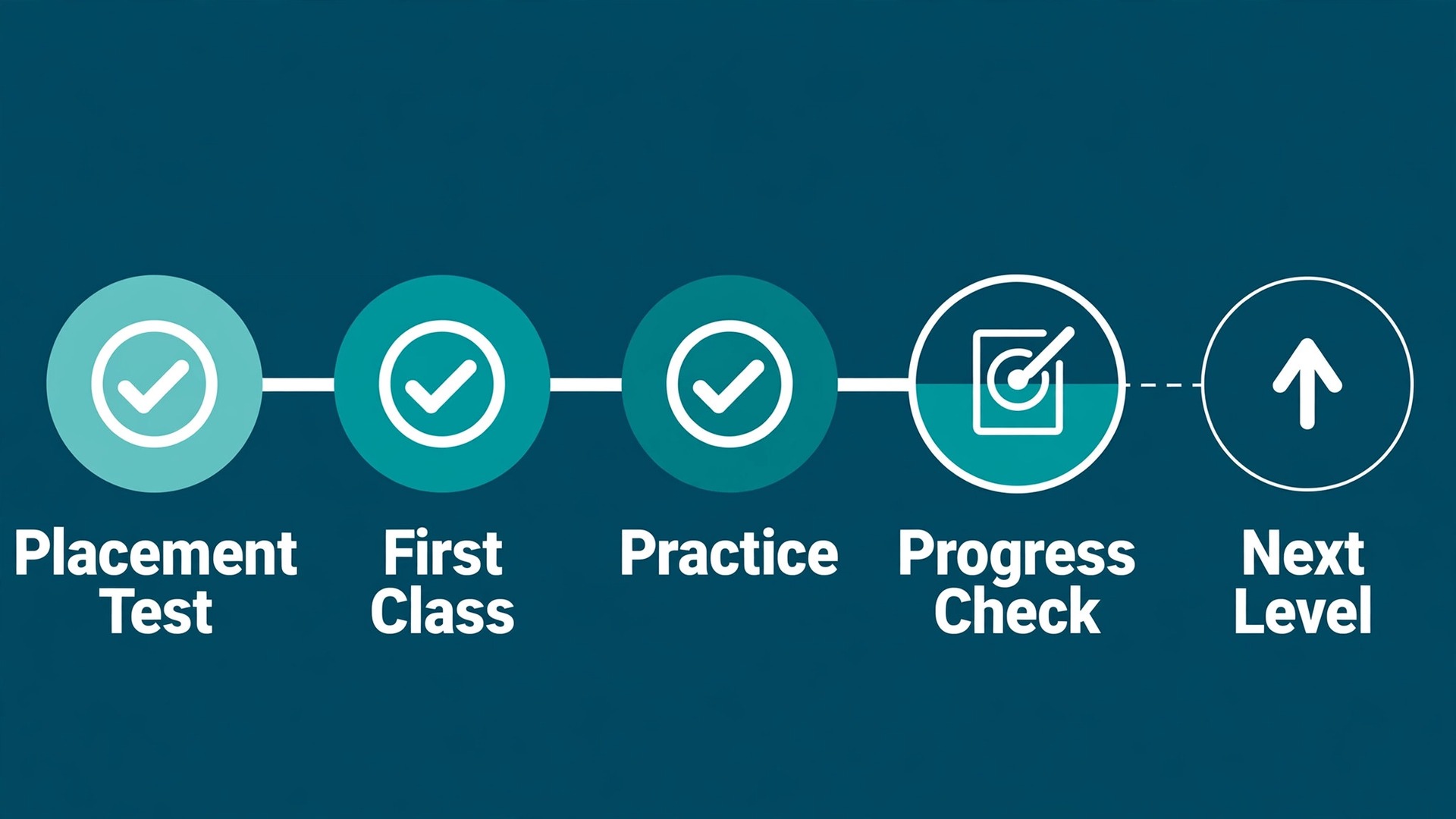
Start with the student journey, not with a software demo. A student takes a placement test, receives a level, joins a cohort, attends weekly classes, receives progress reports, sits a progress or exam readiness check, and renews into the next level. A parent follows a parallel journey for younger students, with attendance updates, progress reports, and payment reminders. Map both journeys on paper first, then judge every tool against them.
The core workflow has five moving parts, and they must work together. Level placement assigns a level per skill, not just one overall label, because a student can speak at B1 while writing at A2. Cohort booking groups students by level, language, and availability, with a clear start and end. Progress reports turn attendance, test scores, and teacher notes into a record families and adult learners can understand. Holiday calendars hold every closure and exception in one place. Renewal reminders arrive while the student is still progressing, not after the habit has broken.
Set one rule before you switch anything on. No student should need to phone the school to learn their level, their class time, their progress, their holiday dates, or their renewal date. If those five answers still need a phone call, the system is not doing its job, and it will still eat staff time at intake, which is when staff are busiest with new enrolments and placement tests.
| Workflow part | What good looks like | Failure it prevents |
|---|---|---|
| Level placement | Per skill levels, checked by a teacher | Bored or lost students from one label |
| Cohort booking | Level, language, and time matched | Classes that cannot run as planned |
| Progress reports | Clear scores, notes, and next steps | Families guessing at progress |
| Holiday calendars | One shared calendar, all exceptions | Students and teachers turning up wrongly |
| Renewal reminders | Timely, personal, tied to progress | Students drifting away between levels |

Placement Testing That Earns Trust on Day One
Placement testing should be fast, fair, and explainable, because students judge the school by whether the first class feels right. A good test covers the four skills, meaning listening, reading, writing, and speaking, or at least a strong proxy for speaking, such as a short recorded answer or a brief live check. A test that only measures grammar will place a fluent speaker who struggles with writing into the wrong class, and a test that only measures vocabulary will miss a student who reads well but cannot hold a conversation.
Automated scoring helps most with consistency. The same answers receive the same score, no matter who is on duty, and results arrive in minutes rather than days. That speed matters at intake, because a student who tests on Monday and waits until Friday for a class offer may already have enrolled elsewhere. AI enhanced scoring can map each skill to a level band, such as A2 for listening and B1 for speaking, and suggest an overall class level with the skill gaps noted. Teachers still review borderline results, especially where speaking and writing diverge sharply, because a short conversation reveals things a written test cannot.
Explain the result in plain language. When you use AI for language school class scheduling for placement, the skill breakdown should arrive with the class offer, so the placement feels like evidence, not like a staff decision to argue with. A student should receive a short summary that names each skill level, the class level offered, and what the class will work on first. That explanation prevents the most common intake argument, which is a student insisting they belong in a higher class because they can chat fluently, while their writing sits a full level below. When the skill breakdown is visible, the placement feels like evidence, not like a staff decision to argue with.
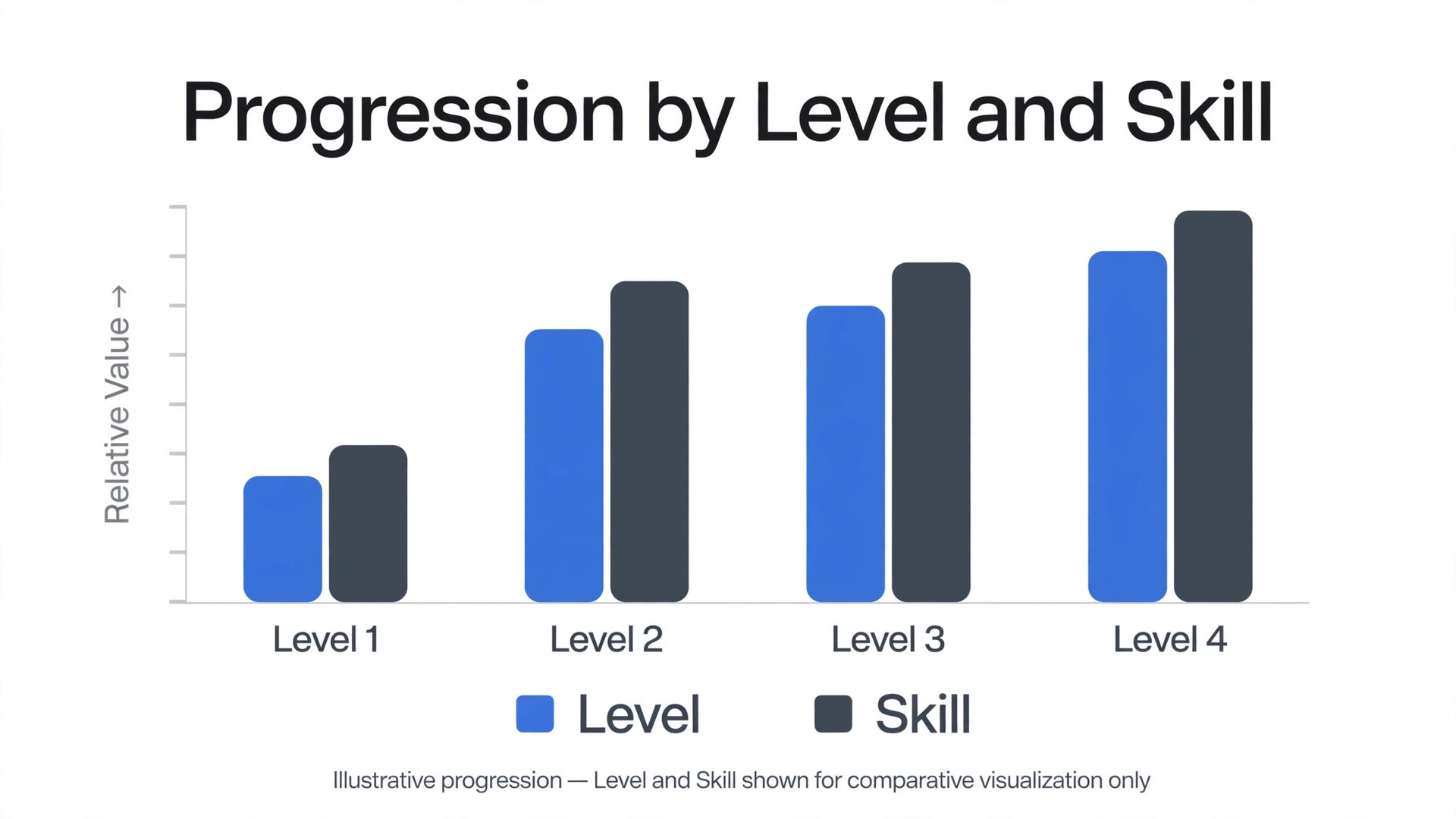
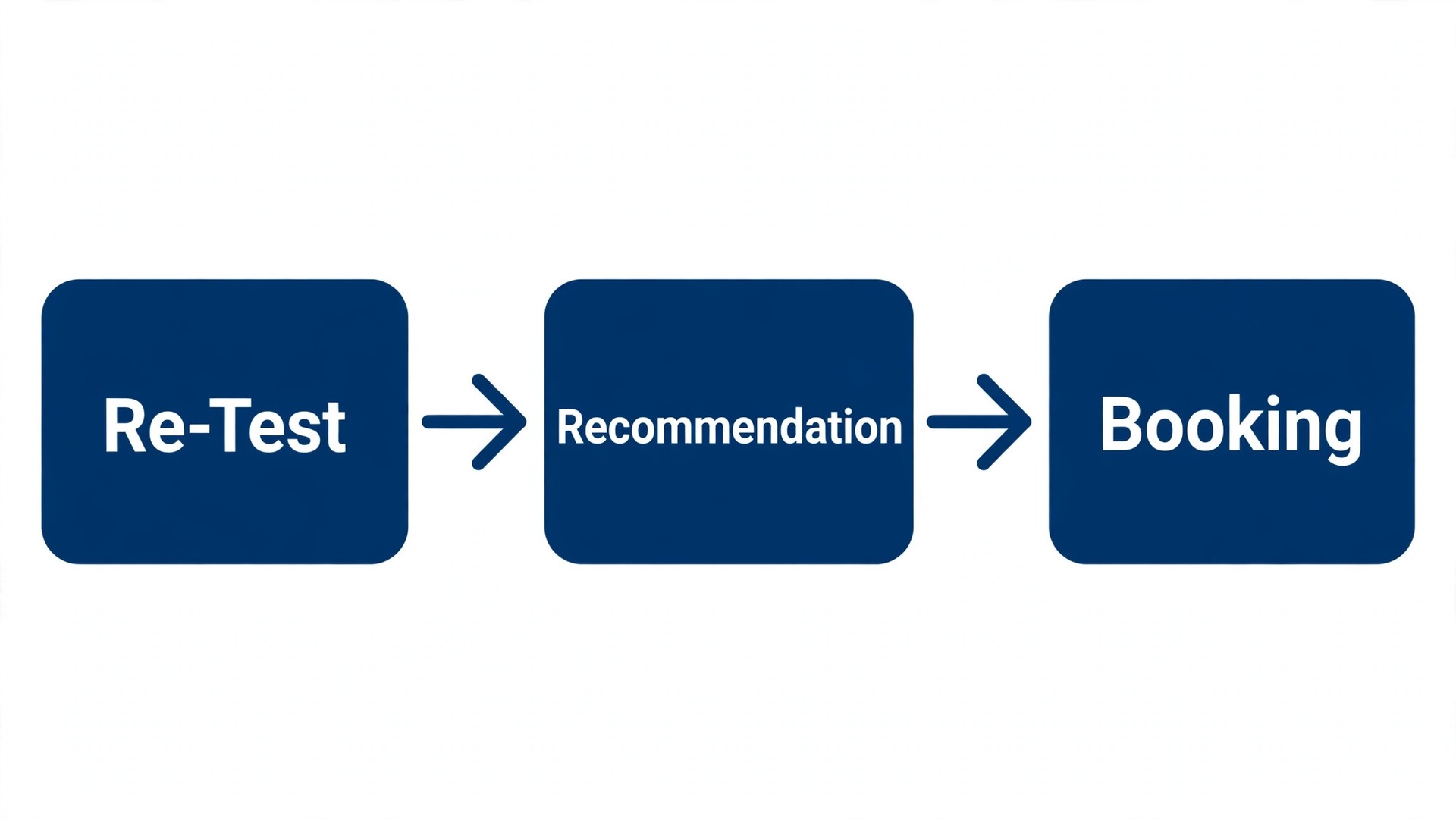
Re test at the end of each term, with the same test type, so progress is comparable. A student who moves from A2 to B1 in listening but stays at A2 in writing needs a different next step from a student who moves evenly across all skills. The re test result, combined with teacher notes, should drive the next placement, not a simple rule that everyone moves up together. Moving everyone up together is easy to administer and wrong for a large share of every cohort.

Cohort Booking by Level, Language, and Availability
Cohort booking in a language school is a matching problem with four constraints at once, meaning level, language, teacher availability, and student availability. A B1 Spanish conversation class needs a teacher who teaches Spanish at B1, a room at a time that suits the cohort, and enough students at that level to run viably. Change one constraint, and the whole cohort may need rethinking. That is why manual scheduling in spreadsheets breaks down as soon as enrolment grows.
Room and teacher conflicts must be enforced automatically. When you use AI for language school class scheduling for cohort booking, a room that fits six students should never accept an eighth booking, and a teacher should never be double booked at the same hour. A room that fits six students should not accept an eighth booking, and a teacher should not be double booked across two rooms at the same hour. Those rules sound obvious, yet they are the rules most often broken by a manual timetable, because a staff member fixing one clash creates another without seeing it. A system that blocks conflicts at booking time prevents a whole class of apology emails later.
AI can suggest new cohorts from waitlist data, such as opening a second B1 evening group when the first fills two weeks running, or merging two small cohorts at the same level when numbers fall below viability. Managers still approve those calls, because a cohort that is too small can feel empty, while a merged cohort can mix students who have covered different material. Use waitlist and attendance data to time the opening, not to force a group that is not ready.
Progress Reports That Parents and Learners Actually Read
A progress report fails when it is a wall of scores with no story. A parent or an adult learner needs to know three things, meaning where the student started, where they are now, and what comes next. Everything else is detail that can sit behind a link or an appendix. A report that answers those three questions in the first paragraph will be read. A report that buries them on page three will be filed and forgotten.
Frequency matters as much as format. When you use AI for language school class scheduling for reports, a short progress note every four to six weeks catches a stalling student early, while a single end of term report arrives too late to change anything. AI can draft report summaries from scores, attendance, and teacher notes, and flag students whose progress has stalled in one skill, so teachers can add a targeted comment rather than writing every report from scratch. Teachers still write the judgment, because a generic comment on a learner’s language progress would feel hollow and could easily miss what that learner actually needs.
Share reports through a portal that students and parents already use for scheduling and payments, not through a separate system they must learn. A report that arrives in the same place as the timetable and payment record is far more likely to be read and to prompt a renewal conversation.
Holiday Calendars That Stop the Wrong Day Turn Up
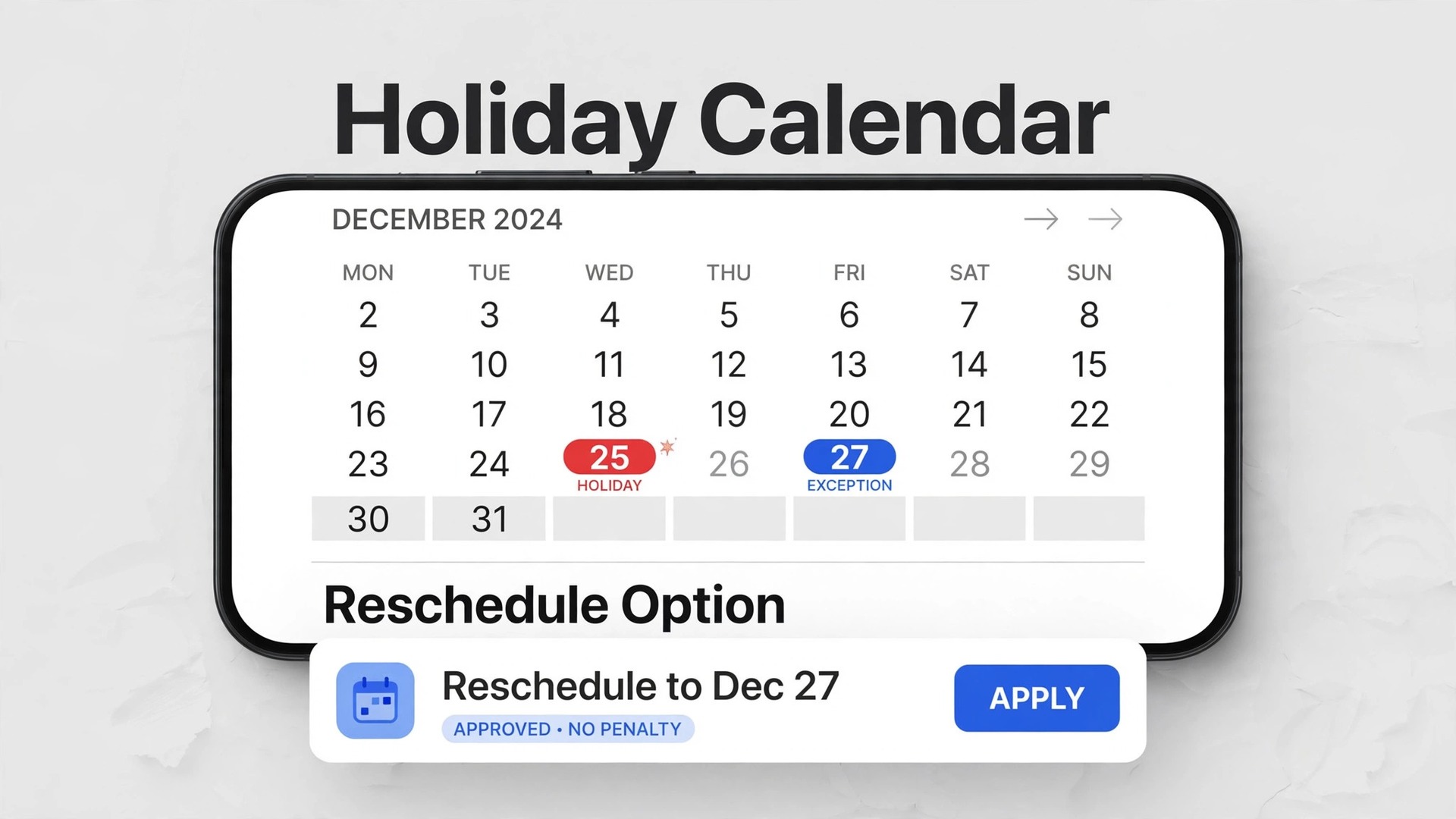
Holiday calendars deserve more attention than they usually get, because they are where language schools most visibly break trust. A school that closes for a national holiday must tell every affected cohort, every teacher, and every parent, and must show whether the missed class is rescheduled, refunded, or absorbed into the term. A school that leaves that decision to individual teachers will give different answers to different cohorts, and families will compare notes.
AI can draft the exception messages and suggest reschedule options, such as offering a catch up class at the same level on a nearby date, or extending the term by one session. Staff still approve the final plan, because a catch up class that mixes levels to fill seats would undo the placement work that the rest of the system protects. The system should also update the timetable, the teacher schedule, and the student portal from the same exception, so nobody works from an old version.
Publish the calendar early. When you use AI for language school class scheduling for holidays, a calendar published at term start lets families plan travel around closures instead of discovering them a week before. Families plan travel months ahead, and a holiday calendar published at term start lets them plan around closures instead of discovering them a week before. Include the reschedule policy beside the calendar, in plain language, so a family that misses a class through a school closure knows exactly what happens next without needing to ask. That clarity is a small detail that prevents a large number of support messages.
Renewal Reminders Tied to the Next Level
Renewal in a language school is really a level decision, and reminders should treat it that way. A generic message that says a term is ending and payment is due misses the point, because the student is not just renewing a product, they are deciding whether they are ready for B2, whether they should repeat B1, or whether they should switch focus to exam preparation. A renewal message that names the recommended next level, the evidence behind it, and the class times available makes that decision easy.
Time the sequence around progress moments. A mid term preview can show the next level options and invite early booking for returning students. A term end message can include the progress report summary and the teacher’s recommendation, so the renewal decision is informed. A final message a week after term end can offer a catch up class or a short intensive for students who missed the first window. Each message should name the student’s language, level, and suggested next class, because a personal message converts far better than a generic one.
AI can draft that sequence from progress and attendance data, and flag students at risk of leaving, such as a student whose attendance dropped sharply, or a student who stayed at the same level for two terms without a clear plan. Staff should contact at risk students personally, because a template cannot learn whether a student is struggling, travelling, or simply busy at work. The system finds the risk, and a person has the conversation.
Audit renewals by level each term. Look for levels with high renewal and levels where students stall, and ask teachers what differed, because the answer is rarely price alone. Perhaps one level has a clearer exam goal, a better textbook, or a teacher who gives specific progress notes. Copy what worked into the next term’s plan, rather than discounting a level that churned for a fixable reason. Renewal is a progression signal, not just a sales number.
Tools Worth Testing First
OpenEduCat
OpenEduCat suits language schools that need CEFR level tracking, placement testing, proficiency based scheduling, and certificate generation in one system. Published pricing is typically quoted after a demo for schools of this size, so confirm on the vendor page for your student numbers and locations. Test its level progression view carefully, because the way it shows a student moving from A1 to C2 will shape how teachers and families understand progress.
EduSynch
EduSynch suits schools that want automated level testing for placement, progress, and exit checks, with scoring across listening, reading, writing, and speaking. Published pricing is typically quoted by volume and school size, so confirm on the vendor page for your testing numbers and terms. Test it with a real borderline student during the trial, because a placement tool earns trust on the hard cases, not on the clear ones.
Tutorbase
Tutorbase suits language schools that need scheduling, billing, and payroll tied together, with CEFR levels built in, room limits enforced, and self service rescheduling within level constraints. Published pricing is typically quoted by plan, so confirm on the vendor page for your student numbers and languages. Test its rescheduling rules in the trial, because a student who can only see classes at their own level will make far fewer booking mistakes.
EasyWeek
EasyWeek suits language schools that want online booking, class schedules, progress tracking, calendar sync, and multi language support in one system. Published pricing is typically quoted by plan, so confirm on the vendor page for your student numbers and locations. Test its student and teacher views in the trial, because a system that looks clear to staff but confusing to students will still generate support messages every week.
Legere Learning
Legere Learning suits schools that want CEFR aligned assessment with skill by skill analysis, school level insights, and certificates with verification. Published pricing is typically quoted after a demo, so confirm on the vendor page for your cohort sizes and assessment frequency. Judge it on report clarity, because an assessment that produces scores nobody can explain to a family will not improve placement or renewal.
Run a two week trial the way students will use the tool, not the way a sales demo shows it. Take a placement test, receive a level, book a cohort, view a progress report, check a holiday exception, and renew into the next level, and time each task. When you use AI for language school class scheduling in a trial, involve one teacher and one parent in the test, because staff tolerance for clunky screens is always higher than family tolerance. The cheapest tool that families actually enjoy using will beat a powerful tool they avoid.
| Tool type | Best for | Watch out for |
|---|---|---|
| Level tracking platform | CEFR progression, certificates | Demo based pricing, setup time |
| Automated testing platform | Placement, progress, exit checks | Fit for speaking assessment |
| Scheduling plus billing platform | Levels, rooms, payroll together | Price varies by plan |
| General class scheduling system | Booking, calendars, progress | Depth on language levels |
| Assessment platform | Skill by skill reports, insights | Needs a scheduling system beside it |
A Worked Example. A B1 Student Who Almost Quit
A new student joins an evening English school after a placement test that scores listening at B1, speaking at B1, reading at B2, and writing at A2. A single label system might have placed her in B1 or B2, and either choice would have been wrong in one skill. The system instead places her in a B1 cohort, notes the writing gap in her record, and tells her teacher before the first class. The teacher knows from day one that writing needs extra support, and the student knows the school has seen her real profile, not just an average.
Holiday handling is tested in the same term, when a national holiday falls on her usual class day. The school calendar shows the closure a month ahead, offers a catch up class at B1 on the following Saturday, and updates her portal automatically. She attends the catch up, misses nothing, and never needs to ask what happens to the missed session. At term end, the re test shows writing at B1, and the renewal message recommends B2 with a note that writing support continues. She renews the same week, because the recommendation is backed by evidence she has already seen.
A 30 Day Rollout Plan
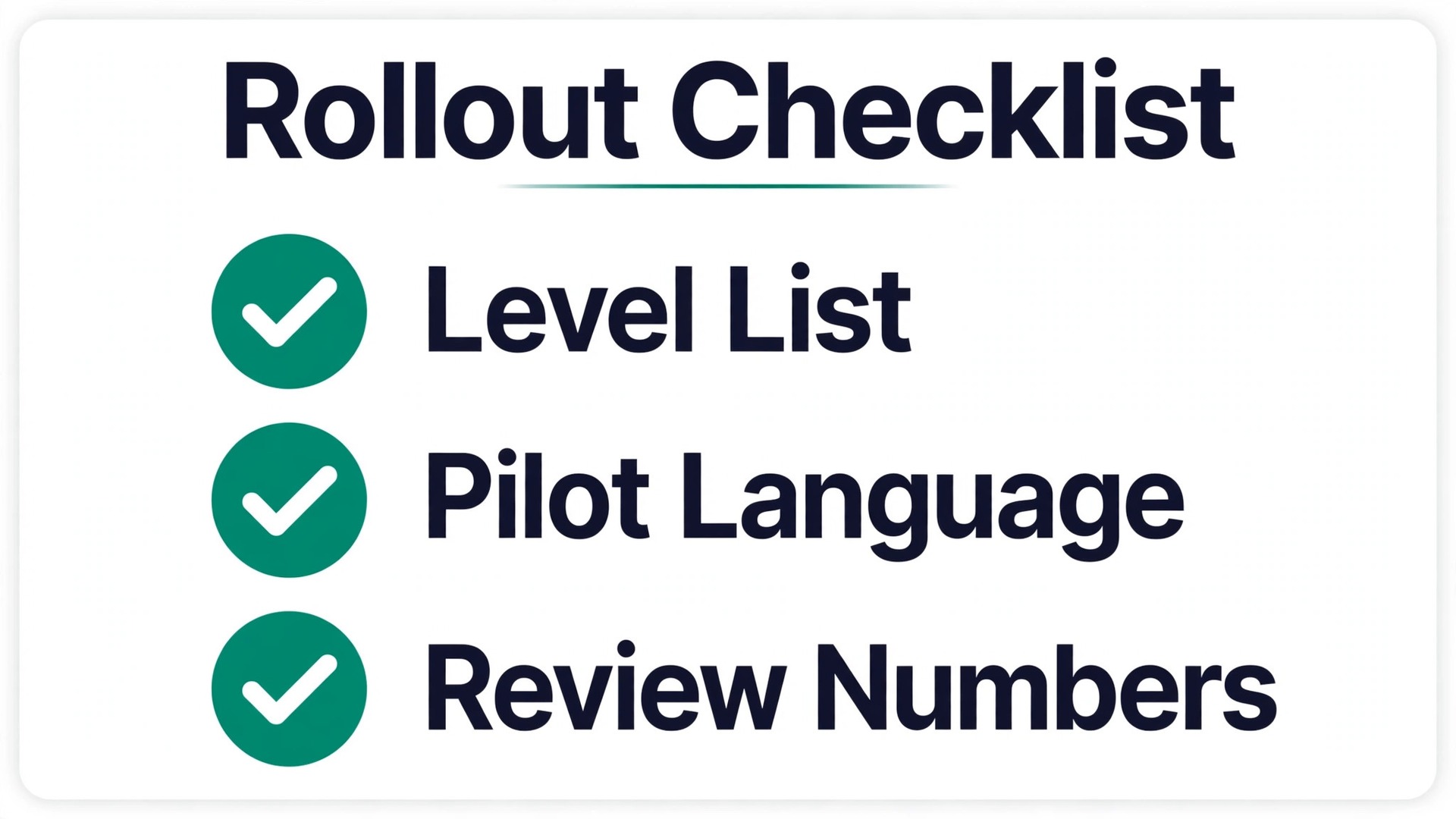
Week one is mapping and cleanup. List every language, every level, every teacher and their levels, every room and its capacity, and every holiday and exception for the coming term, and put them in one system the whole team trusts. Audit current cohorts, confirm which students are at which level per skill, and correct progress records before automation starts. Import student data cleanly, meaning one record per student, because bad data will poison every automated message that follows. Do not turn on AI messages until the underlying timetable is trustworthy.
Week two is a quiet pilot. Turn on placement testing and cohort booking for one language only, such as evening English, and watch placement accuracy, booking mistakes, and student messages daily. Train teachers on the new screens, especially progress reports and level moves, so they can answer student questions without guessing. Collect student feedback after classes, because a short conversation after a session reveals friction that analytics miss.
Week three expands the pilot to all languages, with progress reports, holiday exceptions, and renewal reminders switched on for the next term. Publish level descriptions, holiday dates, and renewal timing on the booking page, so families know what to expect. Review placement and renewal numbers at the end of the week, and adjust one or two weak levels rather than rewriting the whole timetable at once. Small, evidence based changes stick better than a dramatic relaunch.
Week four is review and lock in. Compare placement accuracy, booking mistakes, report read rates, and renewal rate against the term before the change, and keep only the automations that moved a number. Turn off messages that families ignored, shorten tests that caused drop off, and document the final settings in a one page runbook. That runbook is what keeps the system working when a coordinator is away and a new student needs placing at short notice.
Mistakes That Lose Language Students
The first mistake is treating automation as a one time setup. Placement tests, holiday calendars, and renewal timing need a review each term, because student behaviour changes with exam seasons, school holidays, and teacher changes. A holiday calendar that worked last term may fail this term, when a new national holiday affects a cohort that was previously unaffected. Review beats set and forget every time.
The second mistake is hiding the rules. Students who do not know the level descriptions, the holiday policy, or the renewal timing will break all three by accident, and then blame the school. Publish the rules where students book, repeat them at enrolment, and show them again when they matter, meaning at placement and at renewal. Transparency costs nothing and prevents most front desk arguments.
The third mistake is over automating the human moments. A placement dispute, a stalled progress report, and a complaint about a class deserve a human message, not a template. AI should handle volume, meaning routine bookings, reminders, and report drafts, while teachers handle exceptions, meaning struggling students, sensitive feedback, and complaints. When you use AI for language school class scheduling for everything, the school can sound efficient and feel cold, and students notice the difference.
The fourth mistake is judging the system by bookings alone. A school can look full on bookings and still lose money on churn, stalled levels, and empty advanced classes. Track renewal, not just enrolment, and track level progression, not just attendance. Those two numbers tell you whether the scheduling system is building progressing learners or just filling first term classes that empty again next term.
What to Do This Term, Starting With Placement
Start with the leak that costs you most, not with the tool that looks newest. If students quit because classes feel too easy or too hard, fix placement first. If holiday confusion drives complaints, fix the shared calendar before anything else. If students vanish between levels, fix renewal timing this term. One fixed leak beats five half finished automations.
Then run the student test. Take a placement test, receive a level, book a cohort, view a progress report, check a holiday exception, and renew from a phone, and time each task. Anything over a few minutes needs simplification, and anything that needs a phone call needs automation. That test takes an afternoon and tells you more than a month of vendor demos, because it shows the school exactly as students and families experience it.
Keep progression at the centre. AI places students, books cohorts, and drafts reports, but students return for teachers they trust, classes at the right level, and visible progress in a language they use in real life. Get those basics right, let the system handle the routine work around them, and the school will grow level by level, with less stress for everyone who runs it.
Frequently Asked Questions About Language School Class Scheduling
How does CEFR placement differ from a single overall level?
CEFR placement should record each skill separately, because a student can speak at B1 while writing at A2, and a single label hides that gap. A good system suggests an overall class level from the skill profile, notes the gaps for the teacher, and explains the result to the student in plain language. That skill breakdown is what makes a placement feel like evidence rather than a guess.
Can new students join a language class mid term?
Yes, when a seat exists at their level and the payment is pro rated fairly. The system should show only classes at the student’s level with free seats, so a new student cannot book the wrong level by mistake. Rolling intake works best when the teacher receives the new student’s skill profile before the first class, so the student is welcomed into a class that already fits them.
What should a language progress report include?
A useful report names the starting level, the current level per skill, attendance, a short teacher note per skill, one concrete next step per skill, and the recommended next level or exam step. Keep the headline answers in the first paragraph, with detail behind it, because a report that buries the conclusion will not be read. Share it through the same portal students use for scheduling and payments.
How should a school handle holidays that affect only some cohorts?
Use one shared calendar with separate layers for whole school closures, cohort exceptions, and holidays that affect only some students. Publish the calendar at term start, state the reschedule or refund policy beside it, and update the timetable, teacher schedule, and student portal from the same exception. Different answers from different teachers are what turn a simple closure into a trust problem.
When should renewal reminders go out for language classes?
Start mid term with a preview of next level options and early booking for returning students. Follow with a term end message that includes the progress summary and the teacher’s recommendation, then a final message a week after term end for students who missed the first window. A reminder tied to a named next level converts far better than a generic payment nudge after the habit has broken.
Is a language specific platform better than a generic class tool?
For most language schools, yes. A language specific platform understands CEFR levels, per skill progress, rolling intake, and holiday exceptions as core features, while a generic tool treats every class as a simple booking and forces workarounds for levels and progress. A very small school with one language and one level can start generic, but it will usually outgrow that tool once levels, exams, and rolling intake matter.
More Reading on Stratilyze
– Use AI for Tutoring Business Scheduling – Use AI for Dance Studio Class Booking – Use AI for Spin Studio Class Scheduling – Best Booking Software for Fitness Studios – Language Exam Readiness Checks That Keep Students on Track, plain text title, link not verified at writing time – How to Run Rolling Intake Without Breaking Level Groups, plain text title, link not verified at writing time