

Retainers and hourly billing answer different questions, and mixing them up is how small businesses overpay for SEO. A 1,000 dollar monthly retainer can mean twelve focused hours or four distracted ones, while a 72 dollar hourly rate sounds cheap until a slow month of reporting eats the budget. The cost of hiring a freelance SEO specialist monthly only makes sense once you know which hours you are buying and what those hours must deliver. This guide prices retainer, hourly and project models side by side, so you can compare quotes on scope instead of on sticker price.
This guide compares retainer, hourly, and project pricing side by side, shows what each tier usually includes, and gives you a scope checklist to use before you sign. Prices were checked against published 2026 pricing guides in October 2026. Confirm any quote in writing, since rates move with competition, site size, and whether content is included.
Retainer, Hourly, or Project. The Three Models Compared
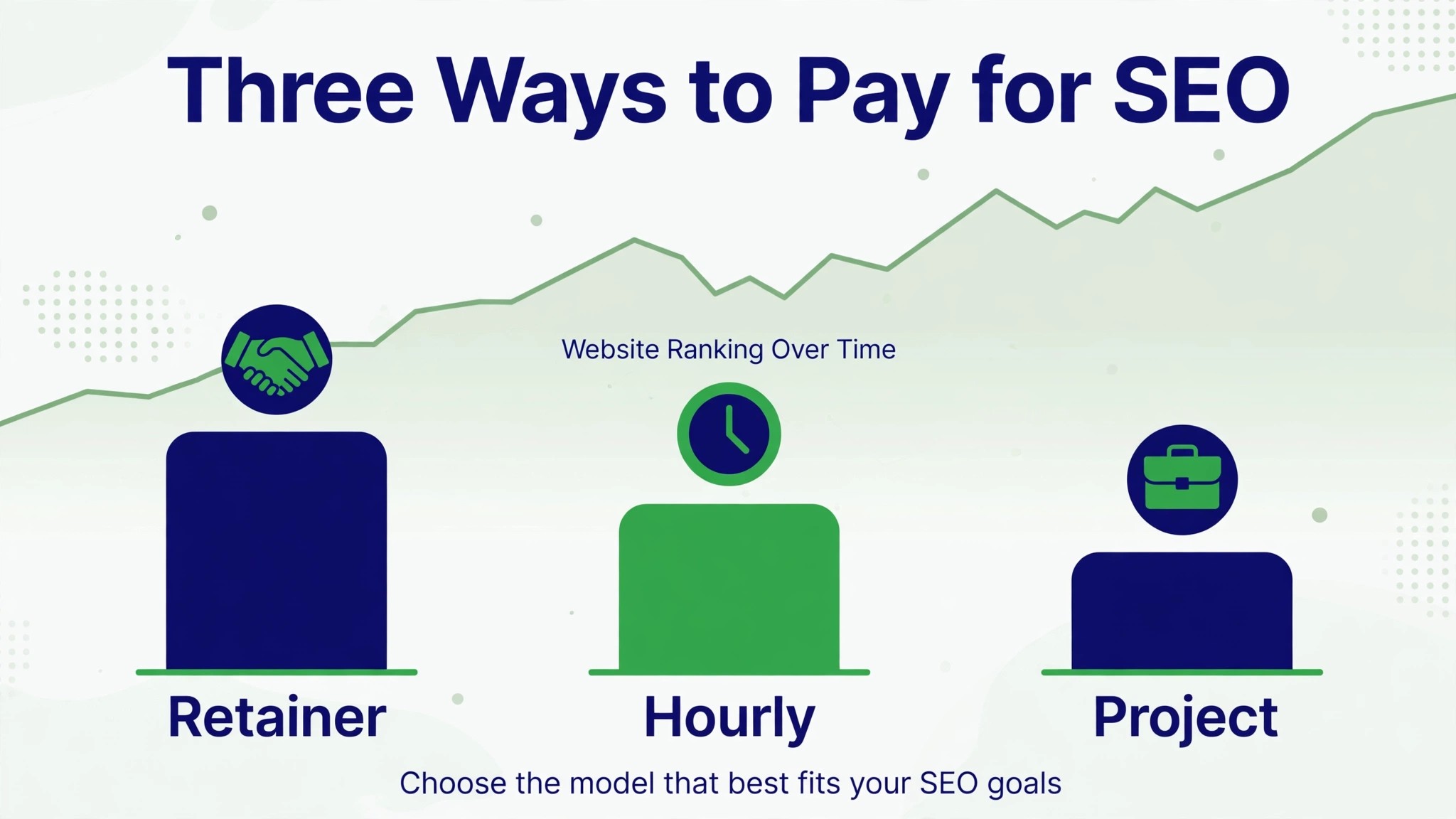
Three pricing models dominate freelance SEO, and picking the wrong one moves your total more than haggling over the number. That choice shapes the cost of hiring a freelance SEO specialist monthly more than any single rate. Hourly suits audits, troubleshooting, and strategy calls with a clear end. A monthly retainer suits ongoing care of a site, including content, technical upkeep, and reporting. Project pricing suits one-off jobs with a visible deliverable, such as an audit or a migration.
| Pricing model | Typical 2026 range | Best for | Main risk |
|---|---|---|---|
| Hourly consulting | 60 to 200 dollars an hour | Audits and advice | Total drifts without a cap |
| Monthly retainer | 500 to 5,000 dollars a month | Ongoing SEO growth | Hours stay invisible |
| Project fee, audit | 500 to 5,000 dollars | One-off diagnosis | Fixes may not hold |
| Project fee, migration | 2,000 to 10,000 dollars | Site moves and rebuilds | Scope creep on large sites |
| Senior consultant | 100 to 200 dollars an hour | Complex or competitive niches | High cost for small tasks |
The safest way to start is hourly or a small, tightly scoped project. Move to a retainer only after you have seen how the person works, and ask for the monthly hour count and a 30-day exit clause in the agreement. That sequence keeps the risk small while you learn whether the specialist communicates clearly and ships work on time.
One warning applies to every model. No one can guarantee a number one ranking, and anyone who promises it for a few hundred dollars a month is selling automation, not SEO. At 200 dollars a month, even at a modest hourly rate, you buy roughly two to three hours of work, which cannot fix a site, write a page worth reading, and earn a real link in the same month.
Breaking Down cost of hiring a freelance SEO specialist monthly by Scope and Site Size
Scope is where retainers diverge. A local business with ten pages needs far less work than an ecommerce store with thousands of products, even though both might ask for SEO. That list is the fastest way to compare the cost of hiring a freelance SEO specialist monthly across candidates, so use the checklist below to define scope before you compare quotes.
- Site size and page count, because more pages mean more work to audit, fix, and keep current.
- Technical health, including speed, crawl errors, and mobile issues that must be fixed before content can perform.
- Content included, and how many pages or posts the retainer covers each month.
- Local work, such as business profile management and citations, for businesses serving a local area.
- Link and authority work, and whether outreach is included or billed separately.
- Reporting and meetings, including what the monthly report contains and whether a call is included.
- Tool costs, and who pays for rank tracking, audits, and research tools.
- Who implements fixes, since advice without implementation leaves the work to you or your developer.
Ask each candidate to map their quote to this list. A quote that cannot say which items it covers is not a bargain, it is an argument waiting for a busy month. A clear written scope protects both sides and makes the monthly total predictable.
What Each Retainer Tier Usually Includes
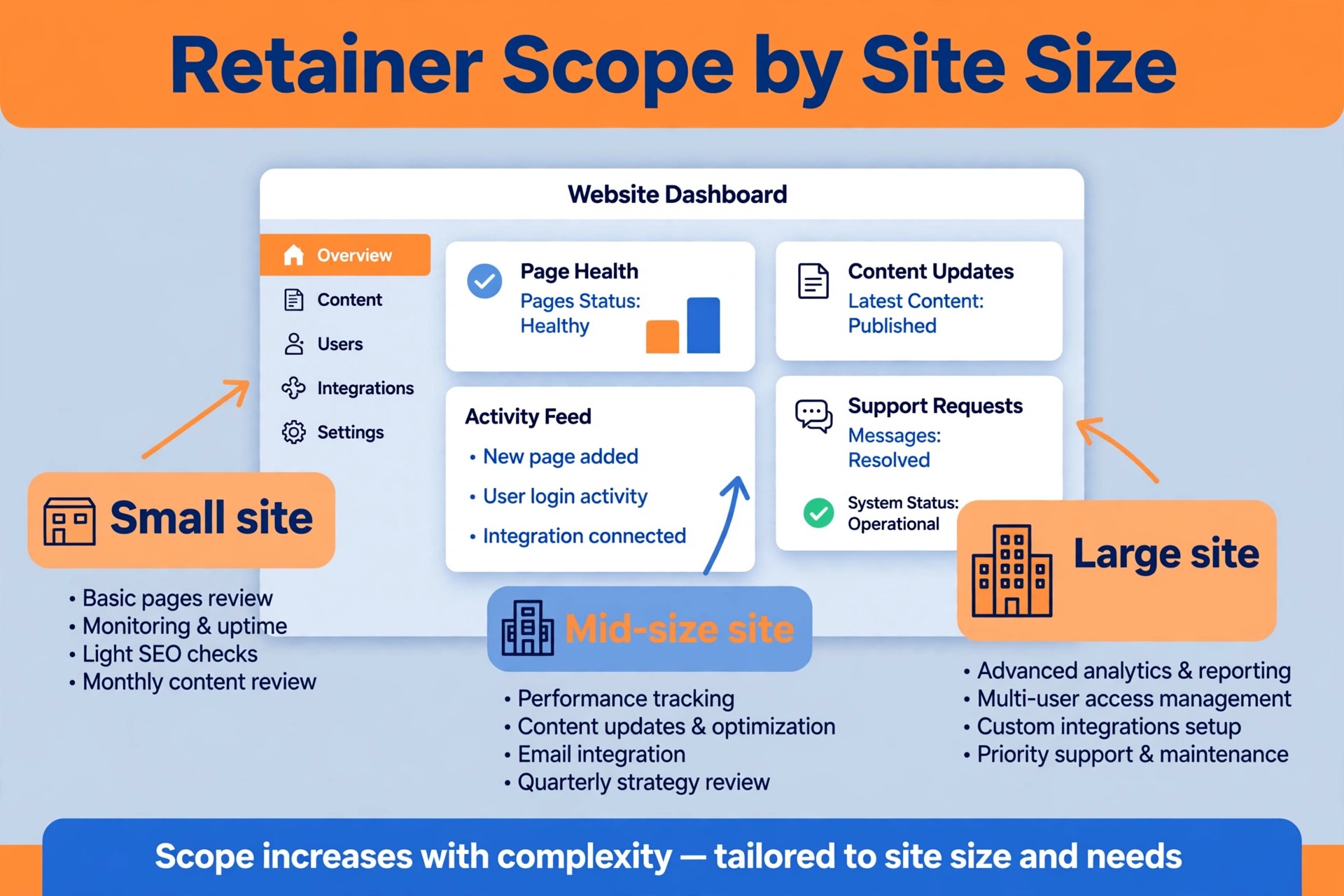
Retainer tiers cluster around workload, not around magic. A local tier near 500 to 1,500 dollars a month usually covers business profile work, a few content pieces, and basic technical fixes. A growth tier near 1,500 to 4,000 dollars usually adds a full keyword strategy, more content, link building, and monthly reporting calls. Competitive or national campaigns run 4,000 to 10,000 dollars, with a dedicated strategist and a content team.
The cost of hiring a freelance SEO specialist monthly also moves with region. Published guides show United States freelancers at 75 to 150 dollars an hour, European specialists at 60 to 120 dollars, and nearshore specialists in Latin America at 25 to 60 dollars. Lower regional rates can be excellent value, especially with time zone overlap, but communication quality and English fluency matter as much as the hourly number.
Tool costs deserve their own line. A realistic tool stack for a small business runs about 100 to 600 dollars a month if you pay for it yourself, covering rank tracking, audits, and research. Some specialists include tools in the retainer, others expect you to provide them. Either arrangement works, but only if it is stated in writing before work starts.

A Worked Example. Three Businesses, Three Budgets
A local plumber with a ten-page site and one service area might pay 750 to 1,200 dollars a month for profile work, two posts, and basic fixes. These examples show how the cost of hiring a freelance SEO specialist monthly changes with business type. A growing software company targeting several services and regions might pay 2,000 to 4,000 dollars for strategy, six to eight content pieces, and technical sprints. An ecommerce store with thousands of products and national competition might pay 5,000 dollars or more, with content, technical work, and digital PR in the same retainer.
| Business type | Typical monthly range | Core work included | Review rhythm |
|---|---|---|---|
| Local service business | 500 to 1,500 dollars | Profile, citations, 2 to 4 posts | Monthly |
| Growth stage company | 1,500 to 4,000 dollars | Strategy, 4 to 8 pieces, links | Monthly plus quarterly |
| Competitive or national | 4,000 to 10,000 dollars | Strategist, team, PR outreach | Monthly plus quarterly |
| Ecommerce store | 3,000 to 10,000 dollars | Product pages, technical, content | Monthly |
Notice how the ranges overlap. A local business in a competitive city can cost more than a national business in a quiet niche, because competition sets the workload. Ask any candidate to justify their tier against your actual competition, not against a generic package.
Red Flags in a Low Quote
Low quotes fail in predictable ways. Automated reports, directory listings, and one thin blog post are the usual contents of a package under 500 dollars, and none of them move competitive rankings. Each flag is a reason to question the cost of hiring a freelance SEO specialist monthly before signing. Vague reporting is another flag. If the monthly report shows only rankings without traffic, enquiries, or completed work, you cannot tell whether the money did anything.
Other flags include guaranteed rankings, secret methods, refusal to explain the process, and reluctance to show past results. A good specialist explains the plan in plain language, names the hours, and shows what changed each month. Secrecy is not expertise, it is a way to hide thin work.
Finally, check the exit terms. A retainer with a 30-day exit clause is a sign of confidence. A twelve month lock-in with no performance review is a sign that the provider expects you to want to leave. Choose the arrangement that lets evidence, not contract length, keep you.

How to Review the Retainer Each Quarter
Review the retainer every quarter, because rankings, traffic, and scope all move. A quarterly check keeps the cost of hiring a freelance SEO specialist monthly aligned with results. Compare actual deliverables with the agreement, traffic and enquiry trends with the previous quarter, and hours worked with hours promised. If deliverables slipped but the price stayed the same, the retainer has quietly become more expensive.
Use the review to adjust scope in defined steps. Add content, add locations, or add technical sprints one at a time, rather than accepting an open-ended rise. Defined steps keep the budget predictable and make the next review easy. Growth planned in steps beats growth discovered in a surprising bill.
Prices checked against published 2026 guides in October 2026. Confirm current rates before you commit, since specialist rates rise with demand and with proven results.

What Changes the Price After Year One
Prices in this guide are a snapshot, not a promise, because almost every line in a monthly budget moves within a year. Providers raise rates as their calendars fill, platforms adjust tiers and free limits, insurers reprice at renewal, and software vendors change plan structures. A budget built on today’s figures without room for movement will feel tight by the second renewal, even if nothing about your own usage changed.
Seasonality moves prices too, and it moves them in both directions. Demand peaks push freelancer rates and advertising costs upward, while quiet periods bring discounts, slower turnaround, and room to negotiate. Businesses that buy during a peak and never revisit the price pay peak rates all year, while businesses that review in a quiet month often find the same service for less. Timing a review for a quiet period is a small habit with a real payoff.
Scope creep is the quietest price rise of all, because it arrives as helpful extras rather than as a rate increase. One extra deliverable becomes two, a monthly call becomes weekly, and a small tool subscription becomes a stack. None of these is wrong alone, but together they can double a monthly total without any single decision feeling expensive. A written scope, reviewed quarterly, is the only reliable defense.
Plan for a modest annual rise in every budget, even when the current price feels fair. A buffer of five to ten percent on the monthly total absorbs most renewals without a crisis, and it turns a price rise into a routine adjustment rather than a reason to switch providers in a hurry. Providers who raise rates transparently, with notice and a clear reason, are usually worth keeping, while silent creep deserves a conversation.
The practical routine is simple. Note every renewal date in one place, review each line the month before it renews, and decide in advance whether you would accept a rise, negotiate, or switch. That routine takes less than an hour a year per provider, and it prevents the most common budgeting failure, which is discovering a price rise on the invoice instead of before it.
The Monthly Check That Keeps the Budget Honest
A monthly review sounds like admin work, and that is why most people skip it, but the version that works takes thirty minutes and prevents the slow drift that ruins budgets. The goal is not perfect bookkeeping. The goal is to catch three things early, namely money spent on unused items, deliverables that slipped, and results that stopped moving, while each one is still cheap to fix.
Start by gathering the month’s bills in one view, including platform fees, subscriptions, and any per-order or per-use charges. Compare the total with the previous month and with the budget you set, and flag any line that moved more than ten percent without a clear reason. Most months will show nothing surprising, and that quiet result is the point, because it confirms the budget is still honest.
Next, compare deliverables with the agreement. Count what was actually delivered, whether deadlines were met, and whether quality held steady. A provider who delivered less while charging the same has quietly become more expensive, and a provider who delivered more without being asked may deserve a scope conversation before the extra work becomes an expectation. Evidence from this step makes both conversations easy.
Then check results, not activity. Traffic, enquiries, orders, or hours saved are the numbers that matter, depending on what you bought. Activity without results is the warning sign, because reports full of tasks can hide a flat outcome for months. If results are flat for two consecutive months, change something specific, such as scope, provider, or target, rather than waiting for a third flat month.
Finish by writing three lines in a simple log, namely what changed, what you decided, and what to check next month. That log turns twelve monthly reviews into a yearly story you can actually use at renewal time, and it stops the same mistake from returning under a new name. Thirty minutes a month is a small price for a budget that stays honest all year.
How to Ask for a Better Price and Keep the Relationship
Most buyers negotiate price directly, and most good providers dislike that conversation, because a lower price for identical work feels like a pay cut. Negotiating scope works better for both sides. Ask what changes if the deliverable count drops slightly, if turnaround extends by a few days, or if reporting moves from weekly to monthly, and you will often find a lower price that costs the provider little and costs you nothing you valued.
Longer commitments are the second lever, and they work when trust is already earned. A quarterly or yearly commitment in exchange for a discount suits a provider you have tested for three months, but it is a poor deal for an untested provider, no matter how attractive the discount looks. Earn the right to commit by testing first, then trade commitment for price from a position of evidence.
Bundles and non-cash value are the third lever. A provider may discount for a testimonial, a case study, a referral, or a bundle of services bought together, because those items have real value beyond the invoice. Offer something specific rather than asking vaguely for a discount, since a concrete trade gives the provider a reason to say yes without setting a precedent for every client.
Trial periods and exit clauses protect both sides during negotiation. A thirty-day exit clause costs a confident provider nothing and gives you the freedom to leave if quality slips, which paradoxically makes providers work harder to keep you. If a provider refuses any exit route, treat that as information about confidence, not as a normal term, and weigh it heavily before signing.
Know your walk-away point before the conversation starts, and keep the tone friendly throughout. A provider who feels respected will often find flexibility that a pressured provider withholds, and a relationship that survives negotiation is worth more than a one-time discount that poisons it. The best negotiated deal is one both sides can describe as fair a year later.
Knowing When to Pause or Walk Away
Every monthly spend eventually faces the same question, and most people answer it too late, after months of flat results. The signals are consistent. Deliverables go unused, deadlines slip repeatedly, results stay flat for two months, or the service no longer matches the business as it stands today. Any two of those signals together mean the spend deserves a decision, not another month of hope.
Pause, switch, and stop are different decisions, and confusing them wastes money. Pause when the need is seasonal or temporary, and the provider is good, since pausing keeps the relationship and the setup intact. Switch when the need remains but the provider no longer delivers, since a new provider can fix delivery without changing the goal. Stop when the need itself has gone, since paying for a solved problem is the purest form of waste.
Before switching or stopping, check exit costs and handover items. Data, accounts, files, domains, and audience lists must transfer cleanly, and a provider who controls those items holds power over the exit. Secure access and exports before giving notice, not after, because a smooth handover is worth more than a fast exit that loses assets.
Hibernation is the middle path many budgets miss. Keep the essential lines running, such as the domain, the core tool, and the audience list, while cutting extras, advertising, and premium tiers until demand returns. Hibernation preserves the foundation for a restart at a fraction of the full monthly cost, and it beats both blind continuation and a full shutdown that must be rebuilt later.
Write the restart test before you pause or stop, so the decision to return is evidence-based rather than emotional. Name the trigger, such as three new clients, a product launch, or a seasonal date, and the budget that restarts with it. A spend with a written restart test is a paused investment, while a spend without one is usually just a habit that nobody examined.
Growing the Budget in Steps, Not Leaps
Growth changes a monthly budget in ways that feel like success but behave like scope creep. More clients, more orders, or more output all raise the workload, and the natural response is to spend more on help, tools, and capacity. That response is correct when revenue grows with it, and dangerous when spending runs ahead of revenue. The discipline is to tie each spending step to a revenue step that already happened, not to a revenue step that is merely hoped for.
A practical rule is to fund growth steps from the previous quarter’s surplus rather than from projected income. If last quarter produced extra profit, spend part of it on the next capacity step, whether that is more deliverables, a better tool, or extra hours. If last quarter produced no surplus, the growth step waits, because spending projected money is how small businesses turn a good quarter into a cash crisis.
Separate growth spending from maintenance spending in the budget, since they answer different questions. Maintenance spending keeps current results steady, while growth spending buys new results. When money is tight, maintenance comes first, because losing current results to fund speculative growth trades a certain asset for an uncertain one. Growth spending earns its place only after maintenance is fully funded.
Review growth bets after ninety days with a simple test, namely whether the spend produced the result it promised. A growth step that produced measurable new revenue, new clients, or real hours saved earns continuation. A growth step that produced activity without results should be cut or reshaped, since hope is not a result and activity reports are not revenue.
The mindset that protects growth budgets is patience with steps and impatience with drift. Move in defined, affordable steps, check each step against real numbers, and stop funding steps that do not deliver. A business that grows in funded steps grows slower in any single month and far more reliably across a year.
Keeping Every Monthly Line Visible
A budget fails silently when its lines live in different places, such as email invoices, platform dashboards, and bank statements that nobody reconciles. Visibility is the fix, and it does not require expensive software. A single spreadsheet with one row per monthly line, one column per month, and a total row at the bottom reveals drift that scattered invoices hide, and it takes an hour to build and ten minutes a month to maintain.
Three templates cover most monthly budgets. A cost tracker lists every recurring line with its renewal date and its exit terms, so nothing renews unnoticed. A deliverables log records what was actually delivered against what was promised, which turns vague dissatisfaction into evidence. A results note records the one or two outcome numbers that matter each month, such as enquiries, orders, or hours saved, so activity never substitutes for results.
Automation helps only after the manual version works. Bank and card alerts for new recurring charges catch surprise renewals, calendar reminders a month before each renewal force a decision before the invoice, and a shared folder for agreements means the scope is findable when a dispute arises. Automate the reminders, not the judgment, since judgment is the part that saves money.
Share the numbers with anyone who spends against the budget, including team members and freelancers, because hidden spending grows in the dark. A short monthly note showing the budget, the actual spend, and the decisions taken keeps everyone aligned without micromanagement, and it surfaces overspending while it is still small enough to correct.
The test of any tracking system is whether it answers three questions in under a minute, namely what are we paying, what are we getting, and what changes next month. If the system cannot answer those questions fast, simplify it until it can, because a tracking system nobody opens is worse than a simple one that gets used every month.
A Final Check Before You Decide
Ask for a baseline report before the first paid month, because without a starting point nobody can prove progress later. The baseline should record current rankings for your main terms, organic traffic for the last three months, indexed page count, and the main technical errors found in an initial crawl. Agree on ninety-day milestones in the same document, such as technical fixes completed, pages improved, and content published, rather than ranking promises that nobody can guarantee.
A specialist who provides this baseline willingly is showing confidence in measurable work, while a specialist who resists it is asking you to pay on trust alone. File the baseline beside the agreement, and judge every monthly report against it, so renewal becomes a comparison of evidence rather than a debate about impressions.
More Reading on Stratilyze
More Reading on Stratilyze. Compare tools before you hire with the best AI SEO tools guide and the Surfer, Frase, and Clearscope comparison, then read the AI SEO content writing tools guide to see what content help costs on top of technical work.
Frequently Asked Questions

What is the average monthly cost of a freelance SEO specialist?
Published 2026 surveys put the average freelancer retainer near 1,350 dollars a month, with most small business retainers landing between 500 and 3,000 dollars. The cost of hiring a freelance SEO specialist monthly depends on site size, competition, and whether content is included.
Is hourly or retainer pricing better for SEO?
Hourly suits audits and advice with a clear end, while a retainer suits ongoing growth work. Start hourly or with a small project, then move to a retainer once you have seen the quality of the work and the clarity of the reporting.
What does a 500 dollar a month SEO package actually buy?
Usually profile work, basic fixes, and a small amount of content. It rarely buys enough hours for competitive niches, so check the deliverables and hours in writing before judging the price.
How long before SEO work shows results?
Most sites need three to six months before movement is clear, and competitive niches take longer. Judge early months on work delivered and technical fixes, not only on rankings, since rankings lag behind good work.
Should the specialist also write the content?
It depends on the retainer. Some include content, others cover strategy and technical work only. Content takes real hours, so a retainer that promises both strategy and heavy content at a low price is likely thin on one side.
What should be in the agreement before I pay?
Scope, hours, deliverables, reporting, tool costs, turnaround, and a 30-day exit clause. Those points cover almost every dispute, and a short written agreement protects both sides.
Start Small, Then Commit on Evidence
Start hourly or with a small project, judge the work and the reporting, and only then commit to a retainer. That sequence keeps the cost of hiring a freelance SEO specialist monthly honest, because the price is set after you know what the specialist actually delivers.
Review every quarter, adjust scope in defined steps, and let evidence keep the retainer alive. A specialist who earns renewal is worth a rate rise, and a retainer built on results is easy to defend when budgets tighten.
