

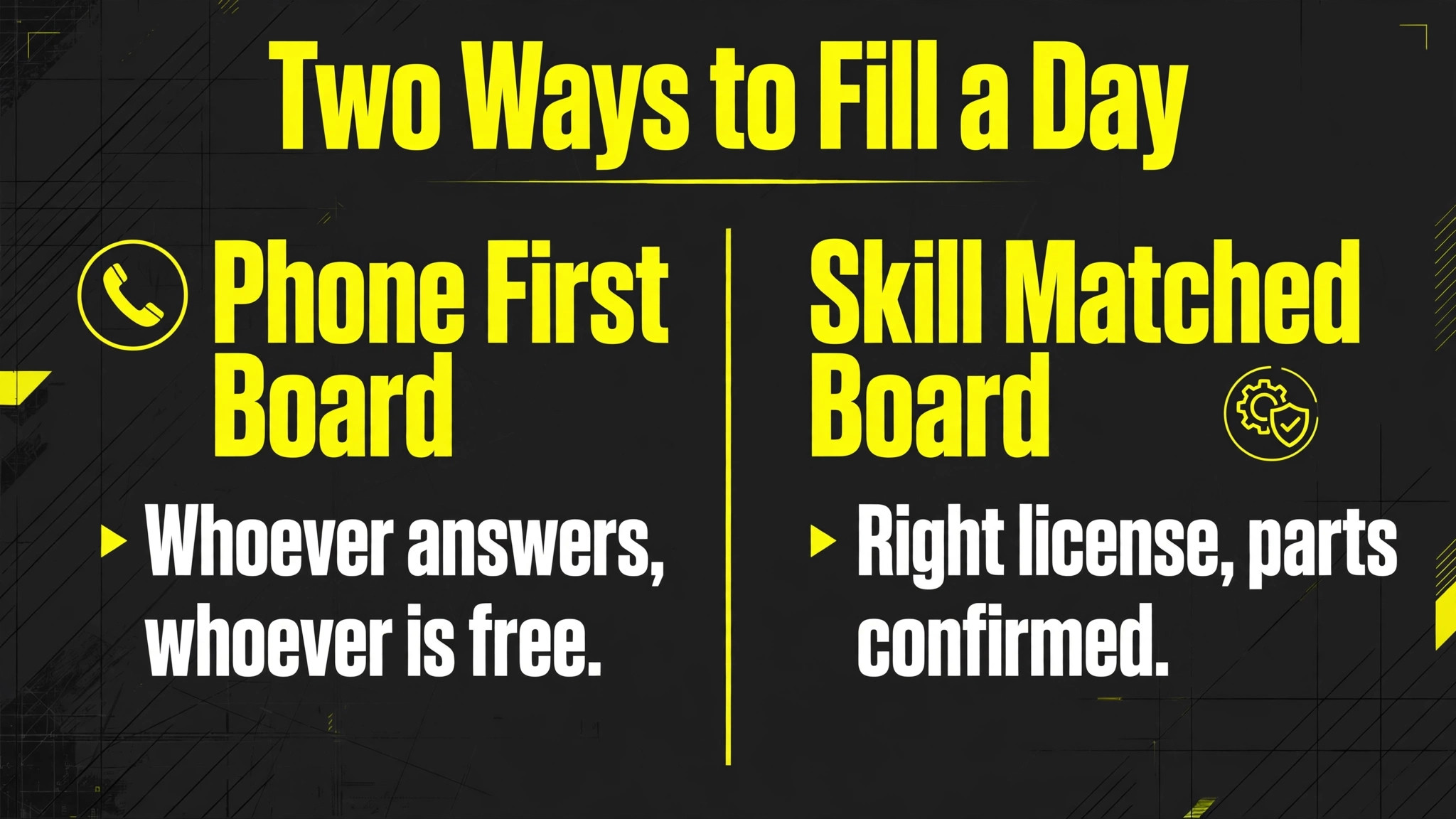
An electrician’s day falls apart in the same place every week, at the dispatch board, where urgent calls, inspection windows, and parts runs compete for the same crew hours, and that board is where you use AI for electrician business job scheduling. One shop fills its board by whoever answers the phone first, sends whoever is free to whatever job is next, and spends Fridays apologising for late arrivals. The other shop matches license level to job type, confirms parts before dispatch, and protects inspection windows as if they were paying jobs, because they are.
The difference is rarely effort, it is dispatch discipline, and that discipline is exactly what a shop buys when it decides to use AI for electrician business job scheduling, a system that routes the right person to the right job before the phone rings again.
The Two Ways Electrical Shops Fill a Day and Why Only One Scales
The work of a electrical business is won or lost long before anyone picks up a tool, because the schedule decides which jobs get done well and which jobs get squeezed. A day packed with good intentions but no order will produce late arrivals, rushed work and callbacks, while a day built around realistic durations, correct skills and honest travel time will produce steady completions and customers who rebook. Owners often blame effort or attitude when a week goes badly, but the job record usually tells a simpler story about planning.
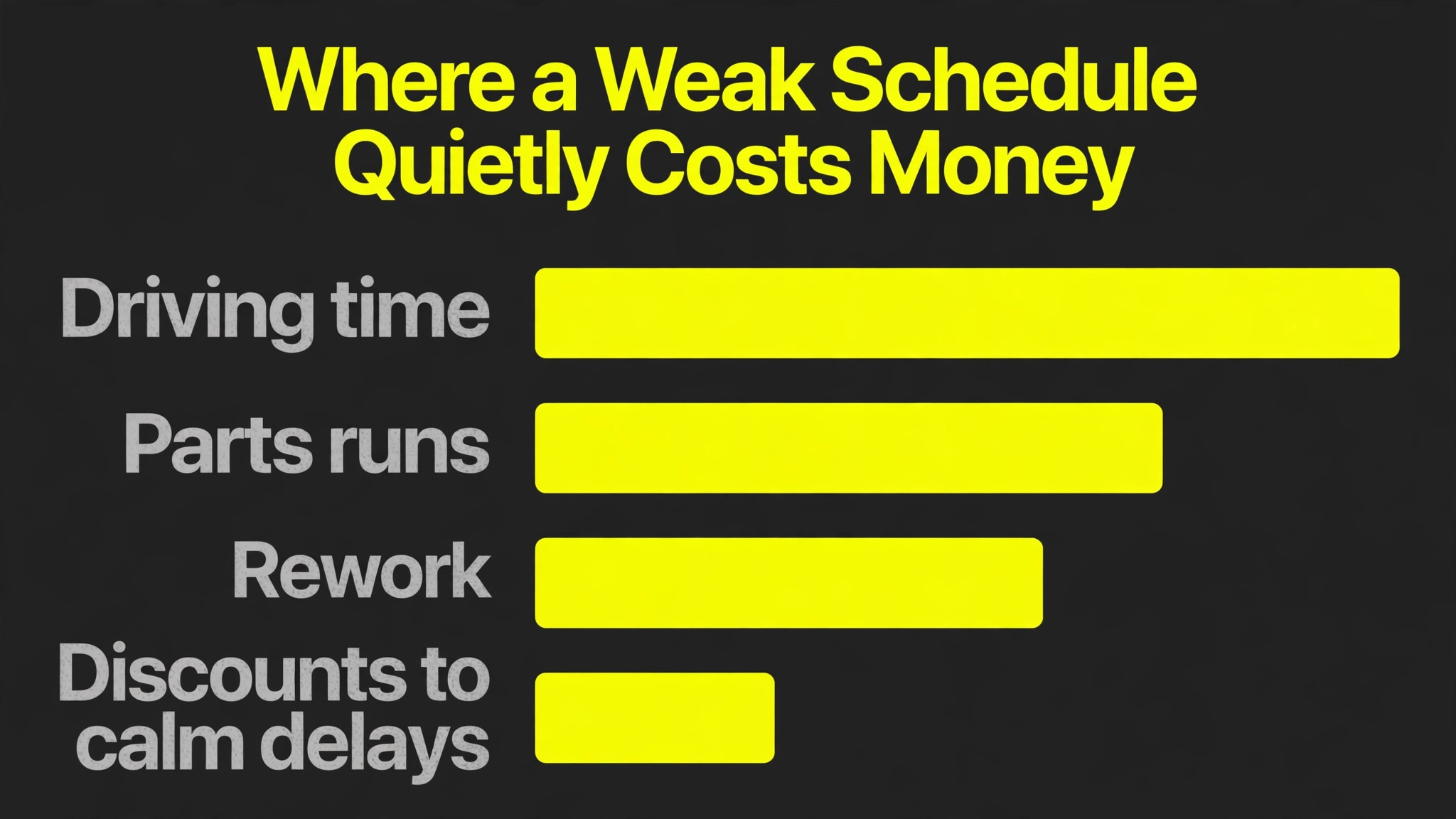
The second cost of a weak schedule is invisible on the day itself and only appears at month end. It shows up as unbilled hours spent driving, as parts bought twice because nobody checked the truck, as discounts offered to calm a customer who waited too long, and as skilled staff leaving for a shop where the day runs more calmly. None of those costs appear as a single line on a quote, which is why they survive for years in businesses that otherwise watch their money carefully.
The practical way to use AI for electrician business job scheduling in this first section is to treat the schedule as a profit tool, not as an admin chore, and to measure it by completed jobs, on-time arrivals and repeat bookings rather than by how full the calendar looks.
That shift also changes how a small business hires and trains. When job types carry realistic durations and required skills, a new dispatcher can learn the rules from the system instead of absorbing them over months of mistakes. When customer notes carry access, history and preferences, a new field worker can walk into a familiar job rather than a stranger home. Good scheduling therefore protects both sides of the business, the customer experience and the staff experience, and owners who invest in it usually notice the staff benefit first.
How to use AI for electrician business job scheduling across licensed and apprentice crews
A workable system starts with the intake question, not with the software choice. What information must be captured before a job is promised, who decides its priority, and what happens when the answer is incomplete. For electrical work, those questions matter because a missing access note, a missing part detail or a missing safety warning can each turn a profitable job into a wasted trip. Build the intake form around those three failure points first, and let the software serve the form rather than the other way round.
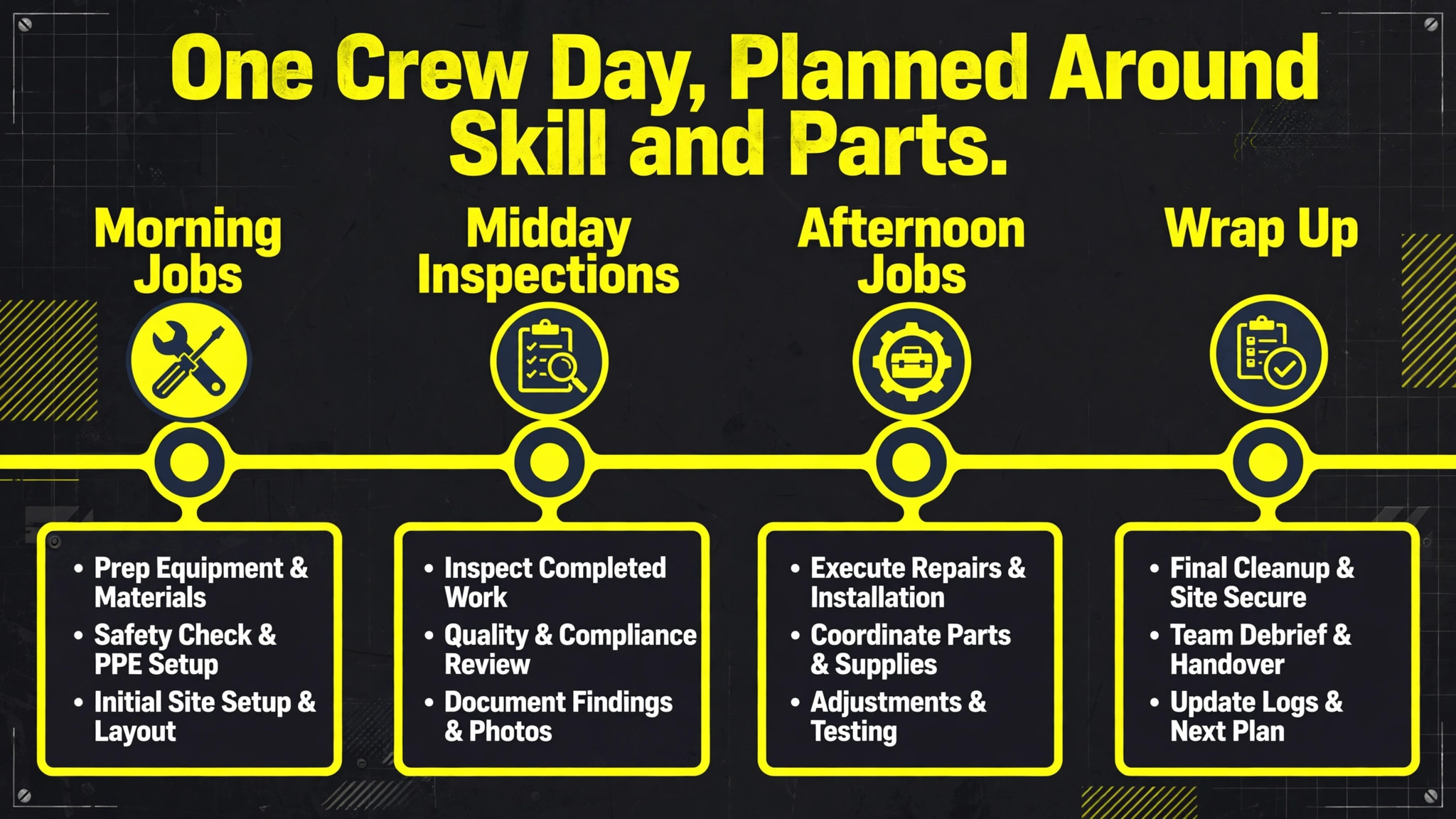
Next comes the dispatch rule, written in plain language and applied the same way every day. Priority, skill, parts and geography should each have a rule, and the rules should be visible to everyone who books work, so a well-meaning promise made on the phone does not contradict a rule the dispatcher is trying to hold. When the rules are visible, exceptions become deliberate decisions with a reason logged, rather than quiet favours that unravel the rest of the day.
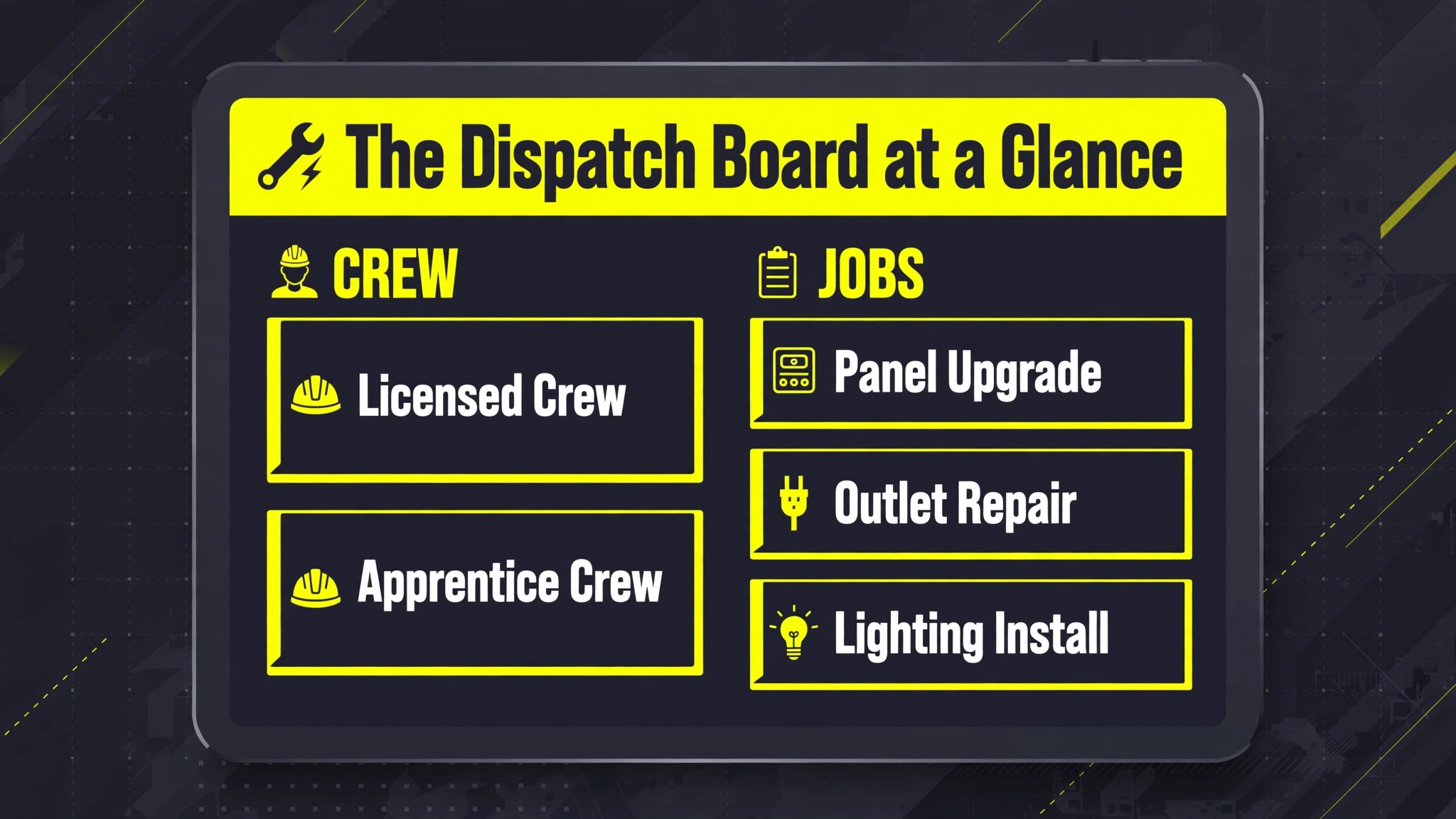
Finally comes the feedback loop, which is the part most small businesses skip. At the end of each week, compare planned durations against actual durations, planned parts against parts actually used, and promised arrival windows against actual arrival times. The gaps in that comparison are the next improvement, whether it is a longer slot for one job type, a parts kit for a common repair, or a clearer message to customers about access. A system that learns from its own week will outperform a more expensive system that merely records it.
Electrical Scheduling Tools Compared on Licensing, Parts and Permits
Tool choice should follow the dispatch rule, not precede it, because a tool bought for its demo will be judged on its demo, while a tool bought for a specific bottleneck will be judged on whether that bottleneck shrinks. The comparison below keeps the focus on the features that change a electrical day, including scheduling strength, mobile job records, customer messaging, payments and reporting, rather than on feature counts that look impressive in a sales call and go unused in the field. The practical way to use AI for electrician business job scheduling at this stage is to shortlist two tools, run real jobs through both during a trial, and keep the one staff actually open on their phones.
| Tool | Best for | Scheduling strength | Watch out for |
|---|---|---|---|
| Jobber | Small teams getting organised | Calendar, routing and job records | Advanced reporting needs a higher plan |
| Housecall Pro | Growing teams needing messaging and payments | Dispatch board and customer updates | Add-on costs can rise with the team |
| ServiceTitan | Larger operations needing depth | Advanced dispatch and price book tools | Setup time and per-technician pricing |
| FieldEdge | Focused workflows and specific bottlenecks | Targeted routing, estimates or crew tools | May need a second tool for full back office work |
Price comparisons in this guide use published ranges and reported figures from vendor and comparison pages checked during research, and every vendor changes packaging over time. Treat any figure here as a planning range to confirm with a written quote, not as a locked price, and compare total monthly cost for the actual team size rather than the headline starting price for one user. A tool that looks cheap for one user and expensive for eight is a different purchase from a tool priced flat for the whole team, and the difference only appears when the whole team is counted.
Jobber for electrical scheduling
Jobber fits smaller teams that need to get running quickly, with a calendar and job record that staff can learn in days rather than weeks. For electrical work, the value shows up in fewer missed messages and a clearer view of who is doing what tomorrow, which is often the first improvement a busy owner notices.
In daily electrical use, the test for Jobber is whether the field worker can open the job, see the history, capture photos and collect payment without returning to the office or calling for missing details. If that test passes for a full week of real jobs, the tool is doing its core job, regardless of how many extra features sit unused in the menu. If the test fails, no reporting dashboard will compensate, because the field record is where revenue, proof and customer trust are created.
Housecall Pro for electrical scheduling
Housecall Pro suits growing teams that need stronger dispatch, customer messaging and payment handling in one place. For electrical work, the messaging and on-my-way updates matter more than owners expect, because customers who know when help is coming are far more forgiving of a delay than customers left guessing.
In daily electrical use, the test for Housecall Pro is whether the field worker can open the job, see the history, capture photos and collect payment without returning to the office or calling for missing details. If that test passes for a full week of real jobs, the tool is doing its core job, regardless of how many extra features sit unused in the menu. If the test fails, no reporting dashboard will compensate, because the field record is where revenue, proof and customer trust are created.
ServiceTitan for electrical scheduling
ServiceTitan is built for larger operations that can invest in setup and training in return for deeper reporting, dispatch control and price book tools. For electrical work, that depth pays when the team passes ten field staff and a simple calendar no longer shows capacity, profitability or follow-up work clearly.
In daily electrical use, the test for ServiceTitan is whether the field worker can open the job, see the history, capture photos and collect payment without returning to the office or calling for missing details. If that test passes for a full week of real jobs, the tool is doing its core job, regardless of how many extra features sit unused in the menu. If the test fails, no reporting dashboard will compensate, because the field record is where revenue, proof and customer trust are created.
FieldEdge for electrical scheduling
FieldEdge appeals to operators who want a focused tool for one part of the operation done well, whether that is routing, estimates or crew tracking. For electrical work, a focused tool earns its place when it removes a specific bottleneck, such as drive time or estimate accuracy, rather than when it promises to replace everything at once.
In daily electrical use, the test for FieldEdge is whether the field worker can open the job, see the history, capture photos and collect payment without returning to the office or calling for missing details. If that test passes for a full week of real jobs, the tool is doing its core job, regardless of how many extra features sit unused in the menu. If the test fails, no reporting dashboard will compensate, because the field record is where revenue, proof and customer trust are created.
Choosing between these tools is easier when the shop writes its three non-negotiable rules first, such as skill matching, parts confirmation or emergency cover, and then scores each trial against those rules alone. A tool that passes all three with a plain interface will serve the business better than a tool that passes two with a spectacular interface, because the failed rule will be paid for every week in rework. The practical way to use AI for electrician business job scheduling here is to let the dispatcher and one field worker run the trial together, since the people who live with the tool will spot its friction faster than any manager reviewing a demo.
An Electrician Day Built Around Skill, Parts and Permit Windows
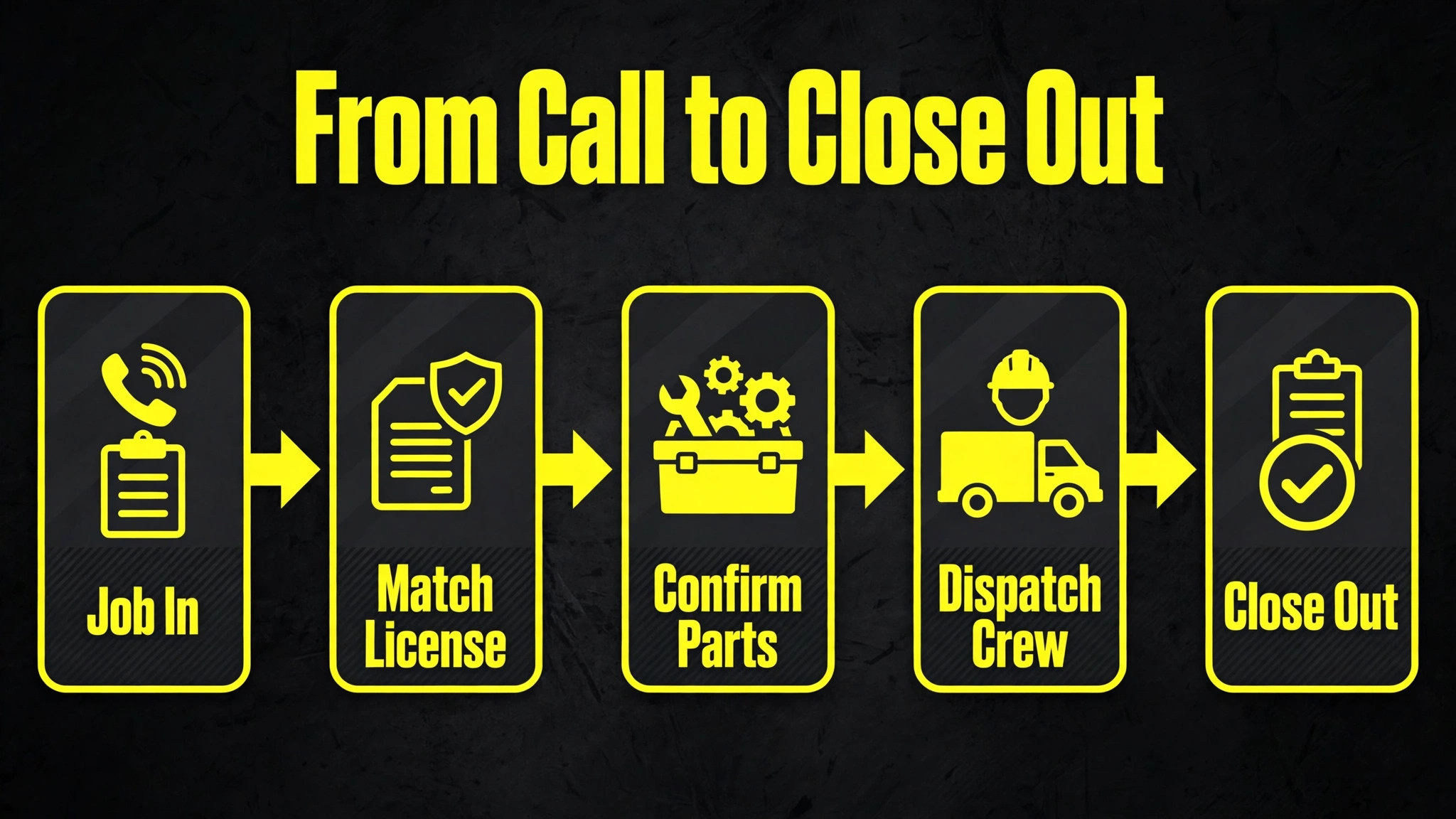
A workflow only helps when it is short enough to follow on a busy day and specific enough to prevent the usual mistakes. The steps below are written for electrical work in that spirit, with each step carrying a clear owner and a clear output, so nothing depends on memory at the moment the phone rings. The practical way to use AI for electrician business job scheduling through this workflow is to print it, pin it where jobs are booked, and review it after the first month against real job records rather than treating it as a document that was finished the day it was written.
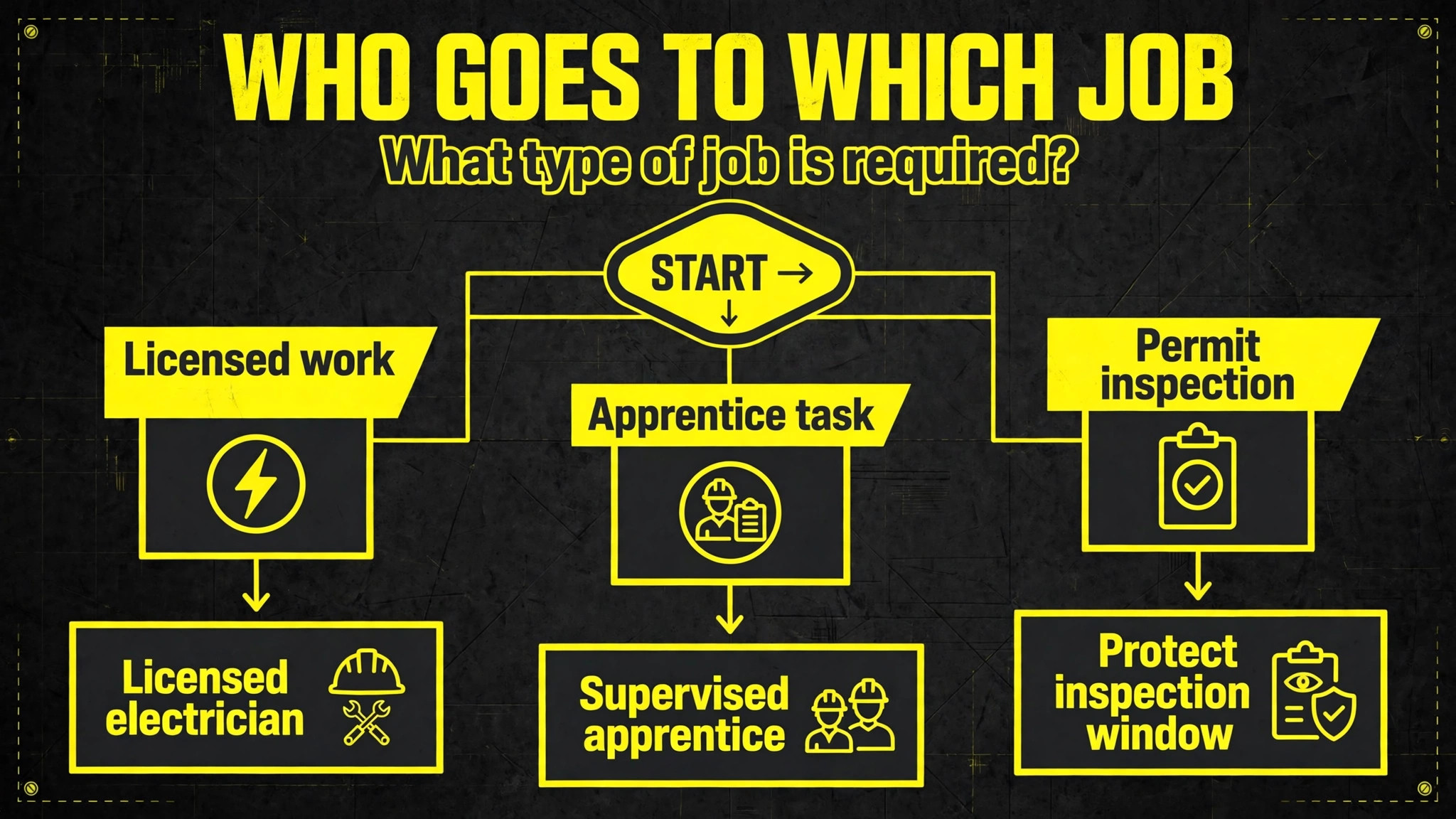
- Sort incoming work by license requirement first, because a panel upgrade, a service change and a simple fixture swap do not belong in the same dispatch pool even when they sit in the same neighbourhood.
- Match each job to a technician whose license level, manufacturer familiarity and past work on that job type fit the task, and keep the apprentice paired with a licensed electrician on any job the code requires it for.
- Confirm parts before dispatch, especially breakers, panels and specialty fixtures, because an electrician who arrives without the right part has burned a slot that another paying job could have used.
- Reserve permit and inspection windows as fixed blocks on the calendar, and never let a routine call swallow the morning an inspector is due on site.
- Send the customer a photo of the assigned technician, an arrival window and a plain description of the work, so the door opens on time and the job starts on time.
- Close the day with photos of the panel, the labeling and the finished work, plus a note on anything that needs a return visit, a part order or a permit follow-up.
The step most shops skip is the last one, the close of day review, because the day already feels finished when the last job ends. Yet that review is where tomorrow route is protected, where a callback is caught early, and where a parts shortage is discovered while there is still time to fix it. Shops that protect fifteen minutes for that review consistently report calmer mornings, and calmer mornings are what customers experience as reliability, even though they never see the review itself.
License, Skill and Safety Routing That Holds Up on Inspection
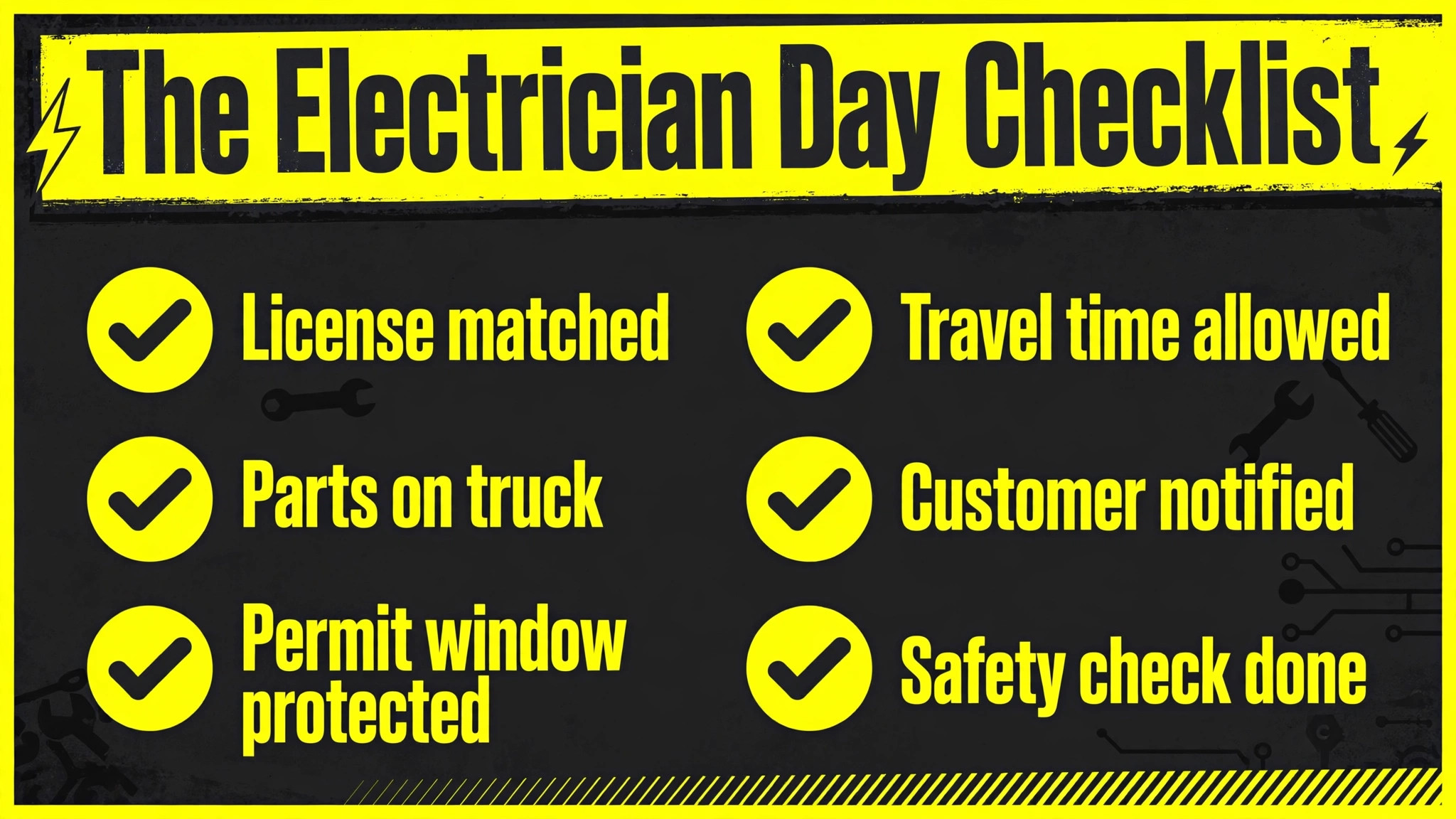
Checklists work in trade businesses for the same reason they work in aviation and medicine, which is that skilled people still forget routine steps under time pressure. The checklist below is written for electrical work and should be attached to the job record rather than kept as a separate sheet, so completing it becomes part of finishing the job rather than extra paperwork after it. The practical way to use AI for electrician business job scheduling with this checklist is to require it on every job for a month, then trim any item that never changes a decision, keeping only the items that prevent a real failure.
- Confirm the license level the job requires and the license level the assigned technician holds, before the job is confirmed to the customer.
- Check permit requirements, inspection timing and utility notification rules for service changes and panel work.
- Verify the panel brand, amperage and available breaker spaces from photos or a prior visit before ordering parts.
- Confirm power shutdown needs, tenant access and whether anyone depends on powered medical equipment in the home.
- Carry lockout equipment, testers and the right personal protective gear for the voltage involved.
- Photograph the work before, during and after, with panel labels legible in at least one image.
- Log any code issue found that was outside the original scope, and price it as a separate approved change rather than folding it silently into the invoice.
- Book the inspection or the return visit before leaving site, while the customer is present to confirm access.
The template below turns that checklist into a reusable record, with one row per job type or per room, so estimates, schedules and follow-ups all draw from the same facts. Copy it into the job system as a custom form where possible, and keep a printed version for field workers whose phones fail or whose signal drops on site. A template that exists in two places, digital and paper, survives the day the system does not.
| Item | Detail to record | Follow-up action |
|---|---|---|
| Panel upgrade and service change | Condition, size and access notes | Book, order or flag before leaving site |
| EV charger installation | Condition, size and access notes | Book, order or flag before leaving site |
| Troubleshooting a tripping breaker | Condition, size and access notes | Book, order or flag before leaving site |
| Lighting and fixture replacement | Condition, size and access notes | Book, order or flag before leaving site |
| Whole home surge protection install | Condition, size and access notes | Book, order or flag before leaving site |
What Electrical Scheduling Costs and Where Shops Overpay
Cost for a small electrical business breaks into three parts that should be compared separately, which are software subscription, staff time to run it, and the cost of jobs that go wrong without it. Subscription ranges found during research run from roughly twenty nine dollars a month for a single user starter plan to several hundred dollars a month for larger teams, with enterprise field platforms quoted per technician and implementation fees reported in the thousands for larger shops. Those ranges are planning figures to confirm with vendors, not quotes, and the honest comparison is total monthly cost for the real team plus any add-ons for messaging, payments or routing.
Staff time is the cost owners underestimate, because setup, template building and training all happen during weeks when the business still has to serve customers. Budget two to four weeks for a small team to move fully onto a new system, with the old system running in parallel for the first week, and expect the first month to feel slower before it feels faster. That slower month is not a sign of failure, it is the cost of changing habits, and shops that plan for it are far less likely to abandon a good tool in week two.
The third cost, jobs that go wrong, is where the return usually appears. One avoided second trip per week, one avoided cancellation per week, or one extra completed job per technician per week will usually cover the subscription several times over for a small team. Track those three measures for a month before and a month after the change, and the decision about whether to keep the tool will answer itself from the job record rather than from anyone opinion, including this guide.
More Reading on Stratilyze
Readers who run a trade business may also enjoy the best AI tools for electricians, AI tools for plumbing business dispatch scheduling, and AI tools for cleaning business route scheduling, since all three cover the same discipline of keeping field crews booked, routed, and on time.
Frequently Asked Questions
The questions below cover the decisions owners ask about most when they first change how they schedule electrical work, and the practical way to use AI for electrician business job scheduling is to answer them from the shop own job records rather than from generic advice alone.
How do you schedule a job when you do not yet know the scope?
Book it as a diagnostic visit with a defined time window and a defined outcome, which is a written finding and a priced repair option. That keeps the calendar honest, because a diagnostic that turns into a panel replacement can then be rescheduled as a full job with the right technician and parts, instead of derailing the rest of the day.
Should apprentices ever run jobs alone?
Only within what their license stage and local rules allow, and only on work the shop has trained and checked them for. Scheduling software should carry license level as a hard rule, not as a note, so a dispatcher cannot accidentally send an apprentice alone to a job that requires a licensed electrician on site.
What is the most common scheduling mistake electrical shops make?
Treating every job as the same length. A fixture swap and a panel upgrade differ by hours, and a calendar built on uniform slots will either leave gaps or run late all afternoon. Build job types with realistic durations, then protect the long jobs with buffers at both ends.
How do you handle emergency calls without wrecking the day?
Hold one flex slot per technician per day, or one dedicated on-call rotation, and price emergency work to reflect the disruption. Without a flex slot, every emergency becomes a cancellation somewhere else, and customers notice cancellations far more than they notice a premium for urgent service.
Is a flat rate price book worth the setup time?
For residential service work, usually yes, because it removes haggling on site, speeds quoting and makes the invoice match what the customer approved. The setup cost is real, so start with the twenty most common jobs and expand the book from actual invoices rather than trying to price everything at once.
How far ahead should a shop book routine work?
One to two weeks for routine service is a workable target for most small shops, with longer lead times for panel and EV work that needs parts or permits. A book that stretches months ahead usually means prices or capacity have not kept pace with demand, and both deserve attention.
The Final Word for electrical Owners
The comparison that matters for an electrical shop is not which tool has the longest feature list. It is which tool stops a dispatcher from making the one mistake that costs a day, sending the wrong license level, sending a technician without parts, or double booking an inspection window. Choose the tool that enforces those three rules by default, run it for a full month, and judge it on late arrivals, return visits and inspection passes rather than on how polished its dashboard looks.
A useful weekly habit is to review the jobs that went wrong before reviewing the jobs that went well, because the wrong ones carry the fix. Look for the pattern in the notes, whether it is access, parts, timing or pricing, and change one rule for the following week rather than rewriting the whole system at once. Small shops improve fastest when they change one rule, watch it for a full week, and keep the change only when the numbers support it.
Customer messages deserve the same care as the job itself, because most complaints start as unanswered questions rather than bad work. A short confirmation, a realistic arrival window, a note on what happens next and a message when the job is done will prevent more friction than any discount offered after a complaint. Write those messages once as templates, review them every quarter, and keep the tone plain and specific rather than formal and vague.
Training a new dispatcher or a new team member goes faster when the rules are written down in the same place the work happens. A one page guide covering triage, pricing, parts checks and escalation will do more than a long manual nobody opens, provided it is updated whenever a rule changes. When a rule lives only in one person head, the business cannot grow past that person availability, and every holiday becomes a risk.
Pricing deserves a quarterly review even when nothing feels broken, because supplier prices, fuel costs and wage expectations move while old prices stay frozen. Compare the actual hours and parts on completed jobs against the quoted price, and adjust the job types that consistently run over. A small, explained price change applied on time protects the business far better than a large increase forced by months of quiet losses.
The record kept on every job is also the marketing the business will use next quarter, because completed work with photos, clear descriptions and happy customer notes becomes the proof new customers ask for. Ask for a review at the moment the job is finished and the customer is pleased, not weeks later when the memory has faded, and make the request specific about the work done rather than generic about the business.
Seasonal demand changes the shape of the week, and a schedule built for an average week will struggle in a peak week. Plan staffing, parts stock and cutoff times around the busy season in advance, and tell customers early when lead times lengthen, because a customer who hears about a wait before booking will usually accept it, while a customer who discovers it after booking will look elsewhere.
Referral business grows from the jobs that were documented well, because a customer who can show a neighbour a clear before and after record, a tidy invoice and a short explanation of the work is already doing the selling for the shop. Make that record easy to share, with photos the customer is happy to pass on and a short summary in plain language, and the next enquiry will arrive warmer than any cold advertisement could produce.
A backup plan for the booking system itself is worth writing down before it is needed, covering what happens when the internet drops, when a phone breaks, or when the main dispatcher is sick. A printed day sheet, a shared contact list and a simple rule for who takes the phone will keep the day moving, and the shops that survive a bad technology day calmly are the ones that rehearsed it on a good day.
Payment handling should be settled at booking as far as possible, with deposit terms, balance timing and accepted payment methods stated in writing before work starts. Customers who know the payment plan in advance rarely dispute it afterwards, and field workers who do not have to negotiate money at the door can focus on the work itself, which is where their skill actually earns the fee.
Follow-up work is easy revenue that most small businesses leave on the table, because a maintenance reminder, a seasonal check or a related service is only offered when someone remembers to offer it. Build follow-ups into the job close, with a date and a named service, so the next booking is created by the system rather than by chance, and review the follow-up list weekly as part of the close of day routine.
When a job goes wrong, the speed and honesty of the response matter more than the original mistake, because customers judge a business by how it fixes problems. Call promptly, explain what happened in plain language, offer a clear remedy with a date, and record the lesson so the same failure does not repeat next month. A well handled recovery often creates a more loyal customer than a job that never had a problem at all.
The owner time freed by better scheduling should be reinvested deliberately, whether in quoting larger jobs, visiting repeat customers, training staff or reviewing prices, rather than absorbed by more admin. Set aside two hours each week for that higher value work and protect it as firmly as a paying job, because a business whose owner only reacts to the phone will stay the same size no matter how busy it feels.