
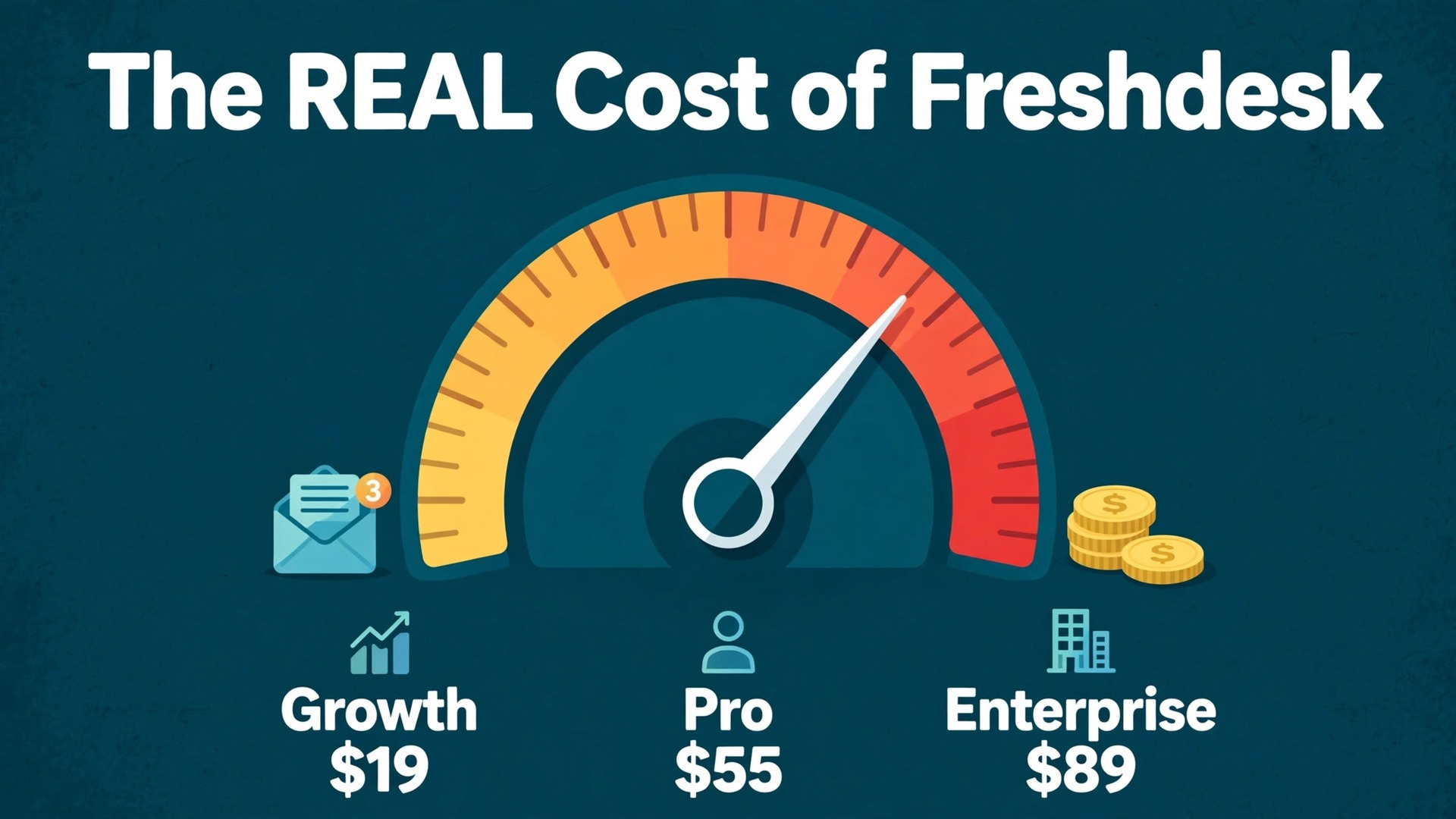
The cost of Freshdesk for small business monthly is higher than the advertised per agent price suggests, and the average small support team pays far more for help desk software than the headline implies. A team that budgets only for agent licences will miss day passes, AI add-ons and the jump between editions, and those extras can double the monthly bill before the first renewal arrives. This guide works through the real numbers so you can budget with confidence instead of guessing from a pricing page headline.
The cost of Freshdesk for small business monthly starts with a simple per agent licence, then grows with every person who answers tickets, every automation you switch on and every AI feature you add. The sections below separate the licence from the extras, show what each edition actually includes, and build a total for teams of one, three, five and ten agents. Use those totals as your planning figures, and treat any vendor quote that shows only the licence line as incomplete.
Freshdesk Prices at a Glance
Freshdesk charges per agent per month, and the price changes with the billing term you choose. Growth costs 19 dollars per agent per month when billed annually and 23 dollars when billed month to month. Pro costs 55 dollars per agent per month on annual billing and 66 dollars on monthly billing. Enterprise costs 89 dollars per agent per month on annual billing and 107 dollars on monthly billing. Those three figures are the licence only, and everything else in this guide sits on top of them.
A small team should read the table below as a starting point, not as a final quote. It shows the licence cost for common team sizes on annual billing, which is the cheaper term for most stable teams. Monthly billing adds roughly 20 percent, and the add-on section later in this guide shows how Copilot and AI sessions change the total. If your team is seasonal or still testing the product, monthly billing may still be worth the premium because it lets you step away without a full year commitment.
| Edition | Per agent monthly annual billing | Per agent monthly monthly billing | Best starting point |
|---|---|---|---|
| Growth | 19 dollars | 23 dollars | Small teams with email ticketing |
| Pro | 55 dollars | 66 dollars | Growing teams that need service levels |
| Enterprise | 89 dollars | 107 dollars | Teams that need audit logs and routing |
Why the Advertised Price Is Only Part of the Bill
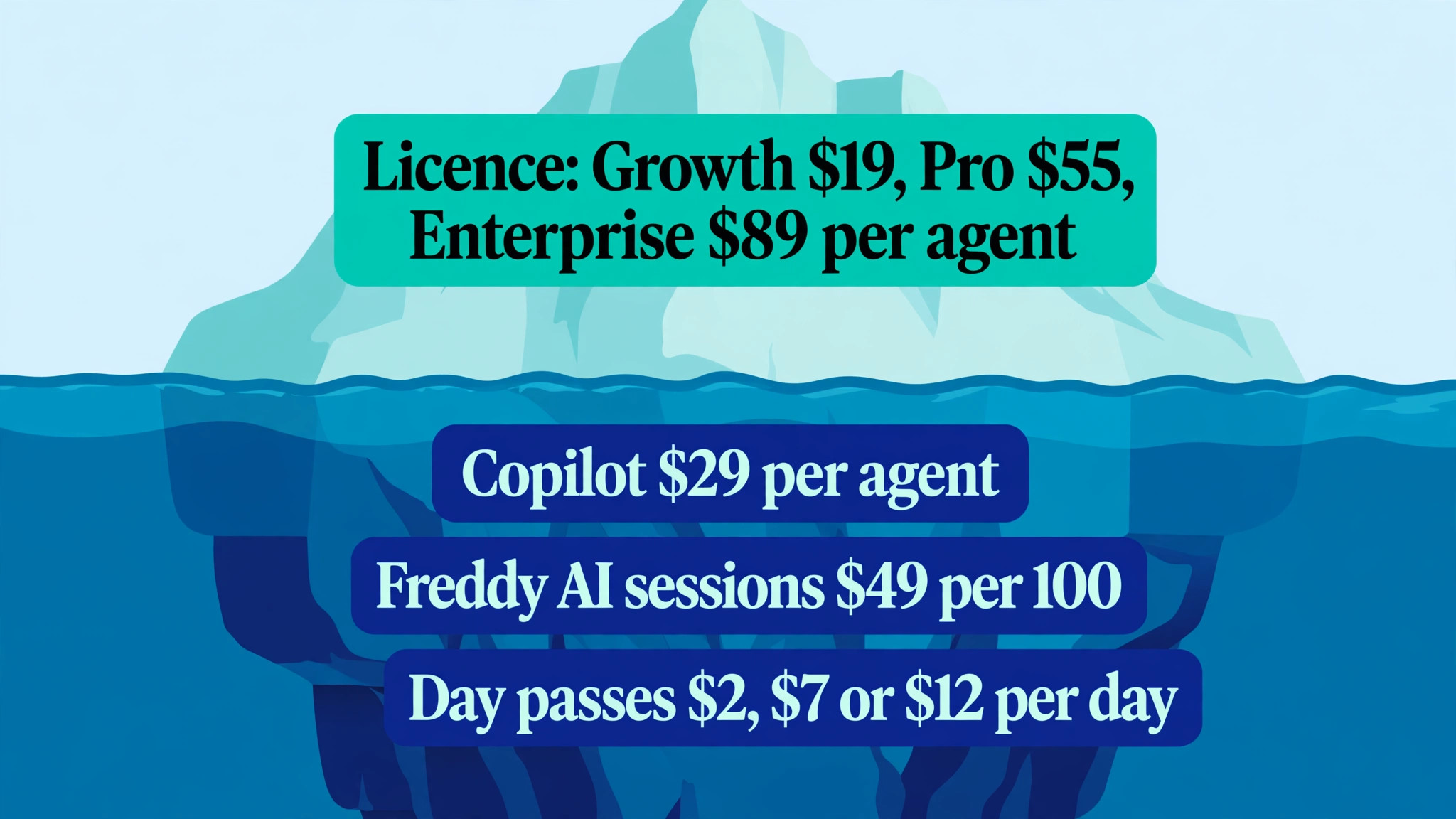
The pricing page headline shows one number, but a working support operation pays on several meters at once. The first meter is the agent licence, which covers each person who replies to tickets in the portal. The second meter is Freddy AI Copilot, an agent assist add-on that costs extra per agent and is only sold on Pro and Enterprise. The third meter is Freddy AI Agent sessions, which are counted separately and billed in blocks once a one-time free allowance runs out. The cost of Freshdesk for small business monthly on that basis will understate the bill by a wide margin for any team that uses AI help.
Collaboration adds a fourth wrinkle that catches small businesses by surprise. Freshdesk includes collaborators on Pro and Enterprise, and those people can add private notes to tickets without a full licence. Growth includes no collaborators, so a colleague who only needs to add an internal note may still need a paid route to reply. Day passes fill that gap for occasional responders, and they are priced per day rather than per month. The day pass rates are 2 dollars on Growth, 7 dollars on Pro and 12 dollars on Enterprise, with three free passes included on every plan.
Annual billing is the other quiet cost driver, because it changes both the unit price and the cash timing. Annual billing lowers the monthly equivalent, but it charges for the full year up front or commits you to twelve monthly payments at the annual rate. A team that hires in a busy quarter and shrinks in a slow one can end up paying for seats it no longer fills. Monthly billing costs more per seat, yet it matches a team whose headcount moves with the seasons. The right choice depends on how stable your agent count is, not only on which unit price looks lower.
Taxes, payment timing and renewal terms complete the picture, and they are easy to overlook during a trial. Prices shown on comparison pages exclude tax, so the invoice total will be higher in most locations. Renewals usually run at the current list price rather than the price you first signed up for, which matters because Freshdesk raised plan prices in early 2026. Set a renewal reminder for thirty days before the term ends, and review seat counts, Copilot licences and AI session packs at that point so nothing renews on autopilot.
Growth, for Small Teams Starting Out
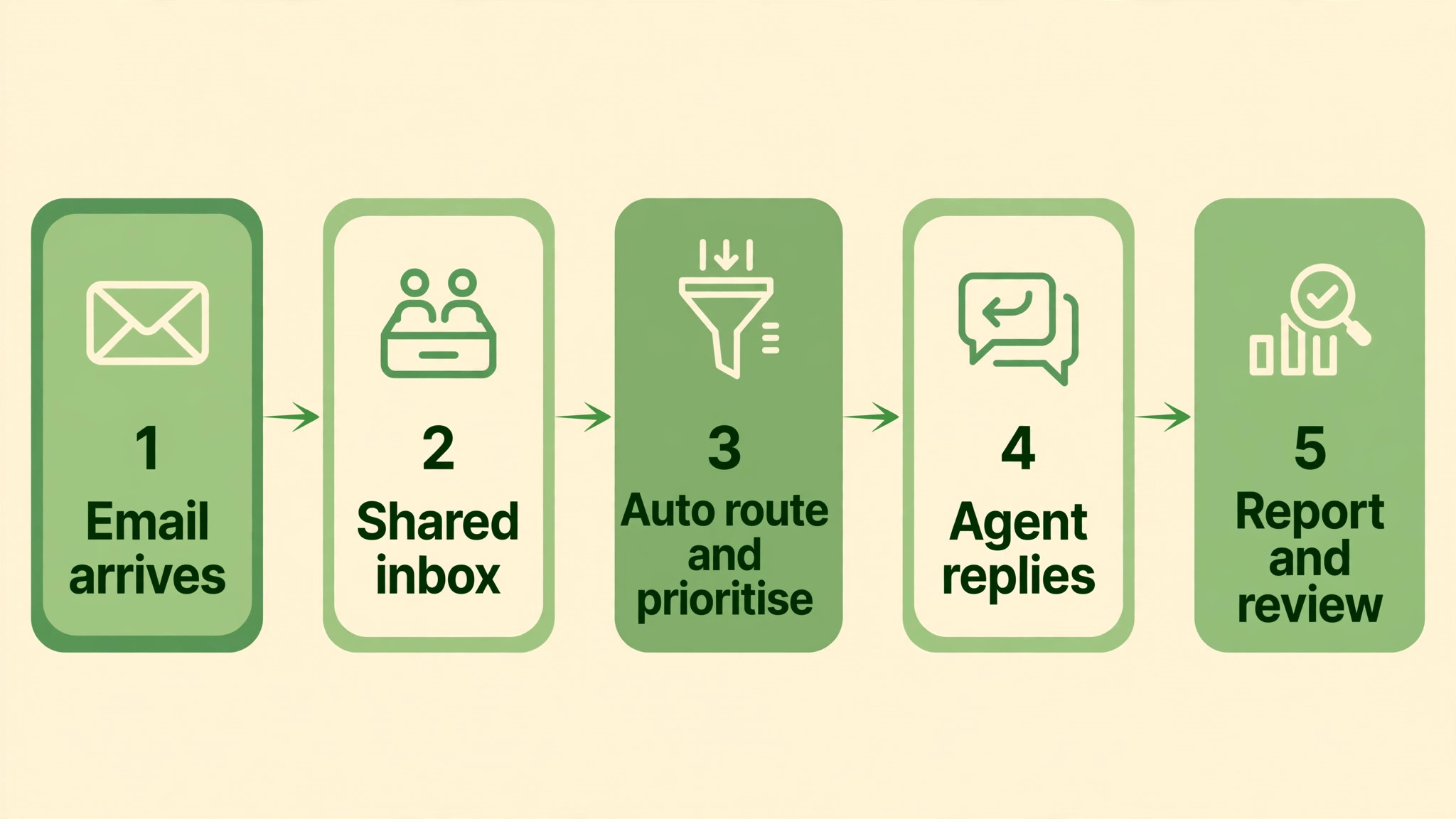
Growth is the entry paid edition, and it suits a small team that handles support mainly by email and needs a shared inbox with structure. It covers multichannel ticketing, a customer portal and basic reporting, plus automations that route and prioritise tickets without manual sorting. A team of one to three agents can run its whole support queue on Growth, provided it does not need service level agreements, custom portals or advanced reporting. The low licence price is genuine, but the feature ceiling arrives sooner than many buyers expect.
The limits of Growth show up in three places that matter to a growing business. First, there are no collaborators, so every person who touches a ticket needs either a licence or a day pass. Second, Freddy AI Copilot is not sold on Growth at all, so agent assist features are simply unavailable at this tier. Third, reporting stays basic, which is fine when one person reads every ticket, but weak when a manager needs to spot slow replies, repeat issues or workload imbalance across agents. Those limits are acceptable for a very small team, and the cost of Freshdesk for small business monthly stays low until they push a team to move up.
Growth still makes sense as a starting point when ticket volume is modest and the support job is straightforward. A shop that answers order questions, booking changes and delivery queries can do that work well on Growth, and the money saved against Pro can fund other tools. The discipline that matters is reviewing the tier every quarter, because the cost of staying too long shows up as slow replies and manual workarounds. When agents start building spreadsheets to track service levels, the tier has stopped fitting the team.
Budget for Growth as the licence plus occasional day passes, not as the licence alone. Three free day passes per plan help with rare responders, but a colleague who replies twice a week will burn through paid passes quickly. At 2 dollars per day on Growth, ten paid days cost 20 dollars, which is close to a full monthly licence at the annual rate. Once an occasional responder crosses about ten days in a month, buying that person a licence is cheaper and simpler than tracking passes.
Pro, Where Most Growing Teams Land
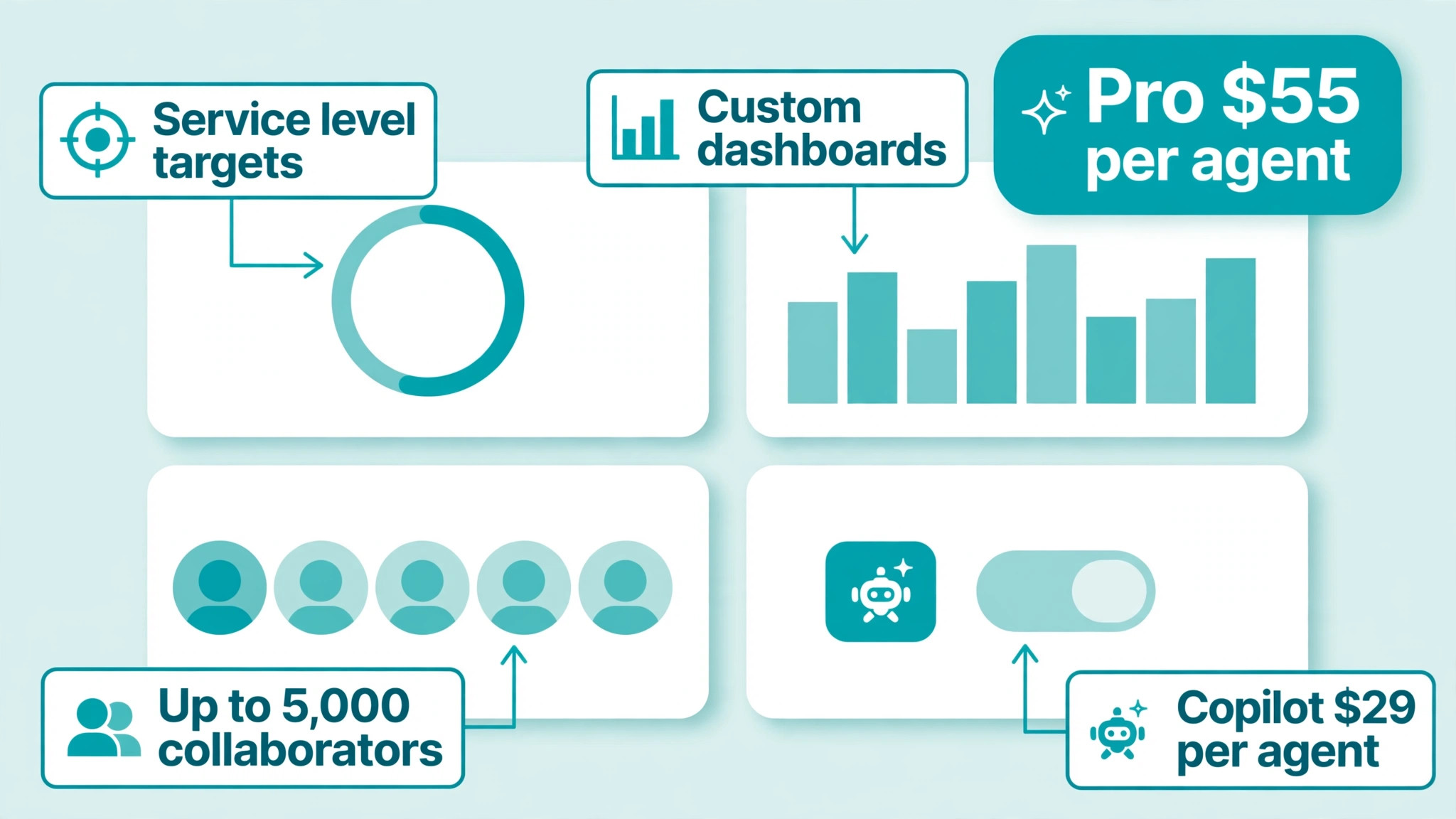
Pro is the edition most growing small businesses end up on, and the cost of Freshdesk for small business monthly jumps sharply at this tier, so the decision deserves a careful look. Pro costs 55 dollars per agent per month on annual billing, against 19 dollars for Growth, which means a five agent team moves from 95 dollars to 275 dollars a month on licences alone. That jump buys service level management, custom portals, advanced ticketing features, deeper reporting and access to Copilot. It also buys up to 5,000 collaborators, which solves the occasional responder problem that Growth leaves open.
Service level management is the feature that usually justifies Pro, because it turns reply speed from a hope into a measured promise. A team can set response and resolution targets by priority, channel or customer group, and managers can see breaches before customers complain. Custom dashboards and multilingual support matter once a team grows past a handful of agents or serves customers in more than one language. Those features do not make agents faster on their own, but they make a larger operation visible and manageable, which is where small teams start to struggle.
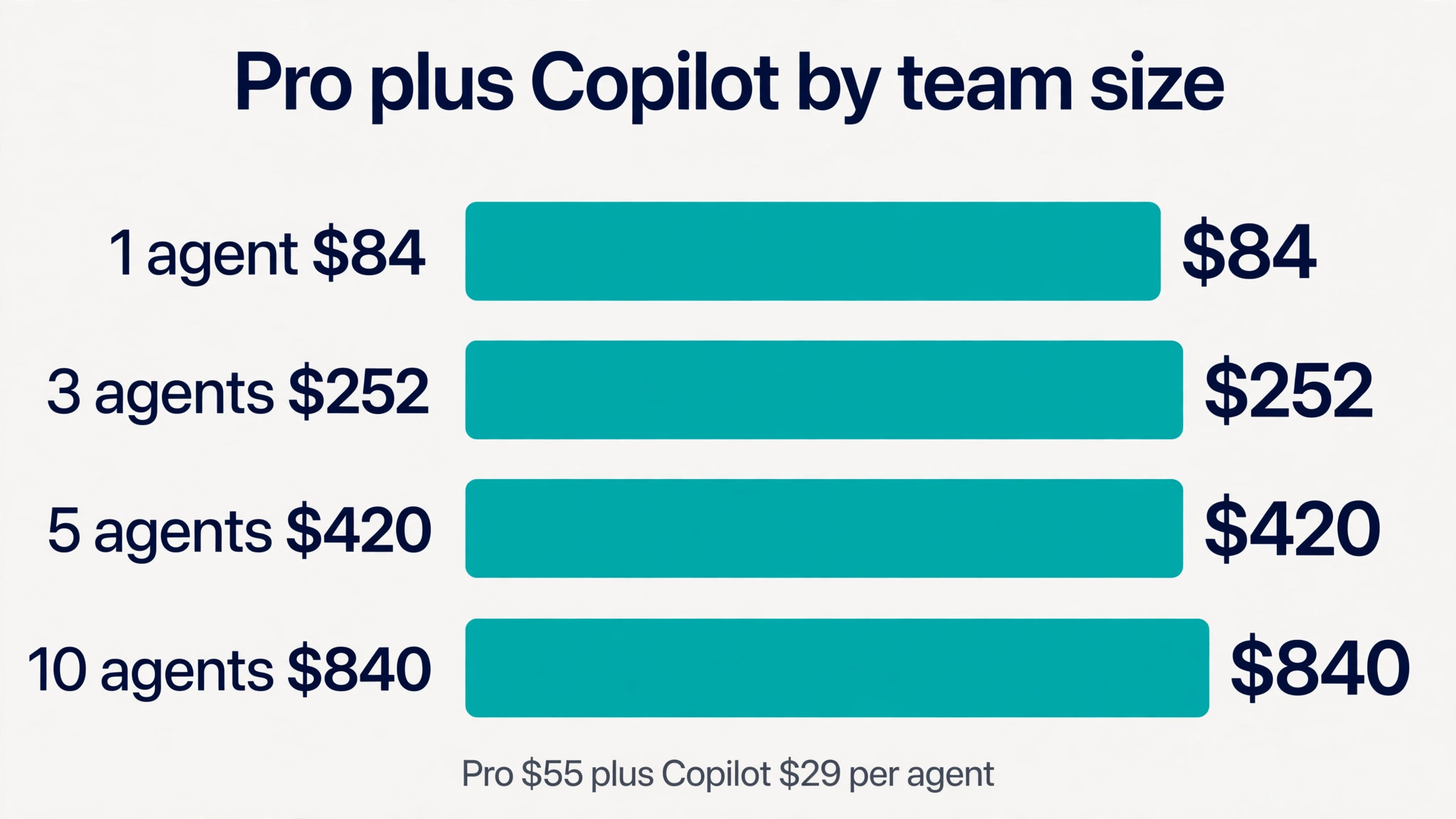
Copilot is the add-on that changes the Pro bill most, because it costs 29 dollars per agent per month on annual billing and 35 dollars on monthly billing. Adding Copilot to every agent on a five person Pro team adds 145 dollars a month on annual billing, taking the licence plus Copilot total to 420 dollars before AI sessions. That is a fair price only if agents actually use the suggestions, summaries and reply help every day. Give Copilot to the agents who handle the highest volume first, measure whether replies get faster, and extend it only when the results support the spend.
Pro is the right tier when support has become a real function rather than a side job for one person. Signs include a queue that needs prioritisation, customers who ask about response times, a manager who needs reporting, or colleagues outside support who must add notes to tickets. If none of those apply yet, Growth plus disciplined ticket habits will serve the team better and leave budget for other needs. The expensive mistake is buying Pro for features the team never configures, because an unused service level policy costs the same as a used one.
Enterprise, for Regulated and Larger Support Operations
Enterprise costs 89 dollars per agent per month on annual billing and 107 dollars on monthly billing, which puts it well beyond the reach of most small teams unless a specific feature forces the move. The edition adds skill based routing, audit logs, sandbox environments and the deepest reporting and control options in the Freshdesk range. It also keeps Copilot available as an add-on at the same 29 dollars annual rate, and it includes collaborators like Pro. For a small business, the cost of Freshdesk for small business monthly on Enterprise is a specialist purchase, not a natural next step after Pro.
Skill based routing matters when tickets need a particular skill, language or product knowledge, and sending them to the wrong agent wastes a full reply cycle. Audit logs matter when a business must show who changed a ticket, when and why, which is common in regulated work and in contracts with larger clients. A sandbox lets a team test automations and workflow changes without touching live tickets, which protects service during a restructure. If your business does not need those three things, Enterprise adds cost without adding daily value.
A ten agent team on Enterprise pays 890 dollars a month on annual billing for licences alone, against 550 dollars on Pro, a gap of 340 dollars every month. Copilot for all ten agents would add a further 290 dollars a month on annual billing, taking the combined total past 1,100 dollars before AI sessions. That total can still be justified for a team handling sensitive data, strict service contracts or complex routing, but it should be justified in writing before purchase. List the exact Enterprise feature each part of the bill depends on, and check whether Pro plus a workaround covers it.
Small businesses sometimes land on Enterprise because a single client contract demands audit logs or a security control that only Enterprise provides. That is a legitimate reason, and the cost can often be treated as part of serving that client. In that case, keep the Enterprise seat count tight, give licences only to agents who need the controlled features, and use collaborators for everyone else who only adds notes. Enterprise is at its most wasteful when a whole team is moved up for one feature that two people use.
The Cost of Freshdesk for Small Business Monthly at 1, 3, 5 and 10 Agents
The table below shows licence only totals on annual billing, because that is the cleanest way to compare editions. Read it as the floor of the bill, then add Copilot and AI sessions from the next section to reach a realistic total. A one agent business pays 19 dollars on Growth, 55 dollars on Pro and 89 dollars on Enterprise each month on annual billing. Those figures look modest in isolation, and they are the reason many buyers underestimate the cost of a full team.
| Agents | Growth annual | Pro annual | Enterprise annual | Pro plus Copilot annual |
|---|---|---|---|---|
| 1 | 19 dollars | 55 dollars | 89 dollars | 84 dollars |
| 3 | 57 dollars | 165 dollars | 267 dollars | 252 dollars |
| 5 | 95 dollars | 275 dollars | 445 dollars | 420 dollars |
| 10 | 190 dollars | 550 dollars | 890 dollars | 840 dollars |
Monthly billing raises every figure in the table by roughly a fifth, so a five agent Pro team pays 330 dollars a month instead of 275 dollars, and a ten agent Enterprise team pays 1,070 dollars instead of 890 dollars. That premium buys flexibility, and for a team that may shrink it can be cheaper than paying a full year for empty seats. Work out the break even point by comparing the monthly premium against the cost of seats you might drop, because the cheaper unit price is not always the cheaper year.
The jump between editions is the largest single cost event in a Freshdesk budget, and it hits every agent at once. Moving five agents from Growth to Pro adds 180 dollars a month on annual billing, and moving ten agents adds 360 dollars a month. That is why the tier decision should be made for the whole team rather than agent by agent, since Freshdesk does not let you mix editions within one account in the way some tools allow mixed licences. Plan the move for a quiet month, configure service levels before the switch, and train agents on the new reporting so the higher bill buys visible value from week one.
Day Passes, Copilot and AI Sessions Explained
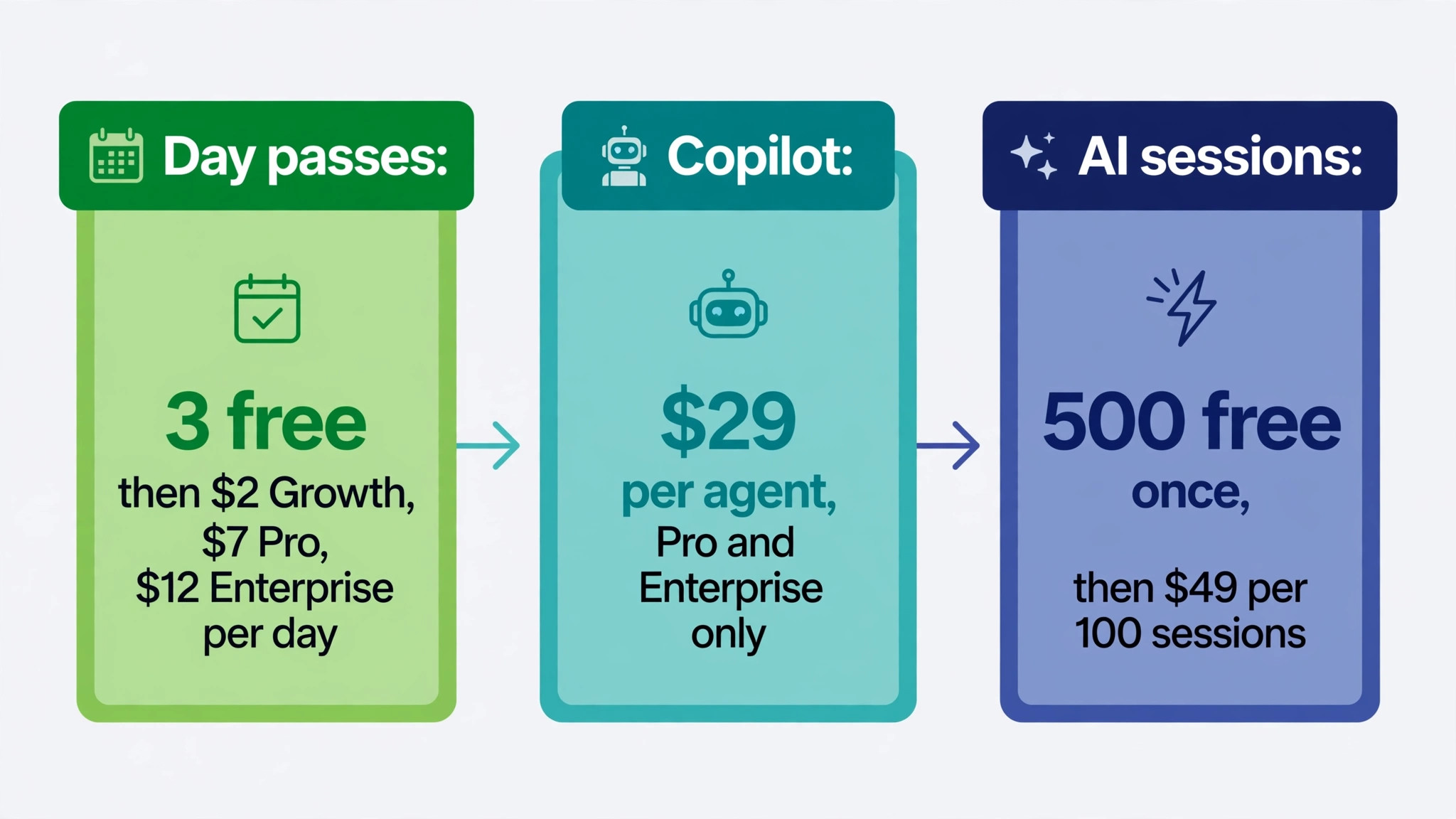
Day passes are the cheapest way to cover an occasional responder, and the most expensive way to cover a regular one. Each plan includes three free day passes, and extra passes cost 2 dollars a day on Growth, 7 dollars on Pro and 12 dollars on Enterprise. A pass is used only on days the person logs into the portal, and replying from an email notification uses none, which makes passes ideal for a warehouse lead or engineer who answers one query a week. The trap is a pass user who quietly becomes a daily responder, because ten Pro passes in a month cost 70 dollars, more than the 66 dollar monthly licence.
Copilot is priced per agent, so it should be assigned like any other per person cost, only where it earns its place. On Pro and Enterprise it costs 29 dollars per agent per month on annual billing and 35 dollars on monthly billing, and it is not available on Growth. A team that gives Copilot to three high volume agents on Pro pays 87 dollars a month extra on annual billing, while giving it to all ten agents costs 290 dollars. Start narrow, track reply time and ticket handling time for thirty days, and widen the rollout only for agents whose numbers improve.
Freddy AI Agent sessions are the meter most buyers understand least, because they are counted in blocks rather than per ticket. Every account gets 500 free sessions once, and extra sessions cost 49 dollars per 100 sessions on either billing term. An email session covers every AI reply within 72 hours from the first email in that thread, which helps keep session counts lower than a per reply model would. Packs renew each billing cycle until you reduce them, and unused sessions do not carry over, so buying a large pack for a quiet month wastes money.
Model AI sessions before you switch them on for every channel, because the cost of Freshdesk for small business monthly can rise fast when a busy inbox consumes sessions. One thousand extra sessions in a month cost 490 dollars, which is more than the licence bill for a small Pro team. That does not make AI Agent a bad purchase, since automated replies can absorb routine questions that would otherwise need an agent. It does mean the business case should name the ticket types AI will answer, the volume of those tickets, and the agent hours saved, rather than assuming automation pays for itself.
The first hidden cost is the annual commitment itself, because it turns a monthly looking price into a yearly obligation. A team that signs annual billing for ten seats and drops to seven mid-year still pays for ten seats until renewal, unless the vendor agrees a change. Before signing, ask what happens when seats are removed, whether unused AI session packs can be reduced mid-cycle, and whether the renewal price is locked or moves to the current list price. Get the answers in writing, because the sales conversation is not the contract.
The second trap is feature gating that only becomes clear during setup. Full omnichannel support can require additional Freshworks products for chat and phone, or a higher bundle, on top of the Freshdesk licence. A team that planned for email ticketing and then adds live chat mid-year can face a second subscription it did not budget for. Map every channel the business will support in the next twelve months before choosing an edition, and price the full channel set rather than the email only version.
Renewal price rises are the third trap, and Freshdesk plan prices rose in early 2026, with Growth moving from 15 dollars to 19 dollars on annual billing. A budget built on last year prices will be short at renewal, so the cost of Freshdesk for small business monthly in year two deserves a ten percent contingency and a review when the renewal notice arrives. If the new price no longer fits, that review is the moment to drop unused Copilot licences, cut AI session packs and remove seats for people who left, rather than accepting the higher total unchanged.
Mistakes That Inflate the Bill
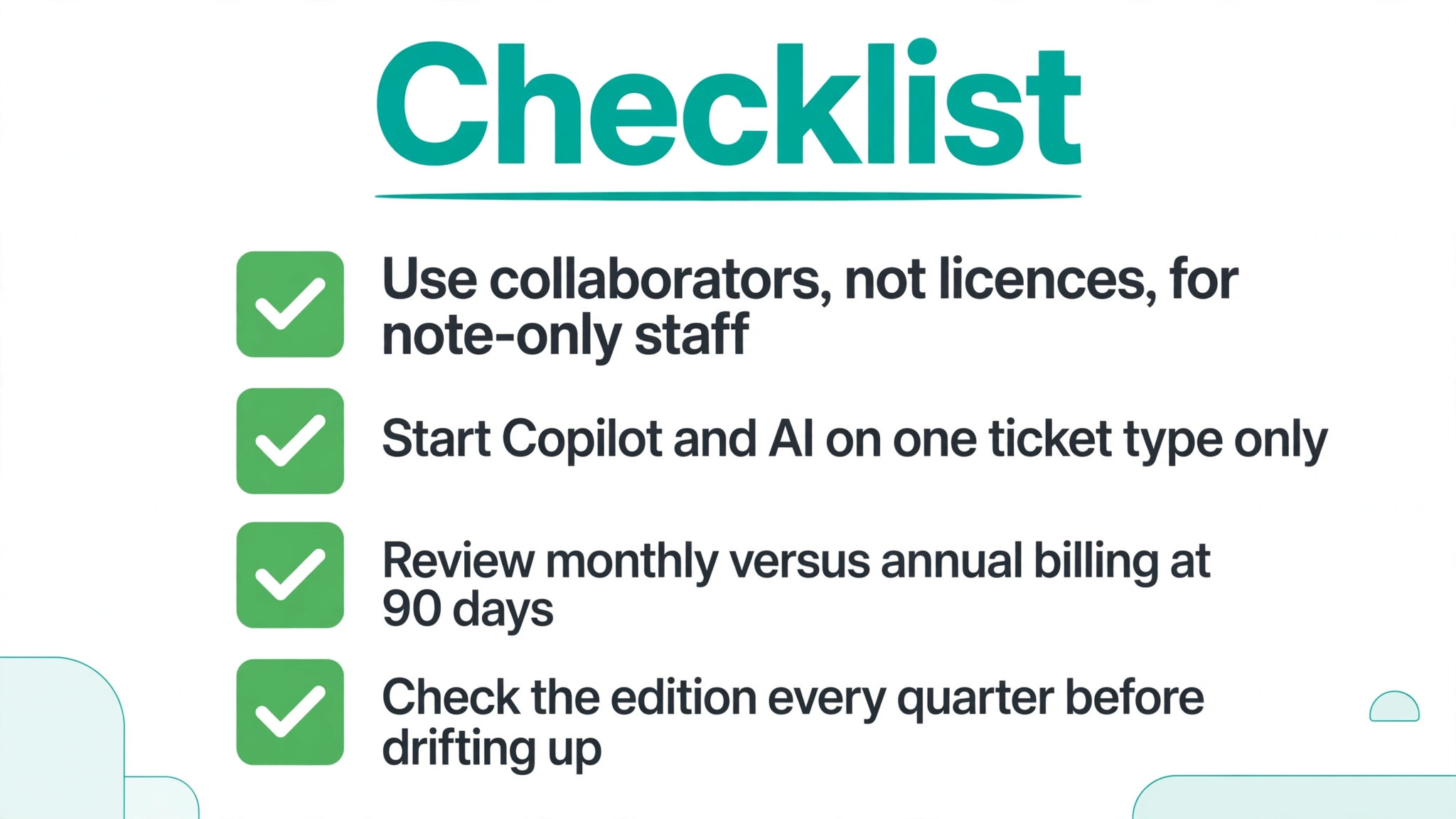
The most common mistake behind a high cost of Freshdesk for small business monthly is licensing everyone who ever looks at a ticket, including managers who only read reports. Pro and Enterprise collaborators exist for exactly that group, and using them can cut several licences from the bill. Audit the seat list every quarter and ask whether each licence holder replied to tickets in the last thirty days. A licence with no replies in that period is either a collaborator in disguise or a seat that should be removed.
The second mistake is buying Copilot and AI sessions for the whole team on day one, before anyone knows which tickets automation handles well. AI features work best on routine, repeatable questions with clear answers, and they add little on complex cases that need human judgement. Run a two week trial on one ticket category, count how many contacts AI resolved without an agent, and scale only the categories that clear a sensible bar. A phased rollout costs less and gives the team evidence for the next budget discussion.
The third mistake is choosing monthly billing by default and never revisiting the choice. Monthly billing is right for a trial and for a seasonal team, but a stable team that stays on monthly billing for two years pays roughly twenty percent more than it needed to. Put a calendar reminder at ninety days to review headcount stability, and switch to annual billing once the agent count has held steady for a quarter. The saving on a five agent Pro team is 55 dollars a month, which is 660 dollars over a year.
The fourth mistake is letting the edition decision drift instead of making it deliberately. Teams often start on Growth, add workarounds for missing features, and then jump to Enterprise because one report or control is missing, skipping Pro entirely. Review the edition against a short checklist each quarter, covering service levels, reporting needs, collaborator use and routing complexity. If Pro covers every item on that list, Enterprise is an unnecessary spend, and if Growth covers it, Pro is too.
How to Cut the Bill Without Losing Coverage
Start by separating reply work from note work, because that single distinction can remove licences without touching service quality. Give full licences to agents who reply every day, collaborators to colleagues who add internal notes, and day passes to rare responders. That mix is the cheapest honest shape for most small teams, and it keeps the ticket record complete because notes still land on the ticket. Review the mix when roles change, since a colleague who starts replying daily should move to a licence rather than burning passes.
Next, use annual billing only for the stable core of the team, and keep any uncertain seats on the most flexible terms the vendor allows. A core of three permanent agents on annual billing plus seasonal help on passes or monthly terms will usually beat an all annual or all monthly approach. The saving comes from matching the billing term to the certainty of each seat, rather than picking one term for the whole account. Document the core and the flexible seats so a future manager can see why the mix exists.
Finally, treat AI spending as a separate budget line with its own review, because session packs renew automatically and can quietly grow. Set a monthly session cap in the plan, review actual sessions against resolved tickets, and reduce the pack when usage falls below the purchased level for two months in a row. If AI sessions are not resolving a clear share of routine tickets, pause the pack and spend the money on agent training or reply templates instead. The goal is fewer agent hours per ticket, not a larger AI line on the invoice.
Which Tier Fits Your Team, in Plain Terms
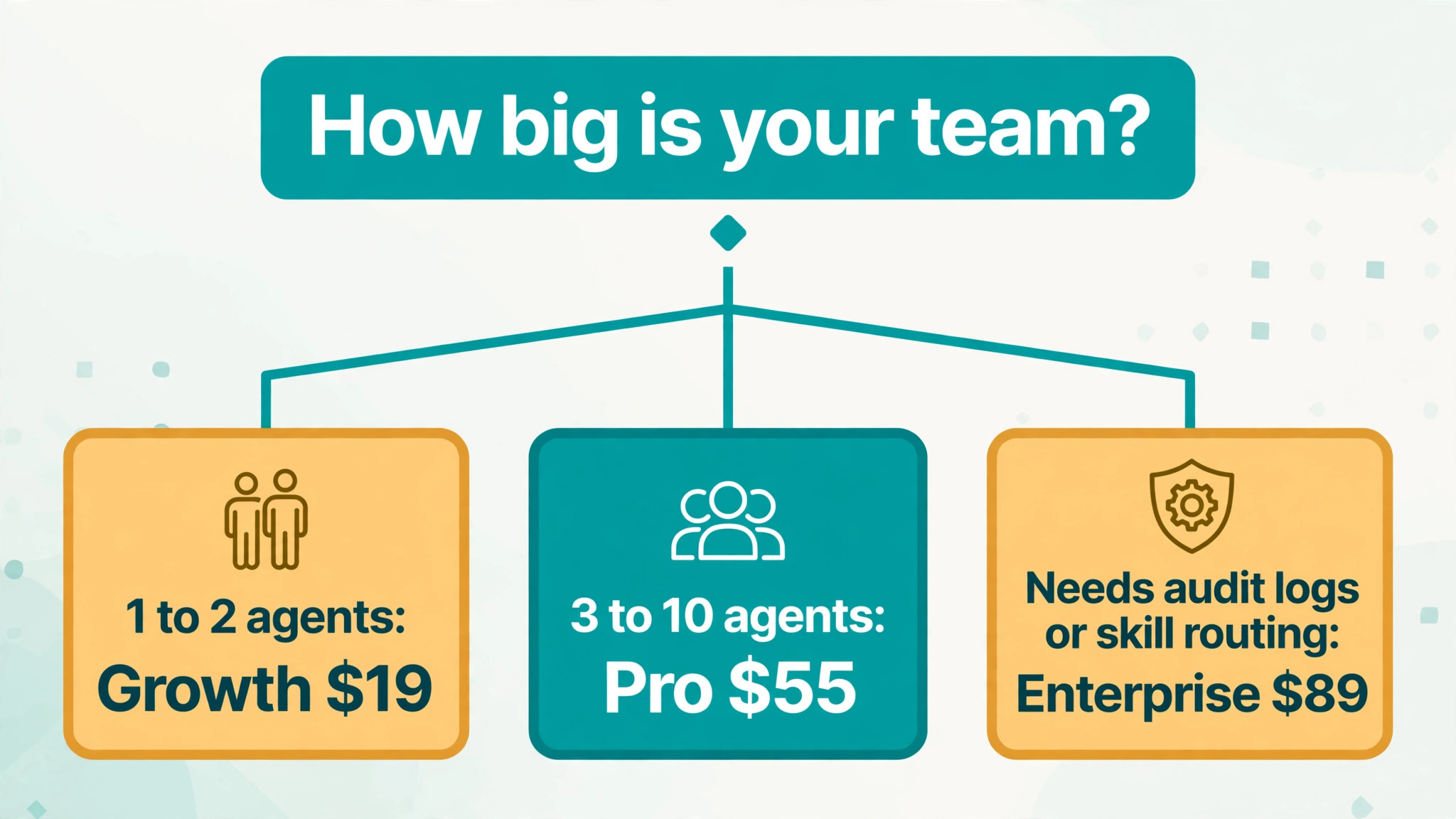
A one or two person team with a modest inbox should start on Growth and stay there until a specific limit bites. The licence is affordable, the setup is quick, and the main discipline is keeping occasional responders on passes or notes rather than licences. Move to Pro when service levels, reporting or collaborator access become daily needs, not when they merely sound useful. That move will roughly triple the licence cost, so it should follow a real operational need rather than a sales suggestion.
A team of three to ten agents with a growing queue should treat the cost of Freshdesk for small business monthly on Pro as the default budget, with Copilot for high volume agents only. That combination covers service promises, reporting and occasional responders without paying Enterprise prices. Add AI Agent sessions only for routine ticket types with proven volume, and cap the pack until the resolution data supports a larger buy. This shape gives a five agent team a realistic monthly total near 275 dollars for licences, plus 87 dollars if three agents use Copilot, before any AI sessions.
Enterprise fits a small business only when audit logs, skill based routing or a sandbox are required by regulation, a client contract or a complex support operation. In that case, keep the seat count tight and treat the extra cost as part of serving that requirement. Every other small team should treat Enterprise as a future option, not a starting point, and revisit it only when Pro demonstrably fails a named requirement. The cheapest tier that does the job well is the right tier, and for most small businesses that tier is Growth at the start and Pro as the team grows.
More Reading on Stratilyze
Read more about related tools in best CRM options for a three person sales team.
Read more about related tools in AI customer support tools compared for small teams.
Read more about related tools in case management software for small law firms.
Frequently Asked Questions
Is there a free version of Freshdesk for a very small team?
Freshdesk is sold mainly as a trial followed by paid editions, and some listings mention a limited free program for up to two agents. Confirm the current free offer on the vendor page before planning around it, because free terms change and may carry a time limit. A one agent business should trial Growth first, since the paid licence is low and the trial shows whether the workflow fits before any commitment.
Does every person who touches a ticket need a paid licence?
No, and this is where small teams save real money. On Pro and Enterprise, collaborators can add private notes to tickets without a full licence, which covers managers and colleagues who never reply directly. On Growth there are no collaborators, so note only colleagues need a day pass or a licence to take part. Audit the seat list regularly so note only people do not sit on paid licences.
How much does Freddy AI Copilot add to a small team bill?
Copilot costs 29 dollars per agent per month on annual billing and 35 dollars on monthly billing, and it is sold only on Pro and Enterprise. Three agents on Copilot add 87 dollars a month on annual billing, while ten agents add 290 dollars. Give it to high volume agents first and extend it only when reply speed or handling time improves enough to justify the extra line.
What do Freddy AI Agent sessions cost after the free allowance?
Every account gets 500 free sessions once, and extra sessions cost 49 dollars per 100 sessions on either billing term. An email session covers AI replies within 72 hours from the first email, which keeps counts lower than a per reply model. One thousand extra sessions cost 490 dollars, so model routine ticket volume before switching AI on for every channel.
Is annual billing always cheaper than monthly billing?
Annual billing gives a lower monthly equivalent, roughly twenty percent below monthly billing, but it commits the team for a full year. Monthly billing costs more per seat yet lets a seasonal or shrinking team drop seats without paying for empty ones. Choose annual billing for a stable core team, and keep uncertain seats flexible until headcount holds steady for a quarter.
When should a small business move from Growth to Pro?
Move when service level targets, deeper reporting, custom portals or collaborator access become daily needs rather than nice extras. A practical trigger is agents building spreadsheets to track reply speed, or managers who cannot see workload across the team. Until those needs appear, Growth plus disciplined ticket habits will serve the team at a much lower licence cost.