
A customer is asking for their money back, and every minute you delay makes the request harder. That is the core problem with refund requests, because they arrive with emotion, a deadline in the customer mind, and a threat, spoken or unspoken, to escalate to a bank dispute or a public review. This guide explains how to handle refund requests small business owners can use under that pressure, with a calm triage routine, a fair decision tree, scripts that keep the conversation professional, and records that protect you if the request becomes a chargeback.
A refund request is not always a sign that you did something wrong, and it is not always a sign that the customer is acting in bad faith. Sometimes the product is faulty, the delivery was late, or the service did not match what was promised, and a prompt refund is simply the right answer. Sometimes the customer changed their mind, misunderstood the offer, or expected something you never promised, and a correction, a replacement, or a partial refund is fairer than a full refund. Sometimes the request is abusive or fraudulent, and a firm, documented no is the right answer. The skill is telling those cases apart quickly, from facts, before money moves or a relationship is damaged.
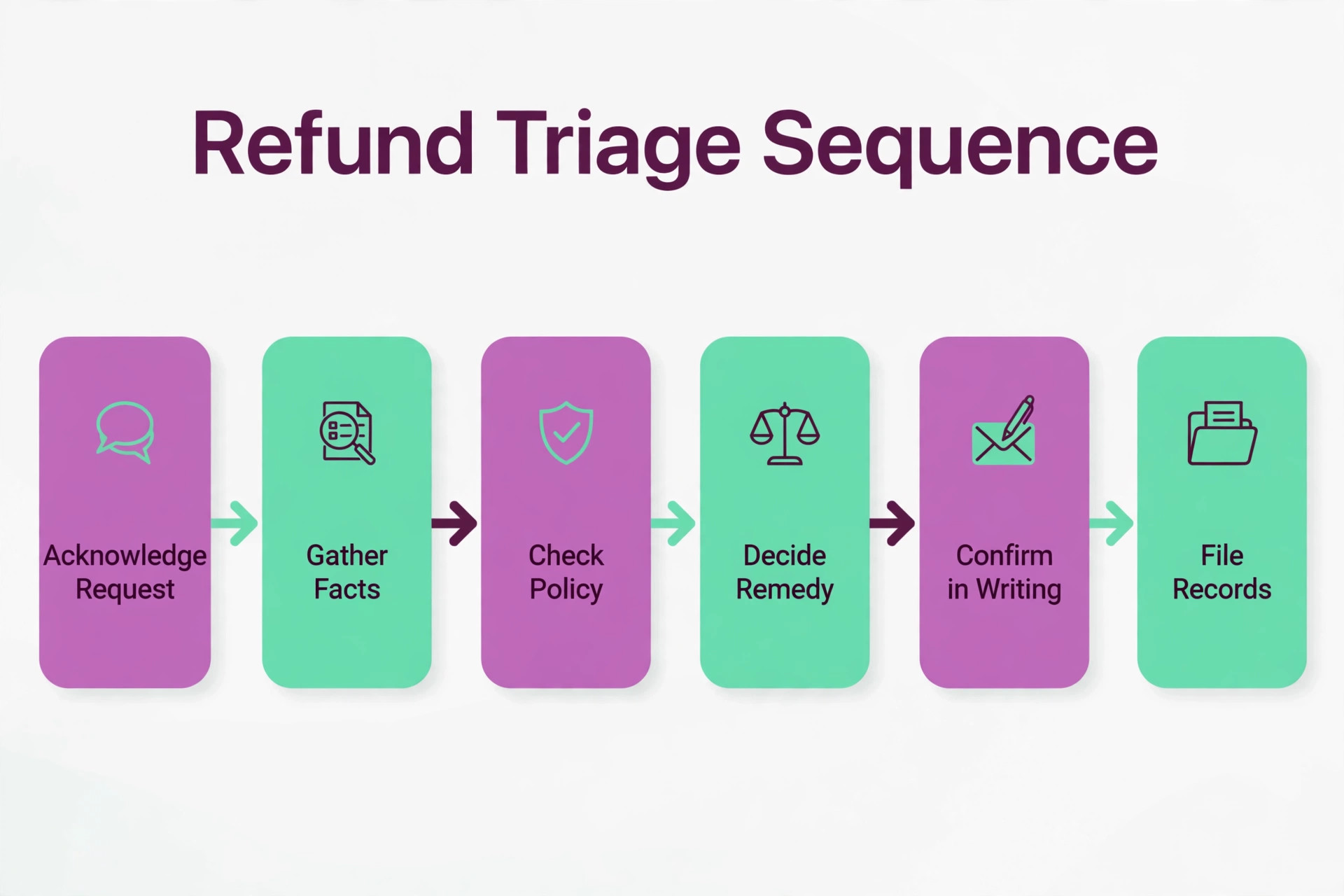
Speed matters, but speed without a process creates a second problem. A refund given in panic to stop a complaint can set a precedent that every complaint earns a full refund, while a refund refused in panic can turn a fixable problem into a chargeback that costs more in fees, time, and processor standing than the refund would have cost. The routine below gives you both speed and discipline. Acknowledge quickly, check the facts, decide from policy, offer the fair remedy in writing, and file the evidence. That routine takes minutes for a simple case and protects you for the difficult ones.
How to Handle Refund Requests Small Business Owners Start With Facts Not Feelings
Start with a fast acknowledgment that is not an admission. Thank the customer for raising the issue, state that you are reviewing it, and name a reply deadline you can meet, for example by the next business day. That message calms the customer, because they know they have been heard, and it buys you the time to check the record without appearing to ignore them. Do not say you were wrong, do not promise a refund, and do not argue the facts in that first message, because all three moves make the later decision harder, whether the facts support the customer or not.
Next, gather the record before you decide anything. Open one file for the dispute, and save the invoice, the order confirmation, the product or service description as the customer saw it, your refund policy as shown at purchase, the customer messages, delivery or completion proof, and any approval or revision records for a service. For a product, add tracking and delivery confirmation, and any return photos or condition notes. For a service, add the agreement, the scope, and dated proof of work completed. Keep every record intact, including the original wording of listings and messages, because edited or deleted records lose credibility if a bank or platform later reviews the case.
Compare the claim with what was promised, in three short checks. What did the customer pay for, in the listing, quote, or agreement. What was actually delivered, with proof. What can the customer prove about the gap between those two things. If the gap is clear and on your side, the remedy is usually prompt and generous. If the gap is unclear, ask for the missing proof, such as a photo, a tracking record, or a specific example, and give a short deadline for it.
If there is no gap, and the request is a change of mind outside the policy, the answer is a polite, policy based no, with an alternative where one exists, such as a credit, an exchange, or a rescheduled service.
Policy Tiers That Make Decisions Consistent
A refund policy should be written before the next request arrives, shown at purchase, and applied consistently, because a policy invented during a dispute reads as an excuse, however fair it is. Policy tiers work better than a single rule, because products, services, and digital goods carry different risks and different remedies. Write tiers for your main offer types, with a time window, an eligibility condition, and a remedy for each tier, and keep the language plain enough that a customer can follow it without a lawyer.
Consumer, distance selling, and card rules vary by place and by sale type, so check the rules that apply to your products and customers, and take professional advice for regulated goods, subscriptions, or high value sales. This guide is general business information, not legal advice.
| Offer type | Illustrative tier | Typical remedy |
|---|---|---|
| Faulty, wrong, or late product | Full remedy within the stated window, with return where required | Replacement or full refund, with return cost handled as the policy states |
| Service not delivered as agreed | Remedy tied to the undelivered part | Correction, rework, or partial refund for the undelivered part |
| Change of mind, no fault | Policy based outcome, within a short window where offered | Exchange, credit, or no refund where the policy clearly states that outcome |
| Digital product or booking | Remedy tied to access or use, as the policy states | Replacement, credit, or no refund after access, where the policy clearly states that outcome |
Apply the policy consistently, and note any exception with its reason. Consistency protects you from claims of unfair treatment, and it makes decisions easier for staff, who should not have to improvise a refund rule on the phone. When you grant an exception, for example for a long term customer or a genuine hardship, note the reason in the file, and return to the standard policy for the next case. A pattern of unexplained exceptions becomes the real policy, and it will be quoted back to you by the next customer who asks for the same treatment.
Review the policy after every difficult case, and ask whether the tier, the window, or the wording caused the friction. If customers repeatedly misunderstand a digital refund rule, the wording needs work, not just firmer enforcement. If a window is too short for a genuine fault to appear, the window needs lengthening, even though that costs more in the short term. A policy that learns from real cases becomes fairer and easier to defend, and that learning is a steady part of how to handle refund requests small business owners improve over time.
Decision Tree That Turns Facts Into a Fair Offer
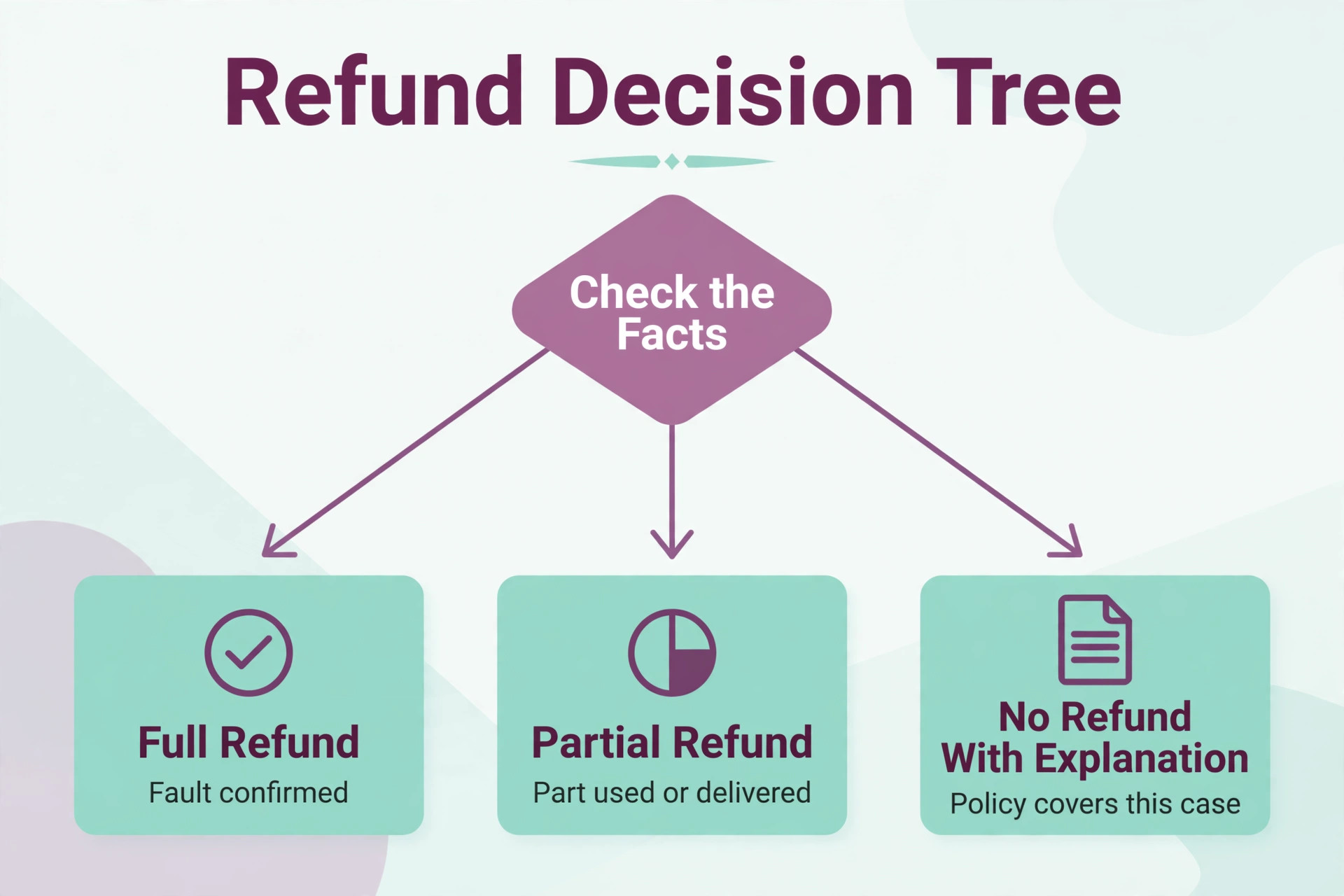
Use a decision tree for every request, so the outcome follows the facts rather than the pressure of the moment. The tree below is a practical starting point. Adapt the remedies to your policy tiers, but keep the order, because the order prevents the most common error, which is offering money before checking whether a correction would have solved the problem. That ordered tree is a core part of how to handle refund requests small business owners should follow.
Step one, was the product or service faulty, wrong, late, or not as described, with proof. If yes, offer a replacement or a full refund promptly, and thank the customer for the proof. Step two, was part of the service undelivered or below the agreed standard, with proof. If yes, offer a correction or rework first, and a partial refund for the undelivered part if correction is not possible or not wanted. Step three, is the request a change of mind, with no fault and no policy window for a return. If yes, apply the policy outcome, and offer an alternative where one exists, such as an exchange, a credit, or a reschedule.
Step four, is the evidence unclear or disputed. If yes, ask for the specific proof that would settle it, give a short deadline, and pause the decision until that proof arrives or the deadline passes. Step five, is the request abusive, threatening, or clearly fraudulent, with evidence to support that view. If yes, move all contact to writing, offer only the policy based outcome, and seek professional advice before engaging further. That step protects staff and the business, and it prevents a threatening message from forcing a refund that the facts do not support.
Calculate the real cost of each option before you offer it, because the cheapest option on paper is not always the cheapest in practice. A full refund may cost the product, the shipping, and the processing fees, while a replacement may cost only the product and shipping, and a partial refund may cost less than either, while keeping the customer.
A chargeback, by contrast, can cost the amount, plus a processor fee, plus staff time, plus damage to your processor standing if disputes accumulate, so a fair refund offered promptly is often cheaper than a fight, even when you believe the facts are on your side. That cost comparison is a practical part of how to handle refund requests small business owners decide without emotion.
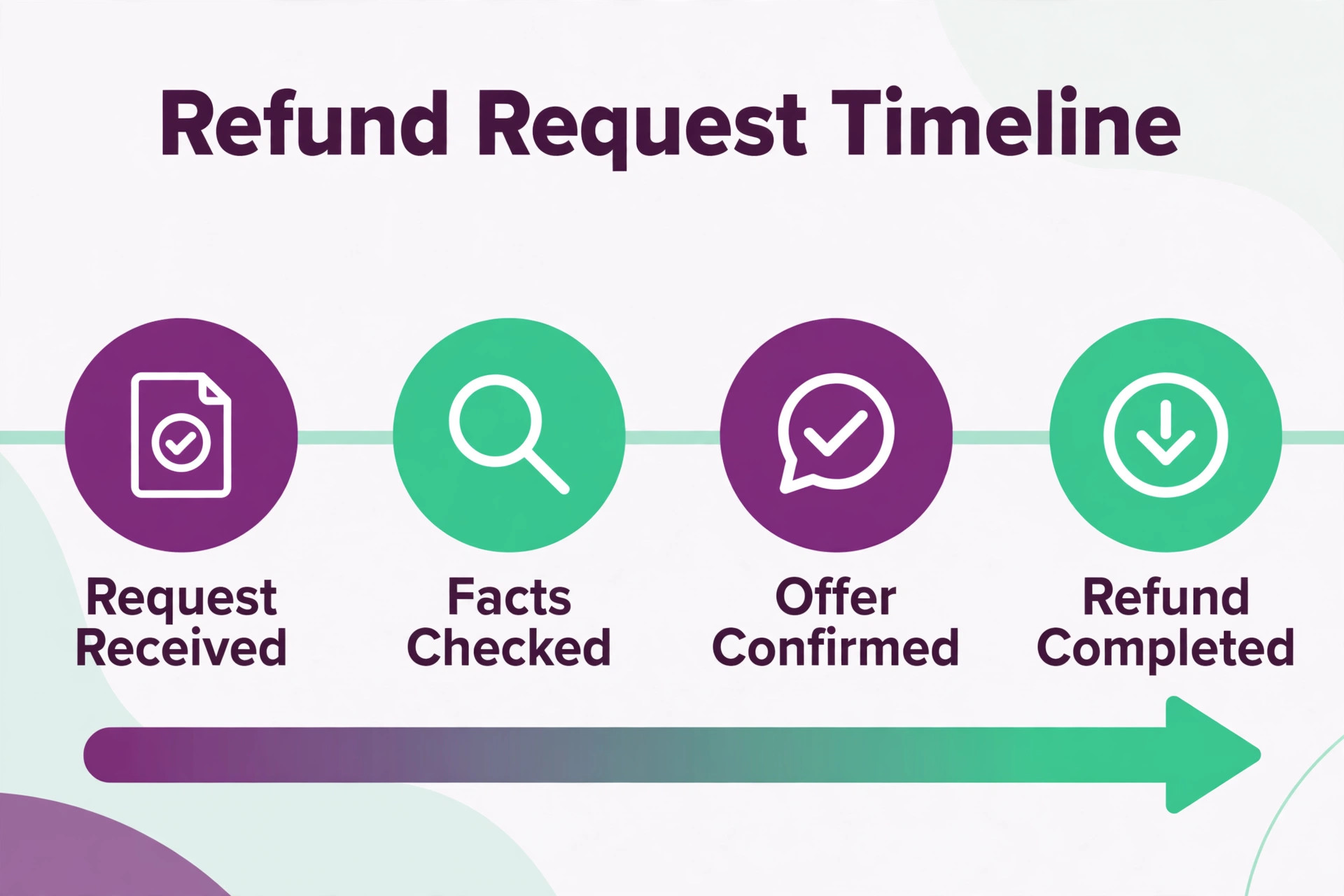
Put the offer in writing, with the remedy, the amount, the method, and the timeframe, and ask the customer to confirm acceptance before you move money. A written offer prevents the common follow up where a customer accepts a partial refund and then asks for the rest, or accepts a replacement and then files a dispute as well. Once accepted, process the refund promptly through the original payment method where possible, and confirm completion in writing. A refund that is promised but delayed creates a second complaint, and a second complaint is far harder to resolve than the first. That written offer is a key part of how to handle refund requests small business owners do well.
Partial Refund Scripts That Keep the Conversation Professional
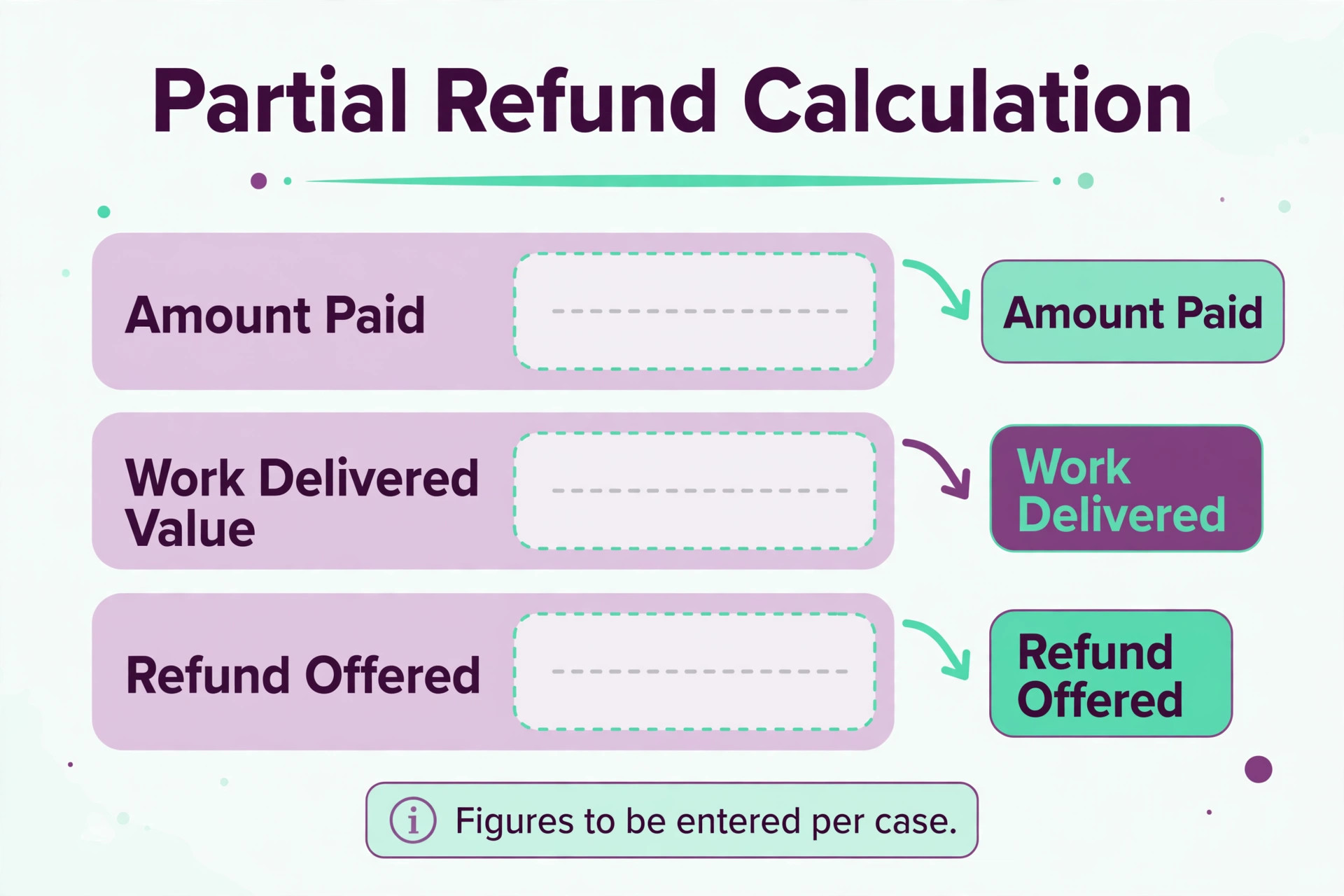
Partial refunds are the hardest refunds to explain, because the customer often hears a partial offer as a refusal, even when it is fair. The key is to show the calculation in plain language, tied to what was delivered and what was not, rather than stating a figure with no reasoning. State the total paid, the part delivered or used, the part not delivered, and the refund for that part, in short sentences, so the customer can follow the arithmetic without asking for it. A partial refund explained well is usually accepted. A partial refund stated without explanation is usually argued.
The script below is an original template you can adapt. It acknowledges the issue, states what was checked, gives the calculation, offers the remedy, and asks for confirmation, without blame, apology for facts not yet established, or open ended negotiation. Replace the bracketed parts with your own figures and dates, and keep the tone calm and factual, even if the customer message was not.
Partial refund script, ready to adapt. Opening, thank the customer for the details and for their patience while the order was reviewed. Finding, state in one sentence what was delivered and what was not, based on the record. Calculation, state the total paid, the value of the delivered part, and the refund amount for the undelivered part. Offer, state that the partial refund will be processed to the original payment method within a stated timeframe on confirmation. Alternative, where appropriate, offer a replacement or credit as an alternative to the partial refund. Close, ask the customer to confirm acceptance in writing, and state that handover or return instructions will follow on confirmation where a return is needed.
For a full refund, the script is shorter, because there is no calculation to explain. Acknowledge the issue, state that a full refund will be processed to the original payment method within a stated timeframe, and confirm the amount and the return instruction where a return is needed. Do not add conditions, apologies that admit fault beyond the facts, or requests for a review in exchange for the refund, because those additions turn a clean remedy into a new dispute. Process the refund promptly, confirm completion, and file the record with the original request, so the case is closed in one file.
For a policy based no, the script must be firmer and still polite. Acknowledge the request, state the policy outcome and the reason in one sentence, pointing to the policy shown at purchase, and offer an alternative where one exists, such as an exchange, a credit, or a reschedule. Do not debate the policy at length, do not offer a partial refund as a negotiation opener unless the decision tree supports it, and do not promise to reconsider if the customer complains louder. A consistent, written no, with an alternative, is kinder in the long run than a vague maybe that keeps the customer waiting for a different answer.
Documentation File That Protects You in a Dispute
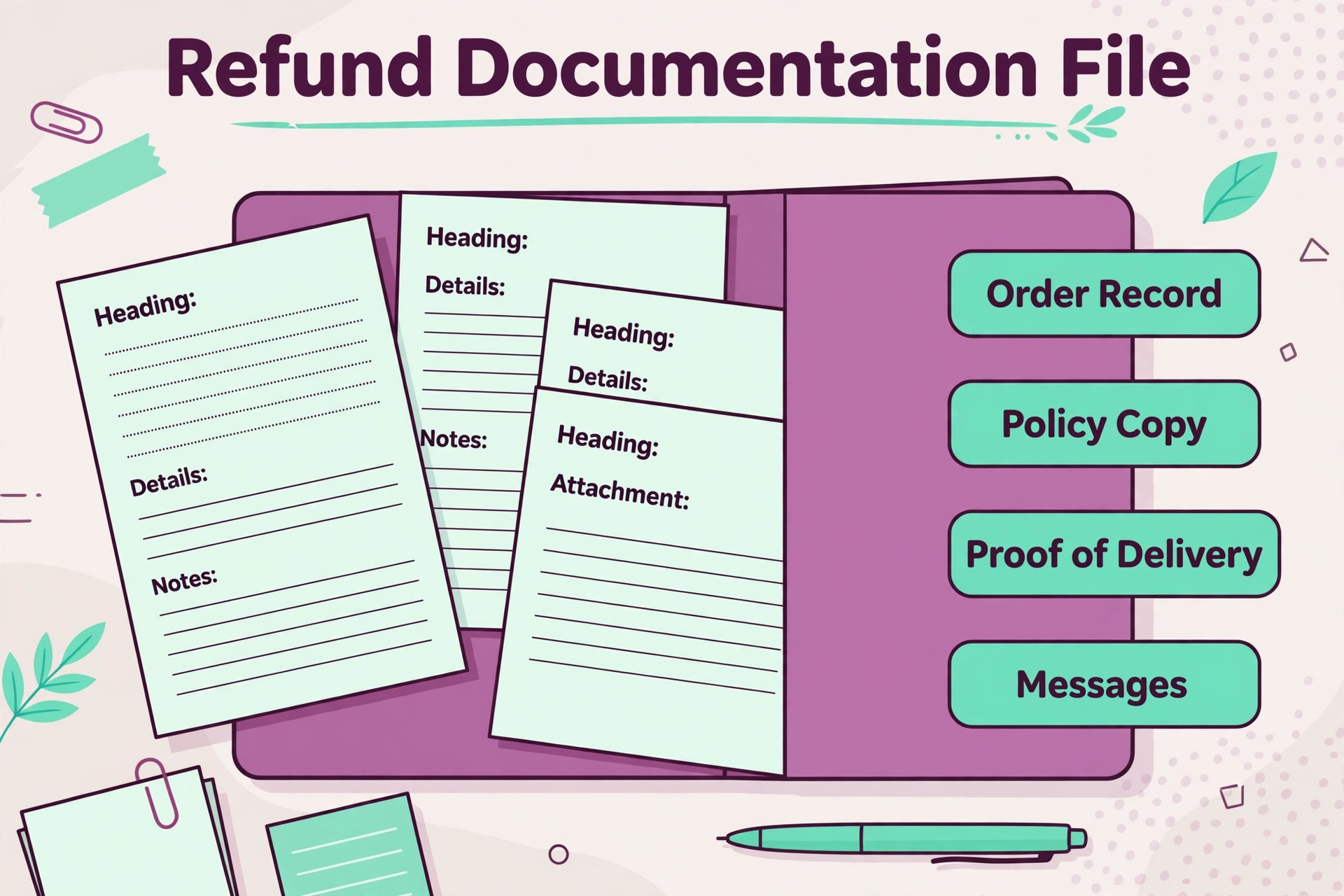
Build one documentation file per refund request, and build it as you go, not after a dispute arrives, because evidence gathered late is evidence that may already be gone. The file should contain the order and payment records, the listing or agreement as the customer saw it, the refund policy version shown at purchase, all customer messages in order, delivery or completion proof, return or condition evidence, and every offer, acceptance, and refund confirmation you sent.
Save screenshots with dates where a listing or message could change, and keep the original wording intact, because original wording matters when a bank or platform reviews what was actually promised. That complete file is a central part of how to handle refund requests small business owners should build.
Name the file consistently, so it can be found under pressure, for example by order number and date, and keep a short log at the front of the file, with the request date, the complaint type, the outcome requested, the reply deadline you promised, the decision, and the final outcome. That log lets a second staff member pick the case up without rereading every message, and it lets you review patterns across cases, such as a product that generates repeated refund requests, a listing that is repeatedly misunderstood, or a delivery partner that repeatedly causes late delivery claims.
Patterns in the log are often more valuable than any single case, because they point to a fix that prevents the next ten requests.
Keep records for as long as your payment processor, platform, and local rules require, and check those periods rather than guessing. Card disputes can arrive weeks after a purchase, and a file deleted after a refund is a file that cannot defend a later chargeback for the same order. Store files securely, with access limited to staff who need them, and do not copy unrelated personal information into a dispute file, because a file that contains more personal data than needed creates a privacy risk of its own. A tidy, complete, and proportionate file is the best protection a small business has in a dispute, and it costs minutes to build when the case is fresh.
Chargeback Guardrails That Keep a Refund From Becoming a Dispute
A chargeback is different from a refund, and treating them as the same thing is a costly mistake. A refund is money you return directly to the customer, through your payment system, on terms you control. A chargeback is a payment reversal requested through the customer card issuer, following card network rules and timelines you do not control, and it can carry extra fees and processor consequences even when you win.
The best chargeback guardrail is therefore a fair refund process that customers use first, because a customer who has been heard, offered a clear remedy, and refunded promptly has little reason to go to their bank. That distinction is a vital part of how to handle refund requests small business owners must understand.
Prevent chargebacks at the point of sale, not at the point of dispute. Use a clear billing descriptor that the customer will recognise on a statement, send an order confirmation that matches the descriptor and the amount, and make the refund policy visible before payment, as described earlier. For subscriptions, send renewal reminders and make cancellation easy to find, because failed cancellation requests are a common chargeback trigger. For deliveries, use tracking and delivery confirmation, and require a signature for high value goods where that is practical, because delivery proof is often the decisive evidence in a dispute about whether goods arrived.
When a customer threatens a chargeback, respond calmly and in writing, and ask them to state the issue in writing as well, so the record is clear. Offer the fair remedy identified by the decision tree, with a prompt timeframe, and note that a direct refund is faster for both sides than a bank process. Do not threaten the customer, do not withhold a fair refund to punish a threat, and do not promise an outcome you cannot control, such as a bank decision. A calm, written offer at this stage resolves many threatened chargebacks, because the customer often wants a remedy, not a bank case, and a clear offer gives them one without waiting weeks.
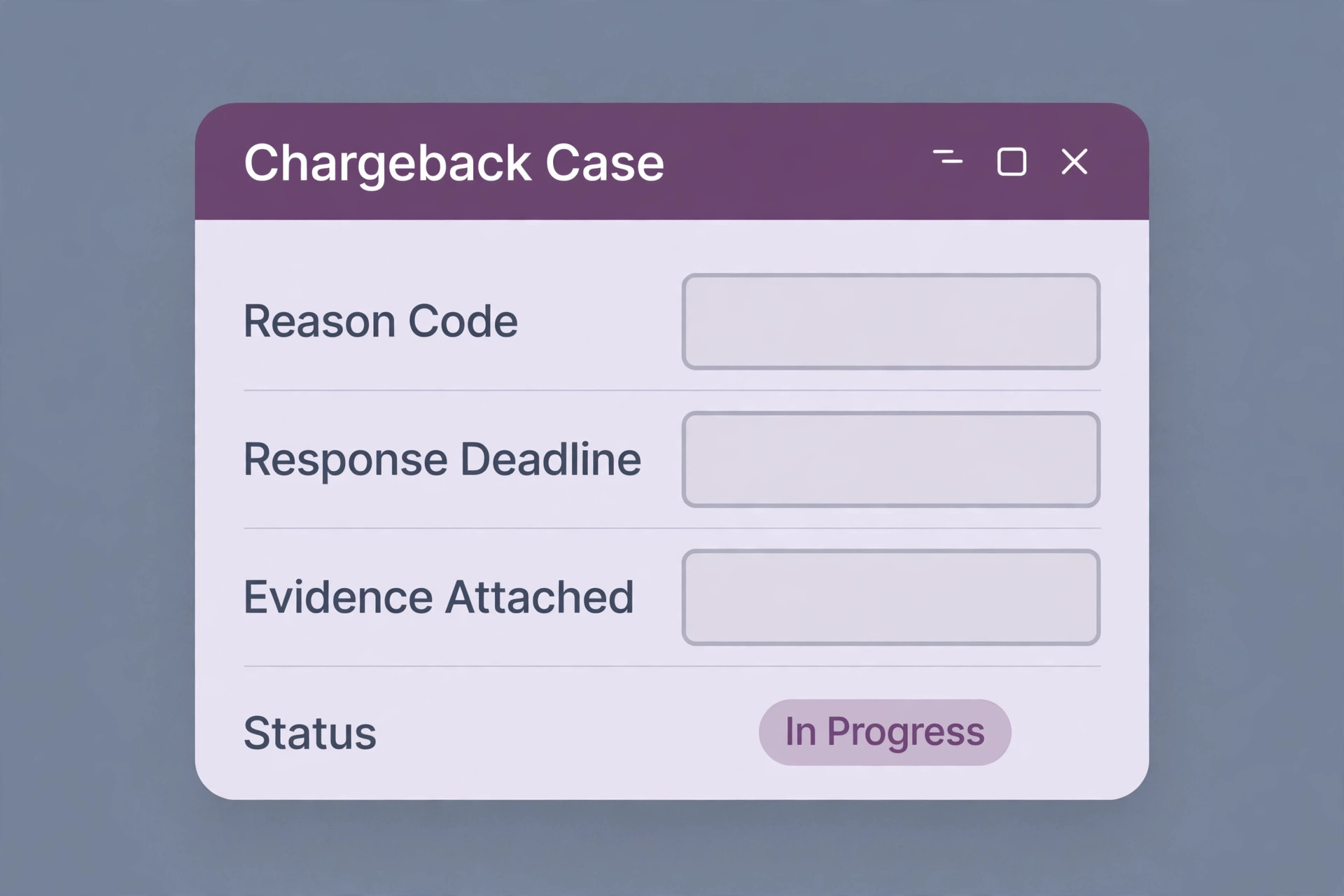
If a formal chargeback arrives, act on the deadline immediately, because processor and network deadlines are short and missing one can lose the case by default. Check the payment provider case record, match the case to the order and payment, note the reason code, the amount, and the response deadline, and assign one owner for the response. Gather the documentation file described above, and submit only the evidence that is relevant to the reason code, such as delivery proof for a non receipt claim, or the agreement and completion proof for a service claim.
If the facts support the customer, accept or refund through the proper route rather than fighting a case you cannot win, because fighting a clear customer case costs fees and standing for no benefit. If the facts support you, submit a concise, evidence based challenge, and keep a copy of everything submitted, with the date, in the file.
Mistakes That Turn a Refund Request Into a Bigger Loss
The first mistake is ignoring the request, or replying with a generic message that gives no deadline and no next step. Silence and generic replies both push customers toward banks and public reviews, because the customer concludes, reasonably, that no one is handling the case. The second mistake is refunding in full, in panic, to every complaint, which teaches customers and staff that pressure, not policy, decides outcomes, and which quickly becomes unaffordable. The third mistake is refusing in anger, with blame or sarcasm, which turns a fixable case into a public dispute that future customers will read.
The fourth mistake is offering a remedy verbally, without a written confirmation, which leaves the offer open to different memories and to a second request for the same money. Always put the offer, the amount, and the acceptance step in writing, before moving money. The fifth mistake is deleting or editing records after a complaint, whether a listing, a message, or a policy page, because edited records lose credibility and can turn a winnable case into a lost one. Keep originals intact, and publish policy changes as new versions, with dates, rather than overwriting the version a customer actually saw.
The sixth mistake is fighting every chargeback, including cases where the facts support the customer, because fighting a clear case costs fees, time, and processor standing, and it rarely changes the outcome. Fight the cases where your documentation clearly shows what was promised and delivered, accept or refund the cases where it does not, and use both outcomes to improve the listing, the policy, or the delivery process that caused the case. That discipline is a steady part of how to handle refund requests small business owners keep profitable, because it spends effort where evidence can win, and saves money where it cannot.
Refund Handling Checklist
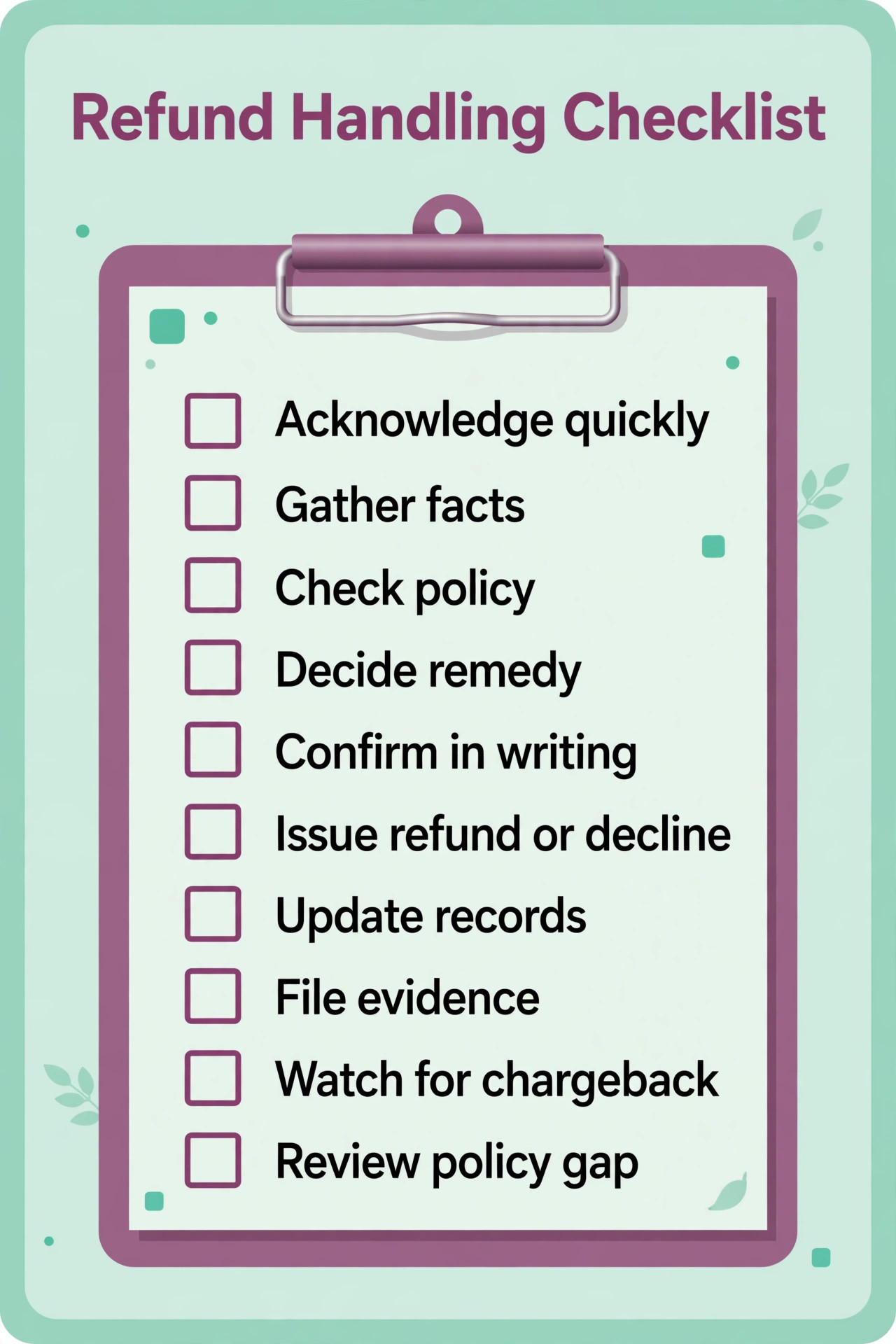
Use this checklist as the overview proof for the whole process, and work through it for every refund request, however small it seems.
1. Acknowledge quickly, without admitting fault or promising a refund, and name a reply deadline you can meet. 2. Build one documentation file, with order, policy version, messages, delivery or completion proof, and return evidence. 3. Ask what outcome the customer wants, choosing among correction, replacement, partial refund, and full refund. 4. Compare the claim with what was promised, and ask for specific proof where the gap is unclear. 5. Apply the policy tier for the offer type, and calculate the real cost of each remedy option. 6. Offer the fair remedy in writing, with amount, method, timeframe, and an acceptance step. 7. Process an accepted refund promptly to the original payment method, and confirm completion in writing. 8. For a policy based no, state the outcome and reason briefly, and offer an alternative where one exists. 9. For a chargeback threat, offer the fair remedy in writing, and note that a direct refund is faster for both sides. 10. For a formal chargeback, meet the deadline, submit relevant evidence only, and file a copy of the response.
Keep this checklist where refund requests are handled, whether that is a shared document, a support tool, or a printed sheet by the desk. A checklist that is visible during a tense conversation is far more useful than a policy filed away in another system, because it turns a pressured decision into a sequence of small, checkable steps, and that sequence is what keeps both the customer relationship and the business finances intact.
Frequently Asked Questions
How quickly should I reply to a refund request?
Reply with an acknowledgment the same business day where possible, stating that you are reviewing the issue and naming a reply deadline you can meet, for example by the next business day. That fast acknowledgment is not a decision, and it should not promise a refund or admit fault, but it prevents the customer from concluding that the request is being ignored, which is the most common reason a simple request escalates to a bank dispute or a public review. Meet the deadline you set, even if the reply is a request for specific proof.
Should I offer a partial refund or a full refund?
Follow the decision tree and your policy tier, not the pressure of the message. Offer a full refund where the product or service was faulty, wrong, late, or not as described, with proof. Offer a correction or a partial refund where part of the service was undelivered or below standard, with the calculation shown in plain language. Apply the policy outcome where the request is a change of mind with no fault, and offer an alternative such as an exchange, a credit, or a reschedule where one exists. A remedy tied to the facts is easier to explain and easier to defend than a remedy tied to the volume of the complaint.
What if a customer threatens a chargeback?
Respond calmly and in writing, ask the customer to state the issue in writing, and offer the fair remedy identified by the decision tree, with a prompt timeframe. Note that a direct refund is faster for both sides than a bank process, without threatening the customer or promising a bank outcome you cannot control. Do not withhold a fair refund to punish a threat, because that usually turns a threatened chargeback into a real one. If a formal chargeback arrives, act on its deadline immediately, using the documentation file for that order.
How do I handle a refund for a digital product or a booking?
Apply the policy tier for that offer type, tied to access or use, as the policy shown at purchase states. For a digital product, check whether access was used, whether the product matched its description, and whether a correction or replacement would solve the problem before offering a refund. For a booking, check the cancellation and rescheduling terms, the notice given, and whether a reschedule or credit is a fairer alternative than a refund. State the outcome in writing, with the reason tied to the policy and the record, rather than to a general rule about digital goods.
Can I refuse a refund request?
Yes, where the policy and the facts support a refusal, for example a change of mind outside a stated window, a product used beyond the policy terms, or a service delivered as agreed with proof. State the refusal briefly and politely in writing, pointing to the policy shown at purchase and the reason in one sentence, and offer an alternative where one exists. Keep the documentation file complete, because a polite, policy based refusal is defensible, while a refusal based on anger, sarcasm, or no stated reason is not, even when the underlying facts are on your side.
What evidence should I keep for a refund dispute?
Keep the order and payment records, the listing or agreement as the customer saw it, the refund policy version shown at purchase, all customer messages in order, delivery or completion proof, return or condition evidence, and every offer, acceptance, and refund confirmation you sent. Keep original wording intact, with dates, and do not delete or edit records after a complaint. That file is the evidence a bank, platform, or adviser will actually weigh, and a complete file built during the case is far stronger than a file reconstructed weeks later from memory.
The Verdict on Handling Refunds Well
Refunds are not a sign of failure. They are a normal part of selling, and how a business handles them tells customers more about that business than any marketing page ever will. Acknowledge quickly, check the facts, decide from policy, offer the fair remedy in writing, and file the evidence. That routine is how to handle refund requests small business owners turn from a crisis into a trust building moment, because a customer who is treated fairly in a refund is often a customer who buys again, and a customer who is treated badly in a refund is often a customer who never returns and tells others why.
Build the policy tiers now, before the next request arrives, and keep the checklist where requests are handled. Review the patterns monthly, fix the listings and processes that generate repeated requests, and keep chargeback guardrails in place at the point of sale. Done consistently, refund handling stops being a dreaded interruption, and becomes a routine that protects cash flow, reputation, and processor standing, all at the same time, which is exactly what a small business needs from a process it will use again and again.
More Reading on Stratilyze
– Best Payment Software for Service Businesses – Best Customer Feedback Software for Small Business – Cost of Stripe Payment Processing Small Business – Best CRM Software for Consultants