
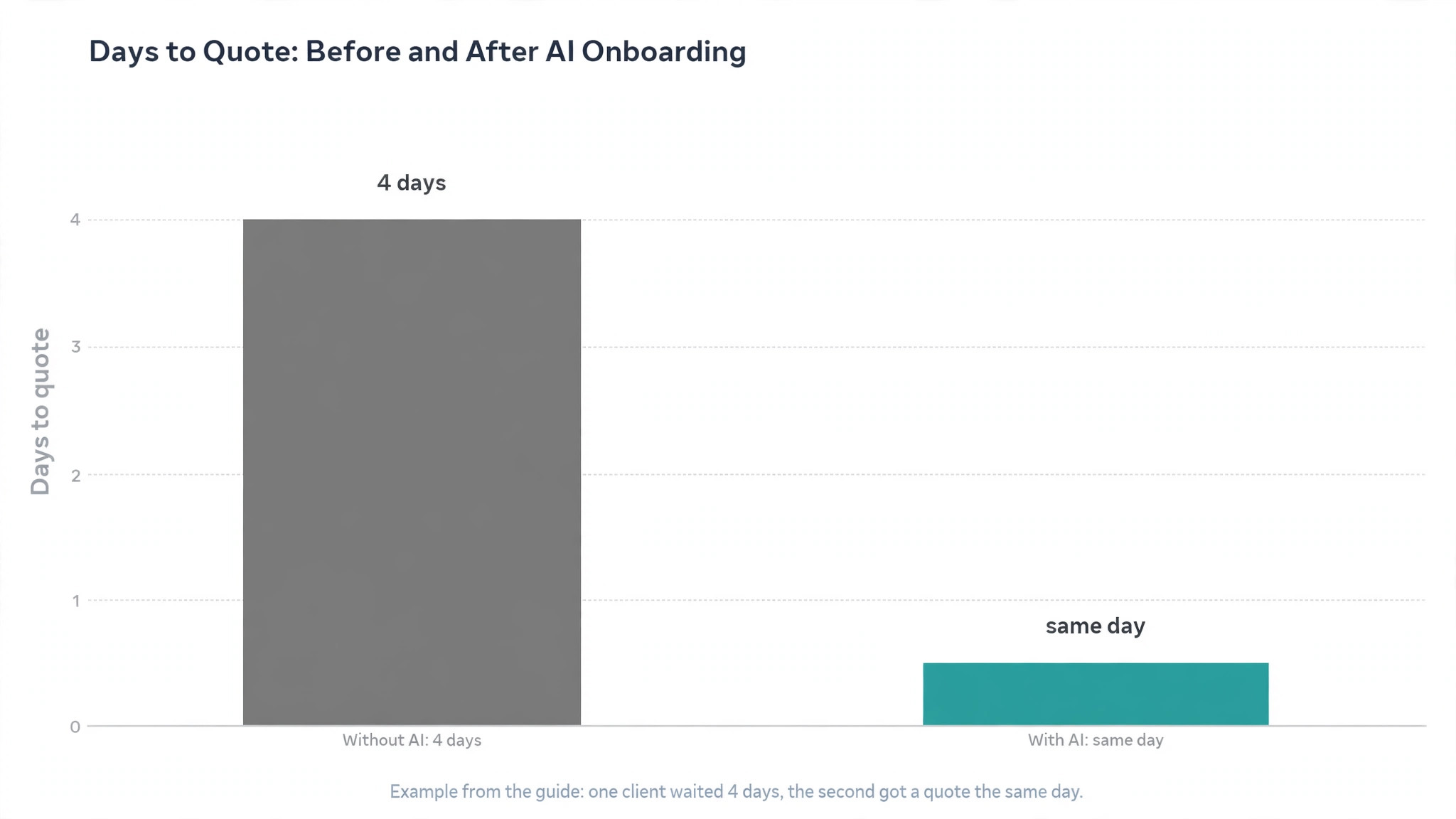
Compare two new clients. The first waits four days for a quote, sends the same document three times, and hears nothing until a renewal letter arrives a year later. The second gets a quote the same day, uploads documents through one secure link, receives a clear comparison of two policies, and gets a reminder before renewal with time to review. The difference is not effort. It is a system, and this guide shows how to use AI for insurance agency client onboarding so the second experience becomes the standard, not the exception.
Onboarding is where agencies win or lose retention, because the first two weeks set the client expectation for the whole relationship. A slow, confusing start teaches the client that service will be slow and confusing. A fast, clear start teaches the client that the agency is organised and worth staying with. AI helps most in that first window, by reading documents, pre filling forms, chasing missing items politely, and drafting comparisons that a licensed agent then checks and explains.
AI does not replace the licensed agent in onboarding, and any guide that suggests otherwise should be ignored. Coverage advice, binding decisions, and explanations of exclusions need a human who is licensed and accountable. AI handles the reading, the chasing, the drafting, and the reminding, while the agent handles judgment, advice, and the conversation that builds trust. An agency that keeps that boundary will gain speed without losing the human relationship that keeps clients renewing.
Why Onboarding Breaks in Most Agencies
Onboarding breaks for a boring reason. It involves many small tasks owned by different people, and no single person sees the whole picture. A producer takes the inquiry, a service rep requests documents, a rater enters data into a carrier system, and nobody owns the gap between steps. A client who sent a document on Monday may wait until Friday for anyone to notice it arrived, and a client who never sent a document may receive no reminder at all, because the reminder was nobody job.
Document chaos is the visible symptom. Clients send photos of documents by text, PDFs by email, and paper by post, and the agency stores them in inboxes, shared drives, and carrier portals with no single record. When a question arises later, staff search three places for one file, and sometimes find two versions with different dates. A client who experiences that chaos once will assume the agency is disorganised, even if the eventual policy was correct and well priced.
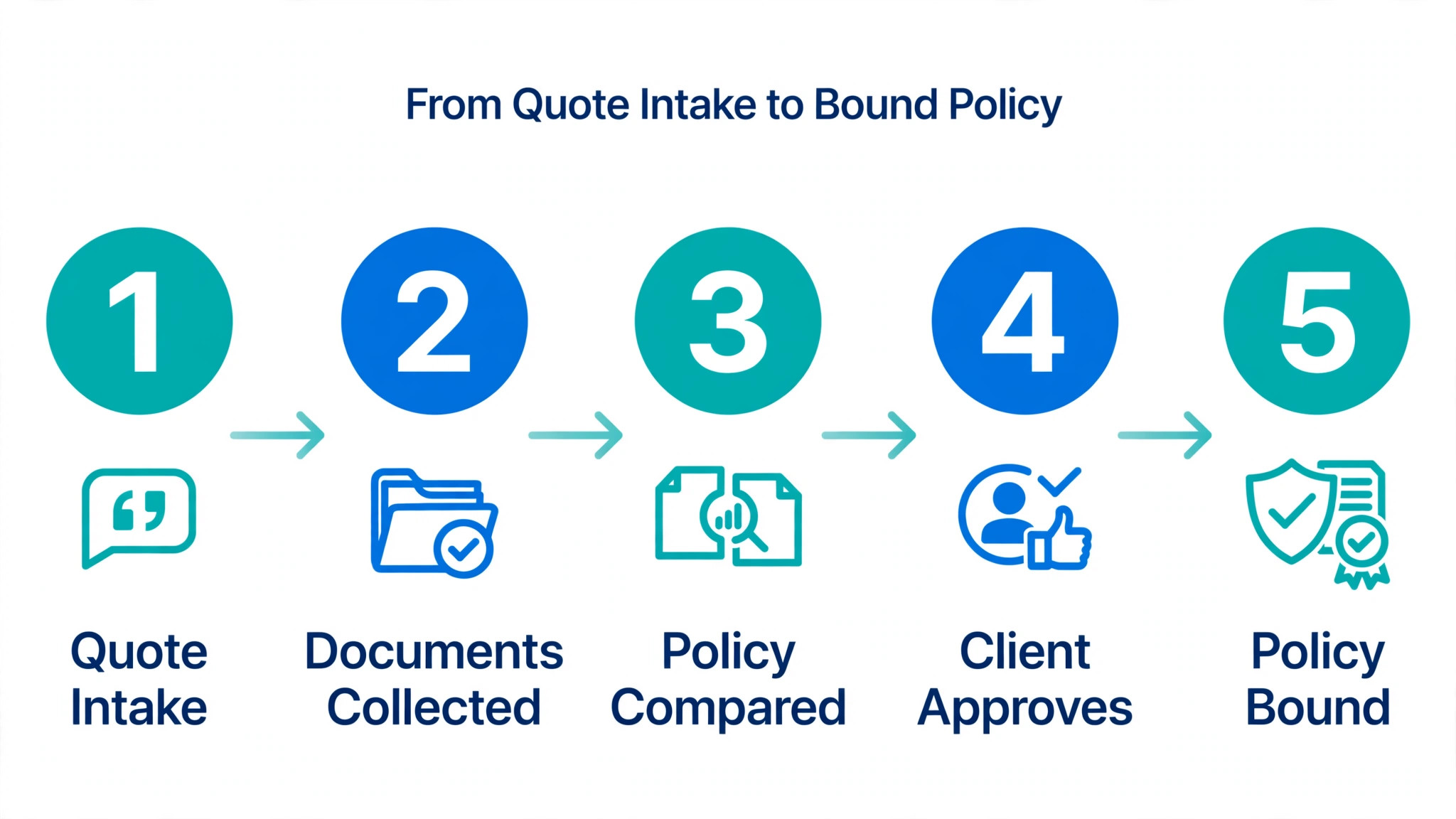
How to Use AI for Insurance Agency Client Onboarding From Quote to Bound Policy
This workflow runs from first inquiry to a bound policy and a clean renewal record. Follow it in order, and keep a human check at each decision point, because speed without checks produces fast errors rather than fast service.
- Capture the inquiry once, in one intake form, with AI pre filling what it can from the client message and any attached documents. Ask only for information needed for the quote, and explain why each item is needed. The check is that the client can complete intake in under ten minutes on a phone, without repeating information already given.
- Collect documents through one secure link, with a clear list of what is needed, why it is needed, and what a good upload looks like. AI should read each upload, confirm it matches the requested document, and flag missing or unreadable items immediately, so the client can fix the problem while still engaged. The check is that no document is requested twice, and no document sits unread for more than one working day.
- Build the quote pack from extracted data, with AI pre filling rating forms and drafting a summary of the risk for the producer to review. The producer checks the data, chooses the markets to approach, and reviews carrier appetite guidance before submission. The check is that the producer can explain every figure in the quote pack, because AI drafted it but the producer owns it.
- Compare policies on coverage, not only on price, with AI drafting a side by side comparison that surfaces limits, sub limits, exclusions, deductibles, and key conditions. The agent reviews the comparison, corrects any misreading of policy wording, and explains the differences to the client in plain language. The check is that the client can say, in their own words, what the cheaper policy leaves out.
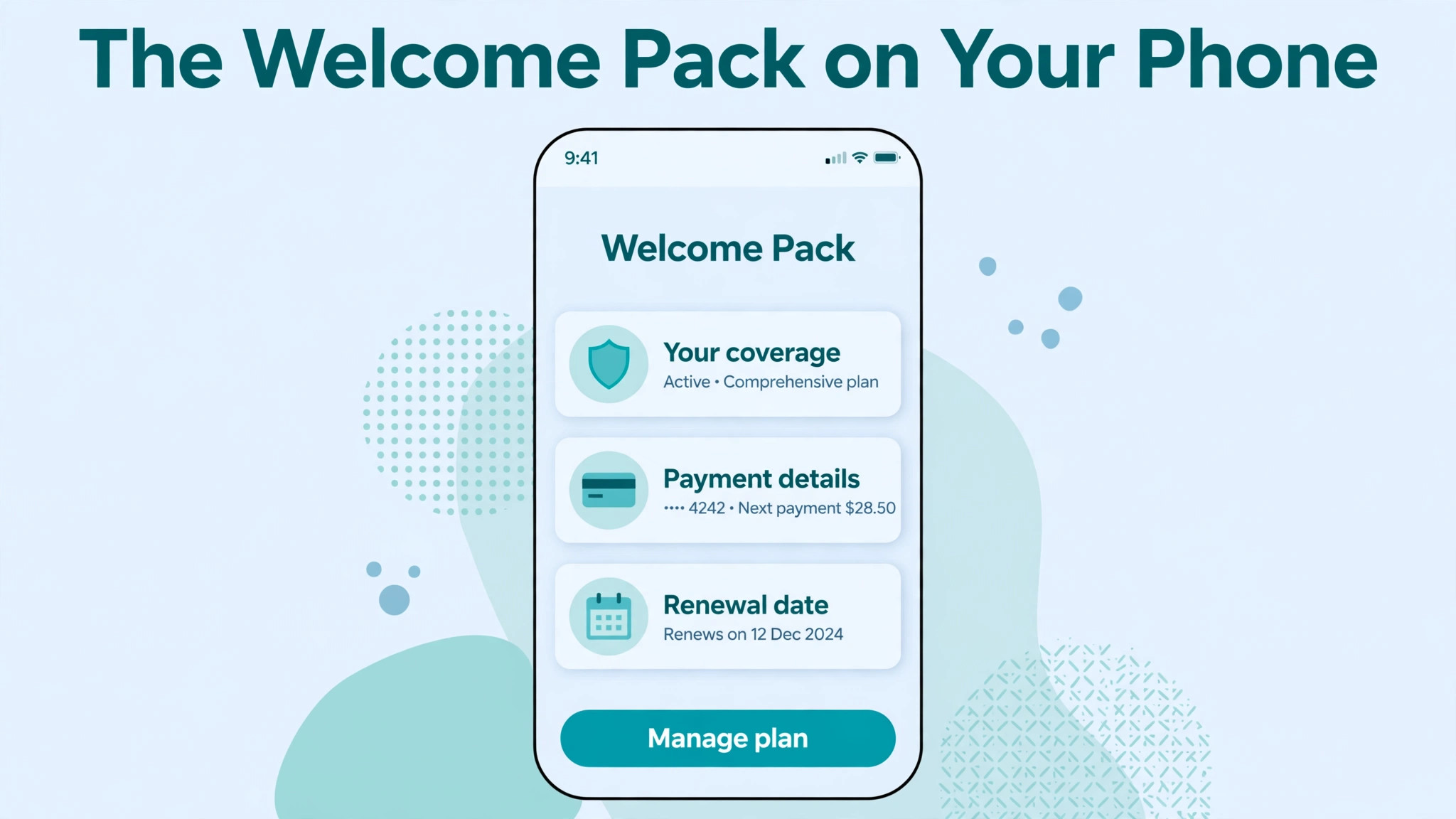
- Bind the chosen policy, confirm payment, and send a welcome pack that states coverage start, payment schedule, claim contact, and renewal date in one place. AI should draft the welcome messages and the renewal reminder schedule, while the agent makes the welcome call for larger or more complex policies. The check is that the client knows how to claim, how to pay, and when renewal happens, without searching through old emails.
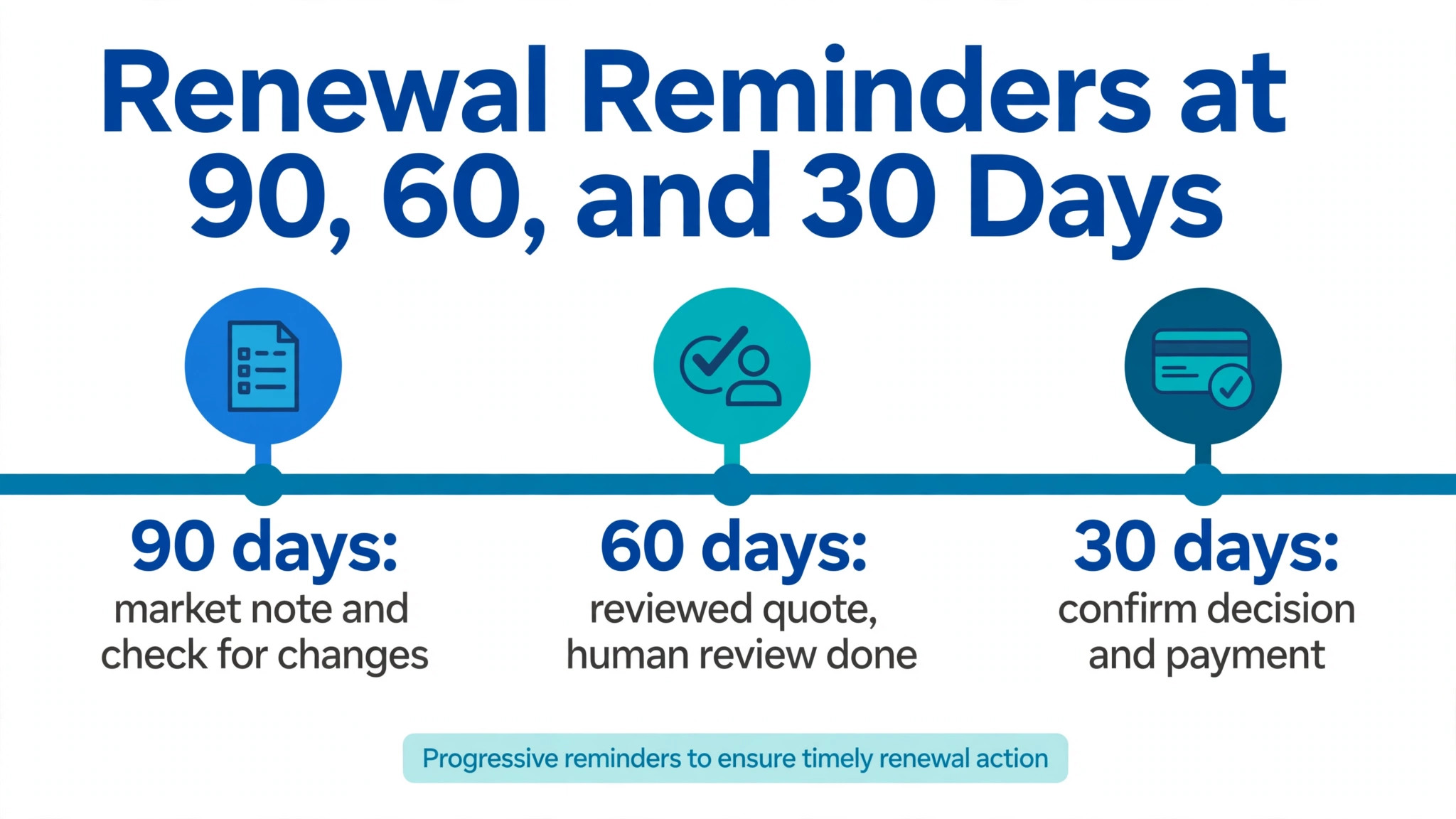
- Record the renewal plan on day one, including renewal date, preferred contact channel, coverage review triggers, and any life event that might change needs, such as a move, a new vehicle, or a business change. Set reminders at ninety, sixty, and thirty days before renewal, with a human review task at sixty days. The check is that a new staff member could pick up the file in a year and run the renewal without asking the client to repeat their history.
Quote Intake That Clients Finish on a Phone
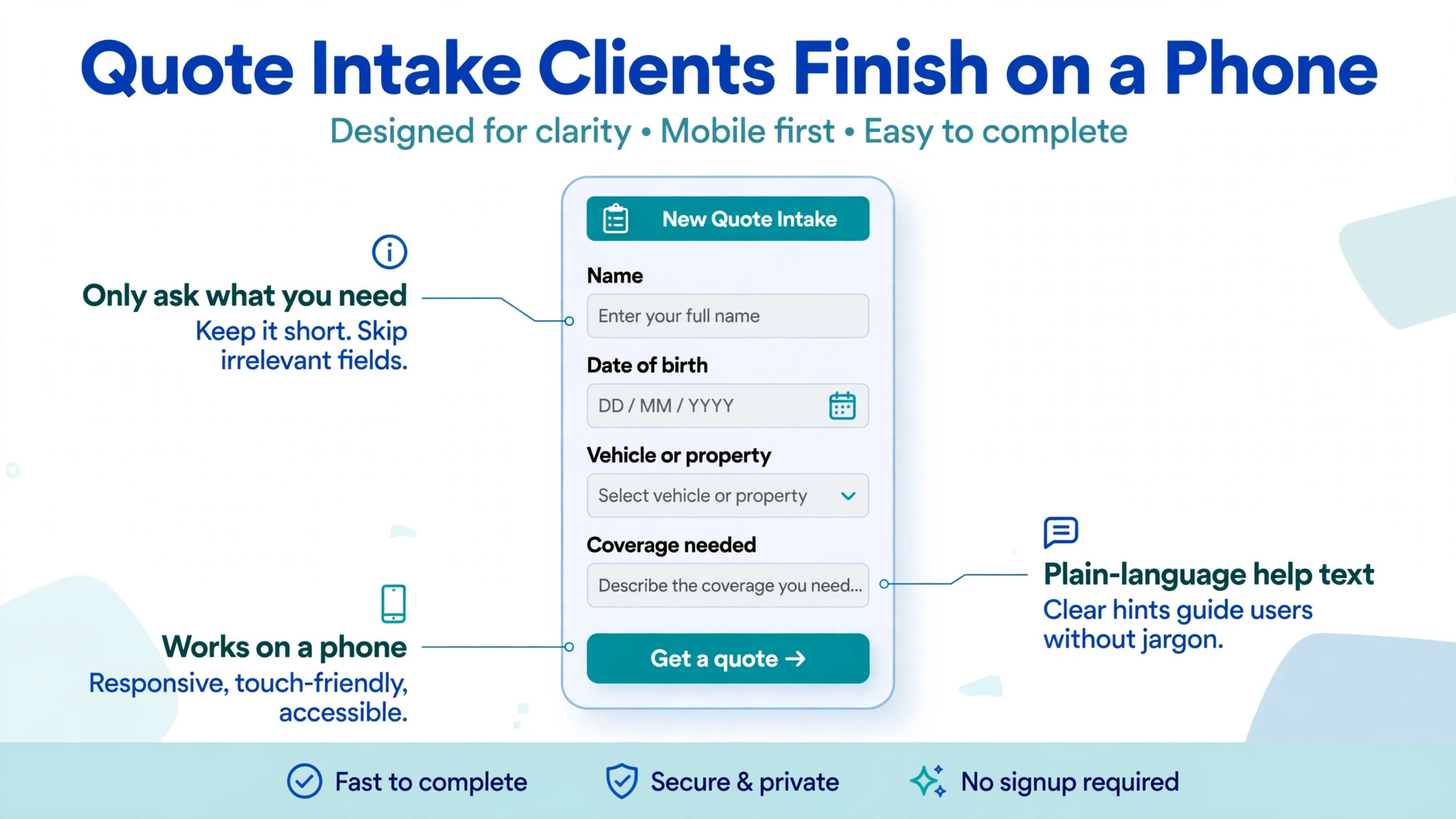
Intake forms fail when they ask for everything at once. A client who opens a form with forty fields on a phone will abandon it, not because they are uninterested, but because the task feels too large. Split intake into a short first step and a fuller second step. The first step captures contact details, the type of cover needed, and the key risk facts for a quote. The second step, sent after the first is complete, captures the remaining detail. Completion rates rise when the first step feels small.
AI improves intake by pre filling and by asking smarter questions. If a client uploads a current policy declaration page, AI can extract carrier, limits, renewal date, and vehicle or property details, and pre fill the form for the client to confirm. If a client mentions a business type, AI can surface the follow up questions relevant to that type, rather than showing every question to every client. Pre filling saves the client time, and it saves the agency retyping, provided a human checks the extracted figures before rating. Teams that use AI for insurance agency client onboarding well treat that check as mandatory, not optional.
Test intake with real clients, not only with staff. Staff know what the form means, so they complete it smoothly. A real client will stumble on jargon, on a field that rejects a valid format, or on a question that assumes knowledge they do not have. Watch five real clients complete intake, note every stumble, and fix the top three before launch. That small test improves completion more than any redesign done in a meeting room.
Document Collection Without Chasing the Same File Twice
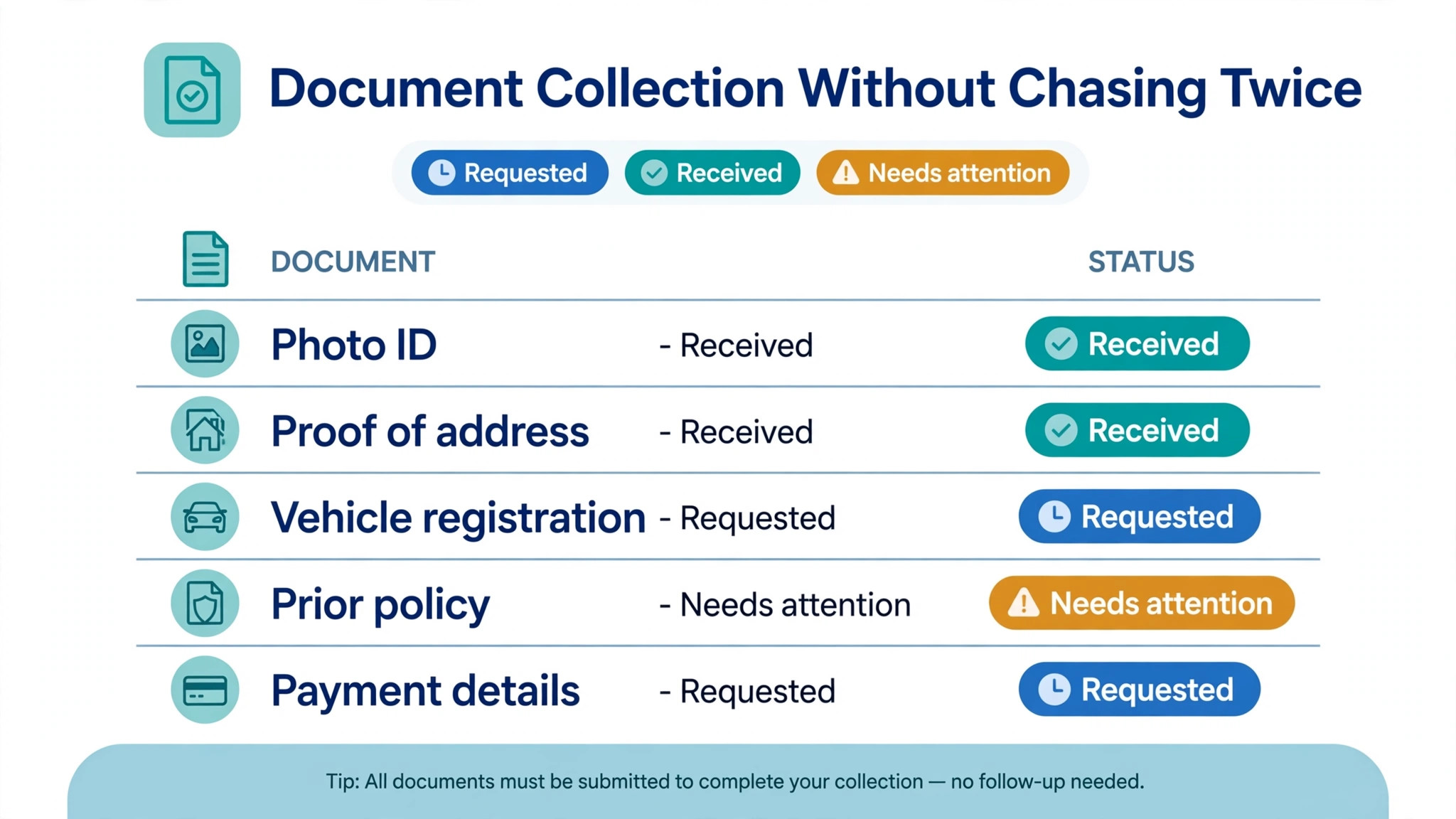
Document collection works when the client sees one list, one link, and one status. Send a single secure upload link with a checklist that shows each document as requested, received, or needing attention. Update the checklist automatically when a document arrives, so the client can see progress without calling to ask. A client who can see that three of four documents are received will send the fourth without a reminder. A client who cannot see progress will assume nothing arrived and will send everything again.
AI reading should happen at upload, not at the end of the week. When a document arrives, AI should check that it is the right type, that it is readable, and that key fields match the intake record. If a photo is blurred, if a page is missing, or if a name does not match, the system should tell the client immediately, with a clear instruction on how to fix it. Immediate feedback feels helpful. A system built to use AI for insurance agency client onboarding should flag a bad upload at once, not a week later. A request a week later for a document already sent feels careless.
Security and privacy need the same care as speed. Documents contain addresses, dates of birth, financial details, and health hints, so uploads should go through a secure link, not through ordinary text or personal email where possible. Tell clients how documents are stored, who can access them, and how long they are kept, in plain language. Review what data each AI tool accesses and retains, and choose tools that do not train models on client documents without clear permission. A fast system that is loose with data will cost trust that took years to build.
Policy Comparison Clients Can Actually Understand
Price comparison is easy and misleading. A cheaper policy that excludes the risk the client actually faces is not a saving, it is a future claim denial. AI helps comparison most by reading policy wording and surfacing differences that a human scanning two long documents might miss, such as a sub limit on a key item, a broader business interruption trigger in one policy, or a different deductible structure. The agent role is to verify those differences and explain them, not to accept an AI summary without reading the wording.
Build comparisons around the client risk, not around the policy table of contents. Start with what the client owns, does, or worries about, then show how each policy treats those items. A homeowner who worries about flooding needs to see flood treatment first, not on page eight. A small business that relies on one supplier needs to see supply chain and interruption treatment first. A comparison organised by client risk will be read. Agencies that use AI for insurance agency client onboarding well start every comparison from the client risk, not from the document order. A comparison organised by document order will be skimmed and forgotten.
Use plain language in the comparison the client receives, with the policy wording available for reference. AI can draft the plain language summary, but the agent must check it against the actual wording, because a summary that softens an exclusion misleads the client and creates a complaint later. Keep the summary short, show the key differences in a table, and end with a clear recommendation and a reason. A client who understands the trade off will accept a higher price for better cover. A client who does not understand it will choose the cheapest option and blame the agency later.
| Comparison item | Policy A example | Policy B example |
|---|---|---|
| Main limit | Higher limit, higher premium | Lower limit, lower premium |
| Key sub limit | Sub limit may cap one risk | No sub limit on that risk |
| Deductible | Fixed amount per claim | Percentage based deductible |
| Exclusion to note | One named exclusion applies | Exclusion wording differs |
Renewal Reminders That Prevent Lapses and Surprises
Renewal work starts at onboarding, not ninety days before renewal. The onboarding record should capture the renewal date, the payment method, the preferred contact channel, and any trigger that should prompt an early review. AI can then watch those triggers, draft reminder messages, and flag clients whose circumstances changed, such as a move or a new vehicle, for a human review before renewal. A renewal that starts with a review will retain better than a renewal that starts with a price letter. A plan to use AI for insurance agency client onboarding should record that renewal review on day one.
Send reminders in a sequence that gives the client time to act. A first message at ninety days can share a market note and ask whether anything changed. A second message at sixty days should include a reviewed quote or a comparison, with a human review already done. A final message at thirty days should confirm the decision, the payment, and the start date, with a clear action if the client wants to change cover. A single reminder a week before renewal leaves no time for a thoughtful decision, and a client who feels rushed will shop elsewhere.
Price increases need a human explanation, not an automated letter. When a renewal price rises, AI can draft the explanation, pulling the reasons such as claims history, market movement, or a change in risk, but the agent should review the draft and make the call for larger increases. A client who hears why a price rose, and what options exist to reduce it, is more likely to stay than a client who receives a higher bill with no context. Retention is often won in that single conversation.
Failed payments and lapses need a separate, faster track. AI should flag a failed payment the day it happens, send a polite message with a payment link, and alert a human if payment is not restored within a few days. A lapse that is caught in days can be fixed. A lapse discovered at claim time cannot. Build the failed payment track into onboarding, by confirming payment details and a backup contact method on day one, so the agency can reach the client quickly when it matters.
Claims First Contact, the Moment Onboarding Is Tested
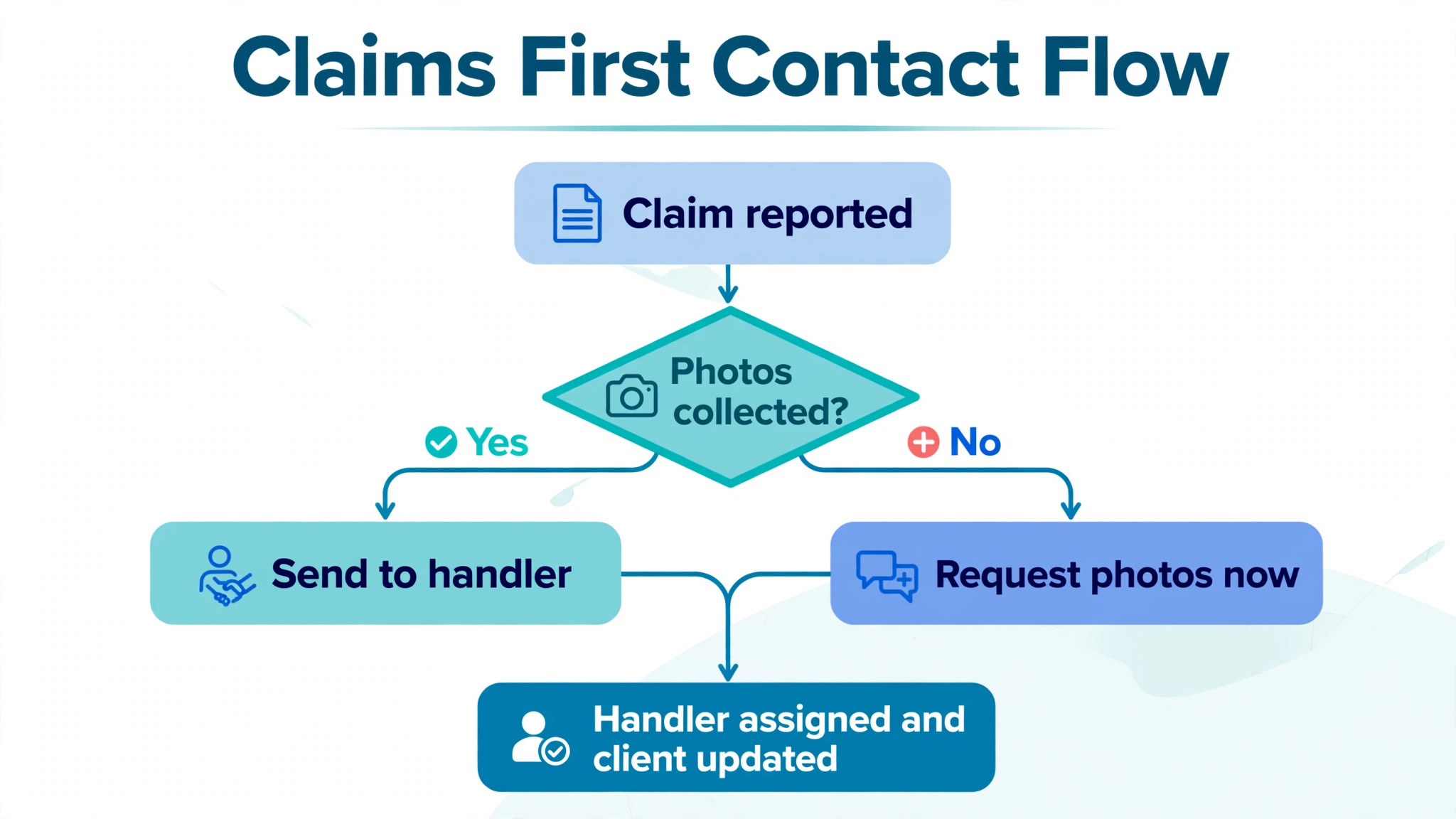
Onboarding is tested at first claim, not at binding. A client who suffers a loss will judge the agency by how quickly it responds, how clearly it explains the next steps, and how little it asks the client to repeat. AI can help that moment by providing a clear first contact checklist, collecting photos and documents through a secure link, and drafting a summary for the claims handler, while a human makes the reassuring call. A client in distress needs a human voice first, and AI should support that call, not replace it.
Build a claims first contact checklist during onboarding, and give it to the client in the welcome pack. The checklist should state who to call, what photos to take, what documents to keep, and what not to do before an assessor visits, in plain language. AI can personalise the checklist by policy type, so a motor client receives different guidance from a property client, and a business client receives guidance on keeping trading records. A checklist prepared in calm onboarding will be used in a stressful claim, while a checklist invented during a claim will be incomplete.
Record the claim contact in the client file, with the date, the handler, and the next steps agreed. That record helps renewal, because it shows how the agency behaved when it mattered, and it helps future service, because a new staff member can see the history without asking the client to retell a difficult story. A claim handled well often strengthens retention more than a smooth renewal, because the client learns the policy was worth buying.
Compliance, Licensing, and Human Oversight
Insurance is regulated, and AI onboarding must respect that regulation from the first message. Only licensed agents should give coverage advice, recommend a policy, or explain exclusions as advice, while AI can draft, summarise, and organise for review. Set that boundary in writing, train staff on it, and build it into tool permissions, so AI cannot send advice directly to a client without a licensed review where advice is involved. A system that blurs that boundary creates regulatory risk that no speed gain justifies.
Data protection is equally central. Client documents and messages contain sensitive personal and financial information, and the agency must know where that data goes, how long each tool retains it, and whether it is used to train models. Choose tools with clear data terms, limit access to staff who need it, and delete data when it is no longer needed under the applicable rules. Tell clients in plain language how their data is used, and keep a record of consent where consent is required. Agencies that use AI for insurance agency client onboarding well treat data terms as a buying criterion, not as small print.
Audit AI outputs regularly, because AI can misread a document, soften an exclusion, or invent a detail that looks plausible. Sample AI extractions weekly, compare them with source documents, and track error types so the team can fix prompts, improve document guidance, or add a human check where errors cluster. An audit that finds no errors is suspicious, not reassuring, because every system makes some errors. The goal is to catch errors before they reach a quote or a client, not to pretend they do not happen.
Keep a human in the loop for exceptions. A risk that does not fit standard appetite, a document that does not match intake, or a client with complex needs should route to a senior producer, not to an automated approval. AI should flag exceptions clearly, with the reason it flagged them, so the human can decide quickly. A system that forces exceptions through an automated path will produce wrong quotes and frustrated clients, while a system that routes exceptions well will earn staff trust in the automation for routine cases.
Tools, Costs, and a Pilot That Proves Value
Tool choice should follow the agency management system, not the other way round. The best AI tool for onboarding is usually the one that integrates with the existing CRM or agency system, logs every touch, and respects its stages, because a standalone tool that messages clients outside the system creates duplicate histories. Test integration with a real file, from intake to renewal record, before buying on the strength of a demo. Any tool chosen to use AI for insurance agency client onboarding must pass that real file test. A demo with perfect documents will hide the problems that real client uploads create.
Costs vary by agency size, from a few hundred dollars a month for document reading and intake add ons to larger platform fees for full onboarding automation, so confirm on the vendor page before you buy and budget for staff training and audit time as well as the subscription. Judge the pilot on quote turnaround time, document completion rate, and renewal retention, not on how many documents AI read. A tool that reads many documents but does not shorten turnaround or improve retention has not earned its price.
Run a pilot with one product line and one team, for sixty to ninety days, with clear baseline numbers from before the pilot. Measure days from inquiry to quote, days from quote to bound policy, percentage of clients who complete document collection without a second chase, and renewal retention for the pilot group. Review weekly, fix copy and prompts based on real client behaviour, and expand only when the pilot numbers beat the baseline without an increase in errors. A pilot that expands on enthusiasm alone will scale its errors as well as its speed.
Training for the pilot should focus on checking AI work, not only on using the tool. Staff need to know how to spot a misread document, how to correct an AI draft without breaking the audit trail, and when to route an exception to a senior producer. A team trained only to press approve will approve errors. A team trained to check will trust the system more, because it will see errors caught early and fixed before they reach clients.
Mistakes That Turn AI Onboarding Into Extra Work
The first mistake is automating a broken process instead of fixing it first. If intake asks for too much, if document requests are unclear, or if no one owns the gap between steps, AI will simply perform the broken process faster. Fix the process on paper first, with one owner per step and one list per client, then automate the fixed process. Automation applied to a clear process saves time. Automation applied to chaos creates faster chaos.
The second mistake is letting AI send advice without review. A summary that softens an exclusion, a recommendation based on a misread limit, or a renewal message that promises cover it does not provide will create complaints and regulatory trouble. Keep licensed review on advice, on comparisons, and on renewal recommendations, and treat AI drafts as drafts until reviewed. That review takes minutes and prevents problems that take weeks to resolve.
The third mistake is chasing documents with repeated generic reminders. A client who receives the same reminder three times without knowing which document is missing, or why the uploaded document was rejected, will stop responding. Make reminders specific, show the checklist status, and explain the fix for a rejected upload in plain language. Specific reminders feel helpful. Generic reminders feel like spam, and clients treat them that way.
The fourth mistake is forgetting the renewal record at onboarding. An agency that binds a policy without recording renewal preferences, payment details, and review triggers will struggle a year later, no matter how fast onboarding felt. Record the renewal plan on day one, set the reminder sequence, and assign a renewal owner. That single habit turns a fast onboarding into a retained client, which is the point of the whole exercise.
A 30 Day Rollout Plan for a Small Agency
Week one is process mapping. List every onboarding step, name the owner for each step, and agree the single client list and single upload link that will replace scattered emails. Week two is tool setup and testing with real documents, including blurred photos, missing pages, and mismatched names, so the team sees how AI handles imperfect inputs. Week three is a pilot with one product line and a small group of new clients, with daily review of AI outputs. Week four is review, prompt fixes, and a decision on expansion based on turnaround and completion numbers.
That rollout is deliberately slow for a technology project, because onboarding touches money, regulation, and trust. A faster rollout that skips testing with real documents will discover problems on live clients, which is the worst place to learn. A thirty day rollout with a pilot group gives the team confidence, gives clients a better experience from day one of expansion, and gives the agency numbers to justify the subscription. Speed after rollout matters more than speed to rollout.
Measure the rollout with the same metrics as the pilot, and share the results with the whole team. Staff who see turnaround fall and completion rise will adopt the system willingly. Staff who only hear that a new tool has arrived will resist it, especially if early errors were not fixed. Transparency about errors, fixes, and results builds the trust that makes automation stick, while silence about problems builds suspicion that it is hiding them.
Verdict on AI Onboarding for an Agency
AI onboarding earns its place for an agency that loses time to document chasing, retyping, and renewal surprises, and that is most small agencies. The gain comes from faster intake, cleaner document collection, clearer comparisons, and renewal records made on day one, all checked by licensed humans. An agency with a tiny client flow and a simple product range may not need a full platform, and a few templates plus a secure upload link may be enough. The right scale depends on volume, complexity, and error rate, not on enthusiasm for new tools.
The test is simple. If onboarding currently takes days, documents go missing, and renewals feel like rescues, AI applied to a fixed process will help measurably within ninety days. If onboarding already runs smoothly with a small team and few errors, the gain will be smaller, and the agency should pilot carefully before committing. Either way, keep the human at the centre of advice, audit the AI work weekly, and judge the system on retained clients, not on messages sent. That discipline turns a technology purchase into a better client experience.
Frequently Asked Questions About AI Insurance Onboarding
Can AI bind a policy on its own?
No, and it should not. AI can draft, pre fill, compare, and remind, while a licensed agent reviews advice, confirms coverage, and owns the binding decision. Keep that boundary in writing and in tool permissions, so AI outputs reach clients as advice only after licensed review. A system that binds without human ownership creates regulatory and trust risk.
What documents should clients upload at onboarding?
That depends on the product, but a typical list includes identification, current policy details where available, property or vehicle details, and any prior claims information the carrier requires. Send one secure link with a checklist showing each item as requested, received, or needing attention, and check uploads immediately so a blurred or missing page can be fixed while the client is still engaged.
How does AI compare policies without misleading the client?
AI drafts a comparison by reading policy wording and surfacing limits, sub limits, exclusions, and deductibles, but the agent must verify the draft against the actual wording before the client sees it as advice. Organise the comparison by client risk, use plain language, show the key differences in a table, and record the comparison and the client choice in the file.
Will AI reminders annoy clients before renewal?
Reminders annoy clients when they are generic, late, or repeated without progress. A sequence at ninety, sixty, and thirty days, with a reviewed quote at sixty days and a clear action at thirty days, gives clients time to decide. Make each message specific to the client situation, and have a human explain any price increase rather than sending an automated price letter alone.
What should happen at a first claim after AI onboarding?
A human should call promptly, while AI supports the call by collecting photos and documents through a secure link and drafting a summary for the handler. Give the client a claims checklist in the welcome pack, so they know what to photograph, what to keep, and who to call. Record the claim contact and next steps in the file, so future service does not ask the client to retell a difficult story.
How long does it take to see value from AI onboarding?
A pilot with one product line usually shows turnaround and document completion changes within sixty to ninety days, if the process was fixed before automation. Measure days from inquiry to quote, days from quote to bound policy, and renewal retention, and expand only when pilot numbers beat the baseline without an increase in errors. A rollout that skips testing with real documents will take longer, because it fixes problems on live clients.
More Reading on Stratilyze
– Best CRM for Insurance Agents at a Small Business – Best AI Tools for Insurance Agents – Best CRM Software for Small Business – Best Client Management Software for Accountants – Best Proposal Software for Freelancers – Client Welcome Packs That Prevent Renewal Surprises, plain text title, link not verified at writing time – Renewal Reviews That Clients Actually Attend, plain text title, link not verified at writing time