

The United States irrigation services market generates about 12.8 billion dollars a year, with about 85 percent of revenue concentrated in residential and commercial maintenance contracts rather than new installs, according to a 2026 tools guide for irrigation companies. That single fact explains why scheduling matters more than selling in this trade. When you use AI for irrigation company service scheduling, you are protecting the recurring work that already pays the bills, by getting spring startups, summer repairs, and fall winterisations done on time, in tight routes, without dropping a single property.
Seasonality is the challenge no generic calendar handles well. Demand explodes for a few weeks in spring, settles into repair work in summer, and explodes again for winterisation in fall, while winter brings planning, backflow paperwork, and equipment repair. A company that books those surges first come, first served will drown in phone calls, drive scattered routes, and miss the freeze deadline for properties at the end of the list.
A company that plans by season, by neighbourhood, and by zone will finish each surge with customers already booked for the next one. That planning habit is central when you use AI for irrigation company service scheduling across a full year.
This guide follows the irrigation year in order, with the workflow, the parts check, and the reminder sequences that keep each season on track. Tool prices are starting ranges from vendor listings at writing time, so confirm on the vendor page before you buy, because irrigation platforms price by user count, credit bundles, and add on answering services that change the real monthly cost.
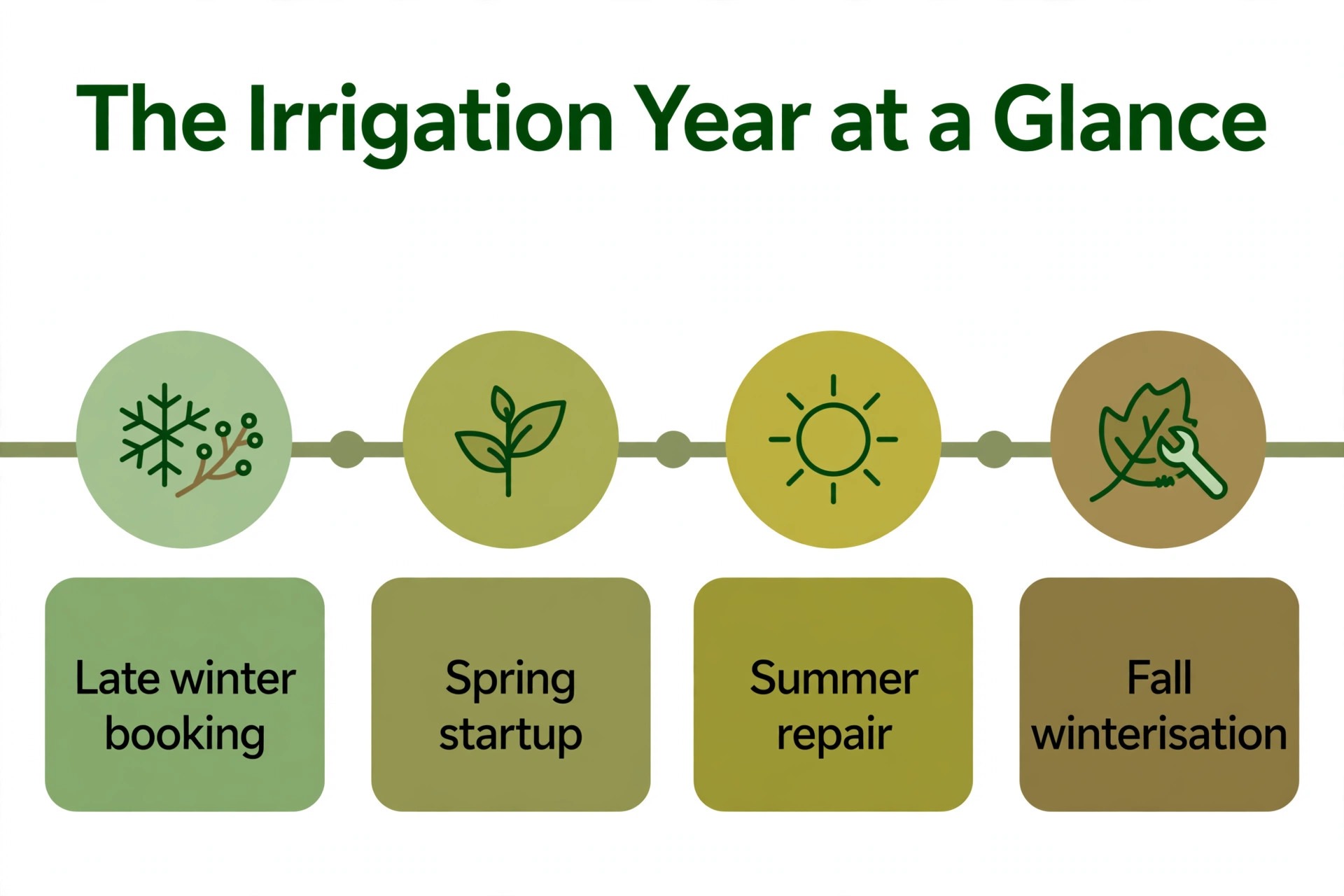
The Irrigation Year at a Glance
Think of the year as four campaigns, not as 52 identical weeks. Late winter is the booking campaign, when startup and winterisation lists are built, routes are drafted by neighbourhood, and reminder messages go out before competitors send their first email. Spring is the startup campaign, when crews open systems, test zones, adjust heads, and fix winter damage, often handling 40 to 60 properties a week at peak in vendor examples.
Summer is the repair and adjustment campaign, when broken heads, leaks, and controller problems arrive daily alongside mid season checks. Fall is the winterisation campaign, when every system on the list must be blown out before the first hard freeze, in route order, with backflow tests fitted in where due.
Each campaign needs its own job templates, its own message templates, and its own route rules, because a spring startup visit and a fall blowout visit are not interchangeable jobs. A startup needs zone by zone testing and adjustment time, while a blowout needs compressor time, hose bib checks, and backflow handling. A repair visit needs diagnostic time and a parts decision, while a backflow test needs certification paperwork. Templates that encode those differences prevent the classic error of booking every visit as a generic one hour slot and then watching the day fall apart.
Staffing follows the same seasonal shape. Spring and fall need more crews, longer days, and weekend capacity, while winter needs fewer field crews and more office time for renewals, equipment repair, and training. AI scheduling helps here by forecasting crew demand from last year bookings, by property count and by zone count, rather than by gut feel. A forecast that says the third week of March needs four crews, not three, is worth more than any hiring advert placed in a panic in the second week of March.
| Season | Main work | Scheduling risk | What saves the season |
|---|---|---|---|
| Late winter | Build startup and winterisation lists | Late booking, scattered routes | Early campaigns by neighbourhood |
| Spring | Startups, installs, backflow tests | Surge overload, missed zones | Zone templates and dense routes |
| Summer | Repairs, adjustments, mid season checks | Emergency calls breaking routes | Protected emergency slots |
| Fall | Winterisation blowouts, backflow tests | Freeze deadline, unfinished list | Route order by freeze risk |
The year view also sets customer expectations honestly. A customer who understands that startups run in neighbourhood order in March and April will accept a two week window, while a customer promised an exact day in peak season will be disappointed when weather or a repair pushes the route. Publish the seasonal windows early, explain the neighbourhood order, and let customers pick a preferred week inside the window rather than a day the route cannot promise.
How to Use AI for Irrigation Company Service Scheduling
To use AI for irrigation company service scheduling well, start with the property record, because every later decision depends on it. A complete record holds the address, the zone map, the controller type, valve locations, head types, backflow device details, problem zones from last year, and notes carried forward year to year. Companies that carry notes forward, meaning valve locations and controller type survive from one season to the next, save diagnostic time on every visit and avoid relearning the same property every spring.
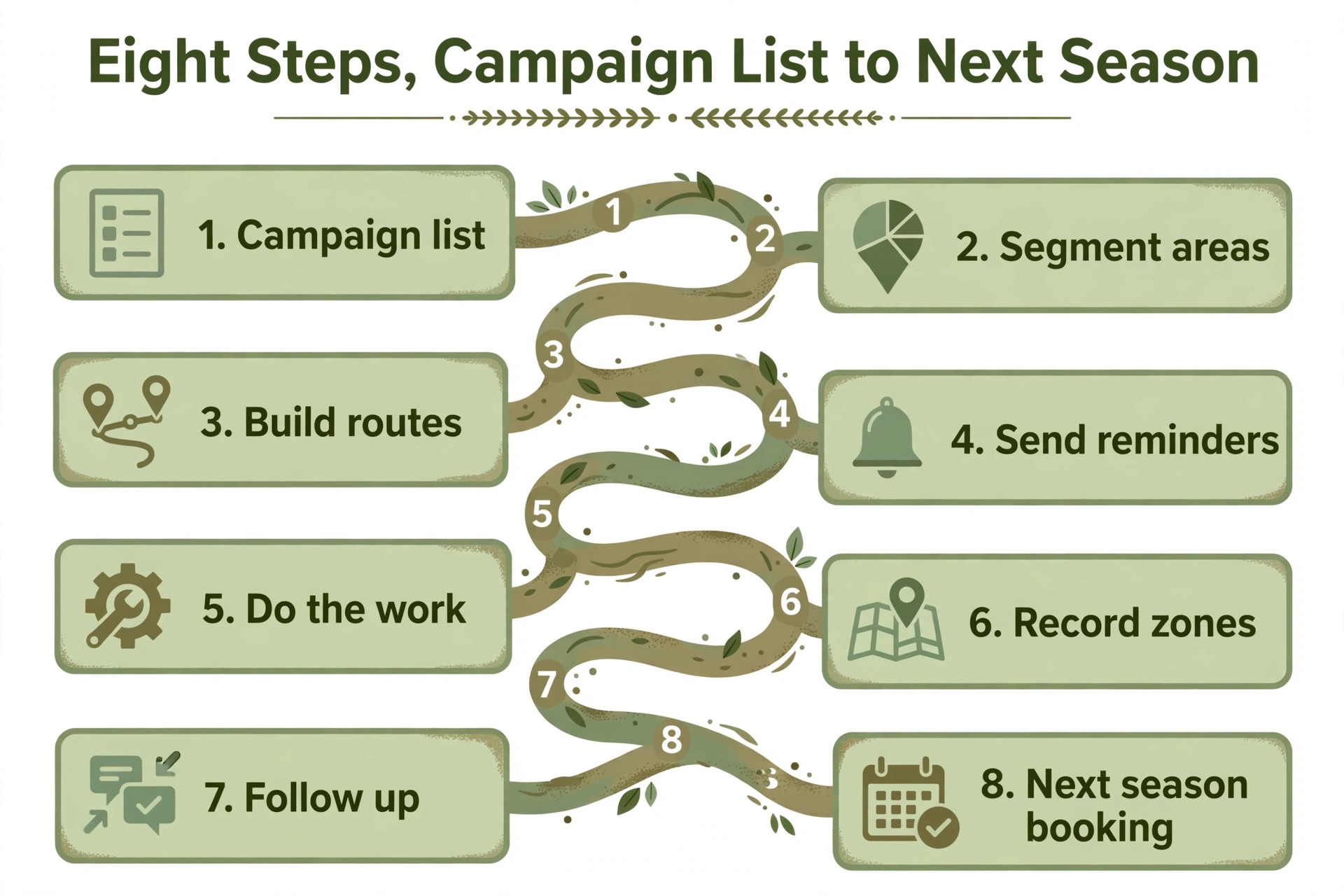
The seasonal workflow runs in eight steps, repeated for each campaign. First, build the campaign list from active contracts, past customers, and new enquiries, and remove properties that cancelled or moved. Second, segment the list by neighbourhood and by service type, so routes stay dense and crews carry the right equipment. Third, open booking windows by neighbourhood in order, with messages that offer a week window rather than a single day. Fourth, confirm each booking with service type, zone count, access notes, and any parts flagged from last year.
Fifth, build daily routes by drive time, with fixed appointments as anchors. Teams that use AI for irrigation company service scheduling well keep those anchors visible to crews and customers alike. Sixth, run the job with a zone checklist and photos. Seventh, invoice and record what changed, including parts used and zones that need follow up. Eighth, book the next seasonal touch before the crew leaves the property, or trigger the reminder that will.
Keep a human approving the campaign order and the route exceptions, especially in spring and fall. AI can draft the neighbourhood order by density and freeze risk, but a manager who knows that one estate has locked gates on certain days, or that one commercial site needs weekend only access, must be able to adjust the order without fighting the system. The best setup is AI drafted, human approved, with every override logged and the reason visible, so next year plan learns from this year exceptions.
Seasonal Startup Windows That Do Not Collapse
Spring startup windows fail when they are built backwards, meaning the company promises days before it knows crew capacity, weather risk, and property count. Build them forwards instead. Count properties on the startup list, multiply by realistic visit duration including travel, divide by crew days available in the window, and check whether the maths fits. If it does not fit, the answer is more crews, longer days, or an earlier window, not a hope that crews will work faster under pressure. A window that fits on paper is the only window worth publishing.
Weather is the variable that breaks even a well built window, and operators who use AI for irrigation company service scheduling should let the system shift downstream work automatically. Rain delays push installs by days, and a cold snap can pause startups entirely, so the schedule must shift downstream work automatically when a day is lost, rather than leaving every later booking silently late. Customers should get a revised window message the same day a delay hits, with the new week and the reason in plain language. Silence during a weather delay is what turns a loyal customer into a caller for a rival, because they assume they were forgotten.
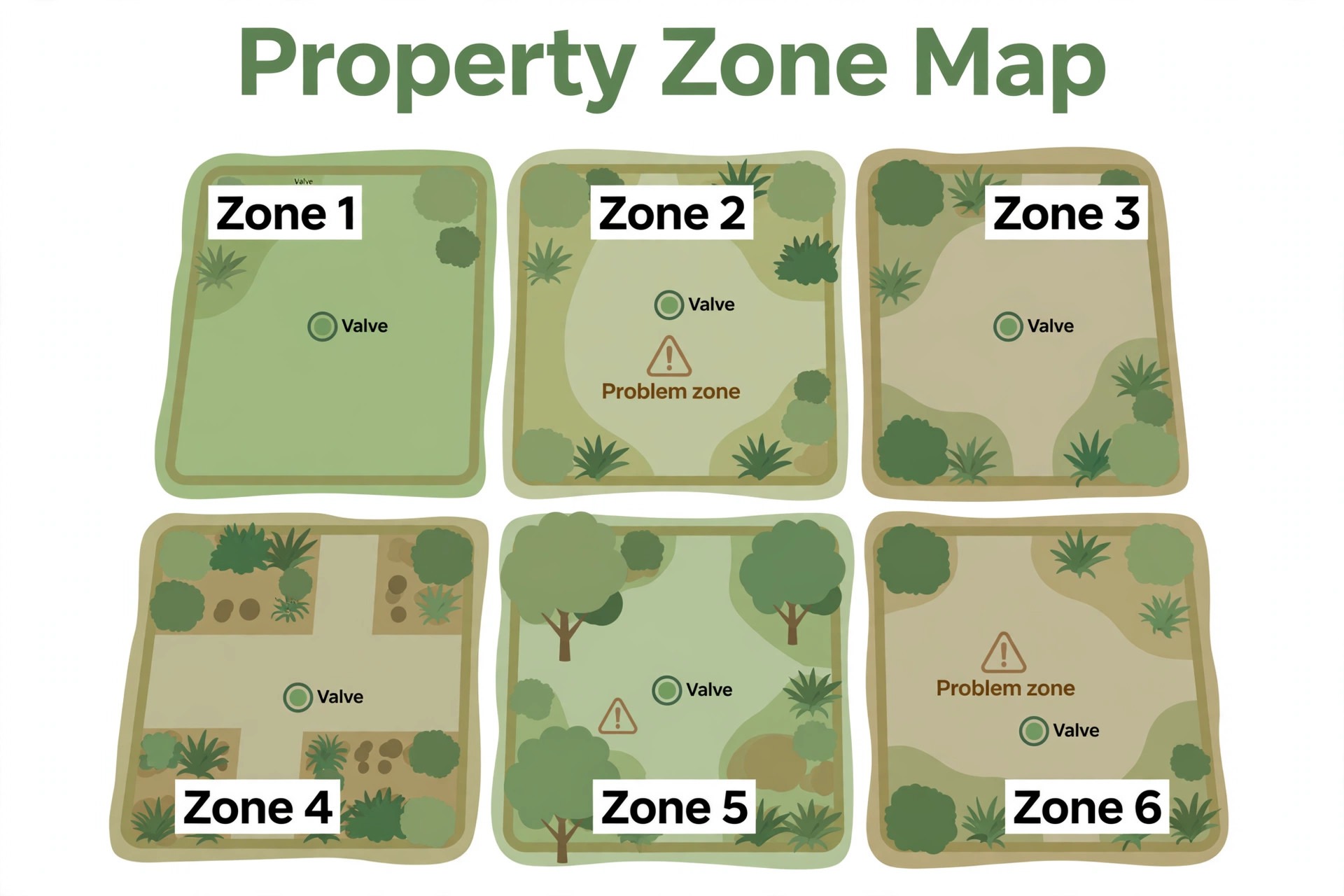
Zone mapping is what makes a startup visit efficient instead of exploratory. A zone map shows each zone, its head type, its coverage area, and its known problems, so the technician tests in order, adjusts heads, notes leaks, and moves on, instead of hunting for valves and guessing which zone feeds which lawn area. Satellite measurement tools can help build the initial map by estimating zone count and layout before the first visit, and the technician then corrects the map on site. That corrected map becomes the property asset for every future season.
Startup visits should end with three outputs, every time. A zone by zone result, meaning working, adjusted, or needs repair, with photos of any damage. A parts list for repairs, with prices and a booking offer for the fix. And a booked or reminded next touch, meaning a mid season check or a fall winterisation window. A startup that ends with only a ticked job sheet wastes the most valuable moment of the year, which is a technician standing in front of a customer system that will need attention again in six months.
Zone Mapping, Parts Checks and Fewer Return Visits
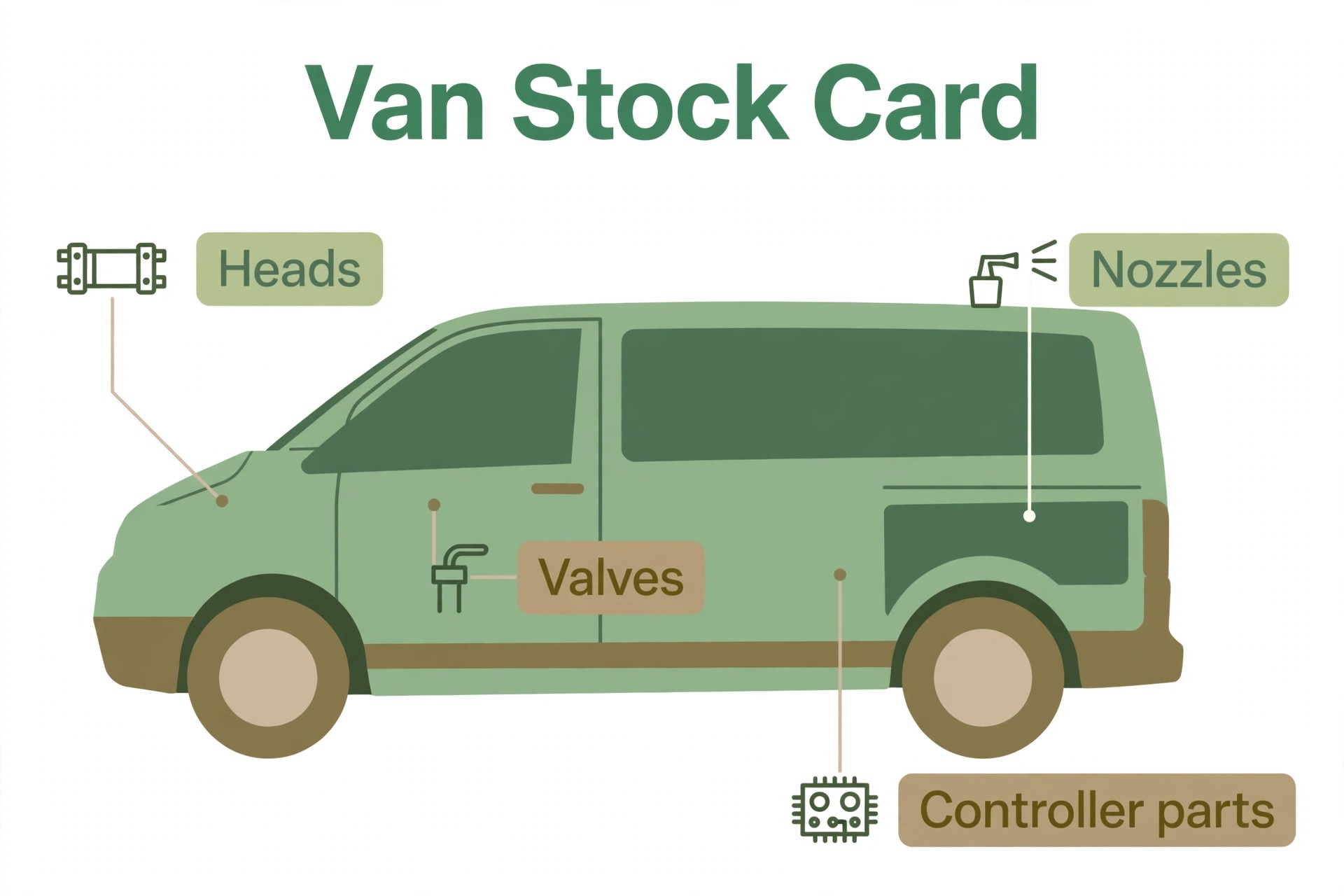
Return visits are the hidden tax on irrigation scheduling, because a second trip for a part, a valve, or a controller setting costs a route slot that could have served a new property. The parts check exists to cut that tax. Before a route locks, the system should check the job record for flagged parts from last year, the zone map for head and valve types, and van stock for the items those jobs commonly need. A crew that leaves with the right heads, valves, nozzles, and controller parts will finish more jobs first time, and the route will hold.
Build van stock lists by job type, not by generic guesswork. Startup routes need adjustment tools, replacement heads and nozzles, and controller batteries. Repair routes need a wider range of heads, valves, fittings, and leak repair parts. Winterisation routes need compressor gear, fittings, and backflow test equipment where certified. Review van stock against actual parts used each month, because a part that runs out mid route every week is a stocking failure, not bad luck, and a part that never moves is capital sitting in a van.
Controller knowledge is a parts check of a different kind. Smart controllers from brands such as Hunter Hydrawise and Rachio appear as upsell and service items in vendor listings, and a technician who arrives without knowing the controller type will spend the first 20 minutes learning it instead of testing zones. Record controller type, app access, and programming notes on the property record, and include a controller check in the startup template, so settings, schedules, and rain sensors are verified before the season starts. That check prevents the summer call that the system runs at noon in a heatwave because nobody checked the schedule.
When a part is missing, the system should do three things at once. Order or reserve the part, book the return visit for the day the part is expected, and message the customer with that date and the reason. A customer who knows the return date tolerates a wait, while a customer told only that a part is on order will call every day for an update. The return visit should go to the same technician where possible, because they already know the zone map and the fault, and the second visit then takes half the time of a fresh diagnostic.
Route Density in a Season of Surges
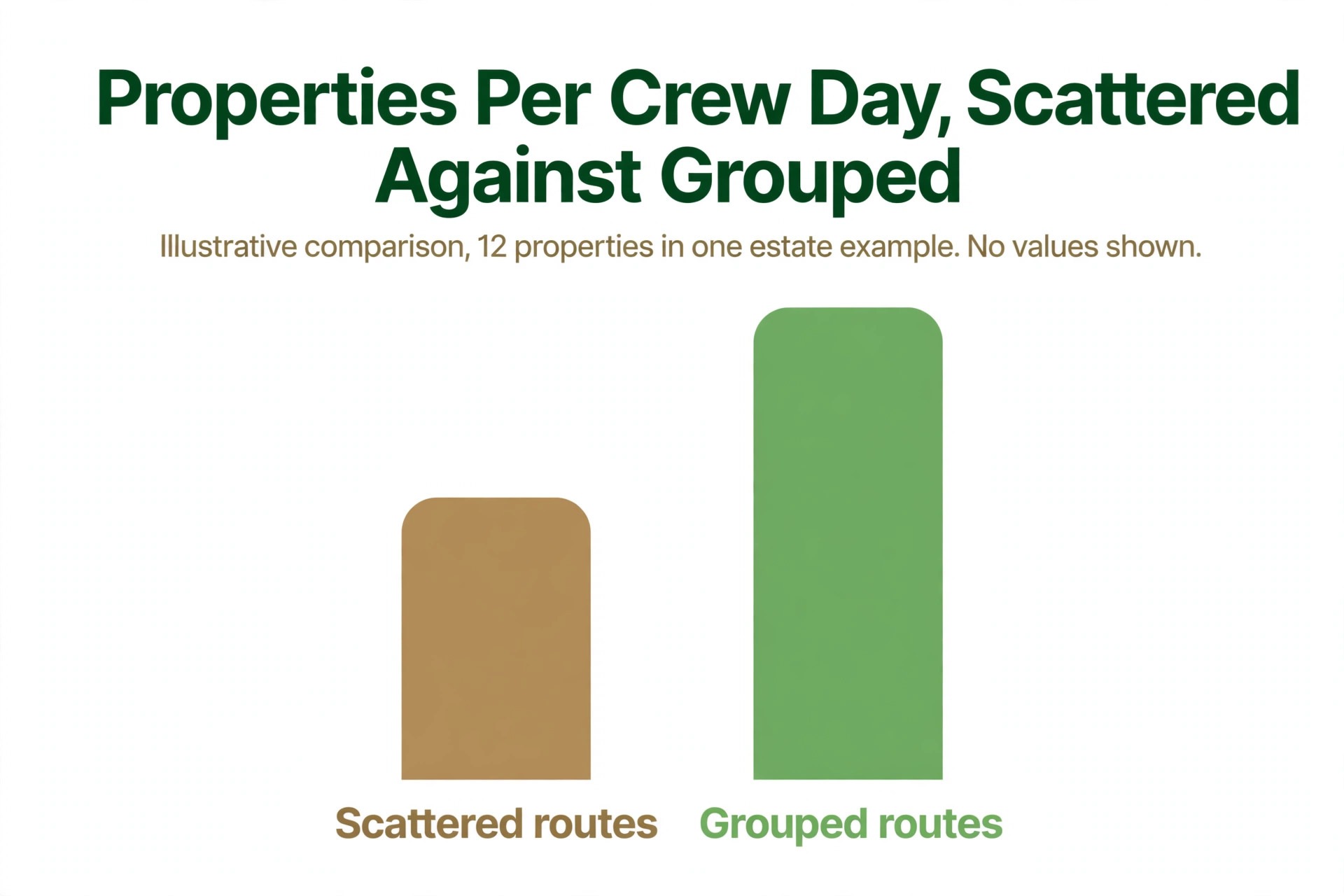
Route density matters most when demand surges, because a scattered spring route wastes the very capacity the surge needs. The rule is simple. Schedule by neighbourhood or property group, not by booking order, and hold each crew day to one area wherever possible. A crew that works 12 properties in one estate will finish earlier, use less fuel, and handle a same day repair nearby, while a crew that crosses the city for the same 12 properties will finish late and miss the repair entirely. Density is not a nice to have in surge season. It is the capacity plan.
Published vendor examples put peak spring and fall routes at 40 to 60 properties per week per operation, which only works with neighbourhood grouping and repeatable job templates. Without grouping, that volume collapses into overtime, missed windows, and callbacks, because drive time eats the hours that zone testing needs. Grouping also helps customers, because neighbours see the crew in their area and ask about their own booking, which fills gaps with nearby properties instead of far away enquiries.
Protect emergency capacity inside surge routes, rather than letting emergencies destroy them. Hold one flexible slot per crew day for same day repairs, such as a broken main line or a failed zone, and let the system fill that slot only when a genuine emergency lands. Without a protected slot, every emergency displaces a startup or winterisation booking, and the displaced customer then needs rescheduling, which displaces another customer the next day. A single protected slot breaks that chain, and the cost of holding it is far lower than the cost of a week of cascading delays.
Review density daily during surges, with a simple evening check applied every day, because managers who use AI for irrigation company service scheduling need fresh numbers, not weekly reports. Count properties per crew day, drive minutes per property, and jobs completed against jobs planned, and move tomorrow route order while there is still time to fix it. A route that planned 12 properties and completed eight has a duration, parts, or access problem that will repeat tomorrow unless someone investigates tonight. Surge season rewards managers who review daily and punishes managers who wait for a weekly report.
Winterisation Reminders and the Freeze Deadline
Winterisation is the season where scheduling failure has a hard physical deadline. The first hard freeze does not negotiate, and a system left full of water when it arrives can suffer burst pipes, cracked heads, and expensive spring repairs. That deadline makes winterisation reminders different from ordinary marketing messages. They are safety and asset protection messages, and customers treat them that way when the message says so clearly, with a date, a route order, and a consequence for delay.
Build the winterisation list in late summer, not in fall, and use AI for irrigation company service scheduling to estimate crew time from total zones before October arrives. List every active system, flag backflow tests due, flag repair add ons from summer visits, and estimate crew time from total zones, not just property count, because a 12 zone estate and a four zone garden are not equal jobs.
One vendor example showed a fall list of 38 systems totalling 214 zones, with 12 backflow tests due and an estimated crew time of three days, which is the kind of list maths that prevents a nasty surprise in October. Publish the campaign early, so customers book before the rush, and route by freeze risk, meaning exposed and northern properties earlier in the window.
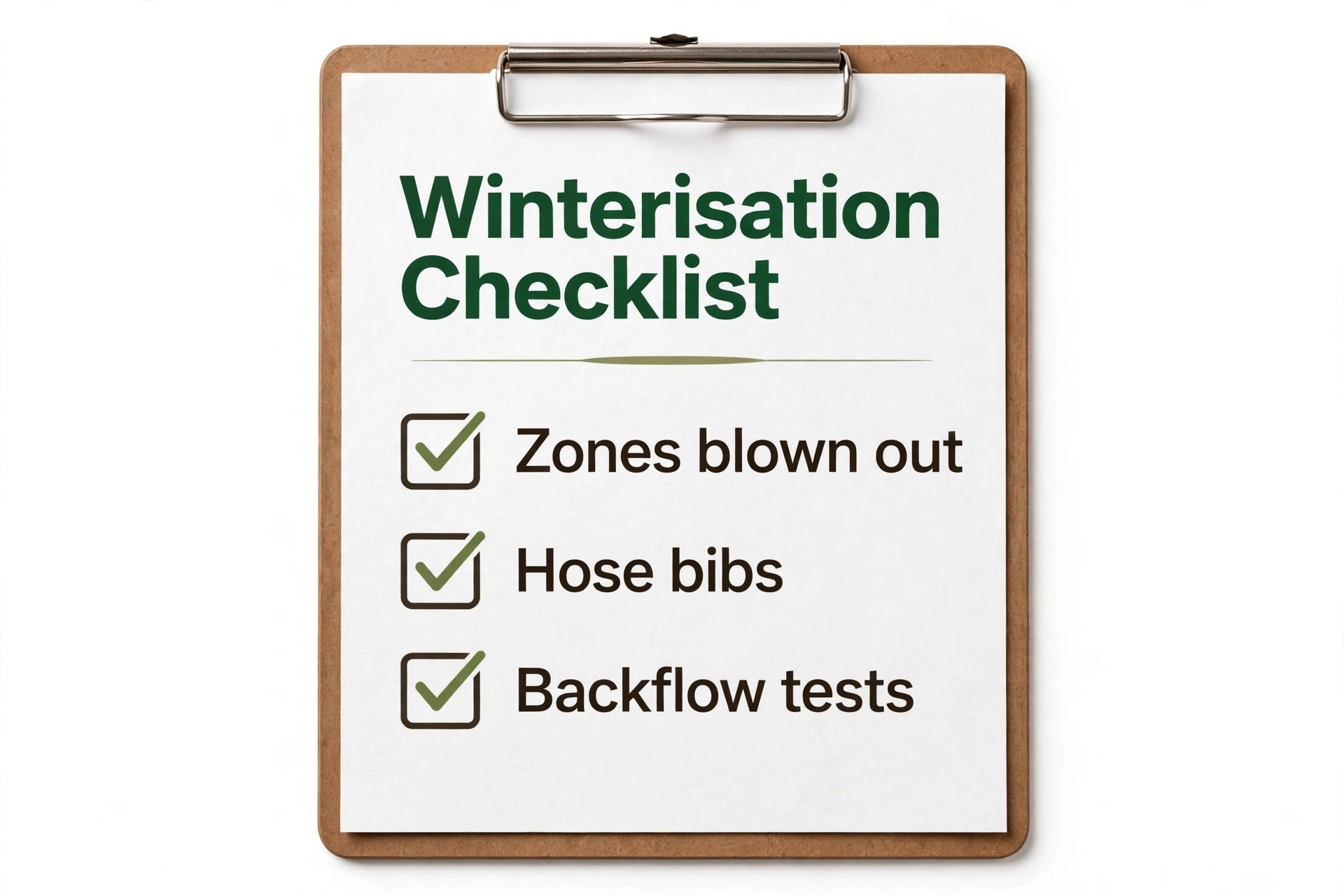
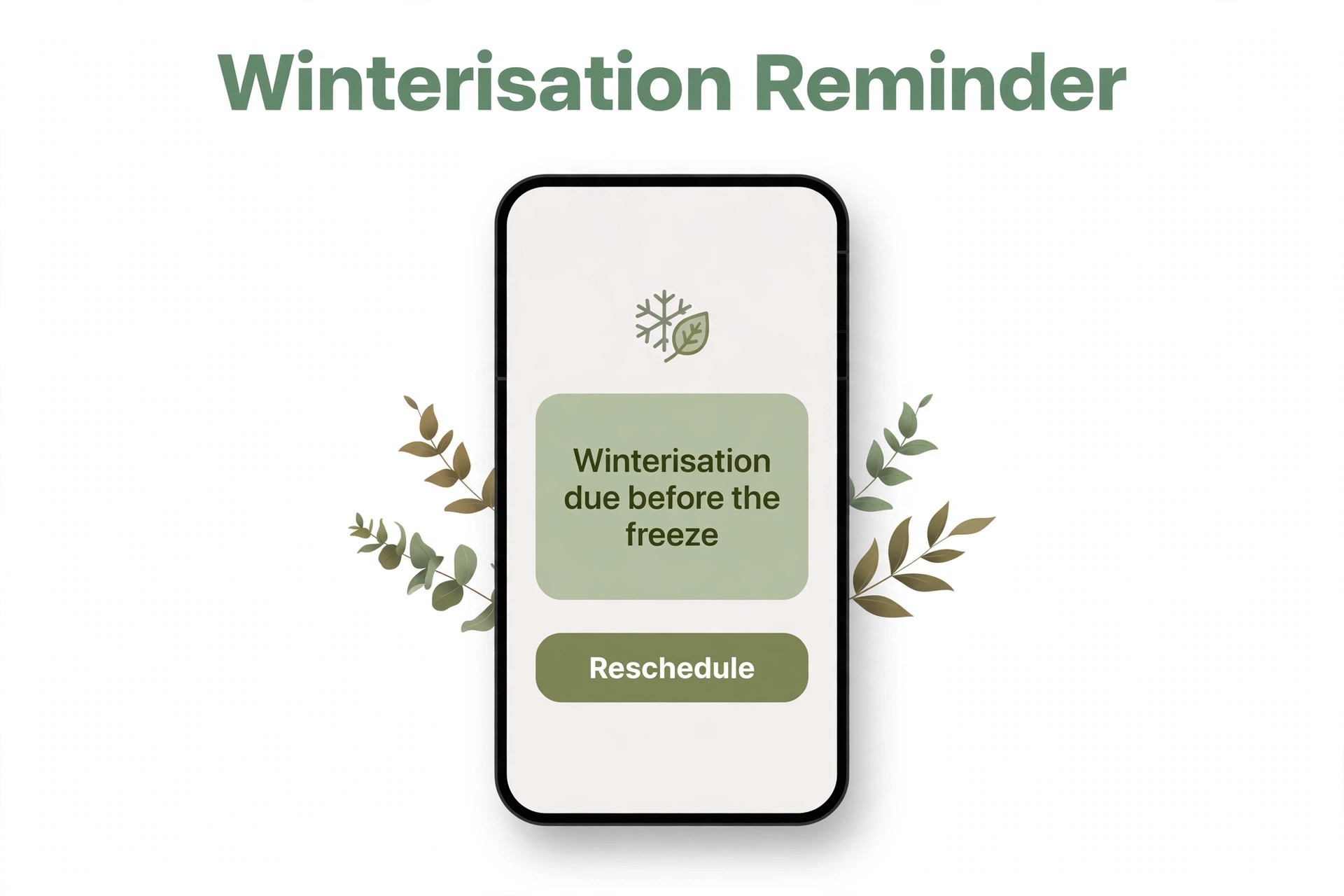
Reminder timing should follow a clear sequence. An early reminder in late summer books the campaign and explains the freeze risk. A booking confirmation gives the week window and the neighbourhood order. A week before reminder confirms access, gate codes, and pet or site notes. A day before reminder confirms the arrival window. And a completion message confirms the blowout, the zones covered, and any repairs needed before spring. Each message should allow a one tap reschedule inside the window, because a customer who cannot easily move a date will simply miss the visit.
Properties that miss the window need a priority rescue list, not a vague promise. Rank missed properties by freeze exposure, by system value, and by customer responsiveness, and work that list first when a gap opens, with a direct call rather than another bulk message. A system that lets missed winterisations drift into November without a rescue plan will pay for it in spring repair work that could have been prevented, and in customers who blame the company for a freeze they were never warned about clearly enough.
Tools, Prices and Seasonal Features to Compare
QuoteIQ is the most irrigation specific platform found in research, with zone by zone pricing by head type, satellite property measurement, per zone job costing, seasonal startup and winterisation route planning, winterisation and backflow upsells, and AI call answering, starting at about 29.99 dollars a month in vendor listings, with higher tiers for AI autopilot features, so confirm on the vendor page for the tier that covers your property count. Its seasonal campaign logic, meaning automated spring startup and fall winterisation campaigns that book the calendar early, is the feature most directly relevant to this guide, because generic tools rarely model the irrigation year at all.
IrrigationBossPro is a specialist alternative, with CRM and scheduling from about 59 dollars a month, recurring seasonal packages, year to year property notes for valve locations and controller types, automated text templates for scheduled, on the way, completed, and seasonal messages, and an AI answering add on priced per minute in its listings. That note carry forward feature matters more than it sounds, because a property record that forgets valve locations every winter will waste technician time every spring. Check its backflow, winterisation list, and route map features against your fall list size before committing.
WePro offers irrigation service software for scheduling, dispatch, and job tracking, with job templates for startups and winterisations, scheduling by neighbourhood or property group, and automated customer updates. General platforms such as Jobber, from about 49 dollars a month, and ServiceTitan, from about 250 dollars a month in published guides, also handle irrigation scheduling and invoicing, but they need setup to encode zone maps, seasonal campaigns, and winterisation lists. A general tool can work well for a small irrigation company, provided the seasonal templates are built deliberately and not left as generic job types.
Judge tools on the fall list test. Load a list of 38 systems with 214 zones, 12 backflow tests, and a three day crew estimate, and watch how the tool builds routes, sends reminders, and handles a rain delay. A tool that passes that test will handle spring startups too, because the same logic, meaning list, segment, route, remind, and complete, drives both surges. A tool that only handles single appointments well will struggle exactly when the business needs it most, in the two surge seasons that pay for the year.
Mistakes That Lose a Season
The first mistake is booking in booking order during a surge. Booking order feels fair, because first come gets served first, but it produces scattered routes, long drive times, and missed windows, which are unfair to everyone on the list. Neighbourhood order with published windows is fairer in practice, because every customer gets a reliable window and the crew actually completes the list. Explain the order to customers early, and most will accept it, especially when they see neighbours being served in the same week.
The second mistake is treating winterisation as a normal job type. A blowout booked as a generic one hour visit, without compressor time, backflow handling, and zone count, will overrun and break the route behind it. Give winterisation its own template, its own duration by zone count, and its own reminder sequence, and treat the freeze deadline as a project deadline with a rescue list, not as a busy week that will somehow sort itself out. Seasons are projects, and winterisation is the one with a deadline set by weather.
The third mistake is losing property knowledge every winter. Valve locations, controller types, problem zones, and backflow details that live only in a technician memory will vanish when that technician leaves, changes routes, or simply forgets. Property records that carry notes forward year to year are not admin luxury. They are the difference between a 45 minute startup and a 90 minute rediscovery visit, multiplied across hundreds of properties. Make note capture part of job completion, not an optional extra.
The fourth mistake is letting summer emergencies eat the maintenance base. A summer of pure reactive repair work, with no mid season checks and no fall bookings made, leaves the company entering fall with an unbooked list and customers who have not heard from it since spring. Book fall winterisation during summer visits, offer mid season checks at startup, and keep a small protected slot for emergencies so reactive work does not consume the whole route. Maintenance revenue is scheduled revenue, and scheduled revenue is what survives a quiet winter.
The Seasonal Playbook to Run This Year
Run this playbook in order, starting this month whatever the season. First, audit every property record for zone map, controller type, valve notes, backflow due date, and last season problem zones, and fill the gaps on the next visit rather than in a separate data project. Second, build the next campaign list early, segment it by neighbourhood, and estimate crew time from zone counts, not property counts. Third, publish booking windows by neighbourhood, with a week window per area and a clear order customers can understand.
Fourth, set job templates for startup, repair, mid season check, backflow test, and winterisation, each with its own duration, parts list, photo set, and completion checklist. Fifth, switch on the reminder sequences for the next campaign, meaning early booking, confirmation, week before, day before, and completion messages, each with a one tap reschedule inside the window. Sixth, protect one emergency slot per crew day during surges, and review density every evening until the surge ends. Seventh, book the following season at completion, so every finished job creates the next booking.
Companies that use AI for irrigation company service scheduling as a seasonal playbook, not as a calendar app, finish surges with fuller lists, tighter routes, and customers who already know their next window. That compounding effect is the real return, because each season that runs well makes the next season easier to book, easier to route, and easier to staff. Start with the property records and the next campaign list, and let the system earn the rest of the year from there.
Frequently Asked Questions About Irrigation Scheduling
How far ahead should spring startup bookings open?
Open startup booking in late winter, weeks before the first startup window, so routes can be built by neighbourhood and customers can choose a week window inside the campaign. Early booking also reveals crew capacity gaps while there is still time to hire, extend days, or move the window. A startup campaign booked only a week ahead will always be a scramble, because property count, zone count, and weather risk were never counted in time.
What should a zone map include for scheduling purposes?
A useful zone map includes each zone number, its head type and coverage area, its valve location, its controller settings, and any known problems from last season, such as leaks, low pressure, or poor coverage. That map lets a technician test in order without hunting for valves, lets the office estimate visit duration from zone count, and lets parts be checked before the route locks. Satellite tools can draft the map, but the technician should correct it on site and save the corrected version.
How do I schedule winterisation before the first freeze?
Build the winterisation list in late summer, estimate crew time from total zones, route by freeze risk with exposed properties earlier, and publish the campaign early with week windows by neighbourhood. Run reminders in sequence, from early booking through completion, and keep a priority rescue list for properties that miss their window. The freeze deadline should drive the order, not booking order, because a missed exposed system costs far more than a missed sheltered one.
Should emergency repairs get their own route slots in surge season?
Yes. Hold one flexible slot per crew day during spring and fall surges for genuine emergencies, such as a broken main line or a failed zone, and fill it only when such a job lands. Without that slot, every emergency displaces a booked startup or winterisation, which then displaces another customer the next day. The cost of holding the slot is small compared with a week of cascading delays and missed freeze deadlines.
Can generic field service software handle irrigation seasonality?
It can, if seasonal templates are built deliberately, meaning startup, winterisation, backflow, and repair job types with their own durations, parts lists, and reminder sequences, plus property records that carry zone and controller notes forward. Generic tools that only offer single appointment booking will struggle in surge seasons, because they do not model campaign lists, neighbourhood routes, or freeze deadlines. Test any generic tool on a full fall list before committing to it for the year.
What is the most valuable upsell in irrigation scheduling?
Smart controller upgrades and seasonal maintenance packages are usually the strongest, because they tie directly to work the technician already sees on site. A controller that runs at noon in a heatwave, or a system with no mid season check, gives the technician a specific reason to suggest an upgrade or a package at completion. Price the upsell clearly, book it as its own job with its own duration, and record it on the property record so the next season plan includes it.
More Reading on Stratilyze
– Best Route Scheduling Software for Pool Service Companies – Use AI for Cleaning Business Route Scheduling – Use AI for Auto Repair Shop Scheduling – Best Field Service Management Software for Electricians – Seasonal Service Business Marketing That Books the Next Surge, plain text title, link not verified at writing time – How to Price Recurring Maintenance Packages for Field Services, plain text title, link not verified at writing time