
About one in three gym members left in the past year, according to industry benchmarking cited in recent retention guides, which put annual retention near 66 percent. That single figure explains why acquisition alone cannot grow a gym. Every new member gained while an existing member quietly drifts away is a treadmill, not growth, and the cost of replacing a lost member far exceeds the cost of keeping one. This guide shows how to use AI for gym membership retention in a way that spots drift early, acts while the member still cares, and treats members as people rather than as churn scores.
Retention is not a discount programme. It is the sum of small experiences that make a member feel noticed, progressing, and welcome. A member who is greeted by name, who can book a class that fits their level, who receives a message when they hit a milestone, and who gets a fair answer when life gets busy will stay longer than a member who only hears from the gym when payment fails. AI helps retention by noticing patterns humans miss across hundreds of members, and by sending the right nudge at the right time, while coaches and front desk staff provide the human warmth that no message can replace.
The promise and the limit should be stated together. AI can predict who is drifting, recommend a class, draft a win back offer, and automate a renewal reminder. It cannot make a class enjoyable, fix a dirty changing room, or replace a coach who knows a member goals. A gym that buys AI while ignoring the floor experience will retain nobody, because members leave for real reasons that a message cannot hide. Use AI to amplify a good gym, not to mask a weak one.
Why Members Really Leave
Members rarely leave for one dramatic reason. They leave because attendance slips, then motivation slips, then the membership feels like a bill for something unused. Research and gym guides point to the same pattern. A member who attended three times a week and drops to once a month is already leaving in practice, even if the cancellation form arrives months later. The job of retention is to intervene during that slide, not after the form is signed.
Life events drive many departures, and they deserve a fair response rather than a sales push. A move, an injury, a new job with different hours, a baby, or a tight budget all change what a member can do, and a gym that only offers a discount in response misses the real need. A member who moved needs a transfer or a pause. A member who is injured needs a modified programme and a check in from a coach. A member on a tight budget needs a cheaper tier or a pause, not a harder sell for the same price.
Boredom and lack of progress are quieter reasons, and they are more fixable. A member who does the same routine for a year without a goal, a programme change, or a coach conversation will drift, because the gym stops feeling like progress and starts feeling like repetition. Class recommendations, programme updates, and milestone messages address boredom directly, by giving the member a next step that feels personal. A member with a next step stays. A member without one shops around.
How to Use AI for Gym Membership Retention From First Visit to Renewal
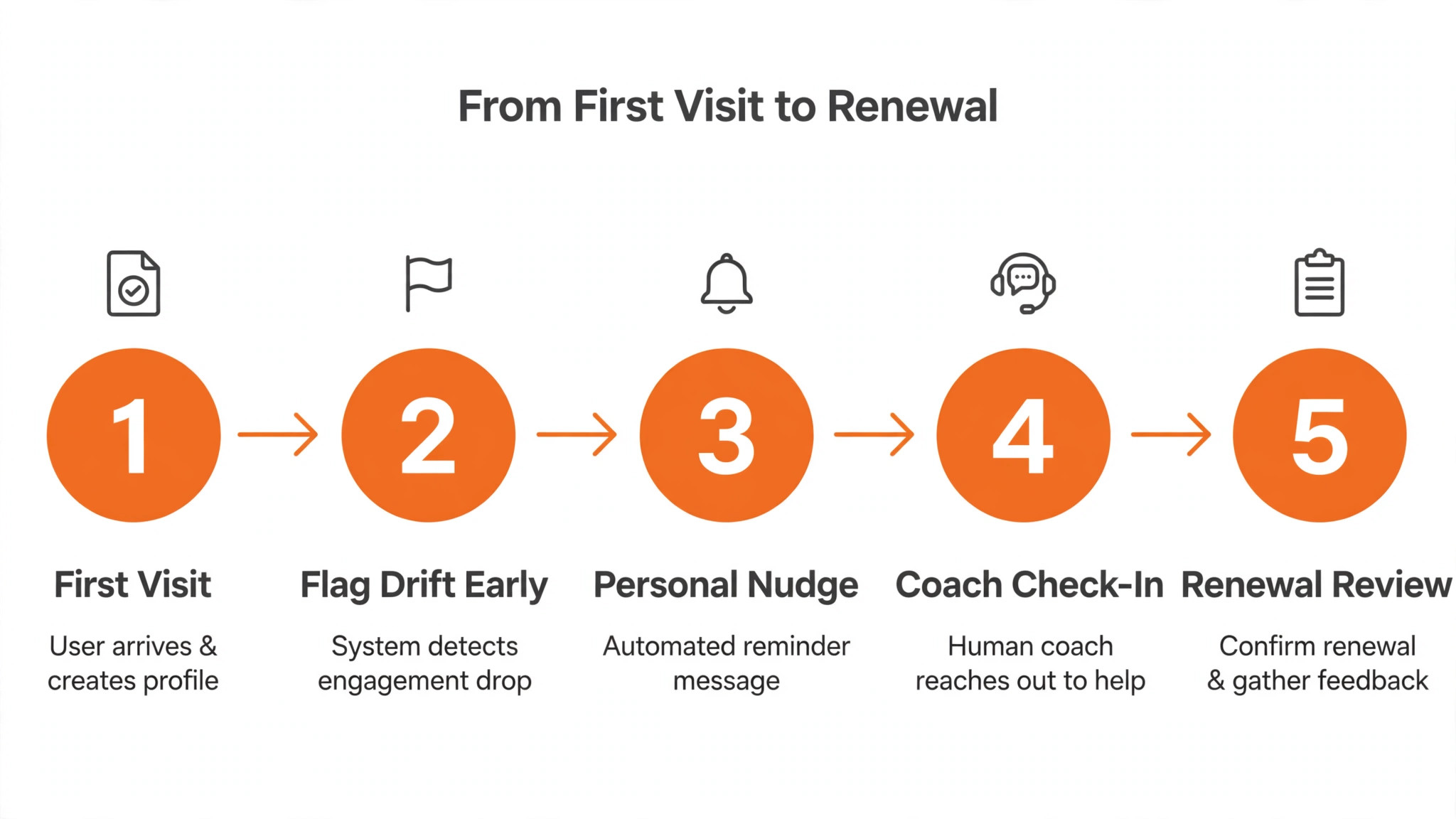
This workflow runs from a member first visit to a renewal decision, with a human check at every sensitive step. Follow it in order, and review the results monthly, because retention patterns change with seasons, class schedules, and local competition.
- Build a member baseline in the first thirty days, recording visit frequency, class preferences, goals, and preferred contact channel. AI should flag members who have not visited within the first two weeks, so staff can make a welcome call while the habit is still forming. The check is that every new member receives a human welcome within fourteen days, not only an automated email.
- Watch attendance and engagement weekly, with AI flagging members whose visits fall by half, who stop booking classes, who miss a regular class pattern, or whose app use drops sharply. A flag should create a staff task, not only an automated message, because a flag without a human follow-up is just a report. The check is that every high risk flag receives a staff action within three working days.
- Act on the flag with a personal, relevant nudge, such as a class recommendation that matches past bookings, a coach check in, or an invitation to a beginner friendly session. The message should reference the member actual history, such as a class they enjoyed or a goal they set, rather than a generic we miss you line. The check is that the member replies, books, or visits within two weeks of the nudge.
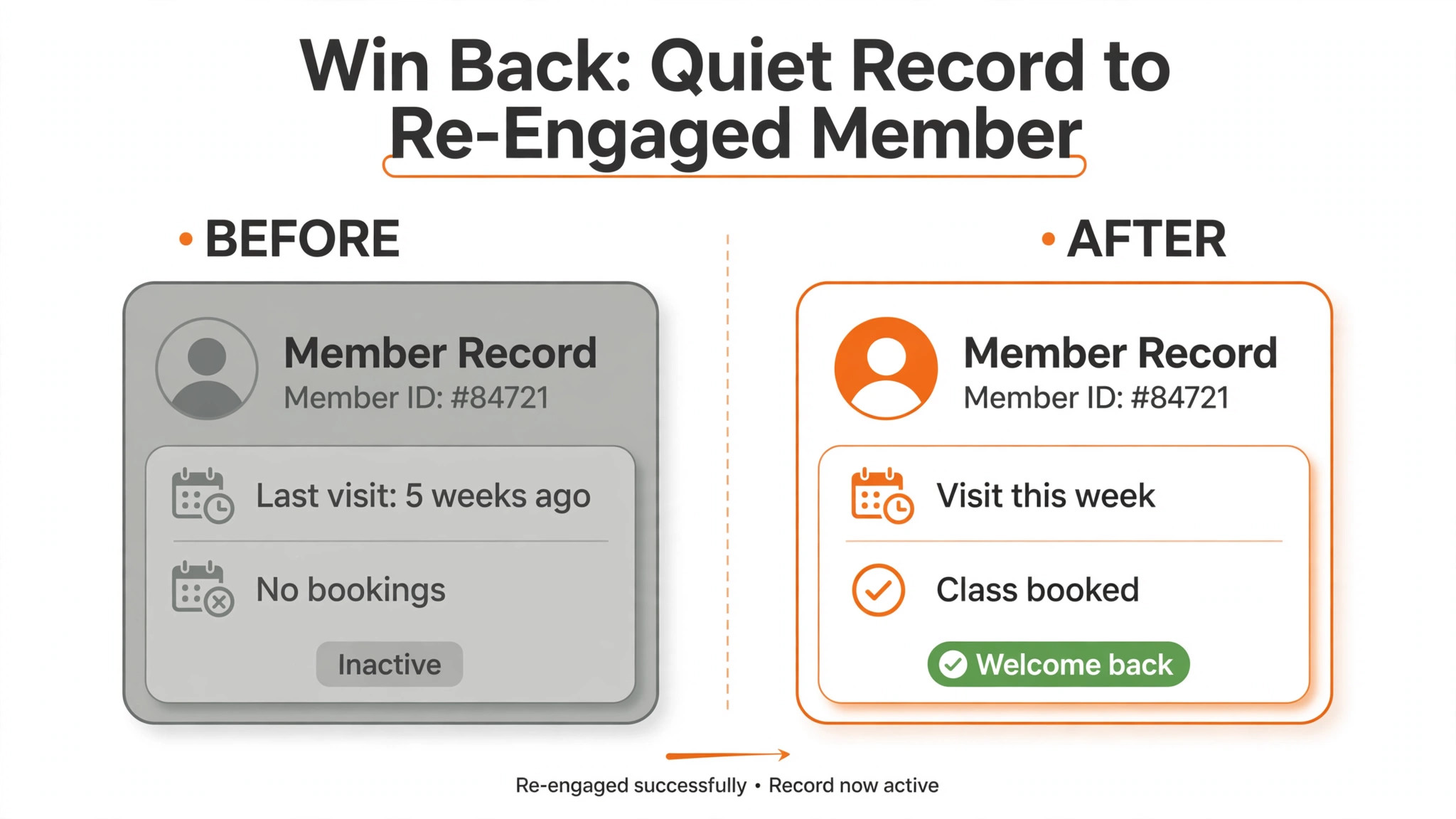
- Offer a win back path when a member goes quiet for longer, with an offer matched to the likely reason, such as a free personal training session for a bored member, a class pass for a member who lost routine, or a pause for a member facing a life event. Do not offer a discount to every quiet member, because discounts teach members to wait for a discount before renewing. The check is that the offer is recorded with the reason it was chosen, so the team can learn which offers actually bring members back.
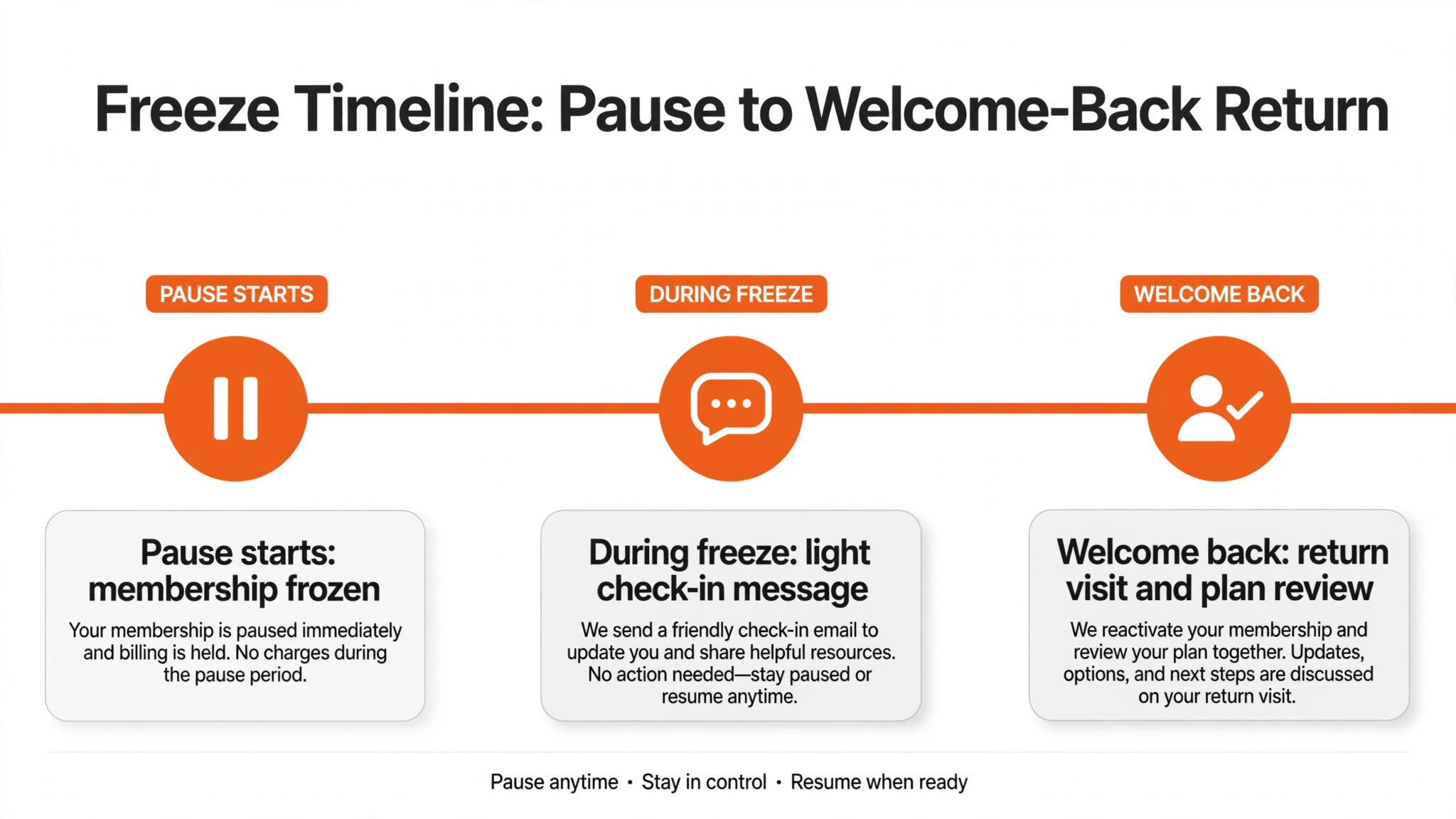
- Handle freezes fairly and promptly, with a simple freeze process, a clear return date, and a welcome back message before the freeze ends. AI should track freeze end dates and remind staff to contact the member a week before return, with a class or session ready to book. The check is that no member returns from a freeze to silence, because silence after a freeze feels like the gym forgot them.
- Run renewal as a review, not as a billing event. Sixty days before renewal, AI should surface attendance, progress, and goal updates for a staff review, then staff should send a personal renewal message that reflects that progress and offers the right plan for the next period. The check is that the renewal message mentions something specific about the member, not only the price and the date.
Attendance Risk Flags That Actually Predict Leaving
Attendance is the strongest single signal, but it misleads if used alone. A member who trains at home for a month, travels for work, or switches to outdoor running may look at risk while still valuing the membership. Combine attendance with other signals, such as class bookings versus actual attendance, app opens, retail purchases, goal progress, and staff contact, to build a fuller picture. A member with falling attendance plus falling app use plus a failed payment is at far higher risk than a member with falling attendance alone.
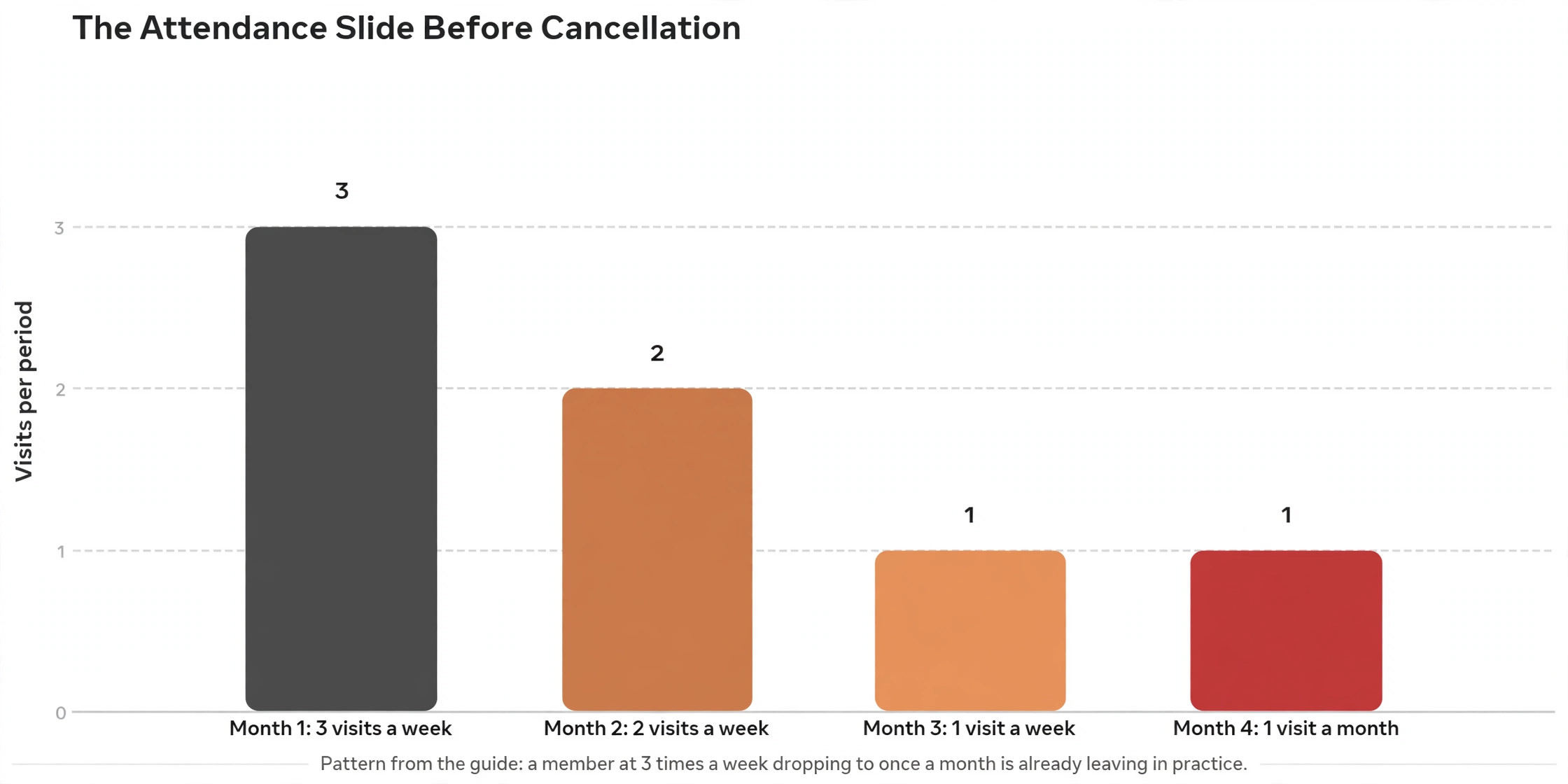
Set flag thresholds from your own data, not from a generic template. Look at members who cancelled in the past year, and work backwards to find what changed in the ninety days before cancellation. A common pattern is a drop from three visits a week to one, followed by a missed regular class, followed by silence. Another pattern is a member who never visited in the first month, which predicts early cancellation more strongly than any later signal. Your thresholds should reflect your members, your classes, and your seasons, because a January joiner behaves differently from a September joiner. Teams that use AI for gym membership retention well tune those thresholds monthly, not once.
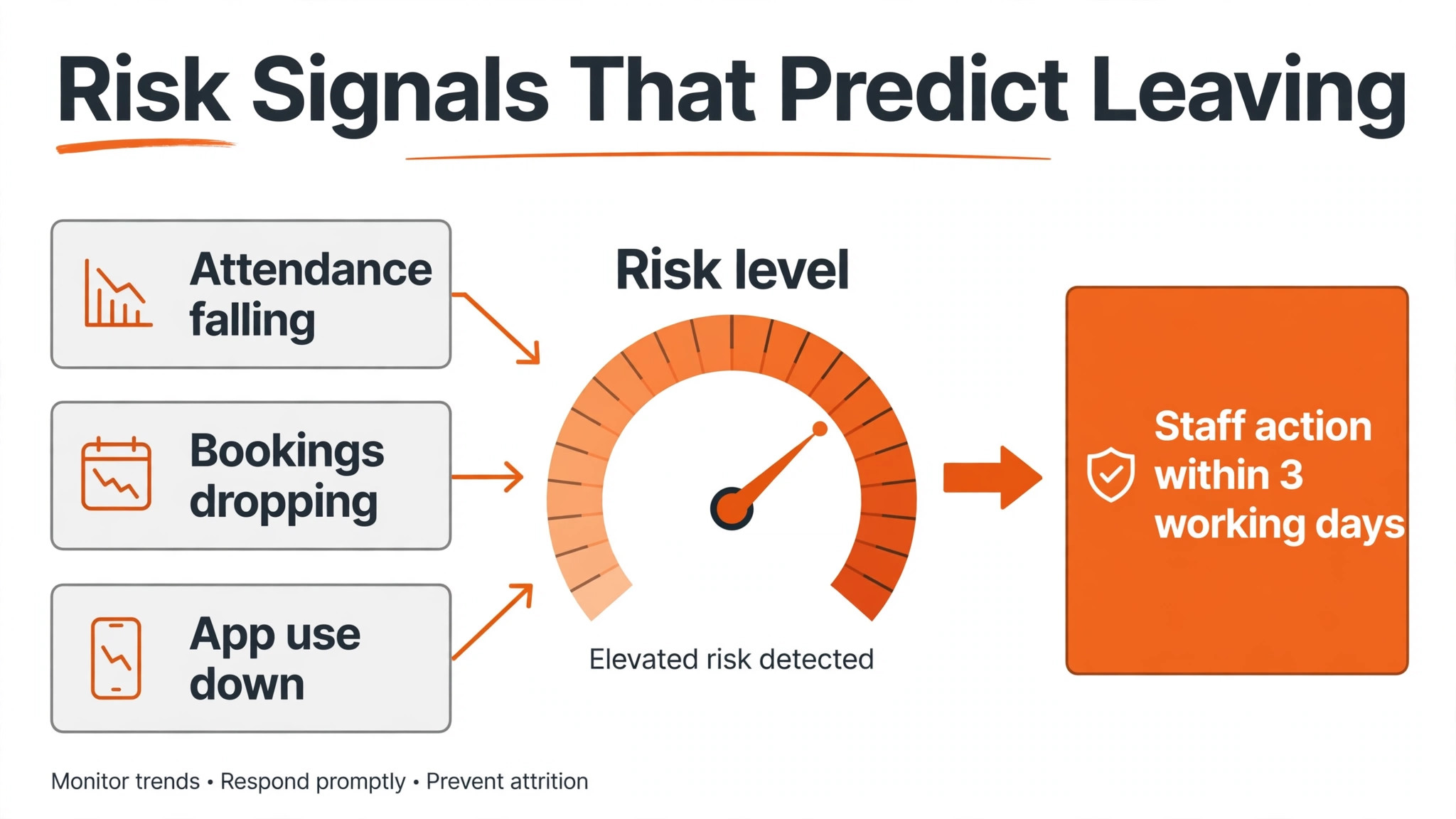
Review flags as a team, not as an automated list that nobody owns. A weekly fifteen minute review of new flags, with a named staff owner for each one, turns prediction into action. The review should ask three questions for each flagged member. What changed, what is the likely reason, and what is the next human action. A flag that receives no action within three days should escalate, because a prediction that nobody acts on is worse than no prediction, as it creates false confidence that retention is handled.
Win Back Offers That Bring Members Back Without Training Discount Dependence
Win back offers work when they match the reason for leaving, and they fail when they are the same discount for everyone. A member who left because of boredom needs a new experience, such as a free coaching session, a new class, or a programme review, not a cheaper price for the same experience they left. A member who left because of price needs a fairer plan, such as an off peak tier or a shorter commitment, not a temporary discount that returns to the old price and prompts another cancellation.
Timing for win back matters as much as the offer. A message sent the day after cancellation, while the member is still deciding, feels different from a message sent three months later, when the member has joined elsewhere. AI can time win back messages by reason and by silence length, with a short check in soon after cancellation, a value message a few weeks later, and a stronger offer only if the member has not returned. Each message should give the member a reason to return beyond price, such as a new class, a new coach, or a programme that fits their changed life.
A plan to use AI for gym membership retention should time those messages by reason, not by a fixed discount calendar.
Measure win back honestly, by tracking how many returned members are still active ninety days later, not only how many returned in the first week. An offer that brings back many members who leave again within a month has not improved retention, it has delayed cancellation. Compare offers by ninety day retention, by plan value, and by cost, and retire offers that produce short returns. That discipline prevents a discount habit that looks successful in week one and fails by quarter end.
Class Recommendations That Feel Personal, Not Algorithmic
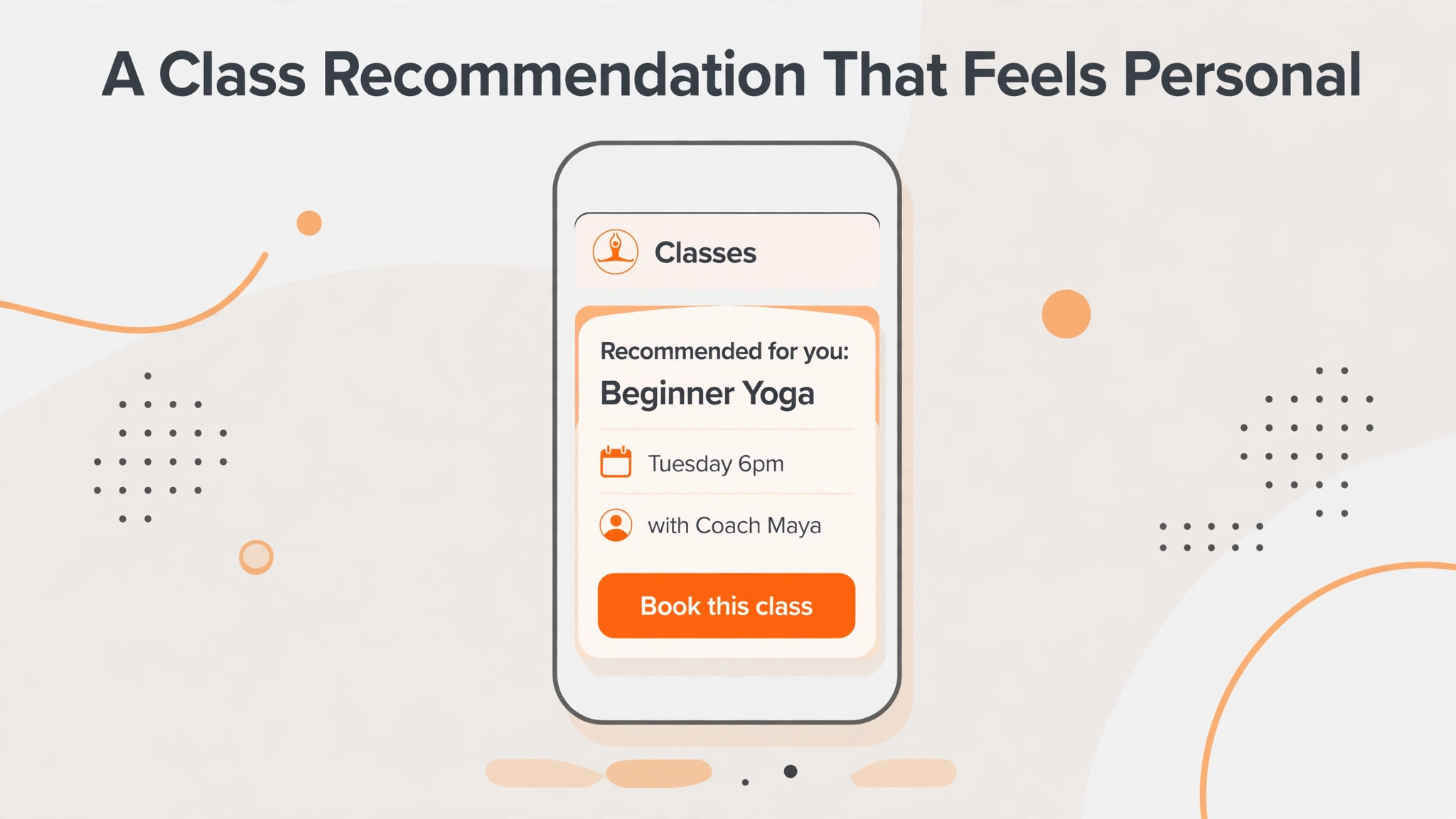
Class recommendations work when they reflect what a member actually enjoyed, not only what is popular. AI can analyse past bookings, attendance versus booking, class times, instructor preferences, and goal progress to suggest a next class that fits the member level and schedule. A member who attended beginner yoga twice a week should receive a progression suggestion, not an advanced class that intimidates. Gyms that use AI for gym membership retention well let coaches approve recommendations for members with health notes. A member who booked evening classes should receive evening suggestions, not morning classes they will never attend.
Recommendations should include a human reason, not only a title. A message that says a coach suggested a class because the member enjoyed a similar session and is ready for the next level feels personal. A message that lists three classes with no reason feels like an advertisement. Coaches should be able to approve or adjust recommendations, especially for members with injuries, medical notes, or specific goals, because an automated suggestion that ignores a health note will damage trust quickly.
Use recommendations to reintroduce lapsed members gently. A member who has not attended for a month may feel nervous about returning to a busy class, so suggest a quieter session, a beginner friendly class, or a session with a coach they know. Pair the suggestion with a welcome back note from staff, and make the first return easy by reserving a place or offering a short session. A gentle return path respects the member hesitation, while a hard push to a peak class may confirm the fear that kept them away.
Freeze Handling That Keeps Members Instead of Losing Them
Freezes are a retention tool, not a failure, and gyms that handle them well keep members who would otherwise cancel. A member who asks to freeze is telling the gym they want to stay, but cannot attend right now. A gym that makes freezing difficult, charges unfairly, or forgets the member during the freeze will turn that intention into a cancellation. A gym that freezes promptly, confirms the return date clearly, and stays in light contact will welcome that member back.
Make the freeze process simple and transparent. State the freeze length, any fee, how billing pauses, and the exact return date in one message, and confirm it in writing. AI can handle the admin, track the freeze end date, and schedule a welcome back message, while staff handle the conversation about why the member needs a freeze and what return plan fits. A member who freezes for injury needs a different return plan from a member who freezes for travel, and that conversation should happen at freeze time, not at return time. A system built to use AI for gym membership retention should schedule that return conversation at freeze time.
Stay in light contact during a freeze, without selling. A monthly message with a class update, a progress note, or a simple check in keeps the relationship warm without pressuring a member who cannot attend. Avoid daily messages, discount offers during a freeze, or messages that imply the member is failing by not attending. The goal during a freeze is to keep the gym in the member life as a positive place to return to, not as another bill to worry about.
Prepare the return before the freeze ends. A week before return, staff should contact the member, confirm the return date, suggest a first session that fits their level and schedule, and answer any questions about billing or plan changes. A member who returns to a booked session with a familiar coach will stay. A member who returns to no plan, no booking, and a confusing bill will leave again quickly. The return week is a second onboarding, and it deserves the same care as the first.
Renewal Reminders That Feel Like a Review, Not a Bill
Renewal reminders fail when they arrive as a price and a date with no context. A member who receives a renewal bill with no mention of their progress, attendance, or goals will judge the renewal on price alone, and price alone rarely wins. A renewal message that mentions classes attended, milestones reached, and goals for the next period gives the member a reason to renew that is about their life, not only about the gym fee. AI can draft that summary from attendance and progress data, while staff add the personal note that makes it real.
Send renewal messages in a sequence that gives time for a decision. A first message sixty days before renewal can share progress and ask about goals for the next period. A second message thirty days before renewal can confirm the plan, offer a plan change if attendance suggests a better fit, and invite a coach conversation. A final message a week before renewal should confirm payment, start date, and next steps clearly. A single message a day before renewal leaves no time for a conversation, and a conversation is often what retains a member who is unsure.
Plan changes at renewal are a retention opportunity, not a revenue loss. A member who attended twice a month on a premium plan may renew happily on an off peak plan, while the same member would cancel on the premium price. AI can flag plan mismatches by comparing attendance with plan cost, and staff can offer a fairer plan proactively. A gym that offers a cheaper plan before the member asks will keep a member and gain trust. A gym that waits for the member to complain will lose both.
Failed payments need a fast, kind track, separate from renewal marketing. AI should flag a failed payment the day it happens, send a polite message with a simple update link, and alert staff if payment is not restored within a few days. An expired card should not become a cancellation, and a member who is embarrassed about a failed payment should not receive a harsh message. Gyms that use AI for gym membership retention well treat failed payments as a service task, not as a debt collection task, because most failed payments are card expiry, not intent to leave.
Tools, Costs, and a Pilot That Proves Retention Gains
Tool choice should follow the gym management platform, not the other way round. Most gyms already use a platform such as Mindbody, ABC Glofox, Gymdesk, PushPress, or a similar system, and the best retention tool is usually the one that integrates with that platform, reads attendance and billing data directly, and logs every message. A standalone AI tool that cannot see attendance will guess at risk, and guessing at risk produces messages that feel random. Test integration with real member data, with privacy protections in place, before buying on a demo. Any tool chosen to use AI for gym membership retention must read attendance directly, not guess from messages.
Costs vary, from platform add ons included in a monthly fee to standalone retention tools with per location pricing, so confirm on the vendor page before you buy and budget for staff time as well as software. Published guides list examples such as Mindbody starting near 79 dollars a month per location with tier prices by quote, and PushPress Pro near 159 dollars a month, but those figures change and depend on features, so treat them as a starting range only. Judge a tool on retention gain and staff time saved, not on message volume, because a tool that sends many messages but retains few members is not cheap.
Run a pilot with one location or one member segment, for ninety days, with clear baseline numbers. Measure monthly churn, ninety day retention for new members, attendance for flagged members, win back return rate at ninety days, and renewal rate. Review weekly, tune flag thresholds so the action list stays small enough to handle, and expand only when flagged members show higher attendance and retention than a comparable group without intervention. A pilot without a comparison group will claim success from seasonal change, so keep the comparison honest.
Privacy and consent matter in gym AI, because attendance, health goals, and payment data are sensitive. Tell members how data is used for retention messages, allow them to choose their contact channel, and honour opt outs immediately. Review what data each tool accesses, how long it retains it, and whether it trains models on member data. A retention system that members trust will be welcomed. A system that feels like surveillance will drive members away, even if its predictions are accurate.
Mistakes That Make Retention AI Feel Creepy or Pushy
The first mistake is messaging too often, with too little value. A member who receives a daily nudge, a weekly offer, and a monthly survey will mute the gym, and muting is the step before cancelling. Limit automated messages to a few per month for most members, with more only for members in an active win back or return programme, and make every message specific to the member history. Frequency without relevance is spam, even when the sender means well.
The second mistake is acting on a flag without a human reason. A member flagged as at risk who receives a generic discount will wonder how the gym knew they were drifting, and may feel watched rather than cared for. Pair every flag action with a human reason the member can understand, such as a missed regular class, a milestone, or a coach suggestion. A message that says a coach noticed a missed class feels caring. A message that says an algorithm scored the member feels creepy, even if the underlying data is the same.
The third mistake is offering discounts to everyone who drifts. Discounts teach members to drift in order to earn a discount, and they reduce revenue from members who would have returned without one. Reserve discounts for price related departures, and use experience offers, coaching sessions, and programme changes for boredom or routine related drift. Track which offers produce ninety day retention, and retire offers that produce short returns, because a short return is not retention.
The fourth mistake is ignoring the gym itself while buying software. No message will retain a member if classes are overcrowded, equipment is broken, or staff are unwelcoming. Fix the floor experience alongside the AI rollout, and ask members what would make them stay, through short surveys and coach conversations. AI can surface who is drifting, but only the gym experience can give them a reason to return. A gym that buys AI and ignores the floor will learn that lesson through cancellations.
A Weekly Retention Routine for a Small Team
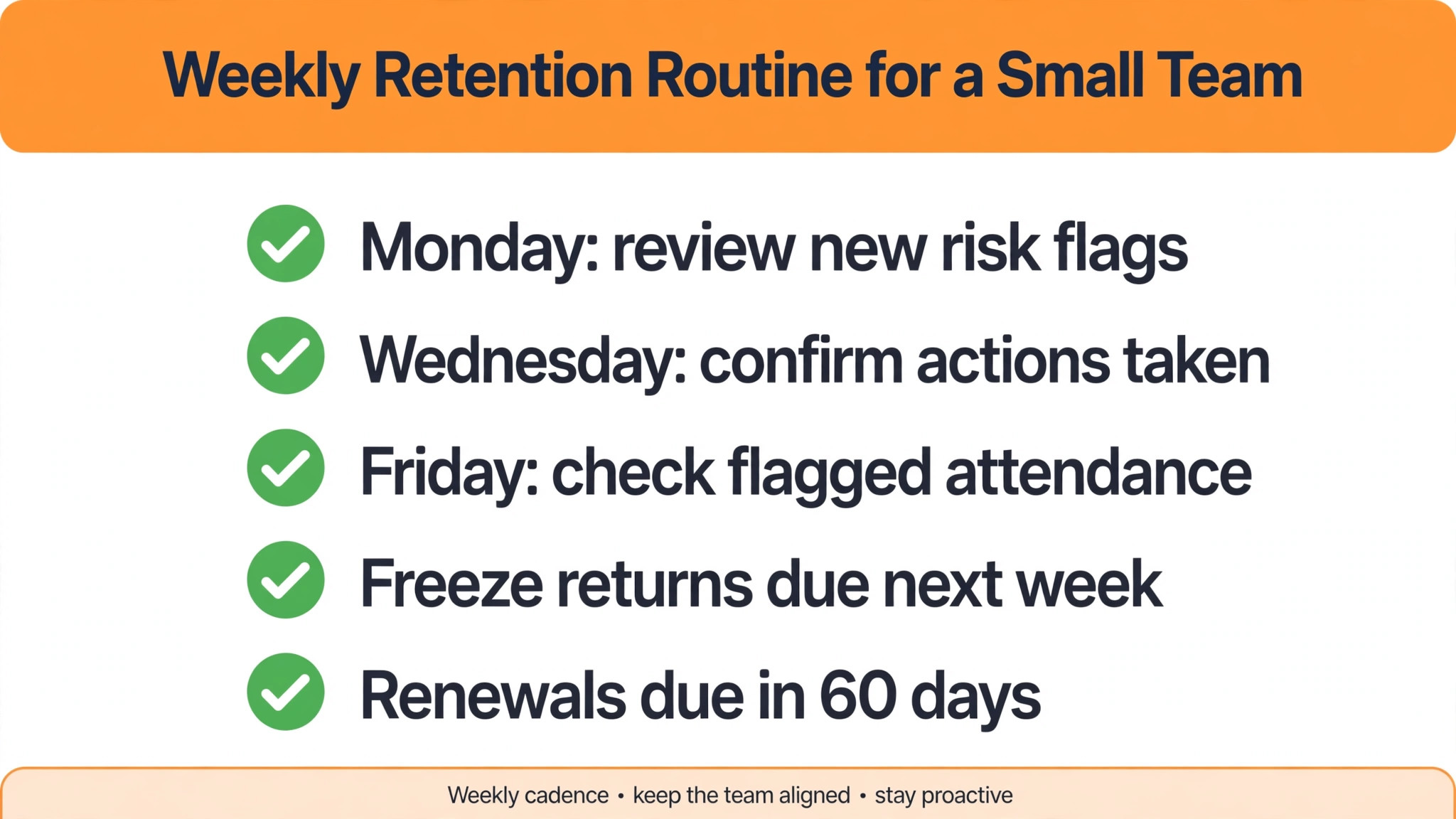
A retention system needs a weekly routine, or flags will pile up and messages will drift. Each Monday, review new high risk flags, assign a staff owner to each one, and agree the next action and date. Each Wednesday, check that actions were taken, read a sample of messages sent, and note where copy felt generic or pushy. Each Friday, review attendance for flagged members, win back replies, freeze returns due next week, and renewals due in sixty days, and make one improvement for the next week.
That routine takes about an hour a week for a small gym, and it is the difference between a system that retains and a system that reports. Without it, thresholds go stale, messages repeat, and staff stop trusting the flags. With it, the team learns which nudges work, which offers retain, and which classes re-engage lapsed members. The routine is unglamorous, and it is the whole job, because retention is a habit, not a campaign.
Monthly, review the deeper numbers and the member feedback together. Compare churn with the same month last year, check ninety day retention for new members, and read survey comments for themes about classes, staff, and facilities. Quarterly, review the tool, the thresholds, and the message templates, and retire anything that no longer works. A retention system reviewed quarterly stays relevant. A system left alone becomes background noise that members ignore.
Verdict on AI Retention for a Gym
AI retention earns its place for a gym that loses members quietly, through drift rather than through a single complaint. If attendance slides, flags go unnoticed, and renewals arrive as surprises, AI will surface the slide early enough to act, and that early action is worth more than any discount. The gain comes from timely, personal, human backed nudges, not from message volume or from clever scoring alone. A gym with a small, close knit membership where staff already notice every absence needs AI less, and should spend the budget on classes and coaching instead.
The system works when AI flags drift, staff act personally, offers match the reason, freezes are handled fairly, and renewals feel like reviews. It fails when messages are generic, frequent, or creepy, when discounts replace experience, or when the gym itself is ignored. Build for the first pattern, audit for the second, and judge the pilot on ninety day retention rather than on messages sent. Done that way, AI retention is not a gimmick. It is the early warning system that lets a good gym keep the members it worked hard to win.
Frequently Asked Questions About AI Gym Retention
How early can AI spot a member who is about to leave?
AI can spot drift within weeks, when visit frequency falls by half, regular class bookings stop, or app use drops sharply, especially when several signals move together. The strongest early signal is often a new member who never visits in the first month, followed by a regular member whose pattern breaks for three or more weeks. Act on the flag with a human task within three working days, because a flag without action is only a report.
Will members feel watched if AI tracks their attendance?
Members will feel cared for if messages reference a missed class or a milestone in a human way, and watched if messages reference a score or a prediction. Pair every flag action with a reason the member can understand, such as a coach noticing a missed regular class, and limit automated messages to a few relevant touches per month. Tell members how data is used, offer channel choice, and honour opt outs immediately.
What is the best win back offer for a lapsed member?
There is no single best offer, because the right offer matches the reason for leaving. Boredom needs a new experience such as a coaching session or a new class, price pressure needs a fairer plan such as an off peak tier, and a life event needs a pause or a flexible return. Measure offers by ninety day retention, not by first week returns, and retire offers that bring members back only briefly.
How should a gym handle a member freeze fairly?
Confirm the freeze length, fee, billing pause, and exact return date in writing, stay in light monthly contact without selling, and prepare the return a week before the freeze ends with a booked session that fits the member level. A member who freezes wants to stay but cannot attend right now, so a simple process and a warm return will keep that member, while a difficult process will turn a freeze into a cancellation.
Does AI retention replace coaches and front desk staff?
No. AI surfaces drift, drafts messages, and automates reminders, while coaches and front desk staff provide the welcome, the programme advice, and the human relationship that retains members. A gym that buys AI while ignoring staff interaction, class quality, and facilities will not retain members, because messages cannot hide a weak floor experience. Use AI to amplify good staff work, not to replace it.
What should a gym measure in a retention pilot?
Measure monthly churn, ninety day retention for new members, attendance for flagged members, win back return rate at ninety days, and renewal rate, against a comparable group without intervention. Review weekly, tune thresholds so the action list stays small enough to handle, and expand only when flagged members show higher attendance and retention than the comparison group. Message volume alone proves nothing about retention.
More Reading on Stratilyze
– Best AI Tools for Gyms – Best Membership Software for Gyms – Cost of Running a Gym Monthly – Best Email Marketing Software for Gyms – Small Gym Class Booking System Setup – Class Schedules That Keep Members Coming Back, plain text title, link not verified at writing time – New Member Onboarding That Builds a Habit in 30 Days, plain text title, link not verified at writing time