
Start with the numbers, because they decide the whole strategy. Research on professional services firms finds that referrals and direct human outreach together account for nearly two thirds of new business. Separate research from Texas Tech finds that 83 percent of satisfied customers are willing to give referrals, but only 29 percent do, because nobody ever asked them. Those three numbers frame how to get first 10 clients small business owners approach the first ninety days.
Meanwhile cold outreach to strangers replies at roughly 3 to 5 percent, which means a hundred cold messages may produce a handful of conversations. The lesson for how to get first 10 clients small business owners win in practice is plain. Your first ten clients almost never come from strangers. They come from people who already know you, people those people introduce you to, and proof those people can see.
That changes what the first month should look like. Instead of building a brand, buying ads, or perfecting a website nobody visits, the work is a list, an offer, and a set of conversations. A list of people who already trust you. An offer one buyer can say yes to without a meeting to explain it. And conversations that ask for work directly, ask for introductions directly, and follow up on a schedule. Ten clients is a small number, and that is good news. You do not need a funnel. You need ten yeses, and ten yeses come from roughly a hundred genuine conversations, not from thousands of impressions.
Set a deadline and a definition before you start. Ten paying clients, not ten interested people, within ninety days, is a target you can measure. Paying means money changed hands, even a small amount, because a free trial user who never pays teaches you little about whether the offer works. Count a client when the first payment clears. That discipline keeps the goal honest, and it forces the conversations that matter, which are the ones where you ask for money, not just for feedback.
Define an Offer One Buyer Can Say Yes To
Most new businesses fail at the offer stage, not the marketing stage. They describe a broad service, such as marketing help or design services, and a buyer cannot tell what they would get, what it costs, or what result to expect. A buyer who cannot picture the purchase does not buy. They ask for more information, which feels like progress but is usually a polite exit. The fix is to narrow the offer until one specific buyer can say yes to it in one conversation.
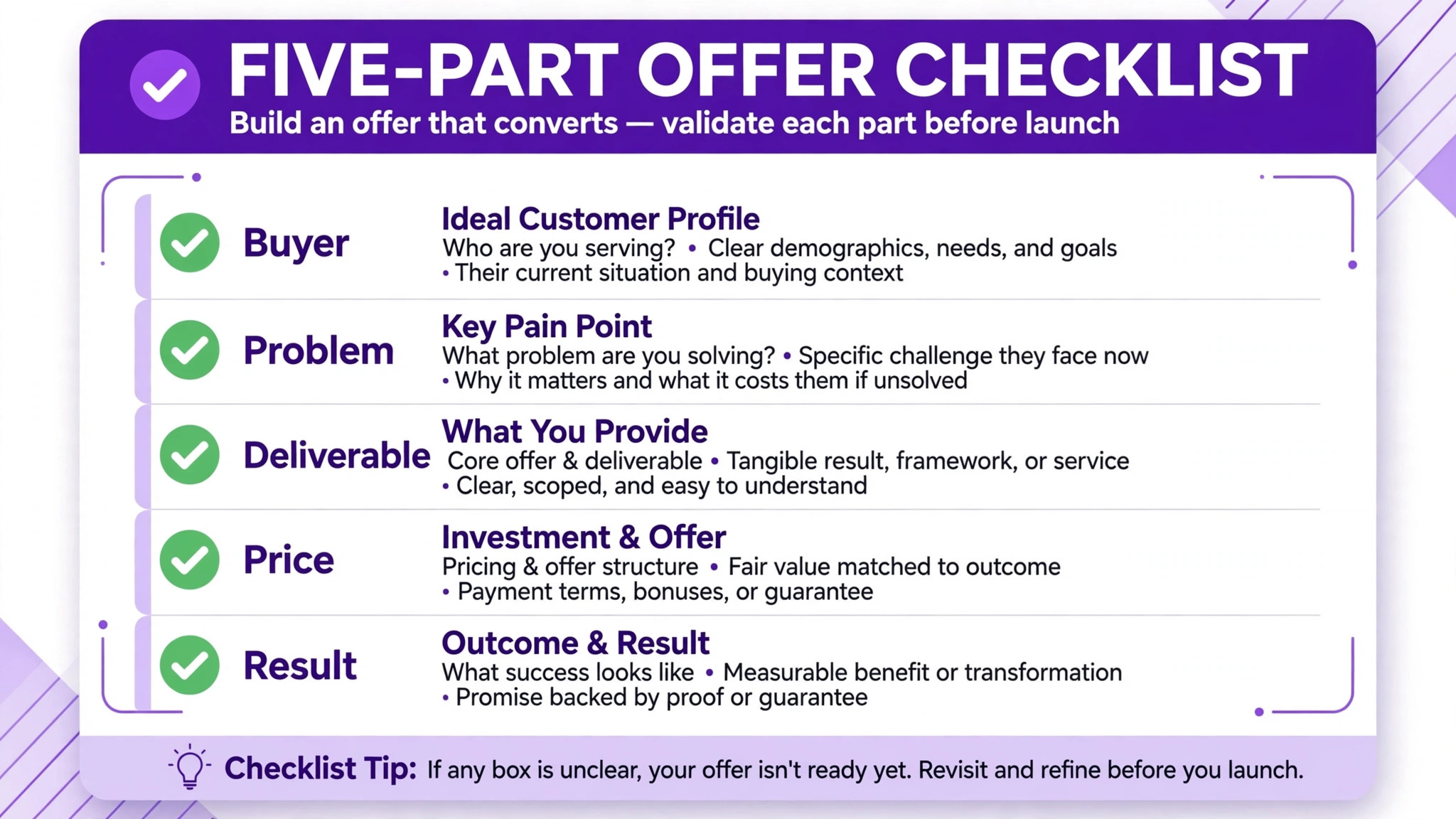
A workable first offer has five parts. One buyer, described precisely, such as independent gym owners in one city, or trades firms with two to ten staff. One problem, stated in the buyer’s words, such as missed calls going unanswered during jobs. One deliverable, such as a booking page plus a call answering setup, delivered in a stated time. One price, stated plainly. And one result the buyer can check, such as every call answered or booked within a stated period. If any of those five is vague, the offer is not ready, and outreach built on it will produce polite interest rather than sales.
Price the first offer for learning, not for maximum profit. A lower introductory price in exchange for a testimonial, a case study, and a referral introduction is a fair trade at this stage, and it is the fastest way to build the proof assets the next section covers. Be explicit about the trade. Tell the client the standard price, the introductory price, and what you ask in return, so the arrangement feels professional rather than desperate. A first offer priced for learning still needs to be paid. Free work attracts buyers who value free work, and they rarely convert into paying clients or useful referrals.
Test the offer on five conversations before you scale outreach. If five people in your target group understand it immediately and at least two want it, the offer is sound. If five people ask what exactly they would get, rewrite the offer, not the outreach script. Outreach cannot fix an offer nobody understands, and the fastest way to waste a warm list is to spend it on a vague proposition.
How to Get First 10 Clients Small Business Owners Win in Practice
Here is the system in one view, before the detail. Week one, define the offer and build the warm list. Week two, contact the warm list in batches, asking for work or for introductions, and publish the first proof asset. Weeks three to six, run the follow-up cadence, collect the first clients, and ask every happy client for a referral at the moment they are happiest. Weeks seven to twelve, turn completed work into proof, keep outreach going to the second ring of contacts, and track which sources produce clients so you can double down on what works.
The system works because it follows the trust gradient. People who already know your work are the easiest yes. Their introductions are the next easiest, because trust transfers with the introduction. Strangers are the hardest, because they have no way to check that you are real and good, and in a market flooded with polished but empty proposals, buyers now doubt claims they cannot verify. That is why warm outreach outperforms cold outreach by an order of magnitude for a new firm, and why proof assets, such as a short case study or a before and after example, matter more than a polished website.
Expect the maths to be humbling and useful. If you contact a hundred warm names, a realistic outcome is thirty conversations, ten serious discussions, and three to five clients, with referrals from those clients producing the rest. That means the list must be larger than the goal. A list of twenty names cannot produce ten clients, no matter how good the offer. Build the list to at least a hundred before you judge whether the system works, and judge it by conversations held, not by messages sent.

Build Your Warm Outreach List of One Hundred Names
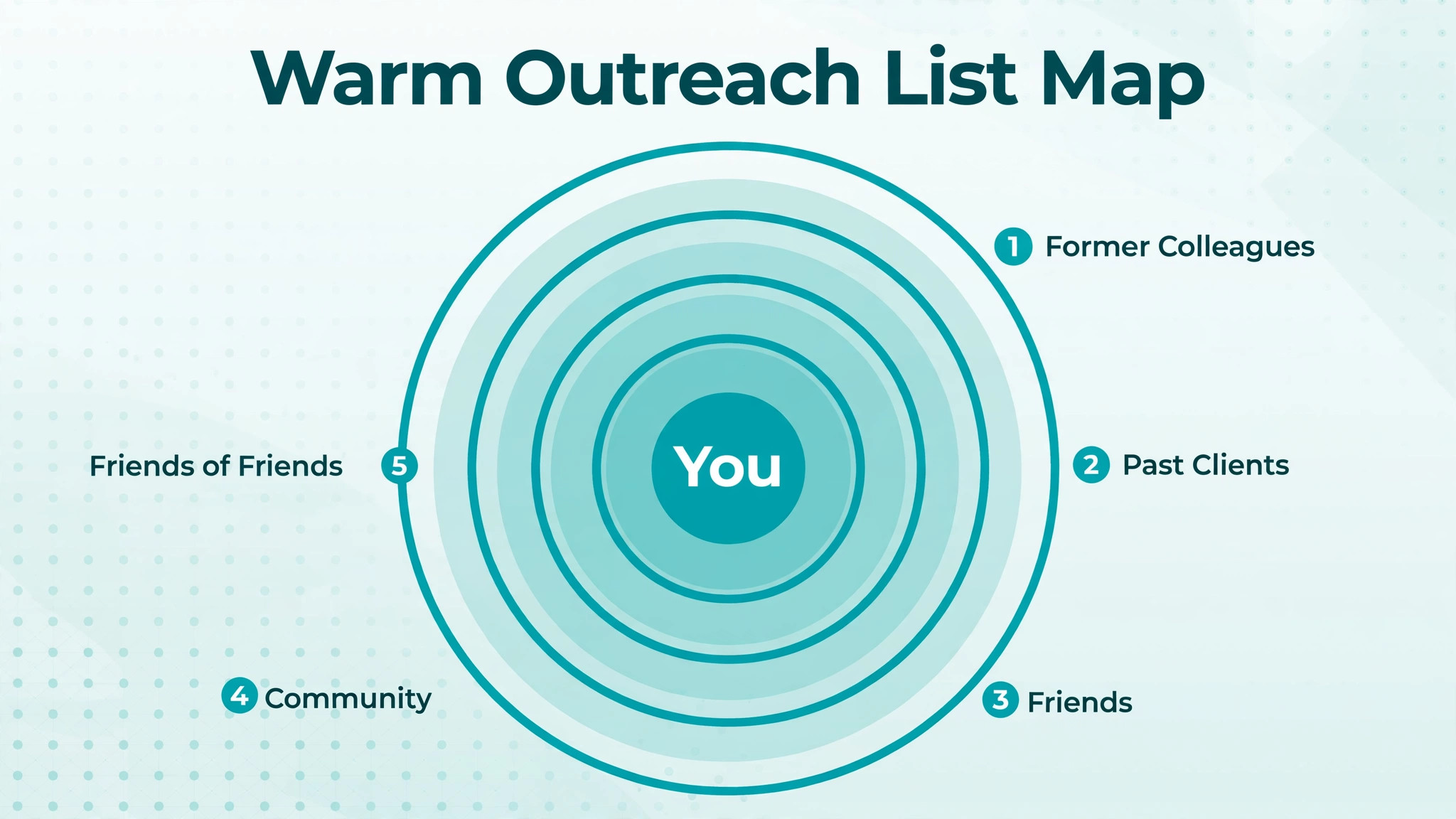
The warm list is the most valuable asset a new business owns, and most owners underestimate its size. It is not just friends and family. It has five rings. Former colleagues and managers who saw your work. Past clients or employers, even from a different field. People in your professional community, such as association members, course mates, or local business owners you know by name. People who follow your work online and have interacted with you. And friends and family who know business owners, even if they are not buyers themselves.
Build the list in a spreadsheet with five columns. Name. How you know them. What they do. Whether they are a potential buyer, a potential introducer, or both. And the date of last contact. Fill it from your phone contacts, your email history, your social connections, and your memory, in that order, because email history surfaces people you forgot you knew. Aim for a hundred names before you start outreach, and keep adding. A list that grows by five names a week never runs dry, while a list that stays fixed runs out just as momentum builds.
Sort the list by warmth, not by size of opportunity. Contact the warmest twenty first, because early conversations build confidence and early wins produce the proof and referrals that make later conversations easier. A common mistake is to start with the biggest opportunity, such as a large company, and stall for weeks waiting on one slow reply. Small, fast yeses first. The large opportunities become easier once you can say you already serve paying clients, which is a sentence that changes how a bigger buyer hears you.
A list built this way is the engine of how to get first 10 clients small business owners win without advertising, because every name on it already carries some trust.
Write Outreach That Gets Replies
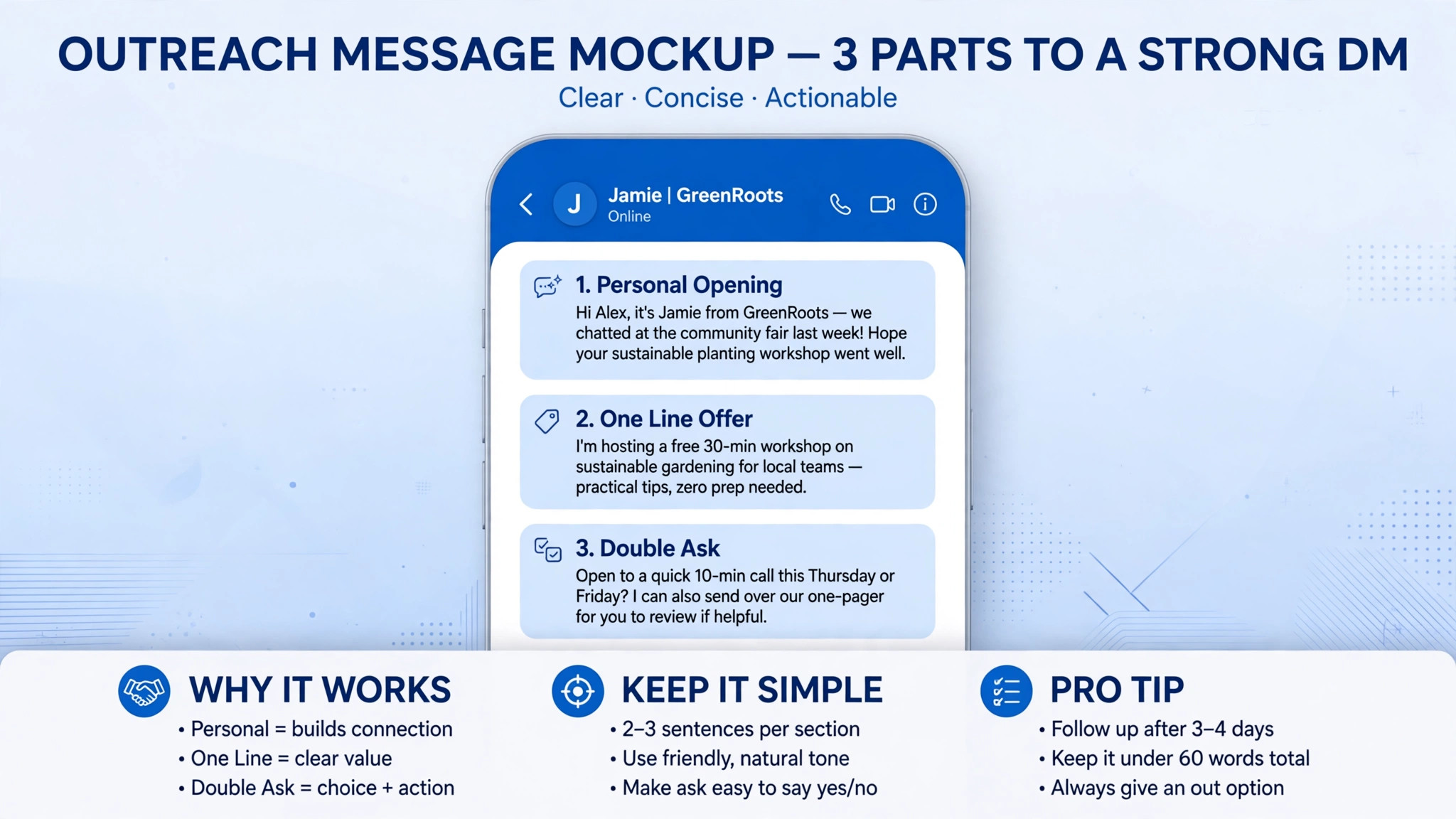
Warm outreach fails most often because it reads like a broadcast. A message that could have been sent to anyone will be treated as if it were sent to anyone, which is to say ignored. The fix is specificity. Open with something true about that person, name the problem you solve for people like them, state the offer in one line, and ask for one clear next step. Four parts, short enough to read on a phone, personal enough that it could only have been written to them.
A workable template runs like this. It was good working with you on a past project, or I enjoyed your recent post about a topic. I now help a specific buyer solve a specific problem, and the offer is a one line description with a price range. Would you be open to a fifteen minute call next week to see if it fits, or is there someone you know who struggles with this problem that I should speak to. Notice the double ask. It gives the recipient two ways to help, buying or introducing, and a recipient who cannot buy will often introduce, which is the second best outcome and sometimes the better one.
Send outreach in batches of ten a day, not a hundred at once. Batches let you learn from replies, fix the message, and follow up properly, while a hundred at once produces a hundred threads you cannot manage. Personalise the first line for every recipient, even when the rest of the message follows a template, because the first line is what proves the message is real. And send from a personal address, not a mailing tool, because a new firm’s outreach is a conversation, not a campaign, and tools that make it look like a campaign cost more replies than they save.
Keep a simple rule about frequency. One message, one follow-up, and one final check-in, spaced across three weeks, is respectful persistence. Beyond that, you are no longer following up. You are pestering, and pestering burns the relationship that made the contact warm in the first place. The follow-up cadence section below sets out the timing in full.
That restraint is part of how to get first 10 clients small business owners protect, since a burned warm contact costs more than a lost cold lead.
The Referral Ask. Timing, Words, and Follow Through
Referrals are the highest converting source a new firm has, and they are also the most underused, because owners feel awkward asking. The research explains why that awkwardness costs so much. Most satisfied customers are willing to refer, but few do unless asked, which means the referral gap is not a satisfaction problem. It is an asking problem. Closing it requires asking at the right moment, with the right words, and then following through visibly.
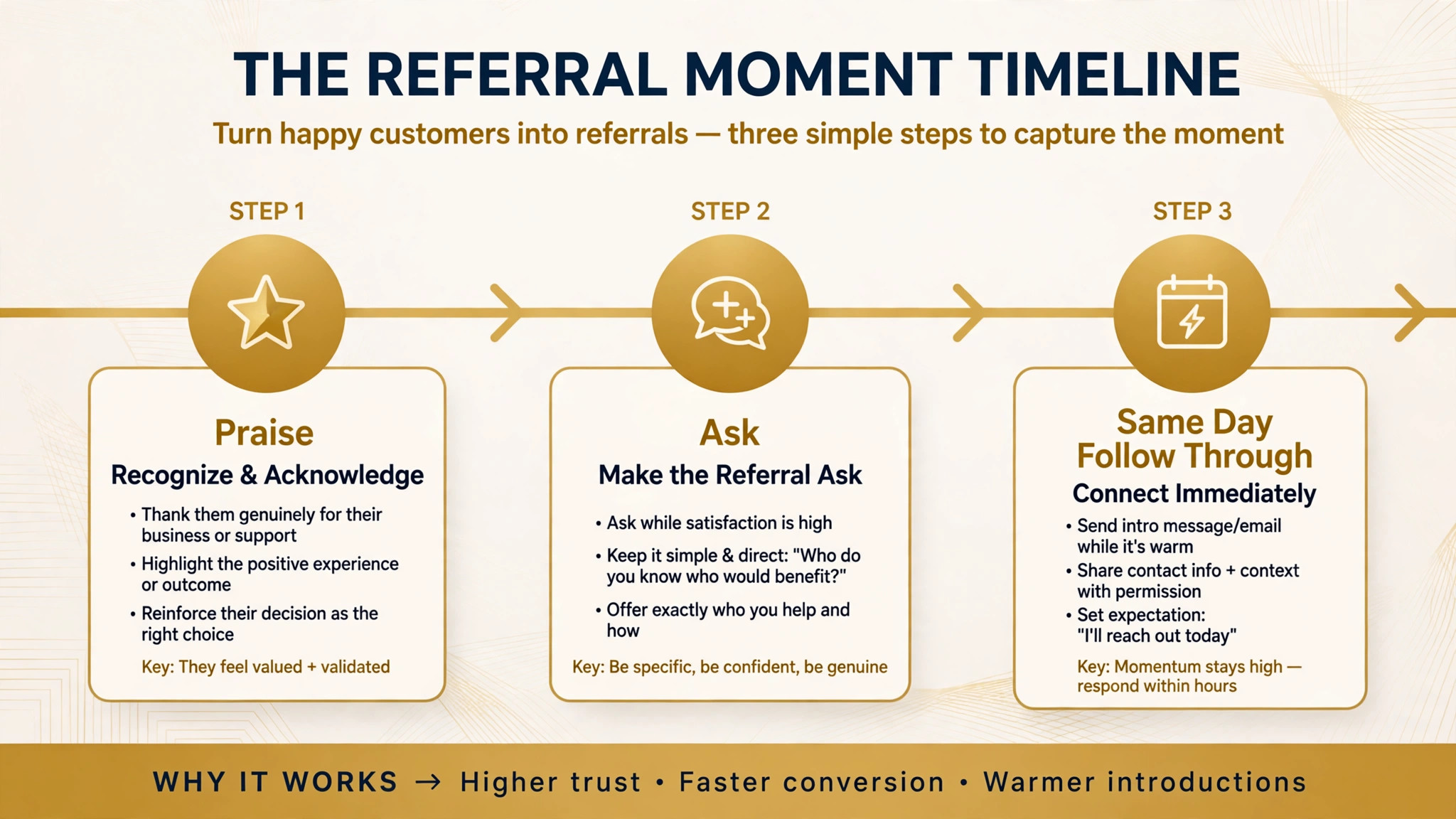
Timing matters more than wording. Ask when the client is happiest, which is usually the moment they praise the work, the moment a result lands, or the moment a project completes well. A client who has just said the work is excellent is already in the mindset to recommend you. Asking in that moment feels natural, because the client has just expressed the sentiment the referral would repeat. Asking weeks later, in a cold email, feels like an obligation, and it is far less likely to produce a name.
Use words that make referring easy. A useful ask runs like this. I am glad that result landed well. I am taking on a small number of new clients like you, and I wondered if there is one person you know who struggles with this problem and would value an introduction. If you are comfortable, a short email introducing us would mean a lot, and I will take good care of them. Notice what the ask does. It limits the request to one person, which feels doable. It describes the ideal introduction, which removes guesswork. And it promises care, which protects the referrer’s reputation, the real reason people hesitate to refer.
Follow through the same day. When a referral arrives, thank the referrer immediately, contact the introduction within twenty four hours, and report back to the referrer on the outcome, whether it becomes a client or not. That loop is what turns one referral into a habit, because a referrer who sees their introduction handled well will refer again. A referrer who never hears what happened will not. Treat the referrer’s trust as the asset it is, because it is worth more than any single client it produces.
That loop is the compounding part of how to get first 10 clients small business owners grow from, because each referral handled well produces the next.
Build Proof Assets Before You Have Clients
Proof is the answer to the question every new firm faces. Why should a stranger trust you. Without clients, you cannot show client results, but you can still show work. Proof assets are the bridge between no clients and ten clients, and they come in five forms.
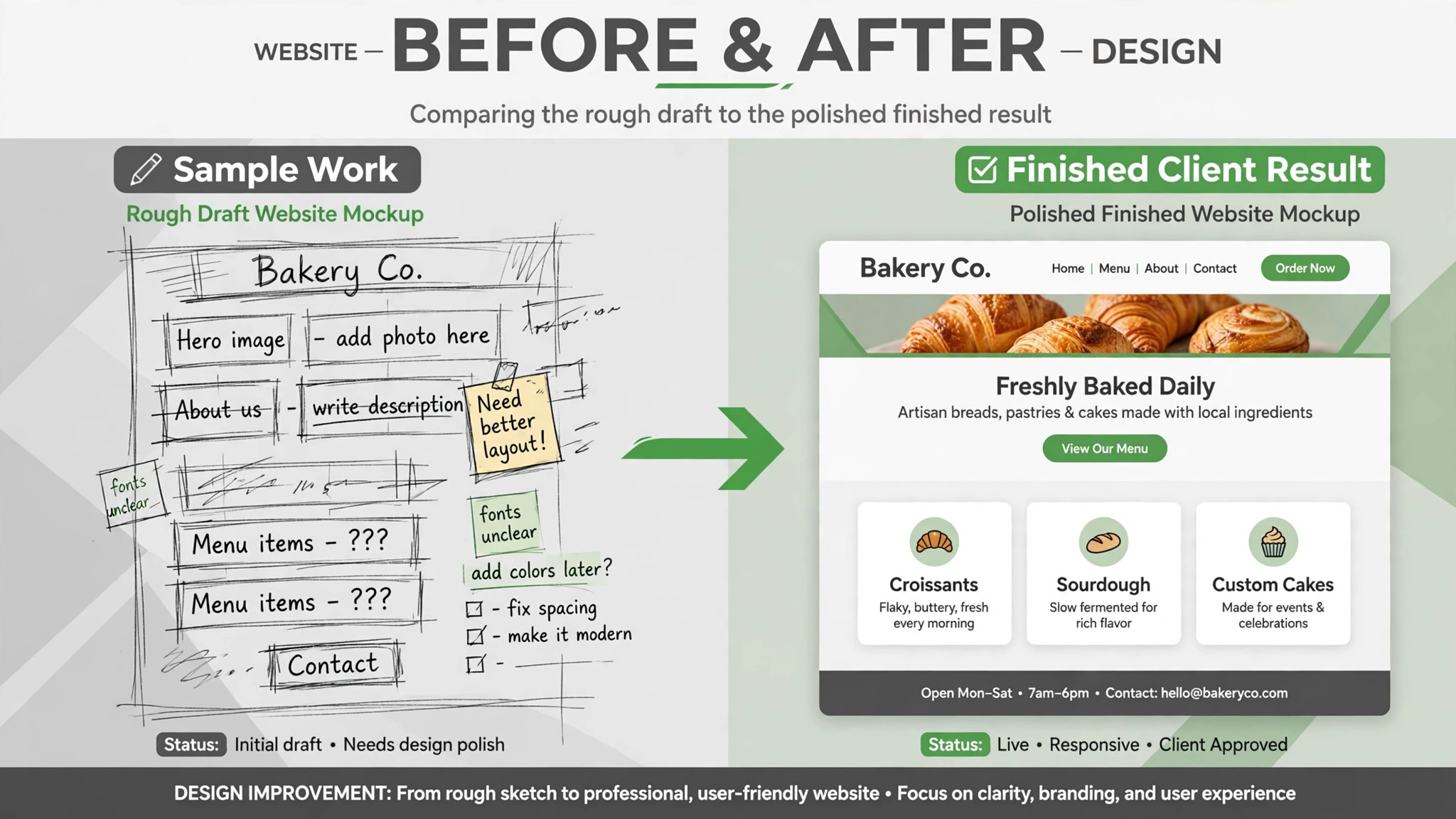
A sample of the work itself, such as a mockup, a template, or a short example built for a typical buyer. A documented process, showing the steps you follow and the standard you hold. A public demonstration, such as a short post or video walking through a real problem and its solution. A testimonial from anyone who has seen your work, including a former manager or colleague. And a small paid test, where a client risks little on a defined piece of work before committing to more.
Start with the sample and the process, because they need no permission. Build one sample that looks like the finished product for your target buyer, and write one page describing how you work, from first conversation to delivery. Publish both where buyers can find them, on a simple page or a social profile, and link them in outreach. A buyer who can see the work stops imagining it, and imagination is where doubt lives. A buyer who can see the process stops worrying about chaos, and chaos is the second doubt that kills new firm sales.
Collect testimonials from the first client onward, and ask for them at the moment of satisfaction, just like referrals. A useful testimonial names the problem, the result, and the experience of working with you, in the client’s own words. One strong testimonial beats five vague ones, because specificity is what a buyer checks. As clients accumulate, turn the best results into short case studies, each with the starting problem, what you did, and the measured result. Three case studies, each one page, are enough proof for most buyers at this stage, and they are the assets that make the eleventh client far easier than the first.
Those three case studies are the proof floor behind how to get first 10 clients small business owners win, and they are worth building before you scale outreach.
The Follow Up Cadence That Closes Clients
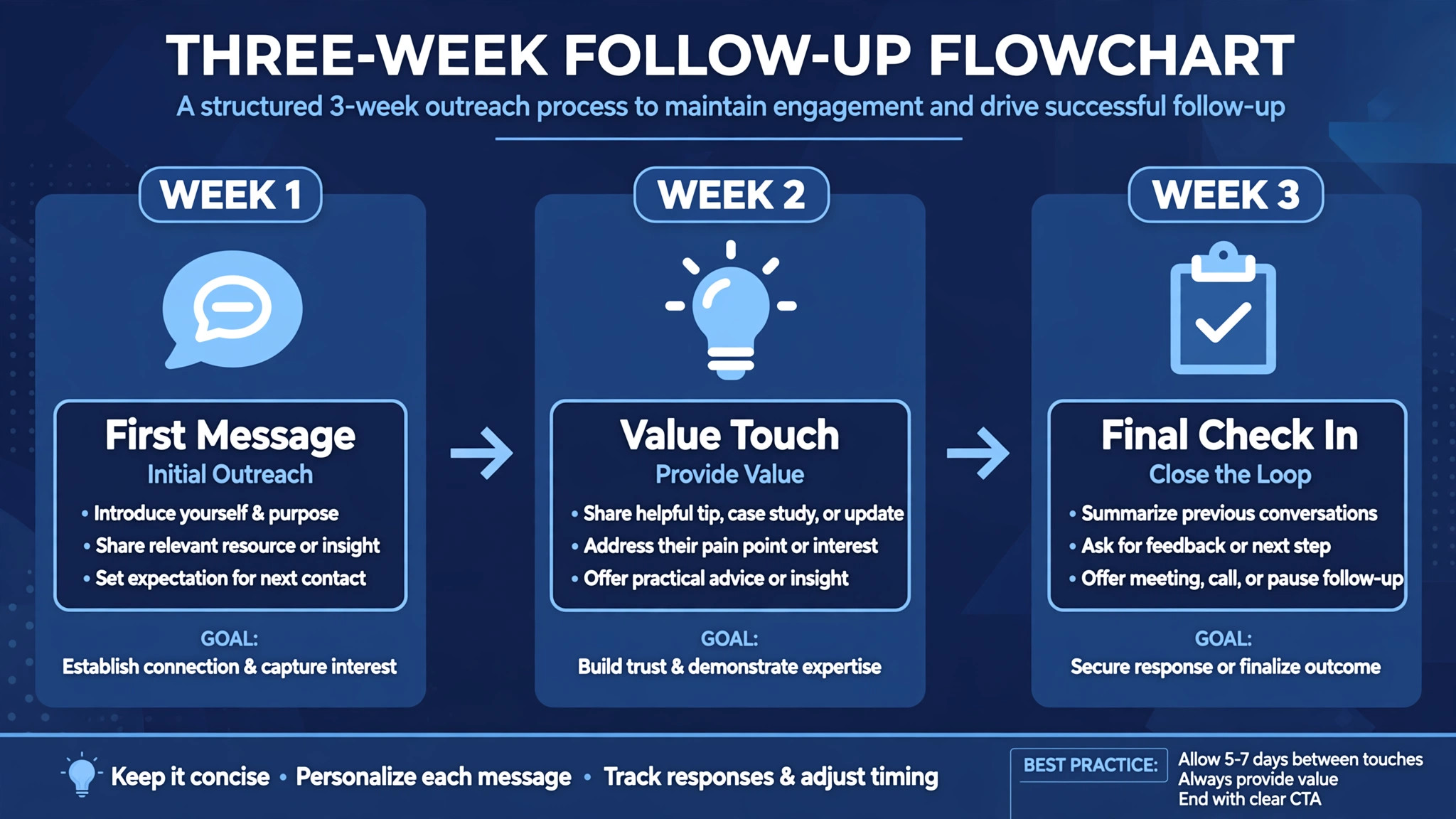
Most first clients are won in follow-up, not in the first message. Buyers are busy, messages get buried, and a first message that receives no reply is usually a timing problem rather than a rejection. A cadence, meaning a planned sequence of follow-ups with fixed timing, turns buried messages into conversations without turning you into a nuisance. The cadence for warm outreach runs across three weeks and three touches.
Touch one is the initial message, personalised and specific, as described earlier. Touch two arrives five to seven days later, and it adds value rather than repeating the ask. Share a relevant example, a short insight, or a sample related to the recipient’s problem, and close with a gentle restatement of the question.
Touch three arrives a week after that, and it is the final check-in. It is short, it acknowledges the recipient is busy, and it offers a clean exit, such as a line saying that if the timing is not right, you will check back in a few months. That exit matters, because it preserves the relationship for later, and a warm contact who says not now is a future client, not a lost one.
Track every touch in the same spreadsheet as the warm list, with the date of each message and the outcome. The discipline of tracking prevents the two classic failures. Forgetting to follow up at all, which loses clients who would have said yes to a second message. And following up too often, which burns a warm relationship. A tracked cadence also shows you the real numbers, such as how many conversations it takes to produce a client, and those numbers are what let you plan the second ten clients with confidence rather than hope.
Handle replies fast. A reply to your outreach is a window that closes quickly, so answer within a working day, and propose a specific next step with a specific time, rather than asking when the recipient is free. A vague reply, such as let us talk sometime, dies. A specific reply, such as a fifteen minute call on Tuesday at ten, or Thursday at two, lives. That small discipline, specific next steps at every stage, is what turns conversations into clients, and it applies to calls, proposals, and closes alike.
That discipline is the quiet half of how to get first 10 clients small business owners convert, because most yeses arrive on the second or third touch.
Where to Find Buyers Beyond Your Warm List
Warm outreach will carry you to the first few clients, but the list eventually needs a second ring. That ring has three parts. Communities where your buyers already gather, partners who serve the same buyers with a different service, and public proof that strangers can discover. Each part works on the same trust principle as warm outreach, only slower, because the trust must be earned in public rather than borrowed from a relationship.
Start with communities. Join the trade group, local business network, or online community where your target buyers ask questions, and answer questions helpfully for several weeks before mentioning your service. A buyer who has seen you solve problems in public already trusts you more than a buyer who received a cold message, and that trust converts at far higher rates. The same applies to local events and workshops. Teaching a short session on a problem your buyers face puts you in front of a room of potential clients as an expert rather than a seller, and the conversations afterward are warm by default.
Partnerships are the second part. Find businesses that serve your buyers without competing with you, such as an accountant for a bookkeeping service, or a web designer for a copywriting service, and propose a simple referral exchange.
Offer to refer your clients to them, and ask them to mention you when their clients need your service. One good partner can produce more clients than a hundred cold messages, because the partner’s recommendation carries their reputation with it. That second ring is where most guides to how to get first 10 clients small business owners build after the warm list point next, and it is the practical extension of how to get first 10 clients small business owners sustain beyond friends and family.
Track the Numbers and Double Down on What Works
A new firm that does not track sources is guessing, and guessing wastes the scarcest resource, which is the owner’s time. Track four numbers weekly. Conversations held, meaning real exchanges, not messages sent. Serious discussions, where a buyer engaged with the offer. Clients won, with the source that produced each one. And revenue from those clients. Those four numbers, reviewed every Friday, tell you more than any marketing theory, because they are your numbers, from your market, with your offer.
After the first five clients, the pattern usually appears. One source outperforms the rest, often warm introductions or one particular community, while another source produces conversations but no clients. Double down on the winner and cut the loser, even if the loser felt more modern or impressive. A new firm’s marketing budget is time, and time spent on a channel that produces conversations but no clients is time stolen from the channel that produces clients. That reallocation, made on evidence rather than fashion, is how the second ten clients arrive faster than the first.
Protect the base you are building as you grow. Reply to clients promptly, deliver the first jobs excellently, and ask for referrals and testimonials at the moments described earlier. The first ten clients are not just revenue. They are the proof, the referrals, and the reputation that produce the next fifty. A firm that serves its first ten brilliantly rarely struggles for its next ten, because each satisfied client becomes a source of the next. A firm that rushes past its first ten to chase more will find the pipeline drying up just when it looks busiest.
Guides to how to get first 10 clients small business owners follow often end with a warning about the wrong goal. Chasing followers, traffic, or brand awareness before ten paying clients is a distraction dressed as progress. Ten paying clients, a proven offer, and a referral habit are the foundation everything else stands on. Build those first, and the larger marketing can wait until it has something real to amplify.
Frequently Asked Questions
How long does it take to get the first ten clients?
Ninety days is a realistic target for a service business with a clear offer and a warm list of a hundred names. Some firms do it faster, particularly where the owner has a strong existing network. Some take longer, usually because the offer was vague or the list was too small. Judge progress by conversations held each week, not by days passed, because conversations are the input you control and clients are the output they produce.
Should I offer free work to win my first clients?
A small paid test is better than free work. A client who pays even a small amount treats the work seriously, gives honest feedback, and is more likely to refer others. Free work attracts buyers who value free work, and it teaches the market that your price is negotiable to zero. If you discount for early clients, state the standard price, the introductory price, and what you ask in return, such as a testimonial and a referral introduction.
What if I have no network and no warm contacts?
Start with the second ring. Former colleagues, course mates, association members, and people who have interacted with your work online all count as warm, even if you have not spoken recently. Reconnecting honestly, by saying you have started a business and would value advice or an introduction, works better than pretending a cold message is warm. Local business communities, trade groups, and online communities for your buyer type are also strong sources, because they gather your buyers in one place.
How many people should I contact to win ten clients?
Plan on a hundred warm names to produce ten clients, with referrals from early clients contributing part of the total. Cold outreach converts far lower, at roughly 3 to 5 percent reply rates, so a cold only strategy needs far larger volumes and far more time. If your warm list is smaller than a hundred, grow it first, by reconnecting, joining communities, and publishing proof, rather than burning a short list on an untested offer.
When should I start paid advertising for clients?
After the first ten paying clients, not before. Paid advertising amplifies an offer that already converts, and it wastes money on an offer that does not. With ten clients, you know which buyers convert, which messages work, and what a client is worth, so you can judge whether an advertising cost makes sense. Before that point, warm outreach and referrals cost time but not money, and they teach you the market faster than any campaign.
How do I get first 10 clients small business owners keep coming back to?
Deliver the first jobs excellently, stay in touch after delivery, and ask for referrals and testimonials at moments of satisfaction. Repeat business comes from clients who felt looked after, not just served, so check in after the work ends, share a useful insight, and make the next purchase easy. A client who returns and refers is worth several new clients, because they cost nothing to acquire and they bring others with them.
More Reading on Stratilyze
– How to Get Clients as a Freelancer with AI in 2026 – How to Fire a Client Professionally as a Small Business – How to Write a Scope of Work as a Small Business – How to Onboard Your First Employee as a Small Business