

The verdict is simple. Stop selling hours and custom quotes for work you repeat every week, and start selling three defined packages with fixed scope, fixed prices and a clear step up from one to the next. Most clients do not want to design a service with you. They want to recognise their problem in a package, see the price, and choose a level with confidence. Learning how to package services small business offers around that behaviour is the fastest way to shorten sales conversations, protect margins and make every proposal feel like a decision rather than a negotiation.
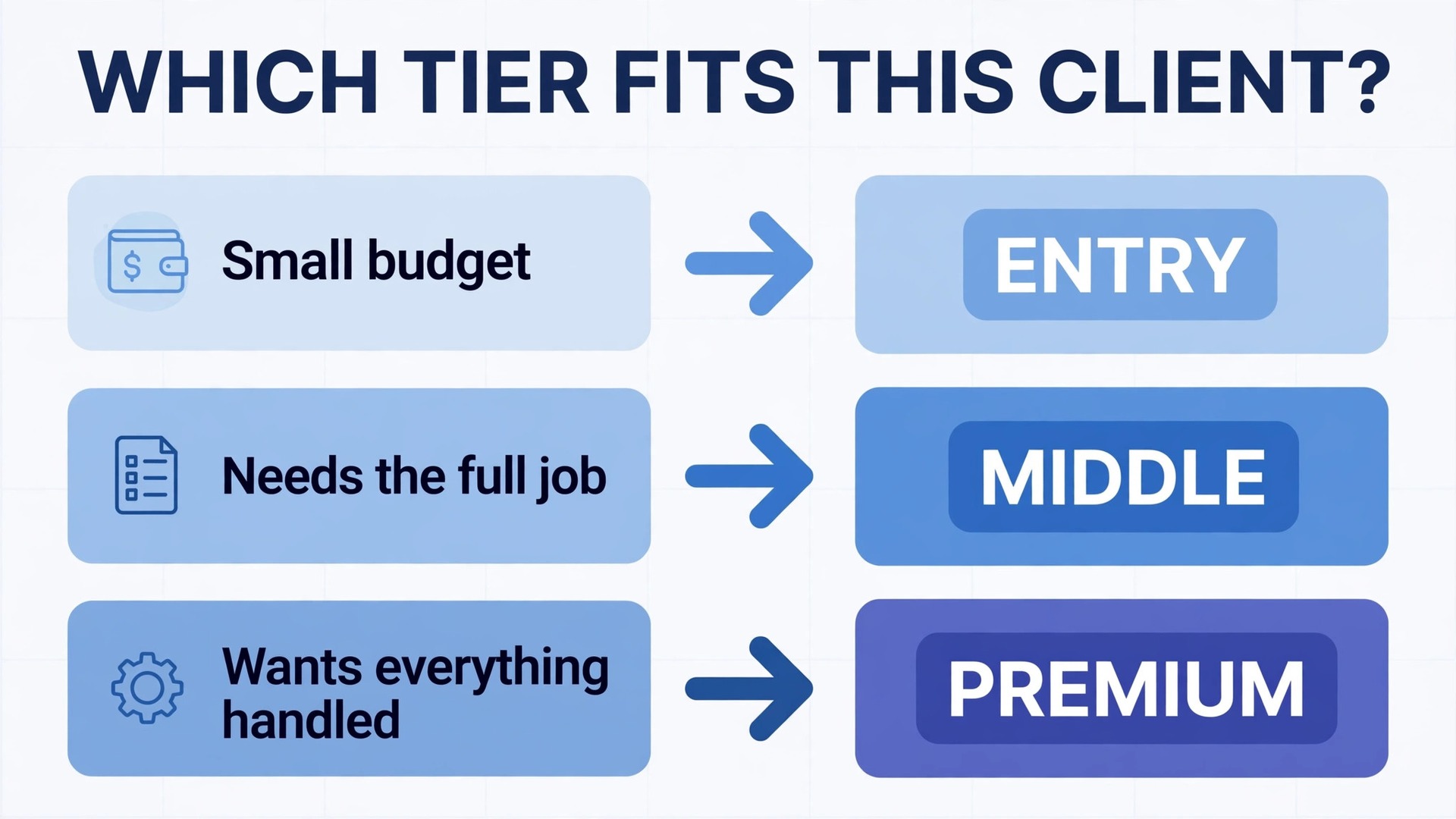
Packaging works because it changes the question the client asks. A single custom quote forces a yes or no decision, and a no ends the conversation. Three packages turn the same conversation into a choice between levels, and the client who would have said no to one price often says yes to the entry level, then upgrades later when trust grows. Pricing guides on tiered offers consistently report that the middle tier draws the majority of buyers when it is framed as the best value, often around six to seven buyers in ten, because the top tier makes the middle look reasonable and the entry tier makes it look generous.
This guide builds a package menu from scratch. It covers naming tiers so clients self select, writing scope lines that stop scope creep, setting price anchors that make the middle tier the obvious choice, building an upsell path from entry to premium, and testing the menu every quarter. A worked menu for a service business runs through the middle of the guide, and every example can be adapted to a different trade by swapping the deliverables while keeping the structure.
How to Package Services Small Business in Three Tiers
Three tiers is the number that works, and the reason is comparison, not tradition. One tier offers no choice. Two tiers force a cheap versus expensive judgment that many clients resolve by picking cheap. Four or more tiers create decision fatigue, and clients delay rather than decide. Three tiers give a low entry point, a recommended middle and a premium ceiling, and the client can place themselves on that ladder in seconds. The tiers must differ in real value, meaning volume, speed, access or depth, not in vague wording that clients cannot compare.
Start by listing everything you currently sell as custom work, then group those services into the jobs clients actually buy. A cleaning business might group standard cleans, deep cleans and move out cleans. A design business might group logo refreshes, brand kits and full identity systems. A bookkeeping business might group monthly reconciliations, payroll plus reporting, and advisory plus forecasting. Each group becomes one package family, and each family gets three tiers. A business with five unrelated services does not need fifteen packages. It needs one menu per service family, presented separately, so each conversation stays simple.
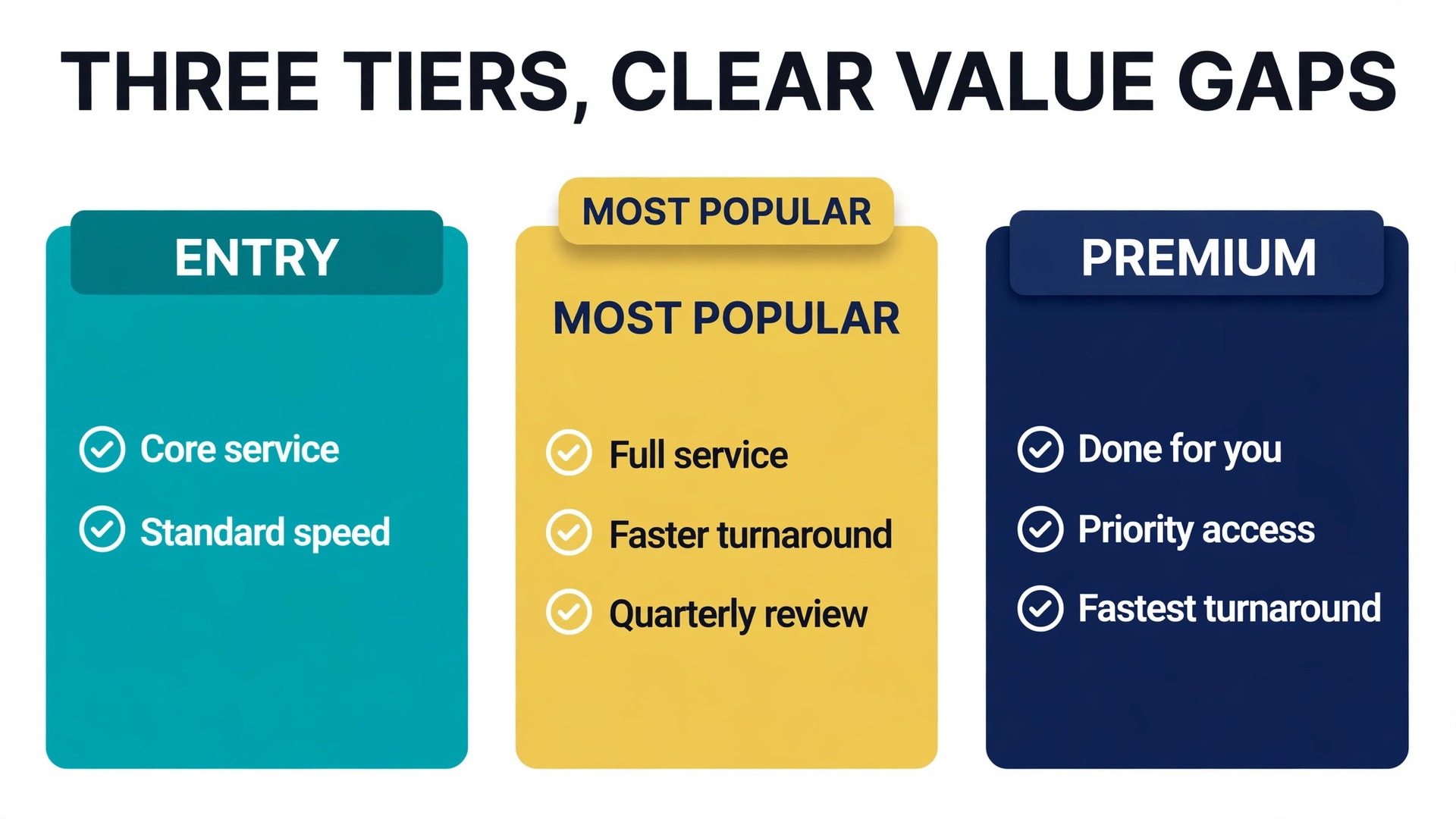
Define the entry tier as the minimum viable version of the service. It must solve the core problem profitably, with strict limits on scope, revisions and support, so it stays cheap to deliver. Define the middle tier as the complete version most clients need, with the extras that make the work genuinely better, such as faster turnaround, more revisions or a quarterly review. Define the premium tier as the done for you version, with priority access, the fastest turnaround and the extras that only a minority need but that minority will gladly pay for. When the tiers are defined this way, learning how to package services small business offers becomes an exercise in sorting real work, not inventing marketing labels.
Naming Tiers So Clients Self Select
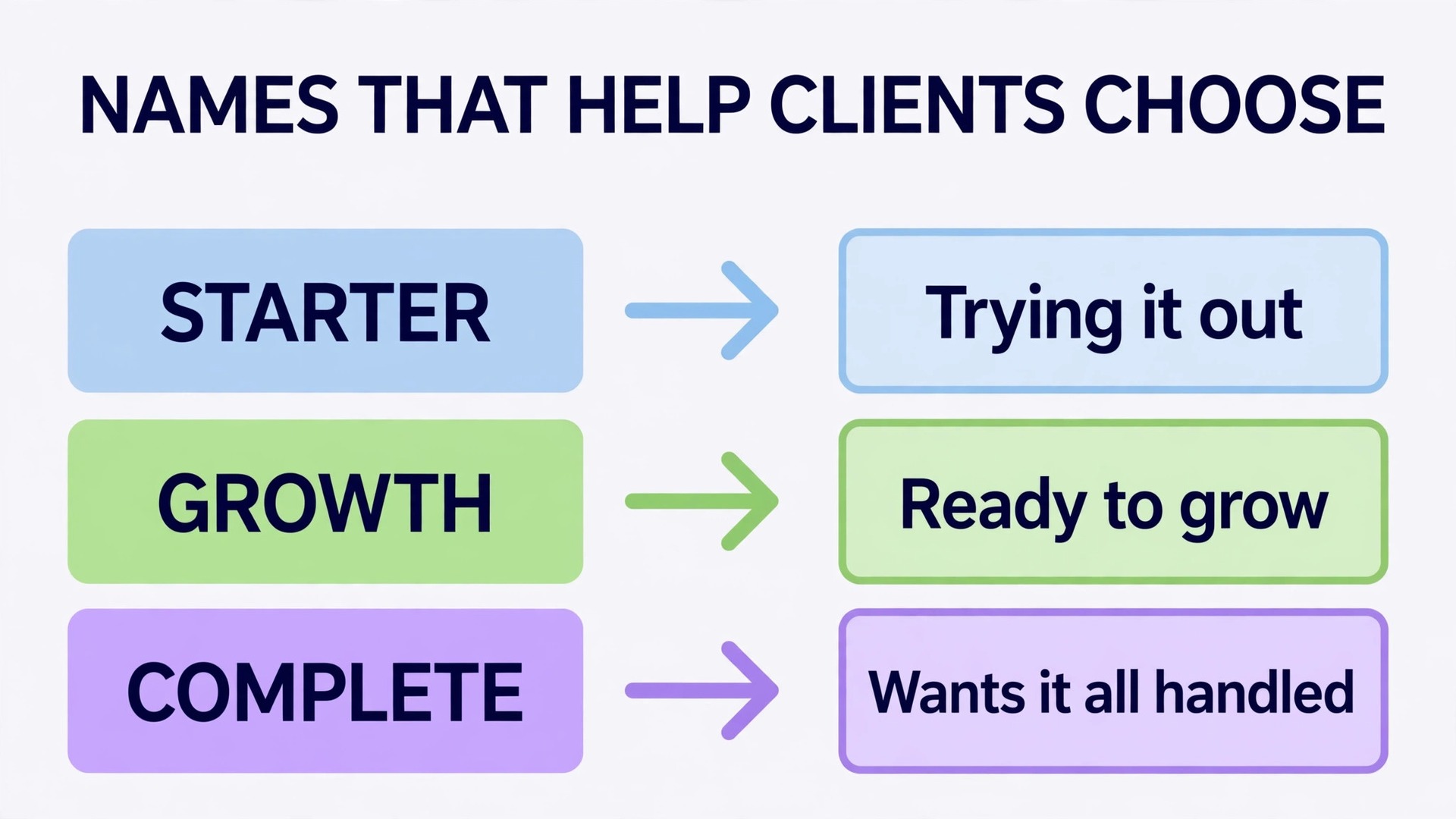
Names do quiet selling work, and generic labels waste that work. Basic, Standard and Premium tell the client nothing about who each tier is for, so every buyer must read the full scope to place themselves. Names tied to outcomes or buyer types do the placing for them, such as Starter, Growth and Scale for a marketing service, or Essential, Complete and Concierge for a home service. The name should let a client think, that one is for businesses like mine, within seconds of reading the menu.
Mark the middle tier as the recommended choice, plainly and visibly. A small label such as most popular or best value on the middle tier guides the majority toward the package you most want to sell, and it reassures hesitant buyers that they are choosing the normal option rather than overspending. Pricing guides for agencies note that the middle tier should be positioned as the best value offer by design, because that is where most clients land, and a menu that hides its recommended tier forces every buyer to guess. Do not mark two tiers as most popular, because a menu with two recommendations recommends nothing.
Keep tier names consistent across the business. A client who buys Growth marketing and later sees Growth bookkeeping should recognise the same logic, and a team member who sells the menu should not need a translation sheet. Avoid cute names that only insiders understand, and avoid names that promise results the tier cannot guarantee, such as Guaranteed Growth for a tier that delivers posts rather than revenue. Honest names build the trust that makes the upsell path work later, while clever names create questions that slow the sale.
Writing Scope Lines That Stop Scope Creep
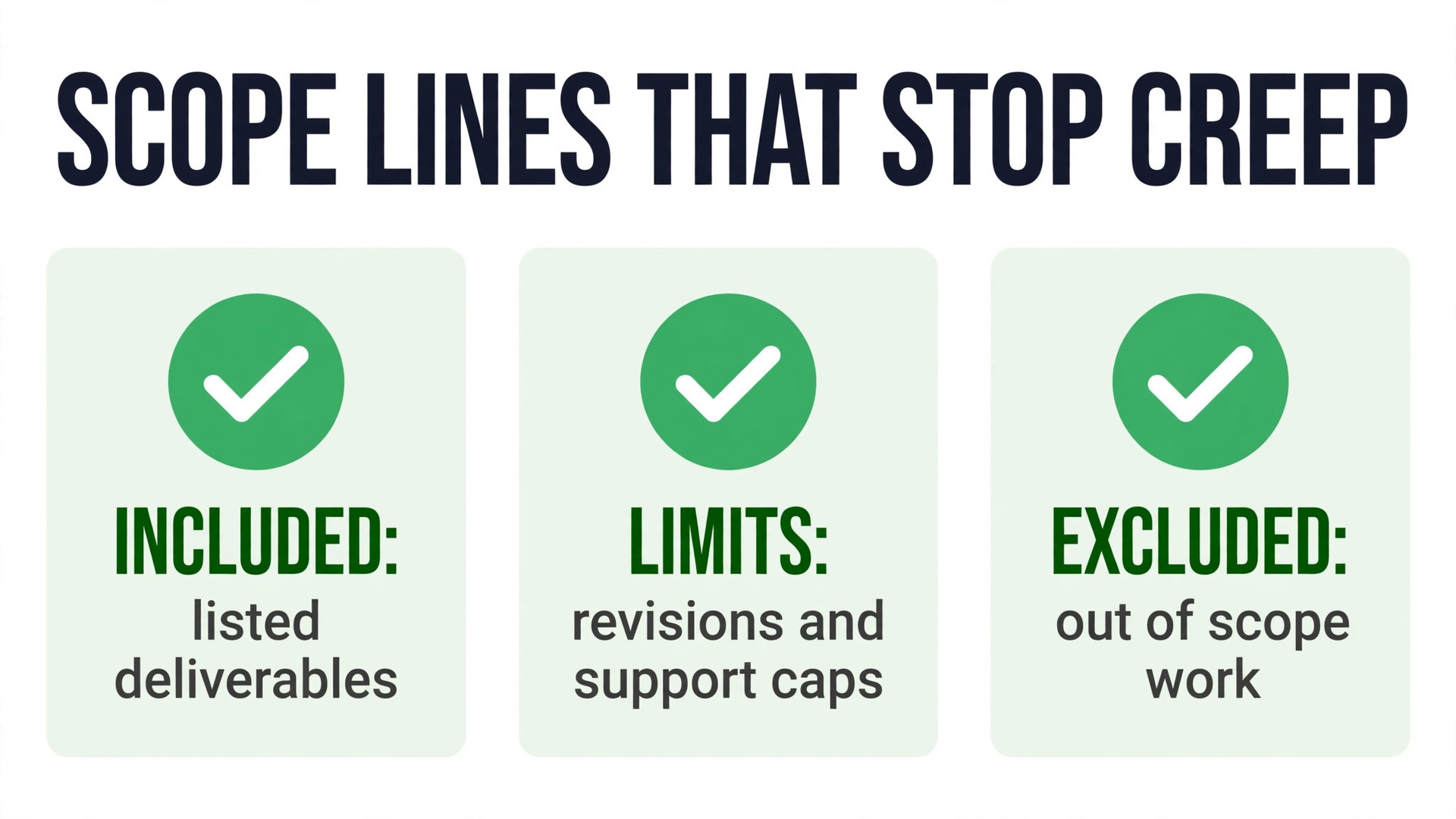
Scope lines are the sentences that decide whether a package profits or bleeds, and each tier needs its own scope written in deliverables, numbers and limits. A scope line should state what is included, how much of it, how many revision rounds apply, how fast it arrives, and what is explicitly excluded. A web care package that promises updates, backups and small content changes needs a definition of small, such as changes under thirty minutes, with larger changes billed separately. Without that definition, every client request becomes a negotiation, and negotiations under deadline pressure always expand scope for free.
Write exclusions as plainly as inclusions, because exclusions prevent the most common disappointment. A social media package that includes twelve posts should state whether photography, video editing and paid ad spend are included or extra. A cleaning package that includes standard rooms should state whether ovens, windows and laundry are included or add ons. Clients respect boundaries stated before purchase far more than boundaries introduced halfway through delivery, and the menu is the cheapest place to state them, because it costs nothing to add a line and it saves hours of awkward conversation later.
Revision limits deserve special care, since unlimited revisions are the fastest way to destroy a package margin. State the revision rounds per deliverable, the turnaround for each round, and the price of extra rounds, and apply those limits consistently. A client who knows the rules at purchase will usually work within them, while a client who discovers the rules after the third revision round will feel penalised. The same logic applies to support. State the response time and the channel for each tier, so premium clients genuinely receive faster access, and entry clients understand what their price buys. That difference is part of the value gap between tiers, not an accident of who shouts loudest.
Price Anchors and the Middle Tier Effect
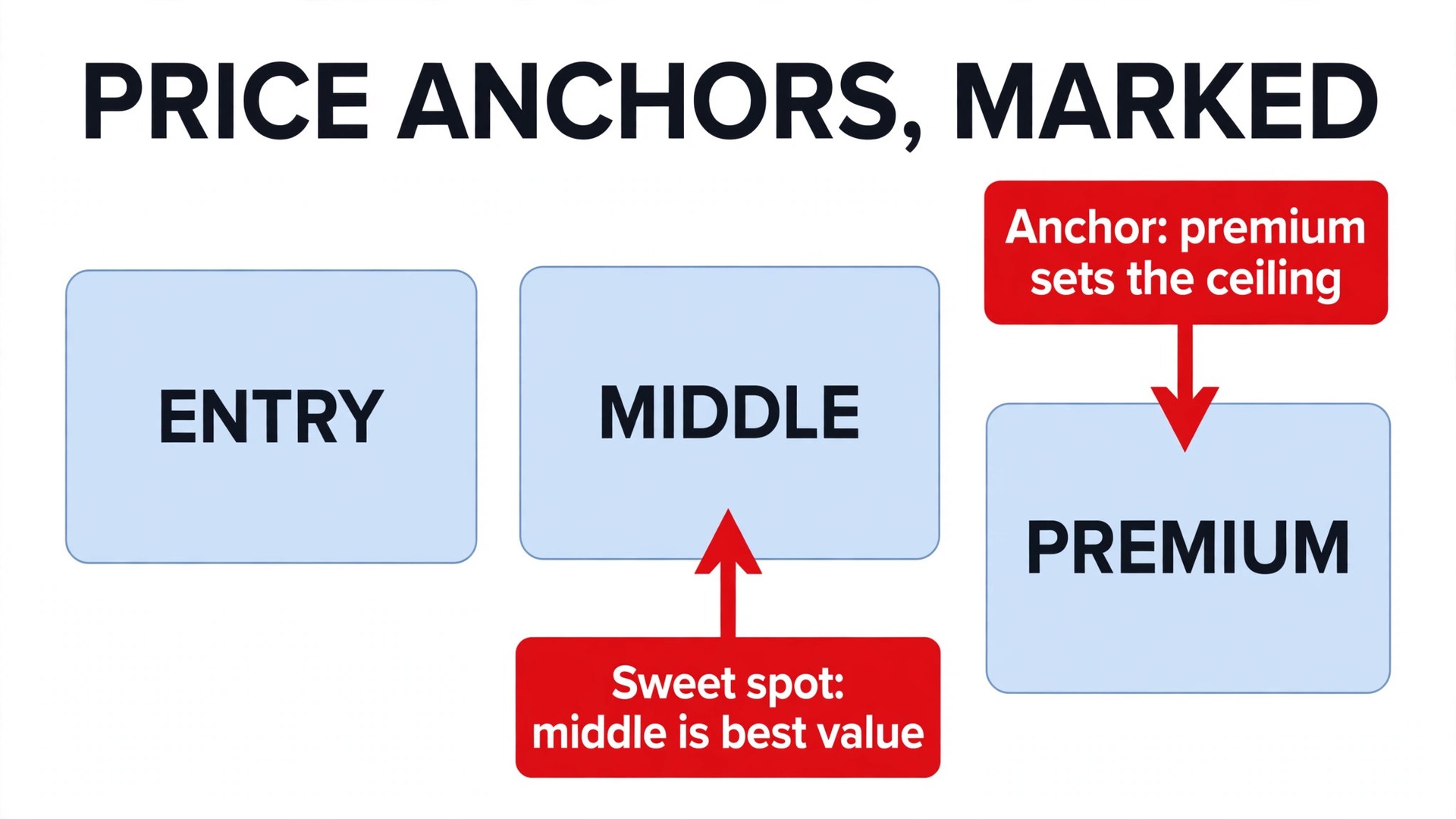
Price anchors work by giving the client a reference point before they judge any single price. The premium tier is the anchor. A client who first sees a premium price of 2,400 dollars a month will judge a middle price of 1,200 dollars as reasonable, while a client who only ever sees 1,200 dollars will judge it against a rival quote or against zero. That is why the premium tier must be real, with real extras and a real price, rather than a token high number nobody buys. A premium tier that nobody ever buys still earns its place if it makes the middle tier look like value.
Spacing between tiers matters as much as the prices themselves. Guides on tiered pricing suggest spacing of roughly one and a half to two and a half times between tiers, so clients see meaningful choices rather than noise, and one practitioner guide puts the standard tier just under twice the entry price with premium just under three times the standard. The exact multiple matters less than the principle, which is that the step from entry to middle should feel smaller than the step from middle to premium, so the middle feels like the smart move. Test your own spacing against that principle, and adjust until the middle tier is the obvious value.
Public pricing versus starting at pricing is a judgment call that depends on how standard the work is. Productised services with clear deliverables benefit from public prices, because public prices build trust and pre qualify leads before any sales conversation. Complex or high ticket services suit starting at prices, because the scope genuinely needs a conversation before a firm figure is honest.
A hybrid works for many small businesses, meaning public prices for the entry and middle tiers, with the premium tier marked as custom or by application, so the menu still anchors value while leaving room for genuinely bespoke work. Whatever you choose, state it on the menu rather than hiding prices entirely, because hidden prices invite comparison shopping while public prices invite a choice.
An upsell path is a planned journey, not a sales trick, and it starts with the entry tier delivering an excellent result within its limits. A client who buys entry and receives sloppy work will never upgrade, while a client who buys entry and receives a clean, on time result with clear evidence of what the next tier would add will often upgrade at renewal. The upgrade offer should arrive with proof, such as a short note showing what the middle tier would have covered on the last three jobs, and a price for the step up, so the client can decide from evidence rather than persuasion.
Design the path with natural triggers rather than calendar pressure. A bookkeeping client who hires a third employee has outgrown a solo tier and needs payroll. A cleaning client who adds a second property has outgrown a single site tier. A marketing client whose content volume doubles has outgrown a starter posting tier. Build those triggers into the service itself, by reviewing client circumstances quarterly and naming the trigger when it appears, so the upsell feels like advice rather than a pitch. Clients accept upgrades that match a change in their own business, and they resist upgrades that arrive on a sales schedule disconnected from their reality.
Keep the downgrade path honest too, because a menu clients cannot leave becomes a trap, and traps produce cancellations rather than loyalty. State the notice period for moving down a tier, apply it fairly, and treat a downgrade as a retained client rather than a lost one. A client who steps down for a quiet quarter and returns to the middle tier later is worth far more than a client who cancels in frustration and never returns. The upsell path works in both directions when it is built on trust, and trust is built by delivering the entry tier well, naming the next step plainly, and letting the client choose the pace.
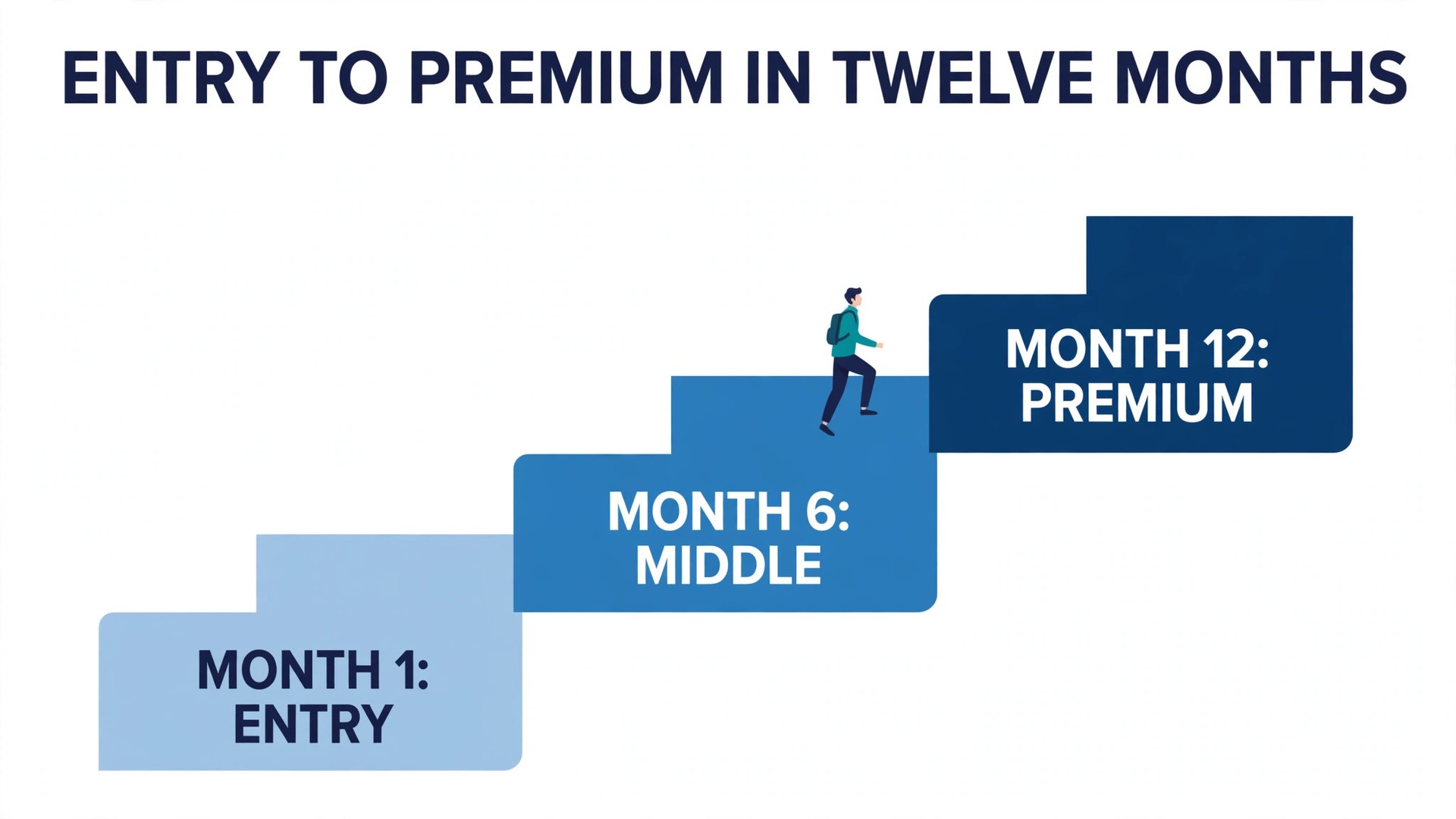
A worked menu makes the structure concrete, and the example below uses a monthly marketing support service because its deliverables are easy to compare. The entry tier, called Starter, costs 600 dollars a month and includes four social posts, one email newsletter, a monthly report and email support with a two day response time.
The middle tier, called Growth, costs 1,200 dollars a month and includes twelve posts, two newsletters, two blog articles, a monthly report, a strategy call and priority support with a one day response time. The premium tier, called Scale, costs 2,400 dollars a month and includes everything in Growth plus daily posting, four blog articles, paid ad management on one platform, a dedicated account lead and same day support.
Notice the value gaps, not just the price gaps. Growth doubles the entry price and more than doubles the output, while adding a strategy call and faster support that entry clients cannot buy separately. Scale doubles Growth again and adds paid ad management and a dedicated lead, which are the extras a larger client actually needs. A client comparing the three can place themselves quickly, and the menu answers the two questions every buyer asks, which are what do I get and what does the next level add. That clarity is the practical payoff of learning how to package services small business offers around real deliverables rather than vague promises.
| Tier | Monthly price | Core deliverables | Support and extras |
|---|---|---|---|
| Starter | 600 dollars | 4 posts, 1 newsletter, monthly report | Email support, 2 day response |
| Growth, most popular | 1,200 dollars | 12 posts, 2 newsletters, 2 blog articles, report, strategy call | Priority support, 1 day response |
| Scale | 2,400 dollars | Everything in Growth plus daily posting, 4 blog articles, paid ads, dedicated lead | Same day support |
Adapt the same skeleton to any trade by swapping deliverables and keeping the gaps. A cleaning business might offer a standard clean, a deep clean plus laundry, and a full property service with windows and ovens. A bookkeeping business might offer monthly reconciliation, reconciliation plus payroll and reporting, and a full advisory tier with forecasting and quarterly reviews. The prices change, the spacing logic stays, and the middle tier stays the recommended choice. Before publishing any menu, cost each tier from real hours and materials, and confirm that every tier profits at its stated price, because a menu that sells a losing tier at volume is a fast route to burnout.
Selling Packages Without Discounting Them Away
Packages sell best when the conversation starts from the client problem and lands on the matching tier, rather than starting from price and haggling downward. Ask what the client needs, how fast they need it, and what level of support matters to them, then recommend one tier with a reason tied to those answers. A recommendation with a reason feels like advice, while a menu left for the client to decode alone feels like a price list. The recommendation also protects the middle tier, because a client who hears why Growth fits will rarely demand Starter pricing for Growth scope.
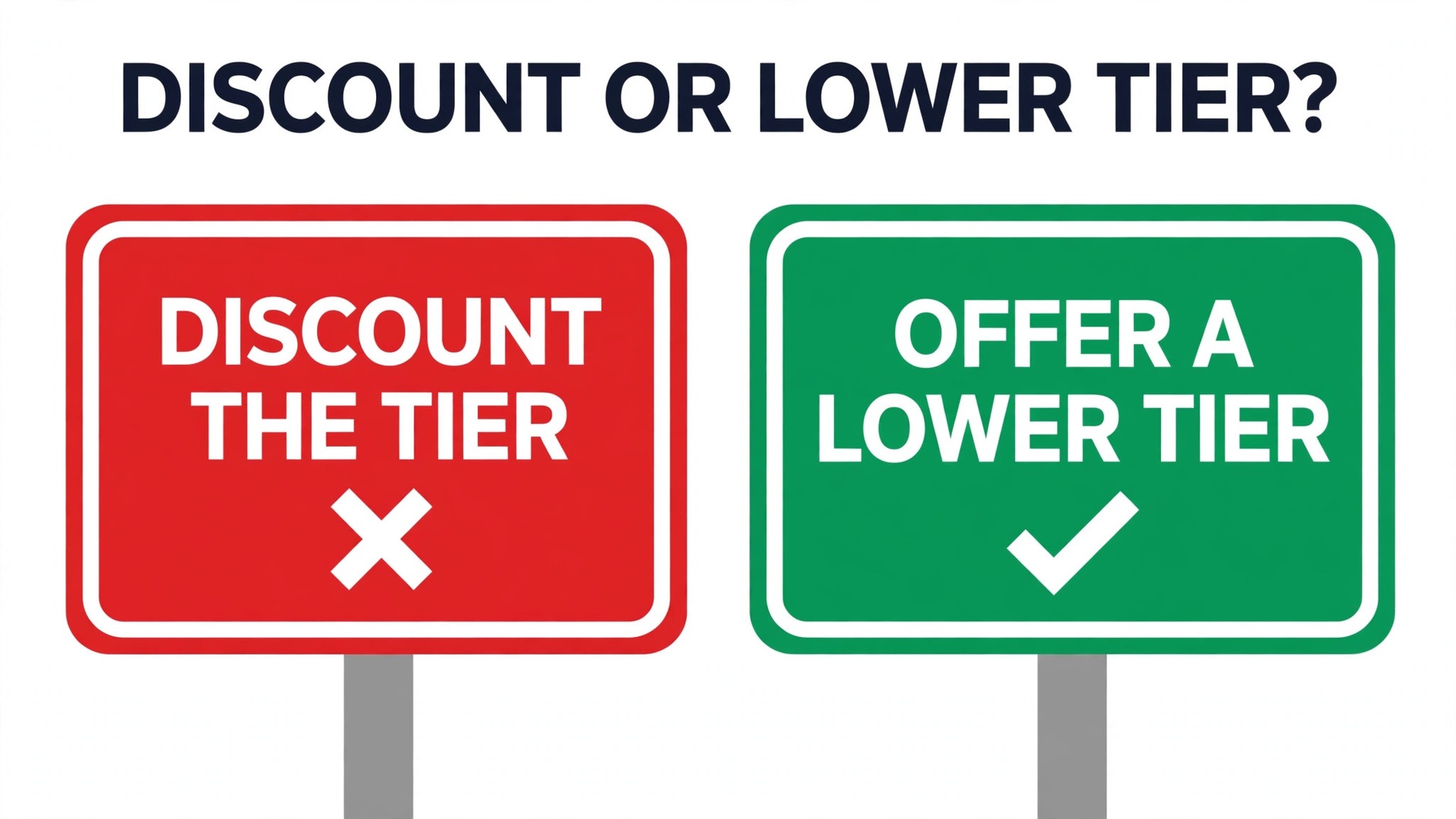
Discounting is the fastest way to destroy a package menu, and it usually starts innocently with a ten percent goodwill gesture. A discounted middle tier teaches the client that the published price is negotiable, and the next renewal will open with the same negotiation. If a client genuinely cannot afford the recommended tier, offer the lower tier at its full price instead of discounting the higher tier, because a smaller package at a healthy price preserves the menu logic and leaves an upgrade path. Learning how to package services small business offers profitably therefore includes learning when to say that the lower tier is the right fit, rather than bending the higher tier to fit the budget.
Handle custom requests with a clear rule that protects the menu without rejecting the client. Small additions that fit inside a tier can be added as priced extras, listed on the menu as add ons with fixed prices, such as extra posts, extra revisions or rush delivery. Large custom requests that break the tier structure become a custom quote, priced separately and kept outside the menu, so the menu stays clean for the next buyer. Add ons also create a gentle upsell path, because a client who buys two extras every month is showing, in spending behaviour, that the next tier would serve them better, and that observation makes the upgrade conversation easy.
Testing and Revising Packages Every Quarter
A package menu is a living offer, not a poster, and it needs a quarterly review driven by data rather than opinion. Each quarter, record how many clients chose each tier, which tier earns the best margin, which add ons sell most, and which scope questions clients ask repeatedly. A tier nobody buys is either mispriced or misdescribed, and the fix is usually a scope change rather than a price cut, such as moving one popular extra from premium into the middle tier. A tier everybody buys may be underpriced, and the fix is a price rise paired with a small scope improvement so existing clients feel the rise buys something.
Client questions are the best source of menu improvements, because a question asked three times reveals a gap in the menu itself. If clients keep asking whether photography is included, add a photography line to the scope, either as included or as an add on, so the next buyer does not need to ask. If clients keep asking for a tier between entry and middle, consider whether the gap is too wide, and either narrow the spacing or add a clearly priced add on that bridges it. A menu revised from real questions gets clearer every quarter, while a menu left untouched slowly drifts away from what clients actually want.
Retire packages that no longer serve the business, but retire them kindly. When a tier stops selling or stops profiting, stop offering it to new clients, honour it for existing clients through their current term, and offer those clients a migration to the nearest current tier with a clear explanation of what changes. Forced migrations create cancellations, while explained migrations with a notice period preserve trust. The goal of quarterly testing is not constant change for its own sake, but a menu that stays profitable, clear and matched to real demand as the business grows. That testing habit completes the loop of learning how to package services small business offers that stay relevant year after year.
Add ons are the small priced extras that sit beside the tiers, and a good extras menu earns its place by solving the requests that fall between tiers. A client on the middle tier who needs two extra posts this month, a rush turnaround once a quarter, or an extra revision round on one article should be able to buy exactly that, at a fixed price, without renegotiating the whole package. Price each extra from its real cost plus margin, publish the prices beside the tiers, and let clients add them in writing. That simplicity keeps small requests profitable instead of letting them become free favours that erode the tier margin.
Design extras to point toward the next tier rather than replacing it. If an extra costs nearly as much as the step up to the next tier, the client will notice, and the upgrade conversation writes itself. If extras are priced so cheaply that a client can rebuild the premium tier from entry plus extras at a lower total, the tier structure collapses, and the business ends up delivering premium work for entry money. Check the arithmetic before publishing, by pricing the most common extras bundle against the next tier, and adjust extra prices until the tier step remains the better deal for any client who needs extras regularly.
Extras also reveal what the menu is missing, which makes them a research tool as much as a revenue line. Track which extras sell every month, and when one extra sells to a third of clients on a tier, consider folding it into that tier at the next quarterly review, with a small price adjustment to cover it. Learning how to package services small business offers well means listening to extras sales, because clients vote with extras purchases for the features they actually value. A menu that absorbs its best selling extras gets simpler and stronger every quarter, while a menu that ignores them slowly fills with side deals nobody can track.
Frequently Asked Questions
How many packages should a small business offer?
Three tiers per service family is the number that works best for most small businesses, because it gives an entry point, a recommended middle and a premium ceiling without decision fatigue. One tier forces a yes or no decision, two tiers push buyers toward cheap, and four or more tiers delay decisions. If you sell unrelated services, build one three tier menu per service family rather than one giant menu.
Should package prices be public on my website?
Public prices suit productised services with clear deliverables, because they build trust and pre qualify leads before any sales conversation. Complex or high ticket services suit starting at prices, since the scope genuinely needs a conversation first. A hybrid works well, meaning public prices for entry and middle tiers with premium marked as custom, so the menu still anchors value while leaving room for bespoke work.
What if a client wants something outside every package?
Handle small additions as priced extras with fixed prices on the menu, such as extra posts, extra revisions or rush delivery. Handle large custom requests as a separate custom quote kept outside the menu, so the menu stays clean for the next buyer. A client who buys the same extras every month is showing that the next tier fits them better, which makes the upgrade conversation natural.
How do I stop clients asking for more than their tier includes?
Write scope lines in deliverables, numbers and limits, including revision rounds, turnaround times and explicit exclusions, and apply those limits consistently. Clients respect boundaries stated before purchase far more than boundaries introduced halfway through delivery. When a request falls outside scope, quote it as an extra or as a tier upgrade, kindly and at once, rather than absorbing it silently until the package loses money.
When should I raise package prices?
Review the menu quarterly against tier choice, margin per tier, add on sales and repeated client questions, and raise prices when a tier is underpriced, when costs rise, or when scope improves. Pair a rise with a small scope improvement where possible, give existing clients notice, and honour current terms through their term. A rise explained by scope and results is accepted far more readily than a rise that arrives as a surprise.
Can packages work for a business that sells custom work?
Yes, if the custom work has repeating patterns, which most custom work does once it is examined honestly. Package the repeating eighty percent as tiers, and keep the genuinely unique twenty percent as custom quotes outside the menu. Clients who need custom work will still buy it, and clients who fit a tier will buy faster and with less negotiation, which frees time for the custom projects that deserve it.
A package menu is not a marketing exercise. It is the business itself, written down in a form clients can understand and buy without a meeting. Three tiers with real value gaps, honest names, tight scope lines, prices that make the middle tier the obvious choice, and an upsell path built on delivered results will shorten sales, protect margins and make growth a matter of selling more of what already works. That is a stronger foundation than any number of custom quotes, however cleverly written.
Start with one service family this week. List the deliverables, sort them into entry, middle and premium, cost each tier honestly, and publish the menu to the next three prospects instead of writing three custom quotes. Watch which tier they choose, listen to the questions they ask, and revise the menu next quarter from that evidence. That cycle, repeated across service families, is the steady work behind learning how to package services small business buyers actually choose, and it turns selling from a weekly negotiation into a menu clients can navigate themselves.
More Reading on Stratilyze
These related guides cover proposal, invoicing and selling fee tools that sit around packaging services.
– Best Proposal Software for Freelancers – Best Invoicing Software for Trades Businesses – Cost of Amazon Seller Fees for a Small Business