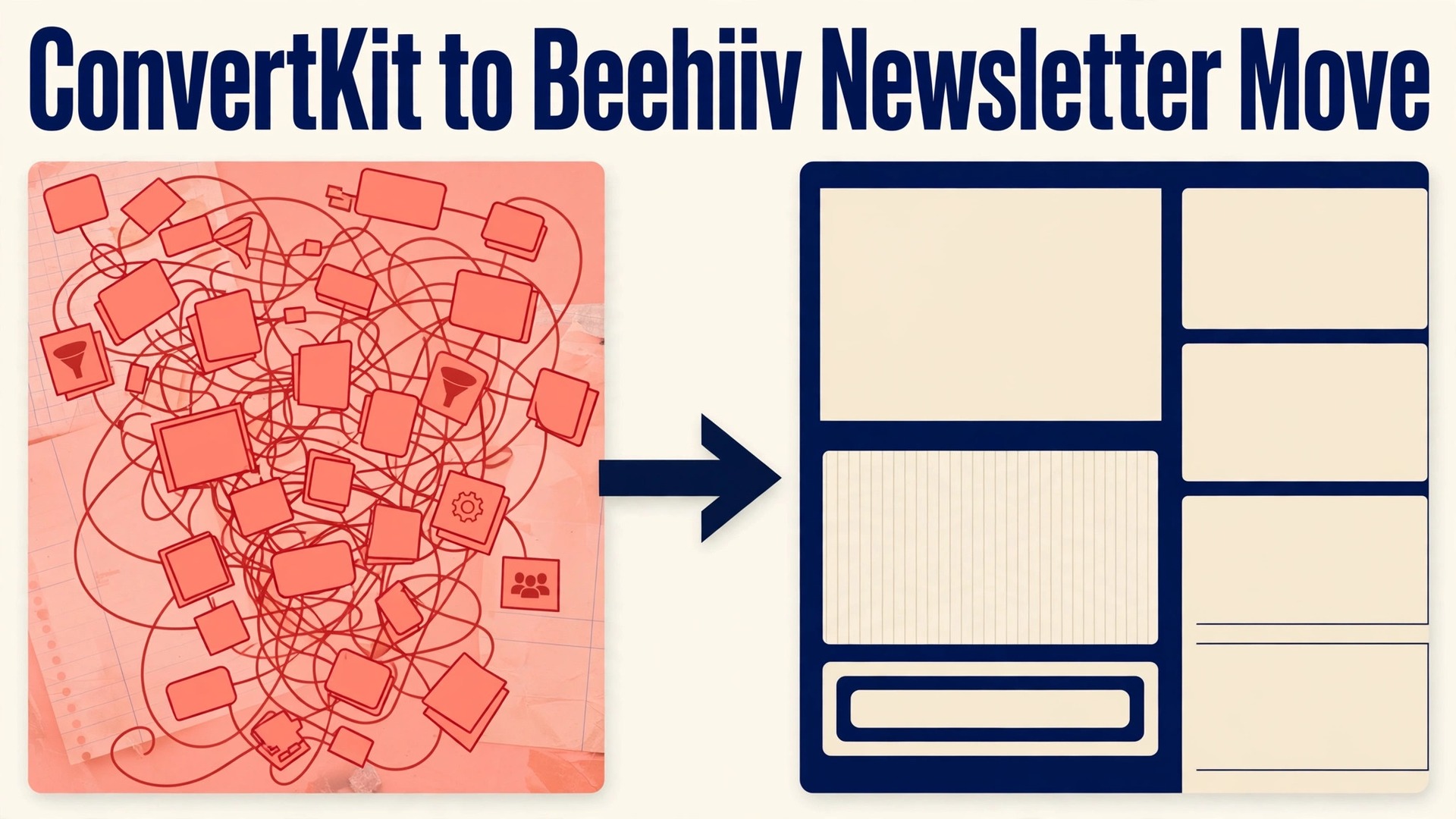
A newsletter that earns through paid subscriptions or advertising eventually outgrows a general creator email tool, and that is the moment owners start to switch ConvertKit to Beehiiv small business newsletters often choose when the newsletter itself becomes the product. ConvertKit, now trading as Kit, was built for creators who sell products and courses through funnels. Beehiiv was built for publications that grow through recommendations, earn through ads, and sell subscriptions to the newsletter itself. When the business model changes from funnel to publication, the platform should change with it.
This guide covers the move in full, including the one problem that catches owners by surprise. Free subscribers move by file export and import, with tags and locations included. Paid subscribers managed through the old platform’s payment setup do not move the same way, and that fact shapes the whole timeline. Read the paid subscriber section before you set a launch date, because it decides whether the move takes two weeks or two months.
The rest of the move is familiar work. Export subscribers, map tags and fields, rebuild sequences as automations, recreate forms and landing pages, connect a custom domain, and launch with a first week plan. Keep the old platform running until the new publication has sent successfully, because a live fallback protects both free and paying readers.
Should You Switch ConvertKit To Beehiiv Small Business Owners Ask
A move makes sense when the newsletter is the product. If growth comes from recommendations, if revenue comes from paid subscriptions or advertising, and if the website for the publication matters as much as the email itself, Beehiiv fits the model directly. Every plan there includes a publication website, unlimited sends on the terms of the plan, and access to a recommendation network, according to recent comparisons. Those features serve a publication in ways a funnel tool does not.
A move makes less sense when the business runs on funnels. A lead magnet followed by a welcome sequence, a product pitch, and a sales sequence is the home ground of the old platform, with visual automations and sequences at its core. If most revenue comes from selling products or courses through sequences, moving to a publication platform trades away depth for growth features the business may not need. In that case, the honest answer is often to stay, or to run the newsletter separately while funnels stay where they work.
Ask three questions before exporting anything. First, what share of revenue comes from the newsletter itself versus from products sold through sequences. Second, how many paying subscribers exist, and how are they billed. Third, which automations would break the business if they stopped for a week. If the answers point to publication revenue and a manageable paid list, proceed with the paid plan in this guide. If they point to funnel revenue, pause and reconsider, because platform fit matters more than novelty.
ConvertKit, now called Kit, serves creators who sell things. Forms, tags, sequences, and visual automations support a journey from subscriber to buyer, and selling digital products and subscriptions is available across plans according to recent guides. Its free plan is unusually large, reaching ten thousand subscribers in recent comparisons, though visual automations and sequences require a paid plan. That combination suits a one person business built around offers.
Beehiiv serves newsletter first businesses. Publications, recommendations, referral programmes, and an ad network support a journey from reader to subscriber to paying reader. Its free plan is smaller, at two thousand five hundred subscribers in recent comparisons, and paid plans add automations, paid subscriptions, and ad network access. Its published position is that it takes no cut of paid subscription revenue beyond payment processing fees, though that figure should be confirmed on the current pricing page before deciding.
| Question | ConvertKit answer | Beehiiv answer |
|---|---|---|
| Built for | Creators selling products and courses | Newsletter publications |
| Growth engine | Funnels, tags, and sequences | Recommendations and referrals |
| Monetisation | Product and subscription sales | Paid subscriptions and ads |
| Free plan size | Large, check current terms | Smaller, check current terms |
| Automation style | Visual automations and sequences | Automations with plan limits |
| Best fit | Funnel led creator business | Publication led newsletter business |
Confirm every plan figure on the current pricing pages, since both vendors changed plans during 2026 and older guides quote superseded prices. A decision based on a stale pricing table is a decision based on fiction, and pricing is the easiest fact in this guide to verify. Check it on the day you decide, and write the figures down with the date.
What Transfers And What Must Be Rebuilt
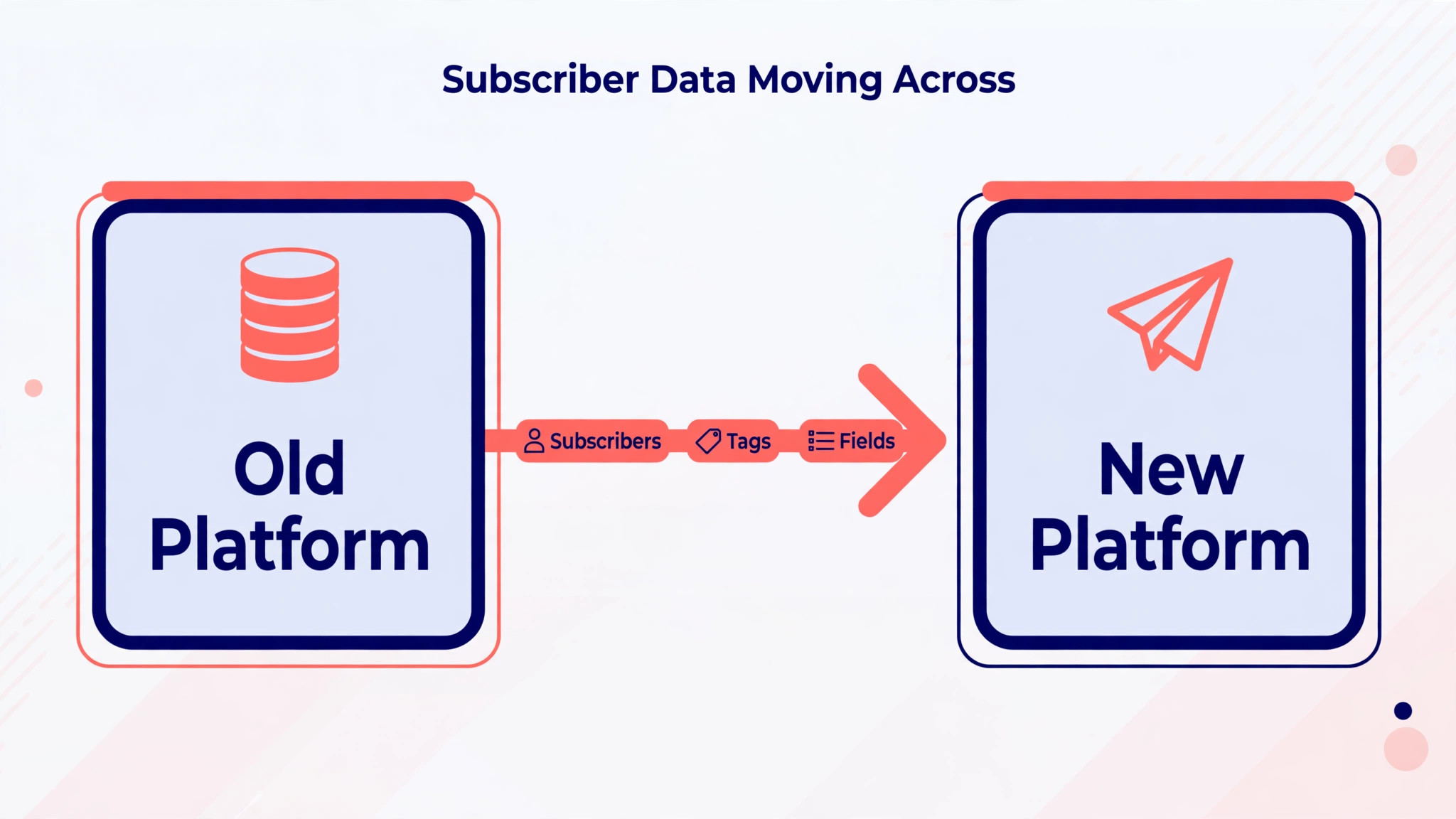
Free subscribers transfer through a file export from the old platform and an import on the new one, with tags, custom fields, and locations generally included. Map tags and fields before import, retire tags that no longer mean anything, and check imported counts against exported counts before sending. A clean import is the foundation of the new publication, and a dirty import is a deliverability risk.
Sequences do not transfer as working automations. Each sequence must be rebuilt as an automation on the new platform, with triggers, delays, and content recreated step by step. Recent guides note that automations on the entry paid tier are capped at a limited number live at once, so count your sequences before migration and prioritise the ones that earn replies or revenue. Templates, landing pages, and forms also need rebuilding, since designs and builders differ between platforms.
Engagement history and automation history stay behind. Past opens, clicks, and journey progress do not import as usable history, so the new platform starts with a thinner picture of each reader. Record key behavioural markers as fields before export where possible, such as last purchase or product interest, so new segments can use them. Campaign archives can be kept as records, but they will not drive new automations.
| Item | What happens in the move |
|---|---|
| Free subscribers | Imported by file, tags and fields included |
| Tags and custom fields | Mapped during import, check counts |
| Sequences | Rebuilt as automations, step by step |
| Forms and landing pages | Recreated on the new platform |
| Templates | Rebuilt in the new editor |
| Engagement history | Stays behind, record markers as fields |
| Paid subscribers | Special handling, see next section |
| Custom domain | Connected to the new publication |
Treat the import as a draft audience and the rebuild as a fresh start for automations. Test every rebuilt flow with a real signup before launch, because a flow that looks right but triggers wrongly will confuse readers at scale.
The Paid Subscriber Problem To Solve First
Paid subscribers are the most important practical fact in this migration, and Beehiiv’s own migration guidance states it plainly. When paid subscriptions are managed through the old platform together with its express payment setup, there is no direct way to move those paid subscriptions across, because the old platform does not expose the payment details needed for the transfer. That single sentence changes the project from a data move into a customer communication project.
Three options exist, and the right one depends on list size and billing dates. The first is to ask paying readers to subscribe again on the new platform, with a clear message, a simple link, and a grace period during which nobody loses access. The second is to grant complimentary access on the new platform until each reader’s current billing period ends, then ask them to resubscribe. The third is to keep billing where it is for existing payers while new payers join on the new platform, accepting two systems for a transition period. Each option costs either effort, revenue timing, or complexity, and none of them is free.
Plan the paid move around billing dates, not around enthusiasm. List every paying reader with their renewal date, and choose a cutover window that minimises double billing and gaps. Write the message before you need it, explaining what is changing, what stays the same, and exactly what the reader must do, if anything. Test the resubscribe flow yourself with a test account, because a paying reader who cannot resubscribe easily is a reader lost to friction rather than to dissatisfaction. When you switch ConvertKit to Beehiiv small business owners who plan the paid move first keep their paying readers, while owners who discover it last lose them.
Costs Plans And The Free Tier Trap
Free plans mislead in both directions. The old platform’s free plan covers far more subscribers than the new platform’s free plan in recent comparisons, so a list that fits free on one platform may need a paid tier on the other. Check the current free limits for your exact list size before assuming the move saves money, and confirm at checkout. A list of five thousand free subscribers may be free to keep where it is and paid to host after moving, which reverses the saving entirely.
Paid plans should be compared at your real subscriber count, including paying readers and the automations you actually need. Recent comparisons put entry paid pricing for the two platforms in a similar range at one thousand subscribers, with differences widening at other sizes, but those figures move with repricing. Compare plan plus payment processing at your real numbers, and include the cost of any tool you must add because a feature did not transfer. A cheaper plan that needs three add ons is not cheaper.
Budget for the transition period as well. Overlap the two platforms for at least a month, longer if paid readers are resubscribing gradually. That overlap costs a month of subscription on one platform, and it buys a calm migration, a fallback for sending, and time for paying readers to move without pressure. Cancelling the old platform on launch day saves one month and risks the revenue that platform still collects.
Step By Step Move For A Small Publication
Work in this order, keep the old platform sending until the new publication proves itself, and solve the paid subscriber question before setting a launch date.
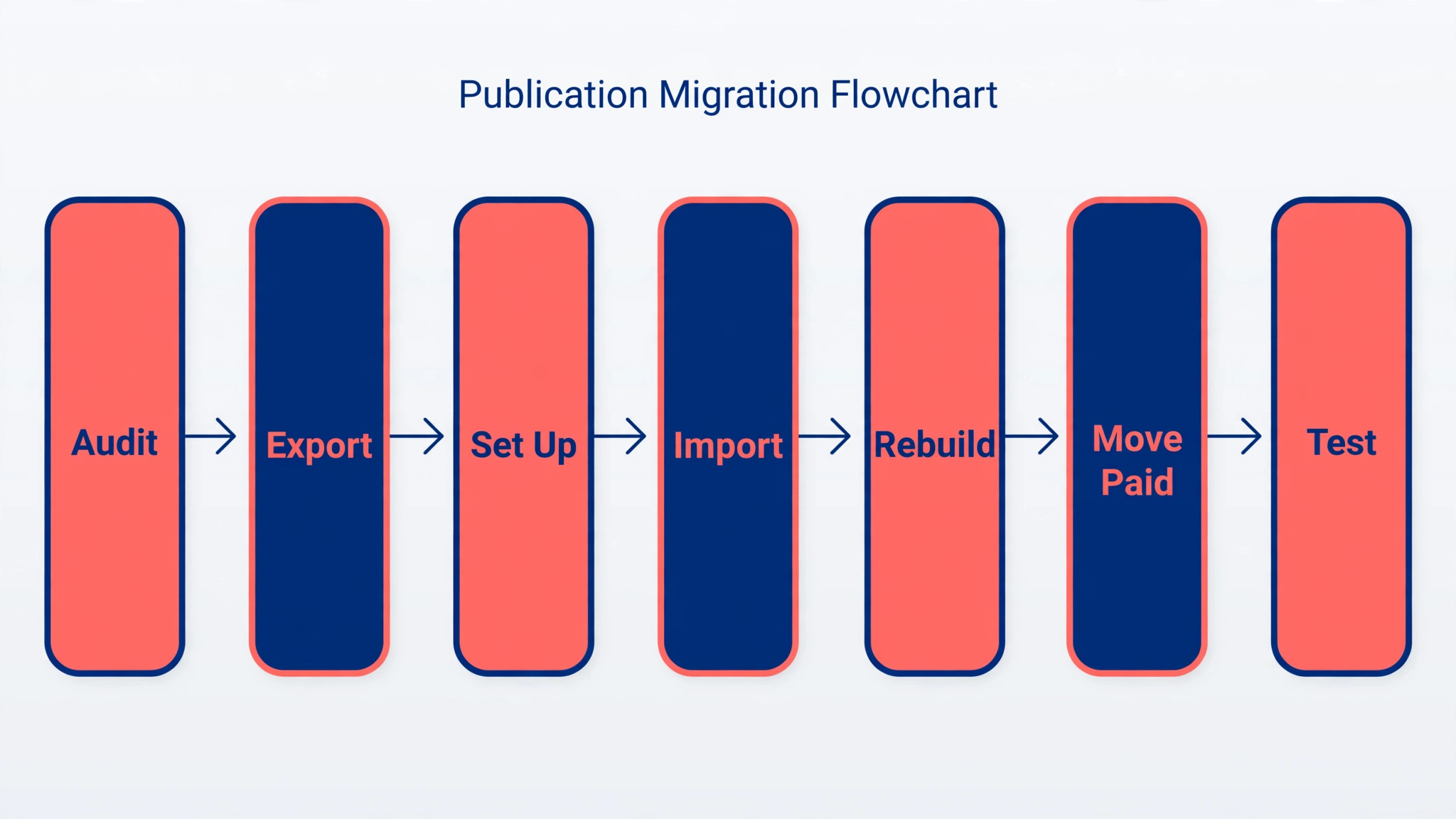
Step 1 Audit Subscribers Sequences Forms And Paid Readers
List every subscriber segment, tag, sequence, automation, form, landing page, and template, marking each as keep, rebuild, or retire. Separately list every paying reader with billing date and product, since that list drives the paid plan. Note every integration, such as a website embed or a payment tool, and decide its replacement before migration starts.
Step 2 Export And Clean The Subscriber File
Export subscribers with tags, fields, and locations, and keep an untouched copy as backup. Remove unsubscribed, bounced, and test records, and suppress long term non openers after a reengagement attempt. Importing a dirty list harms deliverability on any platform, and a new publication can least afford a damaged reputation in its first sends.
Step 3 Set Up Beehiiv And Connect The Custom Domain
Create the publication, choose the plan that fits the list and automation count, and connect the custom domain following the platform’s instructions. A custom domain matters for a publication, because readers should find the archive at an address you own rather than a platform subdomain. Verify domain records and test the publication site before importing readers.
Import the cleaned file, mapping tags and fields carefully, and compare imported counts with exported counts. Check a sample of records for field accuracy, and fix mapping errors before sending. Create the segments the publication actually needs, with clear names, rather than recreating every old tag out of habit.
Step 5 Rebuild Sequences Forms And Templates
Rebuild sequences as automations in priority order, starting with welcome, then nurture, then the rest, respecting any live automation limits on the chosen plan. Recreate forms and landing pages, replace embeds on the website, and rebuild templates for the newsletter and welcome series. Test each automation with a real signup and each form with a real submission.
Step 6 Move Paid Readers With A Clear Message
Execute the paid plan chosen earlier, whether resubscribe, complimentary access, or a staged transition. Send the message in plain language, give a deadline with a grace period, and answer replies personally during the transition. Track who has moved, who has not, and whose billing period ends when, so nobody loses access by accident.
Step 7 Test Sends Warm Up And Cut Over
Send test issues to the team and to a small engaged segment, checking rendering, links, and personalisation. Then send the first real issue to engaged readers, watch bounce and complaint signals, and expand gradually. Switch remaining forms and scheduled sends to the new platform, keep the old platform accessible for a month, and only then downgrade or close it.
Migration Checklist For Subscribers Sequences Forms Paid Tiers And Custom Domain
Tick items only after testing. A publication checklist protects readers, and readers are the business.
– Audit subscribers, tags, sequences, forms, landing pages, and templates – List every paying reader with billing date and product – Decide the paid move, resubscribe, complimentary access, or staged transition – Export subscribers and store an untouched backup copy – Clean unsubscribed, bounced, and test records before import – Choose the plan that fits list size and automation count – Create the publication and connect the custom domain – Verify domain records and test the publication site – Import subscribers and compare counts with the export – Map tags and fields and fix any mapping errors – Rebuild welcome automations first, then nurture flows – Recreate forms and landing pages and replace website embeds – Rebuild newsletter and welcome templates and test rendering – Execute the paid reader move with a clear message and grace period – Track paid migration progress reader by reader – Send test issues to the team and a small engaged segment – Watch bounce and complaint signals on the first real issues – Switch scheduled sends and remaining forms to the new platform – Export old campaign reports before downgrading the old account – Keep the old platform accessible for at least one month
Forms hide in the same surprising places as in any email move. Check the website, social profiles, lead magnets, checkout thank you pages, and any embedded signup in older posts. When you switch ConvertKit to Beehiiv small business owners most often lose subscribers through a forgotten form that keeps feeding the old list, not through import errors. Search the site for old form code after cutover and remove every trace.
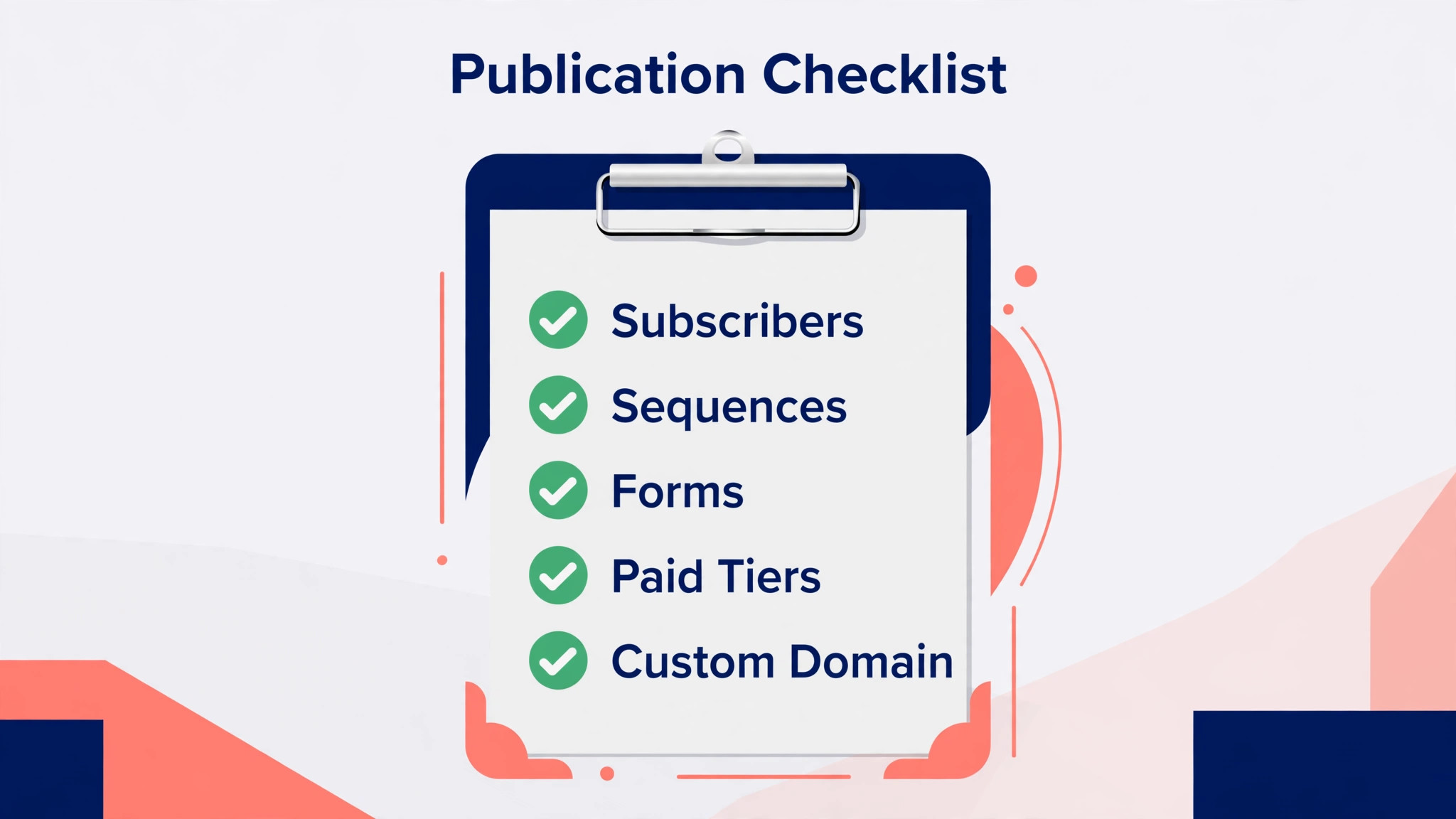
Custom Domain Archive And Search Presence
A publication website is an asset, not an afterthought. Connect the custom domain before launch, and make sure the archive, about page, and subscribe page all read well for a first time visitor. Old posts from the previous platform will not automatically appear as a publication archive, so decide which past issues deserve republishing on the new site and which can remain as records. Republishing the best issues gives new readers something to explore and gives search engines pages to find.
Search presence for a new publication takes time. Write clear titles and introductions for archive posts, link between related issues, and keep publishing on a consistent schedule. Recommendations and referrals help, but they compound only when the archive rewards a new reader who arrives. A publication with ten strong archived issues converts a visitor far better than a publication with a single welcome post, so front load the archive with your best work before promoting heavily.
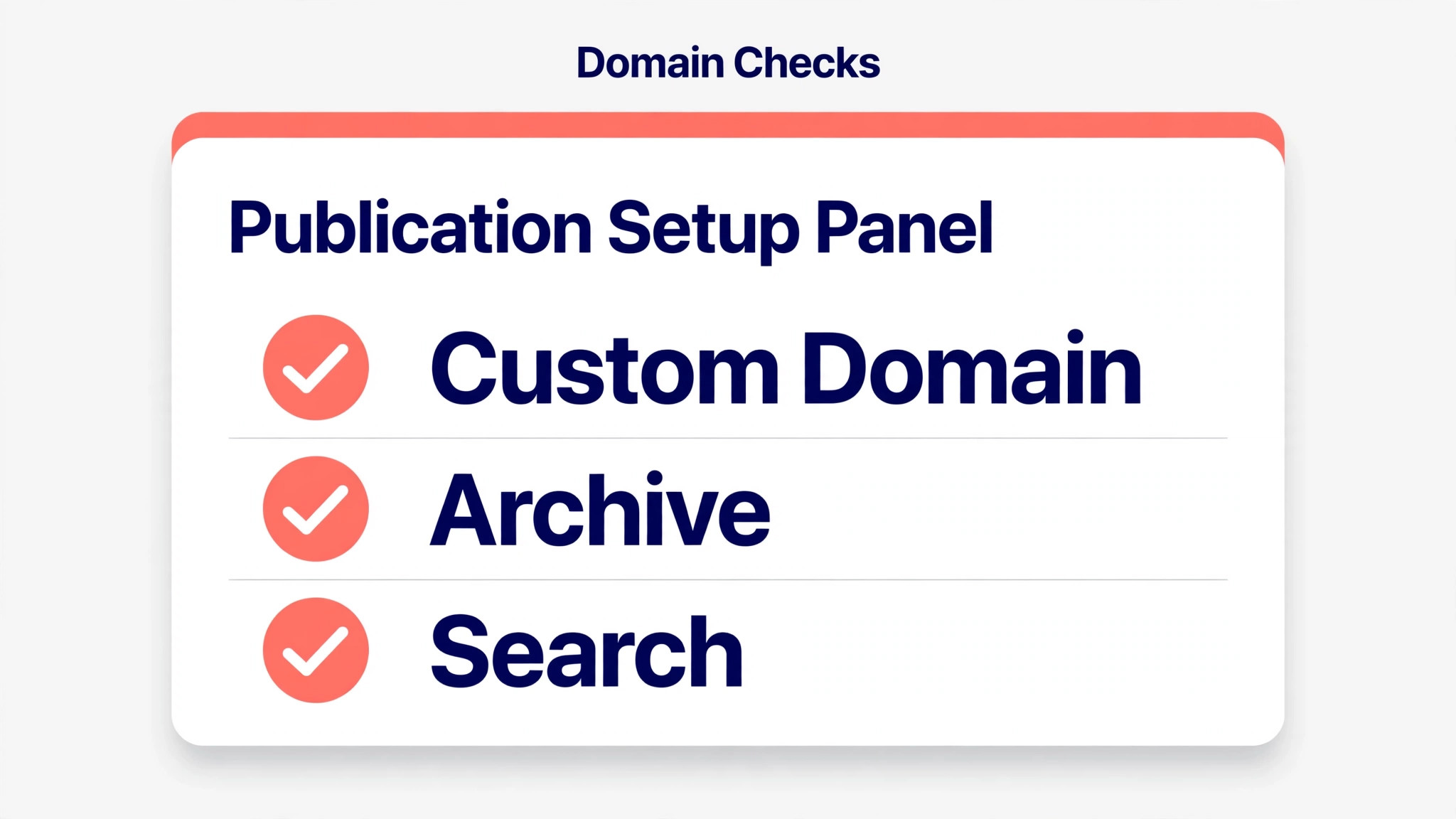
First Week Cutover Plan For A Publication
Publication cutover week is about readers, not software. Send on schedule, answer replies personally, and watch signals as if each one were a reader speaking, because it is.
| Day | Focus for the day |
|---|---|
| Launch day | Test issue to the team, domain and site check |
| Day 2 | First real issue to the most engaged readers |
| Day 3 | Check bounces, complaints, and rendering reports |
| Day 4 | Welcome automation live test with a real signup |
| Day 5 | Paid reader migration progress check and reminders |
| Day 6 | Archive fixes, form sweep, link updates |
| Day 7 | Compare signals with the old platform baseline |
Tell readers about the move only if something visible changes for them, such as a new website address or a resubscribe step for paying readers. Most free readers need no announcement at all, and a platform message only distracts from the content they came for. Keep the focus on the next issue, not on the tool that sends it.
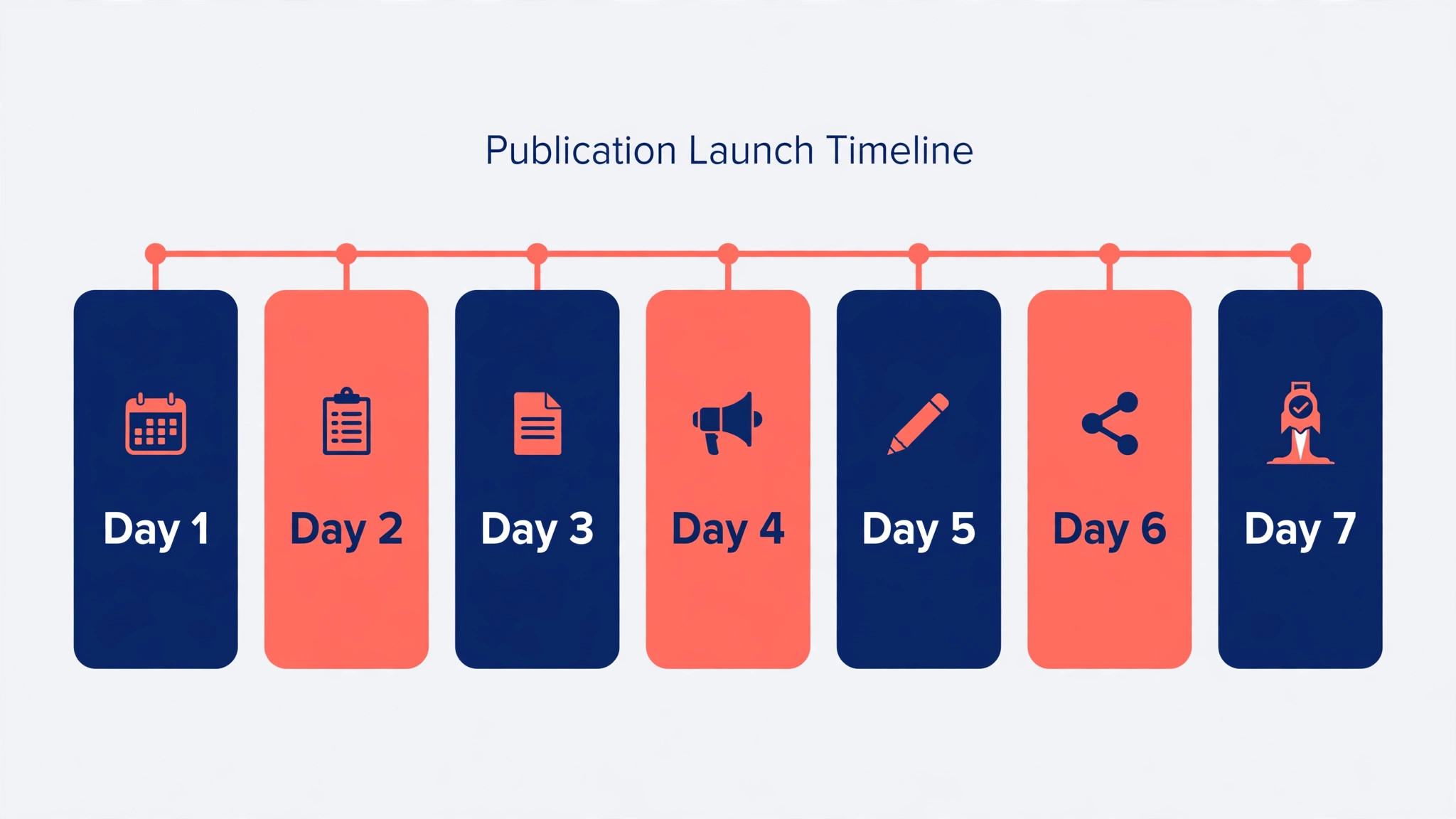
Rollback Advice If Readers Or Revenue Suffer
Rollback means returning sending to the old platform while the new publication is fixed, not deleting the new publication. Keep the old account, its lists, sequences, and paid billing documented for at least a month, so a return is possible without rebuilding from memory. If deliverability collapses, if paid migration stalls badly, or if a key automation cannot be rebuilt, pause new platform sends and resume from the old platform.
Judge rollback by readers and revenue, not by effort spent. A team that rebuilt five automations may resist returning, but readers do not care about sunk effort. They care about issues arriving and paid access working. Keep the new publication private for fixes where possible, rebuild the failing piece with tests, and cut over again only after a clean test issue. When you switch ConvertKit to Beehiiv small business owners who keep a live fallback protect their publication, while owners who close the old account on day one gamble it.
Mistakes That Cost Publications Readers
The first mistake is ignoring the paid subscriber problem until launch week. Paid readers need a plan, a message, and a grace period, and none of those can be improvised well under pressure. The second mistake is importing a dirty list and blasting it on day one, which harms deliverability for the whole publication. The third mistake is rebuilding every old sequence out of habit, including flows nobody remembers creating, which wastes the automation budget on the new plan.
A fourth mistake is launching with an empty archive. New readers who arrive through recommendations need past issues to explore, and an empty site converts poorly. The fifth mistake is closing the old platform too early. Forgotten forms, scheduled issues, and paid billing surface weeks later, and a closed account turns a small fix into a rebuild. Overlap is cheap, and regret is expensive.
Planning Growth After The Move
After cutover, growth work returns to its normal shape, which is content, recommendations, and referrals. Publish consistently, make subscribing easy from every archive post, and invite readers to recommend the publication to people who would genuinely enjoy it. When you switch ConvertKit to Beehiiv small business publications gain most when owners use the recommendation and referral features deliberately, rather than assuming growth happens by itself.
Use the rebuild to improve the welcome experience too. A new reader’s first three issues decide whether they stay, so make the welcome automation genuinely useful, with the best past issues, a clear statement of what the publication covers, and an easy way to reply. When you switch ConvertKit to Beehiiv small business welcome flows deserve the same care as launch week, because the readers gained after launch matter as much as the readers carried across.
Writing The Reader Message For Paid Subscribers
The paid reader message deserves drafting care, because it is read by the people who already pay for the work. Start with gratitude and the benefit, not with software. Readers should learn in the first two sentences that the publication has a new home, that their reading experience improves or stays the same, and exactly what they need to do, if anything. A message that opens with platform names and migration details asks readers to care about a problem that is not theirs.
Be specific about dates, access, and money. State the date the new publication opens, the date old access ends, and whether anyone will be charged twice. If complimentary access covers a billing period, say so plainly and give the end date. If readers must resubscribe, give the link, the steps, and the help address for anyone stuck. Vague reassurance without dates creates more messages than a clear plan with one awkward detail, because readers fill gaps with worry.
Keep the tone warm and brief, and send it from the publication address readers already recognise. Offer a reply route for questions, and answer those replies personally during the transition week, even when the answer is short. A paying reader who gets a personal reply during a move is a reader who stays. A paying reader who gets silence during a move is a reader who quietly cancels, and silence is the one failure that no automation can repair afterwards.
Frequently Asked Questions About This Switch
Do my subscribers import from ConvertKit to Beehiiv?
Yes, free subscribers generally import by file export and import, with tags, custom fields, and locations included. Clean the list first, check imported counts against exported counts, and fix mapping errors before sending. A clean import protects deliverability for the new publication.
Do my sequences transfer automatically?
No, sequences must be rebuilt as automations on the new platform, step by step. Count sequences before migration, prioritise welcome and revenue earning flows, and test each rebuilt flow with a real signup. Automation limits on the chosen plan may force prioritisation.
Can paid subscribers move across directly?
Not directly when paid subscriptions are managed through the old platform with its express payment setup, according to the new platform’s migration guidance. Plan a resubscribe message, complimentary access until billing periods end, or a staged transition, and track progress reader by reader.
Does Beehiiv take a cut of paid subscriptions?
Recent comparisons report that Beehiiv takes no platform cut of paid subscription revenue beyond payment processing fees, but confirm this on the current pricing page before deciding, since pricing and fee terms change. Compare plan plus processing at your real subscriber numbers.
Is the free plan enough for a small publication?
It depends on list size. Recent comparisons put the new platform’s free plan at two thousand five hundred subscribers, far below the old platform’s free allowance, so a list that fits free on one platform may need a paid tier on the other. Confirm current limits and confirm at checkout.
What happens to my custom domain?
You can connect a custom domain to the new publication, and you should do so before launch so readers find the archive at an address you own. Verify domain records, test the publication site, and update links on social profiles and older posts to point at the new address.
Past issues do not automatically become a new publication archive, so decide which issues to republish and which to keep as records. Republishing the best issues gives new readers material to explore and helps search presence, while an empty archive converts poorly.
Should I close ConvertKit on launch day?
No. Keep the old platform accessible for at least a month after cutover, with data exported. That overlap covers forgotten forms, scheduled issues, and paid billing, and it provides a rollback path if sending or paid migration runs into trouble.
Final Word For A Small Business Owner
Move when the newsletter is the product, when growth through recommendations and revenue through subscriptions or ads fit the model, and when the paid reader plan is written before launch. Stay when funnels and product sales through sequences drive the business, because the old platform was built for exactly that work. Platform fit decides this migration more than price, and fit is visible in where revenue actually comes from.
Export cleanly, connect the domain, rebuild in priority order, solve the paid question first, and give the first week your full attention. When you switch ConvertKit to Beehiiv small business success looks like a publication that keeps its readers, keeps its paying readers, and grows through recommendations on a platform built for that job. That outcome takes planning, especially around paid subscribers, but it is entirely achievable with the steps in this guide.