
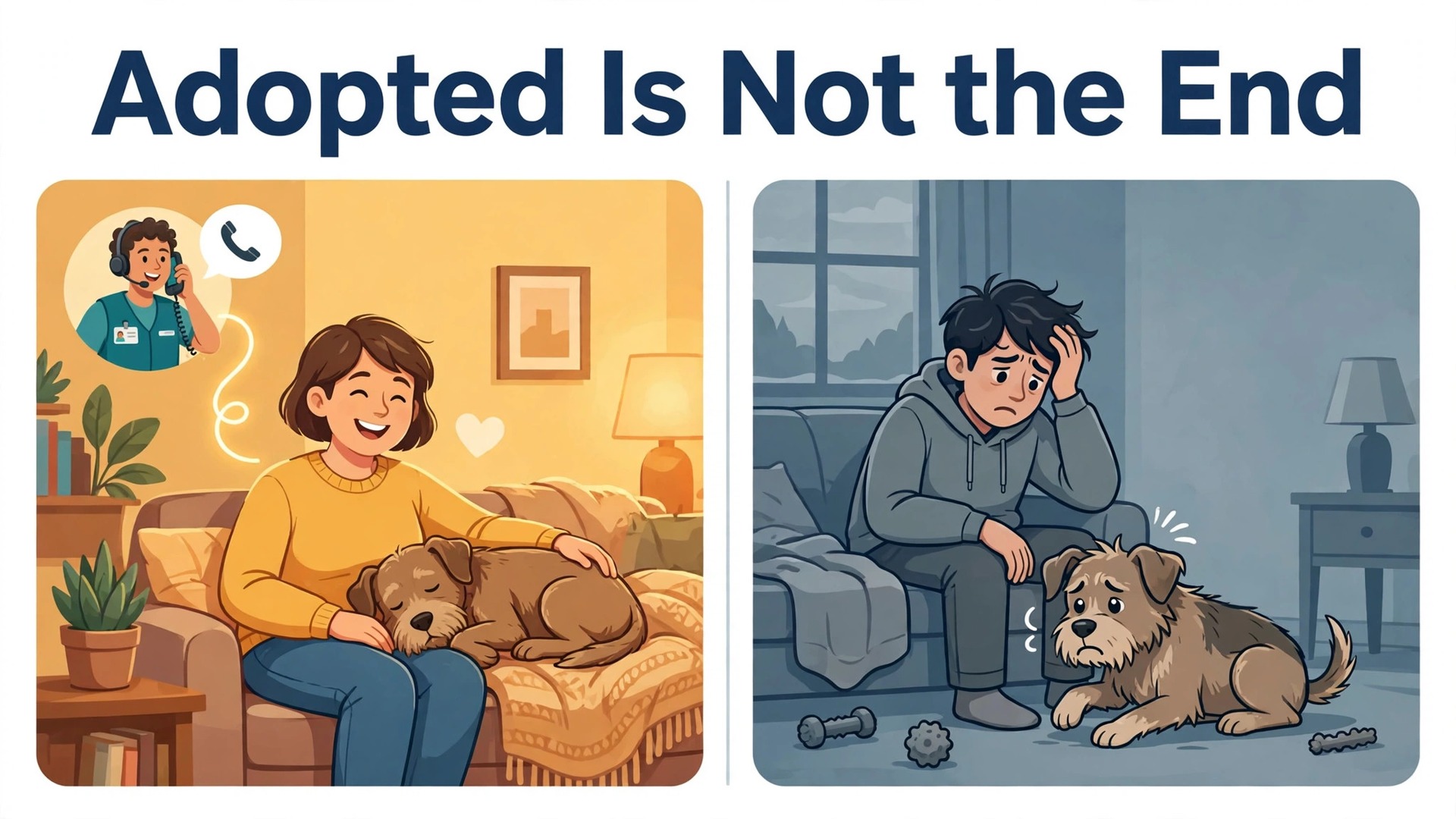
Compare two shelters with the same animals, the same adoption fees, and the same kennel space. In the first, an adopter leaves with a pet, a leaflet, and silence. In the second, the adopter gets a check-in on day three, a house training tip in week two, a vet reminder in month two, and a human to call when the dog chews the sofa. When you use AI for animal shelter adoption follow-up, you are building the second shelter, and the difference shows up in fewer returns, more donations, and adopters who recommend you to friends.
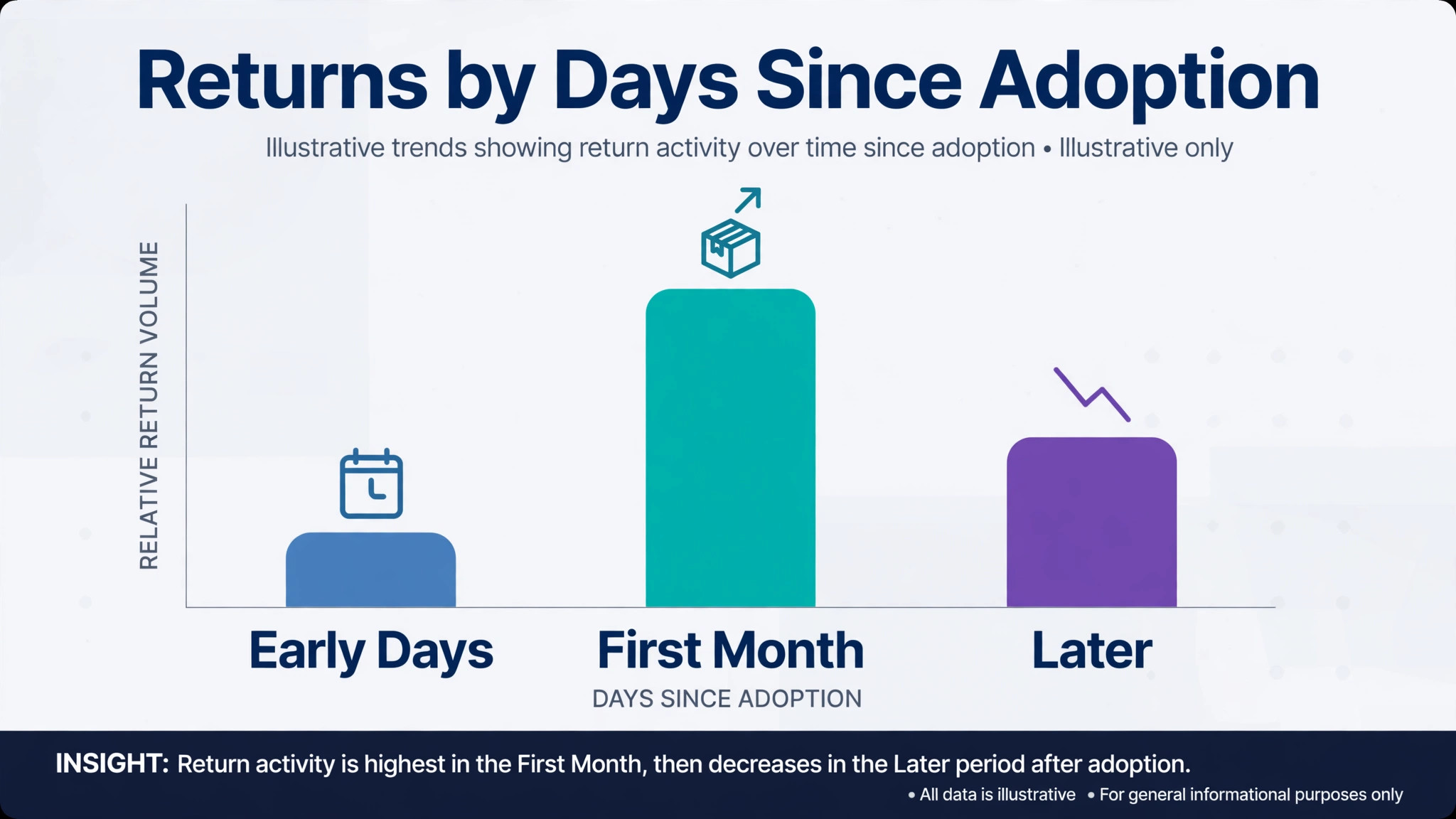
Returns are the quiet cost of adoption work. A returned animal occupies a kennel twice, needs reassessment, and carries a harder story on the second listing. Research on shelter returns shows behaviour is a leading cause, second only to household fit, and that a large share of behaviour related returns happen in the first 30 days, with the median time out for nuisance behaviour returns as short as three days in one shelter dataset. That timing is the whole argument for follow-up. The problems that cause returns appear early, while a timely message can still fix them.
This guide builds a follow-up system for shelters of any size, from post-adoption check-ins through care tip messages, donation asks and return risk flags, with a follow-up cadence template you can copy. It keeps the human at the centre, because a struggling adopter needs a person who listens, not only a message that arrives on schedule.
Why Adoptions Fail in the First Month
The first reason is the adjustment gap. A pet that behaved calmly in a kennel may be anxious, destructive, or withdrawn in a new home, and a first time adopter may read normal adjustment behaviour as a sign the match failed. Without a check-in, that adopter struggles alone, feels embarrassed about asking for help, and returns the pet before anyone at the shelter knows there was a problem. A day three message that normalises adjustment and offers one concrete tip can change that story completely.
The second reason is missing know how. New adopters need practical help at the moment they need it, not a thick handbook on adoption day. House training, crate training, introducing a pet to existing animals, and managing separation anxiety are all skills that arrive as questions in week one and two. A follow-up system that sends the right tip at the right time, matched to the pet species, age and known history, answers the question before it becomes a return reason.
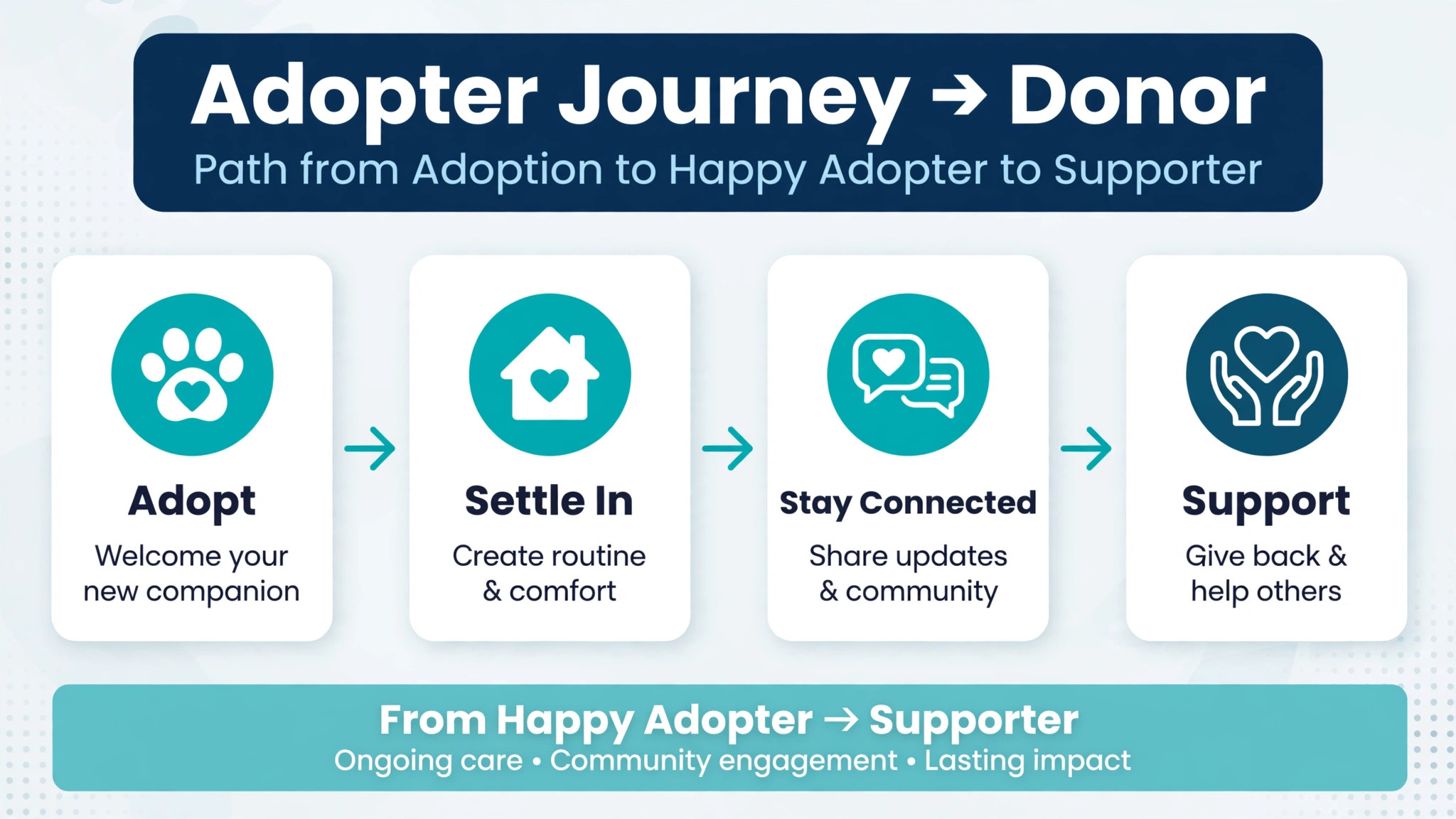
The third reason is the silence after the happy ending. Shelters celebrate adoption day and then disappear, which wastes the warmest moment in the adopter relationship. An adopter who feels supported in the first month is far more likely to donate, to foster, to volunteer, and to adopt again. Follow-up is therefore not only a retention tool. It is the foundation of the shelter donor and supporter pipeline, built on a relationship that already exists.
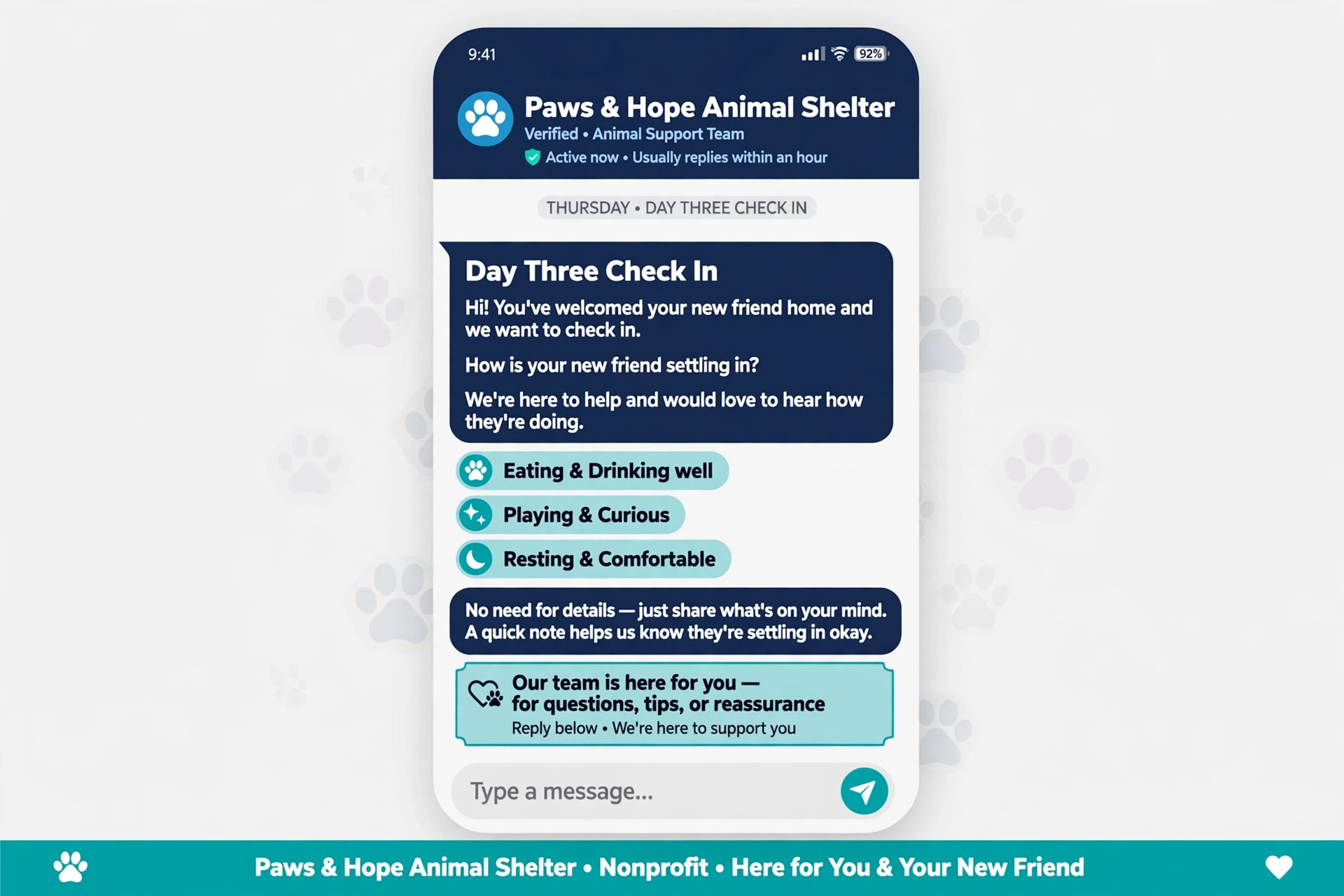
How to Use AI for Animal Shelter Adoption Follow-Up in Seven Steps
This workflow follows an adopter from adoption day through the first 90 days and beyond. Each step names the timing, the message, and the human check, so automation supports adopters without replacing the staff judgment that a struggling family needs. Adapt the timings to your shelter capacity, but keep the order, because early check-ins must come before donation asks, and risk flags must reach a human fast.
Step 1. Send a Welcome Pack on Adoption Day
Send the welcome message on adoption day, while the excitement is fresh and before the first night questions arrive. The message should name the pet, confirm the vet and microchip details, state the first check-in date, and give one clear contact route for urgent questions. Attach or link the care basics for that species and age, but keep the message itself short enough to read on a phone in the car park.
Use AI to draft the welcome pack from the adoption record, including the pet name, species, age, known medical needs, and any behaviour notes from the shelter team. Check every medical and feeding detail yourself before sending, because a wrong feeding amount or medication instruction in a welcome message can harm the pet. Keep the tone warm and practical, and avoid overwhelming the adopter with every possible guide at once.
Include one early win in the welcome pack. Name a simple first day task the adopter can complete, such as setting up a quiet resting space, or offering a short decompression walk for a dog. An early win builds adopter confidence, and confidence in week one predicts retention far better than enthusiasm on adoption day alone.
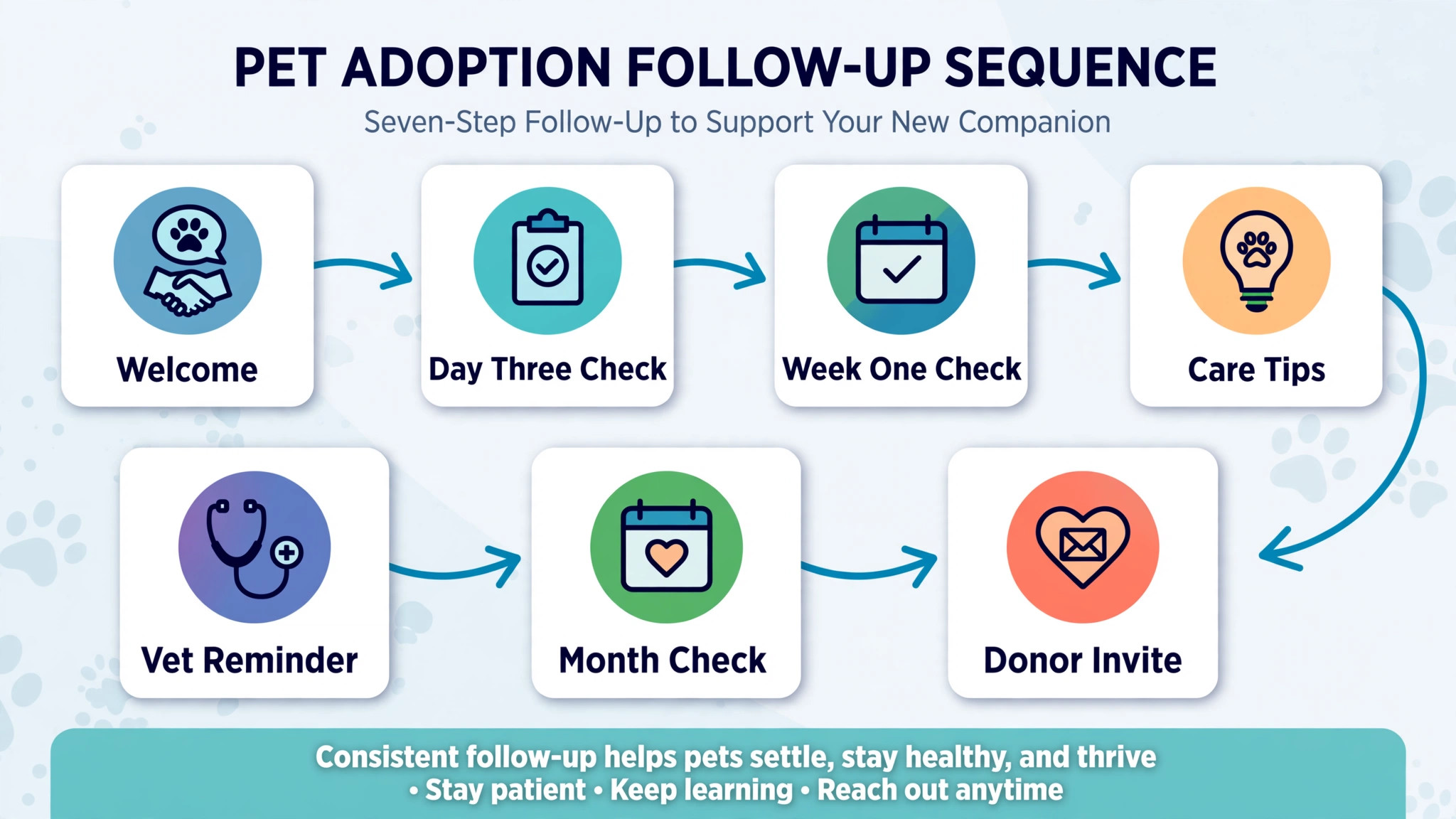
Step 2. Check In on Day Three, When Returns Begin
Day three is the most important check-in in the whole sequence. Shelter data shows that over a third of nuisance behaviour returns happen within the first seven days, and the median time out for such returns is only three days. A check-in on day three therefore arrives at exactly the moment many adopters are deciding whether to keep going or give up.
Use AI to draft the day three message from the adoption record, referencing the pet by name and the specific adjustment issues for that species and age, such as house training for a puppy, or hiding behaviour for a shy cat. Ask one simple question, such as how the first nights went, or what has been hardest so far. A single question gets answered. A long survey gets postponed, and a postponed survey becomes another silent gap.
Set a fast human route for replies that signal trouble. If an adopter reports destruction, biting, toileting problems, or a wish to return the pet, a staff member or trained behaviour volunteer should reply the same day, with empathy and a concrete next step, such as a behaviour call or a training resource. Automation can send the check-in, but only a human can save an adoption that is already wobbling.
Step 3. Send Care Tips Matched to the Pet, Not Generic Advice
Generic pet advice is easy to ignore, because it does not describe the adopter pet. A care tip for a high energy adolescent dog should differ from a tip for a senior cat, and a tip for a household with children should differ from one for a single adult home. Match each tip to the pet species, age, energy level, known history, and household composition recorded at adoption.
Use AI to draft the tip sequence from the adoption record and a vetted care content library, drawing on material from established sources such as the ASPCA and Fear Free Happy Homes where your shelter uses them. Check each tip yourself before it enters the sequence, because a tip that contradicts the shelter behaviour team advice will confuse the adopter and undermine trust. Keep tips short, actionable, and timed to the adopter journey, such as feeding and toileting in week one, training and socialisation in week two, and enrichment and routine from week three onward.
Step 4. Run the Two Week and Thirty Day Health Checks
Health questions peak in the first month, as adopters notice symptoms, wonder about vaccinations, and face the first vet visit. A two week check-in should ask about appetite, toileting, energy, and any symptom the adopter has noticed, and remind them of the vet visit if one is due. A thirty day check-in should confirm the vet visit happened, ask about ongoing health, and update the pet record with anything the adopter reports.
Use AI to draft both check-ins from the adoption record and the medical notes, including vaccination dates and any medication schedule. Check every medical detail yourself, and never let an automated message diagnose or reassure about a symptom. Any health concern reported by an adopter should route to a vet or a trained staff member the same day, with the message making clear that the shelter contact is not a substitute for veterinary advice.
Step 5. Flag Return Risk Early and Act on It the Same Day
Return risk flags are the safety net of the whole system. Build a simple flag list from adopter signals, including no reply to two consecutive check-ins, a reported behaviour problem, a reported household change, a missed vet visit, or language in a reply that suggests the adopter is considering return. Score each signal simply, such as low, medium, or high, and set a human response time for each level.
Use AI to scan replies and check-in answers for those signals and to draft the flag summary for staff, but keep the decision with a human. An automated system can notice that an adopter mentioned chewing, toileting, or a landlord problem, but only a staff member can judge whether that adopter needs a behaviour call, a training voucher, a different food suggestion, or a foster break. High risk flags should reach a named staff member the same day, not sit in a queue until Monday.
Track what happened after each flag. Record whether the adoption stabilised, what help was offered, and whether the pet stayed home at 90 days. That record tells the shelter which interventions actually work, and it protects staff from repeating a failed approach with the next struggling adopter. A flag system that nobody reviews is worse than no system, because it creates a false sense of safety.
Step 6. Ask for Donations Only After Delivering Real Support
Donation asks work best when they follow help, not when they replace it. An adopter who received a useful day three check-in, a training tip that solved a problem, and a health reminder that caught a vet visit on time is ready to hear about giving back. An adopter who heard nothing since adoption day will read a donation ask as a cold request from an organisation that forgot them.
Use AI to draft donation messages that connect the ask to the adopter own story, such as helping the next animal like theirs, or funding the behaviour support that helped them. Keep the ask specific, such as a monthly amount that covers food for one kennel animal, or a one off gift that funds a training session. Include a simple giving link and a thank you route, and never make an adopter feel that support depends on donating.
Time the first donation ask after the thirty day check-in, once the adoption has stabilised and the adopter has experienced real support. Follow with a three month update on the shelter work their gift supports, and an annual adoption anniversary message. That rhythm turns a one time adopter into a long term supporter, without turning every support message into a fundraising pitch.
Step 7. Keep the Relationship Warm Beyond Ninety Days
Ninety days is a milestone, not an ending. After ninety days, move stable adopters to a lighter rhythm, such as a monthly update, a seasonal care tip, and an adoption anniversary message each year. Keep the support route open, so an adopter with a problem in month six can still reach a human quickly, without waiting for the next scheduled message.
Use AI to draft the lighter rhythm messages from the adopter record, including the pet name, adoption anniversary, and any past interests such as fostering or volunteering. Check each message yourself for accuracy, because a message that gets the pet name or anniversary wrong will feel impersonal in exactly the relationship you are trying to keep warm. Celebrate milestones, such as the first year home, with a photo request.
Measure the long term relationship, not only the first month. Track repeat adoptions, foster sign ups, volunteer sign ups, and donor conversion among past adopters. Those numbers show whether follow-up is building a community around the shelter, or merely preventing returns, and both outcomes matter for a shelter that depends on public support.
Follow-Up Cadence Template You Can Copy
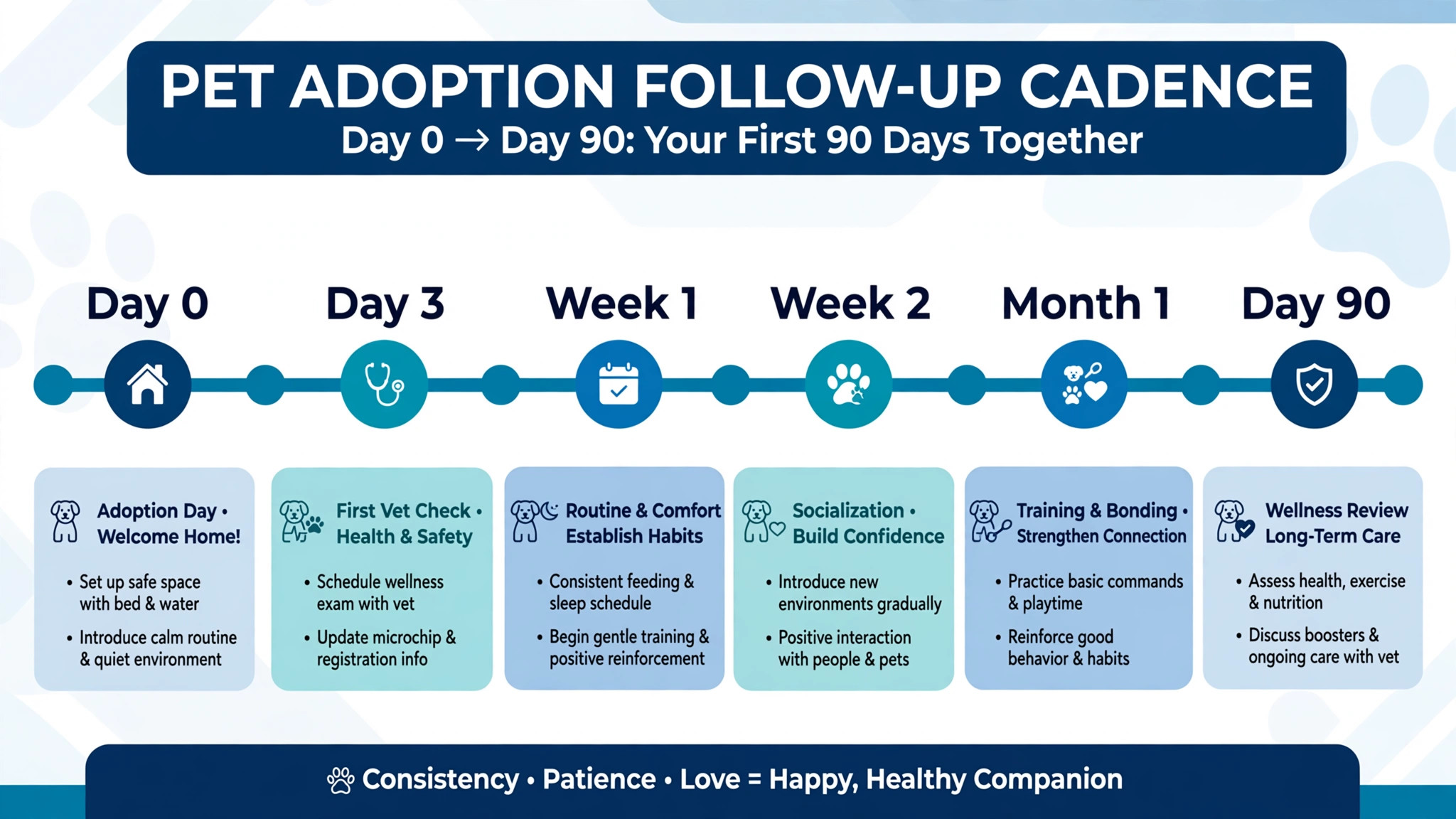
Use this cadence as the default when you use AI for animal shelter adoption follow-up, and adjust it by adopter need. A first time adopter, a high energy dog, or a pet with known behaviour needs gets a tighter cadence. An experienced adopter with a stable senior cat can move to a lighter rhythm sooner. State the cadence at adoption, so check-ins feel promised rather than intrusive.
Adoption day. Welcome pack sent the same day, with pet details, vet and microchip information, first check-in date, urgent contact route, and one early win task.
Day three. Short check-in with one simple question about the first nights, referencing the pet by name and the likely adjustment issues. Same day human reply to any trouble signal.
Week one. Care tip matched to species, age and household, in a short actionable format, with the support contact route repeated.
Week two. Health check-in on appetite, toileting, energy and symptoms, plus a vet visit reminder where due. Health concerns routed to a vet or trained staff member the same day.
Day thirty. Health confirmation, vet visit check, and a settling in message celebrating progress. First donation ask only after this point, connected to the adopter own story.
Day sixty. Behaviour and routine check-in, with a training or enrichment tip matched to the pet. Return risk flags reviewed, and any medium risk adopter offered a human call.
Day ninety. Milestone message, adoption stabilisation review, and a move to the lighter long term rhythm for stable adoptions. High risk cases stay on the tighter rhythm.
Beyond ninety days. Monthly shelter update, seasonal care tip, and annual adoption anniversary message, with the support route always open.
Tools That Fit a Shelter Follow-Up Workflow
Pick tools that keep the pet record, the adopter messages and the donation history in one place when you use AI for animal shelter adoption follow-up, because follow-up fails when the adoption record lives in one system, the messages in another, and the donations in a third. The tools below cover the main patterns shelters actually use.

Shelterluv for Shelter Records and Adopter Communication
Shelterluv is a shelter management platform used for animal records, adoptions, medical tracking, and adopter communication. Its strength for follow-up is the single record, where the pet history, medical notes, adoption details and adopter contact live together, so messages can draw on accurate information without staff copying between systems. That single record also makes return risk flags easier.
The limit is that a record system still needs a message sequence designed by the shelter team. Shelterluv holds the data, but the shelter decides the cadence, the tip content, and the human response rules. Check the vendor current pricing page before adopting it, since pricing varies by shelter size and features.
PetPoint for Larger Shelter Operations
PetPoint is a shelter management system used by larger shelters and humane organisations for intake, medical, adoption and outcome tracking. Its strength is scale, with structured records across many animals and adopters, and reporting that shows adoption, return and outcome patterns across the organisation. For a large shelter, that reporting turns follow-up data into management insight.
The limit is complexity for small shelters. A small rescue with a handful of adoptions per week may find a lighter system faster to run, and may prefer a simple CRM plus messaging tool over a full shelter platform. Check the vendor current pricing and implementation terms, and weigh them against the adoption volume the system must handle.
Mailchimp for Adopter Email Sequences
Mailchimp is a general email platform that many small nonprofits use for adopter sequences, newsletters and donation campaigns. Its strength is accessible automation, with scheduled sequences, simple segmentation by pet species or adoption date, and donation campaign tools in the same place. For a small shelter without a dedicated follow-up system, it can run the cadence in this guide reliably.
The limit is that email alone misses adopters who prefer text, and a general platform does not hold the pet medical record. Pair it with the shelter record system, keep medical details out of bulk email, and confirm the current plan limits before building a large sequence on a free tier.
Petfinder and Adopt-a-Pet for Adoption Promotion and Records
Petfinder and Adopt-a-Pet are adoption listing platforms that many shelters use to promote animals and to reach adopters. Their strength for follow-up is indirect but real, because a shelter that collects adopter stories and anniversary photos through follow-up can feed that content back into listings and promotion, which helps the next animals find homes. Some shelters also use the adopter contact captured through these platforms as the start of the follow-up record.
The limit is that listing platforms are not follow-up systems. They promote animals, they do not run a day three check-in or a return risk flag. Use them for promotion and for adopter story content, and run the follow-up sequence itself in the shelter record or messaging system.
What AI Can and Cannot Do in Shelter Follow-Up
When you use AI for animal shelter adoption follow-up, AI is strong at drafting, timing and scanning. It can draft a welcome pack from an adoption record, send check-ins on the cadence you set, draft care tips matched to a pet profile, and scan replies for return risk signals. Those tasks are repetitive and time sensitive, and automating them means every adopter hears from the shelter in week one, not only the adopters staff have time to call.
AI cannot judge an animal behaviour problem, diagnose a health symptom, or decide whether an adoption should continue. It cannot hear the worry in an adopter voice, or judge whether a family needs a behaviour call, a training voucher, or simply reassurance. It cannot handle a sensitive conversation about returning a pet, or about an animal that is suffering. Those moments need a human, with empathy, expertise and accountability, and any workflow that routes them to an automated message is unsafe.
Data handling deserves care too. Adopter contact details, household information and pet medical notes are sensitive personal data. Keep them inside vetted shelter systems with access controls, avoid pasting them into general purpose chat tools, and explain to adopters how their data will be used. Trust in follow-up depends on that privacy discipline as much as on message quality.
Mistakes That Break Shelter Follow-Up
The first mistake is sending a generic tip sequence that ignores the pet. A tip about puppy house training sent to a senior cat adopter will be ignored, and the next message will be ignored too, because the adopter has learned the messages are not for them. Match every tip to the pet species, age and household, or do not send it.
The second mistake is asking for donations before delivering support. A donation ask on day two, before any check-in or tip has helped the adopter, reads as a cold request and can damage the relationship. Wait until after the thirty day check-in, when the adopter has experienced real support, and connect the ask to their own story.
The third mistake is letting a risk flag sit unread. A flag system that scans replies but never reaches a named staff member on the same day creates a false sense of safety, while the adopter it flagged is already deciding to return the pet. Give every high risk flag a named owner and a same day response time, and review flag outcomes weekly.
The fourth mistake is treating ninety days as the end. Adopters need support in month six as well as week one, and supporters need a reason to stay connected for years. Move stable adopters to a lighter rhythm after ninety days, but keep the support route open and the anniversary messages coming.

How AI Assisted Follow-Up Compares With Adoption Day Only Contact
| Feature | AI assisted follow-up | Adoption day only contact |
|---|---|---|
| Day three contact | Scheduled check-in, same day human reply | Silence, adopter struggles alone |
| Care tips | Matched to pet and timed to need | Handbook given once, rarely read |
| Health checks | Two week and thirty day check-ins | Adopter must seek help alone |
| Return risk | Flags scanned, human action same day | Return discovered at the shelter door |
| Donation timing | After thirty days of real support | Cold ask, or no ask at all |
| Long term relationship | Monthly updates, anniversary messages | No contact after adoption day |
The table shows the core argument. Follow-up does not add work for its own sake. It moves help earlier, when a tip or a call can still save the adoption, instead of leaving the shelter to deal with a return that a day three message might have prevented.
A Five Week Implementation Plan
Week one is content and cadence when you use AI for animal shelter adoption follow-up. Write the welcome pack template, the day three check-in, the care tip formats, and the health check-in templates. Test them on five recent adopters and refine the wording before a wider rollout, paying special attention to the day three question.
Week two is systems. Set up the adopter record, the message sequence, and the return risk flag list, with a named staff owner for high risk flags and a same day response rule. Confirm that a reply signalling trouble pauses automation and alerts a human.
Week three is a pilot. Run the full cadence for every new adoption for two weeks, and track reply rates, trouble signals, and staff time per adoption. Fix any message that confuses adopters, and any flag that fires too often or too rarely.
Week four is review. Read the pilot check-ins as a group, look for the most common adopter problem, and fix the tip or the adoption day guidance that addresses it. Review donation timing and wording, and confirm no donation ask went out before the thirty day check-in.
Week five is steady state. Move stable adopters to the lighter long term rhythm, put a monthly review of returns, flags and donations in the calendar, and refine one message at a time. Follow-up is now a routine, not a project, and the routine is what keeps pets home over years.
Verdict
Pets do not get returned because adopters do not care. They get returned because the first month is hard, help arrives too late, or help never arrives at all. Send the welcome pack on adoption day, check in on day three, match care tips to the pet, run the health checks, flag risk the same day, and ask for donations only after real support. When you use AI for animal shelter adoption follow-up in that order, automation handles the timing and the drafting, while your staff handle the conversations that actually save adoptions.
Start with the day three check-in and the welcome pack. Those two messages alone will change how adopters experience the first week, because they turn a silent shelter into a shelter that notices. Add the risk flags and the cadence next, and keep a human reply as the gate for every adopter in trouble. Shelters that do those things will keep more pets home, and they will build the supporter community that funds the next rescue.
Frequently Asked Questions
When should the first post-adoption check-in go out?
On day three. Shelter data shows that over a third of nuisance behaviour returns happen within the first seven days, and the median time out for such returns is only three days in one dataset. A day three message therefore arrives at the moment many adopters are deciding whether to keep going. Ask one simple question about the first nights, reference the pet by name, and reply the same day to any signal of trouble.
What should a day three check-in ask?
One simple question, such as how the first nights went, or what has been hardest so far. A single question gets answered, and the answer tells staff where to help. Reference the pet by name and the likely adjustment issues for that species and age, so the message feels personal. If the adopter replies, pause automation and let a staff member respond, because a reply is a conversation, not a data point.
How do I match care tips to each pet?
Use the adoption record, including species, age, energy level, known history, and household composition. A tip for a high energy adolescent dog should differ from a tip for a senior cat, and a tip for a household with children should differ from one for a single adult home. Draw tips from a vetted care content library, check each one against the shelter behaviour team advice, and time them to the adopter journey, with feeding and toileting first, then training, then enrichment.
What counts as a return risk flag?
No reply to two consecutive check-ins, a reported behaviour problem, a reported household change, a missed vet visit, or reply language suggesting the adopter is considering return. Score each signal as low, medium, or high, and give high risk flags a named staff owner and a same day response time. Track what happened after each flag, so the shelter learns which interventions actually keep pets home.
When should a shelter first ask an adopter to donate?
After the thirty day check-in, once the adoption has stabilised and the adopter has experienced real support. Connect the ask to the adopter own story, such as helping the next animal like theirs, and keep the amount specific, such as a monthly gift that covers food for one kennel animal. A donation ask on day two, before any help has arrived, reads as a cold request and can damage the relationship.
Can AI handle a conversation about returning a pet?
No. AI can draft the check-in and flag the signal, but only a human should handle a conversation about return, with empathy and a concrete next step such as a behaviour call, a training voucher, or a foster break. Automating that conversation risks pushing an adopter who could have been helped into a decision to return. Keep a human reply as the gate for every adopter in trouble, with no exception for workload.
How long should follow-up continue after adoption?
Beyond ninety days, on a lighter rhythm. After ninety days, move stable adoptions to monthly updates, seasonal care tips, and an annual adoption anniversary message, while keeping the support route open for problems in month six or later. High risk cases stay on the tighter rhythm until they stabilise. Follow-up is a long term relationship, not a first month project, and it is what turns adopters into donors, fosters and volunteers.
What data should a shelter record from follow-up?
Check-in answers, health reports, behaviour problems, flag outcomes, and whether the pet stayed home at ninety days. Store that data in the adopter record, where staff can see patterns across many adopters, such as a common problem in one litter, or a tip that repeatedly helps. Follow-up data improves shelter practice for future adoptions, not only for the adopter who reported it, provided it is stored where the team can actually use it.