
Our verdict up front. Podium is worth its price only for a local business that will live in its texting inbox every day, answer leads by text within minutes, and chase reviews as a weekly habit, because the cost of Podium for small business monthly starts in the hundreds of dollars and rises with phones, messages and locations. A business that mainly wants review requests, and will not use texting, payments and webchat daily, will get better value from a cheaper review tool and a separate phone system. Buy Podium for the inbox, not for the review badge alone.
Podium bundles review requests, two way texting, webchat, payments and a phone system into one inbox, aimed at local businesses such as clinics, salons, auto shops and home services. The idea is that a customer who finds the business online can text, book, pay and leave a review without the team juggling five tools. That bundle is genuinely useful when the front desk is busy, because every conversation lands in one place and nothing waits in a separate app. It is also the reason the price is high, because the buyer is paying for several tools at once rather than for one narrow job.
Pricing honesty matters more than usual with Podium, because the vendor pricing page now routes buyers to a sales quote rather than publishing a simple rate card. This guide therefore separates two things clearly. First, the tier names in the brief, Essentials, Standard and Professional, which no longer appear in current listings, are shown with a check the vendor page instruction rather than a made up price. Second, the current plan names and the figures that multiple October 2026 third party pricing breakdowns report for them are shown separately, with their source described, so a reader can see what other buyers report paying.
Monthly pricing for cost of Podium for small business monthly, tier by tier
The table below follows the three tiers named in the brief. Because those tier names are retired, no price is invented for them here. A buyer who is quoted under an old tier name should ask the sales team to confirm the current plan name, the included locations, the bulk message allowance and the contract term in writing, before comparing the quote with anything in this guide.
| Tier | Monthly price | What it includes | Best for |
|---|---|---|---|
| Essentials | Check the vendor’s current pricing page | Entry level review requests and messaging for a single location getting started | A single location business taking its first step into review requests |
| Standard | Check the vendor’s current pricing page | Wider messaging and review management for a growing local business | A business with steady text volume that needs more than entry level tools |
| Professional | Check the vendor’s current pricing page | Advanced messaging, automation and multi location management | A multi location business that needs deeper automation and reporting |
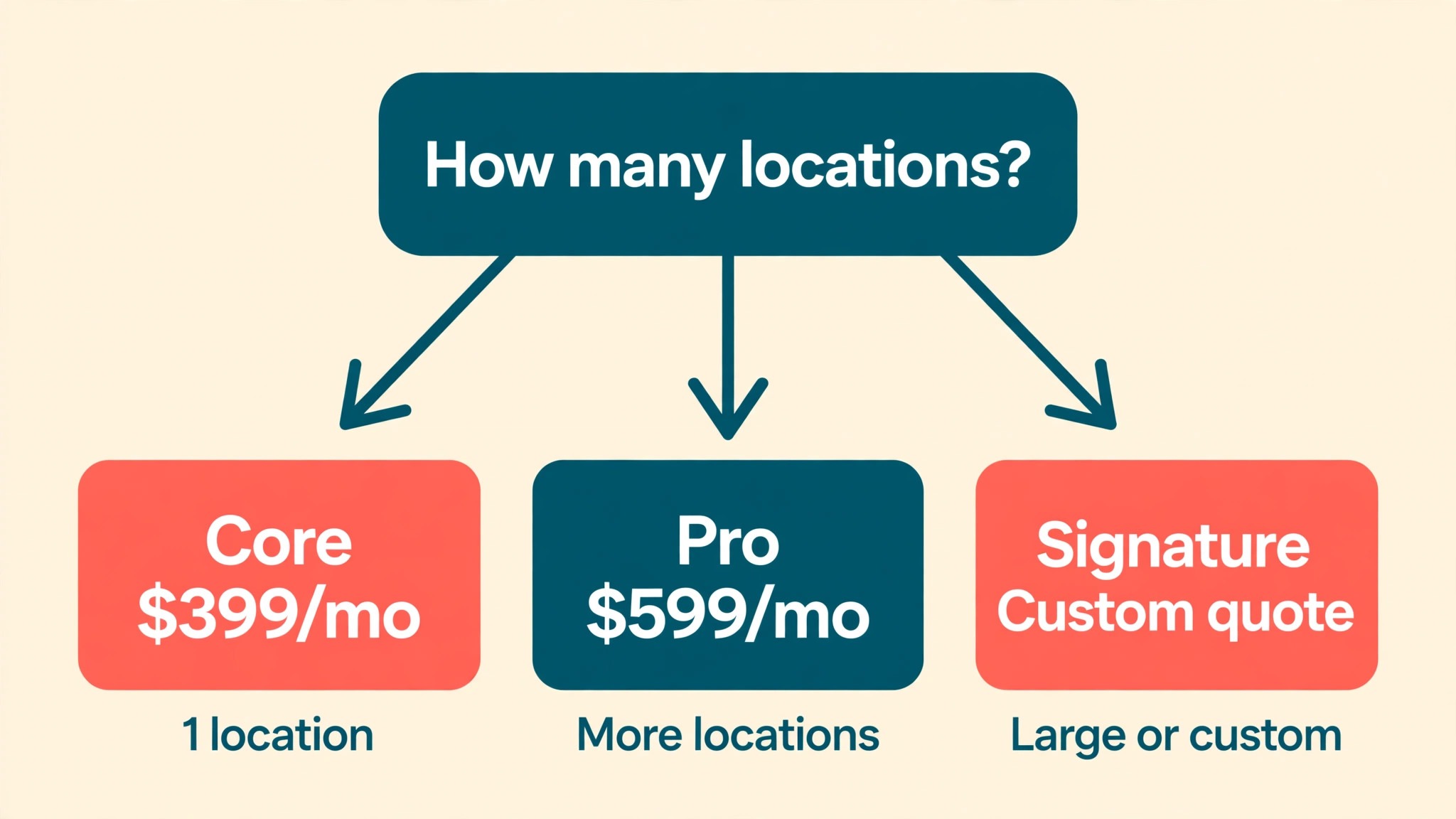
The current plans, as reported by multiple independent pricing breakdowns checked in October 2026, are Core at $399 a month, Pro at $599 a month, and Signature at a custom quote. Core is reported with up to 2 locations, up to 5 phone numbers and 250 bulk message credits a month, while Pro is reported with up to 5 locations, 15 numbers and 500 bulk message credits a month. One to one texts are reported as unlimited on every plan, which matters, because the metered limit applies to bulk sending rather than to ordinary replies. Treat these figures as consistently reported sales quote figures, not as a vendor rate card, and confirm them on your own quote.
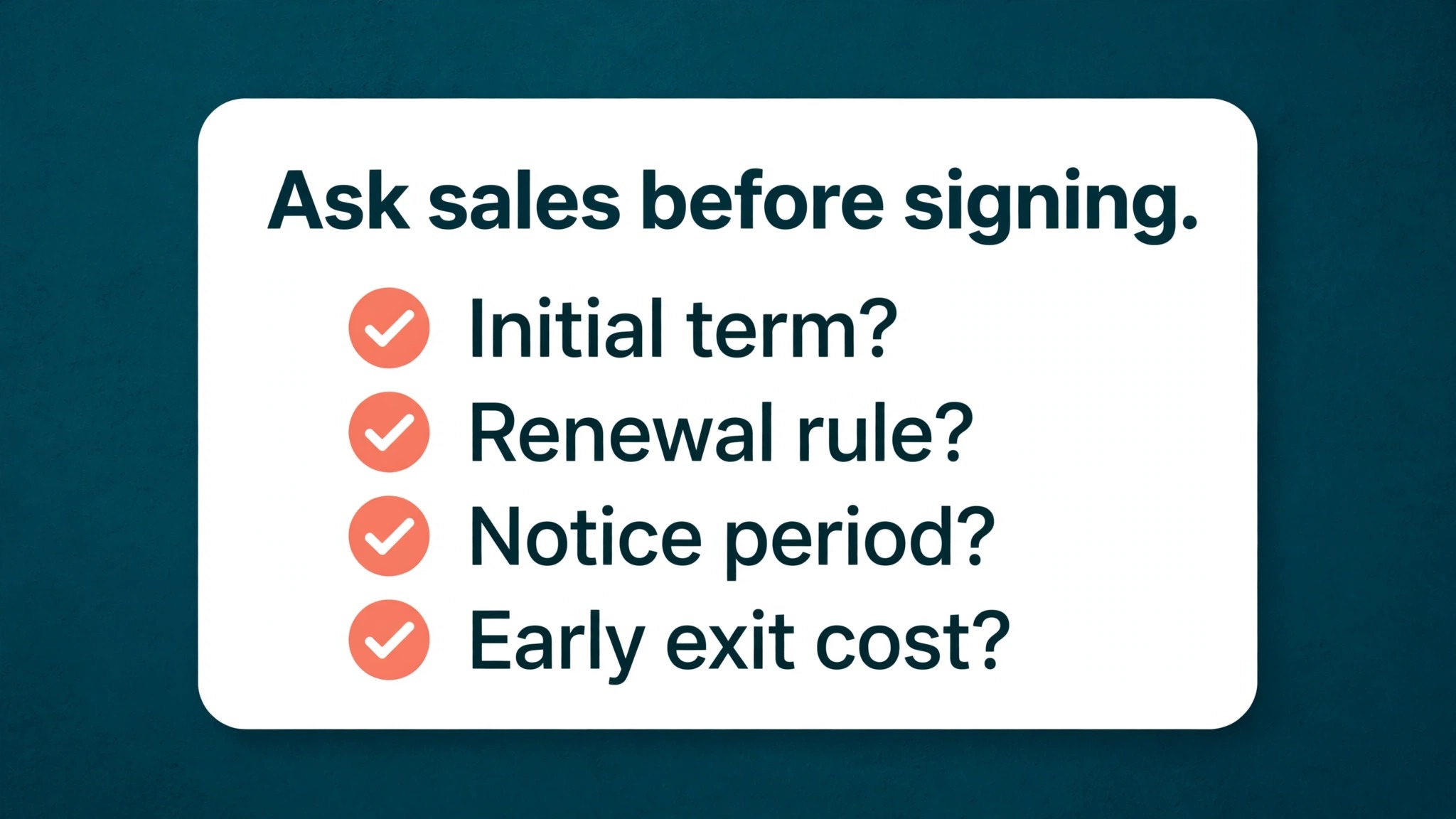
The cost of Podium for small business monthly therefore starts, on the reported figures, at $399 a month for Core, which is $4,788 over a twelve month term if the contract runs a full year. Pro at $599 a month is $7,188 over twelve months. Those totals explain why the contract term deserves as much attention as the monthly figure. Several buyer reports describe twelve month terms with automatic renewal, so a business should get the term, the renewal rule and the early exit cost in writing before signing, and should diary the renewal date at once.
A one location example, worked out in full
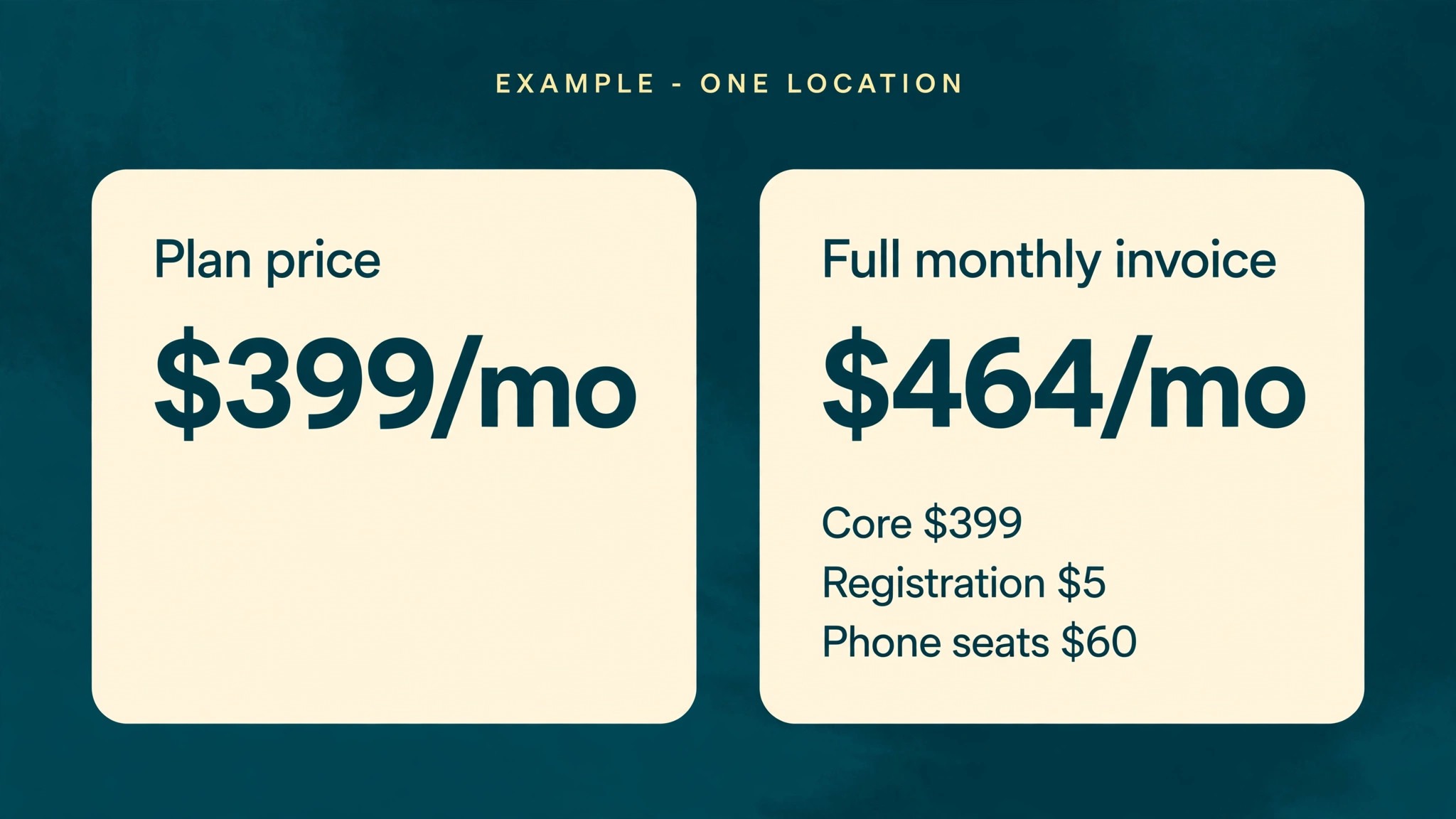
Take a single location salon with three staff sharing the inbox, no phone seats at first, and a plan to send review requests after every appointment plus one bulk offer text a month. On the reported Core figure of $399 a month, the base year cost is $4,788, before any add on. Add the reported $5 a month texting registration fee for a United States location, and the base rises to $404 a month. That is the honest starting total for a business that stays inside the bulk message allowance and does not buy phone seats.
Now add phones, because many buyers do. Podium Phones is reported at $30 per user per month for one to four users, plus a $500 network optimisation fee per location. Two phone seats add $60 a month, lifting the example to $464 a month, and the one time $500 fee lifts the first year cash cost to $6,068 in total. Add one extra phone number at a reported $5 a month, and the monthly figure reaches $469. None of these lines is hidden in a dishonest sense, but none of them appears in the headline plan figure either, which is why a quote that only names the plan price should never be treated as the full bill.
The same example shows the message cliff that buyers report most often. Core allows 250 bulk message credits a month with no metered overage option in the reported terms, so a business that sends its 251st bulk message in a month cannot simply pay a small top up. The reported remedy is an upgrade to Pro at $599 a month, a $200 a month jump for one extra message. A business that plans bulk campaigns should therefore forecast bulk volume honestly, including seasonal peaks, and should ask sales in writing what happens at the limit before signing.
The example also shows why a second location changes the picture faster than extra staff do. A second site adds a location fee, possibly a second registration fee, and a share of the phone and number costs, even if the second site is small and quiet. A business planning to open a second site within the contract year should therefore price the two location total from day one, rather than discovering the uplift after signing. Asking sales for a two location quote alongside the one location quote takes one email, and it prevents the most common surprise in the second year of a Podium contract.
The extras below are the lines that turn a plan price into a real monthly invoice, and the cost of Podium for small business monthly is best budgeted by pricing each one for your own locations, staff and message volume. Review invites themselves are part of the plan, but the volume, the channels and the phones around them are where the bill grows. Go through the list with a sales quote in hand, and ask for any line you cannot find to be added in writing.
– Bulk message limits, reported at 250 credits a month on Core and 500 on Pro, with no small overage top up reported on Core. A business past the limit faces an upgrade, not a top up. – Phone seats, reported at $30 per user per month for one to four users and $25 per user per month from five users, which can add more than the plan jump for a larger team. – A network optimisation fee for Podium Phones, reported at $500 per location as a one time charge, which multiplies across locations. – Extra phone numbers, reported at $5 per number per month beyond the numbers included in the plan. – A texting registration fee for United States locations, reported at $5 per location per month, which applies even before any message is sent. – Extra locations, reported at $50 per location per month beyond the locations included in the plan, which matters for a business adding a second site. – AI features sold as add ons on some plans, reported at around $99 a month in some breakdowns, which should be priced separately rather than assumed. – Contract length and renewal, reported by buyers as twelve months with automatic renewal, which turns a monthly figure into a yearly commitment.
Review invites deserve a closer look, because they are the reason most buyers arrive. Podium sends review requests by text after a job or visit, and the value depends on how many customers actually receive, open and act on them. A business with a large share of customers who do not use text, or whose customers book through a third party, will get fewer reviews per dollar than a business with direct mobile numbers for most customers. Check that the business collects mobile numbers at booking or checkout, and that staff ask for reviews in person as well, because software alone rarely lifts review volume without that human step.
Messaging limits work in two directions at once. One to one replies are reported as unlimited, so a busy inbox does not run up a per message bill for ordinary conversations. Bulk sending is the metered part, and bulk includes campaigns, offers and mass reminders. A business should split its forecast into those two buckets before buying, because a business with heavy one to one volume and light bulk volume fits Core far better than a business with heavy bulk volume. Seasonal businesses should forecast the peak month, not the average month, since the limit bites in the peak.
Setup and onboarding costs also deserve a line in the budget, even though no single setup figure is published for every buyer. Some quotes include setup help, while others settle it on the sales call, so a buyer should ask whether onboarding, number porting and template setup are included or charged separately. Staff time for setup is a cost in itself, because templates, saved replies and review request wording all need writing before launch day. A business that budgets a week of part time setup work will launch cleanly, while a business that expects to switch on and go will spend its first month fixing wording and workflows under live customer eyes.
What the plan price buys beyond review stars
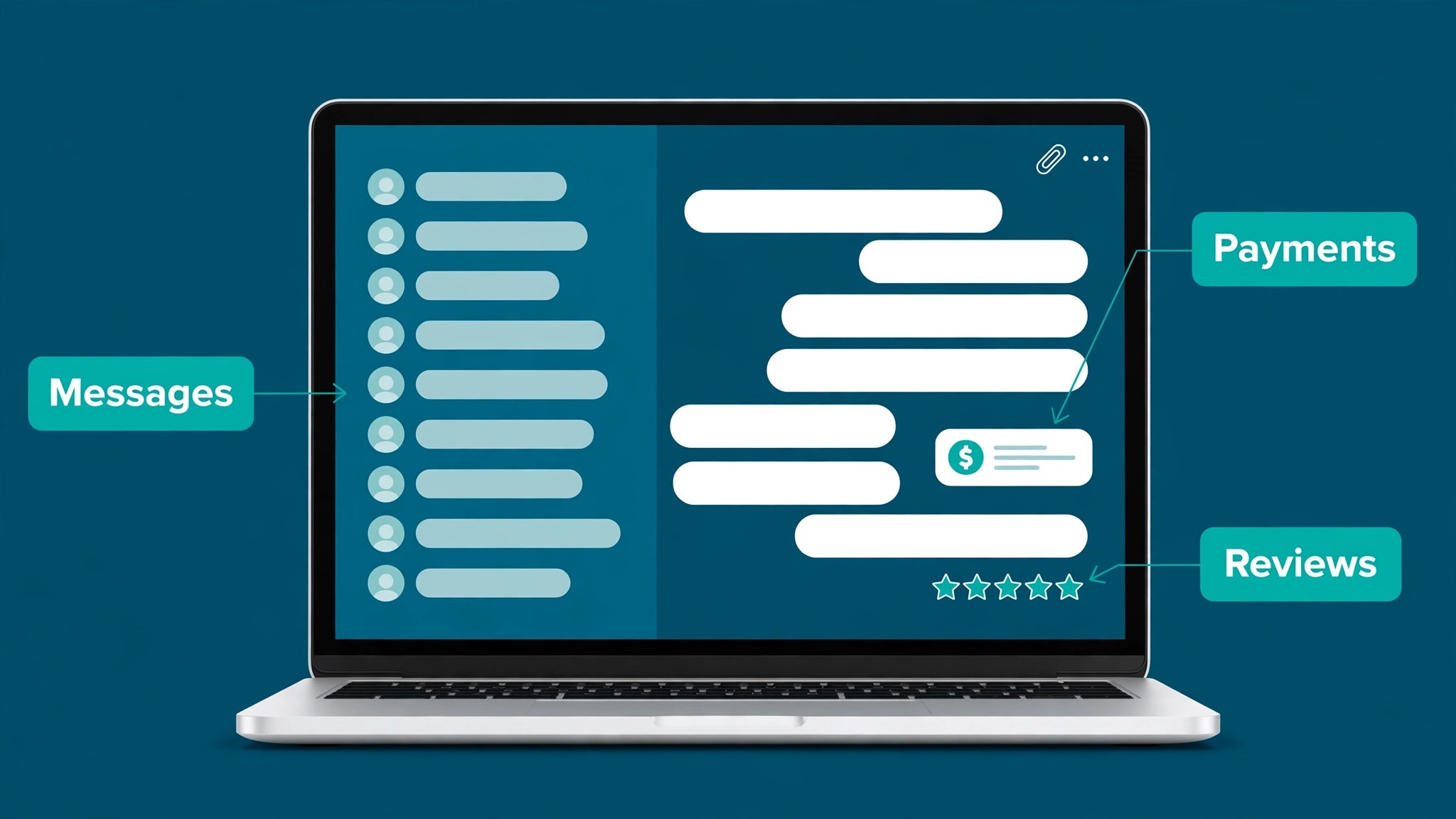
The plan price buys a shared inbox first and a review tool second, and that order matters for value. Texts, webchat messages, calls and review replies land in one queue, so any staff member can see the full conversation with a customer without asking a colleague to forward a thread. For a front desk team, that single queue removes the daily hunt through personal phones, separate chat apps and email, and it makes cover for holidays and sick days far easier. A business that already runs a tidy shared inbox may value this less, but a business where customer messages live on personal phones will feel the difference at once.
Payments and webchat extend the inbox into money and new business. Customers can pay from a text link, and website visitors can start a chat that becomes a text conversation, which shortens the path from interest to booking. AI help on higher plans can draft replies, route leads and handle routine questions, though buyers should test AI replies with real customer wording before trusting them, because a wrong automated reply costs more goodwill than a slow human one. The plan also buys reporting on response times, review volume and conversation outcomes, which lets an owner see whether leads are answered fast enough.
What the plan price does not buy is equally important. Podium is not a full booking system, a full customer database or an accounting tool, so most businesses will still pay for those systems alongside it. Integration work, staff training and the habit of answering texts promptly are also outside the subscription, and they decide whether the tool earns its fee. A team that buys Podium and then answers texts the next day has bought an expensive inbox and kept a slow response time, while a team that answers within minutes can turn the same subscription into booked work.
Response speed is the hidden feature that decides whether the subscription works, and it costs staff time rather than software money. A text answered in three minutes feels like good service, while the same text answered the next morning feels like being ignored, even though the software is identical in both cases. Owners should therefore set a reply target, assign inbox cover for lunch breaks and holidays, and check response times weekly in the reporting. Judged that way, the cost of Podium for small business monthly buys outcomes only when the team treats reply speed as a job in itself, not as something to fit around other work.
When it is worth it and when it is not
Podium earns its fee when reviews and fast text replies directly win work, which is true for many local service businesses where a customer chooses between three nearby firms on a phone. A dental clinic, a salon, an auto shop or a home services firm that gets most enquiries by text will feel the return in booked appointments and in a review profile that keeps bringing new customers. The return is clearest when the team answers within minutes during working hours, sends review requests after every job, and treats the inbox as the front desk rather than as an extra chore.
Podium is a poor buy when the business gets few text enquiries, when customers mainly book through a marketplace or a third party, or when nobody will staff the inbox promptly. It is also a poor buy as a reviews only tool, because cheaper review tools exist for a fraction of the price, and paying a full inbox price for one feature wastes most of the subscription. A business with two locations that rarely texts customers should price a review only tool and a basic phone system separately before assuming the bundle saves money.
Business size changes the maths in an unusual way, because Podium charges by location and by plan rather than per user on the core plans. A single location business pays the same Core figure whether three or ten staff share the inbox, which makes the tool relatively better value for a larger team at one site. A five location business, by contrast, pays extra location fees and may need Pro, so the bill grows with sites even if each site is small. Count locations first, staff second, and message volume third, because that is the order in which the Podium bill actually grows.
Industry also changes the fit, because some trades get far more value from reviews than others. A business where customers choose mainly on reputation and proximity, such as a clinic or a salon, gains twice from Podium, first when a review brings a new customer and again when that customer leaves another review. A business where work comes mainly through insurance, contracts or repeat corporate clients gains less, because reviews rarely decide the next job. Before signing, an owner should ask where the last twenty customers came from, and should only pay a review led price if a meaningful share of them came from search and reputation.
How to cut the bill
Start by proving the inbox habit before buying phones or AI add ons. Run the core plan for a month with review requests and one to one texting only, and measure three numbers, namely review volume, reply speed and booked jobs that came through text. If those numbers do not move, the add ons will not fix the problem, and the business has saved the phone seat and AI fees. If the numbers move strongly, add phones for the staff who actually answer calls, not for every employee, because phone seats are charged per user.
The cost of Podium for small business monthly also falls when bulk volume is planned rather than discovered. Keep bulk campaigns inside the plan allowance by splitting large lists across months, by sending offers only to recent customers, and by using one to one follow ups for the rest. Ask sales in writing for the exact bulk allowance, the overage rule and the upgrade cost before signing, and get the contract term, renewal rule and early exit cost in the same document. A business that signs a twelve month term without reading the renewal clause can pay for a year it no longer wants.
Other savings are operational. Collect mobile numbers at every booking, so review requests reach real phones. Train staff to ask for a review in person, which lifts response rates without extra message spend. Use webchat carefully, because a chat widget that nobody answers quickly can lose more goodwill than it gains. Finally, review the plan at renewal against real message volume and location count, and be ready to step down a tier if bulk volume fell, because a plan bought for a busy launch year can be too large for a steady year.
– Run the core plan first, and add phone seats only for staff who answer calls daily. – Keep bulk campaigns inside the plan allowance, and split large lists across months where needed. – Get the term, renewal rule, early exit cost and bulk overage rule in writing before signing. – Collect mobile numbers at booking, so review requests reach customers who can act on them. – Ask for reviews in person as well as by text, to lift response without extra message spend. – Re-check locations, seats and bulk volume at renewal, and step down if usage fell.
A final saving comes from treating the renewal as a real decision rather than a diary accident. Set a review thirty days before renewal, pull the actual figures for locations, bulk volume, phone seats and review volume, and compare them with the plan that was bought. If bulk volume never passed half the allowance, a lower tier or a cheaper review tool may fit the steady state better than the launch plan did. Renegotiating from real usage data also carries more weight with sales than a general request for a discount, and the cost of Podium for small business monthly should be re-earned at every renewal, not carried forward by habit.

Frequently Asked Questions
How much does Podium cost each month for a single location?
On the figures reported by multiple October 2026 pricing breakdowns, Core is $399 a month and Pro is $599 a month, with Signature quoted by sales. A single location on Core should also budget the reported $5 a month texting registration fee for a United States location, plus any phone seats, extra numbers or AI add ons it buys. The old Essentials, Standard and Professional tier names no longer appear in current listings, so a buyer quoted under those names should ask for the current plan name in writing.
What is the difference between Core, Pro and Signature?
Core is the entry plan, reported with up to 2 locations, up to 5 phone numbers and 250 bulk message credits a month. Pro adds locations, numbers and bulk credits, reported at up to 5 locations, 15 numbers and 500 bulk credits, plus wider automation and AI help. Signature is the custom plan for larger multi location businesses, with negotiated locations, branding and support. The practical difference for most buyers is bulk allowance and location count, so those two numbers should drive the choice.
Do review invites cost extra?
Review invites are part of the plan, but the messages around them are metered in specific ways. One to one texts are reported as unlimited, while bulk message credits are capped, so a mass campaign counts against the allowance even though a single review request reply may not. Businesses should also budget for phone seats and extra numbers where they buy them, and for the texting registration fee per United States location. The review feature itself is not a separate per review charge in the reported terms.
What happens if a business passes its bulk message limit?
On Core, buyer reports describe a hard cap with no small overage top up, so passing 250 bulk credits in a month means the business cannot send further bulk messages until the next cycle or until it upgrades. The reported upgrade is to Pro at $599 a month, which is $200 a month more than Core. That cliff makes forecasting important, especially for seasonal businesses. Ask sales in writing for the exact overage rule on your plan, because terms can vary by quote and by industry.
Are Podium Phones included in the plan price?
Podium Phones is reported as a separate add on, not as part of the core plan price. Reported pricing is $30 per user per month for one to four users and $25 per user per month from five users, plus a $500 network optimisation fee per location. A business that only needs texting and reviews should not pay for phone seats, while a business that wants calls inside the same inbox should price seats only for staff who answer calls. Get the phone fee and the one time fee on the written quote.
Is Podium sold on a monthly rolling contract?
Buyer reports describe twelve month terms with automatic renewal, and some reports describe annual payment in advance, so a buyer should not assume a rolling monthly contract. The safe approach is to ask for the initial term, the renewal rule, the notice period and the early exit cost in writing before signing, and to diary the renewal date at once. A monthly figure on a twelve month term is still a yearly commitment, and the budget should show the full year total alongside the monthly figure.
Can a small business use Podium for reviews only?
Yes, but it is rarely good value as a reviews only tool, because cheaper review tools start far below the reported Core figure. Podium earns its price when the business also uses texting, webchat and payments daily, so that the whole inbox replaces several tools. A business that only wants reviews should compare review only tools first, and should only choose Podium if the texting inbox will be staffed and used every working day.
What should a buyer ask sales before signing?
Ask for the current plan name, the included locations and numbers, the bulk message allowance and overage rule, the phone seat price and one time fee, the texting registration fee, the contract term, renewal rule and early exit cost, and the total first year cost including every add on. Ask for all of it in writing on the quote, not only on a call, because the written quote is what the business can check later. A sales team that cannot put those lines in writing is giving a buyer a reason to pause.
Verdict
Podium is a strong tool at a steep price, and the cost of Podium for small business monthly is justified only when texting and reviews together bring in booked work every week. For a busy single location business that answers texts fast, chases reviews after every job and uses payments by text link, Core at the reported $399 a month can pay for itself in work that would otherwise go to a faster rival. For a quieter business, or a reviews only buyer, the same money buys more value elsewhere.
Buy it as an inbox, staff it as a front desk, and budget the full bill including phones, numbers, registration fees and the contract year. Get the quote in writing, forecast bulk volume for the peak month, and review the plan at renewal. Handled that way, Podium is a serious investment with a clear return, and handled casually, it is one of the easiest subscriptions for a small business to overpay for.
More Reading on Stratilyze
These related guides cover pricing for other local business tools, client follow up and the wider systems that sit around reviews and texting.
– Cost of Housecall Pro for Small Business Monthly – Cost of Jobber for Small Business Monthly – Cost of Acuity for Small Business Monthly – Cost of Brevo for Small Business Monthly – Niche Down Strategy for Small Business Growth