
A museum visitor opens the ticketing page, chooses a Saturday, adds two adult tickets and one child ticket, reaches checkout, then closes the tab. Nothing is broken, nobody complained, and the museum may never know that visit almost happened. That quiet loss repeats dozens of times a week in small museums, and it is the central problem of ticket follow up. The visitor showed clear intent, the museum had no system to answer that intent, and the weekend passes with empty timed slots that could have been filled. This guide shows how to use AI for museum ticket sales follow up so that abandoned carts, lapsed members and group enquiries each get a timely, respectful next message instead of silence.
The scale of cart abandonment should stop any museum from treating it as a minor leak. Across online commerce as a whole, the average cart abandonment rate sits at just over 70 percent according to Baymard research cited by ticketing provider Ticketsolve, and ticket sellers face the same behaviour, with visitors comparing dates, checking transport, or waiting for a companion to confirm. That figure does not mean 70 percent of museum visitors are lost forever. It means most checkout journeys need a second touch, and museums that provide one recover visits that would otherwise never happen. A follow up system is therefore not a marketing extra. It is part of the ticketing service itself.
Small museums face a particular version of this problem. They rarely have a dedicated marketing team, their ticketing may sit on a general platform, and staff time goes to front of house, collections and events. Follow up therefore falls to whoever has a spare hour, which usually means nobody. The answer is not to hire a team. It is to build a small set of automated sequences, each with a clear trigger, a short message, and a human check, so that follow up happens even on weeks when the museum is short staffed. The rest of this guide builds those sequences step by step.
Why Ticket Buyers Abandon, in Plain Terms
Most abandoned museum carts are timing problems, not lost interest. A visitor starts booking on a phone during a commute, gets interrupted, and forgets to return. Another visitor wants to check whether a grandparent can join, or whether parking and lunch will work for a family group. A third visitor hits a checkout question, such as whether a concession applies, whether a timed slot can be changed, or whether a group rate exists, and leaves to find the answer elsewhere. Each of those visitors would welcome a helpful message. None of them would welcome a hard sell that ignores why they left.
Price and date uncertainty also play a part, but they are often overstated. A visitor who thinks tickets are too expensive usually does not reach checkout at all, while a visitor who reaches checkout and stops is more often stuck on logistics. That distinction matters for message wording. A recovery message that immediately offers a discount teaches visitors to wait for a code, while a message that answers the logistics question, such as how to change a date or add a child ticket, removes the real barrier. Discounts have a place, but they belong later in a sequence and only for visitors who have not responded to helpful messages first.
Consent is the foundation that makes all of this acceptable. Abandoned cart messages should only go to visitors who gave contact details and agreed to hear from the museum, and every message should make it easy to stop further follow up. Ticketing providers note that cart recovery emails count as marketing in some privacy regimes, with preference links required on later messages in a sequence. Museums should check their own platform rules and privacy obligations before switching a sequence on, and they should keep the preference handling visible rather than buried. Trust built at booking is what makes a later membership offer welcome rather than intrusive.
The Follow Up System in One View
The table below sets out the three main sequences in this guide. Each has a different trigger, a different goal, and a different stopping rule, which keeps messages relevant instead of generic.
| Sequence | Trigger | Goal | Stopping rule |
|---|---|---|---|
| Cart recovery | Checkout started, contact given, no purchase | Complete the original booking | Purchase, date passes, or opt out |
| Member conversion | First or second visit booked or completed | Turn a visitor into a member | Membership bought or opt out |
| Group visit offer | Group enquiry or large cart abandoned | Book a group or school visit | Group booked, declined, or opt out |
| Lapsed visitor return | No visit for a set period | Bring a past visitor back | New booking or opt out |
| Post visit thanks | Visit completed | Review, return visit, or membership | Response recorded or opt out |
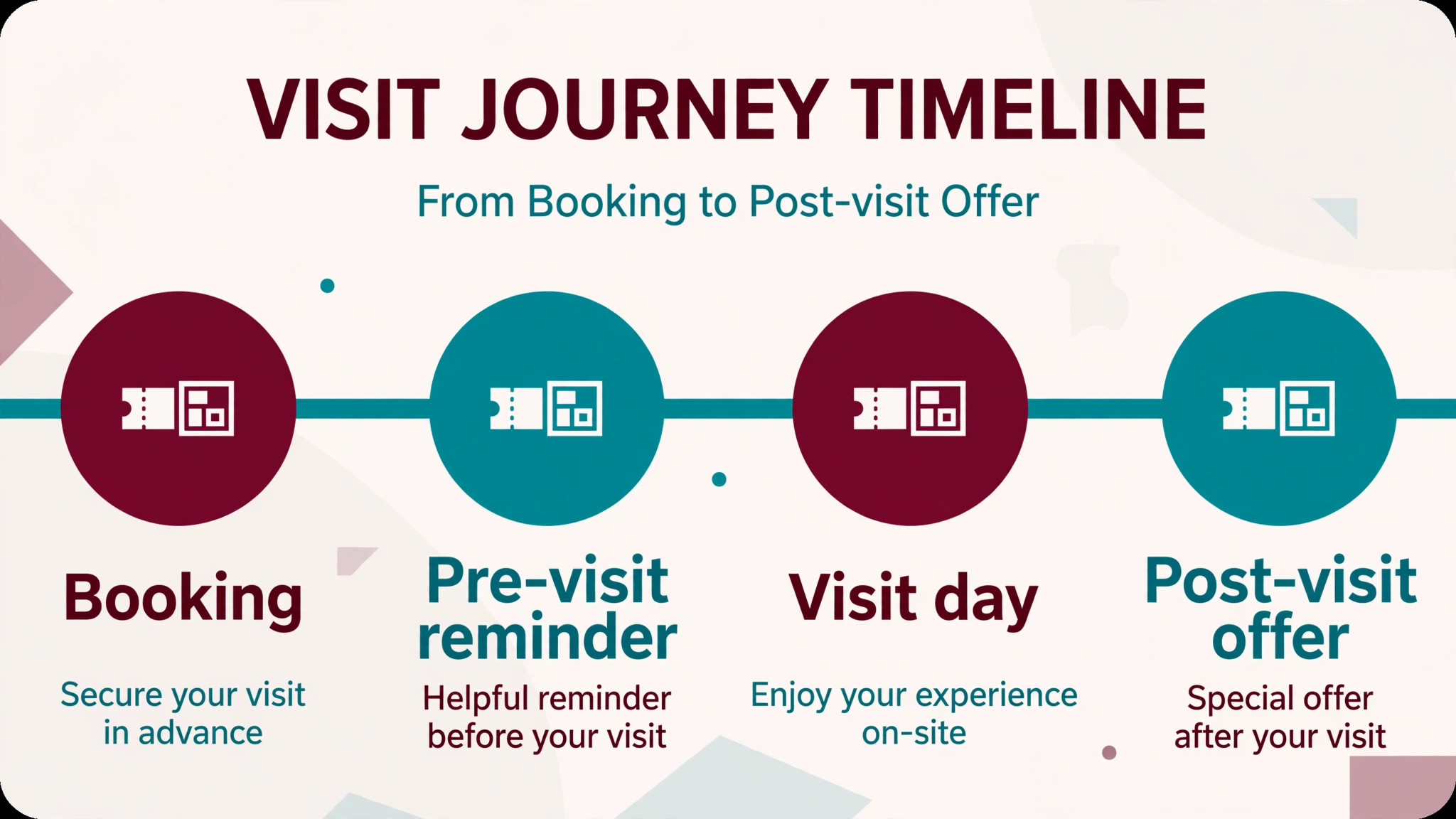
A museum does not need all five on day one. Cart recovery comes first, because it recovers visitors who already intended to come. Post visit thanks comes second, because it turns a completed visit into a return. Member conversion and group offers come next, once the first two run cleanly. Lapsed visitor return comes last, because it needs a clean visitor record to work well. Building in that order keeps staff workload manageable and lets each sequence be measured before the next is added.
The Cart Recovery Workflow, Step by Step
The workflow below is the core of this guide. It shows how to use AI for museum ticket sales follow up for drafting, timing and sorting, while staff keep control of offers, tone and any message that concerns a sold out date or a changed exhibition.
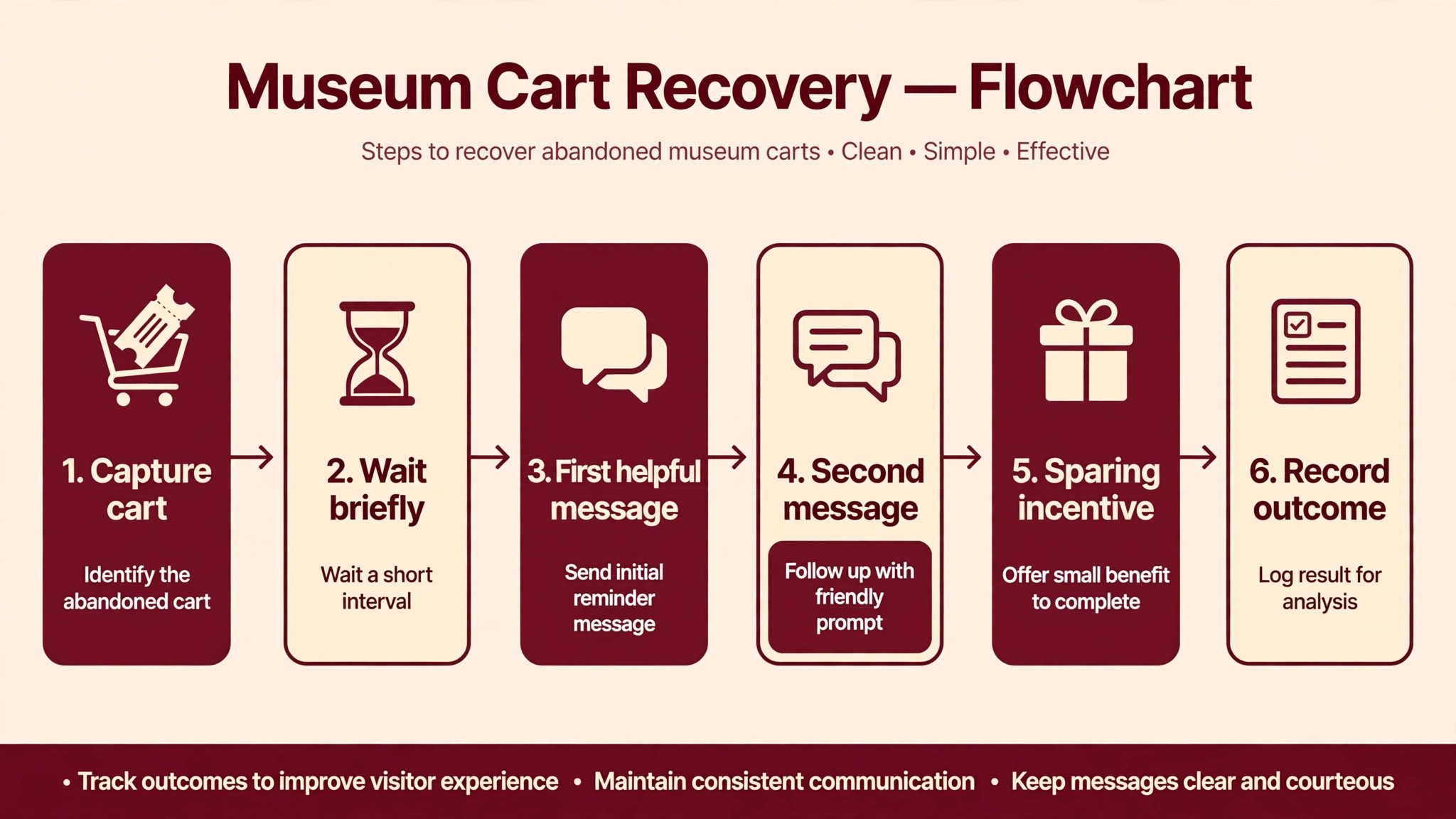
1. Capture the cart cleanly at checkout
Recovery only works if the system knows what was in the cart, for which date and time, and how to reach the visitor. Checkout should ask for contact details early, before payment, so a visitor who stops mid flow can still be reached with permission. The cart record should hold ticket types, quantities, date, time slot, and any add on such as an exhibition ticket or an audio guide. If that record is incomplete, the recovery message cannot say anything specific, and a vague message performs far worse than a message that names the date and tickets.
2. Wait a short, sensible interval before the first message
Timing is the most argued part of cart recovery, and ticketing practice gives a useful range. Some ticketing platforms send a first recovery email 20 minutes after abandonment, others wait an hour, and both approaches can work if the message is helpful. For museums, a first message within one hour suits timed entry, because the visitor intent is fresh and the date may still be available. A message sent days later, after the chosen date has passed, is useless, so the system must suppress recovery messages for past dates and offer the next available date instead.
3. Send a first message that helps, not one that pressures
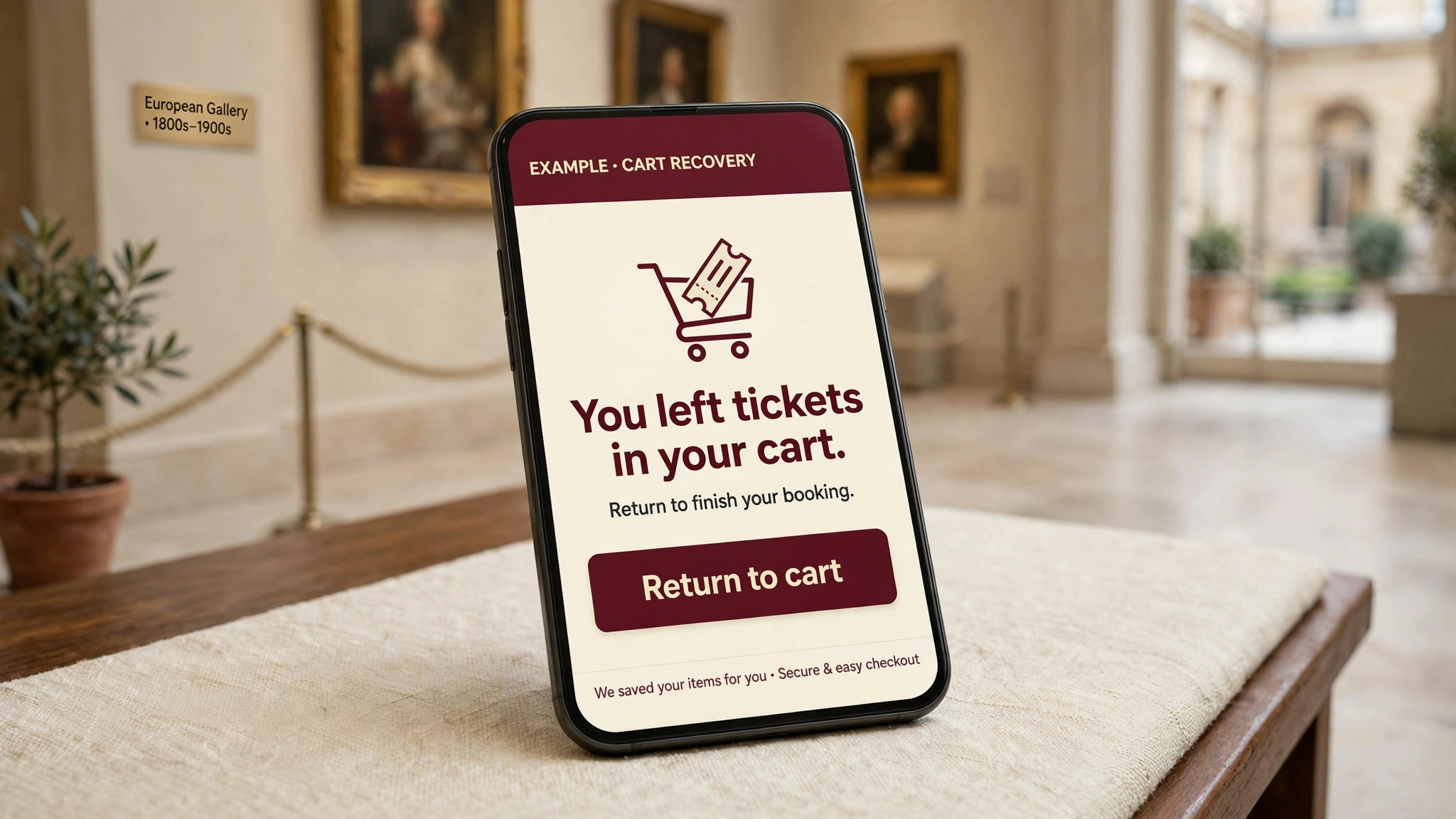
The first message should restate the booking in one line, give a direct link back to the cart where possible, and answer the most likely question, such as how to change the date or add a ticket. It should come from the museum, in the museum voice, and it should invite a reply. A visitor who replies with a question should be answered by a person, not by another automated message, because that reply is a strong buying signal. Staff should check the first message templates weekly during the early months, so wording stays accurate when exhibitions and opening hours change.
4. Send a second message only if the first gets no response
The second message, roughly a day later, should add something new rather than repeat the first. That addition could be practical information, such as what is on that weekend, whether the chosen exhibition has timed availability left, or how group and concession options work. It could also be a gentle nudge about limited availability, but only if availability is genuinely limited, because invented urgency damages trust and will be noticed by repeat visitors. If the second message also gets no response, the cart sequence should pause, not escalate into daily reminders.
5. Offer an incentive only as a third step, and sparingly
Ticketing providers advise holding any promo code for the second or third message, so visitors do not learn to abandon carts deliberately to earn a discount. Museums should follow that advice strictly, because a small museum cannot afford to train its audience to wait for codes. When an incentive is used, it should be modest, time limited, and tied to the original date range, such as a free audio guide or a small saving on a family ticket. The incentive should never be offered on a sold out date, and it should never override a member price that loyal members already paid.
6. Record the outcome and learn from it
Every recovered cart, every unrecovered cart, and every opt out should be logged against the exhibition, ticket type and date. That log shows patterns quickly, such as carts abandoning on a particular ticket type, on mobile checkout, or for a particular time slot. A pattern of that kind points to a checkout fix, such as clearer concession wording or a simpler date picker, which will recover more visits than any message sequence. Follow up data is therefore also a checkout diagnostic, and museums should review it monthly with whoever owns the ticketing page.
What Recovery Rates Can a Museum Expect
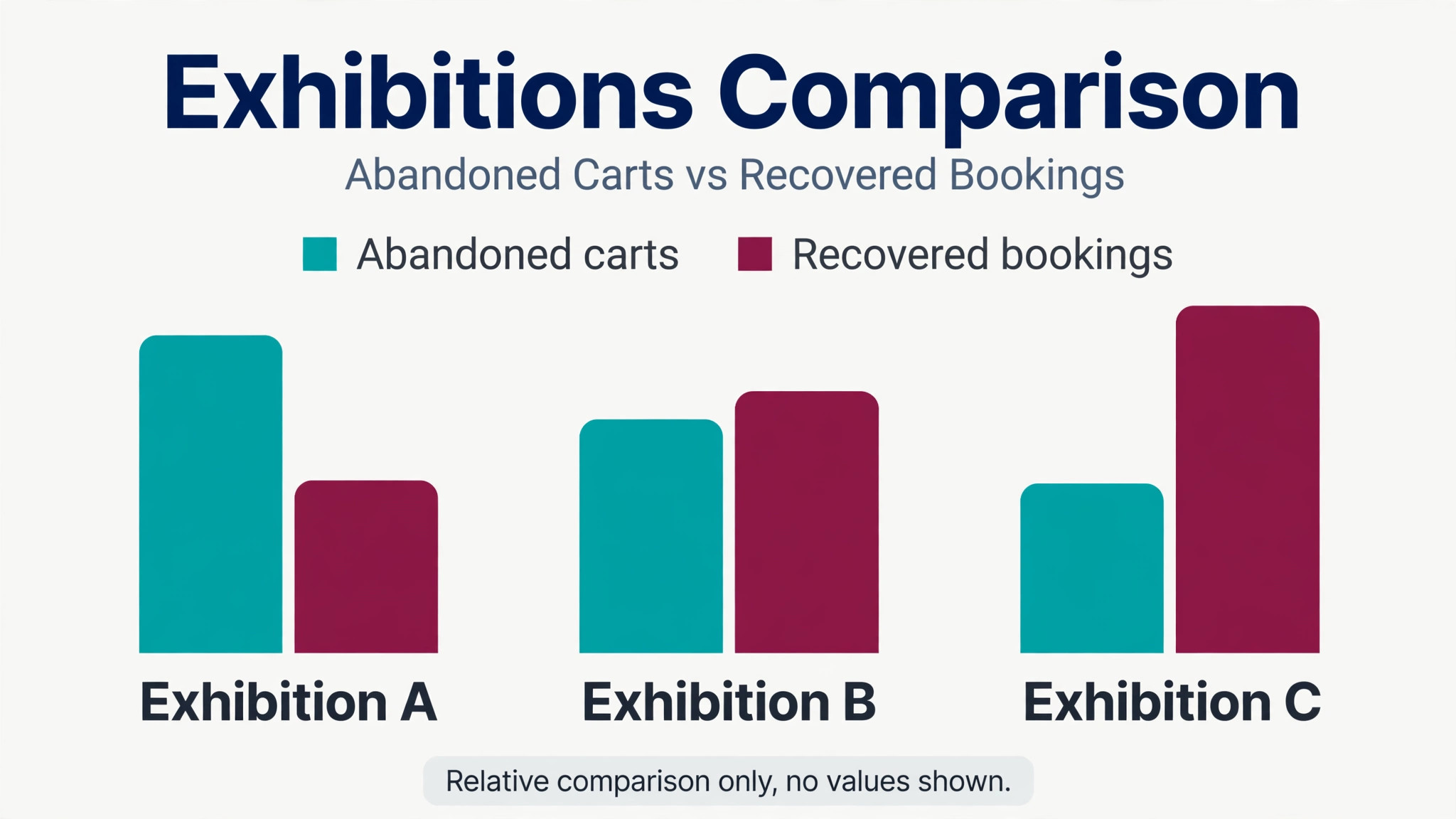
Expectations should be set honestly, because inflated promises lead museums to abandon a good system early. Ticketsolve reported a test across five venues in the UK and Ireland in which between 25 percent and 31 percent of customers who abandoned a cart came back and booked when prompted, measured with full attribution, while click based reporting showed 6 to 15 percent. SimpleTix states that its recovery emails typically recover 5 to 15 percent of otherwise lost sales. Those figures come from different measurement methods and different venue types, so a museum should treat them as a range to test against, not as a guaranteed result, and it should measure its own recovered bookings with a consistent method from the start.
The practical lesson from those reports is that a single well timed reminder often performs nearly as well as a three message sequence, according to the Ticketsolve test. That finding suits small museums, because it means a short, well written sequence can work without a complex campaign. It also means message quality matters more than message count. A museum that sends one clear, helpful reminder and answers replies promptly will often outperform a museum that sends three generic reminders and ignores replies. Measure recovered bookings, reply rate and opt out rate together, because a sequence that recovers bookings while driving opt outs is burning future audience.
Member Conversion After a Visit
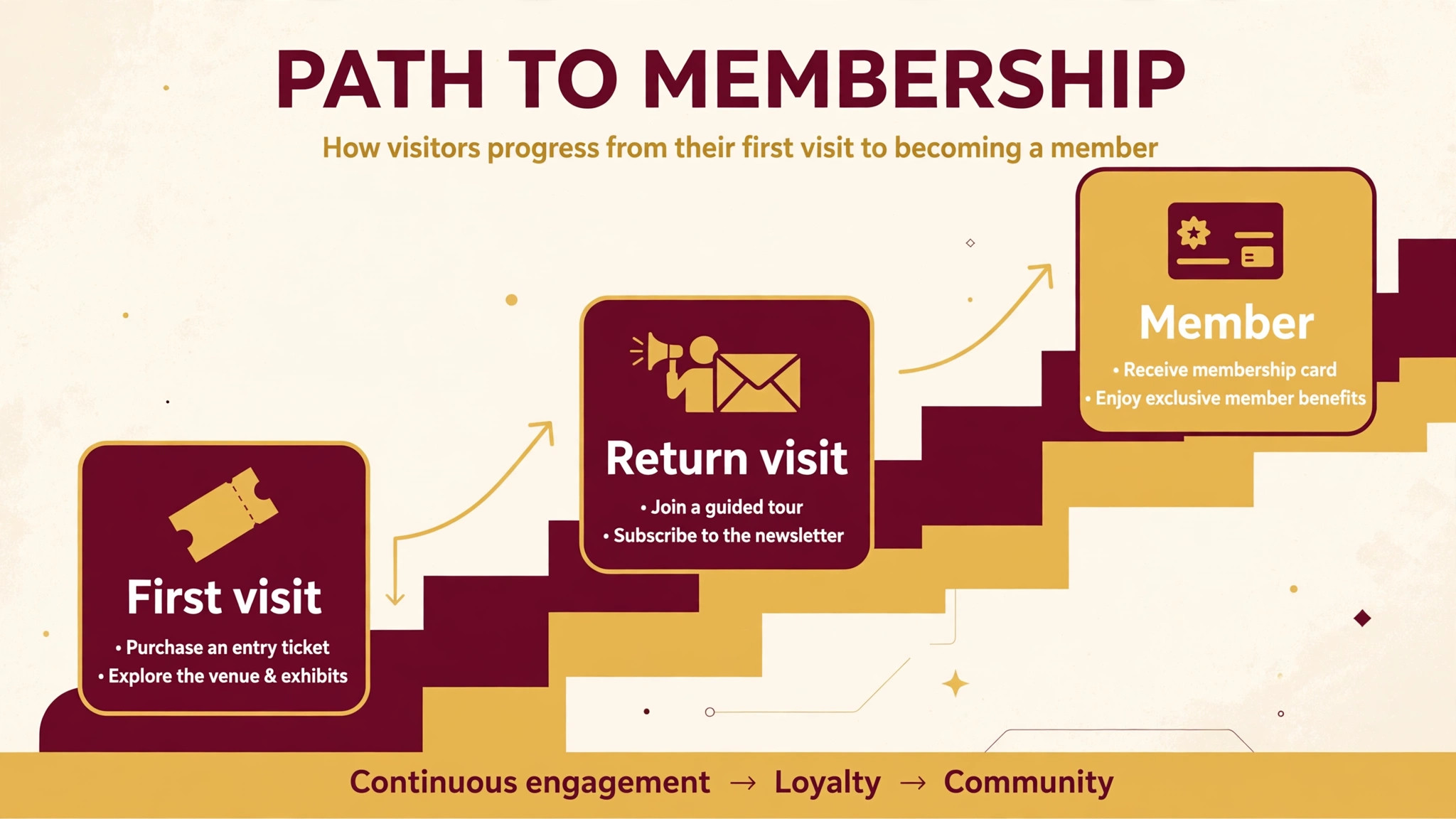
A visitor who enjoyed a museum is the best membership prospect the museum will ever have, but the offer must arrive at the right moment and with the right reason. The best moment is shortly after the visit, while the experience is fresh, and again when a new exhibition opens that fits what the visitor saw. The reason should be specific, such as unlimited entry to a changing exhibition programme, member previews, or family entry that pays for itself on the second visit. A generic message that says membership supports the museum will convert far fewer visitors than a message that shows the visitor own saving on their next two visits.
AI can help by drafting that personalised offer from visit history, such as which exhibition was booked and how many tickets were bought, and by timing it after the visit, a practical way to use AI for museum ticket sales follow up without pressuring visitors during their day out. Staff should still check the offer, because a family ticket buyer and a solo exhibition visitor need different membership pitches, and a wrong pitch feels like the museum did not notice who came. The conversion message should also make joining easy, with a direct link and a clear statement of what membership includes and when it starts. Friction at joining loses the very visitors who were ready to say yes.
Museums should also track conversion by visit type, because school holiday family visitors, exhibition visitors and local repeat visitors convert at different rates and for different reasons. A family that visited twice in a school holiday may respond to a family membership saving, while a solo visitor who attended a late opening may respond to previews and talks. Segmenting by visit pattern, without using sensitive personal details, lets the museum send fewer, better messages. That restraint matters, because members who join after a respectful offer stay longer than members who join after repeated pressure.
Group Visits and School Enquiries
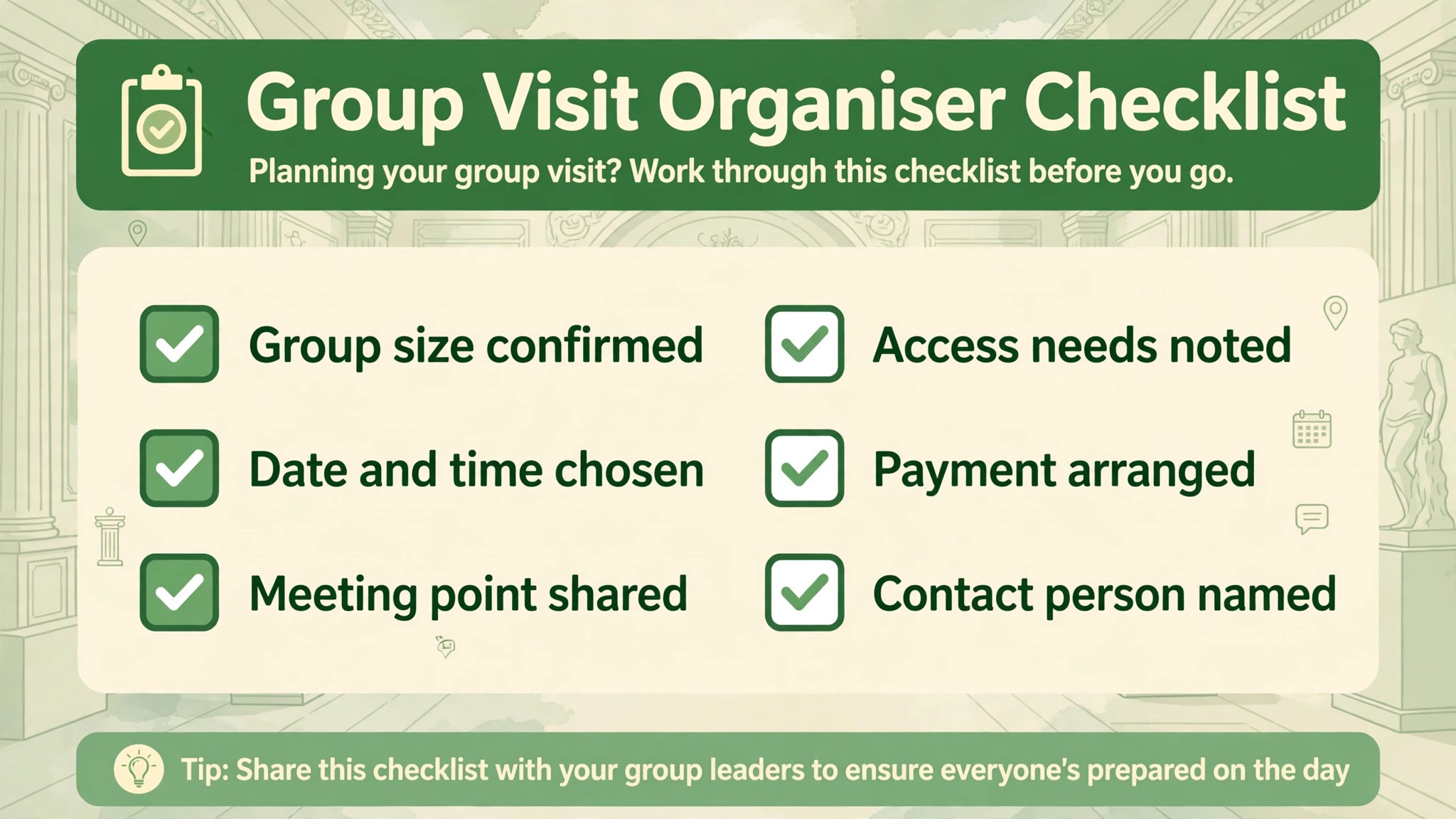
Group enquiries behave differently from individual carts, and they need a slower, more personal workflow. A teacher, a tour organiser or a community group leader rarely books on impulse, and they often need to confirm numbers, access needs, lunch arrangements and risk assessments before committing. An automated sequence that treats a group enquiry like an abandoned cart will annoy the organiser and may lose a booking worth dozens of tickets. The right approach is a prompt human acknowledgement, followed by a structured information pack, followed by timed check ins that offer help rather than pressure.
AI can draft the information pack from the enquiry details, summarise the organiser questions into a checklist for staff, and prompt the next check in at the agreed date. Staff should handle the conversation itself, because group bookings involve judgment about capacity, staffing and access that a system cannot make. The follow up should also record the decision date the organiser gave, so check ins arrive when promised rather than at random intervals. A group organiser who is contacted on the promised date, with answers to their actual questions, is far more likely to book than one who receives three generic reminders.
Access and inclusion information should be part of every group pack, not an afterthought offered only on request. Step free routes, seating, quiet spaces, hearing support and lunch facilities should be stated plainly, with a contact for specific needs. Groups that include disabled visitors, older visitors or young children need that information to plan, and a museum that provides it early shows that it has thought about their visit. That care also reduces last minute changes, because the group arrives with realistic expectations.
Follow Up Email Template
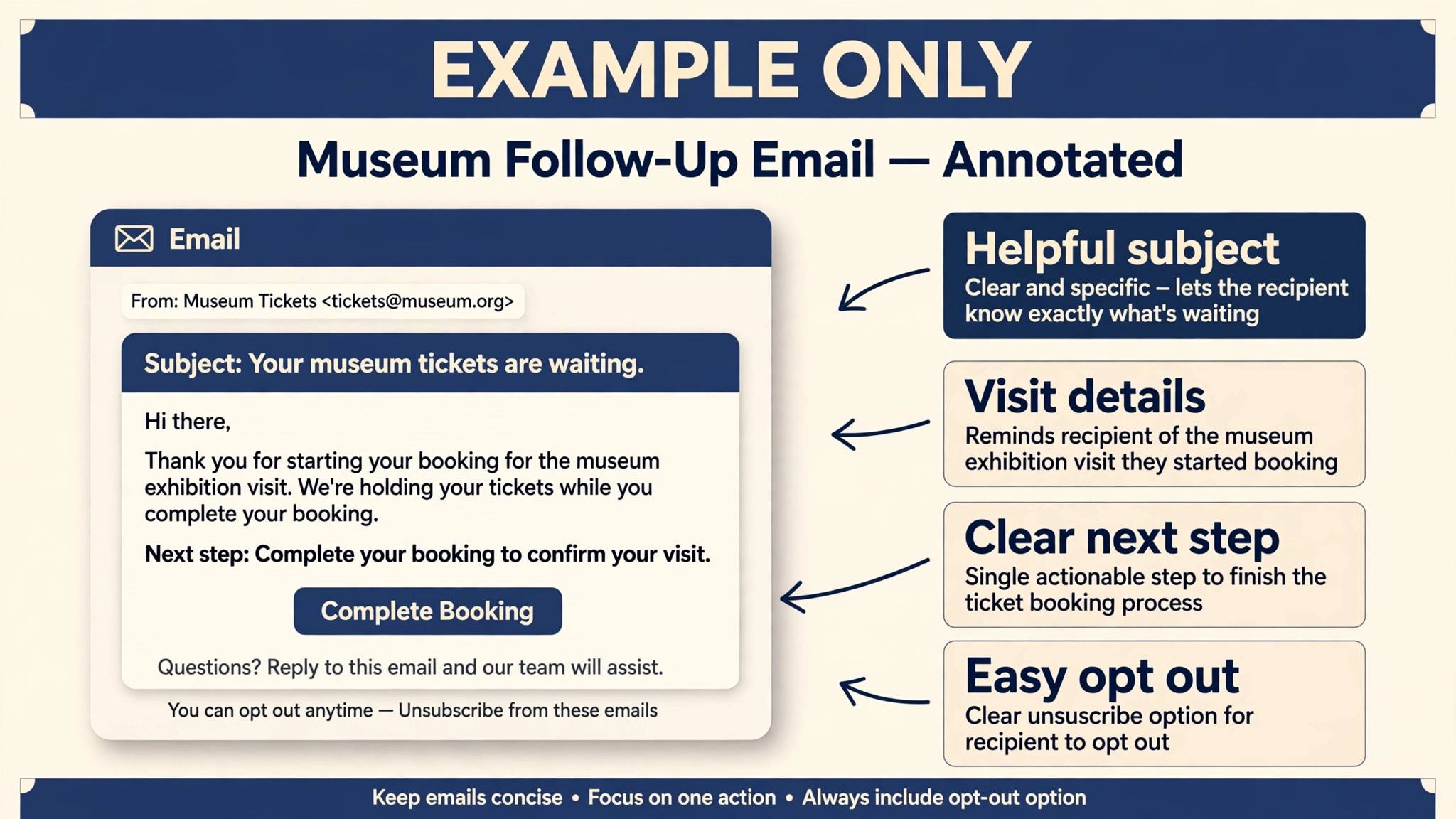
The template below can be adapted for email or text. Bracketed parts are filled from the booking record, and staff should edit tone and exhibition details before sending. No message should go out for a date that has already passed without offering the next available date.
> Cart recovery, first message > > Hi [first name], you chose [tickets] for [date and time] at [museum name] and did not quite finish booking. Your selection is still available at [cart link]. If you need to change the date, add a ticket, or check concession details, just reply here and we will help. We hope to see you on [date]. >
> Cart recovery, second message > > Hi [first name], just checking whether [date and time] still works for your visit to [exhibition name]. Timed availability for that day is [availability note]. If a different date suits you better, reply with the date and we will hold the closest available slot while you decide. >
> Post visit member offer > > Hi [first name], thanks for visiting [exhibition name] on [date]. A return visit with [number] tickets would cost [amount], while [membership type] costs [amount] for a full year of entry, previews and member events. If that would suit your next visits, you can join here [membership link]. No pressure, and your next visit is welcome either way. >
> Group enquiry check in > > Hi [first name], thanks for your enquiry about a group visit on [date] for around [number] people. We have noted your questions about [topics], and the answers are below in brief. Please let us know if the numbers or access needs change, and we will confirm availability and any group rate in writing.
A template only works if replies are answered promptly and accurately. If the cart message promises help with date changes, staff must be able to change dates. If the member message states a saving, the saving must be correct. Visitors judge follow up by what happens after they reply, not by how polished the first message looked. That is why the template is paired with a rule in this guide that every reply gets a named owner and a response time, even in a small team.
What to Automate and What Must Stay Human
Automation should handle timing, drafting, cart linking, outcome logging and reply sorting, because those tasks are repetitive and easy to forget in a small team, and that scope is the sensible starting point when a museum first decides to use AI for museum ticket sales follow up. It should not handle group negotiation, access advice, or any message about a sold out or changed exhibition without staff review, because those situations need accurate, current information and a human tone. A system that sends a recovery message for an exhibition that closed last week will damage credibility instantly, and that error is entirely preventable with a staff check.
Data handling needs the same care as in any visitor facing system. Cart records, visit history and contact details should be used only for the follow up the visitor agreed to, with access limited to staff who need them. Visitors who opt out must be removed from sequences at once, and the record should show that request so a later campaign does not message them again. Museums hold a position of public trust, and careful data practice is part of that trust, not a separate compliance chore.
Staff training should focus on reply handling, not just on switching sequences on. Front of house and ticketing staff need a short routine for answering cart replies, changing dates, and escalating group enquiries to the right person. A ten minute weekly review of recovered carts and unanswered replies will teach a small team more than a long manual. When staff see follow up recovering real visits, they will protect it. When they see it creating unanswered messages, they will quietly stop trusting it.
Measuring Follow Up Without Drowning in Reports
Four numbers tell the story for a small museum. Cart recovery rate shows what share of abandoned carts with permission become bookings. Time to recovery shows how quickly visitors return after the first message, which tests timing. Member conversion rate shows what share of first time visitors join within a set window, which tests the post visit offer. Group enquiry conversion shows what share of group enquiries become bookings, which tests the slower workflow. Tracking those four monthly, split by exhibition where possible, gives enough signal to adjust wording and timing without a large reporting burden.
It also helps to review a sample of messages each month, including recovered and unrecovered carts, not only successes. Recovered carts show what good wording looks like, and unrecovered carts often show a checkout problem, a date problem, or a message that arrived too late. That review should end with one change per month, such as clearer concession wording or a faster first message, so the system improves steadily. A museum that changes everything at once will never know which change helped.
How to Use AI for Museum Ticket Sales Follow Up Across Exhibitions
Exhibitions change, and follow up must change with them, or messages will quickly feel stale. A recovery message for a long running gallery can stay stable for months, while a message for a short special exhibition needs a new date range, availability note, and closing date every time the programme changes. The system should therefore hold exhibition details as separate fields, not as hard coded text inside templates, so staff can update dates and availability once and have every message reflect the change. A museum that plans to use AI for museum ticket sales follow up should test that update path before launch, by changing an exhibition date in a test and checking every draft message.
Segmenting by exhibition also improves relevance. Visitors who abandoned a family exhibition cart need different information from visitors who abandoned a late opening or a talk, and a single generic recovery message will serve neither well. AI can draft those exhibition specific variants from the booking record, while staff check that each variant names the right exhibition, the right ticket types, and the right access information. That check takes minutes and prevents the most embarrassing follow up error, which is inviting a visitor back to the wrong show.
Seasonal peaks need their own planning too. School holidays, free weekends, and special events create cart volumes that a small team cannot answer by hand, and that is when automated drafting and reply sorting earn their keep. During a peak, staff should review replies twice daily, because a visitor who asks about a holiday date and waits two days will often book elsewhere. After a peak, the museum should review which exhibitions recovered best and which messages produced opt outs, then carry one improvement into the next peak. A team that learns to use AI for museum ticket sales follow up in that seasonal rhythm will find follow up becomes part of exhibition planning, not an afterthought when tickets stall.
Finally, keep the museum voice consistent across exhibitions. Follow up messages should read like they came from the same institution that wrote the gallery labels and the welcome desk script, warm and informative rather than sales driven. That consistency is what turns a recovered cart into a repeat visitor, and a repeat visitor into a member. Technology can draft the words, but only staff who know the exhibitions can keep them true, and that human check is the final step in every sequence in this guide. When a museum gets that balance right, visitors feel helped rather than chased, and that feeling is what brings them back.
Frequently Asked Questions
How soon should a museum send a cart recovery message
A first message within one hour suits timed museum entry, because visitor intent is fresh and the chosen date may still be available. Some ticketing platforms send a first message after 20 minutes, others after an hour, and both can work if the message is helpful. Messages for past dates should be suppressed and replaced with the next available date.
Should museums offer a discount to recover an abandoned cart
Only sparingly, and only as a later step after helpful messages have been tried. Ticketing providers advise holding any promo code for the second or third message, so visitors do not learn to abandon carts to earn a code. A modest, time limited incentive tied to the original date range is safer than an immediate discount blast.
Can AI write museum follow up messages on its own
AI can draft messages from booking details, but staff should check them before sending, especially for sold out dates, changed exhibitions, or group enquiries. The draft should never invent availability, change a price, or promise a group rate that has not been confirmed. Used with review, it saves writing time and improves consistency.
How does cart follow up differ from group enquiry follow up
Cart follow up is short and timed, because the visitor already chose tickets and a date. Group follow up is slower and more personal, because the organiser needs to confirm numbers, access needs and logistics before booking. Treating a group enquiry like an abandoned cart will annoy the organiser and may lose a large booking.
What should a museum do when a visitor opts out
Remove the visitor from follow up sequences at once, and record the request so later campaigns do not message them again. Opt out handling should be visible and immediate, because trust is essential for a museum audience. The visitor should still be welcome to book and visit without any penalty for opting out.
How can a small museum measure whether follow up works
Track cart recovery rate, time to recovery, member conversion rate and group enquiry conversion monthly, using one consistent measurement method. Compare recovered bookings against the same period before follow up started, and review a sample of messages each month. One consistent method matters more than a complex dashboard.
A Sensible Starting Point for Small Museums
Start with cart recovery alone, using one helpful first message and one second message that adds new information, because a museum that learns to use AI for museum ticket sales follow up one sequence at a time will keep control of tone and accuracy. Add post visit thanks next, then member conversion once replies are being answered promptly. Add group follow up as a structured human workflow with drafted packs, rather than as another automated sequence. That order recovers visits quickly, builds staff confidence, and keeps the museum voice human throughout. The technology matters, but the discipline of answering replies and keeping exhibition details current matters more, and it is the habit that will still pay off when platforms change.
For museums building the wider visitor habit, the follow up patterns in animal shelter adoption follow up show how a similar respectful sequence works in a different visitor setting. Candidate follow up offers another parallel, and candidate follow up for recruitment agencies covers ageing and reply sorting in depth. Content planning around exhibitions also matters, and content marketing strategy for service businesses frames that work. A regular client feedback loop will surface why visitors abandon checkout, straight from visitors. For local discovery, local SEO strategy for service businesses helps new visitors find the museum in the first place.