

Nearly half of all Google searches are reported to seek local information, a figure repeated in many niche marketing guides, and it points to a simple truth. Buyers rarely search for a generalist. They search for a specific problem, in a specific place, for a specific kind of business. A niche down strategy small business growth plan works with that behaviour instead of against it. It trades a wide audience that barely notices you for a narrow audience that recognises you immediately, trusts you faster, and refers you more often.
That trade feels risky, because turning away work sounds like shrinking a business. In practice, focus often does the opposite. A narrower offer is easier to explain, easier to deliver well, and easier to prove, because every case example, every testimonial, and every referral speaks to the same buyer. Marketing stops being a general announcement and becomes a direct answer to a problem a defined group already has. This guide gives you a practical way to choose a niche, test it before you commit fully, narrow the offer, rewrite the message, and build the proof assets that make the niche pay.
Why Narrowing Often Beats Broadening
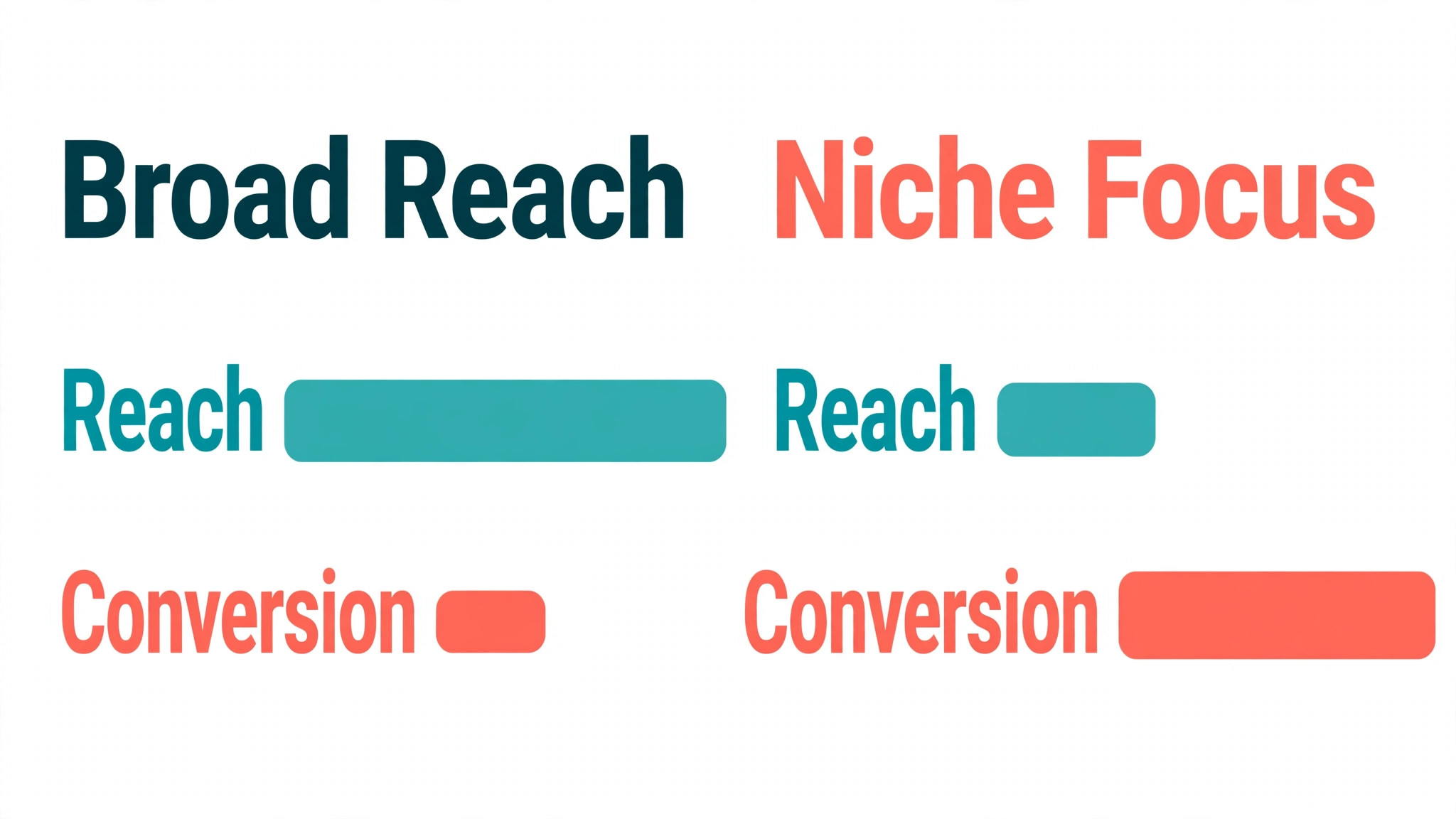
A broad business competes with everyone, which means it competes mainly on price, availability, or luck. A narrow business competes with a handful of specialists, which means it can compete on expertise, fit, and results. That difference changes every part of the business. Sales conversations get shorter, because the buyer already believes you understand their world. Delivery gets simpler, because the same problems repeat and the same solutions improve with each engagement. Pricing gets easier, because the buyer is comparing you with other specialists, not with every general provider who happens to be cheaper.
Narrowing also changes referrals, and that effect is central to a niche down strategy small business growth plan. A generalist is hard to refer, because the referrer has to explain what the business does and for whom. A specialist is easy to refer, because the description is one sentence long. People remember a bookkeeper for dental practices far more readily than they remember a bookkeeper for small businesses in general, even when the underlying work is similar. That memorability is a growth asset, and it compounds, because each referral from within the niche brings another buyer who already trusts the recommendation.
There is a cost, and it should be named honestly. A niche can be too small, too seasonal, or too dependent on one platform, one regulation, or one large buyer. A niche can also become boring for an owner who enjoys variety, and boredom is a real risk, because it leads to drifting back into broad work. The scoring method in the next section is designed to surface those risks before you commit, rather than after you have rebuilt your website around a niche that cannot support the business.
Score Your Options Before You Choose
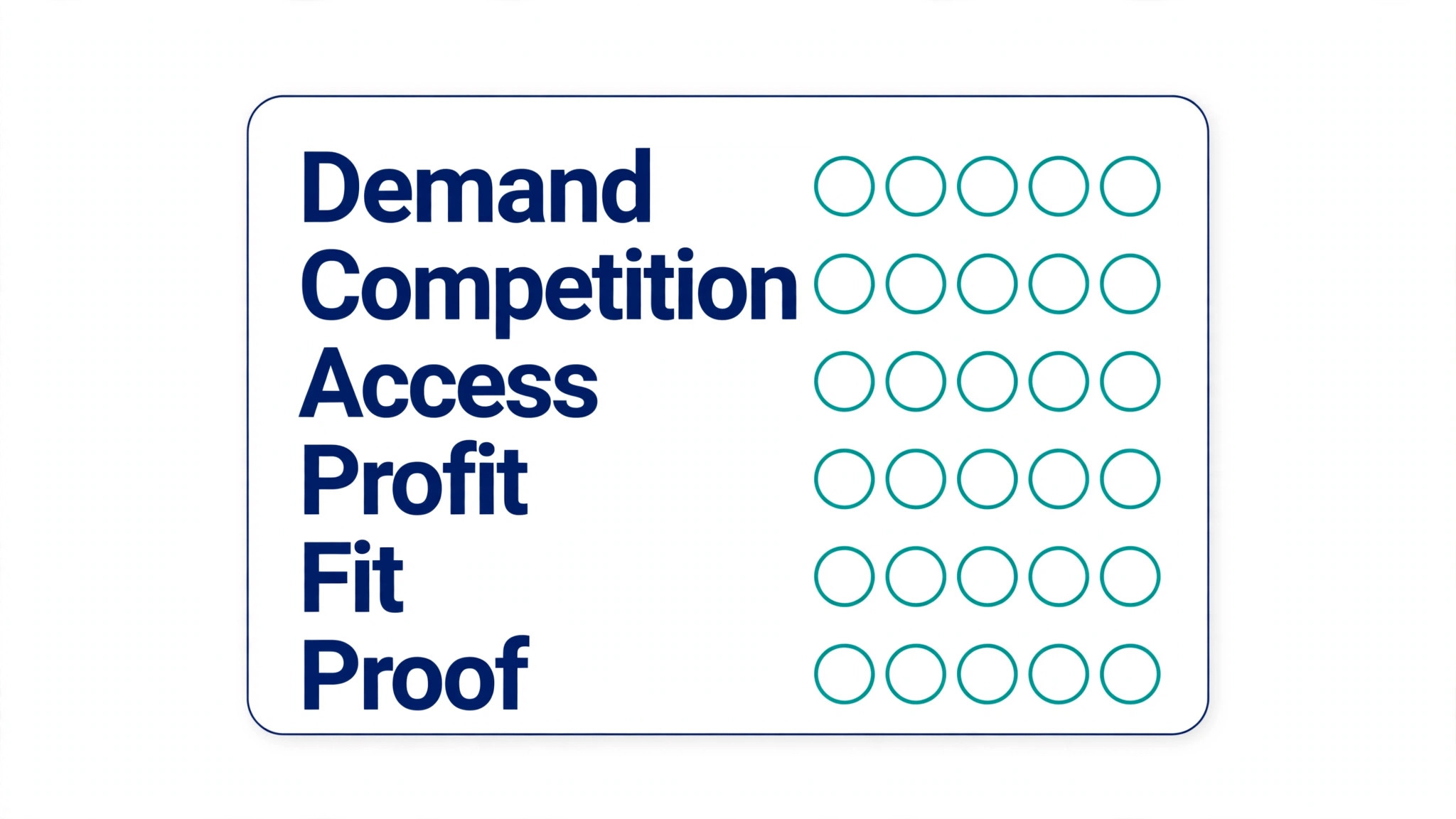
Do not choose a niche by enthusiasm alone. Enthusiasm matters, because you will live inside this market every day, but it is only one of several factors that decide whether a niche can pay. Score each candidate niche on the factors below, using evidence from your own work and from simple market checks, not from hope. Use a scale of one to five for each factor, and total the scores. The highest total is not automatically the winner, but a low score on market size or paying ability should stop you, even if enthusiasm is high.
Start with your existing client data. Which types of client already buy without heavy discounting, stay longest, refer most, and cause fewest delivery problems. Those patterns are stronger evidence than any market report, because they reflect your actual strengths. Next, check market size in a practical way. Count how many businesses of that type exist in your service area, how many are hiring or spending in your category, and whether you can reach them through a channel you already use, such as local search, referrals, or a trade association. A niche with fifty potential buyers in your area may still work for a solo practice, but it will not work for a team that needs fifty new clients a year.
Check paying ability separately from enthusiasm. Some markets love a service but cannot pay for it at a sustainable rate, while others pay readily because the problem is tied to revenue, compliance, or risk. Check competition honestly too. A niche with no competitors may be empty for a good reason, such as low demand or a problem that is already solved another way. A niche with a few strong specialists may be healthier than a niche with no one, because their presence proves buyers pay.
| Scoring factor | What a score of five looks like | What a score of one looks like |
|---|---|---|
| Your proven strength | Repeat wins, strong results, easy delivery | Work feels hard, results are mixed |
| Market size | Enough buyers to fill capacity for years | Fewer buyers than you need in a year |
| Paying ability | Problem tied to revenue, risk, or compliance | Buyers want help but cannot fund it |
| Reachability | A channel you already use reaches them | No clear way to reach them affordably |
| Competition health | A few specialists prove demand exists | Crowded field or no sign of demand |
| Enjoyment and stamina | You would still enjoy this work in three years | Variety matters more to you than depth |
Add a simple guardrail to the scoring. Any niche that scores one or two on market size or paying ability is out, regardless of its total. Any niche that scores one on enjoyment should also be treated with caution, because a strategy you resent will not survive the first slow quarter. The goal is a niche you can serve well, that can pay well, and that you can stay with long enough for focus to compound. Valuing that focus honestly helps, as shown in How to Value a Small Service Business in Real Numbers.
Narrow the Offer, Not Just the Audience
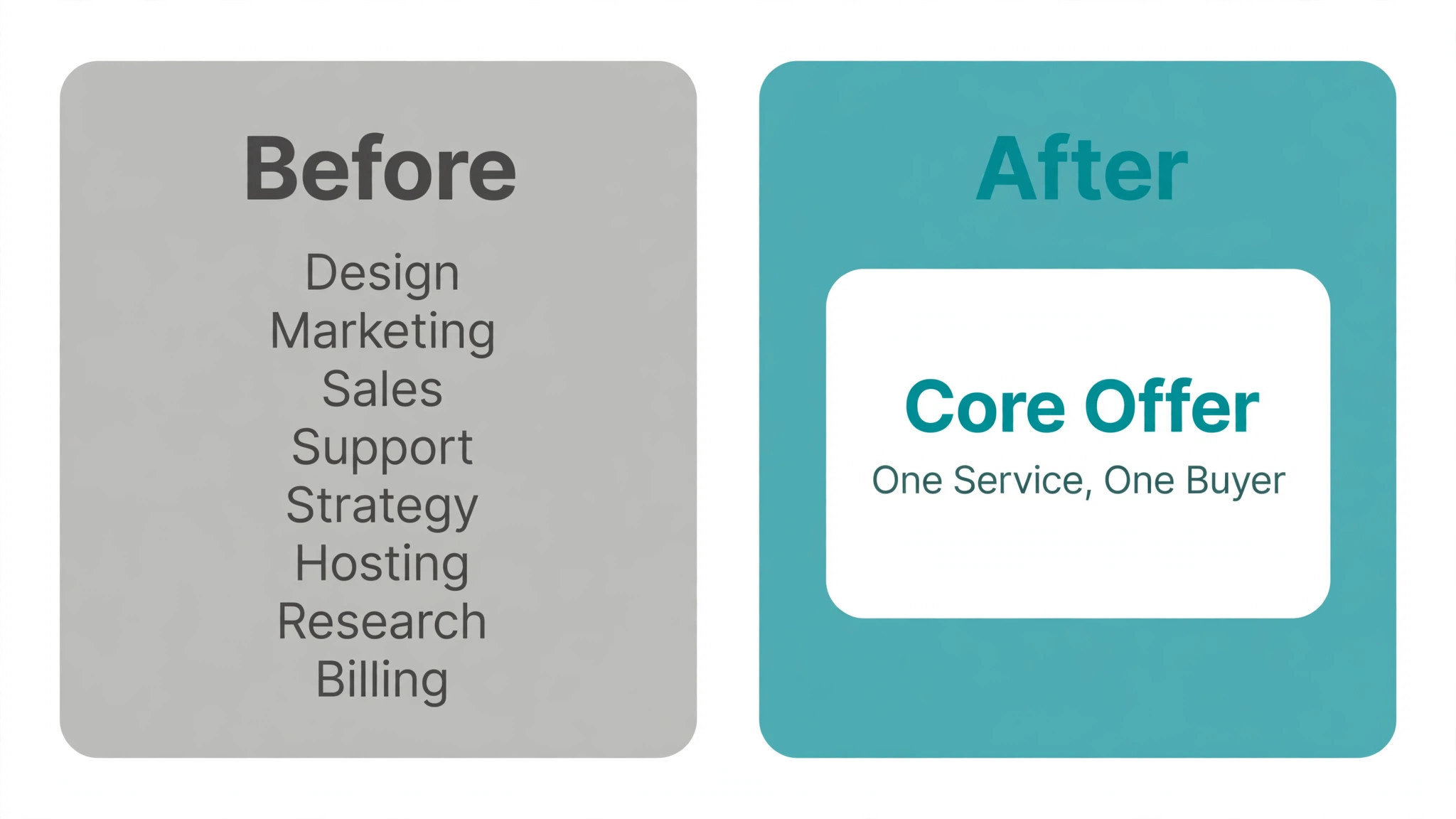
Many owners narrow the audience but keep the offer broad, and then wonder why nothing changes. If you serve dental practices but still offer every service a general firm offers, you have changed the label, not the business. Real narrowing means choosing the one or two problems you solve best for that audience, and making those problems the centre of the offer. Other services can remain as supporting work for existing clients, but they should not be the headline, because a headline that promises everything promises nothing specific.
Start by listing every service you currently offer, and mark each one against three questions. Does this service create a clear, measurable result for the niche. Do you deliver it better than most general providers. Does it lead to repeat work or referrals inside the niche. Services that score well on all three become the core offer. Services that score well on only one become supporting services, offered quietly to existing clients. Services that score poorly on all three are candidates for removal, referral to a partner, or a price that reflects their true cost and distraction.
Test the narrowed offer with a simple sentence, as part of a niche down strategy small business growth check. If you cannot describe the offer, the audience, and the result in one sentence without using vague words, the offer is still too broad. A useful sentence might read as a bookkeeping service that closes the month for dental practices in five working days, with reports the owner can read in ten minutes. That sentence tells the buyer who it is for, what happens, how fast, and why it matters. A sentence that reads as business support for growing companies tells the buyer almost nothing, and the buyer will move on to a provider who is specific.
Narrowing the offer also simplifies delivery, which is where much of the profit in a niche comes from. Repeated problems allow checklists, templates, and better tools, which reduce errors and speed up work. That efficiency is not about cutting corners. It is about learning from repetition, which is exactly what general work prevents, because every engagement is different enough to require starting again. Over a year, that efficiency gap becomes a margin gap, and the niche business can invest the difference in better service, better proof, or better rates.
Rewrite the Message for One Buyer
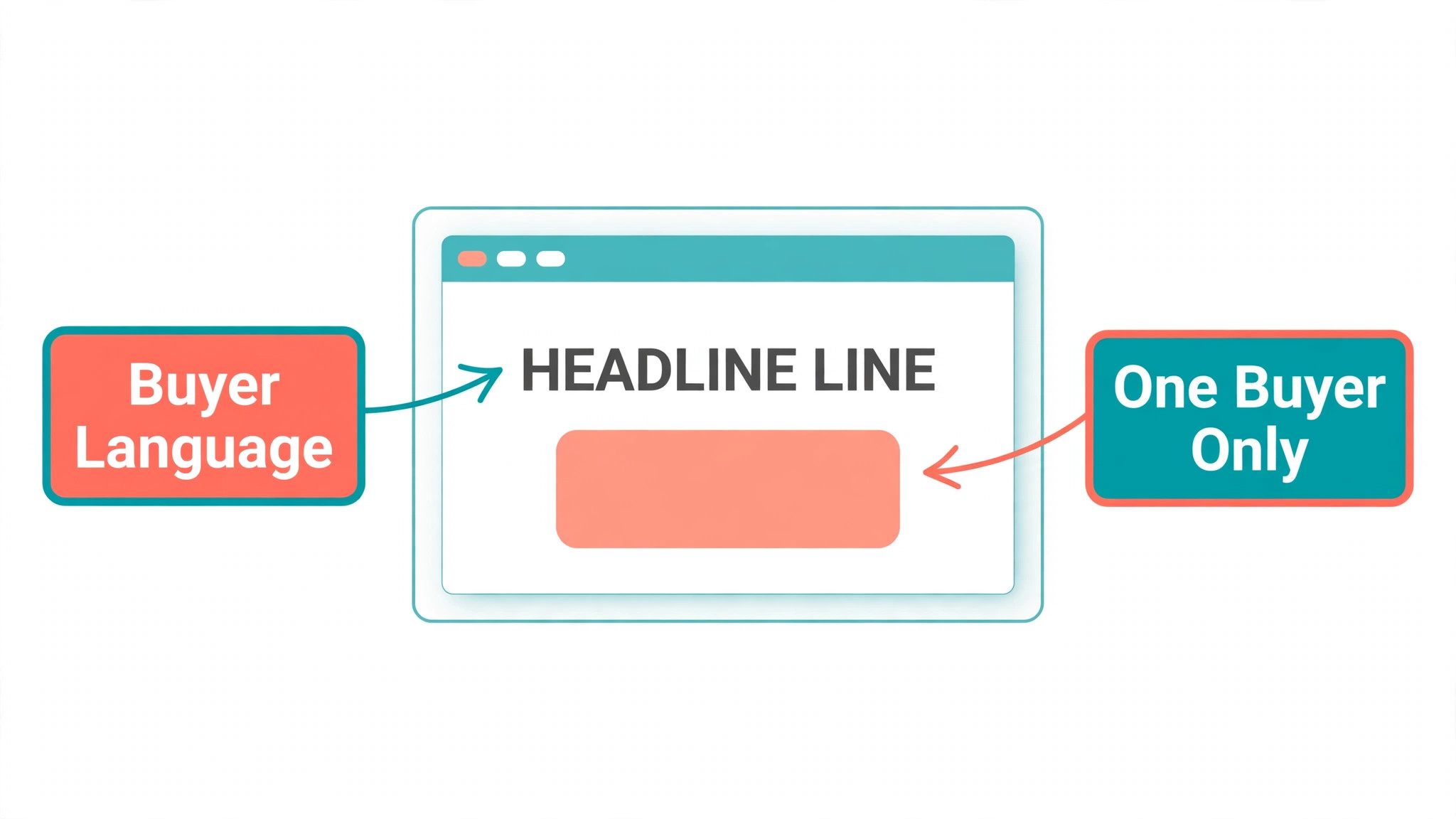
Once the niche and offer are clear, rewrite every public message for that one buyer, starting with the homepage headline, the service page, and the proposal template. A message written for everyone will be read by no one as if it were written for them, because general language forces the buyer to do the work of deciding whether it applies. A message written for one buyer does that work for them, and the buyer feels recognised within seconds.
Begin with the buyer’s problem in their own words. Use the language clients actually use in calls and emails, not the language of your industry. A dental practice owner talks about chair time, patient no shows, and month end stress, not about workflow optimisation in the abstract. A trades business talks about quotes, callbacks, and jobs that run over, not about operational excellence. When the message uses the buyer’s words, the buyer assumes the provider understands the world behind those words, and that assumption shortens the trust building part of every sale.
Next, state the result and the proof in the same section, not pages apart. A headline that promises a result, followed immediately by a short example or a specific figure from real work, is far stronger than a headline followed by a list of services. Keep figures honest and checkable, and qualify any third party figure plainly, including where it came from and that it should be checked against current sources. Buyers in a niche talk to each other, and an overstated claim will travel faster inside a niche than it would in a broad market.
Finally, rewrite the call to action for the niche. Instead of a generic contact form, offer a next step that fits the buyer’s situation, such as a short audit for that business type, a checklist for that problem, or a brief call focused on one outcome. A specific next step feels lower risk than an open ended enquiry, because the buyer knows what will happen. It also gives you a conversation that starts with their problem, which is the best possible start for a niche sale.
Build Proof Assets Inside the Niche
Proof assets are the materials that let a niche buyer believe you before they buy, and they work best when they are specific to the niche. A generic testimonial that praises your professionalism helps a little. A short case example that names the business type, the problem, the work done, and the result over a stated period helps a great deal, provided the client has agreed to share it and every figure is accurate. Build a small set of these assets deliberately, rather than waiting for perfect examples to appear on their own.
Start with three case examples, each focused on a different problem inside the niche. Keep each one short, with the starting situation, the work, and the result, and include the context that makes the result meaningful, such as business size or timeframe. Add a short testimonial that speaks to the experience of working with you, not just the result, because niche buyers also want to know what the process feels like. Add a practical asset the buyer can use without buying, such as a checklist, a template, or a short guide for that niche. That asset does two jobs. It proves expertise, and it gives the buyer a reason to stay in contact until they are ready to buy.
Distribute proof where niche buyers actually look, because a niche down strategy small business growth plan depends on being found in the right places. That may be a trade association directory, a local search profile, a community group, or a referral partner, rather than a broad advertising channel. Ask satisfied niche clients for referrals in a specific way, naming the type of business you help, rather than asking generally for anyone who might need help. Specific referral requests are easier to act on, because the referrer can picture exactly who fits. Over time, a small set of strong proof assets inside one niche will outperform a large set of generic assets spread across many markets.

Test the Niche Before a Full Rebuild
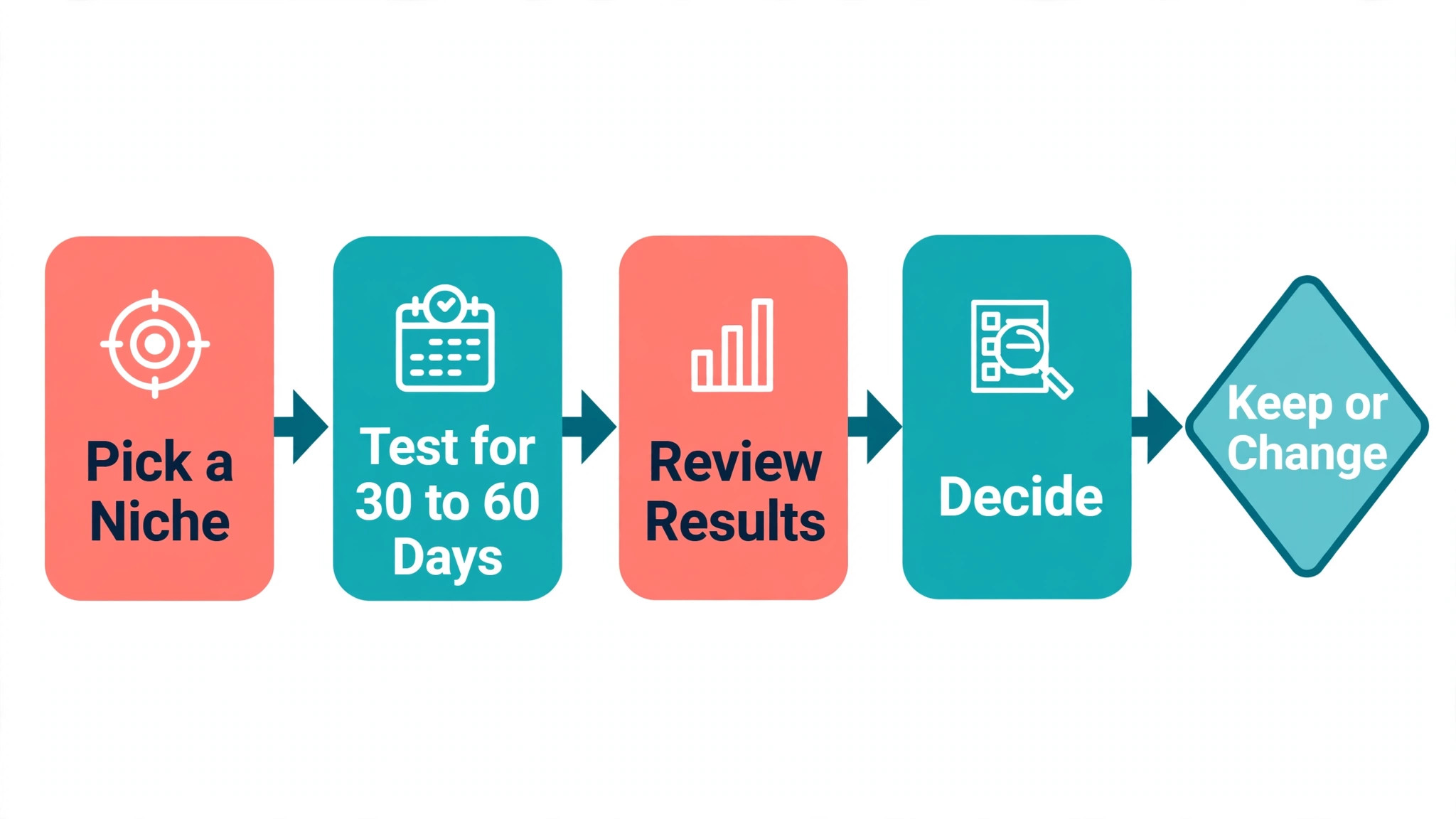
A full website rebuild, a new brand, and a public announcement are expensive ways to discover that a niche does not fit. Test first, with a small, reversible experiment that gives you real evidence in thirty to sixty days. The test should include a focused landing page or service page, a small number of outreach messages or local search improvements aimed at that niche, and a clear measure of success decided in advance, such as enquiry rate, close rate, or margin per engagement.
Run the test while keeping existing broad work running, so the experiment does not put the business at risk. That dual track approach is slower than a clean break, but it is safer, and it gives you a comparison.
If niche enquiries convert better, refer more, and cause fewer delivery problems than broad enquiries over the test period, the evidence supports a fuller move. If niche enquiries are fewer but far better, that may still support the move, provided the numbers can fill capacity over a year. If niche enquiries are fewer and no better, the niche may be wrong, the message may be unclear, or the offer may still be too broad, and each of those explanations points to a different fix.
Use the test to learn, not just to count. Note the questions niche buyers ask, the objections they raise, and the language they use. Those notes will improve the message far more than any guesswork, and they will reveal whether the niche has sub groups worth serving differently. A test that teaches you something is useful even if it does not immediately produce clients, because it prevents a larger mistake later. A test that is judged only on immediate sales will often be abandoned too early, before the compounding effects of focus have time to appear.
Expand Carefully, Without Losing Focus
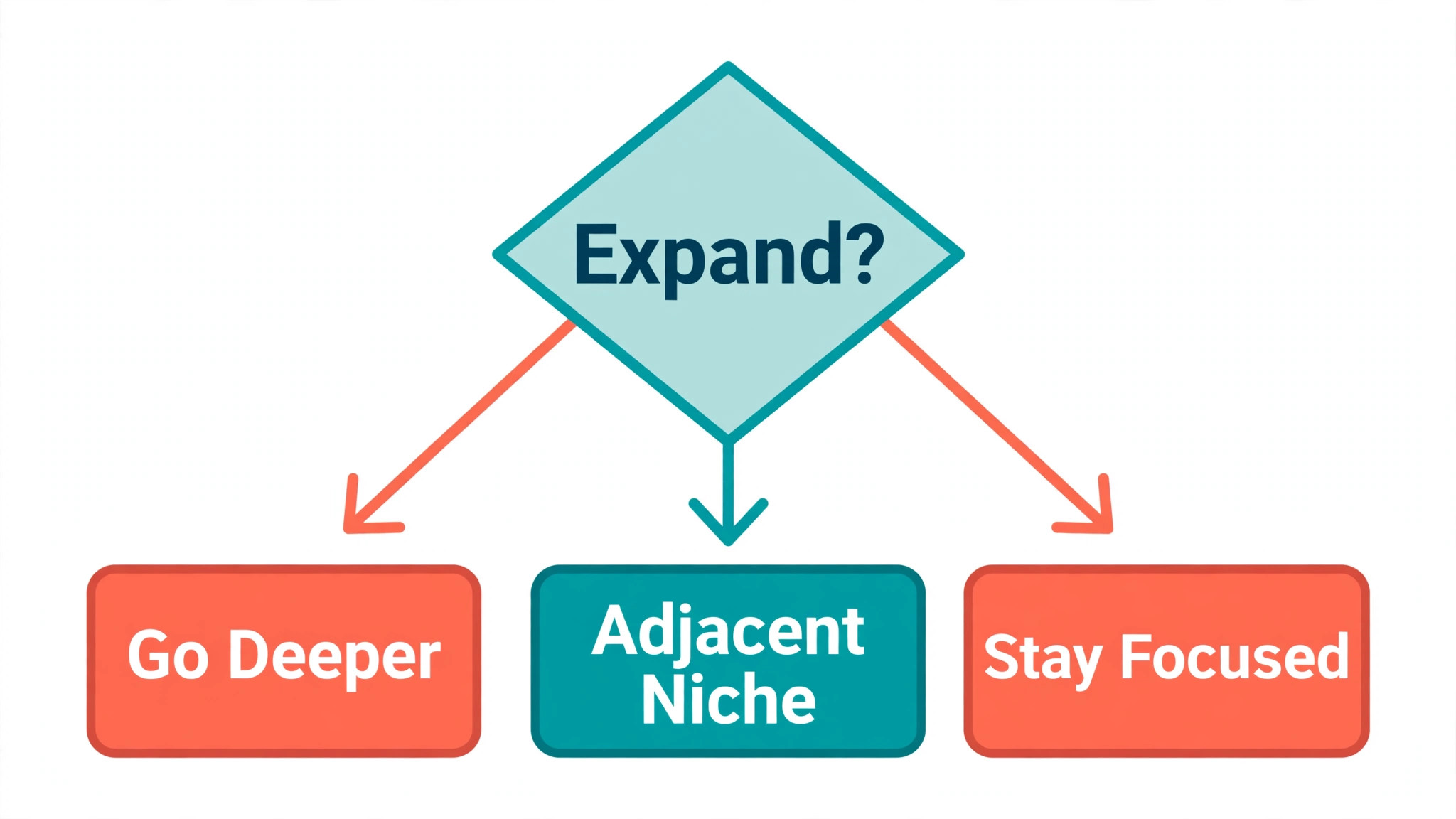
Growth after niching down usually comes from depth before breadth, and that sequence protects a niche down strategy small business growth plan from drifting back to general work. Depth means serving the same niche better, with more of the problems that niche has, or with a deeper level of service for the same problem. A bookkeeper for dental practices might add payroll for the same practices, or a faster month end service for practices with multiple chairs. That kind of expansion strengthens the niche position, because it makes the provider more useful to the same buyers, and it uses the same proof, channels, and referrals.
Breadth means adding a second niche, and it should be done only when the first niche is stable, profitable, and systematised enough to run without constant owner attention. The second niche should be adjacent, sharing a problem, a channel, or a delivery model with the first, so the business does not have to learn everything again. A move from dental practices to veterinary practices, for example, may share many operational patterns, while a move from dental practices to restaurants may share far fewer, even though both are small businesses. Adjacency is not about industry similarity alone. It is about shared problems, shared buyers, and shared delivery.
When you do expand, keep the messages separate. A homepage that tries to speak to two niches at once will speak clearly to neither, which is how businesses drift back into generalist language without noticing. Use separate service pages, separate proof assets, and separate referral requests for each niche, even if the underlying work overlaps. That separation preserves the clarity that made the first niche work, while giving the second niche a fair chance to grow on its own evidence.
Risks, Limits, and Honest Checks
Niche strategy has real limits, and a guide that hides them would do readers a disservice. A niche that depends on one regulation, one platform, or one large employer in a town can change quickly, and a business built entirely on that niche will feel the change immediately. Mitigate that risk by choosing a niche with several demand drivers, not one, and by keeping a small amount of adjacent work that could grow if the main niche contracts. That adjacent work should not be broad general work. It should be the next most logical niche, kept warm through occasional content or referrals.
Seasonality is another limit. Some niches have strong seasons and quiet seasons, and a business that serves only that niche must plan cash flow around the quiet period, or build a complementary offer that peaks at a different time. Check the seasonal pattern before committing, using your own records and conversations with buyers in the niche, rather than assuming demand is steady year round. A seasonal niche can still be excellent, provided the business plans for it, prices for it, and does not panic in the quiet months.
Finally, check your own stamina honestly. A niche that is profitable but dull will be hard to sustain, and an owner who dreads the work will eventually drift, discount, or delegate badly. If enjoyment scores low, consider a narrower slice of the niche that you do enjoy, or a different niche with similar economics. Growth that depends on an owner who has lost interest is fragile, no matter how good the numbers look on paper. The best niche is one where profit, proof, and personal stamina all point in the same direction.
A Niche Down Strategy Small Business Growth Worksheet in Practice
A worksheet turns the ideas in this guide into a decision you can actually make, so work through it with a pen, a spreadsheet, or a simple document, and use real numbers from your own business wherever possible. Start by listing three candidate niches, not ten. Three forces a real comparison, while ten invites vague scoring and delays the decision. For each candidate, write down the buyer type in one sentence, the core problem in the buyer’s words, and the result you deliver in numbers the buyer can recognise. If any of those three lines feels vague, that candidate is not ready to score yet, and a short round of client conversations will usually sharpen it.
Next, score each candidate on the six factors from earlier, and write a one line reason for each score. The reason matters more than the number, because it prevents generous scoring based on optimism. A score of five for paying ability should be backed by a note such as recent clients in this group paid without discounting, or the problem is tied to a compliance deadline. A score of two for reachability should be backed by a note such as no trade channel found yet, or outreach so far has produced no replies. Those notes become the research list for the test period, because they name exactly what still needs to be learned.
Then, run a capacity check for the leading candidate. Estimate how many engagements you need in a year to meet your revenue target at a realistic average price, and compare that number with the size of the niche you can reach. Check the vendor’s current pricing page or your own cost records before repeating any price or cost figure from an outside source, and qualify any third party market figure plainly, because niche market sizes are often estimated rather than measured. If the capacity check fails, the niche may still work with a higher average price, a wider geography, or an adjacent segment, but that change should be decided now, not discovered after a rebuild.
Finally, write the transition plan in three phases. Phase one is the test, with a focused page, a small outreach effort, and a decision date. Phase two is the partial move, where niche work becomes the headline and broad work continues only for existing clients or by referral. Phase three is the full move, where the website, proposals, and referral requests all speak to the niche first. A niche down strategy small business growth worksheet is only useful if it ends with dates and owners for each phase, even when the owner is you. Without dates, a worksheet becomes a document you admire and then ignore, while broad work fills the calendar again.
Use the worksheet again after the test, and compare your scores with what actually happened. Scores that were too generous will teach you where your judgement needs evidence next time, and scores that were too cautious will teach you where confidence was misplaced. That review loop is the part most owners skip, and it is the part that turns a single niche decision into a repeatable skill. A business that can choose, test, and review a niche well can repeat that process for a second niche later, without the fear that accompanied the first move.
How to Talk About the Niche Without Sounding Narrow
Some owners worry that naming a niche will make them sound small, or that buyers outside the niche will assume they cannot help. That worry is understandable, but it misunderstands how buyers read specificity. A buyer inside the niche reads specificity as expertise, while a buyer outside the niche usually reads it as a clear signal and moves on, which saves both sides time. The cost of sounding broad is that no buyer feels specifically addressed, and that cost is usually larger than the cost of a few lost enquiries from outside the niche.
In conversation, frame the niche as a focus, not as a limitation. Say that you focus on a particular type of business because the problems repeat and the solutions improve with repetition, and that you refer other work to trusted partners rather than doing it badly. That framing is honest, it positions you as a professional with standards, and it often produces referrals in both directions, because partners remember the provider who sends them well matched work. A niche down strategy small business growth approach works best when referral partners understand the focus clearly enough to send the right buyers and to receive the buyers who do not fit.
On the website, keep one clear sentence about the focus on the homepage, and keep a short note for other buyers, such as existing clients or referrals, on a secondary page. That note prevents the feeling that the business has closed its doors, while keeping the main message focused. Over time, as niche proof grows, the note can become shorter, because the business will have less need for broad enquiries and more confidence in the niche pipeline.
Frequently Asked Questions
How small should my niche be?
Small enough that you can become the obvious choice for a defined buyer, and large enough to fill your capacity at a sustainable price. For a solo practice, a few hundred potential buyers in a service area may be enough. For a larger team, you will need a larger pool, or a niche that can be served across a wider area.
Will niching down reduce my revenue at first?
It can, if broad work is dropped before niche work replaces it. Test the niche while keeping existing work running, and move fully only when niche enquiries, close rates, and margins support the change. A gradual transition protects revenue while focus builds.
How do I choose between two promising niches?
Score both on proven strength, market size, paying ability, reachability, competition health, and enjoyment, and apply the guardrail that a low score on market size or paying ability rules a niche out. Then test the higher scoring niche for thirty to sixty days and compare real enquiries with broad work.
What if my niche turns out to be too small?
Expand to an adjacent niche that shares problems, channels, or delivery patterns with the first, rather than returning to general work. Keep messages and proof separate for each niche, so clarity is preserved while the second niche grows.
Do I need to turn away all work outside my niche?
No, especially at first. Turn away work that distracts from building niche proof, and keep supporting work for existing clients where it does not harm delivery. Over time, referrals and systems will make the niche the main source of work, and broad work can fade naturally.
How long does a niche strategy take to show results?
A focused test can show enquiry and conversion signals within thirty to sixty days, but the compounding benefits, such as referrals, proof, and delivery efficiency, usually build over several quarters. Judge the test on learning and conversion quality, not only on immediate sales.
Can a niche business still grow large?
Yes, through depth inside the niche, through adjacent niches once the first is stable, and through wider geography where the service allows it. Growth after niching is usually slower at first and more durable later, because it rests on reputation inside a defined market.
What is the biggest mistake in niching down?
Choosing by enthusiasm alone, or narrowing the audience while keeping the offer broad. Score the niche on evidence, narrow the offer to one or two core problems, rewrite the message for one buyer, and build proof inside the niche before a full rebuild.
More Reading on Stratilyze
– How to Value a Small Service Business in Real Numbers – Raise Your Prices Without Losing the Clients Who Matter – Best CRM Software for Consultants – Best Customer Feedback Software for Small Business