
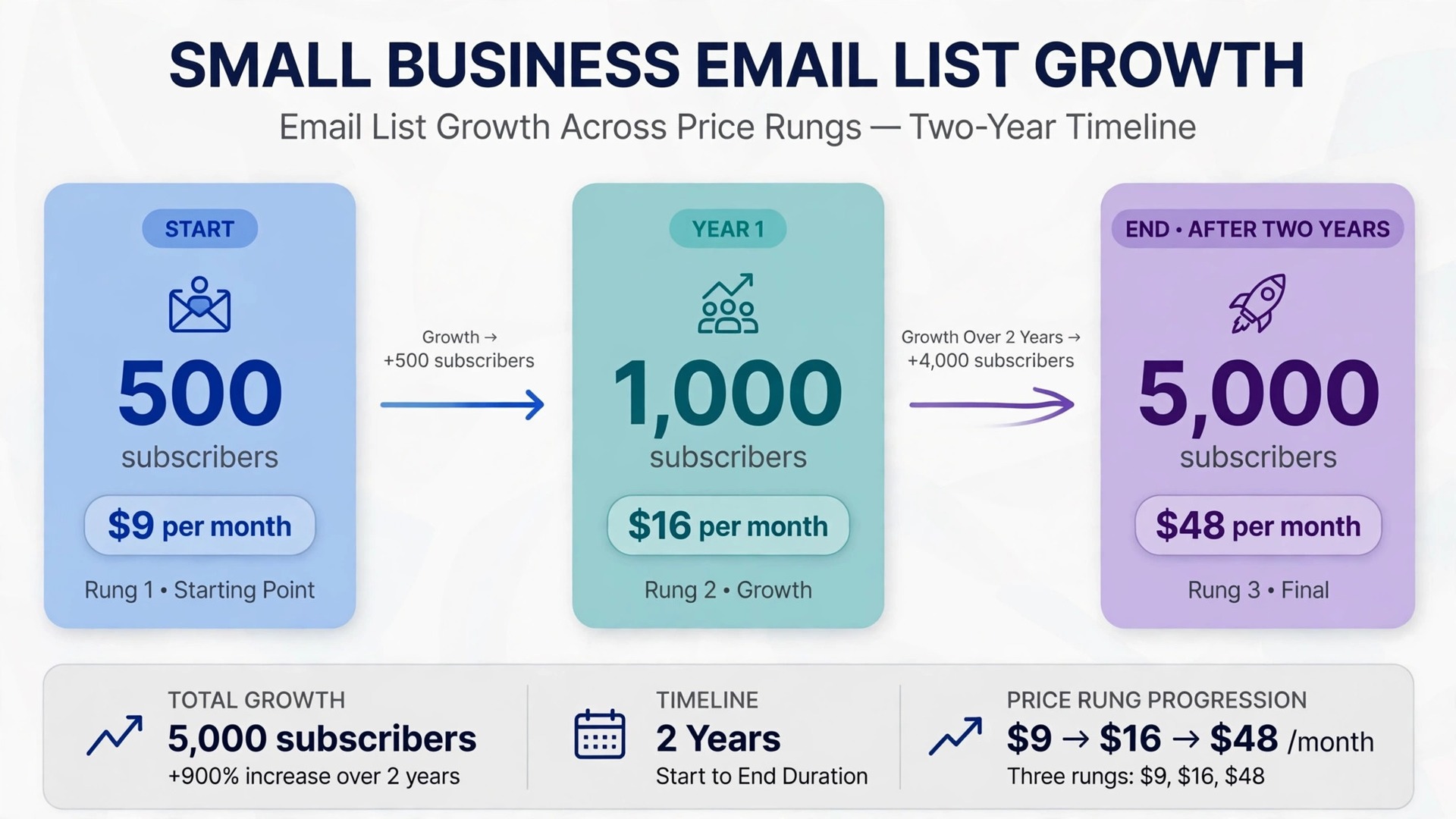
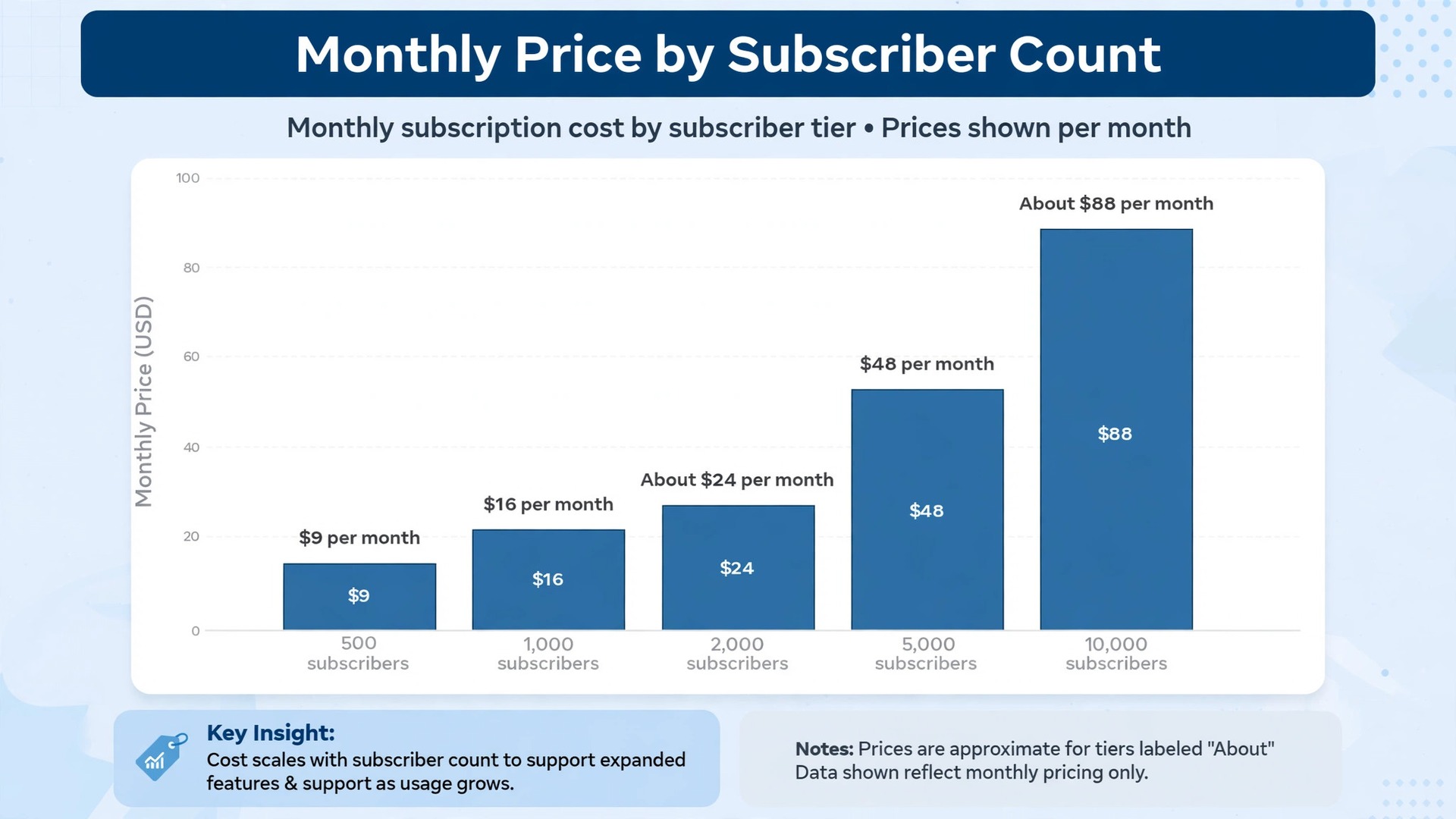
The problem is not the starting price. Moosend Pro starts at 9 dollars a month for 500 subscribers, which looks like one of the cheapest email tools a small business can buy, until the cost of Moosend for small business monthly starts moving with the list. The problem is that the price moves with the list, and a list that grows the way a healthy business wants it to grow will cross several price rungs before the owner notices the bill has changed.
A business that budgets for the starting price and then grows from 500 subscribers to 5,000 subscribers will see the monthly charge rise from 9 dollars to 48 dollars, and that rise is not a surprise fee. It is the pricing model working exactly as designed, and it catches owners who never planned for list growth when they priced the cost of Moosend for small business monthly use.
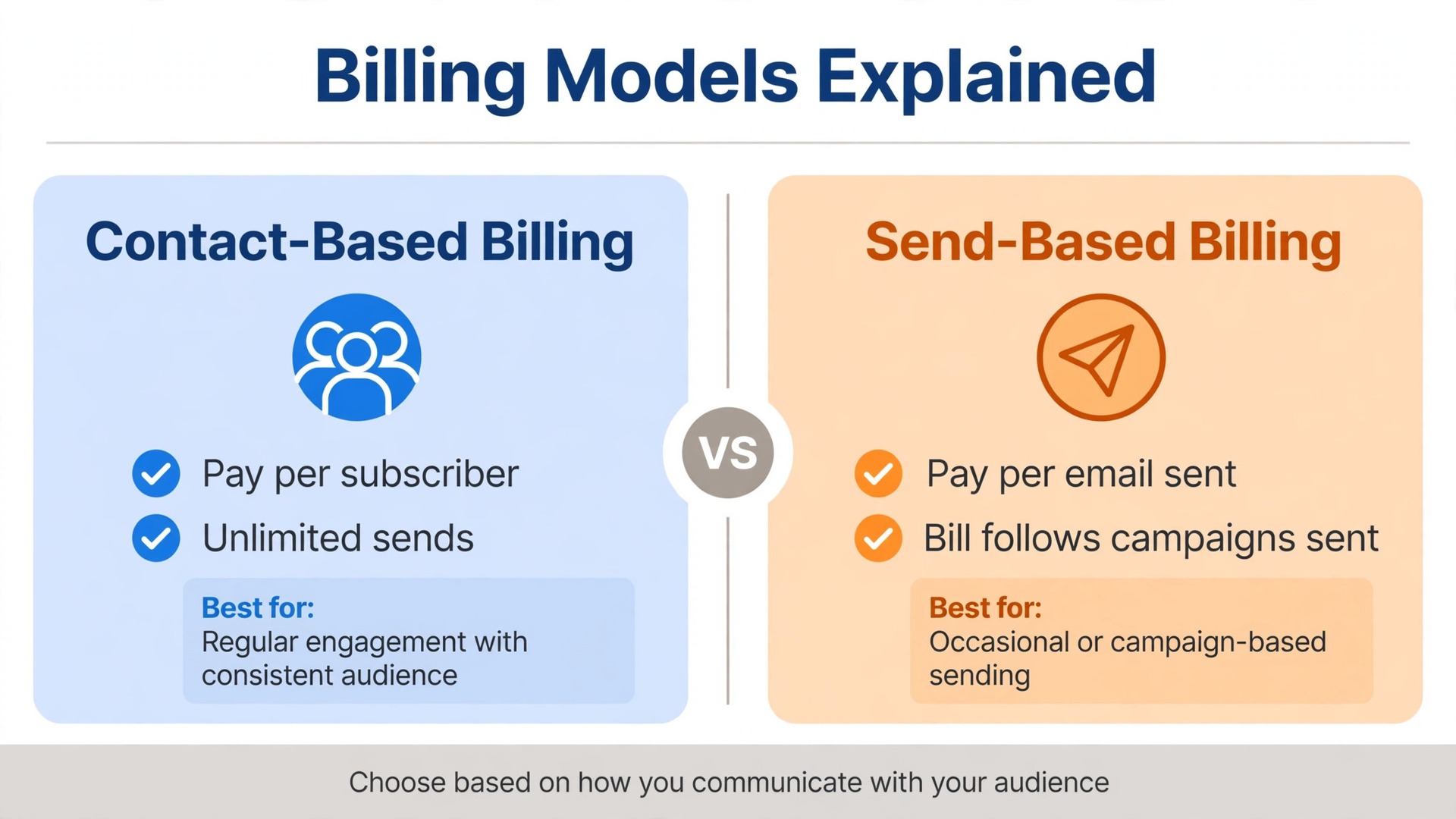
Moosend charges by subscriber count, with unlimited email sends on the Pro plan. That is the opposite of a send based tool, and it changes which businesses get a good deal. A shop that mails every week to a small list pays very little, because sends are unlimited. A shop that builds a large list and mails rarely pays for every subscriber on the list, even the ones who never open. The bill follows the list, not the work.
This guide prices Moosend in full, with published Pro prices by subscriber count, the annual and bi-annual discounts, the custom tiers that sit above Pro, and the costs that sit outside the subscription. Prices below come from pricing guides that cite the vendor pricing page in September and October 2026. Confirm the live pricing page before you pay, because Moosend changes subscriber rungs and discount terms from time to time.
What the Cost of Moosend for Small Business Monthly Covers
Moosend sells one main subscription, Pro, plus two custom tiers, Moosend+ and Enterprise. Pro includes unlimited email campaigns, marketing automation, landing pages, subscription forms, and a drag and drop editor, according to pricing guides checked in October 2026. That breadth matters, because on some rivals automation and landing pages sit behind a higher tier. On Moosend, a small business gets the full core feature set on Pro, and the price difference between a small account and a large account is subscriber count, not feature access.
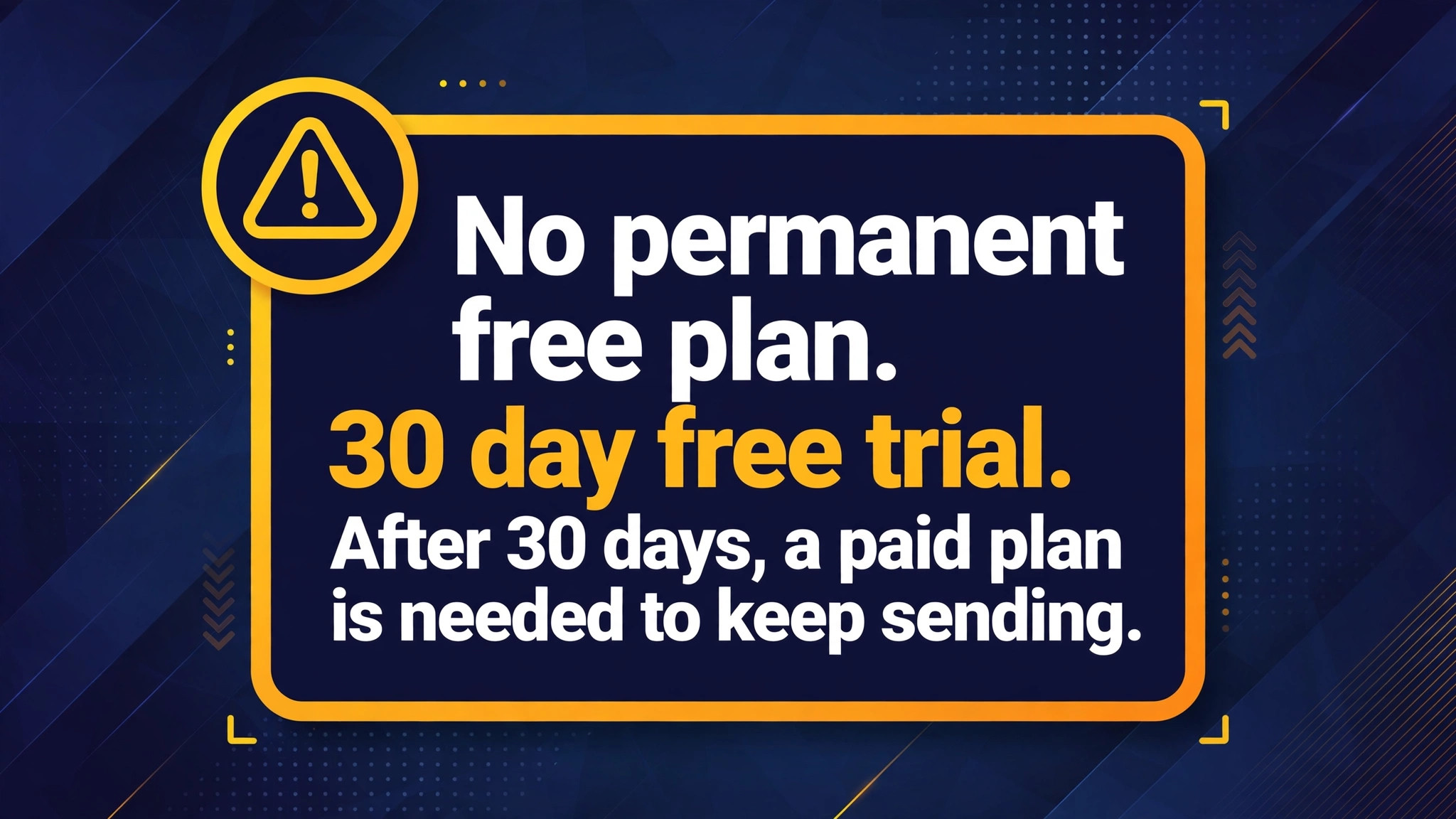
There is no permanent free plan. Moosend offers a 30 day free trial, with no credit card required for the trial, and a trial account that covers 1,000 subscribers with unlimited emails, according to pricing guides. That trial is genuinely useful for testing automation and the editor, but it is not a long term home for a trading business. A business that wants a free tier for a tiny list should look elsewhere, because Moosend expects a paid subscription once the trial ends.
Moosend+ is the custom tier for teams that need add-ons such as a dedicated IP address or transactional emails. Enterprise is the custom tier for larger companies that need priority support and a dedicated account manager. Neither tier carries a published price, so a business that needs those extras cannot budget from a headline figure. The honest line in this guide is to say that Moosend+ and Enterprise are priced by quote, and a business that needs them should request a quote before comparing Moosend with a rival that publishes those extras.
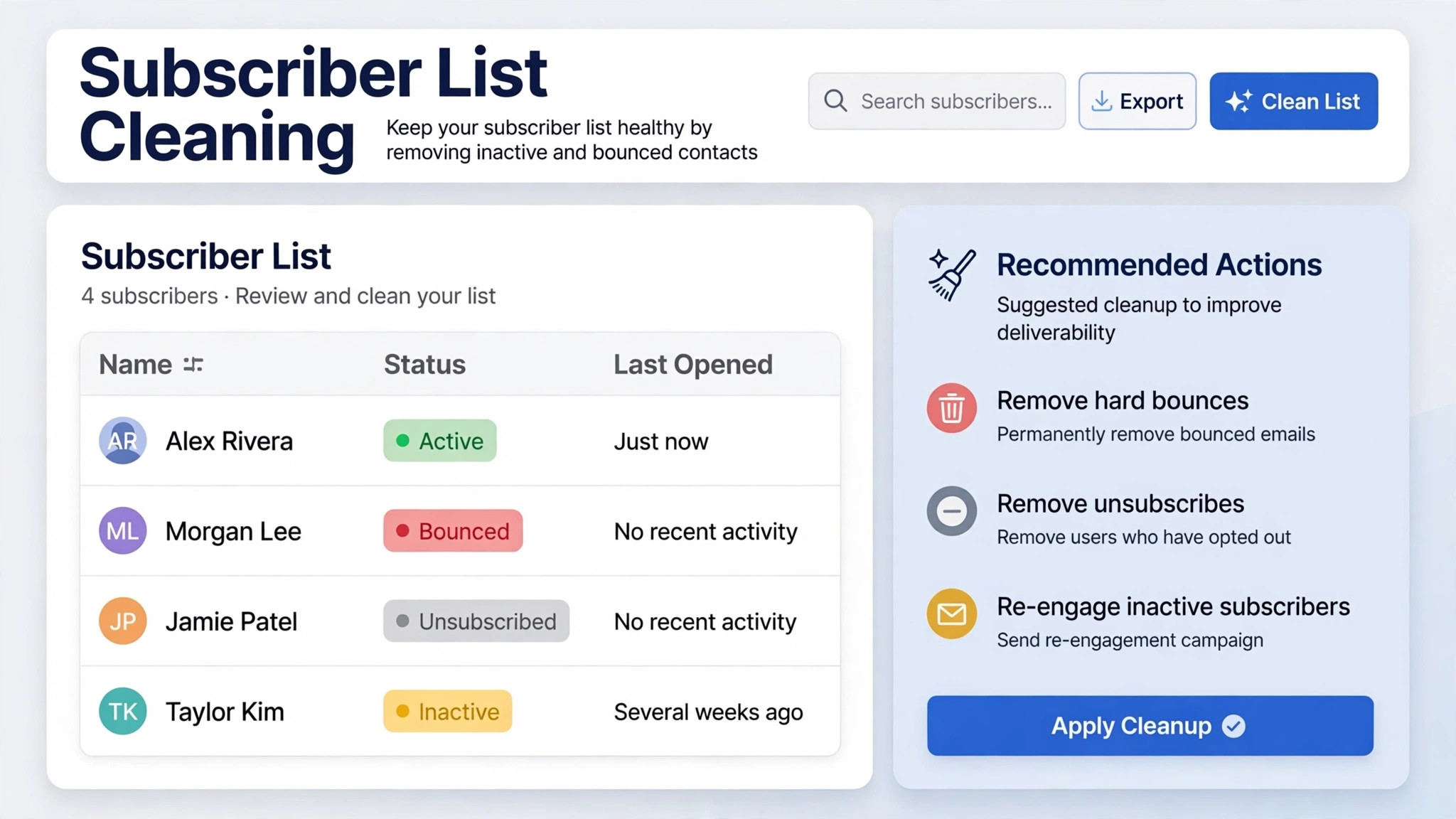
Subscriber counting follows a one email address, one contact rule. An address that appears on several lists counts once, which is fairer than tools that charge per list membership. The practical consequence is that list hygiene pays directly. Removing duplicate addresses does not help, because duplicates already count once, but removing inactive subscribers does help, because every inactive address still counts toward the rung. A monthly cleaning habit is therefore a billing habit on Moosend, not just a deliverability habit.
Published Pro Prices by Subscriber Count
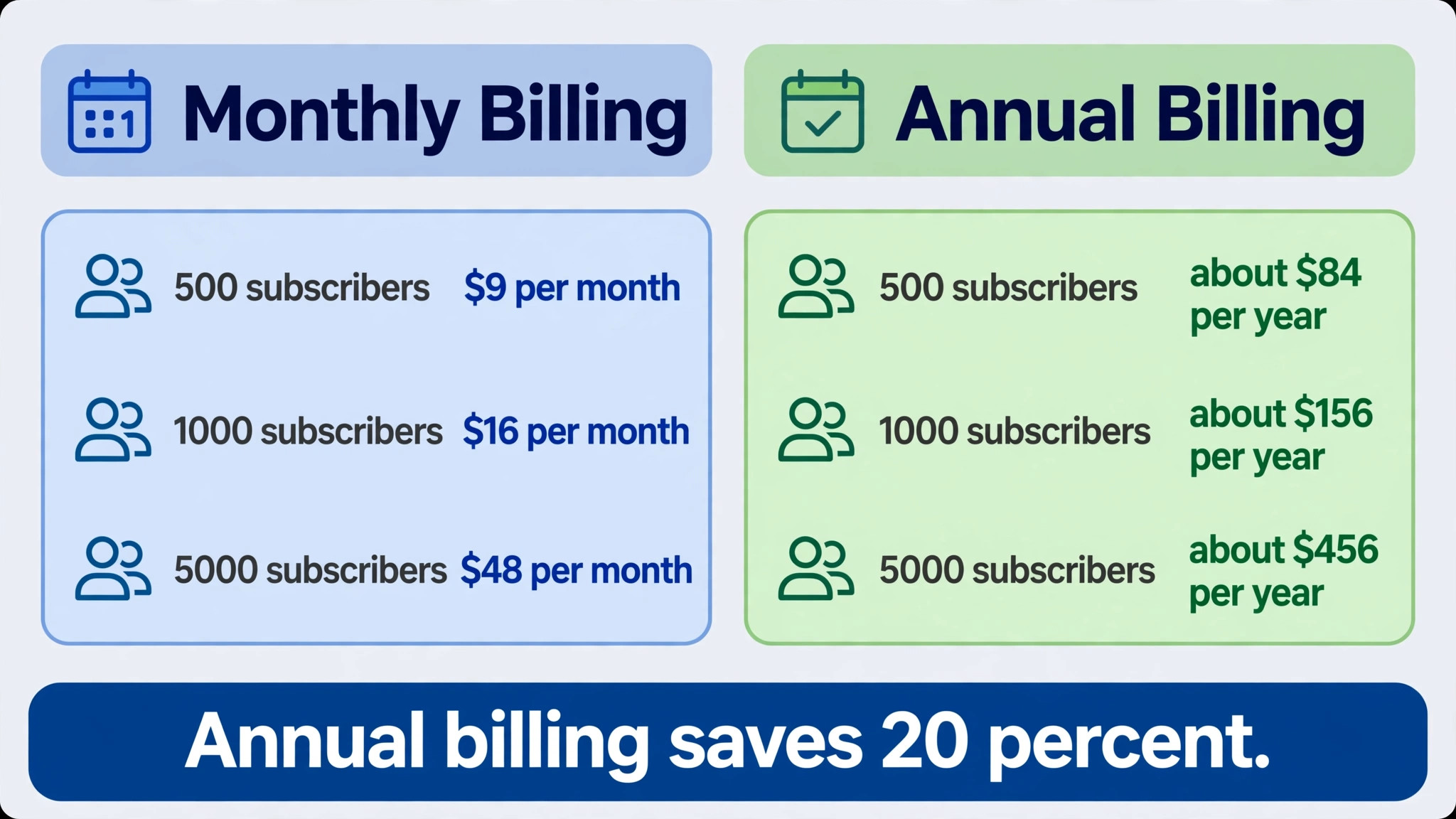
Pro prices rise in steps as the subscriber count rises. The table below states monthly billing first, with the annual billing equivalent beside it, because the gap between the two is wide enough to change a yearly budget. Annual billing saves 20 percent, and bi-annual billing, paid every six months, saves 15 percent, according to pricing guides checked in October 2026. Nonprofit organisations can receive a further 25 percent discount, which is worth confirming directly if it applies to your business.
| Subscribers | Monthly billing | Annual billing equivalent per month | Yearly total on annual billing |
|---|---|---|---|
| 500 | 9 dollars | About 7 dollars | About 84 dollars |
| 1,000 | 16 dollars | About 13 dollars | About 156 dollars |
| 2,000 | About 24 dollars | About 19 dollars | About 228 dollars |
| 5,000 | 48 dollars | About 38 dollars | About 456 dollars |
| 10,000 | About 88 dollars | About 70 dollars | About 840 dollars |
The figures for 2,000 and 10,000 subscribers are approximate, because pricing guides round them and the vendor pricing page shows the exact figure for the rung you select. Treat the table as a planning guide and confirm the exact rung price on the live pricing page before you budget. The pattern is what matters for planning. The price roughly doubles each time the list grows by a large step, and a business that grows from 1,000 to 10,000 subscribers will pay roughly five times the starting price for the same feature set.
That pattern also explains why Moosend looks cheap in reviews and dearer in real use. A review that quotes the 500 subscriber price describes a very small list. A trading business with a few thousand subscribers pays the rung for its real list, and a business with 50,000 subscribers pays between 9 dollars and 315 dollars a month across the published range, according to pricing guides, with very large lists up to 1 million subscribers costing far more.
The starting price is a real price, but it is only the price for the smallest list. Any honest estimate of the cost of Moosend for small business monthly budgets should therefore start from the current subscriber count, not from the starting price, and should add the next rung as a planning figure for the year ahead.
Pay as you go pricing offers a different model for occasional senders. Moosend sells email sending credits starting at 350 dollars for 350,000 credits, with one credit equal to one email sent to a single address, according to pricing guides. That model flips the usual criteria. Subscription plans give unlimited sends and charge by contacts, while credit packs give unlimited subscribers and charge by sends. A business that mails rarely to a large list, or that sends one huge campaign a year, should compare the credit pack against a year of subscription before choosing, because the credit model can be cheaper for that pattern and dearer for regular weekly sending.
Fees and Limits That Change the Total
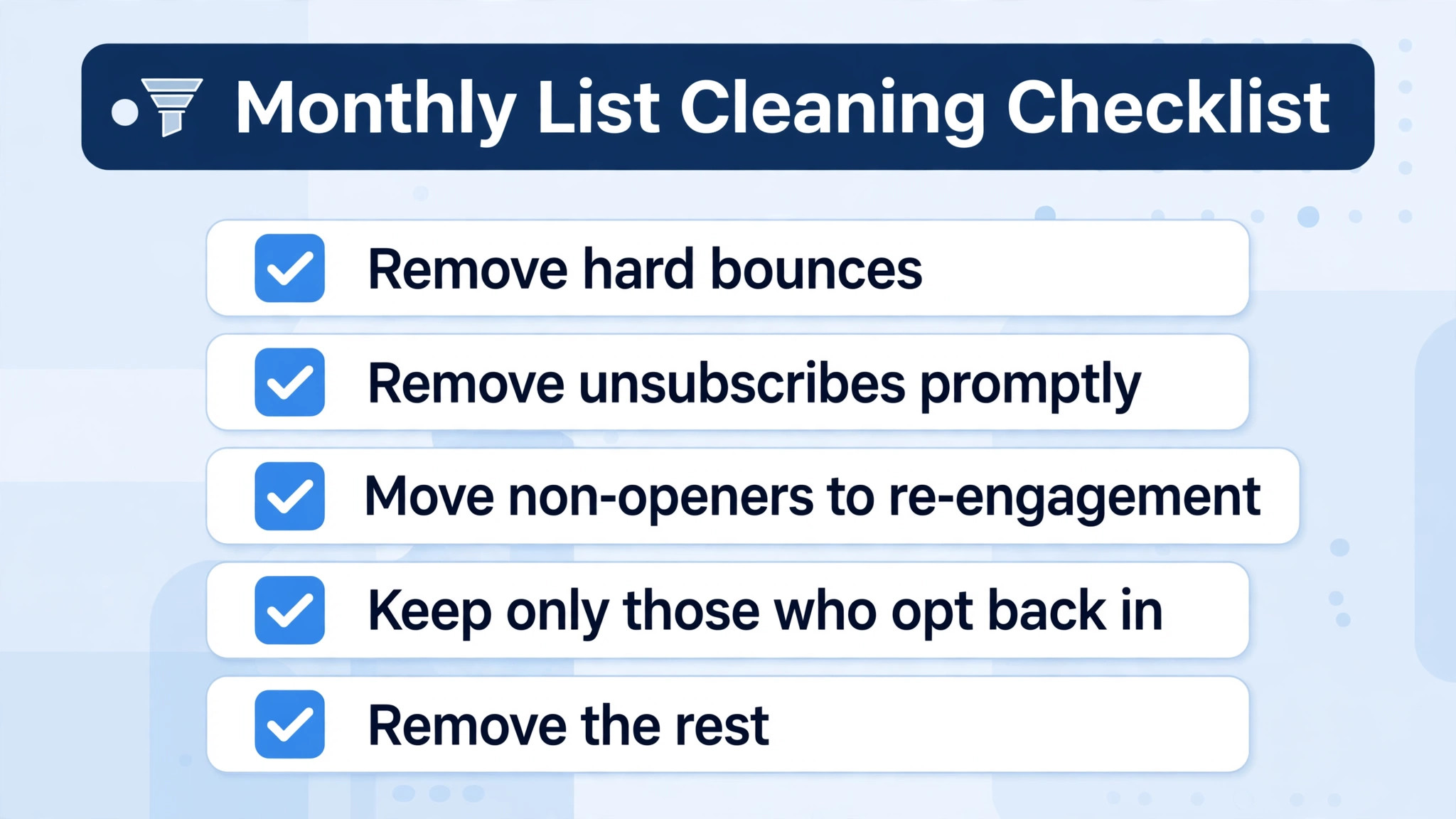
The first cost to watch is the subscriber rung itself, because Moosend moves an account to the next rung when the contact count passes the limit. There is no grace band published as a fixed rule, so a business that adds 50 subscribers over a rung limit pays the next rung in full. That step change makes list cleaning a monthly job. Before each campaign, remove hard bounces, remove unsubscribes promptly, and move long term non openers to a re-engagement list with a clear opt in step. A list that stays just under a rung saves the full step to the next rung every month, which is a larger saving than any discount code.
The second cost is the custom tier gap. Dedicated IP addresses and transactional emails sit on Moosend+, which is priced by quote. A business that needs a dedicated IP for reputation reasons, or that needs transactional mail through the same vendor, cannot add a fixed price to the Pro subscription. It must request a quote and wait for a sales conversation, which slows budgeting and makes comparison with rivals harder. If those features are essential, price them first, before falling in love with the Pro starting price.
The third cost is the trial ending. The 30 day trial covers 1,000 subscribers, which is generous, but after 30 days the account needs a paid plan to keep sending. A business that builds automations, landing pages, and forms during the trial and then delays paying will lose sending until it subscribes. That is not a hidden fee, but it is a deadline that should sit in the launch plan. Set the subscription decision date before the trial starts, not after it ends.
The fourth cost is time spent on automation maintenance. Moosend Pro includes full marketing automation, which is a strength, but automations need checking. A welcome series that references a product that no longer exists, or a discount code that has expired, will keep sending until someone notices. Budget an hour a month to review active automations, check that links and offers still work, and retire series that no longer match the business. That hour costs no subscription money, but it protects the return on every dollar of the cost of Moosend for small business monthly spending.
Taxes and payment terms are the final small print item. Confirm whether the quoted price includes or excludes taxes in your region, and confirm the billing cycle that gives the quoted discount. Annual billing saves 20 percent, but it requires paying for twelve months at once, which is a cash flow decision as well as a saving. A business with tight cash flow may prefer monthly billing even though it costs more over the year, because the monthly option keeps cash in the business.
Real Monthly Cost by Team Size
Subscriber count, not headcount, drives the Moosend bill, so a team size table needs a stated basis, just as it does for any contact based tool. The table below pairs each team size with a subscriber count and a tier that fits that team in practice. A two person shop usually has a smaller list than a 25 person business with a marketing team building lists across several channels. Seats do not change the price directly, but team size is a fair proxy for list size, sending frequency, and the need for custom add-ons.
| Team size | Assumed subscribers | Fitting tier | Monthly billing | Annual billing equivalent per month | Add-ons and hidden fees to add |
|---|---|---|---|---|---|
| 2 seats | 1,000 | Pro | 16 dollars | About 13 dollars | List cleaning time, no dedicated IP on Pro |
| 5 seats | 5,000 | Pro | 48 dollars | About 38 dollars | List cleaning time, no dedicated IP on Pro |
| 10 seats | 10,000 | Pro | About 88 dollars | About 70 dollars | List cleaning time, custom quote if dedicated IP needed |
| 25 seats | Over 10,000 | Moosend+ | Check the vendor pricing page | Check the vendor pricing page | Dedicated IP and transactional email by quote |
The 25 seat row deliberately carries no invented figure, because a business of that size with a large list and custom needs will be quoted on Moosend+, and any number in that cell would be a guess. A 25 seat business with only 10,000 subscribers can stay on Pro at about 88 dollars a month, but a 25 seat business that needs a dedicated IP or transactional mail should budget from a written quote, not from this table. That distinction is the honest way to read the table, and it protects a budget from a quote that arrives after the decision is made.
Annual totals on the published rows are about 156 dollars for the two seat model, 456 dollars for the five seat model, and 840 dollars for the ten seat model. Those totals exclude taxes and any Moosend+ quote, and they assume the subscriber count stays inside the stated rung all year. A business that grows across a rung mid year will pay the higher rung from that month onward, so the annual total is a floor, not a fixed price, for a growing list.
Bi-annual billing offers a middle path worth noting. At a 15 percent discount, the five seat model would cost about 40.80 dollars a month equivalent, against 48 dollars billed monthly and 38 dollars billed annually. That middle option suits a business that wants a saving without paying for a full year in advance. Confirm the bi-annual terms on the live pricing page, because discount terms change, and because the saving only matters if the subscriber count stays stable across the six month period.
A Small Shop Worked Out in Subscribers and Dollars
A two person craft shop with 1,000 subscribers shows the low end clearly. On Pro at 16 dollars a month, or about 13 dollars on annual billing, the shop can mail as often as it likes, because sends are unlimited. Mailed twice a week, that list needs about 8,000 sends a month, which costs nothing extra on Moosend. On a send based rival, the same pattern would cost a higher rung, so Moosend wins for frequent senders with small lists. That is the pattern to remember when comparing tools, because the cheapest tool depends on whether you mail often or rarely.
Now let that shop grow to 5,000 subscribers over two years. The monthly price rises to 48 dollars, or about 38 dollars on annual billing, for the same feature set and the same sending pattern. The shop has not bought anything new, but the bill has tripled, because the list tripled and then some. That growth is good news for the business, because a larger list should mean larger sales, but the budget should have planned for it. A shop that sets its email budget as a fixed 16 dollars a month will be surprised, while a shop that budgets email as a cost per thousand subscribers will see the rise coming and will have priced it into campaign returns.
A five person service business with 5,000 subscribers and weekly campaigns shows the middle case. At 48 dollars a month, the business pays less than 1 cent per subscriber per month on monthly billing, which is easy to justify if even a small share of campaigns produce bookings. The risk is not the 48 dollars, but the inactive subscribers inside the 5,000. If 1,500 of those subscribers have not opened in a year, the business pays for 1,500 addresses that produce nothing.
When you review the cost of Moosend for small business monthly results, separate the paying subscribers from the engaged subscribers, because the gap between those two numbers is the clearest measure of waste in the account. Cleaning those addresses could drop the account toward a lower rung, or at least stop the next rung jump when new subscribers join. That cleaning is the cheapest saving in this guide, because it costs an afternoon and saves every month after.
A ten person business with 10,000 subscribers shows the top of the published Pro range used in this guide. At about 88 dollars a month, or about 70 dollars on annual billing, the business pays for a large list with unlimited sends and full automation. At this size, the decision shifts from price to deliverability and automation quality. A tool that costs 20 dollars less but delivers fewer emails to the inbox, or that makes automation harder to maintain, will cost more in lost sales than it saves in subscription. Test deliverability and automation editing on the trial before committing to a year, because those qualities matter more than the rung price once the list passes 10,000.
When Moosend Is Worth It and When It Is Not
Moosend is worth the price when sending frequency is high and the list is small to mid sized. A business that mails twice a week, runs a welcome series, and sends post purchase follow ups will use unlimited sends heavily, and will pay only for the list size. That pattern is where Moosend beats send based rivals by a wide margin, because the rival bill rises with every campaign while the Moosend bill stays flat between rung jumps. Frequent senders should price Moosend first, not last.
Moosend is also worth the price when automation matters but the budget does not stretch to a premium tier elsewhere. Pro includes full automation, landing pages, and forms at every subscriber rung, so a small business does not need to pay a higher tier to automate. That inclusion is a real advantage for a shop that wants a welcome series and an abandoned cart series from day one, without waiting until the business can afford a higher plan. For that shop, the cost of Moosend for small business monthly use buys automation that rivals charge extra for, which changes the comparison even when the headline price looks similar.
Moosend is not worth the price when the list is large and sending is rare. A business with 50,000 subscribers that mails once a quarter pays for 50,000 subscribers all year, even in months when it sends nothing. A send based tool, or a credit pack, would cost less for that pattern, because the bill would follow the few campaigns actually sent. The credit pack model deserves a direct comparison for that pattern, because 350 dollars for 350,000 credits can cover a year of quarterly campaigns to a large list for less than twelve months of subscription at a high rung.
Moosend is also a weak fit when a permanent free plan is essential, because there is none beyond the 30 day trial. A hobby business or a pre launch project that needs months of free sending while the list grows should choose a rival with a free tier, and should revisit Moosend once the list and the revenue justify a subscription. Paying from day one for a list that earns nothing yet is a cost that a free tier avoids, and there is no shame in starting free and switching later.
A third weak fit is a business that needs a dedicated IP or transactional mail at a published price. Those sit on Moosend+ by quote, so budgeting requires a sales conversation and the result cannot be compared cleanly with rivals that publish the extra. If those features are essential, get the quote before choosing, and do not let the Pro starting price decide a purchase that really depends on the custom tier.
How to Cut the Bill Without Losing Reach
Clean the list every month, because list cleaning is billing control on a contact based tool. Remove hard bounces and unsubscribes promptly, and move subscribers who have not opened in twelve months to a re-engagement campaign. Keep only those who opt back in, and remove the rest. That habit can hold an account on a lower rung for months, and it improves deliverability at the same time, because mailbox providers judge senders partly by engagement. A smaller, engaged list beats a larger, cold list on both cost and results, and the saving repeats every month.
Choose the billing cycle after the list size is stable, not before. Annual billing saves 20 percent, which is a strong saving, but it locks in a year of payments at a rung that a growing list may outgrow. A business that is still growing fast should stay on monthly billing, or use bi-annual billing at a 15 percent saving, until the list growth rate slows. The discount is only a saving if the rung stays right, because paying annually for a rung that becomes too small still forces an upgrade, and paying annually for a rung that becomes too large wastes the extra capacity.
Use unlimited sends wisely, because unlimited does not mean free of consequence. Mailing a cold list every day will not cost extra subscription money, but it will cost deliverability, because complaints and unsubscribes rise with frequency. The cheapest sending pattern is frequent mail to engaged subscribers and rare mail to cold subscribers, which keeps the list warm without burning it. Review open and complaint rates monthly, and reduce frequency to segments that stop engaging, rather than mailing the whole list harder to chase a falling open rate. That review also protects the cost of Moosend for small business monthly planning, because a list that stays engaged grows through referrals and repeat buyers rather than through constant replacement of lost subscribers.
Finally, compare the credit pack honestly before renewing a subscription for a rarely mailed large list. A year of subscription at a high rung can exceed the cost of a credit pack that covers the same campaigns, and credits do not expire on the same monthly cycle as a subscription rung. That comparison is the most useful exercise for a seasonal business, because it turns the cost of Moosend for small business monthly budgets into a cost per campaign, which is the figure that actually matches seasonal revenue.
Frequently Asked Questions
How much does Moosend cost per month for a small business?
Pro starts at 9 dollars a month for 500 subscribers on monthly billing, or about 7 dollars a month on annual billing. At 1,000 subscribers it costs 16 dollars a month, or about 13 dollars on annual billing. At 5,000 subscribers it costs 48 dollars a month, or about 38 dollars on annual billing. At 10,000 subscribers it costs about 88 dollars a month, or about 70 dollars on annual billing. Moosend+ and Enterprise are priced by quote.
Does Moosend have a free plan?
No, Moosend has no permanent free plan. It offers a 30 day free trial with 1,000 subscribers and unlimited emails, and no credit card is required for the trial. After the trial, a paid Pro subscription is needed to keep sending. A business that needs a free tier for a tiny list should choose a rival with a free plan.
Does Moosend charge by subscribers or by emails sent?
Subscription plans charge by subscriber count, with unlimited email sends on Pro. Pay as you go credit packs reverse that model, charging by sends with unlimited subscribers, starting at 350 dollars for 350,000 credits. Choose the subscription for frequent sending to a stable list, and compare the credit pack for rare sending to a large list.
How much does Moosend cost on annual billing?
Annual billing saves 20 percent against monthly billing. That makes Pro about 7 dollars a month for 500 subscribers, about 13 dollars for 1,000 subscribers, about 38 dollars for 5,000 subscribers, and about 70 dollars for 10,000 subscribers, as monthly equivalents. Bi-annual billing saves 15 percent, which is a middle option for businesses that do not want to pay for a full year in advance.
What does Moosend+ include that Pro does not?
Moosend+ is a custom tier for teams that need add-ons such as a dedicated IP address or transactional emails, and Enterprise adds priority support and a dedicated account manager for larger companies. Neither tier carries a published price, so a business that needs those extras should request a quote and budget from that quote, not from the Pro price.
When should a small business move to a higher Moosend rung?
Move up when the subscriber count passes the current rung limit, because the account will need the next rung to hold the full list. Before moving, clean inactive subscribers, because cleaning can hold the account on the current rung for longer. Also move up in planning terms when list growth is steady, by budgeting the next rung in advance rather than treating the jump as a surprise.
Is Moosend cheaper than send based email tools?
It depends on sending frequency. For frequent sending to a small or mid sized list, Moosend is usually cheaper, because sends are unlimited and only the list size is charged. For rare sending to a large list, a send based tool or a credit pack is usually cheaper, because the bill follows the few campaigns actually sent rather than the full list all year.
Verdict
Start on Pro, stay on monthly billing until the list size settles, and clean the list every month. That trio of decisions keeps Moosend cheap, because the rung follows the list and the list follows your cleaning habit. Move to annual billing once the subscriber count is stable, compare the credit pack if sending is rare, and get a written Moosend+ quote before assuming custom extras fit the budget.
Priced that way, Moosend is one of the cheapest serious email tools for a frequent sender, and one of the easiest to overpay for a large, rarely mailed list. The difference is not the tool. It is whether the list is cleaned, the rung is planned, and the billing cycle matches the growth rate, and that discipline is what keeps the cost of Moosend for small business monthly spending under control.
More Reading on Stratilyze
– Email List Growth Strategy for Small Business – Fix Mailchimp Audience Not Syncing for Small Business – Switch Mailchimp to Brevo for Small Business – Cost of Zapier for Small Business Monthly – Cost of Grammarly for Small Business Monthly