
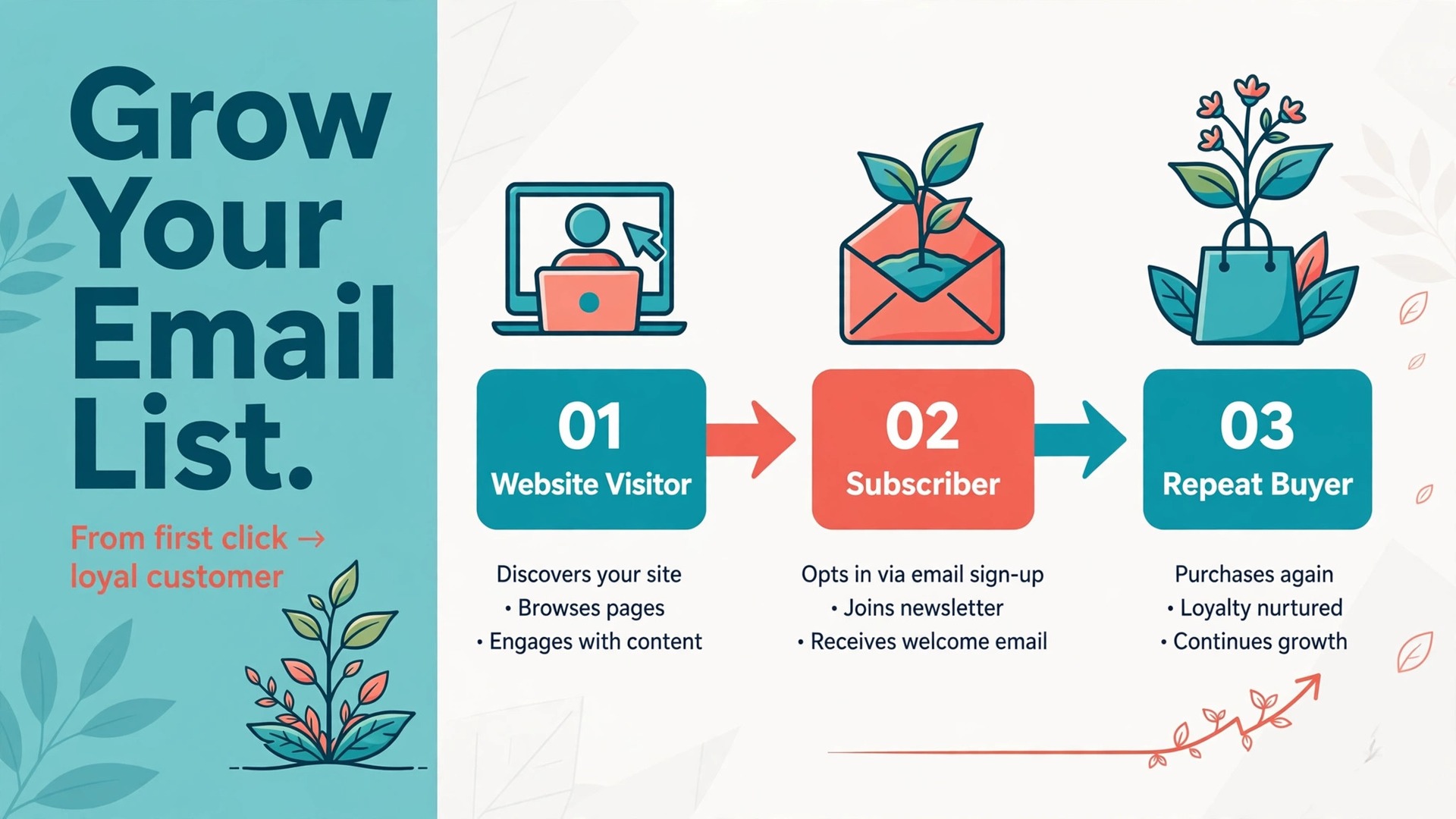
A social following and an email list look similar from the outside, and that resemblance misleads a lot of small owners. A social following is rented attention. The platform decides who sees a post, when they see it, and whether the account still reaches them next month. An email list is owned attention. You hold the addresses, you choose when to write, and a subscriber who joined for a reason can still be reached a year later. That difference is why an email list growth strategy small business owners build early tends to outlast every algorithm change, while a business built only on social reach has to earn its audience again with every post.
The comparison also explains why list growth feels slow at first and then compounds. Social content can spike in a day and fade the next. Email grows by tens and hundreds, through forms, offers, and referrals that keep working after the post that promoted them is forgotten. A list of five hundred engaged subscribers who open, reply, and buy will usually beat a social audience ten times larger that scrolls past. Size matters less than permission, relevance, and habit, and this guide is built around those three qualities rather than vanity totals.
This guide covers how to choose lead magnets people actually want, where to place forms so they convert without annoying visitors, how to build referral loops that bring in similar subscribers, and how to run a ninety day plan with weekly targets. It includes a list growth scoring worksheet and a ninety day plan template you can copy. Figures quoted here are vendor reported or drawn from guides, so treat them as ranges to test on your own list, and check current vendor pricing and plan terms on their own pages before you commit.
Email List Growth Strategy Small Business Owners Should Start With Permission
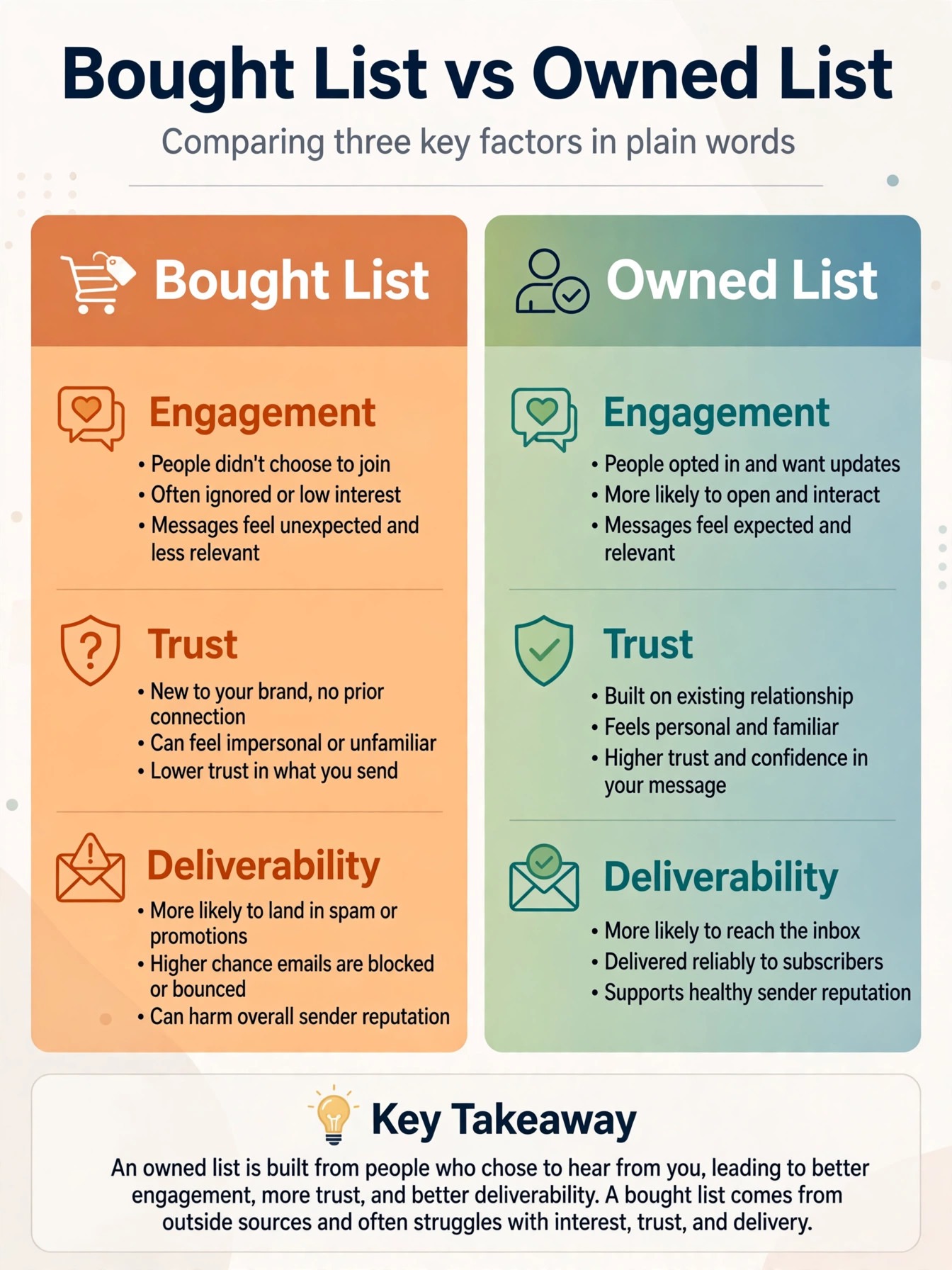
Permission is the foundation, and it is also a legal and deliverability matter, not just good manners. Every subscriber should have asked to hear from you, should know roughly what they will receive, and should be able to leave easily. Lists bought from a broker or scraped from the web break all three conditions, and guides consistently warn that bought lists produce low engagement, spam complaints, and damage to sender reputation. An owned list built slowly will outperform a bought list quickly, because the bought list was never your audience.
Start by defining one audience and one promise. A bakery, a clinic, a bookshop, and a repair shop do not need the same list, even if they use the same tool. Write down who the list serves, what problem the emails solve, and how often you will write. A promise such as one useful tip and one offer each week is easier to keep than a vague promise of news and updates, and subscribers who know what to expect unsubscribe less. Put that promise on the signup form itself, in plain words, so the subscriber agrees to the real thing rather than a generic newsletter.
Choose a tool that fits a small team before you chase advanced features. Popular options for small businesses, per guides, include Mailchimp, Constant Contact, and ConvertKit, now Kit, each with different strengths around forms, automation, and pricing. Pick the tool that makes forms, tags, and a welcome sequence easy for the person who will actually run it, not the tool with the longest feature list. A simple tool used weekly beats a powerful tool that nobody opens. Check deliverability basics early, such as a custom sending domain if your tool supports it, a clear sender name, and a reply address someone monitors.
Lead Magnets That Earn an Address
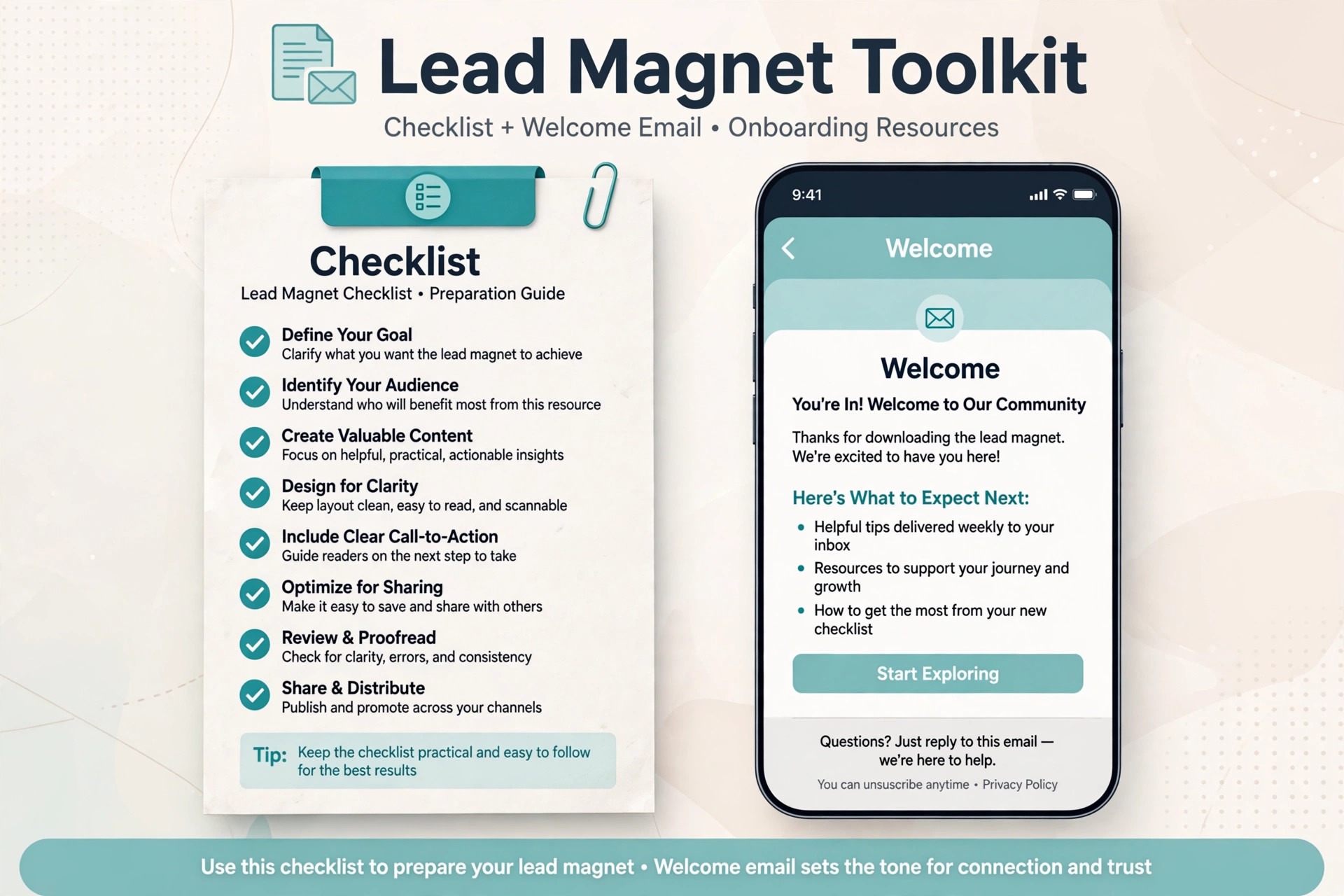
A lead magnet is a specific useful item offered in exchange for an email address, and specificity is what makes it work. A generic promise of a newsletter earns few signups, because it asks for an address before giving value. A checklist, template, discount, quiz result, or short guide that solves one immediate problem earns signups, because the visitor can judge its value before subscribing. The best lead magnets for small businesses are short, usable the same day, and closely tied to the paid offer, so the subscriber who downloads them is also a plausible buyer.
Match the magnet to the moment. A website visitor reading a buying guide wants a comparison sheet or checklist. A visitor at the till wants a discount or a loyalty incentive. A visitor on social media wants a quiz, a sample, or a short video series. One business often needs two or three magnets, not one, because different moments attract different people. Test magnets by signup rate, not by how much you enjoyed making them. A magnet that took a week to design but converts at under one percent is worse than a one page checklist that converts at five percent.
Delivery matters as much as the magnet itself. The welcome email should arrive immediately, deliver the promised item without extra steps, and set expectations for what comes next. A welcome email that buries the download behind three clicks, or that immediately pitches a high price product, breaks the trust the magnet just created. Per guides, welcome emails tend to see higher open rates than routine sends, which makes the first message the best place to introduce yourself, restate the promise, and invite a reply. A reply to that first email also helps future deliverability, because it signals an engaged subscriber.
| Magnet type | Works best when | Test this first |
|---|---|---|
| One page checklist or template | The visitor has a task to complete soon | Signup rate from the page that hosts it |
| Discount or welcome offer | The visitor is close to buying | Redemption rate and repeat purchase rate |
| Short guide or comparison sheet | The purchase needs research first | Whether subscribers open the next three emails |
| Quiz with a personal result | The audience is on social or mobile | Completion rate and result sharing rate |
| Sample, trial, or mini workshop | The service needs trust before purchase | Booking or trial start rate after signup |
Forms That Convert Without Annoying Visitors
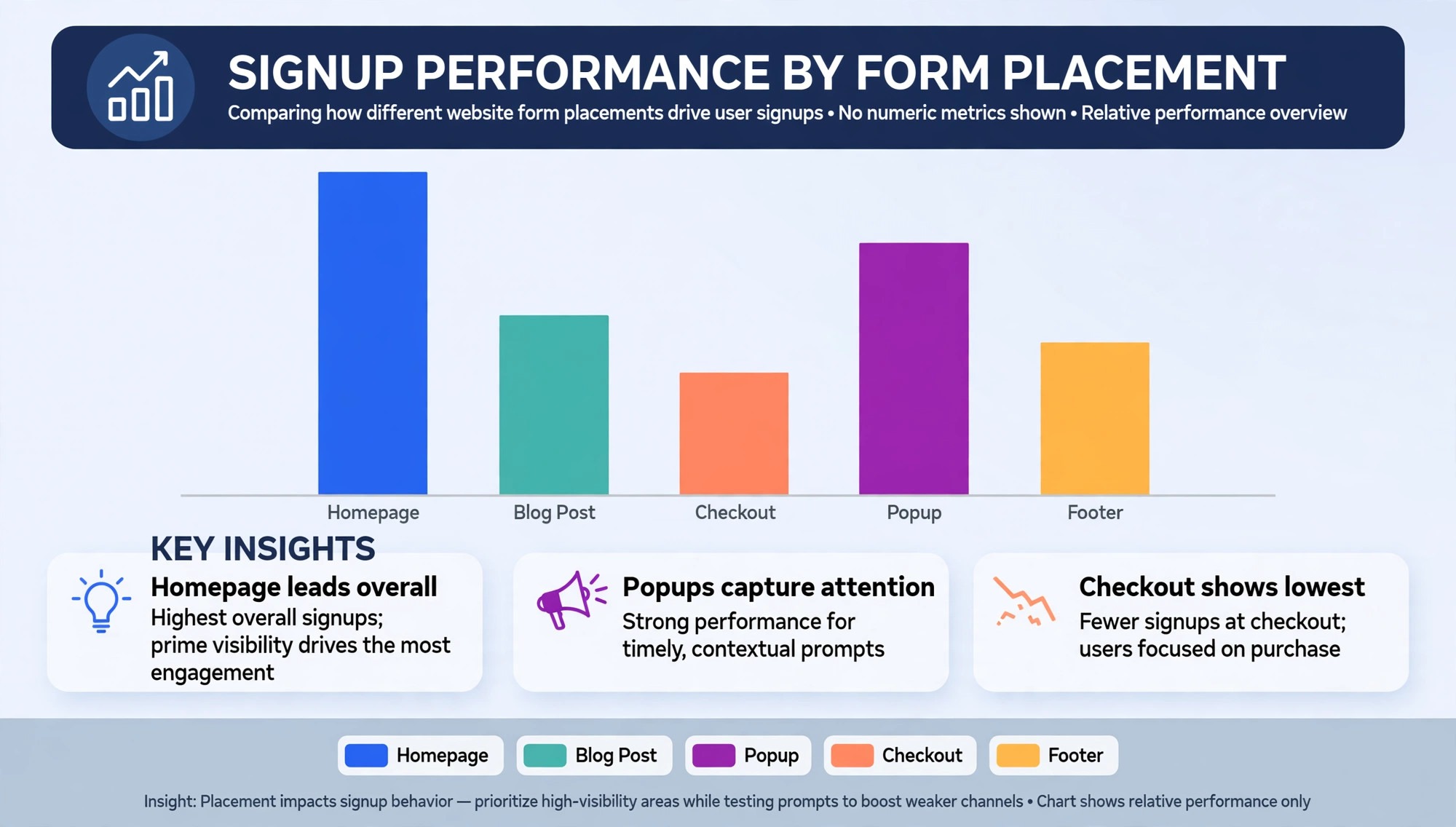
Form placement decides how many visitors even see the offer, and form length decides how many complete it. Place a form where intent is already high, such as at the end of a helpful article, on a dedicated landing page for the magnet, in the website footer, and at checkout or booking confirmation. A popup can work, but it should appear after a delay or on exit intent, not the instant a page loads, because an instant popup interrupts the very content that would have earned the signup. On mobile, test every form on a real phone, because a form that looks tidy on desktop often becomes a long scroll on a small screen.
Ask for as little as possible at signup. An email address alone converts best, and a first name helps personalisation without adding much friction. Extra fields, such as phone number, company size, or budget, should wait until the subscriber has received value, when a short survey or booking form feels like a natural next step. If you need segmentation from the start, offer a choice on the form itself, such as two buttons for two interests, rather than a long questionnaire. Each extra field costs signups, so only add one if you will actually use the answer to send different content.
Form copy should state the benefit, the frequency, and the exit in one short block. A headline that names the magnet, one line about what it helps with, and a line about email frequency is enough. Avoid vague button text such as submit, and use a specific button such as send me the checklist. After signup, show a confirmation that tells the subscriber to check their inbox and, if your tool uses double opt in, to confirm. Double opt in reduces fake addresses and improves deliverability, at the cost of some signups, so weigh that trade off against how much spam or bot signups your forms currently attract.
Referral Loops That Bring Similar Subscribers
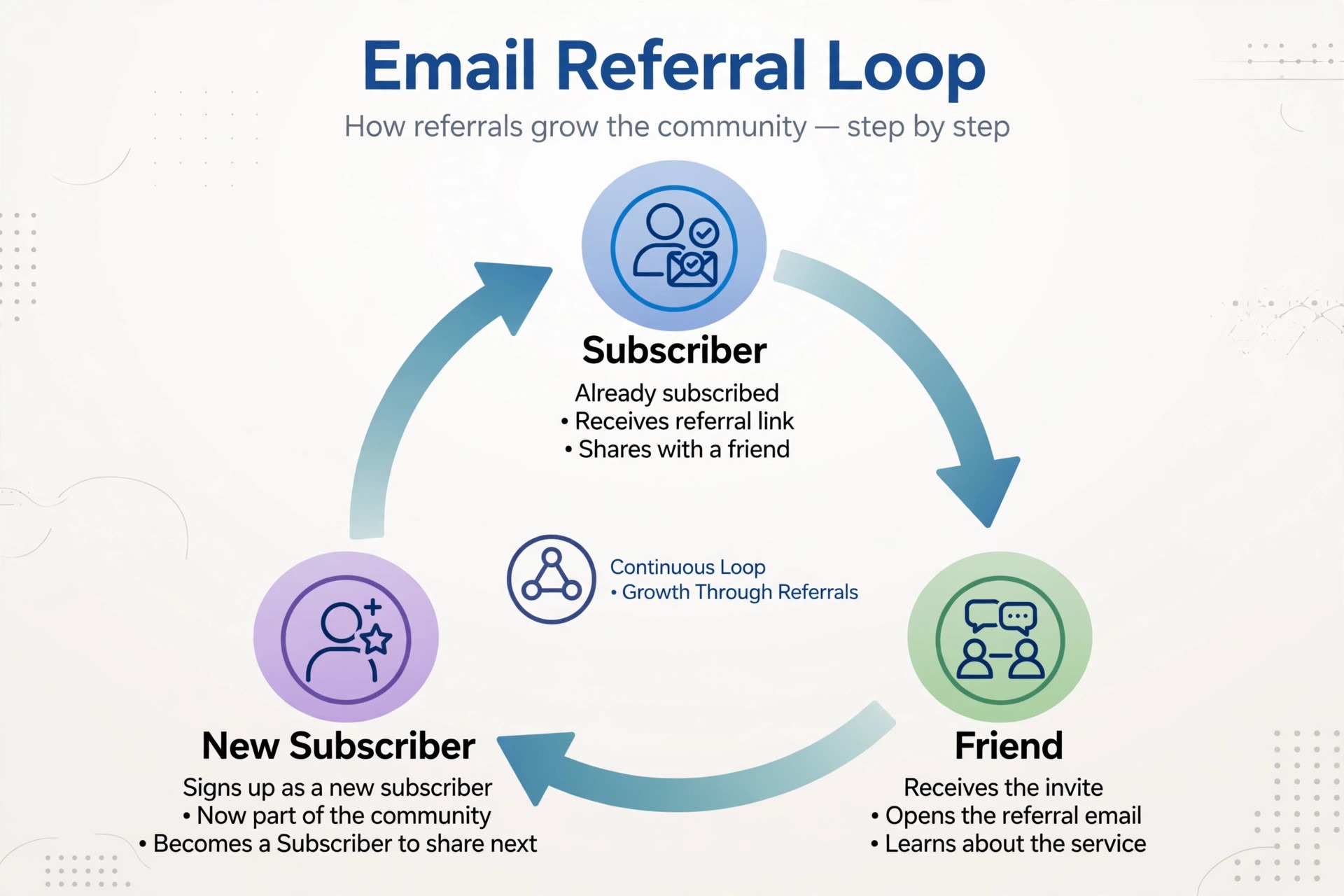
Referrals work because a recommendation from a known person carries trust that advertising cannot buy, and because referred subscribers often resemble the person who referred them. A referral loop needs three parts, a reason to share, an easy way to share, and a reward that fits the business. The reason might be early access, a bonus resource, or a small discount. The sharing method might be a personal link, a forwardable email, or a simple code. The reward should be valuable enough to motivate sharing without attracting people who only want the reward and never engage again.
Design the loop around one action at a time. An email that asks subscribers to share, buy, review, and follow on social media will produce none of those actions reliably. An email that asks for one forward, with a clear benefit for both the referrer and the friend, is easier to act on. Place referral prompts after a moment of value, such as after a subscriber downloads a magnet, attends an event, or makes a purchase, rather than in the first welcome email, when the relationship is still new. Track referral signups separately from other sources, so you can see whether the loop is growing or whether a few enthusiastic subscribers account for all of it.
Offline referrals deserve the same system as online ones. A card at the till, a QR code on a receipt or package, and a mention at the end of a service appointment all convert in person trust into list growth. Train staff to mention the list once, with a specific benefit, rather than handing out a generic signup sheet. A phrase such as join for the monthly workshop dates and the subscriber only offer takes seconds and gives a reason, while a silent signup sheet on a counter gives none. Record the source for offline signups too, so you can tell which counter, event, or staff prompt actually produces subscribers.
Segmentation, Welcome Sequences, and Staying Out of Spam
Growth without segmentation creates a list that is large and unresponsive, and an email list growth strategy small business owners run well must segment from the start, because the same message goes to new subscribers, loyal buyers, and people who have not opened in months. Segment by source, interest, and behaviour from the start, using tags or groups your tool provides. A subscriber who joined for a checklist should receive follow up related to that checklist, not a generic blast. A buyer should receive different content from a prospect, and a subscriber who has not opened recent emails should receive a re engagement message before being removed, not endless repeats of the same offer.
A welcome sequence of three to five emails, spread over the first two weeks, does more work than a single welcome message. The first email delivers the magnet and sets expectations. The second gives a useful tip or story related to the magnet. The third introduces the core offer or service in a helpful way, with a clear next step. Later emails can invite a reply, a booking, or a question. Keep each email focused on one idea and one action, because a welcome sequence that pitches five products at once teaches subscribers to ignore you.
Deliverability depends on habits that are easy to neglect. Send from a consistent name and address, avoid purchased lists and misleading subject lines, include a working unsubscribe link, and remove or suppress subscribers who never engage after a re engagement attempt. Per guides, a large share of emails are now opened on mobile devices, so short subject lines, a clear first line, and a single column layout matter. If open rates fall sharply, check whether a recent change, such as a new sending domain, a bought list segment, or a sudden volume increase, explains it before blaming content.
The List Growth Scoring Worksheet
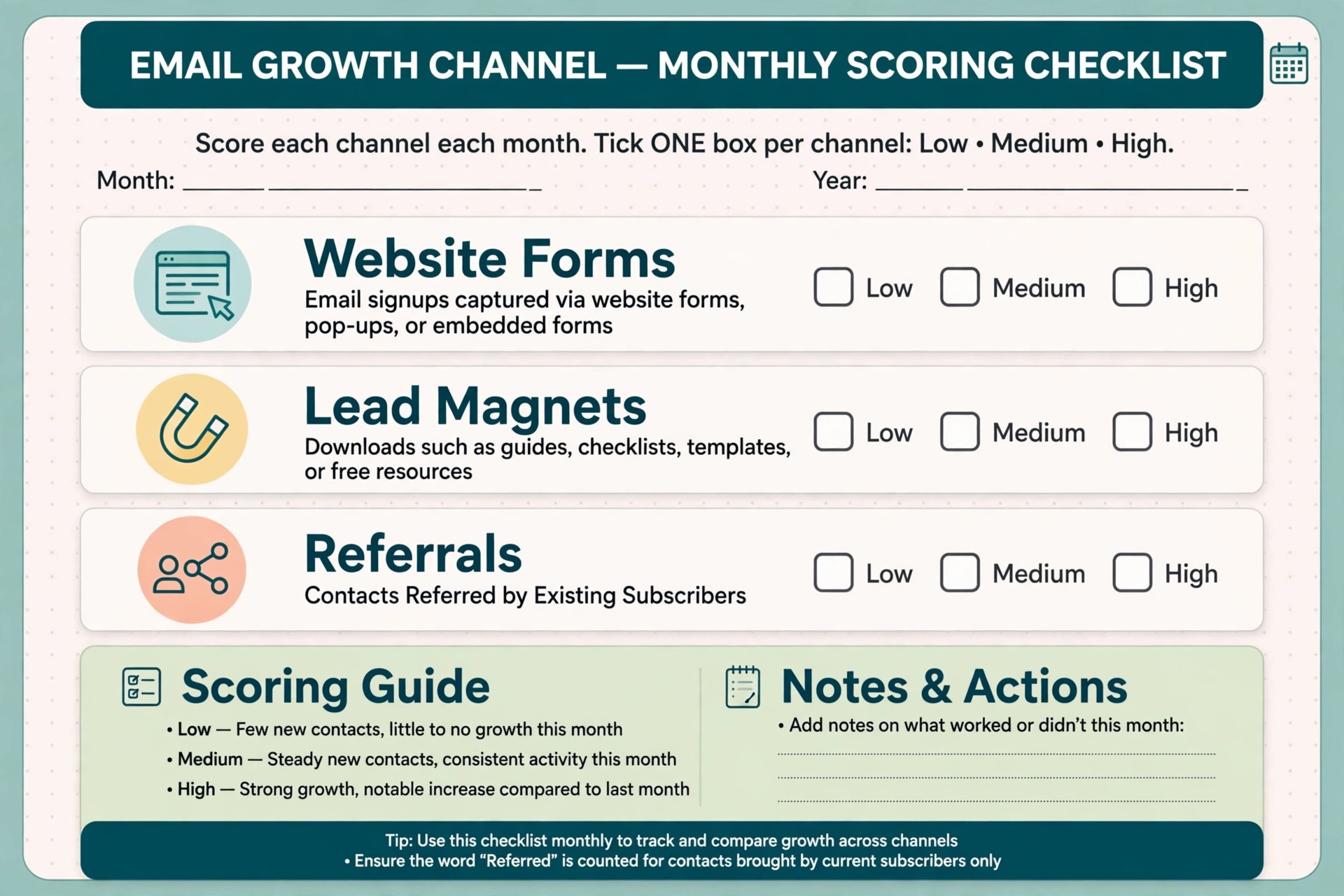
Use this worksheet monthly to decide where the next effort should go, instead of adding a new tactic every week. Score each channel from one to five on the four measures below, then total the scores. The highest total is usually the channel to improve first, because it already shows traction. Blank lines between items keep the worksheet readable when printed or copied.
- Website forms score.
- Signups in the last thirty days.
- Signup rate as a share of visitors to that page.
- Share of those subscribers who opened the welcome email.
- Share who took a next step, such as a booking or purchase.
- Social and referral score.
- Signups from social posts, bios, and referral links.
- Cost in time or money per signup from that channel.
- Share of referred subscribers who stayed engaged after thirty days.
- One improvement to test next month for that channel.
- Offline and partner score.
- Signups from the till, events, and partner mentions.
- Staff or partner effort required per signup.
- Share of offline subscribers who opened the first three emails.
- One friction point to remove, such as a long form or missing QR code.
- Magnet score.
- Signup rate for each magnet, ranked best to worst.
- Whether the magnet audience matches the paid offer.
- Whether the magnet can be updated or retired this quarter.
- Decision for each magnet, keep, improve, or replace.

A worksheet only helps if it leads to a decision, and an email list growth strategy small business teams revisit monthly will always beat a plan written once. Each month, pick one channel to improve, one magnet to replace or refresh, and one friction point to remove. That rhythm, one improvement per area per month, keeps growth steady without overwhelming a small team. If every score is low, the problem is usually the offer or the form placement, not the tool, so fix the magnet and the form before buying new software.
The Ninety Day Plan Template
The ninety day plan below assumes a small team with a few hours a week for list growth, not a full time marketer. It works because each phase has one job, and the next phase does not start until the previous job is done. Copy it, set real dates, and assign one owner to each phase.
- Days 1 to 30, foundation.
- Define audience, promise, and sending frequency in writing.
- Choose or tidy the email tool, forms, and welcome sequence.
- Create one strong lead magnet tied to the core offer.
- Place forms on the homepage, top article, footer, and booking confirmation.
- Days 31 to 60, traffic and testing.
- Promote the magnet in three places that already reach buyers.
- Test two form headlines or placements and keep the winner.
- Start one referral prompt after purchase or download.
- Send weekly emails and record open, click, and unsubscribe rates.
- Days 61 to 90, referral and retention.
- Launch a simple referral reward for subscribers and new joiners.
- Add one offline signup point at the till, event, or appointment.
- Run a re engagement email for subscribers who never opened.
- Review the scoring worksheet and set the next quarter target.
Weekly targets keep the plan honest. A useful starting rhythm is a target number of new subscribers per week, a target signup rate for the main form, and a target welcome email open rate, all recorded in one sheet. If a week misses its target, change one variable, such as the form headline or the magnet promoted, rather than changing everything at once. Testing one variable at a time is slower to describe but faster to learn from, because you can tell what actually caused the change.

Testing, Measuring, and Improving Each Month
Measurement turns list growth from a hope into a habit, and it works best when you track a small set of numbers every week. For owners building an email list growth strategy small business results can be judged on, the useful numbers are new subscribers by source, signup rate on the main form, welcome email open rate, click rate on the main call to action, and unsubscribe rate. Record them in one sheet, on the same day each week, so a change in the numbers means something. A dashboard that nobody opens is worse than a simple sheet that gets updated, because the sheet forces a weekly decision.
Testing should change one variable at a time, and it should run long enough to mean something. Test the form headline for two weeks, then test the button text, then test the magnet promoted on the top article. A test that changes headline, image, placement, and offer at once cannot tell you which change helped, so a win cannot be repeated and a loss cannot be explained. Small lists need longer tests than large lists, because a handful of signups can swing a percentage wildly. Wait until a test has produced a meaningful number of visitors before declaring a winner, and keep the winning version as the new baseline.
Content testing deserves the same discipline as form testing. Try two subject line styles, one specific and one curiosity led, on similar emails to similar segments, and compare open rates alongside click rates, because a subject line that wins opens but loses clicks has only won attention, not action. Try a shorter email against a longer one, and a single call to action against a message with several links. An email list growth strategy small business owners can sustain will usually favour shorter emails with one clear action, because readers on phones decide in seconds whether to keep reading or move on.
Benchmarks from guides and vendor reports can orient you, but they should never replace your own baseline. Open and click rates vary widely by industry, list age, and sending frequency, so a rate that looks low against a published average may be healthy for a list built mainly in person, and a rate that looks high may still hide a segment that never engages. Compare your list with its own past performance first, then with published ranges second, and investigate sudden changes before celebrating gradual ones. A sudden fall often points to a technical cause, such as a new sending domain or a broken form, while a gradual fall usually points to content or audience fit.
Monthly review closes the loop between testing and planning. Look at the scoring worksheet, the weekly numbers, and the tests completed, then choose one change for the next month in each area, acquisition, content, and retention. Write the change, the expected effect, and the date you will judge it, in the same sheet as the numbers. That record prevents the common pattern where a team tries the same failed tactic three times because nobody wrote down that it failed. Over a year, twelve small documented improvements compound into a list that is larger, cleaner, and more responsive than a list grown by sporadic bursts of effort.
Mistakes That Stall List Growth
The most damaging mistake in an email list growth strategy small business owners adopt is chasing size over engagement. A list that doubles through a giveaway, a bought segment, or a broad incentive often produces lower open rates, more complaints, and worse deliverability than a smaller list built from buyers and genuine prospects. If growth spikes but engagement falls, pause new acquisition and check the source. A healthy list grows steadily from sources that match the offer, and its open and click rates stay stable as it grows.
A second mistake is sending irregularly or only when there is something to sell. Subscribers forget a sender who writes once every three months, and they distrust a sender who only appears with a promotion. A steady rhythm, even once every two weeks, builds recognition and habit. If you cannot sustain weekly emails, choose a fortnightly rhythm and keep it, rather than promising weekly and disappearing. Consistency of timing matters almost as much as consistency of quality.
A third mistake is never cleaning the list. Subscribers who have not opened in months still cost money on many plans and still drag down deliverability signals. A re engagement email that asks whether they still want to hear from you, followed by suppression or removal for non responders, usually improves overall performance even though the total count falls. Report engaged subscribers alongside total subscribers, so a smaller but healthier list is recognised as progress rather than failure.
For the technical side of this work, it helps to read the guide on switching to a simpler email platform before you migrate a list, and the guide on fixing an audience that will not sync if contacts go missing between tools. Social promotion for magnets can borrow ideas from the guide on reels that are not reaching followers. Appointment based businesses can pair list growth with appointment reminders that reduce no shows, and seasonal sellers can use weekly box marketing ideas to turn a list into repeat orders.
Frequently Asked Questions
How fast should a small business list grow?
Growth speed depends on existing traffic, so there is no universal weekly number worth chasing. A business with steady website traffic and a strong magnet may add dozens a week, while a business starting from a till and local events may add a handful. Judge growth by signup rate and engagement, not by raw weekly totals, and compare each month with the previous month on the same channels, so seasonal traffic does not mislead you.
Is it better to use a popup or a static form?
Both can work, and the choice depends on timing and placement. A static form at the end of a helpful page converts visitors who are already engaged, while a delayed or exit intent popup reaches visitors who might otherwise leave. An instant popup on page load usually annoys more than it converts. Test one placement at a time, measure signup rate and bounce behaviour, and keep the version that grows the list without harming the page experience.
What makes a lead magnet fail?
A magnet fails when it is vague, too long, or unrelated to the paid offer. A fifty page guide that nobody finishes is weaker than a one page checklist used the same day. A magnet that attracts freebie seekers rather than buyers will grow the list while hurting sales. If signup rate is high but later engagement is low, the magnet audience is probably wrong, and the magnet should be replaced with one closer to the core offer.
Should a small business use double opt in?
Double opt in, where subscribers confirm by email before joining, improves list quality and deliverability but loses some signups who never confirm. It suits businesses that have had spam or bot signup problems, or that send to a large cold audience. Single opt in suits a small list built mainly in person, where the subscriber relationship is already clear. Whichever you choose, make the confirmation step obvious and the welcome email immediate.
How often should I email a new list?
Start with a welcome sequence over the first two weeks, then settle into a steady rhythm, weekly for most small businesses or fortnightly if content is genuinely scarce. More frequent emails suit lists built around daily offers or news, while less frequent emails suit high value services where each message needs care. Watch unsubscribe and complaint rates after any frequency change, because a sharp rise is a clearer signal than a single week of open rates.
When should I remove subscribers who never open?
After a re engagement attempt, usually after sixty to ninety days of no opens, depending on your sending frequency. Send one plain message asking whether they still want to hear from you, with an easy way to stay. Suppress or remove non responders after that message. A smaller engaged list delivers better, costs less on many plans, and gives truer feedback on what content works.
A Verdict That Favours Patience Over Shortcuts
An email list rewards the owner who treats it as a relationship, not a database. The fastest tactics, bought lists, aggressive popups, and broad giveaways, produce the weakest lists, because they skip permission and relevance. The slower tactics, a specific magnet, a well placed form, a useful welcome sequence, and a referral loop built on real value, produce a list that opens, replies, and buys. That trade off is the whole strategy in one sentence, and it explains why patience is a growth tactic rather than a delay.
Start this week with three actions for your email list growth strategy small business plan. Write the promise in one sentence, create or refresh one magnet that solves one problem, and place one form where buyers already show intent. Run those three for thirty days, score them with the worksheet, and only then add a second magnet or a referral reward. A list built that way may look modest at ninety days, but it will be the list that still produces bookings and sales a year later, when the next platform change arrives.