
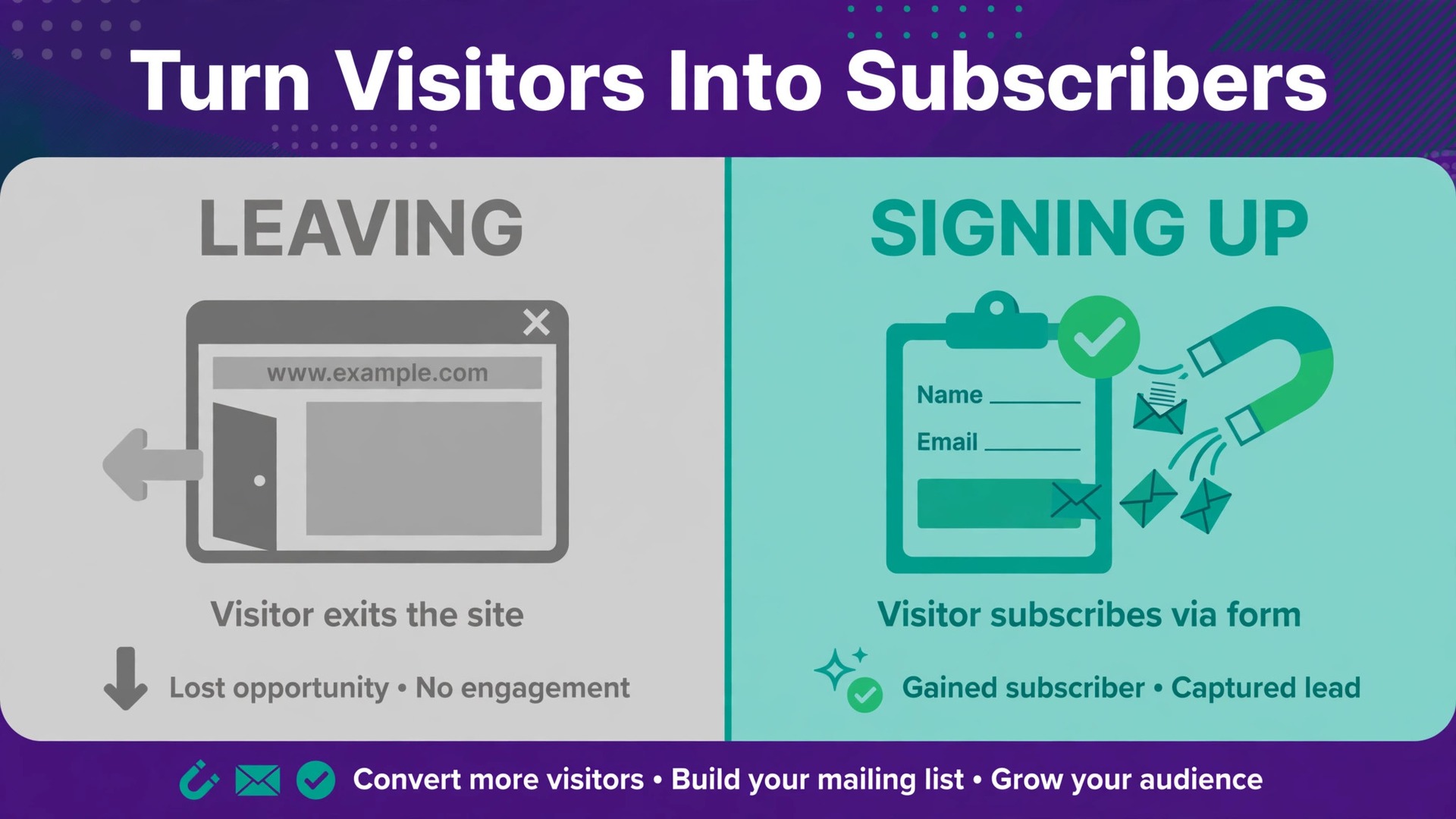
Most small business websites lose the visitors they worked hard to attract, because a visitor who reads a page and leaves without signing up is gone, and there is usually no way to reach them again. A lead magnet fixes that leak in the simplest possible way. It offers something useful for free, in exchange for an email address or phone number, so the business can follow up with the person who showed interest. To understand how to create a lead magnet small business owners can actually finish, start from one question, which is what problem your best customers ask about before they buy.
That question matters more than design, software, or length. A lead magnet that answers a question customers are already asking will be downloaded, used, and remembered. A lead magnet that covers a topic the business finds interesting but customers never ask about will sit unclaimed, no matter how polished it looks. This guide builds a lead magnet from that question outward, through format choice, a ready to use template, a landing page, a short follow up sequence, and a promotion plan, so the finished piece brings in subscribers who might actually buy.
How to Create a Lead Magnet Small Business
Start by listing the questions customers ask before they buy, from real conversations rather than from guesswork. Look at phone calls, emails, counter questions, social media comments, and the questions your team answers every week. The question that repeats most is usually the best lead magnet topic, because it proves demand before you build anything. A roofer hears questions about roof warning signs before winter. An accountant hears questions about year end documents. A salon hears questions about caring for a new treatment at home. Each of those questions is a lead magnet waiting to be written.
Then narrow the topic to one small, solvable problem. A lead magnet should solve a small piece of the bigger problem, not the whole problem, because the full solution is what the paid service sells. A checklist that helps a homeowner spot roof warning signs is a small piece. A full guide to replacing a roof is the paid job. That distinction protects the business, because the free piece proves expertise without giving away the service itself, and it naturally leads the reader toward booking the service that completes the job.
Choose the Right Format for Your Business
Format choice decides whether the lead magnet gets used or merely downloaded and forgotten. A checklist is the easiest format to make and one of the most downloaded, because it is fast, it gives a sense of progress, and it can be used on the spot. A template saves the reader time on a task they repeat, such as a budget sheet, a caption plan, or a quote request form. A short guide of two to five pages suits a decision the reader is making this month, such as questions to ask before hiring a contractor. A worksheet or scorecard suits a self assessment, where the reader scores their own situation and sees why they need help.
Avoid the long ebook as a first lead magnet. A forty page guide sounds impressive, but readers treat it as homework, and most never finish it. A one page checklist, a short template, or a five page guide that can be used in ten minutes will outperform a long document on downloads, on completion, and on follow up replies. The goal is a quick win for the reader, not a demonstration of everything the business knows. A reader who gets a quick win trusts the business more than a reader who downloads a long guide and never opens it.
| Format | Best for | Effort to make |
|---|---|---|
| Checklist | Any service business, fastest start | Low |
| Template | Tasks customers repeat often | Low |
| Short guide | A decision the reader is making soon | Medium |
| Worksheet or scorecard | Self assessment that leads to a call | Medium |
| Discount or trial | Shops and services with repeat visits | Low |
| Short video | A task best shown rather than described | Medium |
Match the format to the question you chose. A question about spotting problems suits a checklist. A question about planning suits a template. A question about choosing between options suits a short guide with a comparison. A question about whether help is needed suits a scorecard. When format and question match, the lead magnet feels made for the reader, because it is, and the sign up rate reflects that fit.

Build It Step by Step
Follow these steps in order to learn how to create a lead magnet small business owners can finish, and resist the urge to start with design. Design comes last, after the content is right, because a beautiful document with the wrong topic will still fail, while a plain document with the right topic will still convert.
Step 1. Pick One Problem and One Reader
Write down the reader in one sentence, naming who they are and what they are trying to decide or do. A reader defined as “homeowners noticing a stain on the ceiling” is useful. A reader defined as “everyone interested in homes” is not, because no lead magnet can serve everyone well. Then write down the single problem the lead magnet solves, in the reader words, not in business jargon. If the problem cannot be stated in one sentence, it is still too broad, and it needs narrowing before you write anything else.
Test the problem against real demand. Ask whether customers have asked about it in the last month, whether it connects directly to a service the business sells, and whether solving a small piece of it leaves the reader wanting the full service. A problem that passes all three tests is a strong lead magnet topic. A problem that fails the first test has no audience. A problem that fails the second attracts subscribers who will never buy. A problem that fails the third gives away the service instead of leading to it.
Step 2. Promise One Quick Win in the Title
Give the lead magnet a specific name that states the win, not a generic label. A title such as “The 10 Point Checklist Before You Hire a Roofing Company” tells the reader exactly what they get and when they need it. A title such as “Free Guide” tells them nothing, and it will be ignored. Put a number, a time frame, or a concrete outcome in the title where it fits naturally, because specificity is what makes a stranger stop and sign up.
Check the title against the content before you publish. The title promises one win, and the document must deliver exactly that win in its first pages, not after a long introduction. A reader who opens a checklist and finds a sales letter instead will unsubscribe and remember the business badly. A reader who opens a checklist and can tick the first three items within minutes will trust the business enough to read the follow up emails, which is where the sale actually happens.
Step 3. Write the Content in a Usable Order
Structure the content the way the reader will use it, not the way the business would explain it. A checklist runs in the order the reader performs the steps. A template runs in the order the reader fills it in. A short guide opens with the answer or the decision framework, then gives the supporting detail, because readers skim and decide whether to keep reading from the first page. Put the most useful material first, and cut anything that does not help the reader achieve the promised win.
Write in plain language, in short sentences, and with headings that let a reader scan. Each section should earn its place by helping the reader do something, decide something, or avoid a mistake. Remove background history, company biography, and general advice that could apply to any business, because that material dilutes the specific help the reader signed up for. Aim for a document that can be used in ten minutes, and test it by handing it to someone outside the business and watching whether they can use it without explanation.
Step 4. Add One Natural Next Step
End the lead magnet with one clear next step, not with a list of everything the business sells. The next step should follow naturally from the content, such as booking a free assessment after completing a scorecard, or requesting a quote after finishing a checklist. State the step plainly, give one way to take it, and explain what happens next, so the reader knows what to expect. A single next step converts better than a menu of options, because it removes the decision burden from a reader who has just finished a useful document.
Do not turn the lead magnet into a sales brochure. One next step at the end is enough, because the follow up emails will carry the selling conversation. A document that sells on every page undermines the trust the free help just built, and readers can tell the difference between genuine help and a disguised pitch. Help first, invite second, and let the usefulness of the document do the persuading that a hard sell cannot.
Step 5. Design It Cleanly and Make It a PDF
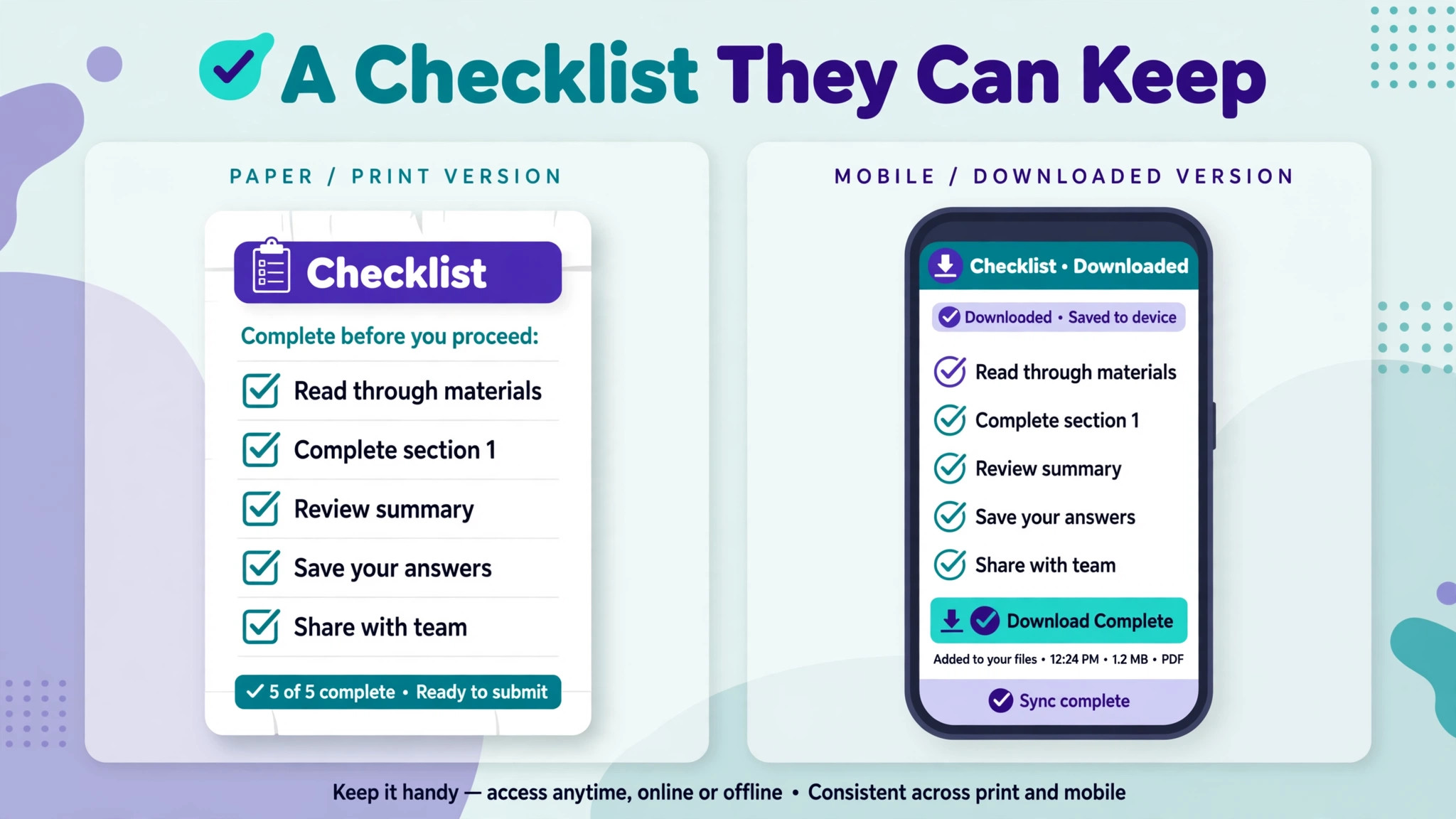
Design the document cleanly, with a clear title page, readable type, generous spacing, and the business name and contact details on the final page. Use the business colours sparingly, keep headings consistent, and leave room for readers to tick boxes or write notes where the format calls for it. A checklist needs tick boxes. A template needs fillable space. A scorecard needs a scoring area. Those practical details matter more than decorative graphics, because they decide whether the document is used or merely admired.
Save the finished document as a PDF, because a PDF opens on any device, prints cleanly, and cannot be accidentally edited by the reader. Check the PDF on a phone before publishing, since many subscribers will open it on a phone first, and a document that is unreadable on a phone will be abandoned. Keep the file size reasonable, so it downloads quickly on a mobile connection, and test the download link from the sign up form before promoting the lead magnet anywhere.
The Lead Magnet Template
Use this template to show how to create a lead magnet small business owners can build without bloat. It works for a checklist, a short guide, or a worksheet with small adjustments, and it keeps the document focused on one problem and one next step. Follow the template in order, and do not add sections that do not serve the promised win.
– Title page with the specific title, a one sentence promise of the win, and the business name. – A short introduction of three to five sentences, stating who the document is for and what it will help them do. – The main content in the order the reader will use it, as steps, checklist items, or template sections. – One worked example that shows the content applied to a realistic situation, so the reader can see what good looks like. – A short “common mistakes” section, naming two or three errors readers make and how to avoid them. – A one page summary or final checklist that restates the key actions in tickable form. – One next step, stated plainly, with one way to take it and a short note on what happens next. – Final page with business name, contact details, and a reminder of the service the lead magnet leads to.
Write the template sections in that order, and cut any section that does not help the reader achieve the win. A lead magnet built from this template will usually run between two and five pages for a checklist or short guide, which is the length readers actually finish. Longer documents can work for complex decisions, but they should earn every extra page with material the reader needs, not with filler that pads the page count.
Set Up the Landing Page and Delivery
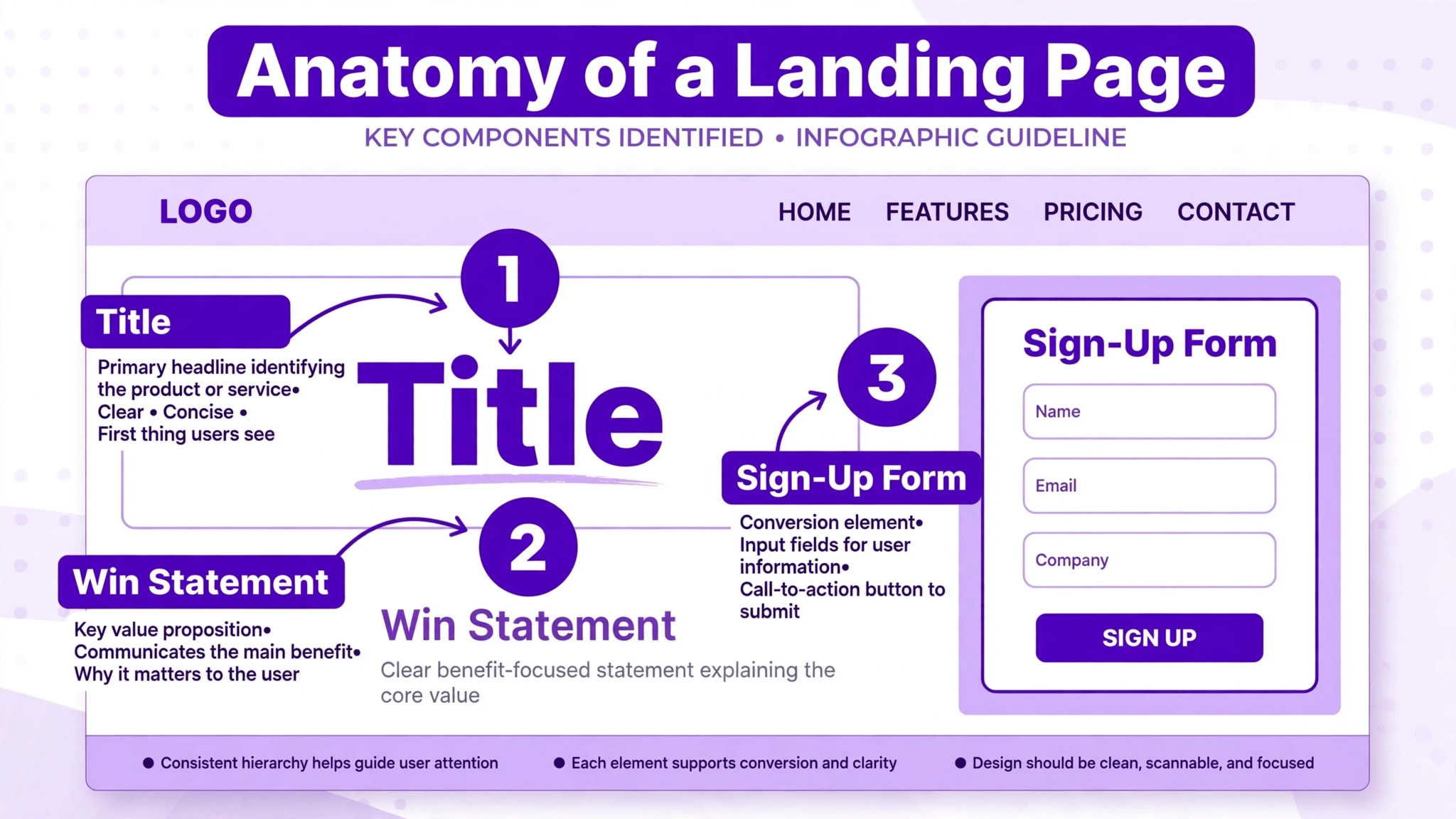
Once you know how to create a lead magnet small business owners can offer, it needs a landing page, which is a single page with one job, which is to collect the sign up. The page should carry the lead magnet title, a short statement of the win, three bullet points on what the reader gets, and a simple form. Ask for as little as possible on that form, usually a first name and an email address, or just a phone number for a text based offer. Every extra field costs sign ups, and a checklist does not need a company name, a job title, and a phone number to be delivered.

Deliver the lead magnet automatically and immediately. Most email tools, including Mailchimp, Kit, and MailerLite, can send a file the moment someone joins a list, and that instant delivery is part of the promise. Test the whole path yourself before promoting it, by signing up with your own address, confirming the file arrives, checking every link, and reading the delivery email on a phone. A broken delivery path loses the subscriber at the exact moment trust is highest, and that loss is entirely preventable with one test sign up.
Place the offer where the topic matches what the reader is already doing. A lead magnet about roof warning signs belongs on the roofing service page and on blog posts about roof problems, not only on the home page. A lead magnet about year end documents belongs on the accounting service page and on posts about tax preparation. Matching the offer to the page beats a generic site wide sign up box, because the reader is already thinking about that problem when the offer appears. For email tool background, see our guide to the best email tool for small business newsletters.
Write the Follow Up Sequence
The lead magnet is only the start. What matters next is the follow up, because most subscribers will not buy from the delivery email alone. Plan a short sequence of three to five emails over the next week or two. The first email delivers the file and sets expectations for what comes next. The second email helps the reader get a quick win from the document, such as completing the first three checklist items. The third email names a common mistake and how to avoid it. The later emails share a helpful example and then present the paid offer with a clear next step.
Keep each follow up email short, focused on one idea, and carrying one link. A long email with five links confuses the reader and dilutes the call to action. Write in the same plain language as the lead magnet, and answer the questions subscribers actually ask after downloading, which you can learn from replies to the early emails. Watch replies carefully, because a reply is a buying signal stronger than an open, and a personal reply to a subscriber question can convert faster than any automated sequence.
Do not sell in every email. A sequence that pitches on every message trains subscribers to ignore it, while a sequence that helps first and invites second builds the trust that makes the eventual offer welcome. End the sequence with a clear offer and a deadline where a genuine deadline exists, such as a seasonal booking window, but do not invent false urgency. Readers can tell the difference, and false urgency costs more trust than it gains in sales.

Promotion Checklist
Use this checklist to promote the lead magnet once the landing page, delivery, and follow up sequence are tested. Promotion is where many lead magnets fail, because a good document that no one sees brings in no subscribers at all.
– Add the offer to the matching service page and to every blog post on the same topic, as an in page box near the relevant section. – Add the offer to the website header or footer, to the email signature, and to the Google Business Profile where that fits the business. – Share the offer in a pinned social media post, in the social bios, and in a short post that states the problem and the win. – Mention the offer in store with a sign by the counter or a card at the till, for businesses with foot traffic. – Mention the offer at the end of relevant videos, talks, and webinars, with the landing page address shown on screen. – Send the offer to the existing email list with a short note on who it helps, so current subscribers can forward it. – Test one paid promotion only after organic promotion shows the offer converts, and judge it on cost per subscriber against profit per customer. – Track sign ups by source, so the next promotion round spends time on the sources that actually bring subscribers. – Review the sign up rate monthly, and fix the weakest step, whether that is the offer, the page, the form, or the promotion itself. – Retire or replace an offer that brings subscribers who never buy, because the wrong audience costs follow up effort without revenue.
Work through the checklist in order, and do not skip to paid promotion before the organic steps are done. Organic promotion tests whether the offer itself converts, while paid promotion only amplifies an offer that already works. A lead magnet that converts organically at a healthy rate is ready for paid promotion. A lead magnet that does not convert organically will not convert better just because more people see it.

Measure Whether the Lead Magnet Works
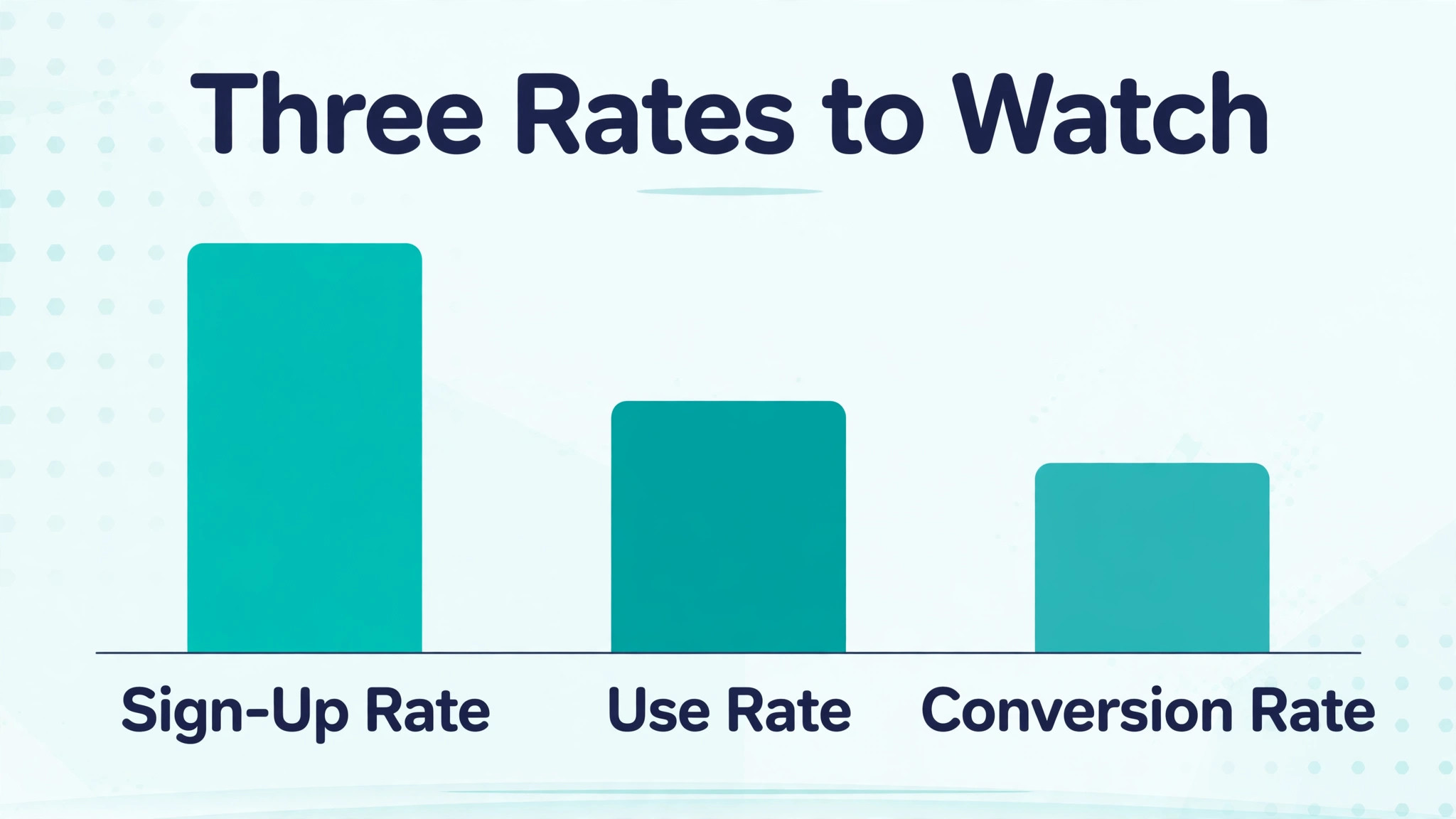
Measure three numbers, and judge the lead magnet on all three together. The sign up rate measures the appeal of the offer and the landing page, and it is calculated from visitors to the page divided into sign ups. The download and use rate measures whether the document itself is useful, and it can be judged from follow up replies, from clicks on the next step, and from questions subscribers ask. The conversion rate to customers measures whether the subscribers are the right audience, and it is calculated from subscribers divided into customers over a reasonable period.
A high sign up rate with no customers means the offer attracts the wrong audience, and the topic or the targeting needs changing. A low sign up rate with good conversion among those who do sign up means the landing page or the promotion needs work, while the document itself is sound. A high sign up rate with low use means the document is not delivering its promised win quickly enough, and the content needs tightening. Each pattern points to a different fix, and fixing the wrong one wastes a month. Review the three numbers monthly, change one thing at a time, and record what each change does.
Mistakes That Kill a Lead Magnet
The most common mistake is choosing a topic the business likes rather than a problem customers ask about. That lead magnet will be polished, complete, and ignored, because no one was looking for it. The second mistake is asking for too much on the form. A checklist does not need a full profile, and every extra field reduces sign ups. The third mistake is delivering late or not at all, which breaks trust at the first interaction. Test delivery before promotion, and check it again after any change to the form or the email tool.
The fourth mistake is building a lead magnet that has nothing to do with what the business sells. A generic discount or a viral quiz can bring thousands of subscribers who will never buy, and those subscribers cost follow up effort, damage email deliverability, and distort every measurement. When you plan how to create a lead magnet small business owners can profit from, remember it should attract people who might buy, even if that means fewer total subscribers. A smaller list of the right people outperforms a large list of the wrong people on every measure that matters, including revenue, replies, and unsubscribes.
When to Build a Second Lead Magnet
Build a second lead magnet only when the first one works, meaning it brings subscribers who convert at a rate the business can measure. A second offer should serve a different problem, a different service, or a different stage of the buying journey, not a slightly different version of the first. A business with two services needs two lead magnets, one per service, each placed on its matching page. A business with one service and two customer types may need two lead magnets, one per customer type, each written in that type language.
The test for readiness is simple. When you can show how to create a lead magnet small business owners in your niche can copy, and when the first offer brings subscribers who buy, the second offer has a proven model to follow.
Do not build five lead magnets before the first one has proven itself. Each additional offer adds landing pages, delivery paths, follow up sequences, and measurement, and that complexity can overwhelm a small team. Prove one offer, promote it well, learn from its numbers, and only then add a second. That discipline keeps the list focused, the follow up personal, and the measurement honest, which is more valuable than a library of offers no one maintains. For lead generation background, see our guide to the best AI agents for lead generation.
Frequently Asked Questions About Lead Magnets
What is a lead magnet in simple terms
A lead magnet is something useful a business offers for free in exchange for contact information, usually an email address or phone number. It might be a checklist, a coupon, a short guide, a price sheet, a template, or a free consultation. The visitor gets immediate help with a small problem, and the business gets permission to follow up. The best lead magnets solve one small problem quickly, connect directly to a paid service, and can be used within ten minutes of downloading.
How long should a lead magnet be
A first lead magnet should be short enough to use quickly, usually a one page checklist, a two to five page short guide, or a single template. A forty page ebook sounds impressive but is rarely finished, and an unfinished document builds no trust. Length should follow the problem, not a target page count. A checklist that solves its problem in one page is complete. A decision guide that needs five pages to cover the options is complete. Anything longer should earn every extra page with material the reader needs.
What should I ask for on the sign up form
Ask for as little as possible, usually a first name and an email address, or just a phone number for a text based offer. Every extra field costs sign ups, and a free checklist does not need a company name, a job title, and a phone number to be delivered. Ask for more information later, after the subscriber has received value and replied to a follow up email, when the relationship justifies the question. A short form respects the reader time and raises the sign up rate at the same time.
How do I promote a lead magnet with no budget
Promote it where the topic already matches the reader attention. Add the offer to the matching service page and to blog posts on the same topic, share it in a pinned social post and in social bios, mention it in store with a sign or card, add it to the email signature, and send it to the existing list with a note on who it helps. Those organic steps test whether the offer converts before any paid promotion. Spend on paid promotion only after organic promotion shows a healthy sign up rate and a sensible cost per subscriber.
How many follow up emails should I send after a download
A short sequence of three to five emails over the next week or two works well for most small businesses. The first email delivers the file and sets expectations. The second helps the reader get a quick win from the document. The third names a common mistake and how to avoid it. The later emails share a helpful example and then present the paid offer with a clear next step. Keep each email short, focused on one idea, and carrying one link, and watch replies closely, because a reply is a stronger buying signal than an open.
How do I know if my lead magnet is working
Judge three numbers together, which are the sign up rate, the use rate, and the conversion rate to customers. A high sign up rate with no customers means the wrong audience. A low sign up rate with good conversion means the landing page or promotion needs work. A high sign up rate with low use means the document is not delivering its win quickly enough. Review the three numbers monthly, change one thing at a time, and record what each change does, so the next decision is based on evidence rather than guesswork.
A Final Word on Building Your First Lead Magnet
A lead magnet does not need to be big, expensive, or perfect to work. It needs to answer a question customers already ask, solve a small piece of that problem quickly, and lead naturally to a service the business already sells. A one page checklist built on that basis will outperform a long ebook built on a guess, because it respects the reader time and proves expertise in ten minutes rather than promising it in forty pages.
Build one offer to learn how to create a lead magnet small business owners can rely on, test its delivery, promote it where its topic already lives, and follow up with help before selling. Measure the sign up rate, the use rate, and the conversion rate together, fix the weakest of the three, and only then build a second offer. That routine turns a website from a brochure that visitors leave into a list that grows every week, and a list of the right people is the most durable asset a small business can build online.