
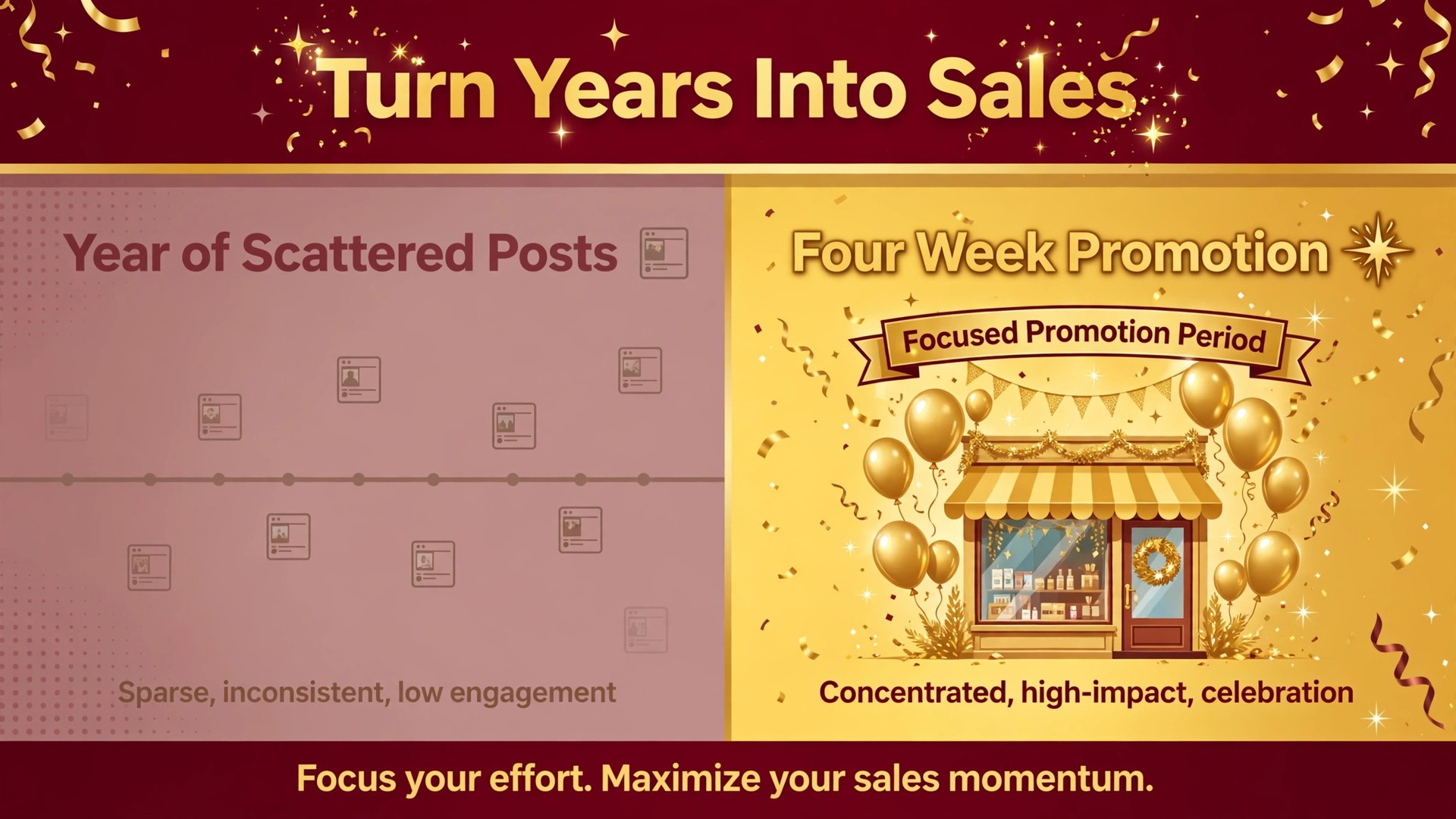
A four week promotion window, one clear offer, and one story about what the business has survived and built will beat a year of scattered anniversary posts every time. Learning how to plan a business anniversary promotion small business customers will actually join starts with that discipline, which is one goal, one audience, one offer, and one window, supported by a story told well.
That is the verdict for most small businesses, because customers respond to a deadline they can understand, an offer they can use, and a reason to celebrate that feels genuine rather than manufactured. A promotion that tries to run for twelve months, with a different discount every week and no central story, will exhaust the owner, confuse customers, and produce a result that cannot be measured.
An anniversary is a marketing asset that most businesses already own but rarely use properly. Survival itself is a story, especially for a small business that has lasted five, ten, or twenty years through changing markets, rising costs, and new competitors. Customers who have stayed with the business through that time want a reason to mark the milestone, and new customers want a reason to try a business that has clearly lasted. A promotion gives both groups that reason, provided it rewards loyalty, invites participation, and leaves the business with something measurable at the end, such as new bookings, new email subscribers, or a stronger local reputation.
The risk is that an anniversary becomes a discount spiral. A business that offers deep discounts to everyone, for months, trains customers to wait for the next discount, and erodes the margin that survival depended on. The promotion in this guide avoids that trap by tying the offer to the anniversary story, limiting it in time, and pairing it with non discount rewards, such as limited edition products, community events, and customer stories, that build value without cutting price to the bone. A promotion should celebrate the business, not apologise for its prices.
Pick One Goal and One Audience Before Anything Else
Every plan for how to plan a business anniversary promotion small business owners can measure should start with a single sentence that states the goal and the audience. That sentence might be to bring past customers back for a second booking, to convert local foot traffic into email subscribers, to launch a new service to existing customers, or to thank long term customers and earn reviews from them. A promotion with three goals will have three messages, three offers, and three measures of success, and none of them will be clear. A promotion with one goal can be judged honestly at the end, and its lessons can be reused next year.
Audience choice follows the goal. Past customers need a different message from new local customers, and loyal customers need a different reward from first time visitors. A past customer offer might be a return visit bonus, while a new customer offer might be a first visit welcome. A loyal customer reward might be early access or a limited edition item, while a community audience might be invited to an open event rather than a sale. Choose the audience that the goal serves, and write every message for that audience, rather than writing one generic announcement and hoping it fits everyone.
Write the goal sentence down, share it with anyone who will help, and use it to reject ideas that do not serve it. An anniversary year offers endless ideas, from parties to press releases to product launches, and most of them are good ideas for some business at some time. Only a few serve your goal, your audience, and your budget at once. The goal sentence is the filter that keeps a promotion focused, and a focused promotion is one that staff can explain, customers can understand, and the owner can measure.

Choose an Offer That Protects Margin
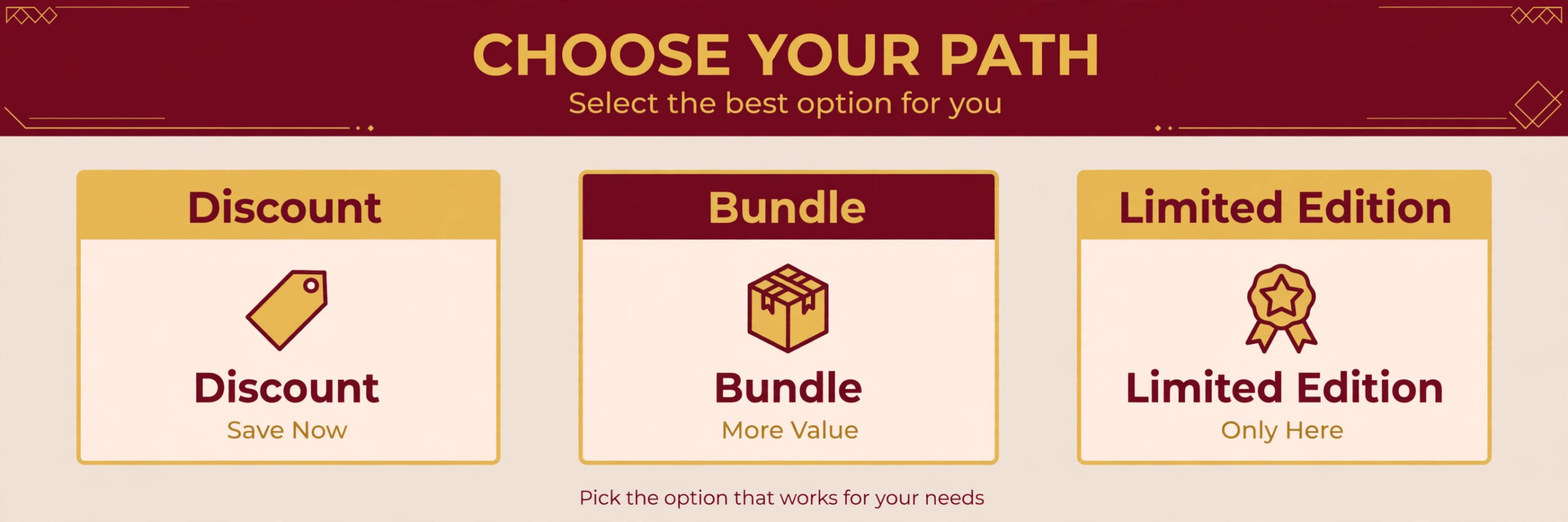
The offer is where most plans for how to plan a business anniversary promotion small business margins can survive go wrong, because owners confuse generosity with depth of discount. A deep discount that loses money on every sale is not generosity. It is a cost that the business pays for attention it may not keep. Better offers protect margin while still feeling special, because they are tied to the anniversary itself. A limited edition product, a bundle that pairs a popular item with a slower item, a bonus add on, a buy one gift one deal, or an upgraded service for the anniversary month all feel celebratory without cutting the core price.

Time limits make an offer work. An offer that runs for a month with a clear end date creates urgency, while an offer that runs indefinitely creates no reason to act now. State the start and end dates in every message, and state any limits, such as one per customer, while stocks last, or for bookings made during the window, clearly and honestly. Hidden limits discovered at checkout damage trust, while clear limits stated upfront are accepted as part of a special event. Keep terms short and readable, because a promotion with pages of small print will deter the very customers it was meant to attract.
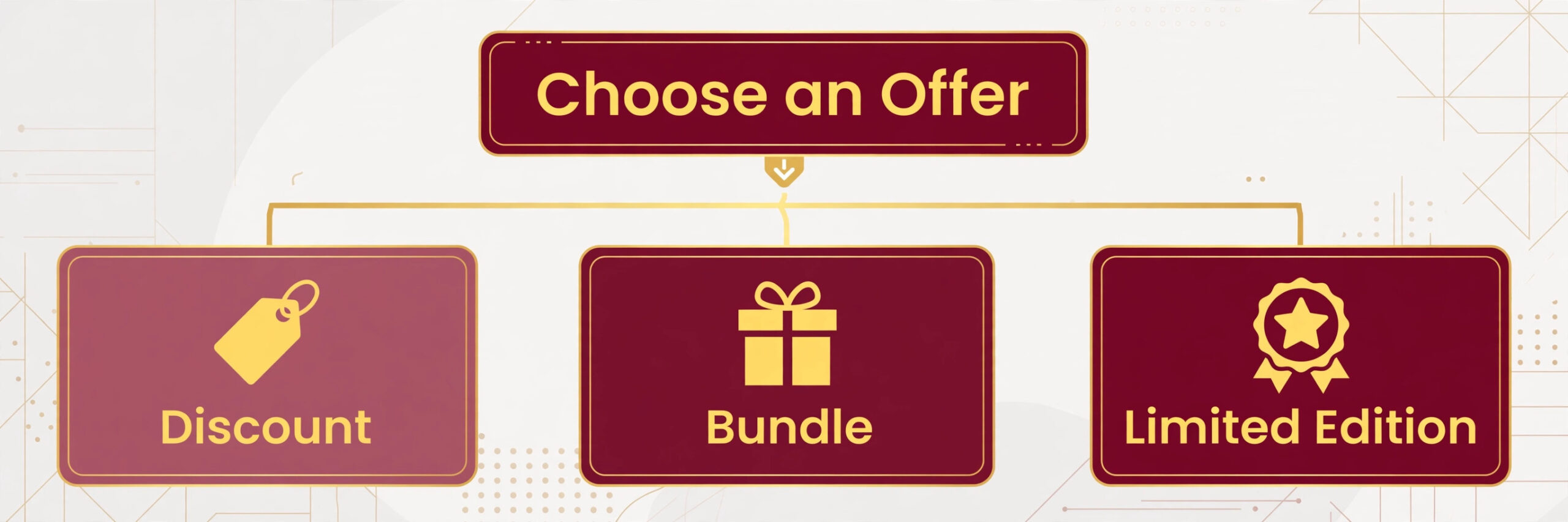
Test the offer on paper before announcing it. Work out the cost per redemption, the number of redemptions needed to meet the goal, and the break even point where the promotion pays for itself. If the offer needs an unrealistic number of redemptions to break even, change the offer, not the forecast. A simple spreadsheet with offer cost, expected redemptions, and resulting revenue or bookings will reveal whether the promotion is a celebration or a subsidy, and it will give the owner a number to check at the midpoint, when there is still time to adjust.
Also plan what happens after the offer ends. A promotion that brings in new customers and then ignores them wastes its own success. Prepare a follow up message for new customers, such as a thank you, a next step, or an invitation to join the email list, and send it within days of the promotion ending. That follow up turns a one time discount buyer into a repeat customer, which is the real return on an anniversary promotion, and it should be written before the promotion starts, not improvised afterwards.
Build the Anniversary Story Customers Can Retell
A promotion needs a story that customers can retell in one sentence, and that story is the heart of how to plan a business anniversary promotion small business customers remember.
That story might be the first shop, the first customer, the hardest year, the product that saved the business, or the team that grew from one person to twenty. Choose the story that is true, specific, and proud, and tell it with details that only your business could tell, such as a date, a place, a first order, or a lesson learned. A generic story about passion and quality could belong to any business, and customers will forget it. A specific story about a real moment will be remembered and repeated.
Gather the material for that story early, because old photos, early menus, first invoices, and early reviews take time to find. Ask long term customers and staff for memories, and record them with permission, because those voices make the story credible. A customer who has visited for ten years telling why they stayed is more persuasive than any slogan the owner could write. Use those stories across the promotion, in emails, on social media, in store, and at any event, so the same story reaches customers through several channels and becomes familiar.
Visual consistency helps the story travel. Create a simple anniversary mark, such as a badge with the year number, and use it on the website, emails, social posts, packaging, and in store signs for the promotion window only. A mark that appears everywhere for four weeks signals an event, while a mark that appears sporadically signals an afterthought. Keep the mark simple and readable at small size, because it will be seen mostly on phones. Retire the mark when the window ends, so the next anniversary can feel fresh rather than like a permanent decoration.
Be careful with nostalgia. A story that looks only backwards can make a business feel old, while a story that connects the past to the future feels alive. Pair every backwards looking element, such as an old photo or a timeline, with a forward looking element, such as a new product, a new service, or a goal for the next years. That pairing tells customers that the business honours its history and is still building, which is exactly the message that earns both loyalty and new trials.
How to Plan a Business Anniversary Promotion Small Business Calendar
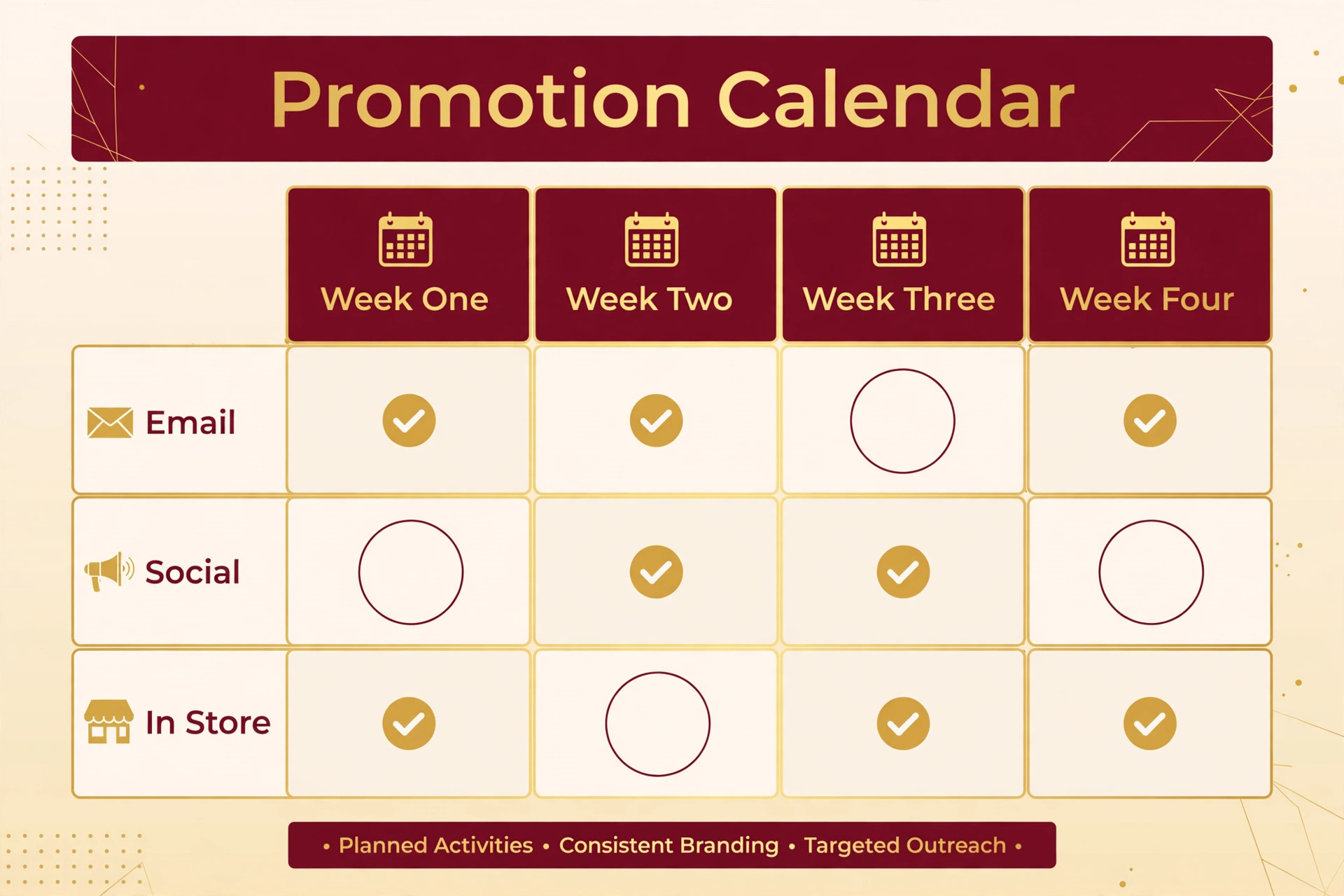
Use this calendar as your starting template, and adjust the weeks to your promotion window. The calendar is the overview proof for this guide, because a promotion without dates is a list of hopes, not a plan.
| Week | Focus | Key actions | Channel |
|---|---|---|---|
| Four weeks before | Announce and tease | Finalise offer, write story, prepare visuals | Email list and social media |
| Three weeks before | Build anticipation | Share history posts, customer stories, countdown | Social media and in store signs |
| Two weeks before | Open bookings or sales | Launch offer page, brief staff, test checkout | Website, email, and in store |
| One week before | Remind and invite | Send reminder email, invite loyal customers personally | Email and personal messages |
| Promotion week | Celebrate live | Run event or offer, share live photos, thank customers | All channels, plus local press |
| Week after | Follow up and measure | Thank new customers, collect reviews, report results | Email and review platforms |
A calendar also needs owners. Assign one person to each week focus, even in a tiny team where one person covers several weeks, so nothing depends on memory. Put the calendar on a wall or a shared document where the whole team can see it, and review it briefly each week, checking what is done, what is late, and what needs help. A promotion that is reviewed weekly can be corrected. A promotion that is only reviewed at the end can only be regretted.

For a smaller anniversary, such as a first or second year, compress the calendar rather than skipping it. A two week version still needs an announcement week, a live week, and a follow up week, because those three phases are what make a promotion work. For a major milestone, such as ten or twenty five years, extend the calendar, but keep the same structure, with a longer story phase before the offer and a longer follow up after it. The structure scales. The discipline of one goal, one offer, and one window should not change with size.
Channels That Work for a Small Business Anniversary
Email is the strongest channel for most plans for how to plan a business anniversary promotion small business lists can support, because it reaches people who already know the business and can act at once. Send an announcement email at the start of the window, a reminder email midway, and a final call email near the end, each with the offer, the dates, and a single clear action. Avoid sending daily emails, which will cause unsubscribes, and avoid sending one email only, which will be missed by most of the list. Three well timed emails, each with a different angle on the story, will outperform ten rushed ones.
Social media works best for story and participation, not for the offer alone. Share history photos, customer stories, behind the scenes preparation, and live event moments, and invite customers to share their own memories with a simple prompt. A customer photo or memory shared with permission is more credible than a business post, and it reaches people the business could not reach alone. Keep posting consistent during the window, and respond to comments promptly, because a promotion that ignores its audience during its own celebration sends the wrong message.
In store and local channels still matter, especially for businesses with foot traffic. Signs, packaging inserts, and staff mentions at checkout can reach customers who do not read email or social media, and a local press note or community listing can reach neighbours who have never visited. Brief staff on the offer, the dates, and the story, so every customer hears the same message, and give staff a simple way to record interest, such as a sign up sheet or a QR code to the offer page. A promotion that staff cannot explain will not be explained to customers.
Paid promotion should be small and targeted, if used at all. A modest boost to a local audience, or to past website visitors, can extend reach, but paid spend should never rescue a weak offer or a vague story. Set a small test budget, measure redemptions from it separately, and stop it if it does not produce results. For most small anniversaries, the email list, social following, and local presence already provide enough reach, and paid spend is a supplement, not the plan.
Events, Community, and Limited Editions
An event gives an anniversary a moment that customers can attend, photograph, and remember, which a discount alone cannot do. Keep the event simple and matched to the business, such as an open day, a tasting, a demonstration, a workshop, or a thank you evening for loyal customers. A simple event done well, with good hosting, clear timing, and a reason to attend, will outperform an ambitious event that stretches staff and budget. Invite loyal customers personally, not just through a general post, because a personal invitation signals that their loyalty is genuinely valued.
Community involvement extends the story beyond customers. Partnering with a local charity, school, or community group for a small part of the promotion, such as a donation per sale during the window, or a joint event, gives the anniversary a purpose beyond sales. Choose a partner that fits the business values, agree the details in writing, and report the result honestly afterwards, including the amount raised or the number of participants. A community element that is vague or overstated will damage trust, while a modest, honestly reported element will build it.
Limited editions create a reason to buy now without discounting the core range. A special anniversary product, flavour, package, or service, available only during the window, gives collectors and loyal customers something to seek out, and it gives the business a story to tell after the window ends. Keep the edition genuinely limited, in quantity or in time, and do not extend it indefinitely when it sells well, because extending a limited edition teaches customers that limits are negotiable. Plan stock carefully, because selling out early is a good problem that can be turned into a waiting list, while overstocking a limited edition leaves the business with anniversary stock nobody wants after the event.
Offer Checklist
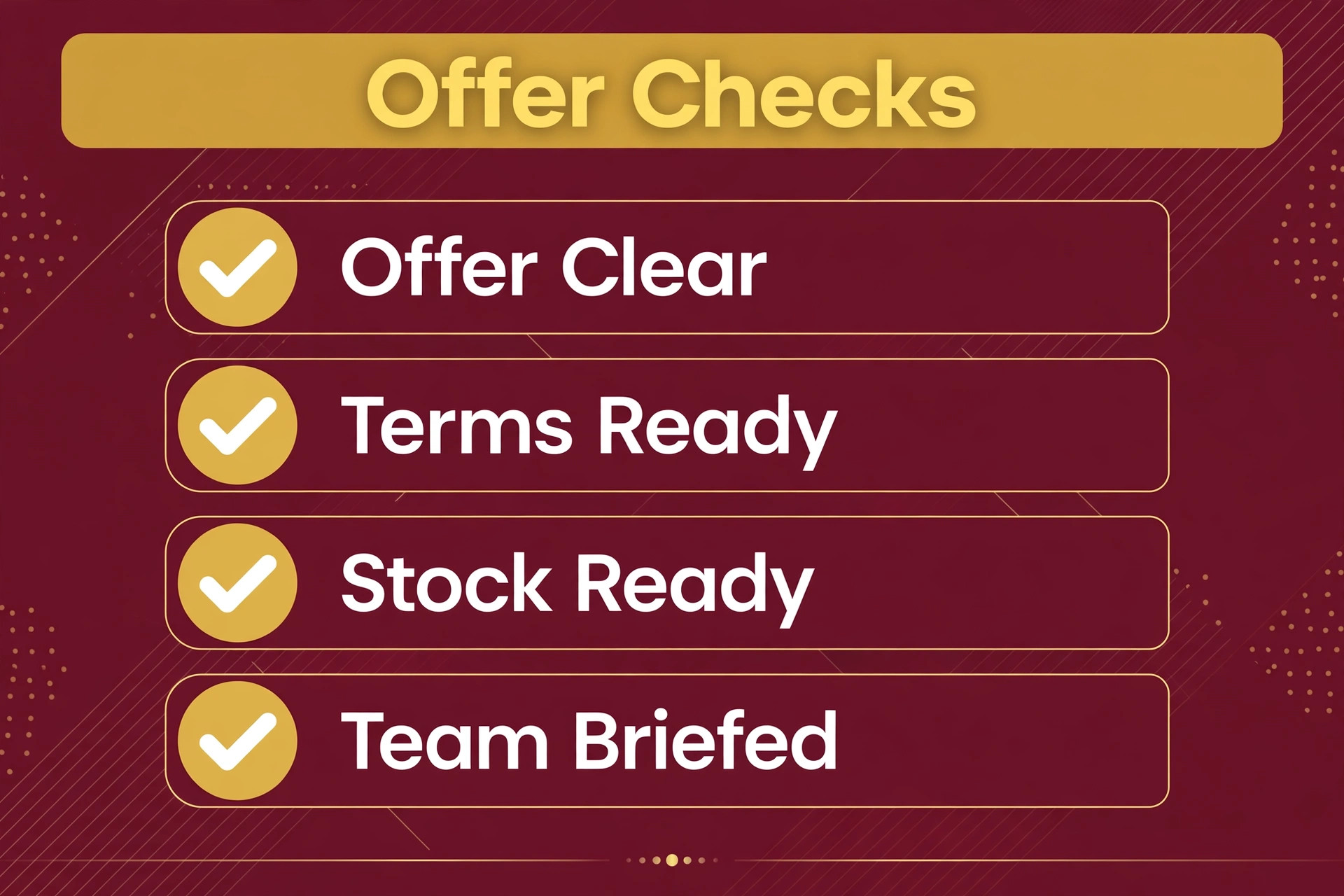
Use this checklist before announcing any anniversary offer in how to plan a business anniversary promotion small business planning, and do not announce an offer that fails an item, because each failure will appear during the promotion, when it is hardest to fix.
– Confirm the offer cost per redemption, the break even number of redemptions, and the maximum number you can afford. – State the offer, the start and end dates, and all limits clearly in every message. – Check that the offer can be redeemed easily, through checkout, booking, or in store, without staff workarounds. – Brief all staff on the offer, the dates, and the story, and give them a way to record interest. – Prepare the follow up message for new customers before the promotion starts. – Test the offer page, booking link, and checkout before announcing, on a phone as well as a desktop.
– Set a midpoint check date, with a decision rule for adjusting spend or messaging if results are low. – Record redemptions daily during the window, so the final report is based on counts, not guesses. – Plan stock, staffing, and capacity for the busiest days, not just for an average day. – Decide in advance what happens to unredeemed offer stock, vouchers, or bookings after the window ends.
That checklist is the second overview proof for this guide, alongside the calendar. A promotion that passes it is ready to announce. A promotion that fails it should be fixed first, because a failed offer damages more than a delayed offer. Customers forgive a promotion that starts a week late. They do not forgive an offer that cannot be redeemed, a price that changes at checkout, or terms that appear only after purchase.
Measuring Whether the Promotion Worked
Measure against the single goal set at the start, not against every number available. If the goal was return bookings, count return bookings during the window and in the month after, compared with the same period before. If the goal was email subscribers, count new subscribers from the promotion channels, and count how many remain subscribed a month later. If the goal was reviews, count new reviews and their average rating. A promotion measured against its own goal produces a clear verdict, while a promotion measured against ten metrics produces a debate.
Track costs honestly, including offer cost, staff time, event costs, printing, and paid spend, so the return calculation is real. A promotion that generated revenue but cost more in discounts and staff time than it earned is not a success, even if the shop felt busy. A promotion that generated modest revenue but brought in loyal repeat customers at low cost may be a success, even if the window itself looked quiet. The follow up month matters as much as the window, because repeat visits from new customers are where the long term return appears.
Hold a short review within two weeks of the window ending, while memories are fresh. Note what worked, what failed, what the midpoint check revealed, and what should change next time, and store that note with the calendar and the offer checklist. That note becomes the starting point for the next anniversary, and it prevents the business from repeating a mistake that was already learned once. A promotion that is reviewed becomes an asset. A promotion that is forgotten becomes a cost that must be relearned.
For the measurement side of the plan, see our guide to tracking marketing return on investment, which explains how to tie promotion results to revenue without complex tools. For the event side, our guide to planning a grand reopening covers event logistics that transfer directly to an anniversary event. For growing the announcement list itself, see our guide to growing an email list.
Mistakes That Spoil an Anniversary
The first mistake in how to plan a business anniversary promotion small business timing is announcing too late. A promotion announced the week it starts will miss the customers who need time to plan a visit, book a service, or arrange childcare. Announce at least four weeks before the window for a small promotion, and earlier for a major milestone, using the calendar in this guide. Late announcement is the most common reason an otherwise good promotion underperforms, and it is entirely avoidable with a calendar.
The second mistake is discounting the core product so deeply that regular customers feel punished for having paid full price. A loyal customer who paid full price last month and sees a half price offer this month will feel taken for granted, not celebrated. Protect loyal customers by giving them something extra, such as early access, a gift, or a limited edition, rather than offering new customers a price that undercuts what loyal customers paid. Loyalty rewards should feel like thanks, not like a correction.
The third mistake is a story that is not true, or not specific. A business that claims twenty years when it has traded for twelve, or that invents a founding story, will be caught by long term customers, and the damage will exceed any promotion benefit. Tell the true story, with real dates and real details, even if the true story is less dramatic than an invented one. Customers respect a true five year story more than a false twenty year story, because truth is what makes a business trustworthy in the first place.
The fourth mistake is forgetting staff. A promotion that surprises staff, overloads them during the busiest week, or gives them no briefing will fail at the counter, however good the marketing looks. Brief staff early, staff the busiest days properly, thank staff publicly during the promotion, and include them in the story, because they are part of what customers celebrate. A team that feels included will sell the promotion naturally. A team that feels imposed upon will not.
Frequently Asked Questions About Anniversary Promotions
How far ahead should I start planning
For a small promotion, start at least four weeks before the window, and for a major milestone, start three to six months ahead, to allow time for story gathering, visuals, event booking, and press outreach. The calendar in this guide gives a four week structure that can be extended, but the minimum is an announcement phase, a live phase, and a follow up phase, each with its own week. Starting late compresses the announcement phase, which is the phase that actually brings customers in.
Should an anniversary promotion always include a discount
No. Discounts are one kind of offer, and often not the best one for margin or loyalty. Limited editions, bundles, bonus add ons, early access, events, and community partnerships can all feel celebratory without cutting core prices. Choose the offer that serves the goal and protects margin, and use a discount only where it genuinely drives the desired action, such as a first visit or a return booking, and where the break even calculation supports it.
How long should the promotion window last
Four weeks is a practical window for most small businesses, long enough for customers to hear about it and act, short enough to create urgency. A single day can work for an event, and a full year rarely works, because urgency disappears and staff tire. If the anniversary is major, run a longer story phase before the window, but keep the offer window itself limited, so customers still have a reason to act now.
What if my business is only one or two years old
Celebrate anyway, because survival through the first years is a genuine achievement, and early anniversaries build the habit of marking milestones. Keep the promotion smaller, focus on thanking early customers and inviting new ones, and tell the founding story while it is still fresh and detailed. A first anniversary promotion that is honest and well run will teach the business how to run a tenth anniversary promotion later.
How do I involve loyal customers without excluding new ones
Give loyal customers an extra layer, such as early access, a personal invitation, or a limited edition gift, while keeping the main offer open to everyone. That structure rewards loyalty without closing the door to new customers, and it gives loyal customers a reason to share the promotion, because they feel recognised. State both layers clearly, so new customers understand the main offer and loyal customers understand their extra recognition.
What should I do after the promotion ends
Thank customers promptly, follow up with new customers within days, collect reviews while the experience is fresh, and hold a review meeting within two weeks. Report results against the single goal, record what worked and what failed, and store the calendar, checklist, and review note for next time. A promotion that ends with a thank you and a follow up will earn repeat business, while a promotion that simply stops will be forgotten within a week.
A Promotion Worth Remembering
An anniversary promotion worth remembering is not the biggest discount, the loudest event, or the longest campaign. It is the promotion where a customer felt thanked, tried something new, and came back afterwards, and where the owner can point to a goal met, a list grown, or a reputation strengthened. That outcome comes from the discipline in this guide, which is one goal, one audience, one offer, one window, and one story told well, with a calendar, a checklist, and a follow up to carry it through.
Start with the goal sentence, choose an offer that protects margin, gather the true story, and build the calendar backwards from the window. Brief staff, test the offer, announce four weeks ahead, celebrate live, and follow up within days. Do that, and the anniversary will do what anniversaries are for, which is to remind customers why the business lasted, and to give them a reason to stay for the years ahead.