

Book clubs usually fail in the same quiet way. Half the group has not finished the book, nobody can find the passage they wanted to discuss, and the meeting turns into a general chat about reading in general. The problem is rarely the book choice. It is that paper copies make it hard to mark passages, share notes, and check progress without carrying a notebook everywhere. When you use e-reader for book club reading, those frictions shrink, because highlights, notes and a built in dictionary travel with the book, and the group can arrive at the meeting with actual passages ready to discuss instead of vague memories of a chapter.
This guide sets up a complete book club system on an e-reader. It covers choosing a device and book format the whole group can use, an annotation routine that takes seconds per passage, a discussion checklist that keeps meetings focused, and the practical details of lending, syncing and accessibility that decide whether a group sticks with the system. It works for in person clubs, video call clubs, and mixed groups, and it assumes members have different levels of comfort with technology, so every step is written for the least technical member first.
Why a Book Club Works Better on an E-Reader
A paper book is a fine reading experience, but it is a poor discussion tool. Finding a passage means flipping pages, remembering approximate locations, and hoping other members have the same edition with the same page numbers, which they often do not. An e-reader solves the edition problem, because members can search for a phrase, jump to a chapter, and quote a passage exactly, even when their devices differ. That single ability changes meetings, because discussion can start from a shared text rather than from a shared guess about what a character said.
Progress tracking is the second advantage, and it is the one that keeps groups alive. An e-reader shows reading percentage, estimated time left in a chapter, and daily reading streaks on some devices, which gives members a gentle, private way to check whether they are on pace. A group leader can set a simple target, such as finishing part one by the next meeting, and members can see their own progress without anyone policing them. That visibility reduces the awkward meeting where only two people finished the book, because members who fall behind notice early and can catch up in short sessions rather than facing a whole unread book the night before.
Portability and accessibility complete the case. A whole season of book choices fits on one light device, which matters for members who travel, commute, or read in bed. Font size, line spacing and bold text can be adjusted for tired eyes or low vision, and a built in dictionary answers vocabulary questions without breaking the flow of reading. For groups with older members or members who read in a second language, those adjustments are not extras. They are the difference between finishing a book and giving up on it, and a club that finishes its books is a club that keeps meeting.
Group size also matters, because a club of six to ten members gives everyone a turn to speak while still offering varied opinions, while a club larger than twelve often splits into side conversations and quiet members stop contributing. If your group grows beyond twelve, consider splitting into two smaller clubs that share a title list, rather than forcing a large meeting to work, because a smaller group with real discussion beats a large group where only a few voices are heard.
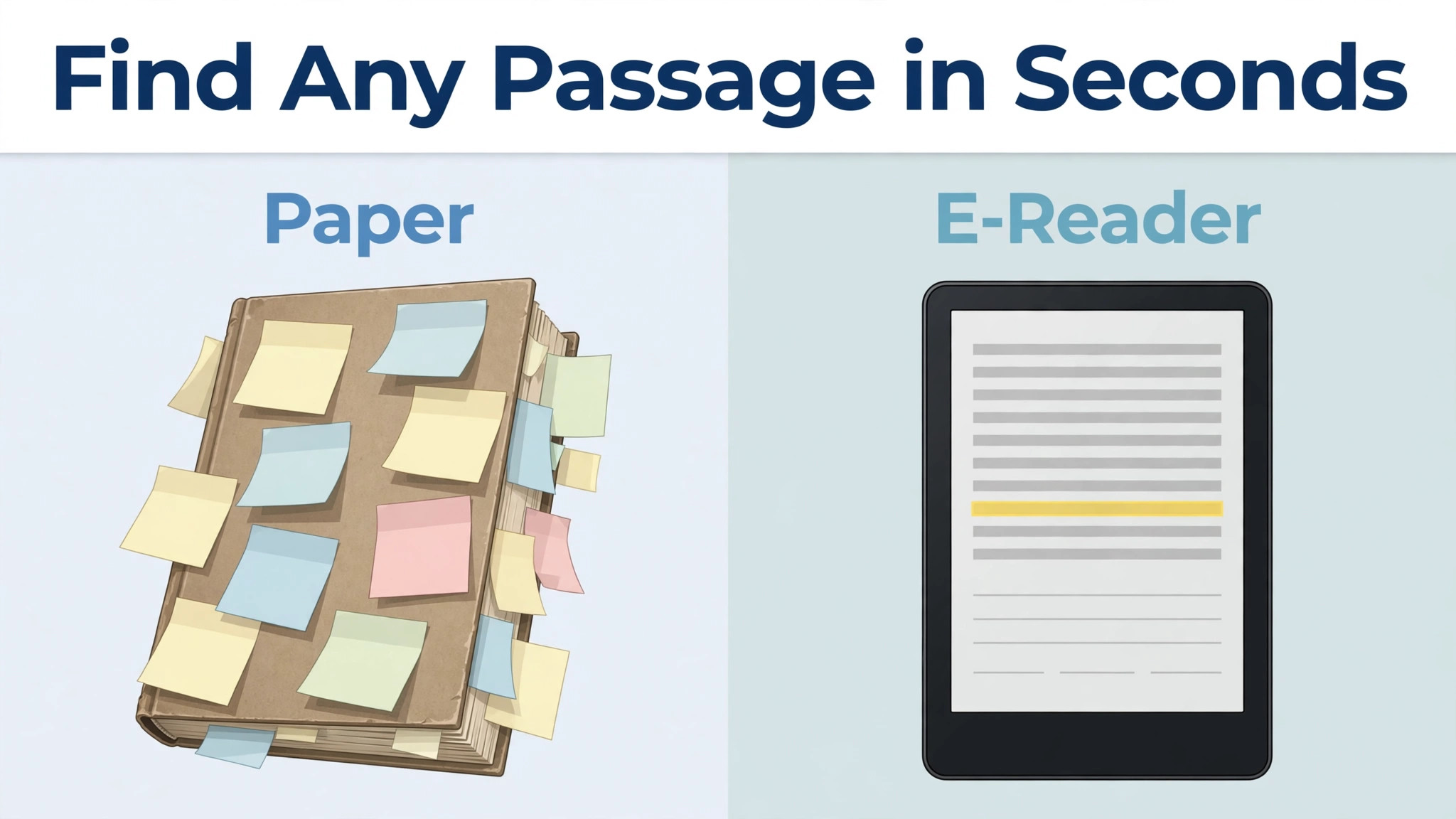
How to use e-reader for book club reading for a Whole Group
The best way to use e-reader for book club reading starts with agreement on three things before anyone buys anything, which are the book source, the format, and the meeting rhythm. Agree where the group will buy or borrow books, so members are not hunting across five stores for the same title. Agree on a format that every device can open, which for most groups means a standard ebook format from a major store or a library app, rather than a file type that only works on one brand.
Agree on a rhythm, such as one book per month with a mid month check in, so members can plan reading around work and family instead of guessing when the next meeting falls.
Once those three decisions are made, set up the device together in a short session, in person or on a video call, rather than leaving each member to work it out alone. Walk through buying or borrowing the first book, adjusting font size, making a highlight, adding a note, and finding a highlight again, because those five actions cover almost everything a book club member needs. Members who learn those actions in a group session ask fewer questions later, and they help each other instead of quietly falling behind.
Record the steps in a one page note the group can reuse, and appoint one member as the help contact for the first month, rotating the role so it never becomes a burden.
Reading itself needs a light structure to work for a group. Ask members to highlight no more than three passages per chapter, and to add a short note to each highlight saying why it mattered, such as a question, a disagreement, or a connection to real life. That limit matters, because a member who highlights everything has highlighted nothing, and a meeting built on thirty highlights per person will never get through them. Three passages per chapter gives a meeting plenty to discuss, keeps reading enjoyable, and produces notes that are actually useful when the meeting arrives.
An Annotation Routine That Takes Seconds
Annotation fails when it feels like homework, so the routine below is built to take seconds, not minutes, and to work the same way for every book. Teach it once, use it for every title, and resist the urge to add more steps, because a routine with ten steps gets abandoned while a routine with four steps gets used.
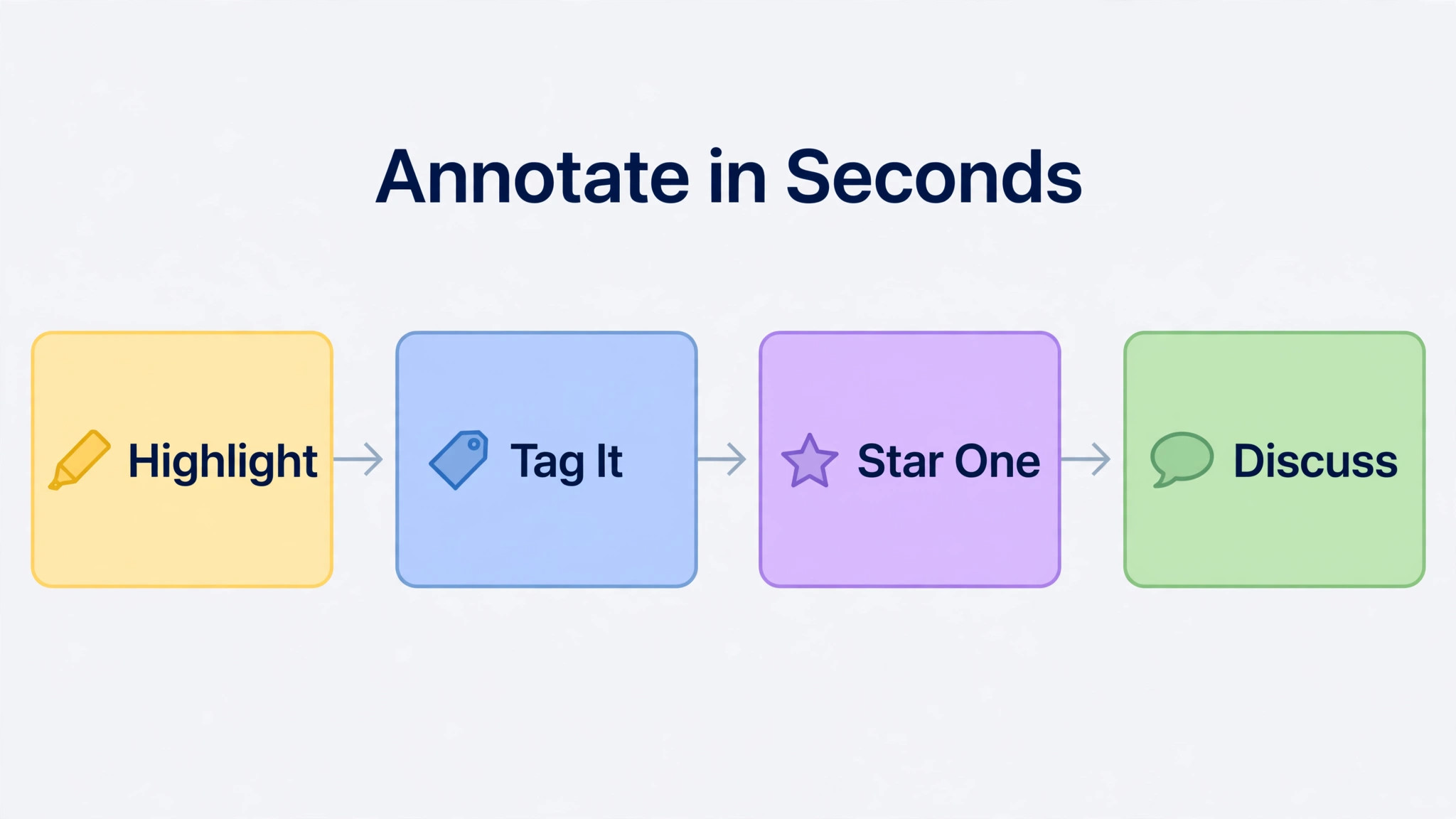
- Highlight the passage with a single press and drag, and do not worry about perfect selection, because a slightly long highlight is still easy to find.
- Add a short note in plain words, starting with one of four tags, which are Question, Agree, Disagree, or Connect, followed by one sentence.
- If a word is unfamiliar, tap it for the dictionary definition, and add the meaning to your note only if it changes the sense of the passage.
- At the end of each chapter, glance back over your highlights and star the single one you most want the group to discuss.
- Before the meeting, open your notes list, read your starred passages, and pick your top three talking points for the night.
- During the meeting, read the passage aloud from your device or quote it from your notes, so members using different editions can follow.
- After the meeting, add one line to your best note recording what the group decided or what changed your mind.
- At the end of the book, export or photograph your notes if your device allows it, so the discussion survives even if the book is returned.
That routine works because it separates reading from discussing. While reading, members only highlight and tag, which keeps them in the story. Before the meeting, they choose, which turns a pile of highlights into a short agenda. During the meeting, they quote, which grounds discussion in the text. After the meeting, they record, which builds a group memory across a season. A club that follows those four phases will have better meetings than a club with fancier tools but no routine, and the routine costs nothing beyond a little discipline. That discipline is what makes it work when you use e-reader for book club reading week after week.
For groups that read library books with a return deadline, add one habit, which is to export notes before the loan expires. Some library apps keep notes only while the book is on the device, so a member who returns a book early can lose a whole set of discussion notes. A quick export, a set of screenshots, or a copy into a shared document at the end of the book prevents that loss, and it gives the group a lasting record of its best discussions across the year.
Format trouble is the most common technical problem in e-reader book clubs, and it is almost always avoidable with a little planning. The safest approach is to choose books that are available from a source every member can reach, such as a major ebook store or a public library app, and to confirm availability before announcing the title. A book that is cheap on one store but missing from another, or available only in a format one member’s device cannot open, will split the group before reading starts. Check availability for all members, not just for the leader’s device, and have a backup title ready in case the first choice fails that check.
| Source | How members get the book | Works well when | Watch out for |
|---|---|---|---|
| Major ebook store | Buy and download to the device | The group buys most titles | Prices vary, and sharing is limited |
| Public library app | Borrow for a set loan period | The group wants low cost reading | Loans expire, and popular titles have queues |
| Free public domain library | Download at no cost | The group reads classics | Older translations vary in quality |
| Publisher direct store | Buy from the publisher site | The title is missing elsewhere | Format may need converting for some devices |
| Shared group document | Leader shares notes and excerpts | Discussing short stories or essays | Copyright limits what can be shared |
Price fairness deserves a direct conversation, because book costs can quietly exclude members. Rotate who chooses, and favour titles available from the library or at low cost at least every second month, so the club never becomes a subscription only the keenest members can afford. For groups that buy, watch for store sales and bundle offers, and set a rough price ceiling the group agrees on, so nobody feels embarrassed about skipping a title that costs too much. A club that talks openly about cost keeps its members, while a club that ignores cost slowly loses the ones who can least afford to leave.
When you use e-reader for book club reading, format checks should happen at the same time as the book announcement, not a week later. Announce the title, the source, the expected price or loan period, and the reading target in one message, so members can start immediately without a round of questions. That single clear message does more for completion rates than any motivational speech, because it removes every small barrier between a member and the first chapter.

Running a Discussion That Stays on the Book
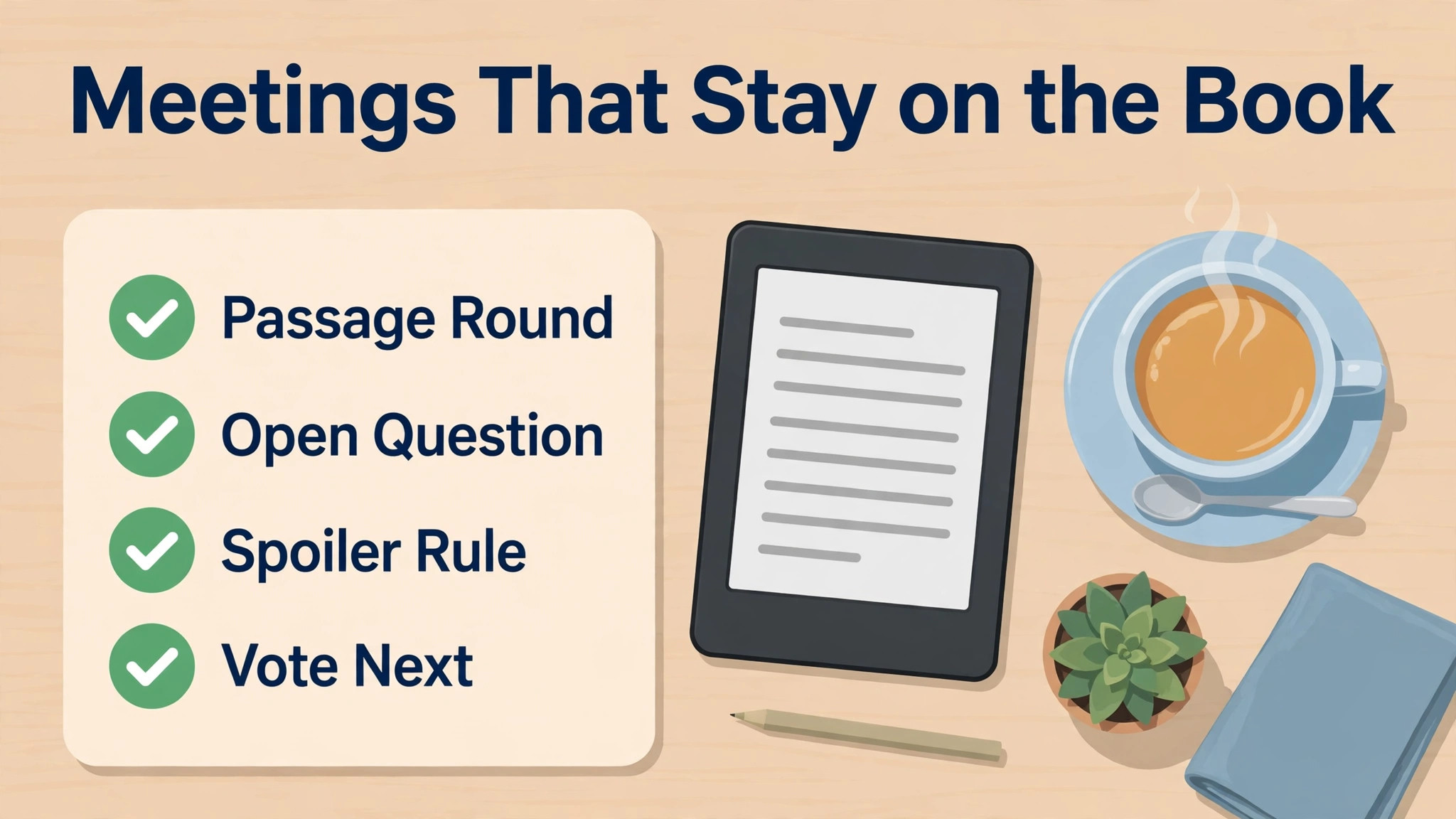
A good discussion needs a structure, but it should feel like a conversation, not a classroom. Start each meeting with a quick round where every member names one passage they starred and why, in under a minute each. That opening round surfaces the strongest material fast, gives quiet members a guaranteed turn, and stops the meeting from being dominated by the two most confident talkers. After the round, the leader picks the three passages with the most energy and guides the group through them in order, leaving the rest as backup if time allows.
Use this discussion checklist to keep the meeting on track without making it rigid.
- Open with a one minute passage round, so every member speaks early and the best material surfaces fast.
- Confirm the reading target for the next meeting before discussion starts, so nobody leaves unsure what to read.
- Discuss passages in the order they appear in the book, so members can follow along on their devices.
- Ask one open question per passage, such as what surprised you here, or what would you have done in this situation.
- Invite disagreement directly, because a polite disagreement produces a far better meeting than polite agreement.
- Note any question the group cannot answer, and assign one member to check it before the next meeting.
- Close with a vote or a shortlist for the next title, so the next book is chosen by the group, not by default.
- End on time, even if discussion is lively, because a meeting that overruns regularly loses members faster than a boring one.
Spoiler handling needs a rule the group agrees on, because e-reader progress percentages make it easy to spoil accidentally. A simple rule works well, which is that members may discuss only up to the agreed reading target, and anyone who read ahead keeps later material to themselves until the group catches up. State the target at the start of every meeting, and remind members who finished early to speak from the target’s point of view. That rule protects slower readers, who are often the members most at risk of leaving, and it keeps the group reading together rather than racing apart.
Use the same rule every meeting when you use e-reader for book club reading, so members always know where discussion stops.
Accessibility is where e-readers quietly outperform paper for many groups, and leaders should set it up deliberately rather than leaving members to discover it. Larger fonts, wider line spacing, bolder text and extra margin space all help tired eyes, and some devices offer dyslexia friendly fonts, screen readers, and audio companions that read the text aloud. Ask members privately whether any adjustment would help, because many people will not volunteer that they struggle with small print, and a private question preserves dignity while solving a real barrier. A group that reads comfortably finishes more books, and finishing books is the whole point.
Lending rules need honesty, because ebook lending is far more restricted than lending a paper book. Most stores limit sharing, library loans expire, and sending a purchased file to another member may break the store’s terms, even when intentions are good. The safe path is for each member to obtain their own copy from the store or library, and for the group to share notes, quotes for discussion, and reading targets instead of files. For short stories and essays, check whether the text is freely available or whether the group can discuss a legally shared excerpt, and keep sharing within those limits.
A club that respects those rules avoids account trouble and models good practice for members who are new to ebooks.
Shared notes can enrich a club, but they need a simple system. A shared document with one section per chapter, where members paste their top three passages and notes before the meeting, gives the leader a ready agenda and lets members who missed a meeting catch up. Keep the document short, because a long shared document becomes another chore, and ask members to paste only their starred passages, not every highlight. Over a season, that document becomes a record of the group’s taste and thinking, which is a pleasure to look back on and a useful guide when choosing future titles.
Update the document the day after each meeting when you use e-reader for book club reading, while passages are still fresh.

Mistakes That Quietly Break a Book Club
The first mistake is choosing books for the leader’s taste instead of the group’s range. A run of long, dense titles exhausts members, while a run of light titles bores the keenest readers, so alternate lengths, genres and difficulty across a season. The second mistake is setting reading targets that ignore real life, such as a 600 page novel in a holiday month, or a new book every two weeks for a group of working parents. Set targets members can actually meet, and build in a catch up month with a short book or a set of stories, so falling behind does not mean dropping out.
The third mistake is letting technology become the topic of every meeting. If the first twenty minutes of each meeting are spent fixing sync problems, the club becomes a support group for devices, and members stop coming. Solve device problems outside meetings, keep a one page help note updated, and start meetings with books, not with gadgets. The fourth mistake is no record of decisions, so the group re-argues the same book choices and repeats the same scheduling errors. Keep a short log of titles, targets, attendance and what worked, and review it when planning the next season. That log takes five minutes per meeting and saves hours of repeated discussion.

A Month in the Life of an E-Reader Club
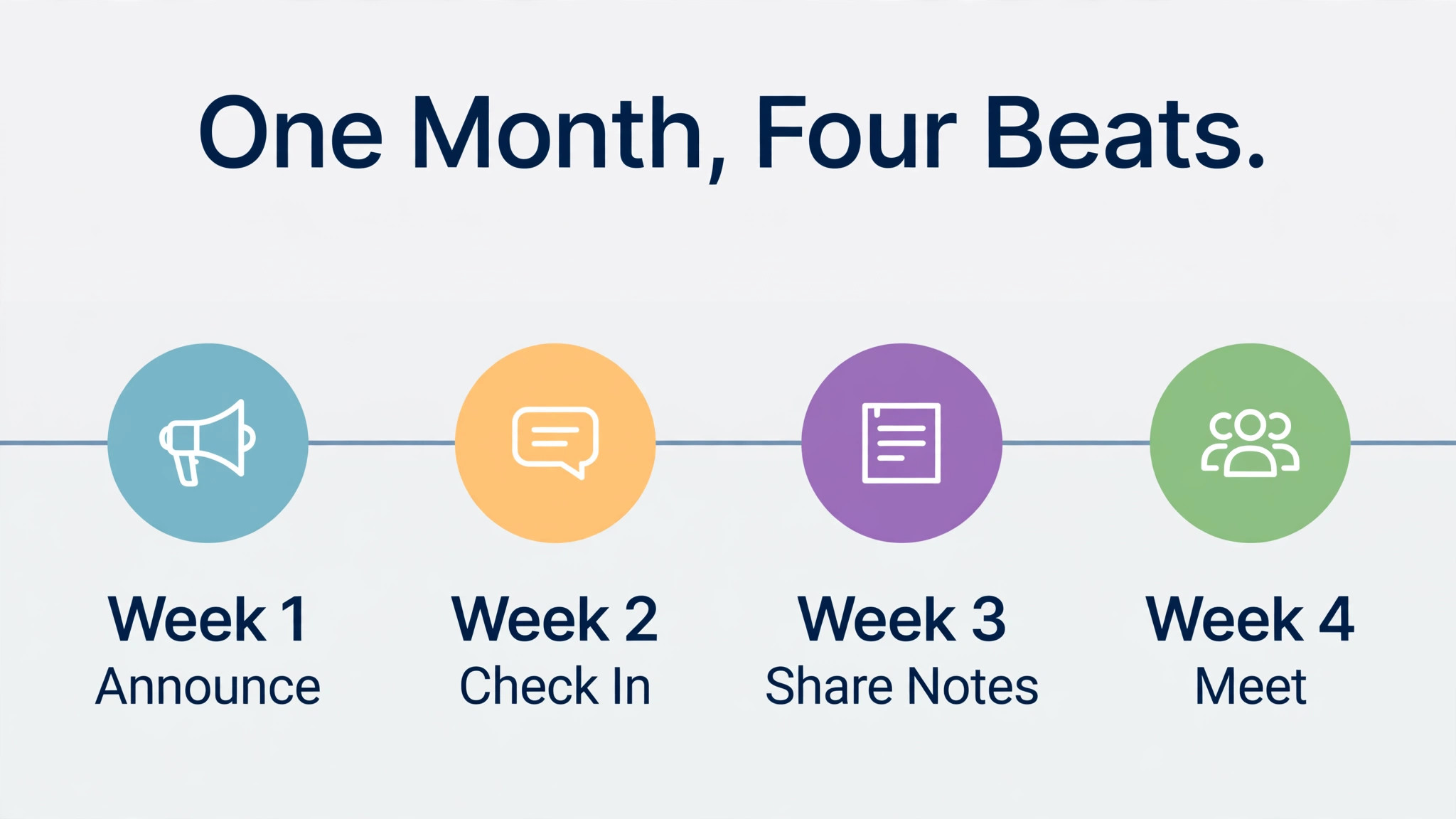
A workable month has four beats, and each beat takes little time. In week one, the leader announces the title, source, price or loan period, and the reading target, and members download the book and set their font preferences. In week two, members read the first half, highlight with tags, and post a short check in, such as a single sentence about how the book is going, so the leader can spot anyone struggling early. In week three, members finish the book, choose their top three passages, and paste starred notes into the shared document. In week four, the group meets, discusses in passage order, votes on the next title, and confirms the next target before leaving.
That rhythm works because it spreads effort evenly and gives members two natural points to catch up, which are the mid month check in and the note sharing week. It also gives the leader a simple way to spot trouble early, because a member who misses the check in and the note sharing week is almost certainly behind, and a short private message at that point helps far more than a public reminder at the meeting. A quiet offer of a shorter edition, an audio companion, or an extra week for one title can keep a struggling member in the club, while silence lets that member drift away and assume nobody noticed.
A member who falls behind in week two can still finish in week three with a few longer sessions, and a member who misses the meeting can still read the shared notes and rejoin the next book without feeling lost. Over a year, that forgiving rhythm keeps more members than a strict schedule, because life interrupts reading for everyone at some point, and a club that survives interruptions is a club that lasts. Keep the rhythm steady, keep the books varied, and let the e-reader handle the mechanics while the group handles the conversation. Review the season log when you use e-reader for book club reading for the next year, and repeat the titles and rhythms that worked best.
More Reading on Stratilyze
If this guide helps your club get organised, the wider Stratilyze guides cover the reading tools around it. The guide to e-readers for travel reading explains light weight reading on the move, the guide to e-readers for academic reading covers deep annotation for study, and the guide to Kindle reading for language learning shows dictionary and vocabulary habits that also help book clubs. Read the travel guide next if members read on commutes, because the same device settings serve both purposes.
Frequently Asked Questions
Can a whole book club use e-reader for book club reading if members have different devices?
Yes, provided the group agrees on a common book source and checks that the title is available to every member before announcing it. Members can use different brands and still discuss the same text, because search, highlights and notes work on most modern e-readers, even when page numbers differ. The group should agree on chapter targets rather than page targets, quote passages aloud in meetings, and share starred notes in a common document, so device differences never block discussion.
How do e-reader highlights help a book club discussion?
Highlights turn vague memories into exact passages the group can discuss, because a member can jump straight to a marked line and read it aloud. When members tag highlights with a short note, such as a question or a disagreement, the meeting gains a ready agenda instead of starting from scratch. The habit works best when members highlight no more than three passages per chapter and star the single passage they most want to discuss, so meetings stay focused on strong material.
What if a member cannot afford every book the club chooses?
Talk about cost openly and build fairness into the schedule, such as alternating bought titles with library loans or free classics, and setting a rough price ceiling the group agrees on. Library apps let many members borrow the same title at no cost, though popular books may have queues, so announce library titles early. A club that plans for cost keeps its members, while a club that ignores it slowly loses the people who can least afford to leave.
Do library ebook loans work for a book club schedule?
They can work well, provided the group announces titles early enough for members to join queues and complete loans before the meeting. Library loans expire after a set period, so members should export or copy their notes before returning a book, because notes may not survive after the loan ends. If a popular title has a long queue, choose a less busy month for it, or pick a title with wider availability, so the whole group can read together.
How should a club handle spoilers when members read at different speeds?
Agree on a reading target for each meeting, and discuss only up to that target, even if some members have finished the book. State the target at the start of every meeting, and ask faster readers to speak from the target’s point of view until the group catches up. That simple rule protects slower readers, keeps the group reading together, and prevents the most common source of frustration in mixed pace clubs.
Is an e-reader better than paper for a book club?
An e-reader is better when you use e-reader for book club reading for discussion, progress tracking, portability and accessibility, because search, highlights, adjustable fonts and a built in dictionary all serve group reading directly. Paper is better for members who love the feel of a physical book, for illustrated editions, and for clubs that lend freely among members. Many groups do well with a mix, letting members choose their format while agreeing on chapter targets and shared notes, so nobody is forced onto a device they dislike.
A Book Club Setup That Actually Works
A book club on an e-reader works when the group agrees on a source, a format and a rhythm before anyone starts reading, and when every member learns the same five actions, which are buying or borrowing, adjusting text, highlighting, noting and finding notes again. Keep highlights short and tagged, discuss passages in book order, protect slower readers with a clear spoiler rule, and keep a shared document of starred passages for members who miss a meeting. Add a forgiving monthly rhythm with a catch up point, and the club will finish more books, hold better meetings, and keep more members across a full season.
Start with the next title, set the target in one clear message, and let the device handle the mechanics while the group enjoys the conversation. Celebrate finished books, too, because a short note of thanks to members who finished, a shared list of favourite passages, or a simple end of season gathering all reinforce the habit that makes a club last. A club that notices its own progress keeps meeting, while a club that treats every book as a chore slowly loses the joy that brought members together in the first place.