

Ask three agencies for a website quote and you may receive three wildly different numbers, and that spread is not always a sign that someone is overcharging. A website can mean a one page brochure, a 40 page service site with location pages, or an online store with inventory sync, and the cost of building a business website agency project follows that scope. Published 2026 guides put small business agency builds at 5,000 to 15,000 dollars for a standard professional build, 15,000 to 35,000 dollars for a mid range custom build, and 35,000 dollars and up for complex or ecommerce sites, with monthly maintenance retainers at 150 to 500 dollars on top.
Other guides place template based agency sites at 2,500 to 8,000 dollars, small ecommerce stores at 5,000 to 15,000 dollars, custom business sites at 10,000 to 25,000 dollars and up, and custom portals at 20,000 dollars and up. If you want to understand the cost of building a business website agency work actually involves, compare scope first and price second, because two quotes for different scopes are not comparable at any price.
An agency build buys a team, not a person. Designers shape layout and brand, developers build templates and functionality, copywriters or strategists shape messaging, project managers keep the timeline, and quality assurance testers check devices and browsers. That team costs more than a freelancer, and it also provides redundancy, process, and ongoing support that a single person cannot match. Whether that premium is worth it depends on how central the website is to revenue. A brochure site that merely proves legitimacy needs less team than a site that generates most leads, takes bookings, or sells products daily.
This guide prices agency builds by tier, explains what each tier includes and excludes, and shows how to compare quotes fairly, so you pay for the build you need rather than the build you were sold.
The Cost of Building a Business Website Agency Projects by Tier
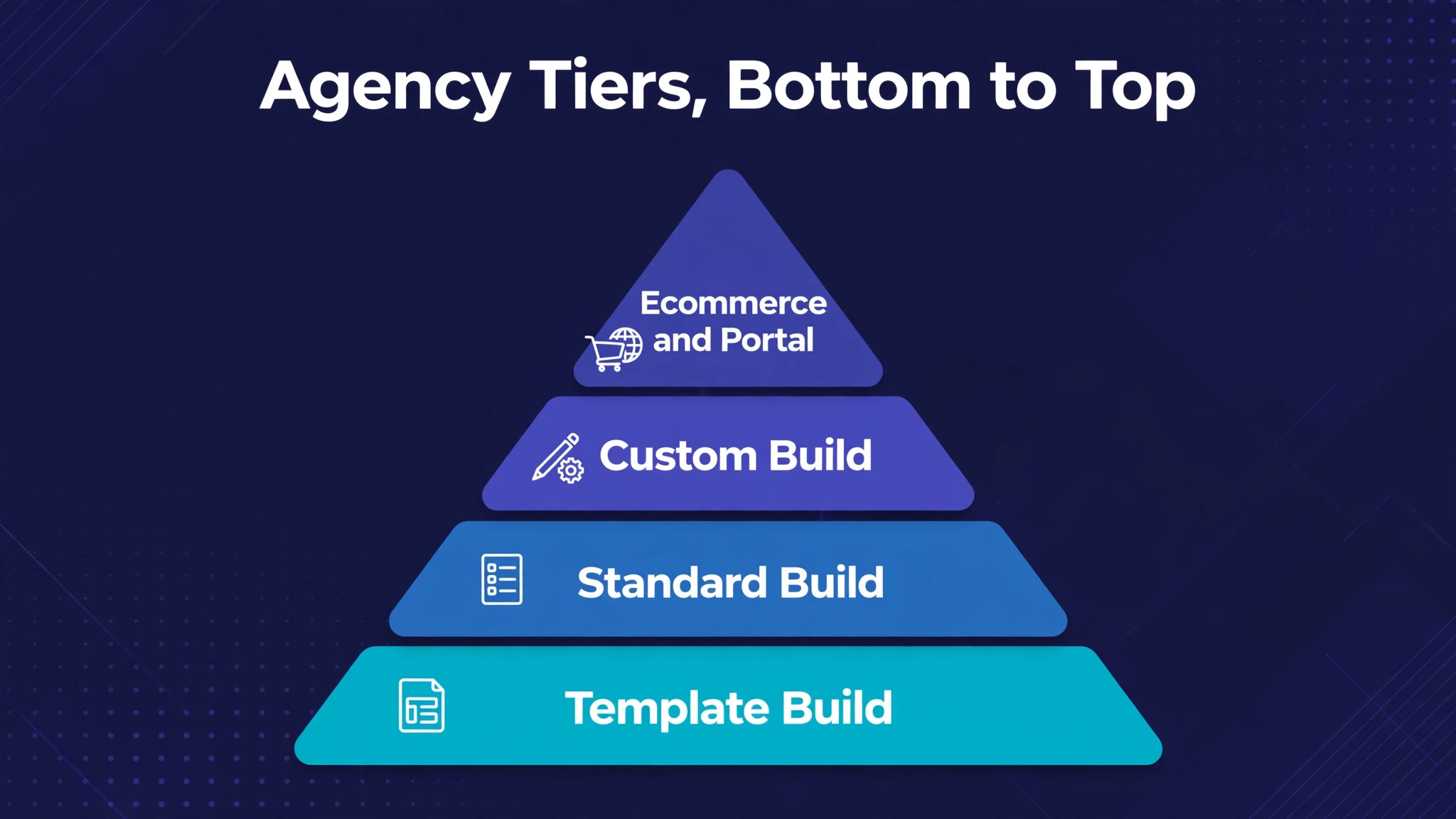
| Tier | Typical scope | Agency price range | Typical timeline |
|---|---|---|---|
| Template based business site | 4 to 8 pages, tuned template, contact form, basic SEO | 2,500 to 8,000 dollars | 4 to 8 weeks |
| Standard professional agency build | Custom design touches, 8 to 20 pages, copy guidance, technical SEO | 5,000 to 15,000 dollars | 6 to 12 weeks |
| Mid range custom build | Custom design system, integrations, booking or CRM links | 15,000 to 35,000 dollars | 10 to 20 weeks |
| Small ecommerce store | Product catalogue, checkout, shipping and tax setup | 5,000 to 15,000 dollars | 8 to 16 weeks |
| Complex ecommerce or custom portal | Accounts, custom workflows, APIs, large catalogue | 35,000 dollars and up | 3 to 6 months and up |
Template based builds are the most misunderstood tier, because tuned template does not mean generic in a bad sense. A good agency starts from a proven template, customises colours, type, imagery, and layout to your brand, writes or edits copy to your voice, and sets up forms, maps, and basic search readiness. That process still takes weeks, because content, imagery, feedback rounds, and testing take time even when the underlying code is not custom. A template build suits businesses that need a professional presence quickly, with standard pages such as home, services, about, contact, and a blog, and no unusual functionality.
Custom builds earn their price through unique design and functionality. A custom design system, with brand illustrations, animations, and layouts built for your content rather than adapted from a template, takes designer time that a template skips. Integrations, such as booking systems, member logins, payment flows, quote calculators, and CRM connections, take developer time that scales with complexity and testing. A custom build also usually includes deeper strategy, such as audience research, conversion planning, and content architecture, which a template build may only touch lightly. If your site must do something no template does well, or must stand out in a crowded market where design is part of the brand, custom is the right tier.
If it must simply present services credibly and capture enquiries, template is the better value.
What Drives the Quote Up or Down
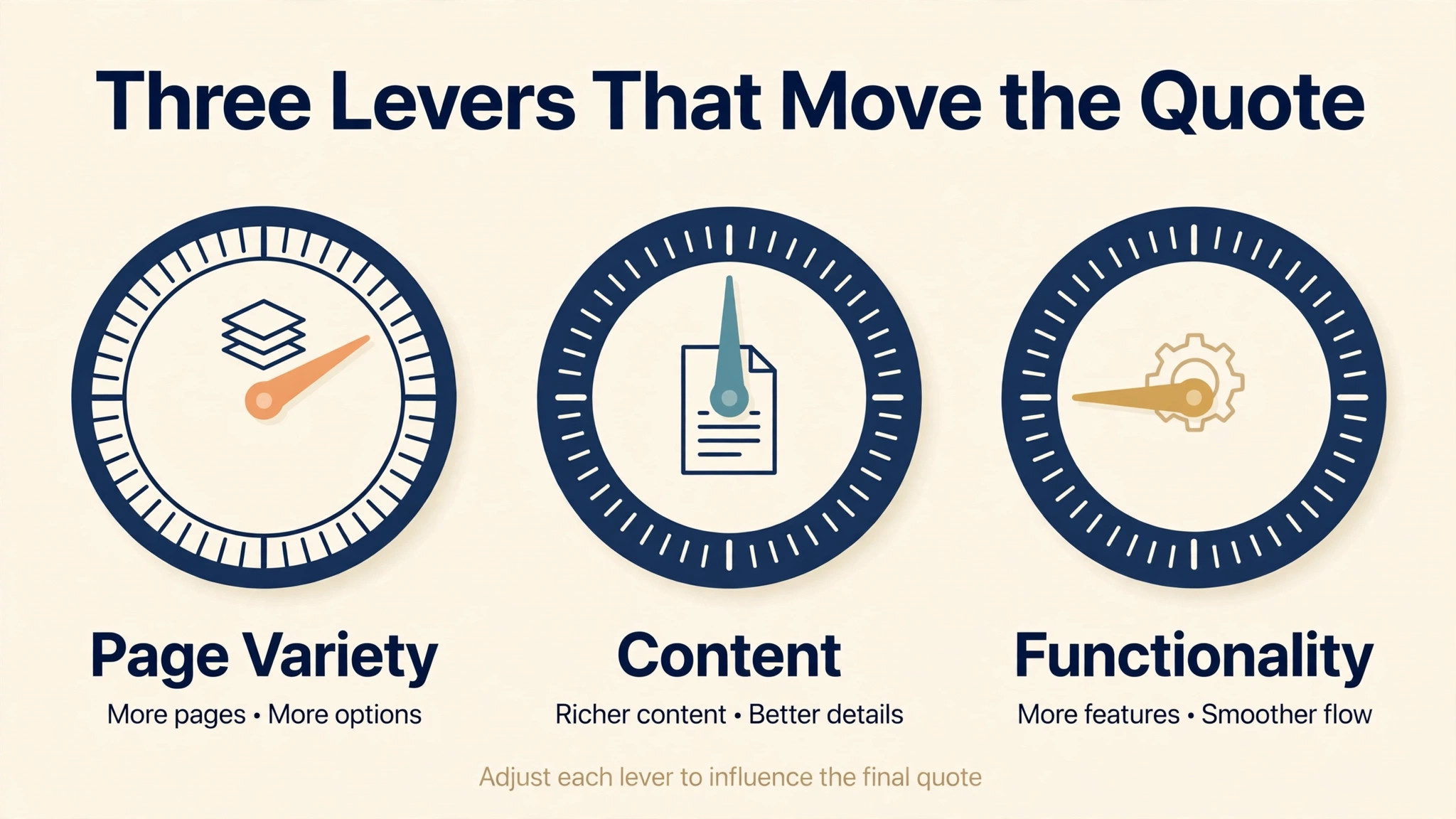
Page count matters less than page variety. Ten pages sharing one layout cost less than five pages each needing a unique design, because design time follows unique templates, not total pages. A site with a standard service layout repeated across services is cheaper than a site where every service needs a different story, gallery, calculator, or interactive element. When comparing quotes, ask how many unique templates are included, not just how many pages, since that number drives design cost directly.
Content is the hidden cost that delays more projects than any technical factor. If you supply finished text and professional photos, the project moves faster and costs less. If the agency must write copy, source imagery, or interview your team, that work appears in the quote, either as a line item or inside a higher total. Copywriting for a full site can add thousands, and photography or video production adds more. Prepare content before kickoff where you can, or budget for agency content honestly, because a project stalled waiting for copy costs time for both sides and often leads to rushed text at launch.
Functionality is the largest cost lever after design. Contact forms are simple. Booking systems, member areas, payment checkout, product configurators, quote calculators, and integrations with booking, CRM, inventory, or email systems each add development, testing, and maintenance cost. Ecommerce adds catalogue structure, product data, shipping rules, tax settings, payment testing, and order emails, which is why even a small store starts near 5,000 dollars with an agency. List every function the site must perform on day one, separate must have functions from nice to have functions, and phase nice to have functions to a later release.
Phasing is the most effective cost control available, because it turns a 35,000 dollar project into a 15,000 dollar launch plus a planned second phase, rather than a project that never launches at all.
Other cost drivers include content migration from an old site, accessibility work, multilingual content, and search readiness. Migrating dozens of old pages, redirecting old URLs, and preserving search rankings takes time that a fresh site does not need. Accessibility work, such as keyboard navigation, contrast, and screen reader structure, is essential for many businesses and should be scoped explicitly rather than assumed. Technical SEO, including speed, structured data, and metadata, costs a little more upfront but avoids an expensive rebuild later, when a slow or poorly structured site must be fixed after launch.
Design, Build, and Care as Separate Phases
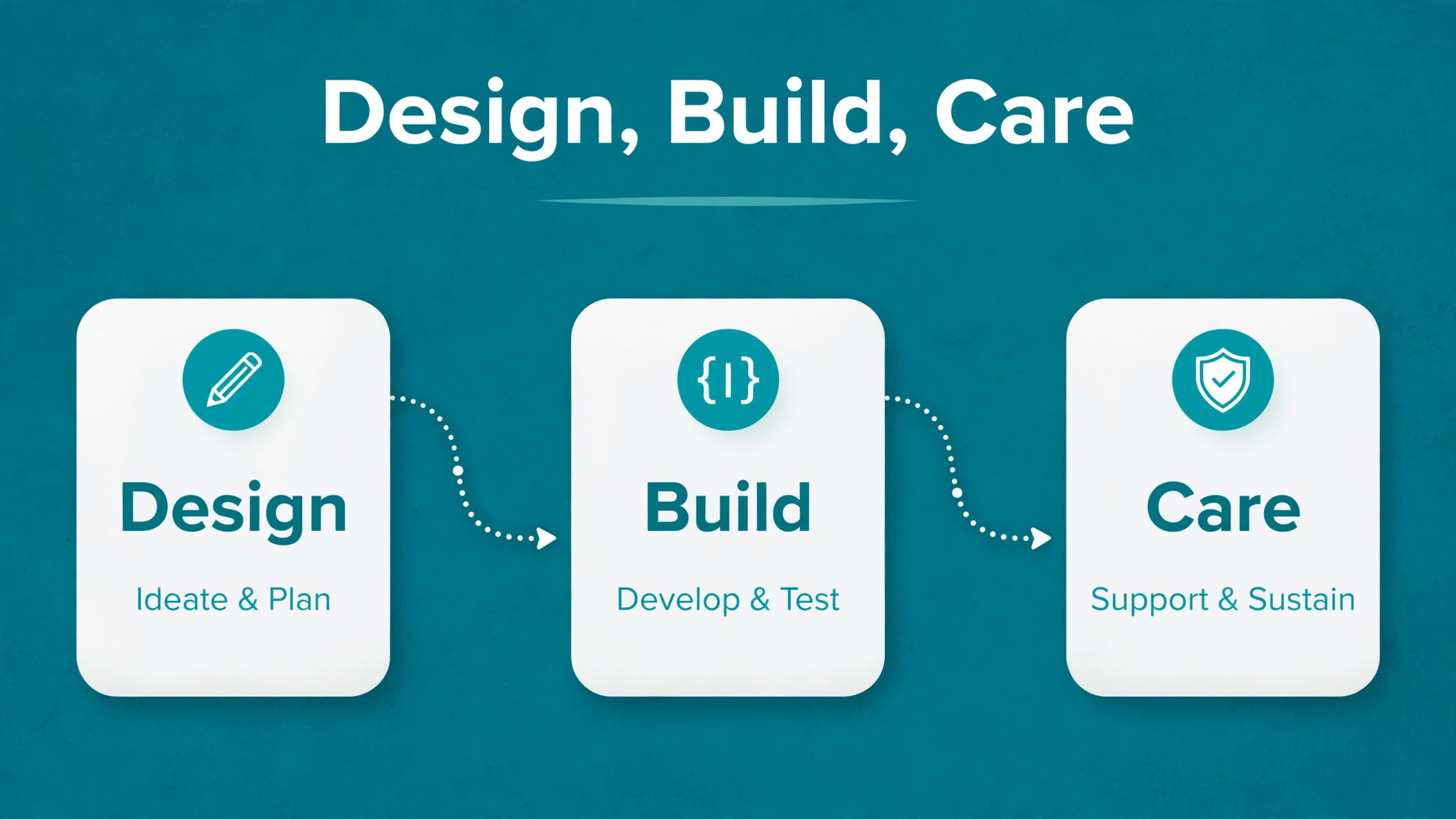
Agency projects break into three phases, and each phase has its own cost logic. Design covers research, wireframes, visual design, and revisions. A typical agency design phase for a standard build includes homepage and key template designs, two to three revision rounds, and a style guide for colours, type, and components. Extra revision rounds, late brand changes, or new templates added mid design increase cost, so approve design direction early and limit stakeholders to a small approval group. A design approved by committee, with conflicting feedback from many voices, is the most expensive design of all, because it cycles through revisions without converging.
Build covers development, content loading, functionality, testing, and launch. Development time follows template count and functionality, as above, while content loading time follows how much content the agency must enter, format, and optimise. Testing should cover desktop and mobile, major browsers, forms, checkout where relevant, speed, and accessibility basics, and a launch checklist should cover redirects, analytics, search console, backups, and security. Ask what testing is included, since a build without device testing will look fine on the agency screen and broken on a customer phone, and fixing that after launch costs more than testing before it.
Care covers hosting, maintenance, updates, backups, security monitoring, and small content changes after launch. Published maintenance retainers run 150 to 500 dollars a month, while annual hosting, domain, maintenance, and update costs for a small business site are published near 300 to 3,000 dollars a year depending on scope. Care is not optional, even though it feels like an ongoing cost for a finished product. Software updates, security patches, plugin updates on WordPress sites, and content changes continue after launch, and a site without care drifts into slowness, breakage, and security risk.
Budget care from day one, and compare care plans by what they include, such as update frequency, backup retention, support response time, and included change hours, not just by monthly price.
Agency Versus Freelancer Versus DIY Builder
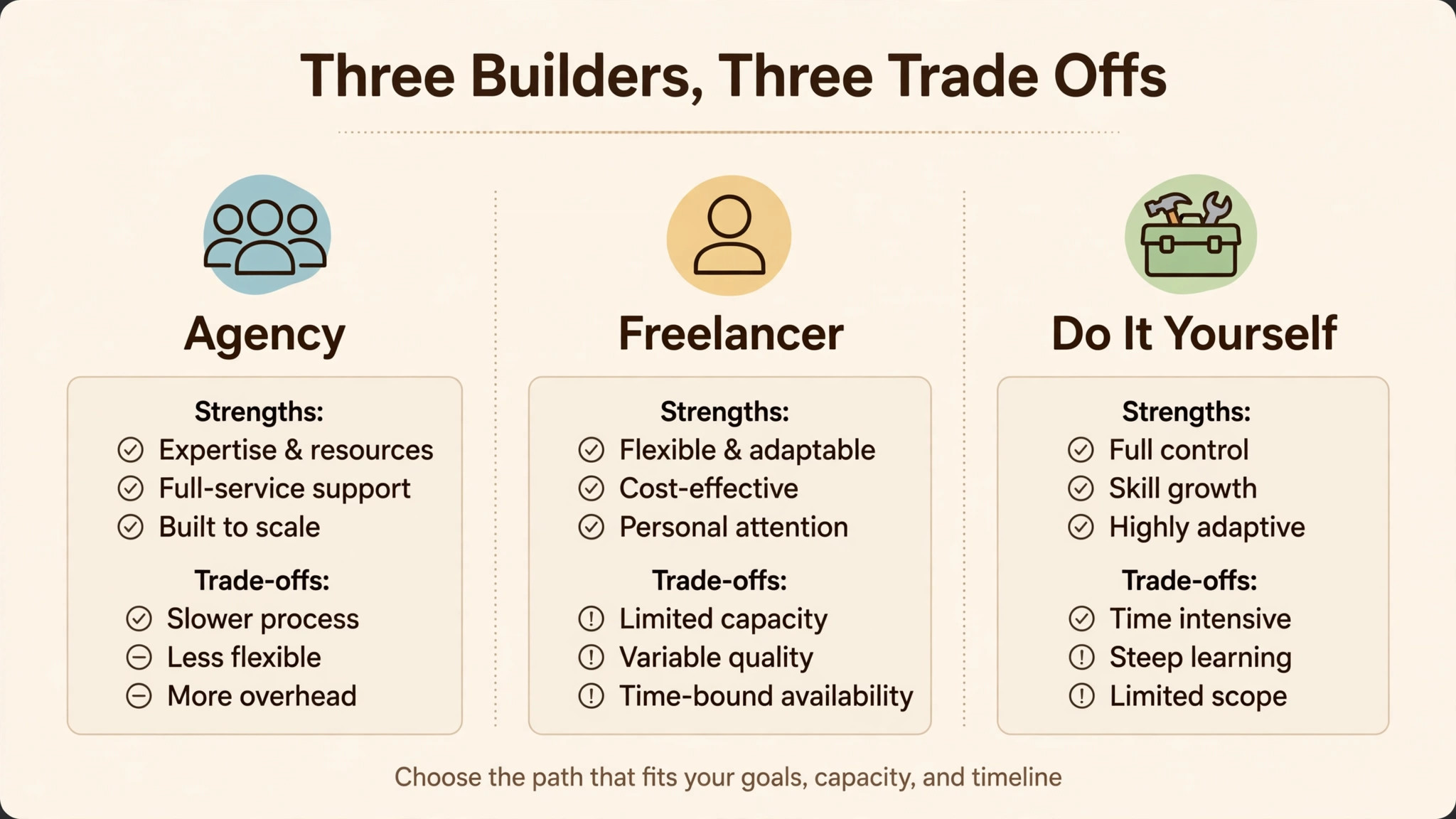
Agency builds suit businesses where the website drives revenue, where multiple skills are needed at once, or where ongoing support matters. You get a team, a process, quality assurance, and a support relationship, but you pay a premium and accept more process overhead, including meetings, approvals, and timelines that can stretch to 3 to 6 months for larger projects. Agencies are also optimised for larger clients in many cases, so a very small business with a simple brochure need may find a full scale agency process heavier than necessary, even if the price is affordable.
Freelancers suit businesses with a moderate budget, a specific design vision, and limited ongoing change needs. Published freelancer project rates for small business sites commonly run 1,500 to 8,000 dollars, with hourly rates near 50 to 150 dollars depending on skill and location. You get personal attention and flexibility, often at lower cost than an agency, but you get a single point of failure, variable quality across design and development skills, and limited post launch support if that person becomes unavailable. Freelancers work best when you can judge their portfolio, check references, and accept that support depends on one person.
DIY builders suit owners with time, a simple site, and a tight budget. Entry builder plans cost about 4 to 29 dollars a month billed yearly depending on builder, and you write, design, and update the site yourself. That route is fast and cheap, but templates can look generic, search tools are weaker, scalability is limited, and migrating away later can cost 700 to 6,000 dollars, often more than building professionally from the start. DIY is the right choice when time is abundant and the site is simple, and the wrong choice when the site must convert well, rank well, or support complex functions.
A useful comparison comes from a 2025 survey of small business owners, cited in pricing guides, which found that an agency built 45 percent of their sites, the company own staff built 37 percent, the owner built 9 percent, and a freelancer built 9 percent. Those shares show that agency builds are common, not exotic, but also that many businesses succeed with staff or owner built sites when scope is simple. Choose the route by scope and revenue importance, not by prestige, and remember that the cheapest route that delivers a credible, fast, converting site is the best route, regardless of who builds it.
How to Compare Agency Quotes Fairly
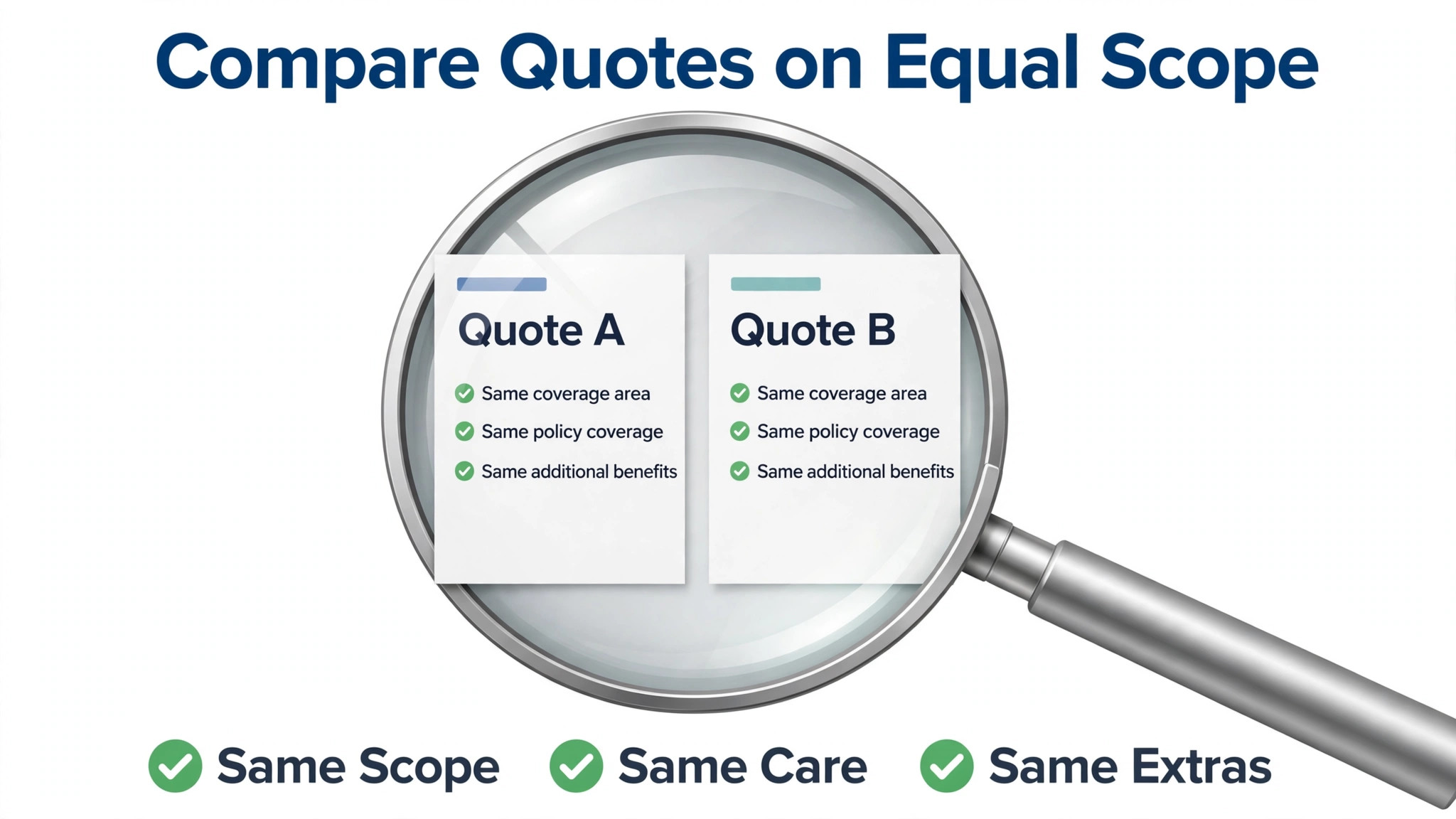
Comparing quotes requires a common scope document, otherwise you compare different projects. Write a one page brief before requesting quotes, listing business goals, target audience, must have pages and functions, nice to have functions for a later phase, content you will supply, design references you like, timeline, and budget range. Send the same brief to each agency, and ask each to quote against it with a breakdown by design, build, content, integrations, and care. A quote that cannot be broken down cannot be compared, and a quote that bundles everything into one number hides where money goes.
Ask each agency the same questions. How many unique templates are included, and how many revision rounds. Who writes copy, and what happens if copy is late. What testing is included, across which devices and browsers. What happens after launch, including care plan contents, backup frequency, update policy, and support response time. Who owns the site, the domain, the content, and the analytics accounts. What training is included for your team to update content. How are extra changes priced, per hour or per task, and at what rate. An agency that answers those questions clearly is easier to work with than an agency that answers only with a total price and a timeline.
Watch for exclusions that turn a low quote into a high total. Copywriting, photography, logo design, content migration, advanced SEO, ecommerce setup beyond a basic catalogue, and ongoing care are commonly excluded or listed as extras. A quote that excludes copywriting will look cheaper than a quote that includes it, until you pay a copywriter separately. Compare totals for the same included scope, including care for the first year, to get a true first year cost. First year cost, which is build plus care plus domain and hosting, is the fair comparison number, not build price alone.
First Year Cost Table
| Line | Template build first year | Standard agency build first year | Custom build first year |
|---|---|---|---|
| Build price | 2,500 to 8,000 dollars | 5,000 to 15,000 dollars | 15,000 to 35,000 dollars |
| Care plan at 150 to 500 dollars monthly | 1,800 to 6,000 dollars | 1,800 to 6,000 dollars | 1,800 to 6,000 dollars |
| Domain and hosting if separate | 100 to 500 dollars | 100 to 500 dollars | 100 to 500 dollars |
| Content or photography if extra | 0 to 2,000 dollars | 0 to 3,000 dollars | 0 to 5,000 dollars |
| First year total range | 4,400 to 16,500 dollars | 6,900 to 24,500 dollars | 16,900 to 46,500 dollars |
First year totals look larger than build prices alone, and that is the point. A business that budgets only the build price will be surprised by care, content, and hosting in the first year, while a business that budgets the first year total can plan cash flow honestly. Care plans vary widely in included hours and response times, so a 150 dollar plan and a 500 dollar plan are not interchangeable, and the cheaper plan may exclude the change hours you need most. Compare care by included work, not just by price.

Mistakes That Inflate Agency Costs
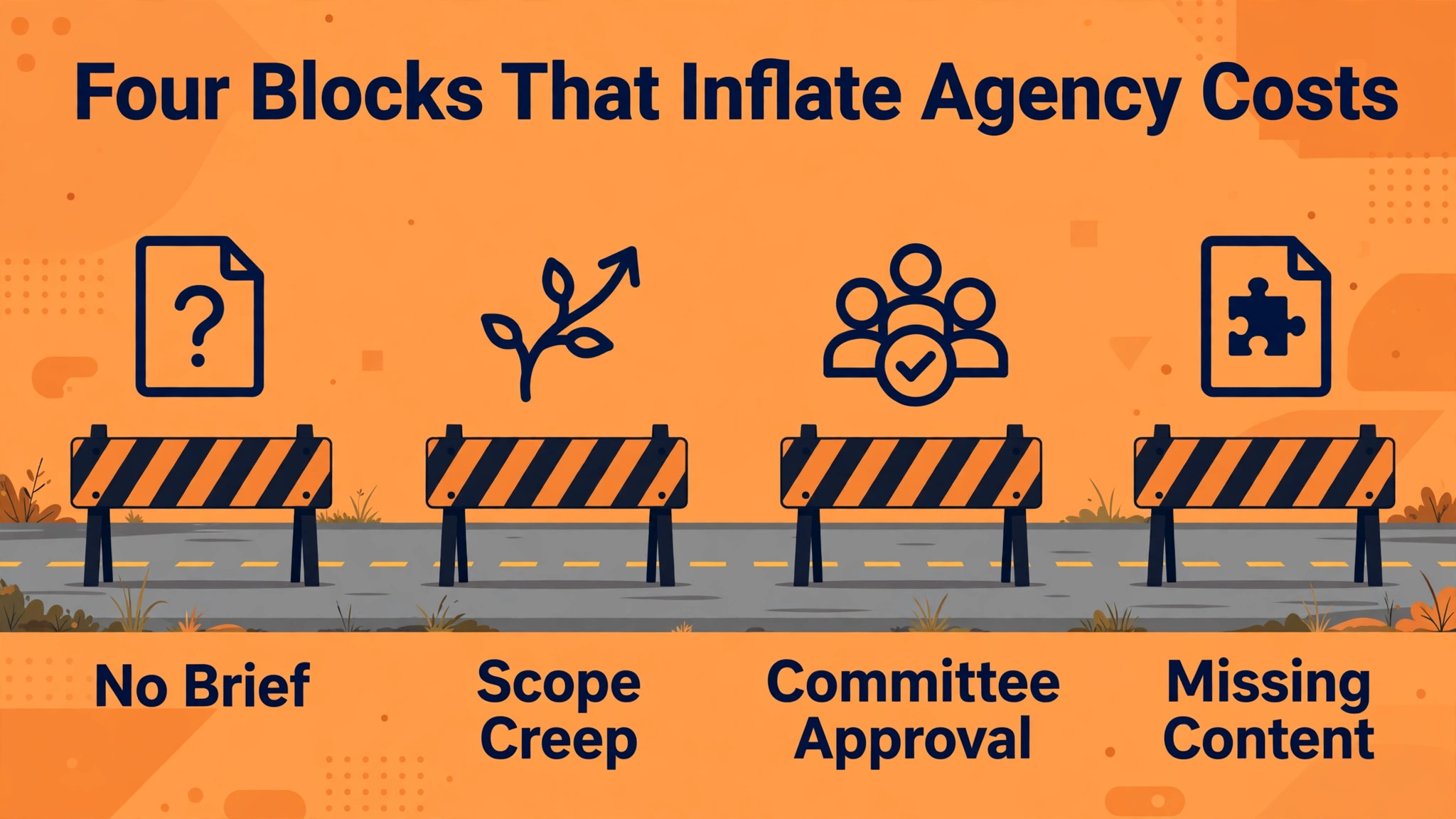
The first mistake is starting without a brief. Agencies quote against uncertainty with contingency, so a vague brief produces a high quote, a slow project, and revisions that could have been avoided. A one page brief with goals, pages, functions, content plan, and budget range reduces contingency and speeds the project, and it costs an afternoon to write. That afternoon is the highest return work in the whole project.
The second mistake is adding scope mid build without repricing. Each added template, integration, or page set added during design or build disrupts the plan and adds cost disproportionately, because work already done must be revisited. Freeze scope at a written checkpoint, such as design approval, and route later ideas to a phase two list with their own quotes. Phasing protects both the launch date and the budget, and it lets you judge phase two ideas with real launch data rather than pre launch enthusiasm.
The third mistake is approving design by committee. Ten stakeholders with conflicting tastes will cycle a design through endless revisions, each round costing designer time and delaying build. Appoint one decision maker, or a small group with a clear tie breaker, and give feedback in consolidated rounds, not as a stream of individual comments. Design feedback should name the business goal a change serves, such as clearer calls to action or better mobile readability, rather than personal taste alone, since goal based feedback converges faster.
The fourth mistake is neglecting content and launch readiness. A beautiful site with placeholder text cannot launch, and a launch delayed by missing copy, photos, or legal pages wastes the agency timeline and your own momentum. Assign content owners and deadlines at kickoff, prepare photos and legal pages early, and treat content as a project deliverable with the same seriousness as design. A site that launches on time with good content beats a site that launches late with perfect design and rushed copy.
Red Flags in Agency Proposals
Agency proposals reveal process quality before any design starts, and several red flags should pause a decision even when the price looks attractive. A proposal with a single total price, no breakdown, and no scope list is selling a mystery, not a project. Ask for design, build, content, integrations, and care as separate lines, with template count and revision rounds stated, and treat a refusal to break down the price as a reason to seek another quote. A transparent agency will welcome breakdown questions, because breakdowns protect both sides from scope disputes later.
A second red flag is a timeline that ignores content. A proposal promising a full custom site in two weeks, without asking who supplies copy and photos or how approvals work, is either underestimating the project or planning to launch with placeholder content. Realistic timelines account for content, feedback, and testing, and they name the business responsibilities alongside agency responsibilities. A proposal that lists only agency tasks, with no business tasks or deadlines, will stall at the first content request, and the delay will be blamed on the business even though the proposal never asked for content.
A third red flag is ownership ambiguity. A proposal that does not state who owns the domain, the site files, the content, and the analytics accounts leaves the business dependent on the agency for every future change. Insist on ownership in writing, with the business owning domain, site, content, and accounts, and the agency granted access for build and care. Also check what happens if care ends, including whether the site keeps working, whether backups transfer, and whether a new provider can take over without rebuilding. An agency that resists ownership clarity is selling dependence, not a website.
A fourth red flag is a care plan that promises everything for a very low price, such as unlimited changes, instant support, and full security cover for a token monthly fee. Unlimited change promises at low prices lead to queues, rushed work, or hidden hourly charges when real changes arrive. Compare care by included hours, response times, backup retention, and update frequency, and expect a realistic plan to state limits clearly. When you judge the cost of building a business website agency project, judge the care plan with the same rigour as the build, because care is where a good site stays good and a neglected site decays.
A proposal that passes those checks, with a breakdown, a realistic timeline, clear ownership, and an honest care plan, is a proposal worth shortlisting, and the cost of building a business website agency project quoted that way can be compared fairly against other honest quotes. A proposal that fails them should be set aside, no matter how polished its design examples look, because process failures cost more than design weaknesses ever will.
More Reading for Business Costs
If agency costs are clearer now, the wider cost guides on Stratilyze cover neighbouring budgets in the same structure. The guide to building a mobile app for a small business prices a larger software build, the guide to running a food truck monthly compares fixed and variable costs in a physical business, the guide to hiring a virtual assistant monthly prices buying back admin time during a build, and the guide to CRM software for small business explains how to handle leads a new site generates. Read the mobile app guide next if your website needs an app companion, since app scope and pricing follow similar tier logic.
Frequently Asked Questions
How much does an agency website cost for a small business?
A standard professional agency build for a small business commonly costs 5,000 to 15,000 dollars, while a template based agency site can cost 2,500 to 8,000 dollars. Those ranges are the core of the cost of building a business website agency buyers compare first. Mid range custom builds run 15,000 to 35,000 dollars, and complex ecommerce or portal builds run 35,000 dollars and up. Add a care plan at 150 to 500 dollars a month, plus domain, hosting, and any extra content or photography, to reach a true first year total. Scope, template count, functionality, and content responsibility decide where inside those ranges a given project lands.
What is the cost of building a business website agency versus freelancer?
Agency builds commonly start near 5,000 dollars for a standard professional site and rise to 15,000 dollars and beyond, while freelancer projects for small business sites commonly run 1,500 to 8,000 dollars. That gap reflects team and process, and it is central to the cost of building a business website agency versus freelancer decision. Agencies buy a team, process, quality assurance, and ongoing support, while freelancers buy personal attention and lower overhead with a single point of failure. Choose by scope and revenue importance, not by price alone, and compare first year totals including care, since a cheaper build with no support can cost more over time than a dearer build with reliable care.
What does an agency website quote usually include and exclude?
A typical agency quote includes design for agreed templates, build and development, content loading for supplied content, basic technical SEO, testing, launch, and training. Common exclusions are copywriting, photography and video, logo design, content migration from an old site, advanced SEO, complex integrations, and ongoing care beyond a short post launch period. Ask for a breakdown by design, build, content, integrations, and care, and compare quotes for the same included scope, so a low quote that excludes copy does not appear cheaper than a full quote that includes it.
How long does an agency website take to build?
Template based agency sites commonly take 4 to 8 weeks, standard professional builds take 6 to 12 weeks, mid range custom builds take 10 to 20 weeks, and complex ecommerce or portal builds take 3 to 6 months and up. Timelines depend heavily on how quickly the business supplies copy, images, feedback, and approvals, and preparing those materials before kickoff is the most effective way to shorten a project. A project with slow approvals will take longer regardless of agency speed, so appoint a single decision maker and agree feedback turnaround at kickoff.
Do I need a monthly care plan after an agency build?
Yes, in most cases, because software updates, security patches, backups, content changes, and performance monitoring continue after launch. Published care retainers run 150 to 500 dollars a month, and annual hosting, domain, maintenance, and update costs for a small business site are published near 300 to 3,000 dollars a year depending on scope. Compare care plans by included update frequency, backup retention, support response time, and change hours, not just by price, since a cheap plan that excludes needed changes will cost more in hourly extras than a fuller plan.
Can I reduce agency website cost without losing quality?
Yes, by writing a clear brief, freezing scope at design approval, phasing nice to have functions to a later release, supplying finished copy and photos, limiting revision rounds and decision makers, and choosing a template based build where custom design is not essential. Those disciplines reduce the cost of building a business website agency project without cutting testing, security, or care. Those steps reduce contingency, revision cycles, and rework, which are the largest avoidable costs in agency projects. Do not cut testing, security, backups, or care to save money, since those cuts create larger costs after launch than they save during build.
Pay for the Build, Not the Pitch
Agency pricing looks confusing until you separate scope, team, and care, and then it becomes a rational choice. A template build at a few thousand dollars, a standard build in the low five figures, and a custom build beyond that are all reasonable prices for different projects, and the wrong choice is not the expensive tier or the cheap tier, it is the tier that does not match your revenue goal. When you judge the cost of building a business website agency work by first year total, included scope, and care quality, you pay for a site that launches, converts, and stays healthy, rather than for a pitch that sounded impressive in a meeting.
Write the brief, freeze the scope, supply the content, and appoint one decision maker. Those four disciplines will save more money than any negotiation, and they will make the agency relationship work as a partnership rather than a dispute. A website built that way is not just a cost, it is an asset that earns its price every time a visitor becomes an enquiry, and that return is the only justification any build price needs.