
A store name that a customer can spell after hearing it once will earn more direct traffic than a clever name nobody can type, and the best ai domain name generators for ecommerce sellers exist because a good name is the cheapest marketing a store will ever buy. Namelix leads this guide because it generates short, brandable names from a few keywords and shows the logo with each one, so a seller can see the brand before buying the domain.
Namecheap follows for sellers who want the generator and the registration in one place, since its tool checks availability instantly and the domain can be bought in the same session. The remaining six tools cover brandable marketplaces, logo-first naming, hosting bundles and simple free generators, and each one solves a specific naming problem better than the generalists do. Every tool below was live in November 2026, and the generators are free to use, so confirm the domain registration price before buying.
Ecommerce sellers differ in product, audience and budget, and this guide weights those differences heavily. A seller of handmade soap needs a different name than a dropshipper selling phone cases, and a first-time seller needs a simpler tool than a brand building a portfolio. The recommendations below reflect that split, and they judge each tool on the name first, since the name is what the customer remembers.
Why Ecommerce Domain Names Fail to Stick
Ecommerce domain names fail in a specific way. The first failure is a name that cannot be spelled, because a customer who hears the name on a podcast or a video and cannot type it will never reach the store. A name with a strange spelling, a silent letter or a pun that only works in writing will lose direct traffic every day. The tools in this guide were judged partly on whether they generate names a real person can spell after hearing them once.
The second failure is a name that means nothing. A generic name like Best Deals Store will not be remembered, and a name that describes the product too narrowly will trap the seller when the range grows. A brandable name, short, distinct and easy to say, will survive a product change, while a descriptive name will not. The best ai domain name generators for ecommerce sellers in this guide were scored on whether they produce brandable names rather than keyword-stuffed ones.
The third failure is a name whose domain is taken. A seller who falls in love with a name, designs a logo and prints packaging, then discovers the .com belongs to someone else, has wasted weeks. Every generator in this guide checks availability as it generates, and the best ones show the .com, the .store and the .shop options side by side, so the seller picks a name they can actually own.
A fourth failure is a name that fails the trademark check. A name that is too close to a registered brand can draw a legal letter, and the cost of rebranding after launch is far higher than the cost of checking first. A generator cannot do the legal check, but a seller who shortlists three names and searches the trademark database before buying will avoid the problem. The name is only finished when the domain and the trademark are both clear.
What a Domain Name Really Costs
The generator is free, but the domain is not, and the real cost of a name is the registration plus the renewal. A .com domain typically costs 10 to 15 dollars a year at a registrar like Namecheap or Hostinger, with the first year often discounted and the renewal at full price. A premium name from a marketplace like Atom can cost hundreds or thousands of dollars, and a seller should know the difference before falling in love with a name they cannot afford.
The renewal price is the cost that matters most. A registrar that sells the first year for 1 dollar and renews at 20 dollars a year will cost more over five years than one that charges 12 dollars every year. Before buying, check the renewal price, the transfer fee and the privacy protection cost, since some registrars charge extra for WHOIS privacy while others include it free. The cheapest first year is often the most expensive five years.
Premium names deserve a hard look too. Atom and Looka both sell premium brandable names, and a name that costs 500 dollars may be worth it for a brand that will spend thousands on marketing, but not for a first store testing demand. A seller who buys a premium name before the first sale is spending money on a brand that does not exist yet. Start with a free generator, shortlist three names, and pay for a premium one only when the store has revenue.
The 8 Tools at a Glance
| Tool | Main job | Best for | Starting price |
|---|---|---|---|
| Namelix | AI brandable name generation | Short brandable names | Free |
| Namecheap | Generator plus registration | Buying in one place | Free |
| Shopify | Business name generation | Shopify sellers | Free |
| Atom | Premium brandable names | Premium naming | Free |
| Looka | Logo-first naming | Logo plus name | Free |
| Hostinger | Generator plus hosting | Hosting bundle | Free |
| DomainsBot | Availability-first generation | Checking availability | Free |
| Wix | Business name generation | Wix sellers | Free |
Best Pick by Job
| Job type | First pick | Second tool | Why this pair works |
|---|---|---|---|
| Brandable name | Namelix | Atom | Namelix generates free and Atom adds premium options |
| Buying the domain | Namecheap | Hostinger | Namecheap registers cheap and Hostinger adds hosting |
| Shopify store | Shopify | Namecheap | Shopify names for the platform and Namecheap registers it |
| Logo plus name | Looka | Namelix | Looka designs the logo and Namelix adds more names |
| Checking availability | DomainsBot | Namecheap | DomainsBot checks fast and Namecheap registers the winner |
The job decides the winner because a seller who wants a brandable name needs a generator that invents words, while a seller who wants the cheapest domain needs a registrar with a low renewal price. A tool that does both passably can still be the wrong buy if it does the seller’s main job badly. Match the first pick to the naming job, then use the second tool as the fallback when the first one hits a limit.
Budget follows the same logic. A seller testing a first store should pay nothing for the generator and 10 to 15 dollars a year for the domain, because the money should go to the product and the ads. A seller building a brand with revenue can justify a premium name, because the name will carry the marketing for years. The best ai domain name generators for ecommerce sellers are the ones that fit the seller’s current stage without blocking the brand that comes next.
How to Judge the best ai domain name generators for ecommerce sellers
Start with the spell test, because that is where a domain name generator either earns its place or wastes it. Take ten generated names, read each one aloud to a friend, and ask them to spell it back. Count how many they get right on the first try. A generator that produces eight spellable names out of ten will save hours of debate, while one that produces three will hand the seller a list of unusable ideas.
Next, test the availability check. Generate a name you like, then check whether the .com, the .store and the .shop versions are actually available, and whether the tool shows the price. A generator that shows availability and price together will save the seller from falling in love with a name they cannot buy. The best ai domain name generators for ecommerce sellers check the domain as they generate, not as an afterthought.
Then check the name on the store. Put the top three names on a mock storefront, a social media handle and a business card, and see which one looks like a brand. A name that looks good on a storefront but bad on Instagram will cause trouble later, since the seller needs the same name everywhere. Look for a generator that checks social handles alongside the domain, because consistency across platforms is what makes a brand findable.
The 8 Tools in Detail
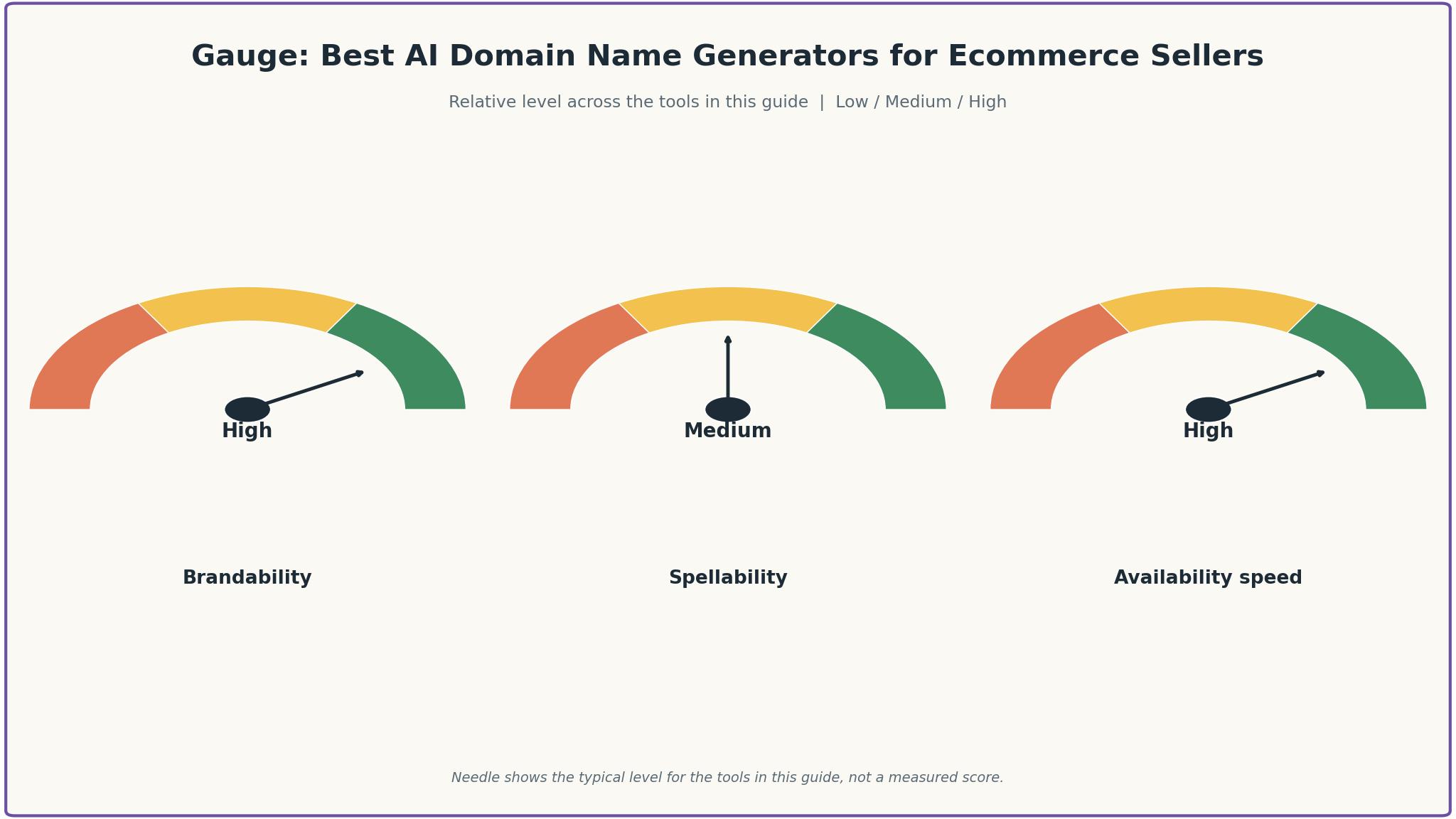
Brandability sets the order below, so the tool that invents the most memorable names leads the list.
1. Namelix
Namelix is the AI name generator that produces short, brandable names from a few keywords. The seller enters a word or two, picks a style, and the tool generates dozens of names with a logo mockup for each one, so the brand can be seen before the domain is bought. The generator is free to use, with no account needed for the basic generation, and the names lean toward invented words that are easy to spell and easy to remember.
The drawback is the availability gap. Namelix generates names without checking every domain in real time, so a name the seller loves may already be taken, and the check happens after the generation rather than during it. The logo mockups are simple, and a seller who wants a finished logo will need a designer or a second tool. The tool is a generator, not a registrar, so the domain must be bought elsewhere.
Namelix suits sellers who want a brandable name and nothing else. It fits a first-time store owner, a seller launching a new brand, and anyone who wants a short invented name rather than a descriptive one. The logo mockup is the feature that matters, because a name that looks good with a logo will feel like a brand from day one.
Generate twenty names from your main keyword and read them aloud. Shortlist the three you can spell after hearing once, then check the domains and the social handles. If the shortlist feels like a brand and the domains are available, Namelix has done its job.
2. Namecheap
Namecheap is the registrar with a built-in generator, and its one-place workflow is the reason. The business name generator produces ideas from a keyword, checks availability instantly, and lets the seller buy the domain in the same session, with renewal prices shown upfront. The generator is free, and .com domains typically cost 10 to 15 dollars a year, with WHOIS privacy included on many plans.
The drawback is the name quality. Namecheap’s generator is functional rather than inspired, and it produces more descriptive names than brandable ones. A seller who wants an invented word will find fewer options than Namelix offers, and the tool is built for registration rather than branding. The interface is a registrar’s interface, with upsells for hosting and security on every page.
Namecheap suits sellers who want to generate and buy in one place. It fits a seller who already knows the keyword, a store owner who values a low renewal price, and anyone who wants the domain bought and the privacy included without a second account. The instant availability check is the feature that matters, because a name that is available now will not be available forever.
Generate ten names from your keyword and check the renewal price on each. Buy the one that is available, spellable and cheap to renew, then set the auto-renew on. If the purchase takes five minutes and the renewal price is clear, Namecheap has done its job.
3. Shopify
Shopify’s business name generator is the simplest tool in this guide, and its simplicity is the reason. The seller enters a keyword, the tool generates names, and the result is ready to use on a Shopify store, with the domain available through Shopify’s own registrar. The generator is free, with no account needed, and the names are short and store-friendly.
The drawback is the depth. Shopify’s generator is a basic tool with no style options, no logo mockup and no social handle check, so a seller who wants a brandable invented name will find it thin. The tool is built to feed Shopify stores, and a seller on another platform will get less value from it. The names lean descriptive, which suits a store but not a brand.
Shopify suits sellers who already run a Shopify store. It fits a first-time Shopify seller, a store owner who wants a quick name, and anyone who values a name that works on the platform they already use. The integration is the feature that matters, because a name generated for Shopify can be used on Shopify in minutes.
Generate ten names and pick the one that fits your product range. Check the domain on Shopify, then check the Instagram handle separately, since the tool does not check social. If the name works on the store and the handle is free, Shopify’s generator has done its job.
4. Atom
Atom, formerly Squadhelp, is the premium brandable name marketplace, and its curated names are the reason. The generator produces free ideas, and the marketplace sells premium names that have already been vetted for brandability, with logos included and prices shown upfront. The free generator is useful, and the premium names start from around 99 dollars and climb into the thousands.
The drawback is the price. A premium name that costs 500 dollars is a serious purchase for a first store, and a seller who buys one before the first sale is spending money on a brand that does not exist yet. The free generator is thinner than Namelix, since the best names sit behind the paywall, and the marketplace model means the seller is shopping, not just generating.
Atom suits sellers building a brand with revenue. It fits a store with sales behind it, a founder who wants a vetted name with a logo, and anyone who values a name that has already passed a brandability check. The curation is the feature that matters, because a name that has been vetted will not embarrass the brand later.
Browse the marketplace for your category and shortlist three names. Check the price, the logo and the domain, then compare the cost with the marketing budget. If the name feels like a brand and the price is a small share of the budget, Atom is the right place to buy.
5. Looka
Looka is the logo-first naming tool, and its design is the reason. The seller enters a name or a keyword, the tool generates names and logos together, and the result is a brand identity rather than a word list. The generator is free to use, and logo packages start from around 20 dollars, with the domain available through partners.
The drawback is the name depth. Looka is a logo maker with a name generator attached, so the names are fewer and less inventive than Namelix, and the tool pushes the seller toward buying a logo package. A seller who only wants a name will find the logo upsell distracting, and the domain registration is handled through a partner rather than directly.
Looka suits sellers who want a name and a logo together. It fits a first-time store owner who needs a brand identity fast, a seller launching on social media, and anyone who wants to see the name as a logo before buying. The logo preview is the feature that matters, because a name that looks good as a logo will feel like a brand from day one.
Generate five names and look at the logos. Pick the one that reads well small, works in one colour, and fits the product. If the logo looks professional and the name is spellable, Looka has done its job.
6. Hostinger
Hostinger is the hosting company with a free name generator, and its bundle is the reason. The generator produces names from a keyword, checks availability, and lets the seller buy the domain with hosting in one order, which suits a seller building a store from scratch. The generator is free, and domains typically cost around 10 dollars a year with hosting plans above that.
The drawback is the name quality and the upsell. Hostinger’s generator is basic, with fewer brandable options than Namelix, and the checkout pushes hosting, security and email add-ons. A seller who only wants a domain will find the bundle distracting, and the renewal prices for hosting climb after the first term.
Hostinger suits sellers who need a domain and hosting together. It fits a first-time store owner building a site from scratch, a seller who wants one bill for domain and hosting, and anyone who values a low first-year price. The bundle is the feature that matters, because a seller who buys both together will launch faster.
Generate ten names and check the bundle price. Compare the domain plus hosting cost with buying them separately, and check the renewal price for year two. If the bundle is cheaper and the name is spellable, Hostinger has done its job.
7. DomainsBot
DomainsBot is the availability-first generator, and its speed is the reason. The tool generates names and checks availability in real time, showing the .com, the .store, the .shop and dozens of other extensions side by side, with prices where available. The generator is free, and the focus is on finding a name that can actually be bought.
The drawback is the brandability. DomainsBot is a search tool rather than a creative tool, and it produces more keyword combinations than invented brand names. A seller who wants a short invented word will find fewer options than Namelix offers, and the interface is functional rather than inspiring. The tool is best for checking, not for dreaming.
DomainsBot suits sellers who want to check availability fast. It fits a seller with a shortlist of names, a store owner comparing extensions, and anyone who wants to see the price of every option at once. The extension comparison is the feature that matters, because a seller who sees .com, .store and .shop together will pick the one they can afford.
Enter your shortlist and check every extension. Compare the prices, pick the extension that fits the budget, and buy the domain before someone else does. If the check is fast and the prices are clear, DomainsBot has done its job.
8. Wix
Wix’s business name generator is the simple tool for Wix sellers, and its simplicity is the reason. The seller enters a keyword, the tool generates names, and the result is ready to use on a Wix store, with the domain available through Wix’s own registrar. The generator is free, with no account needed, and the names are short and store-friendly.
The drawback is the depth. Wix’s generator is a basic tool with no style options, no logo mockup and no social handle check, so a seller who wants a brandable invented name will find it thin. The tool is built to feed Wix stores, and a seller on another platform will get less value from it. The names lean descriptive, which suits a store but not a brand.
Wix suits sellers who already run a Wix store. It fits a first-time Wix seller, a store owner who wants a quick name, and anyone who values a name that works on the platform they already use. The integration is the feature that matters, because a name generated for Wix can be used on Wix in minutes.
Generate ten names and pick the one that fits your product range. Check the domain on Wix, then check the social handles separately, since the tool does not check them. If the name works on the store and the handle is free, Wix’s generator has done its job.
Domain Name Mistakes That Cost Ecommerce Sales
The most expensive mistake is falling in love with a name whose domain is taken. A seller who designs a logo, prints packaging and builds a store, then discovers the .com belongs to someone else, has wasted weeks and money. Check availability before designing anything, and shortlist three names so a taken domain does not stop the launch. The best ai domain name generators for ecommerce sellers check availability as they generate, and the seller who checks first will launch on time.
A second mistake is picking a name that cannot be spelled. A customer who hears the name on a podcast and cannot type it will never reach the store, and the seller will lose direct traffic every day. Read every shortlisted name aloud to a friend and ask them to spell it. If they cannot, the name is wrong, no matter how clever it looks on paper.
A third mistake is skipping the trademark check. A name that is too close to a registered brand can draw a legal letter, and the cost of rebranding after launch is far higher than the cost of checking first. Search the trademark database for each shortlisted name before buying the domain. A name is only finished when the domain and the trademark are both clear.
How to Make the Final Call on a Domain Name
Start by listing the non-negotiables, because the list is shorter than most sellers expect. Spellability, availability, trademark clearance and price are the four that eliminate most names quickly. Write them down, score each shortlisted name against them, and drop any name that fails one, no matter how much you like it. A name that fails a core test will be replaced within a year, and the rebrand will cost more than the domain.
Next, test the top three names with real people. Say each name aloud to five friends, ask them to spell it, and ask what kind of store they expect. The winner is the name that is spelled right most often and that suggests the right products. A name that confuses five friends will confuse a thousand customers, and the test takes ten minutes.
Then check the total cost with the domain and the handles included. Buy the domain, claim the Instagram handle and the TikTok handle, and confirm the renewal price for year two. The best ai domain name generators for ecommerce sellers show the domain price upfront, and the seller should confirm the social handles before paying. Set a launch date, and buy the domain the day the name is chosen, since a good name will not stay available.

Frequently Asked Questions
What is the best AI domain name generator for ecommerce?
Namelix is the best pick for a brandable name, because it generates short invented names with a logo mockup for each one. Namecheap is the better pick when the seller wants to generate and buy in one place, since its tool checks availability instantly. A seller building a premium brand should also browse Atom, where vetted names come with a logo.
How much does a domain name cost?
A .com domain typically costs 10 to 15 dollars a year at a registrar like Namecheap or Hostinger, with the first year often discounted. Premium names from a marketplace like Atom start from around 99 dollars and climb into the thousands. The renewal price matters more than the first-year price, since a cheap first year with a 20 dollar renewal costs more over five years.
Should I buy a .com or a .store domain?
A .com is still the safest choice, because customers trust it and type it by habit. A .store or .shop domain works well for an ecommerce brand, especially when the .com is taken or too expensive. A seller who buys a .store should also check whether the .com is available, since customers will try it first.
Can AI generate a good brand name?
AI can generate good first-draft names from a keyword and a style, but every name needs a human check before it is bought. The best tools produce several usable names out of twenty, and the seller should expect to shortlist three and test them on real people. A name that cannot be spelled after hearing it once is not a good name, no matter how clever it looks.
Do I need to check trademarks before buying a domain?
Yes, a seller should search the trademark database for each shortlisted name before buying the domain. A name that is too close to a registered brand can draw a legal letter, and the cost of rebranding after launch is far higher than the cost of checking first. The check takes ten minutes and should be part of every naming decision.
What makes a domain name good for ecommerce?
A good ecommerce domain is short, spellable, memorable and available as a .com or a .store. It should suggest the products without trapping the seller in one category, and it should match the social media handles. A name that passes the spell test, the availability check and the trademark search is a name worth buying.
The Verdict on AI Domain Name Generators for Ecommerce
Namelix takes the top spot because it is the tool a seller is least likely to regret. The names are short, brandable and easy to spell, the logo mockup shows the brand before the domain is bought, and the generator is free. The availability check happens after generation, but the shortlist step catches that, and the names it produces are the ones customers will remember.
Namecheap is the pick for buying in one place, Atom is the pick for a premium brand, and Looka is the pick for a name plus a logo. The best ai domain name generators for ecommerce sellers are not the ones with the most names, they are the ones that produce a name a customer can spell, a domain a seller can buy, and a brand that will last.
Choose by the naming job first, the budget second and the platform third. Generate twenty names, shortlist three, test them on real people, and buy the winner the same day. A seller who picks this way will own a name that sells the store before the first ad runs.