
A regular table sits empty on a Friday night while the phone in the next room holds three hundred phone numbers that never got a message, and that gap is the whole problem the best ai sms marketing tools for restaurants are built to close. A restaurant does not need another channel to manage. It needs the list it already owns to turn into booked tables, and a text message still gets opened far more often than an email or a social post ever will.
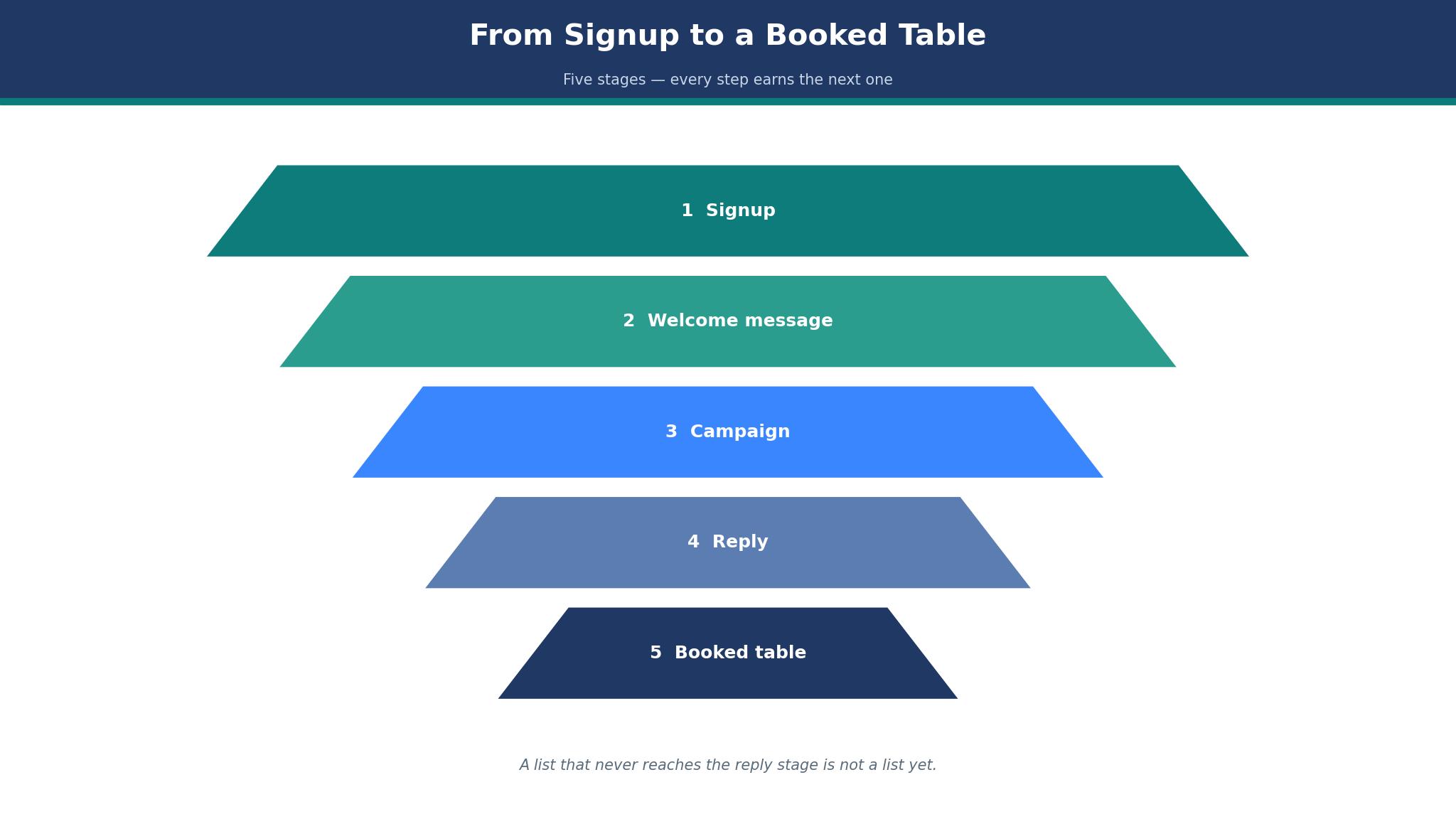
The workflow matters more than the feature list. A guest joins the list at the table or from a code on the receipt, the platform sends a welcome offer, the restaurant sends two or three campaigns a month around slow nights and specials, and replies land in one inbox where a member of staff answers them. When any step in that chain breaks, the list goes quiet and the spend on the platform buys nothing.
SlickText leads this guide because it fits that workflow for a single restaurant and for a small group without a marketing team. Klaviyo follows for restaurants that already run email and want text beside it, and the other eight cover budget sends, enterprise chains, reputation and automation depth. I checked every tool in this guide against its vendor site in November 2026, and each price below is the vendor list price or a figure the text flags as reported, so check the live page before you pay.
Why a Text Lands Differently at the Table
A text arrives on a screen a guest checks dozens of times a day, and a restaurant message competes with friends and family rather than with a promotions folder. That placement is the advantage and the risk at once. A short message about a Tuesday special can fill a room, and a message sent too often can push a guest to reply STOP and leave the list for good. The best ai sms marketing tools for restaurants earn their place by making restraint easy, with frequency caps, quiet hours and segments that keep a message away from guests who just visited.
Timing decides most of the result. A lunch offer sent at 10 in the morning gives a guest time to plan, while the same offer sent at noon competes with a decision already made. The tools in this guide were judged on how easily a manager can schedule around service, because a campaign that goes out during the dinner rush will sit unanswered while the kitchen is busy.
Cost Math Behind Every Campaign
SMS pricing looks simple until the bill arrives, because most platforms charge a monthly plan plus credits, and a restaurant pays for messages it sends whether or not they book a table. A plan with 500 messages covers a list of 500 guests with one campaign a month, and nothing more. A restaurant with 2,000 guests on the list needs 2,000 credits per campaign, and three campaigns a month means 6,000 credits before replies are counted. Buy the plan that matches the list size, not the one with the lowest headline price.
Carrier fees and number charges sit on top of the plan. A registered number carries a monthly fee and a one-time carrier registration charge on most platforms, and MMS with a photo costs more per message than plain text. The detail sections below call out the entry price for each tool, and a restaurant should ask for the full monthly cost at its own list size before signing, because the cheapest plan on the page is rarely the cheapest bill at real volume.
The 10 Tools at a Glance
| Tool | Main job | Best for | Starting price |
|---|---|---|---|
| SlickText | Keyword list growth and campaigns | Most restaurants | From 29 dollars a month |
| Klaviyo | Email plus SMS in one platform | Restaurants already on Klaviyo | Pay per message |
| SimpleTexting | Two-way texting and keyword clubs | Small teams that reply a lot | From 29 dollars a month |
| Textedly | Simple bulk texting and text-to-pay | High-volume senders | From 29 dollars a month |
| EZ Texting | Budget mass texting | A first campaign on a tight budget | From 25 dollars a month |
| Attentive | Enterprise SMS and RCS | Large restaurant chains | Custom, reported from 300 dollars a month |
| Podium | Texting plus reviews and payments | Reputation-led local groups | Reported from 399 dollars a month |
| Birdeye | Reviews, listings and messaging | Multi-location groups | Reported from 299 dollars a month |
| Trumpia | Automation-heavy messaging | Chains with complex journeys | Reported from 94 dollars a month |
| Tatango | High-volume political and brand texting | Very large lists | Pricing on the vendor site |
Best Pick by Job
| Job type | First pick | Second tool | Why this pair works |
|---|---|---|---|
| Single restaurant | SlickText | EZ Texting | SlickText grows the list and EZ Texting covers the cheapest first campaign |
| Email plus SMS together | Klaviyo | SimpleTexting | Klaviyo joins both channels and SimpleTexting adds a stronger two-way inbox |
| Tightest budget | EZ Texting | Textedly | EZ Texting starts cheapest and Textedly adds text-to-pay when needed |
| Large chain | Attentive | Trumpia | Attentive brings enterprise personalisation and Trumpia adds deep automation |
| Reviews and texting | Podium | Birdeye | Podium ties texting to reviews and Birdeye adds listings across locations |
The right texting tool depends on the size of the operation. A single restaurant needs list growth and a simple inbox, while a chain needs multi-location control and reporting by site.
The same rule applies to the bill. A restaurant with 800 guests on the list can run a full program for under 50 dollars a month on SlickText or EZ Texting, since one campaign a week stays inside a small credit bundle. A group with 20,000 guests across six sites needs a plan priced on volume, and the per-message rate matters more than the monthly fee. The best ai sms marketing tools for restaurants are judged on the bill at real list size, not on the entry price.
How to Judge the best ai sms marketing tools for restaurants
Start with the signup test, because that is where a restaurant list either grows or stalls. Put a keyword on a table card, on the receipt and on the door, and count how many guests join in a week. A tool that makes joining take ten seconds will build a list, while one that needs a form or an app download will not. Check whether the welcome message arrives instantly, since a guest who joins and hears nothing will forget the restaurant by dessert.
Next, test the reply inbox during a real service. Send a campaign at 5 in the afternoon, then watch the replies come in while the dining room fills. The inbox should show each guest’s history, let a member of staff answer from one place, and flag booking requests so they do not sit unread. The best ai sms marketing tools for restaurants keep the conversation in one thread, because a reply that lands in a separate system gets missed.
Then check the reporting after the campaign. Look for delivery rate, opt-out rate and, above all, redemptions tied to the offer. A platform that reports only sends and opens tells a restaurant nothing about booked tables. Ask how the tool links a text to a reservation or a till total, since a campaign that cannot prove a booking will be cut the first time the budget is questioned.
The 10 Tools in Detail
List growth and a usable inbox set the order below, so the tool a restaurant can fill with guests fastest leads the list.
1. SlickText
SlickText is the strongest all-round pick for a restaurant because it covers the full loop from signup to reply in one clean interface. Keyword signups, mass texting, automation, two-way messaging and multi-location management all sit on the entry plan, which starts at 29 dollars a month for 500 messages, and credits roll over when a quiet month leaves some unused.
The drawback is the credit ceiling on the cheapest plan. A list of 2,000 guests burns through 500 credits in a single campaign, and the next plan up costs noticeably more, so a growing list pushes the bill up faster than the feature list suggests. The reporting is solid for sends and replies but thinner on revenue attribution, and a restaurant that wants to tie texts to till totals will need to track redemptions by hand or through a separate integration.
SlickText suits a single restaurant and a small group that wants one platform for the whole program. It fits a neighbourhood restaurant building its first list, a cafe with a loyal lunch crowd, and a group of three or four sites that need location-level lists. The keyword signup is the feature that matters, because a list that grows by itself at the table is the foundation everything else depends on.
Send one campaign to a small segment on a Friday evening and watch the inbox for two hours. If the replies arrive in one thread and the offer redeems, SlickText will carry the program.
2. Klaviyo
Klaviyo is the pick for a restaurant that already runs email on the platform and wants text beside it. SMS lives in the same account as email, so a guest who books through a campaign can be segmented by order history, visit frequency and spend, and a flow can follow up a first visit with a text three days later without any manual export. SMS is billed per message on top of the email plan, which keeps the cost tied to actual sends rather than to a seat count.
The drawback is the learning curve and the price at volume. Klaviyo is built for ecommerce first, so restaurant features like reservation data need a connector, and the per-message cost adds up fast once a list passes a few thousand guests. The platform rewards a team that will build segments and flows, and a restaurant that only wants to send a weekly blast will pay for depth it never uses.
Klaviyo suits restaurants with an online ordering or loyalty system already feeding it data. It fits a group that sells gift cards and merchandise online, a restaurant with a strong delivery trade, and any operation where email and text should share one guest record. The shared segmentation is the feature that matters, because a text sent to the right guests beats a text sent to all of them.
Build one flow that texts first-time guests three days after their visit and measure the return rate over a month. If the segment fills tables, Klaviyo earns its place.
3. SimpleTexting
SimpleTexting is the easiest platform to hand to a small team because every feature ships on every plan. Mass campaigns, autoresponders, drip sequences, MMS, polls and a team inbox all come with the entry plan, which starts at 29 dollars a month for 500 credits with a toll-free number, and contacts are unlimited, so a growing list never forces an upgrade by itself. The AI assist helps a manager draft a campaign in minutes, which matters when the person sending the text also runs the floor.
The drawback is the number fee and the US-only reach. A local number costs more than the toll-free entry price, with some reports putting the local-number plan at 39 dollars a month, and a one-time carrier registration charge sits on top. The platform serves the United States and Canada, so a restaurant group with sites abroad will need a second tool for those markets. The automation is capable but less deep than Trumpia or Attentive for multi-step journeys.
SimpleTexting suits a restaurant where several staff members answer texts. It fits a busy cafe that takes reservation requests by text, a restaurant with a large takeaway trade, and a team that wants every feature on day one without negotiating tiers. The team inbox is the feature that matters, because a reply answered in minutes books a table and a reply answered tomorrow does not.
Give three staff members the inbox for one weekend service and count how fast booking questions get answered. If the thread stays clean and nothing is missed, SimpleTexting fits the team.
4. Textedly
Textedly is the simplest way to send a lot of messages for a predictable price, because plans scale by message count rather than by contacts. The entry plan starts at 29 dollars a month, and higher tiers run to thousands of messages, with free incoming messages, unlimited contacts, picture messaging and text-to-pay through Stripe on every plan. A restaurant can collect payment for a deposit or a gift card by text, which suits private dining and ticketed events.
The drawback is the automation depth and the price movement. Textedly covers campaigns and basic autoresponders well but offers less than SlickText or Klaviyo on segmentation and multi-step flows, and some reports put the entry Bronze plan at 49 dollars a month after a 2025 price rise, so the 29 dollar figure should be confirmed on the pricing page. Multi-location management is limited, which makes it a weaker pick for a group that needs site-level reporting.
Textedly suits a restaurant that sends straightforward promotions to a big list. It fits a venue with regular ticketed nights, a restaurant selling gift cards by text, and an operation that values a simple bill over a clever platform. The text-to-pay feature is the one that matters, because a deposit collected by text turns an enquiry into a confirmed booking.
Run a ticketed supper club with payment by text and check how many guests pay without a phone call. If the money lands cleanly, Textedly does the job it was bought for.
5. EZ Texting
EZ Texting is the cheapest credible way to start, with an entry plan from 25 dollars a month for 500 credits and an AI composer that helps a first-time sender write a campaign without staring at a blank screen. Keyword signups, MMS with stock images and a simple campaign builder cover the basics, and the platform has been running since 2006, so the delivery and compliance plumbing is proven. A single restaurant can have a campaign out the same week it signs up.
The drawback is the ceiling. EZ Texting is built for mass texting, and the two-way inbox, automation and reporting are thinner than SimpleTexting or SlickText, so a restaurant that starts getting dozens of replies a day will outgrow it. Overages cost a few cents per credit, and a list that grows past a few thousand guests will find the per-message math less friendly than a volume plan elsewhere.
EZ Texting suits a first campaign on a tight budget. It fits a new restaurant testing whether texting fills tables, a food truck with a small loyal list, and a cafe that sends one offer a week. The low entry price is the feature that matters, because a 25 dollar test is easy to approve and easy to measure.
Send a single lunch offer to the whole list and count redemptions at the till that day. If the till covers the plan cost several times over, the test has paid for itself.
6. Attentive
Attentive is the enterprise option, built for large restaurant chains and ecommerce brands that send tens of thousands of messages a month. AI-driven personalisation, RCS rich messaging, two-tap signup and a managed service team set it apart, and the platform can segment guests by behaviour and send a different offer to a first-time visitor than to a weekly regular. Pricing is custom, with reported quarterly minimums around 2,000 to 3,000 dollars and a platform fee reported from 300 dollars a month.
The drawback is the cost and the commitment. Attentive is not a tool for a single restaurant, because the minimums alone exceed most independent marketing budgets, and the platform needs a dedicated person to run it well. Setup takes longer than the self-serve tools, and a restaurant without real message volume will pay for managed support it does not need.
Attentive suits a chain with a marketing team and a list in the tens of thousands. It fits a national restaurant group, a franchise network that needs brand control across sites, and a brand where SMS already drives a large share of revenue. The managed service is the feature that matters, because a chain that sends at scale needs people watching deliverability and performance every week.
Ask for a quote at the chain’s real list size and message volume, then compare the projected revenue per message with the current platform. If the numbers clear the minimums comfortably, Attentive is worth the conversation.
7. Podium
Podium ties texting to the rest of a local business, with reviews, payments and messaging in one platform. A guest can book, pay and leave a review in the same thread, and the review requests that follow a visit help a restaurant climb local search results while the text program fills tables. Pricing is reported from around 399 dollars a month, which positions it as a platform for groups rather than for a single site.
Podium charges platform money for a job a restaurant may only half need. A single site that wants campaigns alone pays for reviews and payments too, and the entry price sits far above the budget tools. The SMS features are capable but less specialised than SlickText or Attentive, and a restaurant that wants deep automation will find the journeys simpler than expected.
Podium suits a local group that treats reviews as part of marketing. It fits a restaurant group with several sites in one city, a hospitality group that also runs a hotel or bar, and any operation where the review score drives bookings. The review request flow is the feature that matters, because a text sent after a good meal is the easiest moment to earn a five-star review.
Send review requests by text for two weeks and watch the review count and the average score. If both climb while tables stay full, Podium is doing two jobs for one fee.
8. Birdeye
Birdeye is built for multi-location groups that need listings, reviews and messaging managed from one dashboard. A restaurant group can keep Google listings accurate across every site, collect reviews by text after each visit, and run campaigns from the same platform, with reporting that breaks results down by location. Pricing is reported from around 299 dollars a month, with the exact figure set by location count.
The drawback is the cost and the fit for a single site. Birdeye is priced for groups, so a one-restaurant buyer pays a group price for features it will not use, and the SMS side is one module among many rather than the core of the product. Setup takes longer than a pure SMS tool, and the campaign builder is less flexible than SlickText for creative sends.
Birdeye suits a group that needs listings and reviews kept accurate everywhere. It fits a franchise network, a restaurant group with ten or more sites, and a business where a wrong opening time on one listing costs real bookings. The location-level reporting is the feature that matters, because a group needs to see which site the campaign actually filled.
Check the listings for every site before the first campaign and fix the errors Birdeye surfaces. If the group can see per-site results within a month, the platform earns its fee.
9. Trumpia
Trumpia is the automation-heavy option, built for organisations that run complex multi-step journeys across SMS, email and voice. A restaurant chain can build a flow that welcomes a new subscriber, sends a birthday offer, follows up a lapsed guest after sixty days and asks for a review after a visit, all without manual sends. Pricing is reported from around 94 dollars a month, with higher tiers for larger volumes.
The drawback is the complexity and the learning curve. Trumpia has more depth than most restaurants need, and a small team can spend weeks building journeys that a simpler tool would run in an afternoon. The interface carries that depth, with more menus and options than a single-site manager will ever open. Support is capable, but the platform rewards a user who will invest time in learning it.
Trumpia suits a chain with a marketer who enjoys building automation. It fits a restaurant group with a loyalty program, a franchise that wants the same journey at every site, and an operation where lapsed-guest win-back is worth real money. The multi-channel journey builder is the feature that matters, because a guest who drifts away needs more than one message to come back.
Build one win-back journey for guests who have not visited in sixty days and run it for a month. If lapsed guests start booking again, Trumpia has paid for its complexity.
10. Tatango
Tatango is the high-volume specialist, built for very large lists and for senders who need broadcast power with compliance handled properly. The platform handles short codes, carrier registration and large bursts, and it is used by brands and political campaigns that send to hundreds of thousands of subscribers at once. Pricing is quoted on the vendor site, set by list size and volume.
The drawback is the fit for ordinary restaurants. Tatango is built for scale, so a restaurant with a few thousand guests will find the platform heavier and more expensive than it needs, and the feature set leans toward broadcast rather than toward two-way conversation. A small team will also find less hand-holding than the self-serve tools offer, because the product assumes an experienced sender.
Tatango suits a very large restaurant brand or a group with a list in the six figures. It fits a national chain running national campaigns, a brand that sends to a list built over many years, and any sender where a single burst must reach everyone at once. The broadcast reliability is the feature that matters, because a campaign that must land everywhere at the same time cannot afford delivery failures.
Ask for a quote at the real list size and test a burst to a segment before committing the full list. If delivery holds at full volume, Tatango can carry the biggest programs.
Mistakes That Shrink a Restaurant List
The most expensive mistake is sending too often. A guest who joined for a monthly offer and gets four messages a week will opt out, and every opt-out removes a guest who was already willing to hear from the restaurant. Two or three messages a month is enough for most restaurants, and a quiet week is better than a message nobody asked for. The best ai sms marketing tools for restaurants make frequency visible, so a manager can see how many messages each guest received before sending another.
A second mistake is sending the same message to everyone. A guest who visited yesterday does not need a first-visit offer, and a guest who only orders takeaway does not need a dine-in special. Segmentation takes ten minutes and doubles the relevance of every campaign, yet most small restaurants skip it. Split the list by last visit and by order type before the next campaign, and the redemption rate will show why it matters.
Frequently Asked Questions
How many texts should a restaurant send each month?
Two or three campaigns a month is the right pace for most restaurants, with a welcome message and a birthday message on top. More than that pushes opt-outs up, and fewer than that lets guests forget the list exists. A restaurant with a daily special can send more, but only to a segment that asked for daily updates.
Do guests need to opt in before a restaurant texts them?
Yes, a restaurant needs express opt-in consent before texting a guest in the United States, and the number must be registered with carriers before campaigns deliver reliably. A keyword signup, a form at the table or a checkbox at checkout all count when the guest clearly agrees. Never text a number taken from a reservation book without that consent.
What is the cheapest SMS tool for a small restaurant?
EZ Texting is the cheapest credible start among the best ai sms marketing tools for restaurants at 25 dollars a month for 500 credits, and Textedly and SlickText both start at 29 dollars a month. The cheapest plan is not always the cheapest bill, because a list of 2,000 guests needs 2,000 credits per campaign. Price the plan at the real list size before choosing.
Can SMS replace email for a restaurant?
SMS should sit beside email rather than replace it, because email carries menus, photos and longer stories while a text carries a short offer and a booking link. A restaurant that drops email loses the channel that explains the offer, and a restaurant that drops text loses the channel guests actually open. Klaviyo is the simplest way to run both from one guest record.
How do restaurants grow an SMS list?
A keyword on the table card, the receipt and the door builds a list fastest, with a clear offer for joining, such as a discount on the next visit. Staff should mention it when they greet a table, and the welcome message should arrive within a minute. A list built this way grows every service without any advertising spend.
Is Attentive worth it for a single restaurant?
No, Attentive is built for chains with large lists and a marketing team, and its reported minimums run to thousands of dollars a quarter. A single restaurant will get better results from SlickText or SimpleTexting at under 50 dollars a month. Attentive earns its fee only when SMS already drives serious revenue at scale.
The Verdict on AI SMS Marketing Tools for Restaurants
SlickText takes the top spot because it does the whole job for the restaurants that need it most, and it stands out among the best ai sms marketing tools for restaurants on that measure. The keyword signup builds the list, the inbox handles the replies, and the price stays under 50 dollars a month at the list sizes most restaurants actually run. The credit ceiling is real, but a restaurant that outgrows it has a list worth paying for.
Klaviyo is the pick for restaurants that already run email on the platform, EZ Texting is the pick for the cheapest first test, and Attentive is the pick for a chain with volume. The best ai sms marketing tools for restaurants are the ones that fill tables without annoying the guests who fill them, and the winner is the one a busy manager will actually use every week.
Choose by list size first, by inbox second and by price third. Run one campaign to a segment, measure redemptions at the till, and set a review date. A restaurant that picks this way will spend less time guessing about marketing and more time serving the guests who already said yes.