
Roughly seven in ten hiring managers now use an applicant tracking system, and close to eight in ten companies have automated at least part of hiring. The teams that hire fastest are not the ones with the biggest budgets. They are the ones whose screening, outreach and scheduling run in one system, so a good candidate hears back in a day instead of a week. The best ai tools for recruiting do that job. They read the pile, rank it honestly, reach the shortlist, and book the interview before a competitor does.
This guide compares eight tools across the whole hiring funnel, from the first job post to the signed offer. Prices below were checked against vendor pages and independent comparisons in November 2026. Several vendors in this market do not publish prices, and where that is the case the guide says so and gives the reported range, so confirm the live quote with the vendor before you budget. The short answer is that Workable leads for small and mid sized teams that want a published price, Greenhouse leads for structured hiring at scale, and JazzHR leads for a small business on a tight budget.
Best AI Tools for Recruiting at a Glance
| Tool | Best for | Starting price | Free option |
|---|---|---|---|
| Workable | Small and mid sized teams | 299 dollars a month, billed annually | 15 day trial |
| Greenhouse | Structured hiring at scale | Custom quote, reported from 6,500 dollars a year | Demo only |
| Lever | Sourcing and talent CRM | Custom quote, reported from 3,500 dollars a year | Demo only |
| JazzHR | Small business budgets | 75 dollars a month, billed annually | 21 day trial |
| Breezy HR | Starting free, flat pricing | Free for 1 active job | Free plan |
| Ashby | Data led tech recruiting | 300 dollars a month | Demo only |
| HireVue | Video interviews at scale | Custom quote | Demo only |
| Gem | Outbound sourcing and CRM | Custom quote | Demo only |
The table shows a market split in two. Four tools publish a price and let a team buy in an afternoon, and four sell by quote, which usually means a five figure annual contract and a sales process. A team that hires ten people a year should start with the published price tools, because the quote tools are built for volume the team does not have yet.
How We Judged a Recruiting Tool
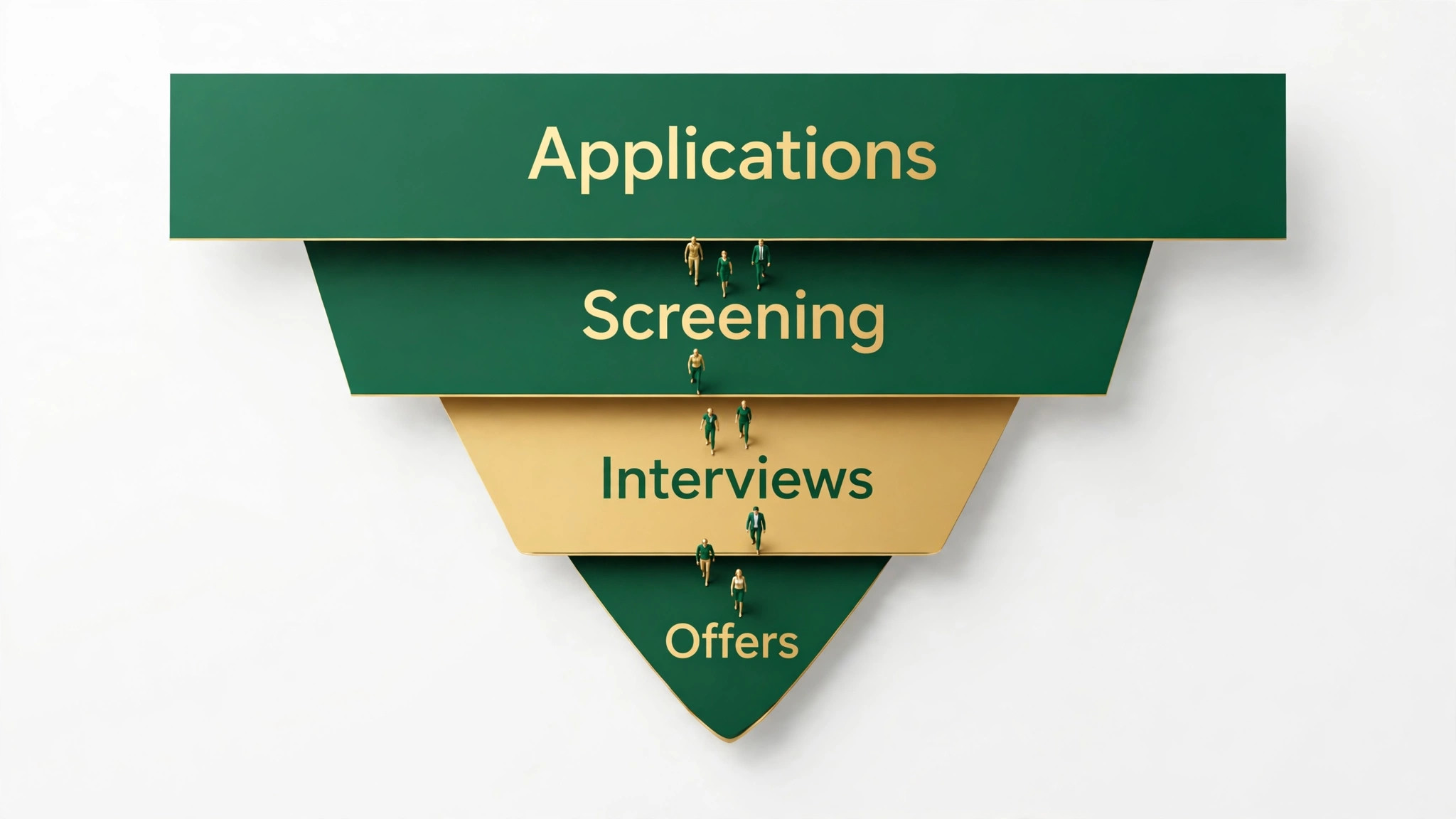
We judged each tool on four questions. Does the AI screening rank candidates on the job requirements, not on keywords a candidate happened to use. Does it reach passive candidates, not just the people who applied. Does it book interviews without a week of email back and forth. And does it keep a record a hiring manager can defend, so every rejection has a reason and every hire has a trail.
Tools that only store resumes did not make the list. Storage is cheap, and a database that cannot rank, reach or schedule is a filing cabinet, not a recruiting tool. The best ai tools for recruiting are judged on the full funnel, and the guide says where each one stops short, because the gap is where good candidates slip away.
– AI screening that ranks on job requirements, with reasons a human can check – Sourcing that reaches passive candidates, not just inbound applicants – Interview scheduling without the email back and forth – Scorecards and interview kits that keep every interviewer aligned – Reporting that shows time to hire, source quality and drop off points – Pricing that fits the hiring volume, not just the headcount
The Eight Tools, One by One
1. Workable
Workable is the self serve option for a team that hires regularly and wants a published price. Standard costs 299 dollars a month for a company of up to 20 employees billed annually, Starter costs 149 dollars a month, Premier 599 dollars, and Enterprise 719 dollars. The Standard plan includes unlimited active jobs, the AI sourcing suite, and HR features like onboarding, time tracking and e-signatures.
The AI sourcing is the reason Workable leads this list for most teams. Open a new requisition and the tool pulls candidates from a database of more than 400 million profiles, ranks the applicants already in the pipeline, and drafts outreach a recruiter can send in one click. Job posts syndicate to more than 200 boards automatically, so a small team gets distribution that used to need an agency.
Workable prices by company headcount rather than by hiring volume, so a company that grows headcount but keeps hiring flat pays more at every renewal. Add ons for texting and video interviews also stack up on top of the base price. Among the best ai tools for recruiting, Workable is the most honest buy for a team that wants to start this week. Buy it when you hire steadily and want one system for recruiting and HR basics. Skip it when you hire once a year and a pay per job tool would cost less.
Best for. Small and mid sized teams that hire regularly and want a published price.
Watch out. The price climbs with headcount, and texting and video are add ons.
2. Greenhouse
Greenhouse is the applicant tracking system for companies that treat hiring as a repeatable, measurable process. Its interview kits, structured scorecards and diversity focused hiring plans are why it shows up in nearly every serious shortlist, and its integration marketplace is the deepest in this market. Greenhouse does not publish prices, and reported contracts run from about 6,500 dollars a year for small teams to more than 70,000 dollars at enterprise size, with implementation fees on top.
The structure is the product. Every interviewer gets the same kit, every candidate gets scored on the same criteria, and the hiring decision comes from evidence rather than from whoever interviewed last. That discipline matters most for companies hiring at volume, where a bad process repeats a hundred times a year, and for companies that must show their hiring was fair. The reporting proves it, with funnel data a talent leader can defend in a meeting.
Greenhouse is a poor buy for a team hiring ten people a year, because the price, the implementation time and the process overhead all assume volume. The sourcing automation and CRM features are also separate add ons, so the headline contract is not the whole bill. Buy Greenhouse when hiring is a core operation and the process must be defensible. Skip it when a simpler tool would do and the budget is under five figures a year.
Best for. Companies hiring at volume that need structured, defensible decisions.
Watch out. No published price, implementation fees, and key features are add ons.
3. Lever
Lever bundles the applicant tracking system with a sourcing CRM, which is exactly what teams that hunt rather than wait for applicants need. A recruiter can build a talent pool, run nurture campaigns to passive candidates, and track every touch, all in the same system that holds the active pipeline. Lever does not publish prices, and reported entry deals run from about 3,500 dollars a year upward, with larger contracts reaching 15,000 dollars and beyond.
The CRM is the reason to buy Lever. Most teams lose passive candidates because the follow up lives in a spreadsheet or a recruiter inbox, and Lever keeps the relationship alive with scheduled touches and a shared record. A candidate who was not right in March can be the right hire in September, and the system remembers the conversation, the feedback and the timing. That memory is worth more than any single feature for a team that sources outbound.
Lever is owned by the same parent as JazzHR and Jobvite, and its pricing opacity means a small team cannot budget without a sales call. It is also a heavier tool to learn than Workable or Breezy, because the CRM adds a second workflow to master. Among the best ai tools for recruiting, Lever is the pick for a team whose hires come from relationships rather than applications. Buy Lever when outbound sourcing is the strategy and the talent pool is an asset. Skip it when most hires come from inbound applications and a simpler ATS would do.
Best for. Teams that source outbound and treat the talent pool as an asset.
Watch out. No published price, and the CRM adds a learning curve.
4. JazzHR
JazzHR is the cheapest real applicant tracking system with a published price, and it is the right pick for a small US business that wants a familiar tool without a sales call. Hero costs 75 dollars a month billed annually, or about 1,000 dollars a year, with three job postings, and higher tiers add more postings and users. Every plan includes unlimited users, which is rare at this price.
The value is simplicity at a flat price. A small business can post a job, collect applications, move candidates through a pipeline, and send offer letters, all without training and without a per seat bill that grows with the team. The 21 day trial is long enough to run a real requisition through it, and the flat annual fee makes budgeting easy for an owner who hates surprises.
JazzHR is thinner than the premium tools on sourcing and analytics, and the three job cap on Hero forces a fast upgrade for a business hiring several roles at once. The interface is traditional rather than modern, and the AI features are lighter than Workable. Buy JazzHR when the budget is tight and the hiring volume is modest. Skip it when you need deep sourcing or analytics and the team hires at volume.
Best for. Small businesses that want the cheapest real ATS with a flat price.
Watch out. Three job cap on Hero, and sourcing depth is thinner than premium tools.
5. Breezy HR
Breezy HR is the free to start option, and it is the friendliest tool in this list to use. The Bootstrap plan is free for one active position, Startup costs 157 dollars a month billed annually, or 189 dollars month to month, and higher tiers add scorecards, reporting and integrations. Every paid plan includes unlimited users, and the drag and drop pipeline is the easiest in this market to learn.
The free tier is genuinely usable, which is rare. A small team hiring one role can post the job, collect applications, move candidates through stages, and run built in video interviews without paying anything, and the upgrade path is clear when the second role opens. The candidate experience is also strong, with a modern application flow that keeps applicants from dropping off halfway through.
Breezy is lighter than Workable on sourcing depth and on analytics, and scorecards are gated behind higher tiers, so a team that needs structured interviews pays more. The AI features are sold as credits from 30 dollars, which adds a second bill to watch. Buy Breezy when you want to start free and grow into the paid plan as hiring grows. Skip it when you need deep sourcing or structured scorecards from day one.
Best for. Startups and small teams that want a real free tier and a simple pipeline.
Watch out. Scorecards sit on higher tiers, and AI is sold as credits.
6. Ashby
Ashby is the modern default for funded startups and data forward tech teams, packing the ATS, the CRM, scheduling and analytics into one flat priced platform. Foundations costs from 300 dollars a month for a company of up to ten employees, and the price scales with headcount from there. The analytics are the best in this list, with funnel, source and interviewer data a talent leader can act on without exporting to a spreadsheet.
The analytics are the reason to buy Ashby. A recruiting lead can see where candidates drop off, which sources bring hires rather than applicants, and which interviewers are slow to submit feedback, and then fix the exact step that leaks. The native scheduling removes the back and forth, and the CRM keeps passive candidates warm beside the active pipeline. For a tech team hiring engineers, that combination is hard to beat.
Ashby costs roughly double the entry price of Greenhouse or Lever for a small team, and its depth assumes a recruiting operation with someone to run it. A company hiring five people a year will not use half of what it pays for. Buy Ashby when hiring data drives decisions and the team hires engineers at pace. Skip it when the hiring volume is low and a simpler, cheaper ATS would do.
Best for. Growth startups and tech teams that run hiring on data.
Watch out. Roughly double the entry cost of the older ATS tools.
7. HireVue
HireVue is the video interview specialist, built for companies that screen thousands of candidates and need to move fast without losing consistency. Its platform covers video interviews, assessments and AI driven screening, and it is sold by quote, with pricing depending on volume, modules and contract length. There is no published price and no self serve trial, only a demo and a sales process.
The value is scale with structure. A company hiring hundreds of retail, call centre or graduate roles can screen every applicant with the same questions, score the responses consistently, and move the shortlist to a human interviewer in days rather than weeks. The assessments add a skills check before the interview, so the human time goes to candidates who have already shown they can do the job.
HireVue is a poor fit for a small business, because the quote, the implementation and the volume assumptions all point at enterprise hiring. A team hiring twenty people a year will not reach the volume that justifies the platform, and the AI screening raises fairness questions a small team is not equipped to audit. Buy HireVue when you screen at volume and need consistency across thousands of interviews. Skip it when your hiring is measured in dozens, not thousands.
Best for. High volume hiring where every candidate gets the same structured screen.
Watch out. Quote only pricing, enterprise scale assumptions, and AI fairness needs auditing.
8. Gem
Gem is the outbound sourcing CRM for teams that find their hires rather than wait for them. It tracks every candidate touch, automates follow up sequences, and reports on which outreach actually brings hires, all in a system built for recruiters who live in their inbox. Gem is sold by quote, with no published price, and the sales process targets mid market and enterprise recruiting teams.
The strength is the follow up. Most outbound sourcing fails because the second and third message never get sent, and Gem automates the sequence while keeping the record of every reply, every meeting and every pass. A recruiter can see which message templates work, which sources reply, and which hiring managers respond fastest, and the team can improve the outreach instead of guessing. For a company where the best hires never apply, that system is the difference between a pipeline and a wish list.
Gem is not an ATS on its own, so most teams pair it with Greenhouse, Lever or Ashby, which means a second subscription and a second system to learn. The quote only pricing also puts it out of reach for a small team. Buy Gem when outbound sourcing is the strategy and the team already has an ATS to pair it with. Skip it when inbound applications fill your roles and the CRM would sit empty.
Best for. Recruiting teams that win hires through outbound outreach and follow up.
Watch out. Quote only, and it pairs with an ATS rather than replacing one.
Best Pick by Job
| Your job | Best pick | Why it wins |
|---|---|---|
| Hiring regularly, published price | Workable | AI sourcing plus HR basics, buy in an afternoon |
| Structured hiring at scale | Greenhouse | Interview kits and scorecards keep decisions fair |
| Outbound sourcing and CRM | Lever | Talent pool and nurture in one system |
| Small business, tight budget | JazzHR | Cheapest real ATS, flat annual fee |
| Starting free, growing later | Breezy HR | Real free tier, easiest pipeline to learn |
| Data led tech recruiting | Ashby | Best analytics, CRM and scheduling in one |
| Screening thousands fast | HireVue | Structured video interviews at volume |
| Winning passive candidates | Gem | Follow up sequences that keep candidates warm |
The table above is the fastest way to use this guide. Find your job, take the pick, and trial it on a real requisition before you commit. The best ai tools for recruiting are the ones that fit the hiring volume you actually have, and the volume decides almost everything, price, structure and which features matter. A team hiring five people a year needs JazzHR or Breezy. A team hiring fifty needs Workable or Ashby. A team hiring five hundred needs Greenhouse or HireVue.
A Hiring Workflow That Fills Roles Faster
A tool only helps when the process around it is fast, so here is the workflow that fills a role in three weeks instead of six using the best ai tools for recruiting. It assumes one hiring manager, one recruiter, and a role with a clear job description.
- Day one, write the job description with the three must have skills, and post it through the ATS to every board at once.
- Day two, turn on AI screening with a clear rule, and rank the first fifty applicants before any human reads a resume.
- Day three, send outreach to the shortlist and to passive candidates in the CRM, with a message about the role, not about the company.
- Week one, run a short video screen for the top ten, using the same questions for every candidate.
- Week two, run structured interviews with scorecards, and collect feedback within 24 hours of each interview.
- Week three, make the offer to the top candidate while the second choice is still warm, and close the loop with every other candidate.
The workflow matters more than any single tool, because speed is the advantage. The best candidate in a market has three offers in a week, and the team that replies in a day wins the hire that the team replying in a week never meets. The AI does the ranking and the scheduling, and the humans do the judgement and the closing. That division of labour is what the tools in this guide are for.

What to Check Before You Pay
Three pricing traps catch hiring teams every year. The first is headcount pricing, which looks fair until the company grows and the bill climbs even when hiring stays flat. Workable and Ashby both price by headcount, so ask what the bill looks like at twice your current size. The second trap is the quote only contract, which hides the real price until the sales process is nearly done. Get the quote in writing, ask what is an add on, and budget for implementation fees, which can run into thousands on Greenhouse.
The third trap is buying structure you do not need. Greenhouse at five figures a year is a fair price for a company hiring a hundred people, and a poor price for a company hiring ten. The best ai tools for recruiting are the ones priced for your volume, so match the tool to the number of hires per year, not to the brand name. List the hires planned for the next twelve months, divide the annual cost by that number, and ask whether the cost per hire is worth it. That simple division keeps a small team on JazzHR or Breezy instead of drifting into a contract built for a company ten times its size.
Candidate Experience Is the Metric That Matters
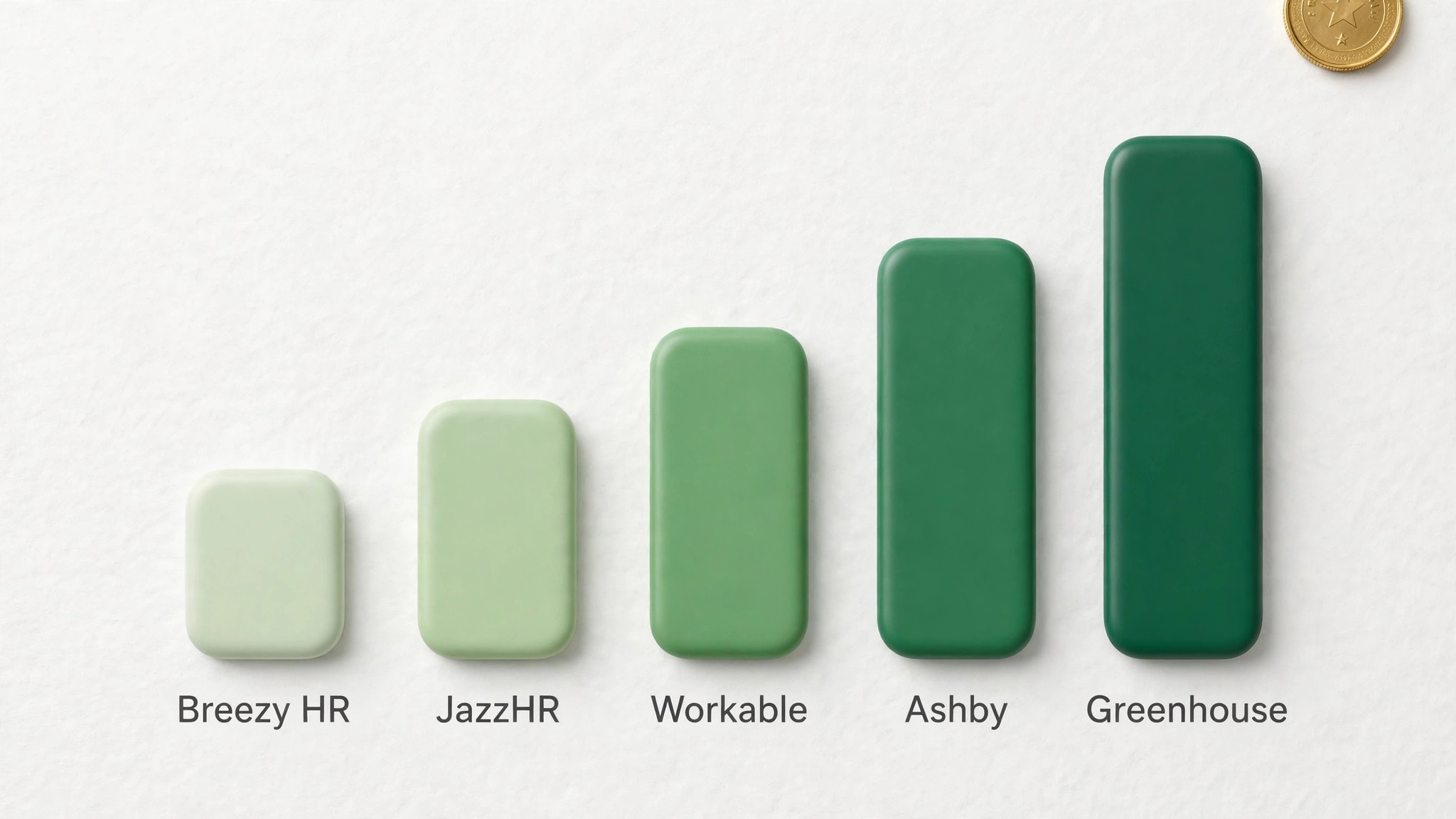
Candidates talk, and a slow or silent process costs more than the hire it loses. A candidate who waits two weeks for a reply tells friends, writes a review, and never applies again, and the damage compounds every time a role opens. The tools in this guide help because they close the loop, automatic acknowledgements, clear timelines, and a rejection that arrives in days rather than never.
The simplest improvement is a message at every stage. When an application arrives, confirm it. When the shortlist is set, tell the candidates who did not make it. When the interviews end, give the decision within 48 hours. Most teams fail at the second step, and the fix is a template and a habit, not a new tool. The ATS makes the habit easy by putting the message one click from the pipeline, and the teams that use it keep their reputation intact.
The second improvement is a short application. Every extra field in the form loses candidates, and a form that asks for a resume and then asks the candidate to retype it is the fastest way to lose the best applicants. Keep the application to the resume, a phone number and two screening questions, and save the rest for the interview. A team that shortens the form sees more applicants, and more applicants means a stronger shortlist.
Related Guides
Keep exploring with these guides on Stratilyze:
- The 4 Best AI Agents for Recruiting in 2026: Screening, Scheduling, and Sourcing That Actually Work
- Best AI Recruiting Tools for Small Businesses (8 Tools)
Frequently Asked Questions
What is the best AI tool for recruiting?
There is no single best tool, because the hiring volume decides the pick. Workable leads for small and mid sized teams that want a published price, Greenhouse leads for structured hiring at scale, and JazzHR leads for a small business on a tight budget. Match the best ai tools for recruiting to the number of hires per year, trial the pick on a real role, and keep the one that fills the role fastest.
How much do AI recruiting tools cost?
A small business can hire on JazzHR for 75 dollars a month or on Breezy for free for one role. A mid sized team pays about 299 dollars a month on Workable or from 300 dollars a month on Ashby. Enterprise tools like Greenhouse and Lever are sold by quote, with reported contracts from about 3,500 dollars a year upward, and implementation fees on top. Divide the annual cost by the hires planned to see the true cost per hire.
Can AI screening be trusted to rank candidates fairly?
AI screening can rank fast, and it can also repeat the biases in the data it learned from, so a human must check it. Use the AI to rank on the stated job requirements, audit the shortlist for patterns, and keep a human in the loop for every rejection. The tools that show their reasons, rather than a bare score, are the ones to trust, and every hiring decision should have a reason a person can explain.
Is Greenhouse worth it for a small business?
Usually not, because the reported contracts start around 6,500 dollars a year and the implementation and process overhead assume hiring volume a small business does not have. Greenhouse is worth it when hiring is a core operation, the process must be defensible, and the team hires dozens of people a year. For ten hires a year, Workable, JazzHR or Breezy do the job for far less.
Which tool is best for a team that sources outbound?
Lever leads for outbound sourcing with an ATS built in, and Gem leads for outbound as a dedicated CRM paired with an ATS. Both keep the talent pool alive with nurture campaigns and follow up sequences, which is where outbound hiring is won. A team that sources outbound should pick one of the two, and pair Gem with Greenhouse or Ashby when the ATS is already in place.
Do I need an ATS if I only hire a few people a year?
Yes, even for a few hires a year, because an ATS keeps every application, every note and every rejection in one place, and it stops good candidates from slipping through an inbox. The free tier of Breezy covers one active role, and JazzHR at 75 dollars a month covers a small business properly. The cost of losing one good hire to a slow process is higher than either price.
Our Recommendation
Start with the hires, not the tool. Count the roles you will fill in the next twelve months, then pick the cheapest tool built for that volume. One or two roles a year means Breezy free or JazzHR. Ten to thirty roles means Workable, with its published price and AI sourcing. Thirty to a hundred roles means Ashby, with analytics that show where the funnel leaks.
A hundred or more means Greenhouse, with structure that holds at scale. Trial the pick on a real role, measure the days from post to offer, and keep the tool that shortens that number. The best ai tools for recruiting are the ones that fill roles faster, and the proof is in the calendar, not on the pricing page.