
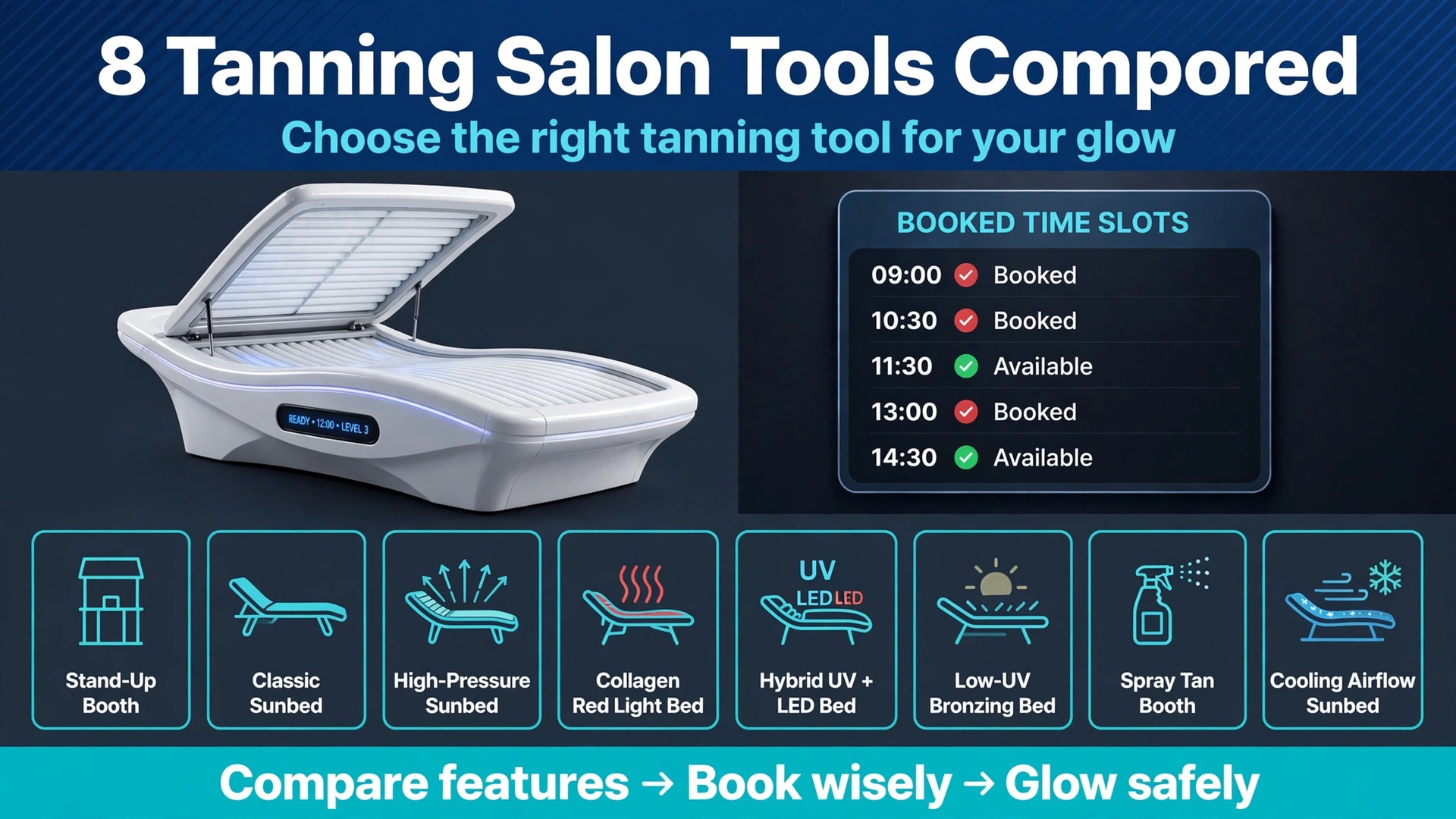
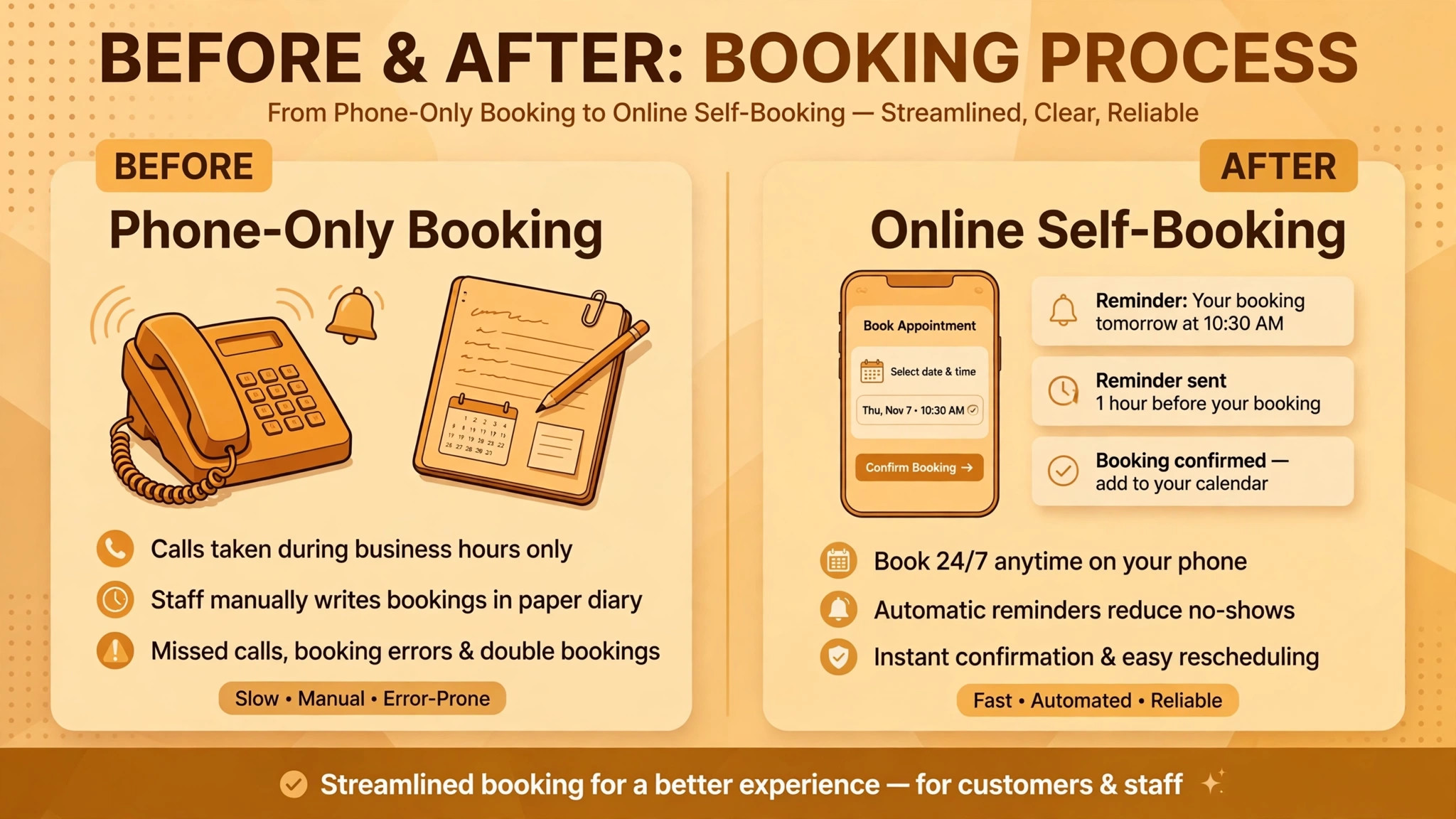
A tanning salon that lets a client book a bed online at 10 p.m. and a salon that only takes bookings by phone are selling the same tan in very different ways. The first salon fills quiet evening slots while the owner sleeps, sends an automatic reminder, and records the session against the client’s package. The second salon misses the booking entirely if nobody answers, relies on memory for package balances, and discovers double bookings when two clients arrive for one bed. That gap is why the best booking software for tanning salons matters as much as choosing beds or lotions.
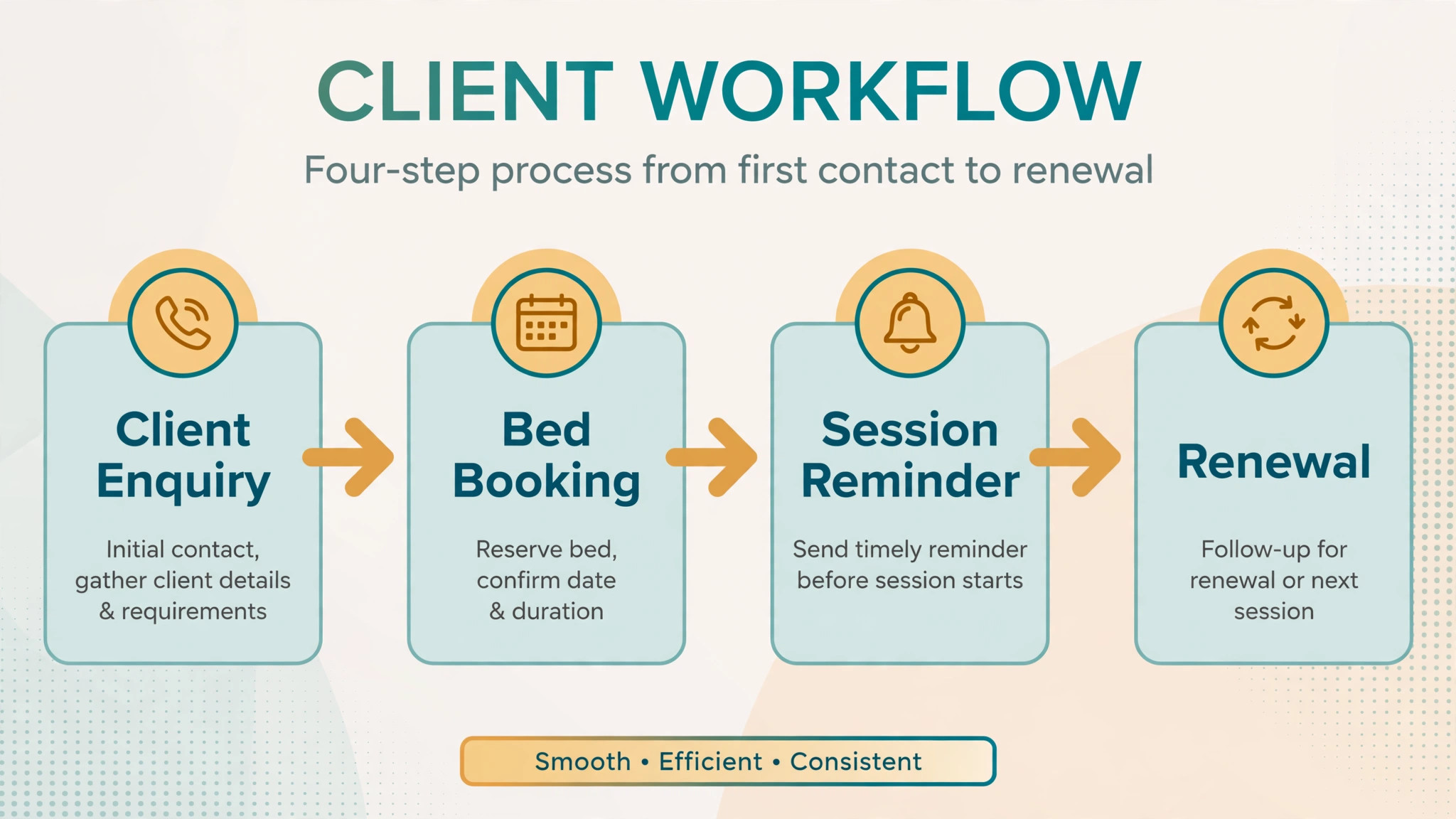
A tanning booking tool has to handle more than a calendar, and that is the real test for the best booking software for tanning salons. It must manage bed types and session lengths, track minutes or sessions left on a package, handle memberships that renew monthly, sell lotions and aftercare products at checkout, and send reminders that keep clients coming back on a regular cycle. A generic appointment tool can reserve a time slot. It cannot easily show that a client has four sessions left on a ten session package, prefers a stand up booth, and is due a membership renewal next week.
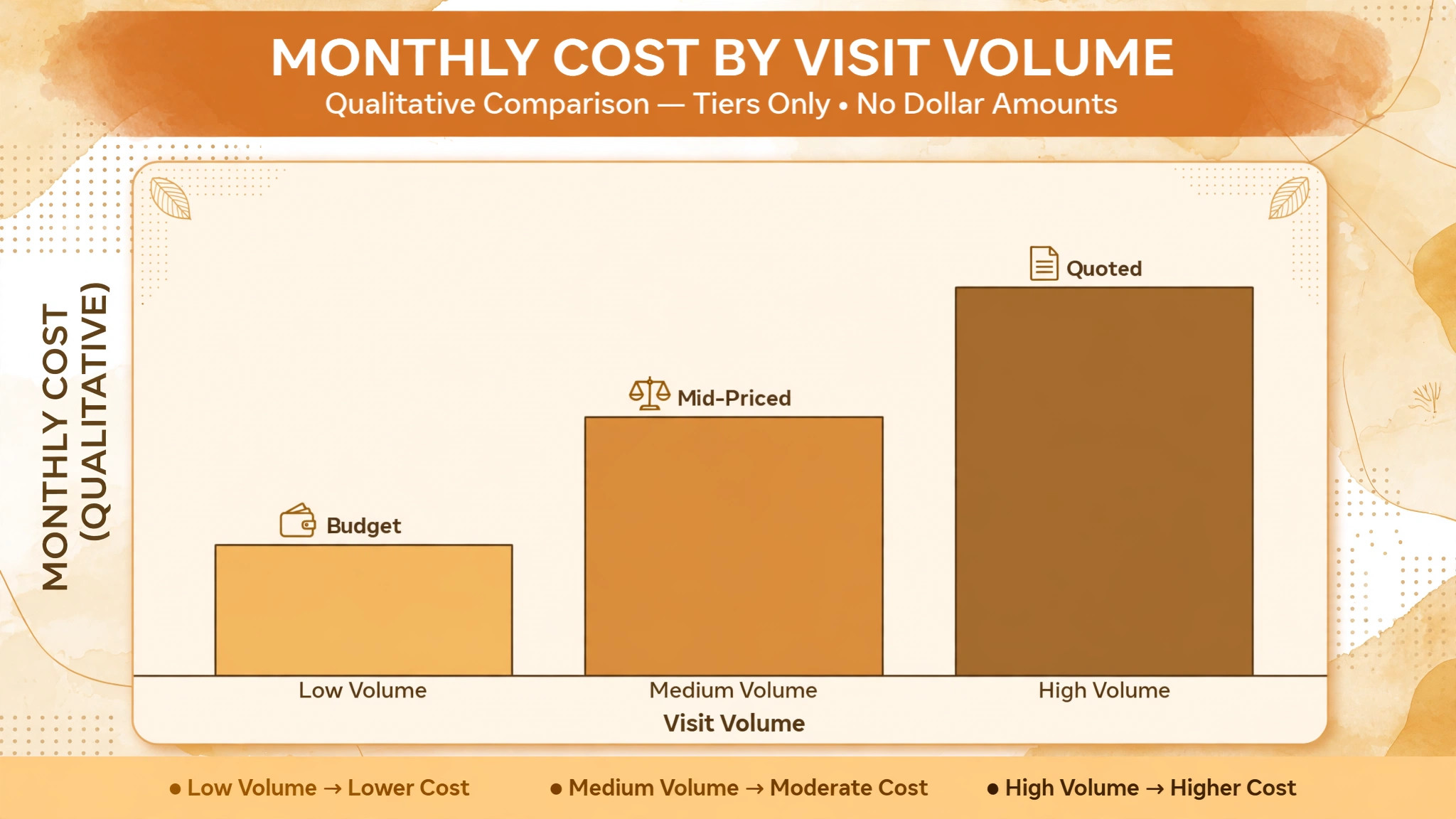
This guide compares eight tools, from general salon platforms that tanning businesses adapt to specialist salon systems with membership and package depth. Prices vary by location count, staff count, and feature tier, so treat any starting price as a prompt to get a quote. Check the vendor pricing page before you budget, since per location, per staff member, and per booking pricing models behave very differently as client volume grows.
Why Tanning Bookings Break a Normal Calendar
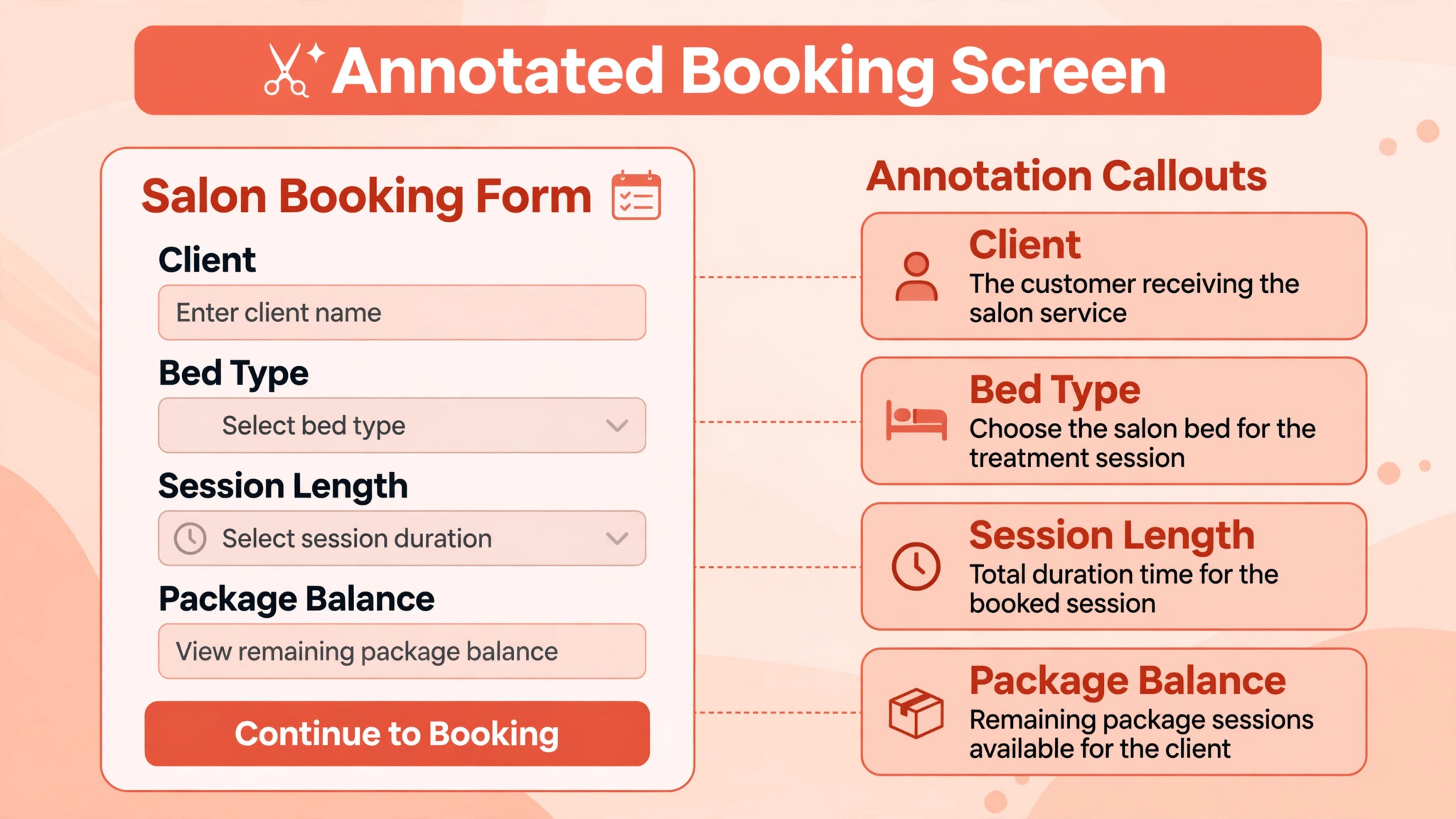
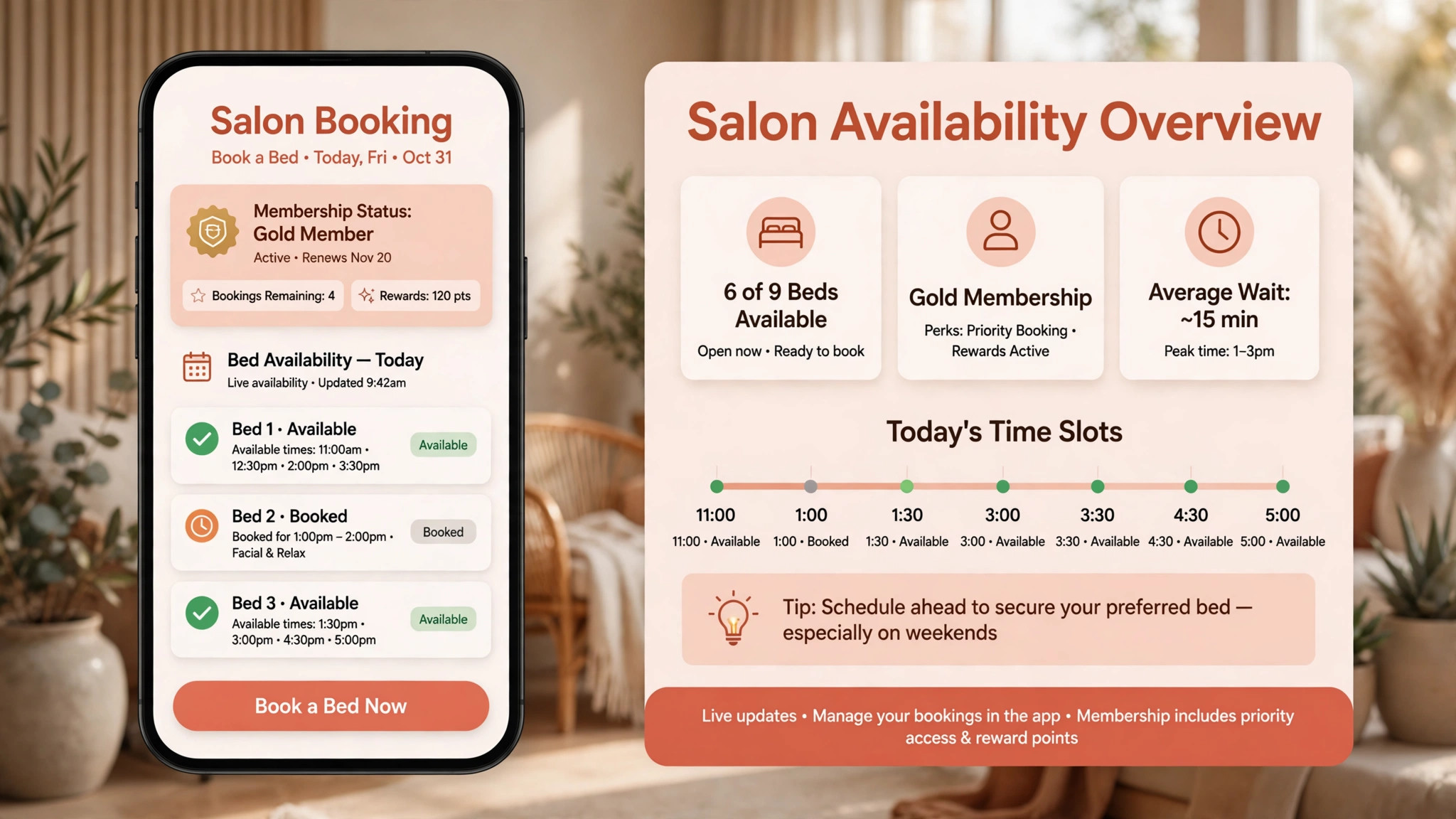
A tanning appointment is a match between a client, a bed type, and a session length. A client who wants a twenty minute session in a high pressure bed cannot simply take a slot meant for a ten minute session in a standard bed. A normal calendar can show that a room is free. It cannot easily show that the room is free but the bed inside it is already booked, or that the next client needs a different bed type with a different turnaround time for cleaning.
Package tracking adds a second constraint. Tanning salons sell sessions, minutes, and memberships, not only single visits. A client may buy a monthly unlimited membership, pause for a holiday, and return expecting the membership to still work. The booking system must show sessions used, sessions left, membership status, and expiry dates without the front desk digging through paper cards. A generic tool that only records appointments will lose that balance history.
Retail and renewal add a third constraint, and both explain why the best booking software for tanning salons must connect bookings to money. Lotions, goggles, and aftercare products are a real revenue line, and a missed membership renewal is lost recurring revenue. A booking tool that handles package balances, renewal reminders, and retail sales in one client record will save more front desk time than a tool that only looks good as a calendar.
The 8 Tools at a Glance
| Tool | Starting price | Best for | Tanning depth |
|---|---|---|---|
| Zenoti | Check the vendor pricing page | Multi location salons and spas | Strong |
| Vagaro | Check the vendor pricing page | Single salons wanting booking plus marketplace | Good |
| Mangomint | Check the vendor pricing page | Modern salons wanting simple operations | Good |
| Boulevard | Check the vendor pricing page | Salons wanting client experience and payments | Good |
| Fresha | Check the vendor pricing page | Commission free booking with marketplace reach | Good |
| Booker by Mindbody | Check the vendor pricing page | Salons wanting a large booking network | Good |
| GlossGenius | Check the vendor pricing page | Small salons wanting simple setup | Good |
| SimplyBook.me | Check the vendor pricing page | Budget booking with packages and payments | Good |
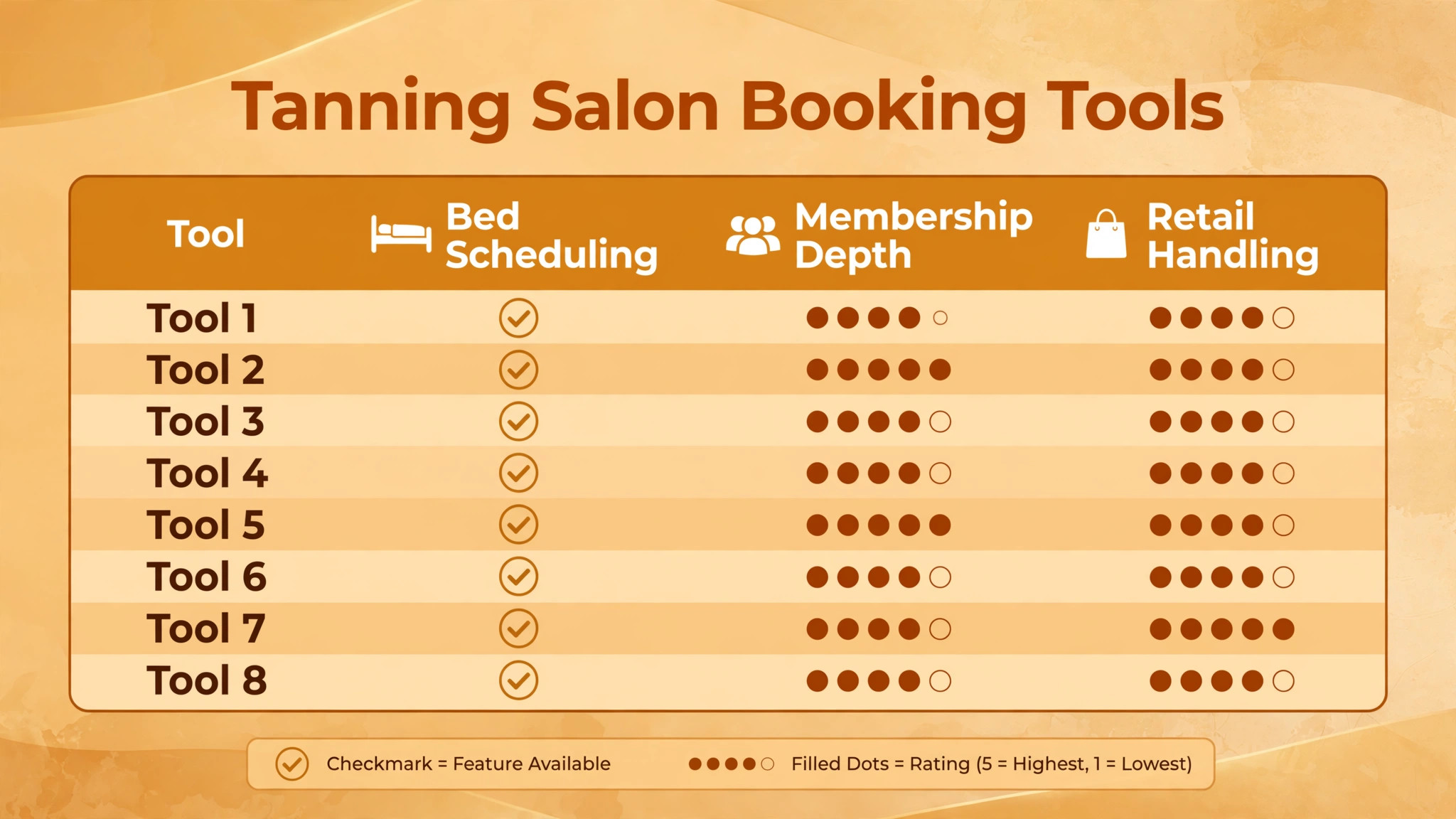
Pricing transparency is uneven in this market, and several tools quote by location, staff count, or feature tier. That is why a comparison of the best booking software for tanning salons should start with a written quote for your real bed count, staff count, and monthly client volume, not with a directory starting price alone. Get a written quote for your bed count and membership volume before comparing totals, and confirm whether SMS reminders, payments, and marketplace listings are included or charged separately.
Best Pick by Job
| Job type | First pick | Why it fits | Watch out for |
|---|---|---|---|
| Single salon | Vagaro | Booking, marketplace reach, and payments in one place | Check membership depth for complex packages |
| Small chain | Zenoti | Multi location control, memberships, and reporting | Setup effort and quote based pricing |
| Salon with spa services | Boulevard | Client experience and payments across salon and spa | Confirm tanning package handling in a trial |
| Budget start | SimplyBook.me | Packages, payments, and booking without a large subscription | Less salon specific depth |
| Simple modern salon | Mangomint | Clean operations and easy staff adoption | Confirm bed type scheduling in a trial |
The job type that matches most of your visits should decide the shortlist for the best booking software for tanning salons. A single salon that buys a full multi location platform will pay for reporting and controls it never uses. A small chain that buys a simple booking tool will struggle with membership consistency, cross location packages, and consolidated reporting.
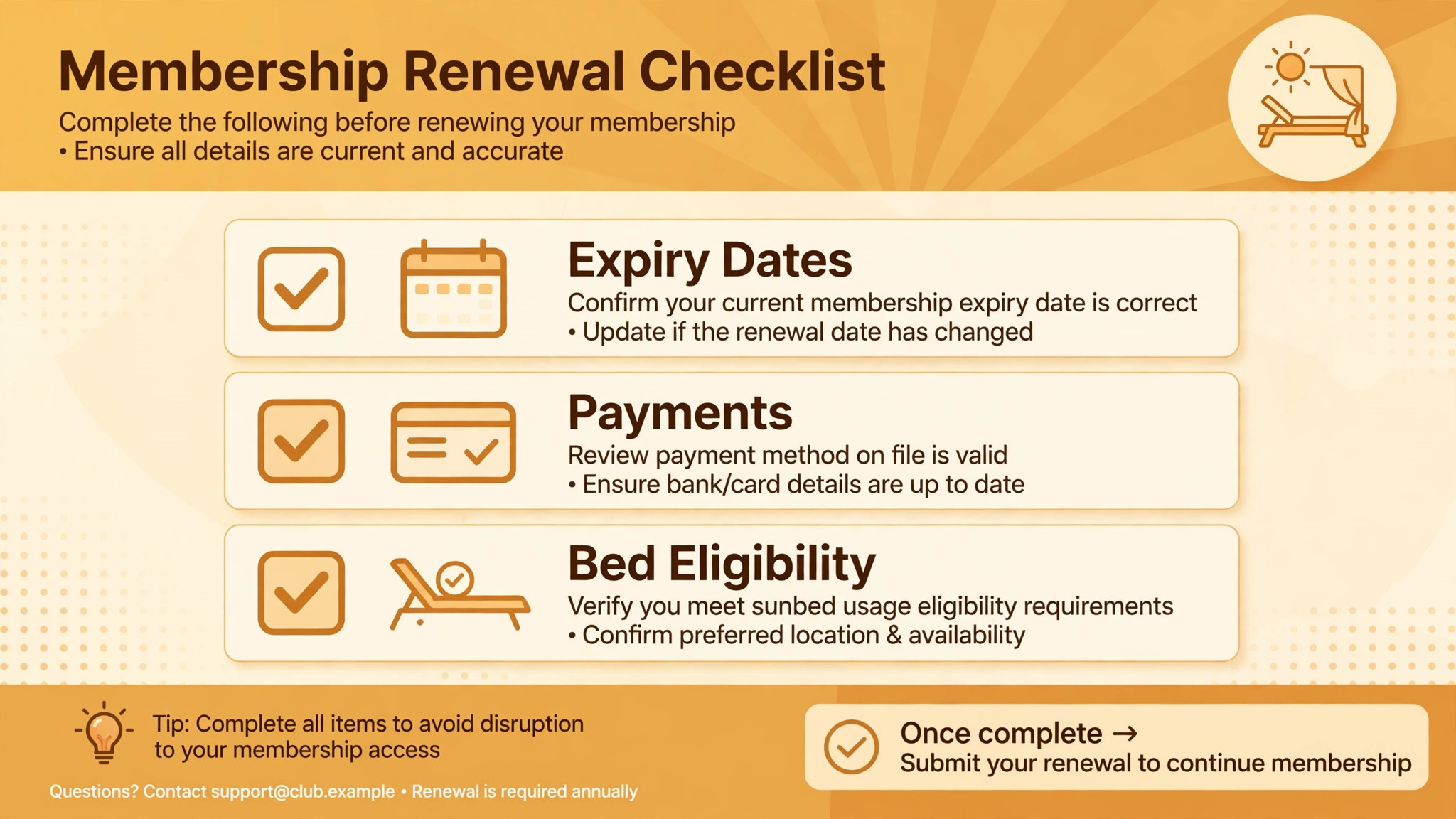
Membership Renewal Checklist
Use this checklist at the start of every month to protect recurring revenue. It turns booking data into renewals, rather than leaving renewals to chance.
– List every membership expiring in the next thirty days, with the client name, package type, and renewal date. – Check that payment details are current for each expiring membership, and contact clients with failed or expired cards before the renewal date. – Confirm which clients have unused sessions or minutes, and decide whether those carry over, expire, or convert under your stated terms. – Send a renewal reminder with the new term, the price, and a simple way to confirm, ideally linked to online booking. – Review paused memberships and confirm restart dates, so paused clients return to a working booking record rather than a frozen account. – Check that staff know which memberships include which bed types, so a renewed client is never booked into a bed their package does not cover. – Record every renewal outcome in the client record on the same day, including declines, pauses, and upgrades. – Report renewal rate, failed payments, and upgrades to the owner weekly during the renewal window, so problems surface early.
Software helps this checklist only if membership status, payment status, package balance, and bed eligibility live in one client record, which is a core requirement for the best booking software for tanning salons. If those details live in four separate places, the checklist becomes a manual reconciliation exercise in the busiest week of the month.
The 8 Tools in Detail
1. Zenoti
Zenoti is a salon, spa, and wellness platform built for multi location businesses, with booking, memberships, packages, payments, and reporting in one system. It handles appointment scheduling across locations, tracks memberships and packages, and gives owners consolidated reporting on revenue, retention, and staff performance. That breadth suits a business that runs several sites or plans to open more.
The strength is control at scale. A client can buy a membership at one location and use it at another, while the owner sees performance across the whole group rather than per site spreadsheets. The limit is implementation effort. A platform of this depth needs careful setup for bed types, session rules, membership terms, and pricing, and a single salon may find that depth heavier than it needs. Check the vendor pricing page and request a quote for your location count before judging cost.
Best for a small chain or a salon with spa services that needs consistent memberships, cross location booking, and group reporting.
2. Vagaro
Vagaro is a salon booking platform that combines online booking, a marketplace listing, payments, and client management. Clients can discover the salon through the marketplace, book online, and pay in advance, while the salon manages appointments, packages, and client records from one dashboard. That discovery element is a real difference for a new salon that still needs to build a client base.
The strength is the combination of booking and reach. A single salon gets a booking website, a marketplace presence, and payment handling without stitching three tools together. The limit is membership depth for complex tanning packages. A salon with layered session, minute, and unlimited membership options should test package balances, expiry rules, and bed eligibility carefully during a trial. Check the vendor pricing page for the tier that includes the marketplace and payment features you need.
Best for a single salon that wants booking, discovery, and payments in one place, with a straightforward membership offer.
3. Mangomint
Mangomint is a modern salon software platform focused on booking, client management, payments, and day to day operations, with an emphasis on a clean interface that staff learn quickly. It supports online booking, appointment management, and payment processing, and presents schedules and client records in a way that reduces front desk training time.
The strength is adoption. Staff who find a system easy will actually use it, which matters more than a long feature list that nobody opens. A salon with rotating front desk staff benefits from a system that a new hire can learn in a day. The limit is tanning specificity. Bed type scheduling, minute tracking, and complex package rules need explicit testing, since Mangomint is a general salon platform rather than a tanning specialist. Check the vendor pricing page and test bed scheduling on real appointment patterns before signing.
Best for a modern single salon or small group that values simple operations and fast staff adoption over deep multi location controls.
4. Boulevard
Boulevard is a salon platform built around client experience, booking, and payments, with features for appointment management, client records, and checkout. It is designed for salons that want a polished booking journey, from online booking through payment, with clear client profiles that staff can use at the front desk.
The strength is the client journey. A smooth booking page, clear appointment details, and simple payment handling make repeat visits easier, which matters for a business that depends on regular clients. The limit, again, is tanning package depth. A salon that also offers spa services will like the breadth, but should verify that session packages, minute balances, and bed eligibility work the way its membership terms require. Check the vendor pricing page for payment terms and any per booking charges.
Best for a salon with spa services that wants a polished client experience across booking and payment, provided tanning packages pass a real trial.
5. Fresha
Fresha is a booking platform for salons and spas that offers online booking and a marketplace listing, with a commission free model for bookings made through the salon’s own channels in many markets. Clients can find the salon through the marketplace, book online, and manage appointments, while the salon handles scheduling and client records from one system.
The strength is cost structure and reach. A salon that gets a large share of bookings through its own website or social pages avoids commission on those bookings, while still gaining marketplace discovery. The limit is package complexity. As with other general salon platforms, minute tracking, session expiry, and membership renewal workflows should be tested against the salon’s real package terms, not assumed from a feature list. Check the vendor pricing page for current terms in your market, since marketplace and payment terms vary.
Best for a salon that wants marketplace reach with a commission free model for its own bookings, and a straightforward package offer.
6. Booker by Mindbody
Booker by Mindbody is a salon and spa booking platform from the Mindbody group, with online booking, appointment management, payments, and client records. It connects salons to a large booking network, which can bring new clients who already book beauty and wellness services online.
The strength is network reach and maturity. A salon that wants discovery through an established booking audience, plus booking and payments in one system, gets both from a long running platform. The limit is fit for a small independent salon. Larger platforms can feel heavy for a single site, and pricing, contract terms, and payment processing need careful reading before signing. Check the vendor pricing page and confirm contract length, payment terms, and marketplace fees in writing.
Best for a salon that values network discovery and a mature booking platform, and that will read contract and payment terms carefully before committing.
7. GlossGenius
GlossGenius is a salon platform designed for small salons and independent professionals, with online booking, payments, and client management in a simple package. It gives a small salon a booking page, appointment management, and card payments without a long implementation project, which suits an owner who also works the front desk.
The strength is simplicity and speed of setup. A salon can move from phone bookings to online bookings quickly, with a booking page that clients find easy to use. The limit is scale and package depth. A salon with many beds, complex memberships, or multi location plans may outgrow the simplicity, and should test package balances and renewal handling before relying on it for a large membership base. Check the vendor pricing page for the features included on the chosen tier.
Best for a small salon or a new salon that wants fast, simple online booking and payments, with a membership offer it can manage easily.
8. SimplyBook.me
SimplyBook.me is a general online booking system that tanning salons can adapt to bed booking, with a booking website or widget, packages, memberships, payments, deposits, and coupons. Clients can book, change, or cancel appointments themselves from any device, which reduces phone handling for routine bookings.
The strength is flexibility at a modest cost. A salon can sell packages and memberships, take deposits, and offer coupons from one system, and can switch features on as it grows. The limit is salon specificity. Bed type scheduling, minute tracking, and tanning workflow rules need careful configuration, and a salon should test those workflows explicitly rather than assuming a general booking tool covers them. Check the vendor pricing page for the tier that includes SMS reminders and package sales.
Best for a budget conscious salon that wants booking, packages, and payments without a large subscription, and that is willing to configure tanning workflows on a general platform.
How Online Booking Changes the Front Desk
Online booking changes the front desk before it changes the calendar. When a client can see real bed availability, the first conversation shifts from whether a session is possible to which bed, session length, and package fit best. That shift matters for a tanning salon, because many clients decide to book outside opening hours, often in the evening when they plan the next day. A salon that answers with a bookable calendar often wins the visit before a phone based competitor has returned the call.
The second change is the quality of the booking itself. An online booking form can collect bed preference, session length, and package details before the front desk spends time on the phone. That information lets staff prepare the right bed and confirm the package balance on arrival, rather than discovering a bed mismatch when the client is already in the salon. A form that collects too much, however, will deter bookings, so the balance between useful detail and booking friction deserves testing with real clients.
The third change is follow-up. A client who books online but does not complete payment, or who views availability without booking, leaves a trace the salon can follow up. A phone enquiry that ends without a booking often leaves no trace at all. That follow-up list is valuable, but only if the front desk actually works it. A booking tool that creates a follow-up queue nobody checks will not increase visits, no matter how good the booking page looks.
There is also a retention effect. Tanning is a repeat visit business, and a client who gets a reminder at the right interval is more likely to keep a regular cycle than a client who must remember alone. Judged on booking speed, bed accuracy, and repeat visits, the best booking software for tanning salons is the tool that turns more enquiries into completed sessions and more sessions into renewals, not the tool with the most booking page options.
How to Choose the Best Booking Software for Tanning Salons
Start with the bed match test. Take a real week of appointments, including a client who needs a stand up booth, a bed shared between session lengths, and a cleaning gap between clients. Enter that week in the trial and see whether the system prevents double bookings, shows the conflict clearly, and suggests a workable alternative. If that test fails, the tool will fail on a busy week.
Next, test the client journey from first enquiry to first session. Can a client find available beds, book online, pay or use a package, receive a confirmation, and receive a reminder without front desk intervention. Count the front desk touches required. A booking tool that still needs a phone call for every booking has not solved the front desk problem, even if the calendar looks good.
Then test membership and retail together. Take a client on a monthly membership, record three sessions, check the remaining balance, sell a lotion at checkout, and process a renewal. The system should show membership status, session balance, retail sale, and renewal date in one client record. If those details live in separate screens with no clear link, the front desk will still reconcile by hand.
Finally, price the full booking stack. Add SMS reminder costs, payment processing fees, marketplace fees, and any per location or per staff charges to the subscription. A commission free plan with expensive payment terms can cost more than a mid priced subscription once client volume grows. Get the monthly total for your real visit volume in writing before comparing tools.
Common Mistakes When Buying Tanning Salon Booking Software
The first mistake is buying a calendar and calling it a booking system. A calendar shows availability. A tanning booking system matches clients, bed types, and session lengths, tracks packages and memberships, and handles payments and reminders. Test the match, not only the calendar view.
The second mistake is ignoring the bed. Many booking problems are bed problems, not staff problems. A salon that books a client without booking the right bed type will discover the error on arrival, when it is too late to fix without disappointing a client. Bed assignment should be a required step in the booking flow, not an afterthought.
The third mistake is forgetting renewals. A booking system without membership tracking, renewal reminders, and failed payment alerts will not protect recurring revenue, even if it makes booking easier. Test the renewal workflow, the reminder timing, and the failed payment handling, and confirm whether SMS reminders are included in the price.
The fourth mistake is buying for the salon you hope to become, not the salon you run. A full multi location platform with group reporting is valuable for a chain, but it adds setup and training burden for a single salon. Start with the tool that fits current bed count and client volume, and check that it can grow when locations and memberships rise.
The fifth mistake is neglecting data export. Client records, session histories, and payment records are the salon’s business history. Before signing, confirm that those records can be exported in a usable format, and that the salon is not locked into a platform by its own data.
Frequently Asked Questions
How much does tanning salon booking software cost?
Costs vary from budget general booking tools to quote based multi location platforms, and the final cost depends on location count, staff count, visit volume, SMS reminders, and payment processing. A salon with high visit volume should model SMS and payment costs at that volume, since those charges grow with every visit. Get a written quote for your real bed count and membership volume, including reminder and payment terms, before comparing headline prices.
What is the best booking software for a single tanning salon?
For many single salons, Vagaro is a strong starting point, because it combines online booking, marketplace discovery, and payments in one place. GlossGenius is the simpler alternative for a salon that wants fast setup, while SimplyBook.me suits a budget conscious salon willing to configure tanning workflows. The right choice depends on whether discovery, simplicity, or low cost matters most.
Can clients book tanning beds online by themselves?
Yes, on most tools in this guide. Clients can view available beds, book, change, or cancel sessions from a booking website or widget, and receive confirmations and reminders. The test is whether online booking also handles bed type, session length, and package balance correctly, rather than merely reserving a time slot that the front desk must then fix by hand.
Does tanning salon software track sessions and memberships?
Specialist salon platforms such as Zenoti are built to track packages, memberships, and session balances more directly than general booking tools. General tools can record appointments and notes, but package tracking often needs careful setup. Test the package view on a real client record, including sessions used, sessions left, and renewal date, before choosing.
How do reminders help a tanning salon keep clients?
Automated email and SMS reminders confirm the session time, bed type, and arrival details before the visit, and give the client a clear way to reschedule if needed. That reduces forgotten sessions and keeps regular clients on cycle, which protects both bed utilisation and membership renewals. Confirm whether SMS reminders are included in the subscription or charged separately, since that cost grows with visit volume.
What is the difference between general booking software and salon software?
General booking software books a time slot and can handle payments and packages, but it treats a session as a generic appointment. Salon software treats the session as a match between client, bed type, and session length, tracks memberships and package balances, and manages salon specific records. A general tool can work with careful setup, while a specialist tool reduces that setup work.
How long does it take to switch tanning salon booking software?
A single salon can switch in one to two weeks if bed types, packages, and client records are prepared in advance. A small chain should allow three to four weeks, including staff training and parallel running on live bookings. A larger group should allow six to eight weeks, including data migration, membership setup, and package balance checks.
Should a tanning salon offer online booking and phone booking together?
Yes, for most salons. Online booking captures clients who search and book outside opening hours, while phone booking serves clients who need advice on bed choice, package terms, or skin care questions. The booking system should keep both channels in one calendar, so a phone booking cannot double book an online booking, and the front desk can see the full schedule in one place.
A One Week Trial Plan
Do not choose from a feature list. Run a one week trial plan on your two finalists. On day one, enter a real week of sessions, including a stand up booth constraint and a shared bed. On day two, let clients book online and check how many bookings need front desk fixes. On day three, test reminders, deposits, and a cancellation. On day four, check a package balance and a membership renewal for a real client. On day five, ask front desk staff whether the calendar, bed assignment, and client record actually helped them serve clients, or only helped the office.
The tool that passes that week with the fewest fixes, the fewest double bookings, and the least staff confusion is the best booking software for tanning salons for your operation, and the tool to keep. Price matters, but a cheap tool that creates daily booking fixes will cost more in staff time and lost clients than a mid priced tool that runs cleanly. Choose the system that makes the front desk quieter, the beds better used, and the clients more likely to renew.
More Reading on Stratilyze
– Best Booking Software for Music Schools – Best Booking Software for Fitness Studios – Best Booking Software for Yoga Studios – Best Booking Software for Escape Rooms – Best Membership Software for Dance Studios