
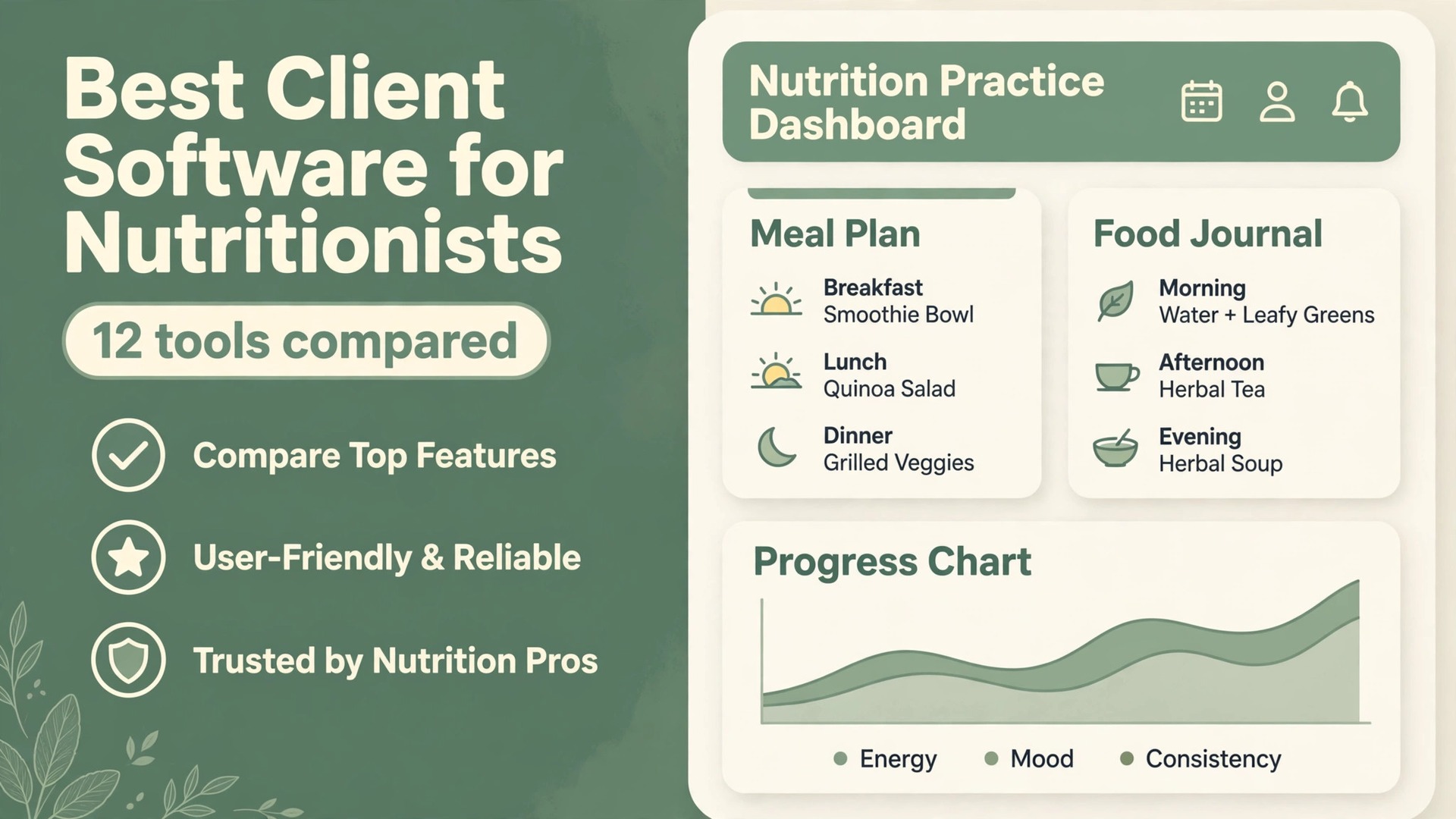
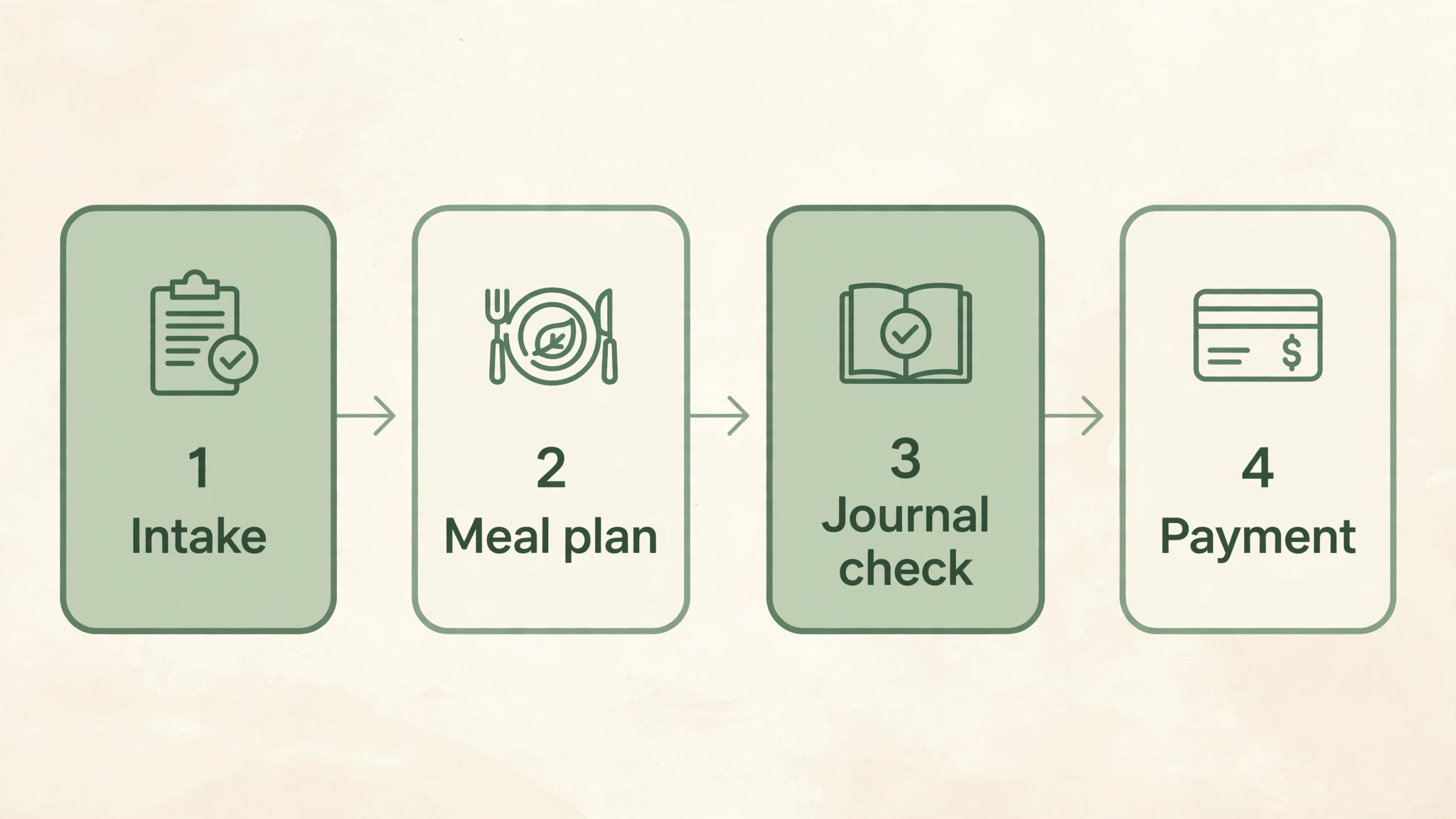
Thirty clients, thirty meal plans, thirty sets of notes, and one inbox that never empties. That is the weekly reality inside many nutrition practices, and it is why the choice of best client management software for nutritionists matters more than the choice of a booking link or a spreadsheet template. The right system holds intake, plans, journals, payments, and follow up in one place, while the wrong one quietly adds admin hours to every client.
A nutrition practice is not a generic service business. Clients need questionnaires before the first session, food diaries between sessions, meal plans that adapt to preferences and medical notes, and progress tracking that shows change over time. A generic CRM can store names and send invoices, but it cannot analyse a meal plan or track adherence. The tools below were judged on nutrition depth, client experience, billing fit, and the real monthly cost at a realistic caseload.
Prices in this guide come from vendor pricing pages and reputable comparison pages checked during research, and they change often. Treat every price as a starting point and confirm it on the vendor page before you buy, especially where a plan caps clients or charges per practitioner.
Shortlist at a Glance
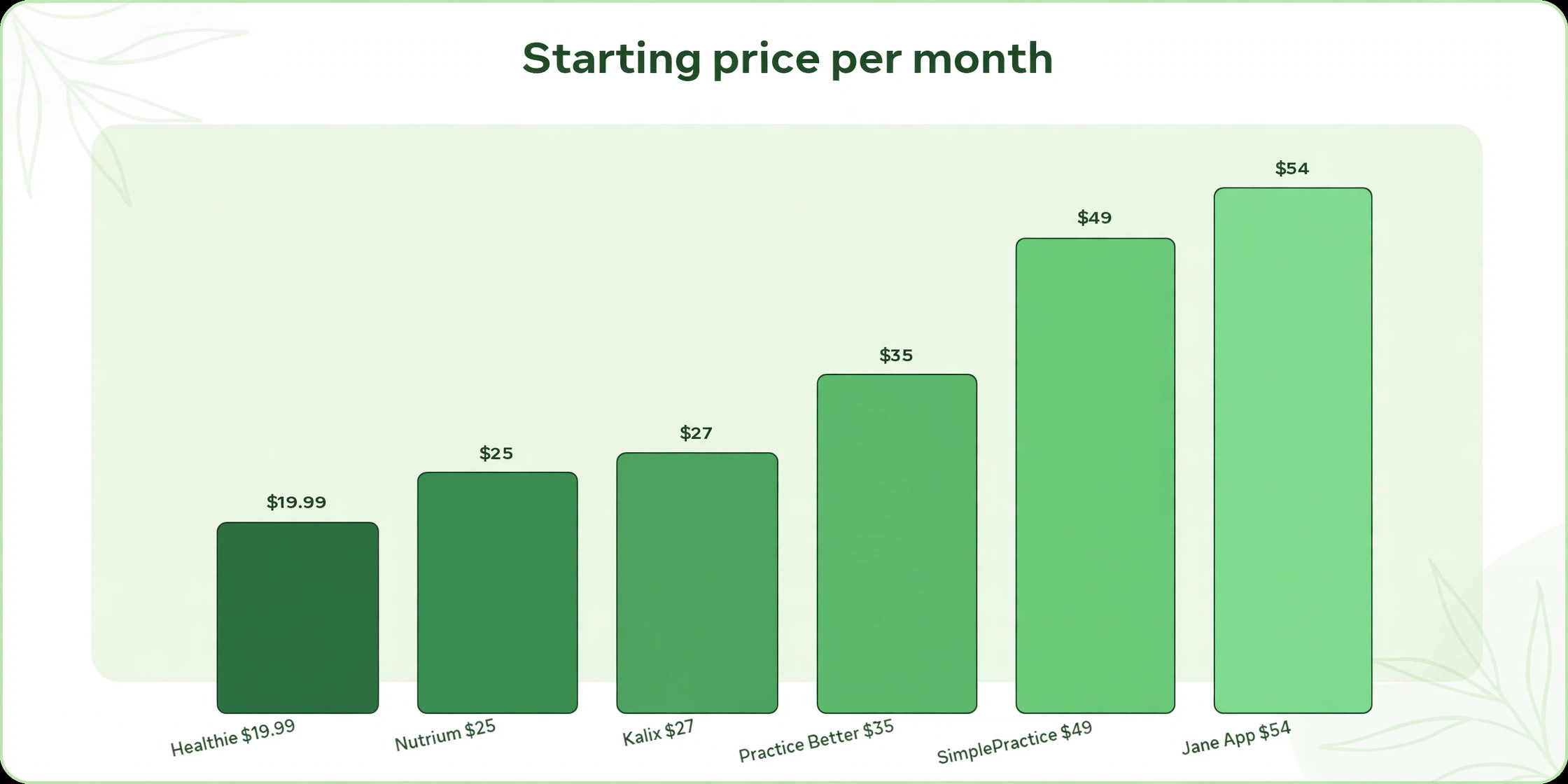
| Tool | Starting price | Best for |
|---|---|---|
| Practice Better | Free, then 35 dollars a month | Program led practices |
| Healthie | 19.99 dollars a month | Journals and client app |
| Nutrium | 25 dollars a month monthly | Nutrient analysis |
| NutriAdmin | Free, then 34.99 dollars a month | Nutrition first questionnaires |
| That Clean Life | From 30 dollars a month | Meal plan quality |
| SimplePractice | 49 dollars a month | Insurance billing |
| Jane App | 54 dollars a month | Multi practitioner clinics |
| IntakeQ | 29.90 dollars a month | Intake forms |
| Kalix | 27 dollars a month | Low cost insurance claims |
| Carepatron | Free, then 31 dollars a month | New practices |
| Foodzilla | From 49 dollars a month | Coaching style programs |
| Evolution Nutrition | From 59 dollars a month | Nutrition plus fitness |
Read the table as a shortlist, not as a ranking. The cheapest tool may suit a solo nutritionist perfectly, while the most expensive tool may be the only one that handles insurance billing or team scheduling well. Pick three finalists from the table, then read their full sections before you commit to a trial.
Why the best client management software for nutritionists Is Not a Generic CRM
The gap starts with the client record. A generic CRM holds a name, an email address, and a deal stage. A nutrition record must hold a health history, a food diary, a meal plan with nutrient totals, measurements over time, and notes from each session. A tool without that depth forces the nutritionist to keep clinical work in spreadsheets, and two systems always drift apart.
The second gap is adherence. Nutrition results come from what clients do between sessions, not from what happens inside a single appointment. Journals, reminders, messaging, and progress charts keep clients engaged during the weeks when motivation fades. A system that only books appointments misses the part of the work that actually changes outcomes, and that weakness shows up in retention.
The third gap is money and time. Programs, packages, and recurring payments shape nutrition income far more than single session fees. A tool that handles programs, payment plans, and automated reminders protects revenue without adding admin work. Judging best client management software for nutritionists on subscription price alone misses processing fees, add ons, and the hours saved each week.
Each tool below is judged against the same question, which is whether it makes daily work easier for a nutrition practice. That shared test is what makes a comparison of best client management software for nutritionists useful, because feature lists alone hide caps, add ons, and clumsy workflows that only show up in real use.

Twelve Tools, Reviewed One by One
Practice Better
Practice Better starts with a free Sprout plan for up to 3 clients, then paid plans at 35 dollars a month for Starter, 69 dollars for Professional, 99 dollars for Plus, and 155 dollars for Team. It covers scheduling, charting, a client portal, telehealth, programs, courses, meal planning through That Clean Life, a large food database, and invoicing in one account. Payment processing is listed at 2.9 percent plus 30 cents online, with ACH available at a lower rate. Confirm the current plan limits on the vendor page before you buy, since client caps change the real value of each tier.
The strength here is program based care. A nutritionist can sell a fixed date program, a self paced course, or an evergreen email series without adding a second platform for delivery. The weakness is price growth for teams, because Team is the only plan that adds clinicians, and add ons such as insurance claim submission sit outside the base price. Solo practitioners rarely feel that pinch, while a growing clinic should price the Team plan from day one.
Choose Practice Better if programs and meal plans drive your income. Skip it if you only need simple booking and notes and want the lowest possible bill.
Healthie
Healthie lists plans at 19.99 dollars a month for Starter, 49.99 dollars for Essentials, and 129.99 dollars for Plus, with a Group plan at 149.99 dollars plus 50 dollars per added provider. It includes scheduling, charting, telehealth, a client portal, food and lifestyle journals, and a client app, with programs available on higher tiers. Insurance claim submission runs through a separate Claim.MD account, so practices that bill insurance should add that cost to the monthly total. Confirm the current feature split on the vendor page, since program tools move between tiers.
The strength is the client app and journaling, which keep food logs and lifestyle notes close to the chart instead of scattered across email and spreadsheets. The weakness is that the cheapest plan is thin for a busy practice, so most working nutritionists land on Essentials or Plus. That jump is still fair value when journals and programs replace two or three separate subscriptions.
Choose Healthie if client journals and a polished client app matter most. Skip it if you need deep insurance billing built into the base price.
Nutrium
Nutrium lists a plan for up to 10 clients a month at 25 dollars a month on monthly billing, or 15 dollars a month on yearly billing, and an unlimited client plan at 39 dollars a month monthly or 25 dollars a month yearly. Prices vary by region and currency, and the published rates apply to the first subscription period, so confirm the renewal price on the vendor page. It combines client records, macro and micronutrient analysis, personalised meal plans, recipe creation, food diaries, scheduling, messaging, video consultations, payments, and invoicing.
The strength is clinical nutrition depth. Few tools in this list match Nutrium on nutrient analysis and dietary compliance tracking, and clients get a mobile app for logging food, water, exercise, and measurements. The weakness is the client cap on the entry plan, which punishes a practice that grows quickly. A solo nutritionist with a small caseload gets excellent value, while a busy clinic should start on unlimited.
Choose Nutrium if nutrient analysis and meal plan quality are the core of your service. Skip it if you need insurance billing or a large team workspace.
NutriAdmin
NutriAdmin offers a free Starter plan with tight limits, then Basic at 34.99 dollars a month, Popular at 49.99 dollars a month, and Professional at 74.99 dollars a month, with lower monthly equivalents on yearly billing. Each plan is built around one user and a monthly cap on new clients, rising from 10 on Basic to 40 on Professional. It includes client profiles, a client portal, questionnaires, meal plans, nutrition analysis, a recipe editor, reminders, and Stripe payments, with telehealth as a paid add on.
The strength is focus. NutriAdmin was built for nutritionists, so questionnaires, reports, and meal plans feel native rather than bolted on. The weakness is the new client cap, which can force an upgrade in a strong marketing month even when total active clients stay flat. Read the cap as a growth cost, not as a footnote, and pick the tier that survives your best month.
Choose NutriAdmin if you want a nutrition first system with strong questionnaires. Skip it if your intake volume swings sharply month to month.
That Clean Life
That Clean Life is listed from 30 dollars a month on entry plans, with higher tiers around 60 dollars a month in published comparisons, so confirm the current price on the vendor page before deciding. It is a meal planning platform rather than a full practice system, with recipe libraries, drag and drop meal plan building, and client facing plans that look polished without design work. Many nutritionists pair it with a practice platform, and Practice Better includes it as part of its meal planning feature set.
The strength is plan quality and speed. Building a week of balanced meals with shopping lists takes far less time than building the same plan in a spreadsheet, and clients actually follow plans that look good. The weakness is scope, because it does not handle scheduling, charting, payments, or insurance. Buying it alone leaves the business side of the practice unsolved.
Choose That Clean Life if meal plans are your main deliverable and you already have booking and billing covered. Skip it if you want one system for the whole practice.
SimplePractice
SimplePractice lists plans at 49 dollars a month for Starter, 79 dollars for Essential, and 99 dollars for Plus, with 74 dollars a month per added clinician. It covers scheduling, charting, a client portal, telehealth, invoicing, and built in insurance claim submission, with ePrescribe as an add on. Payment processing is listed higher than some rivals, so a cash pay nutrition practice should compare processing costs as well as subscription costs. Confirm claim fees on the vendor page, since per claim pricing changes over time.
The strength is polish and insurance workflow. Notes, scheduling, billing, and telehealth sit in one clean interface, and insurance billing is native rather than routed through a separate account. The weakness for nutritionists is missing nutrition depth, because there is no native meal planning or nutrient analysis. A dietitian who bills insurance heavily may accept that trade, while a meal plan led practice will feel the gap daily.
Choose SimplePractice if insurance billing is central to your practice. Skip it if meal plans and food journals drive your client results.
Jane App
Jane App lists plans at 54 dollars a month for a smaller appointment volume, 79 dollars for the middle tier, and 99 dollars for the Practice tier, with added practitioners priced per seat. It includes scheduling, charting, one to one telehealth, payments, and a client portal, with group video available as a 15 dollar per practitioner add on. Insurance billing runs through a 20 dollar monthly add on plus a separate Claim.MD account, so add both costs when you compare it with tools that bill natively.
The strength is clinic operations. Jane handles rooms, locations, multiple practitioners, and a smooth booking flow better than most solo focused tools, and support is frequently praised by clinic owners. The weakness is nutrition specificity, because meal planning and nutrient analysis are not native strengths. A multidisciplinary clinic with nutrition as one service line fits Jane well, while a pure nutrition practice may need a second tool for meal plans.
Choose Jane App if you run a clinic with several practitioners and disciplines. Skip it if you are a solo nutritionist who needs meal planning built in.
IntakeQ
IntakeQ lists a Forms Only low volume plan at 29.90 dollars a month and a Practice Management low volume plan at 39.90 dollars a month, with full plans at 49.90 dollars and 59.90 dollars a month. Added practitioners cost 10 dollars to 20 dollars a month depending on tier, and telehealth is a 10 dollar add on. It covers conditional intake forms, e-signatures, secure document sharing, a client portal, scheduling, payments, invoicing, and treatment notes, with claims and superbills on practice plans.
The strength is intake. Conditional forms that adapt to client answers, plus secure document handling, cut the back and forth that eats up the first week of a new client relationship. The weakness is nutrition depth, because meal planning and food journals are not the focus. IntakeQ works best as the front door of a practice, paired with a meal planning tool, rather than as the only system a nutritionist uses.
Choose IntakeQ if intake forms and secure documents are your bottleneck. Skip it if you want meal plans and journals in the same account.
Kalix
Kalix lists plans at 27 dollars a month and 47 dollars a month, with a built in clearinghouse option at 15 dollars a month for unlimited claims on the relevant tier. It covers scheduling, charting, invoicing, and a client portal, with telehealth and group sessions on the higher plan. That built in claims path is unusual at this price, and it matters for dietitians who bill United States insurance regularly. Confirm the current clearinghouse terms on the vendor page, since claim rules vary by payer.
The strength is value for insurance billing dietitians. The subscription stays low while claims stay in house, which keeps the monthly bill predictable. The weakness is a smaller ecosystem, with fewer integrations and less meal planning depth than the nutrition first tools. A dietitian who lives in insurance billing will value Kalix highly, while a cash pay meal plan practice may prefer a richer nutrition toolset.
Choose Kalix if you bill insurance and want claims without a separate vendor. Skip it if meal planning is your main service.
Carepatron
Carepatron offers a free plan for up to 100 appointments, then paid plans at 31 dollars a month and 39 dollars a month, with electronic claims available on the higher plan at a per claim fee. It includes scheduling, charting, telehealth, a client portal, and an AI scribe feature that drafts notes from sessions. That free tier makes it one of the lowest risk ways to test a full practice system before committing money. Confirm claim pricing on the vendor page, since per claim fees add up for insurance heavy practices.
The strength is the low cost entry and the modern interface, which suits part time and new practitioners who need a real system without a real bill. The weakness is nutrition depth again, because meal planning, nutrient analysis, and food journals are not native strengths. Carepatron is a strong general practice home that may still need a meal planning companion for nutrition led work.
Choose Carepatron if you are starting out and want a free, capable practice system. Skip it if you need deep nutrition tools on day one.
Foodzilla
Foodzilla is listed from 49 dollars a month on entry plans, with a higher tier around 69 dollars a month in published comparisons, so confirm the current price on the vendor page. It focuses on meal plans and client management for nutritionists and coaches, with plan building, client tracking, and progress tools in one place. It suits practitioners who sell coaching style programs where the meal plan is the product and the client relationship runs over weeks rather than single visits.
The strength is the balance between meal planning and client tracking, which keeps plans and progress in the same view. The weakness is that it is less proven as a full practice system, with scheduling, charting, and billing depth that varies by tier. A nutrition coach with a program model will like it, while a clinical dietitian with insurance and charting needs should check those features first.
Choose Foodzilla if you coach clients through meal plan programs. Skip it if you need clinical charting and insurance billing depth.
Evolution Nutrition
Evolution Nutrition is listed from 59 dollars a month, with a higher tier around 199 dollars a month in published comparisons, so confirm the current price and feature split on the vendor page. It targets nutrition and fitness professionals with client management, meal planning, and progress tracking, and it fits practices that blend nutrition coaching with fitness programming. That blend is its selling point, because few tools in this list serve both sides of a hybrid practice equally.
The strength is the hybrid model. A coach who writes training plans and meal plans can keep both in one client record instead of splitting the client across two systems. The weakness is price at the higher tier, which is hard to justify unless the fitness side of the practice earns its keep. Solo nutritionists without a fitness offer will find cheaper nutrition first tools.
Choose Evolution Nutrition if your practice blends nutrition and fitness coaching. Skip it if you only practise nutrition and want the lowest cost.
The table below turns the full comparison into a short decision. It matches practice type to a starting pick, so a reader comparing best client management software for nutritionists can skip straight to the option that fits solo work, clinic work, or insurance billing.
Best Pick by Job for Nutrition Practices
| Practice type | Best pick | Why it fits |
|---|---|---|
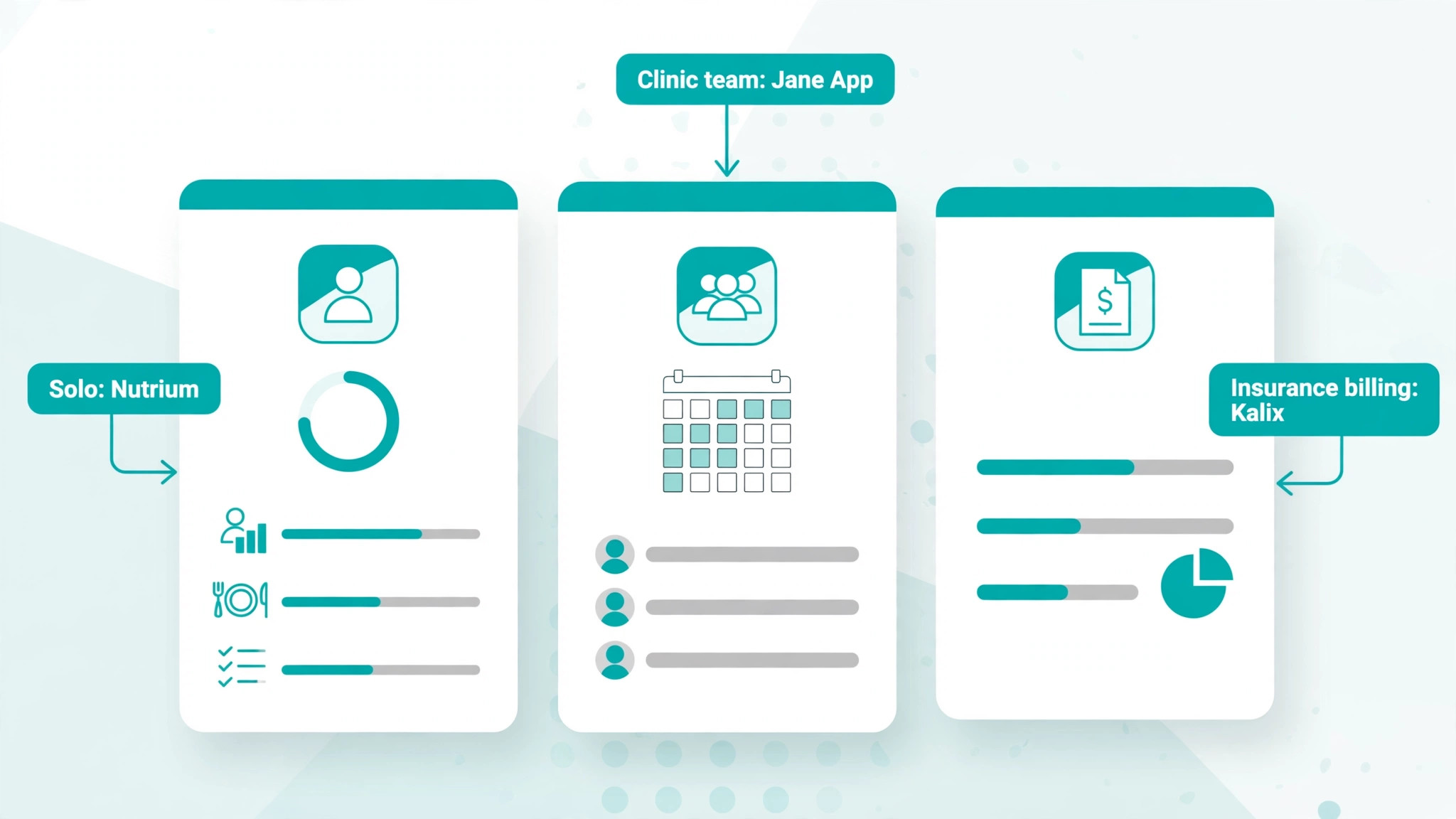
| Solo nutritionist | Nutrium | Deepest meal plan and nutrient analysis for one practitioner |
| Solo nutritionist on a budget | Carepatron | Free start with scheduling, notes, and telehealth |
| Clinic team | Jane App | Rooms, locations, and multi practitioner scheduling |
| Clinic team, nutrition first | Practice Better | Team plan with programs, courses, and meal plans |
| Insurance billing dietitian | Kalix | Built in claims at a low subscription price |
| Program seller | Practice Better | Fixed date and evergreen programs in one system |
A solo nutritionist should optimise for depth and low admin, not for team features that stay unused. Nutrium wins that job because meal plans and nutrient analysis are the work itself, while Carepatron wins the budget version of the same job because the free tier removes the financial risk of trying a real system. Either choice beats a generic tool that cannot analyse a plan.
A clinic team should optimise for scheduling, permissions, and a shared client record. Jane App wins that job because rooms, locations, and practitioner seats are built in, while Practice Better wins the nutrition first version because its Team plan keeps programs and meal plans inside the same account. The deciding question is whether the clinic sells programs or sells appointments, because each winner leads on a different side of that split.
Subscription tables rarely tell the whole story, so this section prices the decision properly. Anyone comparing best client management software for nutritionists should add processing, claims, and companion tools to the headline price before choosing a winner.
What the Monthly Bill Really Looks Like
Subscription price is only the first line of the bill. Add payment processing, claim fees, telehealth add ons, and the cost of any companion tool for meal planning, and the cheapest headline price can become the most expensive total. A solo practice on Nutrium unlimited at 39 dollars a month on monthly billing pays little more than a coffee habit for the core system, while a clinic on Jane App with several practitioners can pass 200 dollars a month before add ons.
Work out the bill at your real numbers, not at the vendor example. Count active clients, practitioners, monthly claims, and sessions that need video, then price each finalist at those numbers. A tool with a client cap looks cheap until a strong month forces an upgrade, and a per practitioner tool looks fair until the third hire joins. The honest total is the number that decides the purchase, and it is worth ten minutes with a calculator before any trial starts.
Most failed trials fail for the same reasons, and none of them appear on a pricing page. Keep these mistakes in mind while testing any option for best client management software for nutritionists, because a trial that avoids them gives a far clearer verdict.
Mistakes That Waste the First Month
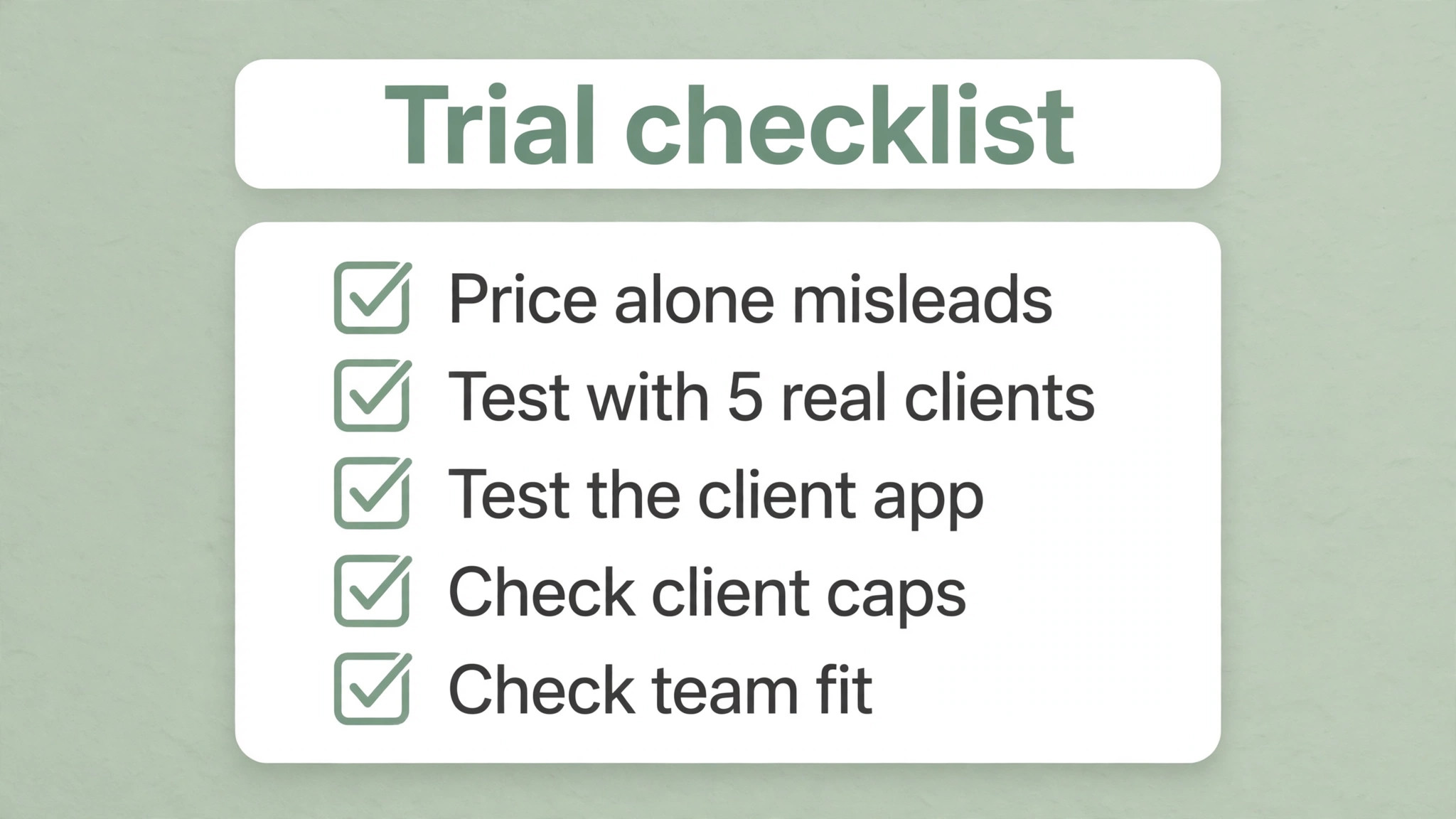
– Picking on subscription price alone, then discovering that meal planning, claims, or telehealth cost extra every month. – Migrating every old client record before testing intake, scheduling, and payments with five real clients. – Skipping the client app test, even though journals and messaging decide whether clients stay engaged between sessions. – Ignoring the new client cap or practitioner seat price, then facing a forced upgrade in the busiest month of the year. – Choosing a tool the team dislikes, because a system nobody opens cannot improve adherence or retention.
Run a two week trial the way you actually work. Onboard five real clients, build two meal plans, collect one payment, and run one video session, then ask whether the system saved time or created it. That test answers more than any feature list, and it exposes caps, add ons, and clumsy workflows before they cost money.
After twelve tools, the decision comes down to practice type rather than a single best product. The verdict below names the strongest starting point for each type of practice comparing best client management software for nutritionists today.
The Final Verdict for Nutrition Practices
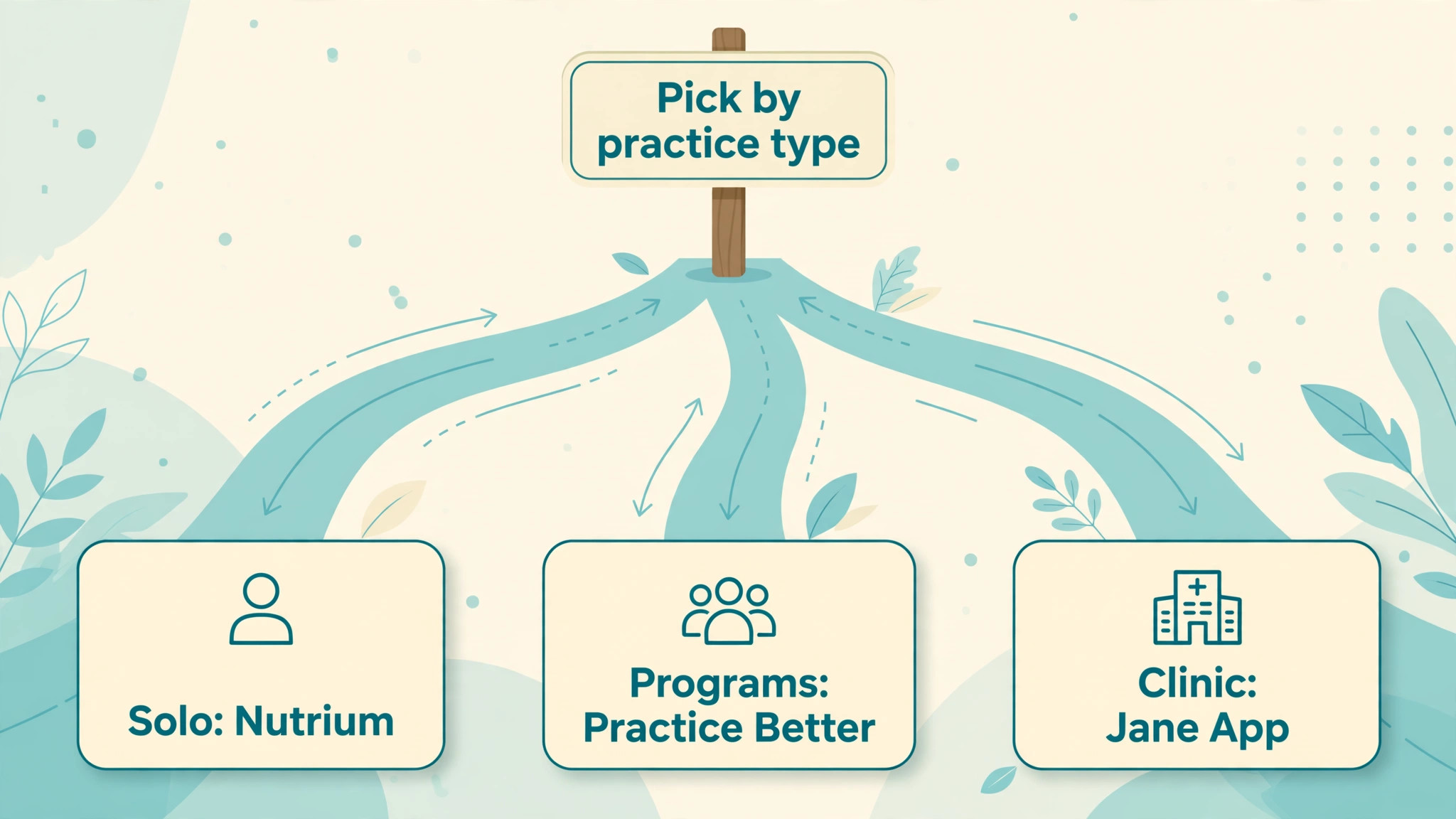
For most solo nutritionists, Nutrium is the strongest starting point, because nutrient analysis and meal plan quality are the service itself. For program sellers, Practice Better is the stronger pick, because programs, courses, and meal plans live in one account. For clinics, Jane App leads on operations, while Kalix leads for dietitians who bill insurance every week. There is no single winner for every practice, and that is the point of the shortlist.
Start with the pick that matches your practice type, run the two week test described above, and only then migrate the full client list. The best system is the one your clients actually use between sessions, and the trial will tell you which one that is faster than any comparison table can.
More Reading on Stratilyze
– AI tools that support nutrition coaching – Practice management for therapy practices – AI tools built for fitness coaches
These questions cover the points buyers ask most when they compare best client management software for nutritionists, from cost and insurance billing to trials and team plans.
Frequently Asked Questions
Do nutritionists need nutrition specific software, or is a generic CRM enough?
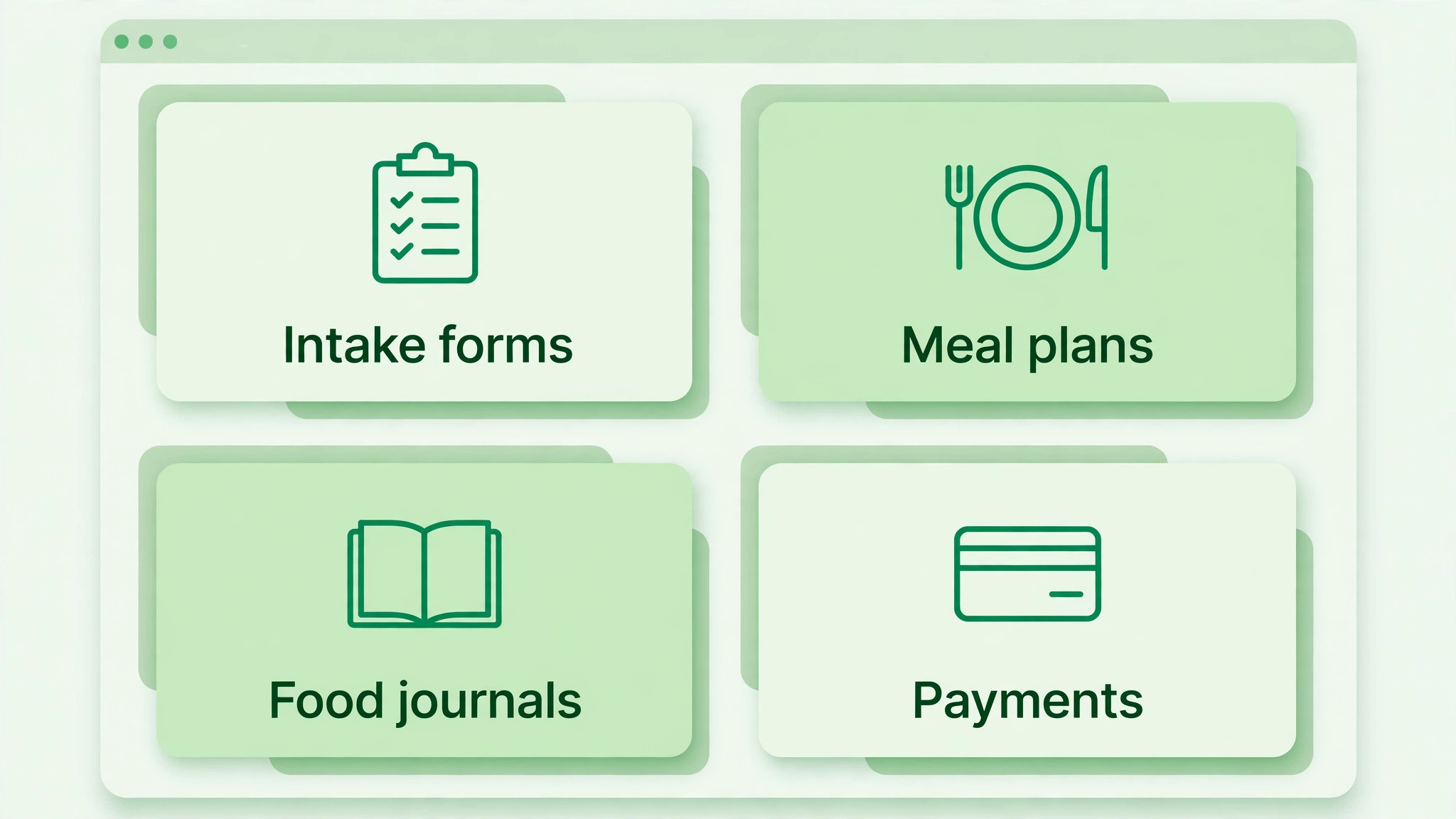
A generic CRM can store contacts and send invoices, but it cannot analyse meal plans, track food journals, or measure nutrient intake. Nutrition specific tools keep clinical work and business admin in one record, which saves time and reduces errors. A generic tool only works when meal planning lives elsewhere and the nutritionist accepts running two systems.
Which tool is cheapest for a solo nutritionist starting out?
Carepatron offers a free plan that covers scheduling, notes, and telehealth, which makes it the lowest cost starting point. Nutrium is the cheapest nutrition first option for a small caseload, with a capped plan at a low monthly rate. Compare the free tier against the capped nutrition plan, because the right cheap start depends on whether meal plan depth matters from day one.
Can these tools handle insurance billing for dietitians?
Some can, but the route differs. SimplePractice bills natively, Kalix uses a built in clearinghouse, and Healthie, Practice Better, and Jane App route claims through a separate Claim.MD account. Add claim fees and add on costs to the subscription price before comparing, since the cheapest subscription is not always the cheapest billing setup.
How important is a client app for nutrition clients?
It matters a great deal, because nutrition results depend on behaviour between sessions. A client app for food logging, messaging, and plan viewing keeps clients engaged during the weeks when motivation drops. Tools with strong journals and mobile access tend to hold retention better than tools that only handle booking and notes.
What should I test during a free trial?
Onboard five real clients, send intake forms, build two meal plans, collect one payment, and run one video session. Check how long each task takes, whether clients complete their journals, and whether any feature you need sits behind a higher tier. That real workflow test reveals caps and add ons that a feature list hides.
When should a solo nutritionist move to a team plan?
Move when a second practitioner joins, when client volume hits the plan cap in a normal month, or when admin work starts eating into session time. Team plans add seats, permissions, and shared records that solo plans cannot provide. Waiting until the practice is overwhelmed usually means migrating under pressure, which is the worst time to switch systems.