
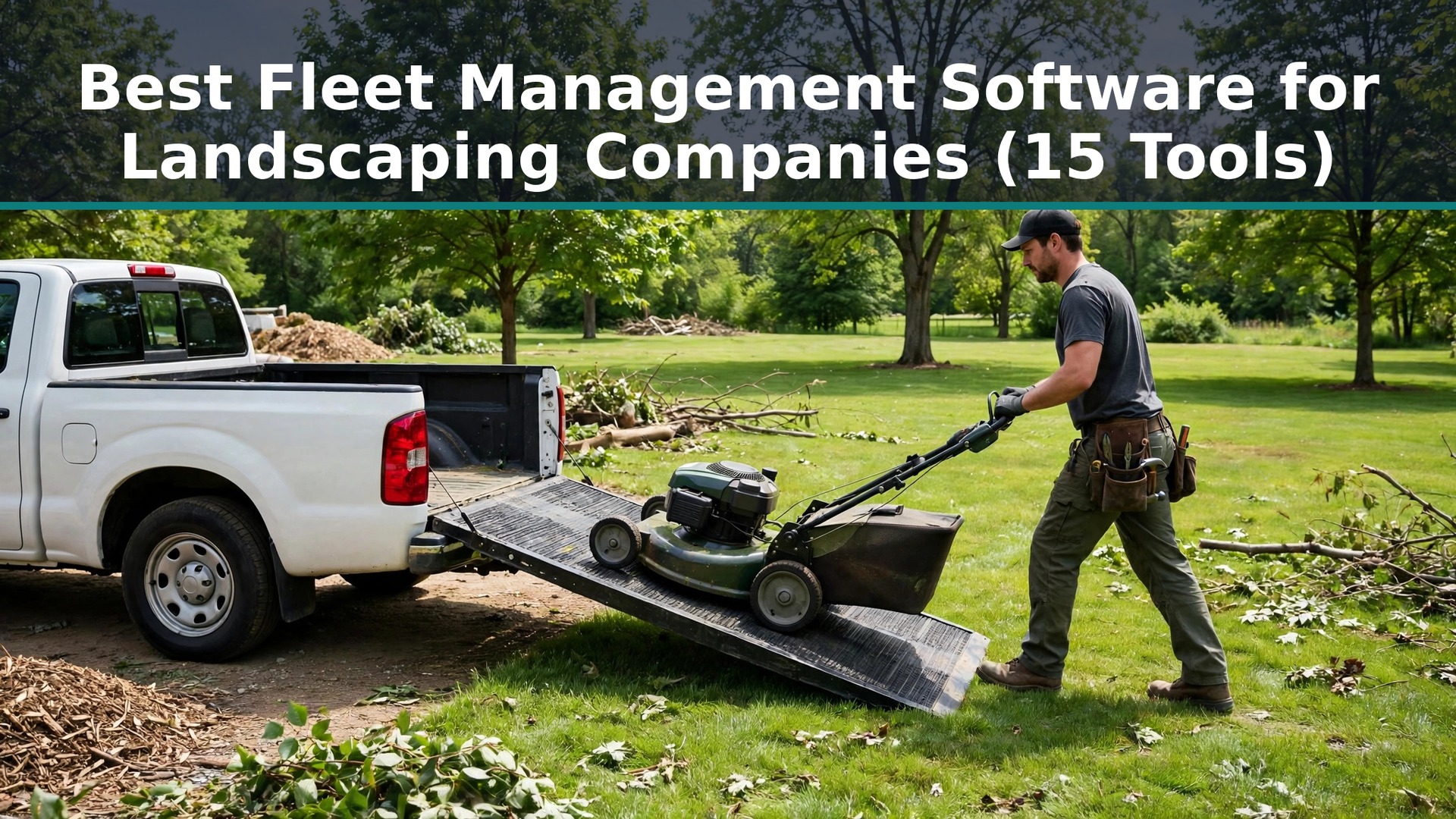
A landscaping company used to run its trucks on a whiteboard, a fuel card and one foreman who knew where every crew was by heart. A truck broke down, a job ran late and the owner only learned about it when the client called. The best fleet management software for landscaping companies exists because that way of working breaks the moment the company runs five trucks instead of two, and the foreman who knows everything cannot be in five places at once.
Moving from the whiteboard to a real fleet system changes the morning in a visible way. The owner sees every truck on a map, knows which crew is on site and which one is stuck in traffic, and can tell a client exactly when the crew will arrive. The switch is not about watching dots on a screen. It is about knowing where the money goes, because a truck that idles for an hour burns fuel, wages and a schedule slot all at once.
The difference shows up fastest in the months when fuel prices rise or a truck goes down. A company that tracks its fleet can see the cost per job, the idle time per truck and the maintenance that is due before the breakdown.
What Changed in the best fleet management software for landscaping companies Market
The biggest change is that the hardware has shrunk and the software has grown. Five years ago a fleet system meant a bulky device wired into every truck and a dashboard only the owner could read. Now the tracker is a small plug-in unit or even a phone app, and the crew lead can see the day’s route on a phone. This guide gives the starting figure for every tool and says plainly when that figure is reported rather than published, because most fleet vendors still price by quote.
The second change is the split between tracking and maintenance. A GPS tracker tells the owner where the truck is, but it does not tell the owner when the oil is due, which tire is worn or which truck costs the most per mile. The tools below are ranked with that split in mind, and the best fleet management software for landscaping companies in this guide was judged first on whether it covers both jobs, because a landscaping company that only tracks location will still be surprised by the repair bill.
The 15 Tools at a Glance
| Tool | Main job | Best for | Starting price |
|---|---|---|---|
| Samsara | Full telematics with AI cameras | Mid-size to large fleets | Reported 27 to 33 dollars per vehicle a month |
| Geotab | Open telematics platform | Fleets that want data depth | Reported 10 to 18 dollars per vehicle a month |
| Motive | Compliance-first telematics | Small fleets on a budget | Reported 20 to 30 dollars per vehicle a month |
| Verizon Connect | Enterprise fleet platform | Large fleets with complex needs | Pricing on the vendor site |
| Fleetio | Maintenance and fuel management | Fleets that want maintenance first | 4 dollars per vehicle a month, reported |
| Azuga | GPS tracking with safety scores | Small fleets that want a low price | 22.99 dollars per vehicle a month, reported |
| Teletrac Navman | GPS tracking and compliance | Fleets that want a proven platform | Reported around 38 dollars per vehicle a month |
| GPS Trackit | Simple GPS tracking | Small fleets that want the basics | Pricing on the vendor site |
| Fleet Complete | Fleet tracking with dispatch | Fleets that need dispatch tools | Pricing on the vendor site |
| Lytx | Video safety and telematics | Fleets that want driver coaching | Pricing on the vendor site |
| Quartix | Simple vehicle tracking | Small fleets that want easy setup | Pricing on the vendor site |
| Linxup | GPS tracking for small fleets | Small businesses with a few trucks | Pricing on the vendor site |
| Zonar | Inspection and compliance | Fleets that want inspection workflows | Pricing on the vendor site |
| Rhino Fleet Tracking | GPS tracking with alerts | Small fleets that want simple alerts | Pricing on the vendor site |
| FleetWave | Fleet management with maintenance | Fleets that want a full system | Pricing on the vendor site |
Best Pick by Job
| Job type | First pick | Second tool | Why this pair works |
|---|---|---|---|
| Large landscaping fleet | Samsara | Geotab | Samsara leads on cameras and Geotab adds data depth |
| Small fleet on a budget | Motive | Azuga | Motive leads on value and Azuga adds a low price |
| Maintenance first | Fleetio | Samsara | Fleetio leads on maintenance and Samsara adds tracking |
| Driver safety | Lytx | Samsara | Lytx leads on video coaching and Samsara adds AI cameras |
| Simplest tracking | Quartix | GPS Trackit | Quartix sets up fastest and GPS Trackit adds basic alerts |
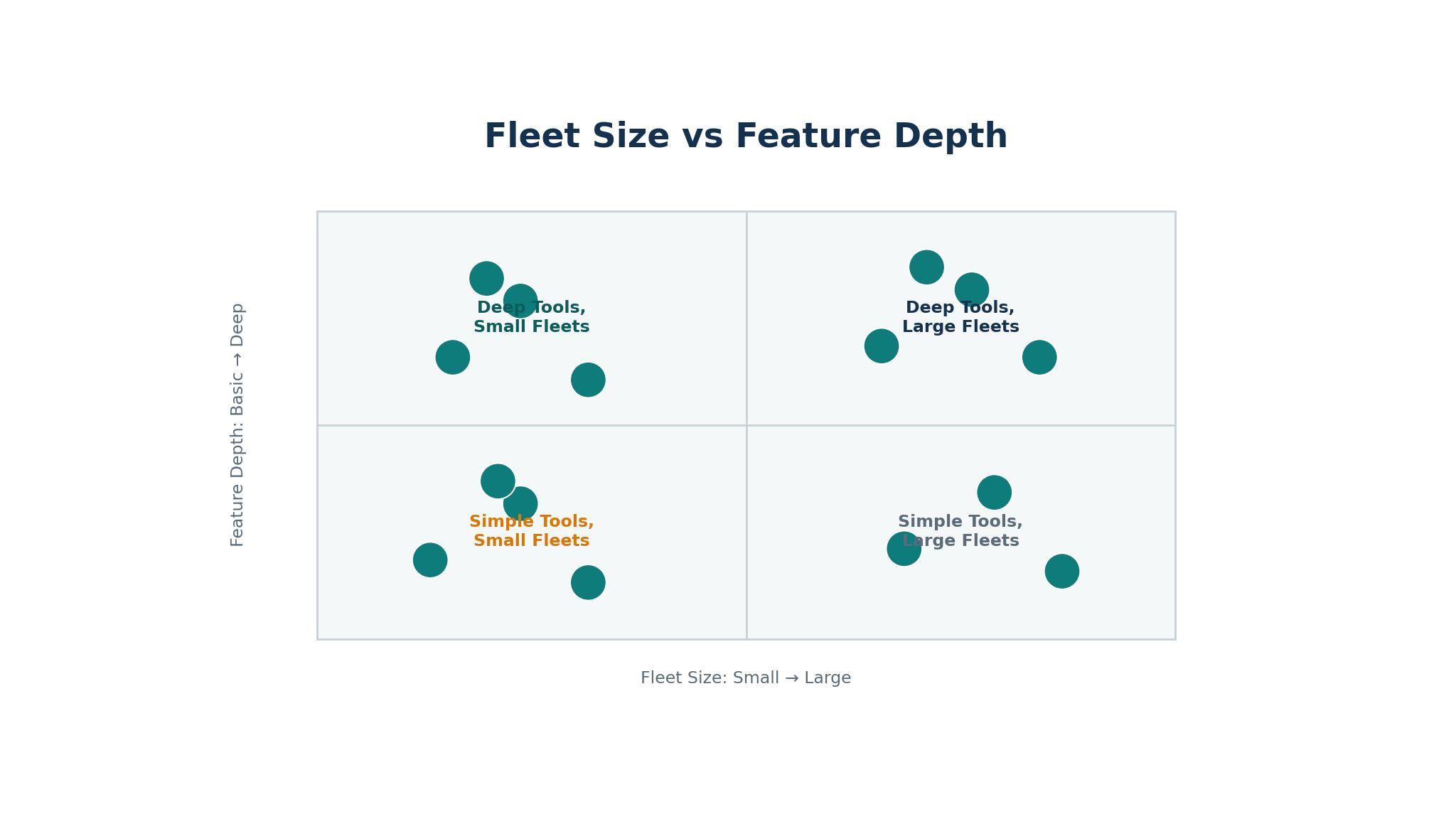
Twenty trucks and three trucks are different operations under the same word fleet. The large company lives on cameras, compliance and reporting, while the small one lives on knowing where the truck is and when the oil is due, so buying for the wrong half means paying for features the company never opens while going without the ones it needs every day.
Size decides the second cut. A three-truck company needs a tool that works on day one without a hardware project, while a twenty-truck company needs roles, reporting and a system that does not bend under its own weight. The best fleet management software for landscaping companies is the one that matches the fleet’s size and work today, with a clear path to the next level when the company grows.
How to Judge the best fleet management software for landscaping companies
Start with one real crew for a week, because that is the test that separates a fleet tool from a map with dots. Put the tracker on one truck, run the crew’s normal routes and compare the system’s report against what the foreman already knows. A tool that matches the foreman’s knowledge and adds the idle time, the route history and the fuel use will earn the crew’s trust, while one that disagrees with the foreman will be ignored by Friday.
Next, test the maintenance alert with a real service date. Enter a truck with an oil change due next week and check whether the tool warns the owner in time, shows the cost and lets the owner schedule the work. Look for an alert that names the truck, the service and the date, because an alert that only shows a red dot cannot tell the owner what to fix. The best fleet management software for landscaping companies proves the maintenance alert on the company’s own trucks before the trial ends.
Then check the contract. Ask how long the term runs, what the hardware costs and what happens if the company cancels early. A three-year lock-in with an early termination fee is a different purchase than a month-to-month plan, and the owner should know which one he is signing. A tool that hides its contract terms is not solving the cost problem, it is hiding it.
The 15 Tools in Detail
The order below follows the fleet yard, so the full telematics leader opens the list and the full-system tools close it.
1. Samsara
Samsara is the leading fleet platform for mid-size to large landscaping companies, and its AI cameras are the reason. The base price is reported at 27 to 33 dollars per vehicle a month on a standard 36-month contract, climbing to 40 to 60 dollars with AI dashcams, plus hardware of 99 to 548 dollars per vehicle.
The drawback is the cost and the contract. Samsara publishes no rate card, so the price depends on the quote, and the standard contract runs three years with early termination fees. The platform is built for fleets of fifty or more, and a three-truck company will pay for depth it never uses.
Samsara suits mid-size to large fleets that want the deepest platform. It fits a company with dozens of trucks, an owner who wants AI cameras and predictive maintenance and a team that can commit to a multi-year contract. The AI cameras are the feature that matters, because footage that exonerates a driver pays for the system in one dispute.
2. Geotab
Geotab is the open telematics platform for fleets that want data depth, and its open API is the reason. The entry price is reported at 10 to 18 dollars per vehicle a month, with bundled software and hardware reported at 30 to 40 dollars, sold through a network of resellers.
The drawback is the reseller model and the setup. Geotab is sold through more than 2,000 resellers, so the experience varies by which one the company gets, and the platform needs technical staff to get the most from its data.
Geotab suits fleets with technical staff that want the deepest data. It fits a company that integrates fleet data with other systems, an owner who wants an open platform and a team that can build its own reports. The open API is the feature that matters, because a fleet that owns its data can use it anywhere.
Plug Geotab into one truck and pull its engine data against the dashboard gauge after a route. When the numbers agree, the platform is worth the setup.
3. Motive
Motive, formerly KeepTruckin, is the best value fleet platform for small landscaping companies, and its price is the reason. The Starter tier is reported at 20 to 25 dollars per vehicle a month, with Plus at 35 to 40 dollars and Enterprise at 45 to 50 dollars, and the base plans are available month to month rather than on a multi-year lock-in.
The drawback is the support tier and the depth. The base plan’s support is documented as slower than the higher tiers, and the platform is built for trucking compliance first, so a landscaping company will find some features geared toward long-haul rather than local crews.
Motive suits small fleets that want value and flexible terms. It fits a company with five to twenty trucks, an owner who wants month-to-month terms and a team that needs compliance and cameras without an enterprise bill. The flexible contract is the feature that matters, because a small company should not be locked in for three years.
4. Verizon Connect
Verizon Connect is the enterprise fleet platform for large companies with complex needs, and its scale is the reason. Pricing is on the vendor site, so ask for a quote before budgeting, and the platform is built for fleets that need a proven enterprise system.
The drawback is the opacity and the size. Verizon Connect does not publish a price, so the company will not know its real cost until it negotiates, and the platform is built for large fleets, so a small landscaping company will find it heavy and expensive.
Verizon Connect suits large fleets with complex routing and compliance needs. It fits a company with dozens of trucks across several locations, an owner who wants a proven enterprise platform and a team that can run a proper implementation. The scale is the feature that matters, because a large fleet needs a system that does not bend under its own weight.
Let the foreman mark every Verizon Connect route he would have run differently over a week. The gap between the two plans is the test.
5. Fleetio
Fleetio is the maintenance-first fleet tool for landscaping companies, and its maintenance depth is the reason. The price is reported at 4 dollars per vehicle a month, which makes it the cheapest paid start in this guide.
The drawback is the tracking depth. Fleetio is built for maintenance first, so its GPS tracking is thinner than Samsara or Geotab, and a company that needs live location and cameras will need a second tool. The price is reported rather than published on some pages, so confirm the current number before committing.
Fleetio suits fleets that want maintenance first and already track location another way. It fits a company with a repair bill problem, an owner who wants the cost per truck and a team that needs work orders and inspections. The maintenance depth is the feature that matters, because a truck that gets serviced on time does not break down on the job.
6. Azuga
Azuga is the low-price GPS tracking tool for small fleets, and its price is the reason. A small landscaping company can run the whole fleet on Azuga without an enterprise bill, which suits a business that wants the basics done well.
The drawback is the depth. Azuga is thinner than Samsara or Geotab on analytics, integrations and camera features, and a company that grows past twenty trucks will find the limits quickly. A team that needs deep reporting will find it limiting.
Azuga suits small fleets that want a low price and the basics. It fits a company with three to ten trucks, an owner who wants safety scores and maintenance alerts and a team that values a simple setup. The low price is the feature that matters, because 22.99 dollars per vehicle a month buys a real fleet system.
Ask the drivers about Azuga after a week. If their safety scores match the foreman’s view of them, the scores measure driving, not noise.
7. Teletrac Navman
Teletrac Navman is the proven fleet platform for companies that want a long-established system, and its track record is the reason. The price is reported at around 38 dollars per vehicle a month, with the final figure depending on the quote.
The drawback is the price and the age. At a reported 38 dollars per vehicle a month, Teletrac Navman costs more than Motive or Azuga for a similar feature set, and the interface carries the weight of a platform built over decades.
Teletrac Navman suits fleets that want a proven platform and can pay for it. It fits a company with a medium fleet, an owner who values a long track record and a team that needs compliance and safety in one system. The track record is the feature that matters, because a platform that has served fleets for decades has survived the problems a new tool has not met yet.
8. GPS Trackit
GPS Trackit is the simple GPS tracking tool for small fleets that want the basics, and its simplicity is the reason. The vendor lists no public price, so the company should request a quote before it budgets.
The drawback is the thin feature set. GPS Trackit puts tracking first and everything else second, so maintenance, fuel and camera features are thinner than the full platforms, and a company that needs those will need a second tool.
GPS Trackit suits small fleets that want simple tracking and nothing more. It fits a company with a few trucks, an owner who wants to know where the crew is and a team that values a quick setup over deep features. The simplicity is the feature that matters, because a tool the owner actually opens will be used.
The GPS Trackit question is simple: does the dot on the map sit where the crew actually is? Check the map against the foreman’s calls for a week.
9. Fleet Complete
Fleet Complete is the fleet tracking platform with dispatch tools, and its dispatch depth is the reason. Pricing is on the vendor site, so ask for a quote before budgeting, and the platform is built for fleets that need dispatch as well as tracking.
The drawback is the opacity and the size. Fleet Complete does not publish a price, so the company will not know its real cost until it negotiates, and the platform is heavier than a simple tracker, which suits a company with a dispatch need and less so a small fleet.
Fleet Complete suits fleets that need dispatch alongside tracking. It fits a company with several crews and a busy schedule, an owner who wants the nearest truck on the next job and a team that values routing over raw tracking. The dispatch depth is the feature that matters, because a crew sent to the nearest job saves fuel and time on every call.
10. Lytx
Lytx is the video safety platform for fleets that want driver coaching, and its video depth is the reason. Pricing is on the vendor site, so ask for a quote before budgeting, and the platform is built for fleets that put safety first.
The drawback is the cost and the scope. Lytx is a safety platform first, so its maintenance and fuel features are thinner than a full telematics system, and a company that needs both will need a second tool.
Lytx suits fleets that want driver coaching and video proof. It fits a company with a safety problem, an owner who wants to coach drivers with real footage and a team that values a defensible record after an incident. The video depth is the feature that matters, because footage that shows what really happened ends the argument.
Watch a week’s Lytx video events with one driver. A coaching conversation that feels fair to the driver means the footage is working.
11. Quartix
Quartix is the simple vehicle tracking tool for small fleets that want an easy setup, and its simplicity is the reason. No public price is listed, so ask the vendor for a quote before planning the spend.
The drawback is the thin feature set. Quartix is built for simple tracking, so cameras, compliance and deep maintenance are thinner than the full platforms, and a company that grows will outgrow it faster than a deeper tool.
Quartix suits small fleets that want an easy setup and the basics. It fits a company with a few trucks, an owner who wants a daily report without a complex dashboard and a team that values a quick start. The easy setup is the feature that matters, because a system running in a day beats a system still being installed in a month.
12. Linxup
Linxup is the GPS tracking tool for small businesses with a few trucks, and its small-business focus is the reason. The price is not published, so get a quote from the vendor before you commit to a budget.
The drawback is the depth and the opacity. Linxup is built for small fleets, so maintenance, fuel and camera features are thinner than the full platforms, and a company that grows will outgrow it.
Linxup suits small businesses with a few trucks that want simple tracking. It fits a company with three to five vehicles, an owner who wants to know where the crew is and a team that values a low price over deep features. The small-business focus is the feature that matters, because a tool built for a few trucks fits a few trucks.
Drive a truck out of the yard and watch whether Linxup texts you before the driver reaches the gate. Late alerts are alerts you cannot use.
13. Zonar
Zonar is the inspection and compliance platform for fleets that want inspection workflows, and its inspection depth is the reason. Pricing is quoted per fleet, so the company should ask for its own number before budgeting.
The drawback is the narrow fit. Zonar is built for inspection and compliance first, so its maintenance and camera features are thinner than a full telematics platform, and a landscaping company that does not run regulated inspections will find much of the platform unused.
Zonar suits fleets that run formal inspections every day. It fits a company with a compliance requirement, an owner who wants a defensible inspection record and a team that values a tamper-proof process. The inspection depth is the feature that matters, because a record that cannot be altered survives an audit.
14. Rhino Fleet Tracking
Rhino Fleet Tracking is the GPS tracking tool for small fleets that want simple alerts, and its alert system is the reason. The vendor does not publish a rate, so request a quote before you set the budget.
The drawback is the thin feature set. Rhino is built for tracking and alerts first, so maintenance, fuel and camera features are thinner than the full platforms, and a company that needs those will need a second tool.
Rhino Fleet Tracking suits small fleets that want simple alerts and nothing more. It fits a company with a few trucks, an owner who wants a text when a truck speeds and a team that values a quick setup. The alert system is the feature that matters, because an alert that fires on time prevents the problem it reports.
Drive a Rhino-tracked truck past a known speed zone and check the alert. If the reported speed matches the road and the driver’s memory, the alerts are trustworthy.
15. FleetWave
FleetWave from Chevin is the full fleet management system for companies that want one platform for everything, and its breadth is the reason. Pricing comes by quote, so ask the vendor for a figure before you plan the spend.
The drawback is the size and the opacity. FleetWave is a full system, so the implementation is longer than a simple tracker and the platform is heavier than a small landscaping company needs.
FleetWave suits fleets that want a full system and can run a proper implementation. It fits a company with a large fleet and a complex cost structure, an owner who wants the total cost of ownership and a team that values breadth over speed. The breadth is the feature that matters, because a fleet that sees its total cost can manage it.
Switching Fleet Tools Without Losing the Trucks
A fleet migration fails in a specific way. The company installs the new trackers, turns on the new dashboard and discovers that half the trucks have no device and a third of the drivers never got the app. The team then runs two systems for months, and the new one gets blamed for the old one’s mess. The fix is to fit the hardware first, before a single route is planned in the new system, and to run both systems in parallel until the truck list matches.
The second failure is the driver who never uses the new app. The company buys the system, trains the crew once and assumes the work is done, while the senior driver keeps a paper log and the hours split in two. A migration needs a named owner, a weekly check on who is actually logging trips and a willingness to retire the paper log on a fixed date. Without a fixed date to retire the paper log, the crew keeps two records going indefinitely.
Mistakes That Cost Landscaping Companies Money
The most expensive mistake is buying for the fleet the owner wishes he ran instead of the one he runs. A three-truck company does not need Samsara Enterprise, and a fifty-truck company does not need a free tracker that cannot handle maintenance. Size the tool to the next twelve months of trucks, not to a five-year dream, and plan the upgrade path in advance so the switch is a decision rather than a crisis.
A second mistake is ignoring the contract and the hardware. A 27 dollar plan looks cheap until the company signs a three-year term, pays 500 dollars per truck for hardware and discovers the early termination fee. Ask for the full contract terms before committing, and include the hardware and the term. The cheapest monthly price is often the most expensive stack, and the best fleet management software for landscaping companies are judged here on the full cost, not the entry price.
Frequently Asked Questions
Which fleet management software is best for a landscaping company?
Samsara is the best starting point for a mid-size to large landscaping company, because its AI cameras and predictive maintenance are the deepest in this guide. Motive is the better pick for a small fleet on a budget, since it costs less and offers month-to-month terms. A company with twenty trucks should test Samsara first, while a company with five trucks should test Motive first.
How much does fleet management software cost per vehicle per month?
Fleet management software costs between 4 and 60 dollars per vehicle a month for most landscaping companies. Fleetio is reported at 4 dollars per vehicle a month, Geotab is reported at 10 to 18 dollars, Motive is reported at 20 to 30 dollars and Samsara is reported at 27 to 33 dollars, climbing to 40 to 60 dollars with AI cameras.
Do I need hardware in every truck?
Yes, most fleet platforms need a device in every truck, either a plug-in tracker or a hardwired unit, and the camera platforms need a dashcam as well. A few tools run from the driver’s phone, but a phone app cannot read engine data or record video.
Can a landscaping company switch fleet software without losing history?
Yes, if the vehicle list and the service history are exported before the move and the hardware is fitted first. Export the trucks, the drivers and the maintenance records, check that every truck has a device, and run both systems in parallel for a week.
What is the cheapest good fleet management software?
Fleetio is the cheapest good fleet software, at a reported 4 dollars per vehicle a month, but it is maintenance-first rather than a full tracker. Geotab is the cheapest full telematics start, at a reported 10 to 18 dollars per vehicle a month. A company that needs maintenance most should start with Fleetio, while a company that needs tracking most should start with Geotab.
Do fleet tools work for small landscaping companies?
Yes, most tools in this guide are built for small fleets, and the entry prices from Azuga, Motive and Quartix cover companies with three to ten trucks. A small company should pick the tool that fits its truck count, start with one crew and expand when the reports prove useful.
The Verdict on Fleet Management Software for Landscaping Companies
Samsara takes the top spot for a mid-size to large landscaping company, because its AI cameras and predictive maintenance are the strongest in the guide and its platform scales from twenty trucks to two hundred without a migration. The price and the contract are heavy, but the cost of a breakdown on a job site is heavier.
Motive is the pick for a small fleet on a budget, Fleetio is the pick for maintenance first, and Geotab is the pick for data depth. The best fleet management software for landscaping companies is not the one with the longest feature list, it is the one that keeps the schedule honest, warns the owner before the truck fails and costs less than the jobs it helps protect.
Choose by the fleet size first, the work second and the price third. Track one real crew for a week on the top two choices, measure the idle time and the maintenance alerts, and set a review date. A company that picks this way will spend less time chasing trucks and more time finishing the jobs the clients paid for.