

TeamSnap is the best youth sports management software pick for a single team, because the free plan covers up to 15 players and Premium costs $10.83 a month on annual billing. TeamLinkt is the pick for a whole organisation that wants a free core, and SportsEngine is the pick for a league that needs a public website plus registration. The fifteen tools below compare price, registration and parent communication, so a club or league can pick the platform its volunteers will actually run.
A youth sports season runs on volunteers, and volunteers quit when the software fights them. The registrar needs signups and payments without a spreadsheet. The coach needs a schedule, a roster and a message that reaches every parent. The treasurer needs to know who paid and who did not. A platform that covers two of those jobs and fumbles the third creates more work than it saves, which is why the board should test the whole season flow before buying.
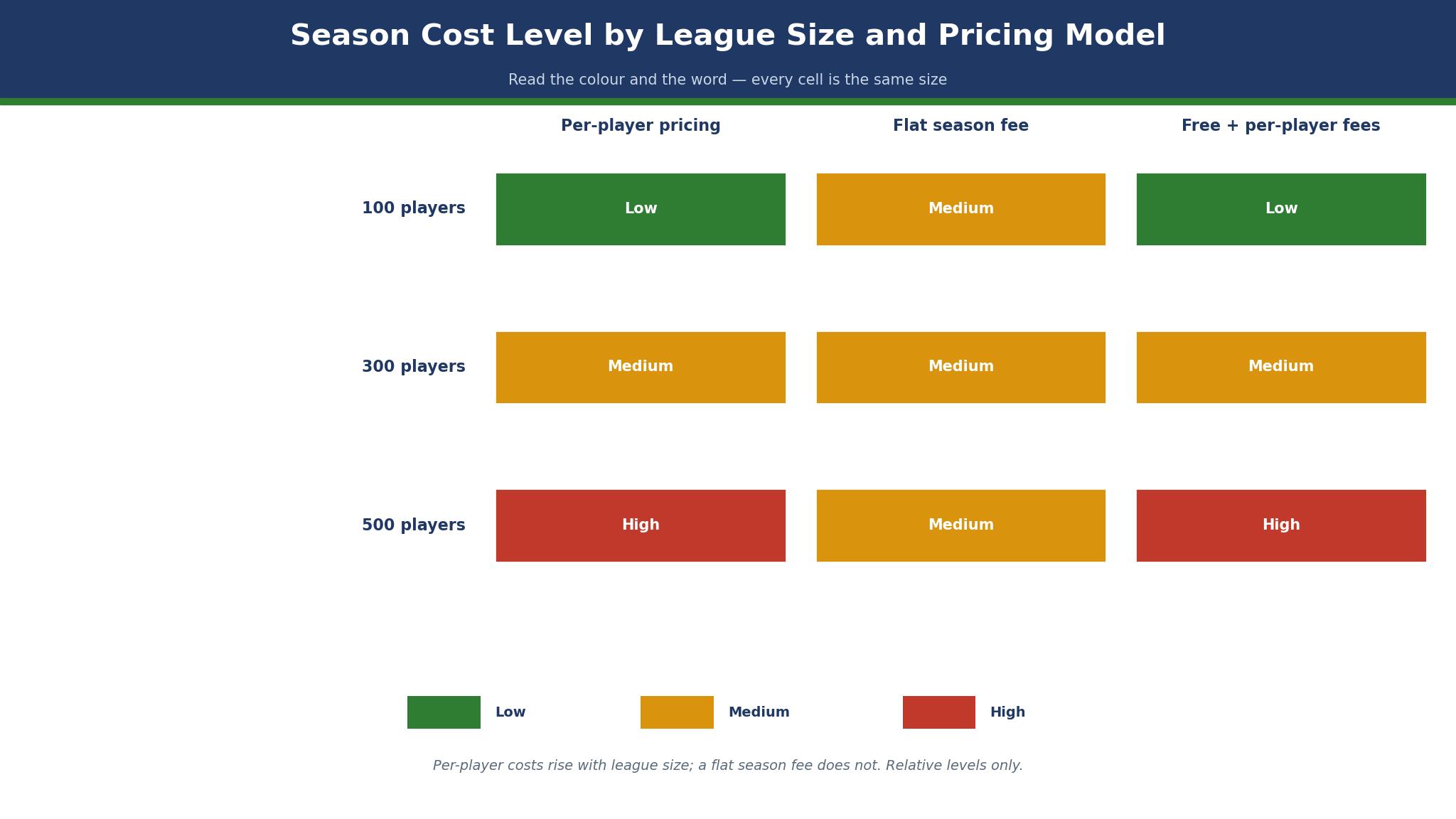
The buying problem is the fee model. Some platforms charge a subscription, some take a percentage of every payment, and some do both. A league with 500 players pays a very different bill on each model. The comparison below shows the model behind every price, so the board can budget the season rather than the month.
The 15 Tools at a Glance
This table lines up the best youth sports management software on the four numbers that decide a purchase, so the price model and the fit are visible before the detail sections begin.
| Tool | Main job | Best for | Starting price |
|---|---|---|---|
| TeamSnap | Team scheduling and chat | Single teams | Free, Premium $10.83 per month |
| SportsEngine | League websites and registration | Leagues needing a website | Quote-based |
| LeagueApps | Registration-heavy league ops | Large leagues | Quote-based |
| TeamLinkt | Free organisation platform | Clubs wanting a free core | Free, add-ons $425 per year |
| GameChanger | Scores, stats and streaming | Teams wanting live scores | Free, Plus from $7.99 per month |
| PlayMetrics | Club management platform | Competitive clubs | Quote-based |
| Spond | Free team app and payments | Small clubs on a budget | Free plus payment fees |
| Heja | Simple team communication | Teams wanting simple chat | Free, paid Pro upgrade |
| Jersey Watch | Registration and payments | Volunteer-led organisations | $19 first month, then $348 per year |
| TeamSideline | Scheduling and registration | Leagues and parks departments | Quote-based |
| Sports Connect | League management | Stack Sports leagues | Quote-based |
| Upper Hand | Sports business management | Multi-program sports businesses | Quote-based |
| Crossbar | Hockey club management | Hockey clubs and tournaments | Quote-based |
| InSeasonHQ | Flat-price club platform | Boards wanting one flat price | $750 per year |
| SportLoMo | Club and league management | Clubs and governing bodies | Quote-based |
Best Pick by Job
| Job type | First pick | Second tool | Why this pair works |
|---|---|---|---|
| Single team | TeamSnap | GameChanger | TeamSnap leads on scheduling, GameChanger adds live scores |
| Whole club on a free core | TeamLinkt | Spond | TeamLinkt is free for the organisation, Spond is free for the team |
| League needing a website | SportsEngine | LeagueApps | SportsEngine leads on websites, LeagueApps leads on registration volume |
| Volunteer-led organisation | Jersey Watch | TeamLinkt | Jersey Watch publishes a flat price, TeamLinkt is free to start |
| Board wanting one flat price | InSeasonHQ | Jersey Watch | InSeasonHQ is $750 a year flat, Jersey Watch is $348 a year |
The pattern across this list is that the best youth sports management software splits by who pays. TeamSnap charges the team, TeamLinkt and Spond charge nothing for the core and take payment fees, LeagueApps takes a percentage of every payment, and InSeasonHQ charges one flat price a year. A board that knows its player count and its registration revenue will pick faster than one that compares feature lists.
Which Youth Sports Platform Is Best for a Volunteer Board?
TeamLinkt is the best pick for a volunteer board, because the Core plan is free for the whole organisation, covering scheduling, communication, registration and payments without a subscription. The Operations or Revenue add-on costs $425 a year, and the Full Platform costs $795 a year, so a board can start free and add the paid modules only when the season demands them. The free core removes the budget argument that kills most board decisions.
The trade is the payment fee, which runs by volume and should be confirmed in writing before the season. The interface is also plainer than TeamSnap, and a board that wants a polished parent app may prefer the paid team tools.
TeamSnap is the better pick when the unit is one team rather than a whole club. The free team plan covers up to 15 players, Premium costs $10.83 a month on annual billing, and Ultra costs $13.75 a month for unlimited rosters and sponsorship tools. The app is the most polished here for a single team, with availability tracking, practice plans and live streaming on the paid plans.
How to Choose the Best Youth Sports Management Software
Start with the unit the platform must serve, because it rules out half the list in one pass. A single team needs TeamSnap, GameChanger or Heja, since those tools are built team-first. A whole club needs TeamLinkt, PlayMetrics or InSeasonHQ, since those tools cover the organisation. A league needs SportsEngine, LeagueApps or TeamSideline, since those tools handle registration at volume and a public website.
Next, price the season rather than the month. Add the subscription, the payment fee and any registration percentage, then multiply by the player count. A percentage platform can cost more than a flat $750 a year once 500 players register.
Then check the volunteer workload. Ask the registrar to run a full registration in the trial, from the form to the payment to the roster, and time how long it takes. Finally, confirm the export, since a club that cannot take its rosters and payment history with it is locked into the vendor for the next season too.
The 15 Tools in Detail
The fifteen tools below cover team apps, club platforms and league systems. Each one is judged on scheduling, registration, payments and price, so this roundup of the best youth sports management software stays honest about what a volunteer board actually pays.
1. TeamSnap
TeamSnap is the team app most coaches know, covering scheduling, availability, chat, payments and live streaming in one place. The free team plan covers up to 15 players with ads, Premium costs $10.83 a month on annual billing for larger rosters with availability tracking and practice plans, and Ultra costs $13.75 a month with unlimited rosters and sponsorship tools. The club product, TeamSnap ONE, is quote only.
The limit is the unit, since one subscription covers exactly one team, and a club with ten teams pays ten times or buys the quote-only club product. The free plan also shows ads and lacks availability tracking, so a competitive team will need Premium. The app itself is the most polished here for a single team, and the live streaming on the paid plans is a real advantage.
It suits a single team that wants the best team app. The scheduling and the parent communication are the reason to pick it, and the free plan covers a small recreational team.
Start with the free plan on one team, test the availability tracking on Premium, and price the club product before the organisation grows past three teams.
2. SportsEngine
SportsEngine is the league platform built around a public website, registration and a team app in one system. The HQ package covers the league website, season management, registration and communication, and the Motion product handles payments from $295 to start plus transaction fees. The platform is the best known in the league world, and it suits a league that needs a public face as well as a back office.
The pricing is quote based for HQ, which is the main drawback for a volunteer board that wants a number before a sales call. PlayMetrics acquired SportsEngine from Versant in May 2026, so a board should confirm the current product and pricing with the vendor. The platform also sells in-app and web ads to families, which some boards dislike.
It suits a league that needs a website plus season management under one roof. The public site and the registration depth are the reason to pick it, and the quote-based pricing needs a written number before any comparison.
3. LeagueApps
LeagueApps is the registration-heavy league platform, built for organisations that process a large volume of signups. The system covers registration, payments, scheduling, communication and a website, with no subscription fees and a price built from a percentage of each payment plus a one-time setup fee and annual fees for optional add-ons. The model suits a league whose revenue runs through registration.
The pricing is quote based, with the percentage and the setup fee set by negotiation, so a board must ask for a written quote and model the cost at the real player count. The platform is strong on registration volume and weak on the single-team experience, since it is built league-first. A small club will find it more system than it needs.
It suits a large league with heavy registration volume. The registration depth and the no-subscription model are the reason to pick it, and the percentage model needs a written quote before any comparison.
4. TeamLinkt
TeamLinkt offers a free Core plan for the whole organisation, covering scheduling, communication, registration and payments without a subscription. The Operations or Revenue add-on costs $425 a year, and the Full Platform costs $795 a year, so a board can start free and add the paid modules only when the season demands them. The free core is the strongest budget offer in this guide.
The trade is the payment fee, which runs by volume and should be confirmed in writing, and the free plan shows ads to families. The interface is plainer than TeamSnap, and a board that wants a polished parent app may prefer the paid team tools. The organisation-wide free core is the detail that matters for a club with many teams.
It suits a club that wants a free organisation platform with optional paid modules. The free core and the published add-on prices are the reason to pick it, and the payment fee needs a written number before the season.
Start on the free Core plan, run one full season on it, and add the paid modules only when a specific job demands them.
5. GameChanger
GameChanger is the live score, stats and streaming app for teams that want the game itself covered. The free plan scores games and tracks basic stats, and the Plus plan from about $8 a month adds advanced stats, live streaming and recruiting tools. The app is the best known in baseball and softball, and it has spread across other sports.
The limit is the scope, since GameChanger covers the game rather than the season. Registration, payments and scheduling are thinner than TeamSnap or TeamLinkt, so a team still needs a second tool for the back office. The Plus price is low, and the free plan covers a recreational team that only needs scores.
It suits a team that wants live scores, stats and streaming. The game coverage is the reason to pick it, and the low Plus price makes it an easy second app next to a scheduling tool.
Start free on one team, test the live streaming at a real game, and pair it with TeamSnap or TeamLinkt for the season work.
6. PlayMetrics
PlayMetrics is the club platform for soccer and other competitive youth sports, covering registration, scheduling, communication, payments and club operations. The platform owns SportsEngine, Sports Connect and Crossbar, so it is the largest club platform group in this guide. The system suits a competitive club that runs many teams, tournaments and programs under one roof.
The pricing is quote only, which is the main drawback for a volunteer board. The vendor prices by club size and feature set, so a board must ask for a written quote and compare it against the flat $750 a year InSeasonHQ charges. The platform is strong on club operations and weak on the single-team price, since there is no self-serve tier.
It suits a competitive club that needs one system for many teams and programs. The club depth is the reason to pick it, and the quote-based pricing needs a written number before any comparison.
7. Spond
Spond is the free team app with payment fees as the main cost, covering scheduling, messaging, attendance and payments without a subscription. The app is free, and the platform charges $1.00 plus 3.29 percent per product on US and Canadian payments, covered by the group by default. The model suits a small club with no software budget.
The trade is the fee on every payment, which adds up across a season, and the feature set is lighter than the paid club platforms. The app is clean and simple, and a volunteer board can learn it in an afternoon. The free price removes the budget conversation entirely, which is the point for a small club.
It suits a small club that wants a free app and will pay the payment fees. The zero subscription and the simple interface are the reason to pick it, and the payment fee needs a written number before the season.
Start free on one team, run a full payment cycle through it, and compare the fee total against the flat-price tools before the season.
8. Heja
Heja is the simple team communication app, built for coaches who want schedules, chat and attendance without a platform to learn. The app is free, with a paid Pro upgrade for advanced features, and the price is shown in the app stores. The interface is the simplest here for a parent, with one place for the schedule, the messages and the attendance.
The limit is the depth, since Heja covers communication rather than registration, payments or league operations. A team still needs a second tool for signups and money, and a club will find it too light for the back office. The simplicity is the point for a single team, and it is the limit for a whole organisation.
It suits a single team that wants simple chat and scheduling. The free app and the parent-friendly interface are the reason to pick it, and the Pro upgrade is cheap when the team needs more.
Start free on one team, test the attendance flow with real parents, and pair it with a registration tool when signups arrive.
9. Jersey Watch
Jersey Watch is the registration and payments platform for volunteer-led organisations, with published annual pricing that a board can budget without a sales call. The first month costs $19, then $348 a year, with payment processing at 3.5 percent plus $1 for all transactions. The platform covers registration, scheduling, communication, a website and payments, with no ads for admins or parents.
The trade is the processing rate, which is higher than the card rate on some tools, and the feature set is lighter than SportsEngine on the website side. The published price is the reason to pick it, since a volunteer board can approve $348 a year without a negotiation. The no-setup-fee and no-contract terms suit a board that meets once a month.
It suits a volunteer-led organisation that wants a flat published price. The $348 a year and the no-ads policy are the reason to pick it, and the processing rate needs a written number before the season.
Start with the $19 first month, run a full registration through it, and confirm the processing total before the season.
10. TeamSideline
TeamSideline covers scheduling and registration for leagues and parks departments, with a website, team pages, schedules, standings and payment processing in one system. The platform suits a league that needs the schedule published publicly and the standings updated without manual work. The interface is built for the league administrator rather than the parent.
The pricing is quote based, so a league must ask for a written quote before comparing costs. The platform is strong on scheduling and standings, and thinner on the team app experience than TeamSnap. A league with a public schedule and many divisions will use it daily, while a single club will find it more system than it needs.
It suits a league or parks department that publishes schedules and standings. The scheduling depth is the reason to pick it, and the quote-based pricing needs a written number before any comparison.
11. Sports Connect
Sports Connect is the league management platform from Stack Sports, covering registration, scheduling, communication and a website for affiliated programs. The platform suits a league already in the Stack Sports world, since the integration with the wider Stack system covers tournaments, background checks and payments. The system is built league-first, with the team app as a companion.
The pricing is quote based, so a league must ask for a written quote before comparing costs. The platform is strong on league operations and thinner on the single-team experience, and a club outside the Stack world will find less reason to pick it. The acquisition history matters, since PlayMetrics owns Sports Connect, so a board should confirm the current product with the vendor.
It suits a Stack Sports league that wants one system for the season. The league depth and the Stack integration are the reason to pick it, and the quote-based pricing needs a written number before any comparison.
12. Upper Hand
Upper Hand is the sports business platform for multi-program businesses, covering scheduling, payments, memberships, staff management and retail in one system. The platform suits a sports facility or academy that runs classes, camps, leagues and private training together, with the business side as important as the sport. The system is built for a business rather than a volunteer board.
The pricing is quote based, with third-party guides reporting a starting figure near $89 a month, so a board should treat that number as reported and ask for a written quote. The business depth is the reason to pick it, and a volunteer league will find it more system than it needs. The staff and membership tools suit a facility with paid coaches.
It suits a sports business running many programs together. The business tools are the reason to pick it, and the quote-based pricing needs a written number before any comparison.
13. Crossbar
Crossbar is the hockey club platform, covering registration, scheduling, team management, tournaments and facilities for hockey organisations. The platform suits a hockey club that runs tournaments and needs ice scheduling alongside the season, with the hockey-specific workflows built in. The system is owned by PlayMetrics, so the club platform depth carries over.
The pricing is quote based, so a club must ask for a written quote before comparing costs. The hockey focus is the strength and the limit, since a multi-sport club will find the sport-specific tools less useful. The tournament and facility features are the reason a hockey club picks it over a general platform.
It suits a hockey club that runs tournaments and facilities. The hockey workflows are the reason to pick it, and the quote-based pricing needs a written number before any comparison.
14. InSeasonHQ
InSeasonHQ is the flat-price club platform, charging $750 a year with everything core included and no setup fee. The platform covers registration, scheduling, communication, payments, volunteers and a website, with the price published and the card fee lower than some tools on large checkouts. The flat price suits a board that wants one number to approve.
The platform is younger than SportsEngine or LeagueApps, so the customer base and the reference list are thinner. The $750 a year undercuts the quote-only club tools for a mid-sized club, and the flat model means the bill never rises with player count. A board that hates percentage fees will find this the cleanest offer here.
It suits a board that wants one flat price for the whole club. The $750 a year and the published terms are the reason to pick it, and the younger customer base is the trade to check.
Run the trial on a real registration, test the volunteer tools with the board, and confirm the card fee at the real order size before paying.
15. SportLoMo
SportLoMo is the club and league platform for clubs and governing bodies, covering membership, registration, scheduling, communication and payments across many sports. The platform suits a governing body or a multi-sport club that needs one system for many organisations, with the administration depth that a single-team app cannot offer. The system runs in several countries, with the sport-specific setup to match.
The pricing is quote based, so a club must ask for a written quote before comparing costs. The governing-body depth is the reason to pick it, and a single club will find it more system than it needs. The multi-organisation tools suit a body that oversees many clubs rather than one team.
It suits a governing body or a multi-sport club. The administration depth is the reason to pick it, and the quote-based pricing needs a written number before any comparison.
TeamSnap vs TeamLinkt: One Team Against the Whole Club
The unit is the first difference. TeamSnap sells per team, with one subscription covering exactly one team, while TeamLinkt Core is free for the whole organisation. A club with ten teams pays ten TeamSnap subscriptions or buys the quote-only TeamSnap ONE product, while the same club pays nothing for TeamLinkt Core. The maths flips for a single team, where TeamSnap Premium at $10.83 a month is cheap and TeamLinkt adds little.
The polish is the second difference. TeamSnap is the most polished team app here, with availability tracking, practice plans and live streaming on the paid plans. TeamLinkt is plainer, with the organisation tools stronger than the team experience.
The deciding factor is the unit. A single team should take TeamSnap, because the polished app and the low per-team price fit that job. A whole club should take TeamLinkt, because the free organisation core removes the budget argument and the paid modules add up to less than ten team subscriptions. That split is the cleanest way to read the best youth sports management software when the choice narrows to two.
What Does Youth Sports Software Cost a League?
A league pays anywhere from free to about $750 a year in subscriptions for the best youth sports management software, plus payment fees that often cost more than the software. TeamSnap Premium costs $10.83 a month per team, TeamLinkt Core is free, Spond is free plus $1.00 and 3.29 percent per payment, and Jersey Watch costs $19 for the first month then $348 a year. InSeasonHQ charges a flat $750 a year, while SportsEngine, LeagueApps, PlayMetrics and most of the club tools sell by quote.
The payment fees are the hidden cost. A league with 500 players paying $150 each processes $75,000, and a 3.5 percent plus $1 fee takes about $3,125 of it, while a 2.9 percent plus $0.30 fee takes about $2,325.
The honest way to budget is to price the season, not the month. Add the subscription, the processing fee at the real registration revenue, and any percentage the platform takes, then compare the totals. A free core with payment fees can be the cheapest option, while a flat $750 a year can beat a percentage model once the player count passes a few hundred.
How Do You Get Parents to Actually Use the App?
Start with one message that matters, because the first message sets the habit. Send the practice schedule through the app, not through a group chat, and make the app the only place the schedule lives. A parent who finds the schedule in the app once will open the app again, while a parent who finds it in a chat will never open the app at all.
Next, keep every message inside the app. Scores, rain delays, snack duty and payment reminders should all arrive in one place, so the app becomes the season rather than one more channel. A coach who splits messages across the app, email and a group chat trains parents to ignore all three. Then ask for one action in the app each week, such as confirming attendance or paying a fee, so the habit builds on use rather than reminders.
Finally, train the parents at the first practice, not by email. A five-minute demo on a phone beats a season of reminder emails.

Frequently Asked Questions
Is TeamSnap free?
Yes, for a small team. TeamSnap offers a free team plan for up to 15 players with ads, while Premium costs $10.83 a month on annual billing and Ultra costs $13.75 a month. That free plan is why TeamSnap leads the best youth sports management software for single teams. The club product, TeamSnap ONE, is quote only, so a club with many teams should price that separately.
What is the cheapest youth sports platform?
TeamLinkt Core and Spond are free, with payment fees as the main cost. TeamLinkt Core covers the whole organisation free, with add-ons at $425 a year and the Full Platform at $795 a year. Spond charges $1.00 plus 3.29 percent per payment, so a board should compare the fee total against the flat-price tools.
Does SportsEngine still exist?
Yes. SportsEngine still operates as a league platform with a website, registration and a team app, and PlayMetrics acquired it from Versant in May 2026. A board should confirm the current product and pricing with the vendor, since the HQ package is quote based.
How much does LeagueApps cost?
LeagueApps publishes no price and sells by quote, with a percentage of each payment plus a one-time setup fee and annual fees for optional add-ons. A league should ask for a written quote at the real player count and model the percentage against the flat $750 a year InSeasonHQ charges.
Is there a youth sports platform with a flat price?
Yes. InSeasonHQ charges $750 a year flat with everything core included and no setup fee, and Jersey Watch costs $19 for the first month then $348 a year. A board that hates percentage fees should compare those two flat offers against the quote-only club tools.
Can parents pay league fees through the platform?
Yes. TeamSnap, TeamLinkt and LeagueApps all take card payments in the app, with fees from about 3 percent plus a per-payment charge. Check whether the fee falls on the league or the parent before publishing the season price.
Choose the Platform Parents Will Open
A single team should take TeamSnap, because the free plan covers 15 players and Premium at $10.83 a month adds the availability tracking a competitive team needs. A whole club should take TeamLinkt, because the free Core plan covers the organisation and the paid modules cost less than ten team subscriptions. A board that wants one flat price should take InSeasonHQ at $750 a year, and that flat number is the core test for the best youth sports management software.