
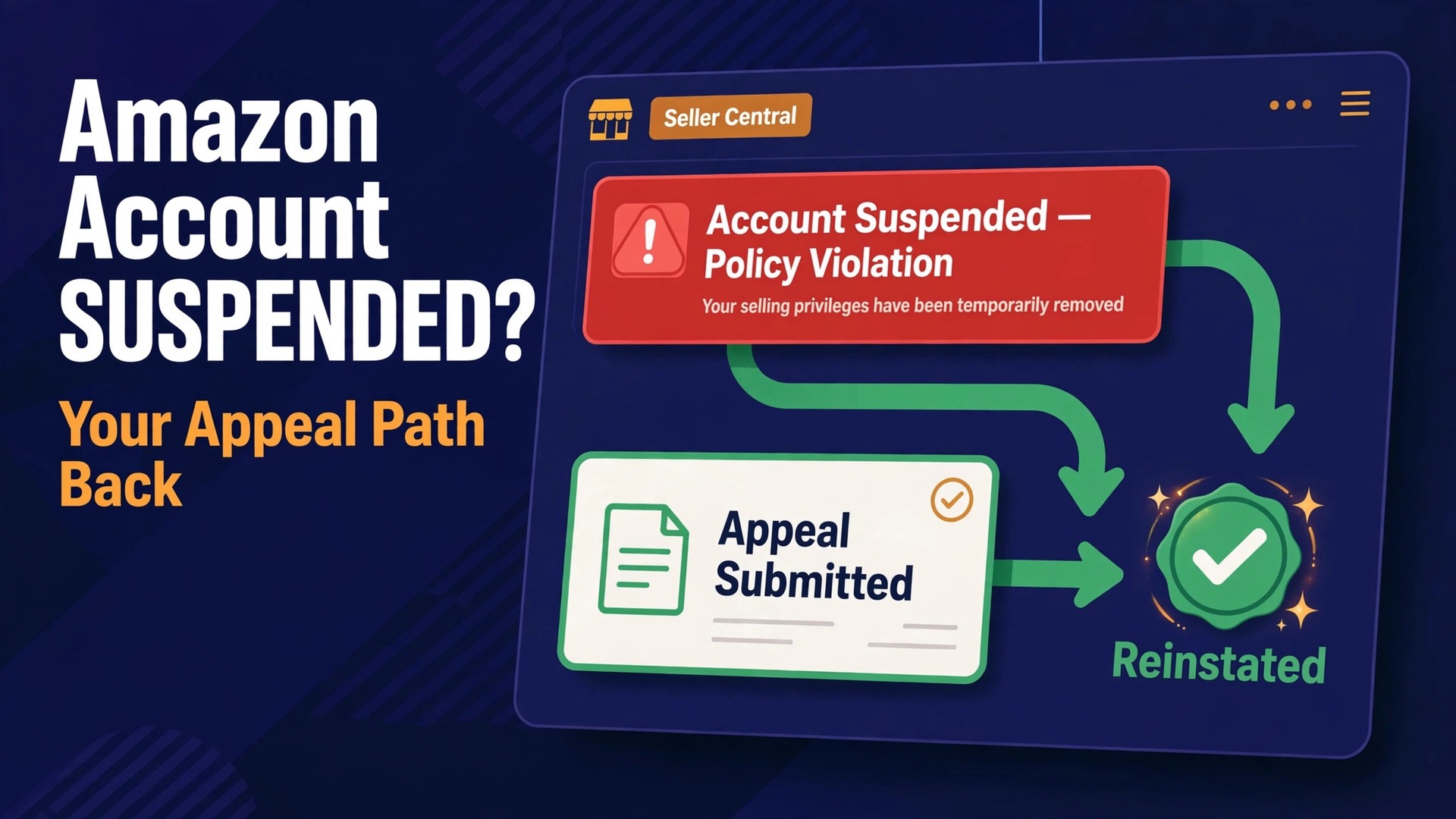
An order defect rate above 1 percent puts a seller account on Amazon’s radar, and that single threshold explains why a small shop can lose selling rights over a handful of bad orders. Amazon publishes performance targets that every seller is expected to meet, including late shipment below 4 percent and valid tracking above 95 percent for many sellers. When those numbers slip, or when a policy notice lands, the account can move from warning to suspension fast. This guide shows how to fix Amazon seller account suspended small business problems with a calm, evidence led workflow rather than a rushed apology letter.
A suspension is not a conversation. It is a review of documents, dates, and actions. The reviewer reading your appeal was not in your warehouse, did not talk to your supplier, and cannot see good intentions. They can see the notice, the account history, and whatever proof you attach. That is why the order of work matters so much. Read first, fix second, write third, and submit only when every claim in your appeal already has a matching piece of evidence behind it.
Small businesses face a particular version of this problem. One person often owns listings, supplier calls, packing, and customer messages. A single missed supplier invoice, one listing copied from a competitor, or a week of late shipments during a holiday rush can therefore look like a pattern. The good news is that a small team can also fix things fast, because there are fewer layers between the owner and the fix. Use that speed, but do not let it turn into haste at the appeal stage.
What a Suspension Notice Actually Tells You
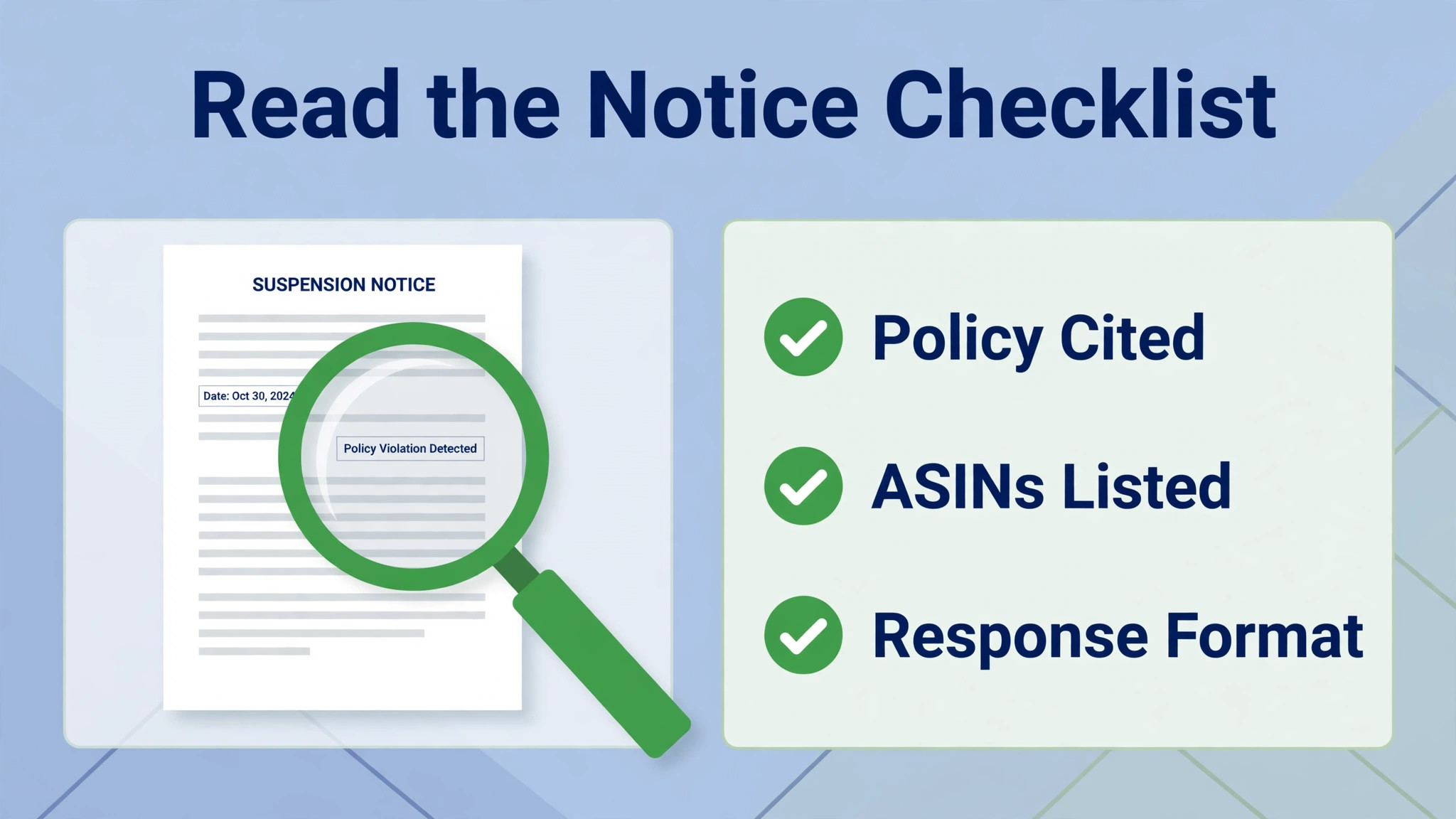
The notice is the only document you are answering, so treat it as the brief for the whole job. Open it in Seller Central under Performance Notifications and read every line before you touch a listing or write a sentence. Note the policy cited, the marketplace affected, the ASINs named, and the type of response Amazon asks for. Some cases ask for a plan of action, others ask for documents, a questionnaire, or an acknowledgment. Answering with the wrong format wastes a review cycle.
Save a full copy of the notice on the day it arrives. Screenshot the notice itself, the Account Health page, and every affected listing. Dates matter here, because invoices and messages that predate the problem carry more weight than documents created after the suspension. If the notice mentions a date range, pull orders, messages, and supplier records for that exact window before you start to interpret anything.
Notices fall into a few broad groups, and each group points to a different kind of evidence. Performance notices point to metrics and order records. Policy notices point to listing content and product compliance. Authenticity notices point to supplier invoices and authorisation letters. Verification notices point to identity and business documents. Naming the group early keeps you from gathering the wrong proof.
| Notice group | What Amazon usually questions | Evidence that answers it |
|---|---|---|
| Performance | Order defects, late shipment, cancellations | Order records, carrier scans, message logs |
| Policy | Listing claims, restricted products, images | Corrected listings, compliance documents |
| Authenticity | Source of goods, brand authorisation | Dated supplier invoices, authorisation letters |
| Verification | Identity, address, business details | Business registration, bank and tax documents |
Read the notice twice, once for the headline reason and once for the details hiding in the wording. A notice that names three ASINs is a different job from a notice that names an entire category. A notice that cites buyer complaints about condition is different from one that cites a trademark complaint, even when both feel like product problems. Write down the exact policy wording in your own case notes, and check every later paragraph of your appeal against it.
How to Fix Amazon Seller Account Suspended Small Business Step by Step
The workflow below is the spine of this guide, and each later section works through one stage in detail. Do not skip ahead to the appeal draft, because an appeal written before the fix is complete reads as a promise rather than a record. Reviewers respond to completed actions, not to intentions, and a plan that describes fixes already made is far stronger than one that describes fixes you hope to make.
- Read the suspension notice in full and save copies of the notice, Account Health, and affected listings.
- Identify the root cause by tracing the problem to a supplier, a listing process, a staffing habit, or a metric nobody was watching.
- Fix the problem completely before writing, which may mean removing listings, changing suppliers, quarantining stock, or retraining staff.
- Gather evidence that matches every claim you will make, with dates, ASINs, and supplier names that line up.
- Draft a concise plan of action in three parts, covering root cause, corrective actions already taken, and preventive measures.
- Check inventory, linked accounts, and open orders, then submit through Account Health and track the response.
Keep a single case folder for everything, with subfolders for the notice, orders, invoices, listing screenshots, and the appeal drafts. When a reviewer asks for more information, a tidy folder lets you answer in hours instead of days. It also protects you if a second appeal becomes necessary, because you will not have to rebuild the story from scattered emails.

Read the Notice Line by Line
Start with the subject line and the first paragraph, which usually name the policy and the action taken. Then work through the body for ASINs, order IDs, complaint types, and any deadline. If the notice asks a direct question, answer that question directly in your appeal. Reviewers work through large queues, and a direct answer is easier to approve than a long story that circles the question.
Check whether the suspension covers the whole account or only certain listings. A whole account suspension stops selling, while a listing removal leaves the account open but blocks specific offers. The appeal route differs, and using the wrong route can delay the case. In Seller Central, the Account Health page shows the status and the appeal button for the relevant violation, so confirm the route there rather than guessing from the email alone.
Look for the words that signal what Amazon wants next. A request for a plan of action needs the three part structure described later in this guide. A request for invoices needs itemised, dated supplier invoices that map to the named ASINs. A request for a questionnaire needs short, factual answers, not a narrative. Matching the requested format is not a formality. It is how you show the reviewer that you read the notice properly.
If any part of the notice is unclear, gather the surrounding facts before you write. Pull the order history for the named ASINs, read the buyer messages attached to those orders, and check the listing history for recent edits. Clarity usually comes from the records, not from rereading the same email a fifth time. When the records contradict your first guess about the cause, trust the records.
That disciplined reading is the foundation when you need to fix Amazon seller account suspended small business cases, because every later decision traces back to the policy wording and the ASINs named in the notice. A team that skips this stage often fixes the wrong listing, gathers the wrong invoices, and writes an appeal that answers a question nobody asked.
Find the Real Root Cause
A root cause is the mechanism that allowed the problem, not the problem itself. Late shipments are a symptom. The root cause might be a supplier who ships on Fridays only, a team member who marks orders shipped before packing, or a carrier cutoff that nobody checked during a sales spike. Each of those causes needs a different fix, and an appeal that names the symptom instead of the mechanism will be sent back.
Work backwards from the named orders or listings. For each affected order, ask what happened, who handled it, which supplier or carrier was involved, and which step failed. Repeat the question until you reach a process or a decision that you control. If the trail stops at a supplier, the root cause is your supplier check, not the supplier alone, because Amazon holds the seller responsible for the supply chain it chose.
Common root causes for small sellers include listings copied without checking claims, suppliers changed without new invoices, staff given listing access without training, and metrics checked only when a warning arrives. Be honest about which one applies to you. An appeal that blames buyers, competitors, or bad luck reads as evasion, while an appeal that names a specific internal gap reads as a business that has learned something.
Write the root cause in one or two plain sentences before you draft anything else. Test it against the evidence. If the root cause says a supplier changed, the invoices should show the change. If it says a listing error caused complaints, the listing history should show the error. If the evidence does not support the sentence, keep digging. A root cause that the documents contradict will undermine the whole appeal.
This evidence test matters most when you try to fix Amazon seller account suspended small business problems under time pressure, because the temptation is to pick the first plausible explanation and start writing. Resist that temptation. An extra day spent proving the cause is cheaper than a denied appeal that adds a second review cycle to the case.

Fix the Problem Before You Write
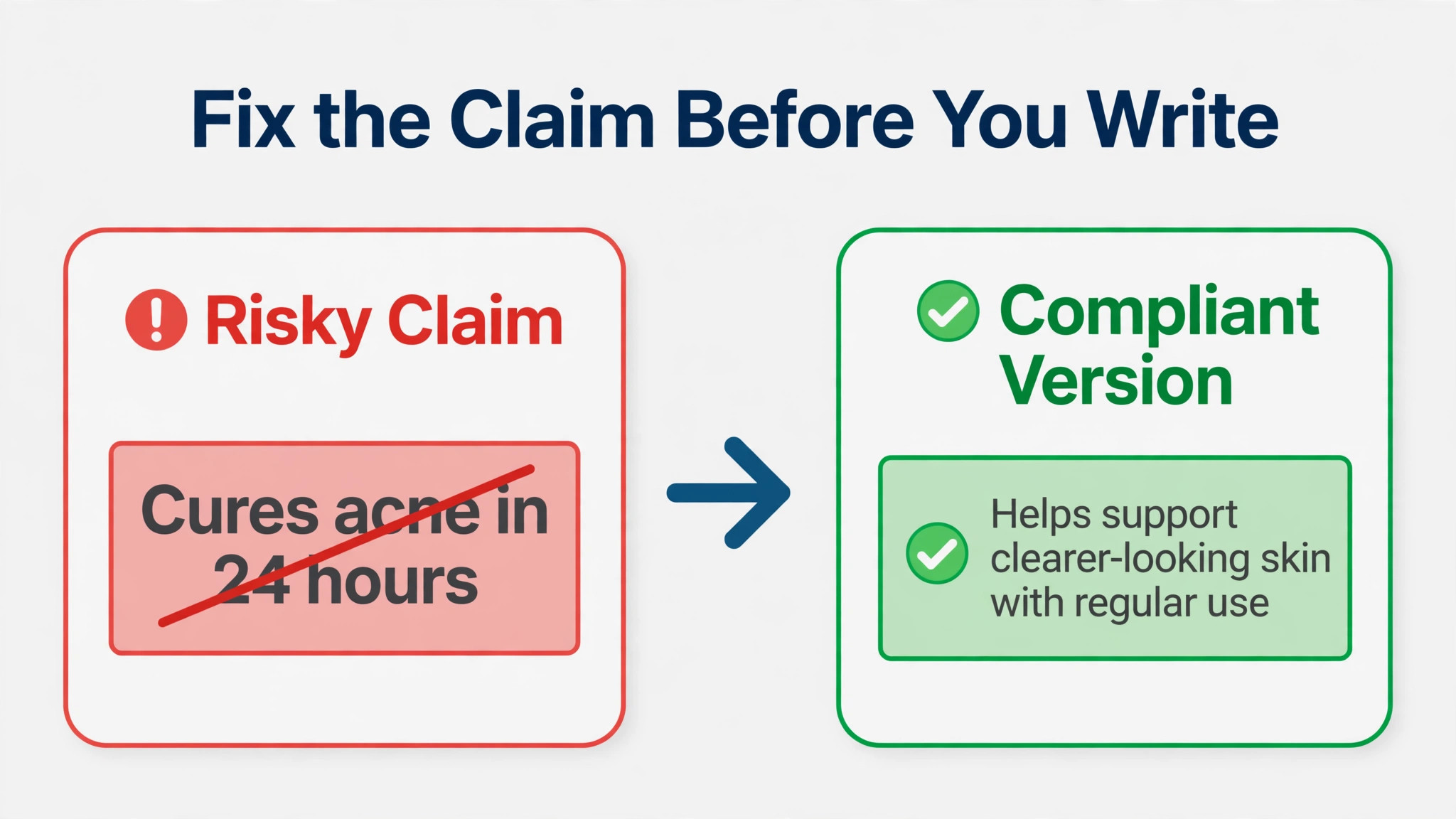
Amazon reviews what you have already done, so complete the fix first and collect proof as you go. Remove or correct every non compliant listing named in the notice, and check neighbouring listings for the same error, because the same mistake often repeats across a catalogue. Quarantine any stock whose authenticity or condition is in question, and do not sell it through another channel while the case is open, since that can create a second problem.
Supplier fixes need paperwork, not just a phone call. Ask the supplier for itemised invoices that show the product, quantity, date, and your business name, and check that each invoice maps to a named ASIN. If a supplier cannot provide that paperwork, that is itself a finding, and switching to a supplier who can is part of the fix. Keep the old and new supplier records side by side in your case folder, so the change is visible.
Staff and process fixes need to be visible too. Rewrite the listing checklist, add a second person check for claims and images, set a daily metric review, or remove listing access from anyone who has not been trained. Write the new process down in a short document with an owner and a review date. A reviewer cannot verify a verbal promise, but a dated process document with a named owner is something they can weigh.
Do not open a second seller account while suspended in an attempt to keep selling. Related account cases are among the hardest to resolve, and a new account created during a suspension is often treated as an attempt to bypass enforcement. The short term sales are not worth the long term damage to reinstatement. Focus every effort on the original account and the appeal in front of you.
Owners who work through this sequence properly learn how to fix Amazon seller account suspended small business trouble without creating a second problem alongside the first. The fix stage is where credibility is earned, long before a reviewer reads a single sentence of the plan.
Draft a Plan of Action That Reviewers Can Follow
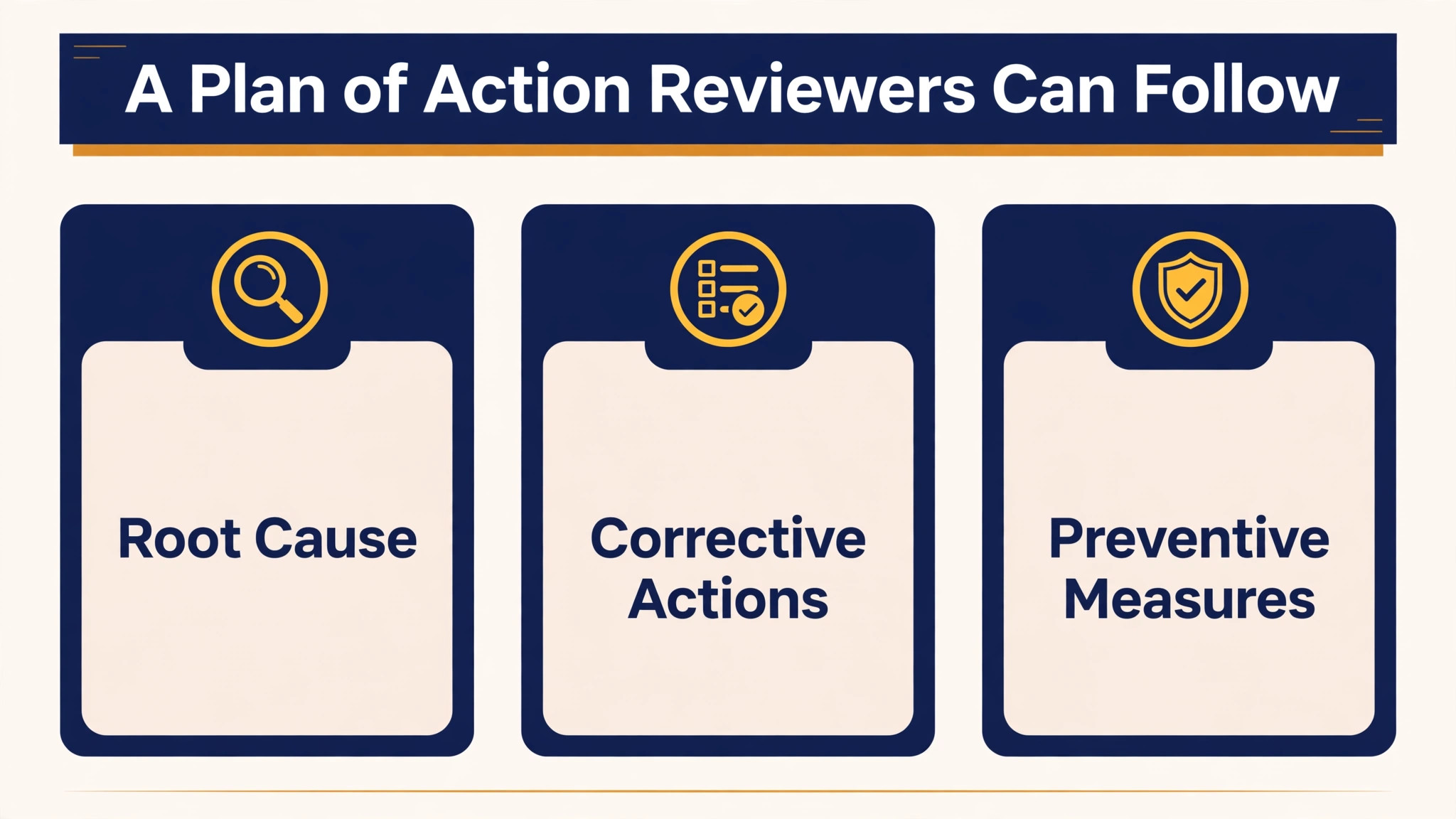
A plan of action has three parts, and each part earns its place. The root cause section states, in plain language, what went wrong and why. The corrective actions section lists what you have already done, with dates and evidence. The preventive measures section lists the controls that stop the problem from returning, with owners and check frequencies. Keep the whole document concise, factual, and specific to the notice.
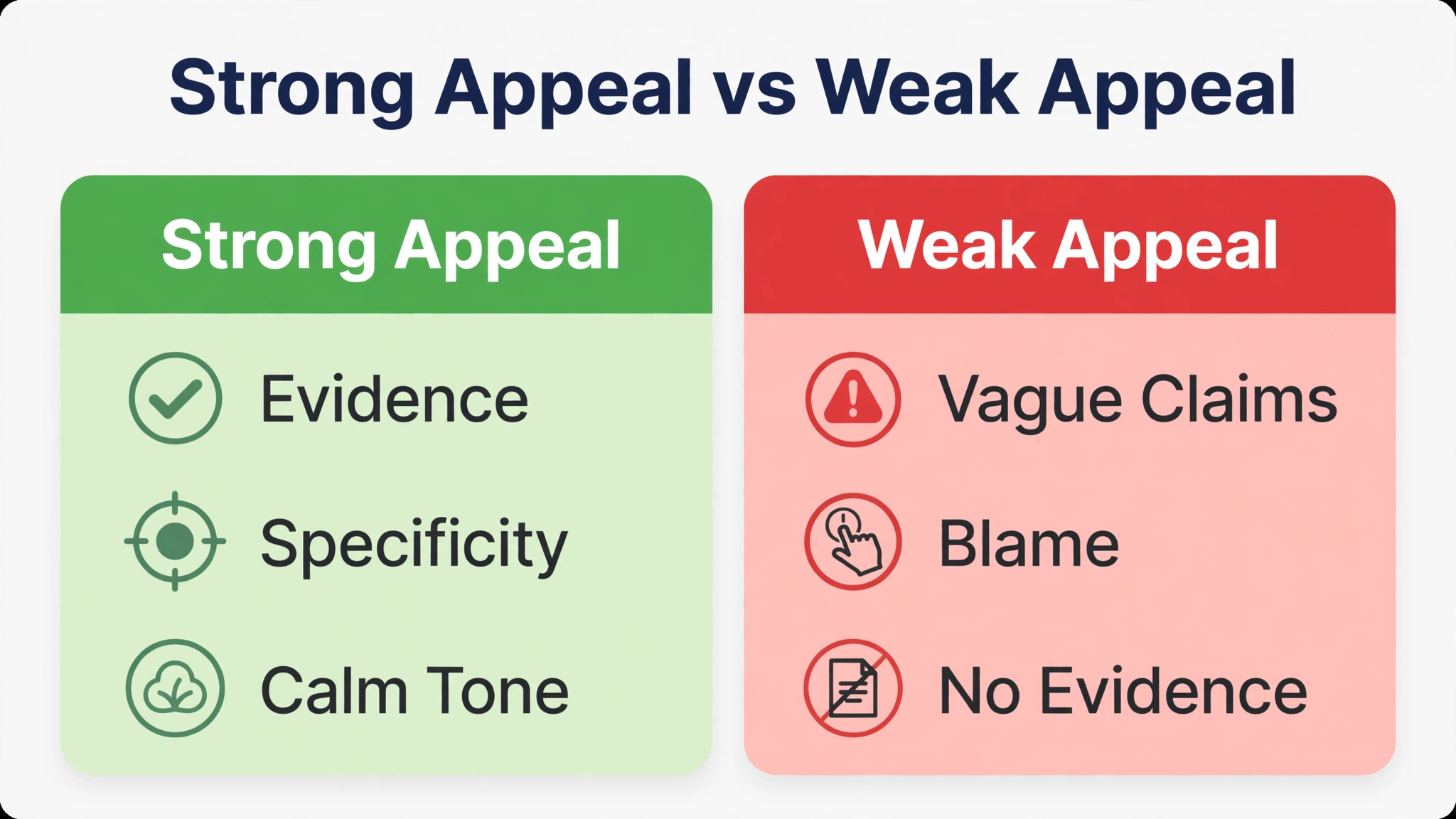
Open with a short identification line that names your business and the notice you are answering. Then state the root cause without blame shifting and without emotional language. Reviewers are not persuaded by how much a suspension hurts a small business. They are persuaded by a clear cause, a completed fix, and a control that will hold next month.
In the corrective actions section, use one line per action, each with a date and a piece of evidence. For example, a listing correction should name the ASIN, the change made, and the date of the change. A supplier change should name the old supplier, the new supplier, and the invoice date. A staff retraining should name who was trained, on what, and when. Vague lines such as improved quality control, with no date or document, add words without adding weight.
In the preventive measures section, name the control, the owner, and the frequency. A weekly account health review owned by the business owner is a control. A listing checklist that must be signed before publication is a control. A supplier invoice check before any new product goes live is a control. Each control should connect to the root cause, so the reviewer can see the gap closing rather than a generic list of good intentions.
Keep the tone factual throughout, and keep the length tight. A plan that runs for many pages usually repeats itself, and repetition buries the strongest evidence. Read the draft once as a reviewer. If a sentence does not answer the notice, prove a fix, or describe a control, cut it.
A reviewer should be able to follow a plan written to fix Amazon seller account suspended small business cases without needing to guess what happened, when it was fixed, or what stops it from happening again. If any of those three questions goes unanswered, the draft is not ready to submit.
Check Inventory, Listings and Linked Accounts
Before you submit, run a full sweep beyond the items named in the notice. Check every active listing for the same claim, image, or category error that caused the problem. Check inventory for stock tied to a supplier you have dropped, and quarantine anything you cannot document. Check open orders for shipment and tracking gaps, and message buyers promptly where an order needs attention.
Linked accounts deserve a careful look. Amazon may connect accounts through shared bank details, addresses, devices, or staff logins, and a problem on a linked account can affect your case. List every account, brand, and user with access to your Seller Central, and remove access that is no longer needed. If you operate more than one legitimate business, keep their documents, suppliers, and logins clearly separate, and be ready to explain the separation if asked.
Review your Account Health metrics as a whole, not just the metric named in the notice. An order defect rate near the threshold, a rising cancellation rate, or a cluster of negative feedback can all weaken an appeal, even when they are not the cited reason. Fix what you can before submission, and note the improvements honestly in the plan, with dates. A reviewer who sees a broader cleanup is more likely to trust the specific fix.
Finally, proofread the appeal against the notice one last time. Every policy point in the notice should have a matching paragraph in the plan. Every claim in the plan should have a matching document in the case folder. Every document should carry a date and a name that lines up with the claim. That three way match is the quiet test most strong appeals pass and most weak appeals fail.
Submit the Appeal and Track What Happens Next
Submit through the appeal route shown in Account Health for the relevant violation, and attach the documents that map to your claims. Include a phone number where you can be reached, and keep the submission exactly as sent, with a copy in your case folder. Do not submit the same appeal twice in parallel, and do not send a second version while the first is under review unless Amazon asks for more information.
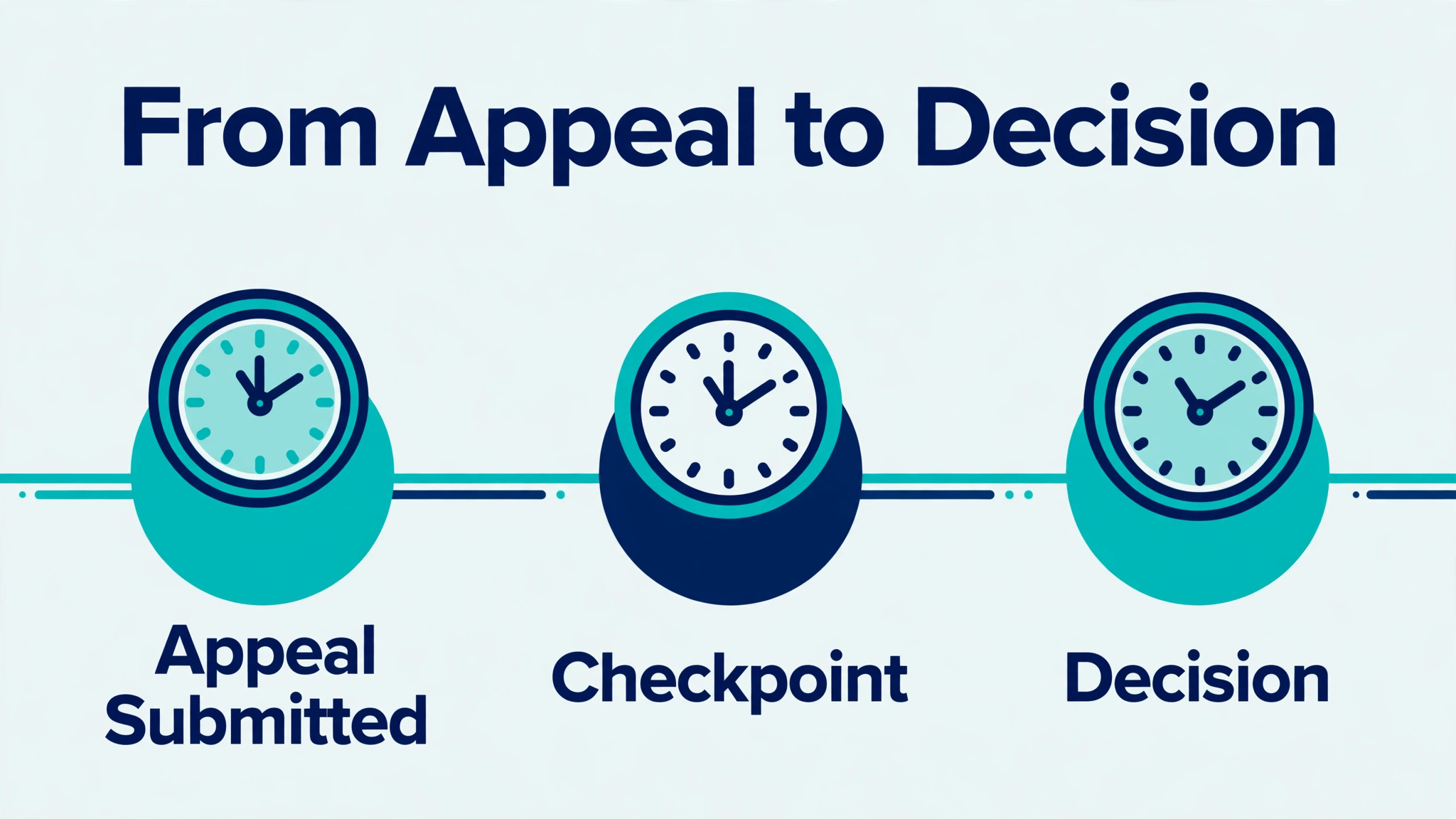
Response times vary by case type, and some standard account appeals receive a first response within a couple of days, while complex cases take longer. Treat a week without a reply as a checkpoint, not a deadline. At that point, check Account Health for a request for more information, and contact Account Health Support through Seller Central if the case shows no movement. Keep every follow up polite, short, and tied to the case reference.
If Amazon asks for more information, answer only what was asked, and add the new evidence to your case folder. If the appeal is denied, read the denial for the gap it names, fix that gap, and resubmit with a materially stronger file rather than the same plan with a new date. Repeated identical appeals make reinstatement harder, because each denial adds to the case history the next reviewer reads.
If the appeal succeeds, do not treat reinstatement as the end of the job. The controls in your plan now have to run every week, and the metrics that slipped need watching until they are comfortably inside target for several weeks. Keep the case folder intact, because a future review may ask how an earlier problem was handled.
That follow through is part of what it means to fix Amazon seller account suspended small business cases properly, rather than simply winning one appeal and returning to the same habits. Reviewers remember patterns, and so does the account history that future reviewers will read.
Reinstatement Checklist for a Small Team
Use this checklist after submission, and again in the first month after any reinstatement, to keep the fix from fading. Print it, assign an owner to each line, and review it weekly until the habit is solid.
- Notice saved, with policy wording, ASINs, and response format noted in the case folder.
- Root cause written in one or two sentences and supported by order, listing, or supplier records.
- Every affected listing corrected or removed, with neighbouring listings checked for the same error.
- Questioned stock quarantined, and supplier paperwork collected for every named product.
- Plan of action submitted in three parts, with dates and evidence for every corrective action.
- Linked accounts and user access reviewed, with unneeded access removed and businesses kept separate.
- Account Health metrics reviewed weekly, with order defects, late shipment, and tracking all inside target.
- New listing checklist in use, with a second check before any claim, image, or category goes live.
Small teams benefit from a short weekly routine more than from a long policy document nobody reads. Fifteen minutes on Account Health, open orders, and new listings each week catches most problems while they are still small. Pair that routine with a monthly supplier paperwork check, and the business builds the record that makes any future appeal far easier to write.
Mistakes That Make a Second Appeal Harder
The most common mistake is appealing before fixing anything, with a letter full of promises and no evidence. Reviewers have seen that letter many times, and it rarely moves a case forward. The second mistake is guessing at the cause. A plan that names the wrong root cause will be denied even when the writing is polished, because the fix will not match the problem Amazon identified.
Emotional language is another trap. Long passages about hardship, loyalty, or years of good selling do not answer a policy notice, and they push the evidence further down the document. Keep the appeal factual, and let the documents carry the weight. Similarly, avoid blaming buyers or competitors without proof. If you believe a complaint was false, say so plainly and attach the order and message records that support that view.
Copying a template plan from the internet without adapting it is also risky. Reviewers recognise generic language, and a plan that could apply to any seller proves nothing about your business. Use the three part structure, but fill it with your ASINs, your dates, your suppliers, and your controls. Specificity is what separates a credible plan from a form letter.
Finally, do not keep resubmitting the same plan after a denial. Each resubmission should add something material, such as a new invoice, a corrected listing, a retrained process, or a control that was missing. If you cannot name what changed since the last submission, wait until you can. A stronger later appeal beats a faster repeated one.
Every one of these mistakes is avoidable, and avoiding them is how a small team can fix Amazon seller account suspended small business setbacks without turning one suspension into a longer account history problem. Patience at the evidence stage is the fastest route in the end.
Frequently Asked Questions
How long does an Amazon seller appeal usually take to review?
Review times vary by case type and complexity, and some standard account appeals receive a first response within a couple of days, while document heavy or authenticity cases can take longer. Treat a week without movement as a checkpoint to check Account Health and contact support through Seller Central. Do not assume silence means approval, and do not submit a duplicate appeal while the first one is still under review.
Can a small business appeal without hiring a specialist?
Yes, many small sellers write their own plans successfully, especially for performance and listing policy cases where the fix is clear and the evidence is straightforward. Specialists add most value in complex authenticity, trademark, or related account cases, where the evidence standard is higher. Whatever route you choose, the plan still needs your records, your dates, and your controls, because nobody else can supply those.
What should a plan of action include for a suspended account?
A plan of action should include the specific root cause, the corrective actions already taken with dates and evidence, and the preventive measures that stop the problem from returning. Each claim should map to a document, such as an invoice, a listing screenshot, or a process document. Keep the language factual and concise, and make sure every point in the notice has a matching answer in the plan.
Should I delete listings mentioned in a suspension notice?
Correct or remove the listings as the notice requires, and check neighbouring listings for the same error before you appeal. Deleting a listing without understanding the underlying claim can hide evidence rather than fix the problem, so record what changed and when. Quarantine questioned stock rather than selling it elsewhere while the case is open.
Does opening a new seller account help during a suspension?
No, opening a new account during a suspension usually makes reinstatement harder, because Amazon may treat the new account as related to the suspended one. Related account cases are difficult to resolve, and the new account can itself be actioned. Focus on the original account, fix the cited problem, and appeal through the route shown in Account Health.
What happens if my first appeal is denied?
Read the denial for the specific gap it names, fix that gap, and resubmit with a materially stronger file. Add new evidence, a completed fix, or a control that was missing, rather than resending the same plan. Repeated identical appeals add to the case history and reduce the chance that a later reviewer will see the case as changed.
What to Do in the Next 48 Hours
Start with the notice, not with the appeal form. Save the documents, name the root cause from the records, and fix what you can document today. Small sellers who work in that order give reviewers something concrete to approve, and they also protect the business from a second, preventable suspension. The appeal itself is the last step, not the first, and it should read like a short report on work already finished.
Keep the weekly routine after the case closes, because the habits that prevent the next notice are the same habits that make an appeal credible. Check Account Health, check new listings before they go live, and check supplier paperwork before a new product ships. A suspended account is a serious setback for a small business, but it is also a clear prompt to build the controls that should have been there all along. Work through this guide to fix Amazon seller account suspended small business issues in the right order, and submit only when the evidence matches every word of the plan.
More Reading on Stratilyze
- Cost of Amazon seller fees small business explains the fee layers that shape pricing and margin for a small seller.
- Best inventory software for ecommerce sellers covers tools that keep stock records, listings, and order flow in one place.
- Best helpdesk software for ecommerce stores looks at support tools that help a small team answer buyers promptly and keep records tidy.
- Best client management software for accountants shows how a small firm organises client records, deadlines, and documents in one system.