
Your bank account was supposed to show the money by Friday, and it is now Monday with nothing to show for it. The PayPal balance still looks right, the transfer still says it is on its way, and no one has told you anything useful. That gap between what the screen shows and what the bank shows is where most owners waste time, because they either wait too long or chase the wrong problem. To fix PayPal withdrawal delayed small business trouble, start by finding out which stage the money is stuck at, because a hold inside PayPal, a review of the account, and a slow bank transfer each need a different fix.
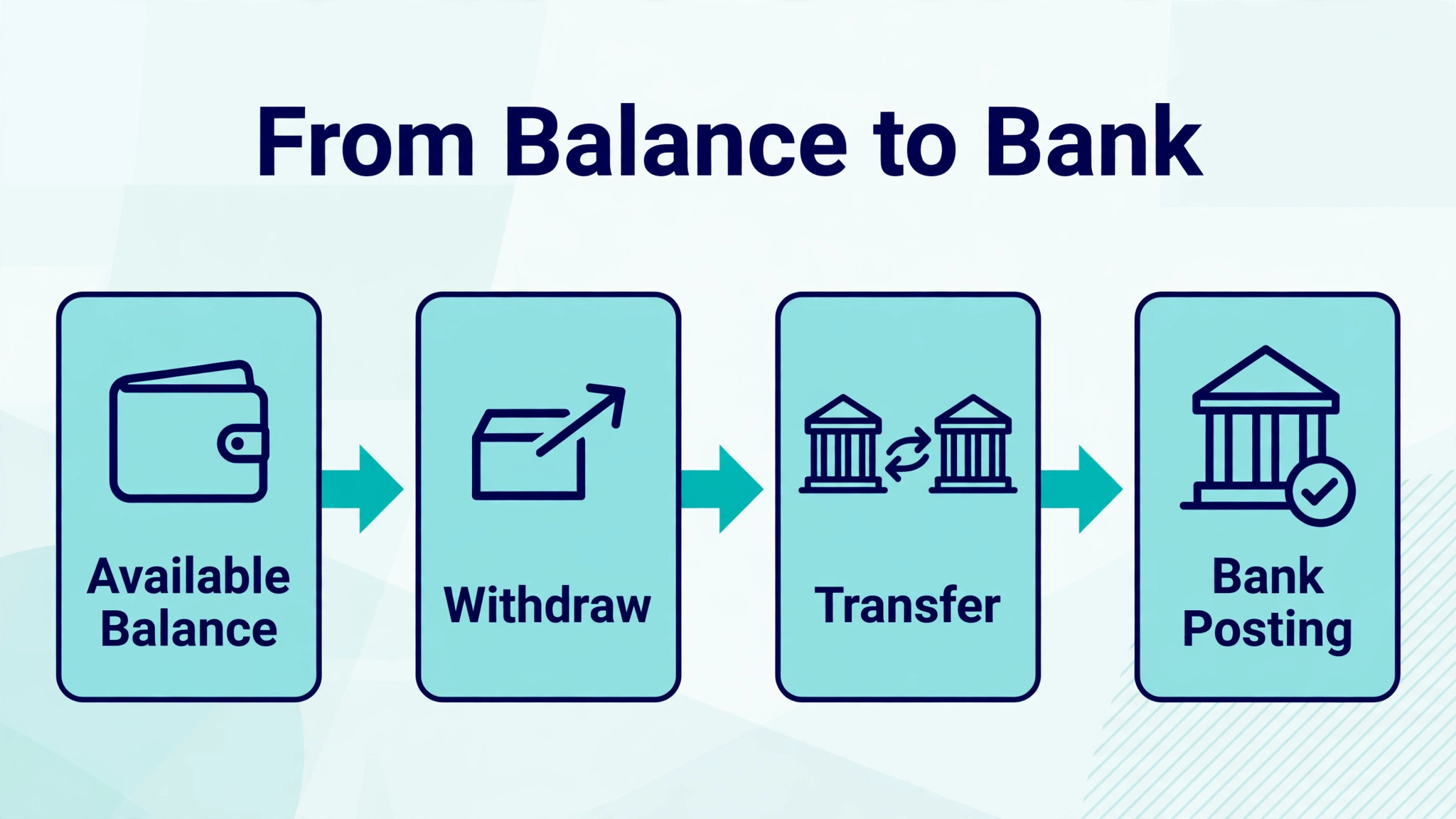
A withdrawal is not one movement. It is a chain. PayPal releases the funds, the transfer travels through the banking system, and your bank posts it to your account. A delay at any link looks the same from the outside, which is why the first job is diagnosis rather than action. This guide works through that diagnosis in order, from the PayPal balance outward to the bank, so you can tell within an hour whether you need to supply documents, wait out a hold, fix a bank detail, or contact support with a complete case.
How to Fix PayPal Withdrawal Delayed Small Business
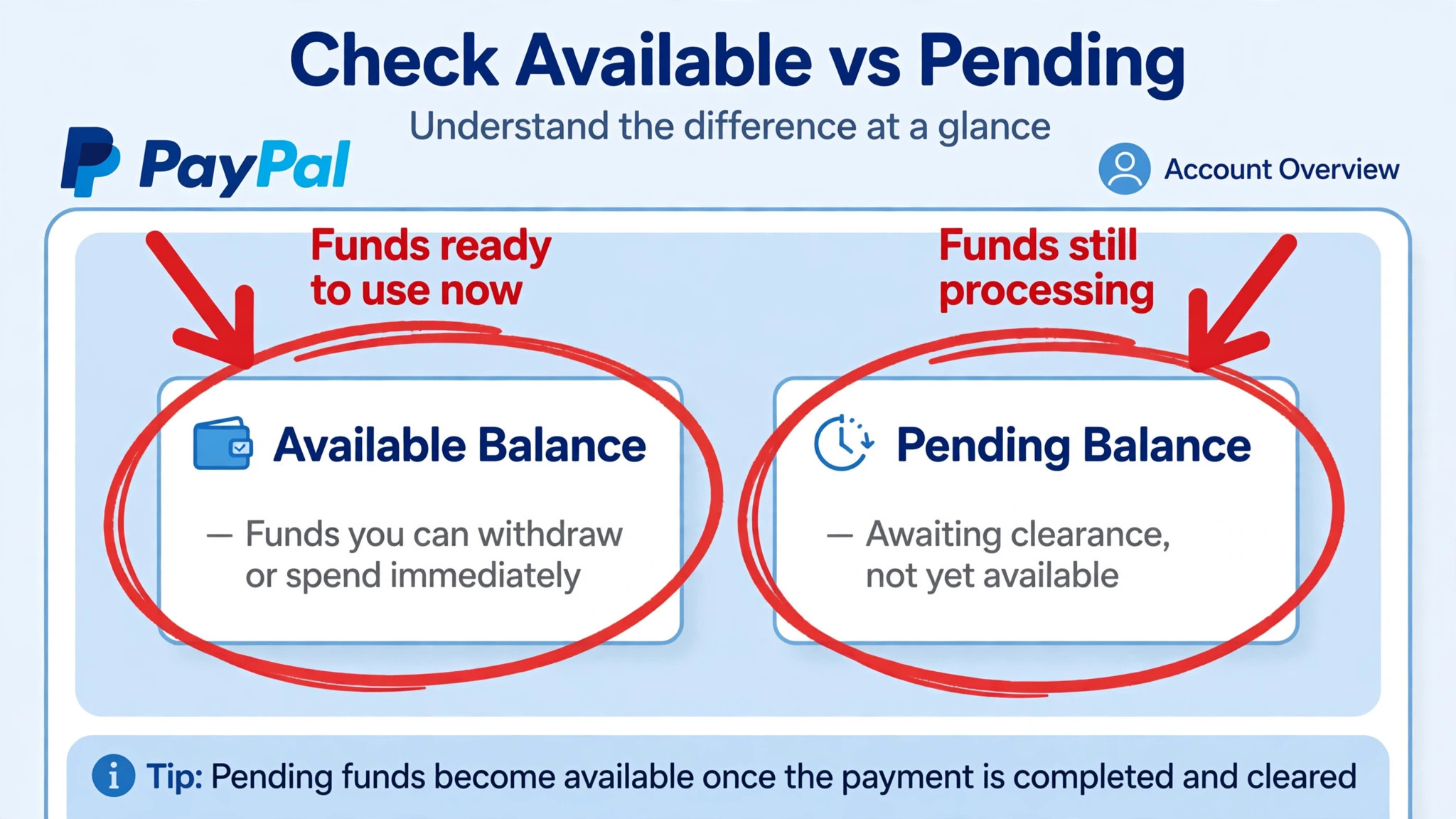
Open PayPal and look at three things before you do anything else. First, check the available balance and the pending balance separately, because money sitting in a pending balance cannot be withdrawn at all. Second, open the transfer itself and read its status word for word, since a transfer marked as pending, in review, or completed means something different in each case. Third, check the Resolution Center for any open case, limitation, or document request, because an account level problem blocks every withdrawal until it is resolved.
Do not start by withdrawing again. A second withdrawal attempt while the first is still moving can create two transfers for the same money, and sorting that out takes longer than the original delay. Do not remove and re-add your bank account either, because that step can trigger a fresh verification wait and can even send the money back to PayPal. Record the facts first. Note the transfer date, the amount, the bank account shown, the transfer status, and the available and pending balances. That short record becomes the basis for every later step, and it is exactly what support will ask for if you need to contact them.
Step Diagnosis in Order for a Delayed Withdrawal
Work through these steps in order to fix PayPal withdrawal delayed small business trouble. Each step rules out one cause, and you should not skip ahead to contacting support until the earlier steps are done, because support will ask you to complete them anyway. The order matters. It moves from the most common and fastest to check causes to the slower account level ones.
Step 1. Confirm the Money Was Available to Withdraw
A withdrawal can only move money from the available balance. Money from recent sales may still sit in a pending balance, especially for a new seller, a seller returning after a long break, or a seller whose pattern has changed. PayPal guidance describes several reasons payments are held, including new seller status, a long gap in selling, customer problems or refund requests, an unusual change in selling pattern, higher risk items, and incomplete identity verification. If your sale money is still pending, the withdrawal is not delayed. It has not started, because there was nothing available to move.

Check the order status for the sales behind the balance. For physical goods, adding tracking with an approved carrier can lead to release about a day after the courier confirms delivery to the buyer address. For services or digital items, updating the order status to completed can lead to release about seven days after that update. In some cases PayPal may still hold a payment for up to 21 days, for example when it notices an unusual change in selling patterns. If the money is pending for one of these reasons, the fix is to complete the release step for those orders and wait for the stated period, not to chase the bank.
Step 2. Read the Transfer Status Exactly
Open the transfer record and read the status rather than guessing from the balance. A transfer marked as completed on the PayPal side has left PayPal, and the delay is now in the banking system or at your bank. A transfer marked as pending or in progress may still be inside PayPal processing, and the right move is to wait for the processing window to close before escalating. A transfer marked as failed or returned usually points to a bank detail problem, and the money normally returns to the PayPal balance rather than disappearing.
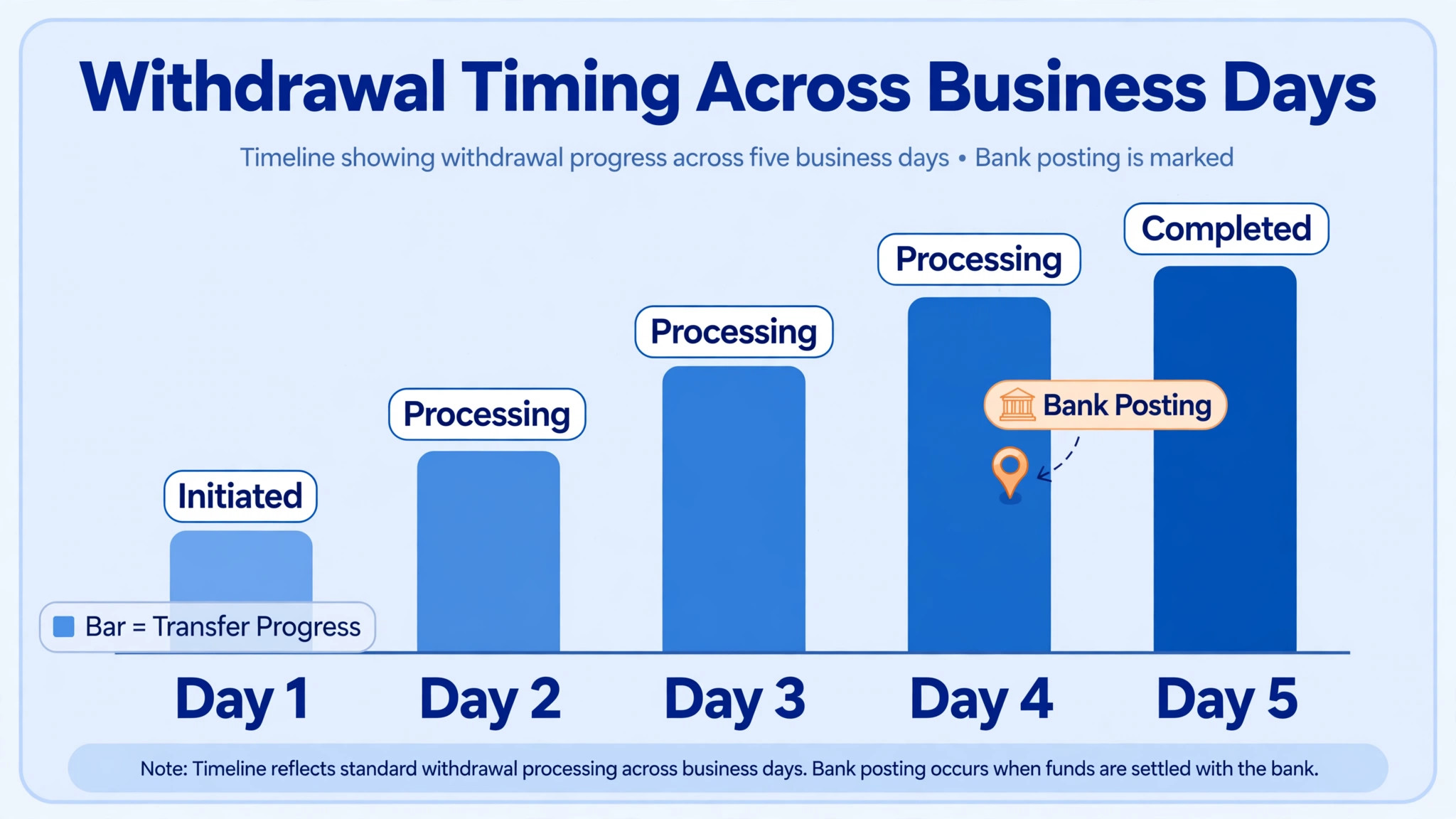
Write down the exact status and the date it last changed. A status that has not changed for several business days is a different problem from a status that changed yesterday. Bank transfers also follow business days, so a withdrawal started on a Friday can look delayed over a weekend when nothing is actually wrong. Count business days from the transfer date, excluding weekends and bank holidays, before deciding the transfer is late. That simple count prevents many wasted support contacts.
Step 3. Check the Resolution Center for a Limitation
A limitation is the most serious cause of a delayed withdrawal, and it is also the one owners miss most often, because the balance screen can look normal while the account is limited. Open the Resolution Center directly from inside your account, not from a link in an email, and look for any open steps. PayPal guidance says that if an email claims your account is limited but no limitation appears in the Resolution Center, the email may be fake, and it asks users to forward such mail to its phishing address. Always trust the Resolution Center over an email.
If a limitation is open, read the exact request and supply exactly what was asked for, in the form PayPal accepts. Documents should be legible, show all four corners of the page, have nothing blocked out, and match the information on the PayPal account. Proof of address items commonly include a utility bill or bank statement dated within the last 12 months, while invoices and receipts are not accepted for that purpose. Published guidance says that once the required steps are complete, review usually takes about three business days, though complex cases can take longer. Send one complete packet and save the confirmation.
Step 4. Check the Bank Account on File
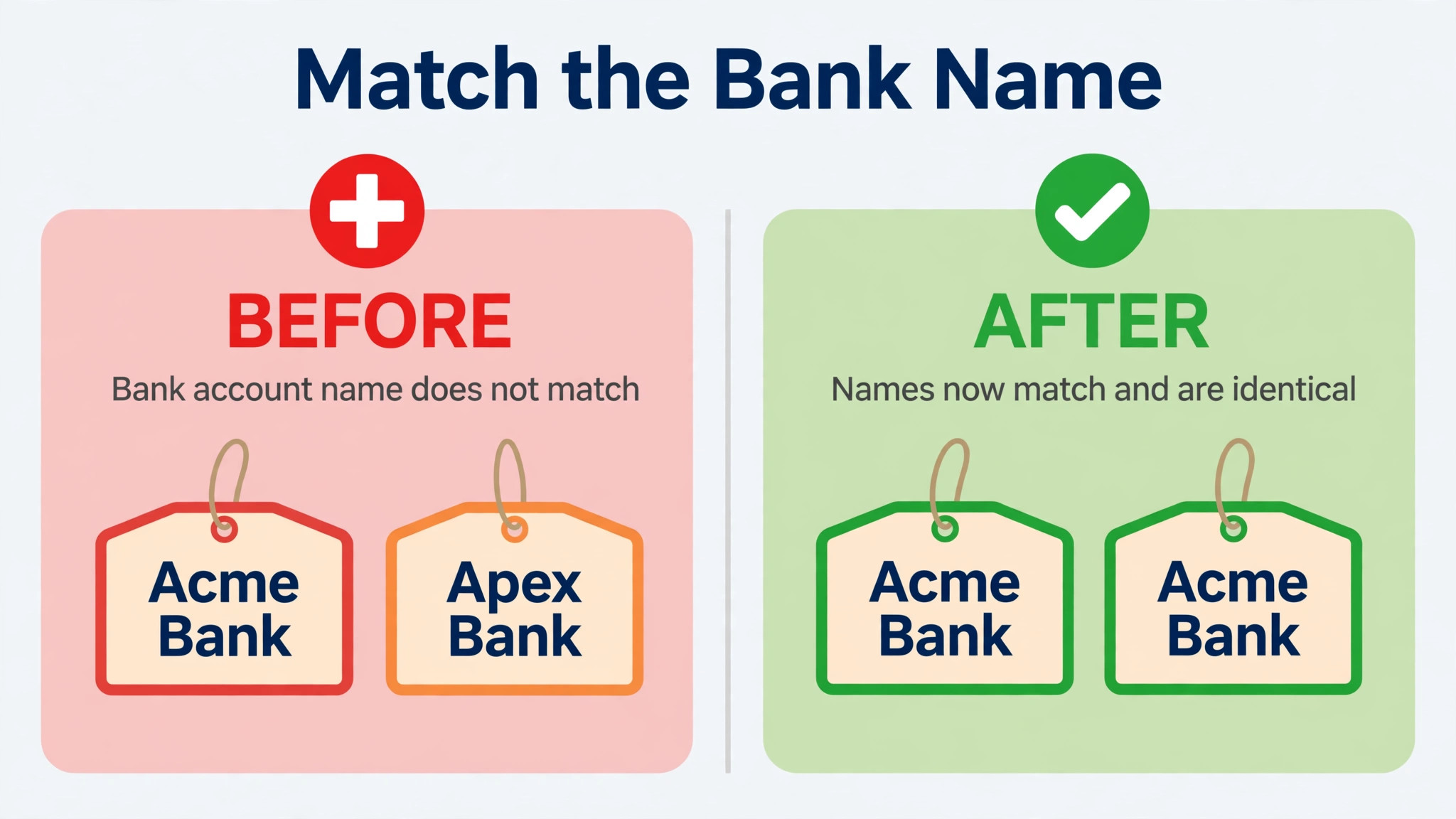
A withdrawal sent to the wrong, closed, or unverified bank account will fail or sit in limbo, and the fix is a bank detail correction rather than a PayPal complaint. Open the bank account details in PayPal and compare them character by character with your bank statement. Check the account name, the account number, and the routing or sort details your country uses. A name mismatch is a common cause of delay, because banks can reject or hold a transfer when the name on the transfer does not match the name on the account.
Also check whether the bank account is confirmed. An unconfirmed bank account can limit what you can withdraw, and a bank account that was recently changed can carry its own verification wait. If the bank details are wrong, correct them through the proper PayPal flow and expect the next withdrawal to use the corrected details. If the details are right, move on to the bank side checks, because the problem is more likely to be processing time or a bank posting delay than a detail error.
Step 5. Check With the Bank Using the Transfer Details
Once PayPal shows the transfer as completed, the bank becomes the next place to check. Contact your bank with the transfer date, the exact amount, and any reference number PayPal shows, and ask whether a transfer matching those details has arrived, is in processing, or has been rejected. Banks can take several business days to post an incoming transfer, and some banks hold first time transfers from a new sender for extra checks. That posting delay is normal, and it is not something PayPal can speed up.
Ask the bank a specific question rather than a general one. Ask whether the transfer was received and, if it was rejected, ask for the rejection reason in writing. A rejection for a name mismatch, a closed account, or an incorrect account number gives you a precise fix. A transfer that the bank confirms it has received but not yet posted gives you a posting date to wait for. A transfer the bank has no record of, several business days after PayPal marked it completed, is the evidence you need to take back to PayPal support.
Step 6. Rule Out a Monthly Withdrawal Limit
Some accounts carry a monthly amount that can be withdrawn or used at once, with money above that amount becoming available a set number of days after the payment was received. PayPal help material describes this pattern and explains that users can request an increase from the dashboard, with a review reply by email within about three business days, and with such requests limited to once every 30 days. If your withdrawal is large, or if you have already moved a lot of money this month, check whether a limit of this kind applies to your account.
This step is easy to miss because the balance looks available while the withdrawal limit quietly blocks part of it. Open the balance section and look for any notice about a monthly amount or a request option. If a limit applies, request the increase and plan cash flow around the release date for the amount above the limit. If no limit notice appears, the cause lies elsewhere, and you have ruled out another possibility with evidence rather than guesswork.
Step 7. Decide Whether the Delay Is a Hold, a Review, or a Transfer Problem
By this point you should be able to name the cause in one sentence. A hold means specific sale money is pending for a stated reason and release condition. A review means the account is limited or a transaction is under security review, and the release depends on documents or on the review finishing. A transfer problem means PayPal released the money but the bank has not posted it, or the bank rejected it for a detail reason. Each of those three needs a different next action, and naming it stops you from applying the fix for one to the problem of another.
Write that sentence down, with the evidence behind it. For a hold, note the orders and their release conditions. For a review, note the Resolution Center request and the date you supplied it. For a transfer problem, note the PayPal status, the bank response, and the reference number. Keep that written diagnosis for the cash plan, any support contact, and the prevention work at the end of this guide.
What Your PayPal Balances Actually Mean
Many owners treat the PayPal balance as one number, and that misunderstanding causes most of the panic around the need to fix PayPal withdrawal delayed small business trouble. The available balance is money you can withdraw or spend now. The pending balance is money from payments that are not yet available, for one of the hold reasons described above. A third figure, any reserve shown on the account, is money PayPal holds back as protection against future refunds or disputes, and it is not available until the reserve terms are met.
| Balance figure | What it means | What to do about it |
|---|---|---|
| Available balance | Money ready to withdraw or spend | Withdraw it, or leave it for planned spending |
| Pending balance | Sale money held for a stated reason | Complete the release step for those orders and wait |
| Reserve | Money held back against future claims | Check the reserve terms and plan cash flow around them |
| Withdrawal in progress | Money that has left the available balance | Track the transfer status and the bank posting date |
Check these figures on the same day you check the transfer, because they change as orders are released and as transfers complete. A pending balance that drops after you add tracking tells you the release step worked. An available balance that drops by the withdrawal amount tells you the transfer has started. A reserve that grows after a spike in refunds tells you the account risk picture has changed, and that future withdrawals may need a longer cash buffer.
Withdrawal Diagnosis Checklist
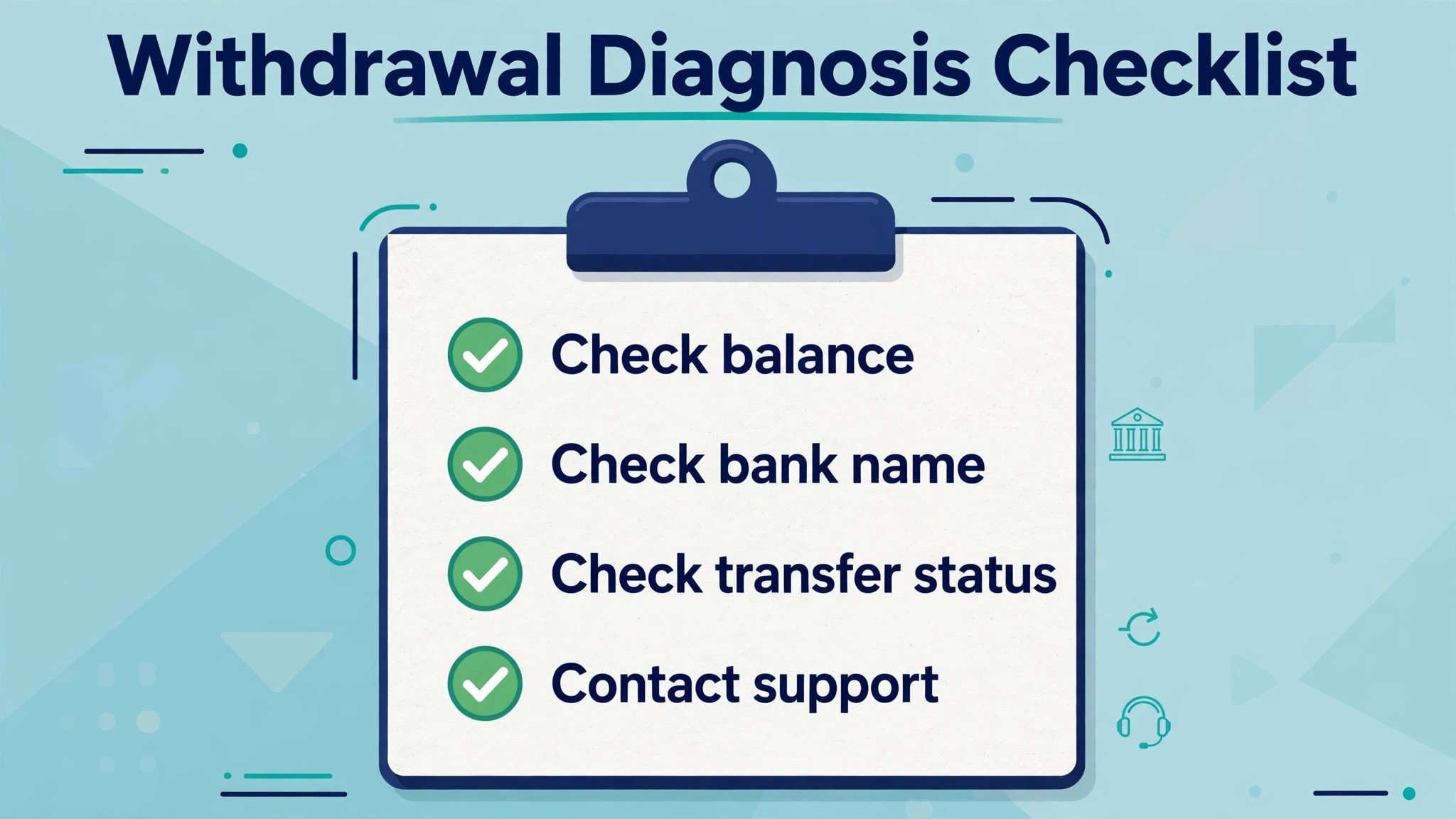
Use this checklist every time you need to fix PayPal withdrawal delayed small business trouble, before you contact anyone. It turns the diagnosis above into a short routine you can complete in under an hour, and it stops the common error of escalating a normal processing wait as if it were an account problem.
– Confirm the available balance covered the withdrawal amount on the day you made it, and note the pending balance separately. – Read the transfer status word for word, and count business days from the transfer date, excluding weekends and bank holidays. – Open the Resolution Center from inside the account and confirm whether any limitation, case, or document request is open. – Compare the bank account name, number, and routing details in PayPal with a recent bank statement, character by character. – Check the order status for recent sales, and complete any tracking or order status step that releases a pending payment. – Check for any monthly withdrawal amount notice, and note whether an increase request is available. – Contact the bank with the transfer date, amount, and reference number, and ask whether the transfer arrived, is processing, or was rejected. – Save every screen, status, and reply in one note, so a support contact later starts from evidence rather than memory.
If every item on the checklist is clear and the transfer is still missing after the normal processing window, you have a genuine escalation case. If one item is not clear, fix that item first, because that item is the most likely cause of the delay.
Bank Side Problems That Look Like PayPal Problems
A bank can delay a transfer for reasons that have nothing to do with PayPal. A first transfer from a new sender can face extra checks. A transfer to a business account whose legal name differs from the trading name on the PayPal account can be held for a name check. A transfer arriving on a bank holiday, or just before one, can sit until the next business day. A transfer to an account that has recently changed, or that carries its own receiving limits, can be rejected and returned.
The return path also takes time. When a bank rejects a transfer, the money normally returns to the PayPal balance, but that return is itself a transfer with its own processing time. Owners sometimes panic when the money is neither in the bank nor back in PayPal, when in fact it is in transit on the return journey. Check the PayPal activity for a return entry, and check with the bank for the rejection date, before assuming the money is lost. Money in transit is frustrating, but it is not missing, and the record of its movement is the proof you need.
Keep the bank details consistent across PayPal, the bank, and the business registration. If the PayPal account shows a trading name and the bank statement shows a legal entity name, a reviewer or a bank system can see two different businesses. Align the names where the account settings allow it, and keep a document that links the trading name to the legal name, such as a registration record, ready for any review. That alignment prevents a whole class of delays that otherwise recur with every large withdrawal.
Cash Flow While the Withdrawal Is Delayed
To fix PayPal withdrawal delayed small business trouble properly, treat it as a cash flow problem as much as a technical problem, and give it a cash plan on the same day you diagnose it. List the payments due in the next two weeks, and mark which ones can move, which ones carry a late fee, and which ones are fixed. Pay the fixed and fee bearing items first from whatever balance is available, and contact the rest early. Suppliers and landlords respond far better to an early, honest message about a short delay than to silence followed by a missed payment.
Do not borrow against the delayed money at high cost before you know the cause. If the diagnosis shows a normal processing wait of a few business days, a short bridge from operating cash is sensible. If the diagnosis shows a limitation or a large hold, the wait may be weeks, and the plan needs to be different. That difference is why diagnosis comes first.
Build a simple buffer for the future from this experience. Keep one to two weeks of essential outgoings in a separate business account where possible, so a single delayed withdrawal does not stop the business. Treat the buffer as a business cost, not as spare cash, and rebuild it after any delay. For a related payout problem, see our guide to the Square payouts delayed fix, and for a related account problem, see the PayPal account limited fix.
Mistakes That Make a Delayed Withdrawal Worse
The most common mistake is withdrawing again while the first transfer is still moving. That second attempt can tie up more money, create duplicate transfers, and confuse both PayPal and the bank about which transfer is the real one. Wait until the first transfer reaches a final state, completed, failed, or returned, before starting another. If the first transfer has genuinely failed, the money returns to the balance and the next attempt starts from a clean position.
The second mistake is removing and re-adding the bank account in the middle of a delay. That step can trigger fresh verification, can change the destination for a transfer already in flight, and can add days to a problem that was already close to resolving. Change bank details only when the diagnosis shows the details are wrong, and change them through the proper flow when no transfer is in progress. The third mistake is uploading the same documents repeatedly during a review. Published guidance says review usually takes about three business days once the required steps are complete, and repeated uploads do not speed that review. They can reset it, or bury the complete packet under duplicates.
The fourth mistake is trusting email over the account itself. Phishing mail that mimics a limitation notice is common, and clicking its links can compromise the account. Always open PayPal from a bookmark or the app, and always check the Resolution Center for the true status. A genuine limitation appears there. A fake one does not, and forwarding the fake mail to the phishing address PayPal publishes helps protect other owners as well.
Prevent the Next Withdrawal Delay
Prevention starts with verification. Complete identity verification early, before a large withdrawal is needed, and keep the documents on file current. When the business changes its legal name, address, or bank account, update PayPal at the same time as the bank, not weeks later, so the records never drift apart. A business whose PayPal record, bank record, and registration record all match faces fewer reviews and fewer bank holds.
Prevention also means managing the selling pattern that triggers holds. Ship promptly, add tracking for every physical order, update order status promptly for services and digital goods, and answer customer messages quickly. Each of those habits releases pending money faster and reduces the refund and dispute signals that lead to holds. Keep the refund rate low by describing products accurately, stating delivery times honestly, and resolving complaints before they become disputes. A clean selling record is the cheapest form of withdrawal insurance a small business can buy.
Set a withdrawal routine that fits the processing reality. Withdraw on a regular weekday rather than just before a weekend or a bank holiday, withdraw in amounts the account history supports, and leave a small working balance in PayPal for refunds so a refund does not have to wait for a new sale. Record each withdrawal with its date, amount, destination, and posting date, so the next delay can be diagnosed in minutes from your own record rather than from memory.
When to Contact Support and What to Send
Contact support to fix PayPal withdrawal delayed small business trouble when the diagnosis is complete, the normal processing window has passed, and the checklist shows no open item you can fix yourself. That point usually arrives after several business days with no status change, after a bank confirms it has no record of a completed transfer, or after a review has passed its stated period with no reply. Contacting support before that point usually produces a reply asking you to complete the same steps this guide describes, and it costs you days.
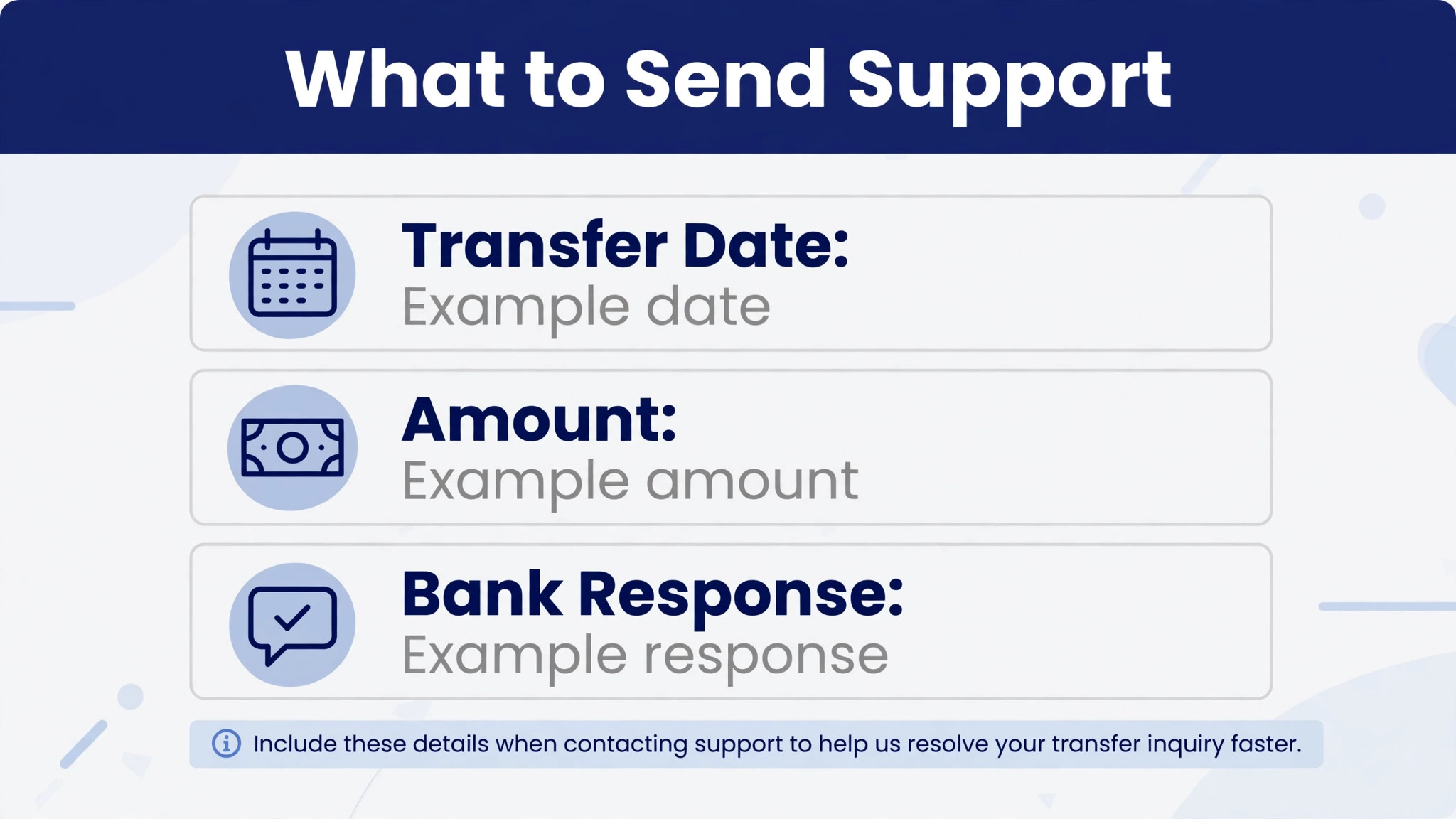
Send support a short, complete message. Include the transfer date, amount, masked destination bank account, transfer status, available and pending balances, Resolution Center status, and the bank response with the date you spoke to the bank. Attach the document packet only if a limitation or document request is open, and send it once. A message built that way can be acted on without follow up questions, which is the fastest path to a resolution. Keep a copy of the message, the reply, and the case reference, so you never have to explain the whole story twice. For a related refund problem, see the PayPal refund stuck fix.
Frequently Asked Questions About PayPal Withdrawals
How long should a PayPal withdrawal normally take
A standard withdrawal to a bank account normally takes several business days, and the exact time depends on the transfer type, the bank, and the day of the week it was started. A withdrawal started on a Friday can appear delayed over the weekend when it is simply waiting for the next business day. Count business days from the transfer date, and check the transfer status in PayPal before deciding the transfer is late. Instant transfer options, where offered, carry their own terms and fees, so check the vendor pricing page or the transfer screen for the current terms before choosing that option.
Why is my PayPal money pending instead of available
Sale money can be pending for several reasons, including new seller status, a long gap in selling, customer problems or refund requests, an unusual change in selling pattern, higher risk items, and incomplete identity verification. For physical goods, adding tracking with an approved carrier can lead to release about a day after delivery is confirmed. For services or digital items, updating the order status to completed can lead to release about seven days later. In some cases a payment may still be held for up to 21 days. Check the order and the Resolution Center for the specific reason and release condition for your payment.
Can I withdraw money while my PayPal account is limited
A limitation can block withdrawals until the requested steps are complete, even when the balance screen looks normal. Open the Resolution Center from inside the account and read the exact request. Supply the documents in the form PayPal accepts, with legible pages showing all four corners and information matching the account. Published guidance says review usually takes about three business days once the required steps are complete, though complex cases can take longer. Do not rely on an email alone. The Resolution Center is the true record of whether a limitation is open.
What happens if my withdrawal goes to the wrong bank account
A withdrawal to a wrong, closed, or unverified bank account will usually fail and the money will return to the PayPal balance, but the return transfer takes processing time of its own. Check the bank details in PayPal against a recent bank statement, and contact the bank with the transfer date, amount, and reference number to ask whether the transfer arrived, is processing, or was rejected. Correct the bank details through the proper PayPal flow only when no transfer is in progress, so the correction does not interfere with a transfer already moving.
Should I withdraw again if the first withdrawal is delayed
Do not withdraw again while the first transfer is still moving. A second attempt can create duplicate transfers for the same money and confuse both PayPal and the bank. Wait until the first transfer reaches a final state, completed, failed, or returned, and check the bank posting before starting another. If the first transfer has failed and the money is back in the available balance, the next attempt starts from a clean position. If the first transfer is completed on the PayPal side, the delay is at the bank, and a second withdrawal will not speed the first one up.
How can I avoid withdrawal delays in future
Complete identity verification early, keep the PayPal record, bank record, and business registration aligned, and update all three together when anything changes. Ship promptly, add tracking for physical orders, update order status promptly for services and digital goods, and answer customer messages quickly, because those habits release pending money faster and reduce the signals that lead to holds. Withdraw on a regular weekday, keep a cash buffer for essential outgoings, and record each withdrawal with its date, amount, destination, and posting date, so the next delay can be diagnosed from your own record in minutes.
A Final Word on a Delayed Withdrawal
A delayed withdrawal feels personal, because the money is yours and the business needs it, but the way to fix PayPal withdrawal delayed small business trouble is impersonal and procedural. Find the stage where the money is stuck, name the cause in one sentence, and apply the fix for that cause alone. That discipline saves more time than any amount of chasing, because it stops you from fixing the bank when the problem is a hold, or fixing a hold when the problem is a bank posting delay.
Work the checklist, keep the cash plan honest, and build the prevention routine into the monthly rhythm of the business. The next withdrawal may still take its normal processing time, but it will not surprise you, and a genuine delay will be diagnosable in an hour rather than a week of worry. That is the real goal of this guide, not just to move one transfer, but to make every future transfer predictable enough that the business can plan around it with confidence.