

A return on ad spend below 2 after a month of steady clicks is the clearest warning sign an Etsy seller gets, because it usually means the shop is paying more for traffic than the traffic returns after product costs and fees. Seller guides commonly cite a return of 3 or higher as the level worth keeping, and a break even return that depends on margin, so a shop with a 40 percent margin breaks even near 2.5. To fix Etsy ads not converting small seller trouble, start from those two numbers and work backward, because they tell you whether the problem is the listing, the price, the targeting, or the budget itself.
Ads on Etsy are charged per click for on site ads, not per sale, which is the detail that turns a weak listing into an expensive one. Every click costs money whether or not the visitor buys, so promoting a listing that does not convert organically simply buys more visits to a page that does not sell. Off site ads work differently, charging a fee only when a sale results, and that difference matters when you judge which part of the spend is actually failing. This guide diagnoses the ad problem in order, from the numbers outward to the listing, the price, and the budget, so you stop paying for clicks that were never going to convert.
How to Fix Etsy Ads Not Converting Small Seller
Open the Etsy Ads report and look at one listing at a time, never at the shop total alone. A shop total hides the pattern, because one strong listing can mask five weak ones that are eating the budget. For each advertised listing, note four numbers. These are views, clicks, orders from ads, and spend.
From those four, work out the click through rate, the conversion rate from clicks to orders, and the return on ad spend, which is ad revenue divided by ad spend. A listing with plenty of clicks and no orders has a listing problem. A listing with few clicks has a visibility or relevance problem. A listing with orders but a low return has a margin or price problem.
Give the data enough time before judging it. Etsy guidance and seller guides commonly recommend running a campaign for about a month before making firm decisions, because the system needs time to learn which searches suit each listing. Judging a listing after three days, or after a handful of clicks, produces decisions based on noise. Set a review date a month out, record the starting numbers, and change only the listing or the budget in a planned way between reviews, so each change can be judged on its own result.
Step Diagnosis in Order for Ads That Do Not Convert
Work through these steps in order to fix Etsy ads not converting small seller trouble. The steps move from the numbers to the page the shopper lands on, then to price and margin, and finally to budget structure. Do not raise the budget until the earlier steps show a listing that converts, because more budget on a non converting listing only buys more non converting clicks.

Step 1. Sort Listings by Return, Not by Spend
Open the ad report and sort by return on ad spend, lowest first. The listings at the bottom are where the money is being lost, and they deserve attention before the listings at the top, which are already working. For each low return listing, note the spend, the clicks, and the orders. A listing with high spend, many clicks, and zero orders is the most urgent case, because it is proven to attract visits and proven not to turn them into sales. A listing with low spend and few clicks may simply need more time or better relevance, and it is not yet proven to be a failure.

Separate the listings into three groups. Keep the group with a return above 3 and steady orders. Review the group with a return between 2 and 3, because those listings may become profitable with a listing or price fix. Pause the group with a return below 2 after a month of data, or with substantial spend and zero orders, because those listings are currently subsidising traffic rather than building sales. Pausing is not giving up. It stops the spend while you fix the listing, and the listing can return to ads once it converts organically.
Step 2. Check Click Through Rate for Relevance
Click through rate shows whether shoppers who see the listing want to click it. A low rate means the thumbnail, the title, or the search match is weak, even if the product itself is good. Look at the first photo first, because it does most of the work in a crowded search result. A dark, cluttered, or confusing first photo loses clicks to clearer rivals, no matter how good the later photos are. Replace it with a bright, simple photo that shows the product clearly and states its main use at a glance.
Then read the title as a shopper would. A title stuffed with keywords but weak on buyer intent confuses both the shopper and the search match. Put the words a buyer would actually type first, such as the product type and its main use or occasion, and keep the rest of the title for genuine distinguishing details. Check the tags and category too, because a listing shown for the wrong searches will collect clicks from shoppers who never intended to buy that product. Relevance fixes are cheap, and they improve both paid and organic traffic at the same time.
Step 3. Check the Listing Page Where Clicks Land
High clicks with zero orders point to the listing page, not the ad. Open the listing as a shopper and read it critically. Does the first photo match what the title promises. Does the description answer the questions a buyer asks before buying, such as size, materials, delivery time, and what is included. Are the variations clear, with a price for every option a shopper can select. Is the shipping price clear, and is it competitive for the market the shop serves. A page that leaves any of those questions unanswered will lose shoppers who clicked with intent.
Look at reviews and shop signals too. A listing with no reviews, no sales history, and a thin shop profile asks a shopper to take a bigger risk than a listing with social proof. Seller guides commonly suggest advertising listings that already have some organic sales, often five to ten, because those listings have proven they can convert. If the failing listing has no organic sales at all, pause its ads, build its organic record first through better photos, titles, and tags, and return to ads only when shoppers are buying without paid help. Ads amplify a listing that works. They do not rescue one that does not.
Step 4. Check Price, Margin, and the Break Even Return
A listing can convert and still lose money on ads, when the price leaves no room for the click cost. Work out the break even return for the listing, which is one divided by the margin as a decimal. A 40 percent margin breaks even near 2.5, a 50 percent margin near 2, and a 30 percent margin near 3.3. Compare the actual return with that break even figure, not with a generic benchmark alone. A return of 2.5 is profitable for a high margin product and loss making for a low margin one, and that difference decides whether the listing should keep running.
If the return sits below break even, the fix is a listing or price decision, not a budget decision. Options include raising the price where the market allows, reducing product or shipping costs, offering a bundle that raises the order value, or pausing ads for that listing and selling it organically only. Do not try to fix a margin problem by raising the daily budget, because a higher budget at a loss making return simply loses money faster. Fix the economics first, prove the new return over a month, and only then consider scaling.
Step 5. Check Budget Structure and Daily Spend
Etsy Ads spreads a daily budget across the promoted listings, so a budget spread across too many listings can starve the best ones while feeding the worst. Check how many listings are promoted and how the spend actually divides between them. If the budget is thin across dozens of listings, narrow it to the best five to ten sellers by revenue over the last ninety days, as seller guides commonly recommend. A focused budget gives each kept listing enough clicks to produce readable data, and it stops weak listings from quietly consuming the spend.
Set the daily budget from the margin math, not from a round number. Work out how much one order can afford to cost in ad spend while staying profitable, and set the budget so that a normal day of clicks cannot exceed that affordable cost by a wide margin. Start small where the listing is unproven, commonly in the range of a few dollars a day in seller guides, and raise the budget only when a listing holds a return above 3 for a full month with a conversion rate that supports it. Budget discipline is what turns a working listing into a profitable campaign rather than an expensive habit.
Step 6. Check Off Site Ads Separately From On Site Ads
Off site ads are easy to confuse with on site ads, and confusing them leads to wrong decisions. On site ads charge per click and are controlled through the daily budget and the promoted listings. Off site ads place listings on other sites and charge a fee only when a sale results, with the fee level depending on annual sales. A shop can therefore see ad fees on orders it did not expect, and blame the on site campaign for costs that came from off site sales.
Open the reports separately and judge each channel on its own terms. For on site ads, judge return on ad spend and cost per order. For off site ads, judge whether the fee still leaves a profit after product costs, and whether the orders came from shoppers who would have found the shop anyway. If off site fees are eroding margin on low priced items, consider whether the product mix suits that channel, and focus on site ads for the listings where the economics work. Mixing the two channels into one judgement hides which one is actually failing.
Step 7. Decide the Kill, Fix, or Scale Rule in Advance
Decide the rule before the next review, so the decision is not made emotionally when the numbers arrive. A common seller rule is to pause a listing after substantial spend with zero orders, to pause a listing whose return stays below 2 after a month, and to scale a listing only when its return stays above 3 for a month with a healthy conversion rate. Write your own thresholds from your margin math, and apply them the same way to every listing. A rule applied consistently beats a gut feeling applied selectively, because it stops a favourite listing from consuming budget long after the numbers say it should stop.
Record each decision with its reason and its date. When a listing is paused, note whether it was paused for low clicks, for high clicks with no orders, or for a return below break even, because each reason leads to a different fix. When a listing is scaled, note the return and conversion rate that justified the increase, so a later fall can be judged against the same standard. That record turns ad management from a monthly argument with the dashboard into a routine with clear triggers.
Reading Your Etsy Ads Numbers Correctly
Three numbers explain most failures when you fix Etsy ads not converting small seller trouble, and misunderstanding any one of them leads to the wrong fix. Click through rate measures the appeal of the listing in search, and it is fixed with photos, titles, and relevance. Conversion rate from clicks to orders measures the strength of the listing page, the price, and the offer, and it is fixed on the page itself. Return on ad spend measures whether the whole exercise makes money, and it is fixed by margin, price, and budget discipline together. A seller who confuses these three will fix the photo when the price is the problem, or raise the budget when the page is the problem.
| Number | What it measures | Fix when it is weak |
|---|---|---|
| Click through rate | Appeal of the listing in search results | First photo, title, tags, category |
| Conversion rate | Strength of the listing page and offer | Photos, description, variations, shipping, reviews |
| Return on ad spend | Whether ads make money after costs | Price, margin, bundle, budget focus, pauses |
| Cost per order | What each ad driven sale actually costs | Compare with profit per order, not with revenue |
Check these numbers weekly, but judge them monthly. Weekly checks catch a listing that suddenly spends heavily with no orders, which should be paused at once. Monthly judgement decides whether a listing is truly profitable, because a month of data smooths out quiet days and busy weekends. Keep a simple spreadsheet of the four numbers per listing, updated at each monthly review, so trends are visible and decisions do not depend on memory.

Ad Performance Checklist
Use this checklist at every monthly review to fix Etsy ads not converting small seller trouble, before changing any budget. It turns the diagnosis above into a routine that stops the common error of raising spend on a listing whose page or price is the real problem.
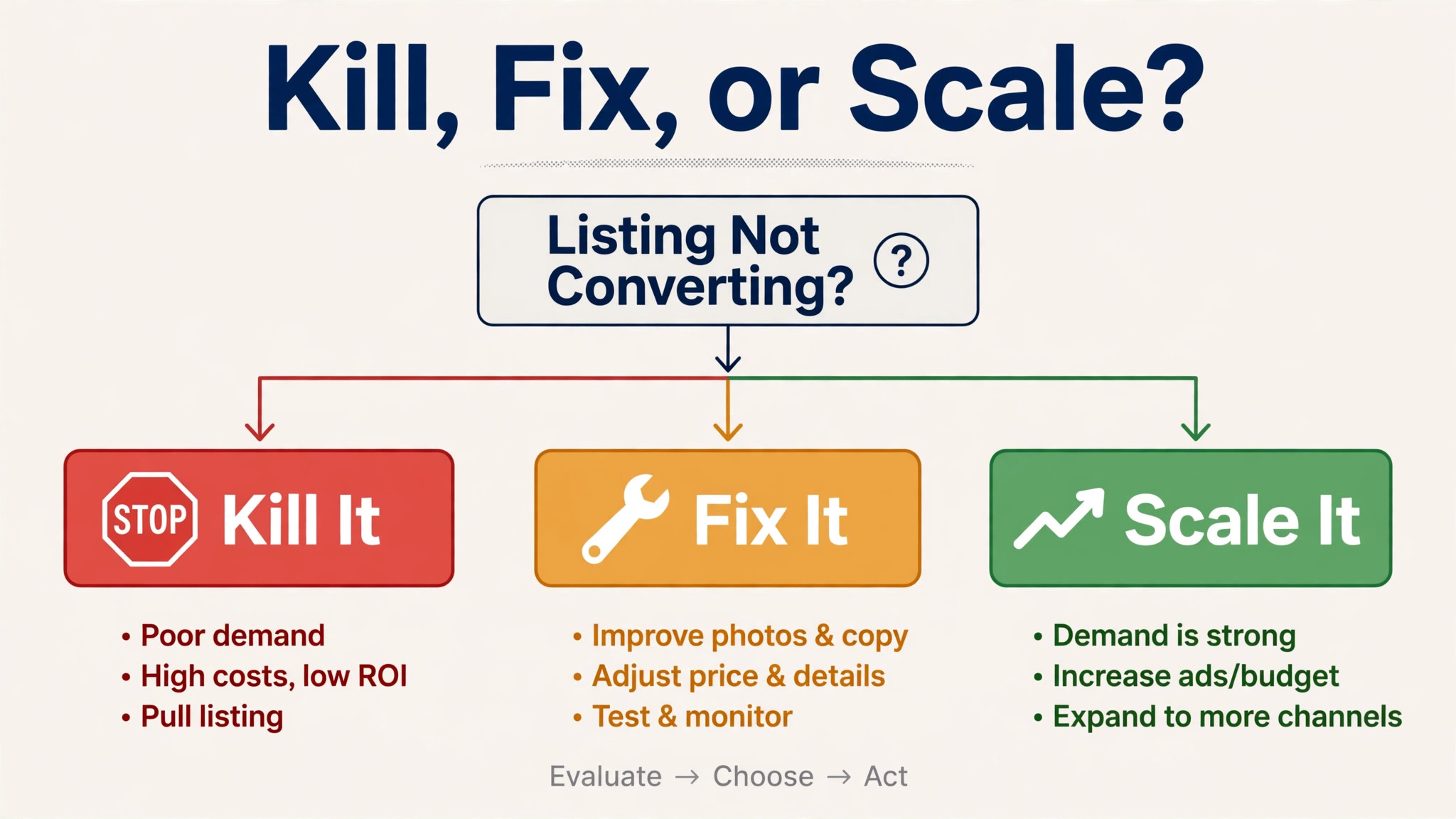
– Sort advertised listings by return on ad spend, lowest first, and separate them into keep, review, and pause groups. – For each low return listing, note clicks, orders, spend, and whether the failure is low clicks or high clicks with no orders. – Check the first photo, title, tags, and category for relevance, and fix the weakest of the four before touching the budget. – Open the listing as a shopper and confirm size, materials, delivery time, variations, prices, and shipping are all clear. – Work out the break even return from the margin, and compare the actual return with that figure rather than a generic benchmark.
– Narrow the promoted set to the best sellers by recent revenue, and confirm the daily budget fits the affordable cost per order. – Judge on site and off site ads separately, on their own cost models and their own profit results. – Apply the kill, fix, or scale rule consistently, and record each decision with its reason and date. – Pause any listing with heavy spend and zero orders at once, rather than waiting for the monthly review. – Retest a fixed listing organically first, and return it to ads only when it converts without paid help.

If every item on the checklist passes and the return is still below break even, the listing economics do not suit paid promotion, and organic selling or a different product is the honest answer. If one item fails, fix that item first, because that item is the most likely cause.
Fix the Listing Before You Touch the Budget
The listing fix deserves its own routine, because it is where most ad failures are actually solved. Start with photos. Show the product in use, show its scale against a familiar object, and show the details a buyer checks before purchasing, such as texture, closure, or finish. Use all available photo slots where the product benefits from them, and keep the first photo clean and bright. A listing with one dark photo and nine empty slots asks the shopper to trust what they cannot see.
Then rewrite the title and description around buyer questions. The title should name the product and its main use in the words a buyer types. The description should open with what the product is and who it is for, then answer size, materials, care, delivery, and what is included, in that order of buyer importance.
Tags should match real searches for the product, not generic words that bring irrelevant clicks. Check the listing against the top organic results for its main search, and ask honestly whether a shopper would click yours first. If the answer is no, the ad budget is not the problem. For a related visibility problem, see our guide to the Etsy listing not showing fix, and for a related shop problem, see the Etsy shop suspended fix.

Price and Bundle Fixes That Rescue a Low Return
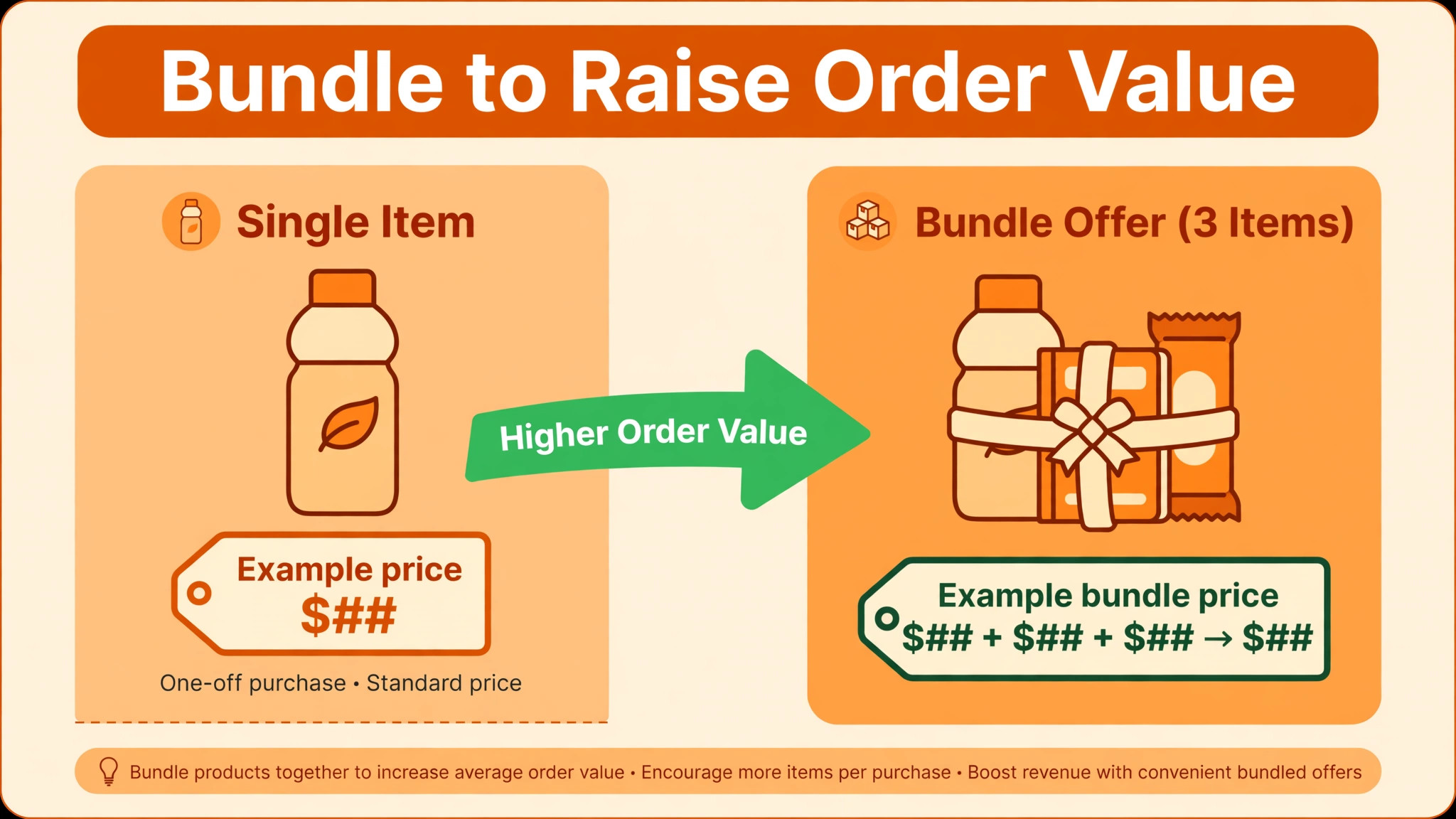
When the listing page is strong but the return stays low, price and order value are the levers left to fix Etsy ads not converting small seller trouble. Test a price increase in small steps, and watch conversion rate alongside return, because a price rise that kills conversion has not helped. A bundle can work better than a straight price rise, because it raises the order value while giving the shopper a reason to buy more. A set of two or three related items, priced below the sum of the singles, can lift the return without asking the shopper to pay more for the same single item.
Check shipping separately, because shipping price affects conversion as strongly as product price. Listings that ship free to shoppers in the main market are favoured in search, according to seller handbook summaries, so test whether including shipping in the price and offering free shipping improves conversion enough to cover the cost. Also check whether the product is simply too cheap for paid ads. A low priced item with a thin margin may never support a per click cost, and for such items organic traffic, bundles, or a higher priced companion product are better strategies than continued ad spend.
Mistakes That Waste an Etsy Ads Budget
The most expensive mistake is advertising everything. Promoting the whole catalogue spreads the budget thin, feeds weak listings, and produces data too noisy to judge. Promote a focused set of proven sellers, and let the rest earn their place through organic sales. The second mistake is judging too early. Pausing a listing after a few days, or scaling one after a good weekend, reacts to noise rather than to a trend, and it prevents the system from learning which searches suit the listing.
The third mistake is changing the listing and the budget at the same time. When results improve after two simultaneous changes, no one knows which change helped, and when results worsen, no one knows which change hurt. Change one thing, wait for readable data, record the result, and only then change the next thing. The fourth mistake is ignoring margin. A campaign can look successful on revenue while losing money on profit, because return on ad spend measures revenue against spend, not profit against spend. Always compare the return with the break even return from the margin, and judge the campaign on profit, not on sales count alone.
When to Stop Ads and Sell Organically Instead
When you fix Etsy ads not converting small seller trouble, remember there are shops where pausing ads entirely is the right decision for a season, and recognising that moment saves more money than any optimisation. If no listing holds a return above break even after listing fixes and price fixes, if margins are thin across the catalogue, or if the shop is new with no organic sales history, organic selling deserves the focus. Spend the time on photos, titles, tags, search optimisation, and shop completeness instead, and return to ads when at least one listing converts organically and holds a margin that supports click costs.
Use the pause well. A paused period is not idle time. It is the time to rebuild the weakest listings, to test new photos, to gather reviews through good service, and to build a small set of proven sellers that can carry ads later. Set a return date and a return standard, such as one listing with organic sales and a margin that breaks even below a return of 3, and do not restart ads until that standard is met. A disciplined pause beats a hopeful campaign that loses money every week. For fee background, see our guide to the cost of Etsy selling fees, and for search help, see our guide to the best Etsy SEO tools.
Frequently Asked Questions About Etsy Ads
How long should I run Etsy Ads before judging them
Run a campaign for about a month before making firm decisions, because the system needs time to learn which searches suit each listing and because a few days of data are too noisy to judge. Check weekly for sudden heavy spend with no orders, and pause such a listing at once, but judge profitability on the monthly figures. Record the starting numbers, change one thing at a time between reviews, and compare each monthly review with the same numbers, so trends are visible rather than guessed.
What is a good return on ad spend for Etsy Ads
Seller guides commonly cite a return of 3 or higher as worth keeping, but the right target depends on margin. Break even return is one divided by the margin as a decimal, so a 40 percent margin breaks even near 2.5, while a 30 percent margin breaks even near 3.3. Compare your actual return with your own break even figure first, and with the generic benchmark second. A return above break even but below 3 may still be worth keeping for a high margin product, while a return below break even should be paused or fixed regardless of how it compares with other shops.
Why do my Etsy Ads get clicks but no sales
High clicks with no orders point to the listing page, the price, or the offer, not to the ad itself. Open the listing as a shopper and check whether the photos, description, variations, shipping, and reviews answer the questions a buyer asks before purchasing. Check whether the price leaves room for the click cost, and whether the listing has any organic sales history that proves it can convert. If the page is weak, pause the ads, fix the page, prove conversion organically, and only then return the listing to ads.
Should I advertise all my listings or only a few
Advertise a focused set of proven sellers, not the whole catalogue. Seller guides commonly recommend starting with the best five to ten listings by revenue over the last ninety days, and running them on a budget that gives each listing enough clicks to produce readable data. Promoting everything spreads the budget thin, feeds weak listings, and hides the pattern in the shop total. Let unproven listings earn their place through organic sales, and add them to ads only when they convert without paid help.
How much should a small seller spend on Etsy Ads per day
Start small, commonly in the range of a few dollars a day in seller guides, and set the budget from the margin math rather than from a round number. Work out how much one order can afford to cost in ad spend while staying profitable, and set the daily budget so a normal day of clicks cannot exceed that affordable cost by a wide margin. Raise the budget only when a listing holds a return above 3 for a full month with a conversion rate that supports it. A budget that fits the economics protects the shop from a single bad week.
Are off site ads the same as Etsy Ads
No, they are separate channels with different cost models. On site ads charge per click and are controlled through the daily budget and the promoted listings. Off site ads place listings on other sites and charge a fee only when a sale results, with the fee level depending on annual sales. Judge each channel on its own terms, and check the reports separately, because blaming the on site campaign for off site fees, or the reverse, leads to the wrong fix. If off site fees erode margin on low priced items, focus on the channel where the economics work.
The Verdict on Ads That Do Not Convert
Ads that do not convert are rarely a mystery once the numbers are sorted listing by listing. The pattern is almost always one of four things, which is low relevance, a weak listing page, a price that leaves no margin for clicks, or a budget spread too thin across too many listings. Find which pattern fits each failing listing, fix that pattern, and judge the result over a full month against the break even return from the margin.
To fix Etsy ads not converting small seller trouble, stop paying for clicks to a page that does not sell, and stop judging a campaign on revenue when profit is the question. Promote only listings that have proven they can convert, keep the budget focused, and apply the kill, fix, or scale rule the same way every month. That discipline turns Etsy Ads from a monthly drain into a tool that grows the listings already working, which is the only job ads were ever meant to do.