

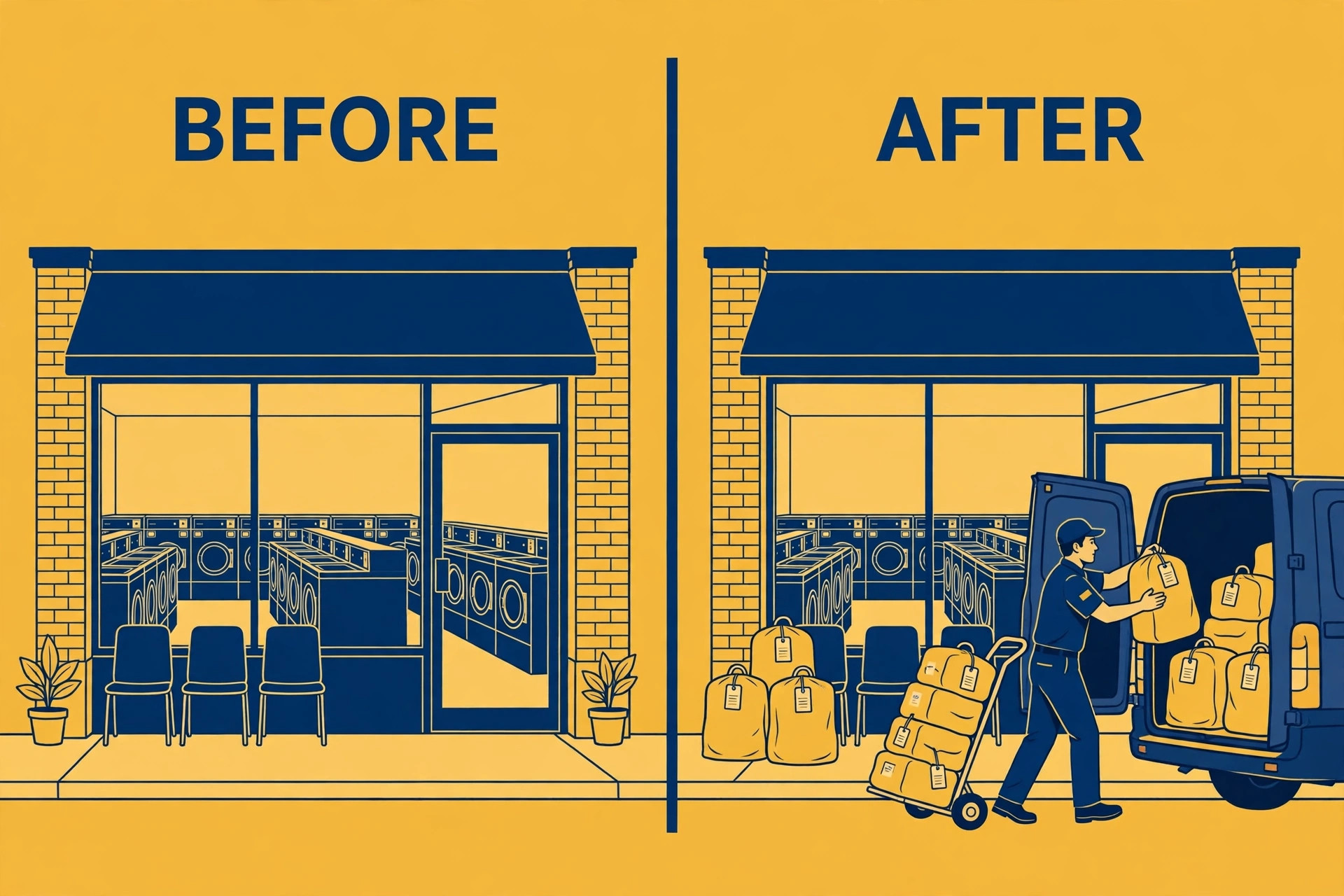
Walk-in trade alone caps what a laundromat can earn, because it only serves people willing to spend an hour in the store. A laundromat pickup delivery system setup removes that limit. It turns the store into a service that comes to the customer, and that change is worth more than any single machine upgrade, because it sells time back to busy households, landlords, gyms and small hotels that would never walk through the door.
This guide covers the whole build in order. You will compare booking options, choose laundry software with honest prices, set per-pound rates and minimums that pay for the van, draw routes that keep drivers profitable, take payment without chasing money, and staff the route and the wash floor so orders do not pile up. It is written for one store adding its first route, not for a chain, and every price below comes from vendor or comparison listings checked at draft time, so confirm the current rate on the vendor page before you sign.
Why Pickup and Delivery Changes the Math
A self-service customer pays for machine time and leaves. A pickup and delivery customer pays for washing, drying and folding by weight, plus the convenience of never visiting the store, and then repeats that order every week. That repeat habit is the real prize. One weekly household ordering 20 pounds at 2 dollars per pound is worth about 160 dollars a month before add-ons, and ten such households cover a meaningful share of a route before you count any walk-in trade at all.
The second change is who you can serve. Apartment blocks, student housing, busy parents, shift workers, Airbnb hosts and small gyms all generate steady laundry and all dislike laundromat trips. A route reaches them in a way a storefront cannot, and it does so on streets you already drive. The risk is equally clear. A route that crosses town for single small bags burns fuel and driver hours faster than it earns revenue, which is why this guide puts zones, minimums and density before marketing.
Start small on purpose. One van or car, one or two zones, two or three pickup days per zone, and a cap on daily orders until the wash floor proves it can turn them around. A capped launch feels slower than a big announcement, but it protects the reviews that will feed the route later. Nothing kills a new delivery service faster than late bags in the first month, and late bags almost always come from taking too much territory too soon.
Laundromat Pickup Delivery System Setup for One Store
A working setup has five parts, and each one needs an owner on your team, even if that owner is you at the start. Booking takes the order and the address. The point of sale prices it, weighs it and tracks it through wash, dry and fold. The driver app sequences stops and records proof of delivery. Payments charge the card on file when the job is done. Notifications tell the customer what happened at each step, so your phone stays quiet.
Most single stores buy these parts as one laundry platform rather than stitching five separate tools together, because the handoffs between booking, weighing and charging are where orders get lost. CleanCloud is the most widely listed option for delivery-focused shops, with a starting price around 99 dollars per month on review directories and tiers priced by order volume, plus card processing reported at 2.25 percent plus 20 cents per transaction. Cents lists published plans from about 89 dollars to 599 dollars per month, with delivery and dispatch features in its higher tiers and hardware bundles reported at 2,000 to 3,500 dollars.
Curbside Laundries is built specifically for pickup and delivery routes and prices by custom quote, reported around 260 dollars per month. Wash-Dry-Fold POS lists a starting price around 85 dollars per month and suits stores that want to keep existing machines and hardware, with delivery features as an add-on.
Prices move, and review listings disagree with each other, so treat every figure here as a starting point for a quote, not a promise. Book a demo with two vendors, run ten real orders through each one, and judge the driver app and the weighing screen, not the sales page. The system your staff will actually use on a wet Tuesday is the right system, even if its feature list looks shorter.
Booking Options, From Phone Calls to a Branded App
Customers need a way to book that takes less than two minutes and leaves no room for a missed address or a wrong pickup day. Four routes cover almost every single store, and the right one depends on how many orders you expect in the first three months.
Phone and text booking costs nothing to start and suits a soft launch with existing customers. Its weakness shows up fast. Every order becomes a conversation, addresses get mistyped, and nobody is booking at midnight when a busy parent finally thinks about laundry. A simple web form fixes the midnight problem and still costs little, but it leaves you copying orders into the point of sale by hand, which is where mistakes creep in.
A laundry platform with a customer app is the standard choice once you pass about 30 orders a week. That single record is why a laundromat pickup delivery system setup beats a form and a spreadsheet once volume grows. Customers book, choose a window, add notes about detergent or folding, and pay from the same place, while the order lands directly in your queue. The trade-off is the monthly fee and the setup time, plus the fact that customers must download something new. Marketplace and gig delivery channels are the fourth route. They bring demand without marketing, but they take a cut of every order and they own the customer relationship, which makes repeat business harder to build.
| Booking route | Best for | Watch out for |
|---|---|---|
| Phone and text | First 20 orders a week | Mistyped addresses and no midnight booking |
| Web form on your site | Testing demand cheaply | Manual copying into the point of sale |
| Laundry platform app | 30 or more orders a week | Monthly fee and customer app downloads |
| Marketplace or gig channel | Fast early demand | Commission on every order and no customer list |
Whichever route you pick, the booking screen must collect five things before it accepts the order. The full pickup address with a gate or door note, a phone number that accepts texts, a pickup window, detergent and folding preferences, and a card on file. If any of those five is missing, the order is not ready, and your driver will discover the gap at the doorstep instead of at the desk. Set the pickup window in two-hour blocks at first. Narrower windows sound better to customers and fail more often in traffic, and a missed window costs more goodwill than a slightly wider one ever will.

Pricing That Pays for the Van
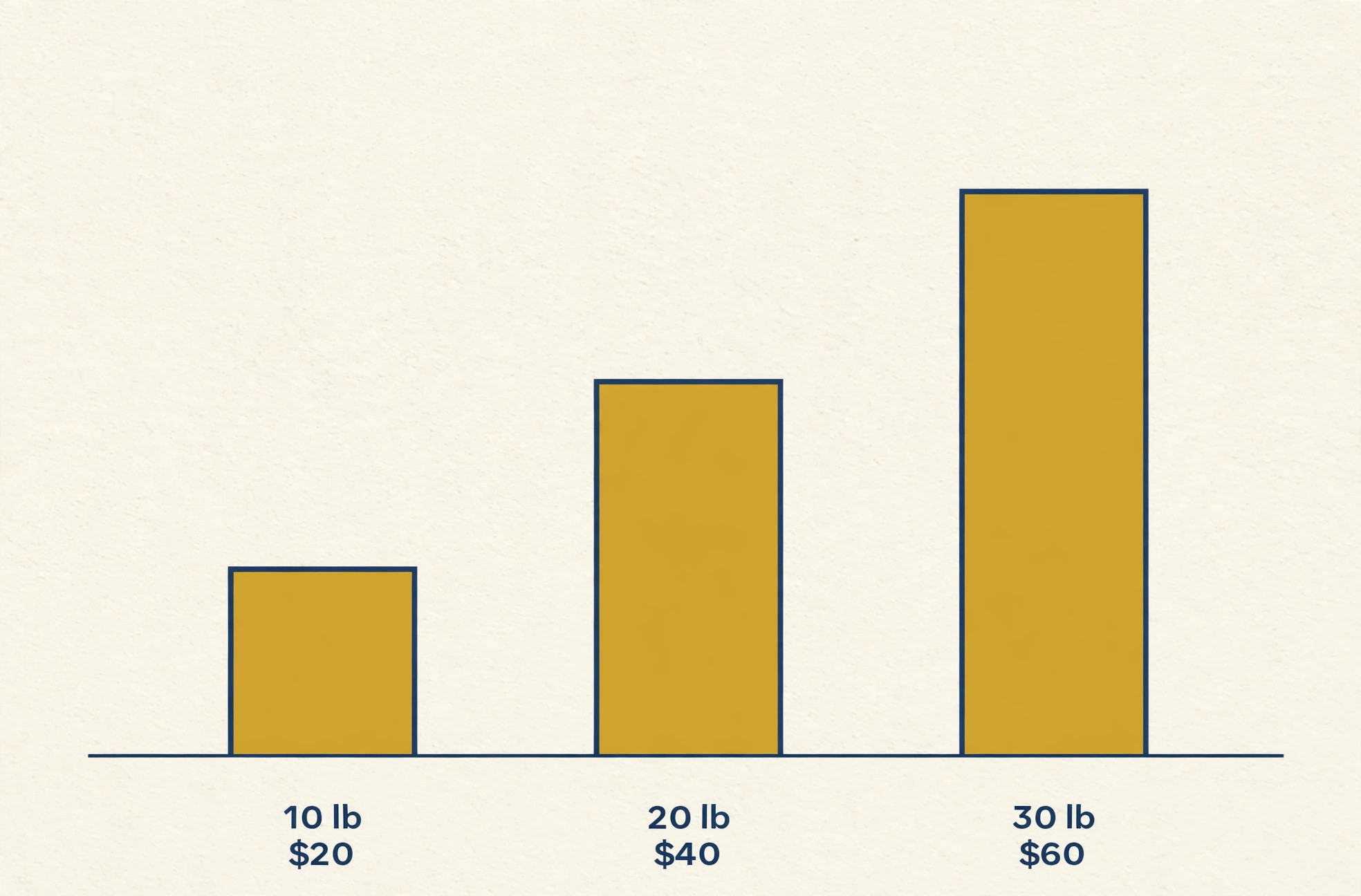
Wash and fold pricing usually runs per pound, and published guides put the common range at about 1.50 to 2.50 dollars per pound for pickup and delivery service. A 20-pound household load at 2 dollars per pound is a 40-dollar ticket, which is a useful anchor when you test your own numbers. Your rate has to cover detergent, water, energy, machine wear, labour, bags and labels, fuel, driver time and card fees, with margin left over, so work backward from your real costs rather than copying a rival across town.
In a laundromat pickup delivery system setup, the minimum order matters more than the headline rate, because one small stop can eat the margin of two good ones. Three controls protect the route more than the per-pound rate itself. The first is a minimum order, commonly 25 to 50 dollars, which stops a driver crossing a zone for a single shirt. The second is a delivery fee, commonly 10 to 15 dollars per order, which you can either charge separately or fold into the per-pound rate for a simpler price list. The third is a premium for speed, with same-day or express turnaround commonly priced 30 to 40 percent above the standard rate.
Specialty items sit outside the per-pound rate in most price lists, with comforters commonly listed at 15 to 40 dollars each and stain treatment at 2 to 3 dollars per item.
| Price element | Common range | How to use it |
|---|---|---|
| Wash and fold, pickup and delivery | 1.50 to 2.50 dollars per pound | Start mid-range, then adjust by zone costs |
| Minimum order | 25 to 50 dollars | Keeps small stops worth the drive |
| Delivery fee | 10 to 15 dollars per order | Charge it, or fold it into the rate |
| Comforter | 15 to 40 dollars each | Price separately, never by weight alone |
| Same-day premium | 30 to 40 percent above standard | Only offer it on days the floor can hold it |
Test your price with a simple weekly model before launch. Twenty orders at 20 pounds and 2 dollars per pound is 800 dollars of wash revenue in a week. Add delivery fees, subtract card fees at roughly 3 percent, subtract driver hours and fuel, and see what remains for the wash floor. If the remainder is thin at 20 orders, the answer is usually density and minimums, not a higher headline rate, because a higher rate on thin routes just produces fewer orders on the same empty roads. Offer a subscription only after eight weeks of real data. A weekly plan that discounts the rate before you know your cost per stop locks in losses that are painful to undo.
Route Planning That Keeps Drivers Profitable
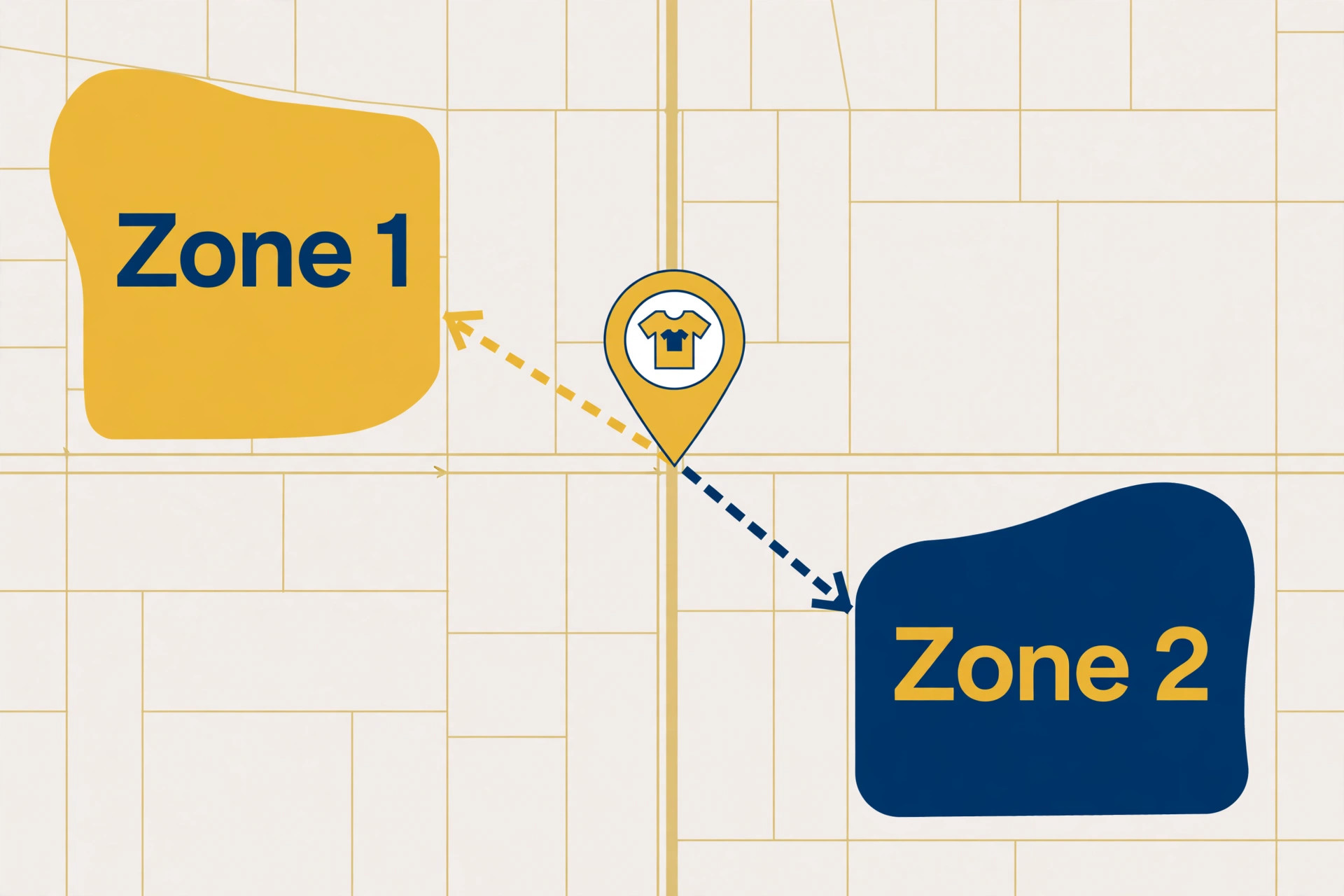
Routes make or break delivery economics, and the rule that matters most is density. Density is the first rule of a laundromat pickup delivery system setup, because the drive between stops is where profit is won or lost. Ten stops in one apartment district beat twenty stops scattered across a city, because the profitable part of a route is the driving between stops, not the stop itself. Draw zones on a map before you take bookings, give each zone set pickup days, and refuse out-of-zone bookings until a zone earns its own day. A zone that cannot fill eight to ten stops on its day is a zone you are serving too early.
Give each route a shape that respects real life. Pickups run in the morning, deliveries run in the afternoon after washing and folding, and the two flows must not cross each other on the same streets at the same time. Cap stops per route at what one driver can finish with time for traffic, stairs, gated entries and a customer who is not home. Build a missed-pickup rule into the booking terms from day one, such as one free reattempt on the next route day, so drivers are not making unpaid return trips all week.
Most laundry platforms include basic route sequencing and a driver app, which is enough for one or two routes. When you outgrow that, standalone route tools take over. OptimoRoute lists a Lite plan at 35.10 dollars per driver per month on annual billing and a Pro plan at 44.10 dollars, with proof of delivery and analytics on Pro. Circuit for Teams, now rebranded as Spoke Dispatch, has been listed at 100 dollars per month including two drivers, with extra drivers at 40 dollars each. Use a standalone tool only when your platform routing visibly wastes driver time, because every extra system is another screen your driver must check at the kerb.
| Routing choice | When it fits | Listed cost signal |
|---|---|---|
| Laundry platform routing | One or two routes | Included in the platform fee |
| OptimoRoute Pro | Growing multi-driver routes | About 44.10 dollars per driver per month, annual billing |
| Spoke Dispatch | Courier-style dispatch needs | About 100 dollars per month for two drivers, then 40 dollars per extra driver |
| Manual map and list | Under 10 stops a day | Free, but breaks fast as stops grow |
Track three numbers every week from the start. Stops per route hour, revenue per route mile, and on-time delivery rate. Stops per hour tells you whether zones are dense enough. Revenue per mile tells you whether the zone is worth serving at all. On-time rate tells you whether the wash floor or the road is the bottleneck, because the fix for each is completely different. A route that misses windows because bags are not ready needs floor help, not a faster driver.
Payment Handling Without Chasing Money
Delivery laundry fails on payment when stores charge at the wrong moment. Payment timing is the quiet test of a laundromat pickup delivery system setup, because a driver who handles money becomes a dispute waiting to happen. The model that works is a card on file, an estimated hold or authorisation at booking, and the final charge when the weighed bag is ready for delivery. Customers accept this because it matches how they already pay for other services, and it removes the driver from money handling entirely. Drivers should never carry cash for order payment, and never negotiate a price at the door.
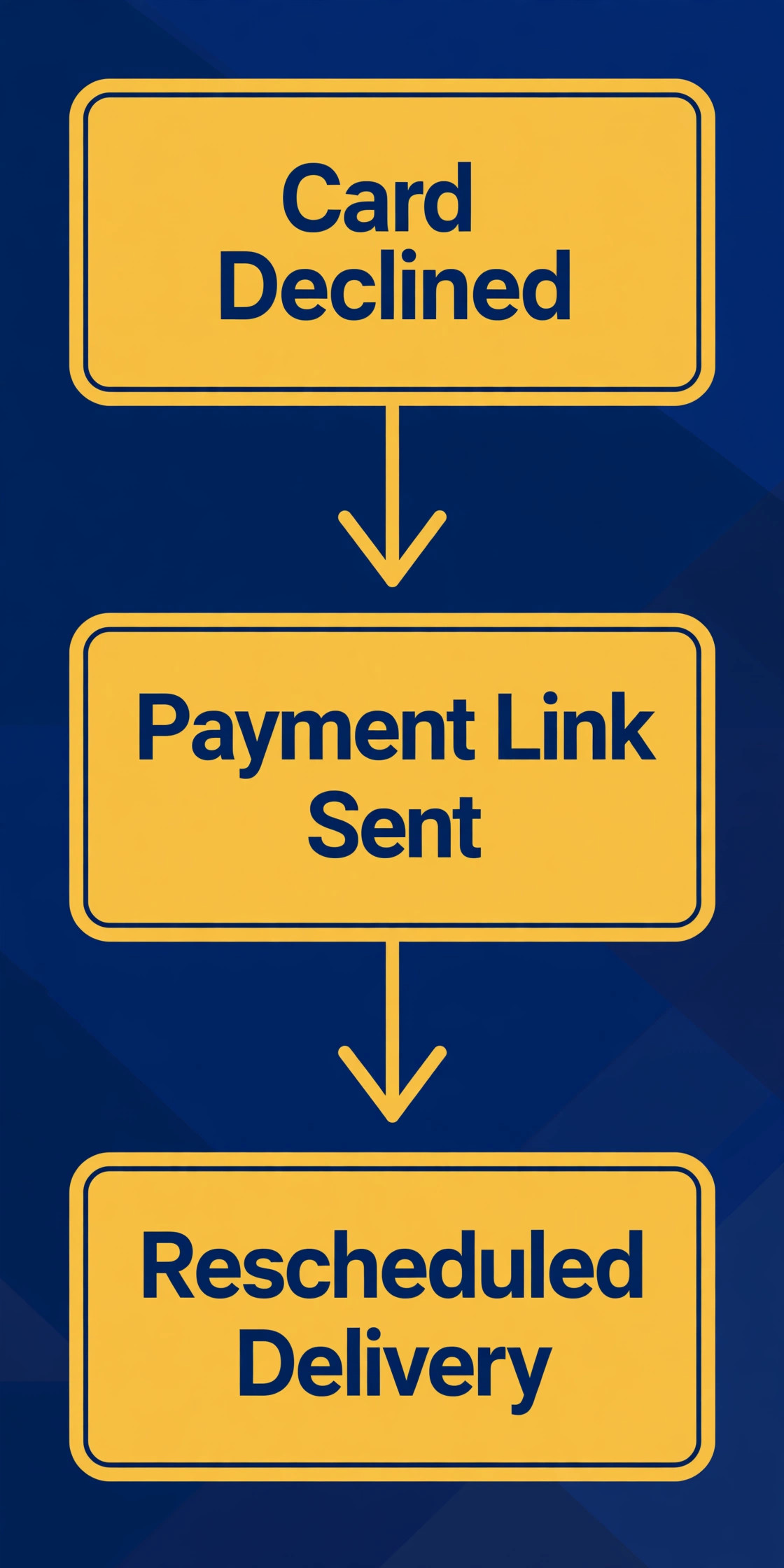
Card processing is a real cost to budget, not a rounding error. CleanCloud processing is reported at 2.25 percent plus 20 cents per transaction, and Stripe publishes a standard online rate of 2.9 percent plus 30 cents per successful card charge, so budget around 3 percent of revenue for card fees when you model prices. Failed payments need a written rule before launch. If a card fails at delivery time, the order stays at the store, the customer gets a text with a payment link, and delivery is rescheduled once payment clears. Chasing a failed card with repeated redelivery attempts is how a profitable route turns into an unpaid taxi service.
Keep the money rules visible on the booking page in plain words. State the minimum, the delivery fee, the same-day premium, the cancellation window and the failed payment rule, all before the customer books. Surprise charges produce disputes, and disputes produce chargebacks, which cost the fee plus the order. Reconcile payouts weekly against the point of sale, not monthly, because a pricing mistake found after four weeks has already repeated itself a hundred times. If your accounting setup is still basic, a proper small-business accounting tool is worth sorting before volume grows, as covered in our guide to the best accounting software for small business.
Staffing the Route and the Wash Floor
A single route needs three jobs covered, and at launch one person often covers two of them. Staffing is where a laundromat pickup delivery system setup meets real life, because software cannot carry a bag up three flights of stairs. The driver collects and delivers, and needs a clean licence, a phone that holds charge, and the judgment to skip a stop safely rather than block a street. The wash attendant weighs, washes, dries and folds to the ticket, and needs speed without mixing bags. The dispatcher, usually the owner at first, watches the route, answers customer texts and solves the one problem per day that nobody planned for.
Pay drivers in a way that rewards completed routes, not miles driven. An hourly rate plus a per-stop or per-route bonus keeps drivers from rushing past quality, while a pure per-order rate pushes them to skip hard stops. Whatever model you choose, write it down, including fuel, vehicle use and what happens when a customer is not home. Vague driver pay produces quiet resentment and sudden resignations, and a route with no driver is a route with no revenue.
Train on the bag, not on the app alone. Every bag gets a label at pickup, a weight at intake, a photo if the customer reports damage later, and a second check before it leaves the store. Mixed bags are the most expensive mistake in this business, because the fix is a free rewash, a refund and a lost customer, all for one missing label. Run a shadow week before public launch, with friends or existing customers as test orders, and time every step from doorstep to doorstep. The shadow week will show you the real turnaround time, and the real turnaround time sets the delivery promise you can actually keep.
The Setup Checklist
Work through this list in order, and do not open bookings until every item has a name next to it. Every item below belongs in a laundromat pickup delivery system setup before the first public booking goes live. This is the overview-proof core of the build, because a generic summary cannot tell you whether your zones, minimums and driver pay are actually ready.
- Draw two launch zones on a map and set pickup days for each zone.
- Choose the laundry platform and complete a ten-order demo run through it.
- Set the per-pound rate, the minimum order, the delivery fee and the same-day premium.
- Write the booking page with all five required fields and the payment rules.
- Set up card on file payments and test a failed card end to end.
- Hire or assign the driver, agree pay and vehicle rules in writing, and issue bags and labels.
- Build the morning pickup and afternoon delivery route templates.
- Write the missed pickup, damaged item and lost item policies in plain words.
- Run a shadow week with test orders and time every step.
- Set the daily order cap, publish the launch offer to existing customers first, and open bookings.
Keep this checklist printed at the counter for the first month. When something goes wrong, the fix is almost always an item on this list that was skipped or half done, and finding it on paper is faster than arguing about it from memory.

The Route and Payment Workflow, Day by Day
This workflow is the second overview-proof element, because it shows the exact sequence a summary cannot. Follow it literally for the first month, then adjust only the parts your weekly numbers prove are slow.
- Customers book by the cutoff time the evening before, choosing a two-hour pickup window.
- The dispatcher builds the morning route by zone, caps the stops, and sends the driver the stop list.
- The driver collects each bag, labels it at the door, and marks the pickup in the app.
- Intake weighs each bag, checks notes on detergent and folding, and flags stains or damage.
- The wash floor processes bags in route order, so the first deliveries out are the first bags finished.
- Finished bags are checked against the ticket, sealed, and loaded in reverse delivery order.
- The driver delivers in sequence, records proof at each door, and marks exceptions at once.
- The system charges the card on file for the weighed total, and the customer gets a receipt by text.
- Failed payments hold the bag at the store and trigger a payment link, not a second trip.
- The dispatcher reviews stops per hour, revenue per mile and on-time rate before the next route day.
The discipline in this sequence is the loading order and the charging moment. Bags loaded in reverse delivery order save the driver digging through the van at every stop, and charging after weighing means the customer pays for the real weight, not an estimate argued about later. Both details look small on paper and save real minutes and real arguments every single day.

Mistakes That Eat the Margin
The most common mistake is territory greed, taking bookings across the whole city in week one and discovering that fuel and driver hours eat the entire ticket. The second is a minimum order set too low to matter, which fills the route with stops that cost more than they earn. The third is promising same-day service before the wash floor can hold it, which turns a premium feature into a refund machine. The fourth is letting drivers handle cash or price talks at the door, which creates disputes no record can settle. The fifth is skipping the shadow week, which means your first real customers become your testers, and testers who pay do not forgive easily.
Each of these mistakes shares one cause, which is deciding from optimism instead of from the weekly numbers. If stops per hour fall, shrink the zone. If revenue per mile falls, raise the minimum or add a delivery fee for that zone. If on-time rate falls, fix the floor before blaming the road. A route business rewards owners who adjust quickly and punishes owners who defend the original plan.
Frequently Asked Questions
How much does it cost to start pickup and delivery at a laundromat?
Budget for software, bags and labels, a vehicle you already own, and driver hours before you count any new machine. Review listings put laundry platforms roughly between 85 and 260 dollars per month for a single store, route tools add about 35 to 45 dollars per driver per month only if you need them, and card fees take around 3 percent of revenue. A capped launch in one or two zones keeps the startup bill close to the software fee plus consumables.
What is a good price for laundromat pickup and delivery?
Published guides put wash and fold with pickup and delivery commonly at 1.50 to 2.50 dollars per pound, with a minimum order of 25 to 50 dollars and a delivery fee of 10 to 15 dollars. Start mid-range for your area, check two local rivals, and model a full week of orders against driver hours and fuel before fixing the rate. Price follows your cost per stop, not a rival price list.
How many stops should one driver handle in a day?
It depends on zone density, stairs, gated entries and how far apart stops sit, so set the cap from your shadow week rather than from a national figure. A dense apartment zone can support far more stops than a spread-out suburban zone in the same hours. Start with a conservative cap, track stops per route hour, and raise the cap only when on-time delivery holds for two full weeks.
Do I need special software, or can I start with a booking form?
A booking form works for testing demand and for the first 20 or so orders a week, but manual copying into orders creates mistakes as volume grows. Move to a laundry platform once orders pass about 30 a week, because the platform links booking, weighing, driver routing and card charging in one record. The switch is cheaper before bad habits and spreadsheets harden.
How do I handle a customer who is not home at pickup or delivery?
Set the rule before launch and print it on the booking page. For a missed pickup, offer one free reattempt on the next route day for that zone, then charge a reattempt fee or hold the order for store collection. For a missed delivery, the driver leaves a notice, returns the bag to the store, and delivery is rescheduled once the customer confirms a new window. Never leave a finished bag unattended without written customer permission.
Should I use my own drivers or a gig delivery service?
Own drivers suit a regular route with repeat customers, because they learn the buildings, the gates and the customers, and they carry your brand. Gig services suit overflow and new areas, because they add capacity without hiring, but they charge per delivery and the customer relationship stays with the platform. Most single stores start with their own driver for core zones and use gig capacity only for overflow days.
Your First 30 Days on the Road
Launch to existing customers first, cap daily orders, and spend the first month learning your real numbers instead of chasing volume. By day 30 you should know your cost per stop, your average ticket, your on-time rate and which zone earns its day. That knowledge is worth more than a hundred extra orders taken badly, because it tells you exactly where the second route goes and what price it needs.
If the first zone fills its days and holds its windows, add the next zone and repeat the same careful launch. If it does not fill, fix density, minimums or pickup days before spending on advertising, because ads poured into a thin route just produce more expensive empty miles. A laundromat pickup delivery system setup done this way grows one dense, profitable zone at a time, and that is how a single store builds a delivery business that lasts.
For a parallel view on running a service business from a small base, see our guide to how to start a cleaning business with AI, and for keeping customer records organised as repeat orders grow, see our guide to the best CRM software for small business.
If you want the wider cost picture before you commit, our breakdown of the cost of running a food delivery side business shows how delivery economics behave in a related trade, and the same habit of tracking revenue per mile will serve this route well.