
A regular who visits three times a week is worth far more than a first time visitor who never comes back, and that single fact should shape how you spend your marketing time. When you use AI for coffee shop loyalty program planning, you stop guessing about rewards and reminders and start building a system that brings people back on purpose. A new customer costs far more to win than a regular costs to keep, and a regular already trusts your coffee, knows your menu, and is far more likely to try a new drink or bring a friend.
This guide builds the whole system in order. You will choose a loyalty structure that fits your prices, pick a card or app option that staff can actually run during a rush, set reward tiers that protect your margin, automate reminders without annoying people, and measure whether repeat visits are really rising. Every price below was checked against a vendor page or a published comparison at draft time, and every template in this guide is ready to copy and adapt to your own menu.
Why Repeat Visits Beat New Customers for a Coffee Shop
Research by Frederick Reichheld of Bain and Company, cited by Harvard Business Review, found that increasing customer retention by 5 percent can increase profits by 25 percent to 95 percent. That range is wide because it covers different businesses, but the direction is consistent. Keeping a customer is cheaper than replacing one, and the widely cited estimate puts acquiring a new customer at 5 to 25 times the cost of retaining an existing one. For a coffee shop, the math is even more direct, because your regulars visit often, spend steadily, and need almost no persuasion to buy.
A second set of numbers makes the same point from the buying side. Marketing Metrics puts the probability of selling to an existing customer at 60 to 70 percent, compared with 5 to 20 percent for a new prospect. That gap explains why a loyalty program is not a nice extra for a coffee shop. It is the cheapest sales channel you own. A regular who already likes your flat white does not need a discount to be convinced. They need a reason to choose your counter over the chain on the corner, and a small, visible reward does that job.
Think about the value of one regular in plain numbers. A customer who spends 6 dollars per visit and visits three times a week spends about 18 dollars a week, which is roughly 936 dollars over a year. Lose that customer and you do not lose one 6 dollar sale. You lose close to a thousand dollars of yearly revenue, plus the friend they might have brought and the review they might have left. A loyalty program protects that yearly value for the price of one free drink every few weeks, which is a trade most shops should take.
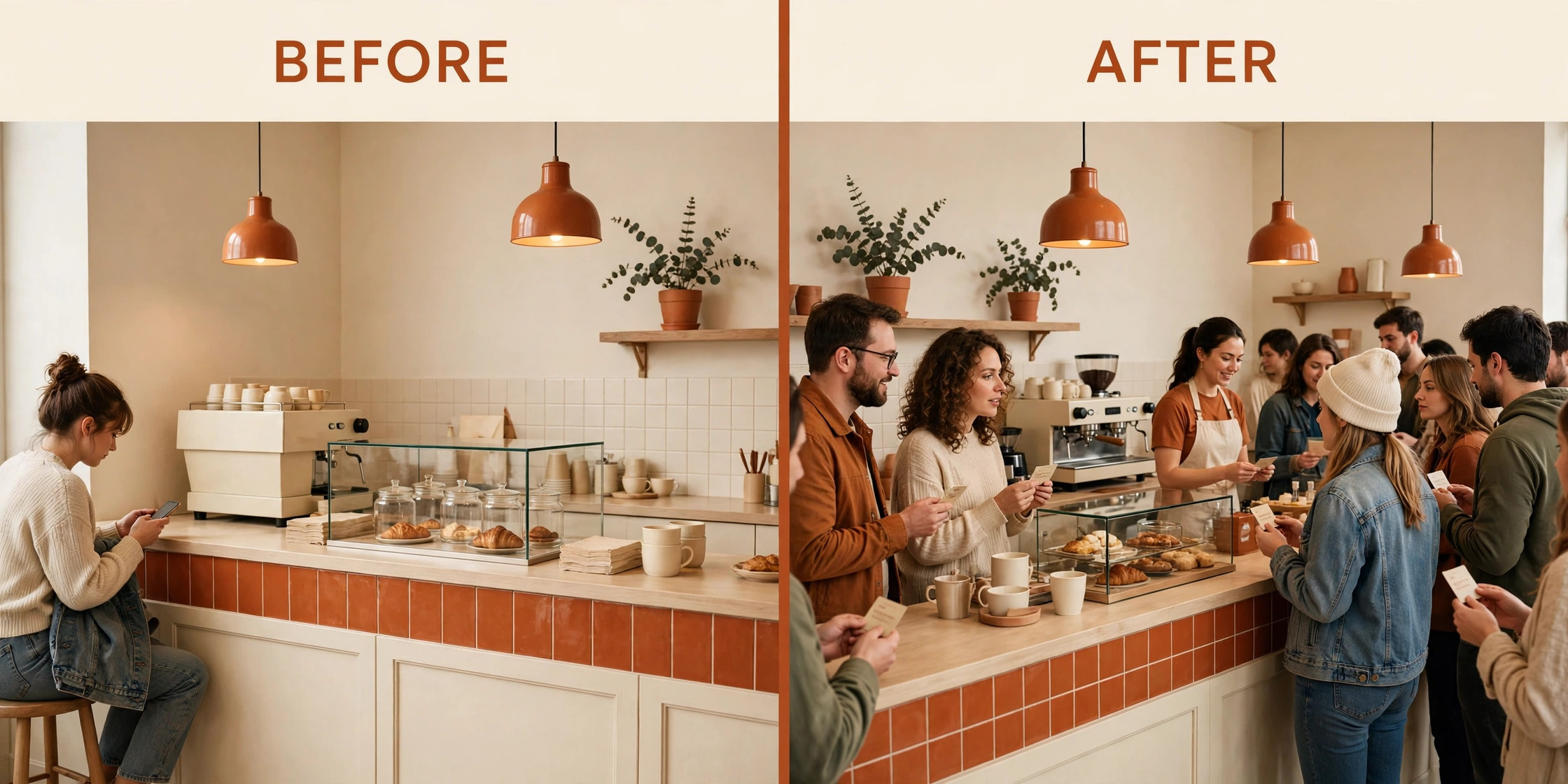
How to Use AI for Coffee Shop Loyalty Program Design
The phrase AI tools can sound grander than the reality, and for a coffee shop the reality is practical. AI helps in four places, and nowhere else needs it at the start. First, it drafts your reward wording, your sign up signs, and your reminder messages in minutes, so you are not staring at a blank page. Second, it sorts your customers into simple groups, such as morning regulars, weekend visitors, and lapsed customers who have not visited in three weeks. Third, it suggests the best time to send a reminder, based on when each group usually visits. Fourth, it turns a messy export of visit data into a short summary you can actually act on.
When you use AI for coffee shop loyalty program planning in this practical way, you keep the decisions and hand the drafting and sorting to the tool. You decide the reward. The tool writes ten versions of the sign up message and you pick the clearest one. You decide who counts as lapsed. The tool pulls that list from your visit data. You decide the offer. The tool checks that the wording is short enough for a text message and clear enough to read on a phone. That division keeps the program human and personal, which is exactly what regulars respond to, while removing the slow admin work that usually stops small shops from following through.
Start with one AI assistant you already use, such as ChatGPT, Claude, or Gemini, and give it your real numbers. Tell it your average drink price, your food cost percentage, your current visits per week, and your reward idea, then ask it to check whether the reward protects your margin. A tool that only writes pretty copy is not enough here. The useful test is whether it can spot a reward that costs too much, a reminder that sounds pushy, or a tier that regulars will reach too fast to feel special. Feed it facts, ask for trade offs, and treat its first draft as a starting point to edit, never as a finished program.
The structure is the skeleton of the program, and changing it later confuses regulars, so choose carefully at the start. Four structures work well for coffee shops, and each suits a different kind of menu and customer.
A stamp card is the simplest structure. One stamp per drink, and a free drink after a set number of stamps, usually nine or ten. It works best when most customers buy one drink at a time and your average ticket is fairly steady. Its weakness is that it rewards frequency only, so a customer who buys a coffee and a pastry every visit earns the same stamp as a customer who buys a single small coffee. For many single counter shops, that simplicity is a strength, because staff can explain it in one sentence and customers can see their progress at a glance.
If you use AI for coffee shop loyalty program comparisons, ask it to score each structure against your ticket mix rather than accepting a generic recommendation.
Use this decision checklist before you commit.
- If most tickets are a single drink, choose stamps.
- If your menu ranges from a small coffee to beans, pastries, and merchandise, choose points.
- If you have at least 50 customers who visit four or more times a week, add tiers.
- If your shop depends on a morning commuter crowd, consider visit based rewards.
- If staff have under ten seconds per customer at the till, choose the simplest option, even if a fancier system looks better on paper.
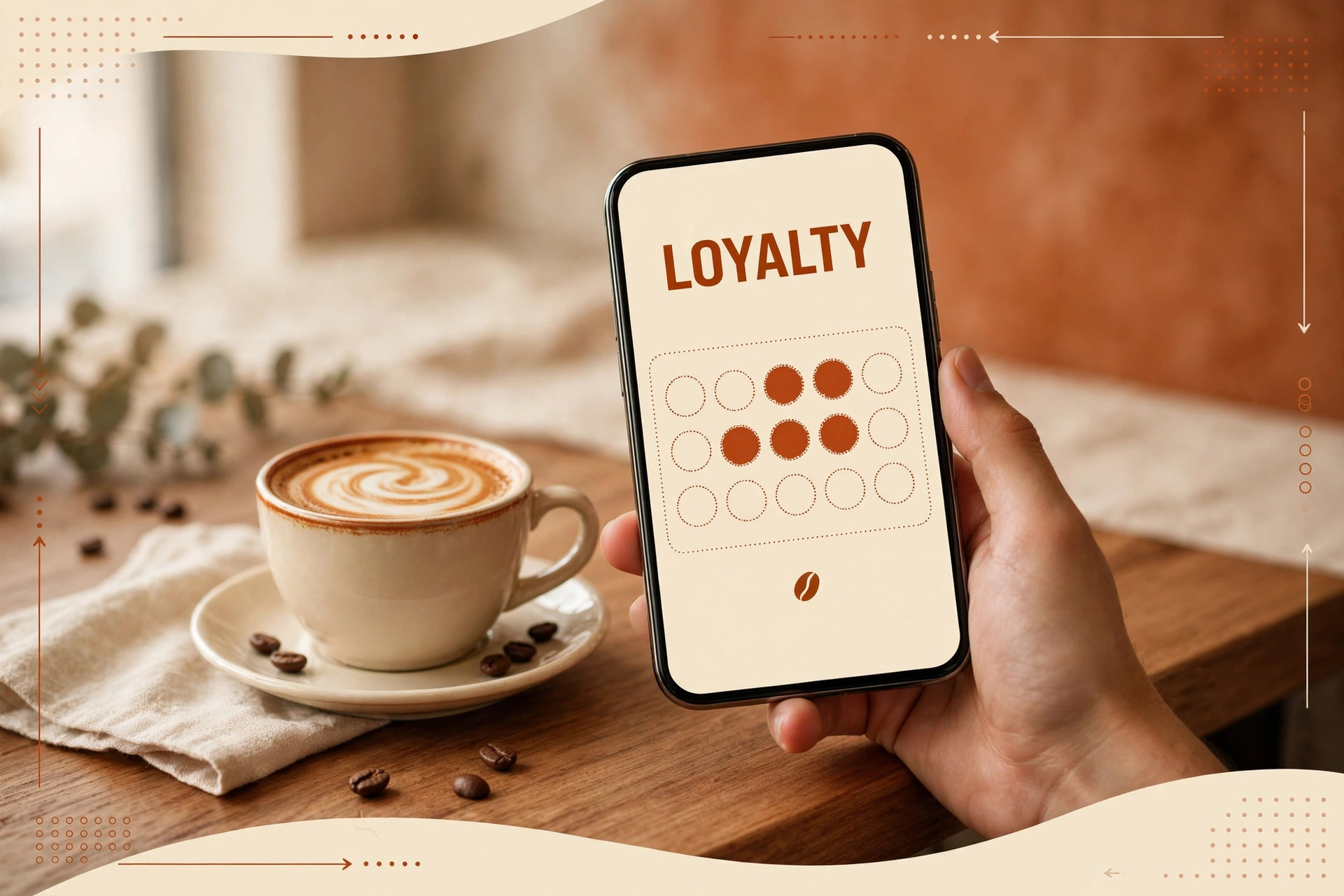
Card and App Options Compared
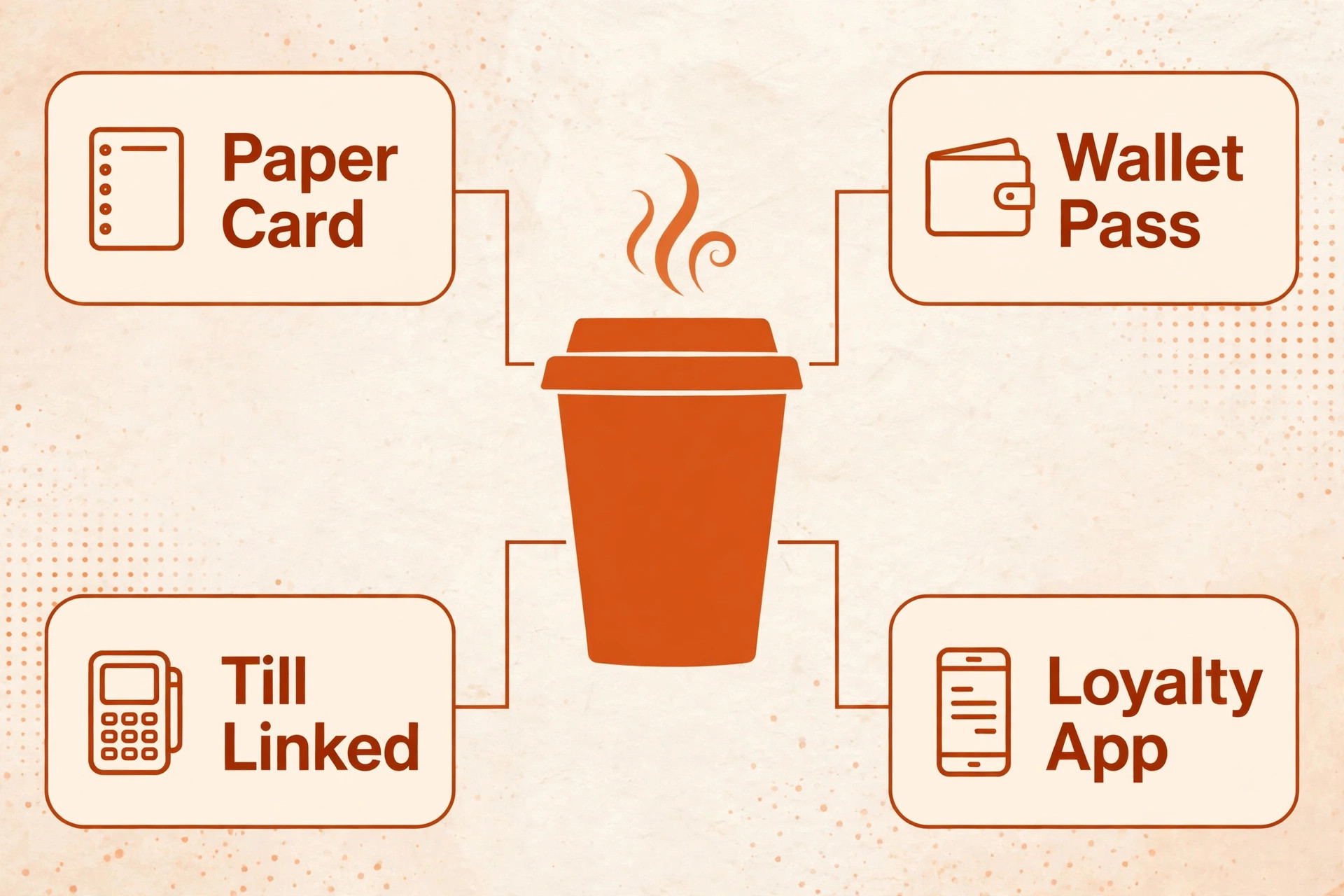
Once the structure is set, the next choice is how customers carry it. Paper cards are free to print and familiar to everyone, but they get lost, they tell you nothing about who your customers are, and they cannot send a reminder. Digital options cost a monthly fee, but they record visits, store customer details, and let you message people who have gone quiet. The right choice depends on your volume, your till system, and how much staff time you can spare.
Loopy Loyalty starts at 25 dollars per month for one location on its Starter plan, with a 15 day free trial and unlimited customers. Customers save the card to Apple Wallet or Google Wallet, so there is no separate app to download, and staff stamp the card with a phone or tablet. That wallet approach removes the biggest reason digital programs fail, which is asking a customer to download yet another app for one coffee shop. When you use AI for coffee shop loyalty program shortlists, ask it to compare joining friction, not just price, because a cheap tool nobody joins is the most expensive option.
Its limit is that it is a stamp card system, so if you want full points and tiers, you will outgrow it or need to work around it.
Stamp Me starts at 49 dollars per month on its Lite plan, with Pro at 79 dollars per month and a higher tier at 199 dollars per month, and a 30 day free trial. It uses its own app and a tap device at the counter, and it offers wider engagement tools than a simple wallet card, including campaigns and messaging on higher plans. Its strength is flexibility in how stamps are given, and its weakness is the app download, which will put off some casual visitors. It suits a shop that wants to run campaigns and is willing to promote the app properly at the counter.
Square Loyalty is the natural choice if you already run Square at the till, because points are added automatically at checkout with no extra step for staff. Published pricing puts Square Loyalty at 45 dollars per month per location for up to 500 loyalty visits, rising to 75 dollars and then 105 dollars per month as visit volume grows, and more recent Square pricing pages list loyalty inside Square Plus at 49 dollars per location per month in the United States. The exact figure depends on your Square plan and your country, so confirm it on Square’s own pricing page before you budget. Its strength is zero extra work at the till.
Its weakness is lock in, because if you leave Square, your program history does not travel with you easily.
| Option | Starting price checked at draft time | How customers join | Best for |
|---|---|---|---|
| Loopy Loyalty | 25 dollars per month | Wallet pass, no app download | Simple stamp cards |
| Stamp Me | 49 dollars per month | Stamp Me app | Campaigns and engagement |
| Square Loyalty | 45 dollars per month per location | Phone number at the till | Shops already on Square |
| Meed | Free up to 50 members, then 59 dollars per month | QR code to wallet pass | Testing a program cheaply |
| Paper stamp card | Printing cost only | Card handed at the till | Very low volume shops |
Reward Tiers That Protect Your Margin
A reward that feels generous to the customer and still protects your margin is the heart of the whole program. The most common mistake is copying a famous chain’s offer without checking your own costs. A large chain can afford a free drink after nine purchases because its buying power and volume are different from yours. An independent shop with a 6 dollar average drink and a 30 percent drink cost gives away about 1 dollar and 80 cents of product cost on each free drink, plus the cup and the staff time, so the reward must be earned slowly enough to be paid for by the visits that led to it.
Work out the cost before you announce anything. If a free drink costs you 1 dollar and 80 cents in ingredients, and a customer must buy nine drinks at 6 dollars to earn it, you have taken 54 dollars of sales to give away 1 dollar and 80 cents of cost. That is about 3 percent of those sales in product cost, which most shops can carry, especially since the reward visit often includes a pastry or a second item. If you offer a free drink after five purchases, the same cost is about 6 percent of those sales, which starts to bite, and if you also discount the drinks along the way, the margin disappears entirely.
Do this calculation for your own prices, not for an example in a guide, and write the result down where staff can see it.
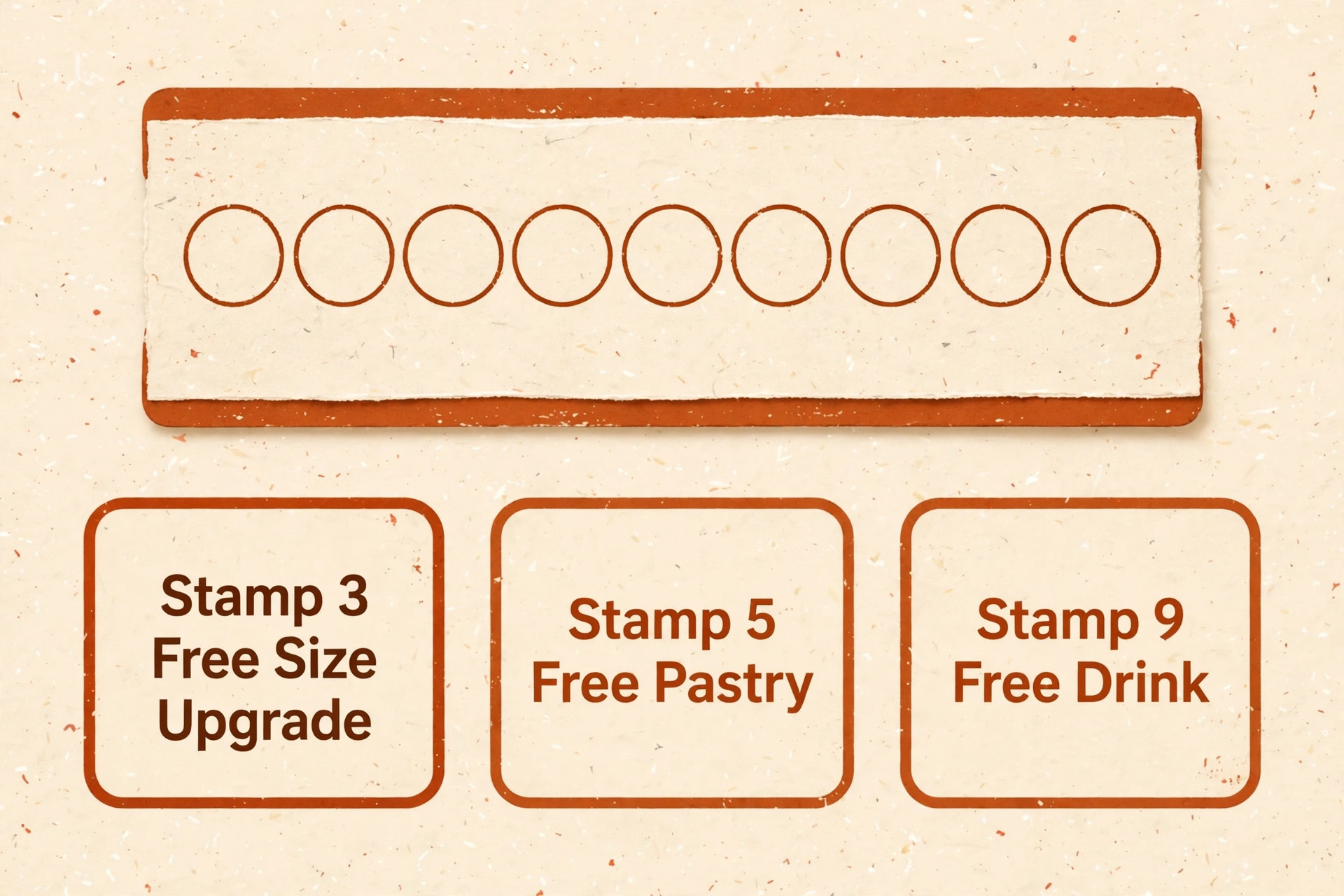
Here is a reward template you can adapt. It uses stamps, because stamps are the easiest structure to explain, and it balances early wins with a meaningful top reward. Adjust the thresholds to your own average ticket, and keep the early reward small so the program feels alive in the first two weeks. When you use AI for coffee shop loyalty program costing, give it your real drink cost and average ticket and ask it to flag any tier above 5 percent of member sales.
Reward template for a single location coffee shop.
- Stamp 3. A free size upgrade on the next drink, from small to medium or medium to large.
- Stamp 5. A free pastry or biscuit with any drink, limited to items up to a set price you choose.
- Stamp 9. A free drink of the customer’s usual size, any standard menu drink.
- Stamp 15. A free bag of house beans, or a free drink plus pastry for the customer and a friend.
- Every 25 stamps after that. A rotating seasonal reward, such as early access to a new drink, a tasting invitation, or a branded keep cup.
Notice what this template does. The stamp 3 reward arrives fast, so a new member feels progress within the first week. The stamp 5 reward adds food, which raises the average ticket on the reward visit itself. The stamp 9 reward is the headline free drink that customers expect. The stamp 15 reward turns a regular into an advocate, because bringing a friend is built into the reward. The rotating reward after that stops the program from going stale, which is the point where many programs quietly die.
The Loyalty Workflow, Week by Week
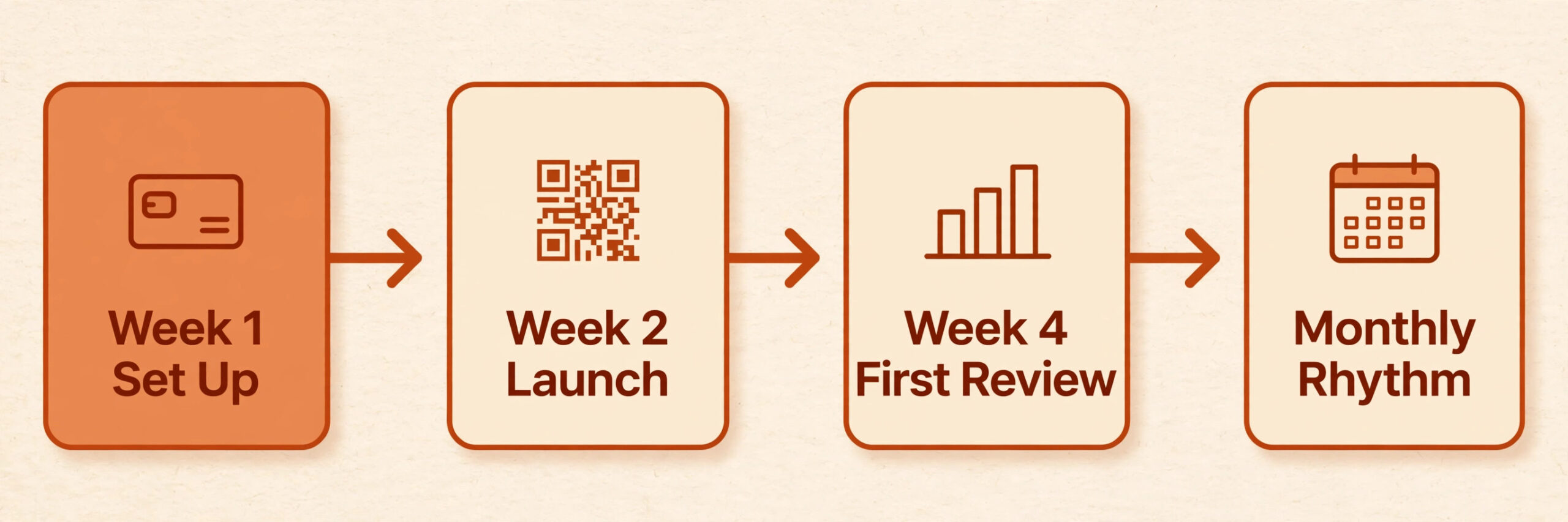
A program without a workflow is a poster on the wall. The workflow below turns the structure, the card, and the tiers into a weekly routine that one owner and a small team can run without adding a management job. It assumes a single location, a digital card or a till based system, and two messages a month at most.
Week 1 is setup week. Finalise the structure, the thresholds, and the reward costs using the margin check above. Set up the card or app, print the counter sign and the QR code, and write the sign up script staff will use. The script should be one sentence, such as asking whether the customer would like a free drink after nine visits, and it should be used at the till, not shouted across the shop. Train every staff member on stamping, redeeming, and handling a lost card or phone, because the first week is when customers form their opinion of the program.
Week 2 is launch week. Offer a joining bonus that costs little but feels immediate, such as a double stamp on the first visit or a free size upgrade for joining. Put the QR code on the counter, on the menu board, and on the receipt if your till allows it, and mention the program on your social channels once, with a photo of the actual card rather than a stock image. Track sign ups daily in week 2, and if sign ups are below one in ten transactions, move the QR code, shorten the script, or add the joining bonus to the till prompt.
If you use AI for coffee shop loyalty program launch copy, have it write the counter sign and the social post from the same reward facts, so customers hear one consistent offer. Do not wait a month to discover that nobody noticed the launch.
Week 4 is the first review week. Export your member list and your visit data, and answer four questions. How many people joined, and what share of transactions came from members. How many members earned a reward, and what did those rewards cost. How many members have not visited in two weeks, and what do they have in common. Which reward was claimed most, and which was ignored.
From week 5 onward, the workflow settles into a monthly rhythm. In the first week of each month, review last month’s numbers and adjust one thing only, such as a reward threshold, a message time, or a sign up prompt. In the second week, send the regular member message, such as a new seasonal drink or a member only tasting. In the third week, send the win back message to lapsed members, with a single offer and a deadline. In the fourth week, thank your top visitors personally, by name, at the till or with a handwritten note, because personal recognition is the part of loyalty that no app can replace.
Reminder Automation Without Spamming Regulars
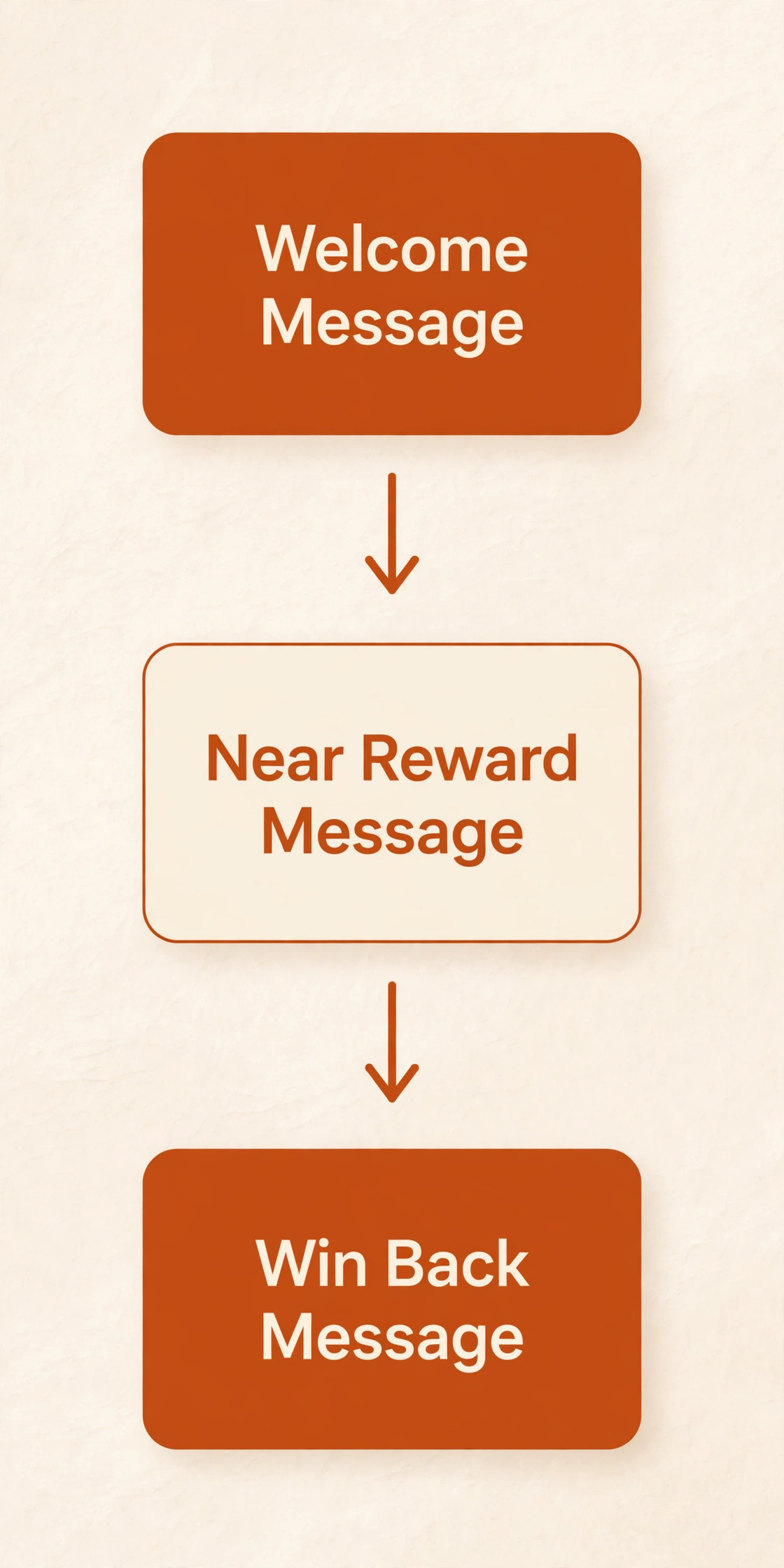
Reminders are where loyalty programs most often go wrong. Too few, and members forget the program exists. Too many, and members opt out and tell friends the shop spams them. The safe structure is three automated messages, each with a different trigger, and nothing else unless a genuine event, such as a new seasonal menu, justifies an extra one.
The first message is the welcome message, sent within an hour of joining. It confirms the reward, states the threshold plainly, and tells the customer how to use the card. A good welcome message reads like a receipt, not an advert, and it should contain no extra offer. The customer has just joined, and the best next step is a clear reminder of what they signed up for, not another reason to spend.
The second message is the near reward message, sent when a member is one stamp or a small number of points away from a reward. This is the highest value message in the whole program, because it gives a customer who is already close a reason to visit this week rather than next week. Keep it short, name the exact reward, and do not add a second offer that distracts from it. When you use AI for coffee shop loyalty program messages, ask for three lengths of the same message, so you have a short text version and a slightly longer email version. A customer one stamp from a free drink does not need a discount on beans as well.
They need to know they are one visit away.
For the sending tool, use the messaging built into your loyalty app where possible, because it already knows who is near a reward and who has lapsed. If your loyalty tool has no messaging, Mailchimp is a common next step, with a free plan for up to 250 contacts and 500 sends a month on its current published terms, and a Standard plan from 20 dollars per month for up to 500 contacts, which adds automation tools. SMS is more direct than email and more intrusive, so reserve it for the near reward and win back messages, and use email for the monthly news.
Measure Repeat Visits and Fix What Is Weak
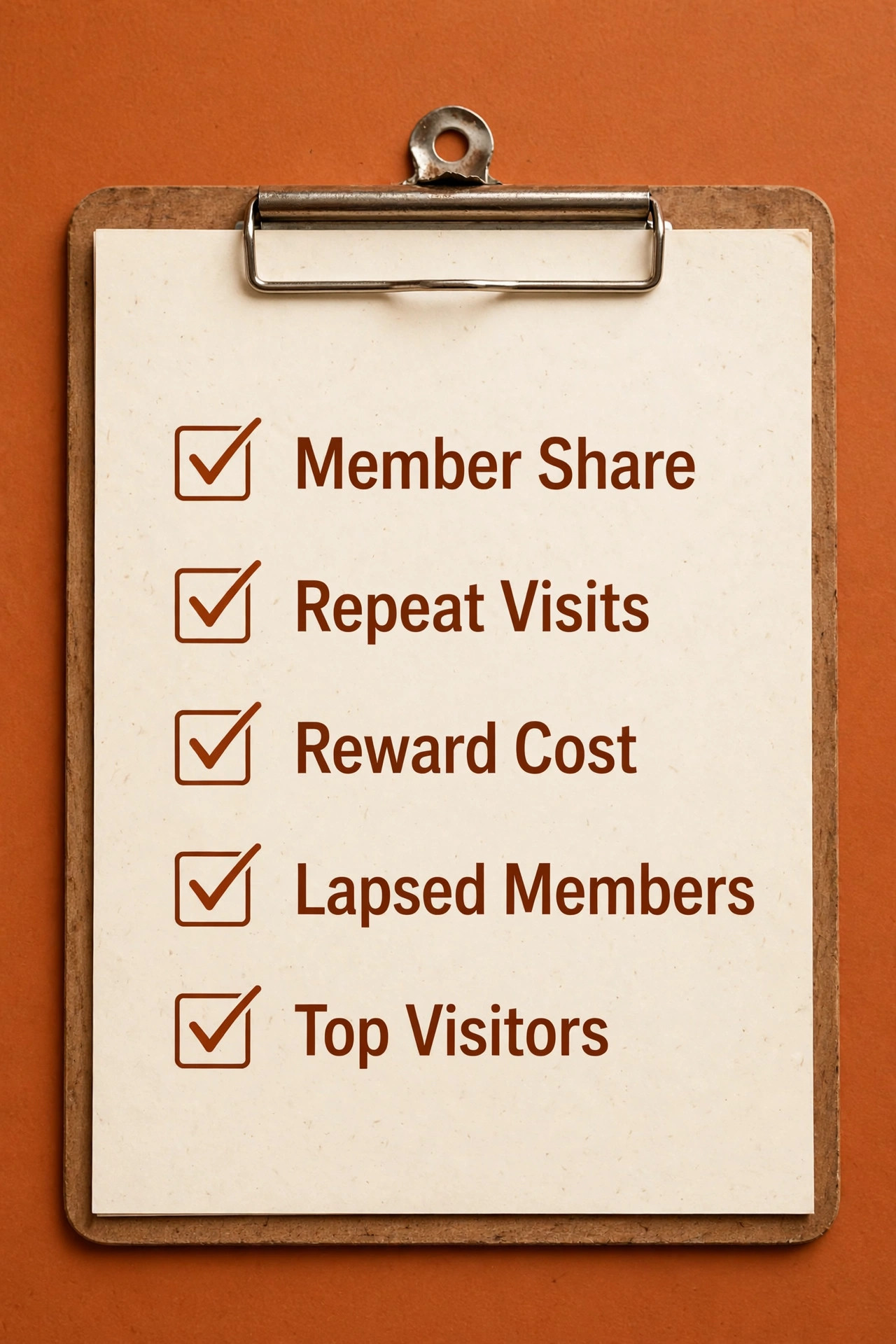
A loyalty program that is never measured is a cost, not an investment. Four numbers tell you almost everything you need, and all five can be tracked in a simple spreadsheet if your loyalty tool does not report them directly.
First, track the member share of transactions, which is the share of all sales that come from loyalty members. A healthy single location shop should see this rise to 30 to 50 percent within three months, because regulars are a large share of coffee shop sales. If the share stays below 20 percent after three months, the sign up step is failing, not the reward, and the fix is at the till, not in the offer. If you use AI for coffee shop loyalty program reporting, ask it to turn the monthly export into the four numbers above, then check each one against the raw data yourself.
Second, track repeat visit rate, which is the share of members who visit at least twice in a month. Compare it with the same figure before launch if you have the data, or with non members after launch if you do not. A rising repeat rate is the program working. A flat repeat rate with rising sign ups means people join for the bonus and never return, which points to a weak welcome message or a reward threshold that feels too far away.
Third, track reward cost as a share of member sales, using the margin calculation from the tiers section. Keep it under 5 percent. If it rises above that, raise a threshold, replace a costly reward with a cheaper experience reward, or limit the most expensive reward to a higher tier. Never solve a rising reward cost by quietly removing a promised reward, because that breaks trust in a way that is hard to repair.
Fourth, track lapsed members, defined as members with no visit in 30 days, as a share of all members. A lapsed rate under 20 percent is healthy for a coffee shop, because holidays, travel, and seasonal routines all create natural gaps. A lapsed rate above 35 percent means the program is not giving people a reason to return, and the fix is usually a better near reward message, a more interesting rotating reward, or a simpler sign up that brings in genuine regulars rather than one time visitors chasing a bonus.
Mistakes That Quietly Kill a Loyalty Program
The first mistake is launching with a reward you cannot afford. A free drink after five purchases sounds generous in a launch post, but it becomes a cost problem within weeks, and the usual response, which is to change the rules midstream, angers exactly the customers the program was meant to keep. Always run the margin check before launch, and launch with a slightly conservative threshold. You can always make a program more generous later as a celebration. You cannot easily make it less generous without a backlash.
The third mistake is messaging without a benefit. A weekly email about the shop, with no reward, no news, and no reason to visit, trains members to ignore you, so that when a real offer arrives, it is ignored too. Every message must answer one question for the reader, which is why this message matters to me this week. If you cannot answer that question in one sentence, do not send the message.
More Reading for Small Coffee Shops
If this guide has helped you plan the loyalty side, the wider small business guides on Stratilyze cover the systems around it. The guide to automating a small business with AI shows where automation saves real time beyond loyalty, the guide to email marketing tools helps you compare the sending tools mentioned above, the guide to Instagram tools covers promoting the program on social channels, and the guide to CRM software for small business explains how to keep customer records tidy as your member list grows. Read the automation guide first if staff time is your main constraint, because a loyalty program only works when the team running it has time to run it well.
Frequently Asked Questions
How much does a coffee shop loyalty program cost per month?
For a single location, budget 25 dollars to 105 dollars per month for the loyalty tool itself, depending on the option you choose. Loopy Loyalty starts at 25 dollars per month, Stamp Me starts at 49 dollars per month, and Square Loyalty is priced per location from 45 dollars per month, rising with visit volume. Add the cost of rewards on top, which should stay under 5 percent of member sales, plus a small amount for printing signs and QR codes.
How many stamps should a coffee shop loyalty card have?
Nine or ten stamps for a free drink is the standard that customers understand instantly, and it works well when the average drink costs 5 to 7 dollars. A longer card, such as fifteen stamps, protects margin but feels distant, so pair it with small milestone rewards at stamp 3 and stamp 5, as in the template above, so members feel progress long before the headline reward.
Do customers prefer a card, an app, or a wallet pass?
Most customers prefer whichever option takes the least effort at the till. A wallet pass wins for casual visitors, because there is no app to download and the card lives next to their payment cards. An app wins for shops that run regular campaigns and want richer messaging, but only if customers are motivated enough to install it. A till based system such as Square Loyalty wins for shops already on that till, because the customer only gives a phone number.
How do you use AI for coffee shop loyalty program reminders without sounding robotic?
Use AI to draft and sort, and use a human to approve and personalise. Give the tool your real reward, your real threshold, and your shop’s tone, then edit its draft until it reads like something your staff would say. Keep messages short, name the exact benefit, and send only the welcome, near reward, and win back messages as automated sends. Read every scheduled message aloud before it goes out, and remove any phrase that sounds like a chain announcement. One genuine sentence beats three polished paragraphs every time.
What is a good repeat visit rate for a coffee shop loyalty program?
There is no single benchmark that fits every street, but two targets are useful. Aim for member transactions to reach 30 to 50 percent of all transactions within three months, and aim for at least half of your members to visit twice or more in a month. Track your own trend rather than chasing an outside number, because a shop near offices will naturally see higher frequency than a shop in a weekend market area.
Can a loyalty program work for a very small coffee shop with one till?
Yes, and a small shop often benefits most, because regulars are a larger share of its sales. Choose the simplest option, such as a wallet stamp card or a till based system, and keep the reward to one clear offer with one milestone on the way. Limit messages to two a month, review the four numbers monthly, and let personal recognition carry the part that software cannot. A small shop does not need tiers, points, and campaigns. It needs a clear promise, kept consistently, by staff who know their regulars.
Your First 30 Days With a Loyalty Program
The best loyalty program is the one that is still running in six months, not the one with the most features on launch day. Pick one structure, one card or app option, and one reward template from this guide, run the margin check with your own prices, and launch it properly with trained staff and a visible sign up step. Then follow the monthly rhythm, send only messages that carry a real benefit, and review the four numbers on the same day each month. When you use AI for coffee shop loyalty program work in this disciplined way, it removes admin and drafting time without removing the human welcome that makes regulars return.
Start with the structure decision this week, set up the card next week, and let your regulars tell you, visit by visit, whether the program earns its place on your counter.