
A podcaster records a strong episode, reads the show website address aloud at the end, and watches listeners misspell it. The name sounded clever in the studio, but on air it needs a spelling lesson, and half the audience gives up before they find the site. That spoken-word problem is why the top 10 ai domain name generators for podcasters matter, because a podcast name lives in ears before it lives on screens.
A blog name can be long and odd, because readers see it and click it. A podcast name has to survive being heard once, remembered in a car, and typed into a phone later. It needs to be short, easy to say, easy to spell, and free of words that sound like other words. The tools in this guide test names against those spoken-word rules instead of just listing what is available.
This guide compares ten generators on how well they produce names a listener can repeat, how they check availability and trademarks, and what they charge. Prices below are the vendor list prices as checked in November 2026. The goal is a name you can say on air without apologizing for it.
Why a Podcast Name Is Harder to Pick Than a Blog Name
A blog reader sees a name and clicks it. A podcast listener hears a name once, often while driving, and has to remember it until the next stop. That gap between hearing and typing is where most podcast names fail. A name with a silent letter, a clever spelling, or a word that sounds like another word loses listeners who never tell you they tried.
The second problem is the spoken intro. A host says the name at the start and the end of every episode, sometimes three times in one show. A name that is awkward to say will be shortened by the host, misheard by the listener, and eventually replaced, which costs the show its search history and its links. The name has to feel natural in the mouth, not just clever on a page.
The third problem is the crowded feed. Thousands of shows share the same few words, like daily, real, true, and honest, so a name built from those words will sit next to a dozen lookalikes. A generator that suggests unusual combinations, checks the podcast directories, and flags names that already exist saves a podcaster from launching into a crowd.
What Makes a Domain Work When Spoken Aloud
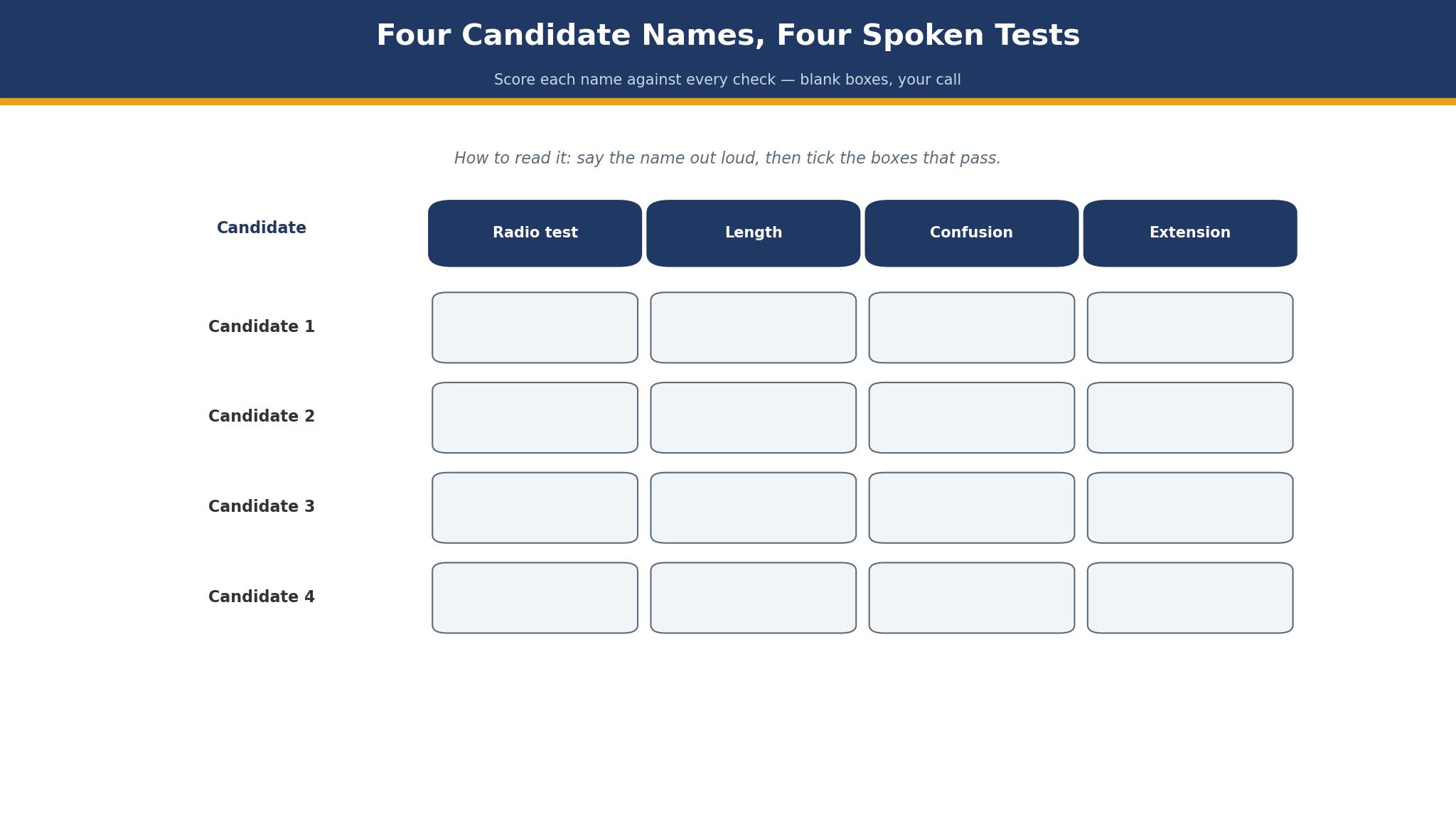
A spoken domain passes four tests. First, the radio test, which asks whether a listener who hears the name once can spell it without help. If the name needs a spelling lesson, it fails. Second, the length test, which asks whether the name fits in one breath. Two or three syllables is the sweet spot, and anything past four starts to drag.
Third, the confusion test, which asks whether the name sounds like another common word or another show. A name that sounds like a different podcast will send listeners to the wrong feed, and a name that sounds like a rude word will end a show before it starts. Fourth, the extension test, which asks whether the .com is available or whether the podcaster is willing to explain a different ending on air every episode.
A good generator runs all four tests at once. It suggests names, checks the domain, checks the social handles, and flags the lookalikes, so the podcaster chooses from names that already passed the hard parts. The tools in this guide are ranked on how much of that checking they do before they show you a name.
The 10 Tools at a Glance
The table below gives the short version of the top 10 ai domain name generators for podcasters. Prices are entry prices unless stated, and the main job column states what each generator is built to do first.
| Tool | Main job | Best for | Starting price |
|---|---|---|---|
| Namelix | AI brand name ideas | Podcasters who want short invented names | Free |
| DomainWheel | Name ideas with availability | Podcasters who want fast checks | Free |
| Nameboy | Keyword-based name ideas | Podcasters starting from one topic word | Free |
| Porkbun | Domain search and registration | Podcasters who want cheap registration | From about $10 a year |
| Namecheap | Domain search with AI ideas | Podcasters who want low renewal prices | From about $6 a year |
| GoDaddy | AI domain search and hosting | Podcasters who want one vendor for all | From $11.99 a year |
| Squarespace Domains | Domain search inside a site builder | Podcasters building a show site | From $20 a year |
| Atom | Brandable names with logos | Podcasters who want a premium name | Pricing on the vendor site |
| Brandpa | Curated brand names for sale | Podcasters who want a ready-made name | Pricing on the vendor site |
| Novanym | Brandable names with checks | Podcasters who want a checked premium name | Pricing on the vendor site |
Best Pick by Job
The table below matches each naming pattern to a first pick and a backup from the top 10 ai domain name generators for podcasters, so a new show and a rebrand can each see their own answer at once.
| Job type | First pick | Second tool | Why this pair works |
|---|---|---|---|
| Brand-new show, no name yet | Namelix | DomainWheel | Namelix invents short names and DomainWheel checks them fast |
| Show built on one topic word | Nameboy | Namecheap | Nameboy builds from the keyword and Namecheap registers it cheaply |
| Show that needs a site too | Squarespace Domains | GoDaddy | Squarespace builds the site and GoDaddy covers hosting and email |
| Podcaster who wants a premium name | Atom | Novanym | Atom sells names with logos and Novanym adds trademark checks |
| Podcaster on a tight budget | Porkbun | Namecheap | Porkbun keeps registration cheap and Namecheap keeps renewals low |
How to Pick From the Top 10 AI Domain Name Generators for Podcasters
Picking starts with the show itself, not the tool. Write one sentence about what the show is, who it is for, and what the listener gets, then feed that sentence to the generator. The top 10 ai domain name generators for podcasters all work better with a clear brief than with a single vague word, because the brief keeps the suggestions on topic instead of drifting into random words.
Then say every candidate name aloud, three times, at normal speaking speed. If you stumble, a listener will too. Ask a friend to hear it once and spell it back, because that is exactly what a listener does in a car. A name that passes the friend test and the radio test is worth more than a name that looks clever on a screen.
Finally, check the name in the places that matter before you fall in love with it. Search the podcast directories, check the domain, check the main social handles, and run a quick trademark search. A generator that does these checks inside the tool saves an afternoon of separate searches, and a name that passes all of them is ready to register.
The 10 Tools in Detail
1. Namelix
Namelix is the most creative generator on this list, and its invented names are the reason podcasters like it. Feed it a few keywords and a style, and it returns short, brandable names that sound like a show rather than a description, with a logo preview for each one. The free tier is generous enough to run a full naming session without paying.
The honest drawback is that the best names may already be taken as domains, and Namelix shows availability but does not register the name itself. A podcaster will still need a registrar, and the invented names can drift into words that are hard to pronounce, so every candidate needs the spoken test before it is trusted.
It suits a podcaster starting from nothing who wants a short, memorable name that does not sound like every other show. For a new show with no name at all, it is the fastest way to a strong shortlist.
Run a real session by feeding Namelix your show sentence and your three topic words, then take the ten best names and say each aloud to a friend who has never heard the show. Keep only the names your friend spells correctly on the first try, then check the domains for those survivors before you look at the rest.
2. DomainWheel
DomainWheel is the speed tool on this list. Type a keyword, and it returns rhymes, variations, and combinations with domain availability shown beside each one, so a podcaster can move from an idea to a registered name in one sitting. The interface is plain and fast, which suits a naming session done between recordings.
The honest drawback is that the suggestions are more mechanical than Namelix, leaning on word combinations rather than invented brand words. The results can feel generic, and the tool does not check podcast directories or trademarks, so the podcaster must do those checks separately before registering.
It suits a podcaster who already has a topic word and wants to see every available variation of it quickly. For a show with a clear keyword, it turns an afternoon of searching into twenty minutes.
Try it by entering your main topic word and noting how many of the first twenty suggestions are available as a .com. Then take the five best and search each one in a podcast app, because a name that is free as a domain but taken as a show will still confuse listeners.
3. Nameboy
Nameboy is the keyword-first generator, built for a podcaster who knows the topic and needs a name around it. It combines the keyword with related words, checks availability, and offers hosting alongside, which makes it a one-stop option for a new show. The tool is free to use for ideas, and the suggestions are practical rather than wild.
The honest drawback is that the names lean descriptive, which means they can sound like a category rather than a show. A name built from two plain words is easy to understand but hard to remember, and the hosting upsell appears early, which can distract from the naming job itself.
It suits a podcaster with a clear topic, like a city, a hobby, or a profession, who wants a name that tells a listener what the show is about in one hearing. For that podcaster, the descriptive name is a feature, not a flaw.
Test it by entering your topic word and your audience word together, then read the top ten names aloud and mark the ones that sound like a show title rather than a search query. Register the best of those, and keep the rest as episode or segment names, because a good descriptive phrase should not go to waste.
4. Porkbun
Porkbun is a registrar with a strong search tool, and its appeal is price. A .com starts from about $10 a year, renewals stay close to the first-year price, and the search shows a long list of extensions beside each name. The checkout is clean, and there are no aggressive upsells at the payment step, which podcasters notice after using other registrars.
The honest drawback is that Porkbun does not generate names the way Namelix does. The search is a check, not an inventor, so a podcaster needs to bring the name idea first. The AI suggestions exist but are lighter than the dedicated generators, and the site builder options are thinner than GoDaddy or Squarespace.
It suits a podcaster who already has a name and wants to register it cheaply with honest renewal pricing. For that podcaster, the low price and the clean checkout are the whole argument.
Judge it by pricing your chosen name for three years, including renewal and privacy protection, and compare that total with the same name at two other registrars. If Porkbun is cheapest across three years and the checkout took under five minutes, it has done its job.
5. Namecheap
Namecheap pairs a domain search with AI name ideas and some of the lowest renewal prices in the category. A .com can start from about $6 a year on promotion, and the search returns a wide range of extensions with the price beside each one. The free privacy protection on many domains is a real saving across a year.
The honest drawback is that the first-year price and the renewal price are different, and a podcaster who only looks at the headline can be surprised in year two. The AI ideas are useful but not as inventive as Namelix, and the upsells for hosting and email appear throughout the checkout, which slows the process down.
It suits a podcaster who wants a low-cost registrar with name ideas built in and does not mind checking the renewal price before buying. For a show on a budget, the first-year saving is real money.
Check it by searching your top three names, noting the first-year price and the renewal price for each, then adding three years of privacy protection to the total. Compare that three-year total with Porkbun before you pay, because the cheapest first year is not always the cheapest three years.
6. GoDaddy
GoDaddy is the one-vendor option on this list, with AI domain search, registration, hosting, email, and a site builder under one account. A podcaster can search for a name, register it, and build a show site without leaving the platform, and the AI search suggests names based on the show description. A .com starts from $11.99 a year.
The honest drawback is price over time. Renewals run higher than Porkbun or Namecheap, and the checkout pushes add-ons at every step, from privacy to hosting to email. A podcaster who only needs a domain will pay for convenience they do not use, and the renewal bill in year two is the moment that cost appears.
It suits a podcaster who wants one account for the domain, the site, and the email, and who values that simplicity over the lowest price. For a new show that needs everything at once, the single vendor saves setup time.
Test it by building the whole show setup in one session, from domain search to a simple site with the latest episode embedded, and time the whole job. If the site is live within two hours and the total first-year cost is acceptable, the convenience is worth it, and if the add-ons doubled the bill, register elsewhere.
7. Squarespace Domains
Squarespace Domains is the choice for a podcaster who wants the show site to look good without hiring a designer. The domain search sits inside a site builder with strong templates, the podcast pages handle episodes cleanly, and the domain starts from $20 a year. The result is a show site that looks professional from the first episode.
The weak point is the price and the lock-in. At $20 a year the domain costs more than the budget registrars, and the site builder is a monthly subscription on top, so the total bill is the highest on this list for a podcaster who only needs a domain. Moving the site away later takes real work.
It suits a podcaster who cares about the look of the show site and wants the domain and the design in one place. For a show that lives on its website as much as in the feed, the design quality justifies the price.
Evaluate it by building a one-page show site with your three latest episodes, your domain, and a subscribe button, then show it to five listeners and ask what they remember. If they remember the show name and the latest episode, the design did its job, and if they only remember the template, the price is not earning its keep.
8. Atom
Atom sells brandable names that already come with a logo, which is a different job from generating ideas. A podcaster can browse names that are short, pronounceable, and available, buy one with the logo included, and launch with a visual identity on day one. The names are curated, so the quality floor is higher than a free generator.
The honest drawback is price, which sits behind the listing and varies by name, with premium names costing far more than a fresh registration. A podcaster on a budget will find most listings out of reach, and the name may still need a podcast directory check, because Atom checks the domain and the trademark risk, not the feed.
It suits a podcaster who wants a premium, ready-made name with a logo and is willing to pay for it. For a show with a budget and a launch date, buying a curated name saves weeks of naming work.
Try it by setting a firm budget before you browse, then shortlist three names inside that budget and run each through the spoken test and the podcast directory search. If one passes both and the logo fits your show art, buy it, and if none passes, walk away, because a premium price does not fix a name listeners cannot spell.
9. Brandpa
Brandpa is a curated marketplace of brand names, each sold with a logo and a domain, and its strength is the curation. Every name has been checked for pronounceability and trademark risk, and the logo gives a podcaster a visual identity without hiring a designer. The names tend to be short and invented, which suits a show that wants to stand out.
The honest drawback is that the price is set per name and sits behind the listing, so a podcaster cannot budget from the homepage. The names are sold once, so a good name can disappear while a podcaster is still deciding, and the podcast directory check is still the buyer’s job.
It suits a podcaster who wants a distinctive, ready-made name and is ready to decide quickly when the right one appears. For a show that needs to launch with a brand, not just a domain, it is a real shortcut.
Check it by shortlisting two names, running both through the spoken test with a friend, and searching both in the podcast directories before you contact the seller. If one passes and the other fails the spoken test, the choice is made, and the price is the only remaining question.
10. Novanym
Novanym sells brandable names with a trademark check included, which is its main advantage over a free generator. Each name comes with a logo, a domain, and a check that the name is not already a registered mark in the main classes, so a podcaster buys with more confidence than a name invented in an afternoon. The names are short and invented, built to be said aloud.
The catch is the same as the other marketplaces, which is that pricing sits behind the listing and premium names cost far more than a fresh registration. The selection is smaller than Atom, and a podcaster with a very specific topic may not find a name that fits the show at all.
It suits a podcaster who wants a premium name with a trademark check and is willing to pay for that confidence. For a show that may grow into a business, the trademark check is worth more than the logo.
Test it by picking the two names that fit your show best, then asking a friend to hear each once and spell it back, and running a quick search for the name as a business in your country. If both tests pass, the name is ready, and the price is a business decision, not a naming problem.
A Naming Week That Ends With a Domain You Can Say
A good naming week has a clear shape. Monday is for the brief, which means one sentence about the show, the listener, and the promise, written down and agreed before any tool opens. Tuesday is for generation, with two or three tools run on the same brief, so the shortlist comes from different kinds of suggestions instead of one tool’s habits.
Wednesday is for the spoken test, where every candidate name is said aloud, spelled back by a friend, and scored on the radio test. Thursday is for the checks, which means the podcast directories, the domain, the social handles, and a quick trademark search, all done before any name is loved too much. Friday is for the decision, where the best name is registered and the show art is updated, so the weekend recording can use the real name on air.
The week works because it separates invention from judgment. A name invented on Monday and judged on Friday has had time to be tested, while a name invented and registered in one hour has only been liked, never checked. The tools on this list are fast, but the week is what makes the choice good.

Naming Traps That Cost Podcasters Later
The first trap is the clever spelling. A name that replaces a letter with another, drops a vowel, or adds a silent letter will be misspelled by listeners for the life of the show. The top 10 ai domain name generators for podcasters can suggest clever spellings, yet the podcaster should reject any name that needs a spelling lesson on air.
The second trap is the name that is already a show. A domain can be free while the podcast name is taken, and listeners will find the other show first. Search the podcast apps before registering, not after. The third trap is the name that limits the show, like a year, a city, or a narrow topic that the host outgrows in season two. A name should fit the show you will make in two years, not just the one you make today.
The fourth trap is the cheap domain with an expensive renewal. A first-year price of a few dollars can become a renewal of forty, and a show that forgets to check will pay it or lose the name. Always price three years before registering, and set the renewal to automatic once the name is chosen.
Frequently Asked Questions
Should I always buy the .com for a podcast?
A .com is the safest choice, because listeners assume it and type it without thinking. If the .com is taken, a .fm or .show can work for a podcast, but the host will need to say the extension clearly on air every time. The top 10 ai domain name generators for podcasters all show extensions beside each name, so check the .com first and only settle for another ending when the name itself is worth it.
How short should a podcast domain be?
Two or three syllables is the sweet spot, and under fifteen characters is a good rule. A shorter name is easier to say, easier to spell, and easier to remember in a car. If the name needs a hyphen to be readable, it is too long or too confusing, and a shorter name will serve the show better.
Can I change my podcast name later?
Yes, but it costs more than most hosts expect. The feed, the show art, the website, and every link to the show need updating, and listeners who search the old name will find nothing. A rebrand is possible, but it is far cheaper to spend a week choosing well now than to spend a month fixing a bad choice later.
Do I need a trademark check before I register?
A quick check is wise before a show grows, because a name that clashes with a registered mark can force a rebrand later. The marketplaces on this list include a check, and a free search of the trademark database takes ten minutes. Do the check before the first episode, not after the hundredth.
Is a generated name as good as a name I invent myself?
A generated name is a starting point, and the best names in this guide came from a generator suggestion that a host then improved. The tool gives you combinations you would not have thought of, and your judgment turns one of them into a show name. Use the tool for breadth and your own ear for the final choice.
What if my ideal name is taken as a domain but free as a show name?
Take it as a warning and keep looking. A show with a different domain from its name will confuse listeners who type the name and land elsewhere. The only exception is a name so strong that the host is willing to say the full domain, extension included, on every episode. Most hosts are not, and the name is not worth that cost.
The Name You Can Say on Air
For most new podcasters, Namelix is the best place to start, because it invents short names that sound like a show, and DomainWheel is the best second tool for checking them fast. A podcaster who wants a site too should look at Squarespace Domains, and a podcaster with a budget for a premium name should browse Atom and Novanym before deciding. The top 10 ai domain name generators for podcasters all work, yet the winner is the name a listener can hear once and type correctly later.
Pick two tools, run the same brief through both, and keep the name that passes the spoken test, the directory search, and the three-year price check. That name is ready to say on air.