
Only about 2 in 10 first-time donors give again, and that number decides whether a shelter can plan next year or just survive this month, which is why the top 10 fundraising software for animal shelters matters more than any single gala. A donor who gives 25 dollars once and never hears from the shelter again is not lost to a rival, they are lost to silence.
This guide compares ten fundraising tools that animal shelters actually use in 2026, judged on donation forms, recurring giving, donor records, events, and price. Pricing figures come from vendor pages reviewed in late 2026, so verify the current plan on the vendor site first, because plans change.
The ten tools split into two groups. Donor CRMs like DonorPerfect and Bloomerang keep every donor, gift, and conversation in one record. Fundraising platforms like Givebutter and Donorbox make it easy for a supporter to give in one tap. A shelter needs both jobs done, so the pick should follow whether your bigger pain is asking or remembering.
Why Animal Shelters Lose Donors After the First Gift
A shelter rescues a dog, posts the photo, and gets a wave of donations, then the wave ends and nobody follows up. The donor never gets a thank you that mentions the dog, never hears what happened next, and never gets asked again. The shelter blames donor fatigue, but the real problem is a system that never recorded the gift properly.
That gap is exactly what the top 10 fundraising software for animal shelters is built to close. A good tool records every gift with the donor, the campaign, and the animal it helped, then reminds the team to thank the donor and ask again at the right moment. The donor feels remembered, and remembered donors give again.
The second problem is the donation form itself. A form that asks for ten fields and loads slowly on a phone loses donors who were ready to give, especially when the gift comes from a social media post about one animal. A one-tap form with a photo of the animal and a clear monthly giving option turns a moment of feeling into a gift.
The 10 Tools at a Glance
| Tool | Main job | Best for | Starting paid price |
|---|---|---|---|
| DonorPerfect | Donor CRM | Deep donor records | from about $99 a month |
| Bloomerang | Retention focused CRM | Donor retention | from about $125 a month |
| Givebutter | Free fundraising platform | Free start | free core platform |
| Little Green Light | Cheap donor CRM | Small budgets | from about $45 a month |
| Neon CRM | Growing nonprofit CRM | Workflows and reporting | from about $99 a month |
| Kindful | Donor CRM | Simple donor records | pricing on the vendor site |
| Donorbox | Donation forms | Recurring gifts | free Standard, Pro about $150 a month |
| Qgiv | Events and peer-to-peer | Fundraising events | from about $40 a month |
| Classy | Gala and campaign platform | Big campaigns | pricing on the vendor site |
| Network for Good | Donor management plus fundraising | All-in-one small nonprofit | pricing on the vendor site |
No single row in this table settles the choice, because the top 10 fundraising software for animal shelters for a tiny rescue looks different from the right pick for a shelter with a full development team. A tiny rescue needs free tools and fast setup, while a bigger shelter needs donor records and reporting. The table narrows the field on cost, and the detail section below shows what each tool feels like to use.
Best Pick by Job
| Job type | First pick | Second tool | Why this pair works |
|---|---|---|---|
| Tiny rescue, under 200 donors | Givebutter | Donorbox | Free fundraising plus free donation forms |
| Growing shelter, 500 donors | Bloomerang | Givebutter | Retention focused CRM plus free fundraising pages |
| Event heavy shelter | Qgiv | Classy | Auctions and peer-to-peer plus gala fundraising |
| Data heavy shelter | DonorPerfect | Neon CRM | Deep donor records plus flexible reporting |
| Monthly giving push | Donorbox | Givebutter | Recurring gifts plus free monthly giving pages |
| Small team, small budget | Little Green Light | Givebutter | Cheap donor records plus free fundraising |
A tiny rescue should start with the top 10 fundraising software for animal shelters that costs nothing to try, and Givebutter wins that job with free donation forms, events, and a basic CRM in one account. Donorbox sits behind it as a free backup for simple forms and recurring gifts.
A growing shelter needs records as much as forms, so Bloomerang takes the lead with engagement scores and retention reporting, while Givebutter stays on for the fundraising pages. An event-heavy shelter should run Qgiv instead, because auctions and peer-to-peer campaigns are its strength.
How to Judge the Top 10 Fundraising Software For Animal Shelters
Start with the donation form, not with the feature list. Open your own form on a phone, donate 25 dollars, and time how long it takes. A form that takes two minutes and three screens will lose donors who were ready to give, while a one-tap form with the animal photo converts the feeling into a gift.
Next, test the thank you, because the top 10 fundraising software for animal shelters is judged by what happens after the gift, not before it. Does the donor get a thank you that mentions the animal and the amount, and does the team get a task to call the donor within a week. A tool that automates the thank you keeps donors, while a tool that forgets them loses them.
Then model the real cost, including the fees donors pay. A free platform that takes a 3 percent fee costs more than a 99 dollar subscription once you raise 10,000 dollars a month, while a free platform funded by donor tips can cost the shelter nothing. Work out the total at your real monthly giving, not just the subscription price.

The 10 Tools in Detail
Below, every tool gets its own close look, covering what it does well, what it charges, and where it lets a shelter down. Begin with the pick that matches your donor count, then read the next best option, because the runner-up can fit a small rescue better.
1. DonorPerfect
DonorPerfect is the donor CRM shelters have used for decades, and its strength is the record. Every donor, gift, and interaction is tracked in customizable records with reporting that answers almost any question. Pricing starts from about 99 dollars a month, with higher tiers quoted per organization. The reporting is the reason teams stay, because it shows exactly which campaigns and donors drive the money.
It fits shelters with a serious fundraising program and someone to run the database. The trade-off is setup, since DonorPerfect needs configuration before it shines. Best for Deep donor records. Paid plans start at from about $99 a month.
A team moving from Bloomerang should run both tools for two weeks, so no donor records is lost in the switch. Keep Bloomerang running until the first full month closes cleanly in the new tool, then cancel the old plan only after every donor records record is confirmed in place, and keep a backup export on file for a month after the switch.
2. Bloomerang
Bloomerang is the retention CRM in this guide, and its strength is keeping donors. Engagement scores flag donors at risk of lapsing, and automation keeps them connected with the right message at the right time. Pricing starts from about 125 dollars a month for the CRM, billed annually, with unlimited users. The fundraising suite adds events and peer-to-peer from about 40 dollars a month.
It fits shelters that lose donors after the first gift. The trade-off is price, since the CRM costs more than the free fundraising tools. Best for Donor retention. The entry paid price is from about $125 a month.
Before you leave Givebutter, download your donor records and confirm the history comes with them. A trial that covers one full billing cycle shows the true cost of leaving Givebutter, because the first month always looks cheaper than the second month does, so keep a backup export on file for a month after the switch.
3. Givebutter
Givebutter is the free all-in-one fundraising platform here, bundling donation forms, pages, events, peer-to-peer, auctions, and a basic CRM in one account. Its strength is the price, since the core platform is free when donors leave optional tips. With tips disabled, Givebutter charges a 3 percent platform fee plus processing, and Plus starts at about 29 dollars a month for advanced features. The free tier is genuinely useful, not a demo.
It fits tiny rescues that need everything at zero cost. The trade-off is CRM depth, which is lighter than DonorPerfect or Bloomerang. Best for Free start. Starting paid price free core platform.
If you switch from Little Green Light, export your donor records first and check every record survives the move. Run Little Green Light and the new tool side by side for two full weeks, so the team can compare real donor records in daily work before the old subscription ends for good, and keep a backup export on file for a month after the switch.
4. Little Green Light
Little Green Light is the budget donor CRM in this guide, and its strength is value. For about 45 dollars a month, a small shelter gets donor records, gifts, and reporting that cover the basics well. Pricing starts at about 45 dollars a month, which makes it the cheapest paid CRM here. The interface is simple, and the reporting covers the reports a small shelter actually needs.
It fits small shelters that want a real CRM at a low price. The trade-off is fundraising pages, which need a second tool like Givebutter. Best for Small budgets. Paid plans start at from about $45 a month.
A team moving from Neon CRM should run both tools for two weeks, so no donor records is lost in the switch. Keep Neon CRM running until the first full month closes cleanly in the new tool, then cancel the old plan only after every donor records record is confirmed in place, and keep a backup export on file for a month after the switch.
5. Neon CRM
Neon CRM is the workflow CRM for growing shelters, and its strength is automation. Donor records, memberships, events, and workflows live in one system that scales as the shelter grows. Pricing starts from about 99 dollars a month, with costs rising by organization revenue rather than record count. The reporting is flexible, and the workflows save hours every week.
It fits shelters that are growing fast and need structure. The trade-off is learning time, since Neon has more features than a small team needs at first. Best for Workflows and reporting. The entry paid price is from about $99 a month.
Before you leave Kindful, download your donor records and confirm the history comes with them. A trial that covers one full billing cycle shows the true cost of leaving Kindful, because the first month always looks cheaper than the second month does, so keep a backup export on file for a month after the switch.
6. Kindful
Kindful is the simple donor CRM in this guide, and its strength is clarity. Donor records, gifts, and campaigns are easy to read, and the dashboard shows the numbers a small team needs without digging. Pricing is on the vendor site, quoted per organization, and Kindful now sits inside the Bloomerang family. The tool is best for teams that want a calm CRM rather than a big platform.
It fits shelters that want clean records without complexity. The trade-off is fundraising features, which are lighter than Givebutter or Qgiv. Best for Simple donor records. Pricing is on the vendor site.
If you switch from Donorbox, export your donor records first and check every record survives the move. Run Donorbox and the new tool side by side for two full weeks, so the team can compare real donor records in daily work before the old subscription ends for good, and keep a backup export on file for a month after the switch.
7. Donorbox
Donorbox is the donation form specialist here, and its strength is recurring giving. Forms are quick to build, embed anywhere, and make monthly giving the easy choice for the donor. The Standard plan is free with a small platform fee per gift, and Pro costs about 150 dollars a month for lower fees and more features. The forms look clean on a phone, which is where most shelter gifts start.
It fits shelters that need great forms fast. The trade-off is CRM depth, since Donorbox is a form tool, not a full donor system. Best for Recurring gifts. Paid plans start at free Standard, Pro about $150 a month.
A team moving from Qgiv should run both tools for two weeks, so no donor records is lost in the switch. Keep Qgiv running until the first full month closes cleanly in the new tool, then cancel the old plan only after every donor records record is confirmed in place, and keep a backup export on file for a month after the switch.
8. Qgiv
Qgiv is the event fundraising tool in this guide, and its strength is peer-to-peer and auctions. Galas, walkathons, and auctions run on one platform, with text fundraising alongside. Pricing starts from about 40 dollars a month for the fundraising suite, sold with the Bloomerang CRM. The event tools are the reason shelters choose it, because they cover the whole event from ticket to thank you.
It fits shelters that raise real money at events. The trade-off is the standalone CRM, which Qgiv does not replace. Best for Fundraising events. The entry paid price is from about $40 a month.
Before you leave Classy, download your donor records and confirm the history comes with them. A trial that covers one full billing cycle shows the true cost of leaving Classy, because the first month always looks cheaper than the second month does, so keep a backup export on file for a month after the switch.
9. Classy
Classy is the big campaign platform here, and its strength is polish. Crowdfunding, peer-to-peer, and gala pages look professional, and the platform handles large campaigns without breaking. Pricing is on the vendor site, quoted per organization, and Classy is built for nonprofits that run major campaigns. The reporting shows campaign performance in real time.
It fits larger shelters that run major fundraising campaigns. The trade-off is cost, which rules it out for tiny rescues. Best for Big campaigns. Pricing is on the vendor site.
If you switch from Network for Good, export your donor records first and check every record survives the move. Run Network for Good and the new tool side by side for two full weeks, so the team can compare real donor records in daily work before the old subscription ends for good, and keep a backup export on file for a month after the switch.
10. Network for Good
Network for Good is the all-in-one small nonprofit tool in this guide, combining donor management, fundraising pages, and email in one account. Its strength is simplicity for a small team. Pricing is on the vendor site, quoted per organization, and the platform includes coaching and support that small shelters value. The donor management covers the basics well.
It fits small shelters that want one vendor and a helping hand. The trade-off is depth, since bigger shelters outgrow it. Best for All-in-one small nonprofit. Pricing is on the vendor site.
A team moving from DonorPerfect should run both tools for two weeks, so no donor records is lost in the switch. Keep DonorPerfect running until the first full month closes cleanly in the new tool, then cancel the old plan only after every donor records record is confirmed in place, and keep a backup export on file for a month after the switch.
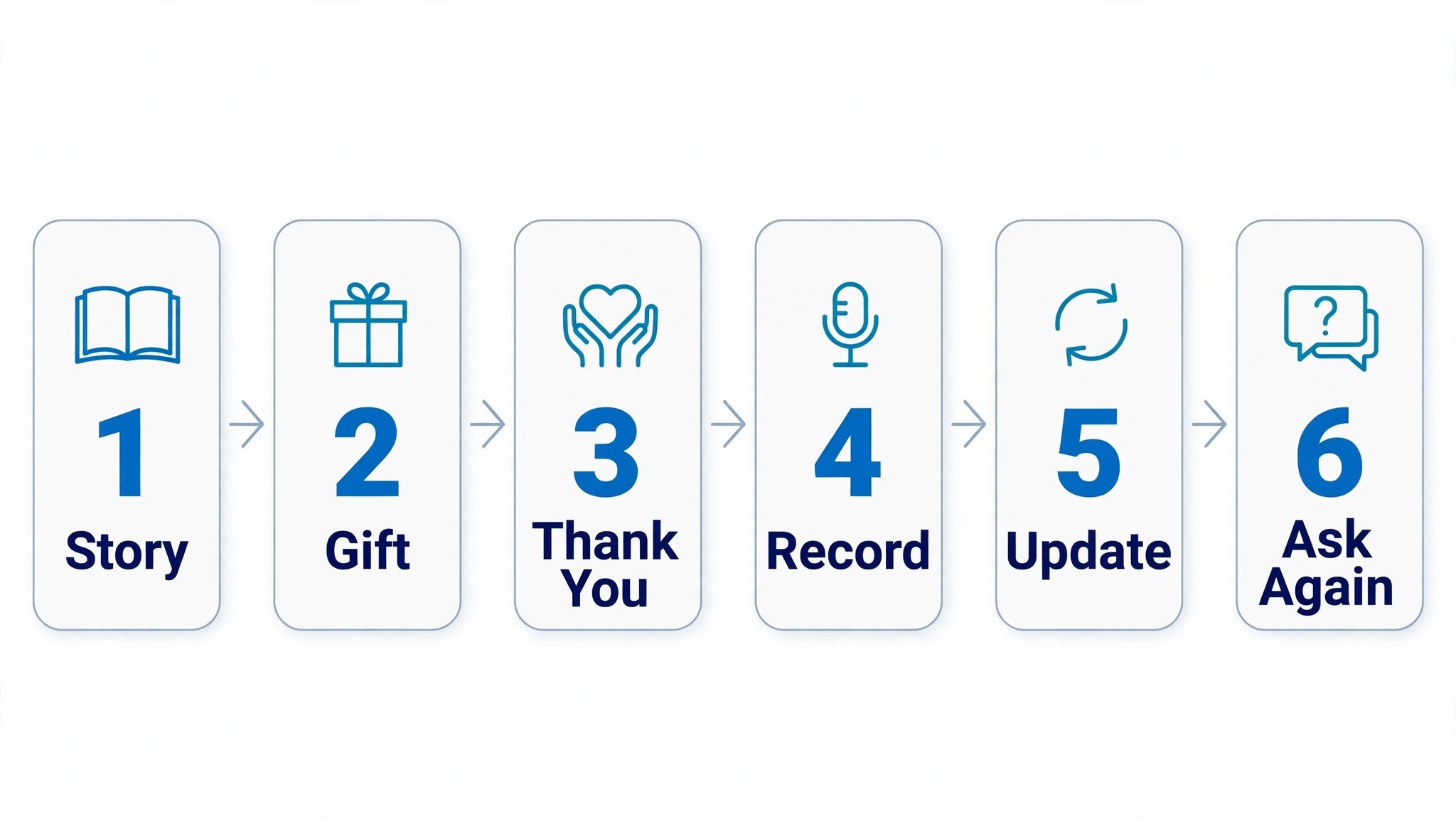
From First Gift to Second Gift in Six Moves
| Step | Job | Best tool | What good looks like |
|---|---|---|---|
| 1 | Tell the story | Givebutter | Photo and story of one animal, ready to share |
| 2 | Take the gift | Donorbox | One-tap form with monthly giving option |
| 3 | Thank the donor | Bloomerang | Thank you that names the animal and the gift |
| 4 | Record the gift | DonorPerfect | Donor record with gift, campaign, and notes |
| 5 | Share the outcome | Qgiv | Update showing what the gift made possible |
| 6 | Ask again | Neon CRM | Timed ask based on giving history |
The workflow above is the real test of the top 10 fundraising software for animal shelters, because a tool that handles all six moves in one place turns a one-time donor into a repeat donor. A shelter that runs this workflow after every gift keeps more donors with the same number of rescue stories, simply because nobody is forgotten after the first gift.
Test the workflow on ten real donors before you roll it out to the whole team. Tell the story, take the gift, thank the donor, record it, share the outcome, and ask again, then check which step your team skipped. The step they skip is the step your tool choice must automate.
What Fundraising Software Costs at Real Donor Volume
| Business type | Volume | Tool stack | Monthly cost |
|---|---|---|---|
| Tiny rescue, 200 donors | 2,000 dollars a month | Givebutter plus Donorbox | About 0 dollars in fees |
| Growing shelter, 500 donors | 8,000 dollars a month | Bloomerang plus Givebutter | About 165 dollars |
| Mid-size shelter, 1,500 donors | 20,000 dollars a month | DonorPerfect plus Qgiv | About 240 dollars |
| Large shelter, 5,000 donors | 50,000 dollars a month | Neon CRM plus Classy | Pricing on the vendor site |
| Event heavy shelter | 15,000 dollars a month | Qgiv plus Bloomerang | About 205 dollars |
A tiny rescue can run on the top 10 fundraising software for animal shelters for about 0 dollars a month in platform fees, using Givebutter with donor tips and Donorbox free, and that is the right way to start. A growing shelter with 500 donors pays about 165 dollars a month for Bloomerang and Givebutter Plus, which buys retention reporting and better pages.
A mid-size shelter pays about 240 dollars a month for DonorPerfect and Qgiv, and a large shelter pays a quoted price for Neon CRM and Classy. The bill grows with donor count, so model it at your donor count in a year, and remember that one retained donor a month pays for the whole stack.
Fundraising Mistakes That Shrink Shelter Donations
The first mistake is asking once and never following up. A donor who gives after a rescue story needs a thank you within a day and an update within a month, or the feeling fades and the next ask goes to someone else. A tool that automates the thank you and the update keeps the donor warm without extra work.
The second mistake is a donation form that fights the donor, because the top 10 fundraising software for animal shelters only helps if the gift takes one tap. A form with ten fields, no monthly option, and no animal photo loses donors who were ready to give. A short form with a photo and a monthly checkbox is the cheapest fix in this guide.
The third mistake is treating every donor the same. A 25 dollar first-time donor and a 500 dollar repeat donor need different thank yous and different asks, and a CRM that segments donors makes that easy. A shelter that thanks everyone the same way keeps nobody.
Monthly giving is the most valuable income a shelter can build, because a 10 dollar monthly donor gives 120 dollars a year and costs almost nothing to keep. A donation form that offers monthly giving as the default, with a photo of one animal, converts more donors than any gala. Make monthly giving visible on every form.
Peer-to-peer fundraising turns supporters into fundraisers, and a shelter with a hundred supporters can raise more through their networks than through its own list. A tool with peer-to-peer pages lets each supporter run a small campaign for one animal, and the shelter only needs to supply the story and the photo.
Events need their own workflow, not a spreadsheet. A gala or adoption event needs ticket sales, auction items, and donor follow-up in one place, or the team spends the week after the event rebuilding the donor list. A tool with events built in keeps the donor record clean from ticket sale to thank you.
Reporting is how a shelter proves its work to its board. A monthly report that shows new donors, repeat donors, and retention rate tells the board whether fundraising is growing or just busy. Without that report, the shelter is guessing about its own future.
How Shelters Turn One-Time Donors Into Monthly Givers
A one-time donor who gives 25 dollars after a rescue story is the easiest monthly giver a shelter will ever find, because the feeling is already there. The ask should come in the thank you, not a month later, with a simple line that says 10 dollars a month feeds one dog for a week. A donor who says yes in that moment gives 120 dollars a year, and the shelter never has to ask again.
The monthly giving page should show one animal, not a list of programs. A donor gives to a dog with a name and a photo, not to an operating budget, and the monthly gift feels like feeding that dog. A shelter that pairs each monthly ask with one animal converts far more donors than a shelter that asks for general support.
Retention of monthly donors is a different job from acquiring them, and it starts with a welcome that explains what the gift does. A new monthly donor should get a note in the first week that names the animal their gift helps, then a short update every month that shows the work. A donor who sees the result keeps giving, while a donor who hears nothing cancels within six months.
Upgrades are the quiet growth in monthly giving. A donor who gives 10 dollars a month for a year is ready for an ask to 15 dollars, especially when the shelter can show what the extra 5 dollars buys. A tool that flags the anniversary of a monthly gift gives the team the perfect moment to ask, and a small upgrade across a hundred donors is real money.
Your First-Month Fundraising Setup Plan
Use this plan when you set up fundraising software for an animal shelter, and keep a copy with your development notes.
- Build one donation form with a photo, a short story, and a monthly option
- Import donor records with gift history and last contact dates
- Set up an automatic thank you that names the animal and the gift
- Create segments for first-time, repeat, and monthly donors
- Connect your social media posts to the donation form
- Train the team on logging gifts and updating donor notes
- Set up a monthly report for new donors and retention rate
- Review the first month and call every donor who gave twice
Related Guides
Keep exploring with these guides on Stratilyze:
- Best Donation Software for Animal Shelters
- Use AI for Animal Shelter Adoption Follow-Up
- Best AI Tools for Nonprofits in 2026: 10 Tools for Fundraising, Grants and Volunteers
Frequently Asked Questions
Which fundraising tool is best for a tiny animal rescue?
Givebutter is the strongest pick for a tiny rescue, because donation forms, events, and a basic CRM are free when donors leave optional tips. Donorbox is the best free backup for simple forms and recurring gifts. A tiny rescue should avoid paid CRMs until the donor list grows, because the monthly fee outweighs the extra features.
Can Givebutter replace a donor CRM?
Givebutter includes a basic CRM with unlimited contacts, which is enough for a small shelter that needs donation forms and simple donor records. A growing shelter pairs it with Bloomerang or DonorPerfect for deeper records, engagement scores, and reporting. If retention is your main pain, start with Bloomerang and keep Givebutter for the pages.
How much does fundraising software cost a shelter each month?
A tiny rescue can start at about 0 dollars a month in platform fees with Givebutter and Donorbox. A growing shelter should budget about 165 dollars a month for Bloomerang and Givebutter Plus, and a mid-size shelter should budget about 240 dollars. The fees grow with giving volume, so model the total at your real monthly donations.
Does Bloomerang help with donor retention?
Bloomerang is built around retention, with engagement scores that flag donors at risk of lapsing and automation that keeps them connected. Its top users report first-time donor retention near 47 percent, against an industry average near 19 percent. A shelter that loses donors after the first gift should start with Bloomerang.
Should our shelter push monthly giving?
Yes, monthly giving is the most valuable income a shelter can build, because a 10 dollar monthly donor gives 120 dollars a year and costs almost nothing to keep. A donation form that offers monthly giving as the default converts more donors than any single ask. Make monthly giving visible on every form and every campaign page.
What is the fastest way to thank a donor after a gift?
Send an automatic thank you within a day that names the animal and the gift amount, then have a team member call the donor within a week. A donor who feels remembered gives again, while a donor who hears nothing drifts away. The thank you matters more than the tool, so automate it and never skip it.
Our Verdict for Animal Shelters
Bloomerang is our pick for most animal shelters, because the top 10 fundraising software for animal shelters is judged by how many donors give again, and Bloomerang is built around retention. A tiny rescue should start free with Givebutter, and a shelter that runs big events should add Qgiv.
Whichever tool you choose, thank every donor within a day, share what the gift made possible within a month, and ask again at the right moment. Fundraising earns its fee in donors who give a second time, monthly givers who stay for years, and a shelter that can plan instead of scramble. Choose the tool your team will use after every gift, and the rest will take care of itself.