
A referral is the cheapest customer a business will ever get, and the top 10 referral marketing software for small businesses all exist to make that customer show up on purpose. A happy customer tells a friend, the friend arrives already trusting the business, and the sale closes faster than any ad could manage. The problem is that happy customers rarely refer on their own. They need a link, a reward and a reminder.
This guide runs the ten tools through a tournament, duel by duel, because the buying problem here is not features. It is the fee model. ReferralCandy charges a monthly fee plus a success fee on each referred sale, Referral Rock charges a flat 250 dollars a month with no per referral cut, and GrowSurf charges by participant rather than by revenue. A store doing ten referrals a month pays differently from one doing a thousand.
Flat Rate or Success Fee? The Fight That Decides It
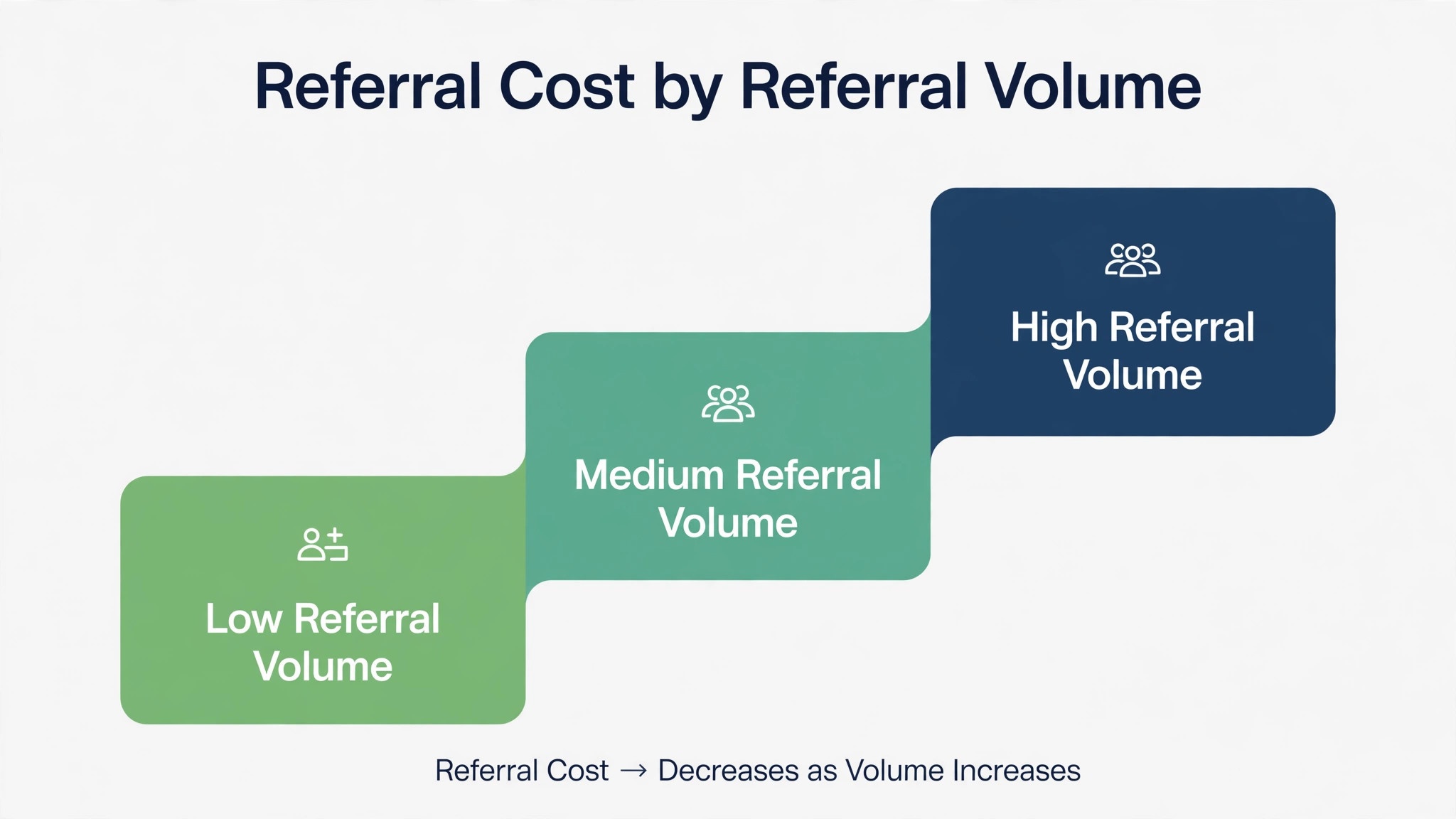
Every tool in this guide charges for referrals in one of three ways, and the way you pay decides the winner before any feature is compared. A success fee tool takes a percentage of each referred sale, so the bill grows when the program works. A flat rate tool charges one monthly price no matter how many referrals arrive, so the cost per referral falls as the program works.
| Tool | How you pay | Starting price |
|---|---|---|
| ReferralCandy | Monthly fee plus success fee | $39 a month plus 10.5% |
| Referral Rock | Flat monthly rate | $250 a month |
| GrowSurf | Per participant | $179 a month |
| Referral Factory | Flat monthly rate | $200 a month |
| Friendbuy | Flat monthly rate | $249 a month reported |
| Mention Me | Quote based | Quote based |
| InviteReferrals | Quote based | Quote based |
| Talkable | Quote based | Quote based |
| Extole | Quote based | Quote based |
| Yotpo | Loyalty bundle | Quote based |
The table hides the real question, which is volume. At ten referrals a month, ReferralCandy Basic at 39 dollars a month plus the success fee costs roughly 90 dollars, while Referral Rock costs 250 dollars flat, so Candy wins by a wide margin. At a thousand referrals a month, Candy on Grow costs hundreds in success fees, while Rock still costs 250 dollars flat.
Duel 1: ReferralCandy vs Referral Rock
ReferralCandy Basic costs 39 dollars a month plus a 10.5 percent success fee, Grow costs 79 dollars a month plus 3.5 percent, Scale costs 249 dollars a month plus 1.5 percent, and Enterprise costs 799 dollars a month plus 0.25 percent. The success fee applies to the first three purchases of each referred customer. Referral Rock charges a flat 250 dollars a month on the Operator plan, with unlimited referrals and no overage fees.
The launch is the first difference. ReferralCandy has been on the Shopify App Store since 2010, it installs in minutes, and it automates the reward, the referral link and the fraud checks without a developer. A store owner with no technical help can have a working program live in under thirty minutes.
The volume is the second difference, and it is the one that decides the duel. Work it out at 100 referrals a month with a 50 dollar average order, which is 5,000 dollars in referred revenue. Candy on Grow costs 79 dollars plus 3.5 percent of 5,000 dollars, which is 79 plus 175, or about 254 dollars a month. Rock costs 250 dollars flat. The two are tied at this volume.
At ten referrals a month, Candy costs about 4 dollars per referred customer and Rock costs 25 dollars. Above that line, Rock wins. At a thousand referrals a month, Candy costs about 2 dollars per referred customer and Rock costs 25 cents. That split is the cleanest way to read the top 10 referral marketing software for small businesses when the choice narrows to two.
Duel 2: The Free-Start Fight, Who Gets In Cheapest?
No tool in this guide offers a free plan, and that is the first honest fact of this duel. Referral software needs tracking, fraud checks and reward automation that a free tier cannot support, so the cheapest way in is ReferralCandy Basic at 39 dollars a month plus the success fee. The contenders are Candy at 39 dollars, GrowSurf at 179 dollars and Referral Factory at 200 dollars.
Candy wins the money fight before it starts. A store doing ten referrals a month pays about 39 dollars plus the success fee on Candy, against 179 dollars on GrowSurf Startup and 200 dollars on Referral Factory Standard. Factory offers more than 1,000 program templates, and GrowSurf offers embeddable referral experiences inside a SaaS product, but neither is worth five times the Candy price yet.
The real free option is a spreadsheet and a discount code, and it costs nothing but time. A business can run referrals by hand, track them in a sheet, and send the reward manually. The problem is the time, because tracking referrals by hand takes hours a week, and the first missed reward is the sign the manual system has failed.
The duel winner is ReferralCandy, and the lesson is to start cheap and upgrade on volume. A store that buys the 200 dollar tool before it has the referrals pays for referrals that never arrive, and a store that buys the success fee tool after it has the volume pays a percentage that grows forever.
Best Pick by Job
| Job type | First pick | Second tool | Why this pair works |
|---|---|---|---|
| Shopify store, fast launch | ReferralCandy | Referral Factory | Candy launches in minutes, Factory adds templates |
| Service business, flat cost | Referral Rock | Friendbuy | Rock charges one flat rate, Friendbuy adds loyalty |
| SaaS product, many users | GrowSurf | Talkable | GrowSurf prices by participant, Talkable adds advocacy |
| Mid size brand, retail | Mention Me | Extole | Mention Me fits retail, Extole fits enterprise scale |
| Store already on Yotpo | Yotpo | ReferralCandy | Yotpo adds referrals to loyalty, Candy is the standalone pick |
The table is built on the business model, because the right tool follows the sale. An ecommerce store should buy ReferralCandy or Referral Factory, a SaaS company should buy GrowSurf, a service business should buy Referral Rock, and a consumer brand should buy Friendbuy or Talkable.
A Shopify store that wants a referral program live this week should start with ReferralCandy. Among the top 10 referral marketing software for small businesses, the one that earns the top spot is the one a store owner can launch without a developer, and ReferralCandy does that in under thirty minutes.
Duel 3: The Fraud Fight, Who Catches the Fake Referrals?
Referral fraud is the cost nobody budgets for, and it is the fight that decides whether a program makes money or leaks it. The classic trick is self referral, where a customer creates a second email address, refers themselves, and collects the reward on a purchase they were going to make anyway. The bigger trick is a ring of fake accounts, each referring the next, and each collecting a reward on an order that never brings a real customer.
ReferralCandy includes automated fraud prevention, Referral Rock includes fraud checks on its flat plan, and GrowSurf includes fraud detection on its participant plans. The automation is what matters, because a program that needs a human to check every referral will fall behind the moment the referrals start arriving. Candy checks the link, the device, the email and the purchase pattern without anyone watching.
Rock wins the duel on one point, and it is the flat rate. When the fraud checks are part of a 250 dollar flat bill, the business pays the same whether it catches ten fake referrals or a hundred, so there is no penalty for turning the checks up. On a success fee tool, the fraud checks are part of a bill that grows with volume.
Candy wins this duel for a small store, because among the top 10 referral marketing software for small businesses its automation is deepest where the store owner has the least time to watch. Rock wins it for a service business doing hundreds of referrals a month, because the flat rate makes the protection free at the margin. Either way, test the fraud checks before the program opens to the full list, because a program without them will pay rewards for fake referrals.
How to Choose the Top 10 Referral Marketing Software for Small Businesses
Start with the business model, because the right tool follows the sale. An ecommerce store should buy ReferralCandy or Referral Factory, a SaaS company should buy GrowSurf, a service business should buy Referral Rock, and a consumer brand should buy Friendbuy or Talkable. Write down what you sell and how the customer buys it before you look at a single price.
Next, check the fee model against the real referral volume. ReferralCandy charges a base fee plus a success fee on the first three purchases of each referred customer, so the cost grows when the program works. Referral Rock charges a flat 250 dollars a month with unlimited referrals and no per referral cut, so the cost stays flat when the program works.
Then look at the fraud controls, because referral fraud is the cost nobody budgets for. A program without fraud controls will pay rewards for fake referrals, and the first fake referral is the sign the controls were too weak. Ask whether the price includes a success fee, and what it applies to, and ask what the fraud checks actually catch.
Finally, test the referral link flow on a phone, because most shares happen on mobile. A link that is hard to share on a phone will not be shared at all, and no reward will fix it. Ask for a trial, and launch the program to the best customers first.
The 10 Tools in Detail
The ten tools below cover ecommerce referrals, SaaS referrals, service business referrals and enterprise referral platforms. Each one is judged on price, fee model, fraud controls and launch speed, so this roundup of the top 10 referral marketing software for small businesses stays honest about what each tool actually does for a working business.
1. ReferralCandy
ReferralCandy is the referral platform for ecommerce stores, and it is the fastest launch in this guide. The Basic plan costs 39 dollars a month plus a 10.5 percent success fee, Grow costs 79 dollars a month plus 3.5 percent, Scale costs 249 dollars a month plus 1.5 percent, and Enterprise costs 799 dollars a month plus 0.25 percent. The success fee applies to the first three purchases of each referred customer.
The Shopify depth is the core strength. ReferralCandy has been on the Shopify App Store since 2010, it installs in minutes, and it automates the reward, the referral link and the fraud checks without a developer. A store owner with no technical help can have a working program live in under thirty minutes.
The plan ladder is the part to study before you buy. At 100 referrals a month with a 50 dollar average order, Basic costs 39 dollars plus 10.5 percent of 5,000 dollars, which is about 564 dollars a month. Grow costs 79 dollars plus 3.5 percent, which is about 254 dollars a month. A store that starts on Basic and grows should move to Grow early.
The limit is the success fee itself. The fee grows with the program, so a store doing serious referral revenue pays the base fee plus a percentage on every referred sale. A store doing a thousand referrals a month should compare the total cost against Referral Rock flat 250 dollars a month.
Start on Basic, watch the referral count, and move to Grow the month the success fee passes the saving.
2. Referral Factory
Referral Factory is the self service referral platform for small businesses that want templates rather than code. The Standard plan starts at 200 dollars a month, and the Enterprise plan starts at 1,000 dollars a month. It offers more than 1,000 program templates, no tracking scripts, real time data and connections to more than 3,000 apps.
The template library is the core strength. A business picks a template for its industry, changes the reward and the wording, and launches a program that looks designed rather than thrown together.
The CRM connections are the second strength. Referral data moves into the tools the business already uses, so a referral is not a dead end in a separate dashboard.
Run the worked example before you buy. At 100 referrals a month, Factory costs 200 dollars flat, which is 2 dollars per referred customer, against about 254 dollars on Candy Grow. Factory is cheaper at this volume. At ten referrals a month, Factory costs 20 dollars per referred customer, against about 4 dollars on Candy, so the templates would have to earn a fortune to justify the gap.
The limit is the price. Factory starts at 200 dollars a month, which is five times the ReferralCandy Basic plan, so a small store should only buy it when the templates and the integrations earn the difference. A store that wants the cheapest start should buy ReferralCandy.
3. Friendbuy
Friendbuy is the referral and loyalty platform for consumer brands and services, and it is the pick for a brand that wants referrals and loyalty in one system. Pricing is reported from 249 dollars a month for standard programs, with Shopify referral pricing reported from 750 dollars a month and larger programs scoped individually.
The flexibility is the core strength. Friendbuy covers referral, loyalty, reviews and advocacy in one platform, with native testing, full funnel analytics and flexible reward triggers. A brand can test two reward offers against each other, see which one brings more customers, and keep the winner running.
The testing is the feature other tools skip. Most referral tools let you set one reward and hope it works. Friendbuy lets you run two rewards, measure which one brings more referred customers, and keep the winner.
The loyalty combination is the second strength. A customer who earns loyalty points and then refers a friend is worth more than a customer who does either one alone. Friendbuy holds both in one wallet, so the customer sees one balance and one reason to come back.
The limit is the price and the sales process. Friendbuy is built for brands with real volume, and the Shopify entry price of 750 dollars a month is high for a small store. A small store that wants referrals only should buy ReferralCandy or Referral Rock.
4. Mention Me
Mention Me is the referral platform for retail and finance brands, and it is the pick for a mid size brand that wants referrals driven by customer data. It covers referral, advocacy, and customer insight. Mention Me charges by quote.
The data depth is the core strength. Mention Me uses customer data to find the customers most likely to refer, then targets them with the right reward at the right time, which lifts the referral rate above a program that asks every customer the same way. The limit is the scale, because a small business will find the sales process long and the price high.
5. GrowSurf
GrowSurf is the referral platform for SaaS companies, newsletters and digital businesses, and it is the pick for a product that grows by invites. The Startup plan costs 179 dollars a month for up to 2,500 participants, and the Business plan scales from 449 dollars a month at 10,000 participants. Pricing is by participant, not by revenue.
The participant model is the core strength. A SaaS company pays for the people in the program, not for the revenue they bring, so the cost stays predictable as the program grows. The embeddable referral experiences fit inside the product.
The trade-off is the quiet member. A participant who joins and never refers still costs money, because the bill counts people, not referrals. At 100 participants, Startup costs 1 dollar 79 cents per participant, and at 2,500 participants it costs about 7 cents,
The limit is the audience. GrowSurf is built for SaaS and digital businesses, so an ecommerce store will find less here than in ReferralCandy. Test the embeddable experience inside your own product before you commit.
6. Referral Rock
Referral Rock is the flat rate referral platform for service businesses, B2B companies and ecommerce merchants, and it is the pick for a team that hates variable costs. The Operator plan costs 250 dollars a month flat, with unlimited referrals and no overage fees.
The flat rate is the core strength. A business pays 250 dollars a month whether it gets ten referrals or a thousand, so the cost per referral falls as the program works. The platform covers customisable programs, dual sided rewards and integrations with HubSpot and Salesforce.
Run the cost per referral at three volumes, because the flat rate only wins when the volume is real. At ten referrals a month, Rock costs 25 dollars per referred customer. At 100 referrals, it costs 2 dollars 50 cents. At a thousand referrals, it costs 25 cents.
The limit is the entry price. Rock starts at 250 dollars a month, which is six times the ReferralCandy Basic plan, so a small store doing ten referrals a month should not buy it. A service business doing hundreds of referrals a month should buy it, because the flat rate beats the success fee at that volume.
The setup is the other cost to count. Rock needs more configuration than Candy, because the flat plan covers customisable programs that take a day to set up properly. Budget a day for the setup, and launch to the best customers first.
7. InviteReferrals
InviteReferrals is the referral campaign platform for ecommerce and apps. It covers referral links, social sharing, email campaigns, push notifications and integrations with the major ecommerce and app platforms. InviteReferrals quotes each campaign.
- The campaign depth is the core strength, because InviteReferrals runs referral campaigns across email, social, push and in app messages, so a business can reach the customer wherever the customer already is.
- The platform also covers affiliate style campaigns.
- The limit is the quote only pricing, because a small business cannot see the price without a sales call.
A business that wants multi channel referral campaigns should ask for a quote.
8. Talkable
Talkable is the referral and advocacy platform for consumer brands, and it is the pick for a brand that wants referrals driven by the customer voice. It covers referral programs, advocacy campaigns, reviews and user generated content. Talkable works from quotes, not a price list.
What does Talkable do that a pure referral tool does not? It turns happy customers into advocates who share, review and refer, and it tracks the whole advocacy journey. A brand that wants more than a referral link will get more here than in a pure referral tool.
Is it right for a small business? No. Volume is the entry ticket, and the price follows the size of the brand, so a small business will find the sales process long. A consumer brand that wants referrals plus advocacy should buy it. A small business that wants referrals only should buy ReferralCandy.
9. Extole
Extole is the enterprise referral platform for large consumer brands, and it is the pick for a brand that needs referral at scale. It covers referral programs, advocacy, loyalty and partner marketing. Extole signs enterprise contracts, and pricing is set in the quote.
The enterprise depth is the core strength. Extole handles the volume, the fraud controls, the analytics and the integrations that a large brand needs, and it runs referral programs across channels and countries. The limit is the scale, because Extole is built for large brands, and a small business should not consider it.
10. Yotpo
Yotpo is the loyalty and reviews platform with referral features built in, and it is the pick for a store already on Yotpo. It covers loyalty programs, reviews, referrals and SMS marketing in one suite, so a store that runs Yotpo loyalty gets referrals without a second vendor. Yotpo folds referral into the loyalty plans.
The suite depth is the core strength. A store that already runs Yotpo loyalty adds referrals to the same dashboard, the same customer data and the same reward wallet, which is simpler than running a second tool. The limit is the bundle, because a store that does not run Yotpo should not buy the whole loyalty suite just for referrals.
What Does a Referral Actually Cost at 100 Referrals a Month?
A store doing 100 referrals a month with an average order of 50 dollars earns 5,000 dollars in referred revenue, and the software cost decides how much of that stays with the store. The table below prices the same volume on the tools that publish a price, using the worked example of 100 referred customers each making a first purchase of 50 dollars. The success fee applies to the first three purchases of each referred customer, so the table states the first purchase only.
| Tool | Cost at 100 referrals a month | Cost per referred customer |
|---|---|---|
| ReferralCandy Grow | About $254 | About $2.54 |
| Referral Rock | $250 flat | $2.50 |
| ReferralCandy Basic | About $564 | About $5.64 |
| GrowSurf Startup | $179 | $1.79 |
| Referral Factory | $200 | $2.00 |
| Friendbuy | $249 reported | $2.49 |
The number that matters is the cost per referred customer. At 100 referrals a month, Candy on Grow costs about 2 dollars 54 cents per referred customer, and Rock costs 2 dollars 50 cents, so the two are tied. At ten referrals a month, Candy costs about 4 dollars per customer and Rock costs 25 dollars, so Candy wins. At a thousand referrals a month, Candy costs about 2 dollars per customer and Rock costs 25 cents.
The reward is the second half of the cost, and it is the half people forget. A 10 dollar credit for the referrer on 100 referrals costs 1,000 dollars a month, and a dual sided reward, where both the referrer and the friend get 10 dollars, costs 2,000 dollars a month. The top 10 referral marketing software for small businesses all charge for the software, and the business also pays the reward, so the real cost is the software plus the reward.
Your First 30 Days With a Referral Program
Days one to seven are the setup. Pick the tool, set the reward, and write the referral message. A reward that is too small gets ignored, and a reward that is too large eats the margin, so a 10 dollar credit or a 10 percent discount is the right start.
Days eight to twenty-one are the launch. Send the program to the best 100 customers first, and watch the first referrals arrive. A program that launches to the best customers first gets real referrals in the first week, and a program that launches to everyone at once gets spam complaints and fake referrals.
Days twenty-two to thirty are the review. Check the referral rate, the fraud rate and the cost per referred customer. A program that brings ten referrals a month at 2 dollars 50 cents each is working. Any of the top 10 referral marketing software for small businesses can run this plan, but only the ones priced at your volume will make it pay.
- Day 1, pick the tool and set the reward at 10 dollars or 10 percent
- Day 7, test the referral link on a phone and fix the gaps
- Day 14, launch to the best 100 customers first
- Day 21, open the program to the full list when the first referrals arrive
- Day 30, check the cost per referred customer and adjust the reward

Frequently Asked Questions
How do referral tools stop fraud?
Referral tools stop fraud with automated checks on the referral link, the device, the email and the purchase pattern. ReferralCandy includes automated fraud prevention, Referral Rock includes fraud checks on its flat plan, and GrowSurf includes fraud detection on its participant plans. A program without fraud controls will pay rewards for fake referrals,
Is Referral Rock worth 250 dollars a month?
Referral Rock is worth 250 dollars a month when a business does hundreds of referrals a month, because the flat rate with unlimited referrals and no per referral cut beats the success fee at that volume. At 100 referrals a month the cost is about 2 dollars 50 cents per referred customer, and at a thousand referrals it falls to 25 cents.
Can a SaaS company use ReferralCandy?
Yes, but GrowSurf is the better fit. ReferralCandy is built for ecommerce stores, with Shopify and WooCommerce integrations and a success fee on referred sales. GrowSurf is built for SaaS companies, with participant based pricing from 179 dollars a month and embeddable referral experiences inside the product. A SaaS company that wants referrals inside the product should buy GrowSurf.
What is a good referral reward for a small business?
A 10 dollar credit or a 10 percent discount is the right start for most small businesses, because it is large enough to motivate a share and small enough to protect the margin. A dual sided reward, where both the referrer and the friend get 10 dollars, works better than a one sided reward, because the friend has a reason to buy.
How much does ReferralCandy cost per month?
ReferralCandy Basic costs 39 dollars a month plus a 10.5 percent success fee, Grow costs 79 dollars a month plus 3.5 percent, Scale costs 249 dollars a month plus 1.5 percent, and Enterprise costs 799 dollars a month plus 0.25 percent. At 100 referrals a month with a 50 dollar average order, Grow costs about 254 dollars a month.
The Champion, and Who Should Still Pick the Loser
ReferralCandy takes the bracket. At 39 dollars a month plus the success fee, it launches in under thirty minutes from the Shopify App Store, it automates the reward, the referral link and the fraud checks, and it costs about 4 dollars per referred customer at ten referrals a month. A Shopify store that wants a referral program live this week should start here.
Referral Rock is the runner-up, and it is still the right pick for one kind of business. A service business doing hundreds of referrals a month should buy Rock at a flat 250 dollars a month, because the flat rate beats the success fee at that volume, and at a thousand referrals a month the cost falls to 25 cents per referred customer. GrowSurf is the pick for a SaaS company, from 179 dollars a month.
If I were running your store, here is what I would do. I would start on ReferralCandy Basic this week, set the reward at 10 dollars, and launch to my best 100 customers first. I would watch the cost per referred customer for thirty days. Pick the tool that matches this month referrals among the top 10 referral marketing software for small businesses, and let the bracket decide again when the referrals grow.