
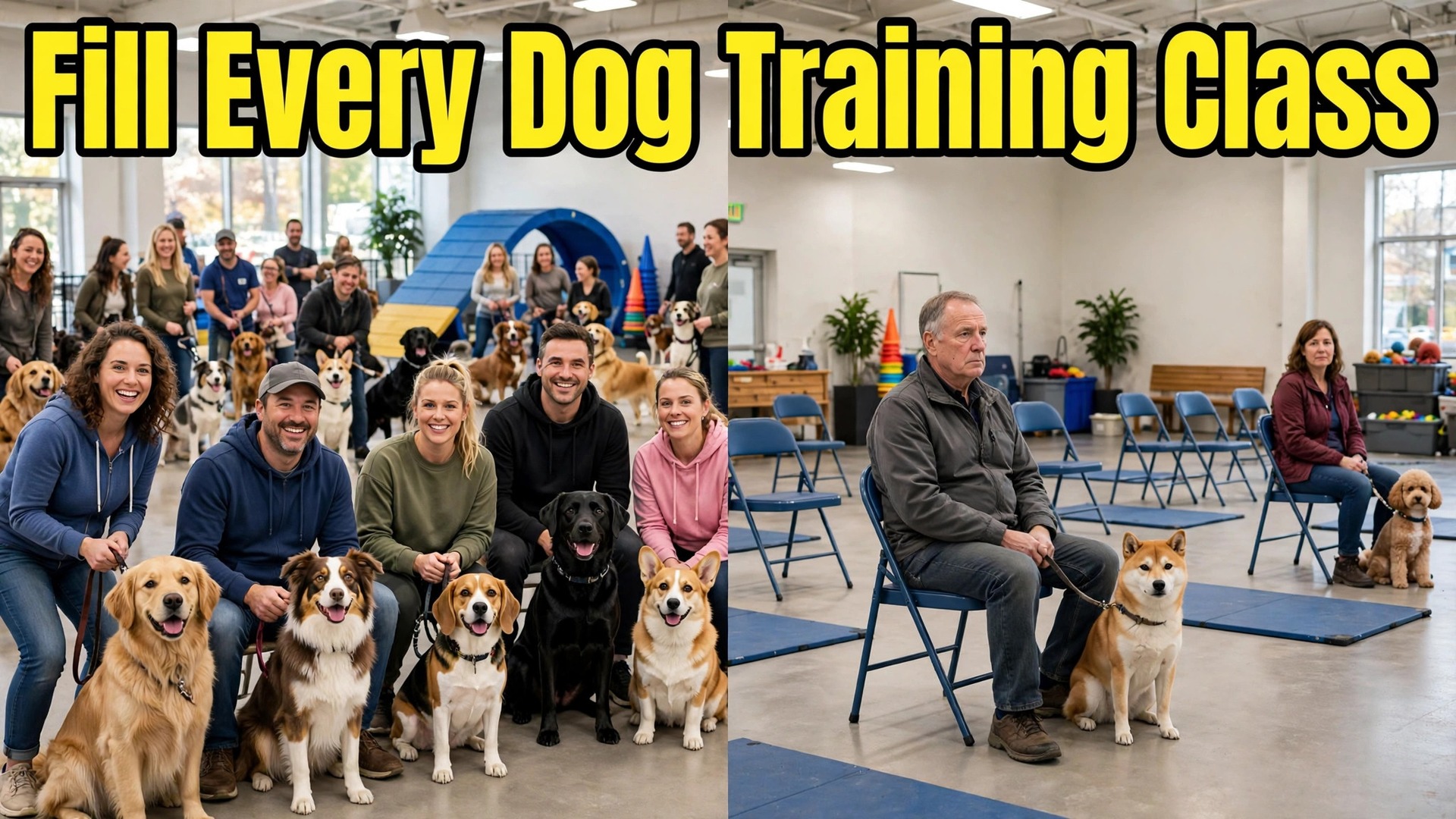
The phone rings while a trainer is in the field with six dogs, and the caller wants to know whether a puppy class has a free place next Tuesday. Nobody answers, the caller books elsewhere, and the empty place stays empty. That missed call is the daily problem when you use AI for dog training class booking, because owners ask about classes at night, on weekends, and in the middle of a school run, while trainers answer only when they are not teaching. A booking system that works around the clock changes that maths, and it does so without asking trainers to live on their phones.
Training businesses sell progress, not just places. An owner who books a puppy class wants a calmer walk, a reliable recall, or a dog that can settle when visitors arrive. If booking is hard, if the level is wrong, or if homework is forgotten between sessions, that progress stalls and the owner quietly stops coming. This guide sets out a workflow that keeps the right dog in the right class, keeps owners practising between sessions, and turns a finished course into the next booking rather than a goodbye.
Prices in this guide are ranges drawn from vendor pages and published guides at writing time, so confirm on the vendor page before you buy. Booking tools change plans often, and the price that matters is the one on the checkout page for your trainer count, class size, and location count.
Why Dog Training Classes Lose Bookings Without a Clear System
A training class has a fixed number of places, a fixed start date, and costs that barely change whether four dogs or eight dogs attend. The trainer is paid, the hall is booked, and the slot cannot be sold again once the course starts. A school with eight places that averages five dogs is giving away more than a third of its capacity every single course, and no amount of social media posting fixes a booking system that leaks owners before they arrive.
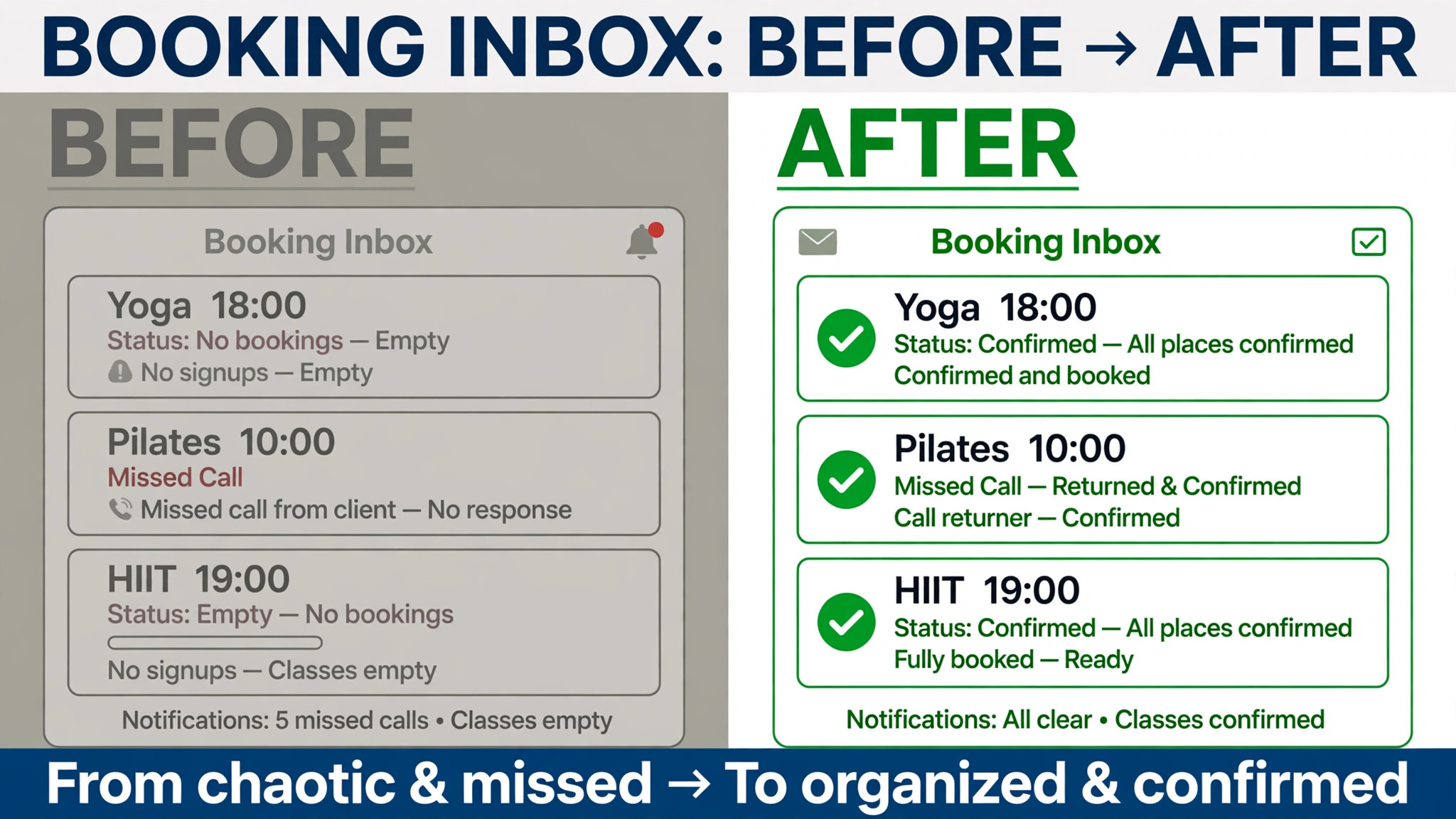
The leaks usually hide in four places. First, owners enquire and then wait days for a reply, because the trainer is teaching and the inbox fills up. Second, owners book the wrong level, because the booking page lists class names without explaining what each level expects. Third, owners miss sessions and never catch up, because homework was handed out on paper and lost by Wednesday. Fourth, owners finish a course and hear nothing, because nobody planned the next step. Each leak looks small on its own, yet together they decide whether a school grows or stalls.
Data helps a school see which leak matters most. Fill rate by class, by trainer, by time slot, and by level shows whether Saturday puppy classes fill in days while weekday recall classes need a different time, a different price, or a different promise. A school that only looks at total monthly income misses that pattern completely. The weekly timetable is where the money is won or lost, one course at a time.
Automation does not fix a weak course on its own. It makes a good course easier to run, because it answers owners sooner, places dogs more accurately, and surfaces the numbers a school owner needs before changing the timetable. Schools that plan well treat those numbers as the starting point for every timetable change. Think of automation as a tireless receptionist, not as a replacement for judgment about which dog belongs in which room.
How to Use AI for Dog Training Class Booking
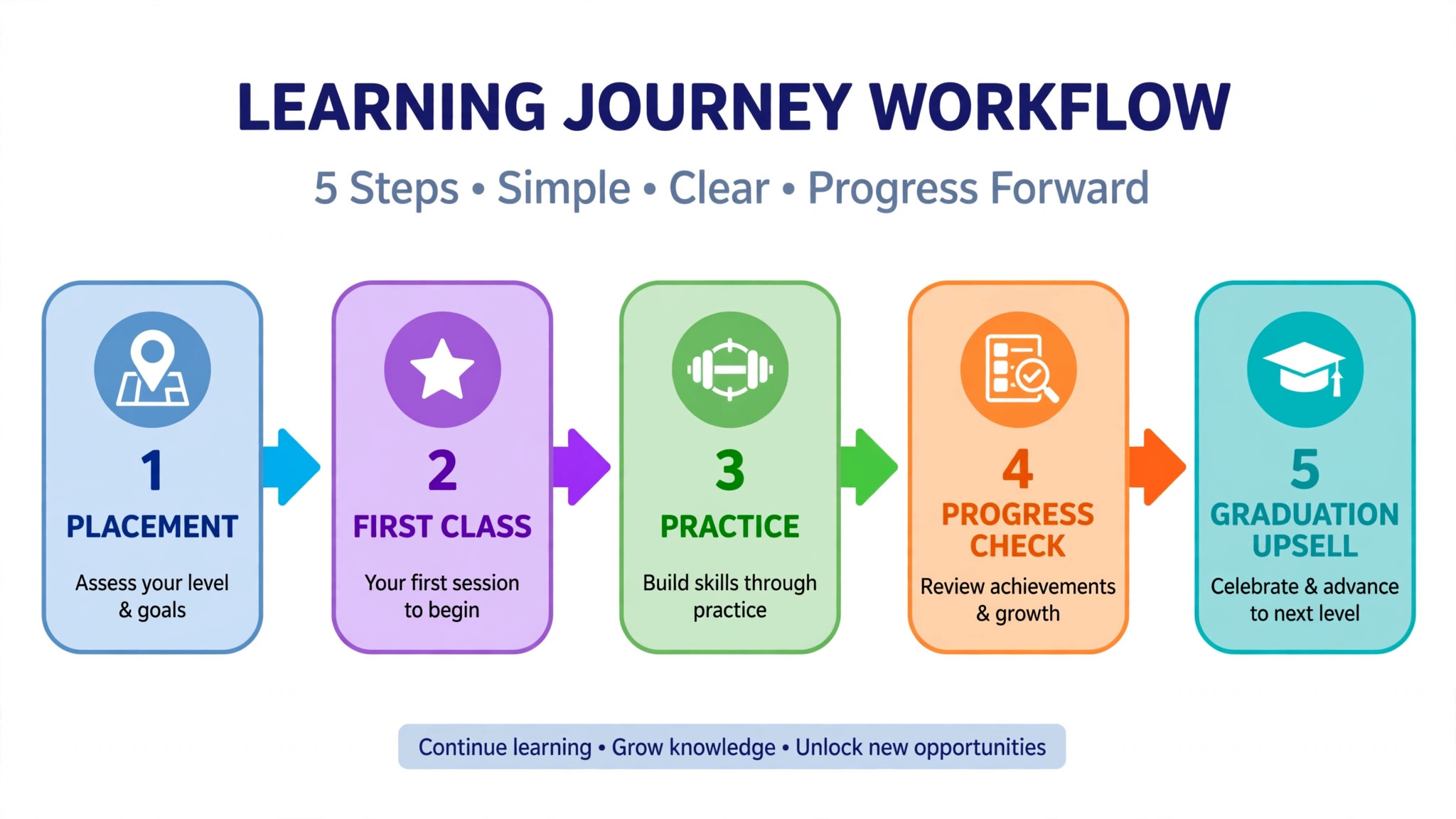
To use AI for dog training class booking well, start with the owner journey rather than with a software demo. An owner discovers a class, answers a few placement questions, books a place, pays a deposit or the full course fee, gets reminders, attends, practises at home, and then books the next level. Every step in that chain either builds trust or breaks it, and the booking system should make each step shorter, clearer, and harder to get wrong. Map the journey on paper first, then judge each tool against it.
The core workflow has five moving parts, and they must work together. Behavior level placement puts each dog in a class that matches its current skills. Class pack booking sells the whole course as one commitment rather than a string of single sessions. Homework reminders keep practice alive between classes. Progress notes show owners what has changed and what comes next. Graduation upsells turn a finished course into a clear next booking. Set one rule before you switch anything on. No owner should need to phone the school to do something the booking page should handle, meaning placement, booking, paying, rescheduling, and checking progress should all work from a phone in under a minute.
| Workflow part | What good looks like | Failure it prevents |
|---|---|---|
| Behavior level placement | Every dog placed by skill, not by guesswork | Overwhelmed dogs and bored dogs in one room |
| Class pack booking | Whole course booked and paid in one flow | Half filled courses and drop in chaos |
| Homework reminders | Short practice tasks sent between classes | Skills that fade before the next session |
| Progress notes | Clear notes shared after every class | Owners who cannot see any change |
| Graduation upsells | Next level offered before the last class | Finished owners who drift away |
Behavior Level Placement That Puts Every Dog in the Right Room
Placement is where most training bookings go wrong, because class names mean different things to different owners. One owner calls a dog friendly when it pulls toward every dog on a walk, while another owner uses the same word for a dog that can settle beside a calm dog. A booking form that asks only for age and breed will place both dogs in the same room, and the trainer will spend the first session managing a mismatch instead of teaching.
Build placement as a short set of plain questions. Ask what the dog does on a walk, how it reacts to visitors at the door, whether it can wait for food, and what the owner most wants to change. Keep the questions concrete, because concrete answers place dogs far better than labels. A dog that lunges at other dogs needs a different room from a dog that barks at the postman, even though both owners might describe their dog as reactive. Add a short video upload option, because thirty seconds of a dog on a walk tells a trainer more than a paragraph of description.
Automation helps most at the sorting stage. It can route answers to a suggested level, flag dogs that need a private assessment first, and hold places for dogs that need a smaller group. Those suggestions should stay suggestions, because a trainer should still approve any placement that looks borderline. A dog placed too high will fail in public and embarrass its owner, while a dog placed too low will bore its owner and waste a course fee. Human approval on edge cases protects both outcomes.
Test placement the way an owner would, on a phone, one handed, with a weak signal. If the form takes more than three minutes, simplify it. If it asks for vaccination records before it asks about behavior, reorder it, because owners abandon forms that feel like admin before they feel like help. Vaccination checks still matter, and the system should block booking when records are expired, but that check should sit at the payment step, not at the first question. That phone test shows whether you use AI for dog training class booking in an owner friendly way.

Class Pack Booking That Sells the Whole Course, Not One Session
Training works as a course, not as a single session, because skills build week by week. A booking system that sells single sessions invites owners to dip in and out, which breaks group progress and leaves the trainer reteaching week one every week. Class pack booking solves this by selling the full course as one commitment, with every session reserved at once, so the group stays together and the trainer can plan a real progression.
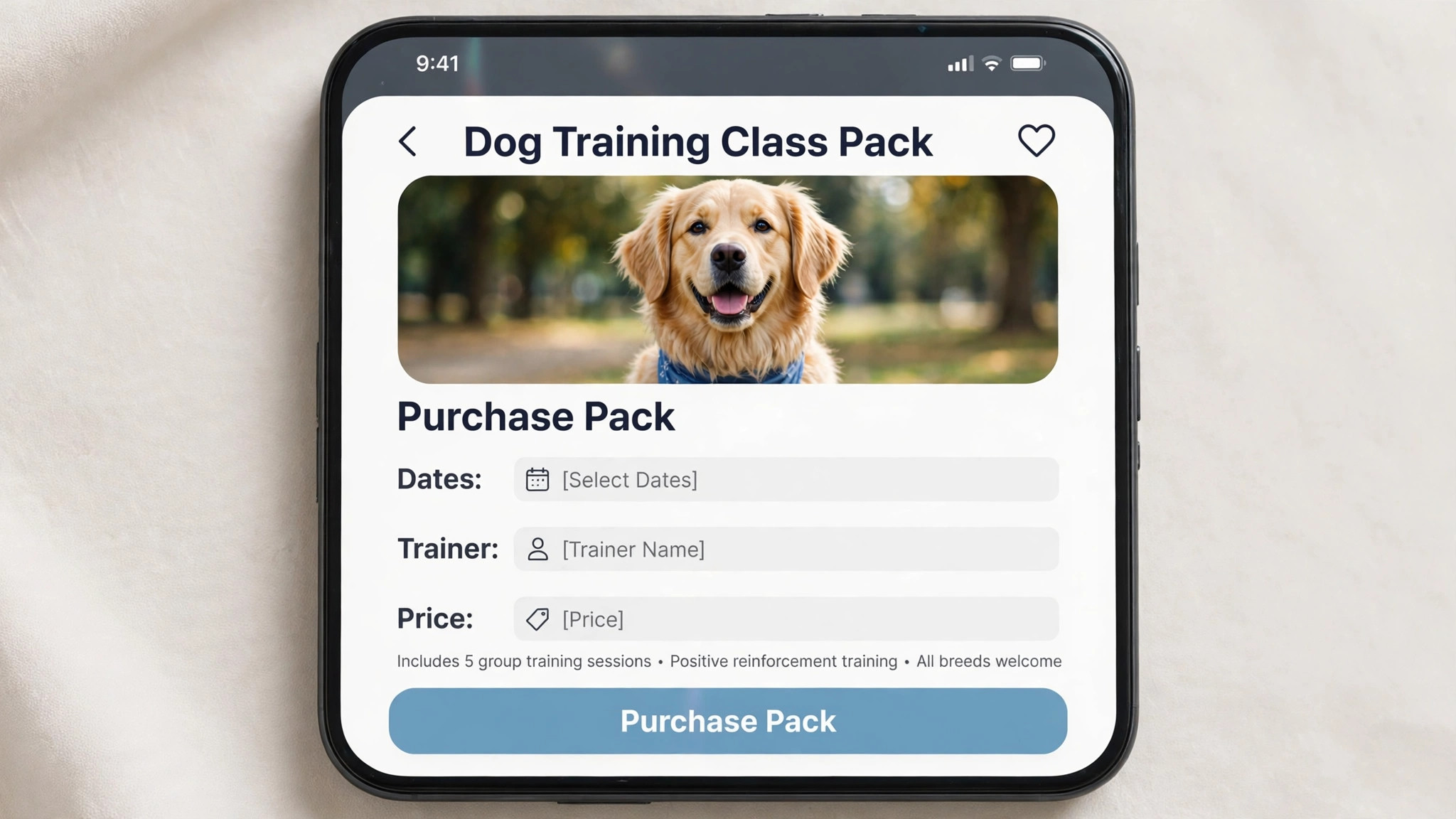
Make the pack clear at the point of sale. Show the number of sessions, the dates, the trainer, the venue, and the price in one view, and show what happens when a session is missed. Owners accept a missed session rule when they see it before they pay, and they resent it when they discover it after they miss a class. Offer a catch up option where it is practical, such as a short video recap or a place in a parallel group for one week, and state the limit plainly. Clarity here prevents most refund arguments later.
Deposits work well for popular courses, because they hold a place without asking for full payment months ahead. Set the deposit high enough to deter casual bookings and low enough that a genuine owner does not hesitate. Automation can chase unpaid balances a week before the course starts, move unpaid places to the waitlist, and confirm paid places at once. That sequence alone can fill a course that would otherwise start with two empty places.
Watch pack data monthly. Look for courses that sell out fast but start with no shows, because that signals deposits are too low or reminders arrive too late. Look also for owners who buy a pack and attend only half the sessions, because that signals the time slot, the venue, or the level is wrong for them. Both patterns are fixable with clearer booking pages and earlier reminders, and both directly protect revenue for a school that wants to use AI for dog training class booking with discipline.
Homework Reminders That Keep Practice Going Between Classes
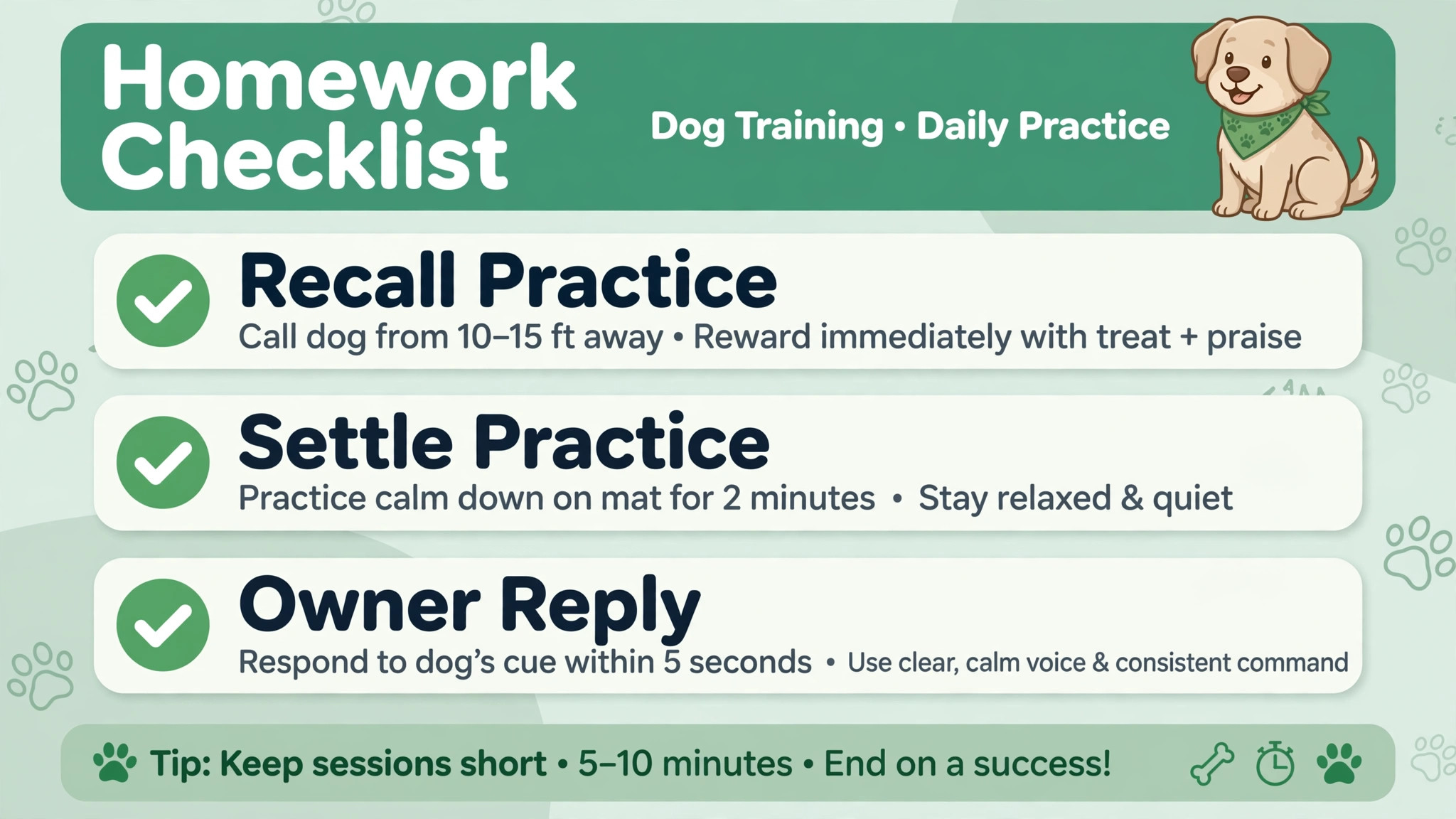
Skills fade fast when practice stops between classes. A dog that learned a recall on Saturday will not remember it the following Saturday unless the owner practises a little each day, and most owners need a nudge to make that happen. Homework reminders exist to bridge that gap, by turning a one hour class into a week of short, doable practice. The best homework is small, specific, and easy to fit into a normal day.
Keep each homework task to one skill and one setting. Practise recall in the garden three times, not a list of five exercises in three locations. Send the task as a short message with a video link, and ask the owner to reply with a simple result, such as how many times the dog came back out of five tries. That reply matters, because it tells the trainer who is struggling before the next class, and it tells the owner that someone is paying attention. A homework system that only sends tasks and never reads replies is a newsletter, not a training tool.
Timing matters as much as content. Send the first task the evening after class, while the lesson is fresh, and send a second nudge midweek for owners who have not replied. Do not send homework at midnight, and do not send three tasks in one day, because owners will mute the whole sequence. Keep messages short, name the skill, name the setting, and name the number of repetitions. Owners practise more when the ask is exact.
Measure homework completion by class, not just by message sends. A class where most owners reply and report progress will usually show faster skill gains than a class where replies are rare. If completion drops, shorten the task before you blame the owners. Training homework competes with work, school runs, and tired evenings, so the task that wins is the one that fits into real life.
Progress Notes That Show Owners Real Change
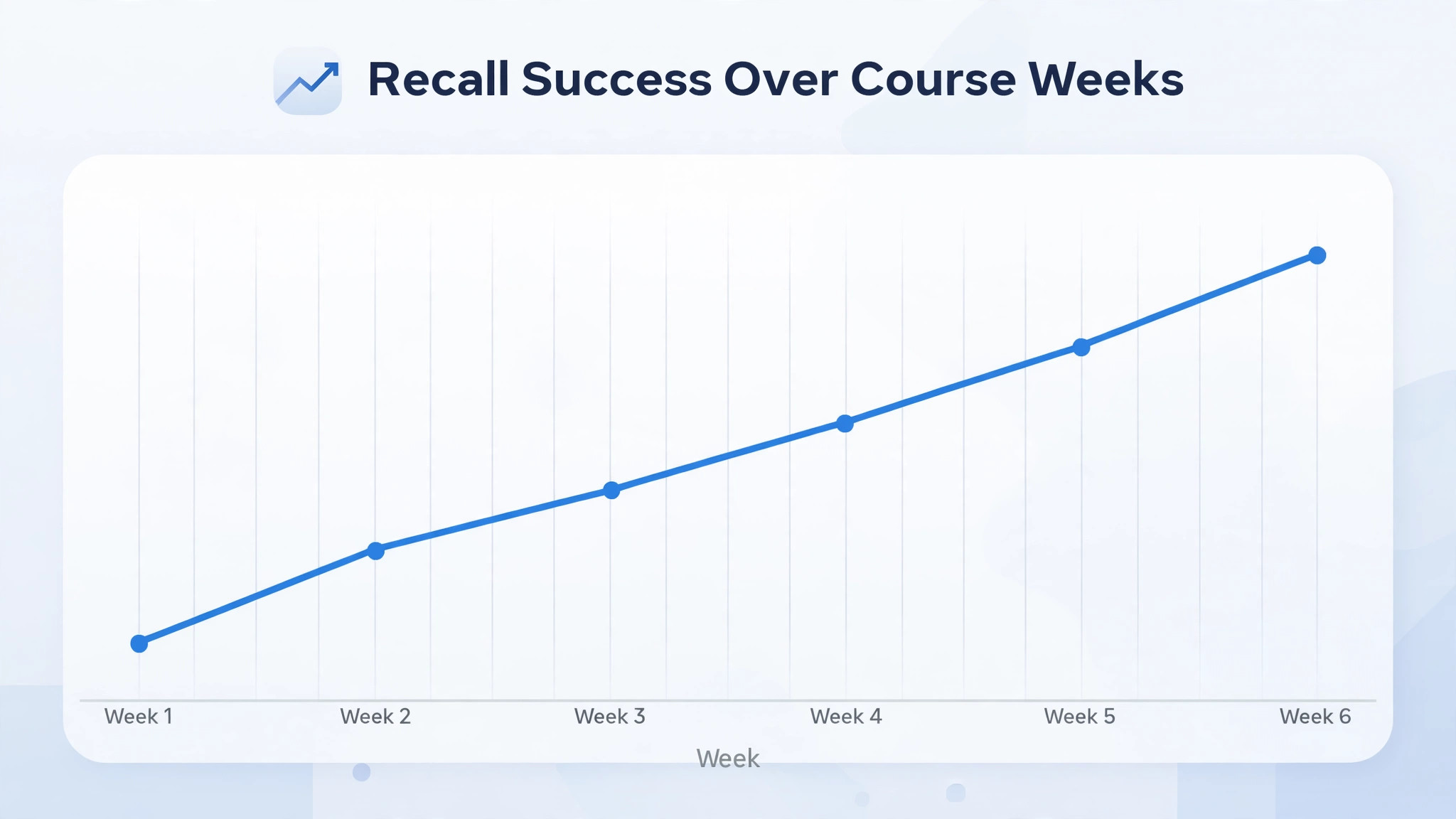
Owners pay for change, but change in dog training is often gradual and hard to see from inside the house. A dog that used to pull for the whole walk and now pulls for the first hundred metres has improved a lot, yet the owner may still feel stuck. Progress notes make that change visible, by recording a baseline at the start of a course and updating it after every class. Without notes, the school relies on memory, and memory flatters the worst days.
Record progress in plain language and in numbers where they help. Note how many seconds a dog can wait, how many recalls succeeded out of five, and how close another dog could pass before the dog reacted. Those numbers give owners a story they can repeat to family and friends, and they give trainers a record that survives staff changes. Photos and short clips help too, provided owners have agreed to them, because a clip of a calm settle beats a paragraph of praise.
Share notes promptly after each class, while the owner still remembers the session. A note that arrives three days later feels like admin, while a note that arrives the same evening feels like care. Automation can draft notes from trainer inputs, such as skill scores and short comments, and send them in a consistent format. The trainer still writes the judgment, because only the trainer saw the dog work, but the system handles the formatting, the sending, and the filing.
Progress notes also protect the school when an owner is unhappy. A dated record of what was taught, what the dog achieved, and what homework was set answers most complaints with facts rather than argument. It also helps the next trainer, who can pick up a dog mid course without starting the assessment again. That continuity is one of the quiet advantages of a school that records progress properly.
Graduation Upsells That Feel Like a Next Step, Not a Sales Push
The end of a course is the best moment to sell the next course, because motivation is high and the owner has just seen progress. It is also the moment most schools waste, because they wait until the last class to mention the next level, by which time owners have already made other plans. Graduation upsells work when they are planned from week one, mentioned lightly during the course, and offered clearly before the final session.
Name the next level in terms of the skill it builds, not in terms of a product name. An owner who has finished puppy foundations understands a next step called recall and loose lead work far better than a next step called Level Two. Show the dates, the trainer, and the price together, and offer a place hold for a short window, such as seven days after graduation. A short window creates a decision without pressure, because the owner can see that places are limited and that their dog has a reserved spot.
Celebrate graduation in a way owners want to share. A certificate, a photo, and a short note about what the dog achieved give owners something to post and something to keep. Automation can send the certificate, the photo, and the next level offer in one message, so the celebration and the booking arrive together. Owners who share a graduation post become the school’s best marketing, and they do it for free.
Track graduation conversion by course and by trainer. A course where most owners move on is doing something right, whether that is the teaching, the time slot, or the next level promise. A course where most owners stop needs a closer look at the final weeks, because owners rarely quit a course they enjoyed without a reason. The reason is often simple, such as a gap before the next course starts, a price jump, or a time change, and all three are fixable once they are seen.

Tools Worth Testing First
Gingr for Dog Training Booking
Gingr suits dog training businesses that need group classes, private lessons, and multi week courses in one system, with online enrollment, deposits, waitlists, and progress notes on each dog profile. Its strength is the training specific setup, because it treats a course as a fixed series of sessions rather than a string of one off appointments. Test how a full course books from a phone, how a waitlist fills a cancelled place, and how a trainer records progress after class.
BusyPaws for Dog Trainer Scheduling
BusyPaws offers booking management for training staff and group services, with waitlists, calendar sync, automatic reminders, and homework follow up messages. Its built in messaging helps schools send class updates and homework without switching tools, and its report cards give owners a clear record of progress. Test the reminder flow and the report card format, because those two features decide whether owners practise between classes.
BooknBuddy for Training Programs
BooknBuddy handles single sessions, multi session programs, and group classes with capacity tracking, waitlists, and assessment records per dog. Its program builder lets a school define session types, durations, and prices separately, which suits schools that run puppy classes, obedience, and behavior work side by side. Test how a multi week program books as one commitment and how assessments carry forward from the first session to the last.
Acuity Scheduling for Simpler Booking Pages
Acuity Scheduling suits a solo trainer or a small school that needs a clean booking page without a full training suite. It handles appointment types, payments, reminders, and calendar sync well, but it needs more manual work for course series and progress notes than a training specific tool. Test whether it can handle a course series without workarounds, and move to a training specific tool if the workaround starts eating staff time.
Prices for these tools vary widely, from low monthly plans for solo trainers to higher tiers for multi trainer schools, so confirm on the vendor page for your trainer count and class volume. Run a two week trial the way owners will use the tool, not the way a sales demo shows it. Book a course from a phone, join a waitlist, pay a deposit, receive homework, and check progress notes. Score each task for taps, clarity, and speed, and involve two real owners in the test, because staff tolerance for clunky screens is always higher than owner tolerance. That trial shows whether you use AI for dog training class booking to help owners or merely to add software.
| Tool type | Best for | Watch out for |
|---|---|---|
| Training specific platform | Schools with courses, levels, and progress notes | Higher monthly cost for small schools |
| General booking tool | Solo trainer, few classes a week | Manual work for course series |
| Freemium booking page | Testing demand before a full switch | Missing waitlist and pack depth |
A 30 Day Rollout Plan
Week one is mapping and cleanup. List every class, its level, its capacity, its trainer, and its venue, and rewrite class descriptions so owners can tell levels apart. Import owner and dog records cleanly, meaning one record per owner, correct vaccination dates, and correct course history, because bad data will poison every automated message that follows. Do not turn on automated messages until the underlying data is trustworthy.
Week two is a quiet pilot. Turn on automated booking, waitlists, and homework reminders for two or three classes only, and watch fill rate, homework replies, and owner messages daily. Train staff on the new screens, especially placement approval and progress notes, so they can answer owner questions without guessing. Collect owner feedback in person after classes, because a short conversation at the hall door reveals friction that analytics miss.
Week three expands the pilot to the full timetable, with progress notes and graduation offers switched on. Publish the placement rule, the missed session rule, and the waitlist rule on the booking page, so owners know what to expect. Review fill numbers at the end of the week, and adjust one or two weak time slots rather than rewriting the whole timetable at once. Small, evidence based changes stick better than a dramatic relaunch.
Week four is review and lock in. Compare fill rate, homework completion, graduation conversion, and front desk phone time against the month before the change, and keep only the automations that moved a number. Turn off messages that owners ignored, shorten forms that owners abandoned, and document the final settings in a one page runbook. That runbook is what keeps the system working when the school owner is on holiday and a trainer calls in sick. It is the record of how you use AI for dog training class booking day to day.
Mistakes That Quietly Empty a Class
The first mistake is treating automation as a one time setup. Message timing, placement questions, and homework length need a monthly review for the first three months, because owner behavior changes with seasons, school holidays, and trainer changes. A reminder sequence that worked in January may fail in July, when holidays and daylight change attendance patterns. Review beats set and forget every time.
The second mistake is hiding the rules. Owners who do not know the missed session rule, the waitlist order, or the vaccination requirement will break all three by accident, and then blame the school. Publish the rules where owners book, repeat them at payment, and show them again when they matter, meaning at cancellation and at checkout. Transparency costs nothing and prevents most front desk arguments.
The third mistake is over automating the human moments. A behavior concern, a dog that is struggling, and a complaint about a class deserve a human message, not a template. Automation should handle volume, meaning routine bookings, reminders, and waitlist offers, while trainers handle exceptions, meaning worried owners, sensitive placements, and complaints. Schools that automate everything sound efficient and feel cold, and owners notice the difference.
The fourth mistake is judging the system by bookings alone. A class can look full on bookings and still lose money on no shows, missed sessions, and owners who never return. Track attendance, not just bookings, and track graduation, not just sales. Those two numbers tell you whether the booking system is building a loyal owner base or just filling a timetable that empties again next month.
The Verdict for Busy Training Schools
Start with the leak that costs you most, not with the tool that looks newest. If enquiries go unanswered, fix booking and replies first. If dogs land in the wrong level, fix placement before anything else. If owners stop practising between classes, fix homework before you buy new software. One fixed leak beats five half finished automations, and it does so in weeks rather than months.
Then run the owner test. Book a course, join a waitlist, pay a deposit, and check progress notes from a phone, and time each task. Anything over a minute needs simplification, and anything that needs a phone call needs automation. That test takes an afternoon and tells you more than a month of vendor demos, because it shows the school exactly as owners experience it.
Keep the trainer at the centre. Automation fills classes, sends homework, and surfaces patterns, but owners return for trainers they trust, classes that start on time, and dogs that visibly improve. That balance is the real payoff when you use AI for dog training class booking. Get those basics right, let the system handle the routine work around them, and the hall will fill more often, with less stress for everyone who runs it.
Frequently Asked Questions About Dog Training Class Booking
How does behavior placement work when owners book online?
Owners answer a short set of concrete questions about walks, visitors, waiting, and the change they most want, and the system suggests a level from those answers. A trainer approves borderline placements, and dogs that need a private assessment are routed there first. The aim is a room where every dog can learn, rather than a room where one dog sets the pace for everyone else.
Can owners book a whole course, or only single sessions?
Good training tools book the whole course as one commitment, with every session reserved at once and the full dates, trainer, and price shown before payment. Single session booking suits drop in workshops, but it breaks group progression for a multi week course. Check course booking during any trial, because a tool that only sells single sessions will need workarounds from day one.
What happens when a class is full?
Owners join a waitlist, and the system offers a freed place to the next owner automatically, usually by message or app notification, with a short claim window. If that owner declines or times out, the offer moves to the next owner. Publish the waitlist order and the claim window, so owners understand the process and do not feel skipped.
How do homework reminders actually help dogs learn?
Homework turns a one hour class into a week of short practice, with one skill, one setting, and a clear number of repetitions per task. Owners reply with a simple result, such as recalls achieved out of five, so trainers can spot struggling dogs before the next class. Short, exact tasks get practised, while long lists get ignored.
Will owners find progress notes useful, or just more messages?
Owners find progress notes useful when they are prompt, specific, and written in plain language, with numbers where they help, such as wait time or recall success. A note that arrives the same evening feels like care, while a note that arrives days later feels like admin. Notes also help the next trainer pick up a dog without reassessing from scratch.
Is a training specific tool better than a general booking tool?
For a school with courses, levels, and progress notes, yes, in most cases. A training specific tool treats a course as a series, supports placement and waitlists natively, and keeps progress on each dog profile. A general tool suits a solo trainer with few classes, but a school with a full timetable will usually outgrow it once course series and homework matter. That is why schools that use AI for dog training class booking well usually pick a training specific tool first.
More Reading on Stratilyze
– Use AI for Pet Sitting Booking Management, plain text title, link not verified at writing time – Best Booking Software for Fitness Studios – Use AI for Dance Studio Class Booking – How to Price Class Packs Without Losing Regulars, plain text title, link not verified at writing time – Small Business Booking Systems That Fill Every Slot, plain text title, link not verified at writing time