

Start with Paperbell if you sell coaching packages and want one flat price with no client limit, and start with Upcoach if group programs are the business instead. That split is the whole story of best coaching platform software for life coaches, because a platform built for private sessions and a platform built for cohorts solve different problems, even when their feature lists look alike. Pick the wrong side of that split and every week brings friction.
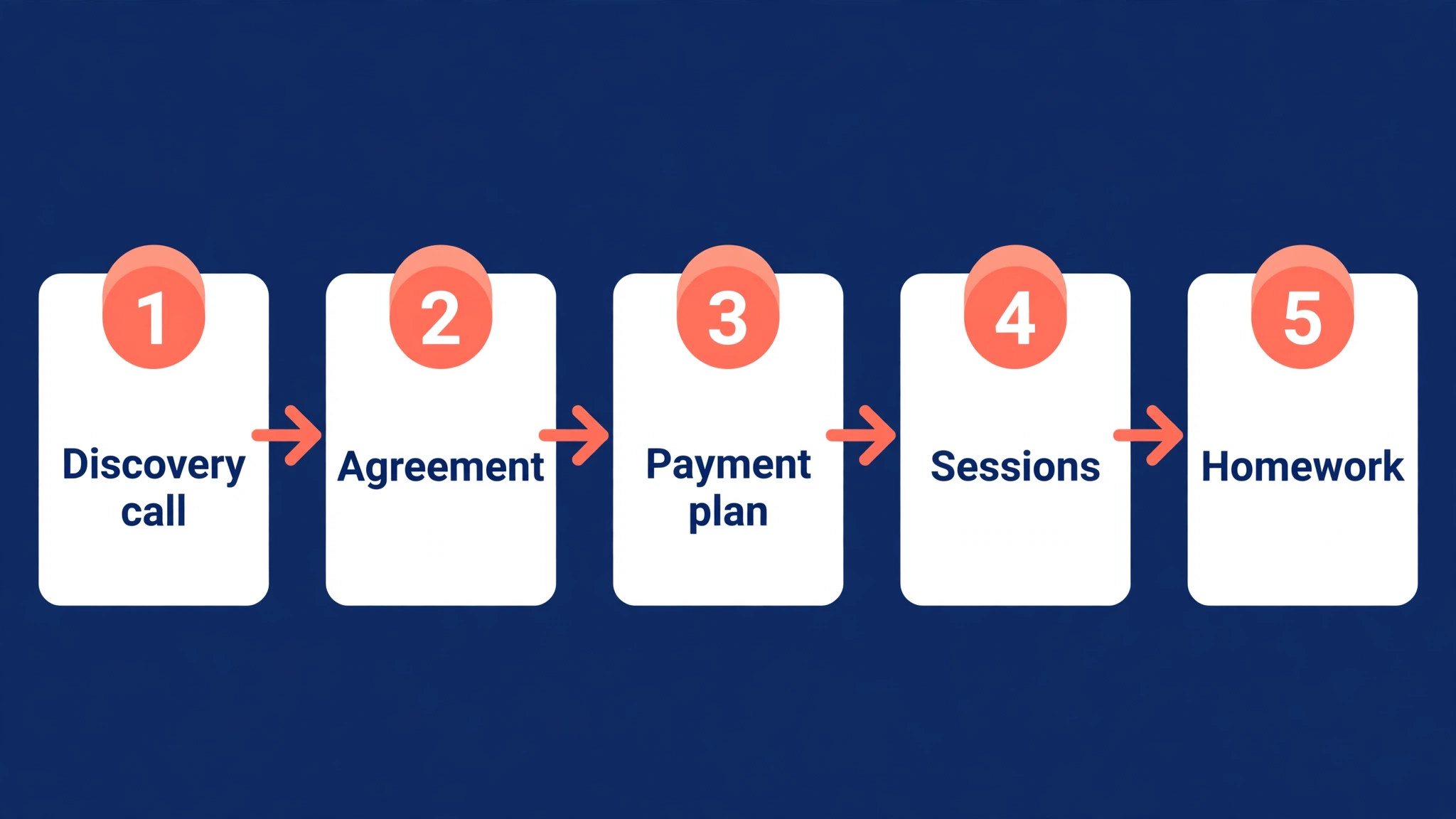
A life coach needs more than a calendar. Discovery calls become signed agreements, agreements become payment plans, payment plans become sessions, and sessions become homework, check ins, and renewals. A platform that handles that chain in one place saves hours each week, while a patchwork of booking links, invoices, and documents leaks clients at every handoff. The tools below were judged on onboarding, billing, between session work, group delivery, and the real cost at a realistic roster size.
Prices come from vendor pricing pages and reputable comparison pages checked during research, and they move often. Treat every price as a starting point and confirm it on the vendor page before you buy, especially where a plan caps clients, participants, or charges a fee per sale.
Packages and Programs at a Glance
| Tool | Starting price | Best for |
|---|---|---|
| Paperbell | Around 97 dollars a month | Package sellers, no client cap |
| CoachAccountable | 20 dollars a month for 2 clients | Accountability between sessions |
| Satori | 39 dollars a month, 10 client cap | Polished onboarding and ICF log |
| Delenta | 29 dollars a month | Courses plus coaching |
| Simply.Coach | 9 dollars a month for 3 clients | New coaches on a budget |
| CoachVantage | From 29 dollars a month | Clean contracts and scheduling |
| Upcoach | 49 dollars a month annual, 25 participants | Group programs and cohorts |
| Quenza | From 20 dollars a month annual | Structured between session work |
Read the table as a shortlist, not as a ranking. The cheapest tool may suit a new coach perfectly, while the most expensive tool may be the only one that runs a cohort properly. Pick three finalists from the table, then read their full sections before you commit to a trial.
Why the best coaching platform software for life coaches Depends on Your Offer
The gap starts with how you sell. A 1 to 1 coach sells time and attention, usually as a package of sessions over several months, and needs smooth onboarding, payment plans, and session notes. A group program coach sells a structured experience with a start date, weekly content, community, and completion tracking, and needs program building and participant management. One platform rarely leads at both jobs, so the offer should choose the platform, not the other way round.
The second gap is what happens between sessions. Life coaching results come from client action during the week, not from the hour on the call. Actions, habits, worksheets, check ins, and messaging keep that action visible, and platforms differ sharply here. A booking tool with a payment button cannot replace accountability tracking, and a coach who promises transformation needs a system that tracks it.
The third gap is billing shape. Roster priced tools stay cheap for small practices and grow with success, flat priced tools stay predictable at scale, and participant priced tools fit cohorts but punish private work. Judging best coaching platform software for life coaches on the entry price alone hides the cost at 20 clients, at 40 clients, and at a full cohort, and those are the numbers that decide whether the platform still fits in a year.
Each platform below is judged against the same question, which is whether it makes daily coaching work easier. That shared test is what makes a comparison of best coaching platform software for life coaches useful, because feature lists alone hide caps, fees, and onboarding friction that only show up in real use.

Eight Platforms, Reviewed One by One
Paperbell
Paperbell runs on a single flat plan that covers packages, scheduling, contracts, payments, and a client portal, with no client limit on the standard plan. Recent comparisons list the standard plan around 97 dollars a month, or 970 dollars a year, while older pages show lower monthly rates, so confirm the current price on the vendor page before you buy. The single plan approach removes tier guessing, because every coach gets the same features, and Paperbell adds no transaction fee of its own on top of payment processing.
The strength is simplicity for package sellers. A coach can build a package, send a booking link, collect payment, and manage the client relationship without stitching together four tools. The weakness is price for a new coach with few clients, because the flat fee stays the same whether the roster holds three clients or thirty. A coach with a full practice absorbs it easily, while a beginner may prefer a roster priced tool.
Choose Paperbell if you sell packages and want one flat price with no client cap. Skip it if you are just starting and every dollar of monthly cost matters.
CoachAccountable
CoachAccountable starts at 20 dollars a month for up to 2 clients, with the price scaling as the roster grows, and every feature is available on every tier. It covers action plans, metrics, worksheets, session notes, scheduling, invoicing, group sessions, and a client portal, with no feature gating between plans. That pricing model rewards small rosters and charges more only when the practice actually grows, which makes the early months unusually cheap for a full featured platform.
The strength is between session accountability. Actions, metrics, and reminders keep clients moving on their goals during the weeks between calls, and that follow through is often what clients pay for. The weakness is scale cost, because a large roster can push the monthly bill past flat priced rivals. A coach should price the platform at 20 clients and at 40 clients, not just at the entry tier, before deciding.
Choose CoachAccountable if accountability between sessions is your core offer. Skip it if you plan a large roster and want a flat fee that never moves.
Satori
Satori lists an entry plan at 39 dollars a month, or 33 dollars a month on annual billing, with a 10 client cap on that tier, and a Pro plan at 49 dollars a month on annual billing for larger practices. It covers single link client onboarding, packages, scheduling, contracts, recurring billing, programs, check ins, and an ICF coaching log for credential hours. The 15 day free trial is short, so a coach should test onboarding and billing in the first week rather than leaving the trial to drift.
The strength is onboarding polish. One link takes a new client from discovery call to signed agreement to first payment without manual chasing, and the ICF log helps coaches tracking credential hours. The weakness is the entry tier cap and the billing model that charges only for active clients, which can surprise coaches with seasonal rosters. Confirm how paused clients are counted before you rely on the entry price.
Choose Satori if you enrol clients one by one after discovery calls and log ICF hours. Skip it if you run large group programs with dozens of participants.
Delenta
Delenta lists a Starter plan at 29 dollars a month, or 229 dollars a year, with a Pro plan at 49 dollars a month for group coaching and fuller features. It covers client records, booking, packages, payments, group sessions, a client portal, and a course builder, plus a marketplace listing for coaches who want discovery. That course builder sets it apart from simpler 1 to 1 tools, because a coach can sell a course alongside private coaching without a second platform.
The strength is breadth at a fair price. Booking, payments, groups, and courses sit in one account, and the annual price is transparent. The weakness is that group coaching and fuller portal features sit on Pro, so the entry plan suits solo 1 to 1 work better than group delivery. A coach planning groups should budget for Pro from the start rather than discovering the limit mid launch.
Choose Delenta if you sell courses alongside coaching. Skip it if you only need simple 1 to 1 scheduling and want the lowest entry price.
Simply.Coach
Simply.Coach starts at 9 dollars a month on annual billing for up to 3 clients, which makes it the cheapest coaching specific starting point in this list. It covers goals, session work, forms, billing, client workspaces, nudges, programs, and scheduling, with cohort journeys and stakeholder reports on higher tiers. The low entry price is genuinely useful for a new coach testing a real platform, but the 3 client cap means an upgrade arrives quickly once the practice grows.
The strength is price plus coaching depth. Even the entry tier handles goals and session work properly, rather than offering a hollow trial version of the product. The weakness is the cap, because a coach with five clients already needs a higher plan, and pricing at that size should be checked before committing. Simply.Coach still wins the budget job, because the upgrade path is clear and the starting risk is tiny.
Choose Simply.Coach if you are starting out and want the lowest cost real platform. Skip it if you already hold more than a handful of clients.
CoachVantage
CoachVantage lists an entry plan from 29 dollars a month, or 26 dollars a month on annual billing in some comparisons, with higher annual rates around 35 dollars a month shown elsewhere, so confirm the current price on the vendor page. It covers programs, coaching logs, group programs, contracts with e-signatures, invoicing, scheduling, and a client portal, with unlimited contacts even on the entry tier. Native Zoom support and landing pages are useful extras for coaches who run sessions and lead capture in the same system.
The strength is clean administration. Programs, contracts, and invoicing feel orderly, and unlimited contacts remove the roster anxiety that roster priced tools create. The weakness is that some features, such as fuller program pages and contract signature limits, vary by tier, so the entry plan is not the whole product. Read the tier table against your actual offer before choosing the cheapest plan.
Choose CoachVantage if you want tidy scheduling, contracts, and invoicing with no contact cap. Skip it if you need a course builder or deep group program tools.
Upcoach
Upcoach lists a Starter plan at 49 dollars a month billed annually for 25 active participants and one team seat, with Pro at 99 dollars and Business Plus at 199 dollars a month on annual billing. It also charges a 2 percent fee per sale on Starter, so a coach selling high priced programs should add that fee to the subscription cost. It covers a drag and drop program builder, smart documents, habit tracking, events, community channels, checkout, and progress reports.
The strength is structured group delivery. A coach designs a program once, with lessons, worksheets, tasks, and live events arranged by week, then runs it again for each cohort. The weakness is fit for pure 1 to 1 work, because participant based pricing and program building add overhead that a simple scheduling tool avoids. Upcoach earns its price when cohorts are the business, and wastes money when they are not.
Choose Upcoach if group programs and cohorts are your main offer. Skip it if you only coach privately and never run a cohort.
Quenza
Quenza is listed from 20 dollars a month on annual billing in several comparisons, with other pages showing higher monthly rates, so confirm the current price on the vendor page before deciding. It covers structured activities, programs, chat, and client work between sessions, with groups available on the Growth tier. Quenza is built for coaches and therapists who assign exercises and reflections between sessions, rather than for coaches who only need booking and billing.
The strength is between session structure. Activities, pathways, and messaging give clients clear work to do each week, and the coach can see completion without chasing updates by email. The weakness is admin breadth, because scheduling and invoicing are thinner than on full practice platforms, and some coaches will still need a separate booking tool. Quenza works best when structured client work is the product, not an extra.
Choose Quenza if structured exercises between sessions define your coaching. Skip it if booking, contracts, and invoicing are your main needs.
The table below turns the full comparison into a short decision. It matches coaching job to a starting pick, so a reader comparing best coaching platform software for life coaches can skip straight to the option that fits private coaching, group programs, or a new practice.
Best Pick by Job for Life Coaches
| Coaching job | Best pick | Why it fits |
|---|---|---|
| 1 to 1 coach, small roster | CoachAccountable | Full features from 20 dollars a month for 2 clients |
| 1 to 1 coach, package seller | Paperbell | Flat price, no client cap, packages and portal in one place |
| 1 to 1 coach, new starter | Simply.Coach | Lowest cost entry at 9 dollars a month for 3 clients |
| Group program coach | Upcoach | Program builder, cohorts, community, and progress reports |
| Group program coach on a budget | Delenta | Group sessions and a course builder from a lower price |
| Course plus coaching seller | Delenta | Course builder alongside private coaching |
A 1 to 1 coach should optimise for onboarding and accountability, not for cohort features that stay unused. CoachAccountable wins the small roster job because every feature is included from the cheapest tier, while Paperbell wins the package seller job because the flat price never punishes growth. Simply.Coach wins the starter job on price alone, provided the coach accepts an early upgrade.
A group program coach should optimise for program structure and participant tracking. Upcoach wins that job because cohorts, worksheets, events, and progress reports are built for repeated delivery, while Delenta wins the budget version because group sessions and courses arrive at a lower monthly cost. The deciding question is cohort size and price point, because participant caps and per sale fees change the maths quickly.
Fee maths decide more coaching purchases than feature lists do, so this section works through real numbers. Anyone comparing best coaching platform software for life coaches should run the same calculation on their own package price and participant count before choosing.

Program Fee Maths That Change the Decision
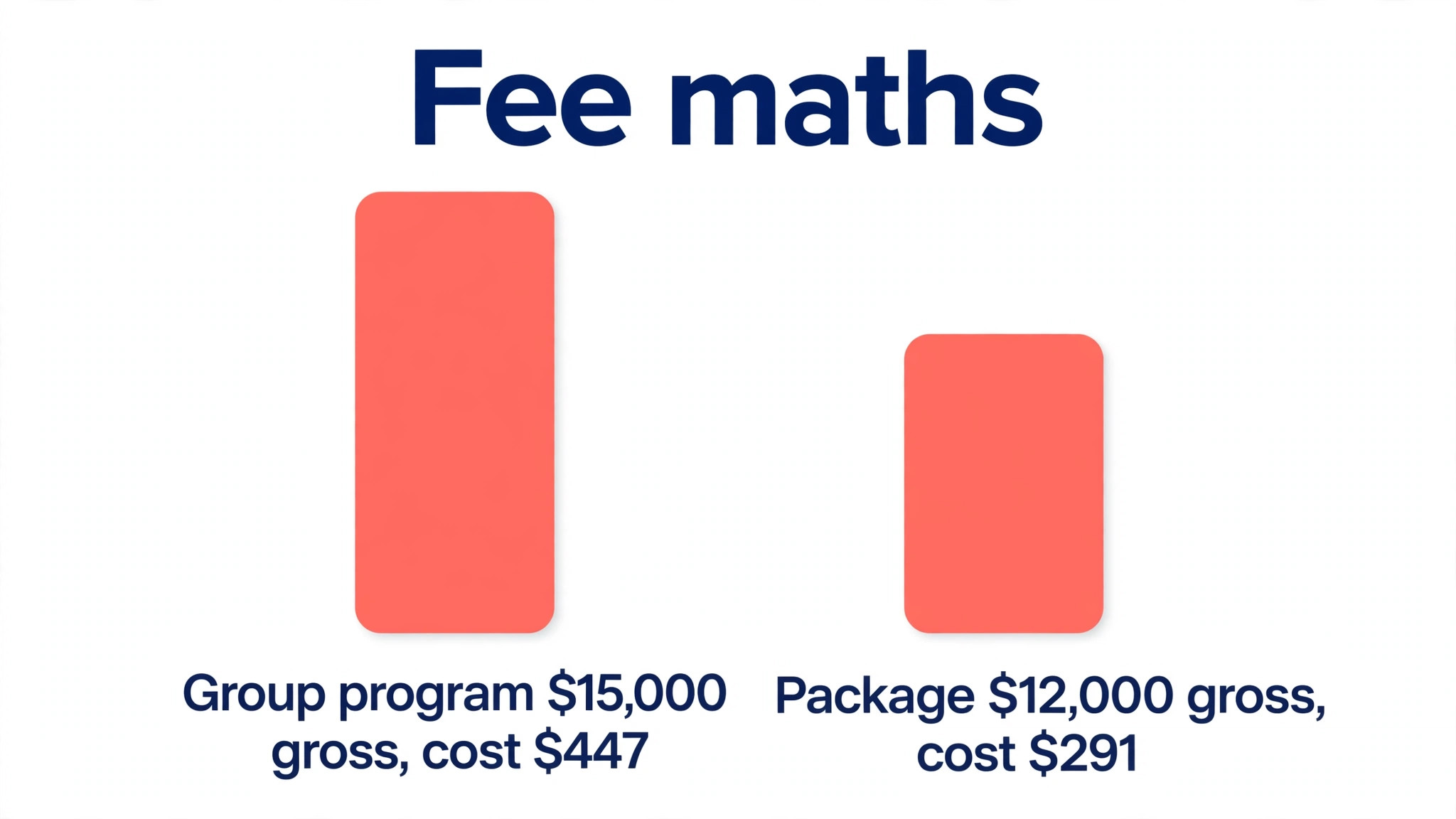
Take a 12 week group program priced at 600 dollars per participant with 25 participants, which gives gross revenue of 15,000 dollars. On Upcoach Starter at 49 dollars a month billed annually, three months of subscription cost 147 dollars, plus a 2 percent fee per sale, which is 300 dollars, for a platform cost of 447 dollars, or about 3 percent of gross revenue. That is a fair trade for program delivery, checkout, and progress tracking in one place.
Now take a 1 to 1 package priced at 1,200 dollars for 12 sessions with 10 clients, which gives gross revenue of 12,000 dollars. On Paperbell at around 97 dollars a month, three months cost 291 dollars with no platform transaction fee of its own, which is about 2.4 percent of gross revenue. On CoachAccountable priced for 10 clients, the roster based fee will sit higher than the 20 dollar entry tier, so price it at your real roster before comparing. The lesson is simple, because fee shape matters more than headline price once revenue grows.
Run the same maths on your own offer before choosing. Multiply participants by price, add subscription cost for the program length, add any per sale fee, and divide platform cost by gross revenue. A platform that takes under 5 percent while saving ten admin hours a month is good value, while a platform that takes more than 10 percent needs to earn that share with enrolments or retention it clearly delivers.
Most failed trials fail for the same reasons, and none of them appear on a pricing page. Keep these mistakes in mind while testing any option for best coaching platform software for life coaches, because a trial that avoids them gives a far clearer verdict.
How to Compare Platforms Side by Side
Start with a scorecard that lists onboarding, billing, between session work, group delivery, and support, then score each finalist from one to five on real tasks rather than on marketing claims.
A platform that scores well on paper but fails the onboarding test will lose clients before the first paid session, so weight onboarding and billing above minor features.
Next, price each finalist at three roster sizes, such as 5 clients, 20 clients, and 40 clients, plus one full cohort if group work is planned. Roster priced tools look cheap at the entry tier and expensive at scale, while flat priced tools look expensive early and cheap later. The scorecard plus the three price points together give a fair comparison that a single monthly figure never can.
Finally, run the same client journey on each finalist, from discovery call to signed agreement to first homework assignment. Time each step, count the manual messages, and note where the coach must leave the platform to finish a task. The platform with the fewest manual steps usually wins, even when its feature list looks shorter.
Mistakes That Stall a New Coaching Practice
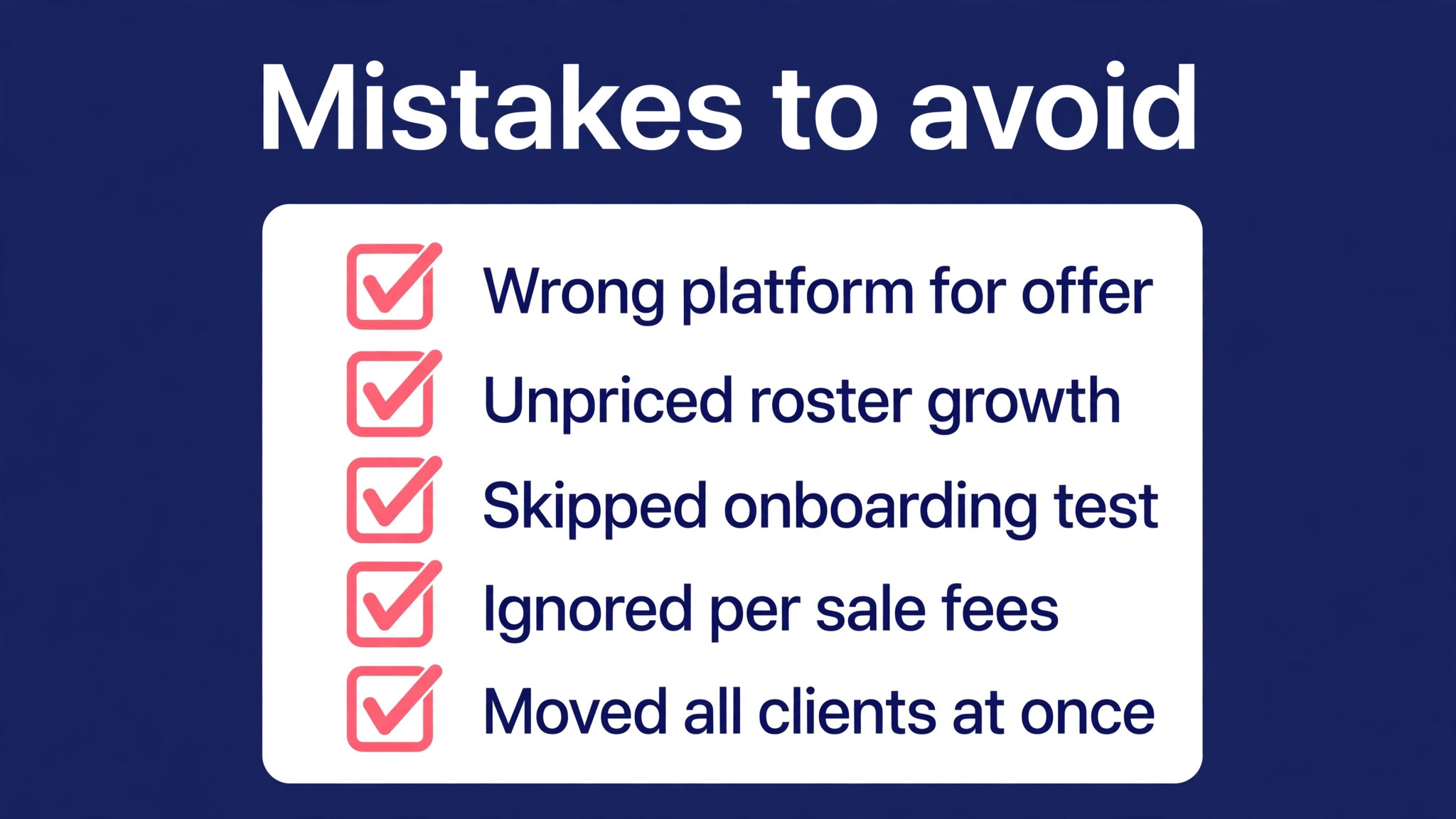
– Choosing a cohort platform for private coaching, then paying participant pricing for clients who never join a group. – Choosing a roster priced tool without pricing it at 20 and 40 clients, then facing a bill shock in the first growth year. – Skipping the onboarding test, even though a clumsy signup flow loses clients before the first paid session. – Ignoring per sale fees, which quietly take a share of every high priced program sale. – Moving every client at once, instead of running one real cohort or five real private clients on the new system first.
Trial the platform the way clients will meet it. Send yourself through discovery, agreement, payment, and first session homework, then check how much manual chasing remains. That walkthrough exposes onboarding gaps, billing quirks, and missing group features before they cost a launch.
After eight platforms, the decision comes down to offer type rather than a single best product. The verdict below names the strongest starting point for each kind of coach comparing best coaching platform software for life coaches today.
Contracts, Data, and Leaving a Platform
Read the contract terms before the trial ends, especially around pause policies, annual billing, and what happens to client data on cancellation. Some platforms let a coach pause billing for inactive clients, while others charge for every account regardless of activity, and that difference matters for seasonal practices.
Export client contact details, agreements, and payment records regularly, and keep session notes in a format that survives a platform change. A coach who owns clean exports can switch platforms without losing history, while a coach who never exports is locked in by default. Treat export quality as a feature, and test it during the trial.
Support quality deserves a trial test of its own, because a platform that answers slowly during setup will answer slowly during a launch problem. Send one support question during the trial, note the response time, and check whether the answer solves the problem or only links to a help article.
Also check mobile behaviour, since many clients book, pay, and complete homework from a phone. If the client portal feels cramped or slow on mobile, completion rates will drop no matter how good the desktop version looks.
Price the platform at your next growth stage, not only at your current roster, because a tool that fits today but punishes growth will force a costly migration within a year.
Check renewal pricing before annual billing, because first year discounts often expire quietly.
My Final Call for Life Coaches
For most 1 to 1 life coaches, Paperbell is the safest long term pick, because the flat price and lack of a client cap remove the two costs that usually force a later migration. For coaches who live on accountability, CoachAccountable is the better fit, because between session tracking is the product clients renew for. For group coaches, Upcoach is the clear pick, with Delenta as the budget alternative when cohorts are small and courses matter.
Start with the pick that matches your offer, run one real package or one real cohort on it, and only then move the full roster. The best platform is the one clients complete work in between sessions, and a real trial will show you which one that is.

More Reading on Stratilyze
– AI tools built for life coaches – Practice management for therapy practices – AI tools built for fitness coaches
These questions cover the points buyers ask most when they compare best coaching platform software for life coaches, from pricing and group delivery to switching platforms later.
Frequently Asked Questions
What is the difference between a coaching platform and a booking tool?
A booking tool schedules sessions and takes payment, while a coaching platform also handles packages, contracts, client portals, homework, and progress tracking. Life coaches need the wider system, because results come from work between sessions. A booking tool alone leaves agreements, actions, and renewals scattered across email and documents.
How much should a new life coach pay for a platform?
A new coach can start at 9 dollars a month on Simply.Coach for up to 3 clients, or 20 dollars a month on CoachAccountable for 2 clients. Those entry prices keep risk low while the roster grows. Budget for an upgrade once the roster passes the cap, and price the platform at 20 clients before treating the entry price as the long term cost.
Which platform is best for group coaching programs?
Upcoach is the strongest group choice, because it builds cohorts with lessons, worksheets, events, community, and progress reports. Delenta is the budget alternative, with group sessions and a course builder at a lower price. Choose Upcoach for larger cohorts and repeated delivery, and Delenta for smaller groups where courses matter.
Do these platforms charge transaction fees on top of the subscription?
It varies, and the detail matters. Paperbell adds no transaction fee of its own, while Upcoach Starter charges a 2 percent fee per sale, and payment processing fees apply on every platform. Add subscription cost plus per sale fees plus processing fees to get the true cost of a program, and compare that total against gross revenue.
Can I switch platforms later without losing client history?
Switching is possible but rarely painless, because session notes, actions, and program content rarely export cleanly between platforms. Export client contact details, agreements, and payment records before cancelling, and keep copies of notes outside the platform. Choosing the right platform first is cheaper than migrating a full roster later.
Is a free trial long enough to judge a coaching platform?
Most trials run 14 or 15 days, which is enough if the trial is used properly. Onboard a test client end to end, sell a package, run a session, and assign homework in the first week. A trial spent only clicking settings proves nothing, while one real client journey reveals onboarding, billing, and accountability strengths fast.
Can I run 1 to 1 coaching and group programs on one platform?
Yes, but the fit depends on which job dominates. Delenta and Upcoach both handle groups, while Paperbell and CoachAccountable handle private work better. A coach who runs mostly private sessions with one small group can usually stay on a private first platform, while a coach whose main income is cohorts should choose a group first platform.
How do payment plans work on coaching platforms?
Most platforms support instalment plans, recurring billing, and one time package payments, with the client charged automatically on the agreed schedule. Check whether failed payments trigger reminders, whether the coach can pause a plan, and what processing fees apply. A clear payment plan reduces chasing and keeps cash flow predictable across a multi month package.