

The verdict is simple. For most small service businesses, the best first recurring offer is not a large retainer and not a complex membership. It is a small, clearly scoped maintenance or care plan sold to existing clients, priced to cover its true cost, with a clear renewal date and a visible monthly deliverable. That offer is easier to sell than a retainer, easier to deliver than a membership, and it creates the predictable base that makes every other recurring model possible later. A recurring revenue strategy small service business owners can actually run starts there, and grows only after that base is proven.
Recurring revenue means income that renews on a set schedule, without requiring a new sale every time. For a service business, that usually means retainers, memberships, maintenance plans, or productised monthly services. The appeal is obvious. Predictable income smooths slow months, makes hiring decisions safer, and raises the value of the business, because buyers pay for predictable revenue far more readily than for revenue that must be won again each month. The risk is equally real. A recurring offer that is vague, underpriced, or hard to deliver becomes a monthly burden, with clients who expect constant attention for a fixed fee and an owner who dreads the renewal date.
This guide compares the main models honestly, helps you choose a mix that fits your work, and works through pricing, packaging, churn, and conversion from project clients to recurring clients. It is written for owners who deliver the work themselves or with a small team, where every recurring commitment is also a capacity commitment, and where a bad recurring offer cannot be hidden behind a large staff.
What Counts as Recurring, and What Does Not
Not every repeat sale is recurring revenue. A client who returns three times a year for separate projects is valuable, but that income still requires a new decision, a new quote, and a new start each time. True recurring revenue is contracted or subscribed in advance, with a renewal date, a defined scope, and a payment schedule that continues until either side ends it under agreed terms. That distinction matters for planning, because only contracted recurring revenue can be counted when you forecast next quarter, decide on a hire, or set a marketing budget.
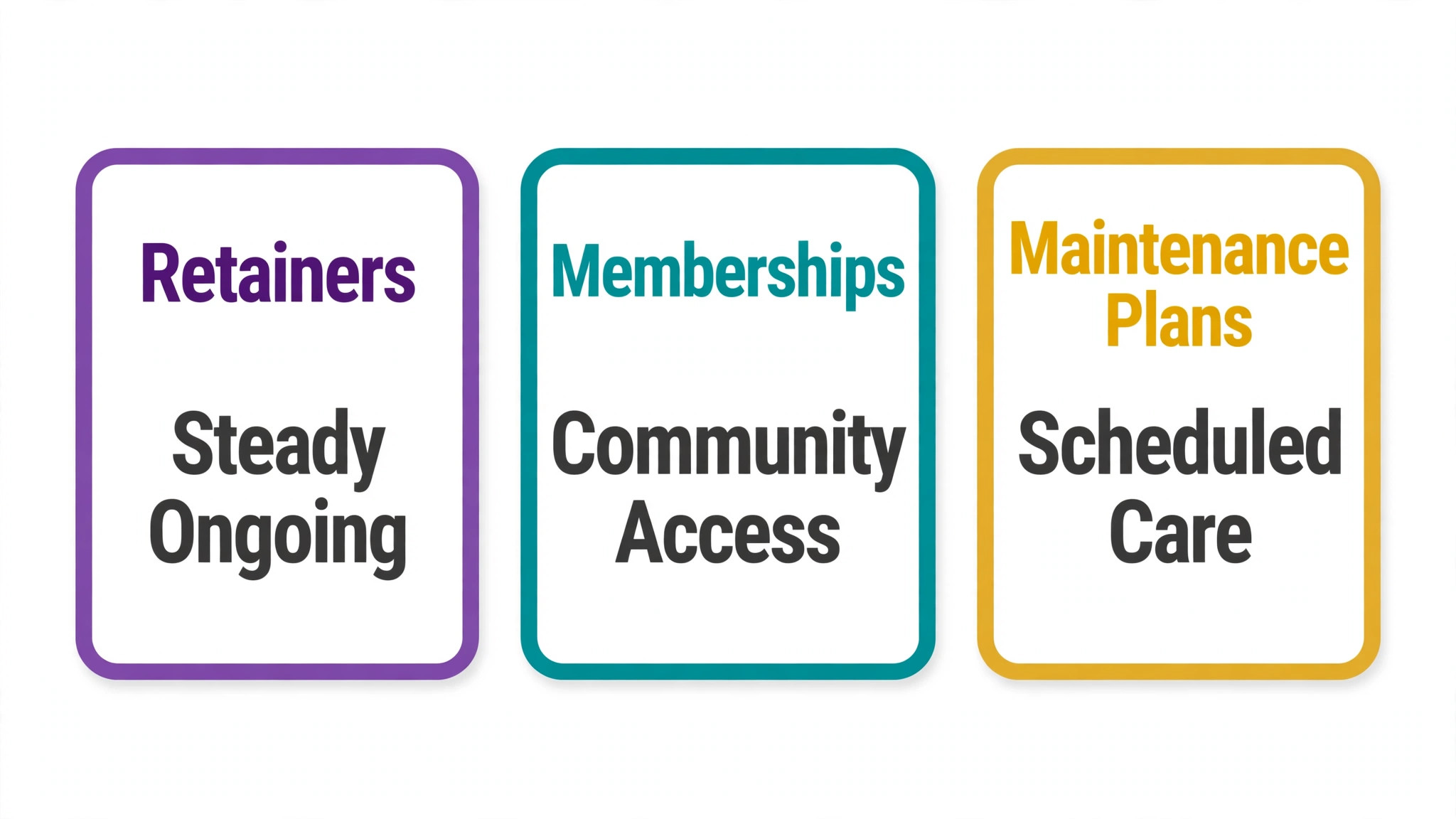
There are four main forms worth distinguishing. A retainer reserves a set amount of time or a set number of deliverables each month for a flat fee, and it suits advisory, marketing, design, or bookkeeping work where the client needs ongoing access. A membership gives access, community, content, or a set of benefits for a monthly fee, and it suits businesses where clients value belonging, learning, or ongoing support as much as direct service.
A maintenance or care plan covers regular upkeep, checks, updates, or support for something the client already owns, such as a website, a system, a property, or equipment, and it suits businesses where neglect creates cost or risk. A productised monthly service packages a repeatable outcome, such as a monthly report, a set of posts, or a monthly close, at a fixed price, and it suits work that can be standardised without losing quality.
Each form creates a different workload, a different churn risk, and a different margin profile, which is why the choice of model matters more than the decision to go recurring in general. A business that needs senior judgement every month should not sell a low priced membership that promises unlimited access. A business whose work is mostly routine upkeep should not sell an expensive retainer that clients will resent paying when months are quiet. Match the model to the work, not to the model that sounds most attractive in a blog post.
Retainers, Memberships, and Maintenance Plans Compared
The decision table below compares the three models most small service businesses consider first, on the factors that decide whether the model will survive contact with real clients. Use it to shortlist one model to start with, rather than launching all three at once. Launching three models at once divides attention, confuses buyers, and makes it impossible to learn which model actually works for your business.
| Factor | Retainer | Membership | Maintenance plan |
|---|---|---|---|
| What the buyer pays for | Reserved time or deliverables | Access, benefits, community | Regular upkeep and support |
| Best for | Advisory, marketing, design, bookkeeping | Coaching, training, creative communities | Websites, systems, property, equipment |
| Pricing basis | Hours or deliverables, flat monthly fee | Access value, tiered monthly fee | Scope of checks and support |
| Delivery risk | Scope creep, unused hours disputes | Low engagement, content burden | Quiet months feel like no value |
| Churn trigger | Client feels hours are wasted | Member stops using benefits | Client forgets what is covered |
| Margin potential | Moderate, depends on utilisation | High if access scales, low if hands on | High if checks are systematised |
| First step | Convert two or three existing clients | Offer to a small founding group | Offer to clients after a project ends |
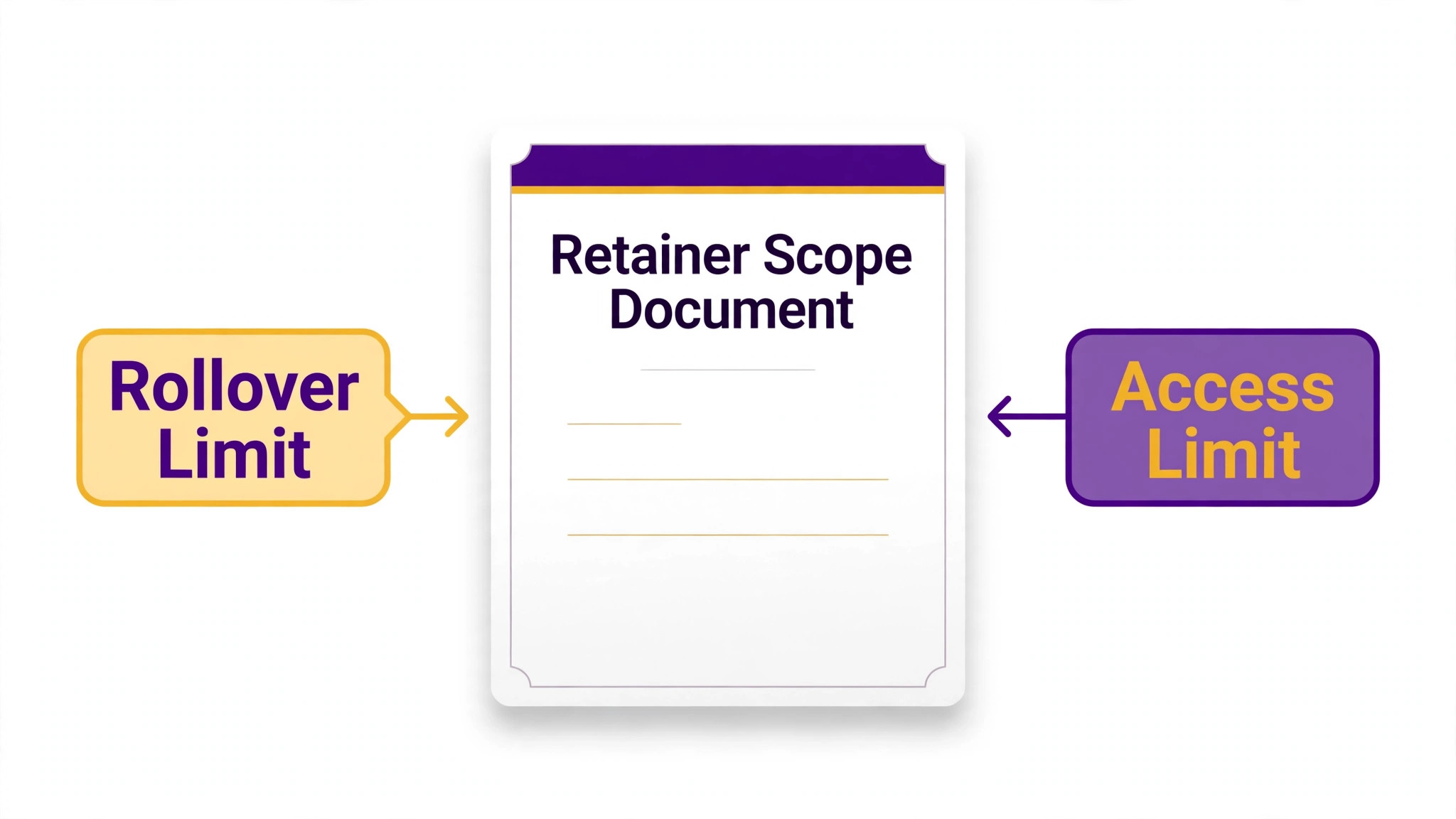
A retainer works best when the client has an ongoing problem that needs regular judgement, not just regular tasks. Price it on deliverables where possible, rather than on hours alone, because deliverables are easier for the client to value and easier for you to defend in a quiet month. Define what happens to unused time or deliverables in writing, because that question will arise, and an answer invented mid engagement will satisfy no one. Common options include rollover for one month, conversion to a defined extra deliverable, or no rollover with a lower fee, and each option has a different effect on margin and satisfaction.
A membership works best when the value is access to you, to a group, or to a resource that members use regularly. The danger is promising community or content that requires constant owner effort for a low fee, which quickly becomes a second job that pays poorly. Start with a small founding group, a clear benefit list, and a regular rhythm the owner can sustain for a year, not just for a launch month. If engagement drops, ask members what they actually use, and cut the benefits no one uses rather than adding more benefits no one asked for.
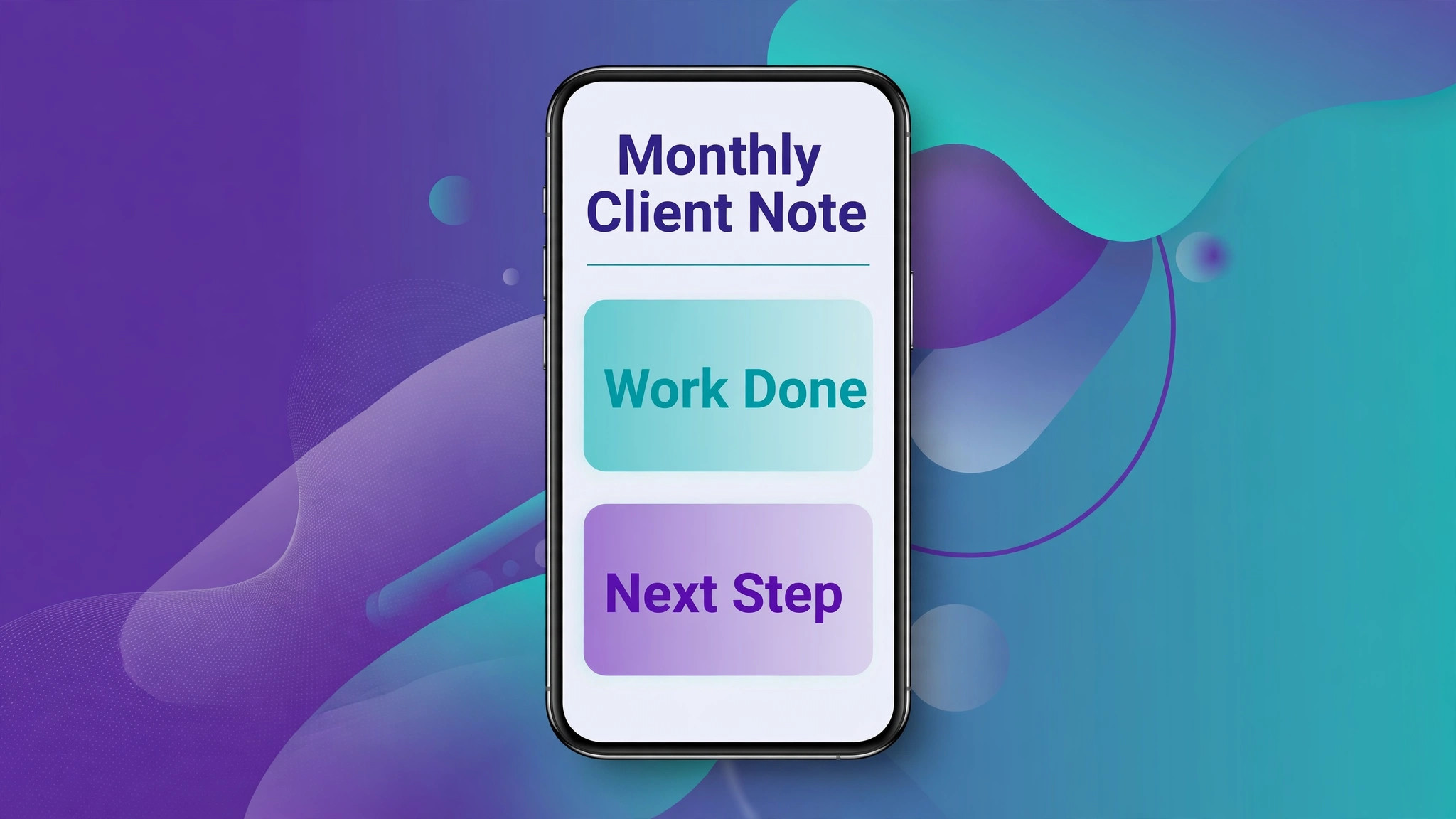
A maintenance plan works best when neglect is costly and regular checks prevent larger problems. The buyer needs to see the work, even in quiet months, so send a short monthly note stating what was checked, what was updated, and what was found. Without that note, the client will eventually ask what they are paying for, and that question is fair. With that note, the client sees a record of care that justifies renewal, and the business builds a history that supports a higher price over time.
Choose Your Revenue Mix With a Worksheet
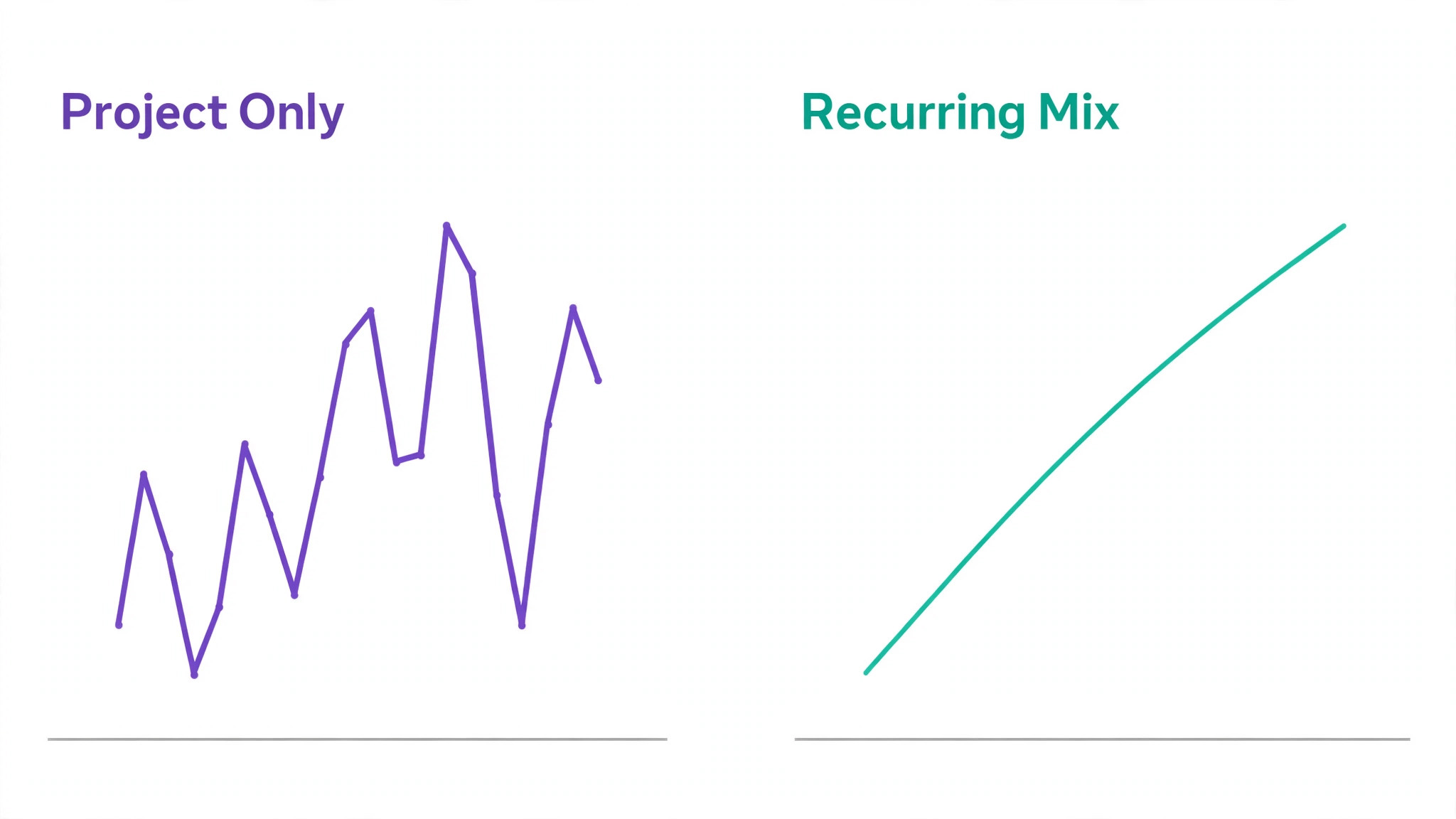
No small service business should aim for one hundred percent recurring revenue overnight, and most should not aim for it at all. A mix protects the business when a recurring client leaves, when a project season is strong, or when a new offer needs testing. A useful target for many service businesses is to cover fixed costs with recurring revenue first, then grow recurring revenue to a share that smooths the year without removing the flexibility that project work provides. That share will differ by business, and the worksheet below helps you set it for yours rather than copying a figure from another industry.
Slow months are the reason the mix matters, as covered in How to Handle Seasonal Slow Months as a Small Business.
Start by listing your fixed monthly costs, including rent or home office costs, software, insurance, tax provision, and a fair owner salary, not just the costs that appear on a supplier invoice. That total is the first milestone for recurring revenue. Until recurring revenue covers fixed costs, slow months will still feel precarious, no matter how strong project months are. Next, list current project revenue by month for the last year, and note the lowest three months. The gap between those months and your fixed costs is the problem recurring revenue is solving, and it gives you a concrete target, not a vague wish for more stability.
Then, model the mix. Decide what share of total revenue should come from each model, how many clients each model needs at a realistic average price, and how many hours each model consumes. Check capacity honestly, because a recurring client is a monthly capacity commitment, and ten new recurring clients at five hours each is fifty hours a month that must come from somewhere. If the model requires more hours than the business has, the price is too low, the scope is too wide, or the mix needs fewer recurring clients and more project work until hiring is possible.
| Revenue source | Target share | Clients needed | Hours per month | Monthly revenue at target |
|---|---|---|---|---|
| Maintenance plans | Set your own share | Count at average price | Count from scope | Calculate from clients and price |
| Retainers | Set your own share | Count at average price | Count from deliverables | Calculate from clients and price |
| Memberships | Set your own share | Count at average price | Count from access promised | Calculate from clients and price |
| Project work | Remainder | Varies by season | Varies by project | Remainder of target |
Review the mix quarterly, and adjust based on churn, margin, and capacity, not on enthusiasm for a new model. A mix that looks good on paper but creates constant overtime is not a good mix. A mix that is stable but leaves the owner bored may need a new project type or a new niche, rather than more recurring clients. The worksheet is a planning tool, not a promise, and its value is in forcing the capacity question before commitments are made.
Price a Recurring Offer So It Survives
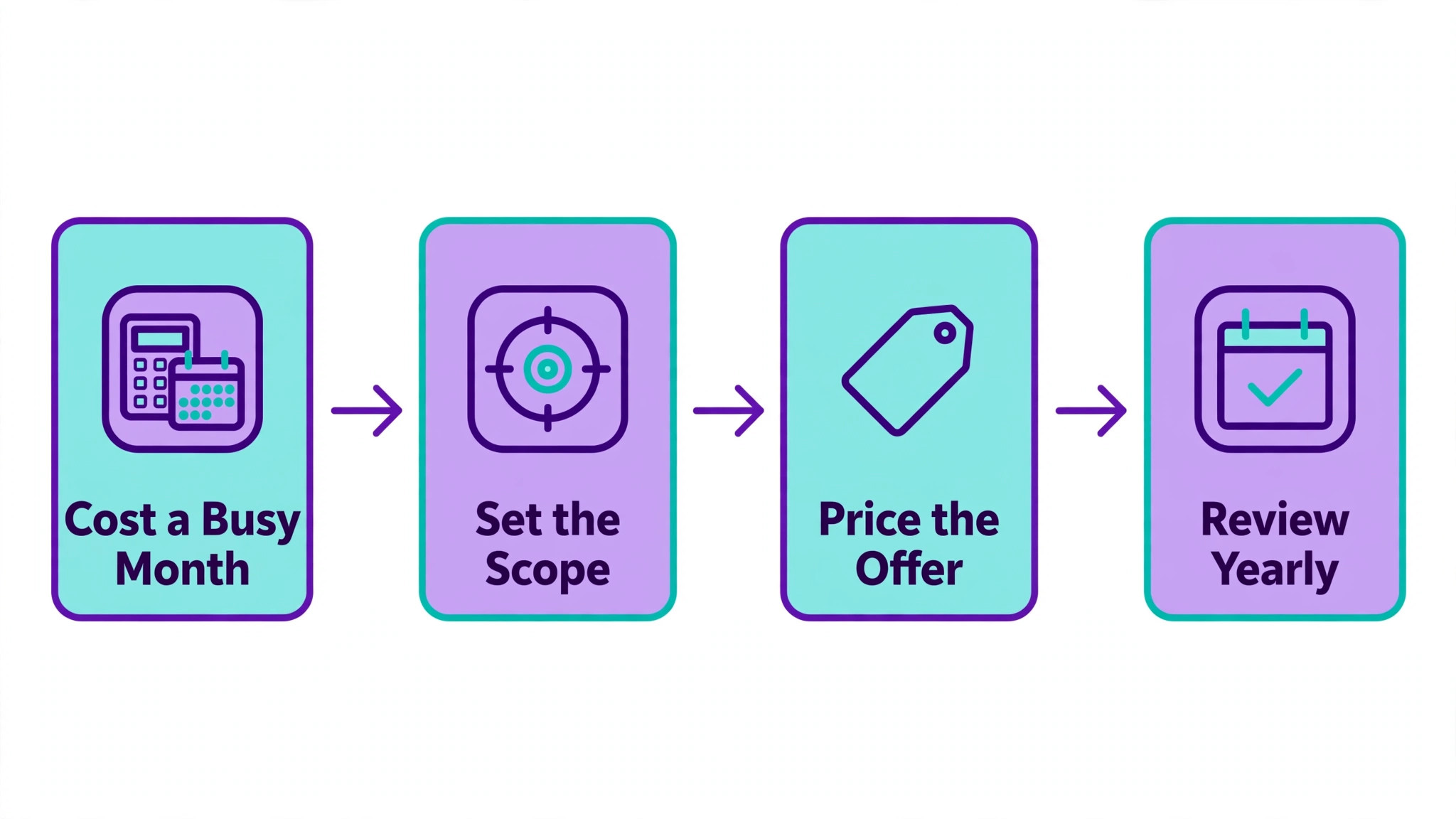
Pricing a recurring offer starts with cost, not with a competitor’s monthly fee. Work out the direct time the offer takes in a normal month and in a busy month, add a share of overhead, add time for communication, reporting, and the occasional problem, and then add a margin that leaves room for churn, tax, and slow months. Many recurring offers fail because the price was set on a quiet month, when the work felt light, and then the first busy month revealed the true cost. Price for the busy month, and deliver with the calm of a business that can afford to do the work properly.
Check the price against value, not just against cost. A maintenance plan that prevents a website outage, a compliance failure, or a property problem may be worth far more than its cost, and pricing it only on cost leaves money on the table and signals low value to the buyer. Conversely, a retainer priced far above the value the client receives will churn at the first review, no matter how well it is sold. The right price sits where cost, value, and comparable offers overlap, and where the buyer can state the value in their own words. If the buyer cannot state the value, the offer is not ready to sell at that price yet.
Offer a term incentive carefully. An annual payment discount can improve cash flow, but it should be modest, and it should be tied to a clear renewal and cancellation policy. A large annual discount that locks in a low price for a year, while costs rise, is a slow margin leak. A small discount, such as one month free on an annual plan, or a modest reduction for quarterly payment, rewards commitment without distorting the price. State the cancellation terms plainly, because a buyer who feels trapped will churn loudly, while a buyer who knows they can leave with notice will often stay longer.
Finally, build a price review into the offer. State that prices are reviewed annually, or when scope changes materially, and give notice of any change. That clause prevents the awkward situation where a recurring price set three years ago no longer covers costs, and the owner must either absorb the loss or spring a large rise on a loyal client. Annual reviews, communicated early and tied to results delivered, are far easier than emergency rises made under pressure.
Convert Project Clients Without Pressure
The easiest recurring clients are often clients you have already served well, and converting them is a core part of a recurring revenue strategy small service business owners can use, because they know the quality of the work and the experience of working with you. Conversion should happen at the moment of highest satisfaction, which is usually just after a project ends successfully, not months later when the client has moved on.
At that moment, offer a specific next step, not a general invitation to stay in touch. A maintenance plan that starts the month after delivery, a retainer that covers the next phase of work, or a monthly service that continues a result the project created are all specific, and each one gives the client a clear reason to say yes. That clarity is what a recurring revenue strategy small service business owners build on, one conversion at a time.
Frame the offer around continuity, not around a discount. Say what will be maintained, checked, or continued, what the client will receive each month, and what problem the offer prevents. Avoid framing the offer as a deal made just for them, unless it genuinely is, because that language undermines future pricing. A client who converts because the offer makes sense will stay longer than a client who converts because of a temporary discount, and the renewal conversation will be far simpler.
Handle a no gracefully. Some project clients will never want a recurring offer, because their need was genuinely one off, or their budget is project based. Thank them, ask permission to check in after a set period, and add them to a light follow up list. A no now is not a no forever, especially if the client later faces the problem the recurring offer prevents. The follow up should be useful, such as a short note about a change that affects them, not a repeated sales message that trains them to ignore you.
For new clients, consider a small recurring offer as part of the initial proposal, even when the main engagement is a project. A short care period after delivery, included for a defined time or offered at a clear price, gives the client a low risk way to experience recurring service. That experience, if it is good, does more to sell renewal than any sales conversation, because the client has already lived with the monthly rhythm and seen the monthly note, the check, or the deliverable that justifies it.
Reduce Churn Before It Starts
Churn is the quiet cost of recurring revenue, and it is usually caused by invisibility, not by price alone. Clients churn when they forget what they are paying for, when the monthly deliverable stops arriving, or when the relationship becomes purely transactional. The antidote is a monthly rhythm the client can see, a quarterly check in the client can feel, and a renewal conversation that happens before the renewal date, not after the client has already decided to leave.
Send a short monthly note for every recurring client, even when the month was quiet. State what was done, what was checked, what was found, and what happens next. Keep it to a few lines, and use the client’s language, not internal jargon. That note takes minutes to write when the work is systematised, and it prevents the most common churn question, which is what am I paying for. For retainers, add a brief summary of deliverables used and remaining, so the client can see value without having to ask.
Hold a short quarterly review, focused on results and next steps, not on selling an upgrade. Ask what has changed in the client’s business, whether the scope still fits, and what would make the next quarter more useful. Those conversations surface scope changes early, when they can be priced fairly, rather than late, when they become disputes. They also give the client a chance to say what is not working, which is information you want before churn, not after.
Track churn by model, by cohort, and by reason, even in a simple spreadsheet. Note when each client joined, when they left, and why, in their words where possible. Patterns will emerge quickly. If maintenance clients churn after three months, the monthly note may be missing or the scope may be unclear. If retainer clients churn after a quiet month, the deliverables may need to be defined differently. If membership clients churn after the first month, the onboarding may be weak. Each pattern points to a fix, and fixing churn is usually cheaper than replacing a churned client with a new sale.
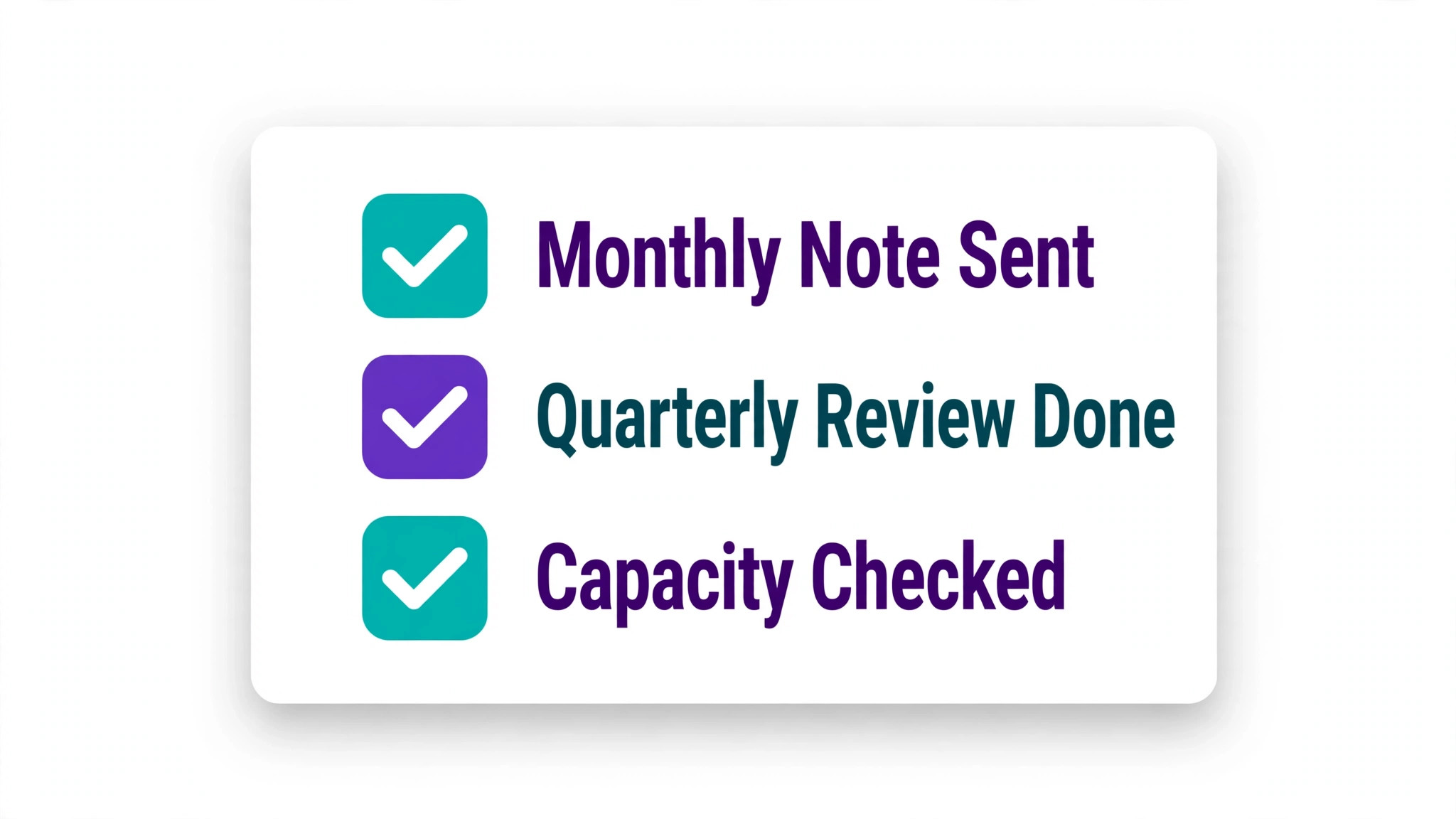
– [ ] Monthly note sent, stating work done and next step – [ ] Quarterly review held, focused on results and fit – [ ] Scope and rollover terms confirmed in writing – [ ] Churn reason recorded for every client who leaves – [ ] Price review date set and communicated in advance – [ ] Capacity check run before new recurring clients are added
Mistakes That Make Recurring Revenue Painful
The most common mistake is selling a recurring offer before delivery is systematised. If each month requires reinventing the process, the offer will consume more time than the fee justifies, and quality will vary. Systematise first, with checklists, templates, and a calendar rhythm, then sell. The second mistake is promising unlimited access for a fixed fee, which invites scope creep and resentment on both sides. Define access clearly, with response times, included deliverables, and a process for work beyond scope, priced separately and agreed in advance.
The third mistake is underpricing to win early clients, then discovering that a price rise for those clients feels like betrayal. Price the offer correctly from the start, even if that means slower initial uptake, because early clients at the wrong price become a long term burden and a reference point that makes future pricing harder. The fourth mistake is ignoring capacity, and adding recurring clients until the owner is overcommitted. A waitlist is better than an overcommitted recurring base, because a waitlist preserves quality and reputation, while overcommitment damages both.
The fifth mistake is treating recurring clients as passive income, and then being surprised when they leave. Recurring revenue is not passive for a service business. It is a relationship that needs monthly visibility and quarterly attention, and it rewards owners who treat it that way with stability that project work alone cannot provide. The work is different from project work, but it is still work, and pricing and capacity should reflect that honestly.
A Ninety Day Launch Plan
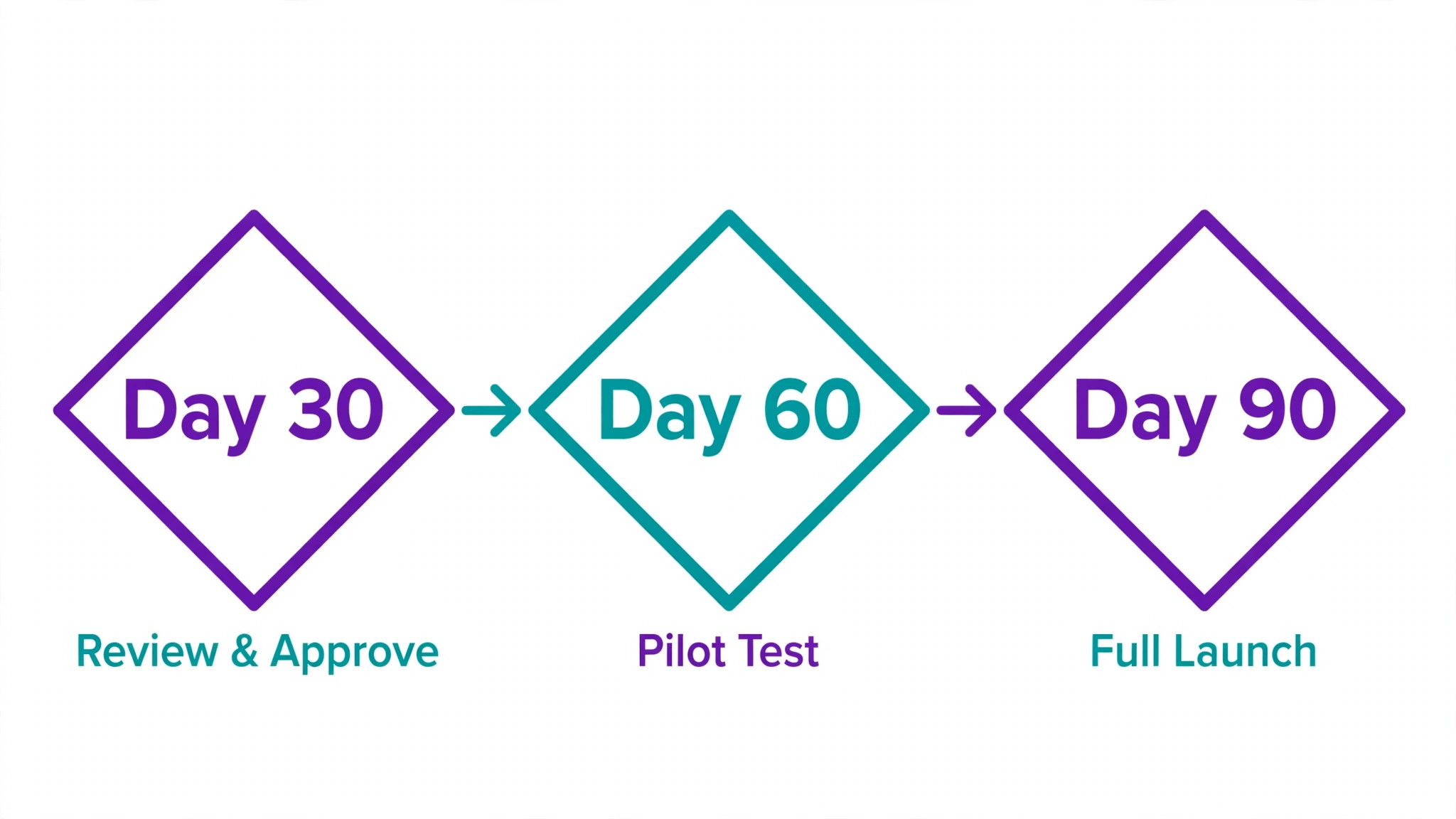
Start with existing clients and one model. In the first thirty days, define the offer, price it on busy month costs, write the scope and terms, and create the monthly note template. Offer it to three to five existing clients who have just completed a project or who already ask for ongoing help, and listen to their questions. Those questions will reveal gaps in scope, pricing, or language before the offer is public.
In the next thirty days, deliver the first month well, send the monthly notes on time, and track hours against the price. If hours exceed the price, adjust scope or price before adding more clients, rather than hoping volume will fix a broken unit. In the final thirty days, review churn signals, satisfaction, and margin, and decide whether to expand to more clients, adjust the offer, or pause and fix delivery. A ninety day plan that ends with a decision is far more useful, and it fits a recurring revenue strategy small service business owners can review quarterly than a launch that drifts without review.
After the launch, set a quarterly rhythm for the recurring base as a whole. Review the mix, the churn reasons, the capacity, and the price review dates, and make one planned change per quarter, not five changes at once. That rhythm keeps the recurring base healthy without constant reinvention, and it gives the owner time to focus on delivery and on the project work that still matters. A recurring revenue strategy small service business owners can sustain is built on that kind of steady rhythm, not on a single launch event.
A Recurring Revenue Strategy Small Service Business Owners Can Measure
A recurring revenue strategy small service business owners trust needs a small set of numbers reviewed regularly, because recurring revenue can look healthy on a bank statement while quietly becoming unhealthy underneath. Track monthly recurring revenue, which is the total contracted recurring income due in a month, and watch its trend rather than any single month. A rising trend built on new clients is good, but a rising trend built on price rises while client numbers fall may signal a smaller, more fragile base. Track both the total and the client count together, so growth is understood, not just celebrated.
Track churn rate by model, calculated as clients lost in a period divided by clients at the start of that period. A monthly churn rate that looks small can still compound quickly over a year, so annualise it in your head when you review it. If you lose five percent of clients each month, you will lose roughly half your base in a year unless new sales replace them, which is a very different picture from a single month’s figure. Also track churn reasons, because a churn rate without reasons is a number without a fix. Group reasons into invisibility, price, scope mismatch, business closure, and service problems, and fix the largest group first.
Track margin per recurring client, not just revenue per client. A recurring client who pays a modest fee but needs little time can be more profitable than a client who pays more but needs constant senior attention. Calculate hours per client per month, including communication and reporting, and compare that with the fee. If hours are rising while fees stay flat, scope has crept, or the client needs a different tier. That conversation is easier early, when the change is small, than late, when the owner is already resentful and the client is surprised.
Track expansion revenue separately from new client revenue. Expansion means existing recurring clients upgrading, adding a service, or moving to a higher tier, and it is often the cheapest growth a business can achieve, because trust already exists. If expansion is zero, the business may be under serving clients who would value more, or the tiers may not offer a clear next step. If expansion is high but churn is also high, new tiers may be selling well while basic delivery is slipping, and that combination needs attention before more expansion is pursued.
Finally, track capacity utilisation for the recurring base as a whole. Add up the hours committed to recurring clients in a month, and compare that total with the hours available after project work, administration, and leave. A utilisation figure above eighty percent for the owner alone is a warning, because it leaves no room for illness, holidays, or a busy project month. A recurring revenue strategy small service business owners can sustain keeps some slack in the system, because slack is what allows quality to survive a difficult month, and quality is what keeps recurring clients renewing.
Frequently Asked Questions
What is the best recurring revenue model for a small service business?
For most businesses, a small maintenance or care plan sold to existing clients is the best first model in a recurring revenue strategy small service business owners start with, because it is easy to scope, easy to deliver, and easy to prove each month. Retainers and memberships can follow once that base is stable and delivery is systematised.
How much recurring revenue should I aim for?
Aim first to cover fixed monthly costs with recurring revenue, including a fair owner salary and tax provision. After that milestone, set a target share based on capacity and seasonality, and review it quarterly, rather than copying a share from another industry.
How do I price a retainer without undercharging?
Price on deliverables where possible, cost a busy month rather than a quiet month, include communication and reporting time, and define rollover and scope limits in writing. Review the price annually, with notice, rather than letting an old price drift below cost.
What causes most recurring clients to churn?
Invisibility is the most common cause. Clients churn when they forget what they are paying for, when monthly deliverables stop arriving, or when no one checks whether the scope still fits. A short monthly note and a quarterly review prevent most of that churn.
Should I offer a discount for annual payment?
A modest discount can help cash flow, such as a small reduction for annual or quarterly payment, but avoid a large discount that locks in a low price while costs rise. State cancellation and renewal terms plainly, so commitment feels fair rather than trapping.
How do I convert a project client to a recurring client?
Offer a specific next step at the moment of highest satisfaction, just after a successful project, framed around continuity and the problem the offer prevents. Avoid pressure and temporary discounts, and handle a no gracefully with permission for a later check in.
Can a solo owner run a membership without burning out?
Yes, if the membership is small, the benefits are sustainable for a year, and access is defined clearly. Start with a founding group, cut benefits no one uses, and avoid promising unlimited access or constant content for a low fee.
When should I stop adding recurring clients?
Stop when capacity is full, when hours per client exceed the price, or when quality starts to slip. A waitlist preserves reputation, while overcommitment damages it. Revisit capacity after a price or scope adjustment, or after hiring.
More Reading on Stratilyze
– How to Price Retainers for a Small Agency – How to Handle Seasonal Slow Months as a Small Business – Best Invoicing Software for Consultants – Best Proposal Software for Freelancers