
A shop that sends twenty estimates and hears back from twelve has not lost eight jobs to price. It has often lost them to silence, because nobody owned the next message, nobody knew which estimate was ageing, and the customer drifted to the shop that called back first. The choice facing most owners is not between a fancy system and hard work. It is between a follow up process that depends on memory and one that runs on rules. This guide shows how to use AI for auto repair shop estimate follow up in a way that keeps the human voice in charge while tracking, timing and reminders run themselves.
The stakes are easy to understate because a declined estimate looks like a single lost ticket. In reality each unanswered estimate also costs the inspection time already spent, the bay slot that was held open, and the parts quote that may now expire. A customer who never replies is also a customer who may return later with a worse problem and a weaker opinion of the shop, shaped only by the fact that nobody checked in. Follow up is therefore not a sales trick. It is the completion of a service conversation that the shop itself started when it inspected the vehicle and priced the work.
Most shops already know this and still let estimates go cold. The reason is workload, not intent. A service adviser who is answering phones, checking in cars and calming a customer about a delay cannot also remember that a brake estimate from Tuesday needs a second nudge on Friday. Paper notes get buried, spreadsheet rows go stale, and the adviser follows up with the customers who are easiest to reach rather than the estimates most likely to convert. That gap is exactly where automated help earns its place, because a shop that decides to use AI for auto repair shop estimate follow up remembers every open estimate and surfaces the right one at the right time.
Why Estimates Go Quiet After They Leave the Shop
An estimate usually stalls for one of four reasons, and each one needs a different next message. Price shock is the most visible, but it is not always the real cause. Confusion runs close behind, because an estimate full of part numbers and labour lines can leave a customer unsure what is urgent, what can wait, and what happens if they do nothing. Timing is a third cause, since a customer may need to check a budget, talk to a partner or wait for payday. The fourth is simple distraction, where the customer meant to approve and the message slipped below newer emails and texts.
Treating all four cases with the same generic reminder wastes effort and can annoy people, which is why a plan to use AI for auto repair shop estimate follow up must start by sorting the reason for silence. A customer worried about price needs options, not pressure. A confused customer needs a plain language explanation of the safety item versus the maintenance item. A customer waiting for payday needs a date, not a daily nudge. A distracted customer needs one clear message with an easy approval step. The workflow later in this guide sorts open estimates into these buckets before any message goes out, so the follow up fits the reason for the silence.
There is also an internal cause that owners miss. Many shops measure estimates written, but not estimates followed up, so nobody can see the leak. When the team starts logging every estimate with a status, a next action and a date, the pattern becomes visible within two weeks. Some advisers follow up well and others do not, some job types convert fast and others need more time, and some price bands need a revised option rather than a repeat of the same total. Data of that kind turns follow up from a chore into a management habit, and it is the evidence base that justifies a decision to use AI for auto repair shop estimate follow up.
Manual Chasing Compared With an AI Assisted Routine
The table below compares the old way with a routine that uses AI for auto repair shop estimate follow up. The point is not that software replaces advisers. It is that software handles the remembering and the drafting, while advisers handle judgment, tone and the awkward conversations that need a person.
| Task | Manual approach | AI assisted routine |
|---|---|---|
| Track open estimates | Notes, memory and inbox searches | One ageing list, sorted by value and days open |
| Decide when to message | Whenever someone remembers | Rules based on estimate age and customer reply |
| Draft the message | Written from scratch each time | Draft prepared from estimate lines, checked by staff |
| Handle replies | Phone tag and missed callbacks | Replies routed with the estimate attached |
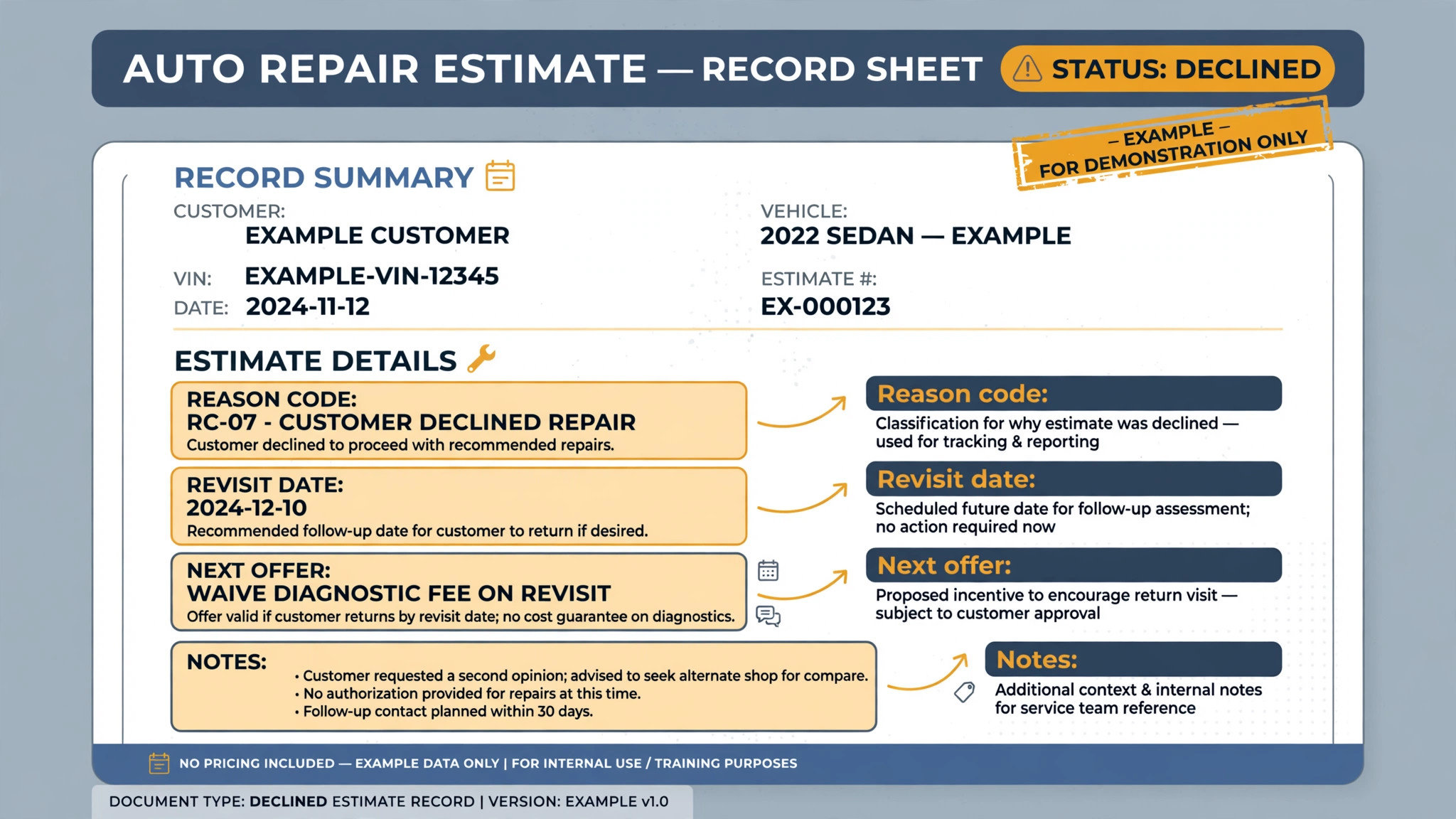
| Recover declined jobs | Rarely revisited | Declined reason logged and a timed revisit set |
| Report results | Guesswork at month end | Approval rate by adviser, job type and price band |
A useful way to judge any tool is to ask whether it shortens the time between an estimate being sent and a customer decision, because any shop that plans to use AI for auto repair shop estimate follow up should judge the tool on decision speed. If it only adds dashboards, it will not help. If it flags a three day old brake estimate before the customer books elsewhere, it has paid for itself. Shops should trial a tool on live estimates for a fortnight and compare approval rates with the previous fortnight, rather than trusting a demo that shows only the sending screen.
How to Use AI for Auto Repair Shop Estimate Follow Up Day to Day
The daily routine below is the core of this guide. It assumes the shop already uses an estimating or shop management system, and it adds a follow up layer on top rather than asking staff to learn a second diary. Each step names who does what, because automation without an owner still fails, just faster.

1. Send an estimate that can be answered in one step
Every estimate should state what is safety critical, what is recommended soon, and what can wait, in plain words beside the formal lines. It should also state how approval works, whether a reply, a link tap or a signature is needed, and how long the price and parts availability hold. An AI draft can rewrite a technical estimate into that plain summary, but a human must check it before sending, since a wrong summary of brake or steering work is worse than no summary at all. The aim is a customer who can decide without calling to ask what the estimate means.
2. Log the estimate with a next action and a decision date
As soon as the estimate leaves, it enters the ageing list with the customer name, vehicle, total, safety items, the reason the customer gave for waiting, and the agreed decision date if one was discussed. If no date was agreed, the system assigns one based on job type, with safety work getting the shortest window. This single habit matters more than any software feature, because an estimate without a next action is already lost. Advisers should review the list at the start of each day, not at the end when energy and phone time are gone.
3. Let the system watch ageing and prepare the first nudge
At the first ageing point, usually the next working day for safety work and within two days for other work, the system prepares a short message that refers to the actual job, not to a generic estimate. It reminds the customer what was found, what the next step is, and how to approve or ask a question. Staff approve or edit the draft before it goes out, which keeps tone under control and stops a message going to a customer who already approved by phone. That human check is the safeguard that separates useful automation from spam.
4. Sort replies into approve, question, delay and decline
Replies should never sit in a general inbox. An approval goes straight to scheduling, with the bay time and parts check attached. A question goes to the adviser who wrote the estimate, with the estimate lines visible so the answer is accurate. A delay gets a new decision date and a pause on further nudges until that date. A decline gets a reason code, because a shop that knows why jobs are lost can fix pricing, explanations or timing instead of guessing. Sorting replies well is unglamorous work, and it is where most follow up systems either earn trust or lose it.
5. Send a second message only when it adds something new
A second nudge that repeats the first message word for word teaches customers to ignore the shop. The second message should add value, such as a revised option that splits safety work from work that can wait, a shorter booking window, or an answer to the question the customer asked. For higher value jobs, a phone call beats a second text, because tone and trust matter more as the total rises. The system can prompt the call and supply the talking points, but the adviser makes the call and records what was agreed.
6. Recover declined jobs without reopening a closed argument
Declined work deserves a respectful revisit, not a discount blast. After a sensible interval, often two to four weeks depending on the job, the shop can check whether circumstances changed, whether the symptom worsened, or whether the customer wants the safety item done alone. The message should acknowledge the earlier decision and offer a fresh inspection if the vehicle condition may have changed. Shops that log decline reasons well can target these revisits, for example by revisiting customers who declined for timing rather than those who already had the work done elsewhere.
7. Close the loop and learn from every outcome
When an estimate converts, the follow up record should link to the booked job so the shop can see which messages and timings worked. When it does not, the record should show the final reason and the last message sent, so nobody messages the same customer again next month by accident. A short weekly review of ten open and ten closed estimates will teach a small shop more than any monthly report, because the team can see real wording, real delays and real reasons in one sitting.
Estimate Ageing Rules That Keep Follow Up Timely
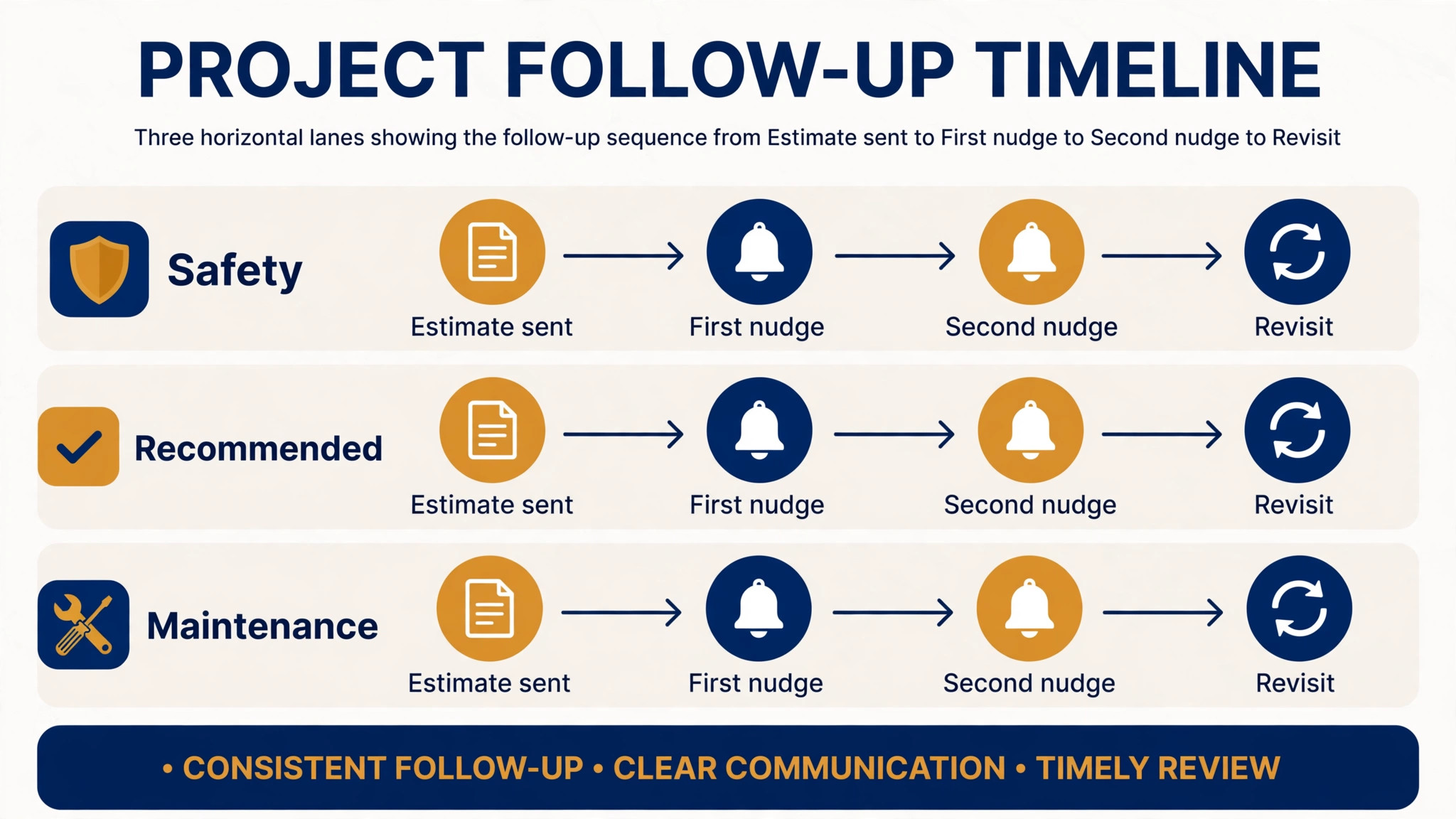
Ageing rules stop follow up from depending on mood or memory. The table below is a starting point that shops can adjust, but the principle stays fixed. Safety work gets faster attention, high value work gets a phone call sooner, and no estimate drifts without a named next step.
| Estimate type | First nudge | Second contact | Final step |
|---|---|---|---|
| Safety critical brakes, steering, tyres | Same day or next morning | Phone call on day two | Call plus revised safety only option |
| Recommended soon, mid value | Next working day | Message on day three | Phone call on day five |
| Maintenance that can wait | Day two or three | Message on day seven | Timed revisit after one month |
| High value engine or transmission | Next working day | Phone call on day two | Revised options call on day five |
| Customer asked for a later date | On the agreed date | Three days after that date | Close with a revisit note |
These intervals line up with advice from shop writers who recommend following up within 24 hours, again after three days and again after five days when a customer has not committed. One collision repair writer reported that a structured follow up programme recovered about 20 percent of lost jobs for a multi shop operator, which shows why timing discipline matters more than message volume. Shops should treat that figure as one reported case, not a promise, and measure their own recovery rate instead.
Approval Nudges That Help Customers Decide
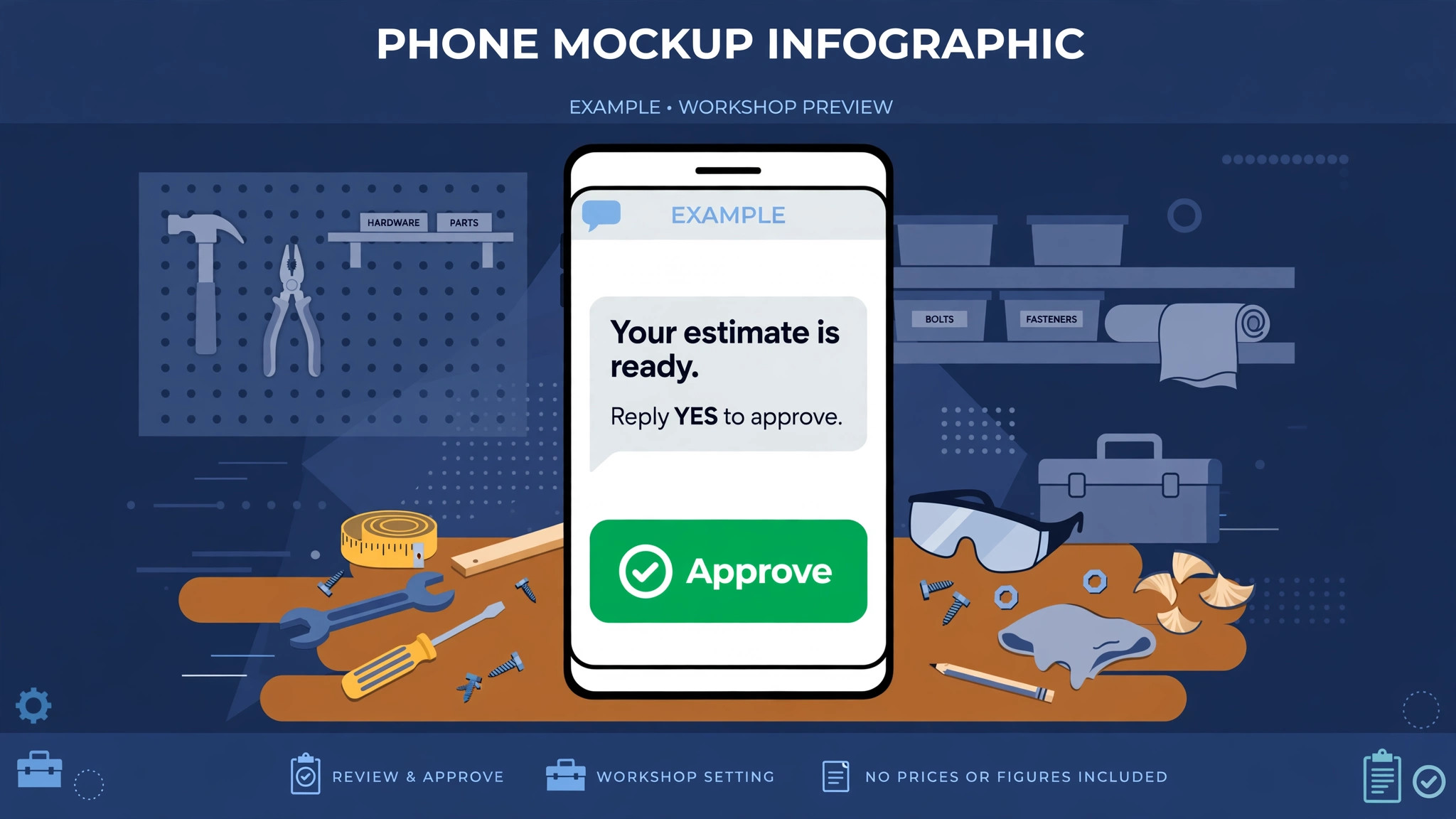
A good approval nudge does three things in a few lines. It names the vehicle problem in plain language, it names the decision needed, and it gives a single easy way to respond. Long messages that restate the whole estimate push customers to defer again, because they must read and think before they can act. Short messages that only say that an estimate is waiting are little better, because they give no reason to act now. The middle ground is a message tied to the job, the safety point and the booking step.
Tone matters as much as timing when a shop decides to use AI for auto repair shop estimate follow up, because the system drafts while the adviser still owns the voice. A nudge should read like it came from the adviser who inspected the car, not from a marketing system. That means using the adviser name, referring to the conversation at drop off, and inviting a question rather than demanding a yes. Customers who feel pushed often go silent rather than argue, which makes the shop think price was the problem when pressure was the problem. A shop that tests two message styles for a month, one factual and one warmer, will quickly learn which style its own customers answer.
For customers who hesitate on price, the honest move is to offer a staged option rather than a discount that undermines the original quote. Safety work first, with the remaining items priced and dated for a later visit, is often the option that turns a decline into a booking. The staged plan must be written clearly so the customer does not think the deferred items were unimportant. It should also be recorded on the job record, so the next visit starts with the deferred list rather than a fresh inspection that repeats the same conversation.
Declined Job Recovery Done Properly
Recovery starts with the decline reason, because timing declines, price declines and already done elsewhere declines need different handling. A timing decline can be revisited when the customer said they would be ready, and the message can simply ask whether that date still holds. A price decline can be revisited with a staged plan or a parts option, but only if the shop can genuinely offer one without cutting corners. A customer who went elsewhere should be thanked and left alone, apart from a normal service reminder later, because chasing them looks desperate and rarely wins work back.
The recovery message should never imply that the customer made a mistake. It should acknowledge the decision, note any change such as a symptom getting worse or a part price changing, and offer a short next step. If the customer does not reply, one revisit is enough. Repeated recovery messages turn a lost job into a lost relationship, and a customer who feels hounded will not return for the next service even if the shop did good work before. The goal of recovery is a second chance at trust, not a second argument about the same quote.
Shops that use AI for auto repair shop estimate follow up should also watch for estimates that were declined because the customer never understood them. Those cases are fixable at the source, by improving the plain language summary and the way advisers explain safety items at handover. If the same job type keeps being declined for confusion, the problem is the estimate format, not the customer. Fixing that format will lift approvals more than any new message sequence, and it costs nothing beyond an hour of rewriting.
Follow Up Script Template
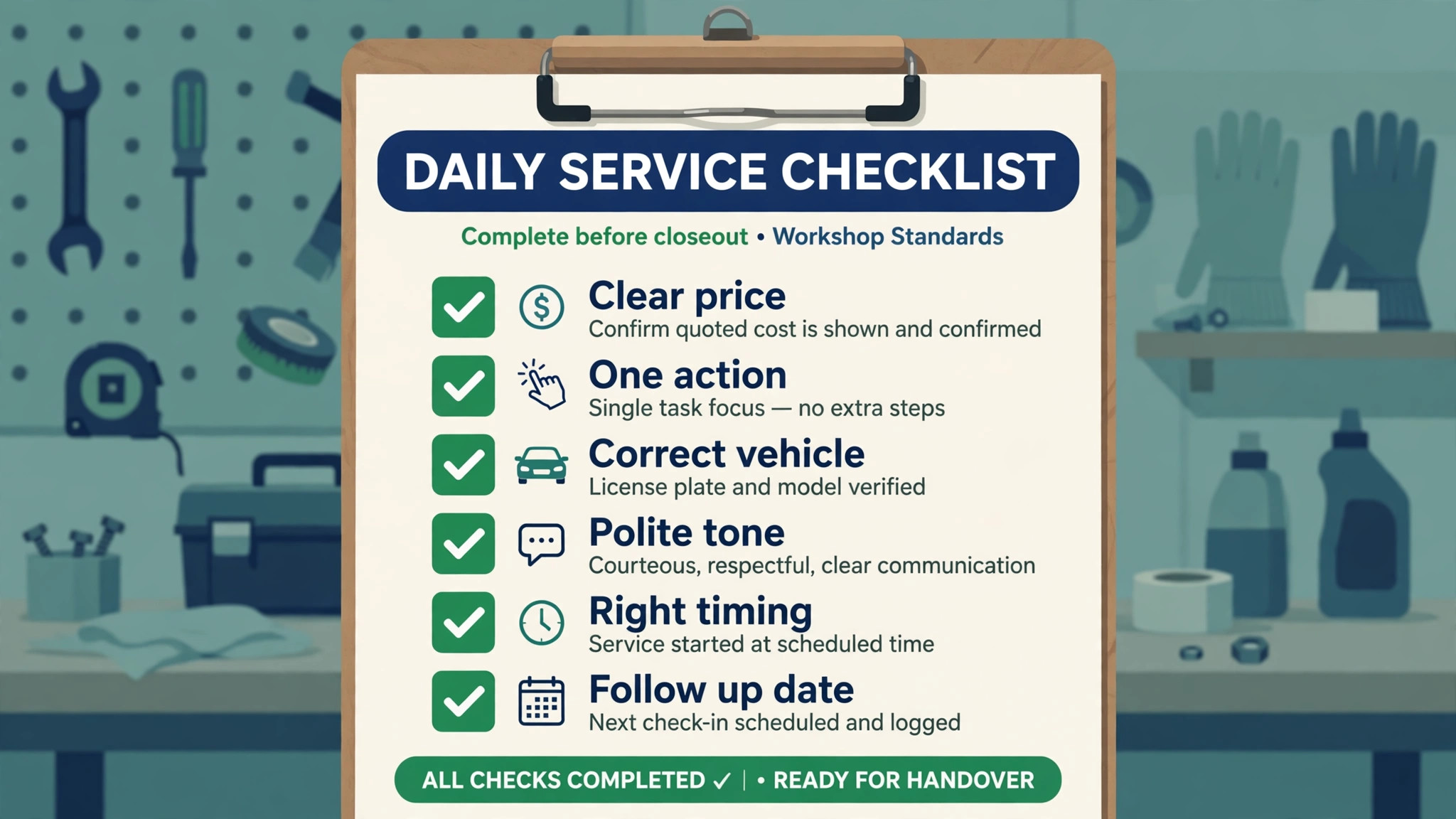
The template below can be adapted for text or email. Bracketed parts are filled from the estimate, and staff should edit the tone before sending. No message should go out without a human check when it concerns safety work or a high value job.
> First message, sent on the agreed timing > > Hi [first name], this is [adviser name] from [shop name] about your [vehicle]. Our inspection found [plain language problem], and the estimate for [main job] is [total]. The safety item in the estimate is [safety item]. Reply yes to book [booking option], or reply with any question and I will answer it directly. >
> Second message, sent only if the first gets no reply > > Hi [first name], just checking whether you had a chance to look at the estimate for [main job] on your [vehicle]. If price is the hold up, I can split the work into safety work now and the rest on a later visit, with both parts priced separately. Would a quick call help, or would you prefer the split option in writing. >
> Declined job revisit, sent after the agreed interval > > Hi [first name], you decided to hold off on [main job] last month, and I wanted to check whether anything has changed with the [symptom]. If you would like, we can recheck the [part or system] and confirm whether the earlier estimate still holds. No pressure either way, just let me know if a recheck would help. >
> Approval confirmation, sent when the customer says yes > > Thanks [first name], you are booked for [day and time] for [main job] on your [vehicle]. Please bring [anything needed]. If that time stops working, reply here and we will move it. We will confirm parts before your visit.
A template only works if the shop keeps its promises inside it. If the message says an adviser will answer directly, that adviser must answer. If it offers a split option, the split pricing must already be ready. Customers judge follow up by what happens after they reply, not by how polished the first message looked. That is why the template is paired with a rule in this guide that every reply gets a named owner and a response time.
What to Automate and What Must Stay Human
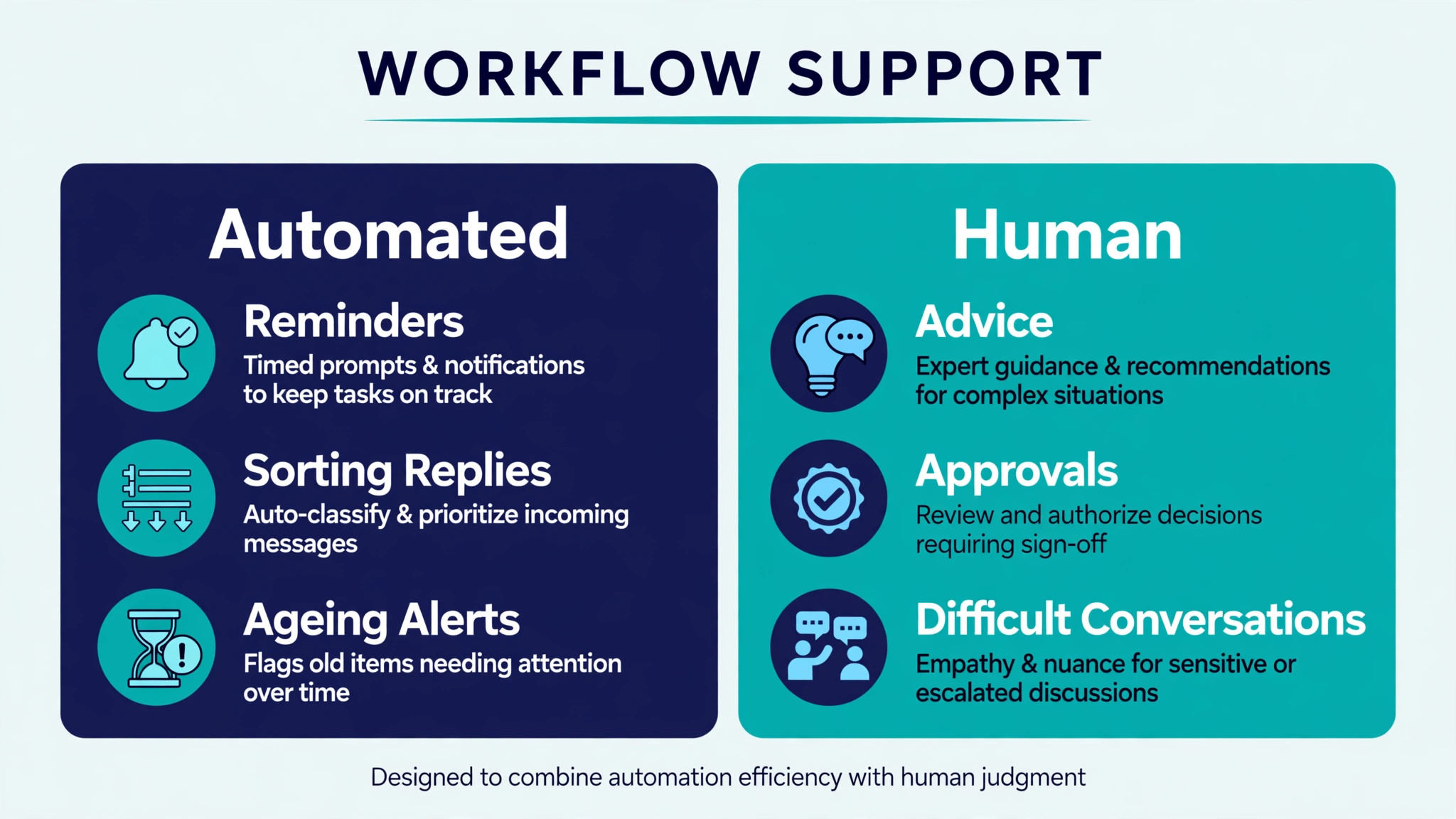
Automation should handle tracking, timing, drafting and reporting, because those tasks are repetitive and easy to forget, and that division of labour is the practical core of how to use AI for auto repair shop estimate follow up well. It should not handle final judgment on safety explanations, price changes or sensitive conversations, because those need a person who knows the vehicle and the customer. A shop that lets a system send price reductions on its own will soon find margins drifting, while a shop that lets a system send safety warnings without review risks alarming customers with the wrong wording. The boundary should be written down and taught to every new adviser.
Data handling needs the same care. Follow up messages should only go to customers who gave contact details for that purpose, and every message should make it easy to stop further reminders. A customer who asks to stop must be removed from the sequence at once, and the record should show that request so a later campaign does not message them again. Shops that respect that boundary keep trust, and trust is what turns a one time estimate into a long term customer.
Staff training is the part most guides skip, yet it decides whether the system survives its first busy week. Advisers need a short daily routine, a clear way to edit drafts, and permission to pause automation when a customer situation is sensitive. A ten minute morning huddle over the ageing list, with each adviser naming their three priority follow ups for the day, will do more than a long manual that nobody opens. When staff see the system saving them from inbox hunting, they use it. When they see it creating extra work, they quietly stop.
Measuring Whether Follow Up Is Working
Four numbers tell the story without drowning a small shop in reports. Approval rate shows what share of estimates become booked jobs. Time to decision shows how many days pass between sending and approval, which reveals whether nudges are too slow. Recovery rate shows what share of declined jobs return within a set window, which tests the revisit step. Reply rate shows whether customers answer at all, which tests message quality rather than price. Tracking those four weekly gives a shop enough signal to adjust timing and wording.
It helps to split approval rate by job type and price band, because a shop wide average can hide a real problem. Brakes may convert well while high value engine work stalls, or low value jobs may convert fast while mid value jobs need a staged option. When the split shows a weak segment, the fix is usually specific, such as a better explanation, a staged plan or a faster first call. Shops should also compare approval rates before and after changing one variable at a time, so they know whether a new message or a new timing actually helped.

Mistakes That Quietly Kill Estimate Approvals
The most common mistake is sending the estimate and waiting, with no next action and no owner. The second is sending too many messages too fast, which turns a helpful reminder into pressure. The third is messaging the wrong estimate state, such as nudging a customer who already approved by phone or who asked for a later date. The fourth is hiding the safety item in technical language, so the customer cannot tell what matters most. The fifth is offering a discount before understanding the real objection, which trains customers to wait for a lower price next time.
Another mistake is measuring only jobs won and ignoring jobs lost for fixable reasons. A shop that logs decline reasons will spot patterns, such as customers declining because parts lead times were unclear or because booking slots were too far away. Those are operational fixes, not pricing problems, and they can lift approvals without changing a single price. A short monthly review of decline reasons, led by the adviser who handled the most estimates, keeps that learning inside the shop rather than in a report nobody reads.
Frequently Asked Questions
How fast should a shop follow up on an auto repair estimate
Safety work should be followed up the same day or the next morning, and most other estimates within two working days. The exact timing should follow the ageing table in this guide, with a phone call sooner for high value work. The key point is that the first message arrives while the inspection is still fresh in the customer mind, not a week later when another shop has already called.
Does automated follow up annoy customers
It can, if messages repeat the same wording, arrive too often, or ignore a reply. It rarely annoys when messages are short, tied to the actual job, sent at sensible intervals, and stopped at once when a customer asks to stop. A human check before sending, plus a clear reply option, keeps automation feeling like service rather than marketing.
How many follow up messages are enough
Two well spaced messages plus a phone call for higher value work is enough for most estimates, followed by one respectful revisit for declined jobs after a sensible interval. More than that usually adds pressure without adding decisions, and it risks the customer relationship. Shops should test their own response pattern and stop at the point where extra messages stop producing replies.
What should a shop do when a customer declines for price
Offer a staged plan that separates safety work from work that can wait, with each part priced separately, rather than cutting the total without explanation. If a genuine parts option exists, present it honestly with any trade off. If neither option is possible, thank the customer, record the reason, and set a single timed revisit rather than pushing for an immediate change of mind.
Can AI write the estimate explanation for customers
AI can draft a plain language summary from the estimate lines, but a qualified staff member must check it before sending, especially for safety items. The draft should never invent a diagnosis, change a price, or promise a completion time that the shop has not confirmed. Used that way, it saves writing time and improves clarity. Used without review, it creates risk.
How do shops handle customers who never reply at all
After the agreed sequence ends, the estimate should be closed with a note, not left open forever. The customer stays on normal service reminders, and the shop can revisit the job once after a sensible interval if the work was safety related. Closing silent estimates keeps the ageing list honest, so advisers spend time on live opportunities instead of chasing records that will never convert.
A Practical Verdict for Small Shops
Start with the ageing list and the daily huddle, because those two habits fix most of the leak before any new tool is bought, and they make it far easier to use AI for auto repair shop estimate follow up without losing control of tone. Add drafted messages with human review next, then add declined job recovery once the basic sequence runs cleanly for a month. Shops that follow that order usually see steadier approvals without turning advisers into full time chasers, and they keep the customer relationship intact. The technology matters, but the discipline of naming a next action for every estimate matters more, and it is the habit that will still pay off when tools change.
For readers planning the wider follow up habit across a service business, the follow up patterns in candidate follow up for recruitment agencies show how the same ageing and reply sorting ideas work in a different field. Price objections need their own handling too, and how to handle a price objection covers the staged option approach in more depth. A regular client feedback loop will also surface why estimates stall, straight from customers. For communication after a job is booked, see client update communication for home builders, and for keeping field work on schedule, crew route planning for tree care teams offers a useful parallel.