
For most roofing contractors, JobProgress is the safest first pick. It covers estimating, job tracking, and customer communication in one system, which is the combination a growing roofing business actually uses every day. That verdict matters because the best estimating software for roofing contractors is not the tool with the most impressive measurement demo. It is the tool that turns a roof measurement into an accurate, presentable estimate quickly, tracks materials without manual maths, and follows the job through to completion without losing the numbers along the way.
A roofing estimate is not a simple quote. It starts with a roof measurement, often from aerial imagery or a site visit, and turns that measurement into squares, waste factors, material quantities, labour, and a price a homeowner can understand. A mistake in any step, a missed valley, a wrong pitch, or an undercounted bundle, eats margin directly, because roofing materials and labour are the job. A spreadsheet can hold those numbers for one roof. It becomes a source of errors when a contractor runs several estimates a week, each with different materials, warranties, insurance requirements, and homeowner expectations.
Storm restoration adds a second layer. A crew working storm damage must produce estimates that match insurance scope formats, document damage with photos, and track supplements when hidden damage appears. An estimate that looks good to a homeowner but does not match the insurer format will be returned, delayed, or underpaid. A system that handles both homeowner presentations and insurance documentation in one workflow will save more office time than a system that only produces a clean quote.
This guide compares eleven tools, from roofing specific platforms to general estimating systems that contractors adapt. Prices are starting prices where published. Where a price is not confidently known, the note reads Check the vendor pricing page, because user counts, measurement credits, and job volume change the real monthly figure.
Why Roofing Estimates Break a Normal Quoting Tool
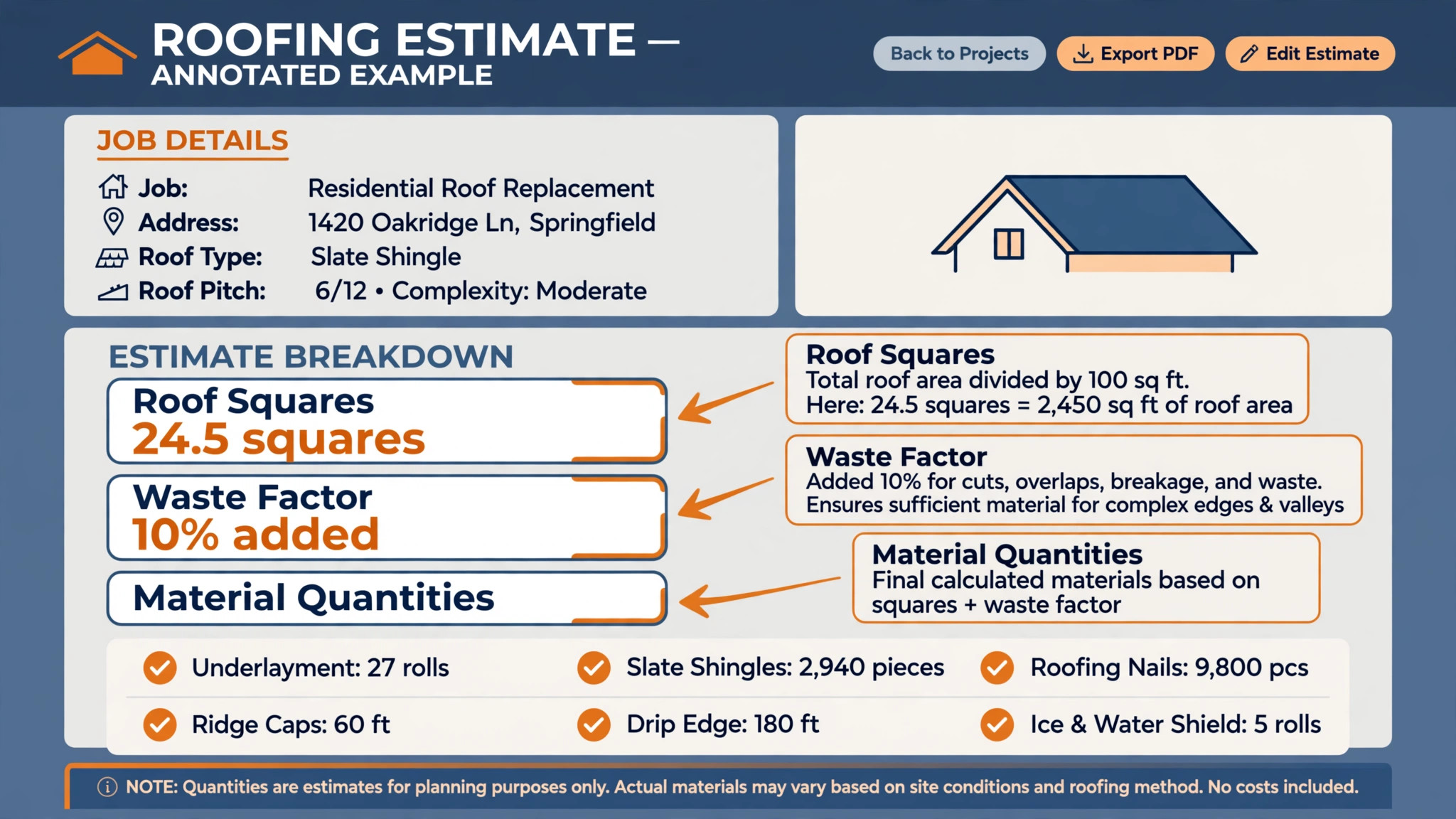
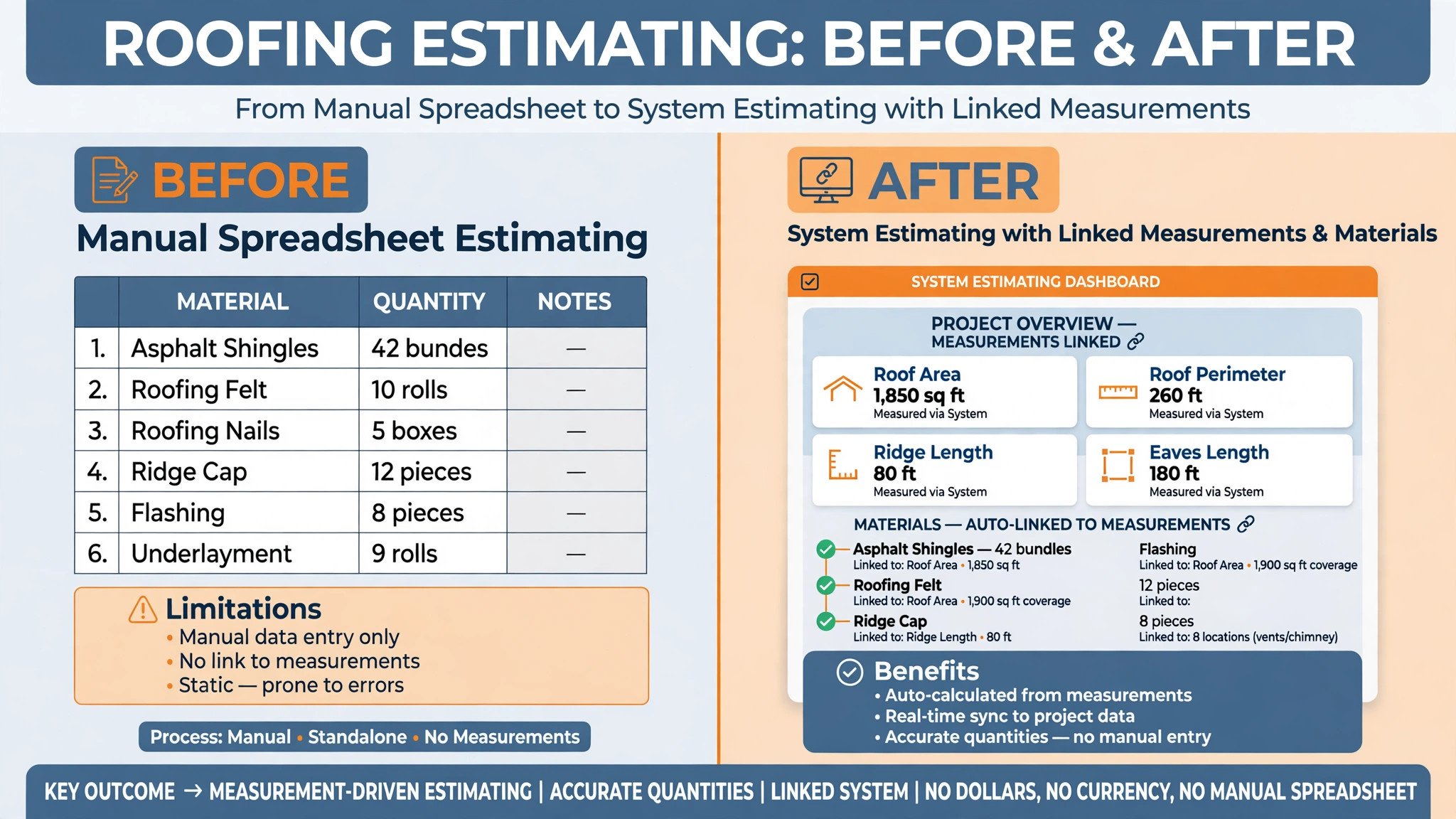
A normal quoting tool sells a product or a service at a fixed price. A roofing estimate prices a unique roof, with its own size, pitch, valleys, hips, penetrations, and material choices, and every one of those details changes the material count. A tool that only stores a price and a description will force the estimator to do the takeoff maths elsewhere, and maths done elsewhere is where errors hide. A roofing system should connect measurement to material quantities to price in one flow, so a change in roof size updates the estimate automatically.
Waste and accessories are the quiet margin killers. A roof needs starter shingles, ridge caps, underlayment, flashing, vents, and fasteners, and each of those quantities depends on roof geometry, pitch, and penetration count, not only on total squares. An estimate that prices shingles correctly but forgets ridge caps or undercounts flashing will look competitive and lose money on every job. A good system calculates accessories from the measurement, with waste factors the contractor can adjust, rather than leaving accessories to memory.
Presentation and follow up add a third problem. A homeowner comparing three roofing quotes will judge clarity, professionalism, responsiveness, and speed as well as price. An estimate that arrives late, looks rough, or cannot explain its line items clearly will lose to a clearer competitor, even at a higher price on a comparable roof. A system that produces a clean, branded estimate quickly, tracks when the homeowner viewed it, and reminds the office to follow up will win more jobs than a system that only calculates numbers correctly in the back office.
The 11 Tools at a Glance
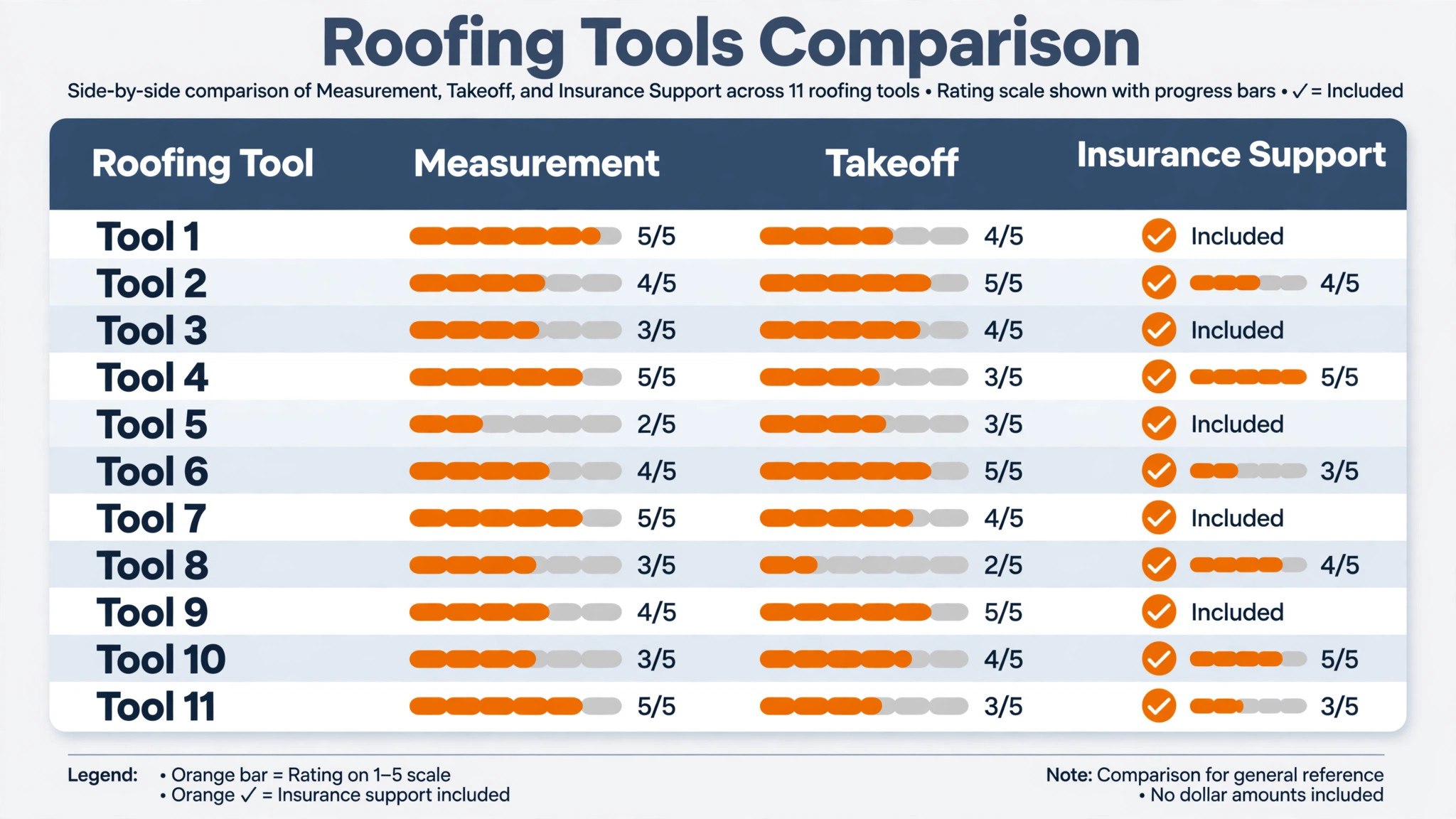
| Tool | Starting price | Best for | Roofing depth |
|---|---|---|---|
| JobProgress | Check the vendor pricing page | Growing roofing businesses | Strong |
| AccuLynx | Check the vendor pricing page | Roofers wanting full job management | Strong |
| JobNimbus | Check the vendor pricing page | Roofers wanting CRM plus estimating | Good |
| Roofr | Check the vendor pricing page | Fast roof measurements and quotes | Strong |
| Leap | Check the vendor pricing page | In home sales presentations | Good |
| ProEst | Check the vendor pricing page | Detailed construction estimating | Good |
| Xactimate | Check the vendor pricing page | Insurance scope estimating | Strong |
| EagleView | Check the vendor pricing page | Aerial roof measurements | Strong |
| SumoQuote | Check the vendor pricing page | Clean homeowner proposals | Good |
| JobTread | Check the vendor pricing page | Job costing plus estimating | Good |
| Contractor Foreman | Check the vendor pricing page | Small contractors wanting breadth | Good |
Estimating pricing is rarely a single figure. Monthly subscriptions, per user charges, measurement credits, and payment processing can all sit on top of each other. That is why a comparison of the best estimating software for roofing contractors should be priced on a real month of estimates, including measurement credits, rather than on a headline subscription figure alone. Ask each vendor for a written quote for your estimator count and monthly measurement volume before comparing totals.
Best Pick by Job
| Job type | First pick | Why it fits | Watch out for |
|---|---|---|---|
| Solo roofer | Roofr | Fast measurement and quoting | Confirm job tracking depth |
| Small crew | JobProgress | Estimating plus job tracking in one system | Setup effort for full use |
| Storm restoration crew | Xactimate | Insurance scope format and documentation | Learning curve and pricing |
| Sales led roofer | Leap | In home presentation and closing tools | Confirm material takeoff depth |
| Budget start | JobNimbus | CRM plus estimating with low setup effort | Confirm measurement workflow |
The job type that matches most of your work should decide the shortlist for the best estimating software for roofing contractors. A solo roofer that buys a full insurance estimating platform will pay for scope formats it rarely uses. A storm restoration crew that buys a simple quoting tool will struggle with insurer documentation, supplements, and photo records. Match the system to the job first, then compare price within that shortlist.
Measurement and Material Checklist
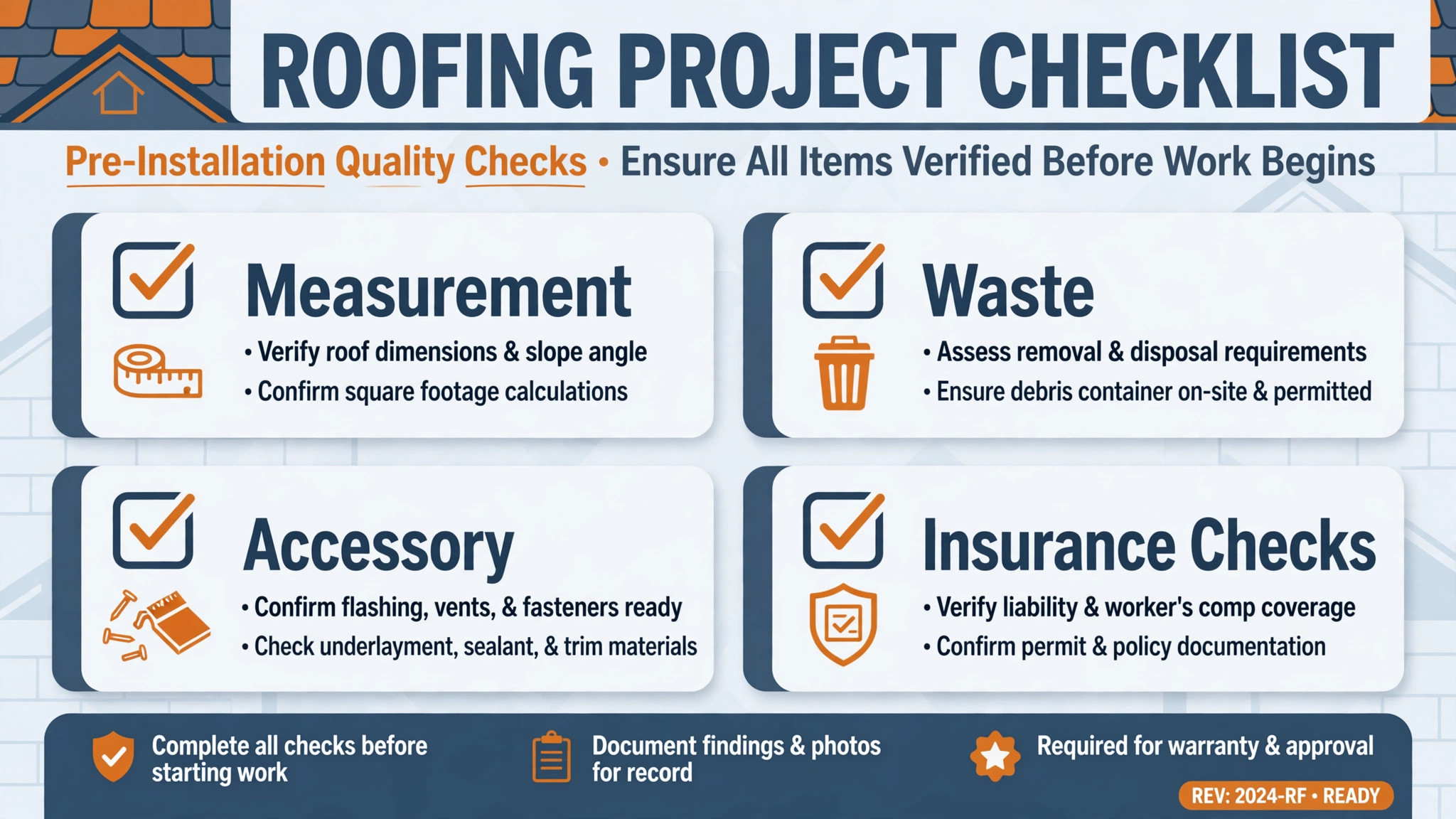
Use this checklist before an estimate leaves the office. It turns measurement data into an accurate quote, rather than leaving accuracy to a final glance.
– Confirm the roof measurement, including total squares, pitch, valleys, hips, and ridges. – Check that waste factor matches the roof complexity, not a single default for every roof. – Confirm material quantities for shingles, starter, ridge caps, underlayment, and flashing. – Check that vents, penetrations, and skylights are counted and priced. – Confirm labour, disposal, and permit costs are included where they apply. – Check that warranty level and material brand match what was promised to the homeowner. – Confirm insurance scope items, photos, and documentation for storm jobs. – Review the estimate for missing accessories before sending, especially ridge and starter items. – Check that the homeowner presentation explains line items in plain terms. – Record the estimate version, so a revised quote does not overwrite the original.
Software helps this checklist only if measurement, material quantities, pricing, and presentation live in one estimate record. If measurement lives in one tool, materials live in a spreadsheet, and the quote lives in a document, the checklist becomes a manual reconciliation exercise on every estimate, which is exactly the work the software was meant to remove.
The 11 Tools in Detail
1. JobProgress
JobProgress is a roofing focused business platform covering estimating, job management, customer communication, and payments. A contractor can create an estimate, track the job through production, message the customer, and collect payment from one system. That breadth is why it leads this guide for a growing roofing business, since estimating rarely sits alone in a real roofing operation.
The strength is the full job flow. An estimate that becomes a job keeps its numbers, materials, and customer record together, so production and office teams work from the same information. The limit is setup effort. JobProgress rewards a contractor that invests time in price lists, templates, and staff training, and a solo roofer with a handful of jobs a month may find that investment heavier than needed. Trial it with a real roof, from measurement to estimate to job record, before committing.
Best for a growing roofing business that wants estimating plus job management in one system. Check the vendor pricing page for a quote based on user count.
2. AccuLynx
AccuLynx is a roofing business management platform with estimating, CRM, job tracking, and reporting. It suits a contractor that wants the whole business, from lead to final payment, in one system, with estimates linked to jobs, materials, and customer communication. Aerial measurement integrations and supplier ordering support the estimating workflow.
The strength is business breadth. Leads, estimates, jobs, materials, and payments sit together, which helps an owner see pipeline, margin, and job progress without separate tools. The limit is cost and complexity for a very small operation. A solo roofer should trial AccuLynx on real jobs and confirm that the full platform earns its price at low job volume before signing.
Best for a roofing business that wants full management, not only estimating. Check the vendor pricing page for user and feature tiers.
3. JobNimbus
JobNimbus is a CRM and project management platform for roofing and general contractors, with estimating, job tracking, and customer communication. It suits a contractor that wants a strong customer record and job workflow alongside estimating, rather than a pure estimating calculator. Estimates, jobs, photos, and messages can be kept in one customer record.
The strength is the customer and job record. A contractor can follow a lead from first contact through estimate, job, and payment, with photos and notes attached to the job. The limit is measurement depth, which must be confirmed in the trial, since JobNimbus is a CRM plus job platform rather than a measurement first tool. Confirm how roof measurements enter the estimate, and whether an aerial measurement integration is included.
Best for a contractor that wants CRM plus estimating with low setup effort. Check the vendor pricing page for user tiers.
4. Roofr
Roofr is a roofing platform built around fast aerial measurements and instant quotes. A contractor can order a measurement, receive a roof report, and turn it into a branded estimate quickly, which suits a solo roofer or a sales team that needs speed. The platform also covers proposals, payments, and job tracking for growing businesses.
The strength is measurement to quote speed. A contractor can respond to a lead the same day with a measured, presentable estimate, rather than waiting for a site visit and manual maths. The limit is job tracking depth compared with full management platforms. A contractor that needs deep production scheduling and supplier ordering should test those workflows, not only the measurement and quote flow.
Best for a solo roofer or a sales led business that values fast measured quotes. Check the vendor pricing page for measurement credit pricing.
5. Leap
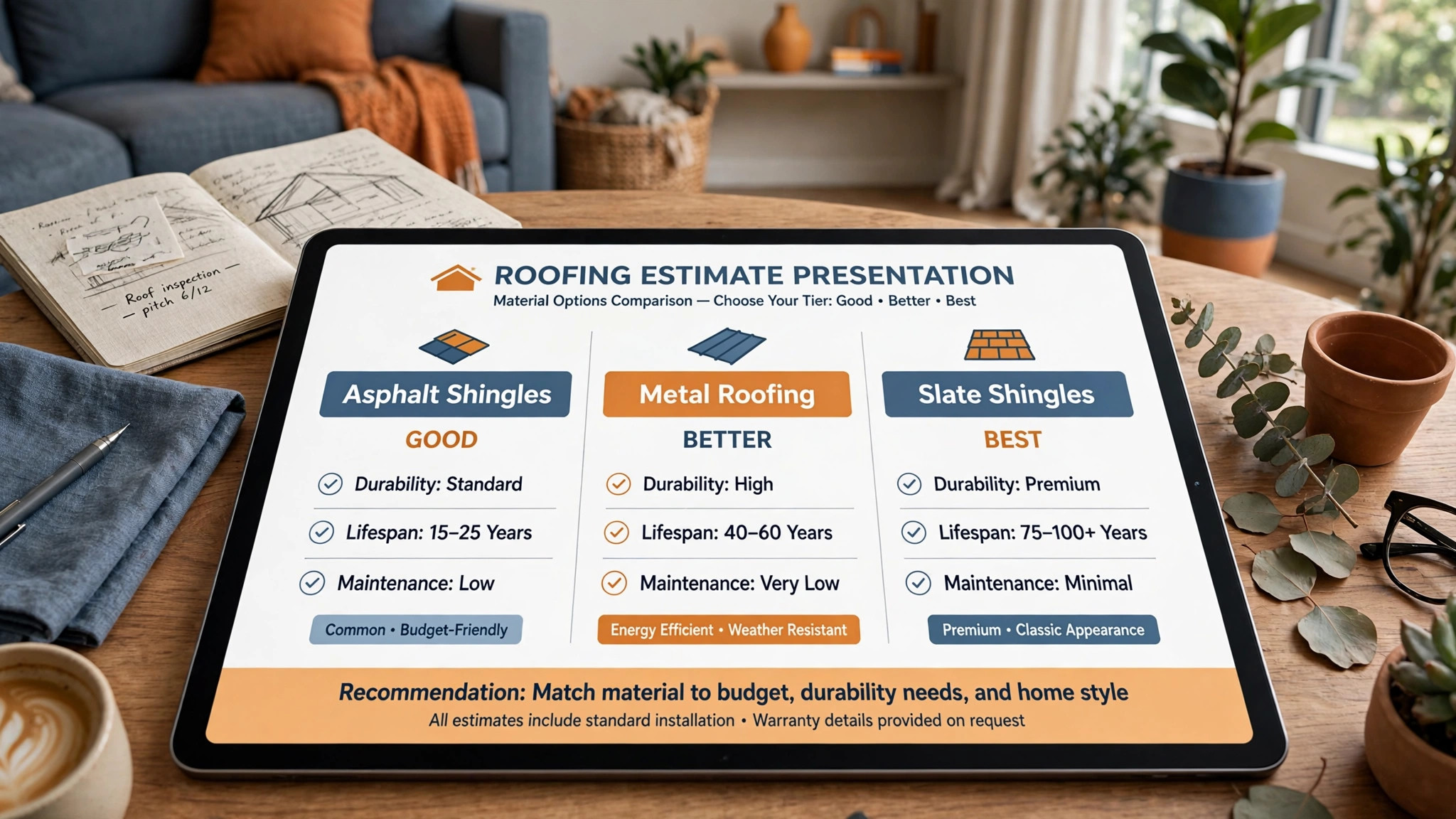
Leap is a sales platform for home improvement contractors, with in home presentations, estimating, and digital contracts. It suits a roofing contractor whose sales process happens at the kitchen table, where a clear presentation, material options, and a signable proposal close the job. The system helps a salesperson show good, better, and best options with pricing that updates as choices change.
The strength is the in home close. A homeowner can see options, pricing, and warranty differences clearly, and sign on the spot, which shortens the gap between estimate and signed job. The limit is material takeoff depth, which must be confirmed in the trial. A contractor should test a complex roof with valleys, hips, and multiple penetrations, to see whether takeoff maths holds up beyond a simple roof.
Best for a sales led roofer that sells in the home. Check the vendor pricing page for sales user pricing.
6. ProEst
ProEst is a construction estimating platform with detailed takeoff, cost databases, and proposal generation. It suits a contractor that wants deep estimating control, with line item costs, assemblies, and bid reporting across many job types. Roofing contractors with commercial work, or with varied construction work beyond roofing, will value that depth.
The strength is estimating rigour. Cost databases, assemblies, and detailed line items give an estimator control over every cost element in a bid. The limit is roofing specificity. ProEst is a general construction estimating tool, so roof measurement, aerial integration, and homeowner presentation need careful setup, and a residential roofer should test those workflows before relying on it.
Best for a contractor with detailed or commercial estimating needs. Check the vendor pricing page for user and database tiers.
7. Xactimate
Xactimate is the estimating standard for insurance restoration work, used by insurers, adjusters, and contractors to scope storm and damage claims in a shared format. A storm restoration crew must speak that format, because an estimate written in another format will be questioned, reworked, or underpaid. Xactimate covers line item scoping, pricing, photos, and documentation for insurance claims.
The strength is insurer acceptance. An estimate in Xactimate format matches the language adjusters already use, which speeds approval and reduces disputes. The limit is learning curve and pricing. Xactimate rewards training and regular use, and a contractor that only handles occasional storm work may find the investment hard to justify. It belongs on a shortlist for storm crews, not for every roofer.
Best for a storm restoration crew working insurance claims. Check the vendor pricing page for licensing and training costs.
8. EagleView
EagleView provides aerial roof measurements and reports, which many roofing estimators use as the measurement source for their estimates. A contractor orders a measurement by address, receives roof dimensions, pitch, and a diagram, and uses those numbers in an estimate. EagleView is a measurement tool rather than a full estimating platform, and it is often paired with an estimating or job management system.
The strength is measurement accuracy without a site visit. A contractor can measure a roof remotely, prepare an estimate before visiting, and arrive at the sales appointment with numbers already prepared. The limit is that measurement alone is not an estimate. A contractor still needs pricing, materials, and presentation, so EagleView should be judged as part of a stack, not as a standalone estimating replacement.
Best for any roofer that wants accurate remote measurements feeding its estimates. Check the vendor pricing page for per measurement pricing.
9. SumoQuote
SumoQuote is a proposal tool for contractors, focused on clean, branded homeowner proposals that can be built quickly and signed digitally. It suits a roofer that wants estimates to look professional and be easy for a homeowner to understand, with photos, options, and clear pricing. The system covers proposal templates, digital signatures, and follow up tracking.
The strength is presentation. A homeowner receives a clear, professional proposal rather than a rough spreadsheet or a handwritten quote, which helps a contractor win jobs on trust as well as price. The limit is takeoff depth. SumoQuote is a proposal tool first, so a contractor should confirm how measurements and material quantities enter the proposal, and whether a measurement integration is included.
Best for a roofer that wants fast, clean homeowner proposals. Check the vendor pricing page for proposal and user tiers.
10. JobTread
JobTread is a construction management platform with estimating, job costing, and project tracking. It suits a roofing contractor that wants to connect estimates to actual job costs, so margin can be checked job by job rather than guessed at month end. Estimates, budgets, purchase orders, and actual costs sit in one job record.
The strength is cost control. An estimate that becomes a budget, with actual costs tracked against it, shows whether a job made money while there is still time to act. The limit is roofing measurement specificity, which must be confirmed in the trial. A contractor should test how a roof measurement enters JobTread, and whether aerial measurement is integrated or manual.
Best for a contractor that wants estimating plus job costing in one system. Check the vendor pricing page for user tiers.
11. Contractor Foreman
Contractor Foreman is a construction management platform covering estimating, project management, scheduling, and customer records for small contractors. It suits a small roofing business that wants breadth, with estimating alongside scheduling, daily logs, and invoicing, without buying several separate tools. That breadth appeals to a contractor wearing several hats.
The strength is breadth for a small team. Estimating, scheduling, and invoicing in one system reduces the tool count a small business must learn and pay for. The limit is roofing depth. Measurement, takeoff, and insurance documentation need careful testing, since Contractor Foreman is a general contractor platform rather than a roofing specific one.
Best for a small contractor that wants broad management plus estimating. Check the vendor pricing page for user and module tiers.
How to Test an Estimate on a Real Roof
A demo estimate will not reveal whether a system fits a roofing business. A real roof will. Start with a roof you have already estimated by hand, with a known square count, pitch, valleys, and material list. Enter that roof in the trial, run the measurement and takeoff, and compare the system material quantities and price with your hand estimate line by line. Any difference should be explainable, such as a different waste factor, not a mystery.
Next, test a change. Increase the roof size, change the shingle brand, and add a skylight, and check that material quantities, accessories, and price update together. A system that requires manual recalculation after a change will create errors on revision day, when a homeowner asks for a better shingle or a different warranty. A system that updates cleanly will handle revisions without a second round of manual maths.
Finally, test the homeowner view for any finalist for the best estimating software for roofing contractors. Send the estimate to yourself as a homeowner would receive it, and read it without estimator knowledge. Is the total clear, are options explained, and is the next step obvious. If a homeowner cannot understand the estimate without a phone explanation, the presentation needs work, however accurate the maths. Choose the system that passes the maths test and the homeowner test together.
How to Choose the best estimating software for roofing contractors
Start with a measurement test, not a feature list. Take a real roof, with valleys, hips, and penetrations, and run it through the trial from measurement to estimate. Check squares, waste, accessories, and total price against a hand estimate. If that test fails, the tool will fail on real roofs, however good its demo looks.
Next, test the revision journey. Change a material, change a warranty level, and add a skylight, and check that quantities and price update correctly. Then send the revised estimate and confirm the version history is clear. A contractor that cannot revise cleanly will lose credibility when a homeowner asks for options, which happens on most jobs.
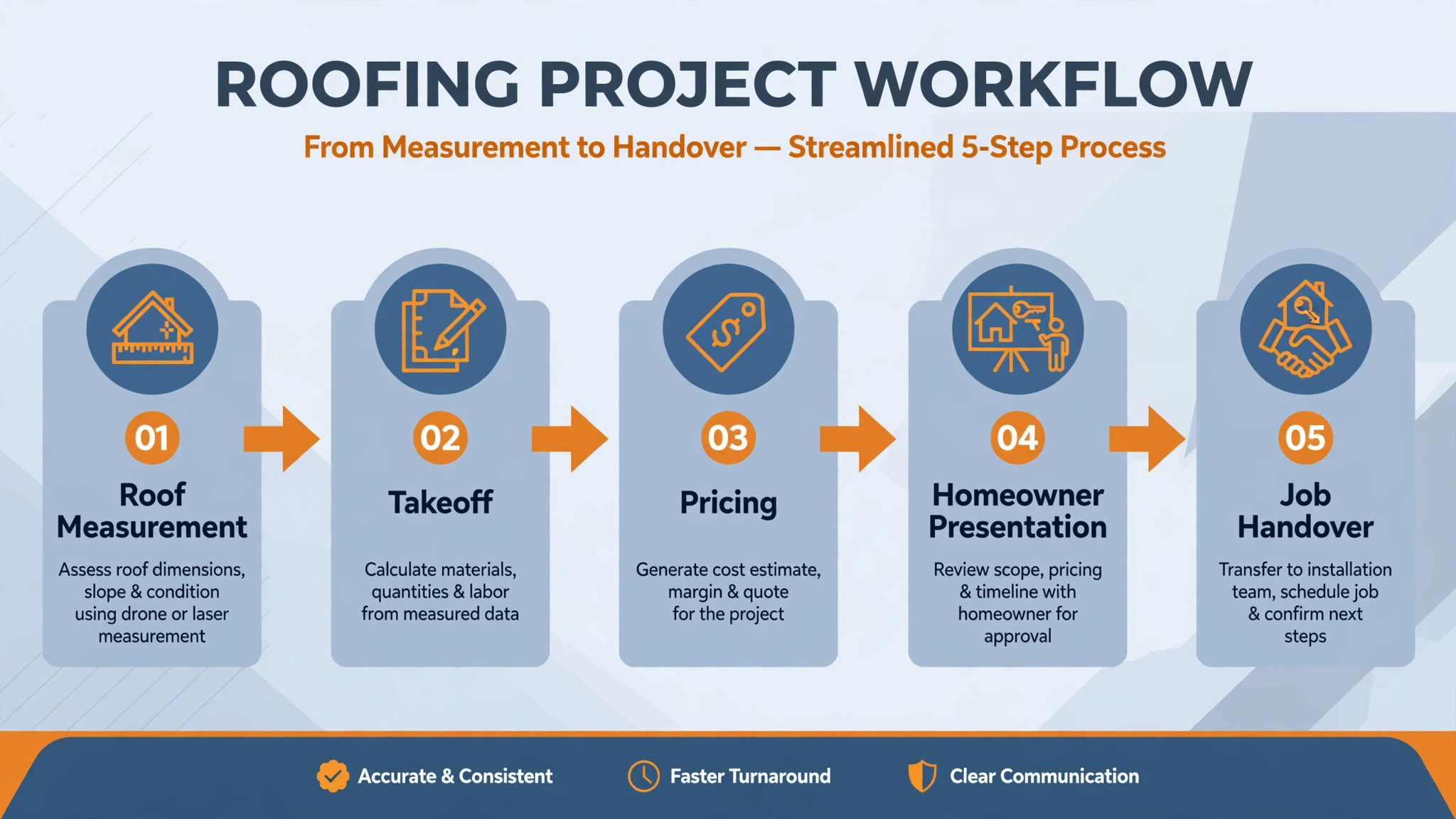
Then test job handover. Take a signed estimate and move it into a job record, with materials, schedule, and customer communication attached. Check that production sees the same numbers the homeowner signed, without retyping. A system that requires retyping at handover will introduce errors at the exact moment accuracy matters most.
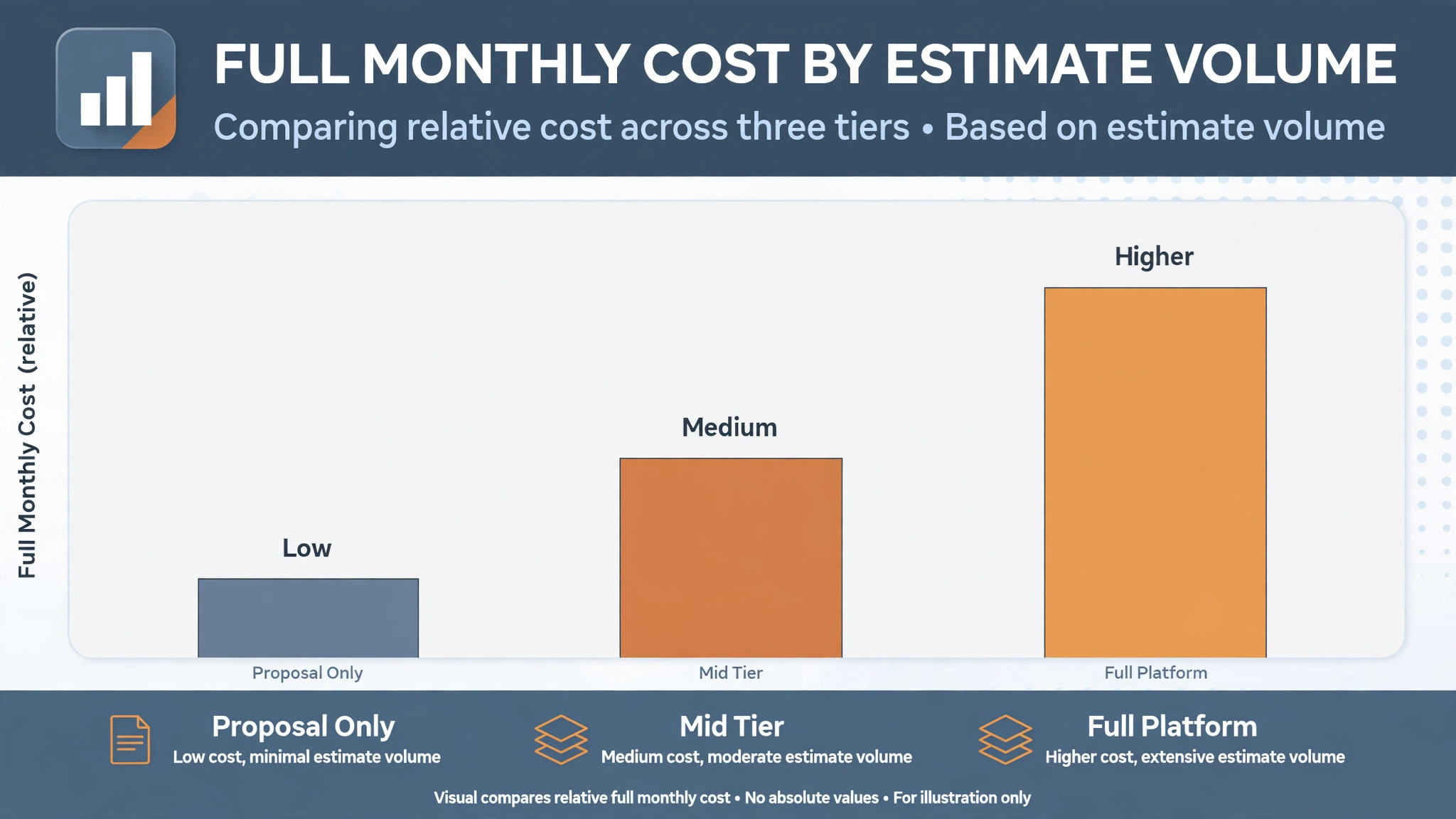
Finally, price a real month in full. Add measurement credits, user seats, and any insurance or presentation modules to the subscription, and model the result at your real estimate volume. A low subscription with expensive measurement credits can cost more than a higher subscription once estimate volume grows. Get the monthly total in writing before comparing tools.
Common Mistakes When Buying Roofing Estimating Software
The first mistake is buying a quoting tool and calling it a roofing system. A quoting tool stores prices. A roofing system connects measurement to takeoff to price to presentation. Test a full roof journey, not only a quote form, before signing.
The second mistake is using one waste factor for every roof. A simple gable and a complex cut up roof need different waste allowances, and a single default will underprice complex roofs and overprice simple ones. Confirm that waste can be set by roof complexity in the trial.
The third mistake is forgetting accessories. Shingles get priced, ridge caps and underlayment get forgotten, and margin disappears on every job. Run the measurement and material checklist on a trial estimate, and check accessories line by line.
The fourth mistake is buying for insurance work when most jobs are retail, or the reverse. A storm crew needs Xactimate format and documentation. A retail roofer needs fast homeowner presentations and measurement speed. Match the system to the work that pays most of the revenue.
The fifth mistake is neglecting the handover to production. An estimate that cannot flow into a job record will be retyped, and retyped numbers introduce errors. Test handover on a real signed job before judging the system.
Frequently Asked Questions
What is the best estimating software for a solo roofer?
For many solo roofers, Roofr is a strong starting point, because it offers fast aerial measurement and branded quotes with low setup effort. JobNimbus is the alternative for a solo roofer that also wants CRM and job tracking in one system. The right choice depends on whether quote speed or job management matters more.
Can roofing software measure a roof without a site visit?
Yes, through aerial measurement services such as EagleView and platforms such as Roofr that integrate measurement reports. A contractor orders a measurement by address, receives roof dimensions and pitch, and builds an estimate from those numbers. A site visit is still wise for condition checks, flashing details, and access, but the measurement itself no longer requires climbing every roof first.
How does roofing software calculate material quantities?
It starts from the roof measurement, applies squares, pitch, and geometry, then calculates shingles, starter, ridge caps, underlayment, flashing, and vents, with a waste factor for cutting and complexity. The reliable test is to compare system quantities with a hand takeoff on a real roof, line by line, including accessories that are easy to forget.
Should a storm restoration crew use different estimating software?
Yes, in most cases. Storm crews need insurance scope formats, photo documentation, and supplement tracking, which Xactimate handles as an industry standard. A retail estimating tool can produce a homeowner quote, but an insurer will expect scope in the format adjusters already use, and a mismatched format slows approval.
What is the difference between estimating software and a proposal tool?
Estimating software calculates quantities and costs from a measurement, with takeoff, waste, and pricing logic. A proposal tool presents a quote cleanly to a homeowner, with options and digital signing. Many roofing businesses need both, and the trial should test takeoff accuracy and homeowner presentation together, not only one of them.
How much does roofing estimating software cost per month?
Monthly cost ranges from a low tier proposal or measurement tool to a mid priced full platform, with measurement credits and user seats on top. The best estimating software for roofing contractors for a given business is the one whose full monthly total, including measurement credits at real estimate volume, fits the business margin, not the one with the lowest headline subscription alone.
A Shortlist You Can Act On
Start with Roofr for a solo roofer, JobProgress for a small crew, and Xactimate for a storm restoration crew, and trial two of them on a real roof you have already estimated by hand. Run a measurement comparison, a material revision, and a homeowner presentation test, and let the estimator and crew judge ease of use.
The system that keeps measurement, materials, and presentation accurate through that trial is the best estimating software for roofing contractors for your business, even if it is not the cheapest option on the list. A roofing business earns its margin one accurate estimate at a time, and the estimating system must protect that margin on every roof, in every season, and for every crew it serves.
More Reading on Stratilyze
– Best Estimating Software for Contractors – Best Estimate Software for Fence Installers – Best Quoting Software for Solar Installers – Best Field Service Software for Septic Companies – Best Scheduling Software for Home Inspection Companies