
A 40 person church plant and a 400 person church pay the same 72 dollars a month for Breeze. A 75 person church pays 29 dollars a month for ChurchTrac, while a church with 2,000 names pays 119 dollars a month for the same platform. And a church that buys Planning Center one module at a time can run a useful setup for under 50 dollars a month, or watch the bill pass 200 dollars a month as modules stack up. Those three numbers explain why the best church management software for small churches is a pricing question before it is a feature question, and why this guide starts with the money.
A small church needs a people database it can trust, giving it can track, groups and volunteers it can organise, and check in that keeps children safe on a Sunday morning. It does not need enterprise reporting, a franchise dashboard, or a module for every ministry it might one day run. The right platform handles the Sunday jobs cleanly, costs a predictable amount, and can be run by a part time administrator or a volunteer without a training course.
This guide compares 11 platforms across people records, giving, check in, groups, volunteers, service planning, and total cost. Prices come from vendor pages and recent published comparisons checked in late 2026, and they move often, so check the vendor pricing page before you sign. Shortlist three tools, test each one with your real Sunday, and judge the winner on a visitor follow up, a giving report, and a children check in, not on a sales demo.
How the best church management software for small churches earns its fee
A church platform earns its fee in three places. First, it keeps people records accurate, so the pastor knows who is new, who is missing, and who needs a visit. Second, it tracks giving cleanly, so the treasurer can report with confidence and the donor gets a correct year end statement. Third, it makes Sunday run smoothly, through check in, volunteer schedules, and service plans that reach the right people without a chain of text messages. Judge every platform on those three returns, not on how many modules its sales page lists.
The table below gives a fast first sort for the best church management software for small churches. Use it to remove tools that clearly do not fit your church, then read the full sections for the survivors. Where a vendor hides its price behind a sales call, this guide says so plainly instead of inventing a number.
| Tool | Best for | Standout strength | Price note |
|---|---|---|---|
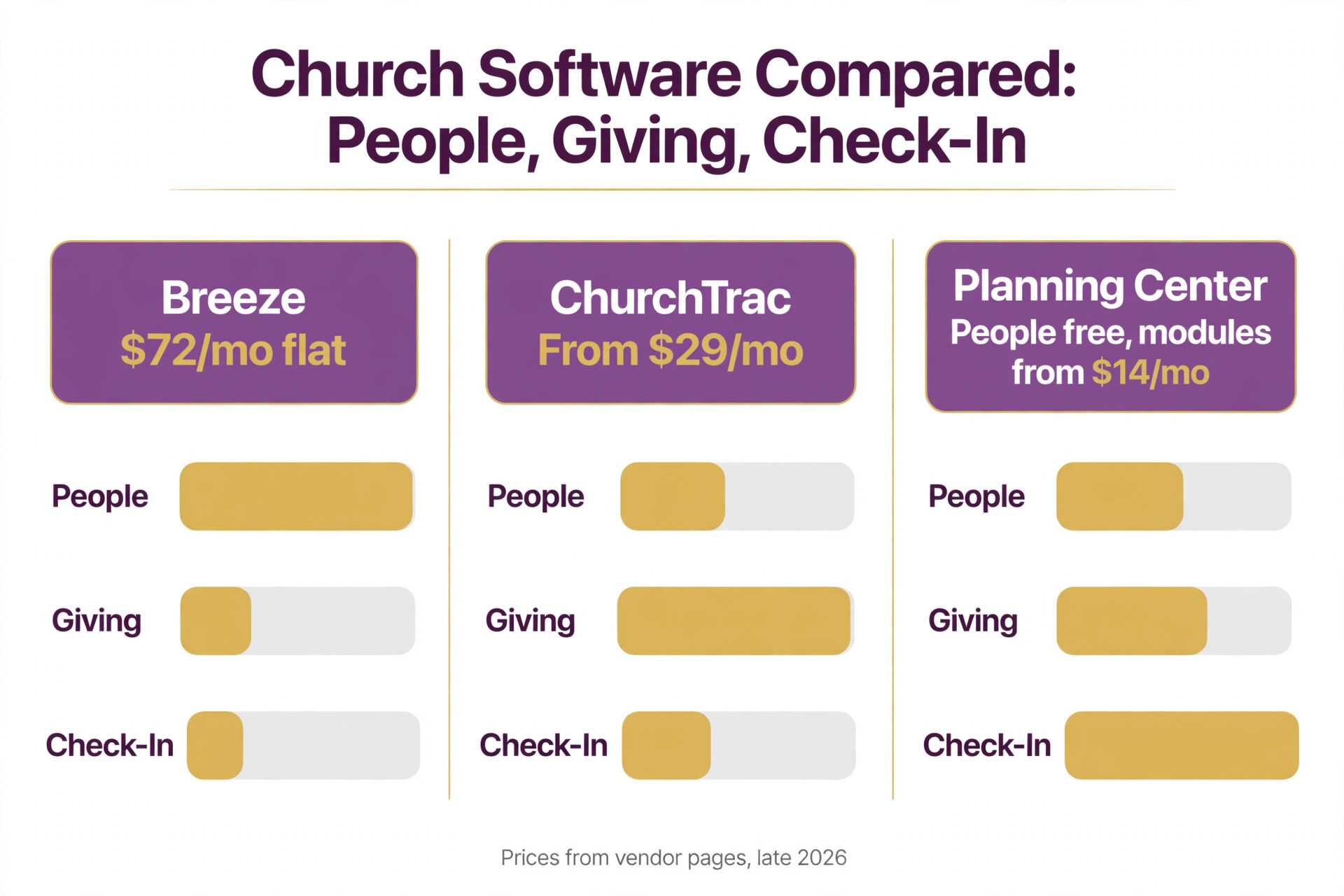
| Breeze | Small churches wanting simplicity | Flat price and easy learning curve | 72 dollars a month flat |
| ChurchTrac | Budget conscious churches | Fund accounting included at low tiers | From 29 dollars a month for 75 names |
| Planning Center | Worship and volunteer heavy churches | Modular apps and free People database | People free, paid modules from about 14 dollars a month |
| Tithe.ly | Churches wanting giving plus management | All Access bundle with app and website | Church Management 72 dollars a month, All Access 119 dollars a month |
| ChMeetings | Tight budgets and small plants | Free tier for up to 50 people | Free up to 50 people, paid from 12 dollars a month |
| ShelbyNext | Churches in the Shelby family | Membership plus giving integration | Membership from about 35 dollars a month, giving from 19 dollars a month |
| FellowshipOne | Larger small churches | Long standing suite with accounting | Core from about 129 dollars a month plus add ons |
| ACS Realm | Churches wanting staff and giving together | Inform plan with staff tools | Inform from 49 dollars a month, higher tiers quote only |
| Church Community Builder | Churches that want engagement depth | Groups and process tracking | Quote only, check the vendor page |
| Elvanto | Churches wanting modern check in | Volunteer and service planning | Quote only, check the vendor page |
| One Church Software | Churches wanting strong kids check in | Core plan with check in focus | Core 58 dollars a month for up to 250 profiles |
What matters most in church software
People records come first, because every other job depends on them. The platform must track members, visitors, children, groups, and notes in one place, with duplicate detection and a clean import from a spreadsheet. Test the import during a trial with your real list, including a family with two adults, three children, and a visitor who came twice. A platform that imports cleanly will save weeks. A platform that creates duplicates will cost weeks.
Giving comes second. The treasurer needs to record gifts, track funds, issue year end statements, and report to the board without building a spreadsheet. Check the card processing rate in writing, because most platforms charge near 2.9 percent plus 30 cents on card gifts, with ACH cheaper. Planning Center lists card gifts at 2.15 percent plus 30 cents and ACH at zero percent plus 30 cents, which is notably lower than most rivals. Tithe.ly Giving charges 2.9 percent plus 30 cents on cards and 1 percent plus 30 cents on ACH.
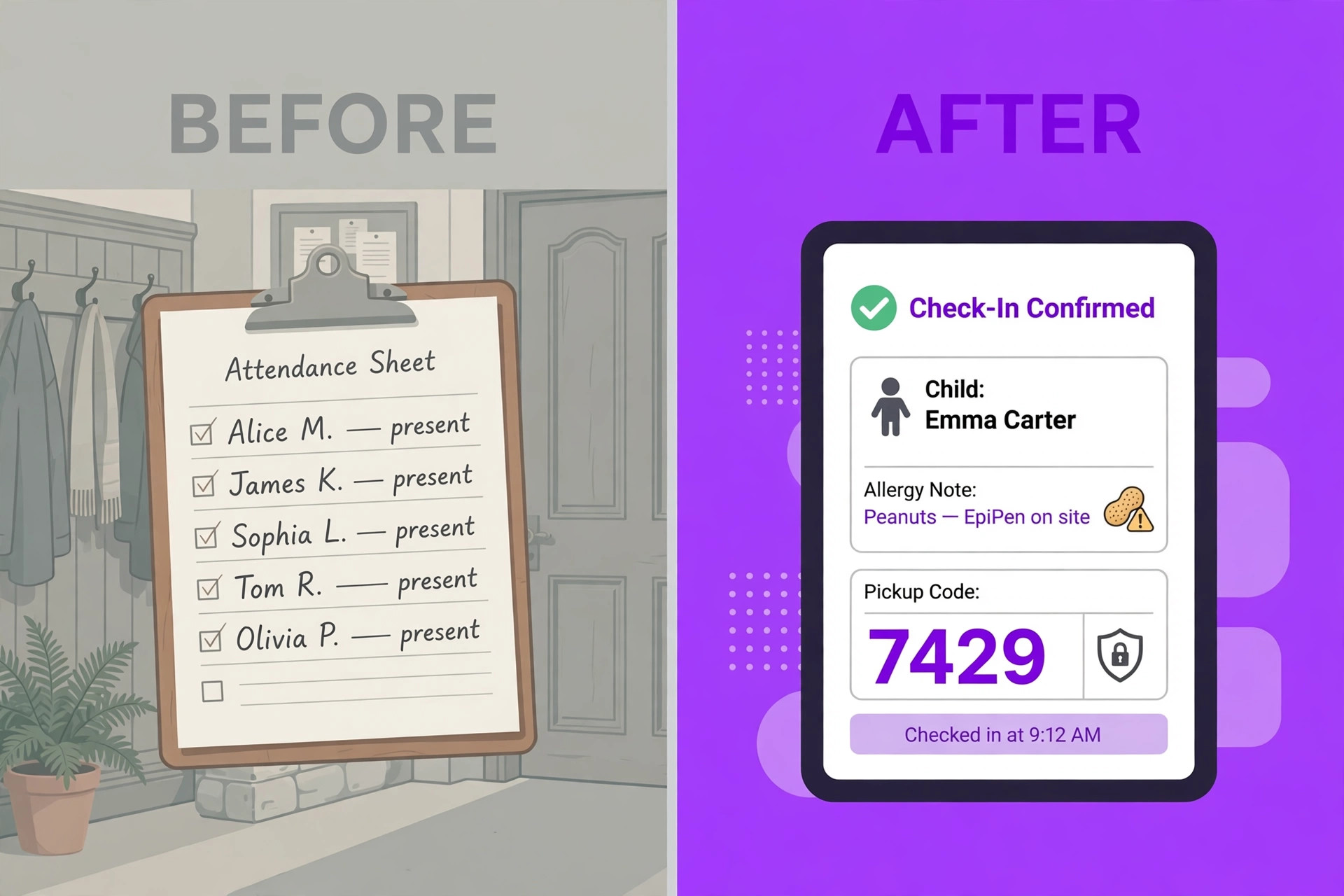
Check in comes third, especially for children. Parents want a fast, secure check in on Sunday morning, with name labels, allergy notes, and a secure pickup process. Test check in during a trial with a real Sunday in mind, including a new family, a child with an allergy, and a parent who arrives late. A platform that handles those three cases cleanly will handle most Sundays.
Best pick by job
The table below names a lead pick for each segment in this guide to the best church management software for small churches, with a second option worth testing. Test the lead pick on your hardest real workflow, whether that is a visitor follow up, a giving report, or a children check in, before signing.
| Segment | Lead pick | Also test | Why it fits |
|---|---|---|---|
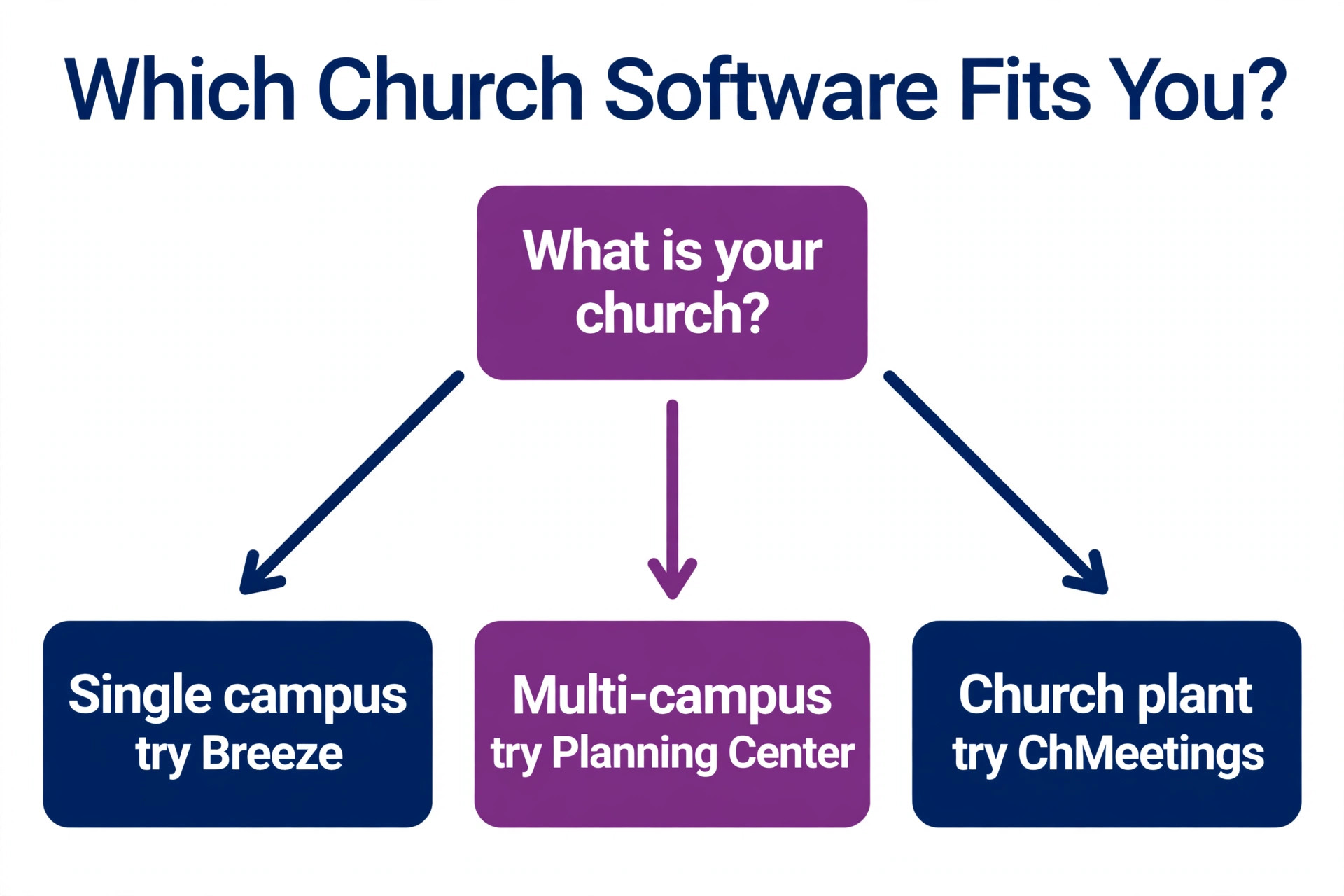
| Single campus churches | Breeze | ChurchTrac | Simple flat price suits one campus |
| Multi campus churches | Planning Center | Church Community Builder | Modular apps suit several campuses |
| Church plants | ChMeetings | ChurchTrac | Free and low cost tiers suit a new plant |
Single campus churches need one system that everyone can learn quickly. Breeze charges one flat price for unlimited people and users, with phone support that small church administrators praise. ChurchTrac adds fund accounting at a lower entry price, which suits a church that wants accounting in the same system. A single campus church should judge both on the Sunday morning flow, not on the admin dashboard.
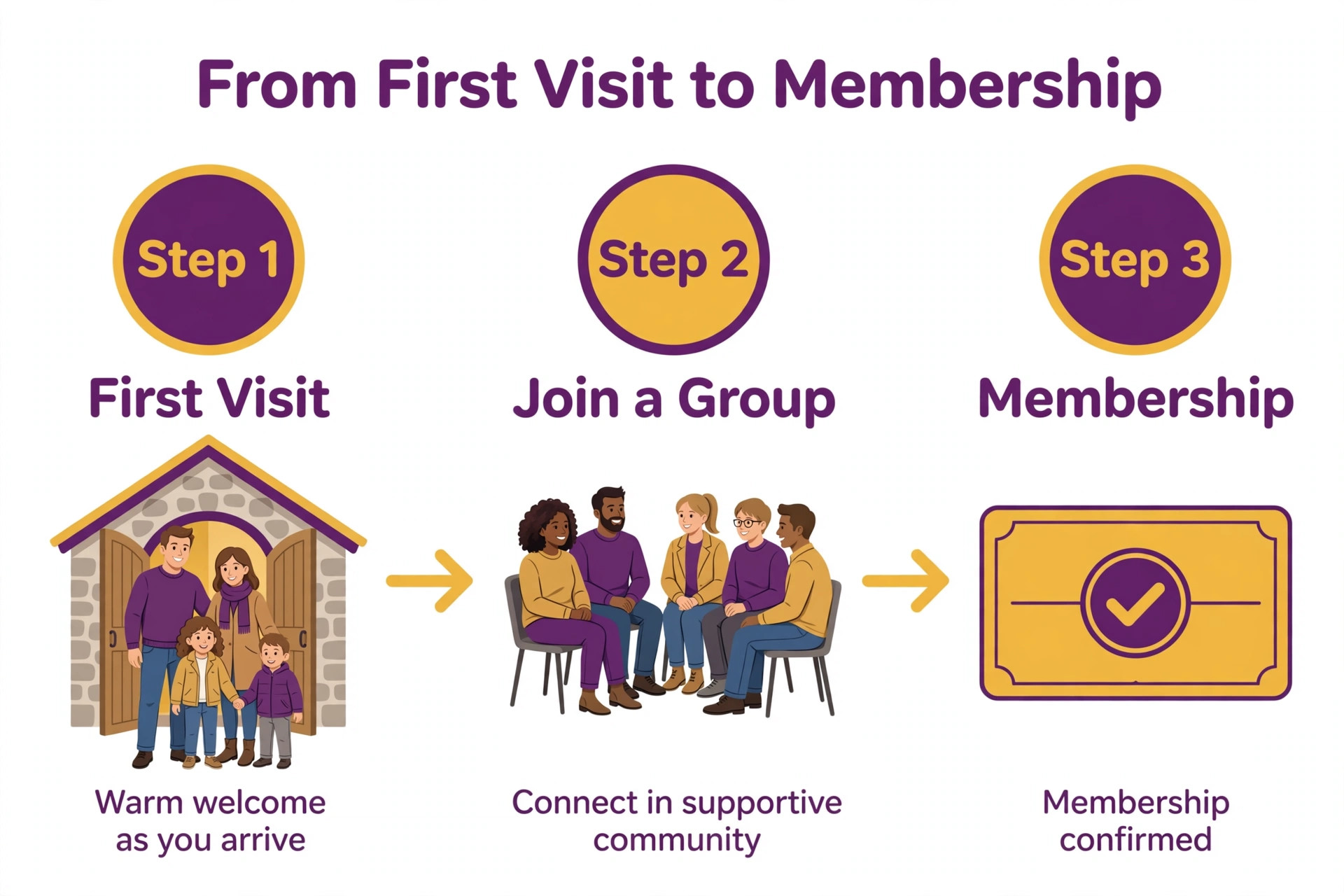
Multi campus churches need control across sites without losing local detail. Planning Center lets each campus use the modules it needs, with People free and Services, Giving, and Check Ins priced by usage. Church Community Builder adds engagement and process tracking for a church that wants to follow people from first visit to membership. The right choice depends on whether worship planning or engagement tracking matters more for your next campus.
Church plants need the lowest possible cost with room to grow. ChMeetings is free for up to 50 people, with paid plans from 12 dollars a month for 100 people, while ChurchTrac starts at 29 dollars a month for 75 names. A plant under 100 people can run either one for less than a family dinner each month, and upgrade when the congregation grows past the free tier.
The 11 tools in detail
1. Breeze
Breeze, now Tithe.ly Church Management after its acquisition, is the friendliest platform in this list for a small church administrator. It charges one flat rate of 72 dollars a month for unlimited people, unlimited users, and all features, with no tiers and no surprise overage fees when the congregation grows. Member records, giving tracking, groups, events, attendance, volunteers, and basic communication sit together in a clean interface that a volunteer can learn in a day.
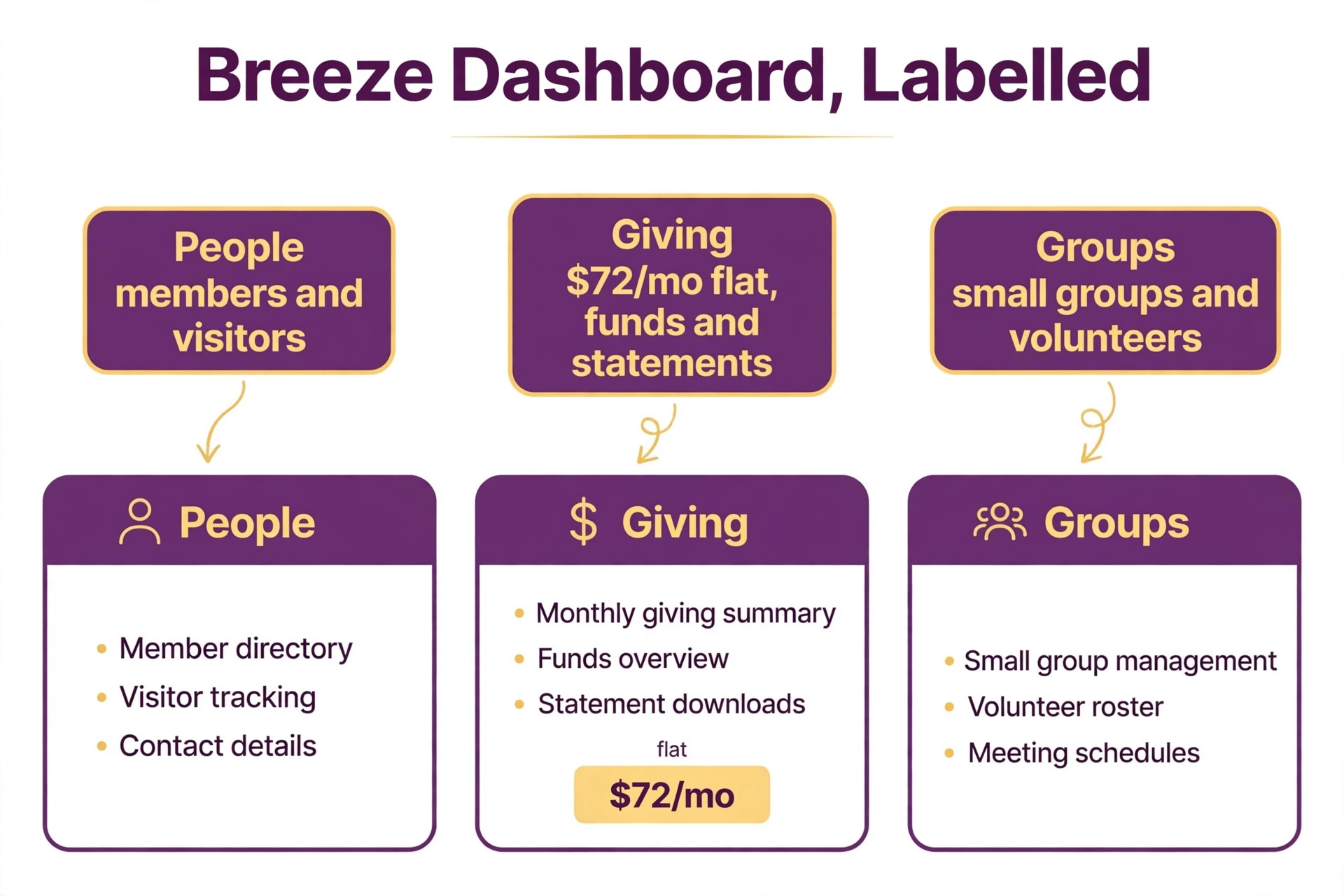
The flat price is both the strength and the limit. A 40 person plant and a 400 person church pay the same amount, which is fair for the larger church and rich for the smallest one. Breeze includes 250 texts a month, then 10 dollars per 500, and worship tools are a 29 dollar a month add on. A website costs 19 dollars a month and a branded app costs 89 dollars a month, or the Breeze Bundle with both and worship tools costs 119 dollars a month. Breeze does not have deep visitor follow up tools, so a church that wants a newcomer journey should test Planning Center or Church Community Builder alongside it.
2. ChurchTrac
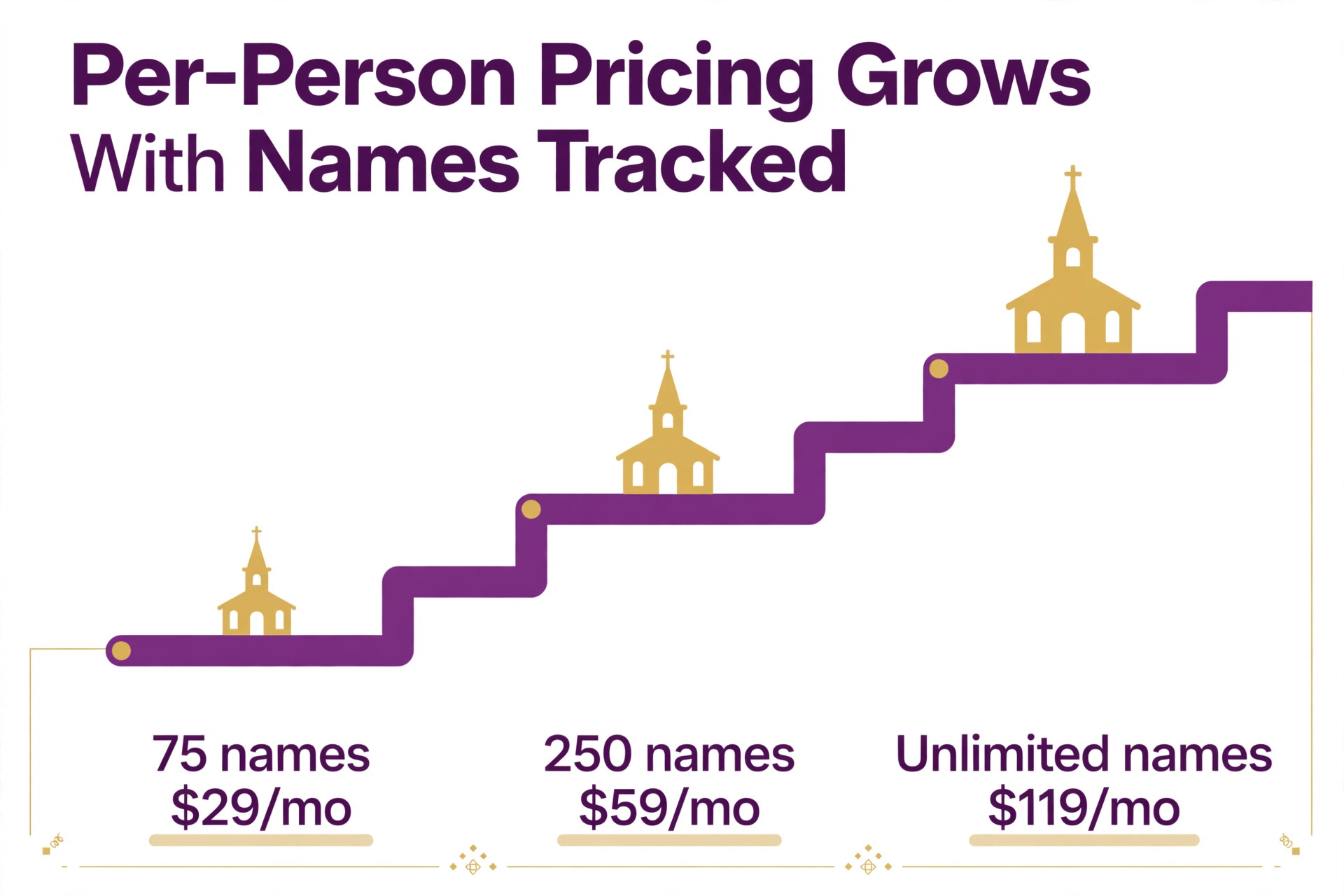
ChurchTrac is the strongest value in this list for a budget conscious small church, because it prices by the number of people tracked and includes fund accounting on every plan. Pricing starts at 29 dollars a month for up to 75 names, then 39 dollars for 125 names, 59 dollars for 250 names, and up to 119 dollars a month for unlimited names, with about ten percent off for annual billing. Older listings show a lower entry near 9 dollars a month, so sources differ on the smallest tier and the vendor calculator is the final word.
The feature set covers people records, fund accounting, worship planning, groups, attendance, giving, and a website and app in one subscription. Enhanced messaging is a 7 dollar a month add on. ChurchTrac includes a free import, a one on one setup session, and weekly live training, which matters for a church run by volunteers. It suits a small church that wants the whole suite at the lowest defensible price, and it is a weaker fit for a church that needs deep service planning, where Planning Center is stronger.
3. Planning Center
Planning Center is the most widely used church management ecosystem in North America, and its modular shape is the reason. People, the member database, is free forever for unlimited people, and every other product has a free tier, then paid tiers from about 14 dollars a month per product. Services covers worship planning and volunteer scheduling, Giving covers donations, Check Ins covers children check in, and Groups, Registrations, and Publishing cover the rest of church life.
The modular price is both the strength and the trap. A light setup with one or two modules can sit under 50 dollars a month, while a full stack for a mid size church can reach 200 to 500 dollars a month or more, depending on headcount and features. Check Ins prices on unique check ins on the busiest day, from free up to 10 daily check ins to 239 dollars a month for unlimited.
Giving charges 2.15 percent plus 30 cents on cards and zero percent plus 30 cents on ACH, which is the lowest card rate in this list. Planning Center suits a church that wants worship and volunteer depth and is willing to manage modules, while a church that wants one simple price should test Breeze first.
4. Tithe.ly
Tithe.ly is a giving first platform that now sells a full church management system, and its bundle is the reason to shortlist it. Giving tools are free to use, with only a transaction fee of 2.9 percent plus 30 cents on cards and 1 percent plus 30 cents on ACH. Church Management costs 72 dollars a month and includes the people database, volunteer management, kids and event check in, email and text messaging, groups, and service planning. All Access costs 119 dollars a month and adds Giving and text giving, a custom church app, a custom church website, and worship team tools.
5. ChMeetings
ChMeetings is an all in one church management platform trusted by more than 7,000 churches, with a free tier that makes it the cheapest real option in this list. The free plan covers up to 50 people and 50 donations a month, with paid plans from 12 dollars a month for 100 people and 25 dollars a month for up to 250 people. It covers members, events, giving, volunteers, child check in, and more, with a member portal, a branded mobile app, and built in church accounting.
6. ShelbyNext
ShelbyNext is the modern membership platform from Shelby Systems, built for churches that already live in the Shelby family. Membership starts at about 35 dollars a month, with a free version and a free trial, and it covers member records, groups, attendance, and communication. Giving is a separate product, with a small church plan reported at 19 dollars a month and card gifts near 3 percent plus 42 cents.
7. FellowshipOne
FellowshipOne is a long standing church management system from Ministry Brands, built for churches that want a full suite with accounting, giving, website tools, and volunteer management in one place. Its Core plan starts at about 129 dollars a month, with additional fees for giving near 29 dollars a month, streaming near 39 dollars a month, and background checks near 29 dollars a month. That add on shape means the real monthly cost is higher than the Core headline, so model the full stack before comparing it with a flat price rival.
8. ACS Realm
ACS Realm, from ACS Technologies, is a church management platform that combines people records, giving, groups, and communication for churches that want staff tools and member tools together. Its Inform plan, for staff only, costs 49 dollars a month, while Connect and Multiply, the plans that add member facing tools, are quoted by the vendor. That split means a small church cannot model the full cost from a published page, and should ask for a written quote for the plan that matches its needs.
9. Church Community Builder
Church Community Builder, now part of Pushpay, is a church management system built around engagement, groups, and process tracking. It helps a church follow people from first visit to membership, with groups, volunteer scheduling, giving, and communication in one system. That process focus suits a church that wants to grow intentionally, rather than simply record who came on Sunday.
10. Elvanto
Elvanto is a modern church management platform from Australia, now part of Tithe.ly, built around people, volunteers, services, and check in. It covers service planning, volunteer scheduling, groups, giving, and communication, with a clean interface that suits a church with a strong worship team. Its integration with Tithe.ly giving is a practical advantage for a church that already uses Tithe.ly for donations.
11. One Church Software
One Church Software is a church management platform built around kids check in, with a Core plan that costs 58 dollars a month for up to 250 profiles, or about 557 dollars billed yearly. Core Plus costs 82 dollars a month, or about 787 dollars billed yearly, and adds features for larger churches. The platform covers people records, groups, attendance, giving, and communication, with check in as the clearest strength.
Giving, fees, and the treasurer report
Giving is the financial heart of a small church, and the software has to serve the treasurer as well as the donor. The treasurer needs to record gifts by fund, track pledges, issue year end statements, and report to the board with numbers that reconcile. A platform that handles funds cleanly will save hours at year end. A platform that treats all gifts as one pot will create work for the treasurer every January.
The Sunday morning test
Sunday morning is the real trial for church software, and it should be tested as a whole, not as separate features. A new family arrives, registers children for check in, joins a group, and gives for the first time. A volunteer checks the service plan, a teacher takes attendance, and the pastor sees who is missing. A platform that handles that morning cleanly will handle most Sundays. A platform that needs staff help for any of those steps will need staff help every Sunday.
How to choose a church management tool
Start with your church model, because that choice filters the best church management software for small churches faster than any feature table. A single campus church needs one simple system. A multi campus church needs per campus control and reporting. A church plant needs the lowest possible cost with room to grow. Write that model down before any demo, and score each tool against it.
Next, run a realistic trial Sunday. Register a test family with two children, check the children in, record attendance, schedule a volunteer, process a gift, and follow up with a visitor. Then run the giving report and check that the gift, the fund, and the donor statement all agree. A tool that passes that Sunday will handle most real Sundays.
Finally, price the second year, not the first month. Add processing fees, text costs, a website or app fee, and any per person or per module charge, and model the price at your expected congregation size. Ask about contract length, notice period, and data export, because switching tools later is far harder than choosing well now. A short contract with clean data export is worth more than a small first month discount.
What church software really costs
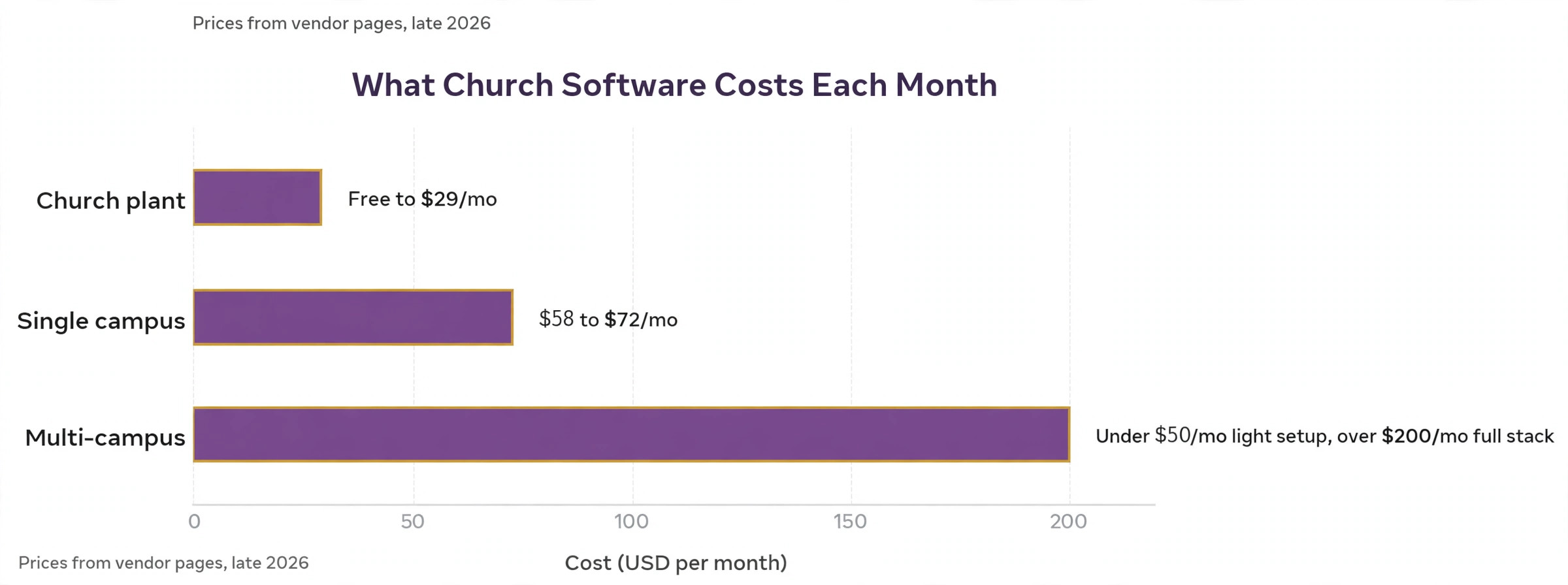
Most small churches pay between free and about 80 dollars a month for the best church management software for small churches, before processing. ChMeetings is free for up to 50 people, ChurchTrac starts at 29 dollars a month, One Church Software starts at 58 dollars a month, and Breeze and Tithe.ly Church Management cost 72 dollars a month. Planning Center can sit under 50 dollars a month with a light module set, or pass 200 dollars a month with a full stack. FellowshipOne starts near 129 dollars a month before add ons, while Church Community Builder, Elvanto, and ACS Realm higher tiers are quote only.
Processing is the second line, and it is often the larger one. A church receiving 10,000 dollars a month in card gifts pays roughly 290 dollars a month at 2.9 percent plus 30 cents, which exceeds the subscription cost of most tools in this guide. Planning Center at 2.15 percent plus 30 cents would charge roughly 215 dollars on the same volume. Compare processing rates with the same care as subscription prices, and ask whether the vendor requires its own processor or lets you bring your own.
Rollout checklist for a small church
Use this sequence when you move to the best church management software for small churches you chose, and do not skip the payment test. A church cannot close for a software switch, so the rollout must run alongside live Sundays, giving, and check in.
- Export members, visitors, groups, giving history, and child records, then check a sample by hand for duplicate people and incorrect balances.
- Build your people structure first, including families, groups, volunteer teams, and child check in rules.
- Set giving rules next, including funds, pledges, year end statements, and donor communication.
- Connect payments and run a test gift with a real card, then refund it, to confirm the full giving flow.
- Invite a small group of families to check children in and give through the new portal before a full launch.
- Train staff and key volunteers on check in, attendance, and visitor follow up, because those three jobs cause most support questions.
- Keep the old system read only for one full month, so no giving or attendance record is lost in the move.
A careful switch protects trust. Members forgive a new portal quickly if giving is correct and check in is easy. They do not forgive a lost gift, a wrong year end statement, or a child check in that failed on Sunday morning. Test giving and check in twice, and launch only when both are clean.
Mistakes that cost small churches time
The first mistake is choosing on subscription price alone. A 29 dollar platform with a 2.9 percent processing rate can cost more than a 72 dollar platform with a lower rate once monthly giving passes a modest level. Run the numbers at your real giving volume, not at the headline price, and include the website, app, and text add ons you actually need.
The second mistake is ignoring the visitor follow up. A visitor who is never followed up is a visitor who never returns, and a platform that cannot track visitors is a platform that cannot grow the church. Test the visitor workflow during a trial, including a first time guest, a second visit, and a move into a group. A platform that makes follow up easy is worth more than a platform with a prettier dashboard.
The third mistake is buying modules before the core works. A church will forgive a plain system that records people, tracks giving, and checks children in cleanly. It will not forgive a beautiful system that loses a gift or fails at check in. Fix people, giving, and check in first, then add service planning, publishing, and other modules when the core is proven.
The fourth mistake is switching during a busy season. Easter, Christmas, and a building campaign are the worst times to change software, because giving, attendance, and communication all peak at once. Plan the switch for a quiet month, and keep the old system read only until the first full giving run is clean.
Related Guides
Keep exploring with these guides on Stratilyze:
- Best Gym Management Software for Small Gyms (15 Tools)
- Best School Management Software for Small Private Schools (10 Tools)
- Best Farm Management Software for Small Farms (11 Tools)
Frequently Asked Questions
How much should a small church pay for church management software
Most small churches pay between free and about 80 dollars a month for the best church management software for small churches, plus processing near 2.9 percent plus 30 cents per card gift. A light Planning Center setup can sit under 50 dollars a month, while a full stack can pass 200 dollars a month. Price the total at your real congregation size and giving volume, not the headline rate.
Is Breeze still a separate product from Tithe.ly
Breeze is now Tithe.ly Church Management after its acquisition, and it still charges a flat 72 dollars a month for unlimited people and users. Tithe.ly also sells an All Access bundle at 119 dollars a month that adds giving, text giving, a custom app, a custom website, and worship tools. Existing Breeze customers should confirm their current packaging directly with Tithe.ly, because the migration to the unified platform is still in progress for some churches.
Does church software handle children check in safely
Yes, when check in, name labels, allergy notes, and secure pickup are all turned on. Parents check children in on Sunday morning, receive a pickup code, and only the holder of that code can collect the child. Test the full check in flow during a trial, including a new family, a child with an allergy, and a late arrival, because those cases reveal whether the system truly protects children.
What is the difference between flat price and per person pricing
Flat pricing charges one amount no matter how large the church grows, which rewards a growing congregation. Per person pricing rises as the database grows, which is fair when the church is small and the database is the cost driver. Breeze charges a flat 72 dollars a month, while ChurchTrac charges from 29 dollars a month for 75 names to 119 dollars a month for unlimited names. Model each model at your congregation size in twelve months.
Should a church plant choose a free tool or a paid platform
A church plant should usually choose a tool that fits its current size and can grow for two years, rather than the largest platform on day one. ChMeetings is free for up to 50 people, and ChurchTrac starts at 29 dollars a month. Move to a larger platform when service planning, multi campus control, or deep engagement tools become real needs, not only future hopes.
How long does it take to switch church management software
Most small churches can switch in two to four weeks, including data import, people setup, payment testing, and volunteer training. Avoid switching giving at month end or before Easter or Christmas, because a giving error at a peak time affects every donor at once. Keep the old system read only for one full month after launch.
The decision for small churches
Single campus churches should test Breeze first, with ChurchTrac as the lower cost alternative that adds fund accounting. Multi campus churches should test Planning Center first, with Church Community Builder as the engagement depth alternative. Church plants should test ChMeetings first, with ChurchTrac as the paid alternative when the free tier runs out. In every case, the deciding test is a real Sunday from visitor check in to giving to volunteer schedule to first follow up, plus one full giving cycle. The best church management software for small churches for your church is the platform that handles that journey cleanly, at a written total cost you can defend.