
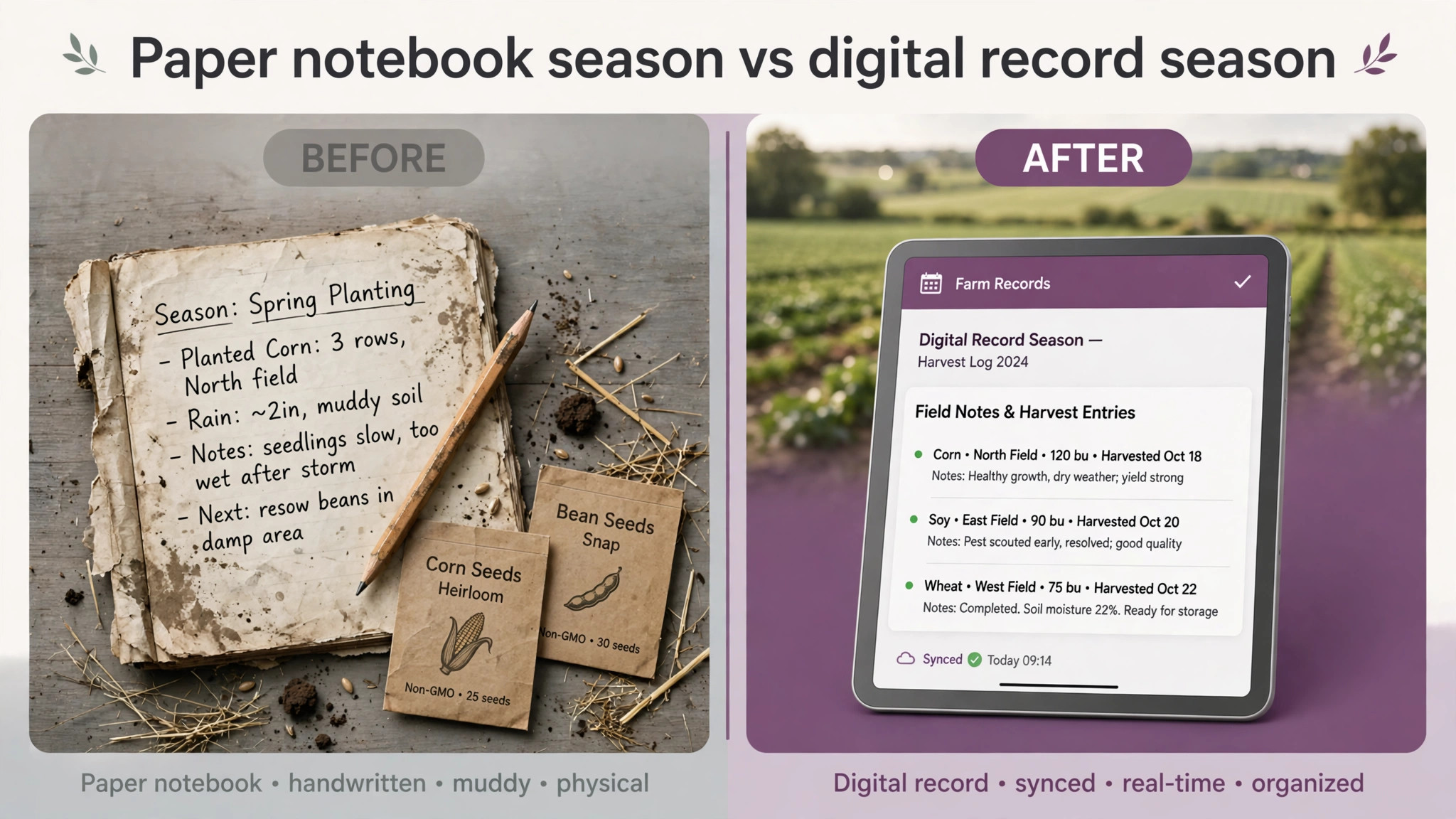
A notebook in the tractor cab holds five years of planting dates, spray records, and calving notes, until rain ruins it or it goes missing at harvest. A phone app holds the same records, backs them up, and turns them into a cost per acre, a grazing plan, and a spray report an auditor can read. Both farms work hard. Only one of them can prove what it spent, what it earned, and what it should plant next. That gap is the reason to compare the best farm management software for small farms carefully, instead of picking the first app a sales page recommends.
A small farm runs on records. Planting dates, input costs, yields, animal health, breeding, grazing moves, sales, and expenses all decide whether the year makes money. A spreadsheet can hold one season, but it cannot map a field, remind you a vaccine is due, or show which field earned money and which one only cost it. Paper can hold a day, but it cannot produce a compliance report on demand.
This guide compares 11 tools across crop planning, livestock records, grazing, finances, mapping, compliance, and total cost. Prices come from vendor pages and recent published comparisons, and they change often, so check the vendor pricing page before you sign. Test each shortlisted tool with your real season, including a spray record, a calving entry, a grazing move, and a cost per acre report.
Why the best farm management software for small farms pays for itself
A small farm loses money in small, quiet ways. An input is bought twice because nobody checked the shed. A spray is applied to the wrong field because the map was in the other tractor. A cow misses a vaccine because the date lived on a whiteboard. None of these problems feels dramatic on its own, yet together they eat the margin a small farm depends on.
Records are the clearest return. A system that tracks costs by field or by animal shows which enterprises earn money and which ones only cost it, so the next season is planned on evidence rather than habit. Grazing plans that move stock on time protect pasture and cut feed bills. Spray and treatment records that are ready for audit save days of panic when an inspector calls. A farm that fixes those three leaks often covers the monthly software cost from one avoided mistake a season.
Farm type changes the maths. A crop farm needs field mapping, input tracking, and yield records. A livestock farm needs animal health, breeding, and grazing plans. A mixed farm needs both, plus finances that separate the enterprises. Judge every tool on your farm type first, and on feature count second.
The 11 tools at a glance
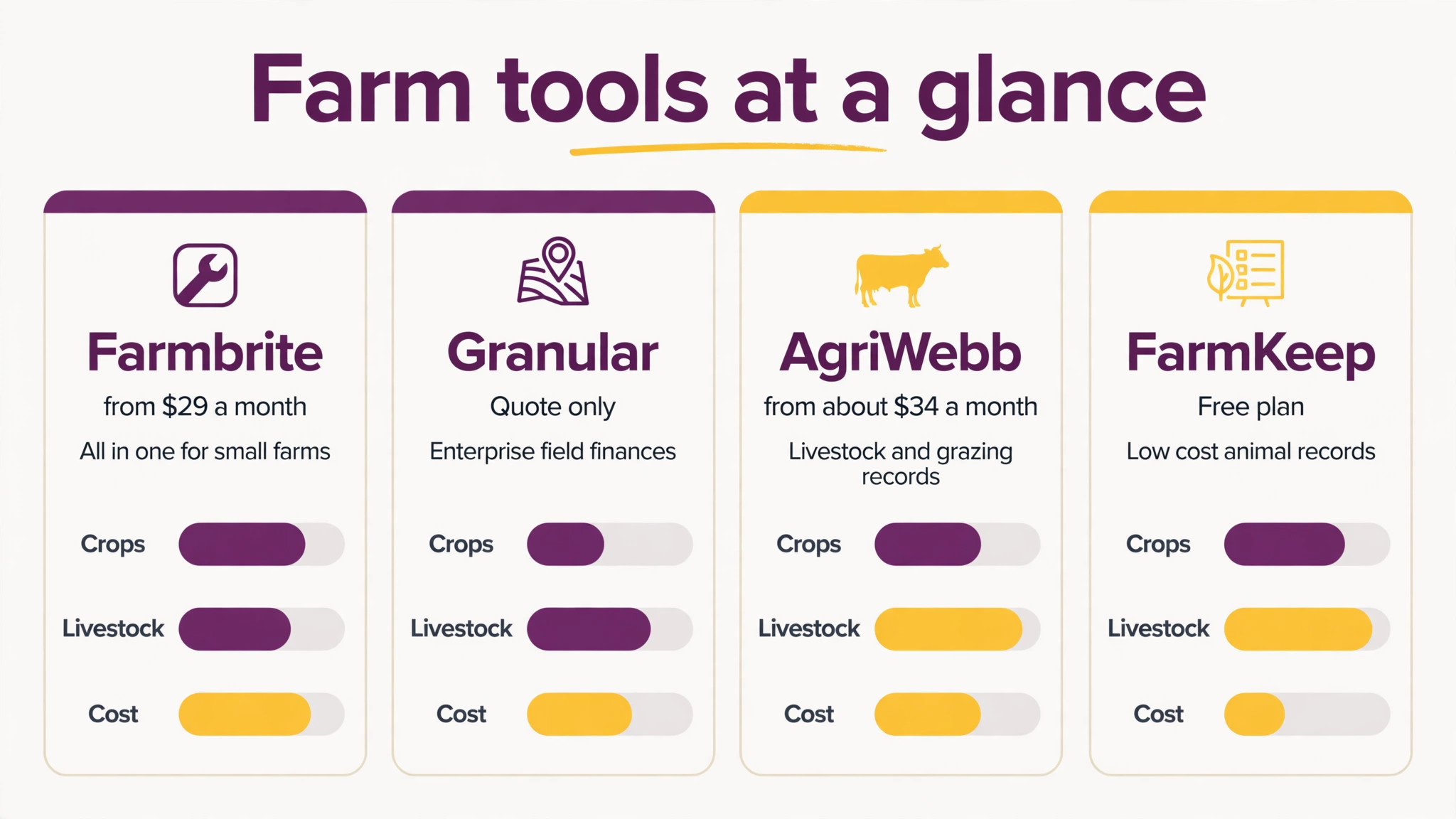
Use this table to shortlist three tools. Price notes are starting points from published sources, and the vendor pricing page is the final word.
| Tool | Main job | Starting point | Watch out for |
|---|---|---|---|
| Farmbrite | All in one for small farms | From 29 dollars a month | Complete plans cost more |
| Granular | Enterprise field finances | Quote only | Reported 3,000 to 10,000 dollars a year |
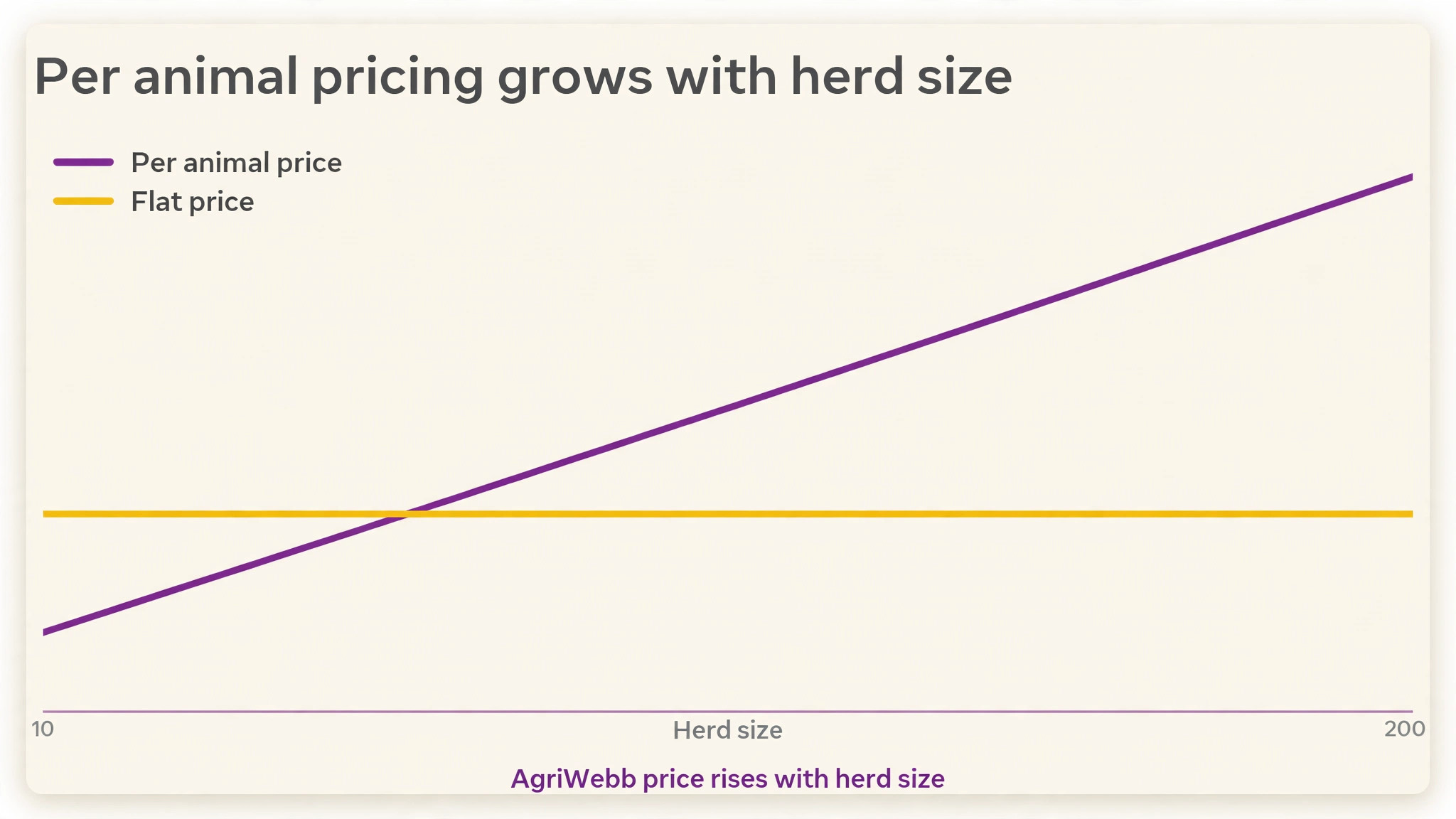
| AgriWebb | Livestock and grazing records | From about 34 dollars a month | Price rises with herd size |
| FarmKeep | Low cost animal records | Free plan | Limited crop tools |
| AGRIVI | Crop planning and pest control | Quote only | No published price |
| Agworld | Agronomy and budgeting | From 1,795 dollars a year | Annual billing only |
| CropTracker | Produce traceability | From 450 dollars per user a year | Annual licences from 2,000 dollars reported |
| John Deere Operations Center | Machine and field data | Free core | Paid features reported 1,500 to 5,000 dollars a year |
| Trimble Agriculture | Precision ag and mapping | Quote only | Built for larger operations |
| Conservis | Enterprise farm operations | Quote only | Implementation is a project |
| Harvest Profit | Profit and loss by field | From 1,600 dollars a year | Finance first, records second |
A farm comparing the best farm management software for small farms should price the whole year, not the first month. Add per user fees, per animal charges, and any mapping or satellite add ons. A tool that looks cheap at entry level can become the most expensive option once your herd or your acreage grows past its first tier.
Best pick by job
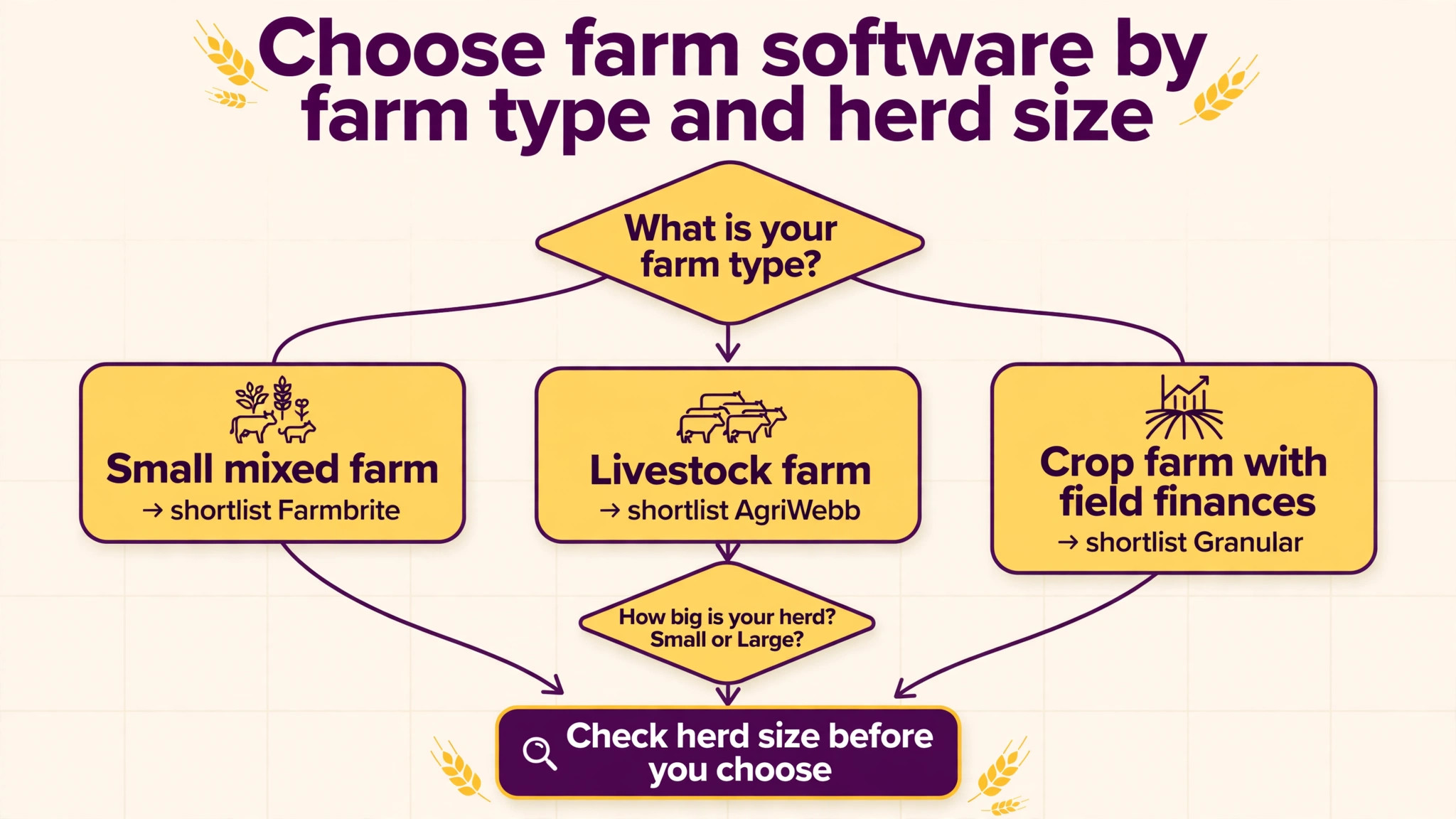
Shortlisting the best farm management software for small farms by farm type keeps the choice practical, because a tool that fits a crop farm may frustrate a livestock farm.
| Segment | First pick | Second tool | Why this pair works |
|---|---|---|---|
| Crop farms | Agworld | Farmbrite | Agronomy depth plus all in one records |
| Livestock farms | AgriWebb | Farmbrite | Grazing plans plus all in one records |
| Mixed farms | Farmbrite | AgriWebb | Crops plus livestock in one system |
Crop farms need agronomy depth. Agworld connects growers, agronomists, and input providers on the same record set, with budgeting and spray planning built in, while Farmbrite adds simple field records, tasks, and finances for a smaller crop operation that does not need an agronomist workflow. A crop farm that works with an adviser will feel the difference in the first spray season.
Livestock farms need a different strength. Animal health, breeding, and grazing moves must be recorded in the paddock, not at a desk, and the records must be ready for audit. AgriWebb covers that best, and Farmbrite is the second pick because its livestock plans add grazing management and satellite mapping at a low monthly price.
Mixed farms need both in one place. Farmbrite covers crops, livestock, and finances together, which suits a diversified small farm that cannot pay for two systems. AgriWebb is the second pick here for the livestock half, because its grazing and compliance depth exceeds what a generalist can offer.
The 11 tools in detail
Each section below judges the tool on farm specific jobs, so you can see where the best farm management software for small farms earns its price and where it does not.
1. Farmbrite
Farmbrite is the value pick in this list, and its breadth is the reason small farms choose it. It covers livestock records, crop planning, field mapping, tasks, inventory, finances, and online sales in one app, with reports that show costs and income by enterprise. A mixed farm can record a calving, plan a planting, and check the bank balance without switching systems.
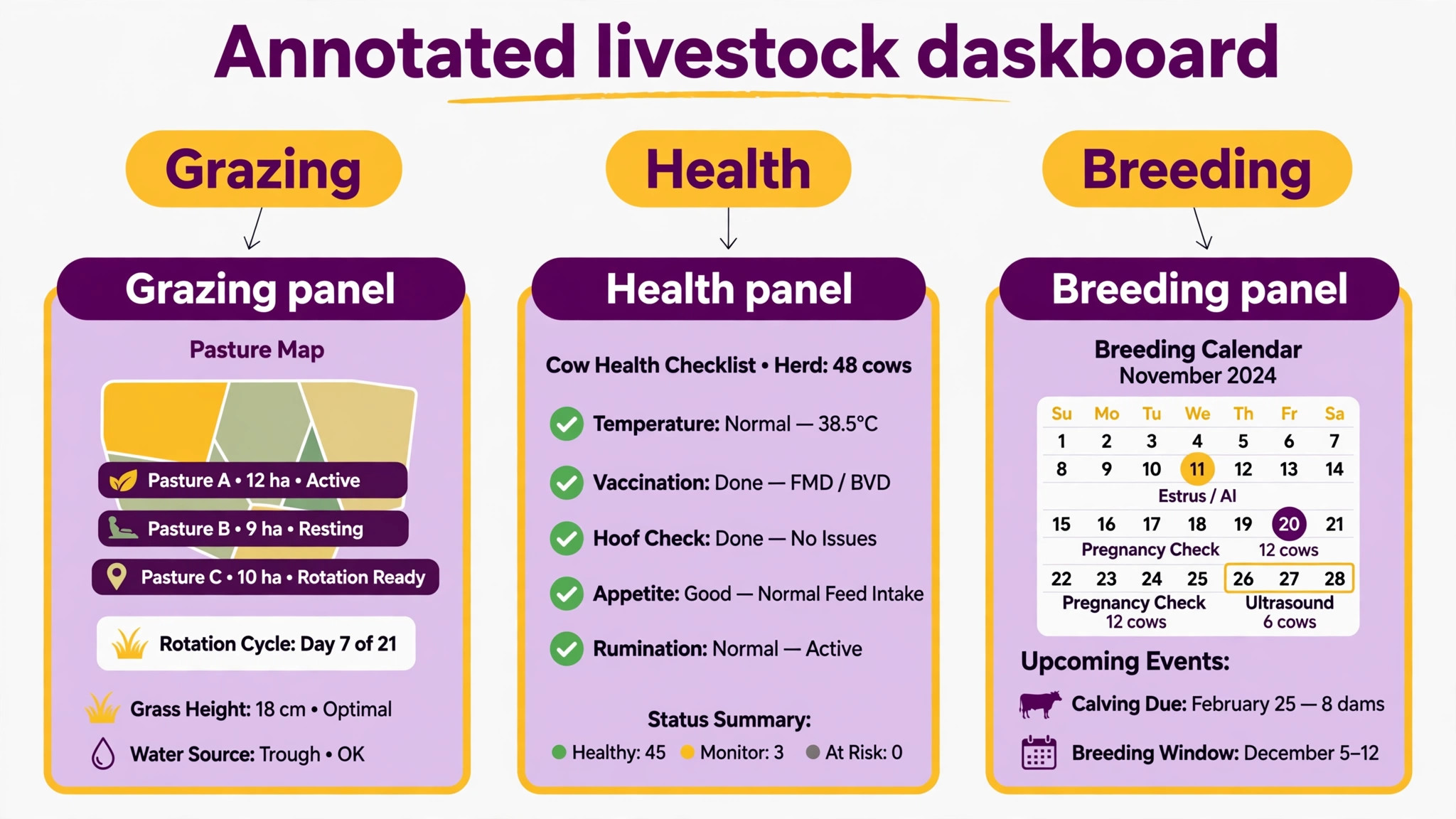
Pricing is published as livestock Essentials at 29 dollars a month for up to 300 animals, Performance at 49 dollars a month for up to 500 with grazing management and satellite mapping, and Premium at 79 dollars a month for 5,000 or more. Complete plans for farms with crops and livestock start at 59 dollars a month, and an accounting only plan is listed at 119 dollars a year. A 14 day trial is available, and annual billing cuts the monthly price.
Farmbrite suits a small or mixed farm that wants records, tasks, and accounts in one affordable app. A large commercial crop operation will find Granular or Agworld deeper on field finances, and should compare those first when acreage and input spend grow.
2. Granular
Granular is the enterprise finance platform in this list, built for farms that need to know which fields make money. It covers field level profitability, input inventory, equipment integration, yield reconciliation, and benchmarking, with a depth of financial analysis that small farm apps cannot match. A farm that manages hundreds of acres and several input suppliers needs this view.
Pricing is by quote, with no published price on the vendor site in current listings. Published guides report a range of about 3,000 to 10,000 dollars a year depending on operation size and features, while directories list a starting price near 70 dollars a month. Treat both figures with care and get a written quote, because the range is wide and the product is sold as enterprise software with implementation support.
Granular suits a large commercial farm that needs field level financial decisions. A small farm should not shortlist it, because the price and the staffing it needs exceed what a small operation can use, and Farmbrite or Agworld will cover the same daily records at a fraction of the cost.
3. AgriWebb
AgriWebb is the livestock specialist in this list, built for beef, sheep, and mixed farms that need audit ready records. It covers animal health and breeding records, grazing plans, paddock maps, tasks, and compliance reporting, with unlimited users on the farm. A producer can record a treatment in the paddock and have the record ready for an auditor the same day.
Pricing depends on animal numbers, with a calculator on the vendor page that returns a cost per year or per month. Published comparisons report entry from about 34 dollars a month, with US add ons from 100 to 150 dollars a year, while other guides report 1,200 to 4,000 dollars a year for larger herds. Check the vendor calculator for your head count before budgeting, because the price rises with the herd.
AgriWebb suits a livestock farm that needs grazing plans and compliance records. A crop only farm will get little value here, and should compare Agworld or Farmbrite first, because AgriWebb is built around animals, not fields.
4. FarmKeep
FarmKeep is the low cost animal record app in this list, built for homesteads, small ranches, and family farms. It covers animal profiles, breeding management, health and vaccine records, production tracking for eggs, milk, honey, and wool, finances, and shared task lists, all from a phone. The interface is simple enough that a family member can use it without training.
Pricing is a free plan plus Premium at 9.99 dollars a month in published listings, which makes it the cheapest paid option in this guide. The low price reflects the scope, because the app is built around animals and has limited crop tools. A farm that grows vegetables alongside chickens will need a second system for the crop half.
FarmKeep suits a homestead or small ranch that wants animal records at almost no cost. A mixed farm with serious crop acreage should compare Farmbrite first, because FarmKeep will not cover the field side of the business.
5. AGRIVI
AGRIVI is a crop management platform built around planning, pest control, and input inventory. It covers crop planning, pest and disease management, input inventory, weather alerts, field records, and reporting, with modules that can be added as the farm grows. That modular shape suits a farm that wants to start with crop planning and add pest management later.
Pricing is not published, and the vendor asks for a demo and a pricing request. Published comparisons list it as contact vendor, with no free trial confirmed. That makes it hard to shortlist against published price tools, and a small farm should get a written quote early rather than investing trial time first.
AGRIVI suits a small to mid crop farm that wants detailed pest and input management in one system. A livestock farm will get no value here, and a mixed farm should compare Farmbrite first, because AGRIVI is built around crops, not animals.
6. Agworld
Agworld is the agronomy platform in this list, built for growers who work with an agronomist. It covers field mapping, spray and input planning, budgeting, scheduling, yield records, and a shared record set that growers, agronomists, input providers, contractors, and banks can all work from. That shared data is the real strength, because the agronomist sees the same field record as the grower.
Pricing is published as Grower Basic at 1,795 dollars a year, Grower Plus at 3,195 dollars a year, and Grower Pro at 3,995 dollars a year on the vendor page. Older guides list lower figures, so use the vendor page numbers and confirm them before budgeting. The annual billing and the price point put it above Farmbrite, and the value depends on how much the agronomist connection is worth to the farm.
Agworld suits a crop farm that works closely with an agronomist and needs shared planning and budgeting. A small farm without an adviser will find Farmbrite cheaper and simpler, and should only move to Agworld when the agronomy workflow becomes a real need.
7. CropTracker
CropTracker is the produce traceability specialist in this list, built for growers, packers, and co-operatives that need food safety records. It covers harvest and packing records, spray tracking, food safety traceability, barcode and RFID scanning, and labour and production cost tracking, with desktop and mobile apps that have run since 2006. That traceability depth is what a produce buyer or an auditor asks for.
Pricing is reported at 450 dollars per user per year in published comparisons, with annual licences from 2,000 dollars a year reported in other listings. The two figures describe different licence shapes, so check the vendor page for the current structure at your user count before budgeting. The price suits a larger produce operation better than a small farm.
CropTracker suits a produce grower that needs traceability and food safety compliance. A small mixed farm will find Farmbrite cheaper and broader, and should only shortlist CropTracker when a buyer or an auditor demands traceability records.
8. John Deere Operations Center
John Deere Operations Center is the machine data platform in this list, built around the equipment a farm already runs. It covers field mapping, machine data, yield maps, input records, and job tracking, with a free core that any farm can start on. A farm running John Deere machines gets telematics and field data without buying a separate system.
Pricing is free for the core, with paid features and subscriptions reported from 1,500 to 5,000 dollars a year depending on operation size and feature selection. That range is wide, so check the vendor page for the current paid tiers before budgeting. The free core is genuinely useful, but the paid features are where the deeper analysis lives.
John Deere Operations Center suits a farm that already runs John Deere equipment and wants machine and field data in one place. A farm with mixed machinery brands will get less value, and should compare Farmbrite or Agworld first, because the platform is built around one brand.
9. Trimble Agriculture
Trimble Agriculture is the precision ag platform in this list, built for farms that use GPS guidance, variable rate application, and detailed field mapping. It covers field mapping, guidance, input application, yield monitoring, and farm data management, with a depth of precision workflow that general farm apps cannot match. A farm that varies seed and fertiliser by zone needs this precision.
Pricing is by quote, with no published price in current listings. Precision ag pricing usually depends on hardware, acreage, and modules, so a written quote at your acreage is the only honest number. The quote only model and the precision focus put it above the small farm tools in this list.
Trimble suits a larger crop operation that already uses precision equipment and needs the data to match. A small farm should not shortlist it, because the price and the hardware it needs exceed what a small operation can use, and Farmbrite or Agworld will cover the same daily records.
10. Conservis
Conservis is an enterprise farm operations platform, built for large farms that need a single system of record from field to finance. It covers field operations, inventory, contracts, grain marketing, and financial reporting, with a depth that suits a commercial operation managing many fields, staff, and contracts. That scale is its strength and its weakness for a small farm.
Pricing is by quote, with no published price in current listings, and implementation is a project rather than a signup. A farm should expect a sales conversation, a scoping exercise, and a contract, which is a poor fit for a small farm choosing its first management app. The total cost is usually higher than the cloud tools in this list.
Conservis suits a large commercial farm that needs enterprise operations and finance in one system. A small farm should not shortlist it, because the product and the price are built for a bigger operation than a family farm.
11. Harvest Profit
Harvest Profit is the finance first tool in this list, built for farms that want profit and loss by field. It covers field level profit and loss, input costs, grain marketing, and break even analysis, with a focus on the money rather than the daily record. A farm that knows its yields but not its margins will find the gap here.
Pricing is reported at 1,600 dollars a year in published comparisons, so check the vendor page for current plans. That price sits above Farmbrite and below Agworld, and the value depends on how much field level profit analysis is worth to the farm. It is finance first and records second, so a farm that needs daily livestock or spray records should pair it with a records tool.
Harvest Profit suits a crop farm that wants to know which fields make money and which ones do not. A livestock farm will get little value here, and a mixed farm should compare Farmbrite first, because Harvest Profit does not cover animals.
How to judge a farm tool before you pay
Start with your farm type, because that choice filters the best farm management software for small farms faster than any feature table. A crop farm needs field mapping and input tracking. A livestock farm needs animal health and grazing plans. A mixed farm needs both plus finances that separate the enterprises. Write that model down before any demo, and score each tool against it.
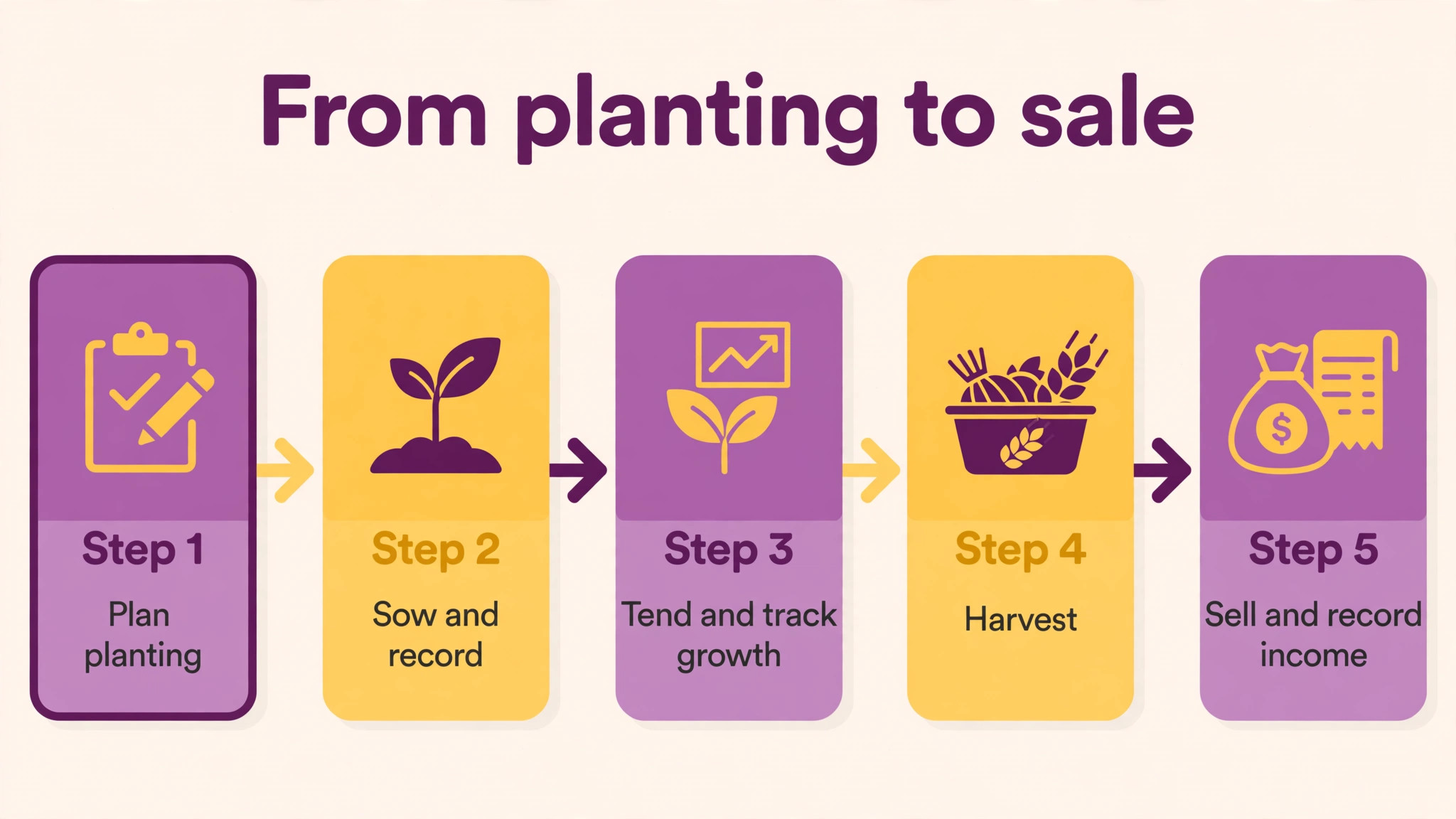
Next, run a realistic trial season. Record a spray with rates and weather, enter a calving with sire and birth weight, move a grazing mob to a new paddock, and pull a cost per acre report for one field. Then check that the spray record, the animal record, and the finance report all agree. A tool that passes that test will handle most real seasons.
Finally, price the second year, not the first month. Add per user fees, per animal charges, mapping add ons, and any annual billing, and model the price at your expected herd size and acreage. Ask about contract length, notice period, and data export, because switching farm software later is far harder than choosing well now. A short contract with clean data export beats a small discount.
Setup checklist for a smooth switch
Use this sequence when you move to the best farm management software for small farms you chose, and do not skip the backup test.
1. Export your current records, including field maps, animal lists, spray history, and outstanding expenses, and clean duplicate records before import. 2. Build your farm structure first, including fields, paddocks, mobs, and enterprises for crops and livestock. 3. Set up input lists next, including seed, fertiliser, chemicals, feed, and veterinary products with current prices. 4. Enter opening stock and animal numbers, then check a sample by hand for duplicate animals and wrong field sizes.
5. Record one full week of real work in the new system, including a spray, a treatment, and a grazing move, before a full launch. 6. Connect finances and run a cost per acre report for one field, then check it against your own records. 7. Train everyone who records work, including family and staff, because a system only one person uses will fail at harvest. 8. Keep the old notebook and spreadsheet read only for one full season, so no record is lost in the move.
A careful switch protects the farm. Staff forgive a new app quickly if records are correct and reports are easy to read. They do not forgive a lost spray record, a missing animal, or a finance report that does not match the bank. Test records and reports twice, and launch only when both are clean.
Mistakes that cost farms money
The first mistake is choosing on subscription price alone. A tool at 10 dollars a month that charges per animal, lacks field mapping, and cannot produce an audit report can cost more in a year than a tool at 29 dollars a month with those features built in. Model the full year at your real herd size and acreage, including per animal and per user charges, before deciding.
The second mistake is skipping the audit test. Spray records, treatment records, and movement records all matter when an inspector or a buyer asks, and a system that cannot produce them on demand forces the farm to rebuild them from paper. Test the audit report during the trial, and confirm it exports cleanly before signing.
The third mistake is ignoring the paddock. A farm that buys a records app and forgets grazing ends up moving stock by memory, with pasture rested too long or grazed too hard. Check that grazing plans, paddock maps, and rest periods sit in the same system as the animal records before signing, because a split system doubles the work.
The fourth mistake is buying an enterprise platform for a small farm. A quote only tool built for a thousand acre operation will charge a small farm for depth it never opens, and the implementation alone can exceed a season of margin. Shortlist published price tools first, and only move to a quote only platform when acreage or compliance depth forces the change.
What farm software really costs
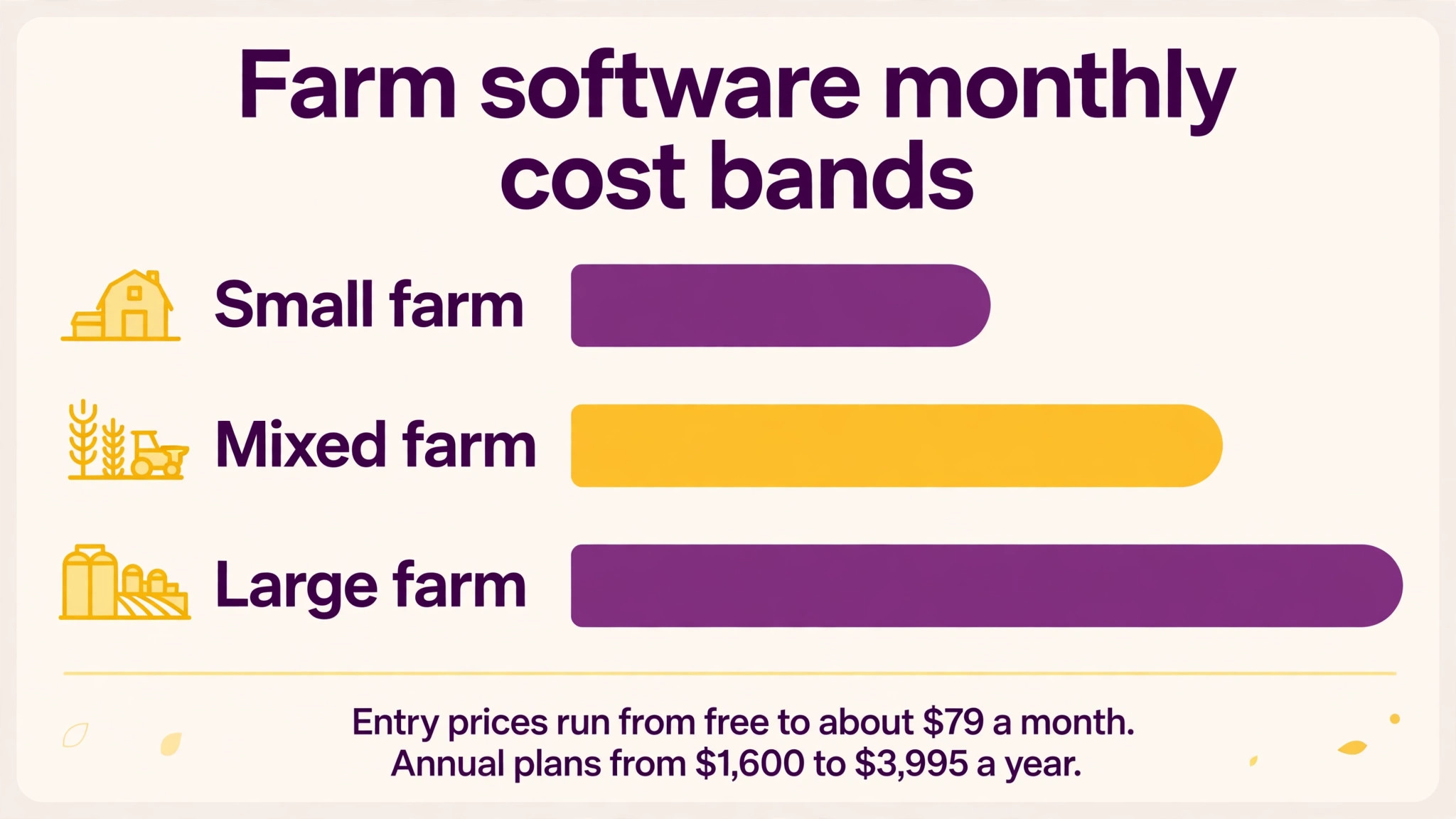
Entry prices in this guide run from free to about 79 dollars a month, but the subscription is only part of the bill. Per animal charges can add up as the herd grows, per user fees can double the bill when staff are added, and annual plans from 1,600 to 3,995 dollars a year can look cheap monthly and cost real money yearly. Mapping and satellite add ons can add further cost, so include them in the model.
The honest way to compare the best farm management software for small farms is to build a one year model for your farm. Take your monthly record volume, your herd size, your acreage, and your user count, then run each shortlisted tool through those numbers. A small mixed farm will usually find Farmbrite cheapest in year one. A livestock farm will usually find AgriWebb cheapest once grazing and compliance are priced in, because the audit ready records earn the subscription back.
Before signing, ask for a written total that covers the subscription, per animal charges, per user fees, mapping add ons, and any annual billing. Ask how the price changes when you add fifty animals, rent another field, or move to a higher tier. A clear answer to those questions is a good sign. A vague answer is a warning that the first year bill will surprise you.
Related Guides
Keep exploring with these guides on Stratilyze:
- Best Gym Management Software for Small Gyms (15 Tools)
- Best School Management Software for Small Private Schools (10 Tools)
- Best Donor Management Software for Small Nonprofits (15 Tools)
Frequently Asked Questions
These answers cover the questions small farmers ask most when they compare the best farm management software for small farms.
How much should a small farm pay for farm management software?
Most small farms pay between zero and 79 dollars a month for a solid tool, with larger platforms from 1,600 dollars a year once agronomy, traceability, or enterprise finance are added. Price the tier you need at your real herd size and acreage, and add per animal and per user charges. A tool at 29 dollars a month that fits your farm beats a tool at 3,995 dollars a year whose extra features stay unused.
Does farm software handle spray records and compliance?
Yes, when field records and spray tracking are turned on. Crop tools such as Agworld, AGRIVI, and CropTracker record rates, weather, and withholding periods, and AgriWebb does the same for animal treatments. Test the audit report during a trial, including a spray record and a treatment record, because a report that looks simple in a demo can still fail an inspection.
Can farm software track grazing and pasture rest?
Yes, when grazing plans and paddock maps are turned on. AgriWebb and Farmbrite both plan grazing moves and rest periods, which protects pasture and cuts feed bills. Test a grazing move during a trial, including a mob split and a paddock rest, because a grazing plan that looks simple in a demo can still confuse staff in the field.
What is the difference between Farmbrite and Granular?
Farmbrite is an all in one app for small farms, covering livestock, crops, tasks, and finances from 29 dollars a month. Granular is an enterprise platform for large farms, covering field level profitability and benchmarking on a quote only basis reported from 3,000 to 10,000 dollars a year. A small farm should start with Farmbrite, and only move to Granular when acreage and input spend demand enterprise finance.
Should a new farm choose a free tool or a paid platform?
A new farm should usually choose a tool that fits its current size and can grow for two years, rather than the largest platform on day one. FarmKeep and Farmbrite give a new farm structure at a low price. Move to a larger platform when acreage, herd size, or compliance needs become a real need, not only a future hope.
How long does it take to switch farm software?
Most small farms can switch in two to four weeks, including data import, field setup, and staff training. A farm with many fields and a large herd should allow four to eight weeks, including a full season of parallel records. Keep the old notebook and spreadsheet read only until the first full season of records is clean, and avoid switching at harvest if you can.
The final verdict for small farms
The strongest all round choice for a small mixed farm is Farmbrite, because livestock, crops, tasks, and finances sit together in one affordable app. AgriWebb is the better pick for a livestock farm that needs grazing plans and audit ready records, and Agworld is the better pick for a crop farm that works with an agronomist. FarmKeep is the better pick for a homestead that wants animal records at almost no cost.
Do not choose on price alone. Choose on the farm type you run today, the record workload you carry each season, and the herd size and acreage you expect in two years. Shortlist three tools, run the trial season described above, and pick the tool your family and staff can actually use in the paddock. That practical test will tell you more than any sales page, and it will save your farm from a costly switch later.